Theories of Dividend decisions

Dividend decisions refer to the strategic choices a company makes regarding the distribution of its profits to shareholders in the form of dividends or retaining them for reinvestment in the business. These decisions play a crucial role in financial management as they influence shareholder satisfaction, market perception, and the company’s growth potential. A balanced dividend policy ensures that adequate returns are provided to shareholders while retaining enough earnings for business expansion and stability. Factors such as profitability, cash flow, growth opportunities, and market expectations significantly impact these decisions, highlighting their importance in achieving long-term corporate objectives.

Some of the major different theories of dividend in financial management are as follows: 

1. Walter’s model

2. Gordon’s model

3. Modigliani and Miller’s hypothesis.

1. Walter’s model:

Professor James E. Walter argues that the choice of dividend policies almost always affects the value of the enterprise. His model shows clearly the importance of the relationship between the firm’s internal rate of return (r) and its cost of capital (k) in determining the dividend policy that will maximise the wealth of shareholders.

Walter’s Model Assumptions:

  1. The firm finances all investment through retained earnings; that is debt or new equity is not issued;
  2. The firm’s internal rate of return (r), and its cost of capital (k) are constant;
  3. All earnings are either distributed as dividend or reinvested internally immediately.
  4. Beginning earnings and dividends never change. The values of the earnings pershare (E), and the divided per share (D) may be changed in the model to determine results, but any given values of E and D are assumed to remain constant forever in determining a given value.
  5. The firm has a very long or infinite life.

Walter’s formula to determine the market price per share (P) is as follows:

P = D/K +r(E-D)/K/K

The above equation clearly reveals that the market price per share is the sum of the present value of two sources of income:

i) The present value of an infinite stream of constant dividends, (D/K) and

ii) The present value of the infinite stream of stream gains.

[r (E-D)/K/K]

Criticism:

  1. Walter’s model of share valuation mixes dividend policy with investment policy of the firm. The model assumes that the investment opportunities of the firm are financed by retained earnings only and no external financing debt or equity is used for the purpose when such a situation exists either the firm’s investment or its dividend policy or both will be sub-optimum. The wealth of the owners will maximise only when this optimum investment in made.
  2. Walter’s model is based on the assumption that r is constant. In fact decreases as more investment occurs. This reflects the assumption that the most profitable investments are made first and then the poorer investments are made.

The firm should step at a point where r = k. This is clearly an erroneous policy and fall to optimise the wealth of the owners.

  1. A firm’s cost of capital or discount rate, K, does not remain constant; it changes directly with the firm’s risk. Thus, the present value of the firm’s income moves inversely with the cost of capital. By assuming that the discount rate, K is constant, Walter’s model abstracts from the effect of risk on the value of the firm.

2. Gordon’s Model:

One very popular model explicitly relating the market value of the firm to dividend policy is developed by Myron Gordon.

Assumptions:

Gordon’s model is based on the following assumptions.

  1. The firm is an all Equity firm
  2. No external financing is available
  3. The internal rate of return (r) of the firm is constant.
  4. The appropriate discount rate (K) of the firm remains constant.
  5. The firm and its stream of earnings are perpetual
  6. The corporate taxes do not exist.
  7. The retention ratio (b), once decided upon, is constant. Thus, the growth rate (g) = br is constant forever.
  8. K > br = g if this condition is not fulfilled, we cannot get a meaningful value for the share.

According to Gordon’s dividend capitalisation model, the market value of a share (Pq) is equal to the present value of an infinite stream of dividends to be received by the share. Thus:

6.1.jpg

The above equation explicitly shows the relationship of current earnings (E,), dividend policy, (b), internal profitability (r) and the all-equity firm’s cost of capital (k), in the determination of the value of the share (P0).

3. Modigliani and Miller’s hypothesis:

According to Modigliani and Miller (M-M), dividend policy of a firm is irrelevant as it does not affect the wealth of the shareholders. They argue that the value of the firm depends on the firm’s earnings which result from its investment policy.

Thus, when investment decision of the firm is given, dividend decision the split of earnings between dividends and retained earnings is of no significance in determining the value of the firm. M – M’s hypothesis of irrelevance is based on the following assumptions.

  1. The firm operates in perfect capital market
  2. Taxes do not exist
  3. The firm has a fixed investment policy
  4. Risk of uncertainty does not exist. That is, investors are able to forecast future prices and dividends with certainty and one discount rate is appropriate for all securities and all time periods. Thus, r = K = Kt for all t.

Under M – M assumptions, r will be equal to the discount rate and identical for all shares. As a result, the price of each share must adjust so that the rate of return, which is composed of the rate of dividends and capital gains, on every share will be equal to the discount rate and be identical for all shares.

Thus, the rate of return for a share held for one year may be calculated as follows:

6.2.jpg

Where P^ is the market or purchase price per share at time 0, P, is the market price per share at time 1 and D is dividend per share at time 1. As hypothesised by M – M, r should be equal for all shares. If it is not so, the low-return yielding shares will be sold by investors who will purchase the high-return yielding shares.

This process will tend to reduce the price of the low-return shares and to increase the prices of the high-return shares. This switching will continue until the differentials in rates of return are eliminated. This discount rate will also be equal for all firms under the M-M assumption since there are no risk differences.

From the above M-M fundamental principle we can derive their valuation model as follows:

6.3.jpg

Multiplying both sides of equation by the number of shares outstanding (n), we obtain the value of the firm if no new financing exists.

6.4.jpg

If the firm sells m number of new shares at time 1 at a price of P^, the value of the firm at time 0 will be

6.5

The above equation of M – M valuation allows for the issuance of new shares, unlike Walter’s and Gordon’s models. Consequently, a firm can pay dividends and raise funds to undertake the optimum investment policy. Thus, dividend and investment policies are not confounded in M – M model, like waiter’s and Gordon’s models.

Criticism:

Because of the unrealistic nature of the assumption, M-M’s hypothesis lacks practical relevance in the real world situation. Thus, it is being criticised on the following grounds.

  1. The assumption that taxes do not exist is far from reality.
  2. M-M argue that the internal and external financing are equivalent. This cannot be true if the costs of floating new issues exist.
  3. According to M-M’s hypothesis the wealth of a shareholder will be same whether the firm pays dividends or not. But, because of the transactions costs and inconvenience associated with the sale of shares to realise capital gains, shareholders prefer dividends to capital gains.
  4. Even under the condition of certainty it is not correct to assume that the discount rate (k) should be same whether firm uses the external or internal financing.

If investors have desire to diversify their port folios, the discount rate for external and internal financing will be different.

  1. M-M argues that, even if the assumption of perfect certainty is dropped and uncertainty is considered, dividend policy continues to be irrelevant. But according to number of writers, dividends are relevant under conditions of uncertainty.

Crowdfunding, Meaning, Features, Types, Challenges

Crowdfunding is a method of raising capital by collecting small amounts of money from a large number of individuals, typically via online platforms. It allows entrepreneurs, startups, and social initiatives to secure funding without relying on traditional financial institutions. Crowdfunding can take various forms, including donation-based, reward-based, equity-based, and debt-based models. This financing method helps businesses validate ideas, engage with potential customers, and raise funds efficiently. Platforms like Kickstarter, Indiegogo, and GoFundMe have made crowdfunding popular worldwide. However, success depends on effective marketing, transparency, and a compelling pitch to attract and convince backers to support the project financially.

Features of Crowdfunding:

1. Access to Alternative Capital

Crowdfunding provides access to capital outside of traditional financial systems like banks and venture capital firms. It democratizes funding by allowing entrepreneurs to raise small amounts of money from a large number of people (the “crowd”), typically via online platforms. This is especially vital for early-stage startups, creative projects, or social ventures that may lack collateral or a proven track record, offering a viable path to secure initial funding that might otherwise be unavailable.

2. Market Validation and Proof of Concept

A successful crowdfunding campaign serves as powerful market validation. When a large number of backers financially support an idea, it proves there is genuine demand and interest for the product or service. This tangible proof of concept is invaluable for attracting further investment from traditional sources, securing partnerships, and providing the entrepreneur with the confidence that they are building something the market wants, reducing the risk of post-launch failure.

3. Marketing and Publicity

Running a crowdfunding campaign is, in itself, a potent marketing tool. It generates significant publicity, builds brand awareness, and creates a community of early adopters and brand advocates even before the product is officially launched. The campaign page acts as a central hub for storytelling, engaging with potential customers, and generating pre-orders, effectively turning the funding process into a powerful launchpad for the business.

4. Diverse Funding Models

Crowdfunding is not a one-size-fits-all model. It offers various structures to suit different projects:

  • Reward-based: Backers receive a tangible product or service.

  • Equity-based: Backers receive a small equity stake in the company.

  • Donation-based: Backers donate without expecting a material return.

  • Debt-based (Peer-to-Peer Lending): Backers are repaid with interest.
    This flexibility allows project creators to choose the model that best aligns with their goals and what they can offer to their supporters.

5. Low Barrier to Entry and Global Reach

Crowdfunding platforms have a relatively low barrier to entry. Anyone with a compelling idea and an internet connection can potentially launch a campaign to a global audience. This eliminates geographical constraints, allowing entrepreneurs to tap into an international pool of backers, receive feedback from diverse markets, and build a global customer base from day one, which was nearly impossible for small startups before the digital age.

Types of Crowdfunding:

  • Donation-Based Crowdfunding

In donation-based crowdfunding, individuals contribute money without expecting any financial return. This model is commonly used for charitable causes, social initiatives, disaster relief, and medical expenses. Platforms like GoFundMe facilitate such campaigns, allowing individuals or organizations to seek support from the public. Since donors contribute out of goodwill, transparency and a compelling story are crucial for attracting funds. This type of crowdfunding is beneficial for non-profits and social enterprises but may not be suitable for businesses seeking capital for profit-driven ventures.

  • Reward-Based Crowdfunding

Reward-based crowdfunding offers contributors non-monetary rewards in exchange for their financial support. These rewards may include early access to products, exclusive merchandise, or personalized experiences. This model is widely used by startups, artists, and creators to fund innovative projects. Platforms like Kickstarter and Indiegogo enable businesses to validate their ideas while securing pre-orders from backers. However, entrepreneurs must fulfill their reward promises, which requires careful planning. A successful campaign depends on clear goals, attractive rewards, and strong marketing to engage potential supporters.

  • Equity-Based Crowdfunding

Equity-based crowdfunding allows investors to receive a share in the company in exchange for their financial contributions. This model is suitable for startups and small businesses looking to raise significant capital without taking on debt. Platforms like SeedInvest and Crowdcube connect investors with businesses, providing opportunities for shared growth. Since contributors become shareholders, they have potential financial returns based on the company’s success. However, businesses must comply with regulations, and entrepreneurs must be prepared to share ownership and decision-making power with investors.

  • Debt-Based Crowdfunding (Peer-to-Peer Lending)

Also known as peer-to-peer (P2P) lending, debt-based crowdfunding allows individuals or businesses to borrow money from multiple lenders and repay it with interest. Platforms like LendingClub and Funding Circle connect borrowers with investors looking for returns. This model is an alternative to traditional bank loans, often offering faster approval and flexible terms. However, borrowers must provide financial details and repay funds within the agreed timeline. Investors take on risk, as there is a possibility of defaults. A strong credit profile and business plan increase the chances of securing funding.

Challenges of Crowdfunding:

  • High Competition

Crowdfunding platforms host thousands of campaigns, making it challenging to stand out. A successful campaign requires a compelling story, strong marketing, and continuous engagement with potential backers. Without proper promotion, even great ideas can go unnoticed. Entrepreneurs must invest time in social media, email marketing, and PR strategies to attract supporters. Additionally, platforms favor trending projects, making it difficult for new campaigns to gain visibility. To overcome this challenge, campaigners must differentiate their project, create a clear pitch, and actively engage with their audience.

  • Uncertain Funding Success

Crowdfunding does not guarantee that a project will reach its funding goal. Many campaigns fail due to poor planning, lack of audience engagement, or unrealistic financial targets. Some platforms operate on an “all-or-nothing” model, meaning if the goal is not met, campaigners receive no funds. Even with partial funding, project execution can be difficult. To increase success chances, entrepreneurs must set realistic targets, present a well-structured proposal, and actively promote their campaign to attract backers.

  • Time-Consuming Process

Running a crowdfunding campaign requires significant effort and time. Entrepreneurs must create engaging content, respond to queries, update backers, and promote their project consistently. Even after securing funds, fulfilling rewards or delivering promised services demands additional effort. Many campaigners underestimate the workload, leading to delays or dissatisfied backers. To manage this challenge, it is crucial to plan the campaign timeline, allocate resources effectively, and ensure transparency in communication. A well-organized strategy can improve efficiency and build trust with supporters.

  • Legal and Regulatory Challenges

Crowdfunding, especially equity and debt-based models, involves legal and regulatory complexities. Different countries have specific regulations regarding investor protection, financial disclosures, and taxation. Failing to comply with these laws can lead to legal penalties. Entrepreneurs must ensure they meet all regulatory requirements before launching a campaign. Seeking legal advice and understanding platform policies can help avoid legal issues. For equity crowdfunding, businesses must prepare proper documentation to reassure investors and maintain compliance with financial authorities.

  • Risk of Intellectual Property Theft

Since crowdfunding requires publicly sharing ideas, there is a risk of intellectual property theft. Competitors or investors may copy a concept and launch their version before the original creator can execute it. This risk is higher when patents or trademarks are not secured. To protect their ideas, entrepreneurs should consider legal protections such as patents, copyrights, or trademarks before launching a campaign. Additionally, limiting the disclosure of sensitive details while maintaining transparency can help mitigate this challenge.

  • Managing Backer Expectations

Crowdfunding campaigns create a direct connection between entrepreneurs and backers, raising expectations for timely product delivery and quality. However, unexpected production delays, budget miscalculations, or operational challenges can lead to dissatisfaction among supporters. Negative feedback or failure to meet promises can harm the company’s reputation. To manage expectations, campaigners must set realistic deadlines, provide regular updates, and maintain transparency about potential challenges. Clear communication and honesty can help maintain trust and credibility, even if unforeseen delays occur.

Angel Investment Meaning, Features, Types, Disadvantages

Angel financing refers to the financial support provided by high-net-worth individuals, known as angel investors, to startups and early-stage businesses in exchange for equity ownership or convertible debt. Angel investors typically invest their own money to help entrepreneurs who lack access to traditional funding sources like bank loans or venture capital. They not only provide capital but also mentorship, industry connections, and strategic guidance. Angel financing is crucial for startups as it helps them cover initial operational costs, product development, and market entry. This type of funding carries risks but offers high potential returns if the business succeeds.

Features of Angel Financing:

  • Early-Stage Investment

Angel financing primarily supports startups and early-stage businesses that have high growth potential but lack access to traditional funding sources. Angel investors step in when banks and venture capitalists hesitate due to the inherent risks associated with new businesses. This funding helps startups cover product development, initial operations, and market expansion. By investing early, angel investors take on significant risks but also have the potential to earn substantial returns if the business succeeds. Their investment plays a crucial role in bridging the financial gap for emerging entrepreneurs.

  • Equity-Based Funding

Angel financing usually involves investors acquiring equity in the business rather than providing loans. In exchange for their investment, angel investors receive a percentage of ownership, which allows them to benefit from the company’s future growth and profitability. There are no fixed repayment obligations, reducing the financial burden on startups. However, entrepreneurs must be willing to share a portion of their business and sometimes involve angel investors in decision-making processes, as they have a vested interest in the company’s success.

  • High-Risk, High-Return Investment

Angel financing is considered a high-risk investment since startups have uncertain prospects and a high failure rate. Many early-stage businesses struggle with profitability, market competition, and operational challenges. However, if a startup succeeds, the returns on investment can be substantial. Angel investors carefully assess business plans, market potential, and the founding team before committing funds. They accept the risk in exchange for the possibility of exponential returns, often aiming for a lucrative exit through acquisitions, IPOs, or further venture capital funding.

  • Mentorship and Strategic Guidance

Beyond financial support, angel investors often provide valuable mentorship, industry expertise, and strategic guidance to entrepreneurs. Many angel investors are experienced business professionals or former entrepreneurs who use their knowledge and networks to help startups succeed. They offer advice on business strategy, product development, marketing, and operations, increasing the chances of long-term success. Their involvement can be instrumental in helping startups navigate challenges, avoid pitfalls, and scale efficiently in competitive markets.

  • Flexible Investment Terms

Angel investors often have more flexible investment terms. They may negotiate funding structures based on the startup’s needs and long-term vision rather than rigid financial criteria. Some angel investors may provide convertible debt, while others prefer straightforward equity agreements. The flexibility in investment terms allows startups to secure funding that aligns with their growth stage, reducing financial strain while ensuring investors gain fair compensation for their risk.

  • Networking and Business Connections

Angel investors bring extensive networks of industry professionals, potential clients, and future investors, which can be highly beneficial for startups. By connecting entrepreneurs with key stakeholders, angel investors help startups secure partnerships, acquire customers, and attract additional funding from venture capitalists or institutional investors. These connections can significantly accelerate a startup’s growth and market presence, giving them a competitive edge in their respective industries.

Types of Angel Financing:

  • Seed Angel Investors

Seed angel investors provide funding to startups at the earliest stage, often when the business idea is still in development. These investors focus on innovative and high-potential ventures that require initial capital for research, product development, and market testing. Since startups at this stage lack revenue and financial history, seed angels take on high risks but expect significant returns if the business succeeds. They often invest smaller amounts compared to later-stage investors and may provide strategic guidance to help shape the business model.

  • Business Angel Investors

Business angels are experienced entrepreneurs or professionals who invest in startups while also offering mentorship and strategic advice. They leverage their industry knowledge and networks to help startups grow, providing more than just financial support. Business angels typically invest in sectors where they have expertise, allowing them to guide entrepreneurs in making better business decisions. Their involvement can significantly enhance a startup’s chances of success by offering insights on market trends, business operations, and potential growth strategies.

  • Corporate Angel Investors

Corporate angel investors are companies or corporate executives who invest in startups related to their industry. These investors often seek innovative startups that can complement their existing business operations, create synergies, or provide future acquisition opportunities. Corporate angels may provide funding, resources, and strategic partnerships to startups, helping them grow faster. Unlike individual investors, corporate angels may have specific business objectives, such as acquiring intellectual property or gaining early access to disruptive technologies.

  • Super Angels

Super angels are high-net-worth individuals who invest large amounts of capital in multiple startups. Super angels operate more like venture capitalists, often investing through structured funds. They have significant experience in startup investments and are capable of providing continuous funding as the business scales. Super angels usually participate in multiple funding rounds, supporting startups beyond the initial seed stage. Their investments are strategic, focusing on companies with high growth potential and strong market demand.

  • Serial Angel Investors

Serial angel investors are individuals who invest in multiple startups over time, using their experience and insights to identify high-potential businesses. They often reinvest their profits from successful ventures into new startups, building a diversified investment portfolio. Serial angels actively seek promising opportunities and have a deep understanding of startup growth cycles. Their extensive experience in dealing with various business models and industries makes them valuable advisors, providing both financial and strategic support to entrepreneurs.

  • Value-Adding Angel Investors

Value-adding angel investors contribute more than just capital; they provide mentorship, industry connections, and operational expertise. These investors play an active role in helping startups succeed by offering guidance in areas such as business development, marketing, and financial planning. Startups often seek out value-adding angels because of their ability to open doors to partnerships, potential clients, and additional funding opportunities. Their involvement increases the likelihood of business success by helping entrepreneurs navigate challenges and optimize their business strategies.

Disadvantages of Angel Financing:

  • Loss of Ownership and Control

One of the biggest disadvantages of angel financing is that entrepreneurs must give up a portion of their business equity in exchange for investment. Since angel investors acquire ownership stakes, they gain influence over business decisions. In some cases, this can lead to conflicts between investors and founders, especially if their visions for the company differ. Entrepreneurs may lose autonomy in managing their business, as angel investors may want a say in strategic planning, financial decisions, or operational control.

  • High Expectations for Returns

Angel investors take high risks by investing in early-stage startups, and in return, they expect significant profits. If the business does not perform well or fails to scale quickly, investors may pressure the founders to change strategies, cut costs, or even consider selling the business earlier than planned. This can create stress for entrepreneurs, who may feel pressured to meet aggressive growth targets instead of focusing on sustainable, long-term development. Meeting investor expectations can be challenging, especially in uncertain market conditions.

  • Limited Funding Availability

While angel investors provide crucial early-stage capital, the amount of funding they offer is often limited compared to venture capital or other institutional financing sources. If a startup requires substantial capital for expansion, research, or product development, angel financing alone may not be sufficient. Entrepreneurs may need to seek additional funding sources, which can lead to more dilution of ownership. Relying solely on angel investors may restrict a company’s growth potential if further financial resources are required.

  • Potential Conflicts and Differences

Angel investors often come with their own business experiences and expectations, which may not always align with the founder’s vision. Differences in management style, strategic direction, or financial goals can lead to conflicts. If the investor is too involved or tries to control decisions, it may create friction within the business. Additionally, disagreements on exit strategies, reinvestment plans, or future funding rounds can lead to disputes, affecting the overall growth and stability of the company.

  • Pressure for Early Exit

Many angel investors invest with the goal of making a profitable exit within a few years, either through a merger, acquisition, or IPO. This pressure for a quick return on investment may push entrepreneurs to make short-term decisions rather than focusing on long-term business sustainability. If the investors push for an early sale or restructuring, it may not align with the founder’s vision, leading to potential disagreements and disruption in business operations.

  • Not Suitable for All Businesses

Angel financing is more suited for high-growth, scalable startups rather than traditional small businesses. Many angel investors prefer technology-driven or innovative companies that promise high returns. If a business operates in a niche market or has a slow growth rate, it may struggle to attract angel investors. Additionally, businesses requiring long-term stability rather than aggressive expansion may find angel financing less suitable, as investors typically look for rapid growth and profitable exit strategies.

Time Value of Money: Compounding, Discounting

Time Value of Money (TVM) is a financial principle that recognizes the value of money changes over time due to its earning potential. A sum of money today is worth more than the same amount in the future because it can be invested to earn interest or generate returns. TVM forms the foundation of various financial decisions, including investment appraisals, loan calculations, and savings growth. It relies on concepts like present value (PV), future value (FV), discounting, and compounding to quantify the impact of time on money’s worth, ensuring sound financial planning and resource allocation.

Need of Time Value of Money (TVM):

  • Investment Decision-Making

TVM is critical for evaluating investment opportunities by comparing the present value of future returns. Investors need to determine if the returns from an investment justify the risk and time involved. Concepts like Net Present Value (NPV) and Internal Rate of Return (IRR) are used to assess the profitability of projects based on future cash flows.

  • Loan and Mortgage Calculations

When obtaining loans or mortgages, TVM helps calculate the equated monthly installments (EMIs), interest, and principal repayments over time. Financial institutions use TVM principles to structure loan terms and interest rates that balance affordability and profitability.

  • Retirement Planning

Planning for retirement requires estimating how much to save today to meet future financial needs. TVM helps in calculating the future value of current savings and determining the present value of future retirement expenses, ensuring adequate funds are available during retirement.

  • Inflation Adjustment

Inflation erodes the purchasing power of money over time. TVM accounts for inflation by discounting future cash flows to reflect their real value. This adjustment ensures accurate financial planning and investment decisions that consider the changing economic environment.

  • Business Valuation

TVM is essential for valuing businesses and their assets. Future cash flows generated by a business are discounted to determine their present value, providing insights into the company’s worth. This is crucial for mergers, acquisitions, and investor decision-making.

  • Capital Budgeting

Organizations use TVM to assess the feasibility of long-term projects. By discounting future costs and benefits, companies can prioritize projects that offer the highest returns relative to their initial investment, ensuring efficient allocation of resources.

  • Savings and Wealth Accumulation

TVM aids individuals in understanding the growth potential of their savings through compounding. By starting to save or invest early, individuals can take advantage of compound interest to maximize wealth accumulation over time.

Discounting or Present Value Method

The current value of an expected amount of money to be received at a future date is known as Present Value. If we expect a certain sum of money after some years at a specific interest rate, then by discounting the Future Value we can calculate the amount to be invested today, i.e., the current or Present Value.

Hence, Discounting Technique is the method that converts Future Value into Present Value. The amount calculated by Discounting Technique is the Present Value and the rate of interest is the discount rate.

Compounding or Future Value Method

Compounding is just the opposite of discounting. The process of converting Present Value into Future Value is known as compounding.

Future Value of a sum of money is the expected value of that sum of money invested after n number of years at a specific compound rate of interest.

Key differences between Compounding and Discounting:

Basis of Comparison Compounding Discounting
Definition Future value (FV) Present value (PV)
Focus Value growth Value reduction
Process Adding interest Removing interest
Direction Present to future Future to present
Use Investment growth Valuation analysis
Formula FV = PV × (1 + r)^n PV = FV ÷ (1 + r)^n
Objective Maximize returns Evaluate worth today
Application Savings, investments Loan, cash flow eval
Time Horizon Future-oriented Current-oriented
Example Bank deposits Bond valuation

Risk-Return Relationship

Investments with high risk tend to have high returns and vice versa. Another way to look at it is that for a given level of return, it is human nature to prefer less risk to more risk. Therefore, the higher the risk of an investment, the higher its returns have to be to attract investors.

The risk-return relationship is a fundamental concept in finance and investment theory, emphasizing that the potential return on an investment is usually directly correlated with the level of risk associated with it. This means that higher risk is typically associated with the potential for higher returns, and conversely, lower risk is associated with lower potential returns. Understanding this relationship is crucial for investors as it helps in making informed decisions that align with their investment goals, risk tolerance, and time horizon.

1. Direct Relationship between Risk and Return

The direct relationship between risk and return is a fundamental principle in finance that indicates as the level of risk increases, the potential for higher returns also increases, and vice versa. This principle operates under the assumption that rational investors need to be compensated for taking on higher levels of risk, as there is a greater uncertainty associated with achieving the expected return.

(A) High Risk – High Return

According to this type of relationship, if investor will take more risk, he will get more reward. So, he invested million, it means his risk of loss is million dollar. Suppose, he is earning 10% return. It means, his return is Lakh but he invests more million, it means his risk of loss of money is million. Now, he will get Lakh return.

(B) Low Risk – Low Return

It is also direct relationship between risk and return. If investor decreases investment. It means, he is decreasing his risk of loss, at that time, his return will also decrease.

Examples of the Risk-Return Relationship

  • Government Bonds vs. Stocks:

Generally, government bonds are considered low-risk investments compared to stocks. Consequently, government bonds typically offer lower returns than stocks, which carry higher risk but also the potential for higher returns.

  • High-Yield (Junk) Bonds vs. Investment-Grade Bonds:

High-yield bonds offer higher interest rates than investment-grade bonds due to the higher credit risk associated with the issuing companies. Investors in high-yield bonds are compensated for accepting the increased risk of default.

2. Negative Relationship between Risk and Return

The notion of a negative relationship between risk and return is contrary to the fundamental principles of finance, which typically assert a positive, direct relationship where higher risk is associated with higher expected returns. However, in specific contexts or interpretations, one might perceive scenarios or instances that seem to suggest a “negative” relationship, depending on how risk and return are defined or understood in those situations.

  • Risk-Aversion and Capital Preservation:

For extremely risk-averse investors, the primary goal may be capital preservation rather than growth. In such cases, investors may opt for safer, low-risk investments like government bonds or high-quality fixed deposits, which offer lower returns but also significantly lower risk of loss. Here, the “negative relationship” is more about the investor’s preference for low risk over high return, rather than an inherent characteristic of the investments.

  • Diminishing Marginal Returns to Risk:

In some investment strategies or during certain economic conditions, taking on additional risk does not proportionally increase expected returns. Beyond a certain point, the additional risk can lead to diminishing marginal returns. For instance, in a highly volatile market, aggressive investment strategies might lead to higher chances of loss, reducing the effective return on investment. Here, the perceived “negative relationship” is related to the efficiency of risk management rather than a fundamental principle.

  • Mispriced Assets or Anomalies:

Market inefficiencies or mispriced assets may temporarily lead to situations where lower-risk investments outperform higher-risk ones. For example, defensive stocks (considered lower risk) might outperform the market during economic downturns, while more speculative stocks (higher risk) decline in value. These anomalies, often corrected over time, might suggest a “Negative relationship” between risk and return in the short term.

  • Safe Haven Assets in Crisis Times:

During financial crises or periods of high market turmoil, investors often flock to safe-haven assets like gold or government bonds, which are perceived as lower risk. The increased demand for these assets can drive up their prices, leading to higher returns for these lower-risk investments in specific periods. Conversely, riskier assets like stocks may perform poorly. This flight to quality can create a temporary perception of a negative relationship between risk and return.

(A) High Risk–Low Return

Sometime, investor increases investment amount for getting high return but with increasing return, he faces low return because it is nature of that project. There is no benefit to increase investment in such project. Suppose, there are 1,00,000 lotteries in which you will earn the prize of You have bought 50% of total lotteries. But, if you buy 75% of lotteries. Prize will same but at increasing of risk, your return will decrease.

(B) Low Risk–High Return

There are some projects, if you invest low amount, you can earn high return. For example, Govt. of India need money. Because, govt. needs this money in emergency and Govt. is giving high return on small investment. If you get this opportunity and invest your money, you will get high return on your small risk of loss of money.

Meaning of Risk, Risk Vs Uncertainty

Risk, in the context of finance and investment, refers to the uncertainty regarding the financial returns or outcomes of an investment, and the potential for an investor to experience losses or gains different from what was initially expected. It is a fundamental concept that underpins nearly all financial decisions and strategies. The essence of risk is the variability of returns, which can be influenced by a myriad of factors, including economic changes, market volatility, political instability, and specific events affecting individual companies or industries.

Dimensions and Types of Risk:

  • Market Risk (Systematic Risk):

This type of risk affects all investments to some degree because it is linked to factors that impact the entire market, such as economic recessions, interest rate changes, political turmoil, and natural disasters. Market risk is inherent and cannot be eliminated through diversification.

  • Credit Risk (Default Risk):

Credit risk arises when there is a possibility that a borrower will default on their debt obligations, leading to losses for the lender. It is a significant consideration in bond investing and lending activities.

  • Liquidity Risk:

Liquidity risk refers to the potential difficulty in buying or selling an asset without causing a significant movement in its price. Investments in thinly traded or illiquid markets are particularly susceptible to this risk.

  • Operational Risk:

This risk stems from internal processes, people, and systems, or from external events that could disrupt a company’s operations. It includes risks from business operations, fraud, legal risks, and environmental risks.

  • Country and Political Risk:

Investments across different countries are subject to risks from political instability, changes in government policy, taxation laws, and currency fluctuations.

  • Interest Rate Risk:

This is the risk that changes in interest rates will affect the value of fixed-income securities. Generally, as interest rates rise, the value of fixed-income securities falls, and vice versa.

Risk is quantified and managed through various statistical measures and techniques, such as standard deviation, beta, value at risk (VaR), and stress testing. These measures help investors and managers understand the volatility of investments and the potential for losses.

Understanding and managing risk is crucial for achieving investment objectives. While risk cannot be completely avoided, it can be managed and mitigated through strategies such as diversification, asset allocation, and hedging. Diversification, for instance, involves spreading investments across various asset classes and securities to reduce the impact of any single investment’s poor performance on the overall portfolio.

Investors’ attitudes towards risk, known as risk tolerance, vary widely. Some are risk-averse, preferring investments with lower returns but less variability in returns. Others are more risk-tolerant, willing to accept higher volatility for the chance of higher returns. Identifying one’s risk tolerance is a critical step in developing an investment strategy that aligns with one’s financial goals and comfort level with uncertainty.

Uncertainty

Uncertainty refers to situations where the outcomes, probabilities, or implications of events are unknown or cannot be precisely quantified. It permeates various aspects of life and decision-making, especially prominent in economics, finance, and strategic planning. In these contexts, uncertainty arises due to incomplete information about the future, unpredictability of external factors, or complexity in underlying systems. Unlike risk, which can often be measured or assigned probabilities based on historical data or models, uncertainty defies precise calculation, making it challenging for individuals and organizations to make informed decisions.

In financial markets, uncertainty can stem from volatile economic conditions, political instability, or unforeseen global events, leading to erratic market behaviors. For businesses, strategic uncertainty might arise from unpredictable consumer preferences, technological innovation, or regulatory changes. The presence of uncertainty requires flexibility, robust contingency planning, and sometimes, a tolerance for making decisions without clear outcomes. Coping strategies include diversification, scenario planning, and maintaining liquidity. Understanding that uncertainty is an inherent part of decision-making processes is crucial, as it encourages the development of adaptive strategies and resilience in the face of the unknown.

Risk Vs. Uncertainty

Aspect Risk Uncertainty
Nature Quantifiable Not quantifiable
Probability Measurable Not measurable
Information Available Insufficient or unavailable
Decision-making Based on probabilities Often based on judgment
Predictability Higher Lower
Management Possible through diversification Requires contingency planning
Outcome Potential for estimation Outcomes unknown
Economic Models Often applicable Less applicable
Financial Tools Risk assessment tools available Limited tools for measurement
Investment Strategy Can be optimized More reliant on flexibility
Impact on planning Can be incorporated into plans Plans must allow for adjustments
Example Market risk, credit risk Political instability, technological innovation

Employee Coaching Meaning, Definitions, Objectives, Types

Employee Coaching is a development process that involves guiding and supporting employees to enhance their skills, performance, and potential in their work environment. It is an interactive process where managers, supervisors, or external coaches help employees identify their goals, overcome challenges, and improve their abilities. The aim is to foster a culture of continuous learning, development, and growth within the organization. Coaching is different from traditional training as it focuses more on individual guidance, personal growth, and real-time feedback, rather than simply imparting information.

Definitions of Employee Coaching:

  • International Coach Federation (ICF):

Coaching is defined as “partnering with clients in a thought-provoking and creative process that inspires them to maximize their personal and professional potential.”

  • Paul J. Meyer:

Coaching is “the process of helping people discover and develop their potential and empower them to become their best selves.”

  • Harvard Business Review:

Coaching is “an interactive process designed to help individuals or groups improve their performance and reach specific goals.”

  • Sir John Whitmore:

Coaching is unlocking a person’s potential to maximize their own performance. It is helping them to learn rather than teaching them.

  • Society for Human Resource Management (SHRM):

Employee coaching is defined as “a means of developing and guiding employees through close, supportive interaction, and real-time feedback to improve their performance.”

Objectives of Employee Coaching:

  • Enhancing Employee Performance:

One of the primary objectives of coaching is to help employees improve their work performance by identifying areas where they can grow and providing the tools, guidance, and support to achieve better results.

  • Developing Skills and Competencies:

Coaching aims to enhance the skills, competencies, and knowledge of employees. By focusing on both technical and soft skills, coaching helps individuals become more proficient in their roles, enabling them to meet job demands more effectively.

  • Building Confidence and Self-Awareness:

Through coaching, employees gain greater self-awareness and confidence. Coaches help individuals understand their strengths and areas for improvement, which leads to enhanced self-esteem and better decision-making.

  • Facilitating Career Development:

Coaching supports employees in mapping out their career paths, identifying opportunities for advancement, and setting actionable goals. It provides guidance on how to achieve long-term career objectives and develop leadership qualities.

  • Increasing Motivation and Engagement:

Effective coaching helps to increase employee engagement by showing them that the organization values their development. By offering personalized guidance and support, coaching enhances employee motivation and commitment to the organization.

  • Improving Problem-Solving Skills:

Coaching encourages employees to think critically and develop solutions to their own problems. It promotes creative problem-solving, empowering employees to handle complex challenges with confidence and independence.

  • Aligning Employee Goals with Organizational Objectives:

Coaching ensures that individual employee goals align with the broader objectives of the organization. It helps bridge the gap between personal aspirations and organizational expectations, creating a sense of shared purpose and commitment.

Types of Employee Coaching:

  • Performance Coaching:

Performance coaching focuses on improving an employee’s current performance in their specific job role. It helps employees meet performance expectations, enhance productivity, and address any areas of concern. The goal is to identify performance gaps and work collaboratively to close them through constructive feedback and actionable plans.

  • Career Coaching:

Career coaching is centered around an employee’s long-term career aspirations. It helps employees explore opportunities for career advancement, identify their strengths, and develop a roadmap for achieving their career goals. Career coaching often includes mentorship and guidance on skill development, leadership preparation, and navigating career transitions.

  • Executive Coaching:

Executive coaching is designed for leaders, managers, and high-potential employees who are being groomed for leadership roles. It helps individuals develop critical leadership competencies, such as decision-making, emotional intelligence, conflict resolution, and strategic thinking. The focus is on enhancing leadership abilities and aligning personal development with the organization’s strategic goals.

  • Team Coaching:

Team coaching involves working with an entire team to improve communication, collaboration, and effectiveness. The coach helps team members understand their roles within the group, resolve conflicts, and work toward shared objectives. The goal of team coaching is to improve overall team performance and foster a cohesive, high-performing unit.

  • Skills Coaching:

Skills coaching focuses on helping employees develop specific technical or soft skills needed for their roles. This could include training in areas such as communication, negotiation, time management, or project management. Skills coaching is often short-term and targets immediate skill gaps that need to be addressed to improve job performance.

  • Behavioral Coaching:

Behavioral coaching addresses an employee’s behavior in the workplace, helping them to improve their interpersonal relationships, adaptability, and emotional intelligence. This type of coaching is often used to correct behaviors that may be hindering an employee’s success or negatively affecting team dynamics, such as poor communication, resistance to feedback, or lack of collaboration.

  • Onboarding Coaching:

Onboarding coaching is aimed at helping new employees acclimate to the organization and their new roles. It provides guidance on company culture, expectations, and processes. Onboarding coaching helps new hires become productive more quickly by offering personalized support during their transition into the organization.

  • Leadership Coaching:

Leadership coaching is designed to help current or aspiring leaders develop the qualities needed to lead teams effectively. It focuses on building leadership skills such as communication, delegation, team building, and strategic thinking. Leadership coaching is often used to prepare high-potential employees for management roles or to enhance the abilities of existing leaders.

  • Personal Development Coaching:

This type of coaching focuses on helping employees grow on a personal level, which can impact their professional lives. Personal development coaching might involve helping employees build resilience, manage stress, or improve work-life balance. The idea is that by improving personal aspects of life, employees will also see improvements in their professional performance.

Identification of Five Dark Qualities in an Individual Before the Selection and Placement Process

In the selection and placement process, identifying potential candidates’ dark qualities or negative traits is crucial for ensuring a positive and productive workplace. Dark qualities can adversely impact team dynamics, organizational culture, and overall performance.

  1. Narcissism

Narcissism refers to an excessive focus on oneself, often manifesting as a grandiose sense of self-importance, a need for admiration, and a lack of empathy for others. Individuals with narcissistic tendencies often display characteristics such as arrogance, entitlement, and a tendency to exploit others for personal gain.

Identification Techniques:

To identify narcissistic traits in candidates, organizations can employ various techniques:

  • Behavioral Interviews: Ask situational questions that reveal how candidates handle teamwork, feedback, and conflict. For example, inquire about a time they faced criticism and how they responded.
  • Psychometric Assessments: Utilize personality tests designed to measure narcissism levels, such as the Narcissistic Personality Inventory (NPI). These assessments provide insight into the candidate’s self-perception and interpersonal dynamics.
  • Reference Checks: Gather feedback from former colleagues or supervisors regarding the candidate’s interpersonal relationships, focusing on any signs of entitlement or manipulation.

Impact on Workplace:

Narcissistic individuals can disrupt team cohesion, foster a toxic work environment, and undermine collaboration. Their self-centeredness may lead to conflicts, poor morale, and high turnover rates.

  1. Machiavellianism

Machiavellianism is characterized by manipulative behavior, deceitfulness, and a focus on self-interest. Individuals displaying this quality often prioritize personal gain over ethical considerations and may use cunning tactics to achieve their goals.

Identification Techniques:

To identify Machiavellian traits, organizations can implement the following methods:

  • Situational Judgment Tests (SJTs): Present candidates with hypothetical scenarios involving ethical dilemmas or conflict resolution. Assess their responses to gauge their propensity for manipulation or unethical behavior.
  • Behavioral Assessments: Inquire about past experiences where candidates had to influence others or navigate complex interpersonal dynamics. Look for indications of deceit or a lack of ethical considerations.
  • Reference Evaluations: Seek insights from references regarding the candidate’s integrity, ability to collaborate, and approach to ethical dilemmas in previous roles.

Impact on Workplace:

Machiavellian individuals can create a culture of distrust, where manipulation and deceit thrive. Their behavior can lead to toxic competition, decreased employee morale, and unethical practices within the organization.

  1. Psychopathy

Psychopathy is characterized by a lack of empathy, remorse, and guilt, often accompanied by impulsivity and antisocial behavior. Individuals with psychopathic traits may exhibit charm and charisma while lacking genuine emotional connections with others.

Identification Techniques:

Identifying psychopathic traits requires careful assessment:

  • Clinical Assessments: Utilize standardized psychological tests, such as the Hare Psychopathy Checklist-Revised (PCL-R), to evaluate psychopathic tendencies.
  • Behavioral Interviews: Ask candidates about their responses to morally ambiguous situations and how they handle interpersonal relationships. Look for signs of emotional detachment or disregard for others’ feelings.
  • Group Exercises: Observe candidates in group settings to assess their interactions and emotional responses. Psychopathic individuals may exhibit manipulative behaviors or lack genuine concern for team dynamics.

Impact on Workplace:

Psychopathic individuals can severely disrupt workplace dynamics, creating an environment marked by fear and distrust. Their manipulative tendencies may lead to unethical behavior, high turnover, and increased conflict among employees.

  1. Authoritarianism

Authoritarianism is characterized by a strong desire for control, a rigid adherence to rules, and a tendency to dominate others. Authoritarian individuals often display traits such as intolerance for dissent, a lack of flexibility, and a need for submission from others.

Identification Techniques:

To identify authoritarian traits, organizations can use the following approaches:

  • Personality Assessments: Utilize tools like the California Psychological Inventory (CPI) to measure authoritarian tendencies and related characteristics, such as dominance and rigidity.
  • Behavioral Interviews: Ask candidates about their leadership style, decision-making processes, and responses to differing opinions. Look for indications of intolerance for dissent or inflexible attitudes.
  • Role-Playing Exercises: Conduct role-playing scenarios that simulate conflict resolution or team collaboration. Observe candidates’ responses to differing viewpoints and their willingness to compromise.

Impact on Workplace:

Authoritarian individuals can stifle creativity, inhibit open communication, and create a culture of fear. Their rigid approach may lead to low employee engagement, high turnover, and decreased innovation.

  1. Resentment and Cynicism

Resentment and cynicism refer to a pervasive negative outlook on life, characterized by distrust, bitterness, and a belief that others act primarily out of self-interest. Individuals displaying these traits often have a pessimistic view of organizations and their leadership.

Identification Techniques:

To identify resentment and cynicism, organizations can employ these methods:

  • Behavioral Interviews: Ask candidates about their perspectives on workplace culture, leadership, and team dynamics. Look for signs of bitterness, negative generalizations, or dismissive attitudes.
  • Group Discussions: Facilitate group discussions or team exercises where candidates express their views on workplace challenges. Observe their responses for indications of cynicism or negativity.
  • Reference Checks: Inquire with references about the candidate’s attitude towards their previous organizations, focusing on any signs of resentment or bitterness.

Impact on Workplace:

Cynical individuals can negatively influence team morale and foster a toxic work environment. Their bitterness may lead to disengagement, decreased collaboration, and a lack of trust in leadership.

Differences between personnel Management and Human Resources Development

Personnel Management is a part of management that deals with the recruitment, hiring, staffing, development, and compensation of the workforce and their relation with the organization to achieve the organizational objectives. The primary functions of the personnel management are divided into two categories:

  • Operative Functions: The activities that are concerned with procurement, development, compensation, job evaluation, employee welfare, utilization, maintenance and collective bargaining.
  • Managerial Function: Planning, Organizing, Directing, Motivation, Control, and Coordination are the basic managerial activities performed by Personnel Management.

Human Resource Development

Human resource development (HRD) is defined as the cultivation of an organization’s employees. It entails providing workers with skills and relevant knowledge that may help them to grow in the workplace. That makes human resource development an integral part of human resource management.

HRD starts with a clear vision for employee development, and most times, it is achieved through organization-wide activities and training. Typically, the HRD team is in charge of developing these initiatives to position employees for career advancement and other related goals.

Roles like instructional coordinators, training specialists, and program developers may involve aspects of human resource development.

HR developers are important members of the HR team as they oversee a variety of areas within the human resources branch of an organization, including training, employee development, executive and leadership development, human performance technology, and organizational learning. On any given day, their responsibilities might involve creating training programs, designing systems to attract and retain talent, and planning organizational development activities, which may be in the form of workshops and more.

A background in human resource development may prepare you for specialized training, instructional design, program development, and general HR positions. For example, training and development specialists are in charge of designing manuals, online learning modules, and course materials for onboarding employee’s External link.

Personnel Management Human Resource Development
Meaning The aspect of management that is concerned with the work force and their relationship with the entity is known as Personnel Management. The branch of management that focuses on the most effective use of the manpower of an entity, to achieve the organizational goals is known as Human Resource Management.
Approach  Traditional Modern
Treatment of manpower Machines or Tools Asset
Type of function  Routine function Strategic function
Basis of Pay Job Evaluation Performance Evaluation
Management Role Transactional Transformational
Communication Indirect Direct 
Labor Management Collective Bargaining Contracts Individual Contracts 
Initiatives Piecemeal Integrated 
Management Actions Procedure Business needs
Decision Making Slow Fast
Job Design Division of Labor Groups/Teams
Focus Primarily on mundane activities like employee hiring, remunerating, training, and harmony. Treat manpower of the organization as valued assets, to be valued, used and preserved.

Systematic approach to change, Client & Consultant relationship

Systematic approach to change

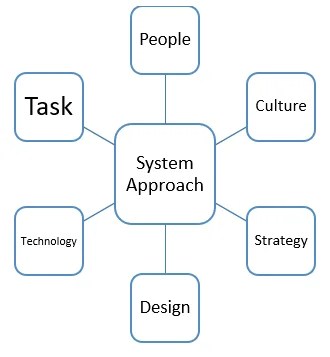
The Systems Model of Change or Organization-Wide Change lays more emphasis on the fact that a change must be implemented organization-wide instead of implementing it in piecemeal.

This model provides a whole new dimension to the concept of organizational change and describes the role played by six interconnected or interdependent variables like people, task, strategy, culture, technology and design. All these 6 variables are the key focus of planned change. The model has been represented in the diagram below:

  1. People: This variable involves the individuals who work in an organization. This would take into consideration the individual differences in the form of personalities, goals, perceptions, attitudes, attributions and their needs/motives.
  2. Task: The task is related to the nature of work which an individual handles in an organization. The nature of the job may be simple or complex, repetitive or novel, unique or standardized.
  3. Design: This variable refers to the organizational structure itself and also the system of communication, authority and control, the delegation of responsibilities and accountabilities.
  4. Strategy: The organizational strategy is the road map of action for realizing the future goals both short term and long term in nature. Strategic Planning involves identification of existing resources, a careful assessment of internal strengths and weaknesses, identifying the opportunities in the environment and threats as well for a competitive advantage.
  5. Technology: It takes into consideration the advancements in the technology in the field of IT, automation, new methods and techniques for enhancing productivity, the introduction of new processes and best practices for remaining ahead in the competition.
  6. Culture: It takes into consideration the shared beliefs, practices, values, norms and expectations of the members of the organization.

Steps to follow:

  • Dedicate time for planning

This may sound silly but you need to actually plan for planning. Always think of things, needs to plan for and to-do lists I need to write but not until recently did I realize that I was leaving the actual planning to the last minute. That’s because one wasn’t dedicating enough time to just sit and plan things out. Set up a recurring event in your calendar to just sit there and put your plans in writing.

  • Batch your time

I’ve tried so many “productivity hacks” and I find this one to be the most useful. It might not work for everyone but it’s worth the shot. Batching your time basically means that you divide your day into time blocks dedicated to only one task or multiple tasks of the same nature. This ensures that you don’t get distracted with doing other tasks and minimizes your tendency to multitask. It also allows you to enter the flow state of diving deep into one task.

  • Create checklists

Make checklists of things you need to get done and keep looking at those checklists. Many of us are guilty of writing down a to-do list, feeling good about it, and then never looking at it again. Put the checklist somewhere accessible like your notes on your phone so that you can pull it out easily. Track your progress and check off things that you’ve completed. Once you finish a checklist you’ll feel so good about yourself, trust me!

  • Prepare for the unexpected

No matter how hard you plan or how much you think you’ve thought ahead, always mentally prepare yourself for things to go wrong. There’s a saying that says “you plan and the universe laughs”, which is so true. That doesn’t mean that you shouldn’t plan, but just make sure you have back-ups and prepare for some crisis management.

Client & Consultant relationship

Consultants are expected to maintain professional and ethical standards when dealing with their clients. This can take the form of maintaining arm’s length relationships, not intervening in the internal affairs and politics of the client’s organizations, keeping confidential information away from interested parties looking for insider knowledge, and reporting any violations in the conduct (financial, operational, and behavioral) by the client’s organization to the regulators. This is the code of conduct that is usually prescribed for consulting firms whenever they take on work from client organizations.

Realities of Consultant-Client Relations

However, this is rarely followed in practice as evidenced by the large numbers of corporate scandals that have emerged in the last decade or so where the consultant was found to be aiding and even abetting the malfeasance conducted by the client. For instance, the Enron scandal manifested itself because the consulting firm was in cahoots with the client in cooking the books. Indeed, in this case, it was found that the consulting firm’s partners went beyond collaboration and were indeed one of the culprits.

Some Examples from the Corporate World

Similarly, the Satyam scandal in India was also found to be a case where the consultants (or some of them) knew about the goings-on in the company and were in breach of the code of conduct and even legal aspects since they did not report the matter to the regulators. However, the saving grace in this case was that when the malfeasance became too big and too hot to handle, it was the new consulting firm that had been roped in for another purpose that blew the whistle on the scam.

Consultants have to Walk a Thin Line between Professional and Personal Obligations

These examples indicate that the consultants have to walk a thin line between fulfilling professional obligations and reporting unethical behavior. Since the client is the one who pays them, it is often the case that the consultants are reluctant to report malfeasance to the regulators. Further, considering the extremely competitive nature of the market wherein there are several consulting firms competing for the same client, money talks and hence, consultants are often found to go along with the client. There are no easy answers when one considers all the aspects and it would be indeed a brave and conscientious consultant who would be the whistleblower.

Some Solutions Which Were Proposed

Having said that, there are some solutions that have emerged in recent years about the course of action to be taken by the consulting firms. For instance, after the Enron scandal, the SEC (Securities and Exchange Commission) and other regulators ensured that new rules separating consulting and investment banking so that the same consulting firm which was also advising the client in financial matters would now be two different firms. While this was intended to reduce the conflict of interest since it was thought that when consultants and investment bankers represent two firms they would automatically be in a position to wink at malfeasance, it is debatable as to how far this law succeeded given the Global Economic Crisis of 2008 wherein several case of malfeasance came to light.

Conflict of Interest is at the Heart of the Problem

Of course, as some experts have mentioned, the real issue here is of conflict of interest. How far would a consultant go in reporting unethical behavior to the regulators which is expected from him or her when such case involve the very clients who are giving them business. Further, the fact that many consultants often are embroiled in the internal politics of the client wherein they take sides in corporate and boardroom battles. This indicates the tricky nature of the problem of consultant client relations wherein the temptation to use confidential and insider information to one’s advantage is motivated by greed and power.

error: Content is protected !!