Business Research Methodology 4th Semester BU B.Com SEP 2024-25 Notes

Unit 1 [Book]
Introduction, Meaning, Definition, Importance and Objective of Research VIEW
Meaning, Characteristics and Scope of Business Research VIEW
Types of Research:
Exploratory Research VIEW
Descriptive Research VIEW
Casual Research VIEW
Qualitative and Quantitative Research VIEW
Applied and Basic Research VIEW
Research approaches (Induction and Deduction) VIEW
Ethical issues in Research VIEW
Steps in Research Process VIEW
Research Problem formulation, Criteria of Good Research Problem, Sources of Problems VIEW
Selection and Definition of Research Objectives VIEW
Unit 2 [Book]
Meaning, Importance and Purpose of Literature Review VIEW
Types of Literature Review (Narrative review, Systematic review, Meta-analysis, Scoping review) VIEW
Sources of Literature (Primary, Secondary, Tertiary and Digital Sources) VIEW
Steps in Conducting Literature Review VIEW
Analyzing and Synthesizing the Literature VIEW
Writing the Literature Review VIEW
List of AI Tools used for Literature Review VIEW
Benefits of AI Tools in Literature Review VIEW
Research gaps and its Types (Concepts only) VIEW
Unit 3 [Book]
Meaning and Components, Objectives, Problems of Research Design VIEW
Variables, Meaning, Types of Variables (Dependent, Independent, Control, Mediating, Moderating, Extraneous, Numerical and Categorical Variables) VIEW
Types of Research Design:
Exploratory Research VIEW
Descriptive Research VIEW
Causal Research VIEW
Components of Research Design VIEW
Meaning of Variable, Types of Variables (Dependent, Independent, Discrete, Continuous, Extraneous Control, Mediating, Moderating, Numerical, Categorical) VIEW
Sampling: Meaning, Sampling Frame, Sampling Error, Sample size, Characteristics of a good Sample VIEW
Types of Sampling: Probability and Non-Probability VIEW
Sampling and Non sampling errors VIEW
Hypotheses Formulation, Meaning, Characteristics of Hypothesis Basics concepts relating to hypothesis testing, Types VIEW
Unit 4 [Book]
Data Collection: Meaning, Data Collection Techniques VIEW
Primary and Secondary Data: Meaning, Sources, and Differences VIEW
Methods of Primary Data Collection: Observation, Interview, Questionnaire, and Survey VIEW
Methods of Secondary Data Collection (Existing datasets, Literature, reports, Journals) VIEW
Secondary Data Collection Government Portals (MOSPI, RBI, SEBI) VIEW
Secondary Data Collection Reports (CMIE, ASSOCHAM, FICCI), Journals, News Archives VIEW
Errors in Data Collection VIEW
AI-Powered Tools for Data Collection: Chatbots and Smart Surveys, Google Forms, Typeform, KoboToolbox VIEW
Hypothesis Testing: Steps involved in testing of hypothesis- Level of significance- Chi Square Test- T-Test- Z-Test- Using Excel/SPSS. VIEW
Unit 5 [Book]
Meaning, Steps in data analysis VIEW
Classification and Tabulation (Concepts only) VIEW
Types of Data Analysis: Descriptive, Inferential, Qualitative, Quantitative VIEW
Basic descriptive tools in Excel or SPSS:
Mean VIEW
Median VIEW
Mode VIEW
Standard Deviation VIEW
Graphical Representations using Excel/SPSS Bar Charts, Pie Charts, Histograms VIEW
Introduction to AI tools for analysis: ChatGPT (for qualitative summaries), MonkeyLearn, Orange Data Mining VIEW
Report Writing, Meaning and Purpose of Report Writing VIEW
Types of Research Reports VIEW
Report Sections: Abstract, Introduction, Methodology, Data Analysis, Conclusion VIEW
Writing Bibliography: APA and MLA format Bibliography VIEW

Frequency Distribution, Meaning, Principles, Types, Steps and Advantages

Frequency distribution is a systematic arrangement of data showing the number of times each value or group of values occurs in a dataset. It is one of the most important methods of organizing statistical data. Frequency distribution simplifies a large volume of raw data by grouping observations into classes and showing their respective frequencies. This makes the data easier to understand, analyze, and interpret.

The construction of a frequency distribution involves arranging data into class intervals and recording the number of observations falling within each interval.

Principles for Constructing Frequency Distribution

1. Principle of Clearly Defined Class Intervals

Class intervals should be clearly defined so that every observation can be placed in the correct class without confusion. Ambiguous or overlapping class limits may lead to incorrect classification and inaccurate results. Clear intervals improve the reliability and usefulness of the frequency distribution. The lower and upper limits of each class should be specified precisely. Readers should easily understand the scope of every class interval. Well-defined classes ensure consistency in data organization and make statistical analysis more accurate. Therefore, clarity in class interval definition is a fundamental principle of constructing an effective frequency distribution.

2. Principle of Mutual Exclusiveness

The classes in a frequency distribution should be mutually exclusive. This means that an observation must belong to only one class and not fit into multiple classes simultaneously. Overlapping class intervals create confusion and may result in double counting. For example, intervals such as 10–20 and 20–30 can create ambiguity regarding the value 20. To avoid this problem, class limits should be designed carefully. Mutual exclusiveness ensures accuracy and consistency in classification. It allows each observation to be counted only once, thereby improving the reliability of the frequency distribution.

3. Principle of Continuity

Class intervals should be continuous without gaps between successive classes. Every possible observation within the range of data should have a place in the distribution. Continuous classes ensure smooth classification and prevent the omission of observations. If gaps exist between intervals, some values may remain unclassified, reducing the completeness of the distribution. Continuous class intervals are especially important in grouped frequency distributions involving measurable variables. By maintaining continuity, statisticians can ensure that all data values are represented properly and that the frequency distribution provides a complete picture of the dataset.

4. Principle of Exhaustiveness

A frequency distribution should be exhaustive, meaning that it must include all observations in the dataset. Every data value should fit into one of the class intervals. No observation should be left out of the distribution. Exhaustiveness ensures completeness and accuracy in data presentation. If certain observations remain unclassified, the frequency totals will not match the total number of observations collected. This can lead to incorrect conclusions and statistical errors. Therefore, class intervals should be designed in such a way that they cover the entire range of data and accommodate every observation.

5. Principle of Appropriate Number of Classes

The number of classes should be chosen carefully. Too many classes make the frequency distribution lengthy and complicated, while too few classes may hide important details and variations. A reasonable number of classes provides a balance between simplicity and completeness. Generally, frequency distributions contain between five and fifteen classes, depending on the size of the dataset. The objective is to present information clearly without losing significant details. Proper selection of the number of classes improves readability, facilitates analysis, and ensures that the distribution effectively summarizes the data.

6. Principle of Suitable Class Width

Class width refers to the size of each class interval. The width should be neither too large nor too small. Very wide intervals may conceal important variations within the data, while very narrow intervals may create an excessive number of classes and make the table difficult to interpret. Uniform class widths are generally preferred because they simplify analysis and comparison. Appropriate class width ensures meaningful grouping of observations and enhances the usefulness of the frequency distribution. Therefore, selecting a suitable class width is essential for effective data presentation and statistical interpretation.

7. Principle of Simplicity and Clarity

A frequency distribution should be simple and easy to understand. The arrangement of class intervals and frequencies should be logical and straightforward. Complex classifications and unnecessary details should be avoided because they may confuse readers. Simplicity improves readability and allows users to interpret the information quickly. Clear headings, properly arranged classes, and accurate frequencies contribute to effective communication. A simple frequency distribution is more useful for statistical analysis and decision-making. Therefore, maintaining simplicity and clarity is an important principle in the construction of frequency distributions.

8. Principle of Accuracy

Accuracy is one of the most important principles in constructing a frequency distribution. Frequencies must be counted carefully, and observations should be classified correctly. Errors in tallying, counting, or classifying data can distort the distribution and lead to incorrect statistical analysis. Every step, from data collection to frequency calculation, should be performed with precision. Accurate frequency distributions provide reliable information for research, business analysis, and decision-making. Since statistical conclusions depend on the correctness of the data presented, maintaining accuracy is essential for ensuring the credibility and usefulness of the frequency distribution.

Types of Frequency Distribution

1. Simple Frequency Distribution

Simple frequency distribution is the most basic type of frequency distribution. It presents each value of a variable along with the number of times it occurs in the dataset. This method is suitable when the data contains a limited number of distinct values. It helps organize raw data into a concise and understandable form. Simple frequency distribution is widely used in educational and business studies to summarize information efficiently. It allows researchers to identify the occurrence of each value and understand the overall distribution of observations without dealing with complex classifications.

Example:

Number of Defects Frequency
0 5
1 8
2 6
3 4
4 2

2. Grouped Frequency Distribution

Grouped frequency distribution arranges data into class intervals and records the frequency of observations within each interval. This type is used when the dataset contains a large number of observations or continuous values. Grouping reduces complexity and makes data easier to analyze. It helps identify trends, patterns, and concentration of observations. Grouped frequency distributions are commonly used in business, economics, and research studies. By organizing data into intervals, they provide a compact summary of large datasets and facilitate statistical calculations such as averages and measures of dispersion.

Example:

Marks Frequency
0–10 4
10–20 8
20–30 12
30–40 10
40–50 6

3. Ungrouped Frequency Distribution

An ungrouped frequency distribution lists every individual value separately along with its frequency. Unlike grouped distributions, no class intervals are used. This type is suitable for small datasets where observations can be displayed individually without making the table lengthy. Ungrouped frequency distributions provide exact information about each value and its occurrence. They are useful in situations where detailed analysis of individual observations is required. However, they become less practical when the dataset is large. Therefore, they are generally applied in small-scale studies and introductory statistical exercises.

Example:

Number of Books Sold Frequency
5 2
6 4
7 5
8 3
9 1

4. Cumulative Frequency Distribution

Cumulative frequency distribution shows the running total of frequencies. Instead of presenting individual frequencies alone, it accumulates frequencies from one class to the next. This type helps determine the number of observations below or above a particular value. Cumulative frequency distributions are useful for calculating median, quartiles, percentiles, and for constructing ogives. They provide insights into the cumulative position of observations within the dataset. There are two forms: less-than cumulative frequency and more-than cumulative frequency distributions.

Example (Less Than Type):

Marks Less Than Cumulative Frequency
10 4
20 12
30 24
40 34
50 40

5. Relative Frequency Distribution

Relative frequency distribution expresses frequencies as fractions or proportions of the total number of observations. It shows the relative importance of each class within the dataset. Relative frequencies are calculated by dividing class frequencies by the total frequency. This distribution helps compare different datasets, especially when they differ in size. It provides a clearer understanding of the proportion represented by each category. Relative frequency distributions are widely used in market research, quality control, and business analysis where percentage comparisons are important.

Example:

Product Type Frequency Relative Frequency
A 20 0.40
B 15 0.30
C 10 0.20
D 5 0.10

Total Frequency = 50

6. Percentage Frequency Distribution

A percentage frequency distribution is similar to a relative frequency distribution, but frequencies are expressed as percentages rather than proportions. This format is easy to understand and interpret because percentages are familiar to most users. It helps compare categories effectively and is widely used in business reports, surveys, and demographic studies. Percentage frequency distributions simplify communication and make statistical findings more accessible. They are particularly useful when presenting data to audiences who may not have extensive statistical knowledge.

Example:

Customer Preference Frequency Percentage
Product A 40 40%
Product B 30 30%
Product C 20 20%
Product D 10 10%

7. Discrete Frequency Distribution

Discrete frequency distribution is used for variables that take distinct and countable values. Each value is listed separately along with its corresponding frequency. Examples include the number of employees, number of children, number of products sold, or number of defects. Since discrete variables cannot take fractional values, frequencies are assigned to individual observations. This distribution provides precise information and helps analyze count-based data. It is commonly used in business operations, production management, and social science research where variables are measured in whole numbers.

Example:

Number of Children Frequency
1 6
2 10
3 8
4 4
5 2

8. Continuous Frequency Distribution

Continuous frequency distribution is used for variables that can take any value within a specified range. Data is grouped into continuous class intervals, and frequencies are recorded for each interval. Examples include age, income, height, weight, and sales revenue. This type of distribution is suitable for large datasets involving measurable quantities. Continuous frequency distributions simplify complex information and facilitate statistical analysis. They are also essential for constructing histograms, frequency polygons, and other graphical representations used in business and research.

Example:

Income (₹) Frequency
0–10,000 5
10,000–20,000 12
20,000–30,000 18
30,000–40,000 10
40,000–50,000 5

Steps in the Construction of Frequency Distribution

Step 1. Collection of Raw Data

The first step in constructing a frequency distribution is the collection of raw data. Raw data refers to the original facts and figures gathered from surveys, observations, experiments, questionnaires, or records. At this stage, the information is usually unorganized and arranged randomly. Since raw data is difficult to analyze directly, it must first be collected accurately and systematically. The quality of the frequency distribution depends on the reliability of the collected data. Any errors during collection may affect the final results. Therefore, proper collection of data is essential for meaningful statistical analysis and interpretation.

Example: Marks of 15 students:

25, 30, 45, 50, 35, 40, 55, 60, 65, 70, 75, 80, 45, 50, 55

Step 2. Determination of Range

After collecting the raw data, the next step is determining the range. The range measures the spread of the data and is calculated by subtracting the smallest value from the largest value. It helps in deciding suitable class intervals and class widths. A larger range generally requires more classes, whereas a smaller range may require fewer classes. Determining the range gives a preliminary understanding of data distribution and assists in organizing observations effectively. It is an important step because the entire frequency distribution is based on the extent of variation present in the dataset.

Formula: Range = Highest Value − Lowest Value

Example:

Highest value = 80

Lowest value = 25

Range = 80 − 25 = 55

Step 3. Determination of Number of Classes

The third step involves deciding the number of class intervals into which the data will be grouped. The number of classes should be reasonable because too many classes make the table complex, while too few classes may hide important information. Generally, between 5 and 15 classes are used depending on the size of the dataset. Statisticians often use Sturges’ Formula to determine an appropriate number of classes. Proper selection of classes improves clarity, comparability, and usefulness of the frequency distribution. This step ensures that the data is grouped in a balanced and meaningful manner.

Formula: k = 1 + 3.322 log N

Where:

k = Number of classes

N = Total observations

Example:

If N = 50,

k = 1 + 3.322 log (50)

k ≈ 7 classes

Step 4. Calculation of Class Width

Class width refers to the size of each class interval. After determining the range and number of classes, the class width is calculated by dividing the range by the number of classes. The result is generally rounded to a convenient whole number. Appropriate class width is important because very narrow intervals create too many classes, while very wide intervals may hide significant variations. A suitable class width ensures that the frequency distribution remains clear, balanced, and informative. This step provides the basis for creating meaningful class intervals that adequately represent the data.

Formula: Class Width = Range ÷ Number of Classes

Example:

Range = 55

Number of Classes = 6

Class Width = 55 ÷ 6 ≈ 9.17

Rounded Class Width = 10

Step 5. Formation of Class Intervals

Once the class width is determined, class intervals are formed. Class intervals are groups into which observations are categorized. These intervals should be mutually exclusive, continuous, and exhaustive. Every observation should belong to one and only one class. Properly formed intervals make the frequency distribution easier to understand and analyze. The intervals may follow the inclusive or exclusive method depending on the nature of the data. The formation of suitable class intervals is crucial because it directly affects the accuracy and usefulness of the frequency distribution.

Example:

Class Interval
20–29
30–39
40–49
50–59
60–69
70–79
80–89

These intervals cover all observations and maintain equal width.

Step 6. Tallying the Observations

After forming class intervals, each observation is examined and placed into its appropriate class using tally marks. Tally marks are simple counting symbols used to record frequencies accurately. Every observation falling within a class interval is represented by a tally mark. Groups of five tally marks are usually shown with the fifth mark crossing the previous four. Tallying helps avoid counting errors and provides an easy method of organizing observations before calculating frequencies. This step acts as a bridge between raw data and frequency counting, ensuring accuracy and completeness in the frequency distribution process.

Example:

Class Interval Tally Marks
20–29 |
30–39 ||
40–49 |||
50–59 ||||
60–69 |||
70–79 ||
80–89 |

Step 7. Counting Frequencies

Once tallying is completed, the tally marks in each class interval are counted to determine the frequency. Frequency refers to the number of observations that fall within a particular class. This step converts tally marks into numerical values and provides a summarized picture of the data. Accurate frequency counting is essential because it forms the basis for statistical analysis, graphs, and interpretation. Frequencies reveal how data is distributed across different classes and help identify concentration, patterns, and trends. This step transforms raw observations into meaningful statistical information.

Example:

Class Interval Frequency
20–29 1
30–39 2
40–49 3
50–59 4
60–69 3
70–79 2
80–89 1

Step 8. Preparation of the Final Frequency Distribution Table

The final step is preparing the frequency distribution table. In this table, class intervals and their corresponding frequencies are arranged systematically. The table should include a suitable title, properly labeled columns, and accurate totals. It provides a concise summary of the entire dataset and serves as the basis for further statistical analysis and graphical presentation. A well-prepared frequency distribution table helps readers understand data patterns quickly and facilitates interpretation. This final presentation converts scattered raw data into an organized and meaningful statistical form suitable for business and research purposes.

Example: Frequency Distribution of Students’ Marks

Marks Frequency
20–29 1
30–39 2
40–49 3
50–59 4
60–69 3
70–79 2
80–89 1
Total 16

This table clearly summarizes the distribution of marks and makes analysis simple and effective.

Advantages of Frequency Distribution

  • Simplifies Large Volumes of Data

One of the greatest advantages of frequency distribution is that it simplifies large and complex datasets. Raw data often contains numerous observations that are difficult to understand and analyze. Frequency distribution organizes this information into classes and frequencies, making it more manageable and meaningful. Instead of examining each individual observation, users can study summarized information. This saves effort and improves understanding. By presenting data in a structured form, frequency distribution enables researchers, managers, and students to grasp the overall nature of the dataset quickly and efficiently without being overwhelmed by excessive details.

  • Facilitates Statistical Analysis

Frequency distribution provides a strong foundation for statistical analysis. Various statistical measures such as mean, median, mode, standard deviation, and variance can be calculated more easily when data is organized into a frequency distribution. The arrangement of observations into classes simplifies computations and reduces complexity. Researchers can identify patterns and relationships more effectively. Without frequency distribution, statistical calculations involving large datasets would be cumbersome and time-consuming. Therefore, frequency distribution serves as an essential tool for conducting accurate and efficient statistical analysis in business, economics, and research studies.

  • Improves Understanding of Data

Frequency distribution enhances the understanding of data by presenting information in a clear and organized manner. Raw data often appears confusing because observations are scattered randomly. By grouping similar observations into classes, frequency distribution provides a concise summary of the dataset. Readers can quickly understand how data is distributed and where observations are concentrated. This organized presentation improves comprehension and reduces the possibility of misunderstanding. As a result, students, researchers, and decision-makers can interpret information more effectively and draw meaningful conclusions from the data presented.

  • Reveals Patterns and Trends

A frequency distribution helps identify patterns, trends, and characteristics within the data. It shows how observations are distributed across different classes, making it easier to detect concentrations, gaps, and variations. Researchers can observe whether data is evenly distributed or clustered around certain values. Trends that may not be visible in raw data become more apparent through frequency distribution. This advantage is particularly useful in business forecasting, market research, and performance evaluation. By revealing important patterns, frequency distributions assist organizations in understanding situations and making informed decisions based on statistical evidence.

  • Facilitates Comparison

Frequency distribution makes comparison easier by presenting data in a structured format. Different groups, categories, or datasets can be compared by examining their frequencies. For example, sales performance across regions or customer age groups can be compared effectively using frequency distributions. Comparisons help identify similarities, differences, strengths, and weaknesses. Such information is valuable for business planning and evaluation. Without organized frequency data, comparisons would require examining individual observations, which is both difficult and time-consuming. Therefore, the comparative advantage of frequency distribution significantly enhances its usefulness in statistical studies.

  • Supports Graphical Presentation

Frequency distribution serves as the basis for various graphical presentations such as histograms, frequency polygons, ogives, and bar charts. Graphs require organized frequency data for accurate construction. By summarizing observations into class intervals and frequencies, frequency distributions provide the necessary information for visual representation. Graphical presentations make data more attractive, understandable, and accessible to a wider audience. Visual displays also help identify patterns and trends quickly. Therefore, frequency distribution plays a vital role in transforming numerical information into graphical forms that facilitate effective communication and interpretation.

  • Saves Time and Space

Another important advantage of frequency distribution is that it saves both time and space. Large datasets can be summarized in a compact table instead of presenting every individual observation. This reduces the amount of space required for data presentation and makes information easier to handle. Analysts and decision-makers can quickly review summarized data rather than spending time examining extensive raw information. The concise nature of frequency distributions improves efficiency and productivity. Consequently, they are widely used in business reports, research studies, and statistical publications where clear and economical presentation is essential.

  • Assists Decision-Making

Frequency distribution provides valuable information for decision-making by presenting data in a clear and meaningful form. Managers, researchers, and policymakers can use frequency distributions to evaluate performance, identify trends, and assess alternatives. Organized data enables them to understand situations accurately and make informed decisions. For example, businesses can analyze customer preferences, sales patterns, and production levels through frequency distributions. Reliable statistical information reduces uncertainty and improves planning. Therefore, frequency distribution is an important tool that supports effective decision-making and contributes to the success of business and research activities.
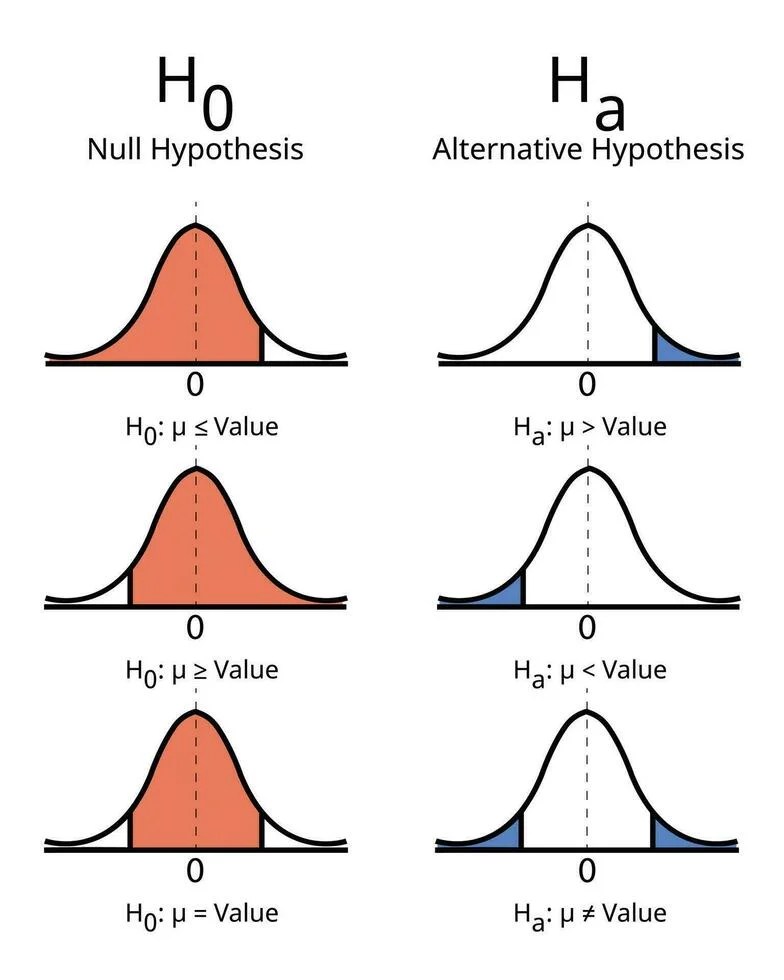
Hypothesis Meaning, Nature, Significance, Null Hypothesis & Alternative Hypothesis

Hypothesis is a proposed explanation or assumption made on the basis of limited evidence, serving as a starting point for further investigation. In research, it acts as a predictive statement that can be tested through study and experimentation. A good hypothesis clearly defines the relationship between variables and provides direction to the research process. It can be formulated as a positive assertion, a negative assertion, or a question. Hypotheses help researchers focus their study, collect relevant data, and analyze outcomes systematically. If supported by evidence, a hypothesis strengthens theories; if rejected, it helps refine or redirect the research.

Nature of Hypothesis:

  • Predictive Nature

A hypothesis predicts the possible outcome of a research study. It forecasts the relationship between two or more variables based on prior knowledge, observations, or theories. Through prediction, the researcher sets a direction for investigation and frames experiments accordingly. The predictive nature helps in formulating tests and procedures that validate or invalidate the assumptions. By predicting outcomes, a hypothesis serves as a guiding tool for collecting and analyzing data systematically in the research process.

  • Testable and Verifiable

A fundamental nature of a hypothesis is that it must be testable and verifiable. Researchers should be able to design experiments or collect data to prove or disprove the hypothesis objectively. If a hypothesis cannot be tested or verified with empirical evidence, it has no scientific value. Testability ensures that the hypothesis remains grounded in reality and allows researchers to apply statistical tools, experiments, or observations to validate the proposed relationships or statements.

  • Simple and Clear

A good hypothesis must be simple, clear, and understandable. It should not be complex or vague, as this makes testing and interpretation difficult. The clarity of a hypothesis allows researchers and readers to grasp its meaning without confusion. It should specifically state the expected relationship between variables and avoid unnecessary technical jargon. A simple hypothesis makes the research process more organized and structured, leading to more reliable and meaningful results during analysis.

  • Specific and Focused

The nature of a hypothesis demands that it be specific and focused on a particular issue or problem. It should not be broad or cover unrelated aspects, which can dilute the research findings. Specificity helps researchers concentrate their efforts on one clear objective, design relevant research methods, and gather precise data. A focused hypothesis reduces ambiguity, minimizes errors, and improves the validity of the research results by maintaining a sharp direction throughout the study.

  • Consistent with Existing Knowledge

A hypothesis should align with the existing body of knowledge and theories unless it aims to challenge or expand them. It should logically fit into the current understanding of the subject to make sense scientifically. When a hypothesis is consistent with known facts, it gains credibility and relevance. Even when proposing something new, a hypothesis should acknowledge previous research and build upon it, rather than ignoring established evidence or scientific frameworks.

  • Objective and Neutral

A hypothesis must be objective and free from personal bias, emotions, or preconceived notions. It should be based on observable facts and logical reasoning rather than personal beliefs. Researchers must frame their hypotheses with neutrality to ensure that the research process remains fair and unbiased. Objectivity enhances the scientific value of the study and ensures that conclusions are drawn based on evidence rather than assumptions, preferences, or subjective interpretations.

  • Tentative and Provisional

A hypothesis is not a confirmed truth but a tentative statement awaiting validation through research. It is subject to change, modification, or rejection based on the findings. Researchers must remain open-minded and willing to revise the hypothesis if new evidence contradicts it. This provisional nature is crucial for the progress of scientific inquiry, as it encourages continuous testing, exploration, and refinement of ideas instead of blindly accepting assumptions.

  • Relational Nature

Hypotheses often establish relationships between two or more variables. They state how one variable may affect, influence, or be associated with another. This relational nature forms the backbone of experimental and correlational research designs. Understanding these relationships helps researchers explain causes, predict effects, and identify patterns within their study areas. Clearly stated relationships in hypotheses also facilitate the application of statistical tests and the interpretation of research findings effectively.

Significance of Hypothesis:

  • Guides the Research Process

The hypothesis acts as a roadmap for the researcher, providing clear direction and focus. It helps define what needs to be studied, which variables to observe, and what methods to apply. Without a hypothesis, research would be unguided and scattered. By offering a structured path, it ensures that the research efforts are purposeful and systematically organized toward achieving meaningful outcomes.

  • Defines the Focus of Study

A hypothesis narrows the scope of the study by specifying exactly what the researcher aims to investigate. It identifies key variables and their expected relationships, preventing unnecessary data collection. This concentration saves time and resources while allowing for more detailed analysis. A focused study helps in maintaining clarity throughout the research process and results in stronger, more convincing conclusions based on targeted inquiry.

  • Establishes Relationships Between Variables

A hypothesis highlights the potential relationships between two or more variables. It outlines whether variables move together, influence each other, or remain independent. Establishing these relationships is essential for explaining complex phenomena. Through hypothesis testing, researchers can confirm or reject assumed connections, leading to deeper understanding, better theories, and stronger predictive capabilities in both scientific and business research contexts.

  • Helps in Developing Theories

Hypotheses contribute significantly to theory building. When a hypothesis is repeatedly tested and supported by empirical evidence, it can help form new theories or refine existing ones. Theories built on tested hypotheses have greater scientific value and can guide future research and practice. Thus, hypotheses are not just for individual studies; they play a critical role in expanding the broader knowledge base of a discipline.

  • Facilitates the Testing of Concepts

Concepts and assumptions need validation before they can be widely accepted. A hypothesis facilitates this validation by providing a mechanism for empirical testing. It helps researchers design experiments or surveys specifically aimed at confirming or disproving a particular idea. This ensures that concepts do not remain speculative but are subjected to rigorous scientific scrutiny, enhancing the reliability and acceptance of research findings.

  • Enhances Objectivity in Research

Having a well-defined hypothesis enhances objectivity by setting specific criteria that research must meet. Researchers approach data collection and analysis with a neutral mindset focused on proving or disproving the hypothesis. This objectivity minimizes the influence of personal biases or preconceived notions, promoting fair and unbiased research results. In this way, hypotheses help maintain the scientific integrity of research projects.

  • Assists in Decision Making

In applied fields like business and healthcare, hypotheses help decision-makers by providing data-driven insights. By testing hypotheses about consumer behavior, product performance, or treatment outcomes, organizations and professionals can make informed decisions. This reduces risks and improves strategic planning. A hypothesis, therefore, transforms vague assumptions into evidence-based conclusions that directly impact policies, operations, and practices.

  • Saves Time and Resources

By clearly defining what needs to be studied, a hypothesis prevents researchers from wasting time and resources on irrelevant data. It limits the research to specific objectives and focuses efforts on gathering meaningful, actionable information. Efficient use of resources is critical in both academic and professional research settings, making a well-structured hypothesis an essential tool for maximizing productivity and effectiveness.

Null Hypothesis:

The null hypothesis (H₀) is a fundamental concept in statistical testing that proposes no significant relationship or difference exists between variables being studied. It serves as the default position that researchers aim to test against, representing the assumption that any observed effects are due to random chance rather than systematic influences.

In experimental design, the null hypothesis typically states there is:

  • No difference between groups

  • No association between variables

  • No effect of a treatment/intervention

For example, in testing a new drug’s efficacy, H₀ would state “the drug has no effect on symptom reduction compared to placebo.” Researchers then collect data to determine whether sufficient evidence exists to reject this null position in favor of the alternative hypothesis (H₁), which proposes an actual effect exists.

Statistical tests calculate the probability (p-value) of obtaining the observed results if H₀ were true. When this probability falls below a predetermined significance level (usually p < 0.05), researchers reject H₀. Importantly, failing to reject H₀ doesn’t prove its truth – it simply indicates insufficient evidence against it. The null hypothesis framework provides objective criteria for making inferences while controlling for Type I errors (false positives).

Alternative Hypothesis:

The alternative hypothesis represents the researcher’s actual prediction about a relationship between variables, contrasting with the null hypothesis. It states that observed effects are real and not due to random chance, proposing either:

  1. A significant difference between groups

  2. A measurable association between variables

  3. A true effect of an intervention

Unlike the null hypothesis’s conservative stance, the alternative hypothesis embodies the research’s theoretical expectations. In a clinical trial, while H₀ states “Drug X has no effect,” H₁ might claim “Drug X reduces symptoms by at least 20%.”

Alternative hypotheses can be:

  • Directional (one-tailed): Predicting the specific nature of an effect (e.g., “Group A will score higher than Group B”)

  • Non-directional (two-tailed): Simply stating a difference exists without specifying direction

Statistical testing doesn’t directly prove H₁; rather, it assesses whether evidence sufficiently contradicts H₀ to support the alternative. When results show statistical significance (typically p < 0.05), we reject H₀ in favor of H₁.

The alternative hypothesis drives research design by determining appropriate statistical tests, required sample sizes, and measurement precision. It must be formulated before data collection to prevent post-hoc reasoning. Well-constructed alternative hypotheses are testable, falsifiable, and grounded in theoretical frameworks, providing the foundation for meaningful scientific conclusions.

Stages in Research Process

Research Process refers to a systematic sequence of steps followed by researchers to investigate a problem or question. It involves identifying a research problem, reviewing relevant literature, formulating hypotheses, designing a research methodology, collecting data, analyzing the data, interpreting results, and drawing conclusions. This structured approach ensures reliable, valid, and meaningful outcomes in the study.

Stages in Research Process:

  1. Identifying the Research Problem

The first stage in the research process is to identify and define the research problem. This involves recognizing an issue, gap, or question in a particular field of study that requires investigation. Clearly articulating the problem is essential as it sets the foundation for the entire research process. Researchers need to explore existing literature, consult experts, or observe real-world issues to determine the research problem. Defining the problem ensures that the study remains focused and relevant, guiding the researcher in formulating objectives and hypotheses for further investigation.

  1. Reviewing the Literature

Once the research problem is identified, the next stage is reviewing existing literature. This step involves gathering information from books, journal articles, reports, and other scholarly sources related to the research topic. A comprehensive literature review helps researchers understand the current state of knowledge on the subject and identifies gaps in existing studies. It also helps refine the research problem, build hypotheses, and establish a theoretical framework. A well-conducted literature review ensures that the researcher’s work contributes to the existing body of knowledge and avoids duplication of previous studies.

  1. Formulating Hypothesis or Research Questions

In this stage, researchers formulate hypotheses or research questions based on the research problem and literature review. A hypothesis is a testable statement about the relationship between variables, while research questions are open-ended queries that guide the investigation. These hypotheses or questions direct the research design and data collection methods. A well-defined hypothesis or research question helps in focusing the research, making it possible to derive meaningful conclusions. This stage ensures that the study remains on track and allows researchers to clearly communicate the aim and scope of their research.

  1. Research Design and Methodology

The research design is a blueprint for the entire research process. In this stage, researchers select an appropriate methodology to collect and analyze data. They decide whether the research will be qualitative, quantitative, or a mix of both. The design outlines the research approach, methods of data collection, sampling techniques, and analytical tools to be used. A well-defined research design ensures that the study is structured, systematic, and capable of addressing the research questions effectively. This stage also includes setting timelines, budgeting, and ensuring ethical considerations are met.

  1. Data Collection

Data collection is a critical stage where the researcher gathers the necessary information to address the research problem. The data collection method depends on the research design and could involve surveys, interviews, observations, or experiments. Researchers ensure that they collect valid and reliable data, adhering to ethical guidelines such as consent and confidentiality. This stage is vital for providing the empirical evidence needed to test hypotheses or answer research questions. Proper data collection ensures that the research is based on accurate and comprehensive information, forming the basis for analysis and conclusions.

  1. Data Analysis

Once data is collected, the next step is data analysis, where researchers process and interpret the information gathered. The type of analysis depends on the research design—quantitative data might be analyzed using statistical tools, while qualitative data is typically analyzed through thematic analysis or content analysis. Researchers examine patterns, relationships, and trends in the data to draw conclusions or test hypotheses. Effective data analysis helps researchers provide answers to research questions and ensures the results are valid, reliable, and relevant to the research problem. This stage is key to producing meaningful insights.

  1. Interpretation and Presentation of Results

In this stage, researchers interpret the data analysis results, drawing conclusions based on the evidence. The researcher compares the findings to the original hypotheses or research questions and discusses whether the data supports or contradicts expectations. They may also explore the implications of the findings, the limitations of the study, and suggest areas for future research. The results are then presented in a clear, structured format, typically through a research paper, report, or presentation. Effective communication of the results ensures that the research contributes to the body of knowledge and informs decision-making.

  1. Conclusion and Recommendations

The final stage in the research process involves summarizing the key findings and offering recommendations based on the research results. In the conclusion, researchers restate the importance of the research problem, summarize the main findings, and discuss how these findings address the research questions or hypotheses. If applicable, they provide suggestions for practical applications of the research. Researchers may also suggest areas for future research to explore unanswered questions or limitations of the study. This stage ensures that the research has real-world relevance and potential for further exploration.

Sampling Techniques (Probability and Non-Probability Sampling Techniques)

Sampling Techniques refer to the methods used to select individuals, items, or data points from a larger population for research purposes. These techniques ensure that the sample accurately represents the entire population, allowing for valid and reliable conclusions. Sampling techniques are broadly classified into two categories: probability sampling (where every element has an equal chance of being selected) and non-probability sampling (where selection is based on researcher judgment or convenience). Common methods include random sampling, stratified sampling, cluster sampling, convenience sampling, and purposive sampling. Choosing the right sampling technique is crucial because it impacts the quality, accuracy, and generalizability of the research findings. Proper sampling reduces bias and increases research credibility.

1. Probability Sampling Techniques

Probability sampling techniques are methods where every member of the population has a known and equal chance of being selected for the sample. These techniques aim to eliminate selection bias and ensure that the sample is truly representative of the entire population. Common types of probability sampling include simple random sampling, systematic sampling, stratified sampling, and cluster sampling. Researchers often prefer probability sampling because it allows the use of statistical methods to estimate population parameters and test hypotheses accurately. This approach enhances the validity, reliability, and generalizability of research findings, making it fundamental in scientific studies and decision-making processes.

Types of Probability Sampling Techniques

  • Simple Random Sampling

Every population member has an equal, independent chance of selection, typically using random number generators or lotteries. This method eliminates selection bias and ensures representativeness, making it ideal for homogeneous populations. However, it requires a complete sampling frame and may miss small subgroups. Despite its simplicity, large sample sizes are often needed for precision. It’s widely used in surveys and experimental research where unbiased representation is critical.

  • Stratified Random Sampling

The population is divided into homogeneous subgroups (strata), and random samples are drawn from each. This ensures representation of key characteristics (e.g., age, gender). It improves precision compared to simple random sampling, especially for heterogeneous populations. Proportionate stratification maintains population ratios, while disproportionate stratification may oversample rare groups. This method is costlier but valuable when subgroup comparisons are needed, such as in clinical or sociological studies.

  • Systematic Sampling

A fixed interval (*k*) is used to select samples from an ordered population list (e.g., every 10th person). The starting point is randomly chosen. This method is simpler than random sampling and ensures even coverage. However, if the list has hidden patterns, bias may occur. It’s efficient for large populations, like quality control in manufacturing or voter surveys, but requires caution to avoid periodicity-related distortions.

  • Cluster Sampling

The population is divided into clusters (e.g., schools, neighborhoods), and entire clusters are randomly selected for study. This reduces logistical costs, especially for geographically dispersed groups. However, clusters may lack internal diversity, increasing sampling error. Two-stage cluster sampling (randomly selecting subjects within chosen clusters) improves accuracy. It’s practical for national health surveys or educational research where individual access is challenging.

  • Multistage Sampling

A hybrid approach combining multiple probability methods (e.g., clustering followed by stratification). Large clusters are selected first, then subdivided for further random sampling. This balances cost and precision, making it useful for large-scale studies like census data collection or market research. While flexible, it requires careful design to minimize cumulative errors and maintain representativeness across stages.

2. Non-Probability Sampling Techniques

Non-probability Sampling refers to research methods where samples are selected through subjective criteria rather than random selection, meaning not all population members have an equal chance of participation. These techniques are used when probability sampling is impractical due to time, cost, or population constraints. Common approaches include convenience sampling (easily accessible subjects), purposive sampling (targeted selection of specific characteristics), snowball sampling (participant referrals), and quota sampling (pre-set subgroup representation). While these methods enable faster, cheaper data collection in exploratory or qualitative studies, they carry higher risk of bias and limit result generalizability to broader populations. Researchers employ them when prioritizing practicality over statistical representativeness.

Types of Non-Probability Sampling Techniques

  • Convenience Sampling

Researchers select participants who are most easily accessible, such as students in a classroom or shoppers at a mall. This method is quick, inexpensive, and requires minimal planning, making it ideal for preliminary research. However, results suffer from significant bias since the sample may not represent the target population. Despite limitations, convenience sampling is widely used in pilot studies, exploratory research, and when time/resources are constrained.

  • Purposive (Judgmental) Sampling

Researchers deliberately select specific individuals who meet predefined criteria relevant to the study. This technique is valuable when studying unique populations or specialized topics requiring expert knowledge. While it allows for targeted data collection, the subjective selection process introduces researcher bias. Purposive sampling is commonly used in qualitative research, case studies, and when investigating rare phenomena where random sampling isn’t feasible.

  • Snowball Sampling

Existing study participants recruit future subjects from their acquaintances, creating a chain referral process. This method is particularly useful for reaching hidden or hard-to-access populations like marginalized communities. While effective for sensitive topics, the sample may become homogeneous as participants share similar networks. Snowball sampling is frequently employed in sociological research, studies of illegal behaviors, and when investigating stigmatized conditions.

  • Quota Sampling

Researchers divide the population into subgroups and non-randomly select participants until predetermined quotas are filled. This ensures representation across key characteristics but lacks the randomness of stratified sampling. Quota sampling is more structured than convenience sampling yet still prone to selection bias. Market researchers often use this method when they need quick, cost-effective results that approximate population demographics.

  • Self-Selection Sampling

Individuals voluntarily choose to participate, typically by responding to open invitations or surveys. This approach yields large sample sizes easily but suffers from volunteer bias, as participants may differ significantly from non-respondents. Common in online surveys and call-in opinion polls, self-selection provides accessible data though results should be interpreted cautiously due to inherent representation issues.

Key differences between Probability and Non-Probability Sampling

Aspect Probability Sampling Non-Probability Sampling
Selection Basis Random Subjective
Bias Risk Low High
Representativeness High Low
Generalizability Strong Limited
Cost High Low
Time Required Long Short
Complexity High Low
Population Knowledge Required Optional
Error Control Measurable Unmeasurable
Use Cases Quantitative Qualitative
Statistical Tests Applicable Limited
Sample Frame Essential Flexible
Precision High Variable
Research Stage Confirmatory Exploratory
Participant Access Challenging Easy

Research, Introduction, Meaning, Definition, Objective, Purpose, Types, Importance and Challenges

Research is a systematic and organized process of collecting, analyzing, and interpreting information to increase understanding of a topic or issue. It aims to discover new facts, verify existing knowledge, or solve specific problems through careful investigation. Research can be theoretical or applied, and it involves forming hypotheses, gathering data, and drawing conclusions. It is essential in academic, scientific, and business fields to make informed decisions and improve practices. A well-conducted research study follows a structured methodology to ensure reliability and validity. Overall, research is a tool for expanding knowledge and contributing to the development of society and industries.

Definition of Research

  • Clifford Woody

Research is a careful inquiry or examination to discover new facts or verify old ones.

  • Creswell

Research is a process of steps used to collect and analyze information to increase our understanding of a topic.

  • Redman and Mory

Research is a systematized effort to gain new knowledge.

  • Kerlinger

Research is a systematic, controlled, empirical, and critical investigation of hypothetical propositions.

  • Lundberg

Research is a systematic activity directed towards the discovery and development of an organized body of knowledge.

Objective of Research

  • To Gain Familiarity with a Phenomenon

One major objective of research is to explore and understand a phenomenon or concept more clearly. This is often done through exploratory research, especially when little prior knowledge exists. It helps researchers gain insights into new topics, identify trends, and lay the groundwork for future studies. By becoming familiar with unfamiliar issues, researchers can form better hypotheses and research questions. This foundational understanding is critical for developing more in-depth research and creating meaningful contributions to academic and professional fields.

  • To Describe a Phenomenon Accurately

Descriptive research aims to systematically and precisely describe the characteristics of a subject, event, or population. Whether it’s human behavior, market trends, or institutional processes, this type of research collects detailed information to create an accurate picture. The objective is not to determine cause-and-effect but to define “what is” in a clear and factual manner. Such descriptions help researchers, practitioners, and policymakers understand the current state of affairs and serve as a reference point for comparing future changes.

  • To Establish Cause-and-Effect Relationships

Causal or explanatory research seeks to identify and analyze relationships between variables, often using experiments or observational studies. The objective is to determine how and why certain phenomena occur. For instance, a business might study the impact of advertising on sales. Establishing cause-and-effect allows researchers to predict outcomes and design effective interventions. This type of research is essential in fields like science, economics, and medicine, where understanding the effects of one factor on another can lead to critical discoveries and solutions.

  • To Test Hypotheses

Another key objective of research is hypothesis testing, where assumptions or predictions made before a study are examined for accuracy. Researchers design experiments or surveys to gather data that supports or refutes their hypotheses. The goal is to provide empirical evidence for or against theoretical statements. This process sharpens theories, confirms findings, and promotes scientific accuracy. Testing hypotheses is particularly important in quantitative research, as it relies on statistical techniques to validate conclusions and ensure objectivity.

  • To Develop New Theories and Concepts

Research often leads to the creation or refinement of theories and models that explain how the world works. The objective here is to go beyond existing knowledge and offer new perspectives or conceptual frameworks. Through in-depth analysis, researchers can challenge outdated views and propose innovative explanations. These new theories guide future research, inform policy, and influence practice across disciplines. In academic fields, theoretical research forms the basis for scholarly progress and intellectual advancement.

  • To Find Solutions to Practical Problems

Applied research is conducted with the specific objective of solving real-world problems. Whether it’s improving product design, enhancing public health, or increasing workplace efficiency, the goal is to apply scientific methods to practical challenges. This kind of research is widely used in industries, education, and government. It not only addresses current issues but also anticipates future needs. By developing effective strategies and solutions, applied research makes a direct contribution to societal well-being and economic development.

  • To Predict Future Trends

Research aims to forecast what may happen in the future based on current and past data. Predictive research uses statistical tools and modeling techniques to identify patterns and trends that inform future outcomes. For example, businesses use market research to predict consumer behavior, and climate scientists use data to forecast environmental changes. These predictions guide planning and strategic decisions. Accurate forecasting is essential for minimizing risk, improving preparedness, and making proactive decisions in dynamic environments.

  • To Enhance Understanding and Clarify Doubts

Research helps deepen our understanding of complex topics and clarifies uncertainties that may exist in previous studies or beliefs. By investigating issues from multiple angles, using various methods, and verifying results, research ensures greater clarity and accuracy. This objective is crucial in academia and science, where incomplete or conflicting information often leads to confusion. Ongoing research contributes to refinement, resolution of debates, and filling knowledge gaps, ensuring a more complete and reliable understanding of any subject.

Purpose of Research

  • Discovery of New Knowledge

One of the primary purposes of research is to discover new facts, ideas, and knowledge. Research helps in expanding the existing pool of information by exploring unknown areas and generating fresh insights. Through systematic investigation, researchers identify new relationships, concepts, and principles that were previously unexplored. This contributes to the growth of various disciplines such as science, management, economics, and social sciences. Discovery-oriented research lays the foundation for innovation, development, and further academic inquiry in different fields of study.

  • Verification of Existing Knowledge

Research is conducted to test and verify the validity of existing theories, laws, and concepts. Many ideas accepted over time require re-examination due to changing conditions, new evidence, or technological advancements. Research helps confirm whether earlier findings are still relevant and accurate. This process strengthens the reliability of knowledge by removing errors, misconceptions, and outdated assumptions. Verification through research ensures that decisions, policies, and practices are based on dependable and scientifically tested information.

  • Solution to Practical Problems

Another important purpose of research is to provide solutions to real-life problems faced by individuals, organizations, industries, and society. Applied research focuses on identifying causes of problems and suggesting effective remedies. In business, research helps solve issues related to production, marketing, finance, and human resources. In social sciences, it addresses problems like poverty, unemployment, and health. Thus, research acts as a tool for problem-solving and practical decision-making.

  • Development of Theories and Concepts

Research helps in developing new theories, models, and conceptual frameworks. By analyzing data and observing patterns, researchers formulate generalizations and principles that explain phenomena. These theories provide a systematic understanding of relationships among variables and guide future research. Theory-building research enhances academic depth and strengthens subject foundations. It also helps practitioners apply theoretical knowledge in practical situations, thereby bridging the gap between theory and practice in various disciplines.

  • Prediction and Forecasting

Research plays a significant role in predicting future trends and outcomes. By studying past and present data, researchers can forecast changes in markets, consumer behavior, population growth, and economic conditions. Such predictions help organizations and governments plan for the future and reduce uncertainty. Forecasting through research supports strategic planning, risk management, and policy formulation. Accurate predictions enable better preparedness for challenges and opportunities that may arise in the future.

  • Improvement in Decision Making

One of the key purposes of research is to support sound and rational decision-making. Research provides relevant, accurate, and timely information required for making informed choices. In business and management, research reduces guesswork and reliance on intuition. Decisions related to investment, product development, and policy implementation become more effective when backed by research findings. Thus, research improves the quality of decisions and enhances efficiency and effectiveness in achieving objectives.

  • Advancement of Social and Economic Development

Research contributes significantly to social and economic progress. It helps identify social issues, evaluate government programs, and suggest improvements in public policies. Economic research aids in understanding growth patterns, inflation, employment, and income distribution. Through research, innovative solutions are developed to improve living standards and promote sustainable development. Hence, research supports national development by providing a scientific basis for planning, reforms, and welfare initiatives.

  • Enhancement of Knowledge and Learning

Research promotes intellectual growth and continuous learning. It develops analytical thinking, creativity, and problem-solving abilities among researchers and students. Through research, individuals gain deeper understanding of subjects and develop a scientific attitude. It encourages questioning, exploration, and logical reasoning. This purpose is especially important in education, where research-based learning improves academic quality and contributes to personal and professional development.

Types of Research

1. Basic Research

Basic research, also known as pure or fundamental research, is conducted to expand existing knowledge without focusing on immediate practical application. Its main objective is to develop theories, principles, and generalizations. This type of research helps in understanding fundamental aspects of a subject and provides a foundation for applied research. Although it may not offer direct solutions, basic research is essential for long-term academic growth and scientific advancement.

2. Applied Research

Applied research is undertaken to solve specific, practical problems faced by individuals, organizations, or society. It focuses on applying theoretical knowledge to real-life situations. This type of research is common in fields like business, management, medicine, and engineering. The findings of applied research are directly useful for decision-making and problem-solving. It helps improve products, processes, and services by providing workable solutions.

3. Descriptive Research

Descriptive research aims to describe the characteristics of a population, situation, or phenomenon accurately. It does not control variables but observes and reports conditions as they exist. Surveys, questionnaires, and observational methods are commonly used. This type of research helps in understanding “what is happening” rather than “why it happens.” Descriptive research is widely used in social sciences, marketing, and business studies.

4. Analytical Research

Analytical research involves the use of existing data to analyze and evaluate relationships among variables. The researcher critically examines facts and information to draw conclusions. Unlike descriptive research, analytical research focuses on “why” and “how” aspects. It requires logical reasoning and statistical tools. This type of research is useful in policy analysis, financial studies, and economic research to understand cause-and-effect relationships.

5. Exploratory Research

Exploratory research is conducted when a problem is not clearly defined or when little information is available. Its purpose is to gain initial insights and understanding of the problem. Methods such as interviews, focus groups, and literature reviews are commonly used. Exploratory research helps in formulating hypotheses and identifying variables for further study. It provides direction for more detailed and structured research.

6. Qualitative Research

Qualitative research focuses on understanding human behavior, opinions, and experiences in a non-numerical form. It uses methods like interviews, case studies, and observations. This type of research emphasizes depth rather than quantity of data. Qualitative research helps in exploring attitudes, motivations, and perceptions. It is widely used in social sciences, psychology, and management to gain detailed insights.

7. Quantitative Research

Quantitative research deals with numerical data and statistical analysis. It aims to quantify variables and examine relationships using structured tools like surveys and experiments. This type of research provides measurable and objective results. Quantitative research is useful for testing hypotheses and making generalizations. It is commonly used in business, economics, and scientific studies where precision and accuracy are required.

8. Conceptual and Empirical Research

Conceptual research is based on abstract ideas, theories, and concepts. It involves logical reasoning and theoretical analysis without relying on observation. Empirical research, on the other hand, is based on actual observations and experiments. It relies on data collection and evidence. Both types are important, as conceptual research builds theories, while empirical research tests and validates them in real-world conditions.

Importance of Research

  • Expansion of Knowledge

Research plays a vital role in expanding human knowledge. It helps us understand concepts, theories, and facts in a deeper and more meaningful way. Through systematic investigation, research uncovers hidden truths and broadens the scope of what is already known. This continuous process of discovery is essential in education, science, and innovation. Without research, the development of new ideas, improvements in technology, and advancements in various fields would come to a standstill.

  • Problem Solving

One of the main purposes of research is to find solutions to problems. In both academic and practical settings, research helps identify the root causes of issues and suggests possible remedies. Whether it’s a social, economic, scientific, or business problem, research provides the tools and frameworks to analyze the situation effectively. It allows decision-makers to make evidence-based choices and implement strategies that are backed by data and analysis, leading to more successful outcomes.

  • Informed Decision Making

Research enables individuals, organizations, and governments to make informed decisions. By analyzing data and studying trends, research provides a factual basis for choosing between alternatives. In business, it helps managers decide on product development, marketing strategies, and investment plans. In public policy, it helps lawmakers craft laws that address real needs. This reduces the risk of failure and ensures that decisions are effective, efficient, and aligned with actual conditions and demands.

  • Economic Development

Research is essential for economic growth and development. It leads to the creation of new products, services, and technologies, which drive industry and generate employment. By improving productivity, reducing costs, and increasing competitiveness, research directly contributes to the success of businesses and national economies. Additionally, research in areas like agriculture, health, and education ensures sustainable development by solving real-world problems and improving the quality of life for individuals and communities.

  • Improvement in Education

Research strengthens the education system by improving teaching methods, learning outcomes, and academic content. It helps educators understand student needs, evaluate curricula, and adopt innovative practices. Research also enables students and teachers to stay updated with the latest knowledge in their field, promoting lifelong learning. Educational research contributes to the development of better textbooks, e-learning tools, and inclusive teaching strategies that cater to diverse learning styles and backgrounds.

  • Policy Formulation

Government and institutional policies must be based on reliable data and analysis, which research provides. Whether in health, education, environment, or public safety, research ensures that policies are relevant, effective, and future-ready. It helps policymakers assess the potential impact of laws and regulations, avoiding guesswork and promoting social welfare. Evidence-based policies are more likely to gain public support and achieve their goals, ultimately benefiting the economy and society as a whole.

  • Innovation and Technology Advancement

Innovation thrives on research. From developing new medical treatments to designing smarter devices, research is the foundation of technological progress. Scientists and engineers rely on research to explore possibilities, test ideas, and turn concepts into real-world applications. Research also encourages creativity and collaboration across disciplines, pushing the boundaries of what’s possible. As technology rapidly evolves, research ensures that innovation continues to meet the needs of people and adapt to changing environments.

  • Social and Cultural Understanding

Research deepens our understanding of social and cultural dynamics. It helps explore human behavior, beliefs, traditions, and societal changes. Through research in fields like sociology, anthropology, and psychology, we gain insights into communities and cultures, fostering tolerance and mutual respect. This understanding is crucial in a globalized world where collaboration and coexistence are key. It also helps in addressing social issues like poverty, gender inequality, and discrimination with informed, data-backed strategies.

Challenges in Research

  • Problem Identification and Definition

One of the major challenges in research is identifying and clearly defining the research problem. An unclear or poorly framed problem leads to confusion and ineffective results. Researchers often face difficulty in narrowing down a broad topic into a specific and researchable problem. Lack of clarity affects objectives, hypothesis formulation, and methodology. Proper understanding of the problem is essential, as the entire research process depends on accurate problem identification and precise definition.

  • Availability of Reliable Data

Availability of accurate and reliable data is a significant challenge in research. Researchers may face incomplete, outdated, or inconsistent data sources. In some cases, data may not be accessible due to confidentiality or restrictions. Primary data collection can be costly and time-consuming, while secondary data may lack relevance. Poor quality data directly affects the validity and reliability of research findings, making conclusions less dependable.

  • Time Constraints

Time limitation is a common challenge faced by researchers, especially students and professionals. Research involves multiple stages such as literature review, data collection, analysis, and reporting, each requiring adequate time. Due to academic deadlines or organizational pressure, researchers may rush through processes, leading to errors and superficial analysis. Insufficient time affects depth, accuracy, and overall quality of research work.

  • Financial Constraints

Lack of adequate funds poses a major challenge in conducting research. Expenses related to data collection, fieldwork, surveys, software, and expert consultation can be high. Limited financial resources restrict sample size, research tools, and scope of the study. Due to budget constraints, researchers may compromise on quality and methodology, which negatively impacts the reliability and effectiveness of research outcomes.

  • Selection of Appropriate Research Methodology

Choosing the correct research methodology is often challenging. Researchers may struggle to select suitable research design, sampling techniques, and data collection methods. Incorrect methodology leads to biased results and invalid conclusions. Lack of experience or guidance further complicates this challenge. Proper alignment between research objectives and methodology is crucial to ensure meaningful and accurate findings.

  • Researcher Bias and Subjectivity

Researcher bias is a serious challenge that affects objectivity. Personal beliefs, assumptions, and expectations may influence data collection, interpretation, and conclusions. Bias can occur intentionally or unintentionally, leading to distorted results. Maintaining neutrality and using standardized tools is essential. Overcoming bias requires awareness, ethical conduct, and adherence to scientific principles throughout the research process.

  • Ethical Issues in Research

Ethical challenges are common in research involving human subjects. Issues such as informed consent, privacy, confidentiality, and data misuse must be carefully handled. Researchers may face difficulty in balancing research objectives with ethical responsibilities. Failure to follow ethical standards can lead to legal consequences and loss of credibility. Ethical compliance is essential for responsible and trustworthy research.

  • Data Analysis and Interpretation

Analyzing and interpreting data accurately is a complex challenge in research. Researchers may lack technical knowledge of statistical tools and software. Misinterpretation of data can lead to incorrect conclusions. Large volumes of data increase complexity and chances of error. Proper training, use of appropriate analytical techniques, and careful interpretation are necessary to ensure valid and meaningful research results.

Kurtosis

Kurtosis is a statistical measure that describes the degree of peakedness or flatness of a frequency distribution in comparison with a normal distribution. It indicates how observations are concentrated around the mean and how the tails of the distribution behave.

In Business Statistics, kurtosis helps analysts understand the shape of a distribution and identify whether data contains extreme observations. It is widely used in finance, economics, market research, quality control, and risk analysis.

Definition of Kurtosis

Kurtosis is the measure of the shape of a distribution that indicates the extent to which observations cluster around the center and the thickness of the tails relative to a normal distribution.

The term Kurtosis was introduced by Karl Pearson.

Excess Kurtosis

An excess kurtosis is a metric that compares the kurtosis of a distribution against the kurtosis of a normal distribution. The kurtosis of a normal distribution equals 3. Therefore, the excess kurtosis is found using the formula below:

Excess Kurtosis = Kurtosis – 3

Types of Kurtosis

The types of kurtosis are determined by the excess kurtosis of a particular distribution. The excess kurtosis can take positive or negative values as well, as values close to zero.

1. Mesokurtic

Mesokurtic Distribution is a distribution that has the same degree of peakedness and tail thickness as a normal distribution. It serves as the standard or benchmark against which other types of kurtosis are compared. In a mesokurtic distribution, observations are moderately concentrated around the mean, and the tails are neither too heavy nor too light. The coefficient of kurtosis (β₂) is equal to 3, while excess kurtosis is 0. Many natural and social phenomena approximately follow a mesokurtic pattern. This type of distribution indicates a balanced spread of data without an unusual concentration of extreme values. In business statistics, mesokurtic distributions are often considered ideal because they reflect a normal and predictable pattern of observations.

Example: The distribution of examination scores in a large class often approximates a mesokurtic distribution.

2. Leptokurtic

Leptokurtic Distribution is more peaked than a normal distribution and has heavier tails. In this type of distribution, a large number of observations are concentrated near the mean, while the tails contain more extreme values than a normal distribution. The coefficient of kurtosis (β₂) is greater than 3, and excess kurtosis is positive. Because of its heavy tails, a leptokurtic distribution indicates a higher probability of extreme observations occurring. This characteristic is particularly important in finance and investment analysis, where sudden gains or losses may occur. In business statistics, leptokurtic distributions are useful for identifying situations involving high risk and volatility. The presence of a sharp peak and heavy tails suggests that observations cluster around the center but occasionally produce significant deviations from the average.

Example: Stock market returns often follow a leptokurtic distribution because extreme gains and losses occur more frequently than expected under a normal distribution.

3. Platykurtic

Platykurtic Distribution is flatter than a normal distribution and has lighter tails. In this type of distribution, observations are more evenly spread across the range of data, resulting in a broad and low central peak. The coefficient of kurtosis (β₂) is less than 3, while excess kurtosis is negative. Because the tails are lighter, extreme observations occur less frequently than in a normal distribution. A platykurtic distribution indicates greater dispersion and lower concentration of observations around the mean. In business statistics, such distributions may occur when data is uniformly distributed across different categories. The flatter shape suggests that observations are widely dispersed and that the likelihood of unusually high or low values is relatively small.

Example: The distribution of customer arrivals spread evenly throughout a day may exhibit a platykurtic pattern.

Methods of Primary Data Collection: Observation, Interview, Questionnaire, and Survey

Primary Data is information collected firsthand by a researcher for a specific research purpose. It is original, fresh, and tailored directly to the research question or objective. Methods such as surveys, interviews, experiments, and observations are commonly used to gather primary data. Since it is collected directly from the source, primary data is highly relevant, specific, and accurate. However, it often requires more time, effort, and resources compared to using existing information. It is essential for studies needing updated or detailed insights.

Methods of Primary Data Collection:

  • Observation

Observation involves systematically watching and recording behaviors, events, or phenomena as they occur naturally or in a controlled setting. It allows researchers to gather real-time, unbiased data without influencing the subject’s behavior. Observations can be structured (following a predefined checklist) or unstructured (open-ended). It is especially useful when participants are unwilling or unable to provide accurate verbal responses. Researchers may act as participants (participant observation) or as non-intrusive observers. Observation is widely used in fields like anthropology, psychology, and marketing to understand behaviors, workflows, or consumer interactions. It provides deep insights but may sometimes lack the ability to explain the reasons behind certain actions, requiring combination with other methods like interviews for richer analysis.

  • Interview

An interview is a direct, face-to-face, telephonic, or video-based conversation between the researcher and the participant aimed at gathering detailed information. Interviews can be structured (fixed questions), semi-structured (guided by a framework but flexible), or unstructured (open conversation). This method allows for in-depth exploration of opinions, emotions, experiences, and motivations. Interviews can be personal or group-based, depending on research needs. They are commonly used in qualitative research to gain comprehensive understanding and context behind responses. Although interviews provide rich, detailed data, they can be time-consuming and may introduce biases if not conducted carefully. Proper interviewer skills are essential for encouraging honest and open communication from participants.

  • Questionnaire

Questionnaire is a set of written or digital questions designed to collect information from respondents. It can include closed-ended questions (like multiple-choice) or open-ended questions (where respondents write answers in their own words). Questionnaires are often used for surveys and research studies where standardized information is needed from a large audience. They are cost-effective, easy to distribute, and efficient in data collection. Responses are easy to quantify for statistical analysis. However, the design of the questionnaire is crucial — poorly framed questions can lead to misunderstandings and unreliable data. Questionnaires are widely used in education, social science, market research, and customer satisfaction studies.

  • Survey

Survey is a research method involving the systematic collection of information from a sample of individuals, usually through questionnaires or interviews. Surveys can be conducted in-person, via phone, online, or by mail. They are useful for gathering quantitative as well as qualitative data about behaviors, attitudes, preferences, or demographics. Surveys are popular because they can cover large populations at relatively low cost and produce statistically significant results if designed properly. However, their effectiveness depends on clear question framing, respondent honesty, and sampling methods. Surveys are widely used in fields like business, healthcare, political science, and social research for decision-making and trend analysis.

Harmonic Mean, Meaning, Characteristics, Properties Advantages and Limitations

Harmonic Mean (HM) is a measure of central tendency that is defined as the reciprocal of the arithmetic mean of the reciprocals of the given observations. It is particularly useful when averaging rates, ratios, speeds, prices per unit, and similar quantities. The harmonic mean gives greater importance to smaller values and is considered the most appropriate average when the variable under study is expressed as a rate.

In Business Statistics, the harmonic mean is widely used in transportation, finance, economics, and production analysis.

Definition of Harmonic Mean

According to statistics, the harmonic mean is the reciprocal of the average of the reciprocals of all observations in a dataset.

A simple way to define a harmonic mean is to call it the reciprocal of the arithmetic mean of the reciprocals of the observations. The most important criteria for it is that none of the observations should be zero.

A harmonic mean is used in averaging of ratios. The most common examples of ratios are that of speed and time, cost and unit of material, work and time etc. The harmonic mean (H.M.) of n observations is

H.M. = 1÷ (1⁄n ∑ i= 1n (1⁄xi) )

In the case of frequency distribution, a harmonic mean is given by

H.M. = 1÷ [1⁄N (∑ i= 1n (f⁄ xi)], where N = ∑ i= 1n fi

Characteristics of Harmonic Mean

1. Based on All Observations

One of the most important characteristics of the Harmonic Mean (HM) is that it is based on all observations in a dataset. Every value contributes to the calculation through its reciprocal. Since no observation is ignored, the harmonic mean represents the entire dataset comprehensively. This characteristic makes it a reliable measure of central tendency. Unlike some averages that depend on selected values, HM utilizes complete information. As a result, it provides a representative average for data involving rates and ratios. The inclusion of all observations enhances its statistical significance and improves the accuracy of the results obtained.

2. Rigidly Defined

The harmonic mean is rigidly defined and follows a fixed mathematical formula. Its method of calculation is precise and objective, leaving no room for personal judgment or bias. When different individuals calculate the harmonic mean using the same dataset, they obtain the same result. This consistency ensures reliability and comparability in statistical analysis. A rigidly defined measure is particularly useful in scientific research, business studies, and economic analysis where accuracy is essential. Therefore, the harmonic mean is considered a dependable statistical measure because of its clearly established mathematical foundation and calculation procedure.

3. Suitable for Rates and Ratios

The harmonic mean is especially suitable for averaging rates, ratios, and other reciprocal quantities. Examples include speed, cost per unit, productivity rates, and price-earnings ratios. In such situations, arithmetic mean may not provide accurate results because it does not account for the reciprocal relationship among observations. The harmonic mean correctly reflects the average value when the variable is expressed as a rate. This characteristic makes HM highly valuable in business, economics, transportation, and engineering. Consequently, it is regarded as the most appropriate measure of central tendency for data involving ratios and rates.

4. Gives Greater Weight to Smaller Values

A distinctive characteristic of the harmonic mean is that it gives greater importance to smaller observations. Since the calculation is based on reciprocals, smaller values have a stronger influence on the final result than larger values. This feature is particularly useful when small values are more significant in the analysis. However, it also means that very small observations can substantially affect the harmonic mean. As a result, HM tends to be lower than the arithmetic mean and geometric mean. This emphasis on smaller values makes it especially suitable for specific statistical applications involving rates and efficiencies.

5. Mathematical Treatment is Possible

The harmonic mean possesses useful mathematical properties that allow further statistical treatment. It can be incorporated into advanced mathematical and statistical analyses. Researchers can apply algebraic techniques and formulas involving harmonic mean in various fields such as economics, finance, and operations research. Its mathematical nature makes it suitable for theoretical studies and quantitative investigations. Unlike some measures that have limited analytical use, HM supports a wide range of computations. Therefore, its capability for mathematical manipulation enhances its value as a scientific measure of central tendency in business statistics and research.

6. Sensitive to Small Values

Another important characteristic of the harmonic mean is its sensitivity to small values. Because the calculation uses reciprocals, even a single very small observation can significantly reduce the harmonic mean. This sensitivity distinguishes HM from arithmetic and geometric means. While this feature can be advantageous in emphasizing small values, it may also create distortions when extremely small observations are present. Therefore, analysts must exercise caution when using harmonic mean in datasets with large variations. Understanding this characteristic is essential for accurate interpretation and appropriate application of the harmonic mean in statistical analysis.

7. Generally the Smallest Among the Three Means

For any set of positive observations, the harmonic mean is generally the smallest among the three commonly used averages—arithmetic mean, geometric mean, and harmonic mean. This relationship is expressed as:

Arithmetic Mean ≥ Geometric Mean ≥ Harmonic Mean

The harmonic mean’s lower value results from its emphasis on smaller observations. This property is important in statistical theory and helps compare different measures of central tendency. The relationship is widely used in mathematical proofs and economic analyses. Understanding the position of HM relative to other averages helps researchers select the most appropriate measure for a given dataset and interpret statistical results more effectively.

8. Useful in Business and Economic Analysis

The harmonic mean has wide applications in business and economic analysis. It is frequently used in calculating average speeds, average costs, productivity rates, financial ratios, and efficiency measures. Since many business variables are expressed as rates or ratios, HM provides more accurate results than other averages in such situations. Its practical usefulness makes it an important tool for managers, economists, and researchers. By providing meaningful averages for reciprocal quantities, the harmonic mean supports decision-making and performance evaluation. Therefore, its relevance in business and economics is one of its most significant characteristics.

Properties of Harmonic Mean

1. Reciprocal of the Arithmetic Mean of Reciprocals

The most fundamental property of the Harmonic Mean (HM) is that it is the reciprocal of the arithmetic mean of the reciprocals of the observations. This property forms the basis of its calculation. First, the reciprocal of each observation is determined. Then, the arithmetic mean of these reciprocals is calculated. Finally, the reciprocal of that average gives the harmonic mean. This unique approach distinguishes HM from other measures of central tendency. Because of this property, it is particularly useful for averaging rates and ratios. It provides accurate results where reciprocal relationships exist among the observations.

2. Based on All Observations

The harmonic mean uses every observation in the dataset. Each value contributes through its reciprocal, ensuring that no information is ignored. This property makes HM a comprehensive measure of central tendency. Since all observations are included, it reflects the characteristics of the entire dataset rather than a selected portion. The use of complete information enhances the reliability and representativeness of the harmonic mean. In statistical analysis, a measure based on all observations is generally preferred because it minimizes the risk of overlooking important information and provides a more accurate summary of the data.

3. Influenced More by Smaller Values

A notable property of the harmonic mean is that it gives greater weight to smaller observations. Since reciprocals of small values are larger than reciprocals of large values, smaller observations exert a stronger influence on the final result. This property makes HM particularly useful when small values are significant in the analysis. However, it also means that extremely small values can reduce the harmonic mean considerably. This sensitivity to small observations distinguishes HM from arithmetic and geometric means. As a result, it is especially appropriate for analyzing rates, efficiencies, and other reciprocal quantities.

4. Suitable for Averaging Rates and Ratios

The harmonic mean is ideally suited for averaging rates and ratios. When variables such as speed, productivity, cost per unit, or price-earnings ratios are involved, HM provides more accurate results than arithmetic mean. This property arises because rates and ratios often have reciprocal relationships. By accounting for these relationships, the harmonic mean reflects the true average more effectively. For example, when equal distances are traveled at different speeds, HM gives the correct average speed. Therefore, this property makes harmonic mean an essential tool in business, economics, transportation, and engineering applications.

5. Cannot Be Calculated if Any Observation is Zero

An important property of the harmonic mean is that it cannot be calculated when any observation is zero. Since the formula requires taking reciprocals, division by zero becomes impossible. Consequently, the harmonic mean is undefined in such cases. This property limits its application to datasets containing only non-zero values. Analysts must examine the data carefully before applying HM. If zero values are present, alternative measures such as arithmetic mean or median may be more appropriate. Understanding this property is essential for selecting the correct statistical measure and avoiding computational errors.

6. Mathematical Relationship with Other Means

The harmonic mean has a well-known mathematical relationship with the arithmetic mean and geometric mean. For any set of positive observations:

Arithmetic Mean ≥ Geometric Mean ≥ Harmonic Mean

This property is a fundamental principle in statistics and mathematics. It indicates that HM is generally the smallest of the three means because it places greater emphasis on smaller values. The relationship is useful for comparing different averages and understanding their behavior. It also helps researchers verify calculations and interpret results. This mathematical property enhances the theoretical significance of the harmonic mean and supports its application in advanced statistical studies.

7. Amenable to Algebraic Treatment

The harmonic mean possesses mathematical properties that make it suitable for algebraic manipulation and advanced statistical analysis. It can be incorporated into various formulas and theoretical models. Researchers frequently use HM in economics, finance, operations research, and quantitative studies. Its mathematical structure allows the derivation of relationships and the development of analytical techniques. This property increases its usefulness beyond simple averaging. Because it supports further calculations, the harmonic mean plays an important role in statistical theory and practical research. Its amenability to algebraic treatment distinguishes it from less versatile measures.

8. Most Appropriate for Equal Weight Situations Involving Rates

The harmonic mean is most appropriate when equal quantities are associated with different rates. For example, when a vehicle covers equal distances at different speeds, HM provides the correct average speed. Similarly, it is useful when equal investments or equal units are associated with varying rates of return or costs. This property ensures that the resulting average accurately reflects the situation under study. Arithmetic mean may produce misleading results in such cases. Therefore, the harmonic mean is considered the most suitable average whenever equal-weight rate calculations are required in business and statistical analysis.

Advantages of Harmonic Mean

  • Most Suitable for Averaging Rates and Ratios

One of the greatest advantages of the Harmonic Mean (HM) is that it is the most suitable average for rates and ratios. Variables such as speed, productivity, efficiency, cost per unit, and price-earnings ratios are often expressed in reciprocal form. In such situations, arithmetic mean may produce misleading results, whereas harmonic mean provides a more accurate average. It properly accounts for the relationship between the numerator and denominator of rates. Because of this characteristic, HM is widely used in business, economics, transportation, and engineering. Therefore, it is considered the best measure of central tendency for ratio-based data.

  • Based on All Observations

The harmonic mean uses all observations in the dataset for its calculation. Every value contributes through its reciprocal, ensuring that no information is ignored. As a result, HM represents the entire dataset rather than a selected portion of it. This comprehensive coverage increases the reliability and accuracy of the average. Since all observations are included, the harmonic mean provides a more representative measure of central tendency. In statistical analysis, a measure based on complete data is generally preferred because it minimizes bias and reflects the overall characteristics of the dataset effectively.

  • Provides Accurate Results for Equal Quantities

The harmonic mean is especially useful when equal quantities are associated with different rates. For example, when a vehicle travels equal distances at different speeds, HM gives the correct average speed. Arithmetic mean may overestimate or underestimate the result in such cases. The harmonic mean accurately balances the effect of varying rates and provides a realistic average. This advantage makes it valuable in transportation studies, production analysis, and financial calculations. Whenever equal-weight situations involving rates arise, HM ensures accurate measurement and meaningful interpretation, making it an essential statistical tool.

  • Gives Proper Importance to Small Values

Another important advantage of the harmonic mean is that it gives greater importance to smaller values. In many practical situations, smaller observations have a significant impact on the overall result. HM reflects this importance by assigning greater weight to lower values through the reciprocal process. This characteristic ensures that the average is not dominated by large observations. It provides a balanced representation in situations where small values are crucial. Consequently, the harmonic mean is particularly useful in analyzing efficiency, productivity, and performance measures where lower values can substantially influence outcomes.

  • Rigidly Defined and Objective

The harmonic mean is rigidly defined by a precise mathematical formula. There is no scope for personal judgment or subjective interpretation during calculation. Different individuals using the same data will always obtain the same result. This objectivity enhances the credibility and reliability of statistical findings. A rigidly defined measure is essential in scientific research, business analysis, and economic studies where consistency is required. Because of its fixed calculation method, the harmonic mean ensures uniformity in results and facilitates meaningful comparison across different studies and datasets.

  • Useful in Financial and Economic Analysis

The harmonic mean has extensive applications in finance and economics. It is commonly used for calculating average price-earnings ratios, investment performance measures, and economic indices. Financial analysts often prefer HM because it provides more accurate averages when dealing with ratios. It helps investors and managers evaluate performance and make informed decisions. Economists also use harmonic mean in various statistical analyses involving rates and reciprocal quantities. Its relevance in financial and economic studies demonstrates its practical importance. Therefore, HM serves as a valuable tool for quantitative analysis in business and economic environments.

  • Facilitates Advanced Statistical Analysis

The harmonic mean possesses useful mathematical properties that support advanced statistical analysis. It can be incorporated into various formulas, models, and research methodologies. Because it is mathematically well-defined, researchers can use it in theoretical and applied studies. Its compatibility with algebraic operations makes it suitable for quantitative investigations in economics, operations research, and business statistics. This advantage increases its usefulness beyond simple averaging. Consequently, the harmonic mean contributes significantly to statistical theory and research, providing a reliable foundation for complex analytical work.

  • Valuable in Business Decision-Making

The harmonic mean helps managers and decision-makers analyze performance measures expressed as rates or ratios. Businesses frequently evaluate productivity, efficiency, cost per unit, inventory turnover, and financial ratios. HM provides accurate averages for such variables, enabling better assessment of performance. Reliable statistical information supports effective planning, control, and decision-making. By presenting meaningful averages, the harmonic mean helps organizations identify strengths, weaknesses, and opportunities for improvement. Therefore, its ability to provide accurate and relevant information makes HM an important tool in business management and strategic decision-making.

Limitations of Harmonic Mean

  • Difficult to Understand and Calculate

One of the major disadvantages of the Harmonic Mean (HM) is that it is difficult to understand and calculate. Unlike the arithmetic mean, which involves simple addition and division, the harmonic mean requires finding reciprocals of all observations and then performing additional calculations. For large datasets, the process becomes more complex and time-consuming. Many students, managers, and non-technical users find it challenging to compute and interpret. Because of this complexity, HM is not commonly used in routine statistical analysis. Its mathematical nature often requires calculators or software, limiting its convenience in practical applications.

  • Cannot Be Calculated When a Value is Zero

The harmonic mean cannot be calculated if any observation in the dataset is zero. Since the formula requires taking the reciprocal of every value, a zero observation would involve division by zero, which is mathematically impossible. This limitation restricts the applicability of HM in datasets where zero values are present. Many business and economic datasets may contain zero observations, making harmonic mean unsuitable for analysis. In such situations, alternative measures of central tendency such as arithmetic mean or median must be used. Therefore, the presence of zero values is a significant drawback.

  • Highly Affected by Small Values

A notable disadvantage of the harmonic mean is its extreme sensitivity to small values. Since the calculation is based on reciprocals, even one very small observation can significantly reduce the harmonic mean. As a result, the average may become unrepresentative of the majority of the data. While this characteristic is useful in some situations, it can also distort the overall picture when unusually small values are present. Analysts must exercise caution when interpreting results. Therefore, the harmonic mean may not always provide a balanced measure of central tendency in datasets with extreme variations.

  • Limited Scope of Application

The harmonic mean has a limited scope of application compared to other averages. It is mainly useful for data involving rates, ratios, speeds, and reciprocal relationships. For most general statistical datasets, arithmetic mean or median is more appropriate and easier to use. Because HM is applicable only in specific circumstances, it cannot serve as a universal measure of central tendency. This limitation reduces its practical usefulness in many fields. Consequently, researchers and managers often prefer other averages unless the nature of the data specifically requires the use of harmonic mean.

  • Unsuitable for Negative Values

The harmonic mean is generally unsuitable for datasets containing negative values. Negative observations create difficulties in interpretation and may produce misleading results. In many business and economic situations, losses, deficits, or negative growth rates can occur. Under such conditions, the harmonic mean may not provide meaningful information. This restriction limits its usefulness in certain analyses where both positive and negative values are present. Therefore, analysts must carefully examine the nature of the data before applying HM. Alternative statistical measures are often more appropriate when negative observations exist.

  • Time-Consuming for Large Datasets

Another disadvantage of the harmonic mean is that it can be time-consuming to calculate, especially when dealing with large datasets. Every observation must first be converted into its reciprocal, after which the reciprocals are summed and averaged. Finally, the reciprocal of the average must be determined. These multiple steps increase the possibility of computational errors and require additional effort. Although modern software simplifies the process, manual calculations remain lengthy and cumbersome. Consequently, many analysts prefer simpler measures such as arithmetic mean when quick calculations are required.

  • Difficult to Interpret

The harmonic mean is often difficult to interpret compared to the arithmetic mean. Most people are familiar with ordinary averages based on addition and division, making arithmetic mean easier to understand. The concept of averaging reciprocals is less intuitive and may confuse users who lack statistical knowledge. As a result, communicating results based on harmonic mean can be challenging. Managers, stakeholders, and decision-makers may find it harder to grasp its significance. Therefore, despite its usefulness in specific situations, HM is less popular for general reporting and presentation purposes.

  • Not Suitable for General Statistical Analysis

The harmonic mean is not suitable for general statistical analysis because it is designed specifically for reciprocal quantities. Most statistical studies involve data that can be analyzed effectively using arithmetic mean or median. Applying HM to inappropriate datasets may produce misleading conclusions. Its specialized nature limits its usefulness in broad statistical applications. Researchers must ensure that the data involves rates, ratios, or similar relationships before choosing HM. Therefore, while harmonic mean is valuable in certain contexts, it cannot replace other measures of central tendency in general statistical practice.

Geometric Mean, Characteristics, Advantages and Limitations

Geometric Mean (GM) is a measure of central tendency that is calculated by taking the nth root of the product of n observations. It is particularly useful for data involving percentages, ratios, growth rates, index numbers, and financial calculations. Unlike the arithmetic mean, the geometric mean considers the multiplicative relationship among values.

It is widely used in Business Statistics for measuring average growth rates in sales, profits, investments, and population studies.

According to statisticians, the geometric mean is the value obtained by multiplying all observations and then taking the root corresponding to the number of observations.

Characteristics of Geometric Mean

  • Based on All Observations

One of the most important characteristics of the Geometric Mean (GM) is that it is based on all observations in a dataset. Every value contributes to the calculation because the geometric mean is obtained by multiplying all observations and taking the appropriate root. Unlike some measures of central tendency that may ignore certain values, GM considers the entire dataset. This makes it a representative average for the data. Since all observations are included, the resulting value reflects the overall characteristics of the dataset. Therefore, the geometric mean provides a comprehensive measure of central tendency.

  • Rigidly Defined

The geometric mean is rigidly defined and has a precise mathematical formula. There is no ambiguity in its calculation because the same procedure is followed for every dataset. The observations are multiplied together, and the nth root of the product is taken. Because of this fixed method, different individuals working with the same data will obtain the same result. This characteristic ensures consistency and objectivity in statistical analysis. A rigidly defined measure is essential for scientific studies and business research, where accurate and reliable results are required for decision-making and interpretation.

  • Suitable for Multiplicative Data

Geometric mean is particularly suitable for multiplicative data where values change proportionally rather than additively. It is widely used in situations involving percentages, ratios, growth rates, and index numbers. In business and economics, many variables such as sales growth, population growth, and investment returns follow multiplicative patterns. The geometric mean accurately reflects the average rate of change in such cases. Unlike the arithmetic mean, which may overstate growth, GM accounts for compounding effects. Therefore, it is considered the most appropriate average for analyzing data involving multiplication and proportional change.

  • Less Affected by Extreme Values

Compared to the arithmetic mean, the geometric mean is less affected by extremely large values. Since it is based on multiplication and roots rather than direct addition, unusually high observations have a smaller influence on the final result. This characteristic makes GM more stable when datasets contain significant variations. However, it is not completely immune to extreme values. While outliers still affect the calculation, their impact is less pronounced than in the arithmetic mean. As a result, the geometric mean often provides a more balanced measure of central tendency for skewed distributions.

  • Useful for Growth Rate Calculations

A key characteristic of the geometric mean is its usefulness in measuring average growth rates over time. It is widely applied in finance, economics, and business to calculate compound annual growth rates, investment returns, and population growth. Since growth occurs through compounding, arithmetic averages may produce misleading results. The geometric mean accurately reflects the cumulative effect of successive growth rates. This makes it an indispensable tool for analyzing long-term trends. Therefore, whenever data involves percentage increases or decreases over multiple periods, the geometric mean is generally preferred over other averages.

  • Mathematical Treatment is Possible

The geometric mean possesses important mathematical properties that make it suitable for advanced statistical analysis. It can be manipulated algebraically and used in various statistical formulas and research studies. Logarithms are often employed to simplify its calculation, especially when dealing with large datasets. Because of its mathematical usefulness, GM is widely applied in economics, finance, and scientific research. It supports further statistical operations and theoretical developments. This characteristic distinguishes it from some other averages that may have limited analytical applications. Thus, geometric mean is valuable both practically and theoretically.

  • Cannot Be Calculated for Negative Values

A notable characteristic of the geometric mean is that it cannot be calculated meaningfully when the dataset contains negative values. Since the calculation involves multiplication and extraction of roots, negative observations may produce imaginary or undefined results. Similarly, the presence of zero creates difficulties because the product of all observations becomes zero, causing the geometric mean to be zero. Therefore, GM is suitable only for positive numerical values. This limitation restricts its application in certain statistical situations. Nevertheless, it remains highly useful for datasets involving positive ratios, percentages, and growth factors.

  • Lies Between Arithmetic Mean and Harmonic Mean

For any set of positive observations, the geometric mean occupies a position between the arithmetic mean and the harmonic mean. This relationship is expressed as:

Arithmetic Mean ≥ Geometric Mean ≥ Harmonic Mean

This characteristic is an important property in statistics and helps compare different measures of central tendency. The geometric mean generally produces a value lower than the arithmetic mean but higher than the harmonic mean. This intermediate position reflects its balance between additive and reciprocal averaging methods. The relationship is particularly useful in mathematical and economic analyses where different types of averages are compared. Consequently, GM serves as an important link among the three principal averages.

Advantages of Geometric Mean

  • Based on All Observations

One of the most significant advantages of the Geometric Mean (GM) is that it is based on all observations in a dataset. Every value contributes to the calculation because the geometric mean is obtained by multiplying all observations and taking the appropriate root. This ensures that no data point is ignored. As a result, the geometric mean provides a comprehensive representation of the entire dataset. Since it utilizes complete information, it is considered more reliable than measures that depend on only a few values. This characteristic makes GM a useful and representative measure of central tendency.

  • Suitable for Growth Rates and Compound Changes

The geometric mean is particularly useful for measuring average growth rates and compound changes over time. Business variables such as sales growth, population growth, investment returns, and inflation often increase or decrease on a percentage basis. In such cases, arithmetic averages may produce misleading results because they ignore compounding effects. The geometric mean accurately reflects the true average growth rate by considering the multiplicative nature of changes. Therefore, it is widely used in finance, economics, and business analysis. This makes GM an ideal tool for evaluating long-term trends and performance.

  • Less Affected by Extreme Values

Compared to the arithmetic mean, the geometric mean is less influenced by extreme values or outliers. Since it is calculated through multiplication and root extraction rather than simple addition, unusually large observations have a relatively smaller effect on the final result. This characteristic provides a more balanced measure of central tendency when data contains wide variations. While extreme values still affect the geometric mean to some extent, their impact is reduced compared to arithmetic averaging. Consequently, GM often offers a more realistic average for datasets that are positively skewed or contain significant fluctuations.

  • Useful for Ratio and Percentage Data

Another important advantage of the geometric mean is its suitability for ratio and percentage data. Many business and economic variables are expressed as percentages, proportions, or ratios rather than absolute numbers. Examples include profit margins, growth rates, productivity indices, and financial returns. The geometric mean provides accurate results for such data because it reflects proportional relationships among observations. Unlike arithmetic mean, which may distort ratio-based information, GM preserves multiplicative relationships. Therefore, it is widely used in statistical studies involving percentages and ratios, making it an essential tool for business analysis.

  • Widely Used in Index Numbers

Geometric mean plays an important role in the construction of index numbers. Index numbers measure changes in prices, production, wages, and other economic variables over time. Many statistical agencies and researchers prefer geometric mean because it reduces the effect of extreme variations and provides balanced results. It is particularly useful when combining relative changes from different categories. The geometric mean ensures that all items contribute proportionately to the index. Consequently, it improves the accuracy and reliability of economic measurements. This makes GM a valuable tool in national income analysis, inflation studies, and economic research.

  • Facilitates Mathematical and Statistical Analysis

The geometric mean possesses strong mathematical properties that make it suitable for advanced statistical analysis. It can be manipulated algebraically and incorporated into various statistical formulas. Logarithms can be used to simplify its computation, especially for large datasets. Because of its mathematical flexibility, GM is widely used in scientific research, economics, and business studies. It supports further statistical operations and theoretical developments. This characteristic enhances its practical usefulness and distinguishes it from some other averages that may have limited analytical applications. Therefore, GM is highly valuable in quantitative research.

  • Provides More Accurate Average for Multiplicative Processes

When data follows a multiplicative pattern, the geometric mean provides a more accurate average than the arithmetic mean. Many real-world business processes involve compounding, such as investment growth, interest accumulation, and sales expansion. Arithmetic mean may overestimate the average change because it treats values additively. In contrast, geometric mean accounts for the cumulative effect of multiplication and compounding. This results in a more realistic measure of central tendency. Therefore, GM is especially useful in situations where observations are linked through proportional changes, ensuring accurate and meaningful analysis.

  • Objective and Rigidly Defined

The geometric mean is objective and rigidly defined because its calculation follows a fixed mathematical formula. There is no scope for personal judgment or subjective interpretation during computation. Different individuals analyzing the same dataset will always obtain the same result. This consistency enhances the reliability and credibility of statistical findings. A rigidly defined measure is particularly important in business research, scientific studies, and policy analysis, where accurate and reproducible results are required. Therefore, the objectivity of the geometric mean contributes significantly to its acceptance as a dependable statistical average.

Limitations of Geometric Mean

  • Difficult to Understand and Calculate

One of the major limitations of the Geometric Mean (GM) is that it is comparatively difficult to understand and calculate. Unlike the arithmetic mean, which involves simple addition and division, the geometric mean requires multiplication of all observations and extraction of roots. For large datasets, the calculation becomes more complicated and often requires logarithmic methods or calculators. This complexity makes it less convenient for ordinary users. Students, managers, and decision-makers who are not familiar with advanced mathematics may find it difficult to compute and interpret. Therefore, its practical use is sometimes limited by computational difficulty.

  • Cannot Be Calculated for Negative Values

The geometric mean cannot be meaningfully calculated when the dataset contains negative values. Since the calculation involves taking roots of the product of observations, negative numbers may result in imaginary or undefined values. In many business and economic datasets, negative values such as losses or decreases may occur. In such situations, the geometric mean becomes unsuitable. This restriction limits its applicability compared to the arithmetic mean, which can handle both positive and negative observations. Therefore, GM is useful only when all values in the dataset are positive and suitable for multiplicative analysis.

  • Unsuitable When Any Observation is Zero

Another important limitation is that the geometric mean cannot be effectively used when any observation is zero. Since the geometric mean is calculated by multiplying all values together, the presence of even one zero makes the entire product zero. Consequently, the geometric mean also becomes zero regardless of the other observations. Such a result may not accurately represent the dataset. Many practical situations involve zero values, making the geometric mean inappropriate for analysis. Therefore, datasets containing zeros require alternative measures of central tendency, such as the arithmetic mean or median.

  • Not Suitable for Additive Data

The geometric mean is designed for multiplicative data involving ratios, percentages, and growth rates. It is not suitable for datasets where values are combined through addition. Many business and statistical analyses involve additive relationships, such as total income, total expenditure, or total production. In such cases, the arithmetic mean provides a more meaningful average. Using the geometric mean for additive data may lead to misleading conclusions and inaccurate interpretations. Therefore, its applicability is limited to specific types of datasets and cannot replace the arithmetic mean in general statistical analysis.

  • Time-Consuming for Large Datasets

The calculation of geometric mean can be time-consuming, especially when dealing with large datasets. Every observation must be multiplied, and the appropriate root must then be extracted. Although modern calculators and software simplify the process, manual computation remains lengthy and prone to errors. In comparison, arithmetic mean can be calculated more quickly and easily. The additional time and effort required may discourage its use in routine statistical work. Consequently, many organizations prefer simpler measures of central tendency unless the specific nature of the data makes geometric mean necessary.

  • Less Intuitive and Difficult to Interpret

The geometric mean is often less intuitive than the arithmetic mean. Most people naturally understand averages in terms of addition and division, making arithmetic mean easier to explain and interpret. The concept of multiplying values and extracting roots is less familiar to many users. As a result, the significance of the geometric mean may not be immediately clear to managers, employees, or stakeholders. This difficulty in interpretation can reduce its practical usefulness in business communication and reporting. Therefore, despite its statistical advantages, GM may be less preferred for general presentations.

  • Limited Applicability

The geometric mean is applicable only under specific conditions. It is most useful for growth rates, ratios, percentages, and index numbers. However, many statistical datasets do not involve multiplicative relationships. In such cases, the arithmetic mean, median, or mode may provide more appropriate measures of central tendency. Because of this restricted scope, the geometric mean cannot be considered a universal average. Its usefulness depends entirely on the nature of the data being analyzed. Therefore, statisticians must carefully evaluate whether the dataset is suitable before applying the geometric mean.

  • Sensitive to Errors in Data

Since the geometric mean uses every observation in the calculation, errors in data can significantly affect the final result. Incorrect entries, measurement mistakes, or recording errors influence the product of the observations and consequently alter the geometric mean. In datasets involving large numbers, even a small error can produce substantial differences in the final value. This sensitivity requires careful data verification and accuracy during collection and processing. Therefore, reliable data is essential for obtaining meaningful results from the geometric mean. Any inaccuracies may reduce the validity and usefulness of the calculated average.

error: Content is protected !!