Need for Reviewing and Updating HR Policies

HR policies are formulated in the light of given situation. However, the situational variables are not static but they are dynamic and change with the time. Therefore, in order to integrate these changes, there should be periodic review of HR policies in the light of these factors and suitable changes must be incorporated.

For example, when Madura Garments, a division of Madura Coats, was taken over by Kumarmangalam Birla Group, many managerial personnel left the division which created a managerial vacuum and employee morale turned to be quite low.

In order to rebuild the division, many actions were taken in which change in compensation was one of these and there was a hefty salary hike of 50-60 per cent of all employees.

Because of changed situations, Hindustan Unilever, once the choice employer of managerial talents, has incorporated many changes in its HR policies to attract and retain managerial talents such as provision of 2-3 months training abroad for all new recruits in management cadre, direct entry of experienced managerial talents at the middle management level, offering of stock option scheme, and special emphasis on recruiting woman employees.

Update

Step 1: Identify the Need for a Policy

Employers do not need to create policies for every unforeseen event as this will limit management’s ability to address individual employee needs or unique situations. Policies should provide good guidelines and expectations to ensure fair and consistent practices and legal compliance. Employers may want to develop a policy:

  • If employees’ behavior indicates confusion about the appropriate conduct or how to handle certain situations (e.g., attendance policy, cellphone use policy, travel expense policy, code of conduct).
  • If legal protection of the organization is necessary (e.g., investigations policy).
  • If there is a need for government laws and regulations compliance (e.g., the Family and Medical Leave Act, COBRA).
  • If there is a need to create consistent standards and rules (e.g., progressive discipline).
  • If there is a need to create consistency and fair treatment of employees (e.g., paid time off, benefits eligibility).

Step 2: Determine Policy Content

Policies are written guidelines that explain generally what the employer’s requirements are and how employees will be treated. As organizations create new policies, they should be careful to avoid language that conveys rigid rules that must be followed exactly as written in all circumstances. Flexibility should be built into the wording, and promises that could be interpreted as a contract should be eliminated. For example, organizations should not:

  • State that the organization will “only” or “always” do something, or “will” or “must” act in a particular way.
  • Describe employees as “permanent.”
  • State that employees will be terminated only “for cause.”
  • Make promises of job security.
  • Use all-inclusive lists, such as in disciplinary procedures or work rules.

Employers should use terms such as “generally,” “typically,” “usually” and “may” so that managers have flexibility in interpreting and applying the policies based on the circumstances involved and on the severity of any company policy violation(s).

All policies need to be written in clear language. The policy language itself often varies from employer to employer depending on size, industry and sometimes even location. However, most policies have similar components. The typical components are outlined below:

  • Purpose statement. The purpose statement outlines why the organization is issuing the policy and what the desired effect or outcome will be. For example, “Employees contribute to the corporate culture and reputation of [Company Name] in the way they present themselves. A professional appearance is essential to a favorable impression with customers, regulators and company shareholders (owners). Good grooming and appropriate dress reflect employee pride and inspire confidence on the part of such persons.”
  • Specifications section. This section includes details about specific regulations, requirements or organizational behavior standards that the policy is creating. For example, “Employees are expected to dress in business attire Monday through Thursday. On Fridays employees are permitted to wear casual attire unless there is an event at the workplace or the employee has any meetings with external clients or vendors that day.”
  • Implementation section. This section indicates which parties are responsible for carrying out policy statements and how those parties will ensure adherence to the policy. For example, “Managers will exercise discretion in determining appropriateness in appearance.”
  • Effective date. This date indicates when the policy is considered in force. For example, “All employees will be subject to this new policy/revision as of [date].”
  • Glossary. A listing of definitions for terms found in the policy (for example, “casual shirts: All shirts with collars, including collared blouses, golf and polo shirts.”).

Although employers are free to create policies according to business needs, the policies must be written in compliance with pertinent employment laws. This can be more complicated for multistate employers because it is critical to ensure that policies do not conflict with more than one set of state employment laws. Therefore, all policies should be reviewed by experienced legal counsel prior to communicating the policy to employees.

Step 3: Obtain Stakeholder Support

All too often those who are expected to carry out the policies and ensure adherence to the policies are not consulted prior to the implementation of the policy. Once the policy has been drafted, it will be important to communicate (e.g., meetings, e-mails, teleconferences) with managers and supervisors who will be expected to apply the policy. This communication should include why the new policy (or revision) is needed, address the impact the policy will have on the stakeholder’s area(s) and address any potential thoughts or concerns the stakeholders may have. Considerations from these meetings will lead to any necessary revisions before legal counsel conducts its final policy review.

Step 4: Communicate with Employees

Organizations should give employees background information (when possible) as to why the policy is being implemented. Employees should be given enough details to make the organization’s position clear while keeping the communications process short and simple. Employers can determine the best approach to introduce the policy to employees based on the nature, sensitivity and ease in which the policy will be understood. The best means of distributing the policy (e.g., e-mail, memo, or individual/small group/all-employee company meetings) must also be determined. If using e-mail or company memo, these communications should be distinguishable from other routine communications that employees may easily overlook. For example, organizations can specify the topic in the subject heading, change the importance of an e-mail, change the background and font of a memo or e-mail, change the delivery method of memos, or add read receipts for e-mails.

Employers should incorporate a communication method that will give employees an opportunity to ask questions about the policy. The policy should consist of an acknowledgment statement indicating the employee’s receipt and understanding of the new policy along with the effective date of the policy. The policy should contain space for the employee’s signature and date. It should also be added to the organization’s employee handbook or intranet and included in new-hire orientation programs as appropriate. Employers should notify employees where they can access the policy later (i.e., links to intranet site, attachment of policy to print and add to their employee handbook).

Step 5: Update and Revise the Policy

Clear, well-written policies that are regularly reviewed can be effective employee relations tools and communications devices. They illustrate the organization’s commitment to a positive work environment. Although written policies in general are not legally required, they can be used to demonstrate nondiscriminatory employment practices and serve as the basis for an effective defense in employee lawsuits.

Policies should be reviewed on a regular basis to ensure they continue to comply with federal and state laws and the needs of the organization. New laws, regulations and court cases can affect both policy language and how employers implement the policies. Most experts suggest a thorough review of policies at least once a year. Employers should also use resources that will keep them updated in the interim, like subscribing to a service or publication or becoming part of an organization that specializes in HR or employment. SHRM is committed to updating its members of the latest news on state and federal laws and the latest upcoming or proposed legislation through Government Affairs that may have an impact on HR professionals.

Process of Developing HR Policies

HR policies may be of two types, namely formal and informal. About informal HR policies, Michael J. Jucius has rightly observed that many personnel policies undoubtedly have just grown. In such instances, everyone seems to know, without being told and without knowing where it originated, that a certain type of decision will be made in certain situations. Such policies are informal, and as such their framing or establishment cannot be analysed.

However, some useful comments can be made about formal policies.

Most of the HR policies should be framed by the higher level of management with the advice and assistance of staff of the HR department. Framing of HR policies is also affected by the consultation and advice of employees, day-to-day problems by the management, social and political changes, international happenings and so on.

It is the responsibility of an efficient and effective HR manager to frame HR poli­cies and make necessary changes and amendments from time to time, whenever necessary. In the fram­ing of HR polices, weightage should be given to the views, advice and suggestions of such people who are likely to be impacted by those HR policies.

Such people make a lot of relevant information available for the formation of HR policies. When the rough draft is made, it should be sent to the representatives of employees, departmental heads and experts for their perusal, comments and suggestions, if any.

Maximum attention should be paid to the comments, criticism and observations made by the employees because these are the people who are most effected by HR policies. Then ultimately, the HR policies should be finally drafted and declared. There is every justification for framing the HR policies by the higher level of management in consultation with other agencies.

It brings consistency and uniformity in the decisions and actions of the Organisation. It can be illus­trated with an example. Take the matter of awarding punishment for the acts of indiscipline. In an Organisation, practically every executive has to take disciplinary actions at one time or another.

In case there is no HR policy laying down the nature and quantum of punishment for different types of acts of indis­cipline, every executive will have to use his/her own discretion in awarding the punishment. Obviously, it will differ from executive to executive, and cases will not be wanting in which the nature and quantum of punishments may differ widely, though the offence may be the same.

This may lead to discontentment among employees and, thus, may prove an obstacle in the way of the accomplishment of the desired objectives of the organisation. Hence, it will be a better proposition if policies on such matters are framed by higher-level management to cover all parts of the organisation so that there may be uniformity and consistency in the decisions and acts of the management.

While framing HR policies, we should also keep in view the objectives, cost and utility of the policies as also the reaction of trade unions. The successful implementation of a policy needs the sincere coop­eration of trade unions. Hence, trade union leaders should also be taken into confidence while framing HR policies or for that matter any policy.

The principles of justice, democracy and equality, and the recognition of the needs of employees, should also be taken care of in the preparation of HR policies. The policies framed having kept in view the aforementioned points, more often than not, prove effective.

Once the HR policies are framed, there comes the problem of their transmission and application. As a matter of fact, it is the middle management and the first-line supervisors who will be more concerned with the transmission and application of HR policies.

Middle management should be responsible for communicating the policy formulation to operating levels. Here, communication involves a lot of functions such as interpretation of policies, clarification of areas of uncertainty and misunderstanding and also imparting training to lower-level staff in policy application.

Formulation of HR policies considers a number of factors- organizational philosophy, HR philosophy, external factors, and internal factors. When all these factors are taken into consideration, there may be a number of policy alternatives in relation to a particular matter, for example, recruitment, development, compensation, etc. That alternative is chosen which matches with the maximum number of factors.

After the choice, a policy is put into action and its results are known. If the policy is workable, it is adopted as a long-term measure. However, each policy should be reviewed periodically to incorporate necessary changes because of changes in any of the factors influencing HR policies.

  1. Organizational and HR Philosophy:

Organizational philosophy is based on the philosophy of those who create and manage an organization. Philosophy is the set of beliefs and assumptions about how things happen and how they should happen. HR philosophy is derived out of organizational philosophy which reflects the approach that would be adopted in managing human resources in the organization.

  1. External Factors:

HR polices are formulated not in vacuum but take into consideration various external factors on which the organization does not have control. These external factors are government’s policy towards management of people in the form of various relevant laws, guidelines, and other specifications; nature of competition for human resources, socio- cultural attitudes towards work, productivity of human resources, and image of the organization in the human resource market.

  1. Internal Factors:

Besides the external factors, there are various internal factors in the organization which influence the applicability of a particular HR policy. These factors are the nature of work in the organization — a computer software company may not have the same HR policies as a manufacturing organization with low-level technology, sudden change in the organization like large-scale diversification or contraction of business activities, pressures from trade unions, etc.

  1. Policy Alternatives:

When these factors are taken into consideration, various policy options may emerge on a particular issue. For example, when a vacancy arises at a middle management, the issues that emerge are- whether the position should be filled-up by promotion of internal person or it should be filled-up by appointing a new manager.

If the policy states that the position should be filled-up by internal promotion, another issue arises whether the promotion should be made on the basis of merit or seniority and defining the yardsticks for measuring merit or seniority. Similar such issues arise on other matters too.

  1. Policy Choice:

The identification of various policy alternatives leads to the level where managers can consider some alternatives seriously and choose one of these which is most acceptable in the light of various factors which influence the workability of HR policies. The chosen policy is not necessarily the best one but it is best one in a given situation. That is why it is referred to as the most acceptable one.

  1. Policy in Action:

When a particular policy is chosen, it is put in action for the guidelines to managers concerned and results are obtained. If the results are in accordance with the objectives of the policy, the policy is workable. However, if the results do not match with the objectives, the same process of policy formulation proceeds with new information inputs regarding all those factors which influence applicability of HR policies.

  1. Review:

HR policies are formulated in the light of given situation. However, the situational variables are not static but they are dynamic and change with the time. Therefore, in order to integrate these changes, there should be periodic review of HR policies in the light of these factors and suitable changes must be incorporated.

For example, when Madura Garments, a division of Madura Coats, was taken over by Kumarmangalam Birla Group, many managerial personnel left the division which created a managerial vacuum and employee morale turned to be quite low.

In order to rebuild the division, many actions were taken in which change in compensation was one of these and there was a hefty salary hike of 50-60 per cent of all employees.

Because of changed situations, Hindustan Unilever, once the choice employer of managerial talents, has incorporated many changes in its HR policies to attract and retain managerial talents such as provision of 2-3 months training abroad for all new recruits in management cadre, direct entry of experienced managerial talents at the middle management level, offering of stock option scheme, and special emphasis on recruiting woman employees.

Regarding the form in which HR policies should be communicated, it may be mentioned that many policies are stated in oral or may be informal, but it is better if policies are in writing. Written policies are definitely an improvement over oral or informal policies. There is no doubt that written policies need more time and labour to prepare, but they are worth it, because written policies impart precision, permanence and ease of transmission.

They can be produced for auditing or evaluation whenever required without any loss of time. They can also be used as training manuals. Hence, it may be suggested that it is always desirable to prepare policies with a careful selection of words and having clarity and should be in printed form.

So far as the line supervisors are concerned, they should be responsible for applying HR policies. In some cases, the HR department should also be responsible for applying HR policies in their respective fields.
Purpose of HR Policies

(i) Facilitates decision-making. Policy helps managers at various levels to act with confidence without the need of consulting the superiors every time. It gives them alternatives to choose from.

(ii) Promptness of action: When situations arise that call for decisions, policy will ensure prompt action within the overall framework of the objectives of the organisation.

(iii) Consistency of action: Effective policies ensure uniform and consistent treatment of all employees throughout the organisation. Sound personnel policies are, therefore, an essential base for sound personnel practices. Policies provide the base for management by principle as contrasted with management by expediency.

(iv) Continuity and stability: Written policies are a means of transmitting the company’s heritage from one generation of executives to another. There would be stability in decision making in the organisation even if some key executives retire or leave the organisation.

(v) Better control: Policy provides a rational and continuous system of achieving results which facilitates better control.

(vi) Eliminates personal hunch and bias: Clearly laid down policy liberates decision-maker from his personal bias and self-interest.

(vii) Welfare of people: By removing momentary and hasty decisions, policy ensures long-term welfare of people involved in the organisational activities.

(viii) Confidence in employees: Policy makes the employees aware of where they stand in relation to the organisation. This will create confidence in them.

Limitations of HR Policies:

HR policies may suffer from some limitations which are as follows:

(i) Policies are repeatedly used plans. They bring about rigidity in operations as they leave no room for initiative by the subordinates.

(ii) Policies may not cover all the problems. Sometimes, unforeseen situations arise which are not covered by the existing policies.

(iii) Policies are no substitute for human judgement. Policies only delimit the areas within which decisions are to be made.

(iv) Policies may not be ever-lasting as they lose their utility with the changes in the internal and external environment of the business.

Effective HR Policies

For making the HR policies more effective, it is necessary that they are established in accordance with good standards. They should be reviewed from time to time. There should be a set of standards to check the effectiveness of a particular HR policy.

Michael J. Jucius has suggested some guidelines to check whether a policy will be effective or not.

According to him, the checks or guide­lines may be whether the policy is based upon a careful analysis of the objectives and ideals of the com­pany; whether it is definite, unambiguous, complete and accurately stated; whether it is reasonably stable and not subject to change because of temporary changes in existing conditions; whether it has sufficient flexibility to handle normal variations in changed conditions; whether it is related to policies of other sections of the company so that proper balance of complementary policies is established; and whether it is known and understood by all who must work with it or are affected by it. In case the answers are in affirmative, it means the policy would be good and vice versa.

HR policies must match employee expectations. Policies aiming to cultivate inclusion must match up with the daily reality of employees.

Through its new research report, ‘The Day-to-day Experiences of Workplace Inclusion and Exclusion’, Catalyst, a USA-based non-profit organisation that promotes inclusive workplaces for women, discov­ered three critical lessons about employee experiences:

(a) inclusion and exclusion happen at the same time for many employees

(b) inclusion is really difficult to grasp and define.

(c) exclusion is powerful and easy to recall.

Through its cross-regional study, the report captures the voices of employees across 42 organisations in 5 countries Canada, China, India, Mexico and the USA to better understand their everyday interaction. The three critical lessons Catalyst discovered often create a dilemma for many leaders because they must both create inclusive cultures while rooting out exclusionary behaviours.

HR policies should also be periodically reviewed. This will help determining which HR policy needs to be dropped or changed or whether there is a necessity of having an additional policy.

For this, Michael J. Jucius has suggested a variety of appraisal methods such as all policies should be subject to some, if not extended, evaluation annually; some policies should be reviewed at specific times such as when collective bargaining agreements must be renegotiated; policies of each department may be reviewed when budgetary requests are made; spot or overall appraisal of policies may be made by out­side consultants (this could be done after trouble develops, but preferably, it should be a constructive preventive measure); policies should be subject to review when the desirability is indicated by employee suggestions, employee grievances or unsatisfactory reports on employee performance or behaviour; and policies should be subjected to review whenever a company plans a major expansion or contraction, a change to a new location or a change of methods.

Thus, we find that Michael J. Jucius has very aptly suggested certain tests to check if the policy will prove good or not. Similarly, a variety of appraisal methods suggested by him for effecting periodical review of policies and introducing changes wherever necessary have got immense practical utility.

Advantages

The following advantages are achieved by setting up HR policies:

  • They help managers at various levels of decision making to make decisions without consulting their superiors. Subordinates are more willing to accept responsibility because policies indicate what is expected of them and they can quote a written policy to justify their actions.
  • They ensure long term welfare of employees and makes for a good employer-employee relationship as favoritism and discrimination are reduced. Well-established policies ensure uniform and consistent treatment of all employees throughout the organization.
  • They lay down the guidelines pursued in the organization and thereby minimizes the personal bias of managers.
  • They ensure prompt action for taking decisions because the policies serve as standards to be followed. They prevent the wastage of time and energy involved in repeated analyses for solving problems of a similar nature.
  • They establish consistency in the application of the policies over a period of time so that each one in the organization gets a fair and just treatment. Employees know what action to expect in circumstances covered by the policies. Policies set patterns of behavior and permit employees to work more confidently.

Barriers to SHRM

Nothing is free from obstacles. SHRM also suffers from some barriers. These barriers are related to mentality, strategy and outcomes Barriers are classified into seven main types. All these barriers to strategic human resource management are briefly discussed below:

Barriers to Strategic Human Resource Management

  1. Short term mentality: Short-term mentality and focus on the current performance of SFIRM is the first barrier. Every manager act, long-term focus, because the organization has been established with long-terms objectives/focus.
  2. Strategic inability: Very often SHRM does not think strategically and he cannot think it to due in capability. This type of inability may arise for many reasons as lack of technical knowledge, insufficient training and the like.
  3. Lack of appreciation: Sometimes top managers do not recognize the activities of strategic human resource management. So SHR manager does not get interested in doing any innovative venture. A few appreciations may get them a substantial mental boost up.
  4. Failure understands role: General managerial roles may not be fully understood by be managers. This failure is due to lack of knowledge about the specialty of a degree of responsibility. This failure may create distance between these managers.
  5. Difficulty in quantifying outcomes: Many outcomes may not be quantified. But SHRM tries to enjoy the contribution. This is not always possible. Participation, work etc. type function cannot be quantified because of their intangibility.
  6. Wong perception on human assets: Investment in human assets may be regarded as high risk than that of technology and information. Though these technologies are run by the human resources. This wrong perception may inhibit the progress.
  7. Resistance: SHR Managers may be resisted because of the incentives for change that might arise. The change implemented demand some incentives for efforts to execute the changed program. If these incentives are not given reasonable, they may create barriers SHRM.

The key role of strategic HR management is already known and there are some issues that HR strategy may address:

  1. Structure

The success of the company depends a lot on whether there is a proper management structure in place.

  1. Team-working

By withdrawing old traditional hierarchies a background of creating a team building is created. In a lot of cases, the less layers there are between the workers and director there are, the more harmonized is the working environment. Also the communication between staff is easier and more effective. In addition to that, it could have far-reaching effects on flexibility and performance and to achieving a better coordination of business.

  1. Performance

This strategy is based on an analysis of the critical success factors and the performance levels reached in relation to them. The performance can be improved by taking the steps to improve training, development, reorganization, the development of performance management processes, business process re-engineering, etc. A lot of companies have already adopted performance management processes in which the emphasis is on performance improvement and development and not reward. This scheme brings new priorities of involvement, teamwork and self-development.

  1. Quality and customer care

The aim of most companies is to achieve the competitive advantage. The competitive advantage is often measured by customer satisfaction and hence loyalty and retention. Innovation and cost reduction is still important but the main focus of attention should be the customers because if they reject the product due to it not meeting their expectations then everything else looses the sense. Therefore the strategy for quality should be built into the business strategy.

Achieving a complete integration of HR and business strategies is quite complicated. Partly the reason for that is that in the past HR manager in the company was not considered to be a part of a general management team. Furthermore, the personnel advice was not a part of strategic direction. However, in today’s modern business HR is indispensable.

High Involvement Management Model

Money isn’t everything when it comes to keeping employees happy. While compensation is an important factor contributing to overall job satisfaction, other criteria matter more, according to a CareerBliss.com study reported by “Forbes” writer Meghan Casserly. Control over daily tasks is one of the most important work characteristics for producing happiness on the job. High involvement work teams improve productivity and happiness by giving workers more autonomy and encouraging cooperative work efforts.

High Involvement Management Practices (HIMPs) are policies and procedures that seek to increase employee involvement in management decision making, and to equip employees with the skills and autonomy to identify improvements in firm processes.

The aim of encouraging such involvement is to increase employee job satisfaction and effort, encourage employee investment in their own productivity and improve commitment. If successful, HIMPs could increase productivity and wages, and reduce turnover, building further firm specific human capital. This increased job stability may allow employees to build further firm specific knowledge and make employers more willing to invest in training and internal promotion, thus increasing progression.

HIMPs also typically involve providing employees with management information and implementing procedures to improve information flows from workers to management. It is hoped that this will increase innovation within the firm, encourage job autonomy and increase the likelihood of workers being ‘noticed’ for potential career progression.

Highly Skilled Workers

For high involvement teams to work, workers need to be knowledgeable in their fields. High involvement work teams are most common at organizations who recruit well-educated, accomplished individuals for all positions. Giving these workers autonomy is the best way to keep them happy and get the most out of your talent pool. Although a team’s success depends on the strategies used, coming up with effective strategies depends on people who are creative and hard-working in the first place.

Autonomy

Some companies operate with a top-down approach. A manager tells lower-level employees what to do, outlines sub-tasks, defines deadlines and assigns responsibilities. High involvement work teams are less hierarchical, giving everyone more freedom to decide the specifics of approaching a larger project. A manager provides an overview of what needs to get done then it’s up to the team to collectively decide who does what and how individual tasks will be handled. The most mundane tasks aren’t passed to lower-level employees. Everyone handles a variety of different responsibilities, which prevents boredom and disillusionment.

Focus on Learning

High performance work teams are focused on learning and continuous improvement. The team’s mandate isn’t just to get a job done, but to use competitive intelligence, market information and internal statistics to find better ways to do things. To make high performance work teams their most effective, managers need to focus on employee continuing education and career development, too. Sending people to conferences and footing part of the bill for education upgrades produces a workforce equipped to think outside of the box.

Flexibility, Efficiency and Productivity

Although high involvement work teams do increase workplace satisfaction, the reason why most companies choose this structure is because it gets results that drive a healthy bottom line. When team members feel comfortable taking on a number of different responsibilities, the organization is more flexible to react quickly to changes in demand or market conditions. According to an article published in “Quality Insider” magazine, introducing high involvement work teams helped Johnson & Johnson reduce inventory by $6 million. 3M increased production gains by 300 percent at one of its facilities.

There are three other organizational resources that need to be decentralized in order for employees to have the capacity to create high performance organizations:

  • Knowledge that enables employees to understand and contribute to organizational performance. Knowledge includes both technical knowledge to do the job or provide the service; business knowledge for managing the organization; and interpersonal, problem-solving and decision skills for working together as a team.
  • Information about the performance of the organization. Such information includes data related to production (revenues, costs, sales, profits, cost structure); customer satisfaction; and benchmarks with other companies.
  • Rewards for high performance, including adjusting the compensation structure to be aligned with the behaviors, outcomes, and capabilities required for high performance. Employees may be paid on the basis of the knowledge and skills needed in the work environment to get the job done. There also may be performance-based pay that is allocated on a group or team basis and may include, for instance, profit sharing, gain sharing or group-based salary bonuses.

Linking SHRM and Business Performance

Identifying and implementing workforce strategies in a challenging global economy is a high-priority issue for top executives. To be successful, human resource professionals and business leaders together must grapple with the many variables that affect the organization’s ability to attain its strategic objectives. They must develop quantitative and qualitative approaches to efficiently and effectively attract, engage and retain human capital. Specifically, to be effective, business leaders must focus on the five key areas:

  • Workforce planning.
  • Organizational capability assessment.
  • Organizational development and structure.
  • Diversity and Inclusion.
  • Change management

Workforce planning involves analyzing the workforce implications of a business plan and developing solutions to address them. Steps include:

  • Analyzing the organization’s strategic goals.
  • Determining competencies required to attain those goals (needs analysis).
  • Conducting a talent assessment of the employee population.
  • Performing a labor market analysis (availability).
  • Identifying the gap between the current capabilities and the needs, which forms the basis of a talent-build (employee development), borrow (use of a contingent workforce and project-based work) or buy (staffing) matrix.

The resulting talent acquisition strategy will depend in part on the organization’s life-cycle stage. Organizations in the introduction phase, for example, will emphasize acquiring exceptional as opposed to acceptable talent or building or moving talent.

Attraction

Efficient and effective methods of attracting and acquiring talent are critical to success. In a strengths, weaknesses, opportunities and threats (SWOT) analysis, “strengths” refers to the organizational qualities that would be difficult for a competitor to replicate. Because methods for producing products tend to be similar, an organization can distinguish itself from its competitors by developing and communicating its unique people advantage.

Filling the talent gap involves implementing robust methods of attracting, sourcing, screening, interviewing, hiring, onboarding and retaining human capital, as well as developing staffing management metrics to measure efforts within each of these areas.

Attracting talent includes creating or refining an employment brand, as well as communicating the message through people, process and technology solutions. Categorizing channels according to the 7 Sourcing Segments®, identified by the consulting firm Kaufman, VonStuben and Associates, helps streamline these efforts:

  • Mass media.
  • College relations.
  • Affinity groups.
  • Referral programs.
  • Direct talent scouting.
  • Special events (e.g., open houses, career fairs).

Working within each segment before identifying specific needs allows organizations to consistently communicate an employment brand and further decrease acquisition time by inviting talent to apply and prequalify in advance of actual needs.

Motivation

To perpetuate and build on a competitive people advantage, organizations must understand what attracts and motivates employees. Motivational factors frequently cited in research include:

  • Training, development and career.
  • Immediate management.
  • Performance management.
  • Equal opportunities and fair treatment.
  • Pay and benefits.
  • Health and safety.
  • Family friendliness.
  • Job satisfaction.

Leaders of high-performing organizations must strive to understand the mix and multitude of motivational and engagement factors and to introduce efforts to influence them. Diversity and individual values also play an important role in engagement.

Retention

Effective retention strategies revolve around how the organization’s managers and employees interact, how the organization develops and presents talent, and how these behaviors come to life within the work environment and brand. Organizations must develop and implement human capital strategies that encourage, support and hold people managers responsible for retention. These strategies include ensuring that talent-buy and talent-build efforts feed a culture in which people are appreciated and included. This begins with an organization’s values statement and is carried out via its performance management system. Accordingly, managers should hire individuals who mirror organizational values as well as demonstrate those values through their behaviors. If diversity and inclusion are values, for example, behaviors related to them are included in performance plans and measured, rewarded or corrected.

Quantitative and qualitative analysis of an organization’s capabilities will contribute to achieving defined business goals through skills analysis, job design, role clarification and performance measures. These measures also benefit the employee populations, the shareholders, and the communities in which the organization operates.

Human resource professionals, for example, must continually employ efforts to analyze redundancies within organizations and be willing to make tough, courageous decisions and recommendations. This is not necessarily a negative for employees: These activities can contribute to more clearly defined responsibilities, expanded roles, enriched careers and more appropriate compensation.

Not only must organizations look at human capital from a business (versus from a historical personnel) perspective, but they must also consider the implications of decisions. For example, if analysis dictates a workforce reduction, organizations must incorporate strategies to mitigate lower productivity as a result of “survivor guilt,” maintain stock prices (if publicly traded), continue attracting and retaining customers, and maintain corporate and social responsibilities. Not taking these steps may result in a failure to realize the full benefits of a reduction. Organizations that reduce the workforce to save money but subsequently suffer losses in productivity do not realize the anticipated savings.

Diversity and Inclusion

Diversity and inclusion strategies should focus on how to unleash the power of inclusion within organizations by helping employees understand how decisions can be made together, how teams operate more effectively, how to better appreciate employees’ respective “otherness” and how the collective “otherness” can have a positive impact on the marketplace served. When addressed correctly, diversity and inclusion can have dramatically positive outcomes for the business. Conversely, when misunderstood and misapplied, they can leave a workforce with a “flavor of the day” attitude or, even worse, bitter and resentful.

Historically, organizations have focused diversity efforts primarily on visual diversity and frequently communicated diversity attributes, including gender, age, physical ability, national origin, sexual orientation, race and religion. However, organizations have evolved beyond that to a point where they must also consider how an individual’s acculturation (the habits formed as a result of experience or communal or family upbringing) affects how work is accomplished. Organizations must ponder how they can become more competitive by understanding and exploiting differences for the benefit of fellow employees, stockholders, the community and customers. They must also consider how to prove the value of diversity and inclusion strategies through quantifiable and business-related metrics. Depending on where an organization is on the diversity continuum, it could take years to go from concept to completion. Inclusion is a journey, not a destination.

Change Management

Organizations often fail in implementing strategies. It is not uncommon to have a consultant and cross-functional team come together to address an issue and assemble volumes of data, and then to have the results sit in dusty binders on executives’ bookshelves. When decisions are made about a different way to conduct business, implementation of those ideas is critical, and change management is the vehicle by which to do so.

“Change management is the process of continually renewing an organization’s direction, structure and capabilities to serve the ever-changing needs of external and internal customers.

Roles in SHRM: Top Management, Front-line Management, HR

HR practices to business strategy and one another

This issue of fitting HR practices to business strategy is becoming increasingly important and relevant HR issues for HR staff and line managers.

HR fit involves making sure HR activities make sense and help the organization achieve its goals and objectives.

The three aspects of HR fit are:

  • Vertical fit

This aspect of vertical fit concerns the coincidence between HR practices and overall business strategy.

  • Horizontal fit

This relates to the extent to which HR activities are mutually consistent. Consistency ensures that HR practices reinforce one another.

  • External fit

The third aspect concerns how well HR activities match the demands of the external environment. Ensuring these aspects of fit requires HR practice choices. The challenge is to develop internally consistent configurations of HR practice choices that help to implement the firm’s strategy and enhance its competitiveness.

There is a need for strategic flexibility along with a strategic fit for the long-term competitive advantage of the firm.

The fit is defined as a temporary state in an organization, whereas flexibility is defined as the firm’s ability to meet the demands of the dynamic environment.

The two types of flexibility identified are:

Resource Flexibility

Resource flexibility is the extent to which a firm can apply its resources to a variety of purposes. It also involves the cost, difficulty, and time needed to switch resources from one use to another.

Coordination flexibility

Coordination flexibility concerns the extent to which an organization has decision­making and other systems that allow it to move resources quickly from one use to another.

The following four components of SHRM:

  1. It focuses on an organization’s human resources (people) as the primary source of competitive advantage of the organization.
  2. The activities highlight the HR programs, policies, and practices as the means through which the people of the organization can be deployed to gain competitive advantage.
  3. The pattern and plan imply that there is a fit between HR strategy and the organization’s business strategy (vertical fit) and between all of the HR activities (horizontal fit).
  4. The people, practices, and planned patterns are all purposeful, that is, directed towards the achievement of the goals of the organization.

Transforming HR Staff

There exists a significant difference in the skills needed by HR staff in the traditional and strategic orientations to HRM. In traditional HRM staff had to be specialized in certain functional areas like interviewing, recruitment and training.

The strategic HRM role played by HR professionals is “change management”, involving strategic planning, team building and having a global perspective.

Most HR units will face a significant transformation to manage human resources with a new strategic view.

Transforming the Organizational Structure

In transforming the HR structure from traditional to SHRM, it is common for the organizational unit to restructure.

The major issue in designing a new strategic HRM unit is to determine whether to centralize or decentralize HR function. The relevant structure for the HR function depends on the nature of the firm’s business, the size of the firm and the firm’s overall business strategy.

In some organizations, a centralized structure for the HR unit would be appropriate and in some highly decentralized HRM may be necessary.

Regardless of which particular structure has used the key element in the successful transformation from traditional HR function to SHRM is to find a structure that meets the pressing needs of business strategy and allows the HR unit to provide services designed to help the firm achieve strategic objectives.

Enhancing administrative efficiency

Dave Ulrich (1996) suggested that one of the key roles of HR staff is to be “administrative experts”.

As administrative experts, HR staff members must take an active role in engineering, administrative and other processes within the firm and find ways to share services more effectively throughout the organization. The objective is to increase HR service efficiency and save money.

Several processes are needed to enhance the administrative expertise of HR units. The first focuses on:

  • Improving administrative efficiency by targeting current processes for improvement, by examining the gaps between the “as is” process and what the system “needs to be.”
  • Administrative efficiency can also be enhanced by the development of centralized HR services that are shared throughout an organization.
  • The ultimate process involves HR staff to rethink how they create value to the firm in terms of value perceived by the customers rather than perceived by the provider of the program.
  • Integrating HR into the strategic planning process

The strategic integration of HR requires the strategic planning process and the involvement of HR managers in that process. The development of a strategic plan involves top management, with the help of outside consultants, to go through and analyze the current and future condition of the organization.

To achieve full integration, HR managers should not only have the ability to influence the development and selection of information used in decision making but should also have the ability to influence decision making.

SHRM Evolution

HRM can be seen as part of the wider and longer debate about the nature of management in general and the management of employees in particular. This means that tracing the antecedents of HRM is as elusive an exercise as arriving at its defining characteristics. Certainly there are antecedents in organizational theory, and particularly that of the human relations school, but the nature of HRM has involved important elements of strategic management and business policy, coupled with operations management, which make a simple ‘family tree’ explanation of HRM’s derivation highly improbable.

What can be said is that the origins of HRM lie within employment practices associated with welfare capitalist employers in the United States during the 1930s. Both Jacoby (1997) and Foulkes (1980) argue that this type of employer exhibited an ideological opposition to unionisation and collective relations. As an alternative, welfare capitalists believed the firm, rather than third-party institutions such as the state or trade unions, should provide for the security and welfare of workers. To deter any propensity to unionise, especially once President Roosevelt’s New Deal programme commenced after 1933, welfare capitalists often paid efficiency wages, introduced health care coverage, pension plans and provided lay-off pay.

Equally, they conducted regular surveys of employee opinion and sought to secure employee commitment via the promotion of strong centralised corporate cultures and long-term cum permanent employment. Welfare capitalists pioneered individual performance-related pay, profit-sharing schemes and what is now termed teamworking. This model of employment regulation had a pioneering role in the development in what is now termed HRM but rested on structural features such as stable product markets and the absence of marked business cycles. While the presence of HRM was well established in the American business system before the 1980s, it was only after that period that HRM gained external recognition by academics and practitioners.

There are a number of reasons for its emergence since then, among the most important of which are the major pressures experienced in product markets during the recession of 1980–82, combined with a growing recognition in the USA that trade union influence in collective employment was reaching fewer employees. By the 1980s the US economy was being challenged by overseas competitors, most particularly Japan. Discussion tended to focus on two issues: ‘the productivity of the American worker’, particularly compared with the Japanese worker, ‘and the declining rate of innovation in American industries’ (Devanna et al., 1984: 33).

From this sprang a desire to create a work situation free from conflict, in which both employers and employees worked in unity towards the same goal the success of the organisation (Fombrun, 1984: 17). Beyond these prescriptive arguments and as a wide-ranging critique of institutional approaches to industrial relations analysis, Kaufman (1993) suggests that a preoccupation with pluralist industrial relations within and beyond the period of the New Deal excluded the non-union sector of the US economy for many years.

In summary, welfare capitalist employers (soft HRM) and antiunion employers (hard HRM) are embedded features within the US business system, whereas the New Deal Model was a contingent response to economic crisis in the 1930s. n the UK in the 1980s the business climate also became conducive to changes in the employment relationship. As in the USA, this was partly driven by economic pressure in the form of increased product market competition, the recession in the early part of the decade and the introduction of new technology.

However, a very significant factor in the UK, generally absent from the USA, was the desire of the government to reform and reshape the conventional model of industrial relations, which provided a rationale for the development of more employer-oriented employment policies on the part of management (Beardwell, 1992, 1996). The restructuring of the economy saw a rapid decline in the old industries and a relative rise in the service sector and in new industries based on ‘high-tech’ products and services, many of which were comparatively free from the established patterns of what was sometimes termed the ‘old’ industrial relations.

These changes were overseen by a muscular entrepreneurialism promoted by the Thatcher Conservative government in the form of privatisation and anti-union legislation ‘which encouraged firms to introduce new labour practices and to re-order their collective bargaining arrangements’ (Hendry and Pettigrew, 1990: 19).

The influence of the US ‘excellence’ literature (e.g. Peters and Waterman, 1982; Kanter, 1984) also associated the success of ‘leading edge’ companies with the motivation of employees by involved management styles that also responded to market changes. As a consequence, the concepts of employee commitment and ‘empowerment’ became another strand in the ongoing debate about management practice and HRM. A review of these issues suggests that any discussion of HRM has to come to terms with at least three fundamental problems:

  • That HRM is derived from a range of antecedents, the ultimate mix of which is wholly dependent upon the stance of the analyst, and which may be drawn from an eclectic range of sources;
  • That HRM is itself a contributory factor in the analysis of the employment relationship, and sets part of the context in which that debate takes place;
  • That it is difficult to distinguish where the significance of HRM lies – whether it is in its supposed transformation of styles of employee management in a specific sense, or whether in a broader sense it is in its capacity to sponsor a wholly redefined relationship between management and employees that overcomes the traditional issues of control and consent at work.

This ambivalence over the definition, components and scope of HRM can be seen when examining some of the main UK and US analyses. An early model of HRM, developed by Fombrun et al. (1984), introduced the concept of strategic human resource management by which HRM policies are inextricably linked to the ‘formulation and implementation of strategic corporate and/or business objectives’. The model is illustrated in Figure(The matching model of HRM).The matching model emphasises the necessity of ‘tight fit’ between HR strategy and business strategy.

This in turn has led to a plethora of interpretations by practitioners of how these two strategies are linked. Some offer synergies between human resource planning (manpower planning) and business strategies, with the driving force rooted in the ‘product market logic’ (Evans and Lorange, 1989). Whatever the process, the result is very much an emphasis on the unitarist view of HRM: unitarism assumes that conflict or at least differing views cannot exist within the organisation because the actors – management and employees – are working to the same goal of the organisation’s success.

What makes the model particularly attractive for many personnel practitioners is the fact that HRM assumes a more important position in the formulation of organisational policies. The personnel department has often been perceived as an administrative support function with a lowly status. Personnel was now to become very much part of the human resource management of the organisation, and HRM was conceived to be more than personnel and to have peripheries wider than the normal personnel function. In order for HRM to be strategic it had to encompass all the human resource areas of the organisation and be practised by all employees.

In addition, decentralisation and devolvement of responsibility are also seen as very much part of the HRM strategy as it facilitates communication, involvement and commitment of middle management and other employees deeper within the organisation. The effectiveness of organisations thus rested on how the strategy and the structure of the organisation interrelated, a concept rooted in the view of the organisation developed by Chandler (1962) and evolved in the matching model.

The Matching Model of HRM

A more flexible model, illustrated in Figure, was developed by Beer et al. (1984) at Harvard University. ‘The map of HRM territory’, as the authors titled their model, recognised that there were a variety of ‘stakeholders’ in the corporation, which included shareholders, various groups of employees, the government and the community. At once the model recognises the legitimate interests of various groups, and that the creation of HRM strategies would have to recognise these interests and fuse them as much as possible into the human resource strategy and ultimately the business strategy.

This recognition of stakeholders’ interests raises a number of important questions for policy-makers in the organisation: The acknowledgement of these various interest groups has made the model much more amenable to ‘export’, as the recognition of different legal employment structures, managerial styles and cultural differences can be more easily accommodated within it.

This neopluralist model has also been recognised as being useful in the study of comparative HRM (Poole, 1990: 3–5). It is not surprising, therefore, that the Harvard model has found greater favour among academics and commentators in the UK, which has relatively strong union structures and different labour traditions from those in the United States. Nevertheless, some academics have still criticised the model as being too unitarist, while accepting its basic premise (Hendry and Pettigrew, 1990).

The Map of the HRM Territory

The first two main approaches to HRM that emerged in the UK are based on the Harvard model, which is made up of both prescriptive and analytical elements. Among the most perceptive analysts of HRM, Guest has tended to concentrate on the prescriptive components, while Pettigrew and Hendry rest on the analytical aspect (Boxall, 1992). Although using the Harvard model as a basis, both Guest and Pettigrew and Hendry have some criticisms of the model, and derive from it only that which they consider useful (Guest, 1987, 1989a, 1989b, 1990; Hendry and Pettigrew, 1986, 1990).

As we have seen, there are difficulties of definition and model-building in HRM, and this has led British interpreters to take alternative elements in building their own models. Guest is conscious that if a model is to be useful to researchers it must be useful ‘in the field’ of research, and this means that elements of HRM have to be pinned down for comparative measurement. He has therefore developed a set of propositions that he believes are amenable to testing. He also asserts that the combination of these propositions, which include strategic integration, high commitment, high quality and flexibility, creates more effective organisations (Guest, 1987).

  • Strategic integration is defined as ‘the ability of organisations to integrate HRM issues into their strategic plans, to ensure that the various aspects of HRM cohere and for line managers to incorporate an HRM perspective into their decision making’.
  • High commitment is defined as being ‘concerned with both behavioural commitment to pursue agreed goals and attitudinal commitment reflected in a strong identification with the enterprise’.
  • High quality ‘refers to all aspects of managerial behaviour, including management of employees and investment in high-quality employees, which in turn will bear directly on the quality of the goods and services provided’.
  • Finally, flexibility is seen as being ‘primarily concerned with what is sometimes called functional flexibility but also with an adaptable organisational structure with the capacity to manage innovation’.

The combination of these propositions leads to a linkage between HRM aims, policies and outcomes as shown in Table. Whether there is enough evidence to assess the relevance and efficacy of these HRM relationships will be examined later.

A Human Resource Management Framework

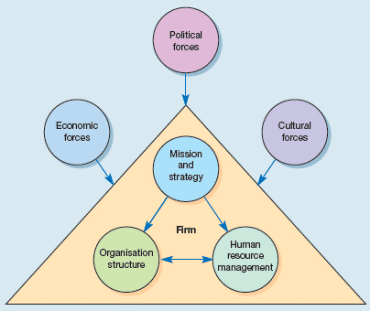
Hendry and Pettigrew (1990) have adapted the Harvard model by drawing on its analytical aspects. They see HRM ‘as a perspective on employment systems, characterised by their closer alignment with business strategy’. This model, illustrated in Figure, attempts a theoretically integrative framework encompassing all styles and modes of HRM and making allowances for the economic, technical and socio-political influences in society on the organisational strategy. ‘It also enables one to describe the “preconditions” governing a firm’s employment system, along with the consequences of the latter’ (Hendry and Pettigrew, 1990: 25). It thus explores ‘more fully the implications for employee relations of a variety of approaches to strategic management’ (Boxall, 1992).

Model of strategic change and human resource management

Storey studied a number of UK organisations in a series of case studies, and as a result modified still further the approaches of previous writers on HRM (Storey, 1992). Storey had previously identified two types of HRM – ‘hard’ and ‘soft’ (Storey, 1989) – the one rooted in the manpower planning approach and the other in the human relations school. He begins his approach by defining four elements that distinguish HRM:

  1. It is ‘human capability and commitment which, in the final analysis, distinguishes successful organisations from the rest’.
  2. Because HRM is of strategic importance, it needs to be considered by top management in the formulation of the corporate plan.
  3. ‘HRM is, therefore, seen to have long-term implications and to be integral to the core performance of the business or public sector organisation. In other words it must be the intimate concern of line managers.’
  4. The key levers (the deployment of human resources, evaluation of performance and the rewarding of it, etc.) ‘are to be used to seek not merely compliance but commitment’.

Storey (1992) approaches an analysis of HRM by creating an ‘ideal type’, the purpose of which ‘is to simplify by highlighting the essential features in an exaggerated way’ (p. 34). This he does by making a classificatory matrix of 27 points of difference between personnel and IR practices and HRM practices. The elements are categorised in a four-part basic outline:

  • beliefs and assumptions;
  • strategic concepts;
  • line management;
  • key levers.

This ‘ideal type’ of HRM model is not essentially an aim in itself but more a tool in enabling sets of approaches to be pinpointed in organisations for research and analytical purposes.

Twenty-seven points of difference

Storey’s theoretical model is thus based on conceptions of how organisations have been transformed from predominantly personnel/IR practices to HRM practices. As it is based on the ideal type, there are no organisations that conform to this picture in reality. It is in essence a tool for enabling comparative analysis.

SHRM Objectives, Advantages, Disadvantages

Strategic HRM is the improved version of HRM over a period of time under drastically changing business environment and stiff competition. For survival, growth stabilize and excel in business performance, the need for willing cooperation was needed from employees.

To do so the approach of human resource management went under drastic changes with the interest to match the HR requirement with the business strategies so that the goals are achieved. The new concept of SHRM developed and it is nothing but HRM plus strategy.

The main objectives of SHRM are the following:

(a) Plan for manpower requirements for its business located in national and international markets.

(b) Conduct scientific selection and appointment of employees for business operation of right type and right in number.

(c) Train the employees on technology in use and working procedure for developing their skills and knowledge.

(d) Place the employees at jobs according to their areas of specialization.

(e) Provide opportunities for the employees deserving on the scientific basis.

(f) Compensate employees according to their skills, experience and contributions.

(g) Maintain employees motivated, satisfied and cooperative in organisation.

(h) Improve industrial relations, industrial peace and harmony at workplace.

(i) Encourage employees for their cooperation, commitments and higher performance at work.

(j) Contribute through manpower in improvement of organisational performance and organisational effectiveness in business.

(k) Contribute in profitability, progress and image of the organisation.

(l) Stay competitive and effective in business for growth and excellence in global market.

For effective accomplishment of the objectives the Strategic HRM should keep in mind the interests of all concerned parties or stakeholders in the organisation in designing its strategies. The main stakeholders are employees, employer and management. The focus of SHRM should be on human relations, regular development, empowerment of employees; leadership, communication, welfare and security of employees, quality of work life.

The efforts should be there and must be considered these as investment in human resources in the interest of the organisation and its business. Strategic HRM should put the efforts and achieve the proper balance between organisational requirements and employees’ requirements. Every organisation uses its resources effectively and efficiently for achieving an objective.

But management should keep always human consideration in mind. Employees should be considered as human being and must be treated accordingly. They should not be ignored for the sake of organisational gains. Generally, the problem is that in dealing the organisation comes first and it not a healthy practice.

So, for strategic dealing there should be proper balance between these two aspects. Quinn Mills supported this point and advocated that they should plan with people in mind, taking into accounts the needs and aspirations of all the members of the organisation.

Strategic HRM is concerned with the relationship between human resource management and strategic management in an organization. It caters to provide overall direction to the organization in order to achieve its goals through people.

As people or the intellectual capital is a major source of competitive advantage, and it is the people who implement the strategic plan, top management must take these key considerations fully into account for developing its corporate strategies. Strategic HRM is an integral part of such people strategies.

Strategic HRM addresses broad organizational issues relating to organizational effectiveness and performance, changes in structure and culture, matching resources to future requirements, the development of distinctive capabilities, knowledge management and the management of change.

It is concerned with both meeting human capital requirements and the development of process capabilities, that is, the ability to get things done effectively. On an overall, SHRM considers any major people issues that affect or are affected by the strategic plan of the organization. The critical concerns of HRM such as choice of executive leadership and formation of positive patterns of labour relations form the core strategic concern in any firm.

Advantages of SHRM:

  1. Identifying and analyzing external opportunities and threats that may be crucial to the company’s success.
  2. Provides a clear business strategy and vision for the future.
  3. To supply competitive intelligence that may be useful in the strategic planning process.
  4. To recruit, retain and motivate people.
  5. To develop and retain of highly competent people.
  6. To ensure that people development issues are addressed systematically.
  7. To supply information regarding the company’s internal strengths and weaknesses.
  8. To meet the expectations of the customers effectively.
  9. To ensure high productivity.
  10. To ensure business surplus thorough competency

Disadvantages of SHRM:

Barriers to successful SHRM implementation are complex. The main reason is the lack of growth strategy or failure to implement one.

  1. Inducing the vision and mission of the change effort.
  2. High resistance due to lack of cooperation from the bottom line.
  3. Interdepartmental conflict.
  4. Lack of commitment of the entire senior management team.
  5. Ineffective plans that integrate internal resource with external requirements.
  6. Limited time, money and the resources.
  7. Resistance of employees.
  8. Resistance of senior level managers to take up strategic steps.
  9. Diverse work-force with competitive skill sets.
  10. Fear towards victimization in the wake of failures.
  11. Improper strategic assignments and leadership conflict over authority.
  12. Ramifications for power relations.
  13. Vulnerability to legislative changes.
  14. Resistance that comes through the legitimate labour institutions.
  15. Presence of an active labour union.
  16. Economic and market pressures influencing the adoption of strategic HRM.

SHRM v/s Traditional HRM

SHRM is about managing employees within an organization whereas in Strategic HRM there are different people who are skilled in specific areas. It is not that the same persons will handle recruitment, training, and employee appraisal.

As the term itself denotes, Strategic HRM deals with strategic aspects of HRM. Unlike SHRM, Strategic HRM mainly focuses on the programs with long-term objectives. Though SHRM and Strategic HRM focus on increasing employee productivity, Strategic HRM uses many strategic methods.

Unlike SHRM, Strategic HRM uses more sophisticated methods for improving overall employee motivation and productivity. Unlike the SHRM, Strategic HRM uses more systematic tools.

Strategic HRM expresses about company objectives, plans and the ways in which the business goals need to be achieved through people, Strategic HRM focuses on partnerships with internal and external customers. When HRM has only short-term goals, Strategic HRM has long-term goals.

When considering job design, Implementing the strategic plan through people in SHRM. On the other hand, the job division in Strategic HRM is flexible. When HRM has staff specialists, Strategic HRM has line managers.


Traditional HRM

Strategic HRM

Responsibility for HRM Staff Specialists Line Managers
Focus Employee Relations Partnerships with internal and External Customers
Role of HR Transactional, Change follower Transformational, Change leader & initiator
Initiatives Slow, Reactive fragmented Fast, Proactive & Integrated
Time Horizon Short term Short, Medium, Long Term
Control Bureaucratic policies Organic, flexible based on needs
Job Design Tight division of labour, Specialization Broad, flexible, Cross-training, teams
Key Investments Capital, Products People, Knowledge
Accountability Cost centre Investment centre

 SHRM involves the process of employing people, developing their skills/capacities, and utilizing their services. Strategic HRM can be termed as a branch of HRM.

  1. While SHRM focuses mainly on employee relations, Startegic HRM focuses on partnerships with internal and external customers.
  2. When SHRM has only short-term goals, Strategic HRM is for long-term goals.
  3. When SHRM has staff specialists, Strategic HTM has line managers.
  4. When considering job design, there is a tight division of labor and independence specialization in SHRM. On the other hand, job division in Strategic HRM is flexible.
error: Content is protected !!