Fundamental Analysis: Economic Analysis, Industry Analysis, Company Analysis

In security selection process, a traditional approach of Economic Industry Company analysis is employed. EIC analysis is the abbreviation of economic, industry and company. The person conducting EIC analysis examines the conditions in the entire economy and then ascertains the most attractive industries in the light of the economic conditions. At last the most attractive companies within the attractive industries are pointed out by the analyst.

EIC Analysis of a Company

Below are the further details of the components of EIC analysis, which analyst always consider before choosing or reaching any decision about any business.

  • Economic Analysis
  • Industry Analysis
  • Company Analysis

Economic Analysis:

Every common stock is susceptible to the market risk. This feature of almost all types of common stock indicates their combined movement with the fluctuations in the economic conditions towards the improvement or deterioration.

Stock prices react favorably to the low inflation, earnings growth, a better balance of trade, increasing gross national product and other positive macroeconomic news. Indications that unemployment is rising, inflation is picking up or earnings estimates are being revised downward will negatively affect the stock prices. This relationship is reasonably reliable that the US economy is better represented by the Standard & Poor 500 stock index, which is famous market indicator. The stock market will forecast an economic boom or recession properly from the signs in front of average citizen. The Federal bank of New York has conducted a research that describes that the slope of the yield curve is the perfect indicator of the economic growth more than three months out. Recession is indicated by negative slope while positive slope is considered as good one.

The implications of market risk should be clear to the investor. When there is recession in the economy, the prices of stocks moves downward. All the companies suffer the effects of recession despite of the fact that these are high performing companies or low performing ones. Similarly the stock prices are positively affected by the boom period of the economy.

Industry Analysis:

It is clear there is certain level of market risk faced by every stock and the stock price decline during recession in the economy. Another point to be remembered is that the defensive kind of stock is affected less by the recession as compared to the cyclical category of stock. In the industry analysis, such industries are highlighted that can stand well in front of adverse economic conditions.

In 1980, Michael Porter proposed a standard approach to industry analysis which is referred to as competitive analysis frame work. Threats of new entrants evaluate the expected reaction of current competitors to new competitors and obstacles to entry into the industry. In certain industries it is quite difficult for new company to compete successfully.

For example new producers in the automobile industry face difficulty in competing the established companies, like General Motors and Ford etc. There are certain other industries where the entry of new company is easier like financial planning industry. No extraordinary efforts are required in such kind of industries to establish any new company. The growth in the industry is slowed down through the rivalry among the current competitors. Profits of the company are reduced when it tries to cover more market share because under existing rivalry the company has to invest a large portion of its earnings in this enhancing market share. The industry where the rivalry is friendly or modest among competitors provides greater opportunity for product differentiation & increased profits. The intense competition is favorable for the customer but not good for the producer of the product. In case of airline industry there are common fare price wars among the competitors. When one airline company reduces its price then the other must also adjust its price accordingly in order to retain the existing customers.

Another threat faced by company in industry is the treat of substitutes which prevents the companies to enhance the price of their products. When there is much increase in the price of particular product, then the consumer simply switches to other alternative product which has lower price. For example there are two different video games named Sega and Nintendo. These games competes each other directly in the market. If the price of Nintendo is enhanced then the new video game customers are switch toward the Sage which has relatively lower price. The investor conducting industry analysis should focus the level of risk of product substitution which seriously affects the future growth of company.

Another aspect of the industry analysis is the bargaining power of buyers which can greatly influence the large percentage of sales of seller. In this condition the profit margins are lower. Concessions are necessary to be offered by the seller because it is not affordable for him to lose customer. For example there is ship building company and the US Navy is its main customer. Only two to three ships are produced by the company every year and so it is very harmful for the firm to lose the Navy contract. On the other hand in case of departmental store, there is large number of customers and so the bargaining power of customers is low. In this business, losing one or two customers will not much affect the sales or profitability of the retail store.

The only capital intensive industry should not be focused. There are other industries that are not capital intensive like consultants required in retail computer store. There is need that is present which force the computer technician to solve the problems of the computer systems of people. In recent year, consumers are usually more sophisticated in area of personal computers. So they are better guided and they try to make their own decisions in the needs of software and hardware aspects. In fact they possess high power when they contact the sales staff.    

The bargaining power of suppliers has also substantial influence over the profitability of the company. The supplies for manufacturing products are required by the company and it does not have sufficient control over the costs. It is not possible for the company to increase the price of its finished products in order to cover the increased costs due to the presence of powerful buyer groups in market of substitute products. So while conducing industry analysis, the presence of powerful suppliers should be considered as negative for the company.

The above considerations of industry structure should be analyzed by the investor in order to make an estimate about the future trends of the industry in the light of the economic conditions. When potential industry is identified then comes the final step of EIC analysis which is narrower relating to companies only.

Company Analysis:

In company analysis different companies are considered and evaluated from the selected industry so that most attractive company can be identified. Company analysis is also referred to as security analysis in which stock picking activity is done. Different analysts have different approaches of conducting company analysis like

  • Value Approach to Investing
  • Growth Approach to Investing

Additionally in company analysis, the financial ratios of the companies are analyzed in order to ascertain the category of stock as value stock or growth stock. These ratios include price to book ratio and price-earnings ratio. Other ratios like return on equity etc. can also be analyzed to ascertain the potential company for making investment.

Advantages:

Fundamental analysis is good for long-term investments based on long-term trends, very long-term. The ability to identify and predict long-term economic, demographic, technological or consumer trends can benefit patient investors who pick the right industry groups or companies.

Sound fundamental analysis will help identify companies that represent a good value. Some of the most legendary investors think long-term and value. Graham and Dodd, Warren Buffett and John Neff are seen as the champions of value investing. Fundamental analysis can help uncover companies with valuable assets, a strong balance sheet, stable earnings, and staying power.

One of the most obvious, but less tangible, rewards of fundamental analysis is the development of a thorough understanding of the business. After such painstaking research and analysis, an investor will be familiar with the key revenue and profit drivers behind a company. Earnings and earnings expectations can be potent drivers of equity prices. Even some technicians will agree to that. A good understanding can help investors avoid companies that are prone to shortfalls and identify those that continue to deliver. In addition to understanding the business, fundamental analysis allows investors to develop an understanding of the key value drivers and companies within an industry. A stock’s price is heavily influenced by its industry group. By studying these groups, investors can better position themselves to identify opportunities that are high-risk (tech), low- risk (utilities), growth oriented (computer), value driven (oil), non-cyclical (consumer staples), cyclical (transportation) or income-oriented (high yield).

Stocks move as a group. By understanding a company’s business, investors can better position themselves to categorize stocks within their relevant industry group. Business can change rapidly and with it the revenue mix of a company. This happened to many of the pure Internet retailers, which were not really Internet companies, but plain retailers. Knowing a company’s business and being able to place it in a group can make a huge difference in relative valuations.

Disadvantages:

The main disadvantage for me is that if used on its own, fundamental analysis (FA) doesn’t take into consideration the “herd mentality” phenomenon. In the long run, the price per share (PPS) of companies is driven by their earnings, i.e., the profit they’re yielding. In the short term, the momentum can be quite influential on the PPS; I’m sure you’ve noticed that some stock are considered market darlings and, to a certain degree, it doesn’t matter what their quarterly results are; people keep on buying. The same applies for companies that, all of a sudden, fall out of favor for whatever reason, genuine or not. They keep getting hammered regardless of the results the company pumps out, until one day it reverses. FA doesn’t consider this irrational behavior.

Fundamental analysis may offer excellent insights, but it can be extraordinarily time-consuming. Time-consuming models often produce valuations that are contradictory to the current price prevailing on Wall Street. When this happens, the analyst basically claims that the whole street has got it wrong. This is not to say that there are not misunderstood companies out there, but it is quite brash to imply that the market price, and hence Wall Street, is wrong.

Valuation techniques vary depending on the industry group and specifics of each company. For this reason, a different technique and model is required for different industries and different companies. This can get quite time-consuming, which can limit the amount of research that can be performed.

Fair value is based on assumptions. Any changes to growth or multiplier assumptions can greatly alter the ultimate valuation. Fundamental analysts are generally aware of this and use sensitivity analysis to present a base-case valuation, a best-case valuation and a worst-case valuation. However, even on a worst-case valuation, most models are almost always bullish, the only question is how much so.

The majority of the information that goes into the analysis comes from the company itself. Companies employ investor relations managers specifically to handle the analyst community and release information. As Mark Twain said, “there are lies, damn lies, and statistics.” When it comes to massaging the data or spinning the announcement, CFOs and investor relations managers are professionals. Only buy-side analysts tend to venture past the company statistics. Buy-side analysts work for mutual funds and money managers. They read the reports written by the sell-side analysts who work for the big brokers (CIBC, Merrill Lynch, Robertson Stephens, CS First Boston, Paine Weber, DLJ to name a few). These brokers are also involved in underwriting and investment banking for the companies. Even though there are restrictions in place to prevent a conflict of interest, brokers have an ongoing relationship with the company under analysis. When reading these reports, it is important to take into consideration any biases a sell-side analyst may have. The buy-side analyst, on the other hand, is analyzing the company purely from an investment standpoint for a portfolio manager. If there is a relationship with the company, it is usually on different terms. In some cases this may be as a large shareholder.

When market valuations extend beyond historical norms, there is pressure to adjust growth and multiplier assumptions to compensate. If Wall Street values a stock at 50 times earnings and the current assumption is 30 times, the analyst would be pressured to revise this assumption higher. There is an old Wall Street adage: the value of any asset (stock) is only what someone is willing to pay for it (current price). Just as stock prices fluctuate, so too do growth and multiplier assumptions. Are we to believe Wall Street and the stock price or the analyst and market assumptions? It used to be that free cash flow or earnings were used with a multiplier to arrive at a fair value. In 1999, the S&P 500 typically sold for 28 times free cash flow. However, because so many companies were and are losing money, it has become popular to value a business as a multiple of its revenues. This would seem to be OK, except that the multiple was higher than the PE of many stocks! Some companies were considered bargains at 30 times revenues.

To conclude, fundamental analysis can be valuable, but it should be approached with caution. If you are reading research written by a sell-side analyst, it is important to be familiar with the analyst behind the report. We all have personal biases, and every analyst has some sort of bias. There is nothing wrong with this, and the research can still be of great value. Learn what the ratings mean and the track record of an analyst before jumping off the deep end. Corporate statements and press releases offer good information, but they should be read with a healthy degree of skepticism to separate the facts from the spin. Press releases don’t happen by accident; they are an important PR tool for companies. Investors should become skilled readers to weed out the important information and ignore the hype.

Mathematical Indicators Oscillators

An oscillator is a technical analysis indicator that varies over time within a band (above and below a center line, or between set levels). Oscillators are used to discover short-term overbought or oversold conditions.

Oscillators are indicators that are used when viewing charts that are ranging (non-trending) to determine overbought or oversold conditions. Moving averages (MA) and trends are extremely important when studying the direction of a stock. A technician will use oscillators when the charts are not showing a definite trend in either direction. Oscillators are most beneficial when a company’s stock is either in a horizontal or sideways trading pattern or has not been able to establish a definite trend in a choppy market.

When the stock is in either an overbought or oversold situation, the true value of the oscillator is exposed. For example, a chartist can use oscillators to see when the stock is running out of steam on the upside the point at which the stock moves into an overbought situation. This simply means that the buying volume has been diminishing for a number of trading days, which means traders will then start to sell their shares. Conversely, when a stock has been sold by a greater number of investors for a consistent period of time, the stock will enter an oversold situation.

Oscillators are another group of tools used to identify overbought or oversold market conditions. They are also based on prices but are scaled in such a way that they “oscillate” around a certain value or between high and low values. For oscillators extreme high values indicate overbought markets while extreme low values indicate oversold markets.

Oscillators are perhaps most useful in identifying convergence and divergence. Convergence happens when the oscillator confirms the same pattern as the price movement. Divergence occurs when the oscillator contradicts the price pattern.

For the exam you need to know four different types of oscillators:

  • Rate of Change (ROC) Oscillator
  • Relative Strength Index (RSI)
  • Moving Average Convergence/Divergence (MACD)
  • Stochastic Oscillator

Rate of Change (ROC) Oscillator

ROC shows the percentage difference between the current price and the price n periods ago. In other words it measures the percentage change in price over a given period. The higher the percentage change in price the higher the ROC. Note the ROC oscillates around zero. When the price goes up, ROC goes down and vice versa.  Traders will often buy if the oscillator goes from negative to positive in an uptrend, or sell when it goes from positive to negative in a downtrend. If it crosses zero in the opposite direction of the trend it is usually ignored.

Relative Strength Index (RSI)

RSI measures the relative strength of a security against itself.  It is scaled to oscillate between 0 and 100 with high values (> 70) showing an overbought market and low values (< 30) showing an oversold market.

  • RSI > 70, Sell Signal
  • RSI < 30, Buy Signal

Moving Average Convergence/Divergence (MACD)

MACD (pronounced Mac-Dee) is an exponential moving average that shows the difference between short and long term moving averages. The MACD signal line itself then oscillates around zero (but is not bounded).

MACD can signal convergence or divergence as well as overbought and oversold conditions. Points where the MACD line crosses the ‘signal’ line can be used as trading signals. As you might have guessed, the shorter-term average crossing above the longer term line shows upside momentum increasing and is thus a bullish signal.

Stochastic Oscillators

The stochastic oscillator measures the relationship between the closing, high, and low prices and is also used to identify overbought and oversold markets. It is usually calculated using a 14 day period and always ranges between 0-100%.  In an uptrend the closing price tends to be near the high price of the period and a downtrend is marked by the low and closing prices being close together. Generally a buy signal occurs if the oscillator crosses above the 20% level and a sell signal is triggered if it crosses below the 80% level.

Sentiment Indicators (Non-Price Signals)

Sentiment indicators can include polls/surveys of market participants or, more commonly, calculated statistical indices. We’ll rip through the ones in the curriculum, again much of this is in the weeds and unlikely to show up with any significance on the exam.

Put/Call Ratio:

This is a contrarian indicator. The higher (lower) the ratio the more bearish (bullish) the signal. However if the ratio is skewed to one extreme or the other things are different. For example an extremely high ratio demonstrates excessively negative sentiment and the price is likely to rise.

Volatility Index (VIX): Calculated by the Chicago Board Options Exchange, the VIX measures options volatility. A high or rising VIX is a bearish sign, however, market participants use the VIX as a contrarian schedule.

Margin Debt – Increases in margin debt outstanding indicate increasing bullishness amongst investors.

Short interest ratio: Short interest is the number of shares investors have borrowed and sold short. The short interest ratio is that number divided by the average trading volume. A high short interest ratio indicates traders expect prices to decline, however, it also means at some point there will be greater buying demand as the traders have to cover their shorts (if this happens in the short term it can result in a short squeeze)

Flow of Funds Indicators: Indicate the relative supply and demand in the market. One particularly useful ratio is the arms index or short-term trading index.

The TRIN measures funds flowing into advancing and decreasing stocks. A ratio close to one suggests an even distribution, a ratio greater than one means more money is flowing into declining stocks. Spikes upwards have historically corresponded to large daily losses.

Other flow of funds indicators include the aforementioned margin debt, the mutual fund cash position (ratio of cash to total assets). Traders use this as a contrarian indicator. When cash balances increase there is future buying demand and traders expect the markets to rise.

New Equity Issuances: IPOs etc. A lagging indicator thought to coincide with market peaks since an IPO becomes more attractive to the business owners as prices rise.

Portfolio Strategy Mix

Asset allocation refers to an investment strategy in which individuals divide their investment portfolios between different diverse asset classes to minimize investment risks. The asset classes fall into three broad categories: equities, fixed-income, and cash and equivalents. Anything outside these three categories (e.g., real estate, commodities, and art) is often referred to as alternative assets.

Asset allocation is the implementation of an investment strategy that attempts to balance risk versus reward by adjusting the percentage of each asset in an investment portfolio according to the investor’s risk tolerance, goals and investment time frame. The focus is on the characteristics of the overall portfolio. Such a strategy contrasts with an approach that focuses on individual assets.

Portfolio A

Diversified Asset Allocation

Bonds

Large Cap Equity Small cap equity

Cash and Equivalents

Portfolio B

Consolidated Asset Allocation

Large Cap Equity

Bonds

Factors Affecting Asset Allocation Decision

An investors’ portfolio distribution is influenced by factors such as personal goals, level of risk tolerance, and investment horizon.

  1. Goals factors

Goals factors are individual aspirations to achieve a given level of return or saving for a particular reason or desire. Therefore, different goals affect how a person invests and risks.

  1. Risk tolerance

Risk tolerance refers to how much an individual is willing and able to lose a given amount of their original investment in anticipation of getting a higher return in the future. For example, risk-averse investors withhold their portfolio in favor of more secure assets. On the contrary, more aggressive investors risk most of their investments in anticipation of higher returns. Learn more about risk and return.

  1. Time horizon

The time horizon factor depends on the duration an investor is going to invest. Most of the time, it depends on the goal of the investment. Similarly, different time horizons entail different risk tolerance. For example, a long-time investment strategy may prompt an investor to invest in a more volatile or higher risk portfolio since the dynamics of the economy are uncertain and may change in favor of the investor. However, investors with short-term goals may not invest in riskier portfolios.

Allocation strategy

There are several types of asset allocation strategies based on investment goals, risk tolerance, time frames and diversification. The most common forms of asset allocation are: strategic, dynamic, tactical, and core-satellite.

Strategic asset allocation

The primary goal of strategic asset allocation is to create an asset mix that seeks to provide the optimal balance between expected risk and return for a long-term investment horizon. Generally speaking, strategic asset allocation strategies are agnostic to economic environments, i.e., they do not change their allocation postures relative to changing market or economic conditions.

Dynamic asset allocation

Dynamic asset allocation is similar to strategic asset allocation in that portfolios are built by allocating to an asset mix that seeks to provide the optimal balance between expected risk and return for a long-term investment horizon. Like strategic allocation strategies, dynamic strategies largely retain exposure to their original asset classes; however, unlike strategic strategies, dynamic asset allocation portfolios will adjust their postures over time relative to changes in the economic environment.

Tactical asset allocation

Tactical asset allocation is a strategy in which an investor takes a more active approach that tries to position a portfolio into those assets, sectors, or individual stocks that show the most potential for perceived gains. While an original asset mix is formulated much like strategic and dynamic portfolio, tactical strategies are often traded more actively and are free to move entirely in and out of their core asset classes.

Core-satellite asset allocation

Core-satellite allocation strategies generally contain a ‘core’ strategic element making up the most significant portion of the portfolio, while applying a dynamic or tactical ‘satellite’ strategy that makes up a smaller part of the portfolio. In this way, core-satellite allocation strategies are a hybrid of the strategic and dynamic/tactical allocation strategies mentioned above.

Problems with asset allocation

There are various reasons why asset allocation fails to work.

  • Investor behavior is inherently biased. Even though investor chooses an asset allocation, implementation is a challenge.
  • Investors agree to asset allocation, but after some good returns, they decide that they really wanted more risk.
  • Investors agree to asset allocation, but after some bad returns, they decide that they really wanted less risk.
  • Investors’ risk tolerance is not knowable ahead of time.
  • Security selection within asset classes will not necessarily produce a risk profile equal to the asset class.
  • The long-run behavior of asset classes does not guarantee their shorter-term behavior.

Reduction of Risk through Diversification

A strategy used by investors to manage risk. By spreading your money across different assets and sectors, the thinking is that if one area experiences turbulence, the others should balance it out. It’s the opposite of placing all your eggs in one basket.

The term often crops up during periods of economic turbulence, when there’s a lot of uncertainty in financial markets. Rather than leaving themselves exposed to stock market swings, investors might look to spread their money across other assets like bonds and commodities too.

All investments carry some degree of risk and, as a result, you can’t avoid it completely. But the good news is that risk diversification can at least help you to avoid over-exposing yourself to one particular area.

Diversifying your investments doesn’t simply mean spreading your money across different assets. Instead, you can also spread it between companies of varying sizes, different sectors, and a range of geographic regions.

Risk diversification can also be important in the business world. For example, rather than specialising in a single area, a company may choose to expand into new products and sectors.

Diversification is the art of entering product markets different from those in which the firm is currently engaged in. It is helpful to divide diversification into ‘related diversification and ‘unrelated’ diversification.

Diversification is venerable rule of investment which suggests “Don’t put all your eggs in one basket”, spreading risk across a number of securities.

Diversification may take the form of unit, industry, maturity, geography, type of security and management. Through diversification of investments, an investor can reduce investment risks.

Investment of funds, say, Rs. 1 lakh evenly among as many as 20 different securities is more diversified than if the same amount is deployed evenly across 7 securities. This sort of security diversification is naive in the sense that it does not factor in the covariance between security returns.

The portfolio comprising 20 securities could represent stocks of one industry only and have returns which are positively correlated and high portfolio returns variability. On the other hand, the 7-stock portfolio might represent a number of different industries where returns might show low correlation and, hence, low portfolio returns variability.

Meaningful diversification is one which involves holding of stocks of more than one industry so that risks of losses occurring in one industry are counterbalanced by gains from the other industry. Investing in global financial markets can achieve greater diversification than investing in securities from a single country. This is for the fact that the economic cycles of different countries hardly synchronize and as such a weak economy in one country may be offset by a strong economy in another.

Fig. 5.2 portrays meaningful diversification. It may be noted from the figure that the returns overtime for Security X are cyclical in that they move in tandem with the economic fluctuations. In case of Security Y returns are moderately counter cyclical. Thus, the returns for these two securities are negatively correlated.

If equal amounts are invested in both securities, the dispersion of returns, up, on the portfolio of investments will be less because some of each individual security’s variability is offsetting. Thus, the gains of diversification of investment portfolio, in the form of risk minimization, can be derived if the securities are not perfectly and positively correlated.

A related diversification is one in which the two involved businesses have meaningful commonalties, which provide the potential to generate economies of scale or synergies based upon the exchange of skills or resources. In a related diversification the resulting combined business should be able to achieve improved ROI because of increased revenues, decreased costs, or reduced investment, which are attributable to the commonalties.

An important issue in any diversification decision is whether, in fact, there is a real and meaningful area of commonality that will benefit the ultimate ROI. If such a meaningful commonality is lacking, the diversification may still be justifiable, but the rationale will need to be different.

Related diversification

  1. Exchanging skill and resources

Related diversification provides the potential to attain synergies by the exchanged or sharing of skills or resources. One business unit must have skills or resources that are ‘exportable’ to another company or business unit. Thus, a first condition for successful related diversification is to identify skills or resources that are exportable or that are needed and can be ‘imported!

The second condition is to find a partner or business unit that can either provide or use them. The third is to ascertain whether the organizational integration needed to accomplish the exchange is feasible. Skills or resources that can be usefully imported or exported can take a variety of forms.

  1. Brand name

One commonly found resource that is exportable is a strong established brand name like Coca-Cola, Microsoft, Pepsi, Puma, BMW, or Nivea.

  1. Marketing skills

Usually a firm will either possess or lack a strong skill in marketing for a particular market. Thus, a frequent motive to diversify is to export or import a marketing talent. The typical case in this regard is the introduction of Microsoft products into the People’s Republic of China (PRC). PRC was moving from the socialistic pattern of society to market economy.

During the 1990s, urbanization started increasing and a shift was seen from agriculture to the service sector. Agriculture, science and technology, industry and defence were targeted for modernization. Richard Fade, vice-president in charge of Microsoft’s Far-east operations, pondered Microsoft’s planned introduction of products into China.

In the Chinese computer hardware industry of 36 domestic vendors accounted for 82 per cent of the units of domestically manufactured PCs. In the software industry, State Owned Enterprises (SOEs) dominated the market. Since, the SOEs were answerable to the government, all their revenues accrued directly to national government.

The following are the key tasks that need to be done while localizing:

(i) The local character sets need to be supported.

(ii) The interface needs to be translated in a form that is familiar to the local user.

(iii) All documents should be in local language.

(iv) Configure the software so that it can support locally available software and hardware.

(v) Provide local customer service.

Microsoft in 1984 signed its first OEM agreement in Taiwan, home of over 3,000 PC systems and component manufacturers, before opening an office in 1989. Five years later Microsoft opened an office in China. It was estimated that 95 per cent of PCs had the English version of Microsoft DOS installed together with one of the many Chinese shells.

Microsoft had worked with SV earlier on a smaller project and so it agreed to work with them on P-DOS project. Based on their earlier experience, it was understood that it was very difficult to parcel out a particular major software localization task to one SV and hence opted for a ‘consortia’ of SVs and set UP a product development centre. This eventually paid the company a ‘prize reward’ by limiting other competitors in the market.

  1. Service

A small company can often create or enter a market area and do well with an innovative product. As the market matures, however, the necessity for a strong service organization becomes important. The smaller firm might then consider joining forces with a larger firm which has a service organization that can be adapted to the involved product. Typical example is the Bluetooth technology of Blackberry.

  1. R&D and product development

A firm may be highly skilled at R&D and new product development, but it may lack skills in either marketing or production. Godrej is marketing the mosquito repellent Good knight and mango juice Jumpin, which are typical products of small entrepreneurs. Sun silk shampoo of HUL is manufactured in SSI units of Pondicherry.

  1. Exploiting excess capacity

One type of resources that is often easily exchanged is excess capacity. Bottling plants of SDC (Soft Drink Concentrates) are now widely engaged in bottling fresh juices of orange, apple, mango, pineapple, grapes, tender coconut and lemon juice for MNCs Pepsi and Coke in India.

  1. Achieving economies of scale

Related diversification can sometimes provide economies of scale. Two smaller consumer product firms, for example, may not be able to afford an effective sales force, new product development or testing programme, or warehousing and logistics systems. However, the two firms together may be able to operate at an efficient level. Similarly, two firms when combined may be able to justify an expensive piece of automated production equipment.

  1. Risks of related diversification

Even related diversification can be risky. There are three major problems. First, relatedness and potential synergy simply don’t exist. Strategists delude themselves that there is a synergistic justification not on the basis of judgement supported by a thorough external and self-analysis, but by manipulating semantics.

Second, potential synergy may exist but is never realized because of implementation problems. This happens when the diversification move involves integrating two organizations that have fundamental differences and/or because one of the two organizations lacks the ability or motivation to undertake necessary programmes to make the diversification work.

Third, possible violations of antitrust laws in the west and MRTP (Monopolies and Restrictive Trade Practice) law in India create an additional risk when an acquisition or merger is involved. Ironically, as the degree of relatedness and the synergy potential increase so does the possibility of an antitrust or MRTP problem. Jet Airways and Sahara deal is a typical example.

Jet Airways has extended its service to the mass market under Jet Lite. Similarly, Kingfisher acquired Air Deccan and symbolically kept the Kingfisher logo in the wings and POS outlets in the country, which includes all post offices and petrol pumps.

Unrelated Diversification

Unrelated diversification lacks commonality in markets, distribution channels, production technology, and R&D thrust to provide the opportunity for synergy through the exchange or sharing of assets or skills. Reliance entered into retailing by allocating Rs25, 000 crore in a phased manner is a typical example.

  1. Manage and allocate cash flow

Unrelated diversification can balance the cash flows of SBU entities. A firm, which has many SBUs that merit investment might buy or merge with a cash cow to provide a source of cash. The acquisition of the cash cow may reduce the need to raise debt or equity over time, although if the cash cow is acquired, resources will need to be expected.

Typical example is Kingfisher Airlines, where the chairman and CEO Vijay Mallya himself routed the surplus cash from this liquor business to give the ‘Fly the good times’ experience to Indian aviation. So there’s KF Fun TV with seven channels (lifestyle, entertainment, sports, English premium, toon (cartoon), flight guide and view from the top channels, and KF Radio with 10 channels chartbusters and hindi pop, hindi retro (the golden oldies), Hindi Easy Listening, ghazals, english pop, english retro (an earful of vintage), Easy Listening (Honey trenched notes that remind the listener that world is still a wonderful place), Club (dance floor) Jazz and Blues and Lounge (lie back in the lap of lounge with the soothing notes of lounge music) supported with state of the art aircraft and technology for in-flight, catering. The reservation system is a remarkable attempt to reposition the image of the Indian industry.

  1. Entering business areas with high ROI prospects

A basic diversification motivation is to improve ROI by moving into business areas with high ROI prospects. One approach is to enter high growth business areas. According to life style consumption study by Edelweiss Securities, organized retail trade in India is now finding its feet. Its share in the total retail pie is set to increase from the current 2 per cent to about 10 per cent by 2010. This will translate into approximately Rs1, 400 billion of retail trade by 2010 (Figure 8.19).

The study further says retail space is expected to increase from 10 million sq. ft. in 2002 to 80 million sq. ft. in 2010. Retail space development in leading centres will provide high impetus to retail growth as about 38 per cent of India’s high income households live in the top five cities (Mumbai, Delhi, Kolkata, Chennai and Bangalore), and an additional 28 per cent stay in mid-sized cities.

Significant growth in organized retailing during the next three years is expected in the metros and mini-metros through better performance of the existing stores, as well as opening of new stores. From 25 operational malls in 2003, the country is expecting over 600 malls by 2010. Accordingly Videocon Industries spotted organized retailing as the bright spot for future investments to the tune of Rs25, 000 crore by 2010.

  1. Obtaining a ‘bargain’ price for a business

Another way to improve the ROI is to acquire a business at a ‘bargain’ price so the involved investment is low and the associated ROI is therefore high.

  1. The potential to restructure a firm

Allen, Oliver, and Schwallie, three Booz Allen acquisition specialists have suggested another possibility: that an acquisition can provide the basis for a restructuring of the acquired firm, the acquiring firm, or both.

  1. Reducing risk

The reduction of risk can be another motivation for unrelated diversification. The heavy reliance upon a single product line can stimulate a diversification move. Reducing risk can also lead to entering into businesses that will counter or reduce the cyclical nature of the existing earnings.

  1. Risks of unrelated diversification

The very concept of an unrelated business, where by definition there is no possibility to improve that business through synergy, suggests risk and difficulty. Many knowledgeable people have made blanket statements warning against unrelated diversification. Peter Drucker claims that all successful diversification requires a common core or unity represented by common markets, technology, or production processes. He states that without such a unity, diversification can never work; financial ties alone are insufficient.

Measurement of Beta

The beta (β) of an investment security (i.e. a stock) is a measurement of its volatility of returns relative to the entire market. It is used as a measure of risk and is an integral part of the Capital Asset Pricing Model (CAPM). A company with a higher beta has greater risk and also greater expected returns.

The beta coefficient can be interpreted as follows:

  • β =1 exactly as volatile as the market
  • β >1 more volatile than the market
  • β <1>0 less volatile than the market
  • β =0 uncorrelated to the market
  • β <0 negatively correlated to the market

Examples of beta

High β: A company with a β that’s greater than 1 is more volatile than the market. For example, a high-risk technology company with a β of 1.75 would have returned 175% of what the market return in a given period (typically measured weekly).

Low β: A company with a β that’s lower than 1 is less volatile than the whole market. As an example, consider an electric utility company with a β of 0.45, which would have returned only 45% of what the market returned in a given period.

Negative β: A company with a negative β is negatively correlated to the returns of the market. For an example, a gold company with a β of -0.2, which would have returned -2% when the market was up 10%.

Equity Beta and Asset Beta

Levered beta, also known as equity beta or stock beta, is the volatility of returns for a stock taking into account the impact of the company’s leverage from its capital structure. It compares the volatility (risk) of a levered company to the risk of the market.

Levered beta includes both business risk and the risk that comes from taking on debt. It is also commonly referred to as “equity beta” because it is the volatility of an equity based on its capital structure.

Asset beta, or unlevered beta, on the other hand, only shows the risk of an unlevered company relative to the market. It includes business risk but does not include leverage risk.

Project Beta

For simplicity throughout previous chapters we have used a general beta factor (b) applicable to the overall systemic risk of portfolios, securities and projects. But now our analysis is becoming more focused, precise notation and definitions are necessary to discriminate between systemic business and financial risk. Table 7.1 summarizes the beta measures that we shall be using for future reference and also highlights a number of problems.

b = total systematic risk, which relates portfolio, security and project risk to market risk.

= the business risk of a specific project (project risk) for investment appraisal.

bf = the published equity beta for a company that incorporates business risk and systematic financial risk if the firm is geared.

bA = the overall business risk of a firm’s assets (projects). It also equals a company’s

deleveraged published beta (bf) which measures business risk free from financial risk.

bD = the beta value of debt (which obviously equals zero if it is risk-free).

bf„ and bfG are the respective equity betas for similar all-share and geared companies.

When an all-equity company is considering a new project with the same level of risk as its current portfolio of investments, total systematic risk equals business risk, such that:

When a company is funded by a combination of debt and equity, this series of equalities must be modified to incorporate a premium for systematic financial risk. As we shall discover, the equity beta (bE) will be a geared beta reflecting business risk plus financial risk, which measures shareholder exposure to debt in their firm’s capital structure. Thus, the equity beta of an all-share company is always lower than that for a geared firm with the same business risk.

Irrespective of a gearing problem, Table 7.1 reveals a further weakness of the CAPM. A company’s asset beta (bA) should produce a discount rate that is appropriate for evaluating projects with the same overall risk as the company itself. But what if a new project does not reflect the average risk of the company’s assets? Then the use of bA is no more likely to produce a correct investment decision than the use of a WACC calculation.

To illustrate the point, Figure 7.1 graphs the Security Market Line (SML) to show the required return on a project for different beta factors, with a company’s WACC. The use of the overall cost of capital to evaluate projects whose risk differs from the company’s average will be sub-optimal where the IRR of the project is in either of the two shaded sections. To calculate the correct CAPM discount rate using Equation (45), we must determine the project beta.
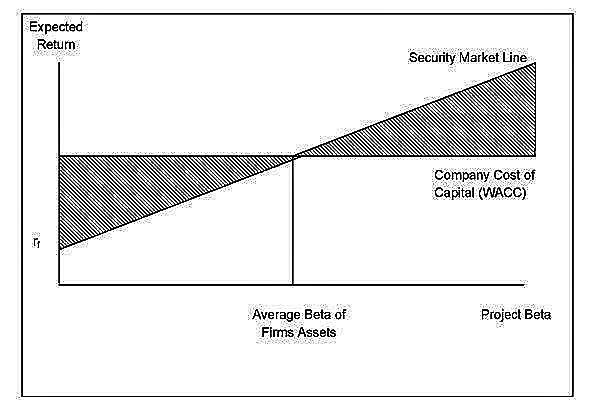
Figure 7.1: The SML, WACC and Project Betas

The company’s average beta, shown in the diagram, provides a measure of risk for the firm’s overall returns compared with that of the market. However, management’s investment decision is whether or not to invest in a project. So, like the WACC, if the project involves diversification away from the firm’s core activities, we must use a beta coefficient appropriate to that class of investment. The situation is similar to a stock market investor considering whether to purchase the shares of the company. The individual would need to evaluate the share’s return by using the market beta in the CAPM.

Even if diversification is not contemplated, the project’s beta factor may not conform to the average for the firm’s assets. For example, the investment proposal may exhibit high operational gearing (the proportion of fixed to variable costs) in which case the project’s beta will exceed the average for existing operations.

A serious conflict (the agency problem) can also arise for those companies producing few products, or worse still a single product, particularly if management approach their capital budgeting decisions based on self-interest and short-termism, rather than shareholder preferences. Shareholders with well-diversified corporate holdings who dominate such companies may prefer to see projects with high risk (high beta coefficients) to balance their own portfolios. Such a strategy may carry the very real threat of bankruptcy but in the event may have very little impact their overall returns. For corporate management, the firm’s employees and its suppliers, however, the policy may be economic suicide.

Fortunately, if a beta is required to validate the CAPM for project appraisal, help is at hand. Management can obtain factors for companies operating in similar areas to the proposed project by subscribing to the many commercial services that regularly publish beta coefficients for a large number of companies, world wide. Their listings also include stock exchange classifications for industry betas. These are calculated by taking the market average for quoted companies in the same industry. Research reveals that the measurement errors of individual betas cancel out when industry betas are used. Moreover, the larger the number of comparable beta constituents, the more reliable the industry factor.

So, if management wish to obtain an estimate for a project’s beta, it can identify the industry in which the project falls, and use that industry’s beta as the project’s beta. This approach is particularly suitable for highly diversified and divisionalised companies because their WACC or market beta would be of little relevance as a discount rate for its divisional operations.

As an alternative to stock market data, management can also estimate a project’s beta from first principles by calculating its F-value.

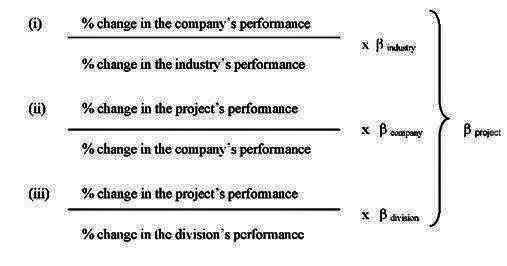
The F-value of a project is rather like a beta factor in that it measures the variability of a project’s performance, relative to the performance of an entity for which a beta value exists.

The entity could be the industry in which the project falls, the firm undertaking the project, or a division within the firm that is responsible for the project.

A project’s F-value is defined as follows:

As a result, we can obtain an estimate of a project’s beta through one of three routes:
Portfolio Beta

Calculating the volatility, or beta, of your stock portfolio is probably easier than you think. A beta of 1 means that a portfolio’s volatility matches up exactly with the markets. A higher beta indicates great volatility, and a lower beta indicates less volatility. To do it, you’ll need to know the percentage of your portfolio by individual stock and the beta for each of those stocks.

The first step is to multiply the percentage of your portfolio and the beta for each individual stock. Once that is done, simply add up the results and you’ll have your portfolio beta.

This method is a simple weighted average calculation. It’s an easy way to quickly assess your entire portfolio’s volatility. It only works though if the individual stock’s betas are calculated correctly and comparably. Using a six month time period to calculate one stocks beta and a six year period to calculate the other will give you a much different result than using the same time period across the board. Likewise, it’s wise to use the same index for each individual stock’s beta so that your portfolio beta will have consistency with that index as well. For most portfolios, the S&P 500 is a reasonable index to start with.

It’s not required to use the same time period and index for each stock, but it is important to understand how differences in each individual stock’s beta will impact the result for your entire portfolio.

Concepts of Investment Banks its Role and Functions

An investment bank is a financial services company or corporate division that engages in advisory-based financial transactions on behalf of individuals, corporations, and governments. Traditionally associated with corporate finance, such a bank might assist in raising financial capital by underwriting or acting as the client’s agent in the issuance of securities. An investment bank may also assist companies involved in mergers and acquisitions (M&A) and provide ancillary services such as market making, trading of derivatives and equity securities, and FICC services (fixed income instruments, currencies, and commodities). Most investment banks maintain prime brokerage and asset management departments in conjunction with their investment research businesses. As an industry, it is broken up into the Bulge Bracket (upper tier), Middle Market (mid-level businesses), and boutique market (specialized businesses).

Investment banking is the division of a bank or financial institution that serves governments, corporations, and institutions by providing underwriting (capital raising) and mergers and acquisitions (M&A) advisory services. Investment banks act as intermediaries between investors (who have money to invest) and corporations (who require capital to grow and run their businesses).

All investment banking activity is classed as either “sell side” or “buy side”. The “sell side” involves trading securities for cash or for other securities (e.g. facilitating transactions, market-making), or the promotion of securities (e.g. underwriting, research, etc.). The “buy side” involves the provision of advice to institutions that buy investment services. Private equity funds, mutual funds, life insurance companies, unit trusts, and hedge funds are the most common types of buy-side entities.

Full-service banks offer the following services:

  • Underwriting: Capital raising and underwriting groups work between investors and companies that want to raise money or go public via the IPO process. This function serves the primary market or “new capital”.
  • Mergers & Acquisitions (M&A): Advisory roles for both buyers and sellers of businesses, managing the M&A process start to finish.
  • Sales & Trading: Matching up buyers and sellers of securities in the secondary market. Sales and trading groups in investment banking act as agents for clients and also can trade the firm’s own capital.
  • Equity Research: The equity research group research, or “coverage”, of securities helps investors make investment decisions and supports trading of stocks.
  • Asset Management: Managing investments for a wide range of investors including institutions and individuals, across a wide range of investment styles.

Underwriting Services in Investment Banking

Underwriting is the process of raising capital through selling stocks or bonds to investors (e.g., an initial public offering IPO) on behalf of corporations or other entities. Businesses need money to operate and grow their businesses, and the bankers help them get that money by marketing the company to investors.

There are generally three types of underwriting:

  • Firm Commitment: The underwriter agrees to buy the entire issue and assume full financial responsibility for any unsold shares.
  • Best Efforts: Underwriter commits to selling as much of the issue as possible at the agreed-upon offering price but can return any unsold shares to the issuer without financial responsibility.
  • All-or-None: If the entire issue cannot be sold at the offering price, the deal is called off and the issuing company receives nothing.

Role

Investment Banks serve as an intermediary between investors and corporations. It helps corporations by pricing securities resulting in maximization of revenue. Investment banks help their clients in meeting regulatory requirements while raising capital as well.

When companies issue IPO, an investment bank may buy all the shares from the company and will sell it in the market as a proxy company. It helps the company in contracting out the IPO to the investment bank itself. It provides advisory services in relation to underwriting services and mergers and acquisitions.

Objectives

In the past, the primary objective of investment banking was to bridge the gap between investors and corporations, individuals, government bodies who needed funds to grow and run their business. 

But nowadays, there is no defined limit on the activities that fall in the purview of investment banking. Apart from underwriting and merger & acquisition-related advisory services, investment banks also provide different kinds of ancillary services to their clients like equity trading, market-making, facilitation of transactions, derivative trading, assistance in the analysis of risk associating with managing big projects.

Functions of Investment Banking

  • Acts as an intermediary between investors and the company.
  • It helps companies in raising capital.
  • Provide advisory services for underwriting and merger & acquisition.
  • Provide ancillary services like equity, derivative trading, facilitating transactions, market-making, promotion of securities, etc.

Importance of Investment Banking

  • In a growing economy where all the companies want to raise capital through stock and shares, Investment Bank with their expertise helps these companies by providing underwriting services, so that businesses can maximize their revenue while staying within the regulatory requirement.
  • They provide other ancillary advisory services as well to their clients. Therefore, in a nutshell, these organizations play a pivot role by helping corporate, individuals, and government bodies.
  • With their expertise, they help in the growth of the local, national, and the global economy as a whole.

Concepts of Small cap, Large cap, Mid cap

Equity Mutual Funds can be categorized based on the market capitalization of the companies they invest in. They can be classified into three types, large-cap, mid-cap, and small-cap funds. In this article, we will look at understanding these funds and talk about the difference between small-cap, large cap and mid cap funds.

Market Capitalization, in simple words, is the market value of the company’s outstanding shares. It is not the share price but the value of the share.

Number of outstanding shares x share price

Based on the market cap, companies are classified as large-cap companies, mid-cap companies, and small-cap companies. In order to ensure that equity schemes follow uniform norms for defining large, mid, and small caps, the Securities and Exchanges Board of India (SEBI) has defined them as follows:

  • Large-cap companies: 1st to 100th company in terms of market capitalization
  • Mid-cap companies: 101st to 250th company in terms of market capitalization
  • Small-cap companies: 251st company onwards in terms of market capitalization

It is important to note that since the share price keeps fluctuating, the market cap of a company keeps changing too. Also, when a company issues more shares to the public, it’s market capitalization increases. On the other hand, in the case of a buyback, the market cap dips. Having understood, market cap, let’s look at large, mid, and small-cap funds.

Large Cap funds are open-ended, equity funds which invest at least 80% of their total assets in large-cap stocks. Large-cap companies are trustworthy and strong companies with an excellent track record. They are known to have generated wealth for their investors.

Mid-cap funds are open-ended, equity funds which invest around 65% of their total assets in equity and equity-related instruments of mid-cap companies. These companies have been around for quite some time and have a good track record too. Some of these will soon transform into large-cap companies. This makes the mid-cap segment an interesting one for growth opportunities with controlled risks.

Small-cap funds are open-ended equity funds which invest a minimum of 65% of their total assets in small-cap stocks. These are the smaller companies or the new entrants in the market. These funds have a high potential for growth but also carry a high amount of risk. They are usually recommended for investors with higher risk tolerance.

Here are some key differences between large-cap, mid-cap, and small-cap funds.

Risk Profile

Large-Cap Funds

These funds are considered to be the least risky among the three since they invest in stocks of the top 100 companies. Typically, you can think of the companies in the NIFTY 50.

Mid-Cap Funds

These funds are riskier than large-cap funds but less risky than small-cap funds. 

Small-Cap Funds

These funds are the riskiest of the three. Small-cap companies have a low capital base. Despite the risks, these stocks offer great potential for growth.

Returns

Large-Cap Funds

These schemes tend to offer steady returns with lower volatility. The average returns are 7% in the last five years.

Mid-Cap Funds

These schemes offer better returns than large-cap funds. The average 5-year returns are 10.28%.

Small-Cap Funds

Being the highest-risk schemes, they tend to offer an opportunity to earn good returns. The 5-year average has been 14.72%.

Investment Environment Introduction

The term investment refers to exchange of money wealth into some tangible wealth.  The money wealth here refers to the money (savings) which an investor has and the term tangible wealth refers to the assets the investor acquires by sacrificing the money wealth. By investing, an investor commits the present funds to one or more assets to be held for some time in expectation of some future return in terms of interest or capital gain. Investment can be defined as commitment of funds that is expected to generate additional money.

The term Investment Environment encompasses all types of investment opportunities and the market structure that facilities buying and selling these investments. Different types of securities, institutional set-up and the market intermediaries are the components of investment environment.

Market prices / rates are volatile and this is the chief risk faced in financial / real asset markets and this takes place in the investment environment.

The investment environment is the international economy and the domestic economy, developments in which have an effect on the values (prices) of the assets of the asset classes. It is well known that the prices of financial assets, particularly shares, can be extremely volatile, and this introduces the element of risk in financial markets. Investment risk is broadly defined as volatility in asset prices and it is measured in these terms.

Ultimately, gross domestic product (GDP) growth is the major driver of asset prices, and asset price changes (positive and negative) are often exacerbated by the irrational behavior of participants in the investment arena (known as the “herd instinct”). GDP is driven by gross domestic expenditure (GDE) and the trade account balance (TAB). GDE is driven by the consumption expenditure (C) and investment expenditure (I) of the private and government sectors, such that C + I = GDE. This is domestic demand. Foreign demand for local products is reflected in exports (X) while imports (M) reflect domestic demand for foreign goods. So, X – M = TAB = net foreign demand. The “big picture” (the entire economy) is complete:

C+I = GDE

GDE + TAB = GDP

Given asset price volatility, fund managers (or “investment houses”) and broker-dealers (who service the fund managers) employ the services of investment analysts and specialist economists to anticipate future asset price developments. The investment analysis process they undertake has four parts, as presented in Figure 8.

It is a well know fact that asset class allocation is the most critical decision made in asset management. It is responsible for a significant proportion of asset / portfolio performance (some analysts say up to 80%). Asset class allocation is critically based on macroeconomic (domestic and international) analysis. In this regard we conclude with a relevant view of an asset manager:

“All investment decisions, particularly those relating to asset allocation, implicitly or explicitly rest on some forward-looking macro-economic assumption. Any change to the macro-economic assumption will inevitably influence the intrinsic or fair value of that investment or asset class. For example, a decision to buy long-term government bonds is based on some assumption about future inflation; if the investor assumed low future inflation and the outcome is high inflation, the value of such an investment would turn out to be dramatically lower than anticipated.

Figure 8: investments analysis: four steps

“One pillar of our investment philosophy is the recognition that the economic future could easily turn out to be very different from the assumptions. Overconfidence in their ability to read the future is a classic mistake made by investors. We guard against this risk by incorporating more than one economic scenario into our investment strategy.

“We consider as wide a range of potential economic scenarios as possible. From these possibilities we typically choose two or three scenarios that we believe cover a significant range of potential outcomes. In this way we acknowledge and mitigate the risk attached to an uncertain, and often unpredictable, future.

“For each economic scenario we make assumptions about short and long-term interest rates, and about economic growth and inflation, both locally and internationally. Using these economic assumptions as our basic input, we estimate the intrinsic or fair value of each asset class that we explore.

“The scenarios have a strong international flavor. In a globalizing world, with integrated financial markets, we believe international influences will dominate over time. The scenarios are projected over rolling five-year periods, a time frame typically used by most successful long-term investors.

“We attach probabilities to each scenario. The use of probabilities skews the macro-economic input in the direction that we believe is the most likely outcome. This means that our investment strategy is based on a core macro-economic view, although the element of future surprise is minimized through the incorporation of various scenarios.

“Another pillar of our philosophy is diversification across a range of asset classes. Diversification also hedges our investment strategy against the potential for the future to surprise.”

The last mentioned, i.e. diversification, is one of the pillars of asset management; it is given some attention in a later following section.

Online Share Trading and its Advantages

If you are into the stock, bond, or currency market, you can trade them online and at your convenience. Online trading refers to buying or selling of the financial products through a trading platform that is online. The platform works through the Internet-based brokers and is available for anyone who wants to make money from the market. All you need to do is carry out research of the market and educate yourself about each product, steps to place the order, and how to make a profit on the same. You will not have to leave your home or speak to a broker once you understand the online trading benefits.

Important Advantages of Online Trading

important benefits of online trading to help you get a clear insight.

  • Convenience

First and foremost, anything that can be done online will make your life convenient. When it comes to online trading, you will only have to open a trading account using the Internet and you can then start trading. There is no need to visit the bank or call an agent for the same. As long as you have an internet connection and an online account, you are good to go. Online trading is super convenient and there is no hassle, as it saves your time and efforts.

  • Low Cost

Another top benefit of online trading is the low cost. When you work through a stockbroker, you pay a fee or a commission, which is charged as per the traditional method. However, in the case of online trading, you pay a fee, which is much lower than the one charged by the brokers. If you trade in large volume, you can negotiate the fees of the broker and bring down the cost.

  • Manage Your Portfolio Easily

Through online trading, you can easily buy or sell the shares as per your convenience. The online trading portal has an advanced interface, which allows you to see how your portfolio is performing and this can help evaluate the profit or loss on the investment.

  • No Middleman

With online trading, you need not work with direct brokers. This reduces the cost of trading and makes the entire process hassle-free. Online trading makes the service lucrative and convenient for you.

  • Better Control

As an investor, you seek higher control over the portfolio, and you achieve the same through online trading. You can trade anytime you wish to and will not have to contact a broker to process a transaction. Online trading will help you make instant transactions and you will be able to review the same at your comfort. You will not have to speak to a broker in an attempt to get the best bet on your money. You will have complete control over the investment and you will be able to make decisions with regard to buying and selling the stock with minimal interference.

  • Immediate Transactions

One of the biggest online trading benefits is the speed and efficiency. It is possible to transfer the funds between two accounts and ensure that there is no delay in the same. You can make a transaction through a single click and buy or sell the stocks or bonds. You can make a quick transaction and generate faster earnings.

Gain a Deeper Understanding of Your Money

One of the hidden advantages of trading online is to gain a deeper and better understanding of the money. You can predict the behavior of the stock market and understand if it will rise or fall. Based on the same, you can handle the finances and manage it accordingly. You can become experienced in the market and make the most of good investment opportunities. You can also take a look at your portfolio and understand how your decisions are generating money for you. This knowledge about your finances will be useful to you and you will become financially strong and stable.

There is no denying the fact that online trading is much more beneficial as compared to the traditional form of trading. You need to start by defining your investment goals and gaining an understanding of the market. Once you understand how online trading works, you will be able to make better financial decisions and ensure that your portfolio grows over a long period of time.

Penny Stocks

Penny stocks are a form of market traded security which attracts minimal pricing. These securities are mostly offered by companies with lower market capitalisation rates. Therefore, these are also called nano-cap stocks, micro-cap stocks, and small-cap stocks, depending on the company’s market capitalisation.

A company’s market capitalisation rate is determined based on the product of the current price of its shares or stocks and the number of outstanding shares i.e. NAV of shares x number of outstanding stocks.

Based on this factor, companies are indexed in recognised stock exchanges such as National Stock Exchange and Bombay Stock Exchange. Penny stock lists are often found in the lower sections of such stock exchanges or lesser-known stock exchanges.

The features of penny stocks are listed below:

  • High-returns: These stocks provide much higher returns compared to other forms of securities. As such shares are issued by small and micro-cap companies, they have vast potential for growth. Consequently, penny stocks are risky, given its intensity of response to market fluctuations.
  • Illiquid: Penny stocks in India are illiquid in nature, given the fact that the companies issuing them are relatively unpopular. It becomes challenging to find individuals who are willing to purchase these stocks, thus offering little aid during emergencies.
  • Low-cost: In India, penny stocks are usually priced lower than Rs. 10. Therefore, you could purchase a substantial amount of stock units from penny stock list with a small scale investment.
  • Unpredictable pricing: Penny stocks might not attract adequate pricing during the sale. It might result in a lower or non-existent profit margin. Similarly, these stocks could also attract a price significantly higher than your cost; therefore, resulting in a considerable profit.

Penny stocks should be included in your portfolio. Here are the following reasons as to why:

  • Multibagger:

Some of these stocks have the potential to evolve into multi-baggers. It means shares which yield in multiples of the investment amount. If specific security reaps double its investment amount, it is called a double-bagger, and if it returns ten times its investment value, it is considered a ten-bagger.

Including them in your portfolio could exponentially increase your return prospects and might outperform the large and mid-cap funds. However, conduct thorough research into the penny stocks list to gauge which stocks have the potential to be multibaggers.

  • Inexpensive:

Investing in these stocks is comparatively cheaper. Hence, you can invest in them without losing any significant portion of your investment finances. Allotting a small portion of your portfolio to purchase the best penny stocks for 2019 in India would still allow you the leeway to invest in other, more secure investment options while considerably reducing the risk factor associated.

Forms of risks associated with penny stocks. These are:

  • Limited information: Given the fact that companies issuing penny stocks are start-ups, there exists a dearth of information on their financial soundness, past performance, growth prospects, etc. Individuals might end up investing in them half-wittingly. Therefore, conduct thorough research into the list of penny stocks in India before investing.
  • Scams: Penny stock scams are commonplace in international financial history. One such popular method is “Pump and Dump”. Companies and scammers purchase a considerable amount of penny stocks resulting in value inflation which attracts other investors to follow the hype.
error: Content is protected !!