Marketing Institutions and Assistance

Marketing is about-

Product Mix: Service, Brand, Package, Design, Warranty etc.

Price Mix: Price policy, Terms of credit, Discount etc.

Promotion Mix: Personal Selling, Advertisement, Publicity, Sales

Promotion etc.

Place Mix: Distribution channels: Wholesaler, retailers, agents,

transport, inventory, warehousing.

The success of marketing depends on well- established institutional set

up and financial, technical and organisation assistance in time.

NSIC (National Small Industries Corporation):

The National Small Industries Corporation Ltd. (NSIC) was set-up by the Government of India in 1955 with the objective of promoting and developing small scale industries in the country.

FUNCTIONS:

Supply and distribution of indigenous and improved raw materials. Supply of both indigenous and imported machine on easy hire-purchase terms. Marketing of Small Industries products within the country. Export of Small Industries products and developing export. Developing prototypes of machines, equipment and tools which are then passed on to Small-Scale Units for commercial production. Technical training in several industrial trades Development and up-gradation of technology and implementation of modernization programmes. Providing of Common Facilities through Prototype Development & Training Centres. Setting-up Small Scale Industries in other developing countries on turnkey basis. acilities are available to the Small-scale unites registered with NSIC under the Single Point Registration Scheme under the Government Store Purchase Programme.

State Financial Corporation (SFC):

State Financial Corporation (SFCs), operating at the State-level, function with the objective of financing and promoting small and medium enterprises for achieving balanced regional socio-economic growth, generating greater employment opportunities. At present, there are 18 SFCS in the country.

Functions

  • To provide terms loans for the acquisition of land, building, plant and machinery, pre-ops and other assets.
  • To promote self-employment.
  • To promote industry by the rural and urban artisans.
  • To encourage new and technically/professionally qualified women entrepreneurs in setting up industrial project.
  • To finance expansion, modernisation and upgradation of technology in the existing units.
  • To provide financial assistance for transport vehicles strictly for captive use, depending on the requirement of the projects.
  • To provide Interest subsidy for self-employment of young persons, adoption of indigenous technology in small and medium sector.

State Industries Development Corporations (IDC)

The State Industries Development Corporations (SIDCs) were established

under the Company Act, 1956 in the sixties and early seventies as wholly owned State Government undertaking for promotion and development of medium and large industries. SIDCs act as catalysts for industrial development and provide impetus to further investment in their respective states; The SIDCs are agent of IDBI and SIDBI for operating its seed capital scheme.

Functions:

  • Grant of financial assistance to industrial units by way of loans, and guarantees.
  • Providing risk capital to entrepreneurs by way of equity participation and seed capital assistance.
  • Administering incentive schemes of Central/State Governments;

Technical Consultancy Organisations (TCO):

Objective:

  • Carrying out industrial potential surveys, identification of project ideas, project formulation;
  • Evaluation of projects referred to them;
  • Preparation of project profiles, feasibility studies;
  • Preparation of project reports and where called upon, to render turn-key services in project implementation;
  • Conduct Entrepreneurship Development Programmes, entrepreneurship awareness camps, SEEUY training programmes;
  • Identifying the potential entrepreneurs and providing them with technical and management assistance.
  • Undertaking market research and surveys, for specific products;
  • Undertaking energy audit and energy conservation assistants;
  • Project supervision;
  • Undertaking export consultancy and export oriented projects based on modern technology.

National Institution of Design (NID,1970) along with Indian Institution Technology, Mumbai Industrial Design Centre developed courses for industrial design to serve the needs of industries. The candidates selected from backgrounds in engineering, architecture and applied art have become new cadre of fully trained Indian designers. Programme on khadi, Garment Design, cane, bamboo, leather, glass bell metal and wider range of plastics have reduced cost, saved on materials and increased productivity of enterprises.

Science and Technology Entrepreneurship Park (STEP)

Function:

  • Conducts entrepreneurship Development programme (EDP).
  • Sets up institute- Industry linkage scale.
  • Sets up database and information Canter for needs of particular Industry or a cluster of units nearby.
  • Provides infrastructure including Central work shop and nursery sheds e.g. Tiruchilapali NIT supported STEP.
  • Develops Special process, computer added designs e.g. Harcoat
  • Butler Technological institute, Kanpur developing fibre reinforced spun pipes made out cement

Marketing assistance scheme

Marketing, a strategic tool for business development, is critical for the growth and survival of micro, small & medium enterprises. Marketing is the most important factor for the success of any enterprise. Large enterprises have enough resources at their command to hire manpower to take care of marketing of their products and services. MSME sector does not have these resources at their command and thus needs institutional support for providing these inputs in the area of marketing. Ministry of Micro, Small & Medium Enterprises, inter-alia, through National Small Industries Corporation (NSIC), a Public Sector Enterprise of the Ministry, has been providing marketing support to Micro & Small Enterprises (MSEs) under Marketing Assistance Scheme. Emergence of a large and diverse services sector in the past years had created a situation in which it was no longer enough to address the concerns of the small scale industries (SSI) alone but essential to include the entire gamut of enterprises, covering both SSI Sector and related service entities, in a seamless web. There was a need to provide space for the small enterprises to grow into medium scale enterprises, for that is how they will be able to adopt better and higher levels of technology and remain competitive in a fast globalizing world. Thus, as in most developed and developing countries, it was necessary that in India too, the concerns of the entire range of enterprises – micro, small and medium, were

addressed and the sector was provided with a single legal framework. The Micro, Small and Medium Enterprises Development (MSMED) Act, 2006 addresses these issues and also other issues relating to credit, marketing, technology upgradation etc concerning the micro, small and medium enterprises. The enactment of MSMED Act 2006, w.e.f. from 2nd October, 2006 has brought medium scale industries and service-related enterprises also under the purview of the Ministry, accordingly the name of Ministry has also been changed.

The need of the hour presently is to provide sustenance and support to the whole MSME sector (including service sector), with special emphasis on rural and micro enterprises, through suitable measures to strengthen them for converting the challenges into opportunities and scaling new heights. Thus, although the medium

enterprises are also proposed to be included as the target beneficiaries in the scheme, special attention would be given to marketing of products and services of micro and small enterprises, in rural as well as urban areas.

Objectives:

The broad objectives of the scheme, inter-alia, include:

  • To enhance marketing capabilities & competitiveness of the MSMEs.
  • To showcase the competencies of MSMEs.
  • To update MSMEs about the prevalent market scenario and its impact on their activities.
  • To facilitate the formation of consortia of MSMEs for marketing of their products and services.
  • To provide platform to MSMEs for interaction with large institutional buyers.
  • To disseminate/ propagate various programmes of the Government.
  • To enrich the marketing skills of the micro, small & medium entrepreneurs.

Marketing support to MSMES

Under the Scheme, it is proposed to provide marketing support to Micro, Small &

Medium Enterprises through National Small Industries Corporation (NSIC) and enhance competitiveness and marketability of their products, through following activities:

Organizing International Technology Exhibitions in Foreign Countries by NSIC and participation in International Exhibitions/Trade Fairs:

International Technology Expositions / exhibitions may be organized by NSIC with a view to providing broader exposure to Indian micro, small & medium enterprises to facilitate them in exploring new business opportunities in emerging and developing markets. These exhibitions may be organised in consultation with the concerned stakeholders and industry associations etc. The calendar for these events may be finalised well in advance and publicised widely amongst all participants/stakeholders. The calendar of events would also be displayed on the Web-site of NSIC. Such expositions showcase the diverse technologies, products and services produced/rendered by Indian MSMEs and provide them with excellent business opportunities, besides promoting trade, establishing joint ventures, technology transfers, marketing arrangements and image building of Indian MSMEs in foreign countries. In addition to the organisation of the international exhibitions, NSIC would also facilitate participation of Indian MSMEs in the select international exhibitions and trade fairs. Participation in such events exposes MSMEs to international practices and enhances their business prowess. These events provide a platform to MSMEs where they meet, discuss, and conclude agreements on technical and business collaborations.

Problem of Venture set-up and prospects

Lack of Finances

Cash flow is essential for startups to survive. One of the key challenges that small businesses face today relates to finances. As income increases, the expenditures also increase and to top it all, startups rely heavily on investors who provide them strong financial support. When such situations arrive, startups are the first ones who lose on properly managing their finances, and eventually succumb to the pressure. While entrepreneurs have to make sure that they have enough funds to go around, in the meantime, they also have to pay their employees, contractors, mortgage, and grocery bills.

Poor Business Planning

Proper planning is the key for startups to get their businesses off the ground. In this technological landscape, writing a formal business plan based on a vague requirement of some institution is suicidal. Due to poor planning, many businesses fail in the very first year because they do not effectively factor in challenges and pitfalls. Even if the startups have innovative ideas and ambitions, but their business plans lack perspective, they are doomed to fail or they have to continuously devise and change them.

Lack of Proper Marketing Strategy

It is always a challenge for startups to figure out best ways to market their products or services. The fact that small businesses need to maximize their return on investment with efficient and result oriented targeted marketing also makes them vulnerable in terms of trust they have develop vis-à-vis customers. Without putting a comprehensive marketing strategy in place, companies’ profits take a steep plunge.

Lack of A Dedicated Team

Due to the lack of a proper team, any business will suffer immensely. Lack of commitment aggravates frustration in the organization which quickly escalates into an open conflict. If the team members start making under commitments due to the fear of being responsible or blamed for failure, businesses will never achieve their goals.

Fierce Competition

Competition is the most inevitable challenge that startups face. In fact, startups have to bear the brunt of facing two-way challenge: one coming from monopolistic businesses that have dominated the market and making difficult for newcomers to emerge. Second, there are countless startups that are launched regularly in the market having innovative ideas, so it is highly likely to get swallowed by the shadow of other startups.

Requirements of Capital (Fixed and working)

Fixed capital requirements: In order to start the business, funds are required to purchase fixed assets like land and building, plant and machinery, and furniture and fixtures. This is known as fixed capital requirements of the enterprise. The funds required in fixed assets remain invested in the business for a long period of time.

Different business units need a varying amount of fixed capital depending on various factors such as the nature of the business, etc. A trading concern, for example, may require a small amount of fixed capital as compared to a manufacturing concern. Likewise, the need for fixed capital investment would be greater for a large enterprise, as compared to that of a small enterprise.

Fixed capital involves allocation of firm’s capital to long-term assets or projects. Managing fixed capital is related to the investment decision and it is also called Capital Budgeting. The capital budgeting decision affects the growth and profitability of the company.

Factors Affecting Requirement of Fixed Capital:

  • Nature of Business
  • Scale of Operation
  • Technique of Production
  • Technology Up-gradation
  • Growth Prospects
  • Availability of Finance and Leasing Facility
  • Level of Collaboration/Joint Ventures

Working Capital

The quantum of working capital is depending upon a large number of factors. It is very difficult to pin point the factor which is highly responsible. The degree of influence of each factor varies from time to time. However, the following are considered some of the important factors that generally influence requirement for working capital.

Factors determining working capital requirements

  1. Nature of business determines working capital requirement

In the case of trading concern, there is a need of maintaining large inventories, receivables and cash. Minimum fixed assets is enough. Hence, the trading concern requires more amount working capital. In the case of service organization, large number of fixed assets are required and the services are rendered only on cash basis.

Credit is allowed only to some extent and short period. Hence, the service organization requires less amount of working capital. In the case of manufacturing concern, sizable amount of working capital is required along with large number of fixed assets as in the form of investment.

In nutshell, trading concern requires more working capital and service organization requires less working capital whereas manufacturing concern requires the working capital between these ends.

  1. Size of Business / Scale of Operation determines working capital requirement

Generally, more amount of working capital is required if the size of business concern is large and the scale of operation is also high and vice versa. Sometimes, small concerns need more working capital due to high overhead charges and inefficient in use of available resources.

  1. Production Policy determines working capital requirement

If the production is carried on the basis of order, less amount of working capital is enough. Sometimes, the production is carried on in anticipation of demand in future. If so, more amount of working capital is required. Some products have seasonal demand. In this case, more amount of working capital is required.

  1. Credit Policy determines working capital requirement

If the company follows liberal credit policy and allows more credit sales with long period for repayment, there is a need of more amount of working capital and vice versa.

  1. Credit Period Allowed by the Suppliers determines working capital requirement

The credit period allowed by the suppliers may be either short or long. If the credit period is short, there is a need of more amount of working capital and vice versa.

  1. Manufacturing Process determines working capital requirement

The manufacturing process may be two, three or four. Moreover, the time required in each process may differ from one process to another. If the number of manufacturing process is large and the time required for each process is short or more, there is a need of more amount of working capital.

On the other hand, if the number of manufacturing process is short and the time required in the process is also short, there is a need of less amount of working capital.

  1. Working Capital Cycle determines working capital requirement

Working capital cycle refers to the time required to convert the raw materials into finished goods and up to the stage of conversion of finished goods into cash form. If the working capital cycle is long, there is a need of more amount of working capital and vice versa.

  1. Seasonal Variation determines working capital requirement

Some raw materials are available only in season. But, the need of raw material is throughout the year. Hence, the company is forced to buy the raw materials in bulk and store them for one year. If so, more amount of working capital is required.

  1. Season Business determines working capital requirement

Some products have marketability only in season. In this case, more amount of working capital is required during seasonable period and less amount of working capital is required for off season period.

  1. Business Cycle determines working capital requirement

Business cycle means periods of prosperity, recession, depression and recovery. Whenever the demand for the product is high, prices of the products are also high during the period of prosperity. Therefore, the company requires more amount of working capital.

On the other hand, if the demand for the product is low, prices of the products are also low during the period of depression. Therefore, the company requires less amount of working capital. During the period of recession and recovery, demand for the product and price of the product are moderate. Therefore, the company requires moderate amount of working capital.

  1. Rate of Stock Turnover determines working capital requirement

Rate of stock turnover refers to the speed at which the raw materials, work in progress and finished goods converted into cash form. Therefore, if the rate of stock turnover is high, the need of working capital amount is low and vice versa.

  1. Speed of Growth of the Company determines working capital requirement

The need of amount of working capital is high if the speed of growth of the company is high and vice versa.

  1. Earning Capacity of the Company determines working capital requirement

Some companies have more earning capacity than others due to better quality of the products, monopoly in market and the like. These companies are able to generate more cash inflows than other companies. Hence, these companies require less amount of working capital than others.

  1. Dividend Policy determines working capital requirement

The dividend policy of a company influences the requirements of its working capital. If the company prefer to issue bonus shares in the place of cash dividend, the company requires less amount of working capital. In other words, if the company decided to give high rate of cash dividend, whatever be the generation of profits, the company requires more amount of working capital.

  1. Changes in the Price of the Product determines working capital requirement

If the price of the product is highly fluctuating, the company requires more amount of working capital. If the price of the products is steady, then, the need of working capital is low.

  1. Volume of Sales determines working capital requirement

The volume of sales and the size of the working capital are directly related to each other. If the volume of sales increases, the company requires more amount of working capital and vice versa.

  1. Term of Purchases and Sales determines working capital requirement

If a company follows credit purchase and cash sales, the need of amount of working capital is less. On the other hand, if a company follows cash purchase and credit sales, the need of amount of working capital is high. Likewise, a company requires moderate amount of working capital whenever a company follows cash purchase and cash sales and credit purchase and credit sales.

  1. Expansion of the company determines working capital requirement

If a company has the plan for expansion, such a company requires more amount of working capital. If a company has no plan for expansion, less amount of working capital is enough.

  1. Operating efficiency of the company determines working capital requirement

This relates to the optimum utilization of resources at a minimum cost. If a company is effectively operated, there is a possibility of controlling of operating costs.

  1. Profit Appropriation determines working capital requirement

The profits earned by a company is not fully available for working capital purposes. The way profits are appropriated directly affects the contribution towards working capital. If more amount of profits is appropriated, more amount of working capital is available and vice versa.

  1. Credit Policies of Reserve Bank of India determines working capital requirement

If the Reserve Bank of India follows selective and restrictive credit policies, the company is not a position to get credit facility from its suppliers. In this case, the company requires more amount of working capital.

  1. Capital Structure of the Company determines working capital requirement

If shareholders have provided some funds towards the working capital needs to some extent, the company can get adequate amount of working capital without any difficulty. If the company has to depend entirely upon outside sources for both permanent and temporary working capital needs, the company faces a lot of difficulties for getting adequate amount of working capital.

  1. Proportion of the Cost of Raw Materials to Total Costs determines working capital requirement

In those industries where cost of material is a large proportion of the total cost of the goods produced or where costly raw materials are used, large amount of working capital is required. If the proportion of raw materials is small, the amount of working capital requirements is also low.

  1. Other Factors determining working capital requirement

Some other factors are also affect the requirements of amount of working capital. They are management ability, involvement of employees, import policy, asset structure, utilization of resources, importance of labour, banking facilities and the like.

Invention in entrepreneurship

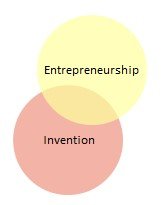
Invention: something new, that did not exist previously and that is recognized as the product of some unique intuition or genius. A product of the imagination. Something that has never been made before. “Something new under the sun”. A discovery pre-exists the discoverer, by opposition to the inventor and her/his invention.

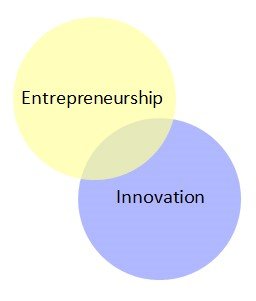
Innovation: the successful implementation and adoption by society of something new. So an innovation is the succesful commercialization or use (if non-profit) of an invention.

Entrepreneurship: it is the process of designing a new business (wikipedia). The entrepreneur perceives a (new) business opportunity and gathers the resources to implement it, ideally successfully. When the entrepreneur succeeds in implementing something new, (s)he is an innovator. But (s)he does not need to be an innovator, (s)he can also be an imitator.

So this makes a clear difference between an invention and an innovation. There is always an invention before an innovation, but an innovator does not have to be an inventor. It also shows that an entrepreneur does not have to invent, neither to innovate.

misconception is to confuse Research and Development (R&D) with innovation. Research deals with inventing or discovering. Development follows. Innovation comes afterwards. Patenting belong more to the invention side than to the innovation side of the equation. All this explains also why I have so many doubts about innovation metrics. They measure inputs (such as inventions or R&D) more than what innovation really is, an output.

So how are these three concepts related? Read again, Edison’s quote above. In the past, large innovative firms such as IBM or Bell Labs were inventing. They had big R&D labs. Xerox was famous for its inventive capability and low innovation output. So Apple “stole” many of its inventions and innovated instead. Today, many established companies go to universities to find inventions they license. Or they collaborate with partners (i.e. “open innovation”). However, the risk and uncertainty linked to inventing as well as finding a market for new things makes innovation difficult without entrepreneurship.

Entrepreneurship is a great way to enable innovation. Entrepreneurs see an opportunity and accept the uncertainty and risk taking. When it is done in-house. It is called intrapreneurship. Nespresso is one example (even if Nestle did not initially encourage its intrapreneur – who by the way was also the inventor). (Indeed because of the definition given above) corporations stop being start-ups when they innovate! Indeed they are often acquired (M&A) by big, established companies who know better how to commercialize innovate.

Inventors, Entrepreneurs and Innovators

For the same reasons as explained above, individuals have seldom the three attributes. At Apple, Wozniak was an inventor. Jobs was an entrepreneur and an innovator. But Bill Gates or Larry Page and Sergey Brin, the Google founders, were rare cases of inventors, entrepreneurs and innovators combined. However Brin and Page invented at Stanford and then created Google to implement succesfully their invention.

Entrepreneurship Development Cycle

EDP starts with stimulation or searching of potential entrepreneur where only awareness is created those who are a potential entrepreneur they get support in establishment unit from a various organization like D.I.C,  S.S.I, S.I.D.C, I.C.I.C.I, S.I.D.B.I, N.I.E.F.S, etc. Thus EDP’s are very useful in setting & sustaining small & micro units.

A. Stimulation consists 

  1. Entrepreneurial Education.
    2. Planned Publicity for entrepreneurial opportunities.
    3. Identification of potential entrepreneurs through a scientific method.
    4. Motivational Training.
    5. Help and guidance in selecting products and preparing project reports.
    6. Making Availability of Techno-Economic Information and Product Profits.
    7. Evolving new products and process.
    8. Availability of Local agencies with trained personnel.
    9. Creating Entrepreneurial forum.
    10. Recognition of skills.

B. Support consists 

  1. Registration Of Unit.
    2. Arranging Finance.
    3. Providing land, shed etc
    4. Guidance.
    5. Supply of scarce raw materials.
    6. Getting or import licenses.
    7. Providing common facilities.
    8. Granting tax relief.
    9. Offering management.

C. Sustaining  consists 

  1. Help modernization
    2. Help Diversification /Expansion/Substitute production.
    3. Additional Financing for full capacity utilization.
    4. Differing repayment interest.
    5. Diagnostic industrial extension.
    6. Production unit’s legislation.
    7. Product reservations.
    8. Quality testing and Improving Services.
    9. Need-based common facilities center.

Business Planning Process

The most business owners fail to plan properly, what exactly is business planning? According to the Business Dictionary, business planning is “The process of determining a commercial enterprise’s objectives, strategies and projected actions in order to promote its survival and development within a given time frame.” business planning needs to be done within a time frame. it’s a process. Absolutely. However, this definition fails to address available resources. Just because business owners lay out plans doesn’t mean they can afford to do them.

Business planning is a basic management function involving the design, the steps, and the quantified resources needed to achieve optimum balance of needs or demands with available resources.

4 Basic Steps in the Business Planning Process

Ultimately, the definition of business planning can be seen in the business planning process. Whether you’re planning your business’s opening, its growth, its projects, its risk mitigation, its sale, its closing, or anything else, all planning begins with a process. Although you can make the planning process as long or as complicated as you like, I tend to break the process into 4 Basic Steps.

1: Decide what you’re going to do.

Identify goals or objectives to be achieved.

2: Determine how you will do it.

Formulate strategies to achieve the goals or objectives.

3: Pick who will accomplish it.

Arrange the people required to work the strategies to achieve the goals.

4: Take action.

Implement, direct, and monitor the steps of the action plan.

Your well-thought-out business plan lets others know you’re serious, and that you can handle all that running a business entails. It can also give you a solid roadmap to help you navigate the tricky waters. The seven components you must have in your business plan include:

  1. Executive Summary
  2. Business Description
  3. Market Analysis
  4. Organization Management
  5. Sales Strategies
  6. Funding Requirements
  7. Financial Projections

All of these elements can help you as you build your business, in addition to showing lenders and potential backers that you have a clear idea of what you are doing.

  1. Executive Summary

The executive summary is basically the elevator pitch for your business. It distills all the important information about your business plan into a relatively short space. It’s a high-level look at everything and should include information that summarizes the other sections of your plan.

One of the best ways to approach writing the executive summary is to finish it last so you can include the important ideas from other sections.

Coffee House, Inc.’s executive summary focuses on the value proposition of the business. Here’s what they’ve written into their plan:

“Market research indicates that an increasing number of consumers in our city are interested in the experience of coffee. However, there isn’t a viable place for them to meet and learn locally. Instead, they only have access to fast coffee. Coffee House, Inc., provides a place for people to enjoy fresh-ground beans and truly enjoy their cup.

“Coffee House, Inc., provides a hub for a subculture of coffee, offering customers a place to purchase their own coffee-grinding supplies in addition to enjoying the modern atmosphere of a coffee house.

“The founders of Coffee House, Inc., are coffee aficionados with experience in the coffee industry and connections to sustainable growing operations. With the experience and expertise of the Coffee House team, a missing niche in town can be fulfilled.”

  1. Business Description

This is your chance to describe your company and what it does. Include a look at when the business was formed, and your mission statement. These are the things that tell your story and allow others to connect to you. It can also serve as your own reminder of why you got started in the first place. Turn to this section for motivation if you find yourself losing steam.

Some of the other questions you can answer in the business description section of your plan include:

  • What is the business model? (What are your customer base, revenue sources and products?)
  • Do you have special business relationships that offer you an advantage?
  • Where are you located?
  • Who are the principals?
  • What is the legal structure?
  • What are some of the market opportunities?
  • What is your projected growth?

Answering these questions narrows your focus and shows potential lenders and backers how you’re viewing your venture.

  1. Market Analysis

This is your chance to look at your competition and the state of the market as a whole. Your market analysis is an exercise in seeing where you fit in the market — and how you are superior to the competition.

As you create your market analysis, you need to make sure to include information on your core target market, profiles of your ideal customers and other market research. You can also include testimonials if you have them.

Part of your market analysis should come from looking at the trends in your area and industry. Coffee House, Inc., recognizes that there is a wide trend toward “slow” food and the idea of experiencing life. On top of that, Coffee House surveyed its city and found no local coffee houses that offered fresh-ground beans or high-end accessories for do-it-yourselfers.

Coffee House can create an ideal customer identity. The ideal customer is a millennial or younger member of Gen X. He or she is a professional and interested in experiencing life and enjoying pleasures. The ideal customer probably isn’t wealthy, but is middle class, and has enough disposable income to have a hobby like coffee. Coffee House appeals to professionals who work (and maybe live) in a downtown area. They meet their friends for a good cup of coffee, but also want the ability to make good coffee at home.

  1. Organization and Management

Use this section of your business plan to show off your team superstars. In fact, there are plenty of indications that your management team matters more than your product idea or pitch.

Venture capitalists want to know you have a competent team that has the grit to stick it out. You are more likely to be successful and pivot if needed when you have the right management and organization for your company.

Make sure you highlight the expertise and qualifications of each member of the team in your business plan. You want to impress.

In the case of Coffee House, Inc., the founders emphasize their connections in the world of coffee, particularly growers that use sustainable practices. They can get good prices for bulk beans that they can brand with their own label. The founders also have experience in making and understanding coffee and the business. One of them has an MBA, and can leverage the executive ability. Both have worked in marketing departments in the past, and have social media experience, so they can highlight their expertise.

  1. Sales Strategies

How will you raise money with your business and make profits a reality? You answer this question with your sales strategy. This section is all about explaining your price strategy and describing the relationship between your price point and everything else at the company.

You should also detail the promotional strategies you’re using now, along with strategies you hope to implement later. This includes your social media efforts and how you use press releases and other appearances to help raise your brand awareness and encourage people to buy or sign up for your products or services.

Your sales strategy section should include information on your web development efforts and your search engine optimization plan. You want to show that you’ve thought about this, and you’re ready to implement a plan to ramp up sales.

Coffee House needs to make sure they utilize word of mouth and geolocation strategies for their marketing. Social media is a good start, including making Facebook Live videos of them demonstrating products and how to grind beans. They can encourage customers to check in when visiting, as well as offer special coupons and promotions that activate when they come to the house to encourage sales.

  1. Funding Requirements

Here’s where you ask for the amount of money you need. Make sure you are being as realistic as possible. You can create a range of numbers if you don’t want to try to pinpoint an exact number. Include information for a best-case scenario and a worst-case scenario. You should also put together a timeline so your potential funders have an idea of what to expect.

It can cost between $200,000 and $500,000 to open a coffee house, and profit margins can be between 7 and 25 percent, depending on costs. A well-run coffee house can see revenues of as much as $1 million a year by the third year, according to the Chronicle. Some of the things Coffee House, Inc., would include in its timeline are getting premises, food handlers’ permits and the proper licenses, arrange for regular supply and get the right insurance. How long these items take depend on state and local regulations. No matter your business, get an idea of what steps you need to take to make it happen and how long they typically take. Add it all into your timeline.

  1. Financial Projections

Finally, the last section of your business plan should include financial projections. Make sure you summarize any successes up to this point. This is especially important if you hope to secure funds for expansion of your existing business.

Your forward-looking projections should be based on information about your revenue growth and market trends. You want to be able to use information about what’s happening, combined with your sales strategies, to create realistic projections that let others know when they can expect to see returns.

Even though it can be time-consuming to create a business plan, your efforts will be rewarded. The process is valuable for helping you identify potential problems, as well as help you plan ahead. You’ll be more organized and better prepared for success.

Finance Analysis of Business plan

Financial analysis is the process of evaluating businesses, projects, budgets and other finance-related entities to determine their performance and suitability. Typically, financial analysis is used to analyze whether an entity is stable, solvent, liquid or profitable enough to warrant a monetary investment. When looking at a specific company, a financial analyst conducts analysis by focusing on the income statement, balance sheet, and cash flow statement.

Financial analysis is used to evaluate economic trends, set financial policy, build long-term plans for business activity, and identify projects or companies for investment. This is done through the synthesis of financial numbers and data.

One of the most common ways to analyze financial data is to calculate ratios from the data to compare against those of other companies or against the company’s own historical performance. For example, return on assets (ROA) is a common ratio used to determine how efficient a company is at using its assets and as a measure of profitability. This ratio could be calculated for several similar companies and compared as part of a larger analysis.

Financial analysis can be conducted in both corporate finance and investment finance settings. In corporate finance, the analysis is conducted internally, using such ratios as net present value (NPV) and internal rate of return (IRR) to find projects worth executing. A key area of corporate financial analysis involves extrapolating a company’s past performance, such as gross revenue or profit margin, into an estimate of the company’s future performance. This allows the business to forecast budgets and make decisions based on past trends, such as inventory levels.

In investment finance, an outside financial analyst conducts a financial analysis for investment purposes. Analysts can either conduct a top-down or bottom-up investment approach. A top-down approach first looks for macroeconomic opportunities, such as high-performing sectors, and then drills down to find the best companies within that sector. A bottom-up approach, on the other hand, looks at a specific company and conducts similar ratio analysis to corporate financial analysis, looking at past performance and expected future performance as investment indicators.

Technical and Fundamental Analysis

There are two types of financial analysis: technical analysis and fundamental analysis. Technical analysis looks at quantitative charts, such as moving averages (MA), while fundamental analysis uses ratios, such as a company’s earnings per share (EPS).

For example, technical analysis was conducted on the GBP/USD exchange rate after the results of the Brexit vote in June 2016. Looking at the exchange rate chart, it was determined that the rate dropped significantly after the vote on June 23, 2016, and then it recovered over a 48-hour period by 375 basis points (bps).

As an example of fundamental analysis, Discover Financial Services reported first-quarter 2016 results on July 19, 2016. The company had an EPS of $1.40, up from an EPS of $1.33 for the same quarter in 2015, which was a good sign.

Taking Stock of Expenses

Think of your business expenses as two cost categories; your start-up expenses and your operating expenses. All the costs of getting your business up and running should be considered start-up expenses. These expenses may include:

  • Business registration fees
  • Business licensing and permits
  • Starting inventory
  • Rent deposits
  • Down payments on property
  • Down payments on equipment
  • Utility setup fees

This is just a sample of startup expenses; your own list will expand as soon as you start to itemize them.

Operating expenses are the costs of keeping your business running. Think of these as your monthly expenses. Your list of operating expenses may include:

  • Salaries (including your own)
  • Rent or mortgage payments
  • Telecommunication expenses
  • Utilities
  • Raw materials
  • Storage
  • Distribution
  • Promotion
  • Loan payments
  • Office supplies
  • Maintenance

Once again, this is just a partial list. Once you have listed all of your operating expenses, the total will reflect the monthly cost of operating your business. Multiply this number by 6, and you have a six-month estimate of your operating expenses. Adding this amount to your total startup expenses list, and you have a ballpark figure for your complete start-up costs.

Now you can begin to put together your financial statements for your business plan starting with the income statement.

Market and Feasibility Analysis

Market Analysis

  1. Overall Summary of the Business Model

Without prior knowledge regarding what the business is supposed to do, an entrepreneur can’t achieve his or her goals.

The executive summary should define the overall details of what the business is all about and the goals and objectives.

It should be clear with the core values and the positioning in the market. It must clearly explain how the brand will enter the local market followed by the international market – if ultimate ambitions stretch that far. This can be done by maintaining its equipment base, input/output process and the good quality of items. It further focuses on the generation of financial resources.

  1. A Strategy That Must Be Followed

You should be clear with your product strategy, which must be based on consumer needs. He/she should survey the situation using various details of their customers.

A few of the elements that must be included are:

  • Company or product mission
  • Marketing and Financial objectives
  • Resource availability
  • Cashflow analysis
  • Competitive analysis
  1. Availability of Products and Services

Entrepreneurs should have a full understanding of how their products or services will reach their target audience. 

Designing good products and services to customers is just one part of the whole plan, however. The aim must be making it available that too in a cost-effective manner. And it should be the ultimate goal of an entrepreneur. It can be achieved by making the best use of the team, promotional activities used for sales, advertising methods and other tools that are being used for communication.

  1. Pricing Strategy

The most important stage of any business model is its pricing. Price can be the maker or breaker of a product. It is the one element of the marketing mix that produces revenue. All other elements fall on the opposite side of the ledger. People should design their product or brand so that it commands a premium price and reaps big profits. It should also reflect a value that the consumers are willing to pay and a benefit that outweighs the cost.

  1. Awareness of the Product

Always plan how you intend to make your product or service known to your intended customer base. You could have the best offering in your industry or niche, but if nobody has heard of it or you, you’re as good as sunk.

The time to plan your social media, content marketing and advertising campaigns is not when you are ready to go to market! 

  1. Who Will Benefit From Your Offering?

Segmentation, targeting and positioning are the essences of Marketing. Your target customer base will go some way to determining the price you can ultimately charge. It will also determine how you can best communicate your offering to them and where you will find them. 

  1. Short Term and Long Term Objectives

Entrepreneurs must have a clear vision of their mission, marketing and financial objectives. They need to be specific about how their brand will satisfy the target market. Nobody can expect immediate profit.  But planning must include short, medium and long-term goals. You need to be clear regarding how your business will proceed as per the life cycle of whatever you are selling. And you need input from other areas of marketing. Nobody can think of or execute everything entailed in pushing an offering to market. 

  1. SWOT Analysis

Before designing a complete project, a pilot project needs to be designed and implemented. An entrepreneur should know everything – including any flaws that may become apparent. Also, the project strength, shortcomings, appropriate options for progressing and warnings can be tested in the pilot project itself for the successful completion or execution of the main project. For this, you need to do a thorough SWOT (Strengths, Weaknesses, Opportunities, Threats) analysis.

  1. PEST Analysis

SWOT Analysis will give you the inner view of the business model. However, it is very important to determine how a business will run in the changing economic scenario. Hence, a detailed PEST analysis needs to be done to know how your model will run in the changing Political, Economic, Social and Technological Environment.

Feasibility Analysis

A well-designed study should offer a historical background of the business or project, such as a description of the product or service, accounting statements, details of operations and management, marketing research and policies, financial data, legal requirements, and tax obligations. Generally, such studies precede technical development and project implementation.

Five Areas of Project Feasibility

A feasibility study evaluates the project’s potential for success; therefore, perceived objectivity is an important factor in the credibility of the study for potential investors and lending institutions. There are five types of feasibility study separate areas that a feasibility study examines, described below.

  1. Technical Feasibility: this assessment focuses on the technical resources available to the organization. It helps organizations determine whether the technical resources meet capacity and whether the technical team is capable of converting the ideas into working systems. Technical feasibility also involves evaluation of the hardware, software, and other technology requirements of the proposed system. As an exaggerated example, an organization wouldn’t want to try to put Star Trek’s transporters in their building—currently, this project is not technically feasible.
  2. Economic Feasibility: this assessment typically involves a cost/ benefits analysis of the project, helping organizations determine the viability, cost, and benefits associated with a project before financial resources are allocated. It also serves as an independent project assessment and enhances project credibility helping decision makers determine the positive economic benefits to the organization that the proposed project will provide. 
  3. Legal Feasibility: This assessment investigates whether any aspect of the proposed project conflicts with legal requirements like zoning laws, data protection acts, or social media laws. Let’s say an organization wants to construct a new office building in a specific location. A feasibility study might reveal the organization’s ideal location isn’t zoned for that type of business. That organization has just saved considerable time and effort by learning that their project was not feasible right from the beginning.
  4. Operational Feasibility: This assessment involves undertaking a study to analyze and determine whether and how well the organization’s needs can be met by completing the project. Operational feasibility studies also analyze how a project plan satisfies the requirements identified in the requirements analysis phase of system development. 
  5. Scheduling Feasibility: Tthis assessment is the most important for project success; after all, a project will fail if not completed on time. In scheduling feasibility, an organization estimates how much time the project will take to complete.

When these areas have all been examined, the feasibility study helps identify any constraints the proposed project may face, including:

  • Internal Project Constraints: Technical, Technology, Budget, Resource, etc.
  • Internal Corporate Constraints: Financial, Marketing, Export, etc.
  • External Constraints: Logistics, Environment, Laws and Regulations, etc.

Benefits of Conducting a Feasibility Study

The importance of a feasibility study is based on organizational desire to “get it right” before committing resources, time, or budget. A feasibility study might uncover new ideas that could completely change a project’s scope. It’s best to make these determinations in advance, rather than to jump in and learning that the project just won’t work. Conducting a feasibility study is always beneficial to the project as it gives you and other stakeholders a clear picture of the proposed project. 

Below are some key benefits of conducting a feasibility study:

  • Improves project teams’ focus
  • Identifies new opportunities
  • Provides valuable information for a “go/no-go” decision
  • Narrows the business alternatives
  • Identifies a valid reason to undertake the project
  • Enhances the success rate by evaluating multiple parameters
  • Aids decision-making on the project
  • Identifies reasons not to proceed

Apart from the approaches to feasibility study listed above, some projects also require for other constraints to be analyzed:

Internal Project Constraints: Technical, Technology, Budget, Resource, etc.
Internal Corporate Constraints: Financial, Marketing, Export, etc.
External Constraints: Logistics, Environment, Laws and Regulations, etc.

Marketing analysis of Business Plan

A market analysis is a quantitative and qualitative assessment of a market. It looks into the size of the market both in volume and in value, the various customer segments and buying patterns, the competition, and the economic environment in terms of barriers to entry and regulation.

The objectives of the market analysis section of a business plan are to show to investors that:

  • you know your market
  • the market is large enough to build a sustainable business

In order to do that the recommend the following plan:

  1. Demographics and Segmentation
  2. Target Market
  3. Market Need
  4. Competition
  5. Barriers to Entry
  6. Regulation

The first step of the analysis consists in assessing the size of the market.

Demographics and Segmentation

When assessing the size of the market, your approach will depend on the type of business you are selling to investors. If your business plan is for a small shop or a restaurant then you need to take a local approach and try to assess the market around your shop. If you are writing a business plan for a restaurant chain then you need to assess the market a national level.

Depending on your market you might also want to slice it into different segments. This is especially relevant if you or your competitors focus only on certain segments.

Volume & Value

There are two factors you need to look at when assessing the size of a market: the number of potential customers and the value of the market. It is very important to look at both numbers separately, let’s take an example to understand why.

Imagine that you have the opportunity to open a shop either in Town A or in Town B:

Table: Town A vs. Town B
Town A B
Market value £200m £100m
Potential customers 2 big companies 1,000 small companies
Competition 2 competitors 10 competitors

Although Town B looks more competitive (10 competitors vs. 2 in Town A) and a smaller opportunity (market size of £100m vs. £200 in Town A), with 1,000 potential customers it is actually a more accessible market than Town A where you have only 2 potential customers.

Potential customer

The definition of a potential customer will depend on your type of business. For example if you are opening a small shop selling office furniture then your market will be all the companies within your delivery range. As in the example above it is likely that most companies would have only one person in charge of purchasing furniture hence you wouldn’t take the size of these businesses in consideration when assessing the number of potential customers. You would however factor it when assessing the value of the market.

Market value

Estimating the market value is often more difficult than assessing the number of potential customers. The first thing to do is to see if the figure is publicly available as either published by a consultancy firm or by a state body. It is very likely that you will find at least a number on a national level.

If not then you can either buy some market research or try to estimate it yourself.

Methods for building an estimate

There are 2 methods that can be used to build estimates: the bottom up approach or the top down approach.

The bottom up approach consist in building a global number starting with unitary values. In our case the number of potential clients multiplied by an average transaction value.

Let’s keep our office furniture example and try to estimate the value of the ‘desk’ segment. We would first factor in the size of the businesses in our delivery range in order to come up with the size of the desks park. Then we would try to estimate the renewal rate of the park to get the volume of annual transactions. Finally, we would apply an average price to the annual volume of transactions to get to the estimated market value.

Here is a summary of the steps including where to find the information:

  1. Size of desks park = number of businesses in delivery area x number of employees (you might want to refine this number based on the sector as not all employees have desks)
  2. Renewal rate = 1 / useful life of a desk
  3. Volume of transactions = size of desks park x renewal rate
  4. Value of 1 transaction = average price of a desk
  5. Market value = volume of transactions x value of 1 transaction

You should be able to find most of the information for free in this example. You can get the number and size of businesses in your delivery area from the national statistics. Your accountant should be able to give you the useful life of a desk (but you should know it since it is your market!). You can compare the desk prices of other furniture stores in your area. As a side note here: it is always a good idea to ask your competitors for market data (just don’t say you are going to compete with them).

That was the bottom up approach, now let’s look into the top down approach.

The top down approach consist in starting with a global number and reducing it pro-rata. In our case we would start with the value of UK office furniture market which AMA Research estimates to be around £650m and then do a pro-rata on this number using the number of businesses in our delivery area x their number of employees / total number of people employed in the UK. Once again the number of employees would only be a rough proxy given all business don’t have the same furniture requirements.

When coming up with an estimate yourself it is always a good practice to test both the bottom up and top down approaches and to compare the results. If the numbers are too far away then you probably missed something or used the wrong proxy.

Once you have estimated the market size you need to explain to your reader which segment(s) of the market you view as your target market.

Target Market

The target market is the type of customers you target within the market. For example if you are selling jewellery you can either be a generalist or decide to focus on the high end or the lower end of the market. This section is relevant when your market has clear segments with different drivers of demand. In my example of jewels, value for money would be one of the drivers of the lower end market whereas exclusivity and prestige would drive the high end.

Now it is time to focus on the more qualitative side of the market analysis by looking at what drives the demand.

Market Need

This section is very important as it is where you show your potential investor that you have an intimate knowledge of your market. You know why they buy!

Here you need to get into the details of the drivers of demand for your product or services. One way to look at what a driver is, is to look at takeaway coffee. One of the drivers for coffee is consistency. The coffee one buys in a chain is not necessarily better than the one from the independent coffee shop next door. But if you are not from the area then you don’t know what the independent coffee shop’s coffee is worth. Whereas you know that the coffee from the chain will taste just like in every other shop of this chain. Hence most people on the move buy coffee from chains rather than independent coffee shops.

From a tactical point of view, this section is also where you need to place your competitive edge without mentioning it explicitly. In the following sections of your business plan you are going to talk about your competition and their strengths, weaknesses and market positioning before reaching the Strategy section in which you’ll explain your own market positioning. What you want to do is prepare the reader to embrace your positioning and invest in your company.

To do so you need to highlight in this section some of the drivers that your competition has not been focussing on. A quick example for an independent coffee shop surrounded by coffee chains would be to say that on top of consistency, which is relevant for people on the move, another driver for coffee shop demand is the place itself as what coffee shops sell before most is a place for people to meet. You would then present your competition. And in the Strategy section explain that you will focus on locals looking for a place to meet rather than takeaway coffee and that your differentiating factor will be the authenticity and atmosphere of your local shop.

Competition

The aim of this section is to give a fair view of who you are competing against. You need to explain your competitors’ positioning and describe their strengths and weaknesses. You should write this part in parallel with the Competitive Edge part of the Strategy section.

The idea here is to analyse your competitors angle to the market in order to find a weakness that your company will be able to use in its own market positioning.

One way to carry the analysis is to benchmark your competitor against each of the key drivers of demand for your market (price, quality, add-on services, etc.) and present the results in a table.

Opportunities through change

Change can be successfully exploited by talented entrepreneurs and turned to a major opportunity for generating ideas and practices for the development of different products and services. The most innovative creations have come to life as a result of change or seeking of change as a way to improve, solve a problem or prevent one from occurring. Entrepreneurs must always look for the opportunities that inspire innovation as a great way to grow their businesses, make a difference and become the leaders in their niche.

The real entrepreneurs create businesses that are built on innovative ideas and provide products and services different than the rest available on the market. Innovation is what separates the true entrepreneurs and the business owners of new ventures that are also taking risk, but are not doing anything that hasn’t been done before. Existing companies must embrace the change of the business environment and adjust and gear up to these changes in order to not only survive, but also grow through innovation.

The value

It is important for entrepreneurs to understand the difference between innovation and creating new products. Novelty is not always enough if you are not creating products and services that truly make a difference and bring value to the customers. Changes are great source of opportunity to do new things, try different approaches and be creative, but, most importantly, it brings great opportunity to understand better the need of the customers and deliver to them the products that they want to have or even better the products that they don’t know they want yet. By bringing value, you are making a difference and making a difference is what separates successful startups from the unsuccessful ones.

The power of forward thinking

Entrepreneurs must look hereafter and lead their companies in a way that encourages innovation that will change and shape the future. If the entrepreneurs focus solely on their current business situation and linger to innovate, they are doomed to fail. The power of forward thinking and leadership that inspires innovation is what can shape the future of a company. You fail to innovate you fail to grow and eventually your business becomes obsolete.

The strategy

Entrepreneurs, who are looking forward and believe in the power of innovation, believe in strategizing as they understand the importance of having clear vision about the future of the company and detailed action plan, dedicated to the development of innovative products. The business world is constantly changing technology is disrupting almost every industry and businesses that are here to stay must create strategies to help them bring value to the customers, stay competitive and grow.

Observation + solution + vision

The entrepreneur is observing a real need or problem, creating the solution to solve this problem and imagining a changed world for the better.

He or she is born with or develop a special set of skills and abilities: perseverance and passion for long-term goals, courage, risk taking, shaping the future while encouraging diversity.

The entrepreneur’s passion is the engine pushing him through challenges, setbacks and struggles to achieve his purpose and to change the world according to his vision.

Secret to turning change into opportunity?

See into the future

WMACs are better able to anticipate change, and the opportunity that comes with it. They think ahead and embrace change when it inevitably comes. A strong guiding vision helps them seize only the right opportunities, so they don’t lose focus or spread themselves too thin.

Move fast, change faster

These organizations need to respond quickly to market opportunities so they can get there first. They anticipate what skills they’ll need in the future, and rapidly respond to fill in any gaps. This future-facing, responsive strategy is designed for innovation and efficiency, regardless of size.

Get flexible

WMACs think in terms of skills rather than positions. Dynamic, cross-functional teams put the right expertise in the right place at the right time, with everyone aligned to a common purpose. This flexible working style creates flexible thinkers, people prepared to make bold decisions.

Take more chances

Promoting and sustaining a culture of agility depends on how an organization responds to failure. It pays to be bold, even in the face of inevitable setbacks. By empowering people to take risks without fear of adverse consequences, WMACs drive innovation, learning, and development.

Your industry is changing, increasingly fast. That’s either a risk to your organization, or an opportunity to be seized. It all depends on your approach. Korn Ferry provides end-to-end support to organizations that want to transform their business. We can help guide your business through each critical step towards your growth and evolution.

The World’s Most Admired Companies [WMACs]. One thing that many of these highly successful organizations have in common is their ability to change, despite their size. This organizational agility gives them an unbeatable competitive advantage. For them, success doesn’t happen in spite of change, it happens as a result of it.

WMACs are engineered to evolve. Their adaptability is driven by their readiness to take risks in order to seize an opportunity. These are businesses that say ‘yes’.

error: Content is protected !!