Marketing as a Value Creation process

Value-creation and value-delivery is the main task of marketing. Marketing in its entirety is a value “Creating and Value-Delivering Process. The whole bunch of tasks involved in marketing, serve the purpose of value delivery. They actually form a sequence leading to value delivery.

Marketing planning, buyer analysis, market segmentation and targeting are concerned with value selection. Product development, manufacturing, service planning, pricing, distribution and servicing, are concerned with value creation & value delivery. Personal selling, advertising, publicity and sales promotion are concerned with value communication. Activities like market research and market control assess the effectiveness of the value delivery process, the level of satisfaction the customer has actually received and how it compares with the firm’s intention as well as with other competing offers for the purpose of enhancing value.

Ingraining an ‘Organizational Capability’ for innovation in creation of value is indispensable while competing in global markets. The basic questions underlying value creation are: who, which segments to serve (or not serve); what product or service to globalise; how to serve them through appropriate supply chains, channels and market-based assets, or organisational capabilities; and finally where (which geographical markets) to serve. Once firms are clear on the value proposition, they may delve on any of the below suitable strategies in isolation of other strategies or a combination thereof. These strategies are generic and not prescriptive. They are, however, routinely observed and often implemented by resource-endowed firms. Taking the automobile industry as an example, Henry Ford’s focus on productivity led to a business model where the competitive advantage of lower costs and prices resulted in greater market share and, subsequently, even greater economies of scale.

But, these advantages dissipated over time as other manufacturers adopted assembly lines and like Alfred Sloan, the founder of General Motors, the automotive market competition from cost/price minimisation to differentiation and branding. It was no longer enough to have any car as long as it was a black Model T Ford. Customers could start with a Chevrolet, get an Oldsmobile as families grew and income increased, migrate further to a stylish Buick, and finally to a Cadillac when one foot was in the grave. This use of differentiation and branding allowed GM to capture higher prices and margins as customers moved through their lifecycle but collapsed decades later when in the name of efficiency and cost management GM used the same chassis (platform) across Chevy, Olds and Buicks. In effect their new business model failed to understand what made GM great in the first place. European companies such as BMW and Daimler-Benz, not having the same scale as the US market, relied on product performance and premium pricing. The Japanese, who were late entrants in the global market, focused on longevity (reliability and quality) to deliver value and eventually solutions such as service guarantees and extended warranties to enhance customer switching costs and loyalty. These business model innovations evolved over decades in the automotive market. But they now occur over but a few months in consumer electronics sectors such as the smartphone market. Failure to innovate to do things better is a free gate pass to exit.

In any marketing situation, one can discern four distinct steps in the value providing process:

  • Value selection.
  • Value creation/Value Delivery
  • Value communication.
  • Value enhancement.

Value Selection

It is obvious that selecting the value to be offered is the first step in the value delivering process. Everything else follows. Only after selecting the value to be offered, can the firm proceed with production, sales and promotion. What needs to be specifically understood here is that the firm finds out what constitutes value in the estimation of the customer and accepts it as the value to be offered. Value selection is thus not only the first step in the sequence but also the most crucial one.

Value Creation / Value Delivery

This constitutes the bulk of the marketing job. What the firm has promised to provide the customer has to be actually provided. The product offering must actually carry the benefits the firm has promised and it must be reached to the customer in the most satisfying manner. Value creation/value delivery signifies the successful execution of the firms promise. Most firms fumble here because they promise to provide all sorts of things, but they fail deliver; their products fail to carry the value they were supposed to carry. The entire firm with all the functions and activities is involved in this step. In creating and delivering the product with all the associated benefits, which the firm has decided to offer, there is a role for technology, design and engineering finance management and the organizational set-up

On Marketing Concept, in this article we outlined up on the idea of integrated management action. What is required in value creation and delivery is integrated management action with marketing taking center stage.

Value Communication

After selecting the value to be offered and deciding how the value has to be created /delivered, the firm tries to communicate the value to the customer. In this step, there are actually two components. The firm works out a value proposition and then communicates it to the customer.

Making a Value Proposition

In a marketing endeavor, what the firm offers to the customer is not a mere physical product; it offers a value proposition. The product offer consisting of the best possible benefits/value is put forward as a value proposition, explaining how the offer matches the customers requirement s and how it works out to be the best among all the competing offers.

Communicating the Value Proposition

The firm then, communicates the value proposition to the customer. It explains the uniqueness of its offer through a well-formulated marketing communication mix. The customers exercise of assessing the value of the offer actually starts from this stage.

Value Enhancement

The firm also continuously and proactively enhances the value. It collects feedback from the consumer about his level of satisfaction with the product and upgrades the value. It actually is a non-stop job for the firm to search for the customers satisfaction level and augment the offer. Competing products, including substitute products, keep attacking the value proposition of the firm.

Expectations of customers too keep changing. The firm has to search for the new expectations of the customers, locate product gaps/ benefits gaps and keep making new and better offers to the customer to stay ahead of the competition in value rankings.

Sales promotion gimmicks do not normally serve the purpose of sustained value addition. Sales promotion measures like consumer deals and trade deals result in just a temporary shift in the value-cost equation in favor of the consumer. When the deals are withdrawn, consumers turn away from the product.

What is needed is a sustained and ongoing effort, not short-lived big bangs. The effort must be lasting value addition, which normally accrues only though factors like enhancement of the functional utility/ convenience of the product.
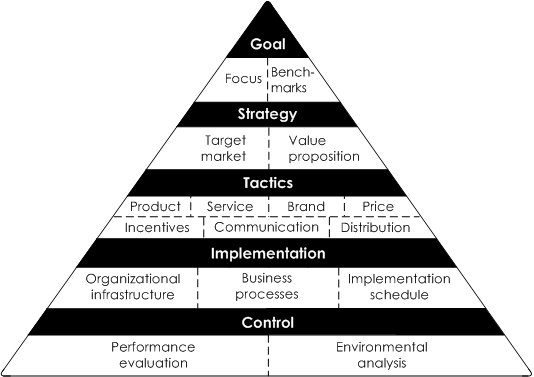
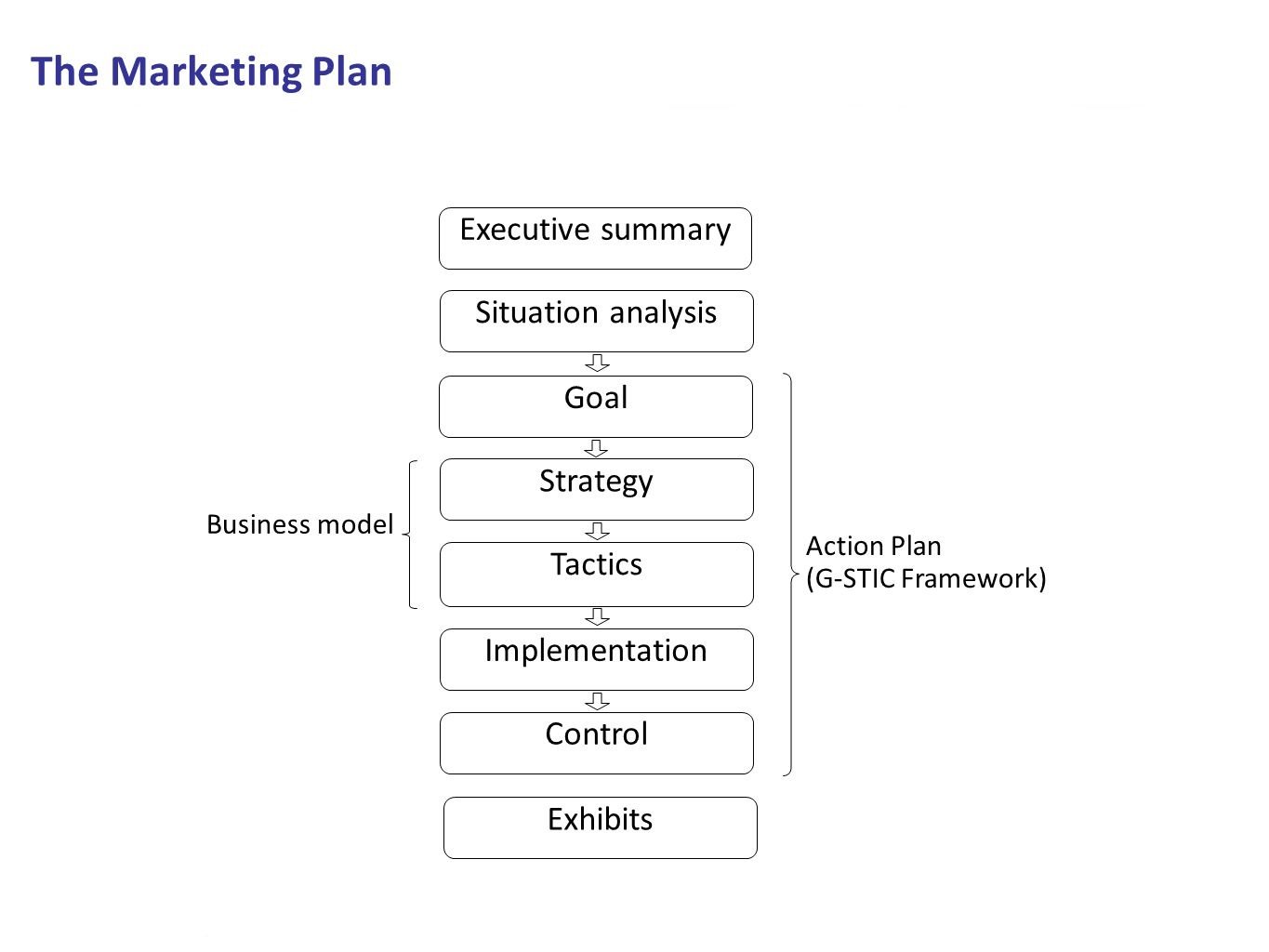
The G-STIC frame work for Marketing Planning: Goal-Strategy Tactics

Strategic Planning

Strategic planning is a buzz word that is thrown around a lot, but unless you know how to develop and implement a strategic plan, the term is useless. It’s important to understand that strategic plans will differ greatly among practices and therefore, a “Cookie cutter” approach will not be beneficial. In this post, I would like to offer a few tips to driving successful strategic planning and implementation. 

  1. Involve your entire staff

It is important that everyone in the practice be included in the process in some way. By collecting the insight of the people on the front lines, the plan will likely be more accurate, practical, and actionable. Also, by being inclusive, everyone will feel that they are an important part of a team and they will be more inclined to drive the implementation.

  1. Conduct a situation analysis

Begin by looking at internal and external factors. Internally, explore your operations, human resources, and finances budget, profits, revenues, and debt. Externally, look at your competitors, market condition, and the economy. Lastly, conduct a thorough SWOT analysis; Strengths, Weaknesses (internally), and Opportunities and Threats (externally). This assessment will be the basis for your strategic plan. Figure out what you do well and what needs to be improved to build your practice and create a sustainable competitive advantage.

  1. Develop business objectives

These goals should be SMART: Specific, Measurable, Actionable, Realistic, and Time-driven.  Potential goals can be focused on sales, profits, growth, or image and positioning.  

  1. Develop an overall strategy

Your strategy should support your objectives. These will drive your tactics and determine how you will execute. During this phase, you should examine the variables that may affect your strategy and determine if they are controllable or uncontrollable. Typically, the internal variables will be controllable and the external variables will be uncontrollable.

  1. Create control measures

Lastly, you will create key control measures that will measure the success of the initiative. It may help to think of this step in terms of who does what… when… and how. Implementing control measures will help keep strategic planning a process instead of simply a document.

The G-STIC Framework

Designing the Tactics

Tactics are the set of activities that are used to execute a specific strategy. These tactics are defined by seven elements, commonly referred to as the marketing mix. These are the key decisions that build on the marketing strategy.

  • Product: It’s key functional characteristics. Implies transfer of ownership.
  • Service: Also reflects functional characteristics, but does not transfer ownership. Services are inseparable from service providers.
  • Brand: Create a unique set of associations that enhances the product/service value beyond simply the functional benefits.
  • Price: The amount of money the business charges for the product/service
  • Incentives: Tools used to enhance the value for customers, collaborators, and/or employees. Can be monetary or non-monetary.
  • Communication: Informs current and potential clients about the offering. Can include elements from the other six marketing mix variables.
  • Distribution: The channels by which the client receives the offering.

I: Defining the Implementation Plan

Implementation is the logistics of executing the offerings strategy and tactics. There are three main components.

Business Infrastructure: Refers to the organizational structure. Involves identifying the business unit in charge of the offering, and identifying key personnel and collaborators.

Business Processes: Depict the activities involved in designing and managing the offering (flow of information, goods, and money).

Implementation Schedule: Identifies the sequence and time frame for tasks to be performed.

C: Identifying Controls

Controls serve two functions: to evaluate a business’s progress toward its goals and to analyze the changes in the business’s environment.

  • Performance Evaluation: Monitors the business’s progress toward reaching goals and maximizing performance.
  • Environmental Analysis: Monitors the environment to be sure that the action plan remains optimal.

G: Setting a Goal

This is a pivotal part of the strategic planning process. Without a clearly defined goal, the other elements of the value creation process, and the overall success of the business, are doomed for failure.

There are two decisions involved with goal setting: identifying the focus of the businesses actions and setting specific benchmarks for measuring the business’s performance. The focus determines the key element of a business’s success and often includes elements such as net income, sales revenues, and market share. Benchmarking looks at the goal and defines its temporal and quantitative aspects.

S: Developing a Strategy

A strategy outlines the activities that are needed to accomplish the business’s goals. This element is characterized by two key decisions: Identifying target customers and developing a value proposition.

The markets in which a business’s offerings compete can be best illustrated by the 5-C framework.

  • Customers: Potential buyers who have needs that the business’s offerings aim to fulfill
  • Company: The business managing the offering
  • Collaborators: Entities that work with the business to create value for target customers
  • Competitors: Business’s whose offerings target the same customers
  • Context: Relative aspects of the environment in which the business operates

Target Market

Identifying your target market involves two key decisions: Selecting which clients to serve and identifying actionable methods for reaching these clients. Selecting which clients to serve, also known as strategic targeting, is done based on the businesses ability to fulfill a client’s needs in a way that is beneficial to the client, business, and collaborators. Often, a client’s needs are not easy to see, so a business will need to identify observable characteristics that can be used to reach the client, also known as tactical targeting. These characteristics may include demographic, psychographic, geographic, and behavioral factors.

Value Proposition

As you have probably noticed, mutually beneficial value is a major theme in almost all discussions about marketing. True business success is achieved if a business creates a product offering that provides a client with more value than the competition’s offering in a way that creates value for the business and the collaborators. The value proposition is simply a definition of the value that the offering creates. This value proposition includes all of the benefits and costs associated with the offering. The next step is to define the positing strategy, which highlights the most important benefit of the offering. The most important benefit should be poignant and serve to differentiate the product in the mind of the client.

Implementation & Control

Implementation control is aimed at assessing whether the plans, progammes and policies are actually guiding the organization towards its predetermined objectives or not.

If the resources that are committed to a project at any point of time would not benefit an organization as envisaged, corrective steps should be undertaken immediately.

Implementation control is designed to assess whether the overall strategy should be changed in light of unfolding events and results associated with incremental steps and actions that implement the overall strategy.”

Strategic implementation control does not replace operational control. Unlike operations control, strategic implementation control continuously questions the basic direction of the strategy.

Types of Implementation Control

The two basis types of implementation control are:

  1. Monitoring strategic thrusts (new or key strategic programs)

Two approaches are useful in enacting implementation controls focused on monitoring strategic thrusts:

  • One way is to agree early in the planning process on which thrusts are critical factors in the success of the strategy or of that thrust
  • The second approach is to use stop/go assessments linked to a series of meaningful thresholds (time, costs, research and development, success, etc.) associated with particular thrusts.
  1. Milestone Reviews

Milestones are significant points in the development of a programme, such as points where large commitments of resources must be made. A milestone review usually involves a full-scale reassessment of the strategy and the advisability of continuing or refocusing the direction of the company. In order to control the current strategy, must be provided in strategic plans.

Implementation Control Measures

As you begin to implement a business strategy, you must use implementation control measures to assess whether or not your plan needs adjustment. Common types of implementation control include setting performance standards, measuring actual performance, analyzing the reasons your staff failed to meet specific performance standards, and developing a plan to correct performance deviations. Implementation control also includes things such as budgets, schedules, and milestones that the company is trying to achieve.

The process of the implementation of the marketing plan

During the process of the implementation of the marketing plan managers must ensure efficient use of capital, human and marketing resources of the company. Selection of the strategy has a significant impact on the subsequent functioning of the company, because its organizational structure must be adapted to strategy. Strategic marketing effectiveness largely depends on the level of involvement of executive leadership in the implementation of marketing tasks. In the implementation of the marketing plan very important factor are the skills, attitudes and behaviours of the staff.

Quality of management depends on:

  • Leadership: Top management involvement in the planning process,
  • Coordination: To ensure harmonious cooperation between the organizational units,
  • Communication: Vertical and horizontal information flows,
  • Human resources: Personnel selection, training and evaluation,
  • Organizational resources:  IT systems, buildings, management methods,
  • Motivating: The creation of incentive climate in which staff undertake actions to achieve the purpose of the company,
  • Organizational structure: Relations between organizational units, processes, and formalization,
  • Organizational culture: Market focus, values, customer orientation of personnel,

Marketing plan control process

Marketing plan control process includes the following phases:

  • Setting the values of indicators, which are the subject of observation and measurement (e.g. sales volume, market share, stock rotation, etc.)
  • Determining the tolerance ranges from planned values,
  • Measurement of the values of indicators,
  • Comparison of planned values to actual values, to determine deviations and give explanation of their causes,
  • Formulation of proposals to eliminate the detected deviations or change of values of indicators.

Types of controls in marketing plan implementation

The essential types of marketing control are:

  • Control of the annual plan: Performed by mid-level management (method: analysis of sales, market share, financial indicators, etc.)
  • Control of profitability: Performed by marketing controller (method: the profitability of the product, area, customer segment, etc.)
  • Control of efficiency: Performed by marketing executives, line managers and HR departments (method: the effectiveness of the sales staff, advertising, sales, promotion, distribution)
  • Strategic control: Performed by top management or marketing auditor (method: ranking of the effectiveness of marketing, marketing audit, evaluation of marketing excellence, an overview of the ethical and social responsibility of the enterprise)

Problems with implementation and evaluation of effective control systems are often caused by:

  • High cost of implementation (IT software and hardware, data acquisition, human costs),
  • Strict control may reduce motivation, decrease creativity and innovation.

Role of Business models in Marketing Management

A business model is a framework for how a company will create value. Ultimately, it distills the potential of a business down to its essence. It answers fundamental questions about the problem you are going to solve, how you will solve it, and the growth opportunity within a given market.

Creating a business model is essential, whether you are starting a new venture, expanding into a new market, or changing your go-to-market strategy. You can use a business model to capture fundamental assumptions and decisions about the opportunity in one place, setting the direction for success.

There are many types of business models. Each one varies considerably based on the type of organization and offering. For example, a manufacturing company will have a very different model than an advertising agency. Even within a specific industry, business models vary. Here are a few common business models used by technology companies:

  • Subscription
  • Transactional
  • Freemium
  • Affiliate
  • Retail sales

Most businesses end up using a combination of business models to reach their customers and grow over time.

Business model Importance

You need a clear path to build something meaningful. The process of building a business model establishes a plan for how you will realize your vision. It lays out the strategy behind a new undertaking or investment and provides a framework for tracking progress.

Creating a business model requires deep thought and analysis. Company and product builders must think from the outside in, focusing on market needs and what matters most to customers. Once built, sharing your business model across the organization encourages alignment. This keeps everyone accountable for what they are working on and why, as well as guiding investments of time and resources.

Uses of business models

Companies across every industry and at all stages of maturity use business models. Some rely on lengthy processes and build complicated models, while others move quickly to articulate the basics. Having the discipline to work through this planning tool forces internal alignment.

For established enterprises, a business model is often a living framework that is reviewed and adapted every year based on changes with customers, employees, and the market. For companies launching new products or entering new markets, a business model can help get them off to the right start and ensure that early product and marketing decisions are tied back to the strategy.

Role of Business models in Marketing Management

A business model plays a vital role in the success of any company, as it explains how that business will earn revenue. For entrepreneurs, a business model aids in acquiring investors and establishing partnerships.

Significance

For aspiring entrepreneurs, developing a business model forces you to thoroughly think about the overall business plan. According to an article written for Bloomberg Business Weekly by business professional Gwen C. Edwards, topics an effective business model should address include the type of product or service being offered, how to draw revenue from the product or service, and what advantages and disadvantages the company has compared to others in the same industry.

Types

Many types of business models exist, from the basic pay-for-product model to advertising and e-business methods. Various business models can be blended together in a business plan. For instance, in addition to traditional practices, a retail store might sell advertising on the store website in order to accumulate extra revenue.

Considerations

Chris Brogan, the president of the media marketing agency New Marketing Labs, advises on his website to be on the lookout for new elements that you can implement into your business model. Methods Brogan recommends for doing this include reading business books and discussing industry-related ideas with other professionals.

Most businesses prepare a blueprint for how the company will conduct its operations. Such blueprints are typically referred to as a model. These templates serve many purposes and come in a variety of forms, including business and a revenue models. Despite the similarities between a business and revenue model, the two outlines serve different functions and outline distinct aspects of the business.

Business Model Identification

The “Harvard Business Review on Business Model Innovation” charts four basic tenets of a business model: how the company creates and delivers value to its customers, the ways in which the company will earn a profit, which key components will be utilized and which key processes the company will incorporate. Key components include staff and human resources, machinery and technology as well as branding efforts. Business operations such as manufacturing and training make up the business’s key processes. Each business model differs depending on the organization’s size, industry and expectations.

Revenue Model Identification

A revenue model is a subset component of a business model. The revenue model focuses on answering the question of how the business will generate revenue and, ultimately, how the company will be profitable. The revenue model depends on the industry. For example, a website might employ a contextual advertising model, which means the business generates money by users clicking on third-party ads within the page content. A baseball stadium, on the other hand, may have a revenue model that includes raising money from ancillary goods such as team apparel and dining outlets.

Differences

Michael Hitt, author of “Creating Value” states that a revenue model and business model are similar but separate outlines. Hitt explains that a business model’s goal is to outline how the business generates value, whereas a revenue model specifies how the business allocates the created value. Thus, a business model explains the company’s strategy, operations and management tactics. The revenue model draws from these explanations to outline how the company will earn money.

The choice of model depends on circumstance. Companies draft a business model and present it to financial institutions in order to get a loan. Venture capitalists typically view a business model in order to make decisions to invest in the company. On the other hand, corporations review their revenue model to make financial forecasts. Companies also inspect their revenue model to see if it’s relevant in lieu of any changes in operations. For instance, the revenue model could need modification if the cost of production rises or wages change.

Identifying the Market The Five C Framework

Market for product is big and diverse making it difficult for companies to be able to satisfy every customer. Companies need to identify a certain set of customer within a market and work towards satisfying them. This set of identification is market segment. Companies further need to understand the intricacy of how this segment behaves and operates. An approach known as target marketing is gaining prominence where companies identify the market segment on similar needs and wants, select one of the market segments and then focus in developing products and marketing program.

Earlier business operation was in the form of mass marketing. In mass marketing companies produce a product in large quantities and serve this product to as many consumers as possible. This made sense as markets were developing and not much variety was on offering. Now product offerings have under gone radical change thanks to advertising and communication reach. Therefore, companies look forward to marketing at segment, niches, local and individual level.

In segment marketing companies identify consumer with similar needs and wants. For example, an airline is looking forward to providing no frills’ connectivity between metro cities on US east coast compare. This segment is within airline industry but needs of customer is different. T target audience is low budget travelers. However, customers within the segment look for different attributes, for example, lunch or beverages as part of travel. Here companies can offer this by charging the customer.

In niche marketing, companies target limited customer set. A niche market is worth exploring where customers are willing to pay a premium for product, entry barriers are high and market has growth potential. In local marketing, customers are local neighborhood, trading stores, etc. For example, many banks prefer local marketing for better understanding of client and provide them right type of service. In individual marketing, companies look forward to satisfying needs and wants of individual customer. Internet is facilitating the process of individual marketing, where in customer log on to the site and creates products from available options. This process is not feasible for high technology products like automobiles.

The Five C Framework

  1. Customers

Company customers are the key focus areas of the business. To make the customer happy you should really understand your target market and customers’ needs and wants. Try to find out information through market research i.e.

  • Market segmentation
  • Market size and growth
  • What are you selling
  • Do u really selling what they need?
  • Consumers decision making process
  • Preference where they shop
  • Quantity and frequency for their purchase
  • Consumer preferences, attitude and trends
  1. Competitors

It is a very important analysis and determine the future of the business.

  • Who are your primary competitors?
  • Any substitute available for your products?
  • Segmentation, Targeting and Positioning?
  • Competitors activities and market share
  • What are competitors strengths and weaknesses?
  1. Company or Corporation
  • Company culture
  • Goals and objectives
  • Product Line and Brand Image
  • Your Strengths and Weaknesses
  • Level of technological advancement
  1. Collaboratives

All those parties have outside but have shared interest in the company. your business operation can affect them both positively and negatively.

  • Suppliers
  • Distribution channels
  • Key opinion leaders
  • Third parties
  1. Climate

Company climate means macro environmental factors. PESTLE analysis tool is a good way to analyze this company environment.

  • Political factors. Government rules and regulations that affect your business environment
  • Economic factors. It is the interest rate, economic crisis, inflation, trade cycle all these economic factors affect the business operations.
  • Socio-Cultural factors. social beliefs customs, attitudes and preferences are the social factors of a business.
  • Technological factors. How you are technologically advanced and fulfilling your customer needs and want through automatic processes and communication infrastructure etc.
  • Legal factors. corporations must comply with law and regulation if not will affect your business operation.
  • Environmental factors. How your business is affecting the surrounding environment whether your business fulfilling the environmental regulations or not.

While performing 5 C’s of marketing analysis company can gather information from websites, annual reports, different industries reports. Government websites are also a good source of information. By this way, a company can identify opportunities to provide value to target customers.

Difference between Salary and Wages

Salary

Salary is a fixed regular payment, typically paid on a monthly basis, for the performance of work or services. Unlike wages, which are often calculated on an hourly or weekly basis, salaries provide employees with a consistent and predetermined amount of compensation, regardless of the number of hours worked.

Components:

  1. Base Salary:

The core, fixed amount of money paid to an employee on a regular basis, forming the foundation of the overall salary. Reflects the employee’s role, responsibilities, and experience.

  1. Bonuses:

Additional monetary rewards provided to employees, often based on performance, company profits, or specific achievements. Motivates employees and aligns their efforts with organizational goals.

  1. Allowances:

Supplementary payments intended to cover specific expenses or costs related to the job, such as housing, transportation, or meals. Addresses the financial impact of job-related requirements.

  1. Benefits:

Non-monetary compensation, including healthcare, retirement plans, and other perks, provided to enhance employees’ overall well-being. Contributes to employee satisfaction and work-life balance.

  1. Overtime Pay:

Additional compensation for hours worked beyond the standard workweek, often calculated at a higher rate than the regular hourly pay. Compensates employees for extra effort and time invested in work.

  1. PerformanceBased Incentives:

Variable payments linked to individual or team performance, encouraging employees to achieve specific goals or targets. Aligns compensation with results and fosters a performance-driven culture.

  1. Profit Sharing:

Sharing company profits with employees, providing them with a stake in the organization’s financial success. Aligns the interests of employees with the overall success of the business.

  1. Commissions:

Payments based on sales or revenue generated by an employee, common in roles with direct sales responsibilities. Rewards employees for their contribution to revenue generation.

  1. Retirement Benefits:

Contributions made by the employer to retirement plans, such as 401(k) or pension schemes. Supports employees in building financial security for their post-work years.

  • Stock Options:

The right to purchase company stock at a predetermined price, offering employees a share in the company’s ownership. Aligns employees’ interests with the company’s long-term success.

  • Education and Training Support:

Financial assistance provided by the employer for the education and skill development of employees. Promotes continuous learning and professional growth.

  • Health and Wellness Programs:

Initiatives and benefits aimed at promoting employees’ physical and mental well-being. Enhances employee health, productivity, and job satisfaction.

  • Vacation and Leave Benefits:

Paid time off from work, including vacation days, holidays, and other types of leave. Supports work-life balance and employee well-being.

  • Severance Pay:

Compensation provided to employees upon termination of employment, often based on factors like length of service. Offers financial support during transitions and provides a safety net for employees.

  • Other Perquisites (Perks):

Additional benefits or privileges provided to employees, such as company cars, memberships, or flexible work arrangements. Enhances the overall employment experience and contributes to employee satisfaction.

Wages

Wages refer to the compensation paid to an employee for the hours worked or services rendered, often calculated on an hourly, daily, or weekly basis. Unlike salaries, which provide a fixed amount irrespective of hours worked, wages are directly tied to the time spent on the job.

Components:

  1. Hourly Rate:

The amount paid for each hour worked by an employee. Forms the basic unit for calculating wages based on time.

  1. Overtime Pay:

Additional compensation provided for hours worked beyond the standard workweek or regular working hours. Compensates employees for extra effort and time beyond the standard working hours.

  1. Piece-Rate Pay:

Compensation based on the number of units produced or tasks completed. Directly links pay to productivity and output.

  1. Commission:

A percentage of sales or revenue earned by an employee, common in sales roles. Rewards employees based on their contribution to generating business.

  1. Tips and Gratuities:

Additional payments received by employees, often in service industries, as a form of appreciation from customers. Augments income and is often based on customer satisfaction.

  1. Holiday Pay:

Compensation for hours worked on recognized holidays. Encourages employees to work during holiday periods and compensates for the disruption to personal time.

  1. Shift Differentials:

Additional pay for working shifts that fall outside regular daytime hours. Compensates for inconveniences associated with non-standard working hours.

  1. Bonuses (Variable):

Additional payments beyond regular wages, often tied to performance, project completion, or other achievements. Acts as an incentive and recognition for exceptional contributions.

  1. Piecework Bonuses:

Additional payments for meeting or exceeding production targets in piecework arrangements.  Motivates employees to achieve or surpass production goals.

  • Travel Allowances:

Compensation for work-related travel expenses, such as mileage or transportation costs. Addresses additional costs incurred while traveling for work.

  • Uniform or Tool Allowances:

Payments provided to cover the cost of uniforms, tools, or equipment required for the job. Supports employees in meeting job-specific requirements.

  • Incentive Pay:

Additional compensation tied to achieving specific targets, often related to productivity or efficiency. Encourages employees to meet or exceed performance expectations.

  • Danger Pay:

Additional compensation for employees working in hazardous conditions or environments. Recognizes the risks associated with certain jobs.

  • Call-out Pay:

Compensation for employees called in to work outside their regular schedule, often applicable to on-call positions. Compensates for the inconvenience of being available on short notice.

  • Benefits (Limited):

Some wage-related benefits, such as health insurance or retirement contributions, may be provided, but to a lesser extent compared to salary packages. Enhances the overall compensation package, albeit on a more limited scale compared to salaried positions.

Difference between Salary and Wages

Basis of Comparison

Salary

Wages

Payment Frequency Monthly Hourly or Weekly
Consistency Fixed, stable Variable, fluctuates
Calculation Basis Annual rate / 12 Hourly rate x Hours worked
Overtime Compensation Typically included Paid separately
Employment Level Often for salaried employees Common for hourly workers
Work Hours Impact Irrelevant to pay Directly affects earnings
Benefits Often includes benefits Limited or no benefits
Professional Positions Common for white-collar jobs Common for blue-collar jobs
Skill-Based Reflects skills and qualifications Often skill-independent
Administrative Work Common for managerial roles Common for administrative roles
Unionization Less common for unionized jobs Common in unionized settings
Job Complexity Reflects job responsibilities May not directly reflect complexity
Job Stability Generally perceived as stable Can be influenced by job market
Performance Impact Less direct impact on pay Directly impacts pay through hours
Perception in Society Often associated with higher status May not carry the same status

Basis for Compensation Fixation

Compensation refers to compensating any damage, loss or mental harassments, wages or salaries as reward for physical and/or mental efforts to perform any agreed task or job. But the concept of equity in remunerating any work or task has forced us to perceive wages and salaries as compensation, because people work efficiently only when they are paid according to their worth or feel satisfied with the remunerations. Besides basic salaries or wages, companies are forced to view the benefits and services to justify the positional and esteem needs of employees and to provide adequate cushion for inflations. Though the cost of human resources is estimated at between 2% to 20% of the operating cost (depending upon the type of industry), to retain the employees or to avoid job-hopping, some of the industries are even forced to adopt varying scales and benefits.

Compensation is the reward that the employees receive in return for the work performed and services rendered by them to the organization. Compensation includes monetary payments like bonuses, profit sharing, overtime pay, recognition rewards and sales commission, etc., as well as non­monetary perks like a company-paid car, company-paid housing and stock opportunities and so on.

Apart from the basic financial pay the employees receive paid vacations, sick leave, holidays and medical insurance, maternity leave, free travel facility, retirement benefits, etc., and these are called benefits.

The Fixation or determination of compensation involves considering various factors and elements to arrive at a fair and competitive remuneration package for employees. The basis for compensation fixation may vary across industries, organizations, and job roles. The Combination of these factors, tailored to the specific needs and priorities of the organization, forms the basis for the fixation of compensation. Organizations often develop a comprehensive compensation strategy that integrates these elements to attract, retain, and motivate a talented and satisfied workforce.

  • Market Conditions:

Aligning compensation with prevailing market rates for similar positions in the industry or geographic location. Ensures competitiveness in attracting and retaining talent.

  • Job Evaluation:

Systematically assessing the relative value of different jobs within the organization based on factors like skills, responsibilities, and complexity. Establishes internal equity and aids in determining appropriate compensation levels.

  • Industry Standards:

Considering compensation benchmarks and practices established within a specific industry. Helps organizations stay competitive and in line with industry norms.

  • Organization’s Financial Health:

Evaluating the financial capacity of the organization to sustain and afford the proposed compensation structure. Ensures that compensation is aligned with the organization’s financial resources.

  • Employee Performance:

Linking compensation to individual or team performance, often through performance appraisals and merit-based systems. Rewards and motivates high-performing employees, fostering a performance-driven culture.

  • Cost of Living:

Adjusting compensation based on the cost of living in a particular region or country. Accounts for variations in living expenses and ensures fair compensation.

  • Skill and Experience:

Recognizing the level of skills and experience possessed by an employee. Differentiates between entry-level and experienced employees, reflecting their contributions.

  • Legal Compliance:

Ensuring compliance with local, state, and national labor laws and regulations related to minimum wage, overtime, and other compensation standards. Mitigates legal risks and ensures ethical employment practices.

  • Union Agreements:

Adhering to terms negotiated and agreed upon in collective bargaining agreements with labor unions. Reflects the terms and conditions established through negotiations with employee representatives.

  • Market Positioning:

Positioning the organization’s compensation strategy relative to competitors in the talent market. Influences the organization’s attractiveness to potential employees and helps in talent acquisition.

  • Employee Benefits:

Including non-monetary benefits, such as health insurance, retirement plans, and other perks, in the overall compensation package. Enhances the total rewards offered to employees, contributing to their overall well-being.

  • Job Complexity and Risk:

Recognizing the complexity and level of risk associated with specific job roles. Reflects the nature of the job and the skills required, influencing compensation levels.

  • Retention and Succession Planning:

Considering the organization’s long-term talent strategy, including the retention of key employees and planning for future leadership needs. Aligns compensation with strategic workforce planning goals.

  • Employee Value Proposition (EVP):

Evaluating the overall value proposition offered to employees beyond monetary compensation, including career development opportunities, work-life balance, and organizational culture. Considers factors that contribute to employee satisfaction and engagement.

  • Global Considerations:

Adapting compensation practices to account for variations in economic conditions, cultural norms, and legal requirements in different countries for multinational organizations. Ensures consistency and compliance across diverse geographic locations.

Effect of Various Labour Laws on Wages

Labour laws play a pivotal role in shaping the employment landscape and influencing wage structures within a country. These laws are designed to regulate the relationship between employers and employees, ensuring fair treatment, safe working conditions, and just compensation. The impact of labour laws on wages is multifaceted, encompassing aspects such as minimum wage regulations, overtime pay, equal pay for equal work, and various other provisions aimed at protecting workers’ rights. Labour laws wield substantial influence over wage structures, seeking to establish a balance between the interests of employers and the rights of workers. While these laws are crafted with the intention of promoting fairness, equity, and worker protection, their impact is subject to various challenges. Striking the right balance between regulation and flexibility, addressing regional disparities, and adapting to evolving workforce dynamics are ongoing challenges for policymakers and businesses alike. Nevertheless, a well-crafted and effectively enforced legal framework is essential for fostering a work environment where wages are just, working conditions are safe, and the rights of workers are upheld.

Minimum Wage Regulations:

Intended Benefits:

  • Fair Compensation:

Minimum wage laws are enacted to ensure that workers receive a baseline level of compensation deemed necessary for a decent standard of living. This promotes economic justice by preventing the exploitation of vulnerable workers.

  • Poverty Alleviation:

Setting a minimum wage helps lift workers out of poverty, providing them with the means to cover essential living expenses. This has broader societal implications, contributing to poverty reduction.

Challenges:

  • Impact on Small Businesses:

Critics argue that higher minimum wages can impose financial burdens on small businesses, potentially leading to job cuts or increased prices for goods and services.

  • Regional Disparities:

Minimum wage regulations may not adequately account for regional variations in living costs, creating challenges in finding a one-size-fits-all solution that addresses the diverse economic landscapes within a country.

Equal Pay for Equal Work:

Intended Benefits:

  • Gender Pay Equity:

Labour laws promoting equal pay for equal work aim to eliminate gender-based wage disparities. This contributes to gender equality in the workplace, fostering a fair and inclusive environment.

  • Fair Treatment:

The principle of equal pay extends to all forms of discrimination, ensuring that employees are not subjected to wage disparities based on race, ethnicity, or other protected characteristics.

Challenges:

  • Data Accuracy and Transparency:

Implementing equal pay measures requires accurate and transparent data on employees’ roles, responsibilities, and compensation. Some organizations may face challenges in collecting and disclosing this information.

  • Subjectivity in Job Evaluation:

Determining what constitutes “equal work” can be subjective, and variations in job roles may complicate efforts to ensure equal pay. Standardizing job evaluation methodologies is a complex task.

Overtime Pay and Working Hours:

Intended Benefits:

  • Fair Compensation for Extra Effort:

Overtime pay regulations are intended to compensate employees for working beyond standard hours. This ensures that employees are fairly rewarded for their additional efforts.

  • Limiting Exploitative Practices:

Labour laws prescribing limits on working hours and overtime seek to prevent exploitative practices and promote a healthy work-life balance. This contributes to employee well-being and job satisfaction.

Challenges:

  • Operational Constraints:

Industries with fluctuating workloads may face challenges in accommodating strict working hour regulations. Flexibility in working hours may be crucial for certain sectors.

  • Compliance Monitoring:

Ensuring compliance with overtime regulations requires effective monitoring mechanisms, which can be resource-intensive for regulatory authorities.

Collective Bargaining and Trade Union Laws:

Intended Benefits:

  • Negotiating Power for Workers:

Collective bargaining laws empower workers to negotiate wages and working conditions collectively. This enhances their bargaining power, leading to more equitable agreements with employers.

  • Labour Market Stability:

By providing a structured framework for negotiations, collective bargaining laws contribute to labour market stability, reducing the likelihood of widespread strikes or industrial unrest.

Challenges:

  • Power Imbalances:

In situations where there is a significant power imbalance between employers and workers, collective bargaining may be challenging. This is particularly relevant in industries with limited unionization.

  • Potential for Disruption:

While collective bargaining aims for mutually beneficial agreements, disputes can arise, leading to work stoppages and disruptions that impact both workers and employers.

Social Security and Benefits:

Intended Benefits:

  • Worker Well-being:

Labour laws pertaining to social security and benefits, such as healthcare, retirement plans, and disability insurance, aim to enhance the overall well-being of workers.

  • Attracting and Retaining Talent:

Competitive benefit packages can attract skilled workers and contribute to employee retention. Labour laws often prescribe minimum standards for these benefits.

Challenges:

  • Financial Strain on Employers:

Mandating certain benefits can place a financial burden on employers, especially smaller businesses. Striking a balance between worker welfare and business viability is crucial.

  • Changing Workforce Dynamics:

The rise of the gig economy and non-traditional employment arrangements poses challenges in adapting social security and benefit regulations to accommodate diverse work structures.

Child Labour and Forced Labour Laws:

Intended Benefits:

  • Protecting Vulnerable Populations:

Laws prohibiting child labour and forced labour are designed to protect vulnerable populations from exploitation. These regulations prioritize the well-being of children and individuals subjected to coercion.

  • Ethical Business Practices:

Compliance with child labour and forced labour laws is integral to promoting ethical business practices. Organizations adhering to these regulations contribute to global efforts against human rights abuses.

Challenges:

  • Enforcement and Monitoring:

Effectively enforcing laws against child labour and forced labour requires robust monitoring systems, especially in industries where such practices may be prevalent.

  • Global Supply Chain Complexity:

Addressing child labour and forced labour becomes complex in global supply chains, where products may pass through multiple jurisdictions with varying regulations and enforcement capacities.

Social Issues in Retailing in India

Retailing in India, like in many other countries, is influenced by a variety of social issues that impact both the industry and consumers. These issues often reflect the broader social and cultural context of the country.

Addressing these social issues requires a holistic approach from retailers, encompassing ethical business practices, cultural sensitivity, and responsiveness to changing consumer dynamics. By aligning their strategies with the social fabric of India, retailers can build stronger connections with their customer base and contribute positively to society. This involves not only understanding the diverse needs of consumers but also actively participating in social initiatives that align with the values of the community.

  • Diversity and Cultural Sensitivity:

India is a diverse country with multiple languages, cultures, and traditions. Retailers need to be sensitive to this diversity in their marketing strategies, product offerings, and customer interactions. Cultural insensitivity can lead to backlash and negatively impact a brand’s image.

  • Consumer Behavior and Preferences:

Consumer preferences in India can vary significantly across regions and demographic segments. Retailers must stay attuned to evolving consumer trends, preferences, and purchasing behaviors to tailor their offerings and marketing strategies effectively.

  • Gender Sensitivity:

Gender plays a significant role in shaping consumer behavior. Retailers need to be aware of gender-related social issues and promote inclusivity in their marketing and advertising. Creating gender-neutral spaces and products can be essential for attracting a diverse customer base.

  • Economic Disparities:

India faces economic disparities, with a significant portion of the population belonging to lower-income segments. Retailers need to balance their product offerings to cater to diverse economic groups. Strategies like affordable pricing, value for money, and inclusive marketing are crucial.

  • Ethical Sourcing and Fair Trade:

There is an increasing awareness among Indian consumers about the ethical sourcing of products and fair trade practices. Retailers are under scrutiny to ensure that their supply chains adhere to ethical standards, and they are expected to be transparent about their sourcing practices.

  • Digital Divide:

While there is a growing trend of digitalization in urban areas, rural parts of India may still face challenges related to digital access and literacy. Retailers need to adopt strategies that cater to diverse digital maturity levels among consumers.

  • Changing Lifestyle and Aspirations:

India is experiencing a significant shift in lifestyle and aspirations, especially among the younger population. Retailers must keep pace with changing consumer expectations, including a demand for international brands, experiential shopping, and lifestyle products.

  • Health and Wellness Trends:

There is an increasing awareness of health and wellness in India, leading to a growing demand for organic, sustainable, and health-conscious products. Retailers need to adapt to these trends by offering healthier options and providing transparent information about product ingredients.

  • Social Media Influence:

Social media plays a substantial role in shaping consumer opinions and trends. Retailers need to have a robust social media strategy to engage with consumers, manage brand perception, and stay connected with the younger demographic.

  • Sustainability and Environmental Concerns:

Environmental consciousness is on the rise, and consumers are increasingly looking for sustainable and eco-friendly products. Retailers need to incorporate sustainable practices in their operations, such as reducing packaging waste and promoting environmentally friendly products.

  • Inclusivity and Accessibility:

Retail spaces and services need to be inclusive and accessible to people with disabilities. Ensuring that stores are wheelchair-friendly, providing assistance for visually impaired individuals, and offering inclusive product ranges are important considerations.

  • Rural-Urban Dynamics:

Retailers need to recognize the unique dynamics between rural and urban consumers. While urban consumers may seek convenience and a wide range of products, rural consumers may have different preferences and purchasing patterns.

Ethical Issues in Retailing in India

Ethical issues in retailing are critical considerations that impact the relationships between businesses, consumers, and the broader society. Maintaining ethical standards is not only a legal requirement but also essential for building trust, ensuring fair practices, and sustaining a positive reputation.

Ethics in business have become an essential topic of discussion. In retailing, retailers want to earn maximum profit by providing satisfaction to their customers with ethical means. Some certain laws and regulations govern the retail sector.

Following these laws are important and beneficial for the organizations. In this article, you will learn about ethical behavior in the retail sector and its importance.

Ethics can be defined as the moral principles for the behavior of a person or an organization to conduct activities. Business ethics tell the difference between right and wrong activities. However, ethical conduct in business is not as simple as it seems. There are various complexities when It comes to ethical conduct.

Ethical order ensures a sense of order and justice in an organization. The concepts like Corporate Social Responsibility is introduced in the retailing sector. The CSR is related to the ethical expression to conduct business. Retailing is the end unit of the Supply chain.

Customers directly interact with retailers. Therefore, it is important that retailers act ethically as they impact the lives of many people. Ethical practices are not only moral responsibility of a retailer, but it has great importance for the retail business. Let us learn about them one by one.

Adopting an ethical approach in retailing is not only a legal obligation but also a strategic imperative. Ethical behavior builds trust with consumers, fosters a positive workplace culture, and contributes to the long-term sustainability and success of a retail business. By addressing these ethical issues, retailers can demonstrate a commitment to integrity, responsibility, and the well-being of both consumers and the broader community.

Fair Pricing and Transparency:

Deceptive pricing practices, hidden fees, and misleading discounts can erode consumer trust.

  • Ethical Approach: Retailers should ensure transparency in pricing, avoid misleading promotions, and provide clear information about product costs.

Product Quality and Safety:

Selling substandard or unsafe products can harm consumers and damage a retailer’s reputation.

  • Ethical Approach: Retailers must adhere to quality standards, conduct product testing, and promptly recall defective items.

Supply Chain Ethics:

Unethical practices within the supply chain, such as exploitation of labor, child labor, or environmental violations, can tarnish a retailer’s reputation.

  • Ethical Approach: Retailers should implement ethical sourcing policies, ensure fair labor practices, and promote sustainable and responsible supply chain management.

Employee Treatment and Fair Labor Practices:

Unfair wages, poor working conditions, and lack of employee benefits can lead to ethical concerns.

  • Ethical Approach: Retailers should prioritize fair wages, provide a safe and healthy work environment, and offer employee benefits to promote overall well-being.

Customer Privacy and Data Security:

Mishandling customer data, privacy breaches, and unauthorized use of personal information can lead to ethical violations.

  • Ethical Approach: Retailers must prioritize customer privacy, implement robust data security measures, and adhere to data protection laws.

Truth in Advertising:

False or misleading advertising can deceive consumers and harm a retailer’s credibility.

  • Ethical Approach: Retailers should ensure that advertising is truthful, accurate, and does not exaggerate product capabilities.

Inclusivity and Diversity:

Discrimination or lack of inclusivity in hiring practices or product representation can be ethically problematic.

  • Ethical Approach: Retailers should foster diversity and inclusion, both in their workforce and in the representation of various demographics in marketing and product offerings.

Environmental Sustainability:

Irresponsible environmental practices, such as excessive packaging or contributing to pollution, raise ethical concerns.

  • Ethical Approach: Retailers should adopt sustainable practices, reduce environmental impact, and promote eco-friendly products.

Social Responsibility:

Neglecting social responsibility, such as community engagement or charitable initiatives, can be viewed as ethically irresponsible.

  • Ethical Approach: Retailers should actively engage in socially responsible activities, supporting community initiatives and contributing to social causes.

Ethical Marketing:

Manipulative marketing tactics, such as false scarcity or exploiting emotional triggers, can be ethically questionable.

  • Ethical Approach: Retailers should prioritize honesty, integrity, and authenticity in marketing, avoiding manipulative practices.

Fair Competition:

Unfair business practices, such as price fixing or collusion, can harm competition and violate ethical standards.

  • Ethical Approach: Retailers should compete fairly, adhere to antitrust laws, and avoid engaging in anti-competitive behavior.

Product Endorsements and Reviews:

Deceptive product endorsements or fake reviews can mislead consumers.

  • Ethical Approach: Retailers should encourage genuine customer reviews, avoid deceptive endorsements, and maintain the integrity of product recommendations.

Importance of Ethics in Retail

  • Build a Positive Image in society

People who have not much knowledge about the business ethics and rules of business conduct usually prefer to associate with those organizations which have a positive image in society.

Take the example of an IT company Infosys. Infosys is known for its charitable work, good corporate governance, and social responsibility initiatives such as providing scholarship to deserving children and providing medical help to poor elderly people.

People, when learning all about this they built a positive perception about the company.

  1. Ethics helps in satisfying human needs

People, whether they are employee or customers, want to associate with an organization which works with honesty and in a fair manner.

Therefore, the following ethical practices are important if you want to retain customers as well as employees for a long period of time.

  1. Ethics plays an important role in decision making

In everyday life, retailers need to take important decisions for the well-being of the organization. If an organization believe in ethical practices, it tends to make decisions which are in favor of the organization, its employees as well as customers.

A retailer can take fierce decisions in the absence of ethical practices. For example, an organization which does not follow ethical practice can take fierce decisions to tackle competition.

  1. Bringing People together

Employees love and respect organization whose actions are influenced by ethical practices. The organization which practices ethics will never only think about its own but also think about its employees and customers. In this way, a healthy relationship establishes between employees and the owner.

A healthy relationship is important for the well-being of the organization. A happy employee will never betray his organization and consistently take actions to make his organization successful.

  1. Makes society a better place to live

Society will become a better place to live if everyone follows ethical practices. A society where everyone thinks about themselves and take selfish decisions is not a suitable place for people to live. There will always be contradictions between the people.

However, we know very well that no two people can be the same. There will always be people who will indulge in unethical practices. At that time, ethical laws come into action and restrict unethical practices.

  1. Long-term profits

Organizations which practices malice activities might get profit for short period of time, but can’t retain that success for longer period of time and, on the other hand, Organizations which are driven by values and ethics are expected to be profitable for a long time though they might lose money in a short time.

For example, the Tata group faced a great loss of business in the initial 1990s,’ but soon it turns into one of the most profitable organization by not indulging into unethical practices. The company is one of the most successful companies in India and also known for its ethical conduct in business.

In simple words, it can be said that ethics shows the path of right doing to the organization and let it make decisions which are both in favor of its employees as well as customers.

International Perspective in Retail Business

Retail internationalization is the transfer of retail operations outside the home market. It involves the international transfer of retail concepts, management skills, technology and even the buying function.

International trade and commerce has existed for centuries and played a very important part in the World History. However International Retailing has been in existence and has gained ground in the past two to three decades. The economic boom in several countries, coupled with globalization have given way to Organizations looking at setting up retailing across borders. The advent of internet and multimedia has further changed the dimensions as far as International Retailing is concerned.

The international perspective in retail business involves understanding and navigating the complexities of operating in diverse global markets. Retailers expanding internationally must consider cultural nuances, regulatory environments, consumer behaviors, and economic conditions unique to each country.

The international perspective in retail business involves a nuanced understanding of diverse markets and the ability to adapt strategies to local conditions. Successful global retailers prioritize cultural sensitivity, comply with local regulations, and leverage technology to navigate the complexities of operating on a global scale. By combining a deep understanding of local markets with a strategic and flexible approach, retailers can establish a strong international presence and capitalize on global opportunities.

Factors involved in International Retailing

A careful examination of the definition for international retailing reveals certain concepts which are key to the process of international retailing. These include operations, concepts, management expertise, technology and buying.

  1. Operations

Retail internationalization is the expansion of a retailer’s operations into a foreign market. The store format may or may not be similar to that in the home market. Identical operations may well trade under a different brand than that operated in the domestic market. This decision is largely dependent upon the method of market entry. On the acquisition of a foreign retail operation, the new owner may retain the original brand if it is a respected brand.

For example, in 1999 Wal-Mart (the retail giant) bought UK grocery chain ASDA and retained the original ASDA brand. When a retailer enters a new market by franchise, it may transfer an established domestic brand. Sometimes, a new foreign brand is perceived as more fashionable than its competitors.

  1. Concepts

Retail concepts lay emphasis on innovations in the industry. The self service concept first emerged in California in 1912. Later, the concept was followed in a number of international markets in the next two decades. Similarly, the convenience store format which originated in USA in 1920s was taken up in Europe in the 1970s. Now, the focus in on globalization. The retail concept currently by operated by retailers may also become successful in a foreign market.

The internationalization of “the body shops” popularized the idea of environmentally sensitive products. The success of such concepts have been adopted by competitors spawning of similar retail offers in natural toiletries and cosmetics.

  1. Management expertise

The transfer of concepts is linked with the internationalization of management expertise. This encompassed the internationalization of skills and techniques used in the management of the business. Formation of alliances is an important means of transferring management functions. Retail alliances are prompted by operational synergies, buying economies of scale, increased retailer power over manufacturer, the development of retailer own labels and joint defense building against the market entry of foreign competitors.

International retail alliances are the direct outcome of growing globalization. Successful alliance management rests on close cooperation, communication, synergistic performance measures and an agreement to common objectives.

  1. Technology

Retailers who operate internationally require the use of technology advances. Use IT in central management of retail operations has improved its decision making in areas such as finance, personnel and logistics. Technologies such as EPOS (Electronic Point of Sale) are also used at operational levels of retail stores.

Generally, internationalization will employ relatively advanced technology. It is preferable for retailers to move into a market where they have a technological advantage. Technological advantage in turn, would confer a competitive advantage over indigenous retailers.

  1. Buying

The proportion of consumer expenditure on retail is considerably important. As the population becomes more wealthy a greater proportion of income is spent on non-essentials. Only a small percentage of total spend goes on food and clothing. A higher share of spending power is directed towards non-essentials such as holidays and leisure activities. In retail operations the function of buying is indeed sourcing. Sourcing has had the greatest impact in terms of internationalization.

Alliances are formed to attain efficiency and leverage in sourcing. International retailers use their collective influence with suppliers to reduce prices and improve quality. For example, the European alliance EMD has stated exerting the combined purchasing power of its members as its primary objective.

Reason for Internationalization of retailing

  1. Inadvertent internationalization

Inadvertent internationalization is due to political instability. Sometimes, changes in the demarcation of national borders take place. This may mean a retail company is operating in a different market although its stores have not physically moved. Changes in Eastern Europe are the examples of this kind. The US retailer KMart entered Czechoslovakia. Within a year it found itself operating in two district markets, the Czech and Slovak republics.

  1. Non-commercial reasons

Non-commercial reasons of political, personal, ethical or social responsibility have motivated retailers to move into foreign markets. For example, retailers foray into markets for reasons of social and environmental responsibility. Notably, the Body Shop’s “trade not aid” sourcing policy helped develop infrastructures in order to stabilize economics.

  1. Commercial objectives

It include entering the market which gives retailers competitive edge. Gaining important market knowledge before moving in on a larger scale learning about innovations may be other commercial objectives of retail internationalization.

  1. Government regulations

Government regulations influence the choice of market by retailers. It is not a prerequisite to internationalization. Retailers prefer the markets with fewer restrictions on their growth. Severe regulations at home push retailers into the international arena. Loi Royer in France severely restricted the development of large out of town stores. As a result the French hypermarkets turned to less restrictive markets to continue their expansion.

  1. Growth potential

Retailers seek the best growth potential possible. If they perceive profitable opportunities in overseas markets, they are likely to capitalize on them.

International Perspective in Retail Business

  1. Globalization and Market Expansion:

  • Market Entry Strategies:

Retailers may choose from various entry strategies, including franchising, joint ventures, acquisitions, or establishing wholly-owned subsidiaries, depending on the level of control desired and the nature of the market.

  • Global Supply Chains:

Managing global supply chains is crucial, involving coordination of sourcing, production, and distribution across different countries. Retailers often optimize supply chain efficiency to reduce costs and enhance flexibility.

  1. Cultural Sensitivity and Localization:

  • Understanding Cultural Differences:

Cultural factors significantly impact consumer preferences, shopping habits, and communication styles. Successful retailers adapt their strategies to align with local cultural norms and values.

  • Localization of Products and Services:

Retailers often tailor their product offerings and services to meet local tastes and preferences. This may involve adapting packaging, marketing messages, and even the assortment of products.

  1. Regulatory and Legal Considerations:

  • Compliance with Local Regulations:

International retailers must navigate diverse regulatory landscapes, including tax laws, employment regulations, and trade restrictions. Understanding and complying with local laws are critical for sustained success.

  • Trade Barriers and Tariffs:

Retailers need to be aware of trade barriers, tariffs, and import/export regulations that may impact the cost and availability of goods.

  1. Economic Conditions:

  • Currency Fluctuations:

Global retailers face exposure to currency fluctuations, which can impact pricing, profitability, and financial performance. Hedging strategies may be employed to manage currency risk.

  • Economic Stability:

Economic conditions in different countries influence consumer purchasing power and spending behavior. Retailers must be adaptable to economic fluctuations and tailor strategies accordingly.

  1. Technology and E-commerce:

  • E-commerce and Digital Platforms:

The growth of e-commerce enables retailers to reach international consumers without significant physical infrastructure. Online platforms provide opportunities for market entry and global reach.

  • Technology Adoption:

The adoption of technology varies globally. Retailers need to assess the digital maturity of each market and adapt their technology strategies accordingly.

  1. Competitive Landscape:

  • Local and Global Competition:

Retailers face competition from both local players and other international brands. Understanding the competitive landscape is crucial for market positioning and differentiation.

  • Partnerships and Collaborations:

Forming strategic partnerships with local businesses or entering collaborations with established players can facilitate market entry and enhance competitiveness.

  1. Consumer Behavior and Trends:

  • Diverse Consumer Behaviors:

Consumer preferences and behaviors differ across countries. Retailers must conduct thorough market research to understand local trends, shopping habits, and preferences.

  • Global Trend Impact:

Some consumer trends, such as sustainability and ethical consumption, have global resonance. Retailers can leverage such trends for consistent messaging across international markets.

  1. Social and Environmental Responsibility:

  • CSR and Sustainability:

Social and environmental responsibility are increasingly important globally. Retailers are expected to demonstrate commitment to sustainable and ethical practices, aligning with global expectations.

  1. Logistics and Distribution:

  • Efficient Distribution Networks:

Establishing efficient logistics and distribution networks is critical for timely and cost-effective delivery of products. Retailers often optimize distribution strategies based on the geography and infrastructure of each market.

  • Last-Mile Challenges:

Last-mile delivery challenges can vary significantly, and retailers must address them to provide a seamless customer experience.

  1. Adaptability and Agility:

  • Agile Business Models:

International retailers need to adopt agile business models to respond to changing market conditions, consumer preferences, and competitive landscapes.

  • Crisis Management:

Effective crisis management is essential for navigating unexpected challenges, such as geopolitical events, economic downturns, or public health crises.

error: Content is protected !!