Personality, Nature, Effect, Role

Personality refers to the unique set of enduring patterns of thoughts, feelings, and behaviors that characterize an individual and distinguish them from others. It encompasses traits, attitudes, values, and behaviors that are relatively consistent across different situations and over time. Personality is shaped by a combination of genetic, biological, environmental, and social factors, including upbringing, culture, and life experiences. It influences how individuals perceive the world, interact with others, and respond to challenges and opportunities. Understanding personality is essential for predicting behavior, explaining individual differences, and facilitating personal growth and development. Personality traits can range from extraversion and agreeableness to neuroticism and conscientiousness, contributing to the richness and complexity of human behavior and relationships.

Nature of Personality:

  • Complexity:

Personality is complex, encompassing a wide array of traits, behaviors, and characteristics that collectively shape an individual’s identity and interactions with the world.

  • Stability and Change:

While personality traits tend to exhibit a degree of stability over time, they are also subject to change and development across the lifespan, influenced by life experiences, social interactions, and personal growth.

  • Individual Differences:

Personality is highly individualized, with each person possessing a unique combination of traits, values, and beliefs that contribute to their distinctiveness and individuality.

  • Biological and Environmental Influences:

Personality is influenced by both genetic and environmental factors, including biological predispositions, early childhood experiences, cultural norms, and socialization processes.

  • Continuity and Consistency:

Despite variations in behavior across different situations, there is a certain continuity and consistency to personality that allows for predictions about how individuals are likely to think, feel, and act in various contexts.

  • Trait Theories and Dynamics:

The study of personality encompasses trait theories, which focus on identifying and categorizing enduring patterns of behavior, as well as dynamic theories that emphasize the role of internal conflicts, motivations, and unconscious processes in shaping personality.

  • Adaptability and Flexibility:

While personality traits may predispose individuals to certain patterns of behavior, humans also demonstrate adaptability and flexibility in responding to changing circumstances and environmental demands.

  • Influence on Behavior and Well-being:

Personality influences various aspects of behavior, including decision-making, interpersonal relationships, and emotional regulation, contributing to overall psychological well-being and quality of life.

Effect of Personality in an Organization:

  • Job Performance:

Personality traits such as conscientiousness, agreeableness, and emotional stability have been linked to job performance. Individuals who are conscientious tend to be more organized, reliable, and achievement-oriented, leading to higher performance levels in their roles.

  • Leadership Styles:

Leaders’ personalities influence their leadership styles and effectiveness. For example, extraverted leaders may be more charismatic and assertive, while agreeable leaders may prioritize collaboration and harmony. Effective leadership often involves leveraging personality strengths and adapting leadership approaches to different situations and team dynamics.

  • Team Dynamics:

Personality diversity within teams can impact team dynamics, communication patterns, and collaboration. Teams comprising individuals with complementary personalities may benefit from a diversity of perspectives and skills, leading to enhanced creativity and problem-solving abilities.

  • Organizational Culture:

Personality influences the culture of an organization, shaping norms, values, and behaviors among employees. Organizations with a strong emphasis on certain personality traits, such as innovation or customer service orientation, may attract and retain employees who align with those values.

  • Conflict Resolution:

Personality differences can contribute to interpersonal conflicts within the organization. Understanding individuals’ personality traits and communication styles can facilitate effective conflict resolution strategies, such as promoting empathy, active listening, and compromise.

  • Employee Engagement and Satisfaction:

The match between an individual’s personality and job role can impact employee engagement and job satisfaction. When employees’ roles align with their personality traits and interests, they are more likely to experience greater job satisfaction, motivation, and commitment to the organization.

  • Organizational Change:

Personality traits influence individuals’ responses to organizational change initiatives. Individuals who are open to new experiences and adaptable may embrace change more readily, while those who are resistant to change or risk-averse may require additional support and communication to navigate transitions effectively.

  • Workplace Well-being:

Personality traits are linked to employee well-being and stress levels. For example, individuals high in neuroticism may experience higher levels of stress and emotional instability, while those high in resilience and optimism may cope better with workplace challenges.

Personality role in individual Decision making:

  • Risk-Taking Behavior:

Personality traits like extraversion and openness to experience are often associated with higher risk-taking. Individuals with these traits are more likely to embrace uncertainty and make bold decisions. Conversely, individuals high in neuroticism tend to avoid risks, leading to cautious and conservative choices.

  • Problem-Solving Style:

Decision-making often involves problem-solving, and personality influences how individuals approach this task. Analytical individuals with high conscientiousness prefer structured, logical approaches, while creative thinkers with high openness may rely on innovative and out-of-the-box solutions.

  • Emotional Regulation:

Emotions heavily impact decision-making, and personality traits govern emotional regulation. For instance, individuals with high emotional stability are better at managing stress and making rational decisions under pressure. In contrast, those high in neuroticism may let anxiety cloud their judgment.

  • Tolerance for Ambiguity:

Openness to experience is linked to a higher tolerance for ambiguity. Such individuals can handle uncertain situations better and are more flexible in adapting their decisions. Those with low tolerance for ambiguity may struggle in uncertain environments, leading to delayed or overly cautious decisions.

  • Impulsivity vs. Deliberation:

Individuals with high extraversion or low conscientiousness may exhibit impulsive decision-making, acting quickly without thorough analysis. On the other hand, those high in conscientiousness and agreeableness tend to deliberate carefully, ensuring well-thought-out decisions.

  • Ethical Considerations:

Personality also shapes moral reasoning and ethical decision-making. Highly conscientious and agreeable individuals are more likely to consider the ethical implications of their choices, while those low in these traits may prioritize personal gain or convenience over ethical concerns.

  • Leadership and Influence:

Leaders with charismatic personalities (high extraversion and agreeableness) often inspire confidence in their decisions, influencing team dynamics. Their personality not only affects their decisions but also shapes how others perceive and support those decisions.

Meaning of Correlation, Importance

Correlation, in the finance and investment industries, is a statistic that measures the degree to which two securities move in relation to each other. Correlations are used in advanced portfolio management, computed as the correlation coefficient, which has a value that must fall between -1.0 and +1.0

A perfect positive correlation means that the correlation coefficient is exactly 1. This implies that as one security moves, either up or down, the other security moves in lockstep, in the same direction. A perfect negative correlation means that two assets move in opposite directions, while a zero correlation implies no relationship at all.

For example, large-cap mutual funds generally have a high positive correlation to the Standard and Poor’s (S&P) 500 Index – very close to 1. Small-cap stocks have a positive correlation to that same index, but it is not as high – generally around 0.8.

However, put option prices and their underlying stock prices will tend to have a negative correlation. As the stock price increases, the put option prices go down. This is a direct and high-magnitude negative correlation.

  • Correlation is a statistic that measures the degree to which two variables move in relation to each other.
  • In finance, the correlation can measure the movement of a stock with that of a benchmark index, such as the Beta.
  • Correlation measures association, but does not tell you if x causes y or vice versa, or if the association is caused by some third (perhaps unseen) factor.

Importance of correlation Analysis

Correlation is very important in the field of Psychology and Education as a measure of relationship between test scores and other measures of performance. With the help of correlation, it is possible to have a correct idea of the working capacity of a person. With the help of it, it is also possible to have a knowledge of the various qualities of an individual.

After finding the correlation between the two qualities or different qualities of an individual, it is also possible to provide his vocational guidance. In order to provide educational guidance to a student in selection of his subjects of study, correlation is also helpful and necessary.

Correlation Statistics and Investing

The correlation between two variables is particularly helpful when investing in the financial markets. For example, a correlation can be helpful in determining how well a mutual fund performs relative to its benchmark index, or another fund or asset class. By adding a low or negatively correlated mutual fund to an existing portfolio, the investor gains diversification benefits.

In other words, investors can use negatively-correlated assets or securities to hedge their portfolio and reduce market risk due to volatility or wild price fluctuations. Many investors hedge the price risk of a portfolio, which effectively reduces any capital gains or losses because they want the dividend income or yield from the stock or security.

Correlation statistics also allows investors to determine when the correlation between two variables changes. For example, bank stocks typically have a highly-positive correlation to interest rates since loan rates are often calculated based on market interest rates. If the stock price of a bank is falling while interest rates are rising, investors can glean that something’s askew. If the stock prices of similar banks in the sector are also rising, investors can conclude that the declining bank stock is not due to interest rates. Instead, the poorly-performing bank is likely dealing with an internal, fundamental issue.

Conflict Management, Characteristics, Types, Styles, Stages

Conflict Management in Organizations involves identifying, addressing, and resolving disagreements and disputes effectively to promote positive outcomes and maintain productivity. It includes strategies such as active listening, open communication, negotiation, and mediation to understand perspectives, find common ground, and reach mutually acceptable solutions. By fostering a culture of constructive conflict resolution, organizations can harness the diverse perspectives and ideas of their employees, strengthen relationships, and mitigate the negative impact of conflicts on morale and performance. Effective conflict management contributes to a supportive and collaborative work environment where employees feel valued, respected, and empowered to address differences constructively.

Characteristics of Conflict:

  • Opposing Interests:

Conflicts typically arise when individuals or groups have divergent goals, interests, or values. These opposing interests create tension and disagreement, leading to conflictual interactions.

  • Perceived Incompatibility:

Conflict often involves a perception of incompatibility between the goals, beliefs, or behaviors of the parties involved. This perception may be real or perceived and contributes to the escalation of conflict.

  • Emotional Intensity:

Conflicts are often accompanied by strong emotions such as anger, frustration, fear, or resentment. These emotions can fuel the intensity of the conflict and influence the behavior of the parties involved.

  • Interdependence:

Conflicts frequently occur in situations where individuals or groups are interdependent, meaning that their actions or decisions affect one another. Interdependence can escalate conflicts as parties rely on each other to achieve their goals.

  • Communication Breakdown:

Conflict is characterized by breakdowns in communication, including misunderstandings, misinterpretations, and poor listening. Communication barriers hinder the resolution of conflicts and perpetuate negative interactions.

  • Power Imbalance:

Conflicts often involve power imbalances where one party has more authority, resources, or influence than the other. Power dynamics can exacerbate conflicts and make it challenging to achieve a fair resolution.

  • Escalation and Escalation:

Conflict tends to escalate over time if left unresolved, leading to a deterioration of relationships and an increase in negative behaviors. However, conflicts can also de-escalate through effective communication, negotiation, and problem-solving.

  • Opportunity for Change:

Despite their negative connotations, conflicts can also present opportunities for growth, learning, and positive change. Addressing conflicts constructively can lead to greater understanding, collaboration, and innovation within organizations and communities.

Types of Conflict:

  • Interpersonal Conflict:

Occurs between individuals due to differences in personalities, values, or communication styles. Examples include conflicts between colleagues, family members, or friends.

  • Intrapersonal Conflict:

Internal conflict within an individual, often involving competing desires, beliefs, or emotions. This can lead to feelings of uncertainty, indecision, or inner turmoil.

  • Inter-group Conflict:

Arises between different groups within an organization or community. This could involve departments competing for resources, teams with conflicting goals, or conflicts between different social or cultural groups.

  • Intra-group Conflict:

Conflict within a single group or team, often stemming from disagreements over goals, roles, or decision-making processes. Intra-group conflict can hinder collaboration and cohesion within the group.

  • Organizational Conflict:

Conflict within an organization, such as disagreements over policies, procedures, or strategic direction. Organizational conflicts can arise between different levels of management, departments, or stakeholders.

  • Functional Conflict:

Conflict that serves a constructive purpose, such as stimulating creativity, promoting innovation, or challenging the status quo. Functional conflict can lead to positive outcomes when managed effectively.

  • Dysfunctional Conflict:

Conflict that hinders organizational or interpersonal effectiveness, often resulting from destructive behaviors, power struggles, or unresolved issues. Dysfunctional conflict can lead to decreased morale, productivity, and satisfaction.

  • Task Conflict:

Conflict related to differences in opinions or approaches to achieving a task or goal. Task conflict can be constructive if it leads to improved decision-making and innovation but can become destructive if it escalates into personal attacks or undermines team cohesion.

  • Relationship Conflict:

Conflict arising from interpersonal tensions, animosities, or personality clashes between individuals. Relationship conflict can interfere with communication, collaboration, and trust within teams or organizations.

  • Resource Conflict:

Conflict over the allocation or distribution of resources such as time, budget, personnel, or equipment. Resource conflicts often arise when resources are scarce or unevenly distributed, leading to competition and tensions among stakeholders.

Conflict Management Styles:

  • Collaboration:

In this style, individuals seek to address the concerns of all parties involved and find mutually beneficial solutions. Collaboration involves open communication, active listening, and a willingness to explore multiple perspectives. This approach fosters teamwork, creativity, and trust among individuals.

  • Compromise:

Compromise involves finding a middle ground or meeting halfway to resolve the conflict. Each party gives up something in exchange for reaching a mutually acceptable solution. Compromise can be effective when time is limited or when maintaining relationships is important, but it may not always result in the best possible outcome for all parties.

  • Accommodation:

Accommodation involves yielding to the needs or demands of the other party while neglecting one’s own interests. This style prioritizes maintaining harmony and avoiding conflict, but it may lead to resentment or exploitation if one party consistently accommodates the other.

  • Competition:

In a competitive conflict management style, individuals assert their own interests and goals at the expense of others. This approach can be effective in situations where quick decisions or decisive action is needed, but it may damage relationships and hinder collaboration in the long run.

  • Avoidance:

Avoidance involves ignoring or avoiding the conflict altogether, either by denying its existence or withdrawing from the situation. While avoidance may provide temporary relief from conflict-related stress or discomfort, it does not address underlying issues and can lead to unresolved tensions or resentment.

Stages of Conflict:

  • Latent Stage:

In the latent stage, conflicts exist beneath the surface but have not yet emerged or become apparent. Tensions, differences, or underlying issues may exist, but they have not yet been acknowledged or addressed by the parties involved.

  • Perceived Stage:

In this stage, one or more parties become aware of the conflict and perceive it as a problem or source of concern. This perception may arise from a variety of triggers, such as a disagreement, a breach of expectations, or a perceived threat to one’s interests or values.

  • Felt Stage:

The felt stage is characterized by the emotional response to the conflict, including feelings of frustration, anger, fear, or resentment. Emotions play a significant role in shaping how individuals perceive and respond to conflicts, influencing their behavior and decision-making.

  • Manifest Stage:

Conflict becomes visible and overt in the manifest stage as parties engage in open communication or behavior that reflects their opposing interests or positions. This stage may involve arguments, disputes, or confrontations as parties express their concerns and attempt to assert their interests.

  • Conflict Aftermath Stage:

After the conflict has been addressed or resolved, the aftermath stage involves reflecting on the impact of the conflict and its implications for relationships, communication, and future interactions. This stage provides an opportunity for parties to assess the outcomes of the conflict and make adjustments as needed.

  • Resolution Stage:

In the resolution stage, parties work together to address the underlying issues and reach a mutually acceptable solution. This may involve negotiation, compromise, or collaboration to find common ground and resolve the conflict in a constructive manner.

  • Post-Conflict Stage:

The post-conflict stage involves rebuilding trust, repairing relationships, and moving forward after the conflict has been resolved. This stage may involve reconciliation, forgiveness, and efforts to prevent similar conflicts from arising in the future.

  • Escalation Stage:

In some cases, conflicts may escalate rather than de-escalate, leading to increased intensity, hostility, or negative consequences. The escalation stage may involve a breakdown in communication, the emergence of new issues, or the involvement of additional parties, making resolution more challenging.
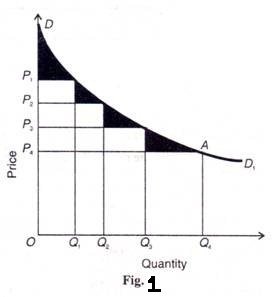
Degrees of Price Discrimination

Price discrimination means charging different prices from different customers or for different units of the same product. In the words of Joan Robinson: “The act of selling the same article, produced under single control at different prices to different buyers is known as price discrimination.” Price discrimination is possible when the monopolist sells in different markets in such a way that it is not possible to transfer any unit of the commodity from the cheap market to the dearer market.

Degrees of price discrimination

Prof. Pigou in his Economics of Welfare describes three degrees of discriminating power which a monopolist may wield. The type of discrimination discussed above is called discrimination of the third degree. We explain below discrimination of the first degree and the second degree.

Discrimination of the First Degree (1st) or Perfect Discrimination

Discrimination of the first degree occurs when a monopolist charges “a different price against all the different units of commodity in. such wise that the price exacted for each was equal to the demand price for it and no consumer’s surplus was left to the buyers.”

Joan Robinson calls it perfect discrimi­nation when the monopolist sells each unit of the product at a separate price. Such discrimination is possible only when consumers are sold the units for which they are prepared to pay the highest price and thus they are not left with any consumer’s surplus.

For perfect price discrimination, two conditions are required

(1) To keep the buyers separate from each other, and

(2) To deal with each buyer on a take-it-or-leave-it basis. When the discriminator of first degree is able to deal with his customers on the above basis, he can transfer the whole of consumers’ surplus to himself. Consider Figure 1. Where DD1 is the demand curve faced by the monopolist. Each buyer is assumed as a price-taker. Suppose the discriminating monopolist sells four units of his product at four different prices:

OQ1 unit at OP1price, Q1Q2 unit at OP2 price, Q2Q3 unit at OP3 price and Q3Q4 unit at OP4 price. The total revenue (or price) obtained by him would be OQ4 AD. This area is the maximum expenditure that the consumers are willing to incur to buy all four units of the product under the first-degree discriminator’s all-or-nothing offer. But with no price discrimination under simple monopoly, the monopolist would sell all four units at the uniform price OP4 and thus obtain the total revenue of OQ4AP4.

This area represents the total expenditure that consumers would actually pay for the four units. Thus the difference between what Quantity the consumers were willing to pay (OQ4 AD) under Fig. 1 the take-it-or-leave-it offer of the first degree discrimi­nator and what they actually pay (OQ4AP4) to the simple monopolist, is consumers’ surplus. This is equal to the area of the triangle DAP4.

Thus under the first-degree price discrimination, the entire consumers’ surplus is pocketed by the monopolist when he charges a separate price for each unit of the product. Price discrimination of the first degree is rare and is to be found in such rare products as diamonds, jewels, precious stones, etc. But a monopolist must have full knowledge of the demand curve faced by him and he should know the maximum price that the consumers are willing to pay for each unit of the product he wants to sell.

Discrimination of the Second Degree (2nd) or Multi-part Pricing

In discrimination of the second degree, the monopolist divides the consumers in different slabs or groups or blocks and charges different prices for different slabs of the same product. Since the earlier units of the product have more utility for the consumers than the later ones, the monopolist charges a higher price for the former units and reduces the price for the later units in the respective slabs.

Such discrimination is only possible if the demand of each consumer below a certain maximum price is perfectly inelastic. Electric supply companies in developed countries practice discrimination of the second degree when they charge a high rate for the first slab of kilowatts of electricity consumed. As more electricity is used, the rate falls with subsequent slabs.

Figure 2 illustrates the second degree discrimination, where DD1is the demand curve for electric­ity on the part of domestic consumers in a town. CP3 represents the cost of generating electricity, so that the electricity company charges M1P1 rate per kw. up to OM1 units. For consuming the next M1 to М2 units, the rate is lowered to M2P2. The lowest rate charged is M3P3 for M2 to M3 units. M3P3 is, however, the lowest rate which will be charged even if a con­sumer consumes more than M3 units of electricity.

If the electricity company were to charge only one rate throughout, say M3P3the total revenue would not be maximized. It would be OCP3 M3But by charg­ing different rates for different unit slabs, it gets the total revenue equal to OM3 x P1M1 + OM2 x P2M2 + OM3x P3M3 Thus the second degree discriminator would take away a part of consumers’ surplus covered by the rectangles ABEP1and BCFP2 .The shaded area in three triangles DAP1 Р1ЕР2, and P2FP3 still remains with consumers as their surplus.

The second degree price discrimination is practised by telephone companies, railways, companies supplying water, electricity and gas in developed countries where these services are available in plenty. But it is not found in developing countries like India where such services are scarce.

The differences between the first and second degree price discrimination may be noted. In the first degree discrimination, the monopolist charges a different price for each different unit of the prod­uct. But in second degree discrimination, a number of units in one slab (or group or block) are sold at the lowest price and as the slabs increase, the prices charged by the monopolist are lowered. In the case of the former the monopolist takes away the whole of consumers’ surplus. But in the latter case, the monopolist takes away only a portion of the consumers’ surplus and the other portion is left with the buyer.

Conditions under which Price Discrimination is Possible

Price discrimination is possible under following conditions:

  1. Nature of Commodity

In the first place it is said that price discrimination is possible when the nature of the commodity or service is such that there is no possibility of transference from one market to the other.

That is, the goods sold in the cheaper market cannot be resold in the dearer market; otherwise the monopolist’s purpose will be defeated.

  1. Distance of Two Markets

Price discrimination is possible when the two markets or markets are separated by large distance or tariff barriers, so that it is not possible to transfer goods from a cheaper market to dearer markets. For instance, a monopolist may sell the same product at a higher price in Bombay and lower price in Meerut.

  1. Ignorance of the Consumers

Price discrimination is possible when the consumers are ignorant about price discrimination, they are not aware that in one part of the market prices are lower than in the other part. Thus, he purchases in dearer market, than in cheaper market since he is ignorant of the prices that are prevailing in different markets.

  1. Government Regulation

Price discrimination occurs when the government rules and regulations permit. For instance, according to rules, electricity rates are fixed at higher level for industrial purposes and lower for domestic uses. Similarly, railways charge by law higher fares from first class passengers than from the second class passengers. Hence, price discrimination is possible because of legal sanction.

  1. Geographical Discrimination

Price discrimination may be possible on account of geographical situations. The monopolist may discriminate between home and foreign buyers by selling at lower price in the foreign market than in the domestic market. Geographical discrimination is possible because no unit of the commodity sold in one market can be transferred to another.

  1. Difference in Elasticity of Demand

A commodity may have different elasticity of demand in different markets. Thus, the market of a commodity can be separated on the basis of its elasticity of demand.

Hence, a monopolist can charge different prices in different markets classified on the basis of elasticity of demand, low price is charged where demand is more elastic and high price in the market with the less elastic demand or inelastic demand.

  1. Artificial Difference between Goods

A monopolist may create artificial differences by presenting the same commodity under different names and labels, one for the rich and snobbish buyers and the other for the ordinary customers. For instance, a biscuit manufacturer may wrap small quantity of the biscuits, give it separate name and charge a higher price. Thus, he may charge different price for substantially the same product. He may charge Rs. 2/- for 100 gram wrapped biscuits and Rs. 1.50 for unwrapped biscuits.

error: Content is protected !!