Role of Advertising Accounts executives

Account executive is a role in advertising, marketing, and finance involving intimate understanding of a client company’s objectives and products and a professional capability to provide effective advice toward creation of successful promotional activities and strategies. The account executive directly works with, and provides services to, one or more delegate officers or executives of the client company.

Marketing and advertising industries

In the marketing and advertising industries, account executives are typically responsible for client servicing and client acquisition. The account executive serves as the direct link between the advertising agency or financial service company and the existing client, managing day-to-day affairs and ensuring customer satisfaction. The account executive is also tasked with bringing more clients into the agency to increase revenue. The account executive will typically have 1-2 assistants and reports to the respective account supervisor/manager and/or to the client service director/account director. This depends on the country and on the account (s)he is working for.

Duties and responsibilities

Account executives have many different duties and responsibilities that they have to fulfill, such as day to day liaising via a contact method which can include email and telephone calls. This job role includes many different responsibilities such as:

  • Responsible for existing account management and clients communications and conflict resolution
  • Discovering client’s business needs and proposing appropriate solutions
  • Track and coordinate all activities occurring for each account
  • Preparing regular client reports and attending client meetings
  • Analyzing marketing trends and predictions and researching market conditions to develop sales goals and marketing strategies
  • Developing plans to target new customers
  • Developing company’s account strategies, marketing strategies and promotional communication channels to introduce and promote the products and services to potential markets
  • Retaining existing customers
  • Negotiating and closing contracts, maintain excellent client relationships, and continually build opportunity pipeline
  • Evaluating the financial aspects of business development

Working with clients

Mentioned above are a few of the duties and responsibilities in becoming an Account Executive. One big responsibility would be to help produce a successful campaign for clients as the marketing sector could possibly need some further help. Where the role would be to act as an important link between advertising agency and the clients. They will have a routine and have required tasks that they have to complete for the clients. For example:

  • Account planners: Working with account planners to analyse the clients brief and the chosen budget
  • Meetings: Having regular meetings to discuss the advertising needs and their requirements
  • Deadlines: Agreeing to deadlines for specific tasks with the clients
  • Management: Having to manage accounts and different invoicing the clients

The bases of this role is to be able understand what the task the client has set out. From this they will then have to organise the agency’s creative and administrative staff in order for the clients request to be completed to the standard.

Required skills

Working in this field as an Account Executive, there are many skills that they have to have to perform numerous of account executive tasks, where they have to have the ability to demonstrate many different skills in different areas. The skills that are required consist of the following:

  • Motivational and Excellent communication skills
  • Having the ability to prioritize tasks as well as multitasking
  • Have a good understanding of Business processes
  • Being organized
  • Taking on task independently
  • Working well in a team

These skills are a requirement when applying for a position as an Account Executive. For example, good communication skills are needed because the employee will need to be confident in addressing with a variety of clients. Motivational skills are required as they need to motivate junior employees and represent the company as efficient to the general public and the clients.

In any company when working as an Account Executive, each agency will be expecting and looking for different sets of skills from the employees. It is important that they have these skills and have a developed the skills. These include:

  • Having a keen eye for detail and an understanding of budgetary constraints
  • Self-confidence and trust-building
  • Fluency of digital platforms
  • The ability to work under pressure

When an employee has developed or enhanced their skills and built a trustworthy reputation within the company, they can then go forward and request for a higher position such as Account Director.

Marketing Plan

A marketing plan may be part of an overall business plan. Solid marketing strategy is the foundation of a well-written marketing plan so that goals may be achieved. While a marketing plan contains a list of actions, without a sound strategic foundation, it is of little use to a business.

A marketing plan is a comprehensive document or blueprint that outlines the advertising and marketing efforts for the coming year. It describes business activities involved in accomplishing specific marketing objectives within a set time frame. A marketing plan also includes a description of the current marketing position of a business, a discussion of the target market and a description of the marketing mix that a business will use to achieve their marketing goals. A marketing plan has a formal structure, but can be used as a formal or informal document which makes it very flexible. It contains some historical data, future predictions, and methods or strategies to achieve the marketing objectives. Marketing plans start with the identification of customer needs through a market research and how the business can satisfy these needs while generating an acceptable return. This includes processes such as market situation analysis, action programs, budgets, sales forecasts, strategies and projected financial statements. A marketing plan can also be described as a technique that helps a business to decide on the best use of its resources to achieve corporate objectives. It can also contain a full analysis of the strengths and weaknesses of a company, its organization and its products.

The marketing plan shows the step or actions that will be utilized in order to achieve the plan goals. For example, a marketing plan may include a strategy to increase the business’s market share by fifteen percent. The marketing plan would then outline the objectives that need to be achieved in order to reach the fifteen percent increase in the business market share. The marketing plan can be used to describe the methods of applying a company’s marketing resources to fulfill marketing objectives. Marketing planning segments the markets, identifies the market position, forecast the market size, and plans a viable market share within each market segment. Marketing planning can also be used to prepare a detailed case for introducing a new product, revamping current marketing strategies for an existing product or put together a company marketing plan to be included in the company corporate or business plan.

Outline

A marketing plan should be based on where a company needs to be at some point in the future. These are some of the most important things that companies need when developing a marketing plan:

Market research: Gathering and classifying data about the market the organization is currently in. Examining the market dynamics, patterns, customers, and the current sales volume for the industry as a whole.

Competition: The marketing plan should identify the organization’s competition. The plan should describe how the organization will stick out from its competition and what it will do to become a market leader.

Market plan strategies: Developing the marketing and promotion strategies that the organization will use. Such strategies may include advertising, direct marketing, training programs, trade shows, website, etc.

Marketing plan budget: Strategies identified in the marketing plan should be within the budget. Top managers need to revise what they hope to accomplish with the marketing plan, review their current financial situation, and then allocate funding for the marketing plan.

Marketing goals: The marketing plan should include attainable marketing goals. For example, one goal might be to increase the current client base by 100 over a three-month period.

Marketing Mix: The marketing plan should evaluate the appropriate marketing mix. This includes setting up the marketing 4 P’s the product, price, place, and promotion. These four elements are modified until the best combination have been found that will cater the needs of the product’s customer that would result to the maximum profitability of the company.

Monitoring of the marketing plan results: The marketing plan should include the process of analyzing the current position of the organization. The organization needs to identify the strategies that are working and those that are not working.

Purpose

One of the main purposes of developing a marketing plan is to set the company on a specific path in marketing. The marketing goals normally aligns itself to the broader company objectives. For example, a new company looking to grow their business will generally have a marketing plan that emphasizes strategies to increase their customer base. Acquiring marketing share, increasing customer awareness, and building a favorable business image are some of the objectives that can be related to marketing planning. The marketing plan also helps layout the necessary budget and resources needed to achieve the goals stated in the marketing plan. The marketing plan shows what the company is intended to accomplish within the budget and also to make it possible for company executives to assess potential return on the investment of marketing dollars. Different aspects of the marketing plan relate to accountability.

The marketing plan is a general responsibility from company leaders and the marketing staff to take the company in a specific direction. After the strategies are laid out and the tasks are developed, each task is assigned to a person or a team for implementation. The assigned roles allow companies to keep track of their milestones and communicate with the teams during the implementation process. Having a marketing plan helps company leaders to develop and keep an eye on the expectations for their functional areas. For example, if a company’s marketing plan goal is to increase sales growth then the company leaders may have to increase their sales staff in stores to help generate more sales.

The marketing plan offers a unique opportunity for a productive discussion between employees and leaders of an organization. It provides good communication within the company. The marketing plan also allows the marketing team to examine their past decisions and understand their results in order to better prepare for the future. It also lets the marketing team to observe and study the environment that they are operating in.

Marketing planning aims and objectives

Though it’s not clear, behind the corporate objectives, which in themselves offer the main context for the marketing plan, will lie the “corporate mission,” in turn provides the context for these corporate objectives. In a sales-oriented organization, the marketing planning function designs incentive pay plans to not only motivate and reward frontline staff fairly but also to align marketing activities with corporate mission. The marketing plan basically aims to make the business provide the solution with the awareness with the expected customers.

This “corporate mission” can be thought of as a definition of what the organization is, or what it does: “Our business is …”. This definition should not be too narrow, or it will constrict the development of the organization; a too rigorous concentration on the view that “We are in the business of making meat-scales,” as IBM was during the early 1900s, might have limited its subsequent development into other areas. On the other hand, it should not be too wide or it will become meaningless; “We want to make a profit” is not too helpful in developing specific plans.

The marketing objectives must usually be based, above all, on the organization’s financial objectives; converting these financial measurements into the related marketing measurements. He went on to explain his view of the role of “policies,” with which strategy is most often confused: “Policies are rules or guidelines that express the ‘limits’ within which action should occur. “Simplifying somewhat, marketing strategies can be seen as the means, or “game plan,” by which marketing objectives will be achieved and, in the framework that appears here, are generally concerned with the 8 P’s. Examples are:

Price: The amount of money needed to buy products

Product: The actual product

Promotion (advertising): Getting the product known

Placement: Where the product is sold

People: Represent the business

Physical environment: The ambiance, mood, or tone of the environment

Process: The Value-added services that differentiate the product from the competition (e.g. after-sales service, warranties)

Packaging: How the product will be protected

The most important element is, the detailed plans, which spell out exactly what programs and individual activities will carry at the period of the plan (usually over the next year). Without these activities the plan cannot be monitored. These plans must therefore be:

Clear: They should be an unambiguous statement of ‘exactly’ what is to be done.

Quantified: The predicted outcome of each activity should be, as far as possible, quantified, so that its performance can be monitored.

Focused: The temptation to proliferate activities beyond the numbers which can be realistically controlled should be avoided. The 80:20 Rule applies in this context too.

Realistic: They should be achievable.

Agreed: Those who are to implement them should be committed to them, and agree that they are achievable. The resulting plans should become a working document which will guide the campaigns taking place throughout the organization over the period of the plan. If the marketing plan is to work, every exception to it (throughout the year) must be questioned; and the lessons learnt, to be incorporated in the next year’s.

Content of the marketing plan

A Marketing Plan for a small business typically includes Small Business Administration Description of competitors, including the level of demand for the product or service and the strengths and weaknesses of competitors

  1. Description of the product or service, including special features
  2. Marketing budget, including the advertising and promotional plan
  3. Description of the business location, including advantages and disadvantages for marketing
  4. Pricing strategy
  5. Market Segmentation

Medium-sized and large organizations

The main contents of a marketing plan are:

  1. Executive Summary
  2. Situational Analysis
  3. Opportunities / Issue Analysis: SWOT Analysis
  4. Objectives
  5. Marketing Strategy
  6. Action Program (the operational marketing plan itself for the period under review)
  7. Financial Forecast
  8. Controls

Advertising Plan Background

Advertising is a marketing communication that employs an openly sponsored, non-personal message to promote or sell a product, service or idea.[1]:465 Sponsors of advertising are typically businesses wishing to promote their products or services. Advertising is differentiated from public relations in that an advertiser pays for and has control over the message. It differs from personal selling in that the message is non-personal, i.e., not directed to a particular individual. Advertising is communicated through various mass media, including traditional media such as newspapers, magazines, television, radio, outdoor advertising or direct mail; and new media such as search results, blogs, social media, websites or text messages. The actual presentation of the message in a medium is referred to as an advertisement, or “ad” or advert for short.

History

Egyptians used papyrus to make sales messages and wall posters.[9] Commercial messages and political campaign displays have been found in the ruins of Pompeii and ancient Arabia. Lost and found advertising on papyrus was common in ancient Greece and ancient Rome. Wall or rock painting for commercial advertising is another manifestation of an ancient advertising form, which is present to this day in many parts of Asia, Africa, and South America. The tradition of wall painting can be traced back to Indian rock art paintings that date back to 4000 BC.

In ancient China, the earliest advertising known was oral, as recorded in the Classic of Poetry (11th to 7th centuries BC) of bamboo flutes played to sell confectionery. Advertisement usually takes in the form of calligraphic signboards and inked papers. A copper printing plate dated back to the Song dynasty used to print posters in the form of a square sheet of paper with a rabbit logo with “Jinan Liu’s Fine Needle Shop” and “We buy high-quality steel rods and make fine-quality needles, to be ready for use at home in no time” written above and below is considered the world’s earliest identified printed advertising medium.

In Europe, as the towns and cities of the Middle Ages began to grow, and the general population was unable to read, instead of signs that read “cobbler”, “miller”, “tailor”, or “blacksmith”, images associated with their trade would be used such as a boot, a suit, a hat, a clock, a diamond, a horseshoe, a candle or even a bag of flour. Fruits and vegetables were sold in the city square from the backs of carts and wagons and their proprietors used street callers (town criers) to announce their whereabouts. The first compilation of such advertisements was gathered in “Les Crieries de Paris”, a thirteenth-century poem by Guillaume de la Villeneuve.

In the 18th century advertisements started to appear in weekly newspapers in England. These early print advertisements were used mainly to promote books and newspapers, which became increasingly affordable with advances in the printing press; and medicines, which were increasingly sought after. However, false advertising and so-called “quack” advertisements became a problem, which ushered in the regulation of advertising content.

Commercial ads often seek to generate increased consumption of their products or services through “branding”, which associates a product name or image with certain qualities in the minds of consumers. On the other hand, ads that intend to elicit an immediate sale are known as direct-response advertising. Non-commercial entities that advertise more than consumer products or services include political parties, interest groups, religious organizations and governmental agencies. Non-profit organizations may use free modes of persuasion, such as a public service announcement. Advertising may also help to reassure employees or shareholders that a company is viable or successful.

Modern advertising originated with the techniques introduced with tobacco advertising in the 1920s, most significantly with the campaigns of Edward Bernays, considered the founder of modern, “Madison Avenue” advertising.

Worldwide spending on advertising in 2015 amounted to an estimated US$529.43 billion. Advertising’s projected distribution for 2017 was 40.4% on TV, 33.3% on digital, 9% on newspapers, 6.9% on magazines, 5.8% on outdoor and 4.3% on radio. Internationally, the largest (“Big Five”) advertising-agency groups are Dentsu, Interpublic, Omnicom, Publicis, and WPP.

In Latin, advertere means “to turn towards”

An advertising campaign is a series of advertisement messages that share a single idea and theme which make up an integrated marketing communication (IMC). An IMC is a platform in which a group of people can group their ideas, beliefs, and concepts into one large media base. Advertising campaigns utilize diverse media channels over a particular time frame and target identified audiences.

The campaign theme is the central message that will be received in the promotional activities and is the prime focus of advertising campaign, as it sets the motif for the series of individual advertisements and other marketing communications that will be used. The campaign themes are usually produced with the objective of being used for a significant period but many of them are temporal due to factors like being not effective or market conditions, competition and marketing mix.

Advertising campaigns are built to accomplish a particular objective or a set of objectives. Such objectives usually include establishing a brand, raising brand awareness, aggrandizing the rate of conversions/sales. The rate of success or failure in accomplishing these goals is reckoned via effectiveness measures. There are 5 key points at which an advertising campaign must consider to ensure an effective campaign. These points are, integrated marketing communications, media channels, positioning, the communications process diagram and touch points.

Traditional media

Virtually any medium can be used for advertising. Commercial advertising media can include wall paintings, billboards, street furniture components, printed flyers and rack cards, radio, cinema and television adverts, web banners, mobile telephone screens, shopping carts, web popups, skywriting, bus stop benches, human billboards and forehead advertising, magazines, newspapers, town criers, sides of buses, banners attached to or sides of airplanes (“logojets”), in-flight advertisements on seatback tray tables or overhead storage bins, taxicab doors, roof mounts and passenger screens, musical stage shows, subway platforms and trains, elastic bands on disposable diapers, doors of bathroom stalls, stickers on apples in supermarkets, shopping cart handles (grabertising), the opening section of streaming audio and video, posters, and the backs of event tickets and supermarket receipts. Any situation in which an “identified” sponsor pays to deliver their message through a medium is advertising.

New media approaches

A new advertising approach is known as advanced advertising, which is data-driven advertising, using large quantities of data, precise measuring tools and precise targeting. Advanced advertising also makes it easier for companies which sell ad-space to attribute customer purchases to the ads they display or broadcast.

Increasingly, other media are overtaking many of the “traditional” media such as television, radio and newspaper because of a shift toward the usage of the Internet for news and music as well as devices like digital video recorders (DVRs) such as TiVo.

Online advertising began with unsolicited bulk e-mail advertising known as “e-mail spam”. Spam has been a problem for e-mail users since 1978. As new online communication channels became available, advertising followed. The first banner ad appeared on the World Wide Web in 1994. Prices of Web-based advertising space are dependent on the “relevance” of the surrounding web content and the traffic that the website receives.

In online display advertising, display ads generate awareness quickly. Unlike search, which requires someone to be aware of a need, display advertising can drive awareness of something new and without previous knowledge. Display works well for direct response. Display is not only used for generating awareness, it’s used for direct response campaigns that link to a landing page with a clear ‘call to action’.

As the mobile phone became a new mass medium in 1998 when the first paid downloadable content appeared on mobile phones in Finland, mobile advertising followed, also first launched in Finland in 2000. By 2007 the value of mobile advertising had reached $2 billion and providers such as Admob delivered billions of mobile ads.

More advanced mobile ads include banner ads, coupons, Multimedia Messaging Service picture and video messages, advergames and various engagement marketing campaigns. A particular feature driving mobile ads is the 2D barcode, which replaces the need to do any typing of web addresses, and uses the camera feature of modern phones to gain immediate access to web content. 83 percent of Japanese mobile phone users already are active users of 2D barcodes.

Some companies have proposed placing messages or corporate logos on the side of booster rockets and the International Space Station.

Unpaid advertising (also called “publicity advertising”), can include personal recommendations (“bring a friend”, “sell it”), spreading buzz, or achieving the feat of equating a brand with a common noun (in the United States, “Xerox” = “photocopier”, “Kleenex” = tissue, “Vaseline” = petroleum jelly, “Hoover” = vacuum cleaner, and “Band-Aid” = adhesive bandage). However, some companies[which?] oppose the use of their brand name to label an object. Equating a brand with a common noun also risks turning that brand into a generic trademark turning it into a generic term which means that its legal protection as a trademark is lost.

From time to time, The CW Television Network airs short programming breaks called “Content Wraps”, to advertise one company’s product during an entire commercial break. The CW pioneered “content wraps” and some products featured were Herbal Essences, Crest, Guitar Hero II, CoverGirl, and Toyota.

A new promotion concept has appeared, “ARvertising”, advertising on augmented reality technology.

Controversy exists on the effectiveness of subliminal advertising (see mind control), and the pervasiveness of mass messages (propaganda).

Rise in new media

With the Internet came many new advertising opportunities. Pop-up, Flash, banner, pop-under, advergaming, and email advertisements (all of which are often unwanted or spam in the case of email) are now commonplace. Particularly since the rise of “entertaining” advertising, some people may like an advertisement enough to wish to watch it later or show a friend. In general, the advertising community has not yet made this easy, although some have used the Internet to widely distribute their ads to anyone willing to see or hear them. In the last three quarters of 2009, mobile and Internet advertising grew by 18% and 9% respectively, while older media advertising saw declines: −10.1% (TV), −11.7% (radio), −14.8% (magazines) and −18.7% (newspapers).[citation needed] Between 2008 and 2014, U.S. newspapers lost more than half their print advertising revenue.

Situational analysis related to Advertising issues

A Marketing Plan is created to guide businesses on how to communicate the benefits of their products to the needs of potential customer. The situation analysis is the second step in the marketing plan and is a critical step in establishing a long term relationship with customers.

Company

The company analysis involves evaluation of the company’s objectives, strategy, and capabilities. These indicate to an organization the strength of the business model, whether there are areas for improvement, and how well an organization fits the external environment.

Goals & Objectives: An analysis on the mission of the business, the industry of the business and the stated goals required to achieve the mission.

Position: An analysis on the Marketing strategy and the Marketing mix.

Performance: An analysis on how effective the business is achieving their stated mission and goals.

Product line: An analysis on the products manufactured by the business and how successful it is in the market.

Competitors

The competitor analysis takes into consideration the competitors position within the industry and the potential threat it may pose to other businesses. The main purpose of the competitor analysis is for businesses to analyze a competitor’s current and potential nature and capabilities so they can prepare against competition. The competitor analysis looks at the following criteria:

  • Identify competitors: Businesses must be able to identify competitors within their industry. Identifying whether competitors provide the same services or products to the same customer base is useful in gaining knowledge of direct competitors. Both direct and indirect competitors must be identified, as well as potential future competitors.
  • Assessment of competitors: The competitor analysis looks at competitor goals, mission, strategies and resources. This supports a thorough comparison of goals and strategies of competitors and the organization.
  • Predict future initiatives of competitors: An early insight into the potential activity of a competitor helps a company prepare against competition.

Customers

Customer analysis can be vast and complicated. Some of the important areas that a company analyzes includes:

  • Demographics
  • Advertising that is most suitable for the demographic
  • Market size and potential growth
  • Customer wants and needs
  • Motivation to buy the product
  • Distribution channels (retail, online, wholesale, etc…)
  • Quantity and frequency of purchase
  • income level of customer

Climate

To fully understand the business climate and environment, many factors that can affect the business must be researched and understood. An analysis on the climate is also known as the PEST analysis. The types of climate/environment firms have to analyse are:

  • Political and regulatory environment: An Analysis of how active the government regulates the market with their policies and how it would affect the production, distribution and sale of the goods and services.
  • Economic Environment: An Analysis of trends regarding macroeconomics, such as exchange rates and inflation rate, can prove to influence businesses.
  • Social/cultural environment: Interpreting the trends of society, which includes the study of demographics, education, culture etc…
  • Technological analysis: An analysis of technology helps improve on old routines and suggest new methods for being cost efficient. To stay competitive and gain an advantage over competitors, businesses must sufficiently understand technological advances.

Collaborators

Collaborators are useful for businesses as they allow for an increase in the creation of ideas, as well as an increase in the likelihood of gaining more business opportunities. The following type of collaborators are:

  • Agencies: Agencies are the middlemen of the business world. When businesses need a specific worker who specializes in the trade, they go to a recruitment agency.
  • Suppliers: Suppliers provide raw materials that are required to build products. There are 7 different types of Suppliers: Manufacturers, wholesalers, merchants, franchisors, importers and exporters, independent crafts people and drop shippers. Each category of suppliers can bring a different skill and experience to the company.
  • Distributors: Distributors are important as they are the ‘holding areas for inventory’. Distributors can help manage manufacturer relationships as well as handle vendor relationships.
  • Partnerships: Business partners would share assets and liabilities, allowing for a new source of capital and skills.

Businesses must be able to identify whether the collaborator has the capabilities needed to help run the business as well as an analysis on the level of commitment needed for a collaborator-business relationship.

An advertising situation analysis provides an overview of a company’s image in comparison with similar organizations in the marketplace. A situation analysis is usually created before an advertising campaign. This piece of research provides executives with an accurate picture of consumer’ perception of both the company and its competitors. By assessing a company’s strengths and weaknesses, advertisers can focus on issues and messages that will resonate strongly with their clients’ target audience.

Give a background summary on the organization’s or brand’s products and services, as well as the types of advertising and media used to promote them to clients and prospects. Include past events and market factors that helped shape the company in the past, and activities that could potentially affect the company in the near future.

Evaluate the product or service being advertised. Talk about features that have been added and removed, or have been used in innovative and unanticipated ways. Note how customers and businesses perceive the product, and whether it differentiates strongly in the marketplace. Look at factors including distribution, packaging and labeling. Review past customer surveys and feedback to pinpoint potential characteristics, problems, flaws or defects that can be corrected or improved.

Determine the major competitors. Include direct and indirect competitors within your product or service category. Evaluate each competitor’s brand strategy, positioning, messaging and pricing.

Analyze current advertising and media strategies that you are using to promote your products and services. Try to find recurring themes or trends that can alert you to which tactics are working and which need to be revised.

Pull together a profile on your target audience. Collect data including household income, occupation, age, ethnicity, geographic location and marital status. Assemble information on how consumers use your products. For instance, research where and how often products are used. Filter this information into the part of the analysis that measures brand value and loyalty.

Steps to follow:

  • When writing your situation analysis, be concise and omit superfluous information. Write your advertising situation analysis in such a way that someone who is not an advertising executive will be able to quickly and easily understand your document’s objectives.
  • Use charts, graphs and images to reduce wordiness. Images can also be used to visually illustrate complex figures and support important points.
  • Because a significant portion of the advertising situation analysis analyzes brand perception and consumer behavior, gathering facts and figures from electronic databases or past sources may not be enough. Consider creating a brief online survey that can be sent out to multiple recipients simultaneously. Online applications allow you to not only track responses, but also automatically generate results in electronic reports.

Marketing objectives, Advertising objectives

Marketing objectives

Marketing objectives set out what a business wants to achieve from its marketing activities. They need to be consistent with overall aims and objectives of the business. They also provide an important focus for the marketing team.

Marketing is “the process of identifying, anticipating (predicting) and satisfying customer needs profitably”.

Marketing objectives therefore need to be consistent with the purpose of marketing. They also need to be consistent with and support the overall corporate (business) objectives:

It is often said that an effective marketing objective meets the SMART criteria:

Some examples of marketing objectives which meet these criteria would be:

  • Increase company sales by 25% by 2021
  • Achieve a market share of 30% for Product C within 3 years of launch
  • Increase the percentage of customers who rate service as “excellent” from 80% to 85% within 18 months

Business Benefits of Setting Marketing Objectives

Provided the marketing objectives are relevant and achievable, there are some important business benefits from setting them and monitoring progress against them. Effective marketing objectives:

  • Ensure functional activities consistent with corporate objectives
  • Provide a focus for marketing decision-making and effort
  • Provide incentives for marketing team and a measure of success / failure
  • Establish priorities for marketing resources and effort

Advertising objectives

1) Introduce a product

The most common reason Advertising is used is to introduce a new product in the market. This can be done by existing brands as well as new brands. Have a look at the latest iPhone in the market or a Samsung smartphone and you will find a lot of advertisement for these new products. The objective of advertising here is to tell customers “Here is the new product we have launched”

2) Introduce a brand

There are many startups in the market today and many of them are services. Services are generally marketed as a brand rather than marketing their individual service product. Thus, Uber will market its own brand and introduce that Uber has started servicing customers in a new market. Same goes for Oracle or Accenture Companies which market their brand and their presence in the market rather than marketing an individual product.

3) Awareness creation

According to the AIDA model, the most important job of advertising is to get attention which is nothing but Awareness creation. Advertising needs to capture the attention of people and make them aware of the products or their features in the market.

Example: Most of the Bank ads that you see are awareness campaigns. The ads that advertise the benefits of savings / mutual funds or benefits on credit and debit cards are all awareness creation ads.

4) Acquiring customers or Brand switching

One of the major objectives of advertising and the first objective of many advertising campaigns is to acquire more customers. This is also known as making the customers switch brands. This can happen by passing on a strong message so that the potential customer leaves the brand which he is tied up with and comes to your brand.

Example: Most telecom companies launch plans and strategies just to acquire customers and then advertise these strategies in the market so that the customer switches brands. There is hardly any differentiation in the telecom market thus advertising is a major way to acquire customers. The Vodafone Zoozoo campaign was just that Influence the customers and create passion in such a way that they do brand switching,

5) Differentiation and value creation

A most important aspect of Advertising is to differentiate the product or the service from those of the competitor. A customer can only differentiate between services based on the value the firms provides over that of competitors.

If a competitor is just advertising the features, whereas your firm advertises the promises and commitments that it will keep, naturally more customers will “trust” your brand over others. This is the reason that advertising is used commonly to create value and to differentiate one brand from another.

Coca cola, Toyota, Amazon are some of the most trusted brands in the market. It is no doubt that these brands are also amongst the top advertisers in their respective segments. These brands target value creation as well as differentiation via their advertising campaigns.

6) Brand building

When a brand regularly advertises and delivers quality products and fulfills the promises it makes, automatically the value of the brand is built. However, there are many other aspects of brand building. One of the first ones is to advertise via ATL and BTL campaigns etc.

Brands have different objectives of Advertising. Brands like P&G and HUL regularly invest funds in building a good brand value for the parent brand. By doing so, even if one brand is affected, the parent brand is untouchable.

Recently we observed the problems of Maggi in India where Maggi was banned completely due to high lead content. However, this did not affect the parent brand Nestle much and neither affected its other brands like Nescafe which had done their own brand building and were independent of the parent brand. This brand was built by good products and constant advertising towards building brand equity and making a connect with the audience.

7) Positioning the product: Product and brand recall

One of the key factors in the actual purchase of a product is the products recall and the brand recall at the time of purchase. Amongst the objectives of advertising, one objective is to correctly position the brand in the minds of the customer.

Examples include premium brands like Ralph Lauren, Gucci, Hermes or others which are clearly positioned premium. This position is achieved by first having a very premium product line which is high priced but it is also achieved by buying premium advertising and placing the ads in media vehicles which are very premium.

Besides premium marketing, we can also look at niche marketing. Kent is a company which has focused all its advertising on its purification capability. They claim they are the masters of water purifiers. Their repeated advertising creates a high product and brand recall in the minds of the customers thereby positioning them as the top purchased brand in the water purifier segment.

8) Increase sales

Naturally, with so many steps being taken to advertise the product, it is no doubt that one of the objectives of advertising is to increase sales. Many a times this objective is achieved via advertising. However, if the campaign is improper or the audience is not targeted properly, then advertising can fail in its objective.

Nonetheless, there are many seasonal products wherein an immediate increase in sale is observed due to advertising. The best example is Ice cream brands which advertise heavily during the summer months because they know that advertising will immediately influence the sales figures. They do not waste money in advertising during the winter season at all.

Similarly, you will see many ads of raincoats during rainy season and ads of winter wear during winter seasons. All these ads are placed to increase the sale of the product immediately.

9) Increase profits

With the value being communicated and the brand being differentiated as well as sales being increased, there is no doubt that advertising can contribute a lot to increasing profits. Advertising should never be looked at as an expense or a liability. In fact, it is an investment for a firm just like a brand is an investment.

Look at the likes of Siemens or Bosch Brands which have invested heavily in positioning themselves on the basis of their German engineering. As a result, today they demand high profits in whatever segments they operate in or whatever products they sell.

10) Create Desire

Again, referring to the AIDA model, one of the key factors in advertising is to create a desire for the product so that the customer wants the product. Brands which are known to do this are BMW, Audi, Harley Davidson, Adidas and others. These brands are master of advertising where they create so much desire for the product that the customer absolutely wants a product even if he doesn’t need it.

There are many stories of Harley Davidson as a brand wherein customers have saved money for years to buy a particular bike of Harley Davidson. Same stories can be heard about an Audi or a BMW. A unique example in this case are the bottles of Absolut Vodka. Absolut Vodka is so famous for its bottles that there are collectors who desire to collect all different bottle types of Absolut Vodka. Such desire creation is an effect of advertising + brand building + the fan following over time.

11) Call to action

One of the most common objectives of digital advertising and digital marketing is to get a call to action. Brands invest in banner ads, link ads as well as social ads to get their potential customers to take an action. This action can be filling up an Email form, clicking on a link, watching a video, giving a survey or what not.

There are brands which have done ATL advertising and shown half the ads and then attracted customers to their YouTube channel so that they could track their viewers and get them to take some action. Call to actions are also one of the objectives of advertising in which case the actions differ from time to time based on what the marketer wants to achieve.

Brand image

Brand image is the current view of the customers about a brand. It can be defined as a unique bundle of associations within the minds of target customers. It signifies what the brand presently stands for. It is a set of beliefs held about a specific brand. In short, it is nothing but the consumers’ perception about the product. It is the manner in which a specific brand is positioned in the market. Brand image conveys emotional value and not just a mental image. Brand image is nothing but an organization’s character. It is an accumulation of contact and observation by people external to an organization. It should highlight an organization’s mission and vision to all. The main elements of positive brand image are- unique logo reflecting organization’s image, slogan describing organization’s business in brief and brand identifier supporting the key values.

Brand image is the overall impression in consumers’ mind that is formed from all sources. Consumers develop various associations with the brand. Based on these associations, they form brand image. An image is formed about the brand on the basis of subjective perceptions of associations bundle that the consumers have about the brand. Volvo is associated with safety. Toyota is associated with reliability.

The idea behind brand image is that the consumer is not purchasing just the product/service but also the image associated with that product/service. Brand images should be positive, unique and instant. Brand images can be strengthened using brand communications like advertising, packaging, word of mouth publicity, other promotional tools, etc.

Brand image develops and conveys the product’s character in a unique manner different from its competitor’s image. The brand image consists of various associations in consumers’ mind attributes, benefits and attributes. Brand attributes are the functional and mental connections with the brand that the customers have. They can be specific or conceptual. Benefits are the rationale for the purchase decision. There are three types of benefits: Functional benefits what do you do better (than others ),emotional benefits how do you make me feel better (than others), and rational benefits/support why do I believe you(more than others). Brand attributes are consumers overall assessment of a brand.

Brand image has not to be created, but is automatically formed. The brand image includes products’ appeal, ease of use, functionality, fame, and overall value. Brand image is actually brand content. When the consumers purchase the product, they are also purchasing it’s image. Brand image is the objective and mental feedback of the consumers when they purchase a product. Positive brand image is exceeding the customers expectations. Positive brand image enhances the goodwill and brand value of an organization.

“Brand image” is the customer’s net extract from the brand.

Brand image Dimension

Brand identity is composed of various shares that trigger particular responses in consumers in addition to filling the afore-mentioned functions. These shares build on one another; the more shares a brand has, the stronger and more positive the relationship with consumers.

Mind

At the very lowest level, mind share must be created in the consumer consciousness (cognitive level). This means that, as a complex perceptual and conceptual construct, the brand evokes an internal neural representation in the minds of consumers, leaving behind certain brand impressions.

Heart

This refers to the emotional relationship a consumer should develop with a brand. Heart share is less a matter of a product’s functional utility and more a matter of its symbolic attributes. The buyer of a Ferrari, for instance, will not develop an affection for the car based purely on functional attributes, but rather as a result of the values associated with the brand and the brand environment it operates in.

Buying intentions

Brand identity must trigger a buying intention share in consumers. After all, despite the importance of a brand’s mind and heart share, it only makes sense for a supplier to invest in brand identity if consumers will also want to buy the brand.

Self

Brand identity contributes to self share, which means that the brand functions as a manifestation of the self, a tangible expression of self-image within the social environment. In this context, brands serve self-expression and self-design purposes, differentiating the individual within the social group. Brands can easily serve similar ends in the realm of business-to-business, where they bolster self-image in terms of a company and its functions.

Legend

Here, the brand shares in the existential search for meaning conducted by a consumer in a world enlightened to the point of meaning-lessness and takes on a virtually religious character. This aspect sheds light on the cultural-sociological proposition that brand management is worshiping the customer. Brands allow consumers to achieve social position or status, to partake of cultural expression, to create mythology and shape meaning, and as a result, to weave themselves into the social and metaphysical fabric of the world. In this context, a loyal customer is a member of a community and an individual loyal to that community not just a customer who makes repeat purchases. A brand is a tool for building a sense of community and belonging, for building the community itself.

Brand Creative strategy, Message Strategy, Media Strategy

It is important to examine the concept of creativity, how it applies to marketing communication, and the challenge firms face in developing creative and effective marketing communication.

Creativity is one of the most commonly used terms in marketing communication as those who develop marketing communication messages are often referred to as “creative types” and agencies develop reputations for their creativity. So much attention is focused on the concept of creativity because the major challenge given to those who develop marketing communication messages is to be creative. Creativity has been defined as “a quality possessed by persons that enables them to generate novel approaches in situations, generally reflected in new and improved solutions to problems.”

Perspectives of Marketing Communication Creativity

Perspectives of what constitutes creativity in marketing communication vary. At one extreme are those who argue that marketing communication is creative only if it sells the product. At the other end of the continuum are those who judge creativity in terms of its artistic or aesthetic value and argue that creative marketing communication must be novel, original and unique. The answer as to what constitutes creative in marketing communication is probably somewhere between these two extreme positions.

We are concerned with marketing communication creativity which refers to “the ability to generate fresh, unique and appropriate ideas that can be used as solutions to communications problems.” This perspective recognises that creative marketing communication ideas are those that are novel, original and appropriate. To be appropriate a creative idea must be relevant or have some importance to the target audience.

Planning Creative Strategy

Those who work on the creative side of marketing communication often face a real challenge. They must take all the research, creative briefs, strategy statements, communication objectives and other inputs and transform them into a marketing communication message. Their job is to write copy, design layouts and illustrations and produce commercials that communicate effectively. Marketers usually hire marketing communication agencies to develop and implement their marketing communication campaigns because they are specialists in the creative function of marketing communication. However, it is important to point out that the development of creative strategy also involves representatives from the client side and other people in the agency as well as the creative staff.

The Creative Challenge

Those who work on the creative side of marketing communication have the responsibility of developing an effective way of communicating the marketer’s message to their customers. The creative person or team is often provided with a great deal of input and background information on the target audience, such as their lifestyles, needs and motives, and communication objectives. However, every marketing situation is different and requires a unique approach.

Taking Creative Risks

Many creative people in agencies argue that they often follow proven approaches or formulas when creating ads because they are safe and less likely to fail. They note that their clients are very often risk averse and feel uncomfortable with marketing communication that is too different. It is important to note that companies who have very creative marketing communication are more willing to assume some risk. However, many managers are more comfortable with marketing communication that is straight forward in communicating with customers and gives them a reason to buy.

Creative Personnel

It is a fairly common perception that those individuals who work on the creative side of marketing communication tend to be somewhat unique and different from those working on the managerial or business side. It is worthwhile to discuss some of the characteristics of creative personnel in marketing communication and the need to create an environment that fosters, and is conducive to, the development of creative marketing communication.

The Creative Process

A number of marketing communication people have argued that creativity in marketing communication is best viewed as a process and that creative success is most likely when some organized approach is followed. While most marketing communication people reject and/or resist attempts to standardise creativity or develop rules or guidelines to follow, most creative people do follow some type of process when approaching the task of developing an advertisement.

The creative process contains five steps:

  1. Immersion
  2. Digestion
  3. Incubation
  4. Illumination
  5. Reality or verification

Another model:

Inputs to the Creative Process: Preparation/Incubation/Illumination —

These models of the creative process offer an organized way of approaching an marketing communication problem. Both models stress the need for preparation or gathering of background information that is relevant to the problem as the first step in the creative process. Various types of research and information can provide input to the creative process of marketing communication at each stage. There are numerous ways the creative specialist can acquire background information that is relevant to the marketing communication problem. These include:

Background research: informal fact-finding techniques and general preplanning input. Various ways of gathering background information might be discussed. ti

Product specific research: this involves different types of studies such as attitude, market structure and positioning, perceptual mapping and psychographic studies.

Qualitative research input: techniques such as in-depth interview or focus groups with customers or ethnographic studies.

Verification/Revision: The purpose of the verification/revision stage of the creative process is to evaluate ideas that come from the illumination stage, reject any that may be inappropriate, and refine those that remain and help give them final expression.

Some of the techniques used at this stage include:

Focus groups

Message studies

Portfolio tests

Pretesting of ads in storyboard or aniamatic form

Creative Strategy Development

The creative process of marketing communication is guided by specific goals and objectives and requires the development of a creative strategy or plan of action for achieving the goal. Creative strategy development actually begins with a thorough assessment of the marketing and promotional situation and a determination of what needs to be communicated to the marketer’s target audience. Creative strategy should, however, also be based on a number of other factors that are stated in the creative or copy platform.

Copy Platform: A copy platform provides a plan or checklist that is useful in guiding the development of an marketing communication message or campaign. This document is prepared by the agency team or group assigned to the account and may include creative personnel as well as the account coordinator and representatives from media and research. The marketing communication manager and/or the marketing and product manager from the client side will also be involved in the process and must approve the copy platform.

Marketing Communication Campaigns

Most advertisements are part of a series of messages that make up an marketing communication campaign which consists of multiple messages, often in a variety of media that center on a single theme or idea. The determination of the central theme, idea, position, or image is a critical part of the creative process as it sets the tone or direction for the development of the individual ads that make up the campaign.

The Search for the Major Selling Idea

An important part of creative strategy development is determining the central theme that will become the major selling idea or big idea for the ad campaign. There are several different approaches that can be used for developing major selling ideas and as the basis of creative strategy. Some of the best known and most discussed approaches include:

The unique selling proposition

This concept, which was mentioned in the opening vignette, is described in Rosser Reeve’s Reality in Marketing communication. It’s three characteristics include:

  • Each advertisement must make a proposition to the consumer
  • The proposition must be one that the competition either cannot or does not offer
  • The proposition must be strong enough to pull over new customers to your brand

Creating a brand image

Some competing brands are so similar it is difficult to find or create a unique attribute or benefit so the creative strategy is based on the development of a strong, memorable identity for the brand through image marketing communication.

Finding the inherent drama

Leo Burnett believed marketing communication should be based on a foundation of consumer benefits with an emphasis on the dramatic element in expressing these benefits.

Positioning

The basic idea is that marketing communication is used to establish or “position” the product or service in a particular place in the consumer’s mind.

These approaches to determining the major selling ideas discussed above are very popular and are often used as the basis of the creative strategy for marketing communication campaigns. These creative approaches represent specific “creative styles” that have become associated with some of the most successful marketing communication creative minds and their agencies. However, it should be pointed out that many other creative approaches and styles are available and are often used in marketing communication. The challenge to the creative team is to find a major selling idea and use it as a guide to the development of an effective creative strategy.

Message design and positioning

Message is the idea or other information that the marketer wishes to convey to the consumer, emphasising the importance of message design.

Ogilvy said, “my original magic lantern started with the assertion that positioning and promise were more than half the battle.” True, but spotting the uniqueness or association of the product that will help the advertiser and win a place in the consumer’s mind isn’t easy. An excellent example of brand positioning is Maggi instant noodles. In his book Brand Positioning, Subrato Sengupta describes this success:

“Through consumer research, the company (Food Specialities Limited) felt that the most profitable position (for Maggi) would be as a tasty, instant snack, made at home and initially aimed at children. The target market was the in-home segment of the very substantial snack category. This positioning decision automatically determined the competition which included all snack products in general. These would range from ready to eat snacks biscuits, wafers and peanuts to ready prepared snacks such as samosas. All were bought out items.”

“Traditional pasta products (Chinese noodles and macroni) were considered to be near. Competitors forming a rapidly growing product group. But they were invariably used for meals, requiring a fair amount of cooking time and garnishing was essential.”

“Maggi Noodles was launched in Delhi in January 1983 and it became an overnight success.” The reasons? Maggi Noodles, as market results show, found a vacant strong position and sat on it as “the good to eat, fast to cook anytime snack.”

Message Design and Marketing Objectives

A message is the thought, ideas, attitude, image or other information that the sender wishes to convey to the intended audience. The marketer’s objectives tend to vary with audience. Objectives in communicating with consumers, for example, may be one or all of the following:

  1. Informing them what is for sale
  2. Creating brand awareness,
  3. Getting them to buy the product
  4. Reducing their uneasiness after the purchase is made.

The marketer’s objective with intermediary customers is to get them to stock the product; with other manufacturers, to get them to buy the product and use it to make their own. In tourism, the message may have more objectives like promoting a destination, building an image for the whole country, conveying the distinctive features of the product or service, etc.

Senders must also know their audiences’ characteristics in terms of education, interests needs, and realms of experience. They must then, endeavour to encode or phrase their message in such away that they will fall within the consumers’ zones of understanding and familiarity.

For example, AB group of Hotels has mainly targeted the business class in the advertisements which features that all the requirements of the guests are met unobtrusively. The message conveyed is that AB hotels understand the needs of business traveller better than any other hotel.

Media Strategy

Media strategy can be defined as the usage of an appropriate media mix in order to achieve desired and optimum outcomes from the advertising campaign. It plays a key role in advertising campaigns. The objective of Media Strategy is not just about procuring customers for their product or services but also focusses on placing a right message towards the right people at the right time and ensuring that the message is relevant and persuasive. Media Strategy is designed to achieve the above mentioned target but the budget is always kept in mind.

Every work to be done needs a plan of action so that the work is done in a desired and correct manner. Media Strategy plays a very important role in Advertising. The role of Media Strategy is to find out the right path to transfer or say deliver the message to the targeted customers.

How many people see or hear or read all the advertisements or promotional offers and buy the product or service? The basic intention of media strategy is not only procuring customers for their product but also placing a right message to the right people on the right time and of course that message should be persuasive and relevant. So, here the planners of the organization decide the Media Strategy to be used but keeping the budget always in mind.

There are three “W”s to be decided. They are:-

Where to advertise?

The question is to find out where the advertisement should be displayed to the current and prospective customers. The common available options are – TV, radio, newspapers, blogs, hoardings on roads, sponsorships, ads during breaks in theatres, etc. It can be done at international/national/state/city level as per the requirement of the brand.

When to advertise?

The timing of advertisement is very critical especially with respect to the seasonal products. There is no point in airing advertisement for room heaters in summer season. It should be aired right at the end of monsoon and beginning of winter season.

Which type of media to use?

It is very important to use a correct media type for delivering the message. There are two basic media approaches which can be adopted:

(i) Media Concentration approach

In this approach, firms concentrate their campaigns only on a few media types (generally two or three) in order to reach their target consumers instead of using a wide variety of media types.

(ii) Media Dispersion Approach

In media dispersion approach a wide variety of different media categories is employed to reach the target customers. It is employed when the entire target market can’t be reached by a few media types.

Integration of advertising with other communication tools

Integrated Marketing Communication tools refer to integrating various marketing tools such as advertising, online marketing, public relation activities, direct marketing, sales campaigns to promote brands so that similar message reaches a wider audience. Products and services are promoted by effectively integrating various brand communication tools.

To implement integrated marketing communication, it is essential for the organizations to communicate effectively with the clients. You need to know how your products or services would benefit your end-users. The more effectively you promote your brand, the more demand would it have in the market. Identify your target audience. Remember, not everyone would need your product. Understand why would an individual invest in your brand unless and until you have something unique and interesting to offer? The benefits of the brand need to be communicated effectively.

Let us go through various integrated marketing communication tools: Integrated marketing communication effectively integrates all modes of brand communication and uses them simultaneously to promote various products and services among customers effectively and eventually yield higher revenues for the organization.

Advertising

Advertising is one of the most effective ways of brand promotion. Advertising helps organizations reach a wider audience within the shortest possible time frame. Advertisements in newspaper, television, Radio, billboards help end-users to believe in your brand and also motivate them to buy the same and remain loyal towards the brand. Advertisements not only increase the consumption of a particular product/service but also create brand awareness among customers. Marketers need to ensure that the right message reaches the right customers at the right time. Be careful about the content of the advertisement, after all you are paying for every second.

Sales Promotion

Brands (Products and services) can also be promoted through discount coupons, loyalty clubs, membership coupons, incentives, lucrative schemes, attractive packages for loyal customers, specially designed deals and so on. Brands can also be promoted effectively through newspaper inserts, danglers, banners at the right place, glorifiers, wobblers etc.

Direct Marketing

Direct marketing enables organizations to communicate directly with the end-users. Various tools for direct marketing are emails, text messages, catalogues, brochures, promotional letters and so on. Through direct marketing, messages reach end-users directly.

Personal Selling

Personal selling is also one of the most effective tools for integrated marketing communication. Personal selling takes place when marketer or sales representative sells products or services to clients. Personal selling goes a long way in strengthening the relationship between the organization and the end-users.

Personal selling involves the following steps:

  1. Prospecting: Prospecting helps you find the right and potential contact.
  2. Making first contact: Marketers need to establish first contact with their prospective clients through emails, telephone calls etc.An appointment is essential and make sure you reach on time for the meeting.
  3. The sales call: Never ever lie to your customers. Share what all unique your brand has to offer to customers. As a marketer, you yourself should be convinced with your products and services if you expect your customers to invest in your brand.
  4. Objection handling: Be ready to answer any of the client’s queries.
  5. Closing the sale: Do not leave unless and until you successfully close the deal. There is no harm in giving customers some time to think and decide accordingly. Do not be after their life.

Public Relation Activities

Public relation activities help promote a brand through press releases, news, events, public appearances etc.The role of public relations officer is to present the organization in the best light.

Product planning

Product planning and development is the critical journey a product takes from conception through to sales. While product planning and development is an integral part of any successful product’s launch and lifespan, there are no guarantees on the road to success. And yet, this phase can’t be rushed, or consequences can be severe.

Steps in Product Planning and Development

  1. Generation of New Product Ideas

The first step in product planning and development is generation of ideas for the development of new/innovative products.

Ideas may come from internal sources like company’s own Research and Development (R&D) department, managers, sales-force personnel etc.; or from external sources like, customers, dealers, competitors, consultants, scientists etc.

At this stage, the intention of management is to generate more and more new and better product ideas; so that the most practical and profitable ideas may be screened subsequently.

  1. Screening of Ideas

Screening of ideas means a close and detailed examination of ideas, to determine which of the ideas have potential and are capable of making significant contribution to marketing objectives. In fact, generation of ideas is not that significant as the system for screening the generated ideas.

The ideas should be screened properly; as any idea passing this stage would cost the firm in terms of time, money and efforts, at subsequent stages in product planning and development.

  1. Product Concept Development

Those product ideas which clear the screening stage must be developed into a product concept  identifying physical features, benefits, price etc. of the product. At this stage product idea is transformed into a product concept i.e. a product which target market will accept.

  1. Commercial Feasibility

At this stage, the purpose is to determine whether the proposed product idea is commercially feasible, in terms of demand potential and the costs of production and marketing. Management must also ensure that product concept is compatible with the resources of the organization technological, human and financial.

  1. Product Development

Product development encompasses the technical activities of engineering and design. At this stage, the engineering department converts the product concept into a concert form of product in view of the required size, shape, design, weight, colour etc. of the product concept.

A model or prototype of the product is manufactured on a limited scale. Decisions are also made with regard to packaging, brand name, label etc. of the product.

  1. Test Marketing

A sample of the product is tested in a well-chosen and authentic sales environment; to find out consumers’ reaction. In view of consumers’ reactions, the product may be improved further.

  1. Commercialization

After the management is satisfied with the results of test marketing, steps are taken to launch a full-fledged programme for the production, promotion and marketing of the product. It is the stage where the new product is born; and it enters it life cycle process.

Brand equity

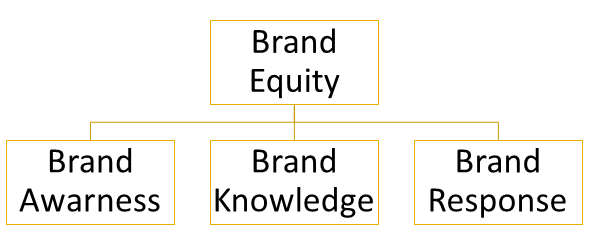
The Brand Equity refers to the additional value that a consumer attaches with the brand that is unique from all the other brands available in the market. In other words, Brand Equity means the awareness, perception, loyalty of a customer towards the brand.

E.g., The additional value a customer is willing to pay for Uncle Chips against any local chips brand available with the shopkeeper.

Brand Equity is the goodwill that a brand has gained over time.

Brand Equity can be seen in the way the customer thinks, feels, perceives the product along with its price and market position and also the way brand commands profit and market share for the organization as a whole.

Customer Brand Equity can be studied in 3 different ways:

  1. The Different Responses of a customer towards the product or service helps in determining the brand equity. The way customer thinks about the brand and considers it to be different from the other brands will generate a positive response for that brand and will contribute to its goodwill.
    g., Customer, have a positive response towards Mac laptops because of its anti- virus software.
  2. The responses can be generated only if customers have sufficient knowledge about the brand; thus, Brand Knowledge is essential to determine the brand equity. The Brand knowledge includes the thoughts, feelings, information, experiences, etc. that establish an association with the brand.
    g., Brand Association reflects the knowledge about the product such as woodland is recognized for its rough and tough styling.
  3. The different customer’s response that adds to the brand value depends solely on the Marketing of a Brand. The strong brand results in substantial revenues for the organization and better understanding about the product among the customers.

Thus, the marketers basically study the Customer-Based Approach wherein they study the response of a customer towards the brand that can be reflected in their frequency of purchase. It focuses on customer’s perception i.e. what they have read, felt, thought, seen about the brand and how it has helped them to satisfy their urge of need.

error: Content is protected !!