Local Search, Mobile SEO

Local Search

In computer science, local search is a heuristic method for solving computationally hard optimization problems. Local search can be used on problems that can be formulated as finding a solution maximizing a criterion among a number of candidate solutions. Local search algorithms move from solution to solution in the space of candidate solutions (the search space) by applying local changes, until a solution deemed optimal is found or a time bound is elapsed.

Local search algorithms are widely applied to numerous hard computational problems, including problems from computer science (particularly artificial intelligence), mathematics, operations research, engineering, and bioinformatics. Examples of local search algorithms are WalkSAT, the 2-opt algorithm for the Traveling Salesman Problem and the Metropolis–Hastings algorithm.

Local search marketing is anything you do on the web to promote a physical business that makes face-to-face contact with its customers. It applies to both single-location small and medium businesses (SMBs), national enterprise brands, and chains. If a company meets with its customers directly either through a storefront or service area it’s termed a “local business” and a unique set of techniques and skills can be used to increase its visibility on the Internet. This may also be referred to as “local SEO,” or local search engine optimization.

Far from being a one-and-done form of marketing, good local SEO builds upon a base of clear business information, using an array of marketing practices to transform an unknown brand into a local household word.

Guideline compliance

The way you conceptualize and market your type of local business will be based on the Guidelines for Representing Your Business On Google. Your Google My Business listing is the most important listing you build for your company; failure to comply with Google’s guidelines can result in ranking failures and even listing takedowns. To play it smart, you must be able to see your business the way Google does and follow the appropriate guidelines.

Site authority

Your website can accrue some authority simply by virtue of its age, but you can actively pursue authority by earning links and mentions of your business from quality, relevant sources. Beware of links from low-quality sources or schemes that attempt to inflate link count with no concern for relevance. Industry surveys indicate that the quality and authority of the links you earn have a major impact on your local search rankings.

Site quality

If your website loads quickly, has a sensible structure, renders properly on all devices, features high-quality content, is free of malware or other malicious elements, and is easy for people to use, you’re meeting basic quality goals. No amount of marketing can make up for poor UX (user experience) on your website.

Site optimization

The search engine optimization (SEO) of your website aims to increase your organic (non-paid) search engine visibility via both technical and creative means. This Beginner’s Guide to SEO breaks down the elements for you.

You must also understand that local SEO consists of everything traditional SEO does, plus geography. In other words, local business websites don’t just focus on keywords about products, services, and topics; they also highly feature terms relevant to the cities in which the business serves.

NAP consistency

“NAP” is the common acronym for “name, address, phone number.” These three pieces of data make up the core of your business information in the world of local search. You’ll also sometimes see this written as NAP+W, with the “W” standing for your website URL. In order for consumers and search engines to trust the data they find across the web about your business, you must make every effort to ensure that its NAP+W is consistent on your website and on all third-party platforms where your business is listed or mentioned.

NAP breadth

A core task of local SEO involves helping your NAP spread across the Internet. Much of this work hinges on building structured citations (local business listings) on important platforms like Google My Business, Facebook, Bing, Yelp, Superpages, etc. You can also build important citations on popular niche directories that relate specifically to your geography or industry. The breadth of your NAP can grow as your business earns unstructured citations/mentions on social platforms, blogs, news sites, and other resources. The number of both structured and unstructured citations you earn is believed to have a positive impact on local search rankings, as search engines find your business widely referenced around the web. You can do all of this work manually, or use convenient tools that automate structured citation building and active location data management for you.

Review acquisition

Reviews may be the most influential Internet factor for any local business. It’s estimated that 92% of consumers read online reviews and 68% state that positive reviews influence their feelings of trust in a business. Every local business needs a strategy for encouraging customers to leave reviews on a variety of platforms. Your job is to know the guidelines of each platform so that you don’t break rules, and to devote significant resources to this vital area of marketing. The number of reviews you earn can directly impact local search rankings, while the positive and negative sentiments in those reviews can directly impact conversions and earnings. Throughout the life of your business, you’ll be seeking to earn a wide array of positive reviews.

Publishing strategy

The moment any local business steps onto the web, it becomes a publisher. Your communications with consumers may include the basic text content of your website, a blog, video or image content, owner responses to reviews, and social media participation. Everything you publish should engage customers and expose them to your brand. Search engines not only measure content quality, but also the way in which users interact with content, meaning the content you produce should result in high levels of user engagement. Plus, your high-quality content may be shared by your industry and consumer base, further promoting your business. You must devote time and creativity into developing and executing a publishing strategy, for as long as your company is in business.

Competitive edge

The three bottom tiers of our pyramid are fundamental tasks in a typical local SEO campaign. In a competitive industry/geography, your competitors are experts when it comes to these core areas. You must look beyond the basics if you want to stand out from the pack.

Gaining a competitive edge in a crowded market requires a unique effort for each business, based on discovering opportunities your rivals haven’t yet explored.

Benefits of local SEO

As we’ve just established, when you’re a local business, whether that’s an auto shop in Boise, Idaho, a restaurant in Jacksonville, Florida, or a furniture store in Houston, Texas, local SEO plays a crucial role in generating customers and conversions.

In this current climate of online shopping and retail giants, I imagine that local business owners can feel unmotivated to compete against the likes of Walmart and Amazon for positions in search results.

Fortunately for you, local SEO is here to help. Local SEO favors smaller businesses over the likes of Amazon any day!

Investing in local SEO is your chance to get found by local consumers who are ready and willing to invest in your business instead.

Both Google itself and the shopping public recognize the value of local businesses. In fact, Google has a specific set of local ranking factors that it uses as a measure to determine whether or not your business is geographically relevant to a user performing a ‘near me’ search (we’ll cover this in more detail a little later on).

That means you don’t have to worry about competing against large international corporations to get your local business in front of relevant nearby consumers.

Research conducted by Access concluded that proximity matters to local consumers a great deal, with more than 92% traveling just 20 minutes or less to purchase their day-to-day essentials. For any size business, that should be reason enough to invest in local SEO.

Mobile SEO

Mobile SEO refers to the search engine optimization of websites combined with flawless viewing on mobile devices, such as smartphones and tablets. Thanks to the increasing boom of portable devices, webmasters should be highly concerned with their mobile SEO plan. After all, more than 50% of Internet users now report surfing websites through their mobile devices daily. Google is already favouring mobile friendly sites.

First and foremost, according to Google mobile websites typically run on one out of three different configurations:

  • Responsive Web Design
  • Dynamic Serving
  • Separate URLs

Responsive Web Design

When you use responsive web design, your mobile site will have the same HTML code and content for the same URL regardless of the user’s chosen device. You’ll simply use the meta name=”viewport” tag within your site’s source course to help the Internet browser identify how they should adjust the content. Then, the display settings will change to fit each visitor’s unique screen size.

Benefits of RWD

Responsive web design is very popular among SEO experts everywhere, and it’s even recommended by Google itself. You should definitely consider responsive design because:

  • It’s easy to share content from a single URL.
  • Google can easily index your single URL for higher search engine rankings.
  • You’ll find it convenient to maintain multiple pages for the same content.
  • This design avoids common SEO and formatting mistakes.
  • There won’t be much additional setup time.
  • Googlebot will use less resources and make crawling more efficient.
  • Users won’t have to deal with redirects, which offers shorter page download times.

Dynamic Serving

Dynamic serving configurations are designed to have the server respond with different HTML and CSS code on the same URL depending on the user’s device. For this, you’ll need to properly use the Vary HTTP header to signal changes based on the user-agent’s page requests. Valid headers tell the browser how to display the content and help Googlebot discover that your website has mobile-optimized content much faster.

Separate URLs

As the name suggests, this setup configuration involves having different URLs for your website to successfully display your content on different mobile devices. Each URL is equipped with different HTML code for every respective screen size.

Measuring SEO effectiveness

Search engine optimization (SEO) is the process of optimizing your webpages and content to rank high on a search engine. Ideally, you want your content at the top of a search engine’s results for keywords relevant to your product or services. This is why SEO is also the practice of attracting quality traffic to your website.

Whether you’re a freelance photographer or party supplier developing an e-commerce site, having a digital presence is an essential component of your inbound marketing strategy. Hence, implementing an effective SEO strategy is a strong start to boosting your website’s visibility, growing your organic traffic, and attracting new customers.

Measure SEO Success

It may seem somewhat counterintuitive to determine how successful your SEO campaign has been in hindsight if you never established any goals before the campaign started. Remember, beauty is in the eye of the beholder; if your company set a goal to improve organic traffic by 5% year over year, allocated the appropriate resources towards attaining that goal, and then achieved an organic traffic increase of 10%, you could view this campaign as extremely successful. However, if the goal had been to double organic traffic, the campaign would be perceived as a complete failure. For this reason, your SEO goals should be well established before the campaign truly begins. Without establishing these goals, you will have no baseline to grow from. Determining how much of your marketing budget should be allocated to online marketing is also nearly impossible without proper goals in place, meaning you have a very good chance at either underspending or overspending, neither of which are good for business.

On the other hand, not every company will find it simple to so readily define these goals, especially if we’re talking about a startup company or even an existing business attempting to adapt to an increasingly digital world with no idea where to begin. If that is the case, I would strongly recommend scheduling a consultation with a professional SEO agency that should be able to walk you through the basics. For a reasonable price, a reputable SEO company can perform an audit of your website, identify preexisting weaknesses in your website, analyze your competition and provide you with a high level overview of what you’d be up against. They will also be able to use their expertise to help you create realistic goals based on data and research.

There are a number of things to look at when gauging the success of your SEO campaign. To make informed decisions, you must be armed with data about your website, which can be achieved by connecting your website to an analytics software. Google Analytics is the most popular analytics software for websites since it is free and plenty powerful for most applications.

While analyzing each and every source of traffic certainly has it’s role in crafting your SEO campaigns, for the purposes of learning how to evaluate your campaign in this article, we will be focusing mainly on organic statistics. In the digital marketing world, organic search results are the results that the search engine has listed due to relevancy to a user’s query, not due to “inorganic” reasons such as paid placement. The word “organic” has transformed into a digital marketing industry adjective, which indicates that you are discussing “free” search traffic from the search engines, mainly Google, Yahoo! and Bing.

Analytical Data

Organic Search Traffic

One of the most important metrics of your website is how many users visit your site. Track your organic search traffic monthly and make sure that overall it is increasing. You may have some drops once in awhile due to seasonality and other variables, but it is important that in general you see an upward trend in organic search traffic to your site. You can view this data in an number of ways, including graphically.

Organic Revenue

If you are dealing with ecommerce SEO and have properly implemented ecommerce tracking, you will have access to your organic revenue data, meaning revenue your site earned strictly from organic visits to your site. Of course, you want to make sure that revenue is increasing month to month and year to year, but don’t be discouraged by occasional dip here and there from things like seasonality. When you notice a dip that you lack an explanation for, it’s time to dig deeper into your data.

Bounce Rate

A website’s bounce rate is essentially the percentage of visitors who leave your site after only viewing one page. These users often “bounce” back to the search results page to find something they deem more relevant to their query.

A high bounce rate is not necessarily a bad thing as it could simply mean that users have immediately found the information they were looking for on the page they landed on and left. More often, however, a high bounce rate is an indication that your visitors are not seeing what they had hoped to see when clicking on your result, and that is a problem. This could mean that you are not targeting the right keywords, that your site doesn’t look “legitimate”, or that some other factors are at play preventing the visitor from engaging with your website.

e-Commerce Conversion Rate

Your ecommerce conversion rate is the percentage of visits to your website that resulted in an ecommerce transaction. In Google Analytics, you can hone in by traffic source to see your organic ecommerce conversion rate, which will help you understand if your organic traffic is actually converting to a sale. A good ecommerce conversion rate is hard to define, as in some industries even converting 1% of your visitors into a sale or lead could be considered terrific. Make sure that your organic ecommerce conversion rate is at least always staying the same or slightly improving, and analyze your checkout funnels for drop offs to determine what might be preventing your users from making a purchase. Sometimes, it can be as simple as adding some trust badges to your store to make users feel more confident their transaction is secure.

Time on Page by Visitors

Another important metric you can view in Google Analytics is the amount of time your visitors are spending on your pages. This is especially important on your organic landing pages as these are the pages your organic visitors will see first. This statistic is really beneficial for understanding the search intent of your visitors and how you might improve upon that. If users are arriving to a landing page and quickly navigating to another section of your website, you may want make it easier for them to find what they are looking for. The goal is to make your website as user friendly as possible.

Goal

Google Analytics allows you to define “goals” on your website, and then track their completion. Practically any action a user could take while on your website could be setup as a goal, from clicking an element on your site to submitting a contact form to making a purchase. You can also implement more abstract goals such as a user spending a predetermined amount of time on a given page. Some of the more sophisticated goals may require a bit of Javascript help from your front end developers.

Percent of Total Traffic That Comes from Organic Search

The larger the percentage of your total traffic that comes from organic, the more you are relying on organic search to drive traffic to your site. Typically, we aim to have as high a percentage of traffic come from organic, as this traffic is “free” once you have earned the rankings. Pay attention to how much of your site comes from organic and if you notice this percentage starting to drop, you may need to rethink your SEO strategy. Of course, other sources of traffic are very important too, and a shrinking organic traffic percentage may just mean you’ve been paying more attention to Social Media traffic or Pay-Per-Click traffic. Either way, you should always have a good idea of what percentage of your total traffic is coming from organic search.

Pages Per Visitor

The more pages a visitor views after arriving at your site, the more engaging your site is. At its core, Google aims to serve people the most relevant and useful websites that offer value that cannot be found elsewhere, or at least cannot be found easily. Looking at this statistic from an organic standpoint may tell you that you are targeting the right users or users who ultimately don’t have interest in your website after arrival. On the other hand, your visitors may be interested in your content, but your site may not be user-friendly enough. Remember, data is objective but your interpretations are subjective. Be sure to dig deep enough to find causation in your data, not just correlation.

Returning vs. New Users

new vs returning visitors to measure seo success The amount of visitors that return to your website can help you to understand how engaging your website is and whether or not users are identifying with your brand. Even if you convert 100% of your visitors, if none of them return to convert again in the future, you are losing out big time source of revenue! Ideally your visitors won’t just make a sale, they will share their purchase on social media, post links in online forums like Reddit, and return to make another purchase.

Crawl Errors

Search engines rely on automated programs that “crawl” your website in order to add it to their index. No matter how great your website is, if Google and the other search engines can’t understand your website, your rankings will suffer. Fortunately, Google provides a function in their Search Console (formerly Webmaster Tools) that allows you to check for crawl errors, and it will tell you if it is having difficulty crawling any of your pages. If you have thousands of crawl issues showing up in Search Console, odds are have some other glaring SEO problems. Here is a list of common crawl errors and how to fix them.

Traffic By Device Type

With mobile ecommerce stats showing that more and more users are accessing the web without conventional desktop computers, it’s more important than ever to be paying attention to which devices users are using to access your website. These days, the majority of online traffic comes from mobile devices, which is why it is important to know what devices your visitors use to make sure you are delivering the most user friendly view of your site to each visitor. You can check to see how “mobile-friendly” your website is with Google’s Mobile-Friendly Test page.

Phone Tracking

You’re not getting a clear picture of your SEO campaign results unless you’re tracking phone calls from your site. This is especially true for lead generation sites and is more important for some industries than others. Depending on the industry, up to 100% of your leads can arrive via phone calls! Without call tracking implemented, you will have very little insight as to how they found you.

Call tracking provides you with customer data and information that enables you to make more informed strategic decisions and focus your efforts on the traffic sources that work for you. Some call tracking services are more robust than others, but the majority of them will allow you to see the traffic source that drove the call, the duration of the call, the search query that the customer used to find your site, and other relevant information.

Keyword Volume

Are you targeting keywords that are actually searched frequently? Ranking on the first page for hundreds of terms that nobody searches for is worthless. Imagine your business sells dogs, cats, monkeys, unicorns and lizard. All other things equal, it would be wise to focus your efforts on “dogs”, since it gets the most search volume. However, we know that all things are not equal and profit margins on unicorns are just outrageous these days.

Keyword Relevance & Search Intent

Are the keywords that you are targeting relevant to your audience? Is there a clear search intent that you are delivering what the searcher is most likely searching for? For example, if your website sells unicorns, ranking for “free unicorns” is not nearly as beneficial as ranking for “unicorns for sale”. Still, a fraction of those looking for free unicorns may be persuaded into buying some, so don’t completely write those keywords off.

Keyword Quantity

Of course, we want relevant keywords that are searched frequently ,but we also want a lot of them! Each month, you should track the amount of keywords that are ranking #1 overall, how many are on the first page of the results, as well as the second and third pages. Look for increases in these numbers each month and avoid losing rankings on keywords that have already proven successful sources of qualified traffic. Each keyword that your site ranks for will result in an increase in organic traffic, so as long as they are relevant to your operations, the more keywords the merrier.

Domain Quantity

How many separate domains link back to your site is an indication of how trustworthy you are. Generally speaking, the more domains that link to your site, the better.

Domain Quality

Links from CNN.com are likely more valuable than links from TommysAwesomeBlog.com, since CNN.com has a very strong backlink profile of its own. The quality of a domain is assessed by the search engine by using a number of metrics, including backlink profile, age of domain, and a lot of other factors.

Domain Relevancy

It’s not just the amount of domains and their quality that matters, but relevancy as well. Google’s search algorithm is capable of making many different types of associations. If you sell spaceships, a link from NASA.gov is much more beneficial than one from the NSA.gov. .

Page Quality

Similar to domain quality, but on a page basis. If your links are coming from “low quality” page(s) on strong domain(s), it will not have as big an impact as if it was coming from a high quality page on the same domain.

Anchor Text

With the recent iterations of Google’s penguin algorithm, the anchor text ratio of a websites backlink profile has become a huge point of importance for maintaining the overall “health” of your website. The short and simple explanation is that your website should have as natural of a backlink profile as possible, including the anchor text of those links. If you look at any big brand website, you will see a very natural distribution of the anchor text being used in inbound links.

SEO for E-commerce

e-commerce SEO is the process of making your online store more visible in the search engine results pages (SERPs). When people search for products that you sell, you want to rank as highly as possible so you get more traffic.

You can get traffic from paid search, but SEO costs much less. Plus, ad blockers and ad blindness can reduce the effectiveness of paid search, so you’ll want to optimize for search regardless.

e-commerce SEO usually involves optimizing your headlines, product descriptions, meta data, internal link structure, and navigational structure for search and user experience. Each product you sell should have a dedicated page designed to draw traffic from search engines.

However, you don’t want to forget about static, non-product-oriented pages on your site, such as the following:

  • Homepage
  • About page
  • A.Q. page
  • Blog articles
  • Help center answers
  • Contact page

The best ecommerce SEO strategy includes:

  • Keyword research to find the types of keywords customers are searching.
  • Site architecture based on your keyword research.
  • On-Page SEO through strategic keyword optimization in meta tags and content.
  • Technical SEO to help ensure search engines can crawl your site efficiently.
  • Local SEO to help drive local organic traffic (if you have a brick and mortar).
  • Content marketing to drive additional organic visitors.
  • Link Building to help improve the authority of your website.
  • Measuring SEO Success with tools like Google Analytics and Ahrefs.

Strategy

  • Prioritize pages: Which pages on your site get the most traffic? Start with them. Additionally, if you want people to focus on a specific or flagship product, optimize for that product first.
  • Create a workflow: SEO requires you to meet lots of specific requirements. Choosing keywords, adding meta data, naming your images correctly, adding image alternate attributes, and incorporating related keywords all fall under this category.
  • Check out the competition: Your ecommerce SEO strategy should be designed to outwit the competition. Look at your top competitors’ sites and check out their SEO efforts. Identify ways to make yours better.
  • Follow through with CRO: Conversion rate optimization (CRO) should follow SEO. We’ll talk about that more later on.

Analyze the Keyword Search Volume, CPC, and User Intent

Before you use a keyword, do some research on it. Know how often people search for it (keyword search volume), how competitive it is in the paid advertising space (cost-per-click, or CPC), and what people are looking for when they use that keyword.

Search volume tells you how much interest a particular keyword inspires in consumers. A high search volume indicates greater popularity, which means you’ll get more active searches for that keyword.

CPC tells you how much people pay per click when they buy advertising based on a specific keyword. A high CPC indicates increased competition. If your target keyword is extremely competitive, consider finding a long-tail alternative.

Finally, user intent describes what people want to find when they type a specific keyword into Google’s search bar. Let’s say, for instance, that someone types “shower” and hits Enter.

Focus on Homepage SEO

The homepage is typically where most businesses focus their SEO budget and energy. While it is definitely one of the top pages of your website to optimize, it is by no means the only one you should focus on.

That said, you do want to optimize your homepage well. The key things you want to add and optimize are include the following.

Homepage Title Tag

The SEO title tag is one of the most important element of on-site search optimization. It should include your business name along with the main keyword phrase you are targeting. You should write this title tag in less than 70 characters and in a way that is appealing to search visitors, as they will see it in search results.

Homepage Meta Description

While this is not important as far as keyword rankings, the meta description for your homepage is a 160-character description of your business that will also show up in search beneath the title tag. Write it in a way that encourages people to want to visit your website.

Homepage Content

The content on your homepage should help visitors learn more about your business and the products you have to offer in a clear and concise way. Avoid overloading visitors with too much information. Consider featuring your top few products on the homepage and your unique selling proposition.

Cluttered homepages can confuse visitors as well as search engines. For instances, maybe you sell products in many different categories. Google will struggle to identify what you sell and who you’re targeting with your products, so get specific about what your site offers.

Simplify Your Site Architecture

As you are adding products and categories to your store, remember that site architecture plays an important role in search optimization. Particularly, you want to have a distinct hierarchy of navigation, from your homepage to product categories to the products listed within them.

Search engine bots will discover your pages and products on your website based on a clear internal linking structure that is easy to follow and not too deep.

The rule of thumb for search engines and visitors is to make sure people can reach everything within three clicks. From the homepage, they should only have to make a maximum of three clicks to get to any product on your website.

Internal Linking

Internal links serve two main purposes:

  • Boosting e-commerce SEO by showing how pages are related to one another
  • Increasing time on site by encouraging visitors to further explore your site

Linking to related products or to information-rich blog articles can help improve ecommerce SEO and make your site more tempting for deep dives.

Optimize Product Pages

Product pages are the lifeblood of your business, so you will want to focus a lot of your energy on optimizing them. Many ecommerce store owners simply write a few lines of text about each product and throw up an image or video.

You need more information on your product pages so Google can find them. Here are the specific things you want to work on.

Product Name

The name of your product is important. In most cases, it’s also used in the SEO title and URL of your product page. This is why you may want to consider adding a common search term or keyword phrase to your products.

For example, if you are selling T-shirts, be sure to include “T-shirt” or “tee” in the product name. That way, the keyword also ends up in the SEO title and URL.

Image Optimization

Images are an important part of your product page. Stand in your customer’s shoes for a moment. Are you more likely to buy a product from a site that clearly depicts the product from as many angles as possible, from a site that has no image at all, or from one that is small and illegible?

Not only are images important for your customers, but they are important for search optimization.

Video

Help your customer feel more confident about their purchases by also adding video to your product page. The video can be basic information about your product (like a commercial), a how-to video on ways to use the product to get results, or testimonials from people who have used the product.

Publishing videos offsite on networks like YouTube can be a great way to attract and educate potential customers about your products.

Customer Reviews

Reviews are another way to boost customer confidence in your product, so if you have a good product, be sure to allow them.

Bad reviews aren’t always a bad thing either. Think about it – if you have a higher priced item that has great reviews, and a lower priced item with so-so reviews, then people will be more likely to choose the higher priced item, resulting in greater sales for your business.

FAQ Content

Do people ask questions about your products? Of course they do. Having product-specific FAQ content on your product pages is a key to conversions.

If customers have questions that you don’t answer, they’ll go somewhere else to find those answers and likely buy from the source that answers the questions.

Having a general FAQ page on your website is also a good idea. Answering basic questions about your website’s security, shipping, and return policies can increase buyer confidence, leading to more sales.

Use Responsive Design

Reduce Page Load Speed

Page load speed is also a ranking signal, both for desktop and mobile. The faster your pages load, the better Google will rank you.

Create Backlinks for e-commerce SEO

Backlinks are another ranking signal Google uses to determine where your pages belong in the SERPs. The more backlinks you have from high-quality sites, the more authoritative your site becomes.

Building backlinks for ecommerce sites doesn’t have to be difficult. Guest posting on blogs related to your niche is one easy, white-hat way to build links. Simply email the owners of the blogs you’re interested in and offer them three or more ideas for potential guest posts.

Understanding SEO, Keyword Strategy

SEO stands for search engine optimization. Which is the art of ranking high on a search engine in the unpaid section, also known as the organic listings.

Search engine optimization (SEO) is the process of optimizing your online content so that a search engine likes to show it as a top result for searches of a certain keyword.

  • Ensure these search engines understand who you are and what you offer.
  • Convince them that you are the most credible option for their users.
  • Make your content deliverable.

Search engine optimization (SEO) is often about making small modifications to parts of your website. When viewed individually, these changes might seem like incremental improvements, but when combined with other optimizations, they could have a noticeable impact on your site’s user experience and performance in organic search results. You’re likely already familiar with many of the topics in this guide, because they’re essential ingredients for any web page, but you may not be making the most out of them.

Search Engine Optimization brings you the most precious traffic (also known as organic traffic), which is “free” when a search engine shows your content to its users in the organic part of a SERP (Search Engine Results Page), you do not pay for the ranking. When the user clicks on the result and visits your site, you do not pay Google for a visit. And that briefly describes what is SEO used for.

Keywords

Keyword strategies are essential to developing winning search engine marketing campaigns. Your keyword strategy should involve selecting high-performing keywords that drive relevant traffic to your business. Choosing the right keywords for advertising can make all the difference in your campaigns, determining how well your advertisements rank on Google and other search engine platforms.

The best keyword strategies rely on highly relevant keywords, which are keywords that relate closely to your business or are associated with your industry.

Once you know the keywords you want to bid on, the next step in your keyword strategy involves crafting text ads that incorporate your keywords. When visitors click on your ads in the Search Engine Results Page (SERP), you pay the amount that you’ve bid on the keyword. This process is known as pay-per-click (PPC) advertising.

In SEO, we often refer to ‘keywords’ this is slightly misleading. ‘Search queries’ is a much better term. We are not looking at individual words; we are looking at combinations of words that express a problem or a question.

Appropriate format for its user

Relevant: Google aims to match the best answer to the question it has understood. That is relevancy in a nutshell.

Trustworthy: Google wants to send its users to content from a source it is confident will satisfy its user a credible brand or person it trusts.

Consumable: This is an awful word, and I apologize, but Google wants to send its users to the kind of content they want to engage with, in a format they can consume.

Keyword Strategy

A keyword strategy contains every decision you take based upon your findings in your keyword research project, whether it’s about the content you’re planning to write or how you are going to track the results in Analytics. Keyword strategy is about how you want to target those keywords, now and in the future.

Looking at data

Of course, analyzing data plays a big role in the success of your keyword strategy. Both before and after, Google Analytics provides invaluable insights into the performance of your site. Even Google Search Console can give a lot of stuff to think about and opportunities to pursue.

Looking at the search engines itself

Of course, while looking at your competitors, you’ll often use search engines to see how they are doing. Doing these types of searches can give you great insights into the strategy of your competitors. It also gives you a very good feel of what happens when you type in your main focus keyphrase. What’s the on-screen real estate like? Are there featured snippets you could target? Are there other types of rich results? Is there a local pack?

In some markets, if you track developments over time, you might see that search engines are increasingly giving answers that lead to no-click searches. Always keep an eye on search engines, but don’t go obsessing about every little algorithm update.

Looking at words

Words are at the center of everything. By doing keyword research, you should get great insights into the words people use to find what they are looking for. Now, you need to produce user-oriented content that fits their intent and goals perfectly.

Looking at competition

While writing up your keyword strategy you need to take a good look at your competitors. What are they doing? How well are they ranking for terms you’d like to attack? What kind of content do they have? Are there ways for you to improve on that? Have you thought about looking at the long tail?

Looking at yourself

A good keyword strategy starts with looking at yourself and your business. What are you doing and why? What are your goals? What’s your uniqueness in this world? What is the message you want to send? How’s your branding? Why would anyone want to visit your site? Better insights lead to a better understanding of what you want to achieve as to not waste resources. There’s no use focusing on the wrong things.

Looking at search intent

After you’ve fleshed out your uniqueness, it’s time to look at how. Search intent is the why behind the search that should lead to your site. Do you know your audience? Are people only looking for information or are they willing to buy stuff as well? Are there ways for you to target specific intents with focused content to influence this?

Targeting

Checking your analytics regularly to keep track of your SEO performance is incredibly important, but can’t have performance without content tailored to the specific needs and goals of your strategy. If you’ve ran through all the steps and did a thorough keyword research, you should have an idea of what you should target and how you should do that. You can use these insights to create the content you need to make a success of your strategy. There’s a lot you can do:

  • Make landing pages
  • Create specific types of content for the different search intents
  • Maybe make specific content to get featured snippets
  • Or maybe voice search is something that might fit your strategy
  • apps
  • Video

Update your keyword strategy

On the way, there’s a lot that can happen and your keyword strategy should take that into account. Regularly re-evaluate your keyword strategy. Have there been significant changes in the world around you that need to be assessed? It might be that your users’ language changed or that a new competitor is gobbling up market share. Keep an eye on things and adjust where necessary.

Link building Strategies

A solid link building strategy is key for reaching SEO success. There are many different approaches you can take towards SEO link building, and we’ve organized an assortment of various link building techniques to help you with your SEO strategy.

Link building, simply put, is the process of getting other websites to link back to your website. All marketers and business owners should be interested in building links to drive referral traffic and increase their site’s authority.

Improve your link building strategy with these link building tips and tricks. Read through and follow these guides and you’ll have a full-fledged link building campaign up and running in no time.

Link building is important because it is a major factor in how Google ranks web pages. Google notes that:

“In general, webmasters can improve the rank of their sites by increasing the number of high-quality sites that link to their pages.”

Imagine that we own a site promoting wind turbine equipment that we sell. We’re competing with another wind turbine equipment manufacturer. One of the ranking factors Google will look at in determining how to rank our respective pages is link popularity.
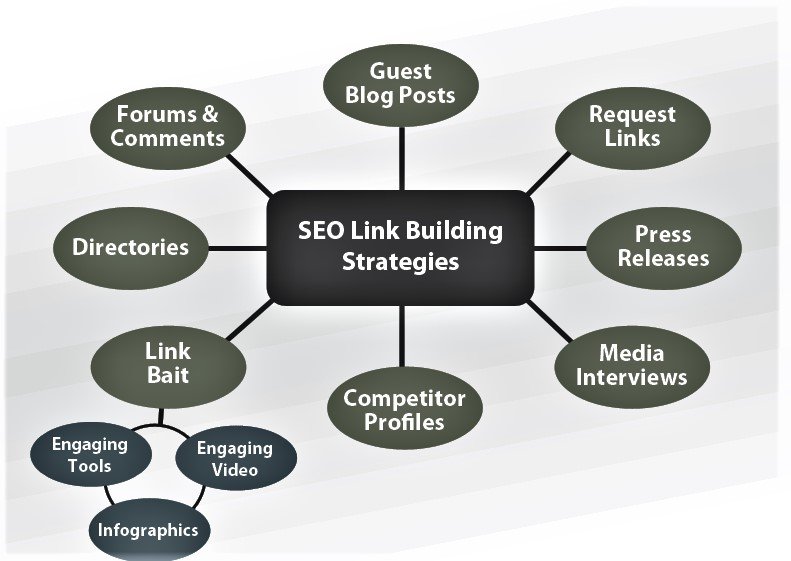
Steps.

  • Set up a project by entering your domain.
  • Add up to 10 keywords that you want to rank for.
  • Add up to 10 competitors to look up the best backlink prospects for your website.
  • Find prospects. Set up a strategy for each one and carry it out.
  • Reach out to the website owner within the Link Building tool interface.
  • Track your success.

Simple Link Building Strategies:

There are a number of link building strategies used to get external websites to link to yours:

  • Content Creation & Promotion: Create compelling, unique, high-quality content that people will naturally want to reference and link to, and tell people about it. You have to spread the word before you can expect anyone to find your content and link to it!
  • Reviews & Mentions: Put your product, service, or site in front of influencers in your industry, such as popular bloggers or people with a large social media following.
  • Links from Friends & Partners: Ask people you know and people you work with to link to your site. Remember that relevance matters; links from sites that are in the same general industry or niche as your site will have more value than links from random, unrelated sites.

Step 1: Get to know your audience

If you want your audience to grow, you need to find out how to expand your audience or how to find a new audience. You should, therefore, know two things: who is my audience right now and what does my ideal audience looks like. At Yoast.com for example, we started out with an audience mainly consisting of (web) developers, but we aspired to reach an audience consisting of a more general group of WordPress users (whilst keeping our initial developer’s audience). We adapted our content to this new group of people, but in order to reach these ‘new’ audiences, links from other websites to our new (less nerdy) content were also important. You should do some research in order to get to know your audience.

Step 2: Make a list of websites that appeal to your desired audience

If you have a clear picture of your present and desired audience in mind, you can make a list of websites that could possibly help you in reaching your new audience. Find those websites that already appeal to your desired audience. Links from these websites could help you to reach your new audience.

Step 3: Write amazing content

In order to get other websites to link to your content, your content simply has to be amazing. And more importantly, it should appeal to the audience you’re aspiring to make your readers or buyers. Make sure your pieces and articles are well structured and nicely written.

Step 4: Match content to websites

If you have written an awesome blog post, you should dive into the list you made as part of your growth strategy (step 2). Choose sites from that list that could possibly link to the article you have written. If you have a long tail keyword approach (writing about small and niche subjects) the number of websites that will be fit to link to your blog post will be small.

Make an effort to find those websites that really fit the specific topic of your blog post or article. These websites will probably be very willing to link, as your blog post really fits their content. More importantly, visitors that will come to your website following that link will really be interested in the topic of your article (making chances of conversion and recurring visits much higher).

Step 5: Reach out

If you’ve really put an effort in both writing content as well as finding websites that fit the content of your article, you should contact the website you would like to link to your site. Tell them about the content or product and ask them to write about it and link to it. Most people will be happy to write about your product if this means they’ll receive it for free! You can use email, but in many cases, Twitter or even a phone call is a great way to contact people as well. Make sure to reach out in a personal way, never send out automated emails.

Step 6: Use social media

If your content is original and well structured, you’ll be able to reach new audiences (and get links) by using social media as well. Make sure you tweet about your blog, perhaps send some tweets to specific persons of whom you think they may like your article. Facebook is also a great way to get exposure for your articles (maybe… even promote it a bit?). And as many people like, tweet and share your articles, you’re bound to receive some more links as well.

There are a few key factors to consider:

  • Anchor Text: One of the most important things search engines take into account in ranking a page is the actual text a linking page uses to talk about your content. So, if someone links to our Good Guys Wind Turbine Parts site with the text “wind turbine parts”, that will help us to rank highly for that keyword phrase, whereas if they had simply used text like “Good Guys LLC” to link to our site, we wouldn’t enjoy the same ranking advantage for the phrase “wind turbine parts”.
  • Quality of the Linking Page: Another factor taken into account is the quality of the page that is sending the link; search engines allow links from high-quality, trusted pages to count more in boosting rankings than questionable pages and sites.
  • Page the Link is Aimed at: Many times, when people talk about your site they’ll link to the home page. This makes it difficult for individual pages to achieve high rankings (because it’s so difficult for them to generate their own link equity).

Interlinking your pages in a few easy steps:

  • Keyword Research for Link Building: First, you need to utilize a keyword research tool to have numerous keywords suggested to you that are both relevant and popular.
  • Assign Keywords to Content: Next, you have to group your keywords strategically, creating a search-friendly information architecture.
  • Link Pages Using Targeted Anchor Text: The final step is to apply your keyword research to intelligent inter-linking; you do this by linking to content using the keywords you’ve discovered.

Difference between Salary and Wages

Salary

Salary is a fixed regular payment, typically paid on a monthly basis, for the performance of work or services. Unlike wages, which are often calculated on an hourly or weekly basis, salaries provide employees with a consistent and predetermined amount of compensation, regardless of the number of hours worked.

Components:

  1. Base Salary:

The core, fixed amount of money paid to an employee on a regular basis, forming the foundation of the overall salary. Reflects the employee’s role, responsibilities, and experience.

  1. Bonuses:

Additional monetary rewards provided to employees, often based on performance, company profits, or specific achievements. Motivates employees and aligns their efforts with organizational goals.

  1. Allowances:

Supplementary payments intended to cover specific expenses or costs related to the job, such as housing, transportation, or meals. Addresses the financial impact of job-related requirements.

  1. Benefits:

Non-monetary compensation, including healthcare, retirement plans, and other perks, provided to enhance employees’ overall well-being. Contributes to employee satisfaction and work-life balance.

  1. Overtime Pay:

Additional compensation for hours worked beyond the standard workweek, often calculated at a higher rate than the regular hourly pay. Compensates employees for extra effort and time invested in work.

  1. PerformanceBased Incentives:

Variable payments linked to individual or team performance, encouraging employees to achieve specific goals or targets. Aligns compensation with results and fosters a performance-driven culture.

  1. Profit Sharing:

Sharing company profits with employees, providing them with a stake in the organization’s financial success. Aligns the interests of employees with the overall success of the business.

  1. Commissions:

Payments based on sales or revenue generated by an employee, common in roles with direct sales responsibilities. Rewards employees for their contribution to revenue generation.

  1. Retirement Benefits:

Contributions made by the employer to retirement plans, such as 401(k) or pension schemes. Supports employees in building financial security for their post-work years.

  • Stock Options:

The right to purchase company stock at a predetermined price, offering employees a share in the company’s ownership. Aligns employees’ interests with the company’s long-term success.

  • Education and Training Support:

Financial assistance provided by the employer for the education and skill development of employees. Promotes continuous learning and professional growth.

  • Health and Wellness Programs:

Initiatives and benefits aimed at promoting employees’ physical and mental well-being. Enhances employee health, productivity, and job satisfaction.

  • Vacation and Leave Benefits:

Paid time off from work, including vacation days, holidays, and other types of leave. Supports work-life balance and employee well-being.

  • Severance Pay:

Compensation provided to employees upon termination of employment, often based on factors like length of service. Offers financial support during transitions and provides a safety net for employees.

  • Other Perquisites (Perks):

Additional benefits or privileges provided to employees, such as company cars, memberships, or flexible work arrangements. Enhances the overall employment experience and contributes to employee satisfaction.

Wages

Wages refer to the compensation paid to an employee for the hours worked or services rendered, often calculated on an hourly, daily, or weekly basis. Unlike salaries, which provide a fixed amount irrespective of hours worked, wages are directly tied to the time spent on the job.

Components:

  1. Hourly Rate:

The amount paid for each hour worked by an employee. Forms the basic unit for calculating wages based on time.

  1. Overtime Pay:

Additional compensation provided for hours worked beyond the standard workweek or regular working hours. Compensates employees for extra effort and time beyond the standard working hours.

  1. Piece-Rate Pay:

Compensation based on the number of units produced or tasks completed. Directly links pay to productivity and output.

  1. Commission:

A percentage of sales or revenue earned by an employee, common in sales roles. Rewards employees based on their contribution to generating business.

  1. Tips and Gratuities:

Additional payments received by employees, often in service industries, as a form of appreciation from customers. Augments income and is often based on customer satisfaction.

  1. Holiday Pay:

Compensation for hours worked on recognized holidays. Encourages employees to work during holiday periods and compensates for the disruption to personal time.

  1. Shift Differentials:

Additional pay for working shifts that fall outside regular daytime hours. Compensates for inconveniences associated with non-standard working hours.

  1. Bonuses (Variable):

Additional payments beyond regular wages, often tied to performance, project completion, or other achievements. Acts as an incentive and recognition for exceptional contributions.

  1. Piecework Bonuses:

Additional payments for meeting or exceeding production targets in piecework arrangements.  Motivates employees to achieve or surpass production goals.

  • Travel Allowances:

Compensation for work-related travel expenses, such as mileage or transportation costs. Addresses additional costs incurred while traveling for work.

  • Uniform or Tool Allowances:

Payments provided to cover the cost of uniforms, tools, or equipment required for the job. Supports employees in meeting job-specific requirements.

  • Incentive Pay:

Additional compensation tied to achieving specific targets, often related to productivity or efficiency. Encourages employees to meet or exceed performance expectations.

  • Danger Pay:

Additional compensation for employees working in hazardous conditions or environments. Recognizes the risks associated with certain jobs.

  • Call-out Pay:

Compensation for employees called in to work outside their regular schedule, often applicable to on-call positions. Compensates for the inconvenience of being available on short notice.

  • Benefits (Limited):

Some wage-related benefits, such as health insurance or retirement contributions, may be provided, but to a lesser extent compared to salary packages. Enhances the overall compensation package, albeit on a more limited scale compared to salaried positions.

Difference between Salary and Wages

Basis of Comparison

Salary

Wages

Payment Frequency Monthly Hourly or Weekly
Consistency Fixed, stable Variable, fluctuates
Calculation Basis Annual rate / 12 Hourly rate x Hours worked
Overtime Compensation Typically included Paid separately
Employment Level Often for salaried employees Common for hourly workers
Work Hours Impact Irrelevant to pay Directly affects earnings
Benefits Often includes benefits Limited or no benefits
Professional Positions Common for white-collar jobs Common for blue-collar jobs
Skill-Based Reflects skills and qualifications Often skill-independent
Administrative Work Common for managerial roles Common for administrative roles
Unionization Less common for unionized jobs Common in unionized settings
Job Complexity Reflects job responsibilities May not directly reflect complexity
Job Stability Generally perceived as stable Can be influenced by job market
Performance Impact Less direct impact on pay Directly impacts pay through hours
Perception in Society Often associated with higher status May not carry the same status

Basis for Compensation Fixation

Compensation refers to compensating any damage, loss or mental harassments, wages or salaries as reward for physical and/or mental efforts to perform any agreed task or job. But the concept of equity in remunerating any work or task has forced us to perceive wages and salaries as compensation, because people work efficiently only when they are paid according to their worth or feel satisfied with the remunerations. Besides basic salaries or wages, companies are forced to view the benefits and services to justify the positional and esteem needs of employees and to provide adequate cushion for inflations. Though the cost of human resources is estimated at between 2% to 20% of the operating cost (depending upon the type of industry), to retain the employees or to avoid job-hopping, some of the industries are even forced to adopt varying scales and benefits.

Compensation is the reward that the employees receive in return for the work performed and services rendered by them to the organization. Compensation includes monetary payments like bonuses, profit sharing, overtime pay, recognition rewards and sales commission, etc., as well as non­monetary perks like a company-paid car, company-paid housing and stock opportunities and so on.

Apart from the basic financial pay the employees receive paid vacations, sick leave, holidays and medical insurance, maternity leave, free travel facility, retirement benefits, etc., and these are called benefits.

The Fixation or determination of compensation involves considering various factors and elements to arrive at a fair and competitive remuneration package for employees. The basis for compensation fixation may vary across industries, organizations, and job roles. The Combination of these factors, tailored to the specific needs and priorities of the organization, forms the basis for the fixation of compensation. Organizations often develop a comprehensive compensation strategy that integrates these elements to attract, retain, and motivate a talented and satisfied workforce.

  • Market Conditions:

Aligning compensation with prevailing market rates for similar positions in the industry or geographic location. Ensures competitiveness in attracting and retaining talent.

  • Job Evaluation:

Systematically assessing the relative value of different jobs within the organization based on factors like skills, responsibilities, and complexity. Establishes internal equity and aids in determining appropriate compensation levels.

  • Industry Standards:

Considering compensation benchmarks and practices established within a specific industry. Helps organizations stay competitive and in line with industry norms.

  • Organization’s Financial Health:

Evaluating the financial capacity of the organization to sustain and afford the proposed compensation structure. Ensures that compensation is aligned with the organization’s financial resources.

  • Employee Performance:

Linking compensation to individual or team performance, often through performance appraisals and merit-based systems. Rewards and motivates high-performing employees, fostering a performance-driven culture.

  • Cost of Living:

Adjusting compensation based on the cost of living in a particular region or country. Accounts for variations in living expenses and ensures fair compensation.

  • Skill and Experience:

Recognizing the level of skills and experience possessed by an employee. Differentiates between entry-level and experienced employees, reflecting their contributions.

  • Legal Compliance:

Ensuring compliance with local, state, and national labor laws and regulations related to minimum wage, overtime, and other compensation standards. Mitigates legal risks and ensures ethical employment practices.

  • Union Agreements:

Adhering to terms negotiated and agreed upon in collective bargaining agreements with labor unions. Reflects the terms and conditions established through negotiations with employee representatives.

  • Market Positioning:

Positioning the organization’s compensation strategy relative to competitors in the talent market. Influences the organization’s attractiveness to potential employees and helps in talent acquisition.

  • Employee Benefits:

Including non-monetary benefits, such as health insurance, retirement plans, and other perks, in the overall compensation package. Enhances the total rewards offered to employees, contributing to their overall well-being.

  • Job Complexity and Risk:

Recognizing the complexity and level of risk associated with specific job roles. Reflects the nature of the job and the skills required, influencing compensation levels.

  • Retention and Succession Planning:

Considering the organization’s long-term talent strategy, including the retention of key employees and planning for future leadership needs. Aligns compensation with strategic workforce planning goals.

  • Employee Value Proposition (EVP):

Evaluating the overall value proposition offered to employees beyond monetary compensation, including career development opportunities, work-life balance, and organizational culture. Considers factors that contribute to employee satisfaction and engagement.

  • Global Considerations:

Adapting compensation practices to account for variations in economic conditions, cultural norms, and legal requirements in different countries for multinational organizations. Ensures consistency and compliance across diverse geographic locations.

Effect of Various Labour Laws on Wages

Labour laws play a pivotal role in shaping the employment landscape and influencing wage structures within a country. These laws are designed to regulate the relationship between employers and employees, ensuring fair treatment, safe working conditions, and just compensation. The impact of labour laws on wages is multifaceted, encompassing aspects such as minimum wage regulations, overtime pay, equal pay for equal work, and various other provisions aimed at protecting workers’ rights. Labour laws wield substantial influence over wage structures, seeking to establish a balance between the interests of employers and the rights of workers. While these laws are crafted with the intention of promoting fairness, equity, and worker protection, their impact is subject to various challenges. Striking the right balance between regulation and flexibility, addressing regional disparities, and adapting to evolving workforce dynamics are ongoing challenges for policymakers and businesses alike. Nevertheless, a well-crafted and effectively enforced legal framework is essential for fostering a work environment where wages are just, working conditions are safe, and the rights of workers are upheld.

Minimum Wage Regulations:

Intended Benefits:

  • Fair Compensation:

Minimum wage laws are enacted to ensure that workers receive a baseline level of compensation deemed necessary for a decent standard of living. This promotes economic justice by preventing the exploitation of vulnerable workers.

  • Poverty Alleviation:

Setting a minimum wage helps lift workers out of poverty, providing them with the means to cover essential living expenses. This has broader societal implications, contributing to poverty reduction.

Challenges:

  • Impact on Small Businesses:

Critics argue that higher minimum wages can impose financial burdens on small businesses, potentially leading to job cuts or increased prices for goods and services.

  • Regional Disparities:

Minimum wage regulations may not adequately account for regional variations in living costs, creating challenges in finding a one-size-fits-all solution that addresses the diverse economic landscapes within a country.

Equal Pay for Equal Work:

Intended Benefits:

  • Gender Pay Equity:

Labour laws promoting equal pay for equal work aim to eliminate gender-based wage disparities. This contributes to gender equality in the workplace, fostering a fair and inclusive environment.

  • Fair Treatment:

The principle of equal pay extends to all forms of discrimination, ensuring that employees are not subjected to wage disparities based on race, ethnicity, or other protected characteristics.

Challenges:

  • Data Accuracy and Transparency:

Implementing equal pay measures requires accurate and transparent data on employees’ roles, responsibilities, and compensation. Some organizations may face challenges in collecting and disclosing this information.

  • Subjectivity in Job Evaluation:

Determining what constitutes “equal work” can be subjective, and variations in job roles may complicate efforts to ensure equal pay. Standardizing job evaluation methodologies is a complex task.

Overtime Pay and Working Hours:

Intended Benefits:

  • Fair Compensation for Extra Effort:

Overtime pay regulations are intended to compensate employees for working beyond standard hours. This ensures that employees are fairly rewarded for their additional efforts.

  • Limiting Exploitative Practices:

Labour laws prescribing limits on working hours and overtime seek to prevent exploitative practices and promote a healthy work-life balance. This contributes to employee well-being and job satisfaction.

Challenges:

  • Operational Constraints:

Industries with fluctuating workloads may face challenges in accommodating strict working hour regulations. Flexibility in working hours may be crucial for certain sectors.

  • Compliance Monitoring:

Ensuring compliance with overtime regulations requires effective monitoring mechanisms, which can be resource-intensive for regulatory authorities.

Collective Bargaining and Trade Union Laws:

Intended Benefits:

  • Negotiating Power for Workers:

Collective bargaining laws empower workers to negotiate wages and working conditions collectively. This enhances their bargaining power, leading to more equitable agreements with employers.

  • Labour Market Stability:

By providing a structured framework for negotiations, collective bargaining laws contribute to labour market stability, reducing the likelihood of widespread strikes or industrial unrest.

Challenges:

  • Power Imbalances:

In situations where there is a significant power imbalance between employers and workers, collective bargaining may be challenging. This is particularly relevant in industries with limited unionization.

  • Potential for Disruption:

While collective bargaining aims for mutually beneficial agreements, disputes can arise, leading to work stoppages and disruptions that impact both workers and employers.

Social Security and Benefits:

Intended Benefits:

  • Worker Well-being:

Labour laws pertaining to social security and benefits, such as healthcare, retirement plans, and disability insurance, aim to enhance the overall well-being of workers.

  • Attracting and Retaining Talent:

Competitive benefit packages can attract skilled workers and contribute to employee retention. Labour laws often prescribe minimum standards for these benefits.

Challenges:

  • Financial Strain on Employers:

Mandating certain benefits can place a financial burden on employers, especially smaller businesses. Striking a balance between worker welfare and business viability is crucial.

  • Changing Workforce Dynamics:

The rise of the gig economy and non-traditional employment arrangements poses challenges in adapting social security and benefit regulations to accommodate diverse work structures.

Child Labour and Forced Labour Laws:

Intended Benefits:

  • Protecting Vulnerable Populations:

Laws prohibiting child labour and forced labour are designed to protect vulnerable populations from exploitation. These regulations prioritize the well-being of children and individuals subjected to coercion.

  • Ethical Business Practices:

Compliance with child labour and forced labour laws is integral to promoting ethical business practices. Organizations adhering to these regulations contribute to global efforts against human rights abuses.

Challenges:

  • Enforcement and Monitoring:

Effectively enforcing laws against child labour and forced labour requires robust monitoring systems, especially in industries where such practices may be prevalent.

  • Global Supply Chain Complexity:

Addressing child labour and forced labour becomes complex in global supply chains, where products may pass through multiple jurisdictions with varying regulations and enforcement capacities.

The Impact of Information Technology in Retailing

Information technology (IT) has had a profound impact on the retail industry, transforming various aspects of the business from operations and customer interactions to supply chain management and overall strategic decision-making. The integration of IT in retailing has led to increased efficiency, improved customer experiences, and enhanced competitiveness.

Technology has always played a major role, creating a massive impact in reviving the retail industry, bringing it reknown and repute. It is assisting retailers to become highly-equipped and advanced in the way they enhance the experience for consumers.

The Industry Growth

As per Euromonitor International’s recent retailing research, the market size of Modern Grocery Retailers in retail value sales at current prices (including inflation) was Rs 603 billion in 2017. Modern Grocery Retailers grew at 13.2 percent in 2016- 17. The category is forecast to grow by CAGR 9.2 percent through 2017-22.

The search for a one-stop shopping destination keeps making consumers shift from traditional to modern retailing stores. Modern retail stores attract footfalls in their physical store in Tier I and Tier II equally, albeit for different reasons. Aspirational Tier II consumers look at modern retailers as places to experience the new age retail. Equally Tier II & III cities have lucrative geographies for expansion of modern retail.

Retailers are tapping on to this new market of aspirational consumers increasingly. The lack of presence of most of the international and a major portion of national brands in these areas, have led consumers to resort to online channels in Tier II cities.

IT in Retail Importance

  • To collect and analyze customer data while enhancing differentiation.
  • To increase the company’s ability to respond to the evolving marketplace through enhanced speed and flexibility.
  • To work effectively; retailers need one system working across stores (or even across national borders) to make sure the most effective use of stock and improve business processes.

Helpful for Retailer:

  • Transparency and tracking

Retailers must increase transparency between systems, as well as obtain better tracking to integrate systems from manufacturer through to the consumer while obtaining customer and sales information.

  • Customer data

Many retailers struggle with information overload because they’re required to collect and sift through mass amounts of data, then convert it into useful information in a customer-centric industry.

  • PCI Security Compliance

PCI Security Compliance addresses the retailer’s internal security setup and practices, in order to mitigate payment security risks. Every business engaged in credit card payment processing is required to comply with PCI Security Standards. If a retailer collects or stores credit card information that becomes compromised, the retailer may lose the ability to accept credit card payments. Other possible consequences include lawsuits, insurance claims, cancelled accounts, and government fines.

  • Global data synchronization

Due to radio frequency identification/electronic product coding, the entire supply chain has become more intelligent. Retailers must enable the use of real-time data to watch inventory levels. In addition, radio frequency identification tagging positions the company to be able to safeguard its shipments by allowing products to be tracked from manufacturer through the entire supply chain.

Advantages of Information Technology in Retailing

  • Automating processes

Automating a process render many advantages to the retailers. It reduces costs, increases accuracy, reduces processing times, enables quick decision and speeds up customer service.

For example, EPOS (electronic point of sales) uses scanning systems. It ensures accurate prices, enables checkout staff to work faster, and it eliminates the need to fix price label to goods. All these factors reduce the cost considerably.

  • Collecting data about the customer

The purchase details of individual shoppers are collected and analyzed. Product extensions and promotions are based on the analysis of purchasing patterns of different types of shoppers.

Demographic information about the customers is known from a loyalty card database. The entries in the loyalty card are related to transactions data furnished by EPOS. These data can be further used to profile a customer base. This facilitates specific offers to be made to certain types of customers.

A retailer may send mail order catalogue to all loyalty card holders who have bought in the previous year. Moreover, internet and e-commerce sites use previous transactions information to personalize their sites for each shopper by offering them product items that have been related to their last few transactions. They automatically greet them by name when they enter the site.

  • Feedback on marketing decisions

Analysis of EPOS data helps the retailer in knowing the effect of promotion, prices, new products and packaging changes. Retailers can assess the impact of changes in layout or merchandising of stores in terms of category sales, competitor brands, gross profit and sales in the store. Innovative product ideas may be tested against the realities prevailing in the market. In short, the EPOS data analysis helps the company in

  • Evaluating its promotions
  • Calculating customer price responsiveness for core and seasonal products.
  • Predicting the outcome of its newly adopted policies.
  • Planning its promotional measures.


  • Communication

The stores manager indulges in effective communication with his suppliers. He sends documents such as purchase orders, stock and sales information over third party communication networks. This is electronic commerce. This method works fast and costs less. It is sufficient for stores to place their orders one or two days and in advance against seven days earlier in the traditional paper based method.

Store computers transmit EPOS data to the head office on daily basis. So, the senior manager is able to assess the performance of every store and product group.

Stock replenishment is done automatically. The computer system receives daily EPOS data from each store and next day’s stock requirements are known.

The system automatically sends the requirement electronically overnight to the distribution centre. So, delivery of merchandise is possible the very next day.

Effective communication reduces the lead time. It is the time taken between sending an order and receiving the merchandise.

Tools for Planning the business

(i) With the use of sophisticated computer software packages, retailers are able to

  • Plan, budget and forecast,
  • Choose the most successful location; and
  • Control their business.

(ii) Model decision making, statistical packages of sales forecast and data mining tools are available for retailers.

(iii) Retailers can also use geographic information systems (GIS).

(iv) Socio demographic data along with company transactions data and intelligent analytical tools are used to forecast sales in different stores.

  • Adding value to the retail transaction

Customers prefer IT assisted transactions to traditional retailing because IT assisted transactions provide speed, accuracy and convenience. For example, ATMs are used at any time of day. Thus, use of IT adds value to retailing.

  • Technology enabled shopping

Selling goods over the internet is becoming popular. Electronic means of selling include the following.

  • Products: Grocery, clothing, footwear, music, books, videos, cameras, photographic goods, computer hardware and software, pharmacy goods etc.
  • Services: Retail banking, personal insurance, financial service, real estate, stocks and shares, Tourism, florists, entertainment tickets, virtual education, information services, etc.

Thus, IT is transforming the nature of products, processes, companies, industries and even competition itself. The spectacular reach of IT is widely accepted today.

Components

  • E-commerce and Online Retailing:

Information technology has fueled the growth of e-commerce, enabling retailers to establish online platforms for buying and selling products. E-commerce platforms provide a convenient and accessible way for customers to browse, shop, and make transactions.

  • Point-of-Sale (POS) Systems:

POS systems, powered by IT, have replaced traditional cash registers. These systems streamline transactions, track sales, manage inventory, and provide valuable data for decision-making.

  • Supply Chain Management:

IT has revolutionized supply chain management in retail. Technologies like RFID (Radio-Frequency Identification), barcoding, and advanced analytics help in real-time tracking of inventory, reducing stockouts and overstock situations.

  • Customer Relationship Management (CRM):

CRM systems leverage IT to manage and analyze customer data. Retailers can personalize marketing efforts, track customer interactions, and enhance customer loyalty through targeted promotions and communication.

  • Data Analytics and Business Intelligence:

Retailers use data analytics and business intelligence tools to gain insights into consumer behavior, market trends, and operational efficiency. This data-driven approach supports informed decision-making and strategy formulation.

  • Mobile Commerce (mcommerce):

The rise of smartphones and mobile apps has given birth to mobile commerce. Retailers leverage IT to create mobile-friendly platforms, enabling customers to shop, compare prices, and make transactions using their mobile devices.

  • Augmented Reality (AR) and Virtual Reality (VR):

AR and VR technologies enhance the shopping experience. Retailers use these technologies for virtual try-ons, interactive product displays, and creating immersive environments that engage customers.

  • Social Media Integration:

IT facilitates the integration of social media platforms into retail strategies. Retailers use social media for marketing, customer engagement, and gathering insights into consumer preferences.

  • Automated Checkout Systems:

Self-checkout systems and automated kiosks, driven by IT, offer an efficient and convenient alternative for customers. These systems reduce wait times and enhance the overall shopping experience.

  • Personalized Marketing:

IT enables retailers to implement personalized marketing strategies. Through data analysis, retailers can create targeted promotions, personalized recommendations, and individualized communication based on customer preferences.

  • Cloud Computing:

Cloud computing technologies have streamlined data storage, processing, and collaboration. Retailers use cloud-based solutions for inventory management, data analytics, and overall business operations.

  • Artificial Intelligence (AI) and Machine Learning (ML):

AI and ML technologies are used for predictive analytics, demand forecasting, chatbots for customer service, and enhancing the overall efficiency of retail operations.

  • Voice Commerce:

 Voice-activated technologies, such as virtual assistants, have introduced new ways of shopping. Customers can use voice commands to search for products, place orders, and receive personalized recommendations.

  • Cybersecurity:

As retail operations become more digitized, the importance of cybersecurity has grown. IT is crucial in implementing robust security measures to protect customer data and secure online transactions.

  • Internet of Things (IoT):

IoT devices, such as smart shelves and connected devices in stores, contribute to real-time monitoring of inventory, temperature control, and other operational aspects, improving overall efficiency.

  • Feedback and Reviews Platforms:

IT facilitates the collection and analysis of customer feedback and reviews.

Limitations of Using Information Technology in Retailing

  • Originally IT was used by retailers to automate control services such as finance, pay roll, and management accounts. Electronic point of sales systems can be afford only by a very few department stores. Basically, retailing is a highly dispersed business. Retailers have to incur enormous amount of expenditure on installation of IT equipment in their retail business.

  • Retailing involves a wide array of products. So, a complex system is required to handle a large number of product lines.
  •  In retail stores, staff may have limited knowledge about computers. So, computer specialists are to be employed to deal with the automation process. Only the largest retailers can afford to employ technically qualified people.
  • The costs of routine investment in automation process is very high.
  • Many IT projects fail and the risk of such failure is too high for retailers.
  • According to Prof. John Sawson, many retailers concentrate on operational improvement rather than transformational ones. The expected pay off from IT has not been fully realized. Retailers devote only a small amount of their budgets to IT.
  • Getting the full benefits of IT may actually take a longer time. Retailers should learn how best to exploit the new systems. Many U.K. grocers invested in EPOS in the 1980s. But only a few made effective use of information about customer’s shopping behavior. Only after making heavy investments and learning from experience, retailers could create IT based stock replenishment system.
  • IT alone has not produced performance advantage in the retail industry.

Inspite of the above limitations in using Information Technology for competitive advantages, firms have gained advantages such as flexible culture, strategic planning and improved supplier relationships. Advantage lies in people and systems rather than systems alone. To derive full competitive advantage of IT requires long-term investment.

Social Issues in Retailing in India

Retailing in India, like in many other countries, is influenced by a variety of social issues that impact both the industry and consumers. These issues often reflect the broader social and cultural context of the country.

Addressing these social issues requires a holistic approach from retailers, encompassing ethical business practices, cultural sensitivity, and responsiveness to changing consumer dynamics. By aligning their strategies with the social fabric of India, retailers can build stronger connections with their customer base and contribute positively to society. This involves not only understanding the diverse needs of consumers but also actively participating in social initiatives that align with the values of the community.

  • Diversity and Cultural Sensitivity:

India is a diverse country with multiple languages, cultures, and traditions. Retailers need to be sensitive to this diversity in their marketing strategies, product offerings, and customer interactions. Cultural insensitivity can lead to backlash and negatively impact a brand’s image.

  • Consumer Behavior and Preferences:

Consumer preferences in India can vary significantly across regions and demographic segments. Retailers must stay attuned to evolving consumer trends, preferences, and purchasing behaviors to tailor their offerings and marketing strategies effectively.

  • Gender Sensitivity:

Gender plays a significant role in shaping consumer behavior. Retailers need to be aware of gender-related social issues and promote inclusivity in their marketing and advertising. Creating gender-neutral spaces and products can be essential for attracting a diverse customer base.

  • Economic Disparities:

India faces economic disparities, with a significant portion of the population belonging to lower-income segments. Retailers need to balance their product offerings to cater to diverse economic groups. Strategies like affordable pricing, value for money, and inclusive marketing are crucial.

  • Ethical Sourcing and Fair Trade:

There is an increasing awareness among Indian consumers about the ethical sourcing of products and fair trade practices. Retailers are under scrutiny to ensure that their supply chains adhere to ethical standards, and they are expected to be transparent about their sourcing practices.

  • Digital Divide:

While there is a growing trend of digitalization in urban areas, rural parts of India may still face challenges related to digital access and literacy. Retailers need to adopt strategies that cater to diverse digital maturity levels among consumers.

  • Changing Lifestyle and Aspirations:

India is experiencing a significant shift in lifestyle and aspirations, especially among the younger population. Retailers must keep pace with changing consumer expectations, including a demand for international brands, experiential shopping, and lifestyle products.

  • Health and Wellness Trends:

There is an increasing awareness of health and wellness in India, leading to a growing demand for organic, sustainable, and health-conscious products. Retailers need to adapt to these trends by offering healthier options and providing transparent information about product ingredients.

  • Social Media Influence:

Social media plays a substantial role in shaping consumer opinions and trends. Retailers need to have a robust social media strategy to engage with consumers, manage brand perception, and stay connected with the younger demographic.

  • Sustainability and Environmental Concerns:

Environmental consciousness is on the rise, and consumers are increasingly looking for sustainable and eco-friendly products. Retailers need to incorporate sustainable practices in their operations, such as reducing packaging waste and promoting environmentally friendly products.

  • Inclusivity and Accessibility:

Retail spaces and services need to be inclusive and accessible to people with disabilities. Ensuring that stores are wheelchair-friendly, providing assistance for visually impaired individuals, and offering inclusive product ranges are important considerations.

  • Rural-Urban Dynamics:

Retailers need to recognize the unique dynamics between rural and urban consumers. While urban consumers may seek convenience and a wide range of products, rural consumers may have different preferences and purchasing patterns.

error: Content is protected !!