Meaning, Contents, Forms and Alteration of Articles of Association

Articles of Association or (AOA) are the legal document that along with the memorandum of association serves as the constitution of the company. It is comprised of rules and regulations that govern the company’s internal affairs.

The articles of association are concerned with the internal management of the company and aims at carrying out the objectives as mentioned in the memorandum. These define the company’s purpose and lay out the guidelines of how the task is to be carried out within the organization. The articles of association cover the information related to the board of directors, general meetings, voting rights, board proceedings, etc.

The articles of association are the contracts between the shareholders and the organization and among the shareholder themselves. This document often defines the manner in which the shares are to be issued, dividend to be paid, the financial records to be audited and the power to be given to the shareholders with the voting rights.

The articles of association can be considered as the user manual for the organization that comprises of the methodology that can be used to accomplish the company’s day to day operations. This document is a binding on the shareholders and the organization and has nothing to do with the outsiders. Thus, the company is not accountable for any claims made by any external party.

The articles of association is comprised of following provisions:

  • Share capital, call of share, forfeiture of share, conversion of share into stock, transfer of shares, share warrant, surrender of shares, etc.
  • Directors, their qualifications, appointment, remuneration, powers, and proceedings of the board of directors meetings.
  • Voting rights of shareholders, by poll or proxies and proceeding of shareholders general meetings.
  • Dividends and reserves, accounts and audits, borrowing powers and winding up.

It is mandatory for the following types of companies to have their own articles:

  • Unlimited Companies: The article must state the number of members with which the company is to be registered along with the amount of share capital, if any.
  • Companies Limited by Guarantee: The article must define the number of members with which the company is to be registered.
  • Private Companies Limited by Shares: The private company having the share capital, then the article must contain the provision that, restricts the right to transfer shares, limit the number of members to 50, prohibits the invitation to the public for the further subscription of shares in the form of shares or debentures.

Contents of Articles of Association:

  • Share Capital and Variation of Rights

This section defines the company’s authorized share capital, types of shares issued (equity or preference), rights attached to each class of shares, and the procedure for altering these rights. It also includes provisions regarding the issue of shares, calls on shares, forfeiture, surrender, transfer, and transmission. Any variation in shareholder rights must be approved through a special resolution. The AoA ensures transparency and consistency in managing share-related matters and safeguards the interests of shareholders by clearly outlining how capital-related decisions are to be handled.

  • Lien on Shares

The AoA includes provisions regarding a company’s right of lien, which means the company can retain possession of shares belonging to a shareholder who owes money to the company. This right remains effective until the debt is cleared. It details the procedure for enforcing the lien, selling such shares, and notifying the concerned shareholder. This clause protects the company’s financial interest by providing a legal mechanism to recover unpaid dues from shareholders, particularly when shares have not been fully paid up and liabilities are pending.

  • Transfer and Transmission of Shares

This part outlines the rules and procedures for transfer and transmission of shares. Transfer refers to a voluntary act by the shareholder, while transmission occurs due to death, insolvency, or legal incapacity. The AoA may impose certain restrictions on transferability in case of private companies. It ensures that shares are transferred legally and appropriately, protecting both the company and shareholders. This clause is particularly crucial in private companies where ownership is closely held, and unrestricted transfer could disturb the control structure.

  • Alteration of Capital

This section contains provisions that allow the company to increase, consolidate, subdivide, convert, or cancel its share capital in accordance with the Companies Act, 2013. It provides flexibility for the company to reorganize its capital structure based on its financial needs and strategic goals. The AoA also details the procedure and approval requirements, such as board or shareholder resolutions, for capital alteration. These alterations must comply with the company’s authorized capital and require appropriate filings with the Registrar of Companies (ROC).

  • General Meetings and Voting Rights

The AoA includes provisions related to the conduct of general meetings—Annual General Meetings (AGMs) and Extraordinary General Meetings (EGMs). It specifies the procedure for convening meetings, quorum requirements, notice period, and voting methods (show of hands, proxies, or polls). It also outlines voting rights of different classes of shareholders and how resolutions (ordinary or special) are passed. These provisions ensure orderly decision-making in the company and uphold the principles of corporate democracy by giving all shareholders a fair voice in important matters.

  • Appointment and Powers of Directors

This part outlines the number, appointment, qualification, disqualification, and removal of directors. It defines the powers delegated to the Board, their responsibilities, and decision-making authority. It may include details on managing director roles, board meetings, and committee formations. By clearly defining directors’ powers and responsibilities, the AoA helps establish a governance framework that supports efficient company management and accountability. It also ensures that directors act in the best interest of the company and its stakeholders, within the legal boundaries of the Act.

Forms of Articles of Association:

  • Table F For Companies Limited by Shares

Table F is the model form of Articles of Association applicable to companies limited by shares. It contains provisions on share capital, calls on shares, transfer and transmission, meetings, voting rights, accounts, and winding up. A company may adopt it wholly or with modifications. If a company limited by shares does not register its own AoA during incorporation, Table F is deemed to be its AoA by default. It serves as a ready-made governance framework ensuring compliance with statutory norms and simplifying the incorporation process.

  • Table G For Companies Limited by Guarantee and Having Share Capital

Table G applies to companies limited by guarantee that also have share capital. This form contains rules concerning the management of guarantee members, issuance of shares, conduct of meetings, voting rights, and dissolution of the company. It combines features of both guarantee and share capital structures. Such companies are typically formed for non-profit purposes but may also require capital to carry out their objectives. Table G provides an ideal legal structure for such hybrid entities by balancing the rights of both members and shareholders.

  • Table H For Companies Limited by Guarantee Without Share Capital

Table H is applicable to companies limited by guarantee without any share capital. These are often non-profit organizations like clubs, charitable institutions, and professional associations. This form focuses on members’ guarantee obligations, governance procedures, meetings, and dissolution processes. Since such companies do not issue shares, the emphasis is on member duties and limited liabilities. Table H offers a simplified model for such entities, ensuring clarity in operations while aligning with the not-for-profit ethos and providing necessary legal and governance safeguards.

  • Table I For Unlimited Companies Having Share Capital

Table I serves as the model AoA for unlimited companies with share capital. It includes clauses related to share capital, dividend distribution, director appointment, and general meetings. Unlike limited companies, the members of an unlimited company have unlimited liability, meaning they are personally liable for the company’s debts. Table I provides a structured framework for such companies to conduct their operations while managing risk internally. It is suitable for businesses where close control and mutual trust among members reduce the need for limited liability protection.

  • Table J For Unlimited Companies Without Share Capital

Table J applies to unlimited companies that do not have share capital, such as professional firms or co-operative associations where members do not hold shares. It contains rules about membership, meetings, governance, and winding up. Since there is no capital involved, the emphasis is on mutual responsibilities, dispute resolution, and contribution obligations. Table J is suitable for private associations where members are personally committed to the organization’s goals and are willing to undertake full liability for its obligations, offering a simple operational structure.

  • Customized Articles (Modified Forms)

Besides Tables F to J, companies may adopt customized Articles of Association to suit their specific business models. These articles can include unique clauses related to director rights, shareholding restrictions, dividend policies, and internal governance. The customized AoA must comply with the Companies Act and cannot override mandatory legal provisions. Such tailored AoAs are often used by startups, joint ventures, or closely-held companies to reflect agreed-upon shareholder arrangements. The Registrar of Companies (RoC) must approve the customized articles at the time of incorporation.

Alteration of Articles of Association:

1. Meaning of Alteration of Articles

Alteration of Articles of Association means making changes to the rules and regulations that govern the internal management of a company. These changes can include modifying, adding, or deleting any provision in the Articles. Such alterations must comply with the Companies Act, 2013, and must not contradict the Memorandum of Association (MoA). Alteration allows companies to adapt to changes in law, business environment, or ownership structure. It is a key aspect of corporate flexibility and enables companies to evolve with changing circumstances and strategic goals.

2. Legal Provision (Section 14 of Companies Act, 2013)

The procedure and legality of altering Articles of Association are governed by Section 14 of the Companies Act, 2013. According to this section, a company may alter its articles by passing a special resolution in a general meeting. In case of a conversion (e.g., private to public), prior approval from the Tribunal or other regulatory authorities may be needed. The altered articles must be filed with the Registrar of Companies (RoC) within a specified period. These changes come into effect only after due compliance.

3. Methods of Alteration

Alteration of Articles can be carried out in several ways: (i) Addition of new clauses to address emerging needs, (ii) Deletion of outdated provisions, (iii) Substitution of existing clauses with new ones, or (iv) Modification of existing language to clarify or expand the scope. These methods allow companies to ensure their internal governance aligns with current business requirements. The altered document must be coherent, legally valid, and not conflict with the company’s Memorandum or the Companies Act provisions.

4. Procedure for Alteration

The general procedure includes:

  • Convening a Board Meeting to approve the proposed alteration and fix the date for a general meeting.

  • Issuing notice to shareholders with details of the special resolution.

  • Passing the special resolution with at least 75% approval in the general meeting.

  • Filing Form MGT-14 with the RoC within 30 days of passing the resolution.

  • Updating the altered AoA with the RoC.
    The changes become legally effective after this filing. Compliance with procedural formalities is crucial to avoid legal complications.

5. Restrictions on Alteration

Though companies have the power to alter their articles, there are certain legal restrictions:

  • The alteration must not contravene or alter any provisions of the Memorandum of Association (MoA).

  • It should not be illegal, fraudulent, or against public interest.

  • It must not increase the liability of any existing member without their written consent.

  • Changes that convert a public company to a private company require approval from the Tribunal (NCLT).These restrictions ensure the alteration power is not misused and protects shareholder rights.

6. Effects of Alteration

Once altered and filed with the RoC, the revised Articles of Association become legally binding on the company, its shareholders, and directors. All stakeholders are required to comply with the new provisions from the effective date. Any non-compliance with the altered articles may lead to legal consequences. The altered articles provide an updated governance framework, enhancing operational clarity, compliance, and alignment with business goals. However, previous actions taken under the old articles remain valid unless specifically repealed or overwritten by the new version.

Meaning and Contents of Prospectus, Statement in lieu of Prospectus and Book Building

Prospectus is a formal legal document issued by a company to invite the public to subscribe to its shares, debentures, or other securities. It is a disclosure document required by the Companies Act, 2013 in India, aimed at providing potential investors with adequate information to make an informed investment decision. The prospectus serves as a public invitation to raise capital from the public, and it contains comprehensive details about the company’s business, financial status, risks, and management.

A company must issue a prospectus when offering its shares to the public, particularly when going public through an initial public offering (IPO). For private companies, which do not invite public subscription, the issuance of a prospectus is not mandatory. A company cannot issue securities without filing a prospectus with the Registrar of Companies (RoC).

Contents of Prospectus:

A prospectus must include specific information as required by the Companies Act, 2013, ensuring that the document provides full disclosure of material facts. Some key contents are:

  • Name and Registered Office of the Company

The prospectus must clearly mention the legal name of the company and the address of its registered office. This ensures transparency and helps potential investors identify the issuing company. The registered office is the official communication address of the company and indicates its legal jurisdiction. It is also important for verifying the company’s legitimacy. Including this information gives investors confidence and a clear point of reference for communication and legal correspondence.

  • Details of the Directors and Promoters

The prospectus must disclose the names, addresses, DINs (Director Identification Numbers), and professional backgrounds of all directors and promoters involved in the company. It should also mention their experience, shareholding, and any legal proceedings against them. This information helps investors evaluate the credibility and reliability of the management. Transparency regarding the promoters and directors is essential to building trust among potential investors and providing insight into who will manage and control the company.

  • Capital Structure of the Company

A detailed breakdown of the company’s capital structure is mandatory. It must include information on authorized, issued, subscribed, and paid-up capital, as well as the face value and types of shares (equity or preference). Any existing or proposed debt instruments must also be disclosed. This section gives investors a clear view of the company’s financial foundation and how much of the capital has already been raised or will be raised through the offer.

  • Purpose of the Issue (Objects Clause)

The prospectus must state the purpose or objects of the public issue, i.e., why the company is raising funds. It could be for expansion, debt repayment, working capital, or acquiring assets. This clause ensures that investors understand how their money will be used. It enhances accountability, and funds raised must be strictly used for the stated purpose. Misutilization of funds can lead to legal consequences and loss of investor confidence.

  • Terms of the Issue

The prospectus must include all terms and conditions related to the securities being offered, such as the price of shares, minimum subscription, mode of payment, opening and closing dates, allotment procedures, and refund policies. These terms help potential investors make informed decisions about participation. The clarity in issue terms also ensures fair dealings, reduces misunderstandings, and helps in smooth and transparent execution of the public offer process under regulatory norms.

  • Financial Information and Auditor’s Report

A company must present audited financial statements, including the profit and loss account, balance sheet, cash flow statement, and significant accounting policies. Additionally, the auditor’s report must be attached to ensure credibility. These financial disclosures help investors assess the company’s past performance, profitability, and financial stability. Accurate financial reporting is crucial for risk assessment and aids in predicting future growth and sustainability. It also fulfills statutory requirements under the Companies Act and SEBI guidelines.

  • Risk Factors

Every prospectus must include a comprehensive list of risk factors associated with the investment. These may include industry-specific risks, regulatory risks, competition, technological changes, and internal management issues. Listing these risks helps investors make well-informed decisions. This section is essential to fulfill legal obligations of full and fair disclosure and protects the company from future liabilities by informing investors about potential uncertainties and threats before they commit to the investment.

  • Dividend Policy

The company must disclose its past dividend record (if any) and its future dividend policy. This helps investors assess the company’s profitability and potential return on investment. Companies that consistently declare dividends are often viewed as financially stable. The dividend policy also provides insights into management’s approach toward profit distribution versus reinvestment, which can significantly influence investment decisions based on an investor’s preference for income versus capital gains.

  • Underwriting and Subscription Details

A prospectus must mention whether the issue is underwritten and provide details of the underwriters involved. Underwriting assures investors that the issue will be subscribed even if the public does not fully participate. It also builds confidence in the offer. The names, addresses, and liability of underwriters must be disclosed. Information on minimum subscription and oversubscription handling should also be included to provide clarity on how the issue is supported and safeguarded.

Types of Prospectus:

  • Red Herring Prospectus

Red Herring Prospectus is a preliminary version of the prospectus filed with the Registrar of Companies before a public issue. It includes most of the information about the company, except for the issue price. The term “red herring” refers to the bold disclaimer printed in red on the cover page, indicating that the document is not a final offering. This type is often used during the book-building process, allowing companies to gauge investor interest and gather feedback before finalizing the details of the offering.

  • Final Prospectus

Final Prospectus is the definitive document issued by a company after the Red Herring Prospectus. It contains comprehensive information about the company, including the final issue price, terms and conditions of the offer, and complete financial details. The final prospectus must be filed with the Registrar of Companies and is provided to all investors before they subscribe to shares. This document serves as a binding agreement between the company and the investors.

  • Shelf Prospectus

Shelf Prospectus allows a company to offer securities in multiple tranches over a specified period without needing to issue a separate prospectus for each offering. It is particularly useful for companies planning to raise capital in stages. The shelf prospectus includes general information about the company and its offerings but does not specify the price or the number of securities being issued at the time of filing. Companies can then issue a Tranche Prospectus for each specific offering under the shelf prospectus.

  • Abridged Prospectus

Abridged Prospectus is a concise version of the full prospectus that includes key information and highlights about the company and the offering. It is typically issued to facilitate easy understanding for potential investors. The abridged prospectus must contain essential details like the company’s objectives, financial statements, and risk factors but omits extensive data found in the full prospectus. This type is often used in conjunction with a full prospectus to ensure investors can quickly grasp the essential information.

  • Statement in Lieu of Prospectus

While not a traditional prospectus, the Statement in Lieu of Prospectus is used when a company does not issue a formal prospectus, typically in private placements. It serves as an alternative document to disclose essential information about the company, ensuring compliance with legal requirements.

Statement in Lieu of Prospectus

Statement in Lieu of Prospectus is a document required when a company does not issue a formal prospectus for inviting public subscription, but still needs to file certain disclosures with the Registrar of Companies. This typically applies to private placements or when a public limited company decides to raise capital without issuing a prospectus, such as through a private subscription or from existing shareholders.

This document must be filed under Section 70 of the Companies Act, 2013, and acts as an alternative to the prospectus. It ensures that the company complies with basic disclosure requirements even when it is not raising capital through a public offering.

Contents of Statement in Lieu of Prospectus:

The contents of a Statement in Lieu of Prospectus are similar to those of a prospectus, though not as comprehensive. Some of the key contents:

  • Company’s Name and Registered Office: Basic information about the company, including its name, address, and registration details.
  • Directors and Promoters: A declaration about the company’s directors and promoters, including their personal details, qualifications, experience, and any interest in the company’s affairs.
  • Authorized Capital: Information about the company’s capital structure, including authorized, issued, and subscribed capital.
  • Business Description: A description of the company’s business activities, its purpose, and any key projects or expansions planned.
  • Financial Information: Basic financial statements, including the company’s balance sheet, profit and loss account, and any recent financial performance highlights.
  • Shares and Debentures: Details of the shares or debentures being issued, including the price, terms of payment, and rights attached to the securities.
  • Directors’ Contracts: Information about any contracts involving the directors, particularly those related to management services or business agreements.
  • Minimum Subscription: Details on the minimum amount required to be subscribed for the issue to proceed.
  • Legal Matters: Any material legal proceedings or potential liabilities the company may be facing.
  • Declaration: A formal statement from the directors, affirming that the statement contains true and fair disclosure of the company’s financial position and that all material facts have been presented.

Statement in Book Building

A “Statement in Book Building” is a mandatory disclosure made in the Red Herring Prospectus (RHP) when a company raises capital through the book building process for a public issue. It clarifies that the price of the securities is not fixed at the time of filing the RHP and will be determined through investor bidding.

Standard Statement Format (as per SEBI guidelines):

“This issue is being made through the Book Building Process wherein not more than 50% of the Net Issue shall be allocated on a proportionate basis to Qualified Institutional Buyers (QIBs), not less than 15% to Non-Institutional Bidders and not less than 35% to Retail Individual Bidders, subject to valid bids being received at or above the Issue Price. The price band and the minimum bid lot will be decided by the company and the lead managers and advertised at least two working days prior to the bid opening date.”

Key Points Covered in the Statement:

  • Issue is being made via Book Building.

  • Price band and final price will be determined after bidding.

  • Allocation percentages to QIBs, NIIs, and RIIs.

  • Subject to valid bids received at or above the Issue Price.

  • Price band and lot size will be advertised before bidding starts.

Management, Concepts, Meaning, Objectives, Nature, Roles, Scope, Process and Significance

The concept of management refers to the process of planning, organizing, leading, and controlling resources, including people, finances, and materials, to achieve organizational goals efficiently and effectively. It involves setting objectives, developing strategies, coordinating activities, and making decisions to guide the organization toward success. Management encompasses various functions, including decision-making, communication, motivation, and leadership. It also requires balancing short-term operational needs with long-term strategic vision.

Management is the process of getting work done through and with other people in an organized manner in order to achieve predetermined goals of an organization effectively and efficiently. It involves planning the activities, organizing resources, directing employees, and controlling operations so that the objectives of the business are successfully accomplished.

In simple words, management is the art of making people work together in a coordinated way to achieve common goals. Every organization — whether a business firm, school, hospital, or government office — requires management for proper functioning.

Objectives of Management

  • Organizational Objectives

Organizational objectives refer to achieving the main goals for which the business is established, such as profit earning, survival, growth, and expansion. Management plans strategies, organizes resources, and directs employees to accomplish these goals efficiently. Proper management ensures coordination among departments and smooth functioning of operations. By setting clear targets and monitoring performance, management helps the organization compete in the market and maintain long-term stability and success.

  • Survival of the Business

One of the primary objectives of management is to ensure the survival of the organization in a competitive and changing environment. Management must make proper decisions regarding production, pricing, marketing, and cost control to keep the business running. It continuously studies market conditions, consumer demand, and competition. By adapting to technological and economic changes, management protects the business from losses and ensures its continued existence in the long run.

  • Profit Earning

Profit is essential for the growth and continuity of a business. Management aims to maximize profit through efficient use of resources, cost reduction, and increased productivity. It develops effective marketing strategies, improves product quality, and controls unnecessary expenditure. Profit helps the organization expand operations, reward investors, and create reserves for future uncertainties. Without profit, a business cannot survive; therefore, profit earning is a vital objective of management.

  • Growth and Expansion

Management works to achieve continuous growth of the organization. Growth may occur in terms of increased sales, higher production capacity, new product lines, or expansion into new markets. Managers analyze opportunities and invest in new technology and innovation. Expansion improves the company’s market share and reputation. Through effective planning and decision-making, management ensures the organization does not remain stagnant but progresses and develops over time.

  • Efficiency in Operations

Another objective of management is to ensure efficiency in all business activities. Efficiency means achieving maximum output with minimum input and minimum wastage of resources. Management allocates work properly, establishes standard procedures, and supervises employees to improve performance. By using modern technology and training workers, productivity increases. Efficient operations reduce costs and improve profitability, which ultimately strengthens the position of the organization in the market.

  • Employee Satisfaction

Management aims to satisfy employees by providing fair wages, good working conditions, job security, and promotion opportunities. A satisfied employee works with dedication and loyalty toward the organization. Management maintains healthy relations with workers and resolves their grievances. Training and development programs improve skills and confidence. When employees feel valued and motivated, their morale increases, which leads to higher productivity and better organizational performance.

  • Social Objectives

Management also has responsibilities toward society. It must produce quality goods at reasonable prices and avoid unfair trade practices. Providing employment opportunities and ensuring environmental protection are also social obligations. Management should use resources responsibly and support community welfare activities. By fulfilling social objectives, the organization gains public trust, goodwill, and a positive image, which ultimately benefits the business in the long run.

  • Optimum Utilization of Resources

Management seeks to make the best possible use of available resources such as manpower, money, machines, and materials. Proper planning, coordination, and supervision prevent wastage and misuse of resources. Efficient utilization increases productivity and reduces costs. Management ensures that every resource contributes effectively to organizational goals. Optimum utilization helps the organization operate economically and remain competitive in the market.

  • Innovation and Development

Modern business requires innovation to survive in a competitive environment. Management encourages research, creativity, and the adoption of new technologies. It introduces new products, improves existing processes, and adapts to changing customer preferences. Innovation helps the organization meet market demands and maintain leadership. By focusing on development and modernization, management ensures continuous improvement and long-term sustainability of the enterprise.

  • National and Economic Development

Management contributes to the economic development of the nation by creating employment, increasing production, and generating income. Efficient management promotes industrial growth and better utilization of national resources. It supports government policies, pays taxes, and participates in export activities. By improving productivity and living standards, management plays an important role in strengthening the economy and overall progress of society.

Nature / Functions of Management

  • Goal-Oriented Activity

Management is always directed toward achieving specific organizational objectives. Every organization is established with certain goals such as profit, growth, or service to society. Managers plan activities and guide employees so that these goals are accomplished. Without clear goals, management activities lose direction. Therefore, management focuses on setting targets and ensuring that all efforts are coordinated toward achieving them effectively.

  • Universal Process

Management is universal in nature because it is required in all types of organizations. Whether it is a business firm, school, hospital, government office, or charitable institution, management is necessary everywhere. The basic principles of planning, organizing, directing, and controlling are applicable to all organizations. Only the methods may differ, but the process of management remains the same.

  • Continuous Process

Management is a continuous and never-ending activity. The functions of management such as planning, organizing, staffing, directing, and controlling are performed repeatedly. After completing one task, managers move to another, and the cycle continues. Since organizations operate regularly, management activities also continue without interruption. Therefore, management is not a one-time function but an ongoing process.

  • Group Activity

Management is a group activity because it involves coordinating the efforts of many individuals working together. No organization can achieve its goals through a single person. Managers guide and supervise employees, ensuring cooperation and teamwork. By coordinating individual efforts into collective performance, management makes it possible to accomplish organizational objectives efficiently.

  • Dynamic Function

Management is dynamic and flexible in nature. It changes according to the business environment, market conditions, technology, and consumer preferences. Managers must adapt their policies and decisions to suit changing situations. For example, technological advancement may require new production methods. Thus, management adjusts strategies to meet new challenges and opportunities.

  • Intangible Force

Management cannot be seen or touched, but its presence can be felt through results. Discipline, coordination, motivation, and efficiency in the organization indicate effective management. When employees work smoothly and goals are achieved, it reflects good management. Therefore, management is considered an invisible but powerful force that directs organizational activities.

  • Social Process

Management is a social process because it deals with human beings. It involves guiding, motivating, communicating, and leading employees. Managers must understand human behavior, emotions, and needs to maintain good relationships. By encouraging cooperation and teamwork, management ensures a healthy working environment and better performance from employees.

  • Integrative Process

Management integrates different resources of the organization such as human, financial, and physical resources. It combines the efforts of workers, machines, materials, and money in a coordinated manner. Through proper coordination, management ensures that all departments work together harmoniously and contribute to the overall objectives of the organization.

  • Decision-Making Activity

Decision-making is an essential part of management. Managers regularly make decisions regarding planning, production, marketing, and personnel matters. Every managerial function requires selecting the best alternative from various options. Sound decision-making helps the organization operate efficiently and solve problems effectively.

  • Both Science and Art

Management is considered both a science and an art. It is a science because it is based on systematic knowledge, principles, and rules. At the same time, it is an art because it requires personal skill, experience, creativity, and leadership to handle people and situations effectively. Successful managers use both knowledge and practical ability in performing their duties.

Roles of Management

Roles of management refer to the different responsibilities and behaviors performed by managers while running an organization. A manager not only plans and supervises work but also communicates, makes decisions, and maintains relationships. These roles help in achieving organizational goals efficiently. According to Henry Mintzberg, the roles of management are classified into three main categories: Interpersonal Roles, Informational Roles, and Decisional Roles.

1. Interpersonal Roles

These roles are related to dealing with people and maintaining relationships within and outside the organization.

  • Figurehead

In this role, the manager acts as the symbolic head of the organization. He performs formal and ceremonial duties such as attending meetings, greeting visitors, signing official documents, and representing the company on special occasions. Although these activities may not directly involve decision-making, they are important for maintaining the organization’s image and prestige.

  • Leader

As a leader, the manager guides, motivates, and supervises employees. He assigns work, gives instructions, and encourages workers to perform better. The manager also resolves conflicts and maintains discipline. Effective leadership improves morale, increases productivity, and helps employees achieve both individual and organizational goals.

  • Liaison

The manager acts as a connecting link between the organization and external parties such as customers, suppliers, government authorities, and other departments. He establishes contacts and maintains communication with various individuals and groups. This role helps in coordination and smooth functioning of business activities.

2. Informational Roles

These roles involve gathering, processing, and distributing information necessary for the organization.

  • Monitor

The manager collects information from internal and external sources. He observes employee performance, studies market trends, and gathers feedback from customers and competitors. By analyzing this information, the manager understands the organization’s situation and identifies opportunities and problems.

  • Disseminator

After collecting information, the manager shares it with employees and subordinates. He communicates policies, instructions, and decisions so that workers understand their responsibilities. This reduces confusion and ensures proper coordination among departments.

  • Spokesperson

In this role, the manager represents the organization before outsiders such as media, customers, investors, and government agencies. He provides information about company performance, policies, and plans. The spokesperson role helps build goodwill and a positive public image.

3. Decisional Roles

These roles involve decision-making and problem-solving activities.

  • Entrepreneur

The manager introduces new ideas, projects, and improvements in the organization. He adopts new technology, develops new products, and finds better ways of working. This role encourages innovation and growth in the organization.

  • Disturbance Handler

The manager deals with unexpected problems such as employee disputes, strikes, machine breakdowns, or customer complaints. He takes corrective action and restores normal operations. This role requires quick thinking and effective problem-solving ability.

  • Resource Allocator

The manager decides how organizational resources such as money, manpower, machines, and materials will be used. He assigns budgets, schedules work, and distributes duties among employees. Proper allocation ensures efficient use of resources and avoids wastage.

  • Negotiator

The manager participates in negotiations with employees, trade unions, suppliers, and customers. He settles disputes, signs agreements, and reaches mutually beneficial decisions. This role helps maintain good relations and ensures smooth functioning of the organization.

Significance of Management

  • Achieving Organizational Goals

Management provides direction and sets clear objectives for the organization. Through proper planning and decision-making, managers align the efforts of employees and resources toward achieving these goals. Without effective management, an organization may lack focus and fail to meet its targets.

  • Efficient Resource Utilization

One of the fundamental roles of management is to optimize the use of resources—human, financial, physical, and informational. Management ensures that resources are allocated appropriately and used in the most productive manner, reducing waste and enhancing efficiency. This is essential for the sustainability and growth of the organization.

  • Coordination of Activities

Organizations involve various departments and functions, each contributing to the overall goal. Management ensures coordination among different activities, departments, and individuals. This integration allows the organization to function smoothly and helps avoid conflict or duplication of efforts.

  • Adaptation to Changes

The business environment is constantly evolving due to factors such as technology, competition, and market demand. Management is crucial in guiding an organization through these changes. Managers are responsible for anticipating changes, making strategic decisions, and ensuring that the organization remains adaptable and competitive in a dynamic environment.

  • Enhancing Employee Productivity

Effective management involves motivating and leading employees to perform at their best. Managers provide clear guidance, feedback, and support to employees, helping them understand their roles and how they contribute to organizational success. By fostering a positive work culture and offering opportunities for growth, management boosts employee morale and productivity.

  • Decision-Making

Managers are responsible for making decisions that impact the organization’s direction, operations, and overall success. Effective decision-making involves analyzing data, assessing risks, and selecting the best course of action. Good management ensures that decisions are well-informed and aligned with the organization’s goals and values.

  • Fostering Innovation and Growth

Management is key in driving innovation and ensuring long-term growth. By encouraging creativity, providing resources for research and development, and creating an environment that supports new ideas, management helps the organization stay ahead of industry trends. Additionally, managers evaluate performance, set new goals, and adapt strategies to promote continuous improvement and growth.

Process of Management

The process of management consists of basic managerial functions performed by managers to achieve organizational objectives effectively and efficiently. It is a continuous and systematic cycle where one function is connected with another. The main functions of the management process are Planning, Organizing, Staffing, Directing, Controlling, Coordinating, Supervising, and Reporting.

1. Planning

Planning is the primary function of management. It involves deciding in advance what is to be done, how it is to be done, when it is to be done, and by whom it will be done. Managers set objectives and determine the best course of action to achieve them. Planning reduces uncertainty and prepares the organization for future situations. It helps in proper utilization of resources and avoids confusion and wastage of time, money, and effort.

2. Organizing

Organizing refers to arranging resources and tasks in a systematic manner to implement plans. In this function, managers divide work into smaller activities, assign duties to employees, and establish authority and responsibility relationships. A clear organizational structure is developed to ensure coordination among departments. Proper organizing ensures that every employee knows his duties and responsibilities, leading to smooth functioning and effective achievement of organizational goals.

3. Staffing

Staffing is concerned with providing suitable personnel for different jobs in the organization. It includes recruitment, selection, placement, training, and development of employees. Management determines manpower requirements and appoints qualified individuals. Training programs improve employees’ skills and efficiency. Proper staffing ensures that the right person is placed at the right job at the right time, which increases productivity and improves the overall performance of the organization.

4. Directing

Directing is the process of guiding and motivating employees to perform their duties effectively. Managers provide instructions, supervise work, and communicate policies and procedures. Leadership and motivation play an important role in this function. The purpose of directing is to encourage employees to work willingly toward organizational objectives. Good directing improves employee morale, promotes teamwork, and ensures proper implementation of plans.

5. Controlling

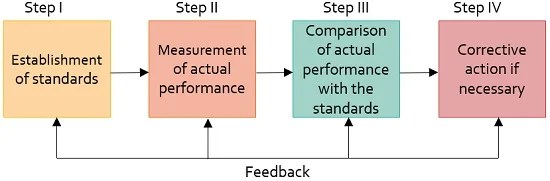
Controlling involves measuring actual performance and comparing it with predetermined standards. Managers evaluate results, identify deviations, and take corrective action if necessary. It ensures that organizational activities are moving in the right direction. Controlling helps in improving efficiency and preventing mistakes. Through regular monitoring and feedback, management maintains discipline and ensures that objectives are achieved according to plans.

6. Coordinating

Coordination means harmonizing the activities of different departments and employees to achieve common goals. It ensures unity of action in the organization. Managers integrate the efforts of various individuals so that there is no conflict or duplication of work. Proper coordination improves cooperation, avoids misunderstandings, and increases efficiency. It acts as the binding force that connects all managerial functions.

7. Supervising

Supervising involves overseeing the work of employees at the operational level. Managers observe workers’ performance, provide guidance, and ensure that tasks are carried out according to instructions. Supervision helps in maintaining discipline and improving efficiency. It also enables managers to understand employee problems and provide solutions. Effective supervision leads to better performance and smooth working conditions.

8. Reporting

Reporting refers to informing higher authorities about the performance and progress of activities. Managers prepare reports, statements, and records to communicate results and developments. It keeps top management aware of the organization’s condition and helps in decision-making. Proper reporting ensures transparency, accountability, and better control over operations.

Management as a Process

As a process, management refers to a series of inter-related functions. It is the process by which management creates, operates and directs purposive organization through systematic, coordinated and co-operated human efforts, according to George R. Terry, “Management is a distinct process consisting of planning, organizing, actuating and controlling, performed to determine and accomplish stated objective by the use of human beings and other resources”. As a process, management consists of three aspects:-

(i) Management is a social process:

Since human factor is most important among the other factors, therefore management is concerned with developing relationship among people. It is the duty of management to make interaction between people – productive and useful for obtaining organizational goals.

(ii) Management is an integrating process:

Management undertakes the job of bringing together human physical and financial resources so as to achieve organizational purpose. Therefore, is an important function to bring harmony between various factors.

(iii) Management is a continuous process:

It is a never ending process. It is concerned with constantly identifying the problem and solving them by taking adequate steps. It is an on-going process.

Scope or Branches of Management

Management is an all pervasive function since it is required in all types of organized endeavour. Thus, its scope is very large.

The following activities are covered under the scope of management:

(i) Planning,

(ii) Organization

(iii) Staffing.

(iv) Directing,

(v) Coordinating, and

(vi) Controlling.

The operational aspects of business management, called the branches of management, are as follows:

  1. Production Management
  2. Marketing Management
  3. Financial Management.
  4. Personnel Management and
  5. Office Management.

1. Production Management:

Production means creation of utilities. This creation of utilities takes place when raw materials are converted into finished products. Production management, then, is that branch of management ‘which by scientific planning and regulation sets into motion that part of enterprise to which has been entrusted the task of actual translation of raw material into finished product.’

It is a very important field of management ,’for every production activity which has not been hammered on the anvil of effective planning and regulation will not reach the goal, it will not meet the customers and ultimately will force a business enterprise to close its doors of activities which will give birth to so many social evils’.

Plant location and layout, production policy, type of production, plant facilities, material handling, production planning and control, repair and maintenance, research and development, simplification and standardization, quality control and value analysis, etc., are the main problems involved in production management.

2. Marketing Management:

Marketing is a sum total of physical activities which are involved in the transfer of goods and services and which provide for their physical distribution. Marketing management refers to the planning, organizing, directing and controlling the activities of the persons working in the market division of a business enterprise with the aim of achieving the organization objectives.

It can be regarded as a process of identifying and assessing the consumer needs with a view to first converting them into products or services and then involving the same to the final consumer or user so as to satisfy their wants with a stress on profitability that ensures the optimum use of the resources available to the enterprise. Market analysis, marketing policy, brand name, pricing, channels of distribution, sales promotion, sale-mix, after sales service, market research, etc. are the problems of marketing management.

3. Financial Management:

Finance is viewed as one of the most important factors in every enterprise. Financial management is concerned with the managerial activities pertaining to the procurement and utilization of funds or finance for business purposes.

The main functions of financial management:

(i) Estimation of capital requirements;

(ii) Ensuring a fair return to investors;

(iii) Determining the suitable sources of funds;

(iv) Laying down the optimum and suitable capital

Structure for the enterprise:

(i) Co-coordinating the operations of various departments;

(ii) Preparation, analysis and interpretation of financial statements;

(iii) Laying down a proper dividend policy; and

(iv) Negotiating for outside financing.

4. Personnel Management:

Personnel Management is that phase of management which deals with the effective control and use of manpower. Effective management of human resources is one of the most crucial factors associated with the success of an enterprise. Personnel management is concerned with managerial and operative functions.

Managerial functions of personnel management:

(i) Personnel planning;

(ii) Organizing by setting up the structure of relationship among jobs, personnel and physical factors to contribute towards organization goals;

(iii) Directing the employees; and

(iv) Controlling.

The operating functions of personnel management are:

(i) Procurement of right kind and number of persons;

(ii) Training and development of employees;

(iii) Determination of adequate and equitable compensation of employees;

(iv) Integration of the interests of the personnel with that of the enterprise; and

(v) Providing good working conditions and welfare services to the employees.

5. Office Management:

The concept of management when applied to office is called ‘office management’. Office management is the technique of planning, coordinating and controlling office activities with a view to achieve common business objectives. One of the functions of management is to organize the office work in such a way that it helps the management in attaining its goals. It works as a service department for other departments.

The success of a business depends upon the efficiency of its administration. The efficiency of the administration depends upon the information supplied to it by the office. The volume of paper work in office has increased manifold in these days due to industrial revolution, population explosion, increased interference by government and complexities of taxation and other laws.

Harry H. Wylie defines office management as “the manipulation and control of men, methods, machines and material to achieve the best possible results—results of the highest possible quality with the expenditure of least possible effect and expense, in the shortest practicable time, and in a manner acceptable to the top management.”

Management Functions

Management is a multifaceted discipline that plays a crucial role in the success of organizations across various sectors. To achieve organizational goals, managers must perform specific functions that facilitate the effective and efficient use of resources. These functions, often categorized into planning, organizing, leading, and controlling, form the foundation of management practice. Below is an in-depth exploration of each function of management.

Planning

Planning is the foundational function of management and involves setting objectives and determining the best course of action to achieve those objectives. It provides direction for the organization and establishes a roadmap for future activities.

Key Aspects of Planning:

  • Setting Objectives:

The first step in planning is to identify the goals the organization aims to achieve. These objectives should be specific, measurable, achievable, relevant, and time-bound (SMART).

  • Identifying Resources:

Managers must assess the resources required to achieve the objectives, including human resources, financial resources, and materials.

  • Developing Strategies:

Once objectives and resources are identified, managers develop strategies to meet these goals. This involves evaluating various options and choosing the most effective approach.

  • Forecasting:

Planning requires anticipating future conditions and trends that may impact the organization. This includes market analysis, risk assessment, and understanding the competitive landscape.

  • Creating Action Plans:

Managers outline the steps needed to implement the chosen strategies. This includes setting deadlines, assigning responsibilities, and determining resource allocation.

Planning is an ongoing process that requires flexibility and adaptability. As external and internal conditions change, managers must revisit and adjust their plans accordingly.

 Organizing

Once planning is complete, the next function is organizing, which involves arranging resources and tasks to implement the plans effectively. This function ensures that the organization operates smoothly and efficiently.

Key Aspects of Organizing:

  • Resource Allocation:

Managers allocate resources—human, financial, and physical—to ensure that they are used effectively. This includes determining how much of each resource is needed and where it should be placed.

  • Establishing Structure:

Organizing requires creating an organizational structure that defines roles, responsibilities, and relationships among team members. This includes establishing departments, teams, and reporting lines.

  • Defining Roles:

Clearly defined roles help eliminate confusion and ensure that everyone understands their responsibilities. Job descriptions should outline specific duties and expectations for each position.

  • Coordination:

Managers must coordinate activities across different departments and teams to ensure that efforts are aligned with organizational goals. This involves effective communication and collaboration.

  • Adapting to Change:

As organizations grow and evolve, managers must be prepared to reorganize structures and processes to meet changing needs and external conditions.

Effective organizing enables organizations to operate efficiently, ensuring that all resources are optimally utilized to achieve set objectives.

Leading

Leading is the function of management that involves guiding, motivating, and influencing employees to work towards organizational goals. It is essential for creating a positive work environment and fostering employee engagement.

Key Aspects of Leading:

  • Motivation:

Managers must understand what motivates their employees and create an environment that encourages high performance. This may involve recognition, rewards, and opportunities for growth and development.

  • Communication:

Effective leadership requires clear and open communication. Managers must convey information, expectations, and feedback to their teams and listen to their concerns and suggestions.

  • Building Teams:

Managers play a crucial role in developing cohesive teams that work well together. This involves fostering collaboration, resolving conflicts, and promoting a sense of belonging among team members.

  • Setting an Example:

Managers should model the behavior and work ethic they expect from their employees. Leading by example helps build trust and respect, essential for effective leadership.

  • Empowerment:

Effective leaders empower employees by giving them the authority and responsibility to make decisions related to their work. This fosters a sense of ownership and accountability.

Leadership is about inspiring and guiding people, ensuring they are motivated to contribute to the organization’s success.

Controlling

Controlling function involves monitoring and evaluating organizational performance to ensure that goals are met and operations run smoothly. This function provides a framework for assessing progress and making necessary adjustments.

Key Aspects of Controlling:

  • Setting Performance Standards:

Managers establish performance standards based on the objectives set during the planning phase. These standards serve as benchmarks for evaluating performance.

  • Monitoring Progress:

Managers continuously monitor actual performance against established standards. This involves collecting data, analyzing results, and identifying discrepancies between expected and actual outcomes.

  • Evaluating Results:

When deviations from standards occur, managers must assess the underlying causes. This evaluation helps identify areas for improvement and informs decision-making.

  • Taking Corrective Action:

If performance falls short of expectations, managers must implement corrective actions to address issues. This may involve revising processes, reallocating resources, or providing additional training.

  • Feedback Loop:

Controlling function creates a feedback loop that informs future planning. Insights gained from monitoring and evaluation can help managers refine strategies and improve overall performance.

Effective controlling ensures that organizations remain on track to achieve their goals and adapt to changing circumstances.

Coordinating

While not always listed as a separate function, coordination is essential in management, as it involves aligning the activities of different departments and teams to achieve common objectives. Effective coordination ensures that all parts of the organization work together harmoniously.

Key Aspects of Coordinating:

  • Interdepartmental Communication:

Managers facilitate communication between departments to ensure that everyone is informed about goals, strategies, and changes in plans.

  • Aligning Goals:

Coordination involves ensuring that departmental goals align with organizational objectives. This helps prevent conflicts and misalignment.

  • Resource Sharing:

Managers coordinate resource sharing among departments to optimize efficiency and reduce redundancy.

  • Conflict Resolution:

Effective coordination helps resolve conflicts that may arise between teams or departments, ensuring that disagreements do not hinder organizational progress.

Management Planning, Features, Importance, Steps, Benefits, Challenges

Planning is the process of setting objectives and determining the best course of action to achieve them. It involves analyzing current conditions, forecasting future trends, and identifying goals. Effective planning helps in allocating resources, minimizing risks, and setting a clear direction for the organization. It includes defining tasks, timelines, responsibilities, and strategies to reach desired outcomes. Planning is essential in both short-term decision-making and long-term goal setting, enabling organizations to stay proactive, organized, and adaptable to changing circumstances. It serves as the foundation for all other management functions such as organizing, leading, and controlling.

According to Urwick, “Planning is a mental predisposition to do things in orderly way, to think before acting and to act in the light of facts rather than guesses”. Planning is deciding best alternative among others to perform different managerial functions in order to achieve predetermined goals.

According to Koontz & O’Donell, “Planning is deciding in advance what to do, how to do and who is to do it. Planning bridges the gap between where we are to, where we want to go. It makes possible things to occur which would not otherwise occur”.

Features of Planning:

  • Primary Function of Management

Planning is the foundational function of management and serves as the starting point for all other managerial functions like organizing, directing, staffing, and controlling. It lays down the roadmap for achieving organizational objectives and determines the direction of future activities. Without planning, other management functions cannot be effectively carried out. It sets the stage by identifying what is to be done, when, how, and by whom. Therefore, planning is considered the most essential and primary step in the management process.

  • Goal-Oriented

Planning is always directed toward achieving specific goals or objectives. It involves deciding in advance the actions and strategies necessary to attain desired outcomes. Every plan must be aligned with the organization’s mission and vision. Whether the objective is profit maximization, market expansion, or improving customer satisfaction, planning ensures that resources and efforts are focused on those aims. Managers use planning to give employees clarity about the purpose of their work and how their efforts contribute to the bigger picture, making the organization more efficient and focused.

  • Pervasive in Nature

Planning is required at all levels of management—top, middle, and lower—and across all departments such as finance, marketing, HR, and operations. While the scope and nature of planning may differ at each level, its presence is universal. For example, top management may engage in strategic planning, while middle managers may plan departmental activities, and lower-level supervisors might schedule daily tasks. This universality ensures coordination and consistency throughout the organization. Thus, planning is a pervasive function that influences all aspects of managerial activity.

  • Continuous Process

Planning is not a one-time activity but a continuous process. As internal and external conditions change, plans must be reviewed, updated, and modified. Market trends, competition, technology, and government policies often require businesses to re-evaluate their plans. This dynamic nature of the business environment means that planning must be ongoing to stay relevant. Managers must constantly assess the situation, learn from past outcomes, and anticipate future challenges. Therefore, continuous planning helps organizations remain agile, proactive, and better prepared for uncertainties.

  • Futuristic in Nature

Planning is inherently future-oriented. It involves forecasting future conditions, analyzing trends, and making decisions for upcoming events. Managers try to visualize potential opportunities and threats and develop strategies to address them. Although the future is uncertain, planning helps reduce risks by preparing for possible scenarios. It bridges the gap between the present situation and desired future outcomes. By thinking ahead, organizations can avoid surprises, seize emerging opportunities, and achieve long-term success. Thus, planning gives a forward-looking perspective to management.

  • Decision-Making Activity

Planning involves making choices from among various alternatives. It requires managers to evaluate different strategies, methods, and courses of action to select the most effective one. This decision-making process is central to planning as it determines the path the organization will follow. Good planning includes identifying goals, comparing alternatives, and selecting the best approach based on data and logical reasoning. By encouraging rational thinking and minimizing guesswork, planning improves the quality of decisions. Hence, decision-making is an essential and integral part of planning.

Importance of Planning:

  • Provides Direction

Planning sets clear objectives and outlines the steps to achieve them, ensuring everyone in the organization works toward the same goals. Without direction, efforts become scattered, leading to inefficiency. By defining what needs to be done, planning eliminates ambiguity and aligns individual and departmental activities with the company’s vision. This unified focus enhances productivity and ensures resources are used effectively.

  • Reduces Uncertainty

The business environment is unpredictable, but planning helps anticipate potential risks and challenges. By analyzing trends and preparing contingency plans, managers can mitigate disruptions. Forecasting future scenarios allows organizations to adapt quickly to changes, whether economic, technological, or competitive. This proactive approach minimizes surprises and ensures stability, keeping the company on track even in volatile conditions.

  • Minimizes Waste

Efficient planning prevents resource mismanagement by allocating time, money, and materials optimally. It identifies redundant processes and eliminates unnecessary costs, ensuring budgets are adhered to. By setting priorities, organizations avoid overinvestment in low-impact activities. This lean approach maximizes output while minimizing input, improving overall profitability and sustainability.

  • Enhances Decision-Making

Planning provides a structured framework for evaluating alternatives, making decisions more logical and data-driven. Managers can weigh pros and cons based on predefined criteria rather than acting impulsively. Clear objectives and strategies reduce ambiguity, allowing for quicker, more confident choices. This systematic approach ensures decisions align with long-term goals rather than short-term gains.

  • Improves Coordination

A well-defined plan synchronizes efforts across departments, preventing conflicts and duplication of work. It clarifies roles, responsibilities, and timelines, ensuring seamless collaboration. When teams understand how their tasks interlink, workflows become smoother. This cohesion boosts efficiency and fosters a harmonious work environment, driving collective success.

  • Encourages Innovation

Planning stimulates creative thinking by challenging teams to find better ways to achieve objectives. Brainstorming sessions and strategy meetings encourage new ideas and solutions. By setting ambitious yet realistic goals, organizations push boundaries and stay ahead of competitors. This culture of innovation leads to continuous improvement and adaptability in a dynamic market.

  • Facilitates Control

Plans serve as benchmarks for measuring performance. By comparing actual results with projected outcomes, managers can identify deviations and take corrective actions. This monitoring ensures accountability and keeps projects on schedule. Without planning, assessing progress becomes subjective, making it harder to enforce standards or improve processes.

  • Boosts Employee Morale

Clear plans provide employees with a sense of purpose and security. Knowing their contributions matter and understanding expectations reduces stress and increases motivation. When workers see how their roles fit into the bigger picture, engagement and job satisfaction rise. A well-communicated plan fosters trust in leadership and commitment to organizational success.

Steps in Planning Function

  1. Establishment of objectives:

  • Planning requires a systematic approach.
  • Planning starts with the setting of goals and objectives to be achieved.
  • Objectives provide a rationale for undertaking various activities as well as indicate direction of efforts.
  • Moreover objectives focus the attention of managers on the end results to be achieved.
  • As a matter of fact, objectives provide nucleus to the planning process. Therefore, objectives should be stated in a clear, precise and unambiguous language. Otherwise the activities undertaken are bound to be ineffective.
  • As far as possible, objectives should be stated in quantitative terms. For example, Number of men working, wages given, units produced, etc. But such an objective cannot be stated in quantitative terms like performance of quality control manager, effectiveness of personnel manager.
  • Such goals should be specified in qualitative terms.
  • Hence objectives should be practical, acceptable, workable and achievable.

2. Establishment of Planning Premises:

  • Planning premises are the assumptions about the lively shape of events in future.
  • They serve as a basis of planning.
  • Establishment of planning premises is concerned with determining where one tends to deviate from the actual plans and causes of such deviations.
  • It is to find out what obstacles are there in the way of business during the course of operations.
  • Establishment of planning premises is concerned to take such steps that avoids these obstacles to a great extent.
  • Planning premises may be internal or external. Internal includes capital investment policy, management labour relations, philosophy of management, etc. Whereas external includes socio- economic, political and economical changes.
  • Internal premises are controllable whereas external are non- controllable.

3. Choice of alternative course of action

  • When forecast are available and premises are established, a number of alternative course of actions have to be considered.
  • For this purpose, each and every alternative will be evaluated by weighing its pros and cons in the light of resources available and requirements of the organization.
  • The merits, demerits as well as the consequences of each alternative must be examined before the choice is being made.
  • After objective and scientific evaluation, the best alternative is chosen.
  • The planners should take help of various quantitative techniques to judge the stability of an alternative.

4. Formulation of derivative plans

  • Derivative plans are the sub plans or secondary plans which help in the achievement of main plan.
  • Secondary plans will flow from the basic plan. These are meant to support and expediate the achievement of basic plans.
  • These detail plans include policies, procedures, rules, programmes, budgets, schedules, etc. For example, if profit maximization is the main aim of the enterprise, derivative plans will include sales maximization, production maximization, and cost minimization.
  • Derivative plans indicate time schedule and sequence of accomplishing various tasks.

5. Securing Co-operation

    1. After the plans have been determined, it is necessary rather advisable to take subordinates or those who have to implement these plans into confidence.
    2. The purposes behind taking them into confidence are:
  • Subordinates may feel motivated since they are involved in decision making process.
  • The organization may be able to get valuable suggestions and improvement in formulation as well as implementation of plans.
  • Also the employees will be more interested in the execution of these plans.

6. Follow up/Appraisal of plans

  • After choosing a particular course of action, it is put into action.
  • After the selected plan is implemented, it is important to appraise its effectiveness.
  • This is done on the basis of feedback or information received from departments or persons concerned.
  • This enables the management to correct deviations or modify the plan.
  • This step establishes a link between planning and controlling function.
  • The follow up must go side by side the implementation of plans so that in the light of observations made, future plans can be made more realistic.

Benefits of Planning:

Planning is one of the crucial functions of management. It is basic to all other functions of management. There will not be proper organization and direction without proper planning. It states the goals and means of achieving them.

  1. Attention on Objectives:

Planning helps in clearly laying down objectives of the organization. The whole attention of management is given towards the achievement of those objectives. There can be priorities in objectives, important objectives to be taken up first and others to be followed after them.

  1. Minimizing Uncertainties:

Planning is always done for the future. Nobody can predict accurately what is going to happen. Business environments are always changing. Planning is an effort to foresee the future and plan the things in a best possible way. Planning certainly minimizes future uncertainties by basing its decisions on past experiences and present situations.

  1. Better Utilization of Resources:

Another advantage of planning is the better utilization of resources of the business. All the resources are first identified and then operations are planned. All resources are put to best possible uses.

  1. Economy in Operations:

The objectives are determined first and then best possible course of action is selected for achieving these objectives. The operations selected being better among possible alternatives, there is an economy in operations. The method of trial and error is avoided and resources are not wasted in making choices. The economy is possible in all departments whether production, sales, purchases, finances, etc.

  1. Better Co-ordination:

The objectives of the organization being common, all efforts are made to achieve these objectives by a concerted effort of all. The duplication in efforts is avoided. Planning will lead to better co-ordination in the organization which will ultimately lead to better results.

  1. Encourages Innovations and Creativity:

A better planning system should encourage managers to devise new ways of doing the things. It helps innovative and creative thinking among managers because they will think of many new things while planning. It is a process which will provide awareness for individual participation and will encourage an atmosphere of frankness which will help in achieving better results.

  1. Management by Exception Possible:

Management by exception means that management should not be involved in each and every activity. If the things are going well then there should be nothing to worry and management should intervene only when things are not going as per planning. Planning fixes objectives of the organization and all efforts should be made to achieve these objectives. Management should interfere only when things are not going well. By the introduction of management by exception, managers are given more time for planning the activities rather than wasting their time in directing day-to-day work.

  1. Facilitates Control:

Planning and control are inseparable. Planning helps in setting objectives and laying down performance standards. This will enable the management to cheek performance of subordinates. The deviations in performance can be rectified at the earliest by taking remedial measures.

  1. Facilitates Delegation:

Under planning process, delegation of powers is facilitated. The goals of different persons are fixed. They will be requiring requisite authority for getting the things clone. Delegation of authority is facilitated through planning process.

Limitations of Planning:

Despite of many advantages of planning, there may be some obstacles and limitations in this process. Planning is not a panacea for all the ills of the business. Planning will only help in minimizing uncertainties to a certain extent.

(a) Fundamental limitation i.e. the limitation of forecasting:

Under this category of the limitations of planning, only one limitation of planning is placed viz., the limitation of forecasting. This limitation of forecasting is considered as the fundamental (or basic) limitation; in as much as, no amount of planning is possible without involving some minimum element of forecasting; and till-do-date no hard and fast system of forecasting future events and conditions is able to develop.

As a result, the fate of planning depends on the accuracy of forecasting; which is still a matter of guess-work howsoever rational or scientific. In fact, some of the best laid down plans might collapse in the face of unprecedented changes taking place in future conditions only to the ill-luck of management.

This fundamental limitation of planning (based on forecasting) assumes paramount significance; in cases where the socio-economic environment is changing quite fast. Under such circumstances planning become a mere formality; just providing a psychological satisfaction to management of having done planning.

It is, in fact, this limitation of planning which, among other factors, might have induced scholars to come forward and recommends a situational (or contingency) approach to managing – ruling out any need for advance planning.

(b) Other limitations:

Some of the other important limitations of planning might be as follows:

(i) Egoistic planning:

Many-a-times, there is observed a tendency on the part of the so-called big bosses of an enterprise, to undertake planning of a type which would just add to their prestige or status in the organisation without, in any substantial manner, contributing to the enterprise’s goals.

Such egoistic planning, this way, becomes a great limitation of planning, as despite the expenditure of all efforts and resources incurred during the formulation process; such planning only raises false hopes of realization but producing no significant results.

(ii) Organisational inflexibilities:

In many enterprises, the rigid (or tight) rules, policies or procedures of the organisation might come in the way of the successful implementation of some progressive piece of plan. To ensure the success of a good number of plans, it is necessary that the management must frequently review its internal functioning process and modify the same in view of the current planning requirements. Many-a-times, a re-orientation of organisational functioning is not possible, due to technical, financial or certain other problems. Under such conditions of rigidity, planning is only a half-hearted success.

(iii) Wastage of resources:

Planning involves an expenditure of time, money, efforts and resources of the enterprise; during the stages of plan implementation and its execution. It is, in fact, a time-consuming, a money- consuming and a mind-consuming process.

One would not mind the expenditure of the above resources; if the plan is a success. However, whenever there is a plan-failure or only a limited success is generated by a plan; expenditure of precious organisational resources really pinches as it amounts to a sheer wastage.

(iv) Imparting a false sense of satisfaction:

Plans, quite often, impart a false sense of satisfaction to managers, subordinates and operators of an enterprise; who might think that the planned objectives and the planned courses of action are, perhaps, the ‘best’. They are reluctant to think in better terms. Many-a-times, people in the organisation behave like a fog in the well-unable to see beyond the horizons of planning. In fact, they never try to rise above the plans.

(v) External constraints:

Some of the external constraints like governmental regulations in certain business matters or the upper hand of labour unions over management on issues concerning workers and their economic interests might become a severe limitation of planning. Management, under the pressure of such constraints, might not be able to think freely and undertake ‘best conceived of planning for the enterprise.

(vi) Unreliable and inadequate background information:

Plans are as sound and fruitful as the data on which there are based. Sometimes, the data collected for the plan might not be very reliable. At some other times, background data for planning might be too inadequate to provide a complete base for plan formulation.

These limitations of data might be due to financial problems or the pressure of time or certain other causes; but there is no doubt that this unreliability or inadequacy of data is a great hindrance, in the way of successful planning.

(vii) Unsuitability in emergency situations:

Planning is a useful management efficiency device; but only in the normal course of functioning of the enterprise. Planning is not suitable in emergency situations as occasioned by war, civil disturbances or other unusual economic or social disorders; where ‘spot’ decisions are necessitated to take care of the environmental factors. Planning, as is too common to understand, takes its own time in setting objectives and selecting best alternatives; which renders itself wholly unsuitable for adoption in extra-ordinary business situations.

Process of Management Planning

Planning is the foundation of management, as it sets the direction for achieving organizational goals and serves as the basis for all other managerial functions. The process of planning involves a systematic approach to identifying objectives, analyzing conditions, and determining the best course of action to reach those objectives. A well-structured planning process ensures that the organization moves toward its goals efficiently and effectively, while also being prepared to handle uncertainties and challenges.

The management planning process can be broken down into several key steps, which together provide a comprehensive framework for decision-making and goal-setting.

1. Establishing Objectives:

The first step in the planning process is to define the organization’s objectives. These objectives serve as the foundation upon which all planning activities are built. Objectives should be clear, specific, and measurable. They can be both short-term and long-term, depending on the scope of the plan. The objectives must align with the organization’s mission and vision, ensuring that every action taken contributes to the overall purpose of the organization.

Key Considerations for Setting Objectives:

  • Objectives should be SMART (Specific, Measurable, Achievable, Relevant, and Time-bound).
  • They should reflect the priorities of the organization and be realistic within the context of available resources.
  • The objectives should inspire and motivate employees, giving them a sense of direction and purpose.

2. Environmental Scanning and Situational Analysis:

Once the objectives are set, the next step is to conduct an environmental scan to understand the internal and external factors that can influence the organization’s ability to achieve its goals. This involves assessing the organization’s strengths and weaknesses (internal environment) as well as identifying opportunities and threats (external environment). A SWOT analysis (Strengths, Weaknesses, Opportunities, and Threats) is a common tool used for this purpose.

Key Aspects of Environmental Scanning:

  • Internal Analysis: This involves evaluating the organization’s resources, capabilities, and processes to understand its strengths and areas for improvement.
  • External Analysis: This includes examining the competitive landscape, market trends, regulatory environment, and technological advancements that could impact the organization’s success.

By understanding the environment, managers can anticipate changes and prepare strategies to address challenges and capitalize on opportunities.

3. Identifying Alternatives:

After analyzing the environment, the next step is to identify possible alternatives or courses of action that the organization can take to achieve its objectives. In most cases, there is more than one way to reach a goal, and it’s important to explore all viable options. This step involves creative thinking and problem-solving to generate innovative and feasible solutions.

Factors to Consider When Identifying Alternatives:

  • The feasibility of each alternative, given the organization’s resources and capabilities.
  • The risks and benefits associated with each option.
  • The alignment of each alternative with the organization’s overall mission and values.

4. Evaluating Alternatives:

Once a list of alternatives has been identified, the next step is to evaluate each one based on various criteria, such as cost, time, resources, and potential outcomes. This evaluation process helps in determining which option is most suitable for achieving the organization’s goals. Managers must weigh the pros and cons of each alternative and consider factors such as risk tolerance, organizational constraints, and potential returns.

Methods for Evaluating Alternatives:

  • Cost-Benefit Analysis: This involves comparing the costs of each alternative against the expected benefits.
  • Risk Assessment: Managers should assess the risks associated with each option, considering both internal risks (e.g., resource limitations) and external risks (e.g., market volatility).
  • Feasibility Analysis: This involves determining whether the organization has the resources and capabilities to implement each alternative.

5. Selecting the Best Course of Action:

After evaluating the alternatives, the next step is to select the best course of action. This decision should be based on the analysis of the alternatives and their alignment with the organization’s objectives. The chosen course of action should provide the greatest chance of success while minimizing risks and maximizing benefits.

Criteria for Selecting the Best Alternative:

  • The alternative that offers the best balance between cost and benefit.
  • The option that aligns most closely with the organization’s long-term vision and short-term goals.
  • The alternative that is most feasible in terms of resources, timelines, and capabilities.

Once the best course of action is selected, it becomes the basis for the next steps in the planning process.

6. Developing Plans:

Once a course of action has been chosen, the next step is to develop detailed plans to implement the chosen alternative. This involves creating a roadmap that outlines the specific tasks, timelines, and resources required to achieve the objectives. The plan should include clear instructions for each department, team, or individual responsible for carrying out the tasks.

Components of a Plan:

  • Action Plan: This outlines the specific steps that need to be taken to execute the chosen course of action.
  • Resource Plan: This details the resources (e.g., personnel, budget, equipment) required to implement the plan.
  • Timeline: This provides a schedule for completing each step of the plan, including deadlines and milestones.
  • Contingency Plan: This outlines alternative actions that can be taken if the initial plan encounters unexpected challenges.

The development of detailed plans ensures that the organization can move forward in a coordinated and efficient manner.

7. Implementing the Plan:

The implementation stage involves putting the plan into action. This requires the coordination of resources, the assignment of tasks, and the execution of the steps outlined in the plan. Effective implementation is crucial for the success of the planning process.

Key Elements of Plan Implementation:

  • Communication: Clear communication of the plan to all stakeholders is essential to ensure that everyone understands their roles and responsibilities.
  • Resource Allocation: Ensuring that the necessary resources are available and properly allocated is critical for the smooth execution of the plan.
  • Monitoring Progress: Managers should regularly monitor progress to ensure that the plan is being executed as expected and that any issues are addressed promptly.

8. Monitoring and Controlling:

The final step in the planning process is monitoring and controlling. This involves tracking the progress of the plan and comparing it with the set objectives. If there are any deviations from the plan, corrective actions must be taken to bring the process back on track. Monitoring helps to ensure that the organization is moving in the right direction and that the goals will be achieved within the set timeframe.

Key Components of Monitoring and Controlling:

  • Performance Measurement: This involves measuring progress through key performance indicators (KPIs) to determine whether the plan is on target.

  • Feedback Mechanisms: Regular feedback should be collected from all levels of the organization to assess the effectiveness of the plan.
  • Corrective Actions: If the plan is not progressing as expected, managers must take corrective actions, such as reallocating resources or adjusting timelines.

Management by Objective (MBO), Steps, Need, Limitations

Management by Objectives (MBO) is a strategic management approach where managers and employees collaborate to set specific, measurable goals for a defined period. Each individual’s objectives align with the organization’s broader goals, ensuring that all efforts contribute to overall success. MBO emphasizes results and accountability, with regular progress reviews and adjustments as needed. By focusing on clear targets, employees gain a sense of purpose, while managers can effectively monitor performance. MBO fosters communication, enhances motivation, and improves coordination across departments, ultimately promoting organizational efficiency and goal achievement. It was popularized by Peter Drucker in the 1950s.

Steps for Management by Objectives (MBO):

  1. Define Organizational Objectives

The first step in MBO is to establish the overall objectives of the organization. These goals are usually set by top management and provide a clear direction for the company. Organizational objectives should be specific, measurable, achievable, relevant, and time-bound (SMART). These overarching goals serve as the foundation for setting departmental and individual goals.

  1. Cascade Objectives to Departments

Once the organizational goals are defined, the next step is to break them down into smaller, more specific objectives for each department or team. This cascading process ensures that every department’s goals are aligned with the broader organizational objectives. Departmental managers take responsibility for translating these goals into actionable targets that their teams can achieve.

  1. Set Individual Objectives

After departmental objectives are set, managers work with individual employees to establish personal goals that contribute to the department’s objectives. In this step, employees are actively involved in the goal-setting process, which helps them understand their role in the organization’s success. These objectives are also SMART, ensuring that they are clear and achievable.

  1. Develop Action Plans

To achieve the set objectives, action plans are created. These plans outline the specific steps, resources, and timelines needed to accomplish each goal. Action plans provide a roadmap for both employees and managers, detailing how objectives will be reached. This step ensures that there is a clear path from planning to execution.

  1. Monitor and Measure Progress

Regular monitoring and measuring of progress are essential in the MBO process. Managers and employees periodically review progress toward achieving the objectives. These reviews help identify any obstacles or deviations from the plan, allowing for corrective actions to be taken. Monitoring also provides an opportunity for managers to provide feedback and guidance.

  1. Evaluate Performance

At the end of the performance period, managers evaluate the achievements of employees against the objectives that were set. This step involves a formal review process where performance is assessed based on the results achieved. It helps managers understand how well employees performed and provides a basis for rewarding or recognizing high achievers.

  1. Provide Feedback

Providing feedback is a critical part of MBO. After the evaluation, managers discuss the results with employees, offering constructive feedback on their performance. Feedback sessions are not just about assessing past performance but also about identifying areas for improvement and setting new objectives for the next cycle.

  1. Reward Achievement

MBO encourages a reward system based on the achievement of objectives. Employees who meet or exceed their goals are often recognized with rewards, promotions, bonuses, or other forms of appreciation. This recognition serves as motivation for employees to continue performing well in future cycles.

  1. Set New Objectives

The final step in MBO is to set new objectives for the next performance cycle. Based on the feedback and evaluation from the previous period, new goals are established, taking into account any changes in the organization’s strategy or the individual’s role. This step ensures continuous improvement and alignment with the organization’s evolving needs.

Need of Management by Objectives (MBO):

  1. Goal Clarity and Focus

One of the primary needs for MBO is to ensure clarity and focus in goal setting. MBO establishes clear, specific objectives that provide direction to employees. By setting measurable goals, employees and managers understand exactly what is expected, which reduces confusion and aligns individual efforts with the company’s strategic objectives.

  1. Improved Communication

MBO fosters better communication between managers and employees. The collaborative nature of setting objectives in MBO encourages dialogue, allowing employees to share their views and gain feedback from managers. This open communication ensures that everyone is on the same page and helps identify any challenges or needs early in the process.

  1. Enhanced Employee Motivation

MBO enhances employee motivation by involving them in the goal-setting process. When employees participate in setting their own objectives, they feel a sense of ownership and responsibility. This increased engagement leads to higher motivation and commitment to achieving the defined goals.

  1. Performance Measurement

A key need for MBO is its ability to measure performance accurately. By setting specific and measurable objectives, managers can objectively assess the performance of employees. MBO provides a structured framework for performance appraisals, which is essential for identifying areas of improvement, rewarding success, and making informed decisions about promotions or development needs.

  1. Alignment with Organizational Goals

MBO ensures that individual goals are aligned with the broader objectives of the organization. This alignment is crucial for organizational success, as it ensures that all employees work towards common goals. MBO creates a sense of unity by linking personal objectives to corporate strategies, ensuring that each employee’s contribution supports the overall direction of the organization.

  1. Accountability and Responsibility

MBO promotes accountability by clearly defining the roles and responsibilities of employees. With specific goals in place, individuals are held responsible for their own performance. This encourages accountability and reduces the chances of blame-shifting or ambiguity about job roles.

  1. Increased Productivity

By setting clear objectives, MBO leads to improved productivity. Employees are more focused and driven to meet their targets, leading to better time management and resource allocation. The clarity of expectations and structured performance reviews foster a results-oriented work environment.

  1. Adaptability to Change

MBO is dynamic and adaptable to changing circumstances. It allows for regular reviews and adjustments of objectives as needed. This flexibility ensures that organizations can respond to market changes or internal shifts without losing focus on their overall goals.

Limitations of Management by objectives:

  1. Time-Consuming Process

MBO requires a considerable amount of time and effort in its initial stages. The process of setting objectives, conducting reviews, and holding meetings between managers and employees is time-intensive. This can detract from the day-to-day operations and might be difficult for organizations with tight schedules or limited resources.

  1. Emphasis on Quantitative Goals

One of the key criticisms of MBO is its heavy focus on measurable and quantitative goals. This emphasis may lead managers and employees to prioritize tasks that are easily quantifiable, while overlooking qualitative aspects such as employee satisfaction, creativity, or organizational culture, which are harder to measure but equally important.

  1. Overemphasis on Short-Term Goals

MBO often focuses on achieving short-term objectives within a specific timeframe, which can lead to the neglect of long-term strategic planning. This short-term focus may cause organizations to make decisions that generate immediate results, but undermine long-term sustainability and growth.

  1. Lack of Flexibility

Once objectives are set, the rigidity of the MBO process can make it difficult to adjust goals in response to changing market conditions or internal shifts. The formalized structure of MBO may limit the ability to be agile and responsive, which is critical in today’s fast-paced business environment.

  1. Pressure to Meet Targets

The emphasis on achieving pre-determined objectives can create excessive pressure on employees and managers alike. This may lead to stress, burnout, and in some cases, unethical behavior, as individuals may resort to manipulating results or cutting corners to meet their targets.

  1. Neglect of Interpersonal Relationships

MBO focuses primarily on the achievement of objectives, sometimes at the cost of interpersonal relationships and collaboration within the organization. Employees may become overly focused on their individual goals, leading to a lack of cooperation and teamwork, which can negatively impact organizational culture and performance.

  1. Difficulty in Setting Realistic Goals

Setting realistic and achievable goals is a challenge in the MBO process. Overly ambitious goals may demotivate employees if they perceive them as unattainable, while conservative goals might fail to push employees to their full potential. Striking the right balance is difficult and requires careful consideration.

  1. Potential for Misalignment of Goals

Even though MBO aims to align individual goals with organizational objectives, there can be a disconnect between the two. Employees might focus on their specific goals without fully understanding or supporting the broader organizational strategy, which could result in inefficiencies or conflict.

  1. Focus on Individual Performance over Teamwork

MBO tends to emphasize individual performance and achievement of personal goals, which can sometimes undermine teamwork. In environments where collaboration and group efforts are essential, MBO’s focus on individual objectives can cause divisions or reduce collective productivity.

Forfeiture of equity Share

Forfeiture of equity shares refers to the process by which a company cancels or terminates the ownership rights of a shareholder who has failed to pay the full amount of the share capital or has breached other terms and conditions of the share agreement. This means that the shareholder loses both the shares and any money that was paid toward the share value. Forfeiture is typically implemented when a shareholder fails to pay the calls for unpaid amounts on shares, and it serves as a means for the company to reclaim the shares.

Reasons for Forfeiture of Shares:

Forfeiture typically occurs due to the following reasons:

  • Non-payment of Calls:

The most common reason for the forfeiture of shares is when a shareholder fails to pay the calls (amounts due) on the shares within the specified period. A company may issue calls for unpaid amounts on the shares, and if the shareholder does not pay within the stipulated time frame, the company can decide to forfeit the shares.

  • Failure to Pay Share Application or Allotment Money:

Shareholder may be unable or unwilling to pay the application money or allotment money when it is due, leading to the forfeiture of the shares.

  • Breach of Terms and Conditions:

If the shareholder violates the terms of the share agreement, the company may decide to forfeit their shares.

  • Non-compliance with Company Rules:

If a shareholder fails to adhere to certain rules laid down by the company (such as violating shareholder agreements), the company may initiate forfeiture.

Procedure for Forfeiture of Shares:

  • Issuance of Call for Payment:

Before forfeiture occurs, the company usually issues a call notice to the shareholders to pay the amount due on the shares. The call notice specifies the amount payable and the deadline by which the payment must be made.

  • Failure to Pay:

If the shareholder fails to make the payment by the specified due date, the company sends a second notice requesting the payment. This notice usually informs the shareholder that, if the payment is not made, the shares may be forfeited.

  • Board Resolution:

If the shareholder does not make the payment even after the second notice, the company’s board of directors may pass a resolution to forfeit the shares. This decision is made during a board meeting and is documented in the minutes of the meeting.

  • Announcement of Forfeiture:

After passing the resolution, the company announces the forfeiture of the shares. This is typically recorded in the company’s records, and the shareholder is informed of the decision. The shareholder loses their rights and ownership in the shares, and the amount paid toward the shares up until that point is forfeited.

  • Return of Shares to the Company:

Once the shares are forfeited, they are returned to the company, and the shareholder no longer has any claim over the shares.

Effect of Forfeiture

  • Cancellation of Shares:

Once shares are forfeited, they are canceled by the company, and the shareholder loses all rights associated with them. The forfeited shares cannot be sold or transferred to another person, as they are no longer valid.

  • No Refund of Paid Amount:

The amount already paid by the shareholder is forfeited, and the shareholder is not entitled to a refund, even though they have lost their ownership in the shares.

  • Company Gains the Right to Reissue:

After forfeiture, the company has the right to reissue the forfeited shares. These shares can be sold to other investors to raise capital for the company. The company may reissue the shares at a discount or at the nominal value, depending on the circumstances.

  • Loss of Voting Rights:

Once the shares are forfeited, the shareholder loses the right to vote at general meetings, as well as any other rights tied to share ownership, such as receiving dividends or participating in company decisions.

Accounting Treatment of Forfeited Shares:

  • Amount Received from the Shareholder:

When a shareholder’s shares are forfeited, the amount received for those shares is transferred to a separate Forfeited Shares Account. The balance in this account represents the amounts paid by the shareholder up until the forfeiture.

  • Adjusting Share Capital:

The amount received from the forfeited shares is transferred from the Share Capital Account to the Forfeited Shares Account. This reduces the total share capital of the company.

  • Reissue of Forfeited Shares:

If the company reissues the forfeited shares, the amount received from the reissue is credited to the Forfeited Shares Account, and the difference between the original amount paid and the amount received on reissue is adjusted accordingly.

  • Profit or Loss on Forfeiture:

If the amount paid on the reissued shares is more than the original amount paid by the shareholder, the company records a gain. If the amount is less, a loss is recognized.

Legal and Regulatory Framework:

Under the Companies Act of 2013 in India, the forfeiture of shares is governed by Section 50. It specifies that a company must follow a proper process, including giving notice to the shareholder before forfeiting the shares. Forfeiture can only occur after a resolution is passed by the company’s board of directors.

Similarly, in other jurisdictions like the UK and the US, there are provisions in place that guide how and when shares can be forfeited. While the process is similar across countries, it is important to refer to the specific regulations in the relevant jurisdiction for compliance.

Entrepreneurship, Definitions, Characteristics, Functions, Types, Importance, Factors influencing, Core elements and Role of Entrepreneurship in Economic Development

Entrepreneurship is the process of identifying, developing, and managing a business idea into a profitable venture while taking calculated risks. It involves innovation, creativity, leadership, and the ability to recognize opportunities in dynamic environments. Entrepreneurs mobilize resources such as capital, labor, and technology to establish businesses that generate value for society.

The essence of entrepreneurship lies in problem-solving—creating goods or services that fulfill market needs and improve people’s lives. Unlike routine business operations, entrepreneurship emphasizes innovation and adaptability. Entrepreneurs not only contribute to economic development but also stimulate employment, competition, and technological advancement.

In modern economies, entrepreneurship extends beyond profit-making to include social entrepreneurship, which focuses on societal development, and green entrepreneurship, which promotes sustainability. Startups, particularly in technology, agriculture, and services, have redefined entrepreneurship by leveraging digital tools and global networks.

Entrepreneurship is therefore both an economic activity and a mindset—a way of thinking that embraces change, uncertainty, and risk in pursuit of opportunity. Successful entrepreneurs demonstrate resilience, vision, and decision-making skills that help them navigate challenges and create long-term impact. In the era of globalization and innovation, entrepreneurship acts as a key driver of progress, competitiveness, and inclusive growth.

Characteristics/Nature of Entrepreneurship

  • Innovation

Entrepreneurship is driven by innovation, which involves introducing new products, processes, or business models. Entrepreneurs identify gaps in the market and create unique solutions that add value. Innovation not only differentiates a startup but also helps in achieving a competitive edge. By leveraging creativity, entrepreneurs disrupt traditional practices and generate efficiency, affordability, and improved customer experiences. Innovation is thus the cornerstone of entrepreneurship, enabling both economic growth and societal progress.

  • Risk-Taking

A defining characteristic of entrepreneurship is risk-taking. Entrepreneurs often operate in uncertain environments where outcomes are unpredictable. They take financial, social, and psychological risks to establish and grow ventures. While risk does not guarantee success, entrepreneurs manage it strategically through research, planning, and adaptability. Their ability to embrace risk reflects confidence and resilience. Without the courage to step into uncertainty, many groundbreaking businesses and opportunities for economic development would not exist.

  • Visionary Leadership

Entrepreneurs are visionary leaders who see opportunities where others see challenges. They have the ability to predict trends, set long-term goals, and inspire others toward achieving them. Their leadership ensures that resources, teams, and strategies are aligned with the business vision. Visionary leadership not only motivates employees but also attracts investors, partners, and customers. Entrepreneurs with a strong vision create businesses that endure challenges and contribute significantly to industry transformation and innovation.

  • Decision-Making Ability

Effective decision-making is essential in entrepreneurship. Entrepreneurs frequently face complex situations requiring quick, informed choices. They analyze risks, evaluate alternatives, and choose strategies that maximize opportunities while minimizing losses. Good decision-making ensures efficient resource utilization and business continuity. Entrepreneurs must balance intuition with data-driven analysis to succeed. Their ability to make timely decisions in uncertain circumstances determines the survival and growth of the venture, making decision-making a critical entrepreneurial trait.

  • Resilience and Perseverance

Entrepreneurship involves numerous challenges such as financial difficulties, competition, and market failures. Resilience and perseverance are key characteristics that help entrepreneurs navigate setbacks. Rather than giving up, successful entrepreneurs learn from failures and re-strategize. Perseverance builds credibility with stakeholders, while resilience strengthens their ability to recover from crises. These traits ensure that entrepreneurs remain committed to their goals despite obstacles, making resilience and perseverance indispensable qualities for long-term entrepreneurial success.

  • Resource Mobilization

Entrepreneurs excel in mobilizing resources such as capital, technology, and human talent to build businesses. They identify, acquire, and utilize resources efficiently to maximize productivity. Effective resource mobilization includes networking, securing investments, and forming strategic partnerships. Entrepreneurs with this skill ensure their ventures remain financially viable and competitive. By optimizing available resources and identifying new ones, entrepreneurs maintain agility and sustainability, which are crucial for business growth and expansion in dynamic environments.

  • Customer-Centric Approach

A successful entrepreneur understands the importance of customers as the foundation of business success. They focus on identifying customer needs, preferences, and behaviors to create tailored products and services. Customer-centric entrepreneurs actively engage with feedback, ensuring continuous improvement. By prioritizing customer satisfaction and building strong relationships, they develop loyalty and trust, which sustains long-term growth. A customer-first approach distinguishes businesses in competitive markets and fosters lasting relevance in changing economic conditions.

  • Adaptability and Flexibility

Entrepreneurship operates in dynamic environments where markets, technologies, and consumer preferences change rapidly. Entrepreneurs must be adaptable and flexible to survive and thrive. Adaptability means adjusting business models, strategies, and operations in response to shifts, while flexibility ensures openness to new ideas and approaches. Entrepreneurs who embrace change proactively are better equipped to capitalize on opportunities and handle disruptions. This characteristic ensures sustainable growth and resilience in volatile and uncertain markets.

Functions of Entrepreneurship

  • Innovation

Innovation is the primary function of entrepreneurship, involving the creation and introduction of new products, services, technologies, or business models. Entrepreneurs identify gaps in the market and develop unique solutions that add value for consumers. This function drives economic progress by improving efficiency and productivity. Innovation also helps businesses differentiate themselves from competitors and capture new markets. It is a continuous process that requires creativity, experimentation, and risk-taking to convert ideas into practical and profitable outcomes.

  • Risk-Taking

Entrepreneurs take calculated risks by investing time, capital, and effort into uncertain business ventures. This function involves evaluating potential opportunities, analysing possible outcomes, and making decisions despite uncertainties. Risk-taking is essential for business growth because no innovation or opportunity comes without challenges. Entrepreneurs must handle financial risks, market fluctuations, competition, and operational uncertainties. Successful entrepreneurs accept these risks, prepare for setbacks, and implement strategies to minimise losses while maximizing potential rewards, thereby driving economic and industrial development.

  • Organising Resources

Entrepreneurs play an important role in mobilising and organising resources such as capital, labour, technology, and raw materials. They bring together these factors of production and coordinate them to ensure the smooth functioning of business activities. This function requires strong managerial and decision-making skills. The entrepreneur determines what resources are needed, how to acquire them, and how to allocate them efficiently. By effectively organising resources, entrepreneurs ensure productivity, reduce wastage, and maintain operational efficiency necessary for achieving business goals.

  • Decision-Making

Entrepreneurs are responsible for making strategic, financial, and operational decisions that determine the direction of the business. Decision-making involves analysing information, forecasting future conditions, and choosing the best possible alternatives. These decisions include selecting business opportunities, determining pricing strategies, hiring employees, and planning investments. Effective decision-making requires critical thinking, judgement, and foresight. Entrepreneurs must make timely decisions to respond to market changes, competition, and customer needs. Good decisions contribute to business success and long-term sustainability.

  • Business Planning

Business planning involves defining the vision, mission, objectives, strategies, and resources needed for the venture. Entrepreneurs prepare business plans to guide operations, attract investors, and evaluate feasibility. This function also includes setting short-term and long-term goals, analysing market trends, and forecasting financial performance. A well-structured plan helps entrepreneurs stay focused, monitor progress, and adjust strategies based on changing conditions. Business planning reduces uncertainty, enhances coordination, and serves as a roadmap for growth, stability, and competitive advantage.

  • Creating Employment

Entrepreneurs contribute significantly to employment generation by starting and expanding business ventures. When they hire workers for production, sales, marketing, and administration, they create job opportunities for various skill levels. This function supports economic development by reducing unemployment and increasing income levels. As businesses grow, they generate indirect employment as well through supply chains, distribution networks, and service providers. By creating employment, entrepreneurs improve living standards and contribute to the social and economic upliftment of communities.

  • Marketing and Customer Management

Entrepreneurs must identify customer needs, develop suitable products, and design marketing strategies to promote their offerings. This function includes market research, pricing decisions, branding, distribution, and customer service. Understanding customer preferences helps entrepreneurs deliver value and build long-term relationships. Effective marketing ensures business visibility, increases sales, and enhances competitiveness. Entrepreneurs continuously adapt marketing strategies based on market trends and customer feedback. Proper customer management helps in retaining clients, increasing loyalty, and ensuring consistent revenue generation.

  • Economic Development

Entrepreneurs play a vital role in national economic development by promoting innovation, increasing productivity, generating employment, and contributing to GDP. Their ventures stimulate industrial growth, create wealth, and enhance living standards. Entrepreneurship encourages competition, improves product quality, and promotes efficient utilisation of resources. Additionally, entrepreneurs support regional development by establishing industries in backward areas. Their contribution to exports, technology adoption, and infrastructure development strengthens the overall economy and positions the country for sustainable long-term growth.

Types of Entrepreneurship

1. Small Business Entrepreneurship

This involves setting up small-scale businesses such as retail shops, service centers, workshops, and local manufacturing units. These ventures usually cater to local markets and operate with limited resources, family labour, and traditional technologies. The primary goal is to provide livelihood rather than pursue rapid growth. They contribute significantly to employment generation and regional development.

2. Scalable Startup Entrepreneurship

Scalable startups are high-growth ventures designed to expand rapidly, often with the support of venture capital or angel investors. They focus on innovative products, disruptive technologies, or unique business models. Examples include tech startups, app-based companies, and biotechnology firms. Their aim is not only to capture large markets but also to scale globally.

3. Large Company Entrepreneurship (Corporate Entrepreneurship / Intrapreneurship)

Large or established companies also engage in innovative activities to maintain competitiveness. Corporate entrepreneurship involves developing new products, entering new markets, or launching new business lines within the organisation. Employees act as intrapreneurs, using company resources to innovate while reducing personal risk.

4. Social Entrepreneurship

Social entrepreneurship focuses on solving social, cultural, or environmental issues through sustainable business models. Profit is not the primary objective; instead, the aim is to create social value. Examples include ventures addressing poverty, education, healthcare, sanitation, or renewable energy. These entrepreneurs combine compassion with business strategies.

5. Innovative Entrepreneurship

Innovative entrepreneurs introduce new ideas, technologies, products, or methods of production. They thrive on creativity and research. Their ventures often lead to significant changes in industries and markets. Examples include innovators in AI, fintech, biotechnology, clean energy, and product design.

6. Imitative (Adaptive) Entrepreneurship

Imitative entrepreneurs copy or adapt existing business ideas, products, or services and modify them to suit local markets. They do not invest heavily in research and development but rely on proven concepts. This type is common in developing countries where risk-taking ability is low and markets prefer familiar offerings.

7. Trading Entrepreneurship

Trading entrepreneurs focus on buying and selling goods rather than producing them. They bridge the gap between producers and consumers by engaging in wholesale, retail, import, or export activities. Their success depends on market knowledge, negotiation skills, and efficient distribution.

8. Manufacturing Entrepreneurship

Manufacturing entrepreneurs convert raw materials into finished goods by establishing production units. They require technical knowledge, capital investment, and manpower. Examples include textile units, food processing plants, automobile parts manufacturing, and chemical production.

9. Agricultural Entrepreneurship

Agricultural or agri-entrepreneurs engage in farming, dairy, poultry, fisheries, organic farming, food processing, and agribusiness ventures. They introduce modern technologies and innovative practices to improve productivity and sustainability in the agriculture sector.

10. Rural Entrepreneurship

This type focuses on establishing business ventures in rural areas. It includes handloom, handicrafts, agro-processing, village shops, and rural service enterprises. Rural entrepreneurship plays an essential role in reducing migration, promoting local employment, and developing rural economies.

11. Women Entrepreneurship

Women entrepreneurs are those who independently start, manage, and operate business ventures. Their ventures span manufacturing, services, retail, IT, handicrafts, and home-based industries. Encouraging women entrepreneurship enhances gender equality, economic participation, and family welfare.

12. Green / Eco Entrepreneurship

Green entrepreneurs focus on environmentally sustainable products, services, or technologies. Their ventures aim to reduce pollution, conserve resources, and promote eco-friendly business practices. Examples include recycling units, renewable energy ventures, organic products, and waste-management startups.

13. Technopreneurship (Technology Entrepreneurship)

Technopreneurs use technology, innovation, and R&D to develop tech-based businesses. They depend on highly skilled talent and operate in sectors like software, AI, robotics, drones, semiconductors, and biotechnology. Their ventures have high scalability and global potential.

14. Serial Entrepreneurship

Serial entrepreneurs repeatedly start new businesses, sell them, and move on to new ventures. They are highly creative, risk-taking, and opportunity-driven. Their experience helps them build multiple successful companies over time.

Importance of Entrepreneurship

  • Economic Growth

Entrepreneurship plays a vital role in driving economic growth by creating new businesses, industries, and jobs. Entrepreneurs introduce innovations that boost productivity and efficiency across sectors. Their ventures attract investments, stimulate trade, and generate wealth. By fostering competition and new market opportunities, entrepreneurship strengthens economies and reduces dependency on traditional industries. As a result, countries with vibrant entrepreneurial ecosystems experience faster economic development and are better positioned to adapt to global economic shifts.

  • Employment Generation

One of the most significant contributions of entrepreneurship is employment creation. Startups and small businesses absorb a large portion of the workforce, especially in developing economies. Entrepreneurs hire skilled, semi-skilled, and unskilled workers, reducing unemployment and underemployment. Beyond direct jobs, they create indirect opportunities in supply chains, logistics, and support services. By fostering job diversity and providing innovative work models, entrepreneurship contributes to inclusive growth and helps reduce poverty through sustainable employment opportunities.

  • Innovation and Technological Advancement

Entrepreneurs introduce innovative ideas, processes, and technologies that transform industries. They challenge existing norms and create breakthroughs in fields like healthcare, agriculture, and digital services. Entrepreneurship fosters research and development (R&D), leading to cutting-edge solutions that improve efficiency and quality of life. By leveraging new technologies, entrepreneurs promote modernization, disrupt outdated models, and make services more accessible. Such technological advancements not only benefit local communities but also enhance global competitiveness and knowledge sharing.

  • Promoting Regional Development

Entrepreneurship helps reduce economic imbalances by encouraging business growth in rural and semi-urban areas. Agro-based startups, handicraft ventures, and local enterprises create income opportunities and infrastructure development outside metropolitan regions. This decentralization reduces migration to cities and supports balanced regional growth. Entrepreneurs also bring new industries to underdeveloped regions, improving education, healthcare, and living standards. By channeling resources into local economies, entrepreneurship strengthens social equity and bridges the rural-urban development divide effectively.

  • Enhancing Global Competitiveness

In an interconnected world, entrepreneurship enhances a nation’s competitiveness by fostering efficiency, innovation, and productivity. Startups expose local industries to international markets through exports, collaborations, and digital platforms. Entrepreneurs create brands and products that represent national strengths on the global stage. By improving quality, reducing costs, and innovating rapidly, they allow economies to compete with advanced nations. This global competitiveness ensures economic resilience, attracts foreign investments, and positions countries as leaders in international trade.

  • Wealth Creation and Distribution

Entrepreneurship contributes significantly to wealth generation by creating profitable ventures that add value to economies. Entrepreneurs generate income for themselves, employees, investors, and governments through taxes. Unlike wealth concentration in traditional monopolies, entrepreneurship ensures wider distribution of wealth through opportunities for small businesses and startups. This circulation of income fosters purchasing power, supports community development, and sustains growth. By empowering individuals to participate in wealth creation, entrepreneurship enhances financial inclusion and societal progress.

  • Social Development

Entrepreneurship extends beyond profits to address social needs through innovations in education, healthcare, and sustainability. Social entrepreneurs design solutions for issues like poverty, clean energy, and affordable housing. By integrating social responsibility with business, entrepreneurs uplift marginalized communities and foster inclusive development. Startups focusing on sustainable practices reduce environmental harm while improving living standards. Thus, entrepreneurship serves as a tool for both economic and social transformation, ensuring a balance between growth and equity.

  • Encouraging Self-Reliance

Entrepreneurship nurtures self-reliance by promoting business ownership and reducing dependency on government jobs or foreign companies. Entrepreneurs cultivate independence by creating opportunities and solving problems using local resources. This mindset fosters confidence, resilience, and innovation within societies. Nations with strong entrepreneurial ecosystems achieve economic independence by reducing imports, boosting exports, and sustaining local industries. At an individual level, entrepreneurship empowers people to take control of their economic futures, fostering pride and financial security.

Factors influencing Entrepreneurship

  • Economic Factors

Economic conditions strongly influence entrepreneurship. Factors like availability of capital, infrastructure, raw materials, and market demand determine entrepreneurial activity. A stable economy encourages investment and business growth, while inflation, high taxes, or poor credit availability discourage startups. Entrepreneurs thrive in environments with supportive financial institutions, easy access to loans, and favorable trade policies. Economic stability ensures predictability, allowing entrepreneurs to take risks and innovate, making economic factors the most fundamental driver of entrepreneurship.

  • Social and Cultural Factors

Social and cultural values play a crucial role in shaping entrepreneurial behavior. Communities that encourage independence, risk-taking, and innovation create strong entrepreneurial ecosystems. Cultural attitudes toward wealth, success, and social mobility also influence entrepreneurship. Family support, societal recognition, and community networks motivate individuals to start ventures. Conversely, rigid traditions or resistance to change may hinder entrepreneurship. Therefore, supportive social structures and progressive cultural norms foster an environment where entrepreneurial ideas can flourish effectively.

  • Political and Legal Factors

A stable political system and supportive government policies encourage entrepreneurship. Transparent regulations, simplified licensing, tax benefits, and ease of doing business create a conducive business environment. Conversely, excessive bureaucracy, corruption, or unpredictable policies discourage entrepreneurs. Laws related to intellectual property rights, labor, and trade also impact entrepreneurial activity. Countries with strong governance attract more startups and foreign investments. Thus, political stability and favorable legal frameworks are essential for entrepreneurial confidence and long-term sustainability.

  • Technological Factors

Technology drives modern entrepreneurship by enabling innovation, efficiency, and market expansion. Access to advanced tools such as AI, IoT, blockchain, and automation empowers entrepreneurs to create competitive products and services. Digital platforms facilitate global reach and reduce operational costs. However, lack of technological infrastructure can hinder growth, especially in developing regions. Startups thrive in tech-friendly environments where research and development (R&D) is promoted. Technological advancements are therefore both enablers and accelerators of entrepreneurship.

  • Educational and Skill Factors

Education enhances entrepreneurial ability by equipping individuals with knowledge, skills, and confidence. Entrepreneurial education fosters creativity, problem-solving, and risk management. Institutions offering business programs, incubators, and mentorship opportunities build entrepreneurial ecosystems. Skilled labor availability also supports ventures, ensuring productivity and innovation. Lack of education or vocational training, however, limits entrepreneurial growth. Thus, quality education and skills development play a critical role in producing entrepreneurs capable of managing businesses effectively and driving long-term success.

  • Psychological and Personal Factors

Entrepreneurship is greatly influenced by an individual’s mindset, personality, and motivation. Traits like risk-taking, resilience, creativity, leadership, and ambition determine entrepreneurial success. A strong need for achievement and independence motivates individuals to pursue ventures despite challenges. Confidence in decision-making and adaptability to uncertainty are also crucial. Conversely, fear of failure or low self-efficacy discourages entrepreneurship. Ultimately, personal attitudes and psychological strength act as the foundation upon which entrepreneurial ventures are built and sustained.

  • Environmental and Geographical Factors

Geographical conditions, natural resources, and local environments significantly influence entrepreneurship. Regions rich in raw materials, fertile lands, or favorable climates promote agro-based and resource-driven startups. Similarly, industrial clusters or urban centers with good connectivity provide advantages for manufacturing and services. Infrastructure like transport, energy, and communication also shapes entrepreneurial opportunities. Conversely, poor infrastructure or adverse climates can hinder business growth. Thus, environmental and geographical conditions determine the type and scale of entrepreneurial activity.

  • Global and Market Factors

Globalization and market dynamics have a profound impact on entrepreneurship. Open markets, international trade agreements, and access to global customers create vast opportunities for entrepreneurs. Competitive markets push entrepreneurs toward innovation and efficiency. Global trends like sustainability, digitalization, and e-commerce also influence entrepreneurial ventures. However, global economic downturns or supply chain disruptions can pose risks. Entrepreneurs who adapt quickly to international trends and demands remain competitive, making global and market forces vital influencers.

Key Elements of Entrepreneurship:

After having studied the concept of entrepreneurship, now let us look at some key elements that are necessary for entrepreneurship. We will be looking at four of the most important elements.

  • Innovation

An entrepreneur is the key source of innovation and variation in an economy. It is actually one of the most important tools of an entrepreneurs success. They use innovation to exploit opportunities available in the market and overcome any threats.

So this innovation can be a new product, service, technology, production technique, marketing strategy, etc. Or innovation can involve doing something better and more economically. Either way in the concept of entrepreneurship, it is a key factor.

  • Risk-Taking

Entrepreneurship and risk-taking go hand in hand. One of the most important features of entrepreneurship is that the whole business is run and managed by one person. So there is no one to share the risks with.

Not taking any risks can stagnate a business and excessive impulsive risk-taking can cause losses. So a good entrepreneur knows how to take and manage the risks of his business. But the willingness of an entrepreneur to take risks gives them a competitive edge in the economy. It helps them exploit the opportunities the economy provides.

  • Vision

Vision or foresight is one of the main driving forces behind any entrepreneur. It is the energy that drives the business forward by using the foresight of the entrepreneur. It is what gives the business an outline for the future – the tasks to complete, the risks to take, the culture to establish, etc.

All great entrepreneurs of the world that started with an entrepreneurship business are known to have great vision. This helps them set out short term and long term goals for their business and also plan ways to achieve these objectives.

  • Organization

In entrepreneurship, it is essentially a one-man show. The entrepreneur bears all the risks and enjoys all the rewards. And sure he has the help of employees and middle-level management, yet he must be the one in ultimate control. This requires a lot of organization and impeccable organizational skills.

An entrepreneur must be able to manage and organize his finances, his employees, his resources, etc. So his organizational abilities are one of the most important elements of entrepreneurship.

Role of Entrepreneurship in Economic Development

  • Employment Generation

Entrepreneurship significantly reduces unemployment by creating job opportunities across sectors. Startups and small enterprises hire both skilled and unskilled labor, absorbing the workforce that large corporations or governments cannot fully accommodate. They also stimulate indirect employment in allied industries such as logistics, supply chains, and services. By diversifying job opportunities, entrepreneurship enhances income distribution and reduces poverty. This role is crucial in developing nations where rapid population growth increases the demand for sustainable employment.

  • Capital Formation

Entrepreneurs mobilize savings and channel them into productive investments. By attracting funds from personal resources, investors, and financial institutions, they contribute to capital formation, which is vital for economic growth. New enterprises not only increase the pool of investable resources but also generate profits and taxes that further strengthen national wealth. This continuous cycle of investment and reinvestment enhances industrial activity, infrastructure development, and technological progress, forming the backbone of sustainable economic development.

  • Innovation and Technological Advancement

Entrepreneurs drive innovation by introducing new products, services, and technologies that improve efficiency and productivity. They invest in research and development, transforming ideas into practical solutions that address consumer and societal needs. Such innovations create competitive markets, reduce costs, and enhance the quality of goods and services. By pushing technological boundaries, entrepreneurs modernize industries, open up new markets, and ensure that economies remain adaptable and competitive in an ever-evolving global environment.

  • Regional Development

Entrepreneurship supports balanced regional development by encouraging businesses in less developed or rural areas. Agro-based startups, cottage industries, and local enterprises bring economic activity to regions often neglected by large corporations. This reduces migration to urban centers, strengthens rural economies, and improves living standards. Entrepreneurs also contribute to the development of infrastructure such as roads, schools, and healthcare facilities in these areas. Balanced regional development ensures equitable growth and reduces disparities between rural and urban economies.

  • Enhancing Exports and Global Competitiveness

Entrepreneurs strengthen a nation’s position in the global economy by creating products and services that meet international standards. Export-oriented startups generate foreign exchange, contributing to economic stability. By competing in global markets, entrepreneurs push for higher quality and innovation, which enhances national competitiveness. Global exposure also attracts foreign investment, partnerships, and knowledge sharing. This role is critical in integrating local economies with international markets, ensuring resilience and growth in an interconnected world economy.

  • Wealth Creation and Distribution

Entrepreneurship generates wealth by building profitable ventures that benefit entrepreneurs, employees, investors, and governments. Unlike monopolistic structures where wealth is concentrated, entrepreneurship promotes equitable distribution by encouraging small and medium enterprises. Profits circulate through wages, dividends, and taxes, creating broader economic participation. This fosters financial inclusion, improves purchasing power, and uplifts communities. By distributing wealth across various levels of society, entrepreneurship supports sustainable growth and reduces inequality within national and regional economies.

  • Social Development and Sustainability

Beyond economic benefits, entrepreneurs address social challenges by introducing solutions in healthcare, education, energy, and housing. Social and green entrepreneurship promote sustainability by reducing environmental harm while improving living standards. Startups focusing on renewable energy, waste management, and affordable services contribute to inclusive development. By aligning profit with social responsibility, entrepreneurs build resilient societies. This dual contribution ensures that economic growth goes hand-in-hand with social progress and environmental protection, strengthening long-term development goals.

  • Promoting Self-Reliance

Entrepreneurship fosters self-reliance at both individual and national levels. By creating local industries and reducing dependence on imports, entrepreneurs contribute to economic independence. They harness local resources to solve local problems, promoting pride and confidence in communities. For individuals, entrepreneurship provides autonomy, reducing dependency on limited government jobs or external employers. At the national level, self-reliant economies are better equipped to face global uncertainties and crises, making entrepreneurship a foundation of sustainable economic sovereignty.

Source of Finance

Sources of finance refer to the various ways a business or individual can obtain funds to meet operational, investment, or expansion needs. These sources are broadly classified into internal and external sources. Internal sources include retained earnings, depreciation funds, and asset sales, which do not require external borrowing. External sources include equity financing (issuing shares), debt financing (loans, bonds), and government grants. Short-term sources like trade credit and bank overdrafts help manage working capital, while long-term sources like venture capital and public deposits support growth. The choice of finance depends on factors like cost, risk, and repayment terms. A balanced mix ensures financial stability, minimizes risk, and enhances business sustainability.

A firm can obtain funds from a variety of sources (see Figure 3.1), which may be classified as follows:

  1. Long-term Sources:

A firm needs funds to purchase fixed assets such as land, plant & machinery, furniture, etc. These assets should be purchased from those funds which have a longer maturity repayment period. The capital required for purchasing these assets is known as fixed capital. So funds required for fixed capital must be financed using long-term sources of finance.

  1. Medium-term Sources:

Funds required for say, a heavy advertisement campaign, the benefit of which lasts for more than one accounting period, should be financed through medium-term sources of finance. In other words expenditure that results in deferred revenue should be financed through medium-term sources.

  1. Short-term Sources:

Funds required for meeting day-to-day expenses, i.e. revenue expenditure or working capital should be financed from short-term sources whose maturity period is one year or less.

  1. Owned Capital:

Owned capital represents equity capital, retained earnings and preference capital. Equity share has a perpetual life and are entitled to the residual income of the firm but the equity shareholders have the right to control the affairs of the business because they enjoy the voting rights.

  1. Borrowed Capital:

Borrowed capital represents debentures, term loans, public deposits, borrow­ings from bank, etc. These are contractual in nature. They are entitled to get a fixed rate of interest irrespective of profit and are to be repaid on a fixed date.

  1. Internal Sources:

If the funds are created internally, i.e. without using debt, such sources can be termed as internal sources. Examples of such could be: Ploughing back of profits, provision for depreciation, etc.

  1. External Sources:

If funds are re-used through the sources which create some obligation to the firm, such sources can be termed as external sources, e.g. lease financing, hire purchase, etc..

error: Content is protected !!