Role of Event Manager and the people involved in conducting the event

An event manager oversees the design, set-up, and execution of events that bring people together. These events can run from small networking meetings with a few dozen guests to large-scale conferences with thousands of attendees over several days and everything in between.

No matter their scope, managing events is always a people-centric endeavor. Your goal is ensuring people get the most from a given event, and you work closely with people to achieve that goal.

Role

  • Event Coordinator duties and responsibilities
  • Understand requirements and details of each event
  • Understand clients’ needs and wants
  • Plan and organize events with attention to financial and time constraints
  • Book venues and schedule speakers
  • Meet with clients and coordinate with them regularly
  • Look for and compare different vendors (catering, decorators, musicians etc.)
  • Negotiate with vendors to achieve the most favorable terms
  • Hire, train and oversee personnel
  • Evaluate personnel and provide reports
  • Manage all event operations (preparing venue, invitations, food, drinks etc.)
  • Track the overall even expenses regularly
  • Do event budget planning
  • Stay within the budget
  • Carefully oversee event happenings
  • Offer solutions to resolve problems in a timely manner
  • Evaluate event’s success and submit reports

Duties of an Event Manager:

  • Pre-event organisation
  • Planning an event that meets the stated objectives
  • Working out event budget, and logistics (venue, catering, etc)
  • Managing an effective event marketing campaign
  • Managing registrants
  • On-the-day management
  • Ensuring that on the day logistics are running smoothly (catering, venue, equipment)
  • Managing event staff to help mark attendance, run speeches, provide attendee support, collect sign ups etc.
  • Sending SMS communications to attendees when needed (last minute venue changes, parking notices etc)
  • Post-event communication, reporting & analysis
  • Managing post-event marketing/communications (‘thank you for coming’ email, feedback surveys, etc)
  • Reviewing reports
  • Analysing feedback and report data to measure whether event goal was achieved

Different People

1) Infrastructure Manager

They have the following responsibilities:

  1. Procurement management and resource management.
  2. Responsible for setting up and dismantling the infrastructure for the whole event like:
  3. Construction of boundary walls, entrance and exit gates, driveways, walkways and parking lots
  4. Construction of AC/Non AC hangers/ halls, seating arrangement, stage design/ set up.
  5. Construction of green rooms, staff rooms, storage rooms, power rooms, toilets, sewage systems, stalls, counters, booths and kiosks.
  6. Responsible for setting up electricity, water and phone connections.
  7. Responsible for conservancy (i.e. cleanliness).
  8. Formulates, prepares and implements the risk management plan. (risks related to infrastructure management like sudden shortage of workers, materials, power failure etc)

2) Event Manager/Event Planner

They have the following responsibilities:

  1. Responsible for planning and producing the whole event.
  2. Responsible for procurement management and resource management.
  3. Formulates, prepares and implement risk management plan (risks related to event planning and production).

3) Security Manager

  1. Responsible for formulating, preparing and implementing the security plan and strategies. i.e. how to protect delegates, guests, service providers, organizers, sponsors, partners, clients, target audience, goods and merchandise, etc.
  2. Procurement management and resource management.
  3. Formulates, prepares and implements the risk management plan. (risks related to security like stampede, brawl etc)

4) Logistic Manager

  1. Responsible for custom clearances and other clearances.
  2. Responsible for warehousing of cargo
  3. Cargo insurance
  4. Expected to move goods and merchandise from one destination to the other in the most efficient manner.
  5. Responsible for procurement management and resource management.
  6. Formulates, prepares and implements the risk management plan. (risks related to logistic management like cargo theft, etc.)

5) Information Manager

  1. Manages the information acquired through different sources.
  2. Responsible for the documentation of all business operations carried out pre-event, at-event and post-event.
  3. Maintains database of service providers, delegates, guests, organizers, sponsors, partners, clients, target audience, media people and various govt. departments officials.
  4. Formulates, prepares and implements the risk management plan. (risks related to information management like loss of data)

6) Event Coordinator

They are responsible for coordinating with all event professionals and ensures that business operations are efficient and effective.
Event Meaning, Definition, Characteristics, Types, Advantages

The increasing competitive pressures brought on by globalization are forcing business professionals to find new ways to engage customers. There are many definitions of event marketing. It is defined as the marketing discipline focused on face-to-face interaction via live events, trade shows and corporate meetings among other event types. Others define it as designing or developing a ‘live’ themed activity, occasion, display, or exhibit (such as a sporting event, music festival, fair, or concert) to promote a product, cause or organization.

An event is a live multimedia package with a preconceived concept, customized or modified to achieve the clients’ objective of reaching out and suitably influencing the sharply defined, specially gath­ered target audience by providing a complete sensual experience and an avenue for two-way interaction.

Events are attracting worldwide attention and at the same time getting corporatized. Events have proved to be a versatile marketing communication tool, since they can be customized to cater to the needs of the industry.

According to Philip Kotler, Events are defined as “occurrences designed to communicate particular messages to target audience”.

Events can also be defined as something noteworthy that happens according to a set plan involving networking of a multimedia package thereby achieving the client’s objective and justifying their need of associating with events.

Characteristics

  • It can be an observable occurrence.
  • It can be designed to achieve certain goals.
  • It can also be termed as experiential marketing.
  • It is objective-oriented.
  • It provides an avenue for effective interaction.

Types

  1. Wide range of events:

Event marketing encompasses a wide range of event types:

  1. Mega events and local events,
  2. Exhibitions,
  3. Trade shows,
  4. Publicity stunts,
  5. Themed and created events,
  6. Corporate entertainment,
  7. Award ceremonies.

Advantages

  • It helps in brand building, that is, creating awareness about the launch of new products/brands.
  • To highlight the added features of the product/services.
  • It helps in rejuvenating brands during different stages of product life cycle.
  • Helping in communicating the repositioning of brands/products.
  • Associating the brand personality of clients with the personality of target market.
  • Creating and maintaining brand identity.

Types of Customers for Events

Categories of Events

  • Political Events
  • Religious Events
  • Everyday Life”
  • Social Events; Weddings, Anniversaries, Death, Communions, etc.
  • Entertainment Events
  • Awareness Events
  • Crafts and Creativity
  • Sports Events
  • Educative/Academic Events at colleges
  • Corporate Events
  • International Events
  • Promotional Events

The Excitable Client

Everything you say is exciting to this client. They will enthuse, wax lyrical, delight in the details as you share your plans for their event. Feed off their energy and make it your aim to get attendees as excited as they are about the event.

The Demanding Client

They know what they want and they expect to get it. Forthright, blunt to the point of rudeness, the demanding client will make requests and expect you to jump. They tend to have a singular vision and be set upon it. With no respect for processes and protocol, they will interfere with your planning, contact you at all hours and not let up until they are wholly satisfied.

The Bargain Hunter Client

Budget-conscious and with a penchant for bargaining, this client will pinch every penny. Be prepared for them to encourage you to slash costs, cut deals, throw in extras in order to keep them happy. Dealing with a Del Boy can be disheartening: it’s all too easy to feel that they are undervaluing your skills and the effort you put in. However, stick to your guns and believe in your abilities.

The Grumpy Client

Nothing is quite good enough for this client. They are constantly moody and unenthused, even when you pull something spectacular out of the bag. Expect constant grumbles, occasional tuts, and a frown that never turns upside down.  Never fear though, beneath that tough exterior is a big softy.

The Impatient Client

With apparently no concept of how long things take and the pressures you are under, the impatient client wants things done NOW. You will be expected to drop everything to accommodate their requests.

Buyer versus User

Buyer person are focused on prospects looking to solve a problem or meet an objective that your products, solutions or services help them to achieve. Buyer person encompass all of the differing roles or stakeholders involved in the purchase decision and are usually represented by decision maker, influencer, champion, and gatekeeper roles. Distinctions can also be made as to economic buyer and functional buyer.

User person are designed to address the perspectives of those who work with your products, solutions or services on a daily basis. The goal is to help these “end users” achieve more complete use of the product, gain more value than they initially anticipated, as well as to help them become champions for continued use new additions, extensions or feature upgrades. They got what they needed to solve the original problem from your product, now how do they gain more value, or use more features? This persona is often the influencer in an account-based-marketing retention sale.

Customer versus Consumer

A person who buys the goods or services and pays the price thereof. The word customer is derived from the term ‘custom’ which means ‘practice’, so the word customer means the individual or entity who purchases product or services from a seller at regular intervals. It can also be known as client or buyer. They are divided into two categories:

Trade Customers: The customers who purchase goods in order to add value and resell them. These include Manufacturers, Wholesalers, Distributors, Retailers etc.

Final Customer: They are the customers who purchase it either for their own use or to hand over it to the final user.

The three kinds of customers:

  • Former customers or ex-customers
  • Existing customers
  • Prospective customers

Consumer

a person who is the end user of the product. The word consumer is made from the word ‘consume’ which means ‘to use’. In this way, the word consumer means a person who purchases the product or service for his own use or consumption.

As per the Consumer Protection Act, 1986, it does not include the person who purchases the commodity for the purpose of adding value or resale for any commercial purpose. However, a person can use those goods or services to earn livelihood or self-employment. Any type of user, other than the buyer who purchases goods, consumes the goods by taking permission of the buyer will also come under the category of Consumer. It includes the person who avails the services for any consideration. Moreover, the beneficiary of such services will also be regarded as the consumer. There are three Consumer protection council in India:

  • At national level: Central Protection Council
  • At state level: State Protection Council
  • At district level: District Protection Council
Consumer Customer
Meaning The end user of goods or services is known as a Consumer. The purchaser of goods or services is known as the Customer.
Resell No A customer can be a business entity, who can purchase it for the purpose of resale.
Purchase of goods Not necessary Yes
Purpose Consumption Resale or Consumption
Price of product or service May not be paid by the consumer Paid by the customer
Person Individual, Family or Group of people Individual or Organization

Marketing intelligence

Marketing intelligence (MI) is the everyday information relevant to a company’s markets, gathered and analyzed specifically for the purpose of accurate and confident decision-making in determining market opportunity, market penetration strategy, and market development metrics. Marketing intelligence is necessary when entering a foreign market.

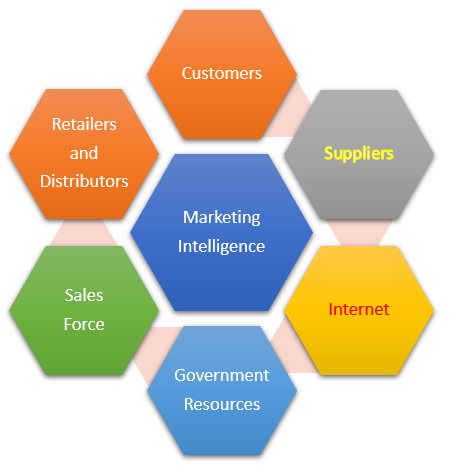
A Market Intelligence system focuses on the systematic collection and processing of information from all the relevant sources to ascertain the changing trends in the marketing environment. In simple words, the marketer gathers data from all the available sources and process these into meaningful information that can be used to make critical business decisions.

Marketing intelligence determines the intelligence needed, collects it by searching the environment and delivers it to marketing managers who need it. Marketing intelligence software can be deployed using an on-premises or software as a service (SaaS, or cloud-based) model. These systems take data from disparate data sources, like web analytics, business intelligence, call center and sales data, which often come separate reports, and put them into a single environment. In order to collect marketing intelligence, marketing managers must be in constant touch with relevant books, newspapers and trade publications. They must talk to various stakeholders like customers, distributors, and suppliers. In addition to this, they must also monitor social media and carry out online discussions. Marketing managers can design reports that correlate and visualize data coming from a variety of departments and sources (even, in some cases, external data). This allows them to see current key performance indicators in real-time (or as quickly as sources provide data) and analyze trends, rather than wait for analysts to deliver periodic reports.

Marketing intelligence systems are designed to be used by marketing managers and often viewed by employees throughout an organization. Notable systems on the market include Contify, Leadtime, Pardot, Marketo, and Hubspot. They may have user interfaces that closely resemble consumer software than the software around individual data sources, which are designed for use by analysts. Business intelligence, for example, can collect highly accurate, timely, granular data, but often requires IT support to build and edit custom reports.

Organizationally, marketing intelligence can be the name of the department that performs both the market intelligence and competitor analysis roles. Business intelligence of any kind may also be their responsibility, in tandem with (or solely performed by) the Finance department, for measuring market share and setting growth targets, the mergers and acquisitions group for exploring acquisition opportunities, the legal department to protect the organization’s assets or research and development for cross-company comparison of innovation trends and the discovery of opportunities through innovative differentiation.

Steps

  • Train and Motivate Sales Force: A company’s sales force can be an excellent source of information about the current trends in the market. They are the “intelligence gatherers” for the company. The acquired facts can be regarding the company’s market offerings, whether any improvements are required or not or is there any opportunity for new products, etc. It can also provide a credible source to know about competitor activities, consumers, distributors, and retailers.
  • Motivate Distributors, retailers, and other intermediaries to pass along important intelligence: Specialists are hired by companies to gather marketing intelligence. In order to measure the quality of production, the way the employees are behaving with customers, quality of facilities being provided; retailers and service providers send mystery shoppers. Firms can also assess the quality of customer experience with the shops with the use of mystery shoppers.
  • Network Externally: Every firm must keep a tab on its competitors. Competitive intelligence describes the broader discipline of researching, analyzing and formulating data and information from the entire competitive environment of any organization. This can be done by purchasing the competitor’s products, checking the advertising campaigns, the press media coverage, reading their published reports, etc. Competitive intelligence must be legal and ethical.
  • Set up a customer advisory panel: Companies can set up panels consisting of customers. They can be the company’s largest customers or representatives of customers or the most outspoken customers. Many business schools set up panels consisting of alumni who provide their knowledge and expertise and help in constituting the course curriculum.
  • Optimal usage of Government data resources: Governments of almost all countries publish reports regarding the population trends, demographic characteristics, agricultural production and a lot of other such data. All this data must be or can be referred to as base data. It can help in planning and formulating policies for the companies.
  • Information bought from external suppliers: Certain agencies sell data that can be useful to other companies. For example, television channels will require information on the number of viewership, ratings of TV programs, etc. An agency that calculates this information and generates this data will provide it to companies that need it.
  • Collect Competitive Intelligence through online customer feedback: The customer’s view of a product is essential for any company. Ultimately it’s the customer who’s buying the product. Hence customer feedback must be taken. Online platforms like chat rooms, blogs, discussion forums, customer review boards can be used to generate customer feedback. This enables the firm to understand customer experiences and impressions. It becomes easier for companies to apply a structured system to do so as it can then scan out the relevant messages without much of a trouble.

Features of Marketer

  1. Sense of responsibility

Good marketers always take responsibility for their actions, no matter what the circumstances. They aren’t afraid of their results being investigated and are ready to justify their work.

  1. Good observational skills

Marketing is all about identifying and satisfying the client’s needs, which is why successful marketers should be able to identify their target audience, their needs and work out how to satisfy them. They must be able to put themselves in the consumer’s shoes in order to understand (empathise). Client feedback is essential for modifying and adapting the product/service accordingly. The ability to identify customer needs is therefore the essence of a successful marketer.

  1. Creativity

Successful marketers know how to stand out from the crowd. They know how to make the product or service they are selling attractive. They don’t want to completely change everything, but rather try to see things from a different angle and help others to do the same. Successful marketers are ready to take risks with creative ideas that others may find completely crazy.

  1. Eternal learners

All successful professionals dedicate a large portion of their personal time to developing their career and successful marketers are no exception. They don’t stop at a typical day’s work, but make a personal and financial investment in order to develop their skills.

  1. Sales ability

Not only should marketers be good at marketing, but also at selling. A talented marketer will be able to sell ice to the eskimos, regardless of the product or service anti-dandruff shampoo or an annual gym membership. Successful marketers know how to communicate their message effectively after all, marketers are the ones managing sales behind the scenes.

  1. Curiosity

Successful marketers know how to observe the behaviour and habits of consumers in order to fully understand their motivations/what will make them fall in love with a product. They are obsessed with market trends, consumer preferences and their curious minds mean they are constantly asking questions.

  1. Innovation

Marketers aren’t afraid to try out new ideas and methods. As mentioned previously, they are curious and always on the lookout for new challenges. There’s nothing more exciting for marketers than testing out a new way of communicating and discovering the results.

  1. Adaptability

The marketing world is constantly evolving, which is why marketers need to be ready to react and adapt quickly to new trends.

  1. Relationship builders

All good marketers know how to build relationships with those around them, one of the most important aspects of working in the marketing world. Having a good network allows marketers to get the best deals along with many other advantages. It is crucial for marketers to get along with both colleagues and clients if they want to build a successful career.

  1. Modesty

Most successful professionals, including good marketers, aren’t glory seekers. The best marketers don’t brag about their achievements, but are more interested by the challenges set by clients and working out how to solve them.

Difference between Salary and Wages

Salary

Salary is a fixed regular payment, typically paid on a monthly basis, for the performance of work or services. Unlike wages, which are often calculated on an hourly or weekly basis, salaries provide employees with a consistent and predetermined amount of compensation, regardless of the number of hours worked.

Components:

  1. Base Salary:

The core, fixed amount of money paid to an employee on a regular basis, forming the foundation of the overall salary. Reflects the employee’s role, responsibilities, and experience.

  1. Bonuses:

Additional monetary rewards provided to employees, often based on performance, company profits, or specific achievements. Motivates employees and aligns their efforts with organizational goals.

  1. Allowances:

Supplementary payments intended to cover specific expenses or costs related to the job, such as housing, transportation, or meals. Addresses the financial impact of job-related requirements.

  1. Benefits:

Non-monetary compensation, including healthcare, retirement plans, and other perks, provided to enhance employees’ overall well-being. Contributes to employee satisfaction and work-life balance.

  1. Overtime Pay:

Additional compensation for hours worked beyond the standard workweek, often calculated at a higher rate than the regular hourly pay. Compensates employees for extra effort and time invested in work.

  1. PerformanceBased Incentives:

Variable payments linked to individual or team performance, encouraging employees to achieve specific goals or targets. Aligns compensation with results and fosters a performance-driven culture.

  1. Profit Sharing:

Sharing company profits with employees, providing them with a stake in the organization’s financial success. Aligns the interests of employees with the overall success of the business.

  1. Commissions:

Payments based on sales or revenue generated by an employee, common in roles with direct sales responsibilities. Rewards employees for their contribution to revenue generation.

  1. Retirement Benefits:

Contributions made by the employer to retirement plans, such as 401(k) or pension schemes. Supports employees in building financial security for their post-work years.

  • Stock Options:

The right to purchase company stock at a predetermined price, offering employees a share in the company’s ownership. Aligns employees’ interests with the company’s long-term success.

  • Education and Training Support:

Financial assistance provided by the employer for the education and skill development of employees. Promotes continuous learning and professional growth.

  • Health and Wellness Programs:

Initiatives and benefits aimed at promoting employees’ physical and mental well-being. Enhances employee health, productivity, and job satisfaction.

  • Vacation and Leave Benefits:

Paid time off from work, including vacation days, holidays, and other types of leave. Supports work-life balance and employee well-being.

  • Severance Pay:

Compensation provided to employees upon termination of employment, often based on factors like length of service. Offers financial support during transitions and provides a safety net for employees.

  • Other Perquisites (Perks):

Additional benefits or privileges provided to employees, such as company cars, memberships, or flexible work arrangements. Enhances the overall employment experience and contributes to employee satisfaction.

Wages

Wages refer to the compensation paid to an employee for the hours worked or services rendered, often calculated on an hourly, daily, or weekly basis. Unlike salaries, which provide a fixed amount irrespective of hours worked, wages are directly tied to the time spent on the job.

Components:

  1. Hourly Rate:

The amount paid for each hour worked by an employee. Forms the basic unit for calculating wages based on time.

  1. Overtime Pay:

Additional compensation provided for hours worked beyond the standard workweek or regular working hours. Compensates employees for extra effort and time beyond the standard working hours.

  1. Piece-Rate Pay:

Compensation based on the number of units produced or tasks completed. Directly links pay to productivity and output.

  1. Commission:

A percentage of sales or revenue earned by an employee, common in sales roles. Rewards employees based on their contribution to generating business.

  1. Tips and Gratuities:

Additional payments received by employees, often in service industries, as a form of appreciation from customers. Augments income and is often based on customer satisfaction.

  1. Holiday Pay:

Compensation for hours worked on recognized holidays. Encourages employees to work during holiday periods and compensates for the disruption to personal time.

  1. Shift Differentials:

Additional pay for working shifts that fall outside regular daytime hours. Compensates for inconveniences associated with non-standard working hours.

  1. Bonuses (Variable):

Additional payments beyond regular wages, often tied to performance, project completion, or other achievements. Acts as an incentive and recognition for exceptional contributions.

  1. Piecework Bonuses:

Additional payments for meeting or exceeding production targets in piecework arrangements.  Motivates employees to achieve or surpass production goals.

  • Travel Allowances:

Compensation for work-related travel expenses, such as mileage or transportation costs. Addresses additional costs incurred while traveling for work.

  • Uniform or Tool Allowances:

Payments provided to cover the cost of uniforms, tools, or equipment required for the job. Supports employees in meeting job-specific requirements.

  • Incentive Pay:

Additional compensation tied to achieving specific targets, often related to productivity or efficiency. Encourages employees to meet or exceed performance expectations.

  • Danger Pay:

Additional compensation for employees working in hazardous conditions or environments. Recognizes the risks associated with certain jobs.

  • Call-out Pay:

Compensation for employees called in to work outside their regular schedule, often applicable to on-call positions. Compensates for the inconvenience of being available on short notice.

  • Benefits (Limited):

Some wage-related benefits, such as health insurance or retirement contributions, may be provided, but to a lesser extent compared to salary packages. Enhances the overall compensation package, albeit on a more limited scale compared to salaried positions.

Difference between Salary and Wages

Basis of Comparison

Salary

Wages

Payment Frequency Monthly Hourly or Weekly
Consistency Fixed, stable Variable, fluctuates
Calculation Basis Annual rate / 12 Hourly rate x Hours worked
Overtime Compensation Typically included Paid separately
Employment Level Often for salaried employees Common for hourly workers
Work Hours Impact Irrelevant to pay Directly affects earnings
Benefits Often includes benefits Limited or no benefits
Professional Positions Common for white-collar jobs Common for blue-collar jobs
Skill-Based Reflects skills and qualifications Often skill-independent
Administrative Work Common for managerial roles Common for administrative roles
Unionization Less common for unionized jobs Common in unionized settings
Job Complexity Reflects job responsibilities May not directly reflect complexity
Job Stability Generally perceived as stable Can be influenced by job market
Performance Impact Less direct impact on pay Directly impacts pay through hours
Perception in Society Often associated with higher status May not carry the same status

Basis for Compensation Fixation

Compensation refers to compensating any damage, loss or mental harassments, wages or salaries as reward for physical and/or mental efforts to perform any agreed task or job. But the concept of equity in remunerating any work or task has forced us to perceive wages and salaries as compensation, because people work efficiently only when they are paid according to their worth or feel satisfied with the remunerations. Besides basic salaries or wages, companies are forced to view the benefits and services to justify the positional and esteem needs of employees and to provide adequate cushion for inflations. Though the cost of human resources is estimated at between 2% to 20% of the operating cost (depending upon the type of industry), to retain the employees or to avoid job-hopping, some of the industries are even forced to adopt varying scales and benefits.

Compensation is the reward that the employees receive in return for the work performed and services rendered by them to the organization. Compensation includes monetary payments like bonuses, profit sharing, overtime pay, recognition rewards and sales commission, etc., as well as non­monetary perks like a company-paid car, company-paid housing and stock opportunities and so on.

Apart from the basic financial pay the employees receive paid vacations, sick leave, holidays and medical insurance, maternity leave, free travel facility, retirement benefits, etc., and these are called benefits.

The Fixation or determination of compensation involves considering various factors and elements to arrive at a fair and competitive remuneration package for employees. The basis for compensation fixation may vary across industries, organizations, and job roles. The Combination of these factors, tailored to the specific needs and priorities of the organization, forms the basis for the fixation of compensation. Organizations often develop a comprehensive compensation strategy that integrates these elements to attract, retain, and motivate a talented and satisfied workforce.

  • Market Conditions:

Aligning compensation with prevailing market rates for similar positions in the industry or geographic location. Ensures competitiveness in attracting and retaining talent.

  • Job Evaluation:

Systematically assessing the relative value of different jobs within the organization based on factors like skills, responsibilities, and complexity. Establishes internal equity and aids in determining appropriate compensation levels.

  • Industry Standards:

Considering compensation benchmarks and practices established within a specific industry. Helps organizations stay competitive and in line with industry norms.

  • Organization’s Financial Health:

Evaluating the financial capacity of the organization to sustain and afford the proposed compensation structure. Ensures that compensation is aligned with the organization’s financial resources.

  • Employee Performance:

Linking compensation to individual or team performance, often through performance appraisals and merit-based systems. Rewards and motivates high-performing employees, fostering a performance-driven culture.

  • Cost of Living:

Adjusting compensation based on the cost of living in a particular region or country. Accounts for variations in living expenses and ensures fair compensation.

  • Skill and Experience:

Recognizing the level of skills and experience possessed by an employee. Differentiates between entry-level and experienced employees, reflecting their contributions.

  • Legal Compliance:

Ensuring compliance with local, state, and national labor laws and regulations related to minimum wage, overtime, and other compensation standards. Mitigates legal risks and ensures ethical employment practices.

  • Union Agreements:

Adhering to terms negotiated and agreed upon in collective bargaining agreements with labor unions. Reflects the terms and conditions established through negotiations with employee representatives.

  • Market Positioning:

Positioning the organization’s compensation strategy relative to competitors in the talent market. Influences the organization’s attractiveness to potential employees and helps in talent acquisition.

  • Employee Benefits:

Including non-monetary benefits, such as health insurance, retirement plans, and other perks, in the overall compensation package. Enhances the total rewards offered to employees, contributing to their overall well-being.

  • Job Complexity and Risk:

Recognizing the complexity and level of risk associated with specific job roles. Reflects the nature of the job and the skills required, influencing compensation levels.

  • Retention and Succession Planning:

Considering the organization’s long-term talent strategy, including the retention of key employees and planning for future leadership needs. Aligns compensation with strategic workforce planning goals.

  • Employee Value Proposition (EVP):

Evaluating the overall value proposition offered to employees beyond monetary compensation, including career development opportunities, work-life balance, and organizational culture. Considers factors that contribute to employee satisfaction and engagement.

  • Global Considerations:

Adapting compensation practices to account for variations in economic conditions, cultural norms, and legal requirements in different countries for multinational organizations. Ensures consistency and compliance across diverse geographic locations.

Effect of Various Labour Laws on Wages

Labour laws play a pivotal role in shaping the employment landscape and influencing wage structures within a country. These laws are designed to regulate the relationship between employers and employees, ensuring fair treatment, safe working conditions, and just compensation. The impact of labour laws on wages is multifaceted, encompassing aspects such as minimum wage regulations, overtime pay, equal pay for equal work, and various other provisions aimed at protecting workers’ rights. Labour laws wield substantial influence over wage structures, seeking to establish a balance between the interests of employers and the rights of workers. While these laws are crafted with the intention of promoting fairness, equity, and worker protection, their impact is subject to various challenges. Striking the right balance between regulation and flexibility, addressing regional disparities, and adapting to evolving workforce dynamics are ongoing challenges for policymakers and businesses alike. Nevertheless, a well-crafted and effectively enforced legal framework is essential for fostering a work environment where wages are just, working conditions are safe, and the rights of workers are upheld.

Minimum Wage Regulations:

Intended Benefits:

  • Fair Compensation:

Minimum wage laws are enacted to ensure that workers receive a baseline level of compensation deemed necessary for a decent standard of living. This promotes economic justice by preventing the exploitation of vulnerable workers.

  • Poverty Alleviation:

Setting a minimum wage helps lift workers out of poverty, providing them with the means to cover essential living expenses. This has broader societal implications, contributing to poverty reduction.

Challenges:

  • Impact on Small Businesses:

Critics argue that higher minimum wages can impose financial burdens on small businesses, potentially leading to job cuts or increased prices for goods and services.

  • Regional Disparities:

Minimum wage regulations may not adequately account for regional variations in living costs, creating challenges in finding a one-size-fits-all solution that addresses the diverse economic landscapes within a country.

Equal Pay for Equal Work:

Intended Benefits:

  • Gender Pay Equity:

Labour laws promoting equal pay for equal work aim to eliminate gender-based wage disparities. This contributes to gender equality in the workplace, fostering a fair and inclusive environment.

  • Fair Treatment:

The principle of equal pay extends to all forms of discrimination, ensuring that employees are not subjected to wage disparities based on race, ethnicity, or other protected characteristics.

Challenges:

  • Data Accuracy and Transparency:

Implementing equal pay measures requires accurate and transparent data on employees’ roles, responsibilities, and compensation. Some organizations may face challenges in collecting and disclosing this information.

  • Subjectivity in Job Evaluation:

Determining what constitutes “equal work” can be subjective, and variations in job roles may complicate efforts to ensure equal pay. Standardizing job evaluation methodologies is a complex task.

Overtime Pay and Working Hours:

Intended Benefits:

  • Fair Compensation for Extra Effort:

Overtime pay regulations are intended to compensate employees for working beyond standard hours. This ensures that employees are fairly rewarded for their additional efforts.

  • Limiting Exploitative Practices:

Labour laws prescribing limits on working hours and overtime seek to prevent exploitative practices and promote a healthy work-life balance. This contributes to employee well-being and job satisfaction.

Challenges:

  • Operational Constraints:

Industries with fluctuating workloads may face challenges in accommodating strict working hour regulations. Flexibility in working hours may be crucial for certain sectors.

  • Compliance Monitoring:

Ensuring compliance with overtime regulations requires effective monitoring mechanisms, which can be resource-intensive for regulatory authorities.

Collective Bargaining and Trade Union Laws:

Intended Benefits:

  • Negotiating Power for Workers:

Collective bargaining laws empower workers to negotiate wages and working conditions collectively. This enhances their bargaining power, leading to more equitable agreements with employers.

  • Labour Market Stability:

By providing a structured framework for negotiations, collective bargaining laws contribute to labour market stability, reducing the likelihood of widespread strikes or industrial unrest.

Challenges:

  • Power Imbalances:

In situations where there is a significant power imbalance between employers and workers, collective bargaining may be challenging. This is particularly relevant in industries with limited unionization.

  • Potential for Disruption:

While collective bargaining aims for mutually beneficial agreements, disputes can arise, leading to work stoppages and disruptions that impact both workers and employers.

Social Security and Benefits:

Intended Benefits:

  • Worker Well-being:

Labour laws pertaining to social security and benefits, such as healthcare, retirement plans, and disability insurance, aim to enhance the overall well-being of workers.

  • Attracting and Retaining Talent:

Competitive benefit packages can attract skilled workers and contribute to employee retention. Labour laws often prescribe minimum standards for these benefits.

Challenges:

  • Financial Strain on Employers:

Mandating certain benefits can place a financial burden on employers, especially smaller businesses. Striking a balance between worker welfare and business viability is crucial.

  • Changing Workforce Dynamics:

The rise of the gig economy and non-traditional employment arrangements poses challenges in adapting social security and benefit regulations to accommodate diverse work structures.

Child Labour and Forced Labour Laws:

Intended Benefits:

  • Protecting Vulnerable Populations:

Laws prohibiting child labour and forced labour are designed to protect vulnerable populations from exploitation. These regulations prioritize the well-being of children and individuals subjected to coercion.

  • Ethical Business Practices:

Compliance with child labour and forced labour laws is integral to promoting ethical business practices. Organizations adhering to these regulations contribute to global efforts against human rights abuses.

Challenges:

  • Enforcement and Monitoring:

Effectively enforcing laws against child labour and forced labour requires robust monitoring systems, especially in industries where such practices may be prevalent.

  • Global Supply Chain Complexity:

Addressing child labour and forced labour becomes complex in global supply chains, where products may pass through multiple jurisdictions with varying regulations and enforcement capacities.

error: Content is protected !!