Total Debtors Account

When you purchase goods on credit it is entered in the purchase book. The entries in the purchases book is sumedup and journal entries passed as purchases a/c Dr. to Sundry Debtors a/c.at the end of the month. Similar method followed in sales book and entries are sumed up Sundry Debtors a/c is debited and sales account is credited. Similarly bills payable are entered in the bills payable book and bills receivable are entered in the bills receivable book and synes up respectively and Bills receivable a/c is debited with sundry debtors and sundry creditors are debited bills payables a/ c is credited .In the book -keeping various books are maintained such as cashbook purchases book sales book sundry debtors book sundry creditors book bills payable book ,bills receivable book , general ledger petty cashbook and journal entry register.

From the credit sales as ascertained from total debtors account, the sales returns should be deducted from gross credit sales to get net credit sales.

Preparation of Statement of Affairs

Correct final accounts of a business can be prepared in the records are maintained under the double entry system. How every where the record is incomplete, and it is not all possible to complete it by double entry, in such cases the final accounts can be only approximately prepared by means of a statement of affairs. In appearance the statement of affairs is similar to a balance sheet. For this purpose, two comparative statement of affairs are prepared – one at the commencement of the year and other at the end of the year. The excess of the assets over the liabilities as shown by the statement will represent the capital of the firm. If capital at the end shows an increase as compared to the amount of capital at the start the difference will represent profit and if the capital at the end is less than the capital at the beginning the difference will be loss. In this calculation, however, two more factors should be taken into account.

  1. Where fresh capital has been introduced into the business during the account period, the closing capital may be taken to have been increased to that extent. To arrive at the true profit or loss, therefore, the amount of fresh capital introduced is deducted from the closing assets as determined under such circumstances.
  2. Where drawings have been made by the proprietor during the accounting period, such drawings reduce the amount of capital at the close. In order to calculate net profit, it is necessary, therefore, that amount withdrawal should be added to the capital at the close before deducting from it the capital at the beginning.

FORMULA:

Formula for determining the net profit is put as follows:

(CAPITAL AT THE END + DRAWINGS – ADDITIONAL CAPITAL INTRODUCED) – CAPITAL IN THE BEGINNING

Example: 1

Sri Gobinda Chandra Sadhu khan is appointed liquidator of Sun Co. Ltd in voluntary liquidation on 1st July 1993.

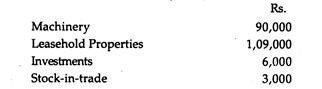
Following balances are extracted from the books on that date:

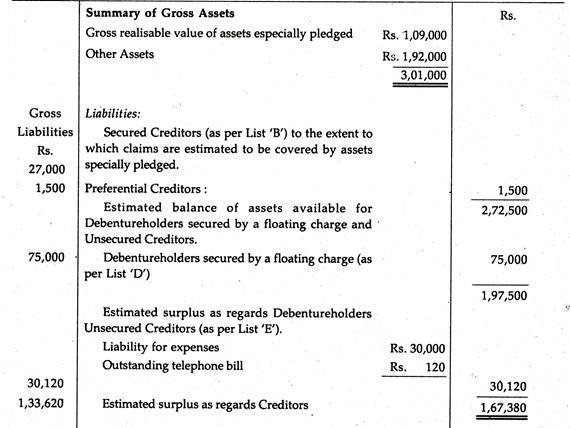
You are required to prepare a Statement of Affairs to the meeting of Creditors.

The following assets are valued as:

Bad Debts are Rs. 3,000 and the doubtful debts are Rs. 6,000 which are estimated to realize Rs. 3,000. The Bank Overdraft secured by deposit of title deeds of Leasehold Properties. Preferential Creditors are Rs. 1,500. Telephone rent outstanding is Rs. 120.

Example: 2

Bad Debts are Rs. 3,000 and the doubtful debts are Rs. 6,000 which are estimated to realize Rs. 3,000. The Bank Overdraft secured by deposit of title deeds of Leasehold Properties. Preferential Creditors are Rs. 1,500. Telephone rent outstanding is Rs. 120.

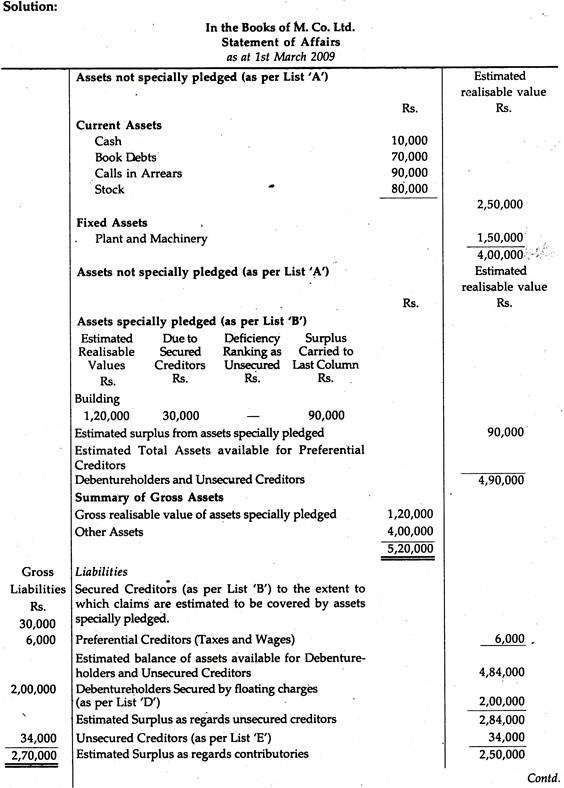
Plant and Machinery and Building are valued at Rs. 1, 50,000, and Rs. 1, 20,000, respectively. On realization, losses of Rs. 15,000 are expected on Stock. Book-Debts will realise Rs. 70,000. Calls-in- arrear are expected to realise 90%. Bank Overdraft is secured against Buildings. Preferential Creditors for taxes and wages are Rs. 6,000 and Miscellaneous Expenses outstanding Rs. 2,000.

Prepare a Statement of Affairs to be submitted to the meeting of creditors.


Conversion into Double Entry System, Need for Conversion

Steps to Convert Single Entry into Double Entry

If, at the end of a trading period, it is desired that the books should be written up so as to give complete information, as is the case under the Double Entry System, the following steps will be necessary:

Step 1. Take up the Statement of Affairs at the end of the previous trading period and open all those accounts which have not already been opened. Generally, under the Single Entry System, cash, bank and personal accounts are maintained. Now, it will be necessary to open/the remaining accounts and debit or credit them with the opening balances as the case may be.

Step 2. From the debit side of the Cash Account, accounts other than the bank account and accounts of customers (on the presumption that such accounts are already maintained) should be credited. For example, if one finds that Rs 5,000 was received by sale of furniture, one should credit Furniture Account with Rs 5,000.

If an entry shows that Rs 4,500 was received from X, no further treatment will be necessary because the account of the customer would already be there and it must have been credited with the amount. A frequent item will be cash sales. Cash Sales Account should be opened and credited with the amounts of case sales.

Step 3. From the credit side of the Cash Account, various accounts (other than the bank account and accounts of creditors) should be debited. On this side of the Cash Account, will be found amounts paid for cash purchases, for various expenses and for various assets acquired. All these accounts will be debited.

Step 4. Treatment similar to (2) and (3) above will be required for Bank Account. Cash paid in or cash drawn for office-use, payment made to suppliers by cheques or receipts from debtors will already have been entered in these accounts; hence, double entry will be required to be completed only in other accounts that may figure. For instance, one will know from Bank Account what bills have been discounted and what discounted bills have been dishonoured, or what the bank charges are.

Step 5. If a Petty Cash Book is maintained, the monthly analysis will have to be posted in the ledger—various accounts for expenses debited and the total credited to Petty Cash Account. The debit to the Petty Cash Account must already have been completed from the Cash or Bank Account.

Step 6. A complete analysis of the customers’ accounts will have to be prepared. This will give vital information regarding credit sales, sales returns, discounts allowed, bills received, bills dishonoured, etc.

Suppose, the following are the various customers’ accounts:

To complete double entry now, what is required is to:

(i) Credit Sales Account with Rs 14,190, Freight (or charges) Account with Rs 140 and Bills Receivable Account with Rs 1,480 and

(ii) Debit Discount Account with Rs 80, Bills Receivable Account with Rs 6,480, Returns Inwards Account with Rs 400, Allowances Account with Rs 50 and Bad Debts Account with Rs 200. No further entry is required regarding cash or bank, as this must already have been completed.

Step 7. A similar analysis of suppliers’ accounts will reveal purchases made, bills payable dishonoured or other charges debited by the suppliers (from the credit side of the accounts) and discounts earned, returns outwards, bills issued to creditors, etc. (from the debit side of the accounts). Accounts other than those relating to cash paid or cheques issued will debit or credited, as the case may be.

Step 8. The proprietor will have to remember other items which require entries in the books. To take an example, if a piece of machinery has been disposed of, any loss or profit resulting from such disposal will have to be brought into the books.

Step 9. A trial balance should then be prepared to see that there is no arithmetical mistake.

Need for Conversion into Double Entry System

  • Ensures Complete and Accurate Records

The double entry system ensures that every financial transaction is recorded with a corresponding debit and credit, providing complete and accurate records. Unlike the single entry system, which often misses important details, double entry guarantees that all aspects of a transaction are captured. This completeness reduces the risk of omissions, mistakes, and inconsistencies. Accurate records are essential not only for internal decision-making but also for satisfying external stakeholders like banks, tax authorities, and investors who require reliable financial information.

  • Enables Preparation of Financial Statements

One major reason for converting to the double entry system is that it allows businesses to prepare full financial statements, including the profit and loss account, balance sheet, and cash flow statement. These statements provide a comprehensive picture of a company’s financial health, showing profitability, asset values, liabilities, and equity. Without these, it’s difficult to evaluate business performance accurately. Financial statements are also required for loan applications, investor presentations, audits, and regulatory compliance, making double entry essential.

  • Facilitates Detection of Errors and Fraud

The double entry system has built-in checks that make it easier to detect errors and prevent fraud. Because each transaction affects two accounts, discrepancies become apparent when the trial balance fails to match. This system offers a clear trail for auditing and verification, discouraging fraudulent activities and reducing the risk of intentional or unintentional mistakes. Businesses relying on incomplete records cannot easily spot such issues, which increases vulnerability to losses or mismanagement over time.

  • Provides Accurate Profit and Loss Determination

Accurately determining profit or loss is difficult under the single entry system because many expenses and revenues are not properly recorded. The double entry system, however, ensures all income and expenses are accounted for, enabling precise profit or loss calculation. This is vital for evaluating whether a business is making progress, where costs can be cut, or where improvements are needed. Without this clarity, businesses may overestimate their profitability or fail to identify financial weaknesses.

  • Enables Better Financial Planning and Control

Double entry accounting provides detailed insights into different components of the business, such as sales, purchases, assets, liabilities, and expenses. This detailed data is essential for effective financial planning, budgeting, and cost control. Business owners can use this information to analyze trends, forecast future performance, and make data-driven decisions. Without such structured records, financial planning becomes guesswork, increasing the risk of poor decisions that can negatively impact growth and sustainability.

  • Assists in Legal and Tax Compliance

Many businesses are legally required to maintain detailed and systematic financial records for tax filings, audits, and regulatory purposes. The double entry system aligns with accounting standards and legal frameworks, making it easier to comply with such requirements. Without it, businesses may struggle to produce necessary documentation or risk penalties due to incomplete or inaccurate reporting. Conversion to double entry ensures that all statutory obligations are met smoothly, reducing legal complications and enhancing business reputation.

  • Enhances Credibility with Stakeholders

Lenders, investors, suppliers, and even customers often assess a business’s credibility based on its financial transparency. Using the double entry system demonstrates professionalism and commitment to accurate reporting, enhancing trust with external parties. In contrast, incomplete records from a single entry system may raise doubts about the reliability of financial information, discouraging partnerships or financing opportunities. Converting to double entry can improve a business’s image and open up more opportunities for growth and collaboration.

  • Allows Systematic Tracking of Assets and Liabilities

Under the double entry system, businesses maintain detailed records of all assets and liabilities, including depreciation, outstanding loans, inventories, and fixed assets. This enables systematic tracking and helps businesses manage their resources effectively. In the single entry system, such tracking is either absent or poorly maintained, leading to mismanagement or underutilization of resources. Conversion ensures businesses know exactly what they own and owe, supporting better decision-making regarding investments, debt repayments, and asset usage.

  • Provides a Basis for Internal and External Audits

Audit processes require clear, complete, and verifiable records, which are best provided by the double entry system. Auditors need to trace transactions across accounts, verify balances, and ensure financial integrity. Without proper books, businesses may fail audits or face difficulties during financial reviews. Conversion to double entry establishes a formal structure for internal checks and external audits, enhancing accountability and ensuring that financial operations can withstand scrutiny from regulators and stakeholders.

  • Prepares Business for Future Growth

As businesses grow, their transactions become more complex, involving credit sales, multiple bank accounts, inventories, fixed assets, and varied expense categories. The single entry system cannot handle such complexity, making double entry essential for scalable operations. Converting to the double entry system prepares businesses for expansion, ensuring they can manage larger volumes of transactions, comply with higher reporting standards, and attract larger investors or partners. It builds a strong financial foundation for sustainable long-term success.

Types of Banking and Constitution

Constitution

The banking in India was originated only at 18th century. During the last decades, Bank of Hindustan should be first banks which were established in 1770 and liquated in 1829-32. And also The General Bank of India was established in 1786. The largest bank, and the oldest still in existence is the State Bank of India (S.B.I). It was originated as the Bank of Calcutta in 1806. In 1809, it was renamed as the Bank of Bengal. This was one of the three banks funded by a presidency government, the other two were the Bank of Bombay in 1840 and the Bank of Madras in 1843. These three banks were merged in 1921 to form the Imperial Bank of India and later it would become the State Bank of India in 1955. For many years the presidency banks had acted as quasi-central banks, as did their successors, until the Reserve Bank of India was established in 1935, under the Reserve Bank of India Act, 1934.

In 1960, the state bank of India had given control to their eight state associated banks under the state bank of India act 1959. These banks were now called as its associate banks. In 1969, The Indian government had nationalized 14 major private banks in India. In 1969, 6 more private banks were nationalized. These nationalized were majority lenders in Indian economy even now. They had dominated the banking sectors because of their large size and their networks. The Indian banking sector was broadly classified into scheduled and non-scheduled banks.

In the early 1990s, at the time of liberalization, the government had licensed a small number of private banks known as new generation tech-savvy banks and included global trust bank which later amalgamated with the oriental bank of commerce, UTI Bank, ICICI Bank and HDFC Bank. This would become along with the rapid growth in the economy of India revitalized the banking sector in India, which has seen rapid growth with strong contribution from the government banks, private banks and foreign banks. All foreign investors in banks might be given voting rights that could exceed the present capital of 10% at present. It has gone up to 74% with some restrictions. Bankers were used the 4–6–4 method (borrow at 4%; lend at 6%; go home at 4%) of functioning. This new wave ushered in a modern outlook and tech-savvy methods of working for traditional banks. All this led to the retail boom in India. People demanded more from their banks and received more.

Banking Financial Institutions

There is lot more to banking term than what most of the people recognize. Not all banks are shaped in equal manner or to operate for the same reason with same fundamentals. Since individuals or corporate have diversified needs of finance. “Different types of banking and financial institutions are operated to classify services based on distinctive types”. Name banks subject to large entity they are further divided into types based on universal arrangement of capital principles. Bank is an financial institution or intermediary institution for various financial necessities and dealing either directly or indirectly with financial system of nation’s economy. Due to this important factors banks are highly regulated by nation’s government or central bank of country. Banking industry is divided into different types based on client requirements for products and services.

Types of Banking Institutions and Financial Institutions:

  • Retail Banking
  • Commercial Banking
  • Private Banking
  • Investment Banking
  • Specialized financing
  • Central Banks
  1. Retail Banking

Retail banking is the procurement of administrations by a bank to individual rather than to organizations, corporate or other banks. Administrations offered services like savings, money transfers, loans, cheques, cards, etc. The term retail banking mostly recognize as financial institutions for managing an account administrations for individuals or managing retail clients which distinguish it from other banking types. To further understand retail banking refer to tutorial links.

Commercial banks provide administrations services such as making business advances, offering fundamental investment schemes, encouraging saving deposits, fixed deposits, Issuing bank drafts and bank cheques,  giving overdraft facilities, bond investment schemes, cash management, mortgage loans, debit cards, credit cards, etc.

There are two types of commercial banks, Public Commercial Banks and Private Commercial Banks. Public commercial banks refers to bank in which government holds major stake usually to emphasize on social objectives than on profitability. Whereas Private Commercial Banks are fully owned, managed and controlled by private supporter and they are free to operate without any government interference. For more details refer to the tutorial links.

  1. Private Banking

The expression “private” refers to administration services more on personal basis rather than mass population (Retail Banking). Private Banks refer as financial institutions for managing accounts, investments and other services offered by banks to high-net worth individuals (HNI) who are categories as high income professionals or large investors. Private banks subject to an essential part of wealth management for high income groups. They provide services like: assets management, tax advisory, financial brokers, offered solitary relationship manger.

  1. Investment Banking

An investment bank refers as a consultant or assisting institution for individuals, organizations and governments in raising capital by underwriting assets. And/or performing broker in issuing securities. An investment bank likewise assist organizations in simplifying acquisitions and mergers, trading in derivatives, equities, currencies, commodities by providing auxiliary services. Investment bank does not provide deposit services like commercial banks or retail banks.

Investment bank can likewise be divided into private and public based on information capacities and data obstruction. The private ranges deals with private insider data that cannot be freely disclosed, while public range such as stock examination deals with public data. For more details refer to tutorial course links.

  1. Specialized Financing

Specialized Banks offers various specialized services away from traditional banking. Specialized banks are financial institutions referred as foreign exchange banks, development banks, industry and mine banks, farms and agriculture banks, aboriginal banks (providing financial products and services to aboriginal communities), export-import banks with unique needs.

Some specialized banks are governed and regulated by state or central governments or both for re-structuring, planning and development of the country. Specialized banks and financial institutions are broadly categories into three types of specialized banks, they are:

  • Export Import Banks (EXIM Banks)
  • Small Industries Development Banks
  • Agricultural and Rural Development Banks
  1. Central Banks

A reserve bank, central bank, or monetary authority refers to a financial institution that manages a states or country. In term of currency, interest rates, currency valuation. Central bank holds monopoly in increasing monetary base also by prints the national currency. Central bank functions mostly include managing foreign exchange and gold reserves, implementing monetary policy, acting as a banker’s bank at time of crisis, making official policies regarding interest rates. Central bank holds superior power to protect country man by punishing banks or institutions for performing any reckless or fraudulent behaviour. Central banks are mostly designed and recognised as an independent and politically free entity. Examples: Reserve Bank of India (RBI) is the central bank of India, Bank of England, European Central Bank (ECB), People’s Bank of China, Federal Reserve of the United States of America, etc.

IDBI, History, Objectives, Functions

IDBI, established in 1964 as a development financial institution, was reconstituted as a universal bank in 2004. Initially focused on long-term industrial financing, it now provides corporate and retail banking services. Currently, LIC holds a majority stake (49.24%), making it a public sector bank. IDBI specializes in project finance, SME lending, and treasury operations while supporting infrastructure development. The government plans to privatize IDBI Bank to enhance efficiency. As a systemically important bank, it plays a key role in India’s financial ecosystem by balancing developmental objectives with commercial banking operations.

History of IDBI:

Industrial Development Bank of India (IDBI) was established on July 1, 1964, under an Act of Parliament as a wholly-owned subsidiary of the Reserve Bank of India (RBI). It was created to provide financial assistance for the development of large industries and to coordinate the activities of other financial institutions involved in industrial finance. In 1976, ownership of IDBI was transferred from the RBI to the Government of India, and it functioned as the apex development financial institution (DFI) in the country.

During the 1980s and 1990s, IDBI played a significant role in industrial financing, project development, and promotional activities. However, with the liberalization of the Indian economy in 1991 and changes in the financial sector, IDBI’s role evolved. In 2004, IDBI was transformed into a banking company and renamed IDBI Ltd., merging with its commercial arm, IDBI Bank.

Further restructuring occurred in 2005, when the merged entity began full-fledged banking operations. In 2019, Life Insurance Corporation of India (LIC) acquired a majority stake in IDBI Bank, making it the bank’s largest shareholder. Today, IDBI operates as a private-sector bank with a focus on retail and corporate banking, continuing its legacy in industrial development.

Objectives of IDBI:

  • Promotion of Industrial Development

One of the primary objectives of IDBI is to accelerate industrial growth across India by providing long-term financial assistance to both public and private sector industries. It supports key sectors like manufacturing, infrastructure, and energy, especially in backward and underdeveloped regions. Through project financing, soft loans, and promotional activities, IDBI plays a crucial role in enhancing industrial output and employment generation. By filling the gap left by traditional commercial banks, it helps ensure a balanced and inclusive approach to national economic development through strong industrial foundations.

  • Coordination of Financial Institutions

IDBI acts as a coordinating body among various financial institutions involved in industrial financing such as SIDBI, IFCI, and commercial banks. Its objective is to ensure systematic allocation of resources, avoid duplication of efforts, and streamline financial services to industries. IDBI also guides other institutions by setting standards and policies for effective lending practices. This coordination ensures that industries, especially large-scale and capital-intensive ones, receive integrated and structured financial support, resulting in a more efficient and responsive financial system geared towards industrial development.

  • Balanced Regional Development

A key objective of IDBI is to promote industrial development in backward and underdeveloped regions of India. It does so by offering concessional finance, technical guidance, and special incentives to industries setting up operations in such areas. This helps reduce regional disparities in economic development, generates employment opportunities, and uplifts socio-economic conditions. IDBI supports infrastructure development in these regions, encouraging investors and entrepreneurs to explore business opportunities in untapped markets, thus promoting inclusive growth and equitable distribution of industrial wealth across different parts of the country.

  • Provision of Technical and Managerial Assistance

Beyond financial support, IDBI provides industries with technical, managerial, and consultancy services. This includes project appraisal, feasibility studies, and advice on modernization and technology upgradation. The objective is to ensure that industrial units are not only financially viable but also technically sound and competitively managed. By fostering good governance and innovation, IDBI helps enhance the efficiency and sustainability of industrial enterprises. These support services are particularly beneficial for medium and small enterprises that may lack access to expert guidance or modern management practices.

  • Support to Small and Medium Enterprises (SMEs)

IDBI aims to strengthen the SME sector, recognizing its vital role in employment and economic growth. The bank provides tailored financial products, working capital loans, and guidance to small businesses, helping them scale operations and improve productivity. It also supports skill development and entrepreneurship training. By easing credit access and reducing procedural bottlenecks, IDBI empowers SMEs to compete effectively in the domestic and global markets, contributing significantly to industrial diversification and innovation.

  • Facilitating Economic Reforms and Policy Implementation

IDBI actively supports government-led economic reforms by aligning its operations with national development goals and financial sector policies. It helps channel funds to priority sectors, facilitates public-private partnerships (PPP), and promotes infrastructure development. IDBI also assists in implementing key financial inclusion and industrial development schemes. By acting as a bridge between policymakers and the industrial sector, it ensures that reforms are executed efficiently and benefit all stakeholders, thus contributing to India’s broader vision of sustainable and inclusive economic growth.

Functions of IDBI:

  • Project Financing

IDBI specializes in long-term project financing for industrial and infrastructure development. It provides loans, underwriting, and equity participation for large-scale projects in sectors like power, roads, and manufacturing. By assessing viability and offering flexible repayment structures, IDBI bridges the funding gap for capital-intensive ventures, fostering economic growth while mitigating risks through rigorous appraisal systems.

  • SME and Corporate Lending

The bank supports small and medium enterprises (SMEs) and corporations with tailored credit solutions, including working capital and term loans. It focuses on sectors vital to India’s GDP, offering competitive interest rates and advisory services. Through schemes like CGTMSE (credit guarantee), IDBI enhances credit access for MSMEs, driving job creation and industrial expansion.

  • Investment Banking Services

IDBI offers investment banking services such as mergers & acquisitions (M&A) advisory, IPO underwriting, and debt syndication. It assists corporates in raising capital through bonds, equities, and structured products. By leveraging its expertise and market networks, IDBI facilitates seamless fundraising and strategic financial planning for businesses.

  • Retail Banking Operations

As a universal bank, IDBI provides retail banking products like savings accounts, home loans, and fixed deposits. Its digital initiatives (e.g., mobile banking, UPI) enhance customer convenience. With a widespread branch network, IDBI serves individual customers while maintaining a developmental focus through inclusive schemes like affordable housing loans.

  • Treasury and Forex Management

IDBI’s treasury division manages liquidity, investments, and foreign exchange (forex) operations. It trades in government securities, currencies, and derivatives to optimize returns and hedge risks. The bank also assists corporates in forex transactions, enabling smooth cross-border trade and mitigating exchange rate volatility.

  • Developmental and Promotional Roles

Beyond banking, IDBI funds innovation through venture capital and incubators. It partners with government schemes (e.g., Make in India) to promote startups and green energy projects. By channeling resources into priority sectors, IDBI aligns with national development goals while maintaining financial sustainability.

State Finance Corporations (SFC), Concepts, Objectives, Functions, Types, Importance, Challenges and Role in Promoting Entrepreneurship

State Finance Corporations (SFCs) were established under the State Financial Corporations Act, 1951 to promote the growth of small and medium-scale industries (SMEs) in India at the state level. Their primary objective is to provide medium and long-term financial assistance to entrepreneurs for setting up, expanding, or modernizing industrial units. SFCs play a crucial role in promoting balanced regional development by extending credit facilities to industries located in backward and underdeveloped areas. They offer loans, guarantees, underwriting of shares and debentures, and equipment leasing services. By bridging the financial gap between commercial banks and entrepreneurs, SFCs encourage industrialization, generate employment, and strengthen the local economy. Prominent examples include the Maharashtra State Financial Corporation (MSFC) and Tamil Nadu Industrial Investment Corporation (TIIC).

Objectives of State Finance Corporations (SFCs)

  • Promotion of Small and Medium Enterprises (SMEs)

A primary objective of State Finance Corporations (SFCs) is to promote and support small and medium enterprises (SMEs) that often face difficulties in accessing financial resources. SFCs provide medium and long-term loans to entrepreneurs for setting up new units or expanding existing ones. By offering credit at reasonable interest rates, they help reduce financial constraints and encourage entrepreneurship. This support fosters industrial growth, innovation, and job creation. SMEs financed by SFCs contribute significantly to regional economic development, exports, and balanced industrialization across various sectors of the economy.

  • Balanced Regional Development

SFCs aim to achieve balanced regional development by promoting industries in backward and underdeveloped areas. By providing easy access to finance, infrastructure, and advisory services, they encourage entrepreneurs to establish ventures outside major industrial centers. This reduces regional disparities in income and employment opportunities. SFCs often offer concessional loans and special incentives for industries located in less developed regions. Such initiatives stimulate local economic activity, create rural employment, and utilize regional resources efficiently. Through this objective, SFCs contribute to inclusive growth and equitable industrial distribution across the state.

  • Generation of Employment Opportunities

Another important objective of SFCs is to promote large-scale employment generation through industrial development. By financing small and medium enterprises, SFCs indirectly create numerous job opportunities in both urban and rural areas. These industries employ local labor and stimulate related sectors such as transport, trade, and services. Special attention is given to industries that are labor-intensive and capable of absorbing skilled and unskilled workers. Employment generation not only enhances income levels but also reduces poverty and migration. Thus, SFCs play a key role in socio-economic development by fostering self-reliance and improving the standard of living.

  • Encouragement of Entrepreneurship

SFCs actively encourage entrepreneurship by supporting new and first-generation entrepreneurs with financial and advisory assistance. They help individuals with viable business ideas but limited resources to establish industrial units. By offering loans, guarantees, and project evaluation support, SFCs reduce entry barriers for aspiring entrepreneurs. Training and guidance services also enhance managerial and financial skills. This empowerment promotes innovation, risk-taking, and enterprise creation. Encouraging entrepreneurship leads to diversified industrial growth, self-employment, and a dynamic business environment, thereby contributing to the overall economic progress and competitiveness of the state.

  • Promotion of Industrial Growth and Modernization

SFCs play a vital role in promoting industrial growth and modernization by financing the acquisition of advanced technology, machinery, and infrastructure. They assist industries in upgrading outdated production systems to improve efficiency and quality. Through modernization schemes and technical consultancy, SFCs encourage competitiveness and innovation among enterprises. This support enables industries to meet changing market demands and international standards. By promoting technological advancement, SFCs help enhance productivity, reduce costs, and increase exports. Ultimately, this leads to sustainable industrial development and strengthens the economic foundation of the state.

  • Financing Priority Sectors

SFCs prioritize financing industries and sectors that are crucial for economic growth but often overlooked by commercial banks. These include agro-based industries, export-oriented units, infrastructure projects, and socially relevant ventures. By providing medium and long-term loans, guarantees, and working capital support, SFCs ensure that priority sectors receive the necessary financial backing. This objective helps stimulate growth in strategic areas, strengthen industrial diversification, and align investments with state and national economic priorities.

  • Support for Modernization and Expansion of Existing Units

Apart from promoting new enterprises, SFCs aim to support the modernization and expansion of existing small and medium enterprises. They provide loans for upgrading technology, expanding production capacity, and improving operational efficiency. By helping established units grow, SFCs increase competitiveness, sustain employment, and enhance the contribution of SMEs to industrial output. This objective ensures that industries remain resilient, adopt innovative practices, and continue to meet evolving market demands.

  • Facilitation of Inclusive Industrial Development

SFCs also focus on promoting inclusive industrial development by supporting marginalized entrepreneurs, women entrepreneurs, and first-generation industrialists. Special incentives, concessional loans, and advisory services are provided to underrepresented groups. By encouraging participation from diverse segments of society, SFCs help reduce social and economic inequalities. Inclusive industrial development strengthens entrepreneurship culture, generates equitable employment opportunities, and fosters sustainable economic growth across different communities and regions within the state.

Functions of State Finance Corporations (SFCs)

  • Providing Financial Assistance

One of the primary functions of State Finance Corporations (SFCs) is to provide medium and long-term financial assistance to small and medium enterprises (SMEs). They offer loans for acquiring land, buildings, machinery, and working capital needs. This financial support helps entrepreneurs establish new industries or expand and modernize existing ones. SFCs also provide term loans at reasonable interest rates, ensuring easy access to credit for industries that may not qualify for commercial bank funding. By bridging financial gaps, SFCs encourage entrepreneurship, industrial growth, and employment generation across various sectors within the state.

  • Underwriting and Subscribing to Shares and Debentures

SFCs perform the function of underwriting and subscribing to shares and debentures of industrial enterprises. By doing so, they help companies raise capital from the public and build financial stability. Underwriting ensures that entrepreneurs receive the required funds even if their public issue is not fully subscribed. This boosts investor confidence and supports industrial expansion. SFCs also invest directly in the equity or debentures of promising small and medium enterprises, strengthening their financial base. Such activities encourage investment in new ventures and enhance the liquidity and credibility of growing businesses in the industrial sector.

  • Guaranteeing Loans

Another key function of SFCs is to provide guarantees to industrial units for loans raised from other financial institutions or banks. This guarantee serves as a security for lenders, encouraging them to extend credit to small and medium entrepreneurs who lack sufficient collateral. By offering such guarantees, SFCs enhance the creditworthiness of industrial borrowers and reduce their financial risk. This function also facilitates access to working capital and project financing. As a result, more entrepreneurs are encouraged to invest in productive ventures, promoting balanced industrial growth and economic development across different regions.

  • Providing Technical and Managerial Assistance

SFCs extend technical and managerial assistance to entrepreneurs to help them establish and operate their enterprises efficiently. This includes project evaluation, feasibility studies, business planning, and guidance in selecting appropriate technology and machinery. SFCs also conduct training and advisory programs to improve managerial capabilities among entrepreneurs. Such support ensures better utilization of financial resources, improved productivity, and long-term business success. By enhancing managerial and technical competence, SFCs not only promote sustainable industrial development but also empower new and first-generation entrepreneurs to compete effectively in a dynamic business environment.

  • Promoting Balanced Regional Development

SFCs aim to promote balanced regional development by encouraging industries in backward and underdeveloped areas of the state. They offer concessional loans, subsidies, and special incentives to entrepreneurs who set up industries in such regions. This helps in reducing economic disparities and utilizing local resources efficiently. Establishing industries in rural or less developed areas creates employment opportunities and strengthens local economies. By promoting industrialization beyond urban centers, SFCs contribute to inclusive growth, reduce regional imbalance, and ensure equitable distribution of industrial benefits across different parts of the state.

  • Assisting in Rehabilitation of Sick Units

SFCs also play a crucial role in the rehabilitation and revival of sick industrial units facing financial or operational difficulties. They provide additional finance, restructuring of existing loans, and managerial advice to help such units regain stability. By coordinating with banks and government agencies, SFCs assist in redesigning business plans and improving efficiency. The revival of sick units prevents job losses, protects industrial assets, and maintains economic stability. Through this function, SFCs ensure the continuity of productive enterprises, support the economy, and safeguard the interests of both entrepreneurs and employees.

  • Acting as an Agent of Government and Financial Institutions

State Finance Corporations often act as agents of the State Government, Industrial Development Banks, or other financial institutions. In this capacity, they implement various industrial and financial schemes designed to promote entrepreneurship and regional development. They may manage subsidy programs, distribute financial aid, or oversee the execution of industrial policies at the state level. Acting as intermediaries, SFCs ensure efficient coordination between government objectives and business needs. This function enhances policy implementation, ensures proper utilization of funds, and facilitates smooth execution of development programs across different industrial sectors.

  • Encouraging Modernization and Technological Upgradation

SFCs encourage modernization and technological advancement among industries by financing the acquisition of new machinery, tools, and equipment. They support the adoption of innovative production techniques, digital systems, and energy-efficient technologies. Through modernization assistance schemes, SFCs help industries enhance productivity, product quality, and cost efficiency. Technological upgradation also enables businesses to remain competitive in domestic and global markets. By promoting innovation and sustainable practices, SFCs contribute to industrial excellence and long-term economic growth. Their focus on modernization ensures that small and medium enterprises evolve with changing market and technological trends.

Types of State Finance Corporations (SFCs)

State Finance Corporations (SFCs) are specialized institutions established by state governments to provide financial assistance to industrial enterprises, especially small and medium enterprises (SMEs). Over time, different types or classifications of SFCs have evolved to cater to specific needs of industries and entrepreneurs. Understanding these types helps in identifying the right source of funding and support.

1. General State Finance Corporations

These are the standard SFCs established in most states under the State Finance Corporations Act, 1951. They provide medium and long-term loans to industrial units for setting up new enterprises or expanding existing ones. General SFCs support a wide range of industries, including manufacturing, services, and agro-based units.

Example: Maharashtra State Financial Corporation (MSFC) finances SMEs in textiles, engineering, and chemical sectors.

2. Specialized Sectoral SFCs

Some SFCs focus on specific industries or sectors such as textiles, food processing, IT, or export-oriented industries. They provide sector-specific loans, technical advice, and marketing support tailored to industry requirements. Specialized SFCs ensure that entrepreneurs in niche sectors receive guidance and financial assistance suited to their unique challenges.

Example: Karnataka State Financial Corporation (KSFC) has schemes for agro-processing and IT startups.

3. Export-Oriented SFCs

Certain SFCs are designed to support export-oriented units. They provide financial assistance for setting up export-capable industries, meeting international quality standards, and funding working capital for export operations. Export-oriented SFCs also guide entrepreneurs on foreign trade regulations, export documentation, and market expansion.

Example: Kerala State Financial Enterprises focus on export of spices, seafood, and handicrafts.

4. Backward Region-Focused SFCs

Some SFCs prioritize backward or underdeveloped regions of a state. They provide concessional loans, infrastructure support, and special incentives to encourage industrialization in areas with low economic activity. These SFCs aim to reduce regional disparities in income, employment, and industrial growth.

Example: Rajasthan State Financial Corporation provides financial support to enterprises in remote districts for balanced regional development.

5. Women and Minority Enterprise-Focused SFCs

A few SFCs target women entrepreneurs, socially disadvantaged groups, and minority communities. They provide concessional finance, training, and advisory services to promote inclusive entrepreneurship. These SFCs reduce social and economic inequality by encouraging participation from underrepresented groups in industrial activities.

Example: SFC schemes in Gujarat and Tamil Nadu offer special incentives for women-led SMEs.

6. Technology-Oriented SFCs

These SFCs focus on technology-intensive startups and innovative enterprises. They provide loans for acquiring advanced machinery, R&D projects, and process modernization. Technology-oriented SFCs often collaborate with incubation centers and technical institutions to boost innovation and competitiveness.

Example: Telangana State Financial Corporation supports IT and biotechnology startups with medium-term loans for technology adoption.

7. Cluster-Based SFCs

Cluster-based SFCs provide support to industrial clusters, where multiple enterprises in the same sector operate in a geographic area. They finance shared infrastructure, common production facilities, and market development initiatives. Cluster support improves efficiency, reduces costs, and strengthens competitiveness of small enterprises in the region.

Example: Leather and footwear clusters in Kanpur or Agra benefit from cluster-focused SFC loans and technical assistance.

Importance of State Finance Corporations (SFCs)

  • Promotion of Small and Medium Enterprises (SMEs)

SFCs are vital for promoting small and medium enterprises by providing financial assistance and advisory support. SMEs often face difficulty accessing medium and long-term funds from commercial banks. By offering loans at reasonable interest rates and flexible repayment options, SFCs enable entrepreneurs to set up new units or expand existing businesses. This support fosters innovation, industrial growth, and job creation. SMEs financed by SFCs contribute significantly to regional economic development, exports, and balanced industrialization across the state.

  • Balanced Regional Development

SFCs are important in achieving balanced regional development by encouraging industrialization in backward or underdeveloped areas. They offer concessional loans, infrastructure support, and incentives for industries located outside major urban centers. By facilitating entrepreneurship in less developed regions, SFCs help reduce income disparities, generate employment, and stimulate local economic activity. This ensures that industrial growth is not concentrated in a few districts, promoting inclusive development and equitable distribution of industrial resources across the state.

  • Generation of Employment Opportunities

SFCs play a key role in employment generation by supporting industrial development. Small and medium enterprises financed by SFCs create jobs directly in manufacturing and services and indirectly in allied sectors like transport, marketing, and trade. Priority is given to labor-intensive industries capable of absorbing skilled and unskilled workers. By generating employment, SFCs improve income levels, reduce poverty, and prevent migration from rural to urban areas. This contribution strengthens social and economic development in both urban and rural communities.

  • Encouragement of Entrepreneurship

SFCs encourage entrepreneurship by supporting first-generation entrepreneurs and startups. They provide financial assistance, project evaluation, guarantees, and advisory services to individuals with viable business ideas but limited resources. This support reduces entry barriers, empowers entrepreneurs, and fosters innovation and risk-taking. By nurturing entrepreneurship, SFCs help create a dynamic industrial environment, promote self-employment, and diversify economic activities. Encouraging new entrepreneurs strengthens the overall competitiveness and productivity of the industrial sector in the state.

  • Promotion of Industrial Growth and Modernization

SFCs assist in promoting industrial growth by financing modernization and expansion of enterprises. They provide loans for upgrading machinery, adopting new technology, and improving production efficiency. Modernization enhances competitiveness, reduces costs, and increases product quality. By supporting technological advancement, SFCs help industries meet changing market demands and international standards. This contributes to sustainable industrial growth, improved productivity, and increased exports. Industrial modernization under SFC guidance strengthens the overall economic foundation of the state.

  • Financing Priority Sectors

SFCs focus on financing priority sectors that are essential for economic development but may be overlooked by commercial banks. These include agro-processing, export-oriented units, and socially significant industries. By directing resources to priority sectors, SFCs ensure balanced industrial growth and strategic development of critical industries. This approach strengthens regional economies, supports employment generation, and contributes to the overall economic planning and policy objectives of the state.

  • Inclusive Industrial Development

SFCs play a significant role in promoting inclusive industrial development. They provide special loans, concessional rates, and advisory support to women entrepreneurs, minority groups, and socially disadvantaged communities. By enabling participation from underrepresented groups, SFCs help reduce social and economic inequalities. Inclusive industrial development creates equitable employment opportunities, fosters self-reliance, and strengthens entrepreneurship culture across diverse social groups. It ensures that industrial growth benefits all segments of society, contributing to sustainable and balanced economic progress.

  • Long-Term Economic Stability

By supporting the growth of SMEs, promoting balanced regional development, and encouraging entrepreneurship, SFCs contribute to long-term economic stability. Financial assistance, modernization support, and sector-specific initiatives help build resilient industrial ecosystems. Strong SMEs enhance industrial diversification, increase employment, and boost export potential. Consequently, SFCs play a strategic role in sustaining economic growth, fostering innovation, and ensuring the state’s industrial sector remains competitive and adaptive to market and technological changes over time.

Challenges of State Finance Corporations (SFCs)

  • Limited Awareness Among Entrepreneurs

A major challenge for SFCs is that many potential entrepreneurs, especially in rural or semi-urban areas, are unaware of the schemes, loans, and services offered. Lack of information prevents startups from accessing medium- and long-term financial assistance, advisory support, and training programs. Insufficient outreach and promotional activities reduce the effectiveness of SFCs in promoting entrepreneurship. Without proper awareness, the full potential of these institutions to support industrial development, employment generation, and SME growth cannot be realized.

  • Delays in Loan Sanction and Disbursement

SFCs often face delays in loan approvals and disbursement due to bureaucratic procedures, multiple levels of verification, and limited staff capacity. Entrepreneurs may face project delays, missed market opportunities, or cost overruns while waiting for funds. Such delays reduce the reliability and attractiveness of SFCs as financial partners. Timely loan processing is essential to ensure startups can implement projects efficiently and capitalize on market demands, but administrative bottlenecks continue to challenge the effectiveness of SFCs.

  • Dependence on Government Funding

SFCs rely heavily on state government funding and capital support. Limited resources constrain their ability to provide adequate loans, cover risk exposures, and expand operations. During periods of fiscal constraints, SFCs may reduce lending capacity, affecting small and medium enterprises that depend on them for medium- and long-term finance. Dependence on government allocations limits autonomy and flexibility in responding to market demands, making it difficult for SFCs to operate efficiently in a dynamic industrial environment.

  • High Risk of Non-Performing Assets (NPAs)

SFCs face a high risk of NPAs because small and medium enterprises may default due to business failures, market fluctuations, or mismanagement. Recovering loans from defaulting units can be slow and challenging, affecting the financial stability of SFCs. High NPAs limit the ability of SFCs to extend new loans, reducing their overall effectiveness. Risk mitigation strategies, credit evaluation, and continuous monitoring are critical, but resource and expertise constraints often hamper these processes.

  • Limited Technical and Advisory Support

Many SFCs lack sufficient technical staff or sector-specific expertise to provide effective guidance on technology adoption, production processes, and modernization. Entrepreneurs requiring technical or managerial support may not receive adequate assistance, reducing the competitiveness and efficiency of financed enterprises. Limited advisory capacity constrains SFCs’ ability to ensure that loans lead to sustainable growth, innovation, and operational success for SMEs and new ventures.

  • Regional and Sectoral Disparities

SFCs often face challenges in maintaining equitable support across regions and sectors. Urban and industrially advanced areas may receive more attention and resources compared to backward or rural regions. Similarly, certain industries receive more sector-specific support, leaving niche or socially relevant sectors underserved. Such disparities reduce the inclusiveness and effectiveness of SFC initiatives, limiting their impact on balanced regional development, employment generation, and industrial diversification.

  • Competition with Commercial Banks

SFCs face competition from commercial banks that increasingly offer SME loans, working capital facilities, and modern financing solutions. Entrepreneurs may prefer faster or more flexible financing from banks rather than SFCs, especially if interest rates or processing times are more favorable elsewhere. Competition reduces the demand for SFC loans and challenges their relevance, particularly for smaller or first-generation entrepreneurs seeking quick funding.

  • Adapting to Changing Industrial Needs

Rapid technological advancements, market fluctuations, and evolving business models pose a challenge for SFCs. Many struggle to update loan schemes, advisory services, and sectoral expertise to match current industrial requirements. Failure to adapt can make SFC support less relevant for modern enterprises, startups, and export-oriented industries. Continuous innovation, staff training, and policy updates are essential to maintain their effectiveness in a dynamic economic environment.

  • Limited Outreach and Accessibility

Some SFCs have inadequate presence in remote, rural, or underdeveloped districts, limiting access for entrepreneurs. Physical distance, lack of digital infrastructure, and poor connectivity reduce awareness and availability of loans, training, and advisory services. Limited outreach prevents SFCs from fully promoting entrepreneurship and balanced industrial growth, particularly in marginalized or underserved areas, constraining their contribution to inclusive development.

  • Monitoring and Evaluation Challenges

Effective monitoring of funded enterprises is crucial for minimizing loan defaults and ensuring growth. However, many SFCs struggle to track project progress, assess loan utilization, or evaluate outcomes efficiently. Poor monitoring reduces accountability, increases risks, and hampers the ability to provide corrective guidance. Without systematic evaluation, SFCs cannot fully ensure that financed projects achieve intended objectives of industrial growth, employment generation, and regional development.

Role of SFCs in promoting Entrepreneurship

  • Providing Financial Support to Entrepreneurs

State Finance Corporations (SFCs) play a vital role in promoting entrepreneurship by offering medium and long-term financial support to new and existing enterprises. They provide loans for purchasing land, machinery, and working capital, especially for small and medium industries. By offering credit at affordable interest rates and flexible repayment terms, SFCs make it easier for entrepreneurs to start and expand businesses. This financial backing reduces dependency on private moneylenders and encourages innovation. Ultimately, SFCs help aspiring entrepreneurs transform their ideas into viable ventures, contributing to industrial growth and job creation.

  • Encouraging First-Generation Entrepreneurs

SFCs actively promote first-generation entrepreneurs by extending financial and advisory support to individuals without prior business experience. They provide guidance in project formulation, feasibility studies, and business management. By offering collateral-free or subsidized loans, SFCs reduce entry barriers and inspire youth to take up entrepreneurship. Many SFCs also organize entrepreneurship development programs (EDPs) to build managerial and technical skills. This encouragement creates a new class of entrepreneurs who drive innovation and self-employment. Thus, SFCs serve as catalysts for fostering entrepreneurial culture and economic independence among emerging business owners.

  • Promoting Industrialization in Backward Areas

SFCs promote entrepreneurship by encouraging industrial development in backward and underdeveloped regions. They provide concessional loans, subsidies, and special financial schemes to entrepreneurs who set up industries in such areas. This initiative reduces regional imbalances and promotes inclusive growth. By supporting rural and small-town entrepreneurs, SFCs help utilize local resources, create employment, and stimulate regional economies. Industrialization in these areas not only uplifts local communities but also contributes to the state’s overall economic progress. Through this, SFCs play a significant role in achieving balanced regional and industrial development.

  • Providing Advisory and Managerial Support

Beyond financial assistance, SFCs also provide advisory, technical, and managerial guidance to entrepreneurs. They help in preparing project reports, evaluating feasibility, and selecting appropriate technologies. Training and counseling programs organized by SFCs enhance managerial competence, financial planning, and operational efficiency. This non-financial support ensures that entrepreneurs can manage their ventures effectively and sustain them in competitive markets. By strengthening business management skills, SFCs reduce the risk of enterprise failure and improve profitability. Hence, their advisory role is instrumental in developing confident, capable, and successful entrepreneurs.

  • Facilitating Industrial Growth and Innovation

SFCs contribute to entrepreneurship promotion by financing industrial growth and technological innovation. They encourage entrepreneurs to adopt modern production techniques, upgrade machinery, and implement quality improvements. Such initiatives increase efficiency and competitiveness in both domestic and international markets. SFCs also support innovative projects that involve research, product development, and process modernization. By bridging the gap between technology and finance, they ensure that industries remain dynamic and future-ready. This proactive support enhances productivity, promotes innovation-driven enterprises, and strengthens the industrial base, thereby fostering sustainable entrepreneurial development across the state.

Objectives & Functions of SIDCs

The State Industrial Development Corporations have been set up by the State Governments as companies wholly owned by them. At present, 22 such SIDCs are functioning in India. SIDCs are not merely financing agencies, but are intended to act as instruments for accelerating the pace of industrialization in the respective States.

Besides providing financial assistance to industrial concerns by way of loans, guarantees and underwriting of or direct subscriptions to shares and debentures, the SIDCs undertake various promotional activities such as conducting techno-economic surveys, project identification, preparation of feasibility studies, selection and training of entrepreneurs. They also promote joint sector projects in association with private promoters. In such projects SIDCs take 26% private co-promoter takes 25% of the equity, and the rest is offered to the investing public.

SIDCs also undertake the development of industrial areas, construction of sheds and provision of infrastructural facilities .and also the development of new growth centers. They also administer various State Government incentive schemes.

The main functions of SIDCs are as follows:

Objectives & Functions of LIC

The Life Insurance Corporation was incorporated and started on 19th January 1956. This was done by a merger of 16 insurance company and 75 provident societies on that day. The LIC Act was passed by the Parliament on 18th June 1956, which then came into effect from 1st July 1956.

Life Insurance Corporation has started its journey as a corporate firm from 1st September 1956. Its all working is governed by the LIC Act.

One of the core functions of LIC is an investment. It is an investment institution. Its main function is to gather money from the people and invest it into the different securities and financial markets in India and abroad.

As a rule, LIC is required to invest at least 75% of the funds in Central and State Government securities. Thus LIC is the largest investment institution in India as on date.

It gathers the funds from the people by issuing insurance policies and invest that funds into financial markets in India. It also provides term loan and bonds to gather money from the market.

Not only that, the LIC has become the world’s largest insurance company in terms of a number of policies issued. As of 2019, the total coverage of policies including individual, group and other social schemes has crossed 13 crores.

Objectives of LIC of India

  • Spread Life Insurance widely and in particular to the rural areas and to the socially and economically backward classes with a view to reaching all insurable persons in the country and providing them adequate financial cover against death at a reasonable cost.
  • Maximize the mobilization of people’s savings by making insurance-linked savings adequately attractive.
  • Bear in mind, in the investment of funds, the primary obligation to its policyholders, whose money it holds in trust, without losing sight of the interest of the community as a whole; the funds to be deployed to the best advantage of the investors as well as the community as a whole, keeping in view national priorities and obligations of attractive return.
  • Conduct business with utmost economy and with the full realization that the money belongs to the policyholders.
  • Act as trustees of the insured public in their individual and collective capacities.
  • Meet the various life insurance needs of the community that would arise in the changing social and economic environment.
  • Involve all people working in the Corporation to the best of their capability in furthering the interests of the insured public by providing efficient service with courtesy.
  • Promote amongst all agents and employees of the Corporation a sense of participation, pride and job satisfaction through discharge of their duties with dedication towards achievement of Corporate Objective.

Functions of LIC

  • The main function of LIC is to collect the savings of the people through a life insurance policy and invest that money in various financial markets.
  • One of the main functions of LIC is to invest fund into government securities so as to protect the capital of the people who have given their money to LIC.
  • LIC has to issue an insurance policy at affordable rates to people.
  • LIC provides direct loans to industries at lower interest rates. The rate of interest is as low as 12% for the entire tenure.
  • It is one of the major stakeholders in many of the blue-chip companies in the Indian stock market.
  • It also provides refinancing activities through SFCs in different states and cities.
  • It also invests in the various corporates via bonds and securities, thus supports corporate funding in an indirect way.
  • It also gives loan to the various national projects which are important for economic growth.
  • It provides financial supports to socially-oriented projects like electrification, sewage, and water channelizing, etc
  • It also gives a housing loan at reasonable rates.
  • It is the main channel between savings and investment for the people in India.

Activities of LIC

The LIC subscribes to and underwrites the shares, bonds and debentures of several financial corporations and companies and grants term-loans. It maintains a relationship with other financial institutions such as IDBI, UTI, IFCI, etc. for coordination of its investment.

The LIC is a powerful factor in the securities market in India. It subscribes to the share capital of companies, both preference and equity and also to debentures and bonds. Its shareholding extends to a majority of large and medium sized non-financial companies and is significant in size.

It is no doubt to say that the LIC acts as a kind of downward stabilizer of the share market, as the continuous inflow of fresh funds enables it to buy even when the share market is weak.

Investment Policy

The investment policy of the LIC of India should bring a fair return to policy holders consistent with safety. Since the funds at the disposal of the LIC are in the nature of the trust money, they should be invested in such securities which do not diminish in value and give the highest possible return.

In other words, principles of safety, yield, liquidity and distribution should be taken into consideration while investing insurance funds. The way in which these funds are invested is a great significance not only to policy holders but also to the entire economy.

EXIM Bank, History, Objectives, Functions

Export-Import Bank of India (EXIM Bank) is a government-owned financial institution established in 1982 to promote and finance India’s international trade. It provides loans, guarantees, and credit facilities to Indian exporters and importers, helping them expand their businesses globally. EXIM Bank also supports project exports, overseas investment, and trade-related infrastructure development. It collaborates with foreign governments, financial institutions, and multilateral agencies to enhance India’s export competitiveness. By offering risk mitigation, buyer’s credit, and export credit insurance, EXIM Bank plays a crucial role in facilitating India’s global trade and strengthening economic ties with international markets.

History of EXIM Bank:

Export-Import Bank of India (EXIM Bank) was established in 1982 under the Export-Import Bank of India Act, 1981, as a wholly owned government financial institution to promote and finance India’s international trade. The bank was set up with the objective of enhancing India’s exports, supporting overseas investments, and strengthening economic partnerships with other countries.

In its early years, EXIM Bank primarily focused on export credit financing, providing Indian businesses with loans to expand their global presence. Over time, its role evolved to include project financing, buyer’s credit, supplier’s credit, and trade guarantees. During the 1990s, EXIM Bank introduced Lines of Credit (LOCs) to support trade with developing countries, facilitating Indian businesses in establishing overseas projects.

By the 2000s, EXIM Bank diversified its services to include export credit insurance, venture funding for startups, and technology financing. It also partnered with international financial institutions to promote India’s trade and investment globally. Today, EXIM Bank plays a crucial role in facilitating infrastructure development, supporting MSMEs, and enhancing India’s export competitiveness. With its wide range of financial products, the bank continues to drive India’s global trade and economic growth.

Objectives of EXIM Bank:

  • Promoting and Financing Exports

One of the primary objectives of EXIM Bank is to promote and finance India’s exports by providing various credit facilities. It offers export credit, pre-shipment and post-shipment financing, and working capital support to Indian businesses. By ensuring the availability of funds at competitive interest rates, EXIM Bank helps exporters manage their financial needs efficiently. This support enables Indian companies to expand their global market presence, compete with international businesses, and enhance India’s trade balance by increasing exports of goods and services.

  • Supporting International Trade and Investment

EXIM Bank plays a key role in facilitating international trade and overseas investments by Indian companies. It provides funding for Indian firms to set up joint ventures, subsidiaries, and production facilities abroad, strengthening India’s presence in global markets. The bank also extends credit lines to foreign governments and institutions, promoting Indian exports of capital goods, technology, and services. This support encourages Indian businesses to explore foreign markets, establish long-term trade relations, and enhance India’s economic engagement with other countries.

  • Strengthening Export Competitiveness

To enhance India’s export potential, EXIM Bank provides financial and technical assistance to improve the competitiveness of Indian businesses. It offers market research, trade advisory, and business intelligence services to help exporters identify new opportunities. The bank also supports product innovation, quality enhancement, and process improvement in key industries. By facilitating access to global best practices and technologies, EXIM Bank helps Indian exporters produce high-quality goods and services that meet international standards, boosting their marketability worldwide.

  • Facilitating Infrastructure and Project Exports

EXIM Bank plays a vital role in promoting infrastructure and project exports by financing large-scale projects in power, transport, construction, telecommunications, and engineering sectors. It extends buyer’s credit, supplier’s credit, and guarantees to Indian firms executing overseas projects. This assistance enables Indian companies to undertake turnkey projects, consultancy services, and infrastructure development in foreign countries. By financing these projects, EXIM Bank strengthens India’s reputation as a global infrastructure provider and increases the country’s economic footprint in international markets.

  • Encouraging Innovation and Technology Upgradation

EXIM Bank actively supports innovation, research, and technology upgradation in export-oriented industries. It provides funding for modernization, automation, and adoption of new technologies to improve production efficiency and product quality. The bank also finances R&D initiatives, helping businesses develop new products and solutions that cater to global demand. By promoting technology-driven exports, EXIM Bank ensures that Indian industries remain competitive and aligned with evolving international trade trends, contributing to sustainable economic growth.

  • Risk Mitigation and Export Credit Insurance

Exporters often face risks such as payment defaults, currency fluctuations, and political instability in foreign markets. EXIM Bank provides risk mitigation solutions, export credit insurance, and financial guarantees to safeguard Indian businesses against these uncertainties. It collaborates with agencies like the Export Credit Guarantee Corporation of India (ECGC) to offer insurance coverage against non-payment risks. By providing security against trade-related risks, EXIM Bank helps Indian exporters expand their global reach with confidence, ensuring stable and long-term international business relationships.

Functions of EXIM Bank:

  • Financing Export and Import Activities

Export-Import Bank of India (EXIM Bank) provides financial assistance to Indian businesses engaged in export and import activities. It offers various credit facilities, including pre-shipment and post-shipment finance, term loans, and working capital loans. These services help exporters manage production, transportation, and payment risks. By offering financing solutions at competitive interest rates, EXIM Bank ensures smooth trade operations, helping Indian businesses expand their presence in global markets while supporting the nation’s trade balance and economic growth.

  • Providing Overseas Investment Support

EXIM Bank facilitates overseas investments by Indian companies through direct financing and credit lines. It assists businesses in setting up joint ventures, subsidiaries, and production units in foreign markets. This function helps Indian firms expand globally, access international markets, and contribute to India’s foreign exchange earnings. By providing structured financial solutions, EXIM Bank strengthens India’s economic ties with other countries, promotes international trade collaborations, and enhances the global competitiveness of Indian enterprises.

  • Promoting Project and Infrastructure Exports

EXIM Bank plays a key role in financing infrastructure and project exports, helping Indian firms undertake large-scale projects in construction, energy, transportation, and telecommunications sectors abroad. It provides buyer’s credit, supplier’s credit, and guarantees to ensure the smooth execution of international projects. By financing these initiatives, EXIM Bank not only boosts the export of Indian expertise and technology but also strengthens India’s reputation as a reliable infrastructure and engineering service provider in the global market.

  • Offering Export Credit Insurance and Risk Mitigation

International trade involves significant risks, including payment defaults, currency fluctuations, and political instability. EXIM Bank provides export credit insurance, financial guarantees, and risk mitigation solutions to protect Indian exporters against potential losses. It collaborates with agencies like the Export Credit Guarantee Corporation of India (ECGC) to offer trade insurance policies. By ensuring financial security, EXIM Bank helps Indian exporters enter new markets with confidence, minimize trade-related risks, and maintain stable international business relationships.

  • Facilitating Trade Finance and Working Capital Assistance

To ensure smooth trade transactions, EXIM Bank provides trade finance solutions, including letters of credit, bill discounting, and export factoring. These services help exporters manage their cash flows efficiently by offering working capital at lower costs. EXIM Bank’s financing solutions enable businesses to fulfill large orders, maintain steady operations, and strengthen their financial position. By offering timely financial support, the bank helps Indian exporters compete effectively in international markets and enhance their global trade presence.

  • Supporting Innovation, Research, and Technology Upgradation

EXIM Bank encourages technological advancements and innovation in export-oriented industries by funding research and development (R&D), process improvements, and product innovations. It provides financial assistance for modernization, automation, and adoption of new technologies that enhance the quality and competitiveness of Indian products. By supporting technology-driven exports, EXIM Bank ensures that Indian businesses meet global standards, stay ahead in the competitive international market, and contribute to the sustainable economic development of the country.

Types of Financial Services

India’s diverse and comprehensive financial services industry is growing rapidly, owing to demand drivers (higher disposable incomes, customized financial solutions, etc.) and supply drivers (new service providers in existing markets, new financial solutions and products, etc.). The Indian financial services industry comprises several key subsegments. These include, but are not limited to- mutual funds, pension funds, insurance companies, stock-brokers, wealth managers, financial advisory companies, and commercial banks- ranging from small domestic players to large multinational companies. The services are provided to a diverse client base- including individuals, private businesses and public organizations.

10 Types of Financial Services:

  • Banking
  • Professional Advisory
  • Wealth Management
  • Mutual Funds
  • Insurance
  • Stock Market
  • Treasury/Debt Instruments
  • Tax/Audit Consulting
  • Capital Restructuring
  • Portfolio Management

These financial services are explained below:

  1. Banking

The banking industry is the backbone of India’s financial services industry. The country has several public sector (27), private sector (21), foreign (49), regional rural (56) and urban/rural cooperative (95,000+) banks. The financial services offered in this segment include:

  • Individual Banking (checking accounts, savings accounts, debit/credit cards, etc.)
  • Business Banking (merchant services, checking accounts and savings accounts for businesses, treasury services, etc.)
  • Loans (business loans, personal loans, home loans, automobile loans, working-capital loans, etc.)

The banking sector is regulated by the Reserve Bank of India (RBI), which monitors and maintains the segment’s liquidity, capitalization, and financial health.

  1. Professional Advisory

India has a strong presence of professional financial advisory service providers, which offer individuals and businesses a wide portfolio of services, including investment due diligence, M&A advisory, valuation, real-estate consulting, risk consulting, taxation consulting. These offerings are made by a range of providers, including individual domestic consultants to large multi-national organizations.

  1. Wealth Management

Financial services offered within this segment include managing and investing customers’ wealth across various financial instruments- including debt, equity, mutual funds, insurance products, derivatives, structured products, commodities, and real estate, based on the clients’ financial goals, risk profile and time horizons.

  1. Mutual Funds

Mutual fund service providers offer professional investment services across funds that are composed of different asset classes, primarily debt and equity-linked assets. The buy-in for mutual fund solutions is generally lower compared to the stock market and debt products. These products are very popular in India as they generally have lower risks, tax benefits, stable returns and properties of diversification. The mutual funds segment has witnessed double-digit growth in assets under management over the last five years, owing to its popularity as a low-risk wealth multiplier.

  1. Insurance

Financial services offerings in this segment are primarily offered across two categories:

  • General Insurance (automotive, home, medical, fire, travel, etc.)
  • Life Insurance (term-life, money-back, unit-linked, pension plans, etc.)

Insurance solutions enable individuals and organizations to safeguard against unforeseen circumstances and accidents. Payouts for these products vary across the nature of the product, time horizons, customer risk assessment, premiums, and several other key qualitative and quantitative aspects. In India, there is a strong presence of insurance providers across life insurance (24) and general insurance (39) categories. The insurance market is regulated by the Insurance Regulatory and Development Authority of India (IRDAI).

  1. Stock Market

The stock market segment includes investment solutions for customers in Indian stock markets (National Stock Exchange and Bombay Stock Exchange), across various equity-linked products. The returns for customers are based on capital appreciation growth in the value of the equity solution and/or dividends and payouts made by companies to its investors.

  1. Treasury/Debt Instruments

Services offered in this segment include investments into government and private organization bonds (debt). The issuer of the bonds (borrower) offers fixed payments (interest) and principal repayment to the investor at the end of the investment period. The types of instruments in this segment include listed bonds, non-convertible debentures, capital-gain bonds, GoI savings bonds, tax-free bonds, etc.

  1. Tax/Audit Consulting

This segment includes a large portfolio of financial services within the tax and auditing domain. This services domain can be segmented based on individual and business clients. They include:

  • Tax: Individual (determining tax liability, filing tax-returns, tax-savings advisory, etc.)
  • Tax: Business (determining tax liability, transfer pricing analysis and structuring, GST registrations, tax compliance advisory, etc.)

In the auditing segment, service providers offer solutions including statutory audits, internal audits, service tax audits, tax audits, process/transaction audits, risk audits, stock audits, etc. These services are essential to ensure the smooth operation of business entities from a qualitative and quantitative perspective, as well as to mitigate risk. You can read more about taxation in India.

  1. Capital Restructuring

These services are offered primarily to organizations and involve the restructuring of capital structure (debt and equity) to bolster profitability or respond to crises such as bankruptcy, volatile markets, liquidity crunch or hostile takeovers. The types of financial solutions in this segment typically include structured transactions, lender negotiations, accelerated M&A and capital raising.

  1. Portfolio Management

This segment includes a highly specialized and customized range of solutions that enables clients to reach their financial goals through portfolio managers who analyze and optimize investments for clients across a wide range of assets (debt, equity, insurance, real estate, etc.). These services are broadly targeted at HNIs and are discretionary (investment only at the discretion of fund manager with no client intervention) and non-discretionary (decisions made with client intervention).

Importance

It is the presence of financial services that enables a country to improve its economic condition whereby there is more production in all the sectors leading to economic growth.

The benefit of economic growth is reflected on the people in the form of economic prosperity wherein the individual enjoys higher standard of living. It is here the financial services enable an individual to acquire or obtain various consumer products through hire purchase. In the process, there are a number of financial institutions which also earn profits. The presence of these financial institutions promote investment, production, saving etc.

Hence, we can bring out the importance of financial services in the following points:

Importance of Financial Services

  • Vibrant Capital Market.
  • Expands activities of financial markets.
  • Benefits of Government.
  • Economic Development.
  • Economic Growth.
  • Ensures Greater Yield.
  • Maximizes Returns.
  • Minimizes Risks.
  • Promotes Savings.
  • Promotes Investments.
  • Balanced Regional Development.
  • Promotion of Domestic & Foreign Trade.

Ensures greater Yield

As seen already, there is a subtle difference between return and yield. It is the yield which attracts more producers to enter the market and increase their production to meet the demands of the consumer. The financial services enable the producer to not only earn more profits but also maximize their wealth.

Financial services enhance their goodwill and induce them to go in for diversification. The stock market and the different types of derivative market provide ample opportunities to get a higher yield for the investor.

Maximizing the Returns

The presence of financial services enables businessmen to maximize their returns. This is possible due to the availability of credit at a reasonable rate. Producers can avail various types of credit facilities for acquiring assets. In certain cases, they can even go for leasing of certain assets of very high value.

Factoring companies enable the seller as well as producer to increase their turnover which also increases the profit. Even under stiff competition, the producers will be in a position to sell their products at a low margin. With a higher turnover of stocks, they are able to maximize their return.

Minimizing the risks

The risks of both financial services as well as producers are minimized by the presence of insurance companies. Various types of risks are covered which not only offer protection from the fluctuating business conditions but also from risks caused by natural calamities.

Insurance is not only a source of finance but also a source of savings, besides minimizing the risks. Taking this aspect into account, the government has not only privatized the life insurance but also set up a regulatory authority for the insurance companies known as IRDA, 1999 (Insurance Regulatory and Development Authority).

Promoting savings

Financial services such as mutual funds provide ample opportunity for different types of saving. In fact, different types of investment options are made available for the convenience of pensioners as well as aged people so that they can be assured of a reasonable return on investment without much risks.

Promoting investment

The presence of financial services creates more demand for products and the producer, in order to meet the demand from the consumer goes for more investment. At this stage, the financial services comes to the rescue of the investor such as merchant banker through the new issue market, enabling the producer to raise capital.

The stock market helps in mobilizing more funds by the investor. Investments from abroad is attracted. Factoring and leasing companies, both domestic and foreign enable the producer not only to sell the products but also to acquire modern machinery/technology for further production.

Expands activities of Financial Institutions

The presence of financial services enables financial institutions to not only raise finance but also get an opportunity to disburse their funds in the most profitable manner. Mutual funds, factoring, credit cards, hire purchase finance are some of the services which get financed by financial institutions.

The financial institutions are in a position to expand their activities and thus diversify the use of their funds for various activities. This ensures economic dynamism.

Benefit to Government

The presence of financial services enables the government to raise both short-term and long-term funds to meet both revenue and capital expenditure. Through the money market, government raises short term funds by the issue of Treasury Bills. These are purchased by commercial banks from out of their depositors’ money.

In addition to this, the government is able to raise long-term funds by the sale of government securities in the securities market which forms apart of financial market. Even foreign exchange requirements of the government can be met in the foreign exchange market.

Economic development

Financial services enable the consumers to obtain different types of products and services by which they can improve their standard of living. Purchase of car, house and other essential as well as luxurious items is made possible through hire purchase, leasing and housing finance companies.

error: Content is protected !!