Balance Sheet, Meaning, Features, Example

Balance sheet is a formal financial statement that provides a snapshot of a company’s financial position at a specific point in time. It summarizes the company’s assets, liabilities, and shareholders’ equity, following the fundamental accounting equation: Assets = Liabilities + Equity. This equation ensures that the resources owned by the company (assets) are balanced against the claims on those resources (liabilities and equity).

The assets section lists everything the company owns, such as cash, inventory, accounts receivable, equipment, and property. The liabilities section details what the company owes to external parties, like loans, accounts payable, and accrued expenses. Shareholders’ equity represents the owners’ residual interest in the company after liabilities are subtracted from assets, including retained earnings and contributed capital.

A balance sheet is divided into two sections — one side for assets and the other for liabilities and equity — ensuring both sides always match. It’s typically prepared at the end of an accounting period (monthly, quarterly, or annually) and is used by stakeholders like investors, creditors, and management to assess the company’s liquidity, solvency, and financial stability.

Key Features of a balance sheet

1. Assets

Assets represent the resources owned by the business that hold economic value and can be converted into cash or used to produce goods and services. Assets are classified into two categories:

  • Current Assets: These are short-term assets that can be converted into cash within a year, such as cash, inventory, and accounts receivable.
  • Non-Current (Fixed) Assets: Long-term assets that are not expected to be converted into cash within a year, such as property, equipment, and investments.

This classification helps stakeholders assess the liquidity and operational efficiency of the business.

2. Liabilities

Liabilities are the financial obligations or debts that a company owes to external parties. Like assets, liabilities are classified into:

  • Current Liabilities: Short-term debts that are due within one year, such as accounts payable, short-term loans, and accrued expenses.
  • Non-Current Liabilities: Long-term debts that extend beyond one year, such as long-term loans, bonds payable, and deferred tax liabilities.

3. Shareholders’ Equity

Shareholders’ equity represents the owners’ residual interest in the company after liabilities have been deducted from assets. It consists of:

  • Paid-Up Capital: The amount of money invested by shareholders through the purchase of stock.
  • Retained Earnings: Profits that have been reinvested in the company rather than distributed as dividends.

4. Double-Entry Principle

Balance sheet follows the double-entry accounting system, where every transaction affects at least two accounts. This ensures that the balance sheet remains balanced, with assets always equaling the sum of liabilities and shareholders’ equity. This principle provides accuracy and transparency, ensuring that financial statements are reliable for stakeholders.

5. Specific Point in Time

Balance sheet reflects a company’s financial position at a particular date. It acts as a “snapshot” of the company’s financial situation on the last day of the reporting period. This feature enables comparison of financial positions at different points in time.

6. Liquidity and Solvency

Balance sheet is crucial for assessing a company’s liquidity and solvency. By analyzing the relationship between current assets and current liabilities, stakeholders can evaluate the company’s ability to meet short-term obligations (liquidity). By examining the ratio of total assets to total liabilities, stakeholders can assess the company’s long-term solvency and financial stability

7. Hierarchy and Classification

Balance sheet items are presented in a hierarchical and classified manner, starting with the most liquid items. Current assets and liabilities are listed first, followed by non-current assets and liabilities. This structure makes it easier for stakeholders to understand the company’s financial position and prioritize key items, such as cash flow and debt obligations.

8. Financial Ratios and Analysis

Balance sheet is essential for calculating various financial ratios, which provide valuable insights into the company’s performance and financial health. Common ratios are:

  • Current Ratio:

Current assets divided by current liabilities, showing the company’s short-term liquidity.

  • Debt-to-Equity Ratio:

Total liabilities divided by shareholders’ equity, indicating the company’s financial leverage and risk.

  • Return on Assets (ROA):

Net income divided by total assets, measuring the efficiency of asset usage in generating profits.

Example of Balance Sheet:

XYZ Corporation Balance Sheet As of December 31, 2024
Assets
Current Assets
Cash and Cash Equivalents $50,000
Accounts Receivable $75,000
Inventory $120,000
Prepaid Expenses $5,000
Total Current Assets $250,000
Non-Current Assets
Property, Plant & Equipment (PPE) $500,000
Accumulated Depreciation ($100,000)
Investments $30,000
Total Non-Current Assets $430,000
Total Assets $680,000
Liabilities and Equity
Current Liabilities
Accounts Payable $45,000
Short-Term Loans $35,000
Accrued Expenses $10,000
Total Current Liabilities $90,000
Non-Current Liabilities
Long-Term Debt $200,000
Total Non-Current Liabilities $200,000
Total Liabilities $290,000

Shareholders’ Equity

Common Stock $250,000
Retained Earnings $140,000

Total Shareholders’ Equity

$390,000

Total Liabilities and Equity

$680,000

Explanation of Key Figures:

  • Current Assets: Resources that are expected to be converted to cash or used up within one year, such as cash, accounts receivable, and inventory.
  • Non-Current Assets: Long-term assets like property, plant, equipment (PPE), and investments, reduced by accumulated depreciation.
  • Current Liabilities: Obligations due within one year, such as accounts payable and short-term loans.
  • Non-Current Liabilities: Long-term debts, like loans due after more than one year.
  • Shareholders’ Equity: The owners’ claim on the assets after all liabilities have been paid, consisting of common stock and retained earnings.
Final Accounts in Horizontal format

Final Accounts are the accounts, which are prepared at the end of a fiscal year. It gives a precise idea of the financial position of the business/organization to the owners, management, or other interested parties. Financial statements are primarily recorded in a journal; then transferred to a ledger; and thereafter, the final account is prepared (as shown in the illustration).

Usually, a final account includes the following components:

  • Trading Account
  • Manufacturing Account
  • Profit and Loss Account
  • Balance Sheet
  1. Trading Account

Trading accounts represents the Gross Profit/Gross Loss of the concern out of sale and purchase for the particular accounting period.

Study of Debit side of Trading Account

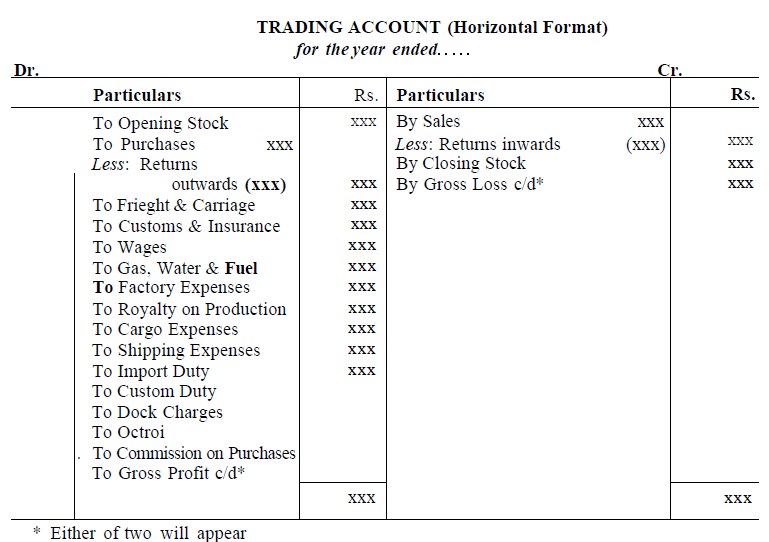
(a) Opening Stock: Unsold closing stock of the last financial year is appeared in debit side of the Trading Account as “To Opening Stock“ of the current financial year.

(b) Purchases: Total purchases (net of purchase return) including cash purchase and credit purchase of traded goods during the current financial year appeared as “To Purchases” in the debit side of Trading Account.

(c) Direct Expenses: Expenses incurred to bring traded goods at business premises/warehouse called direct expenses. Freight charges, cartage or carriage charges, custom and import duty in case of import, gas, electricity fuel, water, packing material, wages, and any other expenses incurred in this regards comes under the debit side of Trading Account and appeared as “To Particular Name of the Expenses”.

(d) Sales Account: Total Sale of the traded goods including cash and credit sales will appear at outer column of the credit side of Trading Account as “By Sales.” Sales should be on net releasable value excluding Central Sales Tax, Vat, Custom, and Excise Duty.

(e) Closing Stock: Total Value of unsold stock of the current financial year is called as closing stock and will appear at the credit side of Trading Account.

Closing Stock = Opening Stock + Net Purchases – Net Sale

(f) Gross Profit: Gross profit is the difference of revenue and the cost of providing services or making products. However, it is calculated before deducting payroll, taxation, overhead, and other interest payments. Gross Margin is used in the US English and carries same meaning as the Gross Profit.

Gross Profit = Sales – Cost of Goods Sold

(g) Operating Profit: Operating profit is the difference of revenue and the costs generated by ordinary operations. However, it is calculated before deducting taxes, interest payments, investment gains/losses, and many other non-recurring items.

Operating Profit = Gross Profit – Total Operating Expenses

(h) Net Profit: Net profit is the difference of total revenue and the total expenses of the company. It is also known as net income or net earnings.

Net Profit = Operating Profit – (Taxes + Interest)

2. Manufacturing Account

Manufacturing account prepared in a case where goods are manufactured by the firm itself. Manufacturing accounts represent cost of production. Cost of production then transferred to Trading account where other traded goods also treated in a same manner as Trading account.

Important Point Related to Manufacturing Account

Apart from the points discussed under the section of Trading account, there are a few additional important points that need to be discuss here:

(a) Raw Material: Raw material is used to produce products and there may be opening stock, purchases, and closing stock of Raw material. Raw material is the main and basic material to produce items.

(b) Work-in-Progress: Work-in-progress means the products, which are still partially finished, but they are important parts of the opening and closing stock. To know the correct value of the cost of production, it is necessary to calculate the correct cost of it.

(c) Finished Product: Finished product is the final product, which is manufactured by the concerned business and transferred to trading account for sale.

Raw Material Consumed (RMC) − It is calculated as.

RMC = Opening Stock of Raw Material + Purchases – Closing Stock

3. Profit and Loss Account

Profit & Loss account represents the Gross profit as transferred from Trading Account on the credit side of it along with any other income received by the firm like interest, Commission, etc.

Debit side of profit and loss account is a summary of all the indirect expenses as incurred by the firm during that particular accounting year. For example, Administrative Expenses, Personal Expenses, Financial Expenses, Selling, and Distribution Expenses, Depreciation, Bad Debts, Interest, Discount, etc.

4. Balance Sheet

A balance sheet reflects the financial position of a business for the specific period of time. The balance sheet is prepared by tabulating the assets (fixed assets + current assets) and the liabilities (long term liability + current liability) on a specific date.

Assets

Assets are the economic resources for the businesses. It can be categorized as:

(a) Fixed Assets: Fixed assets are the purchased/constructed assets, used to earn profit not only in current year, but also in next coming years. However, it also depends upon the life and utility of the assets. Fixed assets may be tangible or intangible. Plant & machinery, land & building, furniture, and fixture are the examples of a few Fixed Assets.

(b) Current Assets: The assets, which are easily available to discharge current liabilities of the firm called as Current Assets. Cash at bank, stock, and sundry debtors are the examples of current assets.

(c) Fictitious Assets: Accumulated losses and expenses, which are not actually any virtual assets called as Fictitious Assets. Discount on issue of shares, Profit & Loss account, and capitalized expenditure for time being are the main examples of fictitious assets.

(d) Cash & Cash Equivalents: Cash balance, cash at bank, and securities which are redeemable in next three months are called as Cash & Cash equivalents.

(e) Wasting Assets: The assets, which are reduce or exhausted in value because of their use are called as Wasting Assets. For example, mines, queries, etc.

(f) Tangible Assets: The assets, which can be touched, seen, and have volume such as cash, stock, building, etc. are called as Tangible Assets.

(g) Intangible Assets: The assets, which are valuable in nature, but cannot be seen, touched, and not have any volume such as patents, goodwill, and trademarks are the important examples of intangible assets.

(h) Accounts Receivables: The bills receivables and sundry debtors come under the category of Accounts Receivables.

(i) Working Capital: Difference between the Current Assets and the Current Liabilities are called as Working Capital.

Final accounts of a Sole Proprietor

The final accounts for a sole trader business are the Income Statement (Trading and Profit & loss Account) and the Balance Sheet. The final accounts give a picture of the financial position of your business. It shows where or not your business has made a profit or loss during the accounting period and whether you are able to pay your debts as they become due.

Objectives

Upon the completion of this topic you should be able to
1. understand how profit/loss is calculated
2. calculate the cost of goods sold, gross profit and net profit,
3. transfer net profit and drawings to the capital account at the end of the period, and
4. prepare an Income Statement from a trial balance.

Final Accounts

After your trial balance is completed your final accounts are prepared. The final accounts of a sole trader business include the Income Statement (trading and Profit & loss account) and the balance sheet. Remember that your trial balance is the summary of the balances in all your accounts. Some of these balances (those from your nominal accounts) affect the profit and are transferred to the Income statement; the others (real and personal accounts) are transferred to your balance sheet. The Income Statement and the Balance Sheet are prepared at the end of each financial period to record how well the business operated during that financial period.

Income Statement

One of the most important financial statements of any business is the Income Statement. It is used to determine the following:
1. how profitable a business is being run; and
2. comparing the results received with the results expected.

The Income Statement can be divided into two sections the trading account and the Profit & loss account. The gross profit which is the amount of profit made before the expenses are deducted is calculated in the trading account. The purpose of the trading account is to determine the gross profit made from sales. Therefore the accounts that are directly related to buying and selling (trading) will be transferred to the trading account. The accounts directly related to trading are:

  • Sales
  • Purchase
  • Sales Return
  • Purchases Return
  • Carriage Inwards

Gross profit is calculated as:

Gross Profit = Net Sales – Cost of Goods Sold (COGS)
Along with gross profit the net sales, cost of goods sold (COGS) and the cost of goods available for sale(COGAFS) is also calculated in the trading account:

Net Sales = Sales – Sales Return (Return Inwards)

Net sales are the total sales figure after allowances have been made for sales returned to the business.

COGS = Cost of goods available for sale (COGAFS) – Closing Stock

COGAFS = Opening Stock + (Purchases – Purchases Return) + Carriage Inwards

The net profit of your business is calculated in the Profit & loss account. Net profit is the balance of profit after allowance is made for revenue and expenses. It is calculated as:

Net Profit = Gross profit + Revenue – expenses

The revenue and expense charged to the Profit & loss account are those that are not directly related to trading but more to do with the running of the business. Some of these accounts are:

  • Rent
  • Telephone
  • Carriage outwards
  • Discount allowed
  • Discount received
  • Commission received
  • Commission paid
  • Salary

In Unit Two these accounts were closed off and transferred to the income statement. The income statement can be shown horizontally or vertically.

Balance Sheet
The other half of our final accounts is the Balance Sheet. The Balance Sheet is a financial statement showing the book values of the assets, liabilities and capital at the end of the financial period. It shows what the business owes and what it owns.
The assets of the business is divided into two categories and recorded as follows
1. Non-Current Assets are assets that:

  • Are expected to be of use in the business for long time;
  • Are to be used in the business; and
  • Were not bought only for the purpose of resale.

Non-current assets are recorded in the balance sheet starting with those assets that will in the business the longest down to those that will be kept for a shorter period. Example of non-current assets and the order of record are:

  • Land and Buildings.
  • Fixtures and Fittings.
  • Machinery
  • Motor Vehicles.
  1. Current Assets are recorded next. These are assets will change within the next twelve months. They are recorded as follows:
  • Stock (goods bought for resale)
  • Cash at Bank.
  • Cash in Hand.
  1. Non-current Liability: Sometime referred to as long term liability are those debts that take more than a year to settle. This includes large loans and mortgages.
  2. Current Liability: are debts that will be settled in one year or less. This includes creditors and small loans.

Let’s now prepare the final accounts from the trial balance on the below

Example 3.5A

MDAR Retailer
Trial Balance as at 31 December 2011
Dr. Cr.
$ $
Discount Allowed 410
Discount Received 506
Carriage Inwards 309
Carriage Outwards 218
Return Inwards 1,384
Return Outwards 810
Sales 120,320
Purchases 84,290
Stock 31 December 2010 30,816
Motor expenses 4,917
Repairs to premises 1,383
Pay 16,184
Sundry expenses 807
Rates and insurance 2,896
Premises at cost 40,000
Motor Vehicle at cost 11,160
Provision for depreciation motors as at 31 December 2010 3,860
Debtors 31,640
Creditors 24,320
Cash at bank 4,956
Cash in hand 48
Drawings 8,736
Capital 50,994
Loan from P. Holland 40,000
Bad Debts 1,314
Provision for bad debts as at 31 December 2010 658
241,468 241,468

The following should be considered on 31 December 2011
1) Stock $36,420
a) Expenses owing
b) Sundry expenses $62
2) Motor expenses $33
3) prepayments
a) Rates $166
4) Provision for bad debts to be reduced to $580
5) Depreciation for motors to be $2,100 for the year
6) Part of the premises were let to a tenant who owed $250 at 31 December 2011
7) Loan interest owing to P. Holland, $4,000

Prepare the Income Statement and Balance Sheet as at 31 December 2011.

Horizontal presentation of the Income Statement and Balance Sheet

MDAR Retailer
Income Statement
for the year ended 31 December 2011
$ $ $ $
Opening Stock 30,816 Sales 120,320
Add Purchases 84,290 Less Sales Returns 1,384 118,936
Less Purchases Return 810 83,480
Add Carriage Inwards 309
COGAFS 114,605
Less Closing Stock 36,420
COGS 78,185
Gross Profit c/d 40,751
118,936 118,936
Less Expenses Gross Profit b/d 40,751
Motor Expenses 4,917 Add Revenue
Add Motor expenses owing 33 4,950 Discount Received 506
Pay 16,184 Rent Receivable 250
Carriage Outwards 218 Reduction in Provision for Bad Debts 78 834
Discount Allowed 410 41,585
Repairs to Premises 1,383
Sundry Expenses 807
Add sundry expenses owing 62 869
Bad Debts 1,314
Rates and Insurance 2,896
Less prepaid rates and insurance 166 2,730
Loan Interest 4,000
Depreciation: Motor 2,100
Net Profit 7,427
41,585 41,585

MDAR Retailer
Balance Sheet
as at 31 December 2011
Non-Current Assets $ $ $ Capital $ $ $
Premises at cost 40,000 Balance as at 1 Jan 2011 50,994
Motor Vehicle at cost 11,160 Add Net Profit 7,427
Less Depreciation to date 5,960 5,200 58,421
45,200 Less Drawings 8,736
Current Assets 49,685
Stock 36,420 Non-Current Liability
Debtors 31,640 Loan from P. Holland 40,000
Less Provision for Bad Debts 580 31,060 89,685
Prepaid Expense 166
Revenue owing 250 Current Liabilities
Cash at bank 4,956 Creditors 24,320
Cash in hand 48 72,900 Expenses owing 4,095 28,415
118,100 118,100


Vertical presentation of the Income Statement and the Balance Sheet.

The vertical presentation is the most common method of presenting final accounts today. In the vertical presentation of the balance sheet the working capital is indicated. This is calculated as:

Working Capital = Current Assets – Current Liabilities

The working capital indicates the liquidity of your business. This means the ability of your business to pay its debts when they become due. It gives an idea of the amount of funds available to run the business on a day to day basis.

MDAR Retailer
Income Statement
for the year ended 31 December 2011
$ $ $
Sales 120,320
Less Sales Returns 1,384
Net Sales 118,936
Opening Stock 30,816
Add Purchases 84,290
Less Purchases Return 810 83,480
Add Carriage Inwards 309
COGAFS 114,605
Less Closing Stock 36,420
COGS 78,185
Gross Profit 40,751
Add Revenue
Discount Received 506
Rent Receivable 250
Reduction in Provision for Bad Debts 78 834
41,585
Less Expenses
Motor Expenses 4,917
Add Motor expenses owing 33 4,950
Pay 16,184
Carriage Outwards 218
Discount Allowed 410
Repairs to Premises 1,383
Sundry Expenses 807
Add sundry expenses owing 62 869
Bad Debts 1,314
Rates and Insurance 2,896
Less prepaid rates and insurance 166 2,730
Loan Interest 4,000
Depreciation: Motor vehicles 2,100 34,158
Net Profit 7,427

MDAR Retailer
Balance Sheet
as at 31 December 2011
Non-Current Assets $ $ $
Premises at cost 40,000
Motor Vehicle at cost 11,160
Less Depreciation to date 5,960 5,200
45,200
Current Assets
Stock 36,420
Debtors 31,640
Less Provision for Bad Debts 580 31,060
Prepaid Expense 166
Revenue owing 250
Cash at bank 4,956
Cash in hand 48
72,900
Current Liabilities
Creditors 24,320
Expenses owing 4,095 28,415
Working Capital 44,485
89,685
Financed by
Balance as at 1 January 2011 50,994
Add Net Profit 7,427
58,421
Less Drawings 8,736
49,685
Non-Current Liability
Loan from P. Holland 40,000
89,685

Manufacturing Account

At the end of every accounting period, trading firms which buy ready-made goods and resell them at a profit, prepare the Trading and Profit and Loss Accounts.  However, for those firms which manufacture the goods they sell, a Manufacturing Account is prepared in addition to these two final accounts.

The Manufacturing Account is prepared to determine the total manufacturing or production cost of goods completed during the accounting period.  The production cost includes all costs incurred in converting raw materials into finished goods, i.e. cost of raw materials, direct labour and direct expenses, and factory overhead expenses.

Manufacturing or Production Cost

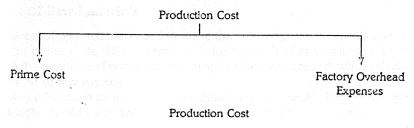
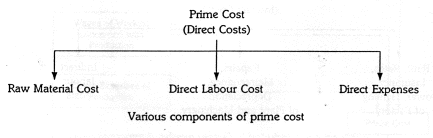
Production cost can be divided into two categories, i.e. prime cost and factory overhead expenses.  Both these costs are charged to the Manufacturing Account for the calculation of production cost.  The following is a description of the different components which make up prime cost and factory overhead expenses.

Prime Cost

Prime cost includes all costs which relate directly to the manufacturing process.  They include raw materials, labour and expenses which are traceable to the particular unit of goods manufactured.. These prime costs will vary with the units of output produced.  Increasing output means using mere raw materials, direct labour and direct expenses, e.g. if production is increased by 50%, the cost of raw materials, manufacturing wages and direct expenses will rise by approximately the same extent.

Cost of Raw Materials

The cost of raw materials used to make the finished good represents one of the major prime costs.  The opening and closing stock of raw materials, together with the purchase of raw materials must be taken into account when calculating the cost of raw materials.

Any other costs incurred in the purchases of raw materials, like duty, freight or carriage, should be added to the net purchases of the raw materials.

Direct Labour Cost

These refer to the wages paid to labour which is directly involved in the manufacture of goods.  These wages paid to workers who are employed on the actual production line are called direct wages.

Direct Expenses

Besides raw materials and labour cost, other expenses directly related to manufacturing may be incurred.  These include expenses for water and electricity that can be traced by the units of goods produced, e.g. the amount of water used in the production of bottled drinks and the amount of electricity consumed in the baking of bread can be computed by each unit of goods produced.

Direct expenses may include royalties which are payments made to the patentee for the right to use the patent for each unit of goods produced.

patent confers upon its holder, the right to be the only producer of a certain product for a particular period of time.

Factory Overhead Expenses

These costs are not directly related to the actual manufacturing of goods but more so to the general operations of running of the factory where production is carried on.

Overhead expenses do not vary with output.  Even if output is increased or decreased, the overhead expenses remain relatively fixed.

Factory overhead costs include:

  1. rent and rates of factory
  2. insurance of factory
  3. factory power and lighting
  4. repairs and maintenance of plant and machinery
  5. depreciation of tools, plant and machinery
  6. indirect labour cost: wages and salaries paid to those employed in the general operations of the factory and who are indirectly associated with actual production,  factory engineer, supervisor, manager, forklift and crane drivers, cleaners and security personnel.

Production Cost

Production cost measures the total cost of goods produced during the period and is made up of prime cost and factory overhead expenses used in production.

Work in Progress

In the above example, it is assumed that all the work that started in the factory was finished by the end of the year and that there was no partly finished goods.  It is possible for a manufacturing firm to have work-in-progress which is partly completed goods at the end of the accounting period.

Where there is work-in-progress, production cost incurred during the accounting period will cover both the finished and unfinished goods.

If we wish to know the cost of manufacturing only the finished goods during the year, we must deduct the work-in-progress at the end of the year from the production cost.  The work-in-progress is valued according to the cost of materials, labour, factory overhead expenses and other expenses that have gone into it.

Where there is work-in-progress at the beginning of the accounting period, this must be added to the production cost before deducting the work-in-progress at the end of the year to give the cost value of finished goods for the year.

Cost Flows in the Manufacturing Account and the Determination of the manufacturing Profit

  • The following steps are taken by the manufacturer to arrive at his net profit figure:
  • Calculation of production cost by setting up a Manufacturing Account: Production Cost = Prime Costs (raw materials cost + direct labour and direct expenses) + Factory Overhead Expenses
  • Calculation of gross manufacturing profit by comparing the market price of goods manufactured with the production cost in the Manufacturing Account: Gross Manufacturing Profit = Market Price of Goods Manufactured – Production Cost
  • Calculation of gross trading profit by setting up a Trading Account: Gross Trading Profit = Net Sales – Cost of Sales
  • Calculation of net profit by setting up a Profit and Loss Account: Net Profit = Gross Manufacturing Profit + Gross Trading Profit + Any Gains – Expenses
  • To the Manufacturing Account, charge all manufacturing expenses incurred in the production of finished goods.
  • To the Trading Account, charge all buying expenses incurred in the purchase of goods for resale.
  • To the Profit and Loss Account, charge all selling expenses incurred in the sale and distribution of goods including all administrative expenses.

Profit and Loss Account, Concept, Features, Components, Steps and Example

Profit and loss (P&L) account, also known as an income statement, is a key financial statement that summarizes a business’s revenues, costs, and expenses over a specific period, typically monthly, quarterly, or annually. Its main purpose is to show the company’s financial performance by calculating the net profit or net loss.

The P&L account starts with the total revenue earned from sales or services. From this, the cost of goods sold (COGS) is subtracted to determine the gross profit. Next, operating expenses like salaries, rent, utilities, depreciation, and administrative costs are deducted, leading to the operating profit. Additional income (such as interest or investment income) and non-operating expenses (like taxes or interest charges) are then considered, resulting in the net profit or net loss for the period.

This account provides crucial insights into how efficiently a business generates profit from its operations and manages expenses. It helps management analyze areas of strength and weakness, make informed decisions, and plan for future growth. For external stakeholders such as investors, creditors, and tax authorities, the P&L account is essential to assess the company’s profitability and financial health.

Features of Profit and Loss Account

  • Revenue Recognition

One of the primary features of a profit and loss account is its ability to capture revenue generated from sales. Revenue is recognized when earned, following accounting principles such as the accrual basis. This ensures that the income statement reflects the actual performance of the business within the reporting period, regardless of when cash is received.

  • Cost of Goods Sold (COGS)

The profit and loss account includes the cost of goods sold, which represents the direct costs associated with the production of goods or services sold during the period. COGS is deducted from total revenue to determine gross profit. This feature is essential for evaluating the efficiency of production processes and pricing strategies, as it directly impacts profitability.

  • Gross Profit Calculation

Gross profit is a key figure in the profit and loss account, calculated by subtracting COGS from total revenue. This metric indicates how well a company generates profit from its core business activities. A high gross profit margin suggests effective cost management and pricing strategies, while a low margin may indicate inefficiencies or pricing challenges.

  • Operating and Non-Operating Income/Expenses

Profit and loss account categorizes income and expenses into operating and non-operating sections. Operating income derives from primary business activities, while non-operating income includes gains from investments or other ancillary activities. This separation helps stakeholders assess the company’s performance based on its core operations, providing insights into sustainability and operational efficiency.

  • Net Income or Loss

Profit and loss account culminates in net income or loss, calculated by subtracting total expenses from total revenue. This figure represents the company’s overall profitability for the period and is a crucial indicator of financial health. A positive net income indicates profitability, while a negative figure signals a loss, prompting further analysis and potential corrective actions.

  • Time Period Specificity

Profit and loss account covers a specific accounting period, such as a month, quarter, or year. This time-based approach allows for comparative analysis across different periods, enabling stakeholders to assess trends in revenue, expenses, and profitability. This feature aids in forecasting future performance and making informed business decisions.

Components of Profit and Loss Account

  • Revenue (Sales)

The total amount generated from selling goods or services during the accounting period. This figure may include both cash and credit sales. It represents the company’s primary source of income and sets the foundation for calculating profitability.

  • Cost of Goods Sold (COGS)

The direct costs incurred in producing goods or services sold during the period, including costs of materials, labor, and manufacturing overhead. COGS is subtracted from total revenue to determine gross profit, indicating the efficiency of production and pricing strategies.

  • Gross Profit

Calculated by subtracting COGS from total revenue. Gross profit reflects the profit made from core business operations before considering operating expenses. It provides insight into the company’s operational efficiency and profitability from its primary activities.

  • Operating Expenses

These include all costs necessary to run the business that are not directly tied to the production of goods. This category encompasses selling expenses, administrative expenses, and general expenses. Operating expenses are deducted from gross profit to calculate operating income, helping assess the company’s efficiency in managing overhead.

  • Operating Income

The profit generated from core business operations, calculated by subtracting total operating expenses from gross profit. This metric indicates the profitability of the company’s core activities, excluding non-operating income and expenses.

  • Other Income and Expenses

This section includes income and expenses not directly related to core business operations, such as interest income, gains from asset sales, interest expenses, and losses from investments. These items provide a broader view of overall profitability, reflecting the impact of non-core activities.

  • Income Tax Expense

The estimated taxes owed on the income generated during the period, calculated based on applicable tax rates. Accounting for tax expenses allows stakeholders to see the net income after tax obligations, providing a clearer picture of profitability.

  • Net Income (Net Profit or Loss)

The final figure on the profit and loss account, calculated by subtracting total expenses (including taxes) from total revenue. It represents the overall profitability of the company. Net income is a crucial indicator of a company’s financial health, influencing investor decisions and management strategies.

Steps in Preparing the Profit and Loss Account

Step 1. Calculation of Interest Earned

The first step in preparing the Profit and Loss Account is to calculate the total interest earned by the bank during the accounting period. Interest earned includes interest and discount on loans, advances, and bills discounted, income from investments, and interest received on balances maintained with the Reserve Bank of India and other banks. Since interest income is the principal source of revenue for banks, accurate calculation is essential. The bank collects information from various ledgers and registers and classifies the income under Schedule No. 13. Proper calculation of interest earned helps determine the earning capacity, profitability, and operational efficiency of the bank.

Step 2. Calculation of Other Income

After determining interest income, the bank calculates other income earned from non-interest activities. Other income includes commission, exchange, brokerage, locker rent, processing charges, profit on sale of investments, and miscellaneous receipts. This income is recorded under Schedule No. 14 of the Profit and Loss Account. Banks today earn a significant portion of their revenue through fee-based services, making this step highly important. Accurate recording of other income ensures that all sources of revenue are properly disclosed. It also helps management evaluate the contribution of non-interest activities to the bank’s profitability and overall financial performance.

Step 3. Determination of Total Income

The next step is to determine the total income of the bank by adding interest earned and other income. This figure represents the gross earnings generated from all banking activities during the accounting year. The calculation of total income is essential because it forms the basis for determining profitability and comparing performance with previous years. A higher total income generally indicates efficient operations and effective utilization of resources. Proper determination of total income also helps management in financial planning and decision-making. It enables investors and regulatory authorities to assess the bank’s revenue-generating ability and overall financial health.

Step 4. Calculation of Interest Expended

Banks incur substantial expenses in the form of interest paid on deposits and borrowings. Therefore, the next step is to calculate the total interest expended during the year. This includes interest paid on savings deposits, fixed deposits, recurring deposits, inter-bank borrowings, and loans from the Reserve Bank of India. These expenses are disclosed under Schedule No. 15. Proper calculation of interest expenditure is essential because it directly affects the profitability of the bank. The difference between interest earned and interest expended is known as net interest income, which is an important measure of banking performance and operational efficiency.

Step 5. Calculation of Operating Expenses

The bank then calculates all operating and administrative expenses incurred during the year. These expenses include employee salaries, rent, electricity charges, printing and stationery, depreciation, communication expenses, legal charges, insurance, and other administrative costs. These items are disclosed under Schedule No. 16 of the Profit and Loss Account. Proper calculation of operating expenses is important because excessive expenses reduce profitability. Analysis of operating expenses helps management identify areas where costs can be controlled and efficiency can be improved. Accurate recording of these expenses ensures transparency and presents a true and fair view of the bank’s financial performance.

Step 6. Calculation of Operating Profit

After calculating income and expenditure, the bank determines its operating profit. Operating profit is calculated by deducting interest expended and operating expenses from total income. It indicates the profit generated from the bank’s normal business operations before making provisions and paying taxes. Operating profit is an important indicator of managerial efficiency and operational performance. A higher operating profit reflects effective management and better utilization of resources. This step also helps management evaluate the success of business strategies and make informed decisions regarding future expansion, investments, and cost control measures.

Step 7. Making Provisions and Contingencies

The next step is to make necessary provisions and contingencies according to the guidelines issued by the Reserve Bank of India. Banks are required to create provisions for bad and doubtful debts, depreciation on investments, taxation, and other anticipated losses. These provisions are essential because they protect the bank against future uncertainties and ensure that profits are not overstated. Proper provisioning also strengthens the financial stability of the bank and promotes prudent financial management. By making adequate provisions, banks can present realistic financial statements and comply with statutory and regulatory requirements.

Step 8. Calculation of Net Profit or Net Loss

The final step in preparing the Profit and Loss Account is the calculation of net profit or net loss. Net profit is determined by deducting provisions, contingencies, and taxes from operating profit. If total income exceeds total expenses and provisions, the bank earns a net profit. Conversely, if expenses exceed income, the bank incurs a net loss. The net profit figure is transferred to the Balance Sheet and is used for dividend declaration and reserve creation. This step is important because it reveals the overall financial performance, profitability, and efficiency of the bank during the accounting period.

Example of Profit and Loss Account

Profit and Loss Account For the Year Ended December 31, 2024
Revenue
Sales Revenue $750,000
Total Revenue $750,000
Cost of Goods Sold (COGS)
Opening Inventory $80,000
Add: Purchases $300,000
Less: Closing Inventory ($60,000)
Cost of Goods Sold $320,000
Gross Profit $430,000
Operating Expenses
Selling Expenses $70,000
Administrative Expenses $50,000
Depreciation Expense $30,000
Total Operating Expenses $150,000
Operating Income $280,000
Other Income and Expenses
Interest Income $5,000
Interest Expense ($15,000)
Total Other Income/Expenses ($10,000)
Income Before Tax $270,000
Income Tax Expense ($54,000)
Net Income $216,000

Explanation of Key Figures:

  • Total Revenue: The total sales generated by the company.
  • Cost of Goods Sold (COGS): Direct costs associated with the production of goods sold during the period.
  • Gross Profit: Revenue minus COGS, indicating profitability from core operations.
  • Operating Expenses: Costs incurred in running the business that are not directly tied to production.
  • Operating Income: Gross profit minus operating expenses, reflecting profit from core operations.
  • Other Income and Expenses: Non-operating items that affect overall profitability.
  • Net Income: The final profit after all expenses and taxes, representing the company’s overall profitability.

Trading Account, Meaning, Objective, Needs, Advantages, Disadvantages and Format of Trading Account

Trading account is a key component of financial statements prepared by a business at the end of an accounting period. It is specifically designed to determine the gross profit or gross loss of a business from its core trading activities, which mainly include buying and selling goods. The trading account is prepared before the profit and loss account and helps assess how efficiently the business is managing its direct costs related to production or purchases.

The main purpose of a trading account is to show the results of trading activities by comparing net sales (total sales minus sales returns) with the cost of goods sold (COGS). The account records all direct expenses such as purchases, wages, carriage inwards, and factory expenses on the debit side, while the credit side includes net sales and closing stock. The difference between these two sides reveals the gross profit if the credit side is larger, or gross loss if the debit side exceeds the credit side.

A trading account is crucial because it helps the business understand how profitable its main operations are, before considering indirect expenses or incomes. It serves as a basis for preparing the profit and loss account, which ultimately determines the net profit. For businesses engaged in manufacturing or retailing, the trading account provides an essential performance snapshot.

Objectives of Trading Account

  • Determining Gross Profit or Gross Loss

The primary objective of a trading account is to calculate the gross profit or gross loss of the business during an accounting period. By comparing net sales with the cost of goods sold (COGS), the account reveals whether the business earned a profit from its core trading activities. This figure is essential because it indicates how efficiently the company is managing its direct costs. Without knowing gross profit, a business cannot evaluate its operational performance or prepare accurate profit and loss statements.

  • Measuring Direct Costs and Expenses

Another important objective is to measure all the direct costs and expenses involved in generating sales. These include purchases, carriage inwards, wages, fuel, power, and factory expenses. The trading account systematically organizes these costs, ensuring they are accurately recorded and matched against sales. By doing so, it ensures proper cost analysis, helping businesses understand how much it costs to produce or procure the goods sold. This clarity enables better cost control and decision-making related to pricing and production.

  • Establishing the Basis for Profit and Loss Account

The trading account lays the foundation for preparing the profit and loss account. Once gross profit or loss is determined, it is transferred to the profit and loss account, where indirect expenses and incomes are considered to calculate net profit. Without the trading account, the business would lack a clear and structured approach to financial reporting. It ensures that direct trading results are separated from indirect activities, giving a more accurate picture of overall business performance.

  • Helping in Pricing and Selling Decisions

One of the key objectives of preparing a trading account is to help management make informed pricing and selling decisions. By analyzing the gross profit margin, businesses can determine if their current pricing strategies are effective or if adjustments are needed. If the gross profit is too low, it may signal the need to increase selling prices, reduce purchase costs, or improve production efficiency. This insight is critical in maintaining competitiveness while ensuring profitability.

  • Evaluating Production Efficiency

For manufacturing businesses, the trading account helps evaluate production efficiency. By comparing the cost of production to the sales value, it becomes clear whether the production process is cost-effective or if wastage and inefficiencies are cutting into profits. Identifying such issues early allows management to take corrective actions, optimize resource utilization, and improve overall operational efficiency. The trading account acts as a diagnostic tool, providing insights into where improvements are needed within the production cycle.

  • Facilitating Inventory Control

Another objective of the trading account is to assist in inventory management. By accounting for opening stock, purchases, and closing stock, the business can accurately track the movement and value of inventory. This information is crucial for controlling stock levels, avoiding overstocking or understocking, and ensuring that capital is not unnecessarily tied up in unsold goods. Effective inventory control also helps reduce storage costs, minimize waste or spoilage, and improve cash flow management.

  • Supporting Financial Analysis and Comparison

The trading account provides valuable data that supports financial analysis and comparisons over different periods. By examining gross profit ratios across various accounting periods, businesses can identify trends, seasonal variations, or market shifts. It also allows management to compare current performance against industry benchmarks or competitors. This analytical capability helps guide long-term planning, budgeting, and strategic decisions aimed at improving the company’s market position and profitability.

  • Providing Information for Tax and Compliance

An essential but often overlooked objective of the trading account is to provide accurate financial data for tax calculation and regulatory compliance. Tax authorities often require businesses to report gross profit figures when filing tax returns. A properly prepared trading account ensures that the company’s direct incomes and expenses are transparently reported, reducing the risk of legal issues, fines, or audits. It also strengthens the company’s financial credibility with stakeholders such as investors, banks, and auditors.

Needs of Trading Account

  • Determining Core Business Profitability

The trading account is needed to assess the profitability of the business’s main operations, i.e., buying and selling goods. It helps determine whether the company is making a gross profit or incurring a gross loss before accounting for indirect expenses. Without this, management wouldn’t know if the core business activities are financially viable. This assessment ensures that owners and stakeholders can monitor trading performance separately from non-operational revenues or expenses, giving a clearer picture of how effectively the business is running.

  • Accurate Calculation of Cost of Goods Sold (COGS)

A trading account is crucial for accurately calculating the cost of goods sold, which includes opening stock, purchases, direct expenses, and adjustments for closing stock. Knowing COGS is essential because it directly affects the gross profit calculation. Without a trading account, it would be difficult to track and match costs against sales, potentially leading to distorted profit figures. The account ensures that only direct trading-related costs are considered, improving the accuracy of the financial statements.

  • Establishing the Gross Profit Margin

The business needs a trading account to establish its gross profit margin, which is a key performance indicator. This margin reveals how much the company retains from each unit of sales after covering direct costs. By monitoring this margin, management can identify pricing issues, cost inefficiencies, or areas where cost savings are needed. It also helps in setting sales targets and evaluating the success of cost-reduction strategies, making it an essential management tool.

  • Supporting Managerial Decision-Making

The trading account supports management in making informed decisions related to purchasing, production, sales, and pricing. By providing clear data on gross profit and cost components, it helps management understand whether resources are being used effectively. If gross profits are consistently low, the business may need to rethink its suppliers, revise its pricing, or invest in more efficient production methods. Without this information, decisions would be based on guesswork rather than solid financial evidence.

  • Providing a Basis for Preparing Profit and Loss Account

The trading account provides the foundation for preparing the profit and loss account, which ultimately determines the net profit or loss of the business. Without first calculating the gross profit or loss, it would be impossible to prepare complete financial statements. The separation of direct trading results (gross profit) and indirect operational costs (net profit) improves financial reporting accuracy and provides stakeholders with clearer, more detailed insights into business performance.

  • Assisting in Financial Comparisons and Trend Analysis

A trading account is essential for making financial comparisons and conducting trend analysis over time. By comparing gross profits across multiple periods, businesses can identify seasonal trends, market fluctuations, or operational inefficiencies. These insights are valuable for long-term planning, setting realistic goals, and making strategic decisions. Regular trend analysis also helps businesses benchmark their performance against industry standards, ensuring they stay competitive and responsive to market demands.

  • Improving Inventory and Stock Control

Another need for the trading account arises in inventory management. The account tracks opening stock, purchases, and closing stock, helping businesses monitor inventory levels effectively. By keeping accurate records, businesses avoid overstocking or stockouts, improve cash flow, and minimize losses due to spoilage or obsolescence. Effective stock control also ensures that the cost of goods sold is calculated correctly, preventing errors that could affect profit calculations and decision-making.

  • Fulfilling Legal and Tax Compliance Requirements

Businesses need a trading account to fulfill legal and tax compliance requirements. Tax authorities often require detailed reporting on gross profits, direct expenses, and sales figures. A properly maintained trading account ensures that the business can submit accurate financial statements, reducing the risk of fines, penalties, or audits. Additionally, external stakeholders like investors, lenders, and auditors rely on these accounts to evaluate the business’s financial health and compliance with financial regulations.

Advantage of Trading Account

  • Provides Clear Gross Profit or Loss

The trading account gives a clear view of the gross profit or loss from core operations, helping owners and managers understand if the business is making money directly from sales activities. It separates operational performance from indirect incomes or expenses, offering a focused assessment. This clarity allows businesses to track the effectiveness of buying and selling strategies, helping in better business planning. Without this, businesses may confuse gross earnings with overall net profit, making it harder to improve core performance.

  • Helps Monitor Direct Costs

A trading account helps monitor and control direct costs such as purchases, direct expenses, and stock values. By keeping a record of these elements, businesses can track if they are overspending on raw materials or facing rising purchase costs. This awareness allows for quick corrective action, like negotiating better supplier rates or improving inventory management. It ensures that cost control becomes an ongoing part of business operations, which directly boosts profitability by reducing unnecessary expenses tied to the production or sale of goods.

  • Assists in Pricing and Sales Decisions

The trading account plays a critical role in guiding pricing strategies and sales decisions. By knowing the gross profit margin, businesses can evaluate if their selling prices are adequate to cover costs and generate profit. If margins are thin, it signals a need to revise pricing or reduce costs. This information also helps in planning discounts, offers, and promotional activities. Without these figures, pricing decisions become guesses, increasing the risk of underpricing or overpricing, which can hurt profitability and competitiveness.

  • Supports Efficient Stock Management

Another advantage of the trading account is its role in managing stock efficiently. It tracks opening and closing stock, ensuring businesses know how much inventory is used or left unsold. This helps avoid overstocking, which can lead to waste, or understocking, which can cause lost sales. With better stock visibility, businesses improve cash flow, reduce storage costs, and minimize stock losses due to spoilage or theft. Proper stock management through the trading account strengthens operational control and financial health.

  • Simplifies Financial Reporting

The trading account simplifies financial reporting by summarizing key operational figures in one place. It directly feeds into the profit and loss account, making it easier to prepare final accounts accurately. External stakeholders such as auditors, tax authorities, and investors often look for this clarity when reviewing business performance. By presenting gross profit and cost details clearly, the trading account helps ensure the financial statements are reliable and transparent. This boosts the credibility of the business and enhances trust with outsiders.

  • Helps in Identifying Business Trends

The trading account enables businesses to identify sales trends, seasonal patterns, and cost behaviors over time. By comparing trading accounts from different periods, managers can detect improvements or declines in profitability and adjust strategies accordingly. For example, if gross profit consistently drops in certain months, businesses can investigate the cause and take preventive action. Understanding these trends allows for better forecasting, budgeting, and strategic planning, helping the business stay competitive and responsive in a changing market.

  • Assists in Tax Compliance

Maintaining an accurate trading account is essential for meeting tax compliance requirements. Tax authorities often require businesses to report gross profit and cost details separately. A well-prepared trading account ensures that the business can file accurate tax returns, reducing the risk of penalties, audits, or disputes with authorities. Additionally, it simplifies the preparation of statutory financial statements, helping businesses meet legal obligations efficiently. This advantage is especially valuable for businesses operating in regulated industries or with complex supply chains.

  • Enhances Decision-Making Power

Overall, the trading account enhances managerial decision-making power. With clear, reliable data on direct incomes and expenses, managers can make better operational, pricing, purchasing, and sales decisions. It removes guesswork and replaces it with fact-based insights, improving the quality of decisions. This contributes to better resource allocation, cost control, and profit maximization. Whether the decision involves cutting costs, renegotiating supplier terms, or launching new sales campaigns, the trading account offers the foundational data managers need to act confidently and effectively.

Disadvantage of Trading Account

  • Focuses Only on Direct Transactions

The trading account only focuses on direct incomes and expenses like sales, purchases, and direct costs. It ignores indirect expenses such as administrative costs, marketing expenses, and finance charges. This narrow focus can give an incomplete picture of overall business performance. Business owners may see a positive gross profit but fail to recognize that after covering indirect costs, the net profit might be low or even negative. This limitation makes it necessary to always use the trading account alongside other financial statements.

  • No Insight into Net Profit or Loss

While the trading account reveals gross profit or loss, it does not show the final net profit or loss of the business. Indirect expenses, interest, depreciation, and non-operating incomes are all excluded. Relying only on the trading account can be misleading if decision-makers assume that gross profit reflects overall business profitability. To get a complete financial view, businesses must also prepare the profit and loss account and the balance sheet. This makes the trading account only one part of a larger financial analysis.

  • Excludes Cash Flow Information

The trading account does not provide any information about cash flow — how much cash comes in or goes out of the business. Even with a strong gross profit, a business might face cash shortages due to poor receivables collection or high debt obligations. Since cash flow is essential for daily operations, the trading account’s lack of cash details limits its usefulness for short-term liquidity management. Business owners must use additional tools like cash flow statements to understand their real-time financial position.

  • Ignores Non-Trading Activities

The trading account is designed only for trading or manufacturing businesses and focuses solely on the buying and selling of goods. It ignores non-trading activities like investments, rental incomes, or interest earnings, which can significantly contribute to a business’s income. For businesses with multiple income sources, relying on the trading account alone can understate overall performance. Managers need to combine data from the trading account with other financial records to assess the full range of income and operational efficiency.

  • Provides Historical, Not Real-Time, Data

The trading account is typically prepared at the end of an accounting period, meaning it presents historical performance rather than real-time updates. Managers looking for current performance or recent trends won’t get timely insights from the trading account alone. This lag can slow down decision-making, especially in fast-moving industries where rapid adjustments are needed. Without integrating real-time sales and cost data from other sources, businesses may miss early warnings of problems or opportunities that require immediate action.

  • Limited Use for Small Service Firms

The trading account structure is best suited for businesses dealing in physical goods, such as wholesalers, retailers, or manufacturers. For small service-based firms — like consultants, software developers, or legal practices — the trading account has limited relevance. These businesses often have no inventories or purchase costs, making the format redundant. Service businesses need a profit and loss account that emphasizes service revenue, labor costs, and overheads. Using a trading account for such businesses can create confusion and lead to poor financial tracking.

  • Does Not Measure Efficiency Ratios

While the trading account shows gross profit margins, it does not directly provide key efficiency ratios, such as inventory turnover, cost-to-sales ratios, or gross margin ratios. These ratios require additional calculations, meaning the trading account alone cannot fully reveal operational efficiency or cost management effectiveness. Without these metrics, managers might miss signs of inefficiency, such as slow-moving inventory or shrinking gross margins. Additional financial analysis is required to convert trading account data into meaningful performance indicators for decision-making.

  • Can Be Manipulated Easily

One disadvantage of the trading account is that it can be manipulated if businesses deliberately overstate closing stock values, understate purchases, or inflate sales figures. These adjustments can make gross profit appear healthier than it really is, misleading stakeholders like owners, investors, or lenders. Since the trading account relies heavily on internal data, its accuracy depends on proper recordkeeping and honest reporting. Without strong internal controls and audits, the trading account can become a tool for presenting an overly optimistic business picture.

Format of Trading Account

Aspect Debit Side (Dr.) Credit Side (Cr.)
Opening Stock Shown Not shown
Purchases Shown (less returns) Not shown
Direct Expenses Shown Not shown
Gross Profit Balancing figure Not shown
Gross Loss Not shown Balancing figure
Sales Not shown Shown (less returns)
Closing Stock Not shown Shown
Other Income Not shown Shown (if any)
Balance Transfer To P&L Account To P&L Account
Total Debits = Credits Debits = Credits
Adjustment Items Purchase/Sales Returns Purchase/Sales Returns
Main Purpose Cost side Revenue side
Final Result Gross Profit/Loss Gross Profit/Loss

Items recorded on the debit side of the Trading Account:

  • Opening Stock

The value of goods or raw materials that were left unsold or unused at the beginning of the accounting period is recorded on the debit side. This ensures that the cost of goods available for sale during the period is correctly calculated.

  • Purchases

All goods purchased for resale or raw materials bought for production are recorded on the debit side. This includes both cash and credit purchases made during the period.

  • Purchase Returns (Adjusted)

If purchase returns are already deducted from total purchases, the net amount is shown here. If not, purchase returns appear on the credit side.

  • Direct Expenses

Any expenses directly related to bringing goods to a saleable condition or production are recorded here, including:

  • Wages (direct wages, not indirect staff salaries)

  • Carriage inward or freight inward

  • Customs duty

  • Import duty

  • Dock charges

  • Manufacturing expenses

  • Power and fuel costs

  • Factory rent or expenses

  • Royalty (based on production)

  • Direct Manufacturing Expenses

Costs incurred specifically for the production process, such as machine maintenance, fuel, or factory lighting, are also debited.

Items recorded on the credit side of the Trading Account:

  • Sales

The total value of all goods sold during the accounting period (both cash sales and credit sales) is recorded here. This represents the main income from trading activities.

  • Sales Returns (Adjusted)

If sales returns (goods returned by customers) have not been deducted from total sales, they are shown separately on the debit side; otherwise, only net sales are recorded here.

  • Closing Stock

The value of unsold stock at the end of the accounting period is recorded on the credit side. This represents goods that were not sold but are still part of the business assets.

  • Other Direct Income

Any direct income related to production or purchase activities, like production subsidies or factory-specific grants, may also appear here, though usually these are rare.

Implied Conditions and Warranties

Express conditions and warranties are which, are expressly provided in the contract. Implied conditions and warranties are those which are implied by law or custom; these shall prevail in a contract of sale unless the parties agree to the contrary.

  1. Condition as to title

In every contract of sale, unless the circumstances of the contract are such as to show a different intention, there is an implied condition on the part of the seller, that:-

  • In case of a sale, he has a right to sell the goods, and
  • In case of an agreement to sell, he will have a right to sell the goods at the time when the property is to pass.

The words ‘right to sell’ contemplate not only that the seller has the title to what he purports to sell, but also that the seller has the right to pass the property. If the seller’s title turns out to be defective, the buyer may reject the goods.

  1. Condition as to Description

In a contract of sale by description, there is an implied condition that the goods shall correspond with the description. The term ‘ sale by description’ includes the following situation:-

  • Where the buyer has not seen the goods and buys them relying on the description given by the seller.
  • Where the buyer has seen the goods but he relies not on what he has seen but what was stated to him and the deviation of the goods from the description is not apparent.
  • Packing of goods may sometimes be a part of the description. Where the goods do not conform to be method of packing described (by the buyer or the seller) in the contract, the buyer can reject the goods.
  1. Condition as to Quality or Fitness

Where the buyer, expressly or by implication, makes known the seller the particular purpose for which goods are required, so as to show that the buyer relies on the seller’s skill or judgment and the goods are of a description which it is in the course of the seller’s business to supply (whether or not as the manufacturer of producer), there is an implied condition that the goods shall be reasonably fit for such purpose. In other words, this condition of fitness shall apply, if:

  • The buyer makes known to the seller the particular purpose for which the goods are required,
  • The buyer relies on the seller’s skill or judgment,
  • The goods are of a description which he sellers ordinarily supplies in the course of his business, and
  • The goods supplied are not reasonably fit for the buyer’s purpose.
  1. Condition as to Merchantability

Where the goods are bought by description from a seller, who deals in goods of that description (whether or not as the manufacturer or producer) there is an implied condition that the goods shall be of merchantable quality.

Merchantable quality ordinarily means that the goods should be such as would be commercially saleable under the description by which they are known in the market at their full value.

  1. Condition as to Wholesomeness

In case of sale of eatable provisions and foodstuff, there is another implied condition that the goods shall be wholesome. Thus, the provisions or foodstuff must not only correspond to their description, but must also be merchantable and wholesome. By ‘wholesomeness’ it means that goods must be for human consumption.

  1. Condition Implied by Custom or Trade Usage

An implied warranty or condition as to quality or fitness for a particular purpose may be annexed by the usage of trade. In certain sale contracts, the purpose for which the goods are purchased may be implied from the conduct of the parties or from the nature or description of the goods. In such cases, the parties enter into the contract with reference to those known usage. For instance, if a person buys a perambulator or a medicine the purpose for which it is purchased is implied from the thing itself; the buyer need not disclose the purpose to the seller.

  1. Conditions in a Sale by Sample

A contract of sale is a contract for sale by sample where there is a term in the contract, express or implied to that effect. Usually, a sale by sample is implied when a sample is shown and the parties intend that the goods should be of he kind and quality as the sample is.

  1. Conditions in a sale by Sample as well as by Description

A vast majority of cases where samples are shown, are sales by sample as well as by description. In a contract for sale by sample as well as by description, the goods supplied must correspond both with the sample as well as with the description.

Implied Warranties

A condition becomes a warranty when:

(i) the buyer waives the conditions or opts to treat the breach of the condition as a breach of warranty.

(ii) The buyer accepts the goods or a part thereof, or is not in a position to reject the goods.

  • Implied Warranty of Quiet Possession: In every contract of sale, unless there is a contrary intention, there is implied warranties that the buyer’s shall have and enjoy quiet possession of the goods. If the buyer’s right to possession and enjoyment of the goods is in any way disturbed as consequences of the seller’s defective title, the buyer may sue the seller for damages for breach of this warranty.
  • Implied Warranty of Freedom from Encumbrances: The buyer is entitled to a further warranty that the goods shall be free from any charge or encumbrance in favor of any third party not declared or known to buyer before or at the time when the contract is made. If the buyer is required to discharge the amount of the encumbrance it shall be a breach of this warranty and the buyer shall be entitled to damages for the same.

Sales and Agreement to Sell, Essential of a Valid Sale Contract

The concepts of Sale and Agreement to Sell are governed by Section 4 of the Sale of Goods Act, 1930. These concepts form the foundation of contracts involving the transfer of ownership of goods. A contract of sale is a contract whereby the seller transfers or agrees to transfer the ownership of goods to the buyer for a price. Depending upon when the ownership passes from the seller to the buyer, the contract may be classified as a sale or an agreement to sell.

A Sale takes place when the ownership or property in goods is immediately transferred from the seller to the buyer at the time of making the contract. The seller loses ownership, and the buyer becomes the legal owner of the goods. Since ownership passes immediately, the risk associated with the goods also generally passes to the buyer. For example, if A sells a laptop to B and ownership is transferred immediately upon payment and delivery, it constitutes a sale.

An Agreement to Sell occurs when the transfer of ownership is to take place at a future date or upon the fulfillment of certain conditions. In this case, the seller agrees to transfer the property in goods later, and ownership remains with the seller until the specified time or condition is fulfilled. For example, A agrees to sell a car to B after receiving the full payment next month. This is an agreement to sell.

Thus, a sale creates immediate ownership rights, whereas an agreement to sell creates a future obligation to transfer ownership. An agreement to sell becomes a sale when the stipulated conditions are fulfilled or the specified time arrives.

Essential of a Valid Sale Contract:

1. Two Parties (Buyer and Seller)

A valid contract of sale requires at least two distinct parties, namely a buyer and a seller. According to Section 4 of the Sale of Goods Act, 1930, one party transfers or agrees to transfer the ownership of goods, while the other party pays or agrees to pay the price. A person cannot buy and sell goods to himself. Both parties must be legally competent to contract as required under Section 11 of the Indian Contract Act, 1872. The existence of two separate parties is essential for creating mutual rights and obligations under a contract of sale.

2. Transfer of Ownership in Goods

The primary objective of a contract of sale is the transfer of ownership or property in goods from the seller to the buyer. According to Section 4 of the Sale of Goods Act, 1930, the seller must transfer or agree to transfer ownership of goods for a price. In a sale, ownership passes immediately, while in an agreement to sell, ownership passes at a future date or upon fulfillment of specified conditions. Without the transfer or intended transfer of ownership, the transaction cannot be regarded as a valid contract of sale under the law.

3. Goods Must Be the Subject Matter

A valid sale contract must relate to goods. According to Section 2(7) of the Sale of Goods Act, 1930, goods include every kind of movable property other than actionable claims and money. The subject matter may consist of existing goods, future goods, or contingent goods. Immovable property such as land and buildings does not fall within the scope of a contract of sale under this Act. The goods must be identifiable and capable of ownership transfer. Therefore, the existence of goods as the subject matter is an essential requirement.

4. Price Must Be in Money

A contract of sale requires consideration in the form of money. According to Section 2(10) of the Sale of Goods Act, 1930, the price means the money consideration for the sale of goods. If goods are exchanged entirely for other goods, the transaction becomes a barter and not a contract of sale. The price may be fixed by the contract, determined according to an agreed method, or fixed in a manner provided by law. Therefore, monetary consideration is an essential element distinguishing a sale from other forms of exchange.

5. Competency of Parties

The parties entering into a contract of sale must be competent to contract. As provided under Section 11 of the Indian Contract Act, 1872, a person must have attained the age of majority, be of sound mind, and not be disqualified by law. A sale contract entered into by an incompetent person may be void or unenforceable. Competency ensures that the parties understand the nature and consequences of the transaction. Therefore, legal capacity of the buyer and seller is an essential requirement for a valid sale contract.

6. Free Consent of Parties

A valid contract of sale must be based on the free consent of the parties. According to Sections 13 and 14 of the Indian Contract Act, 1872, consent is free when it is not caused by coercion, undue influence, fraud, misrepresentation, or mistake. Both the buyer and seller must agree upon the same thing in the same sense. If consent is obtained through unlawful means, the contract may become voidable or void. Free consent ensures fairness and genuine agreement between the parties to the sale transaction.

7. Lawful Consideration and Lawful Object

The consideration and object of the sale contract must be lawful. According to Section 23 of the Indian Contract Act, 1872, consideration or object is unlawful if it is forbidden by law, fraudulent, immoral, or opposed to public policy. A contract for the sale of prohibited goods or for an illegal purpose is void. The law recognizes only those transactions that are consistent with legal and ethical standards. Therefore, lawful consideration and a lawful object are essential elements of a valid contract of sale.

8. Goods Must Be Transferable

The goods involved in a sale contract must be capable of being legally transferred from the seller to the buyer. The seller must have ownership or authority to transfer ownership of the goods. If the goods are non-transferable by law or the seller lacks the right to transfer them, the contract may not be enforceable. The principle of “Nemo Dat Quod Non Habet” generally applies, meaning no one can transfer a better title than he himself possesses. Thus, transferability of goods is necessary for a valid sale contract.

9. Possibility of Performance

The contract must be capable of performance. According to the principles contained in Section 56 of the Indian Contract Act, 1872, agreements to do impossible acts are void. The goods must exist or be capable of coming into existence, and the obligations of the parties must be capable of fulfillment. If the subject matter is destroyed before the formation of the contract or becomes impossible to deliver, the contract may become void. Therefore, possibility of performance is an important requirement for a valid sale contract.

10. Compliance with Legal Formalities

A valid sale contract must comply with any legal requirements prescribed by law. The Sale of Goods Act, 1930 allows contracts of sale to be made in writing, orally, or partly in writing and partly orally. However, certain transactions may require documentation under other laws for evidentiary or regulatory purposes. Compliance with statutory requirements ensures legal recognition and enforceability of the contract. Proper observance of legal formalities helps prevent disputes and provides proof of the terms agreed upon by the parties.

Key differences between Sale and Agreement to Sell:

Basis of Comparison Sale Agreement to Sell
Meaning Executed Contract Executory Contract
Ownership Transfer Immediate Future
Nature Absolute Conditional
Transfer of Property Completed Pending
Risk Transfer Immediate Future
Legal Status Completed Sale Future Sale
Rights in Goods Proprietary Right Personal Right
Ownership Holder Buyer Seller
Breach by Seller Suit for Ownership Suit for Damages
Breach by Buyer Price Recovery Damages Recovery
Insolvency of Buyer Seller’s Loss Seller Protected
Insolvency of Seller Buyer Protected Buyer’s Loss
Goods Status Specific Goods Future/Contingent Goods
Performance Completed To be Performed
Applicable Section Section 4(3) Section 4(3)

Sales of Goods Act 1930: Scope of Act

Sale of Goods Act, 1930 is a key piece of legislation that governs contracts relating to the sale and purchase of goods in India. It defines the rights, duties, remedies, and liabilities of both buyers and sellers, ensuring that transactions involving movable property are carried out fairly and legally.

Historical Background:

Originally, the law relating to the sale of goods was part of the Indian Contract Act, 1872 (Chapter VII). In order to provide clarity and a separate legal framework, it was carved out and enacted as a distinct law on 1st July 1930. The Act is largely based on the English Sale of Goods Act, 1893 and applies to the whole of India.

Scope of the Act:

The Act governs only movable goods, not immovable property or services. It applies to all forms of sale contracts, whether oral or written. It covers:

  • Conditions and warranties

  • Transfer of property

  • Performance of the contract

  • Rights of an unpaid seller

  • Remedies for breach of contract

Key Definitions under the Act:

  1. Goods: Every kind of movable property other than actionable claims and money. Includes stock, shares, crops, etc.

  2. Buyer: A person who buys or agrees to buy goods.

  3. Seller: A person who sells or agrees to sell goods.

  4. Contract of Sale: An agreement where the seller transfers or agrees to transfer the ownership of goods to the buyer for a price.

  5. Price: The money consideration for the sale of goods.

Types of Goods:

  1. Existing Goods: Owned or possessed by the seller at the time of contract.

  2. Future Goods: To be manufactured or acquired by the seller after the contract.

  3. Contingent Goods: Depend on the occurrence or non-occurrence of a future event.

Essentials of a Valid Contract of Sale:

  • Involves two parties: buyer and seller

  • Transfer of ownership (immediate or future)

  • Movable goods as subject matter

  • Price as monetary consideration

  • Voluntary consent and lawful object

Transfer of Ownership:

Ownership of goods passes from seller to buyer when:

  • Goods are ascertained

  • The contract is unconditional

  • Delivery is complete or as agreed

This is crucial because risk follows ownership—once the property is transferred, the buyer bears the risk of loss or damage.

Breach of Contract

A breach of contract is a violation of any of the agreed-upon terms and conditions of a binding contract. The breach could be anything from a late payment to a more serious violation such as the failure to deliver a promised asset. A contract is binding and will hold weight if taken to court. To successfully claim a breach of contract, it is imperative to be able to prove that the breach occurred.

A breach of contract is when one party breaks the terms of an agreement between two or more parties. This includes when an obligation that is stated in the contract is not completed on time you are late with a rent payment, or when it is not fulfilled at all a tenant vacates their apartment owing six-months’ back rent.

Types of Breach of Contract

  1. Partial Breach

A partial breach, or failure to perform or provide some immaterial provision of the contract, may allow the aggrieved party to sue, though only for “actual damages.”

For example:  A homeowner hires a contractor to put a pond in his backyard, showing the contractor the black liner her would like installed under the sand. The contractor instead installs a blue liner of the same design and thickness, which is totally hidden from view. The contractor may have breached the precise terms of the contract, but the homeowner cannot ask that the contractor be ordered to take out the pond and start over with the black liner.

The homeowner could ask that the contractor be ordered to refund the difference in price between the requested black liner and the installed blue liner. In this case, because the color of the liner has no affect on functionality, and the price was basically the same, the difference in value, or “actual damages,” is zero.

  1. Material Breach of Contract

Failure of one party to perform his obligations under the contract in such a way that the value of the contract is destroyed, exposes that party to liability for breach of contract damages. For example, if the contractor in the above example had used thin plastic not intended for the rigors of maintaining a pond, which could not be expected to last as long as the pond liner, the homeowner might recover the actual cost to correct the material breach, which would include removing the pond and replacing the liner.

A material breach of contract may relieve the aggrieved party of his own obligations under the contract, and give him the right to sue for damages. Such a total breakdown of the material provisions of a contract may be referred to as a “fundamental” or “repudiatory” breach.

  1. Anticipatory Breach of Contract

Anticipatory breach, also known as “anticipatory repudiation,” occurs when one party to a contract stops acting in accordance with the contract, leading the other party to believe he has no intention of fulfilling his part of the agreement. In this case, the breaching party may give such an impression by his actions, or failure to act, such as failing to produce an ordered item, refusing to accept payment, or somehow making it obvious that he cannot or will not fulfill the terms of the contract. An anticipatory breach of contract enables the non-breaching party to end the contract and sue for breach of contract damages without waiting for the actual breach to occur. For example:

Jane agrees to sell her antique sewing machine to Amanda, and the two agree on the purchase price of $1,000, the sale to occur on May 1st. On April 25th, Amanda tells Jane that she cannot come up with the money on time. Following this communication, Jane can reasonably assume that Amanda is in anticipatory breach. This enables Jane to sell the sewing machine to someone else, or potentially file a lawsuit against Amanda for breach of contract.

  1. Specific Performance

In certain cases, an aggrieved party may not be made whole through the award of monetary damages. He may instead request the court to order “specific performance” of the terms of the contract. Specific performance may be any court-ordered action, forcing the breaching party to perform or provide exactly what was agreed to in the contract. Specific performance is most often ordered in a contract involving something for which a value is difficult to determine, such as land or an unusual or rare item of personal property.

Sometimes the process for dealing with a breach of contract is written in the original contract. For example, a contract may state that in the event of late payment, the offender must pay a $25 fee along with the missed payment. If the consequences for a specific violation are not included in the contract, then the parties involved may settle the situation among themselves, which could lead to a new contract, adjudication, or another type of resolution.

error: Content is protected !!