Types of Securities in Banks

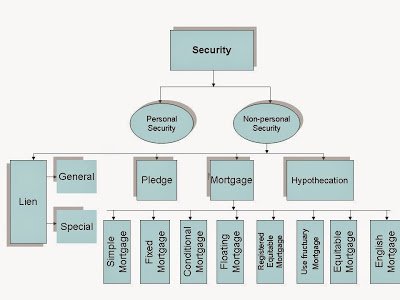
Security is what the borrower puts up to guarantee payment of the loan. Moreover security means immovable & chattel or personal asset or assets to which a lender can have recourse if the borrower defaults in the loan payment. Bankers, whenever advancing loans, first ask for the security to be put for the loans requested. Different types of securities are used depending upon the nature of the advances issued by the banks. A good security must be enough to cover the risk, highly liquid, free from any encumbrance, clean in ownership and easy to handle.

There are two types of banks security.

  • Personal Security
  • Non-personal security

  1. Personal security

If any banks client himself or third party is considered as security is called personal security. without receiving the immovable & chattel assets as security, if bank can receive any client himself or any person own self on be half of that client as security is considered as personal security. Bank will consider the person or third party only for then when he has enough social dignity and goodwill or a scope of applying law against himself in future or he is engaged in renowned business, government or recognized non government organization.

  1. Non-personal security

without receiving any client himself or any person own self on be half of that client as security , if bank can receive the immovable & chattel assets as security is considered as non-personal security. There are four types of non-personal security. such as-

  • Lien
  • Pledge
  • Mortgage
  • Hypothecation

The above four categories of non-personal security are given below with detail.

(a) Lien

The right of retain foods is known as lien. The lawful right of a lender to offer the guarantee property of an account holder who neglects to meet the commitments of an advance contract. A lien exists, for instance, when an individual takes out a vehicles advance. The lien holder is the bank that allows the advance, and the lien is discharged when the credit is forked over the required funds. Another kind of lien is a repairman’s lien, which can be appended to genuine property if the property proprietor neglects to pay a foreman for administrations rendered. In the event that the account holder never pays, the property can be sold to pay the lien holder. There are two types of lien:-

  • General lien: Here, Bank has the possess of the assets have been kept as security and bank can’t transfer the possession to another until the loan amount is being paid.
  • Special lien: Here, Bank has the possess of the assets have been kept as security and bank can transfer the possession to another on conditions is called special lien.

(b) Pledge

Here the possess of assets is to bank or loan provider, but the ownership is to borrower. After payment, bank transfers the possession of security assets to borrower. When a customer takes loan against jewels he pledges the jewel to the bank.  Similarly a customer availing loan on key cash credit basis pledges the  goods to the banker by keeping them in a godown under lock and key  control of the bank. Pledged goods are to be insured and the pledgee (banker) has to take reasonable care to protect the property pledged.

3. Mortgage

It is an interest in property created as security for a loan or payment of debt and terminated on payment of the loan or debt. A mortgage is a contract that permits a loan provider partially or fully to foreclose that security when a borrower is unable to pay the loan amount. Mortgage is applicable only for immovable assets and this is why it is called immovable property mortgage. There are many types of mortgage have been described below.

  • Simple mortgage: If the loan amount isn’t paid by borrower and legal step is taken against him or lender can purchase which security assets on the opinion of borrower is called simple mortgage.
  • Fixed mortgage: The borrower gives which property in black & white or in registering to the lender and if the loan is not paid in time, then legal possession of that security is gained by lender is called fixed mortgage.
  • Conditional mortgage: If the loan amount isn’t paid in time and without fulfilling the determined conditions, the which security is not sold or transfered is called conditional mortgage.
  • Floating mortgage: The possession right of which mortgage properly is belonged to borrower and only documents are submitted to loan provider is called floating mortgage.
  • Equitable mortgage: The documents of which mortgage property is kept to bank for a specific time period and possession is belonged to borrower and after exceeding the payment period bank try to gain the legal possession is called equitable mortgage.
  • Registered equitable mortgage: The ownership documents of which mortgage property is kept to lone provider with registration for a specific time period and possession is belonged to borrower is called registered equitable mortgage.
  • Use fructuary mortgage: The possession & consumption of which mortgage property is given to loan provider as loan providing till a specific time period and after exceeding that time period the belongingness of that property is leaved to borrower is called use fructuary mortgage.
  • English mortgage: The ownership of which mortgage property is to loan provider and possession or belongingness of that property is to borrower is called English mortgage. If borrower is fail to pay the loan amount then the possession power is automatically gone to loan provider.
  1. Hypothecation

It is pledge to secure an obligation without delivery of title or possession.

At last we can say that, at the modern banking sectors a great changes has been occurred in the categories of categories of mortgage.

Principles of Marketing University of Mumbai BMS 2nd Sem Notes

Unit 1 Introduction to Marketing {Book}
Marketing Definition, Features, Advantages VIEW
Nature and Scope of Marketing VIEW
Importance of Marketing VIEW
The 4P’s Marketing VIEW
The 4C’s Marketing VIEW
Marketing v/s Selling VIEW
Marketing as activity VIEW
Marketing as function VIEW
Concept of Marketing: Need, Wants and Demands, Transactions, Transfer and exchanges VIEW
Orientations of a firm: Production concept, Product concept, Selling and Marketing, Social Marketing, Holistic Marketing VIEW


Unit 2 Marketing Environment, Research and Consumer Behavior {Book}
The micro environment of Business VIEW
Management Structure, Marketing in which a firm operates, Competitors and Stakeholders VIEW
Marketing Channels VIEW
Macro environment: Political factors, Economic factors, Socio Cultural Factors, Technological Factors (PEST Analysis) VIEW
Marketing research: Meaning, Features VIEW
Marketing research Importance, Process, Scope VIEW VIEW
Types: Product research, Sales Research, Consumer/Customer Research, Production Research VIEW
MIS Meaning, Features and Importance VIEW VIEW VIEW
Consumer Behavior: Meaning, Features, Importance VIEW VIEW
Factors affecting Consumer Behavior VIEW VIEW


Unit 3 Marketing Mix. {Book}
Marketing Mix, Elements of Marketing Mix VIEW
Product VIEW
Product Mix VIEW
Product line VIEW
Product Lifecycle VIEW
Product planning VIEW
New Product Development VIEW
Failure of New Product VIEW
Levels of Product VIEW
Branding VIEW VIEW
Packing and Packaging Role and Importance VIEW
Pricing objectives VIEW VIEW
Factors influencing Pricing policy VIEW
Pricing Strategies VIEW
Physical Distribution Meaning VIEW
Factor affecting channel selection VIEW
Types of Marketing Channel VIEW
Promotion meaning and Significance VIEW
Promotion Tools VIEW


Unit 4 Segmentation, Targeting and Positioning and Trends in Marketing {Book}
Segmentation Meaning, Importance, Basis VIEW
Targeting Meaning, Types+ VIEW
Positioning Meaning, VIEW
Positioning Strategies VIEW VIEW
New Trends in Marketing:
e-Marketing VIEW
Internet Marketing VIEW
Marketing using Social Network VIEW
Social Marketing VIEW
Relationship Marketing VIEW

Industrial Law University of Mumbai BMS 2nd Sem Notes

Unit 1 Industrial Relations and Industrial Disputes {Book}
Industrial Dispute Act 1947 Definition, Authorities VIEW
Industrial Dispute Act 1947 Awards, Settlement VIEW
Industrial Dispute Act 1947 Strikes, Lockout VIEW
Industrial Dispute Act 1947 Lay off, Retrenchment and Closure VIEW
The Trade Union Act 1926 VIEW


Unit 2 Laws Related to Health, Safety and Welfare {Book}
The Factories Act 1948 VIEW
The Workmen’s Compensation Act 1923 Provisions: VIEW
Introduction: VIEW
The Doctrine of Assumed Risk
The Doctrine of common Employment
The Doctrine of Contributory Negligence
Employers liability for Compensation (Sec 3 to 13) VIEW
Rules as to Compensation (Sec 4 to 9) (Sec 14A & 17) VIEW


Unit 3 Social Legislation {Book}
Employee State Insurance Act 1948 VIEW
Employee Provident Fund VIEW
Miscellaneous Provision Act 1948: Schemes, Administration and Determination of Dues VIEW


Unit 4 Laws Related to Compensation Management {Book}
The payment of Minimum Wages Act 1948 Objectives, Definition, Authorized Deductions VIEW
The payment of Wages Act 1936 VIEW
Payment of Bonus Act 1965 VIEW
The Payment of Gratuity Act 1972 VIEW


Business Communication II University of Mumbai BMS 2nd Sem Notes

Unit 1 Presentation Skills {Book}
Presentation VIEW
Principles of effective Presentation VIEW
Effective use of OHP, Effective use of Transparencies VIEW
How to make a Power-presentation VIEW


Unit 2 Group Communication {Book}
Interview VIEW
Group Discussion, Preparing for an interview VIEW
Types of interviews: VIEW
Selection interview VIEW
Appraisal interview VIEW VIEW
Grievance interview VIEW VIEW
Exit Interview VIEW
Meetings: Need and importance of Meetings, Conduct of Meeting VIEW
Group Dynamics VIEW
Role of the Chairperson VIEW
Role of the Participants VIEW
Drafting of Notice VIEW
Agenda VIEW
Resolutions VIEW
Conference: Meaning and importance organizing a conference VIEW
Modern Methods: Video and Tele-conferencing VIEW VIEW
Public Relations: Meaning, Functions of PR Department VIEW VIEW
External and Internal Measures of PR VIEW VIEW


Unit 3 Business Correspondence {Book}
Trade Letters: VIEW
Order, Credit Trade Letter VIEW
Status Enquiry, Collection Trade Letter VIEW
Letters of enquiry, Letters of Complaints, Claims VIEW
Adjustments Sales Letters VIEW
Promotional leaflets and fliers VIEW
Consumer Grievance Letters VIEW
Letters under Rights to Information (RTI) Act VIEW


Unit 4 Language and Writing Skills {Book}
Reports: Parts, Types, Feasibility Reports VIEW
Investigative Reports VIEW
Summarization Identification of Main and supporting/Sub points Presenting these in a cohesive Manner VIEW


Business Environment University of Mumbai BMS 2nd Sem Notes

Unit 1 Introduction to Business Environment {Book}
Business Meaning Definition, Nature & Scope VIEW VIEW
Types of Business organizations VIEW
Business environment Meaning, Characteristics, Scope & Significance VIEW
Components of Business environment VIEW
Micro and Macro environment Definition, Differentiation VIEW
Analysis of business environment VIEW
SWOT Analysis VIEW
Introduction to Micro-Environment:
Internal environment: Value System, Mission, Objectives, Organizational Structure, Organizational Resources, Company Image, Brand equity VIEW
External environment: Firms, Customers, Suppliers, Distributors, Competitors, Society VIEW
Introduction to Macro-Environment: Demographic, Natural, Political, Social, Cultural, Economic, Technological, International and Legal VIEW


Unit 2 Political and Legal Environment {Book}
Political Institutions: Legislature, Executive, Judiciary VIEW
Role of Government in Business VIEW
Legal framework in India VIEW
Economic environment: Economic System and economic policies VIEW
Concept of capitalism, Socialism and Mixed economy VIEW
Impact of business on Public Sector, Private Sector and Joint Sector VIEW
Sunrise sector of Indian economy VIEW
Challenges of Indian economy VIEW


Unit 3 Social, Cultural, Technological, Competitive Environment {Book}
Social and Cultural environment Nature VIEW
Impact of foreign culture on Business VIEW
Traditional Values and its impact VIEW
Social Audit Meaning VIEW
Importance of co-operative Government VIEW
Social Responsibility of Business VIEW VIEW
Technological environment Features VIEW
Impact of Technology on Business VIEW
Competitive environment: Meaning VIEW
Michael Porter’s Five forces Analysis VIEW
Competitive Analysis VIEW


Unit 4 International Environment {Book}
GSTT/WTO: Objective and Evolution of GATT VIEW VIEW
Uruguay round VIEW
GATT vs. WTO VIEW
WTO function, Pros and Cons VIEW VIEW
Globalization Meaning, Features of Globalization VIEW
Nature and Stages of Globalization VIEW
Advantages and Disadvantages of Globalization VIEW
Foreign Market entry strategies VIEW
LPG Model VIEW
MNCs Definition, Meaning, Merits, Demerits VIEW
MNC in India VIEW
FDI Meaning, Concept and functions VIEW VIEW
Need for FDI in developing countries VIEW
Factor influencing FDI VIEW
FDI operations in India VIEW
Challenges faced by International Business and investment opportunities for Indian Industry VIEW


Principles of Management University of Mumbai BMS 2nd Sem Notes

Unit 1 Nature of Management {Book}
Management Concept, Significance, Roles & Skills VIEW
Levels of Management VIEW
Concept of PODSCORB VIEW
Managerial Grid VIEW
Evolution of Management Thoughts VIEW
Contribution of F.W Taylor VIEW
Henri Fayol VIEW
Contingency Approach VIEW


Unit 2 Planning and Decision Making {Book}
Planning Meaning, Importance, Limitations VIEW VIEW
Elements VIEW
Process VIEW
Management by objective (MBO) VIEW
Decision Making Meaning, Importance+, Process VIEW
Techniques of Decision Making VIEW


Unit 3 Organizing {Book}
Organizing Concepts VIEW
Organizing Principles VIEW
Organization Structure Formal & Informal VIEW
Line and Staff organization VIEW VIEW
Organization Matrix Structure VIEW
Organizing Advantages and Limitations VIEW
Departmentation Meaning, Basis and Significance VIEW
Span of Control Meaning VIEW
Graicunas Theory of Span of Control VIEW
Factors affecting span of Control VIEW
Centralization VIEW
Decentralization VIEW


Unit 4 Directing, Leadership, Co-ordination and Controlling {Book}
Directing Meaning and Process VIEW
Leadership Meaning, Styles VIEW VIEW
Qualities of Good Leader VIEW
Co-ordination as an essence of Management VIEW VIEW
Controlling Meaning, Process and Techniques VIEW VIEW VIEW
Recent Trends:
Green Management VIEW
CSR VIEW

Corporate Restructuring University of Mumbai BMS 4th Sem Notes

Unit 1 Corporate Restructuring: Introduction and Concepts {Book}

Corporate Restructuring, Historical Background, Meaning of Corporate Restructuring, Corporate Restructuring as a Business Strategy VIEW
Need and Scope of Corporate Restructuring VIEW
Planning, Formulation and Execution of Various Restructuring Strategies VIEW
Important Aspects to be considered while Planning or Implementing Corporate Restructuring Strategies VIEW
Forms of Restructuring:
Merger VIEW VIEW
Demerger, Reverse merger VIEW
Disinvestment VIEW
Merger Takeover/acquisition VIEW VIEW
Joint Venture (JV) VIEW VIEW
Strategic Alliance VIEW
Franchising and Slump sale VIEW
Unit 2 Accounting of Internal Reconstruction (Practical and theory) {Book}
Accounting of Internal Reconstruction VIEW VIEW
Need for Reconstruction and Company Law provisions VIEW
Distinction between Internal and External Reconstructions VIEW
Methods including alteration of Share capital, Variation of share-holder rights, Sub division, Consolidation, Surrender and reissue/Cancellation, Reduction of Share Capital, with relevant Legal provisions and Accounting treatments for same VIEW
Unit 3 Accounting of External Reconstruction (Amalgamation/ Mergers/ Takeovers and Absorption) (Practical and theory) {Book}
Accounting of External Reconstruction (Amalgamation/ Mergers/ Takeovers and Absorption) VIEW
In the nature of merger and purchase with corresponding accounting treatments of pooling of interests and purchase methods respectively VIEW
Computation and meaning of Purchase consideration and Problems based on Purchase method VIEW VIEW
Unit 4 Impact of Reorganization on the Company: An Introduction (Only Theory) {Book}
Change in the Internal Aspects on Reorganization: Change of Name and Logo, Revised Organization Chart, Communication, Employee Compensation, Benefits and Welfare Activities, Aligning Company Policies, Aligning Accounting and Internal Database Management Systems, Re-Visiting Internal Processes and Re-Allocation of People VIEW
Change in External Aspects on Reorganization: Engagement with Statutory Authorities, Revised ISO Certification and Similar Other Certifications, Revisiting past Government approvals, decisions and other contracts VIEW
Impact of Reorganization: Gain or Loss to Stakeholders, Implementation of Objectives, Integration of Businesses and Operations, Post Merger Success and Valuation and Impact on Human and Cultural Aspects VIEW

Integrated Marketing Communication University of Mumbai BMS 4th Sem Notes

Unit 1 {Book}
Meaning, Features of IMC, Evolution of IMC, Reasons for growth of IMC VIEW
Promotional Tools for IMC, IMC Planning Process VIEW
Role of IMC in Marketing VIEW
IMC Communication Process, Traditional VIEW
Alternative Response Hierarchy Models VIEW
AIDA Model VIEW
Hierarchy-of-Effects Model VIEW
Establishing objectives and Budgeting VIEW
Determining Promotional objectives VIEW
Sales vs Communication objectives VIEW
DAGMAR, Problems in Setting objectives VIEW
Setting objectives for the IMC Program VIEW


Unit 2 Elements of IMS-1 {Book}
Advertising: Features VIEW
Role of Advertising in IMC VIEW
Advantages and Disadvantages of Advertising VIEW
Types of Advertising VIEW VIEW
Types of Media used for Advertising VIEW
Sales Promotion Scope VIEW
Role of Sales Promotion as IMC Tool VIEW
Reasons for the growth of Sales Promotion VIEW
Advantages and Disadvantages of Sales Promotion VIEW
Types of Sales Promotion VIEW
Objectives of consumer and Trade Promotion VIEW
Strategies for Consumer Promotion and Trade Promotion VIEW
Sales promotion campaign VIEW
Evolution of Sales Promotion campaign VIEW


Unit 3 Elements of IMC-II {Book}
Direct Marketing VIEW
Role of Direct Marketing in IMC VIEW
Objectives of Direct Marketing VIEW
Components of Direct Marketing VIEW
Tools of Direct Marketing: Direct mail, Catalogues, Direct response Media, Internet, Telemarketing VIEW
Alternative media evaluation of effectiveness of Direct Marketing VIEW
Publicity Relations and Publicity introduction VIEW
PR, Tools of PR VIEW VIEW
Role of PR in IMC VIEW
Advantages and Disadvantages of PR VIEW
Types of PR VIEW
Managing PR: Planning, Implementation, evaluation and Research, Publicity VIEW
Sponsorship: Definition, Essentials of good Sponsorship VIEW
Event Sponsorship, Cause Sponsorship VIEW
Personal Selling, features VIEW
Role of Personal Selling in IMC VIEW
Advantages and Disadvantages of Personal Selling VIEW
Personal Selling process VIEW
Importance of Personal Selling VIEW


Unit 4 Evaluation & Ethics in Marketing Communication {Book}
Evaluating an Integrated Marketing program: VIEW
Evolution process of IMC, Messages evaluation VIEW
Advertising tracking research VIEW
Copy testing, emotional reaction Test VIEW
Cognitive Neuro Science – Online evaluation VIEW VIEW
Behavioral evaluation – Sales and Response Rate VIEW
POPAI, Toll free numbers, QR codes and Facebook likes VIEW
Response cards, Internet responses, Redemption rate VIEW
Test Markets: Competitive responses, Scanner Data, Purchase Simulation Test VIEW
Ethics and Marketing Communication: Stereotyping, Targeting Vulnerable customer VIEW
Offensive brand Messages, Legal issues, Commercial free Speech VIEW
Misleading claims, Puffery, fraud, Questionable B2B practices VIEW
Current Trends in IMC:
Internet & IMC VIEW
Advertising on Internet VIEW
PR through Internet Banner, Sales Promotion on Internet, Direct Marketing on Internet VIEW

Rural Marketing University of Mumbai BMS 4th Sem Notes

Unit 1 Introduction {Book}
Introduction to Rural Marketing, Definition, Scope VIEW
Rural Market in India: Size, Scope VIEW
Rural development as a Core Area VIEW
Efforts put for rural Development by Government VIEW
Emerging Profile of Rural Markets in India VIEW
Problems of Rural Market VIEW
Constraints in Rural Marketing and Strategies to overcome VIEW


Unit 2 Rural Market {Book}
Rural consumer vs Urban consumer VIEW
Characteristics of Rural consumers VIEW
Rural Market Environment:
a) Demographics: Population VIEW
Occupation pattern VIEW
Literacy level VIEW
b) Economic factors: Income generation VIEW
Expenditure pattern VIEW
Rural Demand VIEW
Consumption Pattern VIEW
Rural Market index VIEW
Land use Pattern VIEW
c) Rural infrastructure: Rural housing, Electrification, Roads VIEW
Rural consumer behaviour: Meaning VIEW
Factors affecting Rural consumer behaviour: Social factor, Cultural factors, Technological factors, Lifestyle, Personality VIEW


Unit 3 Rural Marketing Mix. {Book}
Marketing Mix for Rural Market/Consumers VIEW
Product Strategies, Rural product categories: FMCG, Consumer Durables, Agriculture goods and Services VIEW
Importance of branding, Packaging VIEW VIEW
Importance of Packaging VIEW
Importance of Labelling VIEW
Nature of competition in Rural Markets VIEW
Problems of fake brands in Rural Markets VIEW
Pricing Strategies and objectives VIEW
Promotional strategies for Rural Market VIEW
Targeting for Rural Market VIEW
Rural Market Positioning VIEW
Rural Marketing Segmentation VIEW


Unit 4 Rural Marketing Strategies {Book}
Rural Marketing Strategies VIEW
Distribution strategies for Rural Consumers:
Channels of Distribution: HAATS, Mandis, Public distribution System, Co-operative Society VIEW
Distribution Models of FMCG like HUL & ITC VIEW
Distribution networks, ideal Distribution model for Rural market VIEW
Communication Strategy:
Channels in Rural communication, Developing effective communication VIEW
Determining communication objectives, Designing the message VIEW
Selecting the communication channels VIEW
Creating Advertisements for Rural Audiences VIEW
Rural Media: Mass media, Non-conventional Media, Personalized Media VIEW

Human Resource Planning & Information System University of Mumbai BMS 4th Sem Notes

Unit 1 Overview of Human Resource Planning {Book}
Human Resource Planning: Meaning, Features VIEW
Human Resource Planning Scope, Approaches VIEW
Levels of Human Resource Planning VIEW
Types, Tools, Activities for Human Resource Planning VIEW
Requirement of effective HR Planning VIEW
Process of HRP VIEW
Steps in HRP VIEW
HR Demand forecasting- Factors VIEW
HR Demand forecasting Techniques: Managerial Judgement, Ratio Trend Analysis, Regression Analysis, Work Study Techniques, Delphi Technique VIEW
HR Supply Forecasting factors Techniques: Skills Inventories, Succession Plans, Replacement charts, Staffing Tables VIEW
Barriers in effective implementation of HRP and Ways of overcome them VIEW
Strategic Human Resource Planning Meaning and objectives VIEW
Link between Strategic Planning and HRP through Technology VIEW
HP Policy Meaning and Importance VIEW
HR Programme Meaning and Contents VIEW VIEW


Unit 2 Job Analysis, Recruitment and Selection {Book}
Job Analysis Meaning, Features and Advantages VIEW VIEW
Job Design Concept and issues VIEW VIEW
Job Design issues VIEW VIEW
Job Redesign Meaning, Process, Benefits VIEW
Matching Human Resource Recruitment and Availability through:
Retention: Meaning, Strategies, VIEW
Resourcing: Meaning, Types VIEW
Flexibility: flexibility work practices VIEW
Downsizing: Meaning, Reasons VIEW
Layoff: Meaning, Reasons VIEW
Recruitment: Meaning VIEW VIEW
Factor affecting Recruitment VIEW
Ethical issues in Recruitment and Selection VIEW
Employee Selection Tests: Meaning, Advantages and Limitations VIEW
Human Resource Audit: Meaning, Need, Objectives, Process and Areas VIEW

a

Unit 3 HRP Practitioner, Aspects of HRP and Evaluation {Book}
HRP Practitioner Meaning and Role VIEW
HRP Management Process VIEW
HRP Department Goals and objectives VIEW
HRP Department Structure VIEW
Staffing in HRP Department, issuing orders, resolving conflicts, Communicating VIEW
Planning for Needed Resources VIEW
Power and Politics Meaning and Types of Power VIEW
HRP as Tool to enhance Organizational Productivity VIEW
Impact of Globalization on HRP VIEW
Aspects of HRP:
Performance Management VIEW
Career Management VIEW
Management Training and Development, Multi Skill Development VIEW
Return of investment in HRP Meaning and importance VIEW
HRP Evaluation: Meaning, Need, Process VIEW
Issues to be processed during HRP evaluation VIEW
Selected strategic Options and HRP implications VIEW
Restructuring and its impact on HRP VIEW
Mergers and Acquisitions and its impact on HRP VIEW
Outsourcing and its impact on HRP VIEW


Unit 4 Human Resource information Systems {Book}
Data information needs for HR Manager: Contents and Usage of Data VIEW
HRIS: Meaning, Features, Evolution, Objectives, Essentials, Components, Functions VIEW
Steps in Designing of HRIS, HRIS Subsystems, Mechanisms of HRIS VIEW
Benefits, Limitations, Barriers in effective implementations of HRIS VIEW
Security issues in HRIS VIEW
HRIS for HRP VIEW
Trends in HRIS VIEW
error: Content is protected !!