Theory and Practice of Yoga education

Yoga is a system of mental and spiritual development with a scope of mental transformation. In India, the concept and practice of Yoga originated several millennia ago. Its founders were great saints and Sages, the great yogis gave rational interpretation to their experiences of Yoga and brought about a scientific and practical method within everyone‘s reach. Today is modern time, Yoga no longer is restricted to hermits of saints; it has taken its place in everyday life and has aroused the world wide awakening and acceptance in the last decade.

The science of Yoga and its techniques have now been re-oriented to suit physiological needs and lifestyles. Experts of various branches of medicine including modern science are realizing the role of these techniques in the prevention and management of lifestyle disorders.

The literal meaning of the Sanskrit word “Yoga is to Yoke”. Accordingly, Yoga can be defined as a means of uniting the individual spirit with the universal spirit. This is the primary objective of Yoga i.e. spiritual advancement.

All the diseases arise at mental level and then get manifested physically. Therefore

way to win over diseases is to destroy unnatural lifestyle. In fact, people have some

bad habits which do not let them stay healthy. Some of these habits are-

  1. Food related habits
  2. Laziness
  3. Least use of fine elements
  4. Affection with unnatural things
  5. Unregulated use up
  6. Futile treatment
  7. Bad thoughts.

Yoga philosophy is one of the six systems of Indian philosophy. It is the philosophy, science and art of holistic living where the ignoble in man is transformed into the noble. Unlike so many other philosophies of the world, it is a philosophy which completely practical. It is an exact science based on certain immutable Laws of Nature.

Yoga is a process of rejoicing. It is not a suffering. It is a movement through happiness. From one state of joy, we move to another state of joy. It is not that Yoga starts with sorrow, or that it is a kind of prison-house into which we are thrown. We have sometimes a feeling that Yoga is a torture, a suffering, to the normal life of man. Sadhana means a fear, and indicates an unnatural seriousness.

Body needs a certain amount of exercise for its proper function. Lack of, exercise or wrong physical activity can aggravate or cause psychological problems. Asana is the third limb of Astanga Yoga. It consists of the performance of physical postures that release physical stress and tension. The correct postures increase the vital force, which gets blocked by wrong posture, and calms the mind, which is stressed by wrong posture. It refers to sitting postures for meditation, which are the main Asanas mentioned in yogic texts. For any real self-examination, we must be able to sit still and comfortable with an erect spine. This scientifically seen that it allows the ascending flow of energy through which the mind can empty itself out and open up the deeper layers of consciousness. Its regular practicing can aid in releasing psychological tension through releasing the physical and Pranic blocks sustaining it.

Yogic management for stress

Asanas/postures can help to relive stress, tension and anxiety. By expelling the excess negative emotions and adrenaline through physical activity, one can enter a more relaxed, calm state of being. It is one of the most important coping medium to combat anxiety and stress. It acts as a buffer against stress and may thus help protect the cardiovascular and immune systems from the consequences of stressful events. The yogic practices are:

Kriyas: Jalneti, Sutraneti, Kapalbhati, Suryanamaskar

Brisk exercise: Nadisanchlana, Butterfly asana, Pagchalana, Nabichalan.

Yogicasanas: Tadaasana, Katichakarasana, Pavanmuktasana, Sarvangasana, Matsyasana, Gomukhasana, Vakrasana, Ardhamatsyendrasana, Ushtrasana, Shashankasana, Paschimottanasana, Makrasana, Bhujangasana, Dhanurasana,  Shalbhasana, Shavasana.

Pranayama: Nadishodan, Ujjayi, Shitali, Shitkari, Bhastrika, Bhramari.

Meditation: Breath awareness, Om chanting, Om meditation.

Yoga Nidra, with this regular practice is believed to act on the subconscious level to bring about a state of homoestasis in the body and mind.

Behaviour change for reducing stress

  • Keep a positive attitude. One should adopt middle path in all dealings. Avoid extremes.
  • Accept that there are events that you can control.
  • Be assertive instead of aggressive. Assert your feelings, opinions, or beliefs instead of becoming angry, defensive, or passive.
  • Learn and practice relaxation techniques; try meditation & Yoga.
  • Exercise regularly. Your body can fight stress better when it is fit.
  • Eat healthy, well-balanced meals. Always take food after digestion of previous meal, according to suitability & in limited quantity.
  • Learn to manage your time & speak more effectively according to the occasion with good, true & pleasing words.
  • Set limits appropriately and say no to requests that would create excessive stress in your life.
  • Make time for hobbies and interests.
  • Get enough rest and sleep. Your body needs time to recover from stressful events.
  • Don’t rely on alcohol, drugs, or food to reduce stress. Ease up on caffeine, too.
  • Seek out social support. Spend enough time with those you love.

Assessment of Stress Tools and Methods

New methods for stress assessment were developed in the last years as a result of an unprecedented evolution in consumer electronics and miniaturization. Others were made possible from a better understanding of stress and its effects on the Human being at several levels: physiological, behavioral or physical. The diversity of alternatives, asshown in this section, allows for solutions to be used in specific scenarios with increased accuracy and commodity (e.g. driving vehicles, working at the computer). In this section we analyze in detail the characteristics of each of these new methods and in Section 6 we provide a critical analysis and a comparison between them.

Wearables

One of the latest trends in stress management is being fostered by wearable devices. Indeed, in the last years there was a major development in consumer electronics, with devices being used for acquiring physiological signs.

Smartphones

The evolution witnessed in the field of smartphones in the last years also led to the emergence of a new paradigm: wellness mobiles. Technological developments make it possible for health-care professionals to have access to comprehensive real-time patient data. Likewise, users can also continuously track their health on the go, build a comprehensive history and receive real-time advice or warning.

Indeed, mobile phones have a growing number and variety of sensors that can nowadays be leveraged to produce, in the near future, what can be called as personal wellness dashboards: devices with the ability to measure our heart rate or body temperature and quickly analyze our state of health. This may make personal health care cost-effective, decreasing the use of emergency care.

Some mobile apps take advantage, to some extent, of the sensors currently present in smartphones.

Although, in many cases, some of these apps lack proven scientific validity, their low cost and their availability makes them easily reach a significant number of users.

The majority of existing apps use the smartphones’ builtin sensors. Azumio’s Stress Check uses the camera and light features of the smartphone to measure heart rate. A similar approach is followed by other apps (e.g. StressViewer). There is also a significant number of apps dedicated not to measuring stress but to decreasing or coping with it, namely through breathing exercises, with visual or sound aids. Stress Releaser is one such app. Another example is DeStressify, that is based on music and specific exercises. There are also apps that use specific hardware, such as PIP Relax and Race, which is based on an electrodermal activity sensor. In this specific app, the user takes part in a race where victory is achieved only by out-relaxing the opponents. A generally competitive activity is thus changed into a relaxing one, with real-time biofeedback. Similar apps exist for this specific hardware. DroidJacket requires the use of VitalJacket – a shirt that embeds an electrocardiogram sensor, allowing a continuous monitoring of the patient.

The work described in also uses a specific sensor platform (Personal Biomonitoring System), in parallel with the smartphone, to monitor the level of stress of the smartphone user.

Other smartphone-based approaches are based on the changes in the speech production process, that happen during stress. To this end, these applications use the microphones embedded in the mobile phones. StressSense is one of such applications, based on a classifier that can robustly identify stress across multiple individuals in diverse acoustic environments. There are also authors who look at the behavior of smartphone users for stress indicators. Although not in a conclusive manner, in the authors find significant differences in location traces, visible bluethooth devices and phone call patterns when comparing stressful with stress free periods.

Computer Vision

Many different image sources can be used to monitor stress, the most frequently used being the Human face. Although cultural differences can intensify facial expression of emotions, there is considerable scientific evidence that emotions are communicated in distinct facial displays across cultures, age and gender. These approaches can be classified as two-dimensional or three-dimensional. Their main difference is that the first tries to recognize features directly from a two-dimensional decomposition/transformation of the image, and is generally not sensible to rotations and translations of the face.

The authors apply optical computer recognition algorithms to detect facial changes due to low and highstressor performance demands, with the aim to develop an approach suitable to be used by astronauts. This approach takes as input images from the whole face. On a similar approach but on a different field of application, Gao et al. present a system for detecting stress from facial expressions

in car drivers, on the other hand, consider only pupil diameter (together with physiological signals), to assess stress. To this end, they make use of a specific camera-based eye-tracking system. Speech and Other Linguistic Features

This section describes approaches for stress assessment based on vocal cues such as speed, rhythm or intonation. Interestingly, the variability introduced by stress or emotion can severely reduce speech recognition accuracy. Thus, the importance of techniques for detecting or assessing the presence of stress to improve the robustness of speech recognition systems.

The present a hierarchical framework, which consists of three layers of classifiers, for automatic stress detection in English speech utterances: a linguistic classifier, an acoustic classifier and an AdaBoost classifier. The paper presents accuracy rates higher than 90%. In a related approach, Imoto et al. address sentence-level stress detection of English for Computer-Assisted Language Learning by Japanese students. Stress models are set up by considering syllable structure and position of the syllable in a phrase, providing diagnostic information for students.

Eustress concept, Factors affecting eustress

Eustress means beneficial stress either psychological, physical (e.g. exercise), or biochemical/radiological (hormesis).

The term was coined by endocrinologist Hans Selye, consisting of the Greek prefix eu- meaning “good”, and stress, literally meaning “good stress”.

It is the positive cognitive response to stress that is healthy, or gives one a feeling of fulfilment or other positive feelings. Selye created the term as a subgroup of stress to differentiate the wide variety of stressors and manifestations of stress.

Eustress is not defined by the stressor type, but rather how one perceives that stressor (e.g. a negative threat versus a positive challenge). Eustress refers to a positive response one has to a stressor, which can depend on one’s current feelings of control, desirability, location, and timing of the stressor. Potential indicators of eustress may include responding to a stressor with a sense of meaning, hope, or vigor. Eustress has also been positively correlated with life satisfaction and well-being.

Eustress occurs when the gap between what one has and what one wants is slightly pushed, but not overwhelmed. The goal is not too far out of reach but is still slightly more than one can handle. This fosters challenge and motivation since the goal is in sight. The function of challenge is to motivate a person toward improvement and a goal. Challenge is an opportunity-related emotion that allows people to achieve unmet goals. Eustress is indicated by hope and active engagement. Eustress has a significantly positive correlation with life satisfaction and hope. It is typically assumed that experiencing chronic stress, either in the form of distress or eustress, is negative. However, eustress can instead fuel physiological thriving by positively influencing the underlying biological processes implicated in physical recovery and immunity.

Measurement

Occupational eustress may be measured on subjective levels such as of quality of life or work life, job pressure, psychological coping resources, complaints, overall stress level, and mental health. Other subjective methodological practices have included interviews with focus groups asking about stressors and stress level. In one study participants were asked to remember a past stressful event and then answer questionnaires on coping skills, job well-being, and appraisal of the situation (viewing the stressful event as a challenge or a threat).

Common subjective methodologies were incorporated in a holistic stress model created in 2007 to acknowledge the importance of eustress, particularly in the workplace. This model uses hope, positive affect, meaningfulness, and manageability as a measure of eustress, and negative psychological states, negative affect, anxiety, and anger as a measure of distress.

Objective measures have also been used and include blood pressure rate, muscle tension, and absenteeism rates. Further physiological research has looked for neuroendocrine changes as a result of eustress and distress. Research has shown that catecholamines change rapidly to pleasurable stimuli. Studies have demonstrated that eustress and distress produce different responses in the neuroendocrine system, particularly dependent on the amount of personal control one feels over a stressor.

Factors

There are several factors that may increase or decrease one’s chances of experiencing eustress and, through eustress, experiencing flow.

  • Stress is also influenced by hereditary predispositions and expectations of society. Thus, a person could already be at a certain advantage or disadvantage toward experiencing eustress.
  • If a person enjoys experiencing new things and believes they have importance in the world, they are more likely to experience flow.
  • Flow is negatively related to self-directedness, or an extreme sense of autonomy.
  • Persistence is positively related to flow and closely related to intrinsic motivation.
  • People with an internal locus of control, have an increased chance of flow because they believe they can increase their skill level to match the challenge.
  • Perfectionism, however, is negatively related to flow. A person downplays their skill levels therefore making the gap too big, and they perceive the challenge to be too large to experience flow. On the opposite end of perfectionism, however, there are increased chances of flow.
  • Active procrastination is positively related to flow. By actively delaying work, the person increases the challenge. Then once the challenge is matched with the person’s high skill levels, the person can experience flow. Those who passively procrastinate or do not procrastinate do not have these same experiences. It is only with the purposeful procrastination that a person is able to increase the challenge.
  • Mindset is a significant factor in determining distress versus eustress. Optimistic people and those with high self-esteem contribute to eustress experiences. The positive mindset increases the chances of eustress and a positive response to stressors. Currently, the predominant mindset toward stress is that stress is debilitating. However, mindsets toward stress can be changed.

Examples

Eustress is common in the examples below. However, the examples depend on how an individual perceives the stress. The examples below are most often perceived as eustress:

  • Meeting or engaging in a challenge
  • Desired physical exercise (e. g. weight training, running, biking)
  • Intentional exposure to cold water
  • Playing sports
  • Watching a suspenseful or scary movie
  • Riding a roller coaster
  • Competing in a tournament
  • Gambling
  • Wim Hof breathing
  • People (e. g. Coaches, Parents)

Factors affecting eustress

In daily life, we often use the term “stress” to describe negative situations. This leads many people to believe that all stress is bad for you, which is not true. Eustress, or positive stress, has the following characteristics:

  • Motivates, focuses energy
  • Is short-term
  • Is perceived as within our coping abilities
  • Feels exciting
  • Improves performance

In contrast, Distress, or negative stress, has the following characteristics:

  • Causes anxiety or concern
  • Can be short- or long-term
  • Is perceived as outside of our coping abilities
  • Feels unpleasant
  • Decreases performance
  • Can lead to mental and physical problems

Future of Stress Management

Stress can be effectively managed in many different ways. The best stress management plans usually include a mix of stress relievers that address stress physically and psychologically and help to develop resilience and coping skills.

Use Quick Stress Relievers

Some stress relief techniques can work in just a few minutes to calm the body’s stress response. These techniques offer a “quick fix” that helps you feel calmer at the moment, and this can help in several ways.

When your stress response is not triggered, you may approach problems more thoughtfully and proactively. You may be less likely to lash out at others out of frustration, which can keep your relationships healthier. Nipping your stress response in the bud can also keep you from experiencing chronic stress.

Quick stress relievers like breathing exercises, for example, may not build your resilience to future stress or minimize the stressors that you face. But they can help calm the body’s physiology once the stress response is triggered.

Develop Stress-Relieving Habits

Some techniques are less convenient to use when you are in the middle of a stressful situation. But if you practice them regularly, they can help you manage stress in general by being less reactive to it and more able to reverse your stress response quickly and easily.

Long-term healthy habits, like exercise or regular meditation, can help to promote resilience toward stressors if you make them a regular part of your life.3 Communication skills and other lifestyle skills can be helpful in managing stressors and changing how we feel from “overwhelmed” to “challenged” or even “stimulated.”

Eliminate Stressors When You Can

You may not be able to completely eliminate stress from your life or even the biggest stressors, but there are areas where you can minimize it and get it to a manageable level.

Any stress that you can cut out can minimize your overall stress load. For example, ending even one toxic relationship can help you more effectively deal with other stress you experience because you may feel less overwhelmed.

Ten ways you can help them manage stress now and in the future:

  • Create a culture that promotes stress management.

Since we are on call 24/7 work must be more like home since home is already more like work. This could be achieved by promoting activities like napping at work, taking meditation breaks, walking during lunch, engaging in chair yoga during breaks, having more social time at work, etc.

  • Managers must lead by example.

It’s a well-known fact that when the manager of a department works late every night, works through lunch and puts his or her own needs last, everyone in that department is going to do the same. Managers need to model balanced behavior that leads to balanced workers.

  • Manage stress while it’s happening.

The two best techniques for managing your stress while it’s happening are cognitive restructuring and mindfulness. Cognitive restructuring teaches you how to recognize your irrational thinking (AKA, negative self-talk which causes you boatloads of stress) and teaches you how to change it, on the fly, so you stop stress before it starts. Mindfulness teaches you how to find refuge in the present moment and thus liberate you from lots of anxiety (future-oriented thinking) and lots of anger (holding onto events that happened in the past). This also allows you to keep a lot of stress at bay.

  • Train employees to recognize stress-related illness so they can discuss it intelligently with their doctor.

Doctors receive little or no training in medical school on how to treat stress-related illness and are quick to prescribe pharmaceutical solutions that usually involve side-effects and don’t address the source of the problem. This allows their patients to effectively ignore their stress symptoms which are now masked by their prescription.  Your employees need to know this and know what alternatives are available to them to prevent stress-related health problems in the future.

  • Make the message of stress management simpler.

What if we start with the problem and work backwards to the solution, which in this case would be various forms of stress management. So, if we start with everyday health problems like migraine headaches, insomnia, chronic pain and many gastro-intestinal issues for example, and work backwards to a stress management solution from there like biofeedback, meditation, yoga and mindfulness (match these in the same order with the health issues listed above), people would be more motivated to participate in programs that solve their specific problems that don’t involve side effects. 

  • Stress science could also include the new brain science.

Stress management has always been about maintaining an internal locus of control (AKA feeling like you are in the driver’s seat of your own life). We now know that our locus of control may actually reside in the prefrontal cortex (PFC) of the brain. Knowing how to access and nurture the PFC ultimately leads to greater control over our emotions, our fears and our stress.

  • Make stress management proactive.

We need to elevate stress management practices like exercise, yoga, and meditation to the same status as brushing your teeth or taking a shower. It doesn’t take any will power to brush your teeth or take a shower every morning, you just do it. In the future, the same will be true of stress management. When you talk to any group ask the people in your audience if they do any of the above activities on at least a 3-day a week basis. Then ask if they would ever go back to NOT doing them. The answers you get will serve as powerful testimonials to kind of results one gets by making these activities a part of one’s daily and/or weekly routine.

  • Acknowledge stress sensitivity.

Some people are wired differently. The best way to deal with a wiring problem is by rewiring. You rewire your brain through affirmations, skill-building and habit formation. In addition, meditation practice can facilitate the whole process and literally change the structure of your brain.

  • Embrace the European model.

In Europe the employer takes responsibility for the stress levels that its employees experience at work and makes an effort to both lower these levels AND teach the employee better methods for coping with the stress that can’t be lowered by changing certain aspects of the job itself.  In the UK mindfulness training at work is mandated by law.

  • Teach employees about underlying sources of stress in their life like time pressure, relationship problems, disorganization and financial stress.

In order to address time pressure, employees need to build in extra time for things to go wrong or that take longer than they think. For relationship problems they can spend time every day connecting with the most important people (friends and family members, coworkers) in their lives. In order to address disorganization, they need to be encouraged to set aside time every day for planning and getting organized. (Maybe the first 5-10 minutes after arriving at work.) In order to address financial stress, bring in financial counselors who can teach people about the importance of lowering credit card debt and saving a small amount each month. Addressing these MAJOR underlying causes of stress will bring about a growing sense of inner peace that is quite simply more valuable than gold.

Stress and New Technology

As a manager you want your team to do their best. And that naturally means making sure they have all the tools they need. Unfortunately, that new calendar app, communication tool, or project management software might be causing more harm than good.

As the name implies, technostress is the stress and negative psychological impact of introducing new technologies at work.

The term was first used by Craig Brod in his book of the same name back in 1984. Yet while Brod was talking about the widespread adoption of computers in the workplace, our dependence on (and frustration with) technology has only grown since.

1: Perpetual Distraction

The persistent beeping, vibrating and flashing of notifications mean that we are constantly distracted and driven to interrupt what we are doing to check our phones.  Indeed, a UK study found that smartphone users unlock their phones on average 85 times a day; and use it for about five hours each day.  This means we are unable to focus our attention and consolidate things properly into our memory, causing us to feel more and more ‘goldfish-like’, which can be quite distressing in itself.  This is backed up by research which is beginning to show correlations between high smartphone and internet use, and poor cognitive skills such as attention, memory and learning.

2: Sleep Dysregulation

Many of us use our phone at bedtime.  You get into bed intending to go to sleep, but you just want to check your phone (just for ‘a second’) to find out something innocuous like tomorrow’s weather… and then an hour later, there you are watching a totally random video, trying to decide whether you hear a computerised voice saying the word ‘yanny’ or ‘laurel’.  Looking at our phones when we should be going to sleep has the double whammy effect of over-stimulating our brains, making it hard to wind down and switch off, and exposing us to blue light from the screen. Research suggests that blue screen exposure can reduce melatonin production, which interrupts our circadian rhythm (i.e. sleep-waking cycles), making it harder for us to fall, and stay, asleep. Unfortunately, poor sleep tends to mean poorer resilience and higher levels of anxiety and stress.

3: Work/Life Balance

While in the past there was often a clear boundary between where work life ended, and home life began. His area is now very much grey.  Most of us have our work emails on our phones, making us constantly available and contactable.  This makes it very difficult for us to ever truly disengage from work and relax.

4: F.O.M.O

Or Fear Of Missing Out is essentially a type of social anxiety that arises from the fear that you are missing out on something; whether it’s an event, a work or social opportunity, a communication, or a potential connection, or just something cool and ethereal that you might like to see or be part of.  So we want to be connected. ‘just in case’.  To test this, just ask your friends and family if they’ve ever considered coming off social media. Like us, they probably have… but the majority probably decide not to, because of FOMO.  Ironically, the more connected we are, the more likely we may be to experience FOMO, because it is often caused by the posts we see on social media sites like Facebook leading us to believe our friends and acquaintances are having exciting and/or interesting experiences in our absence.  To find out more about research exploring the relationship between problematic smartphone use, FOMO and mental wellbeing.

5: Social Comparison

We can’t help but compare ourselves to others, and social comparison theory suggests that we use these types of comparisons to evaluate how we think and feel about ourselves.  Social Media, by its nature, actively encourages social comparison, as it is littered with information that can easily be used as metrics of apparent social success (e.g. friends, likes, shares, followers and so forth). These metrics are problematic in themselves, because if we don’t get enough likes to a comment or picture we have posted, or if someone has more likes or friends than us, it can make us feel inferior.  Furthermore, the disparity between real life and what people actually post on social media means that we tend to only see an extremely edited ‘highlight reel’ of other people’s lives. This effectively gives the false impression that others lead a more exciting/perfect/interesting life than our own, which, in reality has its fair share of ups, middles and downs for everyone. increasing the likelihood of negative social comparisons being made, which can have serious consequences on our wellbeing.

Causes of technostress

Technostress isn’t just about specific tools or apps. To understand its true impact, we can group the stressors that cause technostress into five categories:

  1. Invasion: “Technology is taking over my life!”

Hands up if you’ve ever taken work home with you. Thanks to smartphones and high-speed internet, jobs are rarely restricted to just the workplace. With technology invading our work and home, it shouldn’t be surprising that we’re getting more stressed.

  1. Overload: “I can’t keep up with all these tasks!”

Even when work somehow stays at work, we’re often overloaded by interruptions. With the average office worker receiving 121 emails every day (and who knows how many IM notifications), people often feel under fire and overworked.

  1. Complexity: “This technology is too complicated!”

Many workers inexperienced with technology find new tools unnecessarily complex and intimidating. Every app comes with new “helpful” features and its own unique jargon that you need to learn. Even Gmail has so many different options and settings you probably won’t know about them all without a guide.

  1. Insecurity: “If I can’t work out how to use this technology, I’ll get fired!”

Unfortunately, most workers are expected to learn the tool by themselves as they go along, without any additional training (or even time) provided.

Worse still, many feel that if they can’t keep up-to-date with the latest technology they’ll be replaced by someone who can. This results in performance anxiety and a very real sense of insecurity, putting even greater pressure on workers.

  1. Uncertainty: “Wait, is this how this technology is supposed to work?”

Finally, as technology keeps advancing, many feel a sense of instability and uncertainty about what their work (and life) will look like tomorrow. Even we writers aren’t immune, as headlines of AIs taking our jobs become increasingly common.

Looking at the five categories of stress, it shouldn’t come as a surprise that highly innovative companies that are constantly pushing the boundaries had the highest levels of technostress.

Interestingly, though, those who only use technology occasionally are more likely to suffer from technostress, as people who regularly use technology seem to develop the necessary coping skills.

Along with burnout, technostress can cause a wide range of other symptoms, such as:

  • Headaches, sore neck, back, and shoulder muscles, an inability to relax, and hypertension are just a few of the common physical symptoms of technostress.
  • Workers feeling overwhelmed by technology have increased errors, worse productivity, more difficulty concentrating, and low morale, and they can become depressed, mentally exhausted, and cynical toward technology.
  • Technostress can cause panic/anxiety attacks, feelings of isolation, and irritability. It can also lead to less time for sustained thinking, work/life imbalance, reduced job satisfaction, and increased mental and time pressure.

Pair these with all the other things that can contribute to workplace stress and that new technology you brought in could be doing more harm than good.

Even worse, your team might not even be using the thing. Studies found technostress can lead to workers ignoring or avoiding tech-related procedures. So rather than saving time and money, that new tech could be costing you without any actual benefits.

Stress Audit Process

Audit in medical practice is now an accepted part of established procedure and is a tool which can be applied to all aspects of practice.

Audit can be performed in two main ways:

  • External: An outside auditor examines how work is being carried out and
  • Internal: Those who actually are employed in the workplace carry out the assessment.

There are advantages and disadvantages to both of these and the tool which is used depends on several factors including the purpose of the audit, the competence of those carrying it out and available finance.

A stress audit may be carried out by someone who is medically trained or by someone with a different background. Management consultants are increasingly involved in stress because of the close links between management style and stress problems. Other specialists and non-specialists may also offer audits and treatment services.

Stress Audit

Stress might affect job performance either because working conditions are stressful or because of personal stress factors outside work. A stress audit should be designed to differentiate between these. There are several reasons why a company may decide to tackle stress. Many organizations take action without having first established whether or not stress is a problem or indeed whether or not work-related stress occurs. An analogy might be made with prescribing medication without having made a diagnosis. A wise employer should endeavour to find out whether or not stress is a problem in their working environment, identify whether or not such stress is primarily due to working conditions and quantify the extent of the problem before deciding on any measures to combat the effects of stress. This means carrying out a stress audit

There are several levels at which a stress audit may be conducted:

  • Evaluation of organizational dysfunction;
  • Identification of work stressors such as work overload, job insecurity, poor channels of communication, ineffective management, constant change and frustration;
  • Measurement of stress-related illness in employees and
  • An evaluation of indicators such as absence or staff turnover

Significant stress is often associated with organizational dysfunction and a stress audit should concentrate on management style and gain an overall picture of the health of the organization and the way in which it is run in order to be effective.

Even when they recognize that there is a problem, some employers are reluctant to agree to an audit because they fear that this may expose their deficiencies. The situation is particularly delicate when senior executives are aware that management style is likely to be a major factor in stress causation.

Methodology for carrying out a stress audit

The first task is to decide on a clear objective for the audit This might be to ascertain whether or not stress presents a problem, the extent of stress-related illness in the organization or identification of the causes of stress in a particular work environment.

Most audits are carried out using a questionnaire distributed to a study population. There are those which have already been validated (such as the Occupational.

Stress Inventory and the Occupational Stress Indicator) and it is sensible to use one of these. Otherwise, it will be necessary to carry out a pilot exercise to validate the questionnaire. The study population may be the entire workforce or may concentrate on a specific department or problem area.

Alternatively, one-to-one interviews may be carried out with a sample population. These will give a more in-depth view of staff feelings regarding stress but, realistically, only a small number of staff can be interviewed in this manner because the process is time consuming.

Evaluation and feedback

Computer-based scoring systems are increasingly used. These allow ease of collating results and have the particular advantage that, depending on the programme which is used, comparisons of different departments and other key issues can be accessed.

A report should include recommendations which give the employer action points and goals to achieve within a certain time-frame and which lead to the development of a stress policy if the employer does not have one already.

Feedback to the employer is vital. This may be the hardest part of the exercise if issues need to be raised which are not likely to find favour. However, the auditor must give an honest appraisal of the findings and encourage a positive viewpoint. The consequences of not being honest are that the auditor may be held responsible if the employer is subsequently found negligent for not tackling stress and can show that he was not aware of the audit findings. Ideally, there should be the opportunity to repeat the audit after a period of time (for example, one year) in order to evaluate what measures have been put into place and their effectiveness.

Stress counselling concept

Stress could manifest as a result of increased pressure from work. It could also stem from bullying, harassment or discrimination.

No matter the cause, if left unaddressed stress may become overwhelming. This can lead to other physical, mental and emotional problems.

There are various ways to manage and support employees experiencing stress or other related symptoms at work. This post focuses on counselling for work-related stress.

While stress is a normal part of life and in some cases even manageable without the need for professional assistance, this may not always be the case.

Stress and anger management counselling is the process of talking to a professional psychotherapist about issues an employee may be experiencing.

Within the workplace, an employee assistance programme (EAP) can provide this support for employees. It allows them access to an independent and confidential helpline for them to discuss their issues with trained counsellors.

Counselling for stress at work aims to identify the causes of an employee’s work-related stress. When conducted in a private and judgment-free environment, it can help the employee to understand the cause of the stress, and find steps to manage and reduce it.

It’s common for people to experience stress at work. But it can affect everything from your mood to the way you treat friends, family or colleagues.

Extended periods of stress can be a risk factor for other underlying issues, such as depression or anxiety. This is when it might be helpful to consider counselling for stress.

As well as helping with identifying the causes of stress, counselling can also help to understand the role that your thoughts play in increasing your stress level.

The process also provides employees with a sounding board to talk about issues that they’re experiencing. It allows counsellors to work with them to develop better ways to manage these issues.

Talking to an experienced professional can provide you with a specific programme based on your particular situation and needs.

The benefits of stress management counselling

Talking is a tried and tested method of overcoming stress, anxiety or depression. Cognitive Behavioural Therapy (CBT) offers employees an outlet for any negative thoughts or feelings, which can reduce stress as well as maintain their mental health.

Other benefits include:

  • Better self-understanding: With the help of a therapist, employees are able to better understand themselves and find solutions to their problems. This leads to an increase in self-confidence.
  • More engaged workplace: While talking to a therapist may not fully eliminate stress, it’s proven to drastically reduce it. Employees may find it easier to cope with, they’re also likely to be happier and more engaged with their colleagues.
  • Reduced absences and turnover: When staff are less stressed, they’re unlikely to take extended time off work for mental health reasons. And because they’re aware you care about their wellbeing, they’re also less likely to leave your company for a competitor.

Stress Management Therapy concepts and Benefits

Popular examples of stress management include meditation, yoga, and exercise. We’ll explore these in detail, with a range of different approaches to ensure that there’s something that works for everyone.

First, let’s set one thing straight: we’re not aiming towards being stress-free all of the time. That’s unrealistic. After all, it’s an unavoidable human response that we all experience from time to time and it’s not all bad either.

However, we can all benefit from identifying our stress and managing it better. Before we dive any deeper into managing stress.

The stress response pattern looks like this:

  • Life Situation: caught in traffic jam; late for work
  • Perceived as Stress: I’m incompetent; boss will be angry; lose promotion
  • Emotional Arousal: irritable, paranoid; poor concentration; overly sensitive
  • Physiological Arousal: elevated heart rate and breathing; sweating
  • Consequences: loss of tranquility, poor performance; stinky

There are many healthy ways to relieve stress. Multiple methods can also be used together! This can help people relieve stress that affects them at different levels, like physically and emotionally. 

When deciding how to manage stress, it is important to make sure your method is healthy and will work long-term. For example, eating comfort food may help someone feel better in the short term. But if eating comfort food becomes a primary method for dealing with stress, their health can be affected. This may result in another potential stressor, poor physical health. 

Talking to a therapist about stress can also be a key part of addressing and reducing it in the long-term. After getting to know you, a therapist may recommend healthy strategies for dealing with stress. They might personalize these to best suit your needs.

Over 75% of people in the United States report having physical symptoms of stress, according to a 2014 study. These symptoms included tiredness, tension, headaches, and upset stomach. On top of this, 43% said they eat unhealthy food or eat too much when stressed. Both of these habits can lead to serious health problems. A therapist or counselor can help you learn to manage stress in ways that improve, not reduce, your health and longevity. 

Counseling for Stress Management

When stress leads to drug abuse, chronic illness or pain, lack of pleasure or relaxation, or otherwise negatively affects well-being, meeting with a mental health professional or medical doctor can help. Health care professionals can work with you to treat your stress symptoms and work through the issues causing it.

Therapy can help address stress that occurs as a result of life events. When a person is stressed due to loss, divorce, or a life-altering medical diagnosis, therapy can help address these concerns and other effects they can have on a person’s life. When workplace issues lead to stress, for example, a therapist may help a person explore ways to deal with those issues. If an individual is stressed because of a family or relationship issue, couples or family therapy may help them resolve the issue. This can reduce stress for everyone involved.

Types of Therapy to Relieve Stress

Therapists and counselors use many types of treatment to help people cope with stress in healthy ways. For example, cognitive behavioral therapy (CBT) is often an effective form of therapy for stress. CBT can help change negative thought patterns that develop because of stress. It is often used to help people find new ways of thinking about events that cause stress. These new ways of thinking can help reduce the impact of the stressor.

Other types of therapy that can help with stress are often mindfulness-based. This means they promote mindfulness as a method for reducing stress. Many types of therapy incorporate mindfulness. A few of these include mindfulness-based cognitive therapy (MBCT), dialectical behavior therapy (DBT), and acceptance and commitment therapy (ACT). 

Stress can also come from other mental health conditions like anxiety, PTSD, or addictions. These conditions are also treatable with therapy. A therapist can help you understand your overall mental health. Based on what they find, they can recommend the best treatment plan for your situation. 

Treatment Options for Stress Therapy

Psychotherapy: This type of therapy takes place with a psychologist, psychiatrist, or another type of mental health professional. In psychotherapy, people are encouraged to discover the underlying causes of their stress so that they can learn strategies for improving their quality of life.

Behavior Therapy: There are several types of behavioral therapy. Cognitive-behavioral therapy (CBT) is one of the most beneficial ways to deal with stress. In CBT, people are taught to recognize and change negative thought patterns and apply different tools to help them improve their negative-self talk to be more positive. For relieving stress, this means people can learn to be less hard on themselves and to recognize that it’s ok to reduce some of their burdens without seeing themselves as a failure.

Alternative Therapies: In addition to traditional methods of stress therapy, there are many activities that an individual can do to alleviate their stress. Activities like exercise, yoga, acupuncture, massage, meditation, and social support are all useful tools to try if a person is faced with intense feelings of stress or pressure.

Common and Popular Stress Management Tools

Meditation

Meditation consists of attempting to focus attention on one thing a word, an image, simply counting slowly, or focusing solely on the flow of breath in and out of the body to the exclusion of all other thoughts. By focusing on only one thing, it’s much more difficult to worry, be afraid, hateful, or angry. This type of focus is also helpful in choosing what thoughts to focus on, as well as insight into persistent patterns of thinking.

Yoga

Yoga can be done from a chair and not only involves the same level of concentration and focus as meditation, but also improves flexibility a plus for people with SCI.

Visualization and guided imagery

This uses the power of the mind to achieve overall physical relaxation, often by visualizing very detailed peaceful and relaxing scenes. Several studies have documented increased athletic performance with the regular use of visualization. Actors regularly visualize themselves performing before they ever take the stage. More importantly, visualization has been practiced, studied and used with success in people with cancer, chronic pain, and those with headaches, muscle spasms and general or specific anxieties.

Progressive relaxation

This is the process of methodically tensing and relaxing specific muscle groups throughout the body, beginning with the head and working down, or with the feet and working up. The tensing phase normally lasts five to ten seconds, followed by 20 to 30 seconds of conscious and focused relaxation of the same muscle group.

Controlled breathing

Controlled breathing focuses on the process of breathing the full inhalation, the expansion of the belly and the lungs, exhalation, the contraction of the midsection, and all the various physical sensations and sounds that accompany breathing that we normally ignore. Improper or shallow breathing can lead to higher levels of anxiety, depression, muscle tension, fatigue, and headaches. Deep, controlled breathing increases the amount of oxygen taken into the lungs, as well as the amount of carbon dioxide expelled from them, helping the body and mind to work more efficiently and effectively.

Various controlled breathing methods are often used for one to five minutes, three to five times a day, or as needed to relieve symptoms or stress. Spinal cord injury may affect full and complete breathing capacity, either directly or as a result of poor posture. Practicing deep, controlled breathing may require reclining or lying down for some, but the benefits of managing stress, calming the body and the mind, and increasing oxygen flow are well worth the effort.

Benefits

There are numerous benefits to be had from reducing and managing stress, beginning with an increase in concentration, a decrease in anxiety, and a reduction in pain. Effectively managing stress often leads to improved health. Stress management programs are drug-free. Most importantly, stress management programs put you in charge and give you a sense of control, which leads to enhanced self-esteem, less likelihood of depression, and an overall improvement in quality of life. The primary cost consideration is an investment of your time.

Stress Management Techniques

5 Stress management techniques:

  1. Get Rid of Unnecessary Stress

Stress is something that is going to come for each of us at different times and in different forms. While it is impossible to completely avoid it, there are a few things you can do to eliminate the amount of stress you are dealing with.

Don’t be afraid to say no: Often times we feel like we have to always be available to help other people out. While it is important to be available for our loved ones, we have to remember to take care of ourselves, too. Saying no doesn’t mean you are a bad person; you just have to keep yourself from having too much on your plate at one time.

Surround yourself with positive people: Negativity is contagious and if you are around people who are bringing you down, then it is time to find some new friends to spend your time with.

Be in control: Remembering that you are the one in control of your life and your decisions will help your whole perspective on the situation.

Don’t overbook your life: Keep your schedule open for downtime. When children are small, they need naps to recharge during the day. Adults also need designated time during the day to relax and do what they want to do. Keep your schedule open for this to be a possibility for you.

Change the Situation

Sometimes we are faced with situations where we cannot control the amount of stress that is being thrown at us. There are, however, ways for us to alter the situation to make it easier for us to bear.

Don’t bottle it up: Bottling up your emotions only leads to an explosion later on that could have been avoided if you had just spoken your mind and let your feelings be known. Voicing your opinion and emotions will allow other people to help you conquer the stress you are dealing with.

Manage your time better: If you are running late on deadlines, you are going to be stressed out. Keep a planner and stay on top of your obligations and life will be much easier.

Be strong: If something is being done that you do not agree with or feel to be wrong, be assertive and strong and stand up for yourself.

Change Yourself

If you cannot change the situation, consider trying to change your mindset and position on the matter at hand. Once you change your mindset, you will be better able to navigate through the stressful situations you find yourself in.

Stay positive: When you are feeling stressed out, think about all of the positive things happening in your life. This will make the stress seem small and your blessings seem much bigger.

Consider the bigger picture: Having a better perspective on the whole situation is important as you are dealing with various things. If you won’t remember this current situation a week or a year from now, then it is not worth your time to be overly stressed out.

Lower your expectations: We often have very high expectations for people in our lives, and when they can’t live up to them, we get disappointed and down. Don’t lower them too much, but also try not to hold people to expectations you can’t live up to yourself. Remember everyone is human and we all make mistakes from time to time.

Accept Your Life

When dealing with situations such as the loss of a loved one or an unforeseen illness that strikes your household, there is no way to avoid the stress that comes along with it. Instead, the best way to move past it is to just accept the situation.

You can’t control the uncontrollable Knowing there are things in life that we cannot avoid is imperative to living a stress-free life.

Have Fun and Love Your Life

A great way to handle stress is to increase your resistance to it. Making your life as happy and healthy as possible will leave little to no room for stress to creep in.

  • Sleep, sleep, sleep: When you are losing sleep, your whole life can be thrown out of its normal routine. Maintain a good sleep schedule so you can keep anxiety, stress, and sadness to a minimum.
  • Exercise daily: Getting your endorphins running and your body healthy will help you to feel more confident and more in control of your life.
  • Be with others: Surround yourself with those whom you love and can be yourself around. These people are your rock and will help you when life gets hard.

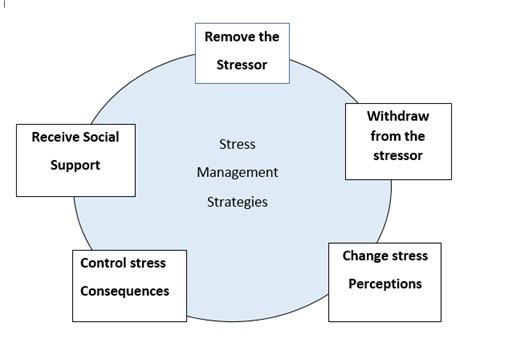
Stress Management: Stress is obvious and employees have to adapt to stress in such a way that they are no longer aware of it. Companies can effectively manage stresses by removing the stressors that cause needless tension and job burnout. Other stress management strategies may keep employees “stress-fit,” but they don’t solve the fundamental causes of stress. Organizations manage stress by investigating the main causes of stress in their workplace. Another suggestion is to change the corporate culture and reward systems so they support a work-life balance and no longer reinforce dysfunctional workaholism. More generally, the most effective ways to remove workplace stressors is to empower employees so that they have more control over their work and work environment. Role-related stressors can be lessened by selecting and assigning employees to positions that match their capabilities. Noise and safety risks are stressful, so improving these conditions would minimize stress in the workplace. Workplace bullying can be minimized through clear guidelines of behaviour and feedback for those who infringe those standards.

Figure: Stress management strategies:

Mangers have important contribution in the identification and intervention of constant workplace stress. Lazarus (1991) has recognized three main strategies for reducing work-related stress. In the first strategy, managers can help their employees to cope up with workplace stress is changing the working conditions so that they are more favourable to effective coping. When barriers are removed such as work overload, environmental annoyances, isolation, and lack of autonomy, an environment is created in which an employee can perform better. The second strategy to reduce work-related stress is to facilitate the employee to improve his or her transaction with the environment. Managers should provide the worker with services such as an employee assistance program or links to stress management resources to help them work through the issues that hamper adequate appraisal of the situation. Moreover, such programs will teach the employee how to utilize behavioural skills such as implementing a new diet, meditation techniques, and relaxation techniques in order to relieve the physical and psychological effects of stress. Usually, these programs will involve cognitive behavioural interventions (Long, 1988). The third strategy is to assist the employee recognizes the stressful relationship between the individual or group and the work setting (Lazarus, 1991) and developing a strategy to help reduce the tension in that affiliation.

To summarize, Stress is an adaptive reaction to a threatening situation that is perceived by person in work setting or in his life. Stressors are the causes of stress and include any environmental conditions that place a physical or emotional demand on the person. Stressors are found in the physical work environment, the employee’s various life roles, interpersonal relations, and organizational activities and conditions. Conflicts between work and non-work obligations are a common source of worker stress. Workplace stress has dangerous consequences on the health of employees such as it can cause significant psychological and physiological problems. Workplace stress has been associated with the aetiology of physical disorders such as heart disease, hypoadrenia, immunosuppression, and chronic pain. Additionally, the psychological impact of workplace stress includes depression, persistent anxiety, pessimism, and resentment.

The impact of these symptoms on organizations is significant as these symptoms lead to antagonism in the workplace, low morale, interpersonal conflict, increased benefit expenses, decreased productivity, and increased absenteeism. To cope up with stressful situation, experts provide various stress management strategies. By providing the foundation for employees to prosper while also allowing employees to take responsibility for their stress related symptoms, organizations will find considerable improvement in productivity and an improved workplace dynamism. Some tactics directly remove superfluous stressors or remove employees from the stressful environment. Other strategies facilitate employees to modify their interpretation of the environment so that it is not viewed as a severe stressor. Wellness programs promote employees to develop better physical defences against stress experiences. Social support provides emotional, informational, and material resource support to safeguard the stress experience.

Detach Involvement Detachment is distancing oneself in order to gain perspective and to expand the context.

The degree of detachment or involvement which is most appropriate will vary during the coaching relationship. It will be for the coach to choose what is most appropriate.

Involvement is the ability to be both mentally and emotionally involved.

Mentally, to ascertain and clarify the facts presented by the client.

Emotionally, being aware of the client’s feelings, which enables empathy, but also to be in touch with his or her own feelings.

Together, they give the coach a fuller grasp of the client’s and their own reality.

A) The inter-personal relationship:

Detached involvement is an indispensable skill of in-depth coaching. It is a skill which can be learned and developed, both by the coach and the client.

Detached involvement ensures that the coach will be present to the client in the most effective way.

It facilitates non-attachment to outcome, which can be a challenging goal for many coaches.

When detached involvement is lacking, the coach’s tendency will be to become over-involved with the client’s story, perhaps lapse into mentoring, offering advice and strategies, and taking too much responsibility for the outcome.

B) The intra-personal relationship:

Who will be making this choice when you are the coach in question?

Where in your personality is your locus of decision-making, of making choices when you are coaching? Which part of you decides?

It is most likely to be the part or parts of you that normally run your life, known as your Primary Selves. Hal and Sidra Stone identified some of the selves in their book, “Embracing your Selves” (1988): the Pleaser, the Perfectionist, the Inner Critic and the Controller. We might add the Hard Worker and the Helper and the Victim to this list.

These sub-selves or sub-personalities sometimes act like the dominant members of a board of directors, who come to meetings with their own agenda and set of priorities based on their point of view. In such cases, the authority of the CEO may be absent or just ignored.

Another analogy would be a kingdom in which the rightful ruler is absent, and the kingdom is actually ruled by the barons. I call this situation the Empty Throne.

C) The inter-functional relationship:

To what extent is detached involvement applicable in the external coach’s relationship with the organisation which has engaged him?

Over-involvement might lead the coach to major on pleasing the coachee’s employer at the coachee’s expense and at the expense of the coach’s integrity.

Over-detachment might lead to the coach following their own agenda at the expense of their relationship with the corporate client.

 So, which part of you will be making these choices?

Our sub-personalities come with their own perspectives, their own priorities and make their choices accordingly.

In order to practice detached involvement successfully, you will need to consciously rise above the level of your sub-personalities and attain your centre, your Conscious Self. If your sub-personalities are the musicians in the orchestra, your Conscious Self is the conductor of the orchestra.

In the previous three scenarios, the coach will need to discern from a clear and stable place.

So, what can we do to arrive at our centre, our Conscious Self?

The applied psychology of Psychosynthesis offers us a technique called the Dis-identifying and Identifying Exercise which helps us to disidentify from the contents of our personality and connect with our deeper centre of identity, our Conscious Self, also known as our “I”.

How do we know when we have attained our “I”?

We typically experience a greater calm, a degree of serenity and balance beyond the daily norm.

A place where clarity and sureness of choice is more available to us.

It is from this place that we can discern most clearly and choose the appropriate levels of detachment and involvement in all the interventions in our coaching practice.

When you practice detached involvement, you’re both a participant and an observer of your life at the same time. You see all experiences as part of life’s journey without judging them as being good or bad. You simply experience them and are in control of your responses to them. You’re fully involved, but detached from the allure of outcomes.

So, how do you learn to practice detached involvement?

  • Take nothing personally
  • Make no assumptions
  • Make as few judgments as possible
  • Let go of the need to be right
  • Let go of the need to control
  • Be passionate about all of life’s experiences, even the painful ones
  • Give all you have, your true gifts, to whatever you’re doing
  • Detach from future potential results

Stress Management Definition, Models, Process, Benefits, Types, Coping Measures

Stress Management encompasses techniques and strategies aimed at coping with and reducing the adverse effects of stress on physical, mental, and emotional well-being. It involves identifying stressors, implementing proactive measures to minimize their impact, and developing resilience to navigate challenging situations effectively. Stress management techniques may include relaxation exercises, mindfulness practices, time management strategies, and seeking social support. By fostering self-awareness and adopting healthy coping mechanisms, individuals can enhance their ability to manage stressors, improve their overall quality of life, and mitigate the risk of stress-related health problems.

Models of Stress Management:

  1. Transactional Model of Stress and Coping:

Proposed by Richard Lazarus and Susan Folkman, this model views stress as a transactional process involving the interaction between individuals and their environment. Stress occurs when individuals perceive environmental demands (stressors) as exceeding their resources to cope with them. Coping strategies are classified into problem-focused coping (addressing the stressor directly) and emotion-focused coping (regulating emotional responses). Effective stress management involves assessing the situation, appraising the stressor and coping resources, and employing appropriate coping strategies to reduce stress.

  1. Biopsychosocial Model of Stress:

This model acknowledges the interconnectedness of biological, psychological, and social factors in shaping stress responses. It emphasizes the influence of individual differences, such as genetic predispositions and personality traits, on stress vulnerability and resilience. Stress management interventions based on this model target multiple domains, including lifestyle modifications (e.g., diet, exercise), cognitive-behavioral techniques (e.g., relaxation training, cognitive restructuring), and social support networks to address the complex interplay of biological, psychological, and social factors contributing to stress.

  1. Transactional Model of Burnout:

While primarily focused on workplace stress, this model, proposed by Christina Maslach and Susan E. Jackson, offers insights into the development and prevention of burnout—a state of emotional, physical, and mental exhaustion resulting from chronic workplace stress. The model identifies three components of burnout: emotional exhaustion, depersonalization, and reduced personal accomplishment. Stress management approaches for burnout prevention include organizational interventions (e.g., workload management, supportive leadership), individual coping strategies (e.g., boundary setting, self-care practices), and systemic changes to promote a healthier work environment.

Process Stress Management:

  1. Assessment and Identification:

  • Identify Stressors: Recognize and identify sources of stress in various domains of life, including work, relationships, and health.
  • Evaluate Stress Levels: Assess the severity and impact of stressors on physical, mental, and emotional well-being through self-reflection, assessments, or professional evaluations.
  • Recognize Triggers: Identify specific situations, events, or thoughts that trigger stress reactions, such as deadlines, conflicts, or negative self-talk.
  1. Understanding Stress Responses:

  • Educate Yourself: Learn about the physiological, psychological, and behavioral responses to stress, including the fight-or-flight response, cognitive distortions, and maladaptive coping mechanisms.
  • Recognize Symptoms: Become aware of physical, emotional, and behavioral symptoms of stress, such as muscle tension, irritability, anxiety, or changes in appetite and sleep patterns.
  1. Developing Coping Strategies:

  • Mindfulness and Relaxation Techniques: Practice mindfulness meditation, deep breathing exercises, progressive muscle relaxation, or guided imagery to promote relaxation and stress reduction.
  • Cognitive Restructuring: Challenge negative thoughts and beliefs that contribute to stress by reframing them in a more realistic and positive light.
  • Problem-Solving Skills: Develop problem-solving skills to address stressors effectively, breaking tasks into manageable steps and seeking support or resources as needed.
  • Time Management: Prioritize tasks, set realistic goals, and manage time effectively to reduce feelings of overwhelm and increase productivity.
  • Social Support: Seek support from friends, family, or support groups to share feelings, gain perspective, and receive encouragement during challenging times.
  • Physical Activity: Engage in regular exercise or physical activity to reduce tension, improve mood, and promote overall well-being.
  1. Implementing Stress Reduction Strategies:

  • Create a Stress Management Plan: Develop a personalized stress management plan outlining specific techniques and strategies to address stressors effectively.
  • Set Boundaries: Establish boundaries to protect personal time, energy, and resources from excessive demands or obligations.
  • Practice Self-Care: Prioritize self-care activities, such as adequate sleep, healthy nutrition, hobbies, and leisure pursuits, to recharge and rejuvenate.
  • Seek Professional Help: If stressors become overwhelming or unmanageable, seek support from mental health professionals, counselors, or healthcare providers for guidance and assistance.
  1. Monitoring and Adjusting Strategies:

  • Regular Evaluation: Monitor stress levels and the effectiveness of coping strategies regularly, adjusting interventions as needed based on changing circumstances or feedback.
  • Flexibility and Adaptation: Remain flexible and open to trying new stress management techniques or refining existing strategies to optimize their effectiveness over time.
  1. Integration and Maintenance:

  • Integrate Stress Management into Daily Routine: Incorporate stress management techniques into daily habits and routines to promote consistency and long-term resilience.
  • Lifestyle Changes: Make sustainable lifestyle changes, such as adopting healthy habits, setting realistic goals, and nurturing supportive relationships, to minimize stress and enhance overall well-being.
  • Cultivate Resilience: Build resilience by learning from setbacks, practicing self-compassion, and cultivating a positive mindset to navigate future challenges with greater ease.

Benefits Stress Management:

  • Improved Physical Health:

Chronic stress can contribute to a range of physical health problems, including hypertension, cardiovascular disease, and weakened immune function. By managing stress effectively, individuals can reduce the physiological toll of stress on their bodies, promoting overall health and well-being.

  • Enhanced Mental Health:

Stress management techniques such as mindfulness, relaxation exercises, and cognitive-behavioral therapy can help individuals cope with anxiety, depression, and other mental health issues. By fostering resilience and emotional regulation, stress management promotes psychological well-being and reduces the risk of mental health disorders.

  • Better Coping Skills:

Learning to manage stress effectively equips individuals with adaptive coping strategies to navigate life’s challenges more resiliently. By developing problem-solving skills, assertiveness, and emotional regulation techniques, individuals can respond to stressors in a constructive manner, reducing their impact on mental and emotional health.

  • Increased Productivity:

Chronic stress can impair cognitive function, concentration, and decision-making abilities, leading to reduced productivity and performance at work or school. Effective stress management enables individuals to maintain focus, clarity, and efficiency, enhancing their productivity and effectiveness in various domains of life.

  • Enhanced Relationships:

Stress can strain interpersonal relationships, leading to conflict, communication breakdowns, and social withdrawal. By managing stress effectively, individuals can improve their communication skills, empathy, and conflict resolution abilities, fostering healthier and more fulfilling relationships with family, friends, and colleagues.

  • Improved Sleep Quality:

Stress can disrupt sleep patterns, leading to insomnia, sleep disturbances, and fatigue. Stress management techniques such as relaxation exercises and stress-reduction practices promote relaxation and facilitate better sleep quality, helping individuals to feel more rested and rejuvenated.

  • Reduced Risk of Burnout:

Chronic stress can contribute to burnout—a state of emotional, physical, and mental exhaustion resulting from prolonged exposure to stressors, particularly in the workplace. By implementing effective stress management strategies, individuals can mitigate the risk of burnout, maintain a healthy work-life balance, and sustain long-term career satisfaction and engagement.

  • Enhanced Quality of Life:

Ultimately, effective stress management contributes to a higher quality of life by promoting physical health, mental well-being, and overall resilience. By reducing the negative impact of stress on various aspects of life, individuals can enjoy greater satisfaction, fulfillment, and happiness in their personal and professional endeavors.

Types of Stress Management:

1. Physical Stress Management

Physical methods of stress management involve activities that focus on the body’s well-being, helping to relieve tension and improve overall health. These techniques aim to relax the body, reduce the physical symptoms of stress, and increase energy levels.

  • Exercise: Regular physical activity such as walking, jogging, yoga, or swimming helps release endorphins, which are natural mood boosters. Exercise reduces stress hormones like cortisol and can help manage anxiety and depression.
  • Progressive Muscle Relaxation (PMR): This technique involves tensing and then relaxing different muscle groups, promoting relaxation throughout the body. It helps reduce physical tension caused by stress and promotes a sense of calm.

2. Cognitive Stress Management

Cognitive techniques focus on changing thought patterns and developing a healthier mindset. By addressing negative thinking and unrealistic expectations, individuals can better cope with stress.

  • Cognitive Behavioral Therapy (CBT): CBT is a popular form of therapy that helps individuals identify and change negative thought patterns. It teaches how to reframe stressful situations in a more constructive way and develop coping strategies.
  • Positive Thinking: Reframing stress-inducing thoughts into more positive or manageable ones helps reduce anxiety. For example, focusing on solutions rather than problems allows individuals to regain control over stressful situations.

3. Behavioral Stress Management

Behavioral techniques focus on modifying daily habits and routines to reduce stress. These methods encourage individuals to implement structured changes to how they approach work and daily responsibilities.

  • Time Management: Properly managing time and setting realistic goals can help reduce the pressure that leads to stress. Creating a to-do list, prioritizing tasks, and taking breaks are essential strategies.
  • Assertiveness Training: Developing assertiveness involves learning how to communicate one’s needs and boundaries effectively, reducing the stress caused by overcommitment or interpersonal conflict.

4. Emotional Stress Management

Emotional stress management focuses on understanding and processing emotions to reduce stress. Emotional regulation is vital for maintaining a sense of balance during challenging situations.

  • Mindfulness and Meditation: Mindfulness practices involve focusing on the present moment and accepting it without judgment. Meditation helps calm the mind, reduce anxiety, and improve emotional regulation. These practices create a space for individuals to disconnect from stress.
  • Journaling: Writing down thoughts and feelings can be an effective way to process emotions. Journaling helps release pent-up stress, identify sources of tension, and gain clarity on how to address the situation.

5. Social Stress Management

Social support is one of the most effective stress management tools. Talking to friends, family, or colleagues can provide emotional relief and a sense of connection.

  • Seeking Support: Talking to a trusted person can help individuals process emotions and gain different perspectives on their problems. Building a support network of friends and family provides ongoing emotional reinforcement.
  • Group Therapy: For some, group therapy offers a structured environment where individuals can share experiences and coping strategies, providing mutual support.

6. Lifestyle Stress Management

Long-term lifestyle changes can significantly reduce stress levels and improve resilience. Creating a balanced life helps mitigate chronic stress and fosters well-being.

  • Balanced Diet: A nutritious diet with adequate hydration plays a critical role in managing stress. Foods rich in antioxidants, vitamins, and omega-3 fatty acids can help regulate stress hormones and improve mood.
  • Sleep Hygiene: Adequate and restful sleep is essential for stress management. Poor sleep can increase stress and reduce the body’s ability to cope. Establishing a healthy sleep routine ensures the body can recharge and handle stress better.

Stress Coping Measures:

Stress is a natural part of life, but how we cope with it can make a significant difference in our overall well-being.

  • Exercise and Physical Activity

Engaging in regular physical activity is one of the most effective ways to cope with stress. Exercise, whether it’s jogging, swimming, yoga, or walking, helps release endorphins—chemicals in the brain that improve mood and reduce feelings of anxiety. Physical activity also helps in reducing stress hormones like cortisol, and it provides a mental break from stressful thoughts, allowing the body to relax and recharge.

  • Relaxation Techniques

Relaxation techniques such as deep breathing exercises, progressive muscle relaxation, and meditation are effective ways to calm the mind and body. Deep breathing exercises help reduce the heart rate and lower blood pressure, making the body feel more relaxed. Progressive muscle relaxation involves tensing and relaxing different muscle groups to release tension. Meditation, including mindfulness, encourages focusing on the present moment, promoting a sense of peace and reducing stress.

  • Time Management

Often, stress arises from feeling overwhelmed by too many tasks or poor time management. Prioritizing tasks, setting realistic goals, and breaking large tasks into smaller, manageable steps can alleviate stress. Time management techniques like creating to-do lists, setting deadlines, and avoiding procrastination help individuals stay organized and focused, reducing the feeling of being rushed or overwhelmed.

  • Social Support

Talking to friends, family members, or colleagues can be a helpful way to manage stress. Sharing thoughts, feelings, and concerns with others provides emotional support and can help individuals gain perspective on their problems. Support from others can also make individuals feel less isolated and more empowered in handling stress. Whether it’s talking, seeking advice, or simply spending time with loved ones, social connections are critical for emotional well-being.

  • Positive Thinking

Maintaining a positive mindset can be highly beneficial in managing stress. This involves reframing negative or stressful situations in a more constructive way. Instead of dwelling on problems, focus on solutions or what can be learned from the situation. Practicing gratitude by regularly reflecting on positive aspects of life can help shift focus away from stressors and foster resilience in challenging situations.

  • Healthy Eating Habits

Nutrition plays a significant role in managing stress. A balanced diet can improve mood, energy levels, and overall health. Foods rich in vitamins, minerals, and antioxidants support the body’s ability to cope with stress. Avoiding excess caffeine, sugar, and alcohol, which can increase stress, and focusing on whole foods like fruits, vegetables, lean proteins, and whole grains can help regulate stress hormones and promote well-being.

  • Sleep and Rest

Getting adequate and quality sleep is essential for managing stress effectively. Poor sleep can heighten stress and make it more difficult to cope with challenges. Ensuring a good sleep routine by going to bed and waking up at the same time each day, avoiding caffeine and electronics before bed, and creating a peaceful sleep environment can enhance the body’s ability to recover and reduce stress.

  • Hobbies and Interests

Engaging in hobbies or activities that bring joy and fulfillment can be an excellent way to cope with stress. Whether it’s painting, gardening, reading, or playing a musical instrument, taking time for activities you enjoy helps to divert attention away from stressors and creates a sense of accomplishment and relaxation. Pursuing hobbies can also promote creativity, self-expression, and personal growth, which can further reduce stress levels.

error: Content is protected !!