Models of Consumer Behaviour

  1. BLACK BOX MODEL

The black box model shows the interaction of stimuli, consumer characteristics, decision process and consumer responses. It can be distinguished between interpersonal stimuli (between people) or intrapersonal stimuli (within people).

The black box model is related to the black box theory of behaviourism, where the focus is not set on the processes inside a consumer, but the relation between the stimuli and the response of the consumer.

The marketing stimuli are planned and processed by the companies, whereas the environmental stimulus is given by social factors, based on the economical, political and cultural circumstances of a society. The buyer’s black box contains the Buyer Characteristics and the Decision Process, which determines the buyer’s response.

The black box model considers the buyers response as a result of a conscious, rational decision process, in which it is assumed that the buyer has recognized the problem. However, in reality many decisions are not made in awareness of a determined problem by the consumer. Once the consumer has recognized a problem, they search for information on products and services that can solve that problem.

  1. NICOSIA MODEL (CONFLICT MODEL)

This model focuses on the relationship between the firm and  consumers. The firm communicates with consumers through its marketing messages (advertising), and the consumers react to these messages by purchasing response. Looking to the model we will find that the firm and the consumer are connected with each other, the firm tries to influence the consumer and the consumer is influencing the firm by his decision. The Nicosia model is divided into four major fields:

Field 1: The consumer attitude based on the firms’ messages. The first field is divided into two subfields. The first subfield deals with the firm’s marketing environment and communication efforts that affect consumer attitudes, the competitive environment, and characteristics of target market. Subfield two specifies the consumer characteristics e.g., experience, personality, and how he perceives the promotional idea toward the product in this stage the consumer forms his attitude toward the firm’s product based on his interpretation of the message.

Field 2: search and evaluation The consumer will start to search for other firm’s brand and evaluate the firm’s brand in comparison with alternate brands. In this case the firm motivates the consumer to purchase its brands.

Field 3: The act of the purchase The result of motivation will arise by convincing the consumer to purchase the firm products from a specific retailer.

Field 4: Feedback This model analyses the feedback of both the firm and the consumer after purchasing the product. The firm will benefit from its sales data as a feedback, and the consumer will use his experience with the product affects the individuals attitude and predisposition’s concerning future messages from the firm.

The Nicosia model offers no detail explanation of the internal factors, which may affect the personality of the consumer, and how the consumer develops his attitude toward the product. For example, the consumer may find the firm’s message very interesting, but virtually he cannot buy the firm’s brand because it contains something prohibited according to his beliefs. Apparently it is very essential to include such factors in the model, which give more interpretation about the attributes affecting the decision process.

  1. HOWARD-SHETH MODEL

This model suggests three levels of decision making:

(i) The first level describes the extensive problem solving. At this level the consumer does not have any basic information or knowledge about the brand and he does not have any preferences for any product. In this situation, the consumer will seek information about all the different brands in the market before purchasing.

(ii) The second level is limited problem solving. This situation exists for consumers who have little knowledge about the market, or partial knowledge about what they want to purchase. In order to arrive at a brand preference some comparative brand information is sought.

(iii) The third level is a habitual response behavior. In this level the consumer knows very well about the different brands and he can differentiate between the different characteristics of each product, and he already decides to purchase a particular product. According to the Howard-Sheth model there are four major sets of variables; namely:

(a) Inputs– These input variables consist of three distinct types of stimuli(information sources) in the consumer’s environment. The marketer in the form of product or brand information furnishes physical brand characteristics (significant stimuli) and verbal or visual product characteristics (symbolic stimuli). The third type is provided by the consumer’s social environment (family, reference group, and social class). All three types of stimuli provide inputs concerning the product class or specific brands to the specific consumer.

(b) Perceptual and Learning Constructs– The central part of the model deals with the psychological variables involved when the consumer is contemplating a decision. Some of the variables are perceptual in nature, and are concerned with how the consumer receives and understands the information from the input stimuli and other parts of the model. For example, stimulus ambiguity happened when the consumer does not understand the message from  the environment.

(c) Outputs- The outputs are the results of the perceptual and learning variables and how the consumers will response to these variables (attention, brand comprehension, attitudes, and intention).

(d) Exogenous(External) variables- Exogenous variables are not directly part of the decision-making process. However, some relevant exogenous variables include the importance of the purchase, consumer personality traits, religion, and time pressure.

The Decision Making Process, which Howard-Sheth Model tries to explain, takes place at three Inputs stages: Significance, Symbolic and Social stimuli. In both significant and symbolic stimuli, the model emphasizes on material aspects such as price and quality. These stimuli are not applicable in every society. While in social stimuli the model does not mention the basis of decision-making in this stimulus, such as what influence the family decision? This may differ from one society to another. Finally, no direct relation was drawn on the role of religion in influencing the consumer’s decision-making processes. Religion was considered as external factor with no real influence on consumer, which give the model obvious weakness in anticipation the consumer decision.

  1. ENGEL, BLACKWELL, MINIARD MODEL (OPEN SYSTEM)

This model was created to describe the increasing, fast-growing body of knowledge concerning consumer behavior. This model, like in other models, has gone through many revisions to improve its descriptive ability of the basic relationships between components and sub-components, this model consists also of four stages;

First stage: decision-process stages The central focus of the model is on five basic decision-process stages:

Problem recognition, search for alternatives, alternate evaluation(during which beliefs may lead to the formation of attitudes, which in turn may result in a purchase intention) purchase, and outcomes. But it is not necessary for every consumer to go through all these stages; it depends on whether it is an extended or a routine problem-solving behavior.

Second stage: Information input At this stage the consumer gets information from marketing and non-marketing sources, which also influence the problem recognition stage of the decision-making process. If the consumer still does not arrive to a specific decision, the search for external information will be activated in order to arrive to a choice or in some cases if the consumer experience dissonance because the selected alternative is less satisfactory than expected.

Third stage: information processing This stage consists of the consumer’s exposure, attention, perception, acceptance, and retention of incoming information. The consumer must first be exposed to the message, allocate space for this information, interpret the stimuli, and retain the message by transferring the input to long-term memory.

Fourth stage: variables influencing the decision process  This stage consists of individual and environmental influences that affect all five stages of the decision process. Individual characteristics include motives, values, lifestyle, and personality; the social influences are culture, reference groups, and family. Situational influences, such as a consumer’s financial condition, also influence the decision process.

This model incorporates many items, which influence consumer decision-making such as values, lifestyle, personality and culture. The model did not show what factors shape these items, and why different types of personality can produce different decision-making? How will we apply these values to cope with different personalities? Religion can explain some behavioral characteristics of the consumer, and this will lead to better understanding of the model and will give more comprehensive view on decision-making.

Consumer Behaviour in India

Indian consumer durables market is broadly segregated into urban and rural markets, and is attracting marketers from across the world. The sector comprises of a huge middle class, relatively large affluent class and a small economically disadvantaged class. Global corporations view India as one of the key markets from where future growth is likely to emerge. The growth in India’s consumer market would be primarily driven by a favorable population composition and increasing disposable incomes.

Per capita GDP of India is expected to reach US$ 3,273.85 in 2023 from US$ 1,983 in 2012. The maximum consumer spending is likely to occur in food, housing, consumer durables, and transport and communication sectors.

Market Size

  • The growing purchasing power and rising influence of the social media have enabled Indian consumers to splurge on good things. Import of electronic goods reached US$ 53 billion in FY18.
  • Indian appliance and consumer electronics (ACE) market reached Rs 2.05 trillion (US$ 31.48 billion) in 2017. India is one of the largest growing electronics market in the world. Indian electronics market is expected to grow at 41 per cent CAGR between 2017-20 to reach US$ 400 billion.
  • Television industry in India is estimated to have reached Rs 740 billion (US$ 10.59 billion) in CY2018 and projected to reach Rs 955 billion (US$ 13.66 billion) in CY2021.
  • As of FY18, washing machine, refrigerator and air conditioner market in India were estimated around Rs 7,000 crore (US$ 1.09 billion), Rs 19,500 crore (US$ 3.03 billion) and Rs 20,000 crore (US$ 3.1 billion), respectively.
  • India’s smartphone market grew by 14.5 per cent year-on-year with a shipment of 142.3 million units in 2018. India is expected to have 829 million smartphone users by 2022. In 2019, India is expected to manufacture around 302 million handsets.

Investments

According to the Department for Promotion of Industry and Internal Trade, during April 2000 – June 2019, FDI inflows into the electronics sector stood at US$ 2.45 billion.

Following are some recent investments and developments in the Indian consumer market sector.

  • In November 2019, Nokia entered in partnership with Flipkart to enter consumer durables market in India and plan to launch smart TVs.
  • In October 2019, Apple Inc. entered in agreement with Maker Maxity mall, co-owned by Reliance Industries to open its first company-owned iconic outlet in India.
  • In August 2019, Voltas Beko launched India’s first five star washing machine.
  • In July 2019, Voltas Limited entered into partnership with Energy Efficiency Services Limited (EESL) to manufacture and sell 5-star rated Inverter Air Conditioners.
  • In April 2019, TCL Electronic announced its entry into home appliances market in India.
  • Xiaomi became the India’s largest brand network in the offline market, having presence in over 790 cities in the country.
  • Bosch Home Appliances to invest US$ 111.96 million to expand in India.
  • Number of TV households and viewers in India reached 197 million 835 million, respectively in 2018.
  • According to the retail chains and brands, there is 9-12 per cent increase in the sales of consumer electronics in Diwali season in October 2019.
  • The smartphone shipment witnessed a year-on-year growth of 9.3 per cent in July-September 2019 with 46.6 million unit shipped.
  • Consumer durables loans in India increased by 68.8 per cent to Rs 5,445 crore (US$ 780 million) in September 2019.
  • Intex Technologies will invest around Rs 60 crore (US$ 9.27 million) in 2018 in technology software and Internet of Things (IoT) startups in India in order to create an ecosystem for its consumer appliances and mobile devices.
  • Micromax plans to invest US$ 89.25 million by 2020 for transforming itself into a consumer electronics company.
  • Haier announced an investment of Rs 3,000 crore (US$ 415.80 million) as it aims a two-fold increase in its revenue by 2020.

Government Initiatives

  • National Policy on Electronics Policy was passed by the Ministry of Electronics & Information Technology in February 2019.
  • A new Consumer Protection Bill has been approved by the Union Cabinet, Government of India that will make the existing laws more effective with a broader scope.
  • The mobile phone industry in India expects that the Government of India’s boost to production of battery chargers will result in setting up of 365 factories, thereby generating 800,000 jobs by 2025.
  • The Union Cabinet has approved incentives up to Rs 10,000 crore (US$ 1.47 billion) for investors by amending the M-SIPS scheme, in order to further incentivise investments in electronics sector, create employment opportunities and reduce dependence on imports by 2020.
  • The Government of India has allowed 100 per cent Foreign Direct Investment (FDI) under the automatic route in Electronics Systems Design & Manufacturing sector. FDI into single brand retail has been increased from 51 per cent to 100 per cent; the government is planning to hike FDI limit in multi-brand retail to 51 per cent.

Difference between Consumer Buying and Industrial Buying

Robinson, Faris & Wind states that when understanding the Industrial Buying Behavior a permanent process of problem solving and decision – making must be taken into consideration. All members in a business who become involved in such a buying process are centered to specify group – These processes and group members may vary when purchasing different kinds of products and services.

An important part of the marketing process is to understand why a Customer or Buyer makes a purchase. Without such an understanding, business finds it hard to respond to the customer’s needs and wants. Marketing theory traditionally splits analysis of buyer or customer behavior into TWO broad group of analysis – Consumer Buying and Industrial Buying.

Consumer Buying

The study of how and why people purchase goods and services is termed as Consumer Buying.

The term covers the decision making processes from those that precede the purchase of goods and services to the final experience of using the product or services.

Models of Consumer Buying Behavior draw together the various influences on the process of the buying decision. They attempt to understand the proverbial “Black box” (Buyer’s mind) of what happens within the consumer between his/her exposure to marketing stimuli and the actual decision to purchase.

Consumer Buying Process

(i) Recognition of need

(ii) Information Search

(iii) Evaluation of Alternatives

(iv) Purchase decision

(v) Post Purchase Behavior

Industrial Buying

Industrial purchasing stands for more than half of the whole economic activity in Industrialized countries. Hardly any consumer has the buying authority as organization and any given end product is made up by many industrial purchase that is important to understand how industries perform buying activities.

Industrial buying behavior is in essence the arrangement of how Industrial Organizations purchase goods and services. This area is essential for the understanding of the consumer needs and must be taken into consideration for successful suppliers.

Industrial Buying Process

(i) Problem Recognition

(ii) General need description

(iii) Product specification

(iv) Supplier search

(v) Proposal solicitation

(vi) Supplier selection

(vii) Order routine specification

(viii) Performance review

Difference between Consumer Buying and Industrial Buying

  • In Consumer Buying, buying is done as required, In Industrial Buying, buying is to be done in bulk or in large potential.
  • In Consumer Buying, product specification takes place. In this there can be at a time buying of products.
  • In this, product specification does not take place because of the large potential revenue of such products.
  • In this at a time buying can never be done.
  • In this no demand or order is to be kept before in advance far the purchase of goods.
  • In this buyers have to make only few simple decisions about the products while making a purchase.
  • In this before buying demand for the products is to be kept forward as an order then only this buying for the products is possible.
  • In this buyers faces many critical decisions in making purchase.
  • In this buyers prefer to buy a total solution to their problem from more than one seller.
  • Consumer buying are those who purchase items for their personal consumption.
  • In this less Dollars & Items are involved in sales.
  • In this buyers prefer to buy a total solution to their problem from one seller. (system buying)
  • Industrial Buying are those who purchase items on behalf of their business or organization.
  • In this more Dollars & Items are involved in sales.
  • Consumer Buying is done in order to satisfy the needs of the consumers.
  • In Consumer buying, purchase volume is small.
  • Industrial Buying can not satisfy the consumer’s need but can satisfy the needs of industrialists. It does the production of those products which can satisfy the needs of consumers.
  • In Industrial Buying, purchase volume is large.
  • In Consumer Buying, the number of customers are many.
  • In Consumer Buying, the location of buyer is Dispersed.
  • In Consumer Buying, the nature of consumer Buying is more personal.
  • In this the nature of buying influence is single.
  • In Industrial buying, the number of customers are fewer.
  • In Industrial buying, location of buyer is Geographically concentrated.
  • In Industrial Buying, the nature of industrial buying is more professional.
  • In this the nature of buying influence is multiple.
  • In Consumer Buying, there are many buyers in the market.
  • In consumer Buying , importance of one person as a buyer is there.
  • Consumer Products are considered as daily used Products.
  • In Industrial Buying, there are fewer potential buyers in the market.
  • In Industrial Buying, there is little importance for one person buying.
  • Industrial Products are not considered as daily used Products.
  • Sales promotion is there.
  • Consumer buying is very quick process. It doesn’t requires any type of data or presentations.
  • In this repeat sale is allowed.
  • Sales promotion is not there.
  • Industrial buying requires more and proper scientific data as well as presentations.
  • In this repeat sale is not allowed.
  • In Consumer Buying individual and family involvement takes place.
  • Consumer buying includes many purchasing procedures.
  • In Consumer Buying the products are standard and with detailed specification.
  • In Industrial Buying group decisions and many buying influences takes place.
  • Industrial Buying includes impulse, planned or experiential
  • In Industrial Buying the products are with technical complexity. They are standard or customized.
  • Consumer products are :- eatable products, usable products etc.
  • Industrial products are :- raw materials, fabrication parts and materials, installation, accessories, equipments etc.

From over all , we conclude that without industrial buying production can not be done. If the production is not done than consumer will not be able to get their wanted and needed things. If they will not get the things, they will not do the buying, i.e. consumer buying will not be done.

Thus we can say that without Industrial buying, Consumer Buying can not be done. As Industrialists always try to fulfill the needs of consumers.

Nature and Factors Affecting Industrial Buying

Industrial buying behavior is the pattern of actions by a company involved in manufacturing, processing and other heavy industry. Many of these companies are required to make regular purchases as a means of supplying their businesses. Although each company — and each industry — will have buying behavior affected by its own set of factors, there are several main variables that can affect industrial buying as a whole.

  1. Demand

Perhaps the main driver of industrial buying is demand. The amount of buying that an industrial concern will do is directly depended on the amount of business that the company can expect in the near future. Generally, if a company expects higher demand, then it will stock up on raw materials as a means of ensuring that it will be able to meet consumer demand and maximize revenue.

  1. Price

Buying patterns are also affected by the price of the materials the companies are purchasing. When prices are higher or the company expects a decrease in the near future, the company may choose to hold off making purchases, so as to save money. This can involve some difficult decision making. For example, a company that uses fuel in the production of its products may attempt to guess the direction of oil prices.

  1. Economy

In addition to current demand and the current prices for a product, industrial companies may look to the economy as an indication of the future availability of materials relative to the consumer demand for them. If the economy is trending upward, the company may purchase more based on the expectation of a future rise in sales, while a downward trending economy may push it to the opposite course of action.

  1. Technological Changes

In addition, industrial companies are heavily influenced by changes in technology that affect both the provision of goods and their own requirements. For example, if purchasing a piece of technology means that a raw material becomes cheaper to use, then the company may choose to invest in the new technology. Similarly, the acquisition of new technology will often change the company’s buying habits, as the technology will have different raw material requirements to run.

  1. Political/Legal Factors

Government influence on the Industrial marketing environment. From the time of Jawaharlal Nehru to the time of Mr. Atal Behari Vajapayee there has been major influence of the Government in the industry to protect the Indian industries’ foreign investment or for that matter, foreign participation of any kind has not been allowed in the areas of defence, steel, drugs, fertilisers, machine tools etc.

More encouragement was given to small scale and cottage industry. Even the banks were nationalised, the multinationals which were present in India till about 1980s were engaged in commerce, trade and finance or export of tea. Indian Government felt that in areas where adequate Indian skills and capital are available, there was no need for foreign collaboration.

In fact, in 1977 Coca-Cola was asked to wind up operations in India, and IBM was to dilute equity to stay. Some companies like Alkali Chemicals, Dunlop, Goodyear and Asbestos Cement were allowed to remain as they were operating in non-priority areas. Today the Government having realised the importance has liberalised in many areas.

Still controls the industries do not contribute to an extent the effective and fair functioning of the economy. The Government acts as a regulatory agency in import and export matters. It controls the tax and interest rates. It provides economic stabilisation through control of inflation. It is environmentally and socially conscious. It passes rules, regulations and laws from time to time to ensure that general public interest is not compromised.

The Government has placed a large number of drugs with dubious justification under the scanner. Doubts persist about safety of a host of drugs including CISAPRIDE, the drug for night heart burn, and PPA, an ingredient in certain paediatric preparations. The review of iron preparations containing zinc, amino acids and vitamins decision could be of grave concern to many leading MNCs as these drugs are high margin products.

The Government can also change the marketing environment by making changes to its procedures for example Mr. Chandra Babu Naidu, Ex-Chief Minister of Andhra Pradesh, has decided to experiment with online procurement in four of its government departments.

Factors Influencing Purchase Decision of a Consumer

  1. Cultural Factors

Culture is one of the key factors that influences a consumer’s buying decisions. These factors refer to the set of values, preferences, perceptions, and ideologies of a particular community. At an early age, buyers learn to recognize acceptable behavior and choices when selecting products.

For example, it is our culture that teaches us that, as a buyer, we need to make payments and honor contracts, pay on time, observe rules, and assume responsibility when seeking information. Sometimes ‘cultural shifts’, due to the influence of different cultures indicate the need to introduce new products.

Each culture is further divided into various subcultures based on age, geographical location, religion, gender (male/female), etc.

  1. Social Factors

Social factors, which includes the groups to which the customer belongs, and his or her social status, also affect purchase decisions. Human beings are innately social. They need people to interact with, and make decisions. Social groups, like families, can influence the buying decisions of consumers. These factors are further divided into:

  1. Family

Family is one of the most important buying organizations in our society and, is thus, the most influential group. Family has a direct or indirect influence on the behavior and attitude of a buyer. In the traditional setting, it was the wife in a husband-wife model relationship who was responsible for making buying decisions related to product categories such as household products, food, and clothing. However, with more women opting for full-time professional careers, these roles have changed. Today, it may be a man doing the household shopping. So, it is important to have a marketing mix that targets these consumers as well.

  1. Social Status

Social class or status can also influence buying decisions. The members of a social class are one that share similar behavior, values, and interests. Apart from income, people in the same occupation, neighborhood, or educational system can belong to a shared social classes.

  1. Free Shipping

With a contribution of 49%, free shipping is the second most significant factor that influences the consumer decision making process. Free shipping usually attracts customers who purchase very often from online stores and websites. Free shipping helps to keep the customers hooked for a longer period of time.

To avoid bearing the entire burden of shipping costs, you can add a fraction of shipping costs into your products but remember that prices have to be competitive too.

  1. Product and Information Quality

One of the most important factors that influence the consumer’s buying behavior is product quality and product information. Promoting and selling good quality products at the right time and the right platform are vital to a business’s success.

Product descriptions, specifications, product videos, and more can be utilized to influence the consumer’s decision making process.

  1. Easy Returns

Undeniably, a lack of personal touch is something which an eCommerce business suffers from. But, it can overcome this challenge by putting an easy return policy in place. Defined and easy return policies are really very helpful if they are in favor of consumers. In a business where sie or color of the product can mismatch, easy return policy helps you get the consumer’s trust.

  1. Great Navigation

A Great Navigation in the eCommerce website helps in getting positive user experience. It will help the consumers in getting the idea where they are and where to move on. Good navigation includes everything from well-defined categories to site maps. It gives a simple sneak-peek into the list of products that the company offers.

  1. Easy Checkout

The process of checkout must be really simple. If the checkout process is complicated, there are chances that the customer might lose interest in purchasing the product. Ensure a great CX for the consumer buying process.

Pro tip: There are a few things which can make the check out process easy. For example, customers are able to send 2 different products in 2 different states, they are able to apply discount coupons easily, send personalized cards with different products and more.         

  1. New Product

Customers often lookout for new products. Try to add new launches to the product catalog. Consumers always look for something that is new and innovative. Moreover, new products attract more traffic too.

Pro tip: To increase the traffic on your website, it is considered as a good practice (from an SEO point of view) to add a ‘New Products’ section.

With the above seven factors in mind, analyze the business model of your business. Take necessary actions to positively influence your customer’s purchase decision. There are many factors that influence the customer’s decisions. Thereby, analyze the requirements of your business and focus on providing maximum CX to your customers. To keep your business on top of the competition, make sure that you analyze the marketing trends properly and include them in your strategy.

Personality, Nature, Effect, Role

Personality refers to the unique set of enduring patterns of thoughts, feelings, and behaviors that characterize an individual and distinguish them from others. It encompasses traits, attitudes, values, and behaviors that are relatively consistent across different situations and over time. Personality is shaped by a combination of genetic, biological, environmental, and social factors, including upbringing, culture, and life experiences. It influences how individuals perceive the world, interact with others, and respond to challenges and opportunities. Understanding personality is essential for predicting behavior, explaining individual differences, and facilitating personal growth and development. Personality traits can range from extraversion and agreeableness to neuroticism and conscientiousness, contributing to the richness and complexity of human behavior and relationships.

Nature of Personality:

  • Complexity:

Personality is complex, encompassing a wide array of traits, behaviors, and characteristics that collectively shape an individual’s identity and interactions with the world.

  • Stability and Change:

While personality traits tend to exhibit a degree of stability over time, they are also subject to change and development across the lifespan, influenced by life experiences, social interactions, and personal growth.

  • Individual Differences:

Personality is highly individualized, with each person possessing a unique combination of traits, values, and beliefs that contribute to their distinctiveness and individuality.

  • Biological and Environmental Influences:

Personality is influenced by both genetic and environmental factors, including biological predispositions, early childhood experiences, cultural norms, and socialization processes.

  • Continuity and Consistency:

Despite variations in behavior across different situations, there is a certain continuity and consistency to personality that allows for predictions about how individuals are likely to think, feel, and act in various contexts.

  • Trait Theories and Dynamics:

The study of personality encompasses trait theories, which focus on identifying and categorizing enduring patterns of behavior, as well as dynamic theories that emphasize the role of internal conflicts, motivations, and unconscious processes in shaping personality.

  • Adaptability and Flexibility:

While personality traits may predispose individuals to certain patterns of behavior, humans also demonstrate adaptability and flexibility in responding to changing circumstances and environmental demands.

  • Influence on Behavior and Well-being:

Personality influences various aspects of behavior, including decision-making, interpersonal relationships, and emotional regulation, contributing to overall psychological well-being and quality of life.

Effect of Personality in an Organization:

  • Job Performance:

Personality traits such as conscientiousness, agreeableness, and emotional stability have been linked to job performance. Individuals who are conscientious tend to be more organized, reliable, and achievement-oriented, leading to higher performance levels in their roles.

  • Leadership Styles:

Leaders’ personalities influence their leadership styles and effectiveness. For example, extraverted leaders may be more charismatic and assertive, while agreeable leaders may prioritize collaboration and harmony. Effective leadership often involves leveraging personality strengths and adapting leadership approaches to different situations and team dynamics.

  • Team Dynamics:

Personality diversity within teams can impact team dynamics, communication patterns, and collaboration. Teams comprising individuals with complementary personalities may benefit from a diversity of perspectives and skills, leading to enhanced creativity and problem-solving abilities.

  • Organizational Culture:

Personality influences the culture of an organization, shaping norms, values, and behaviors among employees. Organizations with a strong emphasis on certain personality traits, such as innovation or customer service orientation, may attract and retain employees who align with those values.

  • Conflict Resolution:

Personality differences can contribute to interpersonal conflicts within the organization. Understanding individuals’ personality traits and communication styles can facilitate effective conflict resolution strategies, such as promoting empathy, active listening, and compromise.

  • Employee Engagement and Satisfaction:

The match between an individual’s personality and job role can impact employee engagement and job satisfaction. When employees’ roles align with their personality traits and interests, they are more likely to experience greater job satisfaction, motivation, and commitment to the organization.

  • Organizational Change:

Personality traits influence individuals’ responses to organizational change initiatives. Individuals who are open to new experiences and adaptable may embrace change more readily, while those who are resistant to change or risk-averse may require additional support and communication to navigate transitions effectively.

  • Workplace Well-being:

Personality traits are linked to employee well-being and stress levels. For example, individuals high in neuroticism may experience higher levels of stress and emotional instability, while those high in resilience and optimism may cope better with workplace challenges.

Personality role in individual Decision making:

  • Risk-Taking Behavior:

Personality traits like extraversion and openness to experience are often associated with higher risk-taking. Individuals with these traits are more likely to embrace uncertainty and make bold decisions. Conversely, individuals high in neuroticism tend to avoid risks, leading to cautious and conservative choices.

  • Problem-Solving Style:

Decision-making often involves problem-solving, and personality influences how individuals approach this task. Analytical individuals with high conscientiousness prefer structured, logical approaches, while creative thinkers with high openness may rely on innovative and out-of-the-box solutions.

  • Emotional Regulation:

Emotions heavily impact decision-making, and personality traits govern emotional regulation. For instance, individuals with high emotional stability are better at managing stress and making rational decisions under pressure. In contrast, those high in neuroticism may let anxiety cloud their judgment.

  • Tolerance for Ambiguity:

Openness to experience is linked to a higher tolerance for ambiguity. Such individuals can handle uncertain situations better and are more flexible in adapting their decisions. Those with low tolerance for ambiguity may struggle in uncertain environments, leading to delayed or overly cautious decisions.

  • Impulsivity vs. Deliberation:

Individuals with high extraversion or low conscientiousness may exhibit impulsive decision-making, acting quickly without thorough analysis. On the other hand, those high in conscientiousness and agreeableness tend to deliberate carefully, ensuring well-thought-out decisions.

  • Ethical Considerations:

Personality also shapes moral reasoning and ethical decision-making. Highly conscientious and agreeable individuals are more likely to consider the ethical implications of their choices, while those low in these traits may prioritize personal gain or convenience over ethical concerns.

  • Leadership and Influence:

Leaders with charismatic personalities (high extraversion and agreeableness) often inspire confidence in their decisions, influencing team dynamics. Their personality not only affects their decisions but also shapes how others perceive and support those decisions.

Self-Concept

Self-concept is defined as the way, in which we think, our preferences, our beliefs, our attitudes, our opinions arranged in a systematic manner and also how we should behave and react in various roles of life. Self concept is a complex subject as we know the understanding of someone’s psychology, traits, abilities sometimes are really difficult. Consumers buy and use products and services and patronize retailers whose personalities or images relate in some way or other to their own self-images

Traditionally, individuals are considered to be having a single self-image which they normally exhibit. Such type of consumers are interested in those products and services which match or satisfy these single selves. However, as the world became more and more complex, it has become more appropriate to think of consumers as having multiple selves.

Major aspects of Self-concept

Self-Concept is Organized

We all have various views about ourselves. We all may think we are kind, calm, patient, selfish, rude and what not. It doesn’t matter what perception you have about yourself, but the one perception that facilitates all these insights is organized self-concept. When a person believes in something that matches his self-concept he sticks to his view and does not agree to change the same and even if does, it takes a lot of time.

Self-Concept is Learned

It is believed that self-concept is learned and no person is born with a self-concept. It develops as and when we grow old. Our self-concept is built when we meet people socially and interact with them. We are the ones who shape or alter our self-concept and its quite natural that we may have a self-concept different for ourselves as compared to what people think about us.

For example − If an individual thinks, he is very generous and helpful, it may not necessarily be the case with others. Others may see him as a selfish person.

Self-Concept is Dynamic

Our self-concept in life is not constant and it may change with instances that take place in our lives. When we face different situations and new challenges in life, our insight towards things may change. We see and behave according to the things and situations.

Thus, it is observed that self-concept is a continuous development where we let go things that don’t match our self-concept and hold on those things that we think are helpful in building our favorable perception.

Self-concept is the composite of ideas, feelings, emotions and attitudes that a person has about their identity and capabilities.

Life-Style

The decision making is also influenced by life style of family which has been discussed to a certain extent in the section on socialization of family members but there are certain other aspects of life style which influences consumption behaviour. The consumption of many products depends upon the life style of the family which in turn is influenced by income, education, profession of members and their culture. For instance, in India persons below the poverty line and poor persons which fall in low income group have different life style than persons in higher income groups.

Consumption habits are very much influenced by family life style. A poor family preferences are food, clothing and shelter i.e. ‘Roti, Kapra and Makan’. But there are others for whom AC, big car or at least a car, posh house has become a necessity. Lifestyle is also influenced by profession. For a doctor an automobile, mobile phone and AC in the clinic is necessary. A modern consultant should own a PC, Fax, e-mail or other gadgets.

An office of any sizeable consultant should also have photo­copy machine and he must subscribe to the journals and magazines of his profession. A modern housewife who works in an office must have kitchen aids like dishwasher and microwave oven in the west and maid servant in India.

In the States, Europe or Japan family servants and drivers are rarely found but in India full or part-time servant to clean the utensils and house is a life style of even middle class families and full time domestic servants are engaged by high income families who also often engage drivers; separate car for each family member. Holiday and vacations is becoming part of life style for rich and availing leave travel concessions for government servants, banks employees and those working in big companies.

For some upper class families’ idealing their time in gossiping, playing cards, going to the clubs and drinking is the life style while for others going to the temple, listen to discourses, attending bhajans, kirtans, is a life style. These factors play an important role in decision making of the family. A person who is in top bracket will buy well known branded products.

The price is not a criteria, actually they will buy costly cars, garments, and jewellery. They will visit posh hotels, will visit costliest medical practitioner for treatment and when need hospitalization will prefer private hospitals like Apollo with five star hotel comforts. If admission is no problem, they will put their children in best schools and colleges.

If they are not admitted on merit they will pay hafty donations to schools, colleges and professional institutes where 15 percent seats are at management discretion. They feel that high price hall mark of quality is point to boast. But middle class family will select government hospitals and colleges and schools where merit is the criteria for admission.

This class has no time and money for vacations and their ladies either do domestic work or are employed in offices. They have simple house and furniture and give more preference to utility in decision making than to fashion. Since they are not able to afford expensive articles the preference in decision making is on quality, durability but they do not ignore brands and look for discount sales and free samples which is becoming trend in Indian marketing.

Psychographics

Psychographics is commonly known as study of ‘lifestyle’ of consumers. It plays an important part in building consumer behaviour and helps in the promotion of those products and services which are related to items of personal care, fashion, automobiles, telephone services, alcoholic drinks, news papers, magazines, food products like milk, tea, coffee (which are sold by brand names).

In a country of the size of India where life style differs widely from region to region the study of consumer psychographic is of great significance to marketer. What is demanded or liked in Bengal may not be demanded in Punjab, Maharashtra, Gujarat or South India because of vast differences in lifestyle.

For instance, a Bengali may like to wear dhoti at least on functions and religious places but people of some other states do not feel it necessary. People of Punjab may like showy products, but it is not so in South India or Bengal where they will prefer simple products. The music of Bengal is entirely different than that of Punjab or Karnataka.

The life style depends not only on the regions but also on ones profession. The life style of film actress is entirely different than that of common person. They may like to have posh house, high priced, showy things of glamour which are not part of others life style so that they may be different from others.

A poor person has no life style and looks only for necessities and things of utility. But a rich person whether he is a businessmen or high placed executive will require best cars, best TV’s, best ‘ schools for their children, AC for every room and every best things of life.

The psychology of highly educated author, writer or thinker is different than that of a common person; he likes to stay in calm place away from hussel of city. He would like to buy latest books of his interest irrespective of price and would like to read all possible magazines of subject of his liking.

Types of Psychographic Variables:

There are a large number of variables which influence psychographic.

In brief as already referred they may be divided into three groups namely:

  • Activities
  • Interests
  • Opinions
  1. Activities

Activities relate to research how the time spent by an individual, family or a group on various activities such as working, resting, vacation, hiking, riding, playing, studying, recreating, etc. By asking suitable questions various activities of an individual, household or group are studied and measured. Based on these replies society is divided into various groups.

The various activities depend upon social class one belongs, status i.e. the level of income, level of education, profession, vocation or calling, area of residence, personality, knowledge, interest among other factors also depend upon age. Young boys or girls or recently married couples may prefer to own a house or spend more on fashion, travel as compared to middle aged person. Old family member’s interest may be more on quiet simple life as compared to outing.

  1. Interests

The interests also depend upon level of education. A person highly educated may have greater interest in reading books of his subject while less educated person may not read books or may prefer go to a movie or watch TV.

The preferences and priorities are also affected by the region one lives. A person living in hot place like towns of South India or Delhi may prefer to own a refrigerator, cooler or air-conditioner but they are not on preference list of persons living in cold climate of Jammu and Kashmir, Himachal Pradesh or Uttaranchal. For persons living in cold climate room heater, water heater, warm clothes may be on priority list.

The culture and social set up also decides or at least influences preferences and interests. A person living in South India or Bengal likes traditional music, simple traditional dress while those living in high society may prefer to spend more on fashion, going to clubs, spend more on personal care, cosmetics and modern shorts or Jeans.

Again within same social group the interest of young­sters may be different than that of elders in almost everything like eating, drinking, playing and researcher has to find out all these points through well structured questions. Social and cultural set up also affects social customs, dress, functions and what not.

A tribal of Madhya Pradesh or Orissa does not bother about clothing and covers smaller portion of his body compared to urban elate or a person of high social class who prefers to have modern dress, may prefer smoking, drinking and entertaining themselves even with outsiders which may be taboo for some other cultures.

Religion is another variables which decides interests in certain respects and sometimes influ­ences entire thought process. A Jain muni has no interest in anything and believes to forego all worldly things; same may be case of nagas. The food habits of those who believe in vegetarianism are quite different than non-vegetarians based largely on religion.

A devotee of Hinduism will prefer to go to pilgrimage to temples, places of workshop like Vaishnov Devi and Tirupati Balaji sometimes at the cost of other goods or recreation. The believer in Muslimism may prefer to go to Mecca Madina at the cost of other comforts. A believer of Sikhism may like to spend time in Golden Temple of Amritsar or other Gurdwaras rather than in other activities and so on.

Language is another variable which influences ones and families interest. A person from Bengal, Tamil Nadu or Kerala will like to read newspapers, magazines and story books in their state language. The language not only influences reading habits but also liking for films, music, dances and so on.

As language differences are much more in India as compared to most other countries its impact on interest is more in India than in many other countries. Any number of examples can be given about the impact of language on ones interest. How educated one may be his mother tongue has a lasting impact on ones thinking, interest and priorities.

It affects the overall environment in the family and those who drift away from their language their interest changes, it is said but this is not fully true; NRIs from Gujarat, Kerala, Rajasthan, Punjab even after generations in foreign lands like music, films etc. in their language. They like to read magazines, story books of their language and because of this factor there is market for them abroad.

  1. Opinions

The opinion about various activities, products, services, health, fashion, books, beauty, nature of consumption, politics, tours, travels, education, nature of education, institute, houses, buses also decides consumer behavior and so the consumption of various goods and services.

Therefore re­searcher wants to study through formal or informal surveys, opinion poles etc. find out opinion of consumers so that the goods and services may be modified, improved, restructured and innovation may be carried out to introduce new products to satisfy the requirements of various consumers.

In these researches consumers are asked their personal or family opinion on varied social, economic, political, cultural, personal issues, products and services. One who is studying the opinion on various major blades of Gillets available in India from users may tabulate the questions to find out their opinion on various major blades and degree of their satisfaction and the reasons of satisfaction. Then he can find out percentages for various items in the table and arrive at a conclusion to help the company to modify the product or strategy.

Another research may be studying the opinion of Lux Soap or various washing powders like Surf, Surf Excel, Nirma, Arial, Tide etc. and through scientific survey he can know the opinion of consumers. Similar studies, opinion surveys can be conducted for various other products and services. These opinion studies are also conducted to find out opinions on various events which have taken place, films, social issues, political or cultural issues.

It has become an important tool to find out consumers opinion but this tool is successful when questions are very few and properly structured first to get response from respondents and secondly to arrive at a conclusion to modify the strategy.

Application of Psychographic Analysis in Market Segmentation

Psychographic research about activities, interests and opinions on various products, services and issues is an important tool to segment the market for various sections of the society according to their life style and then introduce products to satisfy the needs of various groups.

For instance, in India for two wheelers the opinion is building in favour of motor bike instead of scooters among youngsters and rural people who want sturdy vehicles to carry heavy loads like milk cans for distribu­tion of milk in urban areas. For these two classes speed and sturdiness is more important than petrol consumption and price. Therefore, some motor bikes have been made to satisfy their demand.

There is another group of people who are more concerned about petrol consumption. Therefore to cater their demand Honda emphasis is on economy in driving. Third group the ladies prefer self starting two wheeler because two wheeler requiring kick does not suit them. Therefore for them Kinetic Honda has produced a scooter for them which company does not call it a scooter.

The psychographic research about cars has revealed that consumers requirements are different in terms of size, getup, capacity etc. Some persons prefer big cars even when they are priced at Rs. 10 lakhs or more. Actually big industrialists, and other wealthy persons prefer big cars and therefore for this segment big cars are being manufactured.

The large number of persons in middle income group wants economy, therefore to satisfy their requirements numbers of companies are producing economy cars in the range of Rs. 2 to Rs. 3 lakhs. There are big families who want capacity of 8-10 persons so that whole family may travel together with lot of luggage.

Therefore for this segment companies like Telco and Honda have produced cars to meet the need of the family. There is another group who want both large capacity with price economy; to meet their demand Maruti Van has been modified to have capacity of 8 persons including driver. This psychographic study has helped the industry to segment the market according to the requirement of different consumer groups. It would not have been pos­sible to segment the market without psychographic studies.

The study of activities of various consumers has helped to find out needs of different persons and families, segment the markets and produce the product for different segments. The research has revealed that people of different professions, different income groups, educational and cultural back ground, people of different geographical regions, languages, religion, culture, climate have different needs. This has helped marketer to adjust products for different groups and promote their sales accordingly.

It has been found that people of same profession, same income group, same educational and cultural background and so on always do not have similar interests; their preferences and priorities differ due to their personality and psychology.

Therefore even within people of same activity there are subgroups according to their priorities. Therefore, after detailed psychographic research they have been segmented to produce goods and services required by them which helps in promoting sales.

The opinions of different persons in same psygraphic group always are not similar; one may want close shave for which best razor is needed. Opinions about color in lipsticks or flavour in scents also differs. On various economic and political issues opinion differs, so on health care, creams, lotions, soaps, food, restaurant, photocopying machine, courier agency, shipping line, airline etc.

The research finds two things. First, he studies the opinion of different persons surveyed and reasons for their different opinions. It helps marketer two things first to segment the market according to opinion, second to make effort to change the opinion, and third to improve their services or products.

Application of Psychographic Analysis in Promotional Campaigns

The purpose of all consumer behaviour studies and so psychographic analysis is to promote sales of existing products or develop a new product according to AIO (activity, interest and opinion) study, if someone wants quality razor blade, soap or cosmetics it is produced for specific classes and their activities, interest and opinions are used for sales promotion.

When it has found that some persons like very cool AC KENSTAR has accordingly made its ad campaign when it was discovered that consumers want the service promised IODEX made a campaign for its balm that if there is no relief, the price will be refunded. When Nestle found out that people opinion in new noodle is not as god as for old formula it reverted to old formula magee.

When scientists and doctors found that smoking is injurious to health and may cause cancer governments started campaign against smoking (which is negative campaign) which had its affect and the consumption of cigarettes in absolute quantity has started declining in certain countries including India.

When psychographic research revealed that in matters of cars price is not always the constraint, high priced cars were produced and sales was pushed. When it was found that many consumers in middle income group have interest in discount sales, these schemes have been introduced. There are certain shops which have discount sales throughout the year and doing roaring business.

There are some companies like Bombay Dyeing who announces discount sales every year and creates interest in them to push sales. Large number of consumers is attracted by big prizes, therefore number of companies introduced prize schemes. But when surveys revealed that customers interest declines when he does not get prize certain companies guaranteed prize in every pack.

One can quote many more examples of use of psychographic research for sales promotion. But in order the scheme succeeds the psychographic research is done in scientific manner. The size of the sample should be large enough to be representative and the questions should be pointed so that they may help to arrive at proper and correct conclusions. If the research is not done properly and scientifically it may instead of promoting sales through campaigns may even harm if the results are contrary to the facts.

Reference Group

Sociologists use the term ‘reference group’ for such groups that individuals use as a standard for evaluating themselves and their own behaviour. These are the groups to which we psychologically identify with to which we may and may not belong but we may aspire to belong. People do not actually have to be members of the group to which they refer. Mustafa Sherif (1953) defined reference groups as “those groups to which the individual relates himself as a part or to which he aspires to relate himself psychologically”.

This definition points clearly to the importance of defining the groups with which an individual identifies, whether or not he belongs to them. These are the groups whose values, standards and beliefs guide the person in carrying out his actions and in evaluating himself.

It is not uncommon to orient ourselves to more than one reference group at a time. One’s family members, teachers, neigh­bourhood and co-workers shape different aspects of our self- evaluation. In addition, certain reference group attachments change during the life cycle. We shift reference groups as we take on different statuses during our lives. A reference group may be an actual group, a collectivity or an aggregate, a person or personifi­cation of an abstraction.

The term ‘reference group’ was coined by Herbert Hyman in Archives of Psychology (1942) to refer to the group against which individual evaluates his or her own situation or conduct. Hyman distinguished between a membership group to which people actually belong, and a reference group which is used as a basis for comparison and evaluation.

A reference group may or may not be a membership group. Later on Robert Merton and Alice Kitt (1950) refined the concept and provided a functionalist formulation of it. Their work was stimulated by Samuel Stouffer’s. The American Soldier (1949) in which the concept of relative deprivation was developed.

Merton and Kitt point out that feeling of deprivation were less related to the actual degree of hardship they experienced, than to the living standards of the group to which they compared themselves. Thus, relative deprivation is a special case of comparative reference group behaviour. Merton later distinguished reference groups and inter­action groups (in Social Theory and Social Structure, 1957).

The originator of this concept, Hyman found in his study of social class that people thought of as their status could not be predicted solely from such factors as income or level of education. To a certain extent, an individual’s self-evaluation of status depended on the group used as a framework for judgment. In many cases, people model their behaviour after groups to which they do not belong.

Quite often, an individual is torn between the demands of a membership group to which he belongs but with which he does not identify and the motivational dictates of a reference group of which he is not a member. Social psychologists have termed this position as marginality.

A familiar example is that of a principal of a private college who is officially a member of the management group but who identifies with the teachers on the college floor. This is a classic dilemma of the marginal man (principal) who seeks to join a reference group to which he is excluded and in doing so, he is rejected by the group to which he already belongs.

Characteristics of Reference Group

  1. Psychological attachment
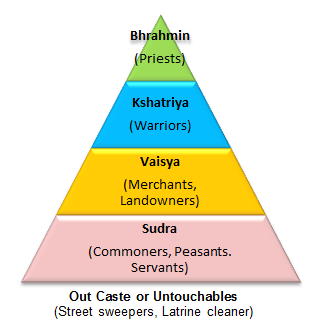
  2. Certain norms, rules & regulations: we follow these of our own group and also that of the reference group. This gives emotional satisfaction. Sanskritisation is an example (the lower castes follow rules and regulations of higher casters).
  3. Ideal Person: Example of Mahatma Gandhi – when you read about the Mahatma you want to be like him. He is the ideal person in your view.
  4. Every person or group may have different reference group. One may like or dislike a particular group. If you like you imitate and if you don’t you don’t imitate.
  5. Reference group changes with time, situation etc. For a particular time you may have one reference group and at another time you may not like that group and do don’t make it your reference group.
  6. When he is not satisfied with the group to which he belongs he wants to join another group and so you imitate. This gives rise to ‘Marginal Man’.
  7. Mahatma Gandhi and reference group may vary from time to time therefore sometimes the reference group could become your Mahatma Gandhi.
  8. Social adjustment: When we follow the norms etc. of the reference group we are actually adjusting to that group and this leads to us adjust more easily to our society.
  9. Social control
  • Social transformation: Development a betterment of society.

Types of Reference Group

Sociologists have identified two types of reference groups as described below:

  1. Positive Reference Groups

These are the ones we want to be accepted by. Thus, if we want to be a film actor, we might carefully observe and imitate the behaviour of film actors. These are the groups, collectivities or persons that provide the person with a guide to action by explicitly setting norms and espousing values.

  1. Negative Reference Groups

These groups we do not want to be identified with, also serve as sources of self-evaluation. A person might, for example, try to avoid resembling members of a particular religious group or a circus group. A group rejected by or in opposition to ego’s own group, it is ‘the enemy’ or the negative group.

Importance and Functions of Reference Group

The concept of reference group is important for understanding socialisation, conformity, and how people perceive and evaluate themselves, especially in relation to the self.

Reference groups perform three basic functions:

(i) They serve a normative function by setting and enforcing standards of conduct and belief.

  1. Newcomb (1953) writes: “The significant thing about a reference group is, in fact, that its norms provide frames of reference which actually influence the attitude and behaviour of a person.”

(ii) They also perform a comparison function by serving as a standard against which people can measure themselves and others.

(iii) They serve not only as sources of current evaluation but also as sources of aspiration and goal attainment (as a means of antici­patory socialization). A person who chooses to become a professor or a lawyer begins to identify with that group and becomes socialized to have certain goals and expectations.

error: Content is protected !!