Types of Securities in Banks

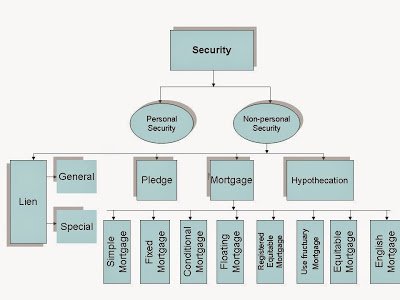
Security is what the borrower puts up to guarantee payment of the loan. Moreover security means immovable & chattel or personal asset or assets to which a lender can have recourse if the borrower defaults in the loan payment. Bankers, whenever advancing loans, first ask for the security to be put for the loans requested. Different types of securities are used depending upon the nature of the advances issued by the banks. A good security must be enough to cover the risk, highly liquid, free from any encumbrance, clean in ownership and easy to handle.

There are two types of banks security.

  • Personal Security
  • Non-personal security

  1. Personal security

If any banks client himself or third party is considered as security is called personal security. without receiving the immovable & chattel assets as security, if bank can receive any client himself or any person own self on be half of that client as security is considered as personal security. Bank will consider the person or third party only for then when he has enough social dignity and goodwill or a scope of applying law against himself in future or he is engaged in renowned business, government or recognized non government organization.

  1. Non-personal security

without receiving any client himself or any person own self on be half of that client as security , if bank can receive the immovable & chattel assets as security is considered as non-personal security. There are four types of non-personal security. such as-

  • Lien
  • Pledge
  • Mortgage
  • Hypothecation

The above four categories of non-personal security are given below with detail.

(a) Lien

The right of retain foods is known as lien. The lawful right of a lender to offer the guarantee property of an account holder who neglects to meet the commitments of an advance contract. A lien exists, for instance, when an individual takes out a vehicles advance. The lien holder is the bank that allows the advance, and the lien is discharged when the credit is forked over the required funds. Another kind of lien is a repairman’s lien, which can be appended to genuine property if the property proprietor neglects to pay a foreman for administrations rendered. In the event that the account holder never pays, the property can be sold to pay the lien holder. There are two types of lien:-

  • General lien: Here, Bank has the possess of the assets have been kept as security and bank can’t transfer the possession to another until the loan amount is being paid.
  • Special lien: Here, Bank has the possess of the assets have been kept as security and bank can transfer the possession to another on conditions is called special lien.

(b) Pledge

Here the possess of assets is to bank or loan provider, but the ownership is to borrower. After payment, bank transfers the possession of security assets to borrower. When a customer takes loan against jewels he pledges the jewel to the bank.  Similarly a customer availing loan on key cash credit basis pledges the  goods to the banker by keeping them in a godown under lock and key  control of the bank. Pledged goods are to be insured and the pledgee (banker) has to take reasonable care to protect the property pledged.

3. Mortgage

It is an interest in property created as security for a loan or payment of debt and terminated on payment of the loan or debt. A mortgage is a contract that permits a loan provider partially or fully to foreclose that security when a borrower is unable to pay the loan amount. Mortgage is applicable only for immovable assets and this is why it is called immovable property mortgage. There are many types of mortgage have been described below.

  • Simple mortgage: If the loan amount isn’t paid by borrower and legal step is taken against him or lender can purchase which security assets on the opinion of borrower is called simple mortgage.
  • Fixed mortgage: The borrower gives which property in black & white or in registering to the lender and if the loan is not paid in time, then legal possession of that security is gained by lender is called fixed mortgage.
  • Conditional mortgage: If the loan amount isn’t paid in time and without fulfilling the determined conditions, the which security is not sold or transfered is called conditional mortgage.
  • Floating mortgage: The possession right of which mortgage properly is belonged to borrower and only documents are submitted to loan provider is called floating mortgage.
  • Equitable mortgage: The documents of which mortgage property is kept to bank for a specific time period and possession is belonged to borrower and after exceeding the payment period bank try to gain the legal possession is called equitable mortgage.
  • Registered equitable mortgage: The ownership documents of which mortgage property is kept to lone provider with registration for a specific time period and possession is belonged to borrower is called registered equitable mortgage.
  • Use fructuary mortgage: The possession & consumption of which mortgage property is given to loan provider as loan providing till a specific time period and after exceeding that time period the belongingness of that property is leaved to borrower is called use fructuary mortgage.
  • English mortgage: The ownership of which mortgage property is to loan provider and possession or belongingness of that property is to borrower is called English mortgage. If borrower is fail to pay the loan amount then the possession power is automatically gone to loan provider.
  1. Hypothecation

It is pledge to secure an obligation without delivery of title or possession.

At last we can say that, at the modern banking sectors a great changes has been occurred in the categories of categories of mortgage.

Corporate Restructuring University of Mumbai BMS 4th Sem Notes

Unit 1 Corporate Restructuring: Introduction and Concepts {Book}

Corporate Restructuring, Historical Background, Meaning of Corporate Restructuring, Corporate Restructuring as a Business Strategy VIEW
Need and Scope of Corporate Restructuring VIEW
Planning, Formulation and Execution of Various Restructuring Strategies VIEW
Important Aspects to be considered while Planning or Implementing Corporate Restructuring Strategies VIEW
Forms of Restructuring:
Merger VIEW VIEW
Demerger, Reverse merger VIEW
Disinvestment VIEW
Merger Takeover/acquisition VIEW VIEW
Joint Venture (JV) VIEW VIEW
Strategic Alliance VIEW
Franchising and Slump sale VIEW
Unit 2 Accounting of Internal Reconstruction (Practical and theory) {Book}
Accounting of Internal Reconstruction VIEW VIEW
Need for Reconstruction and Company Law provisions VIEW
Distinction between Internal and External Reconstructions VIEW
Methods including alteration of Share capital, Variation of share-holder rights, Sub division, Consolidation, Surrender and reissue/Cancellation, Reduction of Share Capital, with relevant Legal provisions and Accounting treatments for same VIEW
Unit 3 Accounting of External Reconstruction (Amalgamation/ Mergers/ Takeovers and Absorption) (Practical and theory) {Book}
Accounting of External Reconstruction (Amalgamation/ Mergers/ Takeovers and Absorption) VIEW
In the nature of merger and purchase with corresponding accounting treatments of pooling of interests and purchase methods respectively VIEW
Computation and meaning of Purchase consideration and Problems based on Purchase method VIEW VIEW
Unit 4 Impact of Reorganization on the Company: An Introduction (Only Theory) {Book}
Change in the Internal Aspects on Reorganization: Change of Name and Logo, Revised Organization Chart, Communication, Employee Compensation, Benefits and Welfare Activities, Aligning Company Policies, Aligning Accounting and Internal Database Management Systems, Re-Visiting Internal Processes and Re-Allocation of People VIEW
Change in External Aspects on Reorganization: Engagement with Statutory Authorities, Revised ISO Certification and Similar Other Certifications, Revisiting past Government approvals, decisions and other contracts VIEW
Impact of Reorganization: Gain or Loss to Stakeholders, Implementation of Objectives, Integration of Businesses and Operations, Post Merger Success and Valuation and Impact on Human and Cultural Aspects VIEW

Financial Accounting University of Mumbai BMS 5th Sem Notes

Unit 1 Preparation of Final Accounts of Companies {Book}

Relevant provision of Companies Act related to preparation of Final Accounts VIEW
Preparation of Financial statements as per Companies Act VIEW VIEW
AS1 in relation to final accounts of companies VIEW VIEW
Unit 2 Underwriting of Shares and Debentures{Book}
Underwriting VIEW VIEW
Underwriting of Shares, Debentures VIEW
Underwriting Commission, Provision of companies Act. with respect to Payment of underwriting commission VIEW
Underwriters, Sub-underwrites, Brokers and Managers to issues VIEW
Types of Underwriting, Abatement Clause VIEW
Market, Unmarked and Firm-underwriting applications VIEW
Liability of the underwriters in respect of underwriting contract VIEW
Unit 3 Accounting of Transactions of Foreign Currency {Book}
In Relation to purchase and Sale of goods, Services, assets loan and Credit transactions VIEW
Computation and Treatment of exchange rate Differences VIEW
Unit 4 Investment Accounting (w.r.t Accounting Standard-13) {Book}
Investment Accounting for Shares (Variable income bearing securities) VIEW
Investment Accounting for Debentures/Preference Shares (fixed income bearing securities) VIEW
Accounting for transactions of purchase and Sale of investments with ex and cum interest prices VIEW
Finding cost of investment sold and carrying cost as per weighted average method VIEW
Columnar format for investment Account VIEW
Unit 5 Ethical Behaviour and Implications for Accounts {Book}
Introduction, Meaning of Ethical Behaviour in Accounts VIEW
Financial Reports: Link between law, corporate governance, CSR and ethics VIEW
Need of ethical behavior in accounting profession VIEW
Implication of ethical values for the principles versus rule-based approaches to accounting Standards VIEW
The principle-based approach and ethics VIEW
The accounting standard setting process and ethics VIEW VIEW VIEW
The IFAC code of ethics for Professional Accountants VIEW
Contents of Research report in Ethical Practices VIEW
Implications of unethical behavior for financial reports VIEW
Company code of ethics VIEW VIEW VIEW
The increasing role of Whistle-Blowing VIEW


Read More: https://indiafreenotes.com/oubcom-accounting-standards/

Strategic Marketing Management University of Mumbai BMS 5th Sem Notes

Unit 1 Introduction to Strategic Marketing Management {Book}
Marketing: Nature of Marketing, marketing as an art, Science and Business discipline VIEW
Marketing as a Value Creation process VIEW
Strategic Decisions: Nature of Strategy, The Marketing Strategy interface VIEW
Difference between Marketing planning and Strategic planning VIEW
Identifying the market: The five C Framework: Customer, Company, Collaborator, Competitor, Context VIEW
The 7 tactics of Marketing mix: Product, Service, Brand, Price, Incentives, Communication and Distribution VIEW
Business Model and Strategic Marketing Planning VIEW
Role of Business models in marketing management VIEW
Strategies for Developing a Business Model: Top-down Business Model generation, Bottom-up Business Model Generation VIEW
The G-STIC frame work for marketing planning: Goal-Strategy-Tactics-Implementation-control VIEW


Unit 2 Segmenting, Targeting, Positioning and Creation of Value in the context of Strategic Marketing: {Book}
Segmentation: Essence of segmentation VIEW
Factors to be considered while Segmenting VIEW VIEW
Key Segmenting Principles: Relevance, Similarity, Exclusivity VIEW
Identifying Target Customers VIEW VIEW
Factors to be Considered while Targeting VIEW
Targeting Strategies: One for all strategy, one for each strategy VIEW
Strategic Targeting Criteria: Target Attractiveness, Target Compatibility VIEW
Essential Strategic assets for Target compatibility: Business infrastructure, Collaborator networks, Human capital, intellectual property, Strong brands, established customer base, synergistic offerings, access to scarce resources and capital VIEW
Creating Customer Value through Positioning VIEW
Role of Strategic positioning VIEW
Strategic Positioning options: The Quality option, Value option, The Pioneer, A Narrow Product focus, Target Segment Focus VIEW
Strategies for Creating Superior customer value VIEW
Creating Company Value: Understanding Company Value: Monetary, functional and psychological value VIEW
Strategically managing profits: Increasing sales revenue-through volume, optimizing price, Lowering costs VIEW
Creating Collaboration Value: Meaning of Collaborators, Collaboration as Business process, Advantages and Drawbacks of Collaboration VIEW
Levels of Strategic Collaboration: Explicit, Implicit VIEW
Alternatives to Collaboration: Horizontal and Vertical integration, Managing collaborator relations VIEW
Gaining Collaborator power: Offering Differentiation; Collaborator size, Strategic importance, Switching costs VIEW

International Finance University of Mumbai BMS 6th Sem Notes

Unit 1 Fundamentals of International Finance {Book}
a) Introduction to International Finance:
Meaning/ Importance of International Finance, Scope of International Finance VIEW
Globalization of the World Economy, Goals of International Finance, The Emerging Challenges in International Finance VIEW
b) Balance of Payment:
Introduction to Balance of Payment, Accounting Principles in Balance of Payment VIEW
Components of Balance of Payments, Balance of Payment Identity VIEW
Indian Heritage in Business, Management, Production and Consumption VIEW
c) International Monetary Systems:
Evolution of International Monetary System, Gold Standard System, Bretton Woods System VIEW
Flexible Exchange Rate Regimes; 1973 to Present VIEW VIEW
Current Exchange Rate Arrangements VIEW
European Monetary System VIEW
Fixed & Flexible Exchange Rate System VIEW
d) An introduction to Exchange Rates: Foreign Bank Note Market VIEW
Spot Foreign Exchange Market VIEW
Exchange Rate Quotations, Direct & Indirect Rates, Spread & Spread VIEW
Cross Currency Rates VIEW
Factors Affecting Exchange Rates VIEW


Unit 2 Foreign Exchange Markets, Exchange Rate Determination & Currency Derivatives {Book}
a) Foreign Exchange Markets:
Introduction to Foreign Exchange Markets VIEW
Structure of Foreign Exchange Markets, Types of Transactions & Settlement Date VIEW
Exchange Rate Quotations & VIEW
Exchange Rate Arbitrage VIEW VIEW
Forward Quotations (Annualized Forward Margin) VIEW
b) International Parity Relationships & Foreign Exchange Rate:
Interest Rate Parity VIEW
Purchasing Power Parity VIEW
Fishers Parity VIEW VIEW
Forecasting Exchange Rates (Efficient Market Approach, Fundamental Approach, Technical Approach, Performance of the Forecasters) VIEW
Global Financial Markets & Interest Rates VIEW
Domestic & Offshore Markets VIEW
Money Market Instruments VIEW VIEW
c) Currency & Interest Rate Futures:
Introduction to Currency Options (Option on Spot, Futures & Futures Style Options) VIEW
Futures Contracts, Markets & the Trading Process VIEW VIEW
Hedging & Speculation with Interest Rate Futures VIEW VIEW
Currency Options in India VIEW


Unit 3 World Financial Markets & Institutions & Risks {Book}
a) Euro Currency Bond Markets:
Introduction to Euro Currency Market, Origin of Euro Currency Market, VIEW
Euro Bond Market (Deposit, Loan, Notes Market), Types of Euro Bonds VIEW
Innovation in the Euro Bond Markets, Competitive Advantages of Euro Banks VIEW
Control & Regulation of Euro Bond Market VIEW
b) International Equity Markets & Investments:
Introduction to International Equity Market, International Equity Market Benchmarks VIEW
Risk & Return from Foreign Equity Investments VIEW
Equity Financing in the International Markets, Depository Receipts; ADR, GDR, IDR VIEW
c) International Foreign Exchange Markets:
Meaning of International Foreign Exchange Market VIEW
FERA v/s FEMA VIEW
Scope & Significance of Foreign Exchange Markets VIEW
Role of Forex Manager, FDI v/s FPI, Role of FEDAI in Foreign Exchange Market VIEW
d) International Capital Budgeting:
Meaning of International Capital Budgeting, Capital Budgeting Decisions, VIEW
Incremental Cash Flows VIEW
Cash Flows at Subsidiary and Parent Company VIEW VIEW
Repatriation of Profits VIEW
Capital Budgeting Techniques:
Payback Period VIEW
Accounting Rate of Return VIEW
Internal Rate of Return VIEW
NPV VIEW


Unit 4 Foreign Exchange Risk, Appraisal & Tax Management {Book}
a) Foreign Exchange Risk Management:
Introduction to Foreign Exchange Risk Management, Types of Risk, Trade & Exchange Risk VIEW
Portfolio Management in Foreign Assets VIEW
Arbitrage VIEW VIEW VIEW
Speculation VIEW VIEW VIEW
b) International Tax Environment:
Meaning of International Tax Environment, Objectives of Taxation, Types of Taxation VIEW
Benefits towards Parties doing Business Internationally VIEW
Tax Havens, Tax Liabilities VIEW
c) International Project Appraisal:
Meaning of International Project Appraisal VIEW
Review of Net Present Value Approach (NPV) VIEW
Option Approach to Project Appraisal VIEW
Project Appraisal in the International Context VIEW
Practice of Investment Appraisal VIEW


Innovative Financial Services University of Mumbai BMS 6th Sem Notes

Unit 1 Introduction to Traditional Financial Services {Book}
a) Financial Services: Concept, Objectives/Functions, Characteristics, VIEW
Financial Service Market VIEW
Financial Service Market Constituents VIEW VIEW
Growth of Financial Services in India VIEW
Problems in Financial Services Sector VIEW
Banking VIEW
Non-Banking Companies VIEW
Regulatory Framework VIEW VIEW VIEW
b) Factoring: Introduction, Types of Factoring, Advantages and Disadvantages of Factoring VIEW
Factoring Theoretical Framework, Factoring Cost VIEW
Factoring in India VIEW
Factoring v/s Forfaiting VIEW
Working of Forfaiting, Benefits and Drawbacks of Forfaiting, Practical Problems VIEW VIEW
c) Bill Discounting Introduction, Bill Discounting Framework VIEW VIEW
Bill Market Schemes VIEW
Factoring V/s Bill Discounting in Receivable Management VIEW


Unit 2 Issue Management and Securitization {Book}
a) Issue Management Introduction VIEW
Intermediaries Introduction VIEW VIEW
Merchant Bankers/ Lead Managers VIEW VIEW
Underwriters VIEW VIEW VIEW
Bankers to an Issue, Brokers to an Issue VIEW
b) Stock Broking: Introduction, Stock Brokers, SubBrokers, Foreign Brokers VIEW
Trading and Clearing/Self Clearing Members VIEW
Stock Trading (Cash and Normal) VIEW
Derivative Trading VIEW
c) Securitization: Definition, Securitization v/s Factoring, Features of Securitization, Pass Through Certificates VIEW
Securitization Mechanism VIEW
Special Purpose Vehicle, Securitisable Assets, Benefits of Securitization, New Guidelines on Securitization VIEW


Unit 3 Financial Services and its Mechanism {Book}
a) Lease and Hire-Purchase:
Leases Meaning, Types of Leases: Finance Lease, Operating Lease VIEW
Advantages and Disadvantages of Leasing VIEW
Leasing in India, Legal Aspects of Leasing VIEW
Definition of Hire Purchase VIEW VIEW
Hire Purchase and Installment Sale Characteristics, Advantages of Hire Purchase, Problems of Hire Purchase VIEW
Hire Purchase and Leasing VIEW
b) Housing Finance: Introduction, Housing Finance Industry, Housing Finance Policy Aspect, Sources of Funds VIEW
Market of Housing Finance, Housing Finance in India; Major Issues VIEW
Housing Finance in India; Growth Factors, Housing Finance Institutions in India VIEW
National Housing Bank (NHB) VIEW
Guidelines for Asset Liability Management System in HFC, Fair Trade Practice Code for HFC’s, Housing Finance Agencies VIEW
Venture Capital: Introduction, Features of Venture Capital, Types of Venture Capital Financing Stages VIEW
Disinvestment mechanisms, Venture Capital Investment process, Indian Scenario VIEW


Unit 4 Consumer Finance and Credit Rating {Book}
a) Consumer Finance: Introduction, Sources, Types of Products, Case for and against Consumer Finance VIEW
Consumer Finance Practice in India, Mechanics of Consumer Finance, Terms, Pricing VIEW
Marketing and Insurance of Consumer Finance VIEW
Consumer Credit Scoring VIEW
b) Plastic Money: Growth of Plastic Money Services in India VIEW
Types of Plastic Cards:
Credit card, Debit Card VIEW VIEW
Smart card VIEW
Add-on Cards VIEW
Performance of Credit Cards and Debit Cards VIEW
Benefits of Credit Cards, Dangers of Debit Cards VIEW
Prevention of Frauds and Misuse, Consumer Protection. Indian Scenario VIEW
Smart Cards: Features, Types, Security Features and Financial Applications VIEW
c) Credit Rating Meaning, Origin, Features, Advantages of Rating, Regulatory Framework, VIEW
Credit Rating Agencies, Credit Rating Process, Credit Rating Symbols VIEW
Credit Rating Agencies in India, Limitations of Rating VIEW


Project Management University of Mumbai BMS 6th Sem Notes

Unit 1 Introduction to Project Management & Project Initiation {Book}
a) Introduction to Project Management:
Meaning/Definition of Project & Project Management, Classification of Projects VIEW
Why Project Management VIEW
Characteristics/Importance of Project Management VIEW
Need for Project Management (Objectives), History of Project Management VIEW
b) Organizational Structure (Project Organization):
Meaning/Definition of Project Organizational Structure, Types of Organizational Structure VIEW
Organizational Work Flow, Developing Work Integration Positions VIEW
Forms of Organization VIEW
Strategic Business Units (SBU) in Project Management VIEW
c) Project Initiation: VIEW
Project Selection, Meaning of Project Selection, Importance VIEW
Criteria for Project Selection (Models), Types of Project Selection VIEW
Understanding Risk & Uncertainty in Project Selection VIEW
Project Manager: Meaning of Project Manager, Role of Project Manager, Importance of Project Manager VIEW
Role of Consultants in Project Management, Selecting Criteria for Project Manager VIEW
Project Planning, Importance of Project Planning, Functions of Project Planning, System Integration VIEW
Project Management Life Cycle VIEW
Conflicts & Negotiation Handling in Project Management VIEW
Planning Cycle & Master Production Scheduling VIEW


Unit 2 Analyzing Project Feasibility {Book}
a) Project Feasibility Analysis: Meaning/Definition of Project Feasibility, Importance of Project Feasibility, Scope of Project Feasibility VIEW
Types of Project Feasibility: Market Feasibility, Technical Feasibility, Financial Feasibility, Economic Viability, Operational Feasibility VIEW
SWOT Analysis (Environment Impact Assessment, Social Cost Benefit Analysis) VIEW
b) Market Analysis: Meaning of Market Analysis VIEW
Demand Forecasting VIEW
Product Mix Analysis, Customer Requirement Analysis VIEW
c) Technical Analysis: Meaning of Technical Analysis, Use of Various Informational Tools for Analyzing, Advancement in the Era of e-Commerce in Project Management VIEW
d) Operational Analysis: Meaning of Operation Management, Importance of Operation Management VIEW
Operation Strategy; Levels of Decisions VIEW
Production Planning VIEW VIEW
Production Control VIEW
Material Management VIEW
Work Study & Method Study VIEW
Lean Operations VIEW


Unit 3 Budgeting, Cost & Risk Estimation in Project Management {Book}
a) Funds Estimation in Project: Means of Financing, Types of Financing, Sources of Finance VIEW
Government Assistance towards Project Management for Startups VIEW
Cost Control (Operating Cycle, Budgets & Allocations) VIEW
Determining Financial Needs for Projects, Impact of Leveraging on Cost of Finance VIEW
b) Risk Management in Projects: What is Risk, Types of Risk in Projects, Risk Management Process, Risk Analysis & Identification VIEW
Impact of Risk Handling Measures, Work break Down Structure VIEW
New Venture Valuation (Asset Based, Earnings Based, Discounted Cash flow Models) VIEW
c) Cost Benefit Analysis in Projects:
Introduction to Cost Benefit Analysis in Projects, Efficient Investment Analysis VIEW
Cash-Flow Projections VIEW
Financial Criteria for Capital Allocation, Strategic Investment Decisions VIEW


Unit 4 New Dimensions in Project Management {Book}
a) Modern Development in Project Management: Introduction to Modern Development in Project Management, VIEW
Project Management Maturity Model (PMMM) VIEW
Continuous Improvement VIEW
Developing Effective Procedural Documentation VIEW
Capacity Planning VIEW
b) Project Monitoring & Controlling:
Introduction to Project Monitoring & Controlling, The Planning, Monitoring, Controlling Cycle VIEW
Computerized Project Management Information System (PMIS) VIEW
Balance in Control System in Project Management VIEW
Project Auditing; Life Cycle VIEW
c) Project Termination & Solving Project Management Problems:
Meaning of Project Termination, Reasons for Termination of Projects, Process for Terminating Projects VIEW
Strategy/ Ways to Solve Project Management Problems VIEW
Project Review & Administrative Aspects VIEW
Execution Tools for Closing of Projects VIEW


HRM in Global Perspective University of Mumbai BMS 6th Sem Notes

Unit 1 International HRM: An Overview: {Book}
International HRM Meaning and Features VIEW
Objectives, Evolution of IHRM VIEW
Reasons for Emergency of IHRM VIEW
Significance of IHRM in International Business VIEW
International HRM Scope/Functions VIEW
Difference between International HRM and Domestic HRM VIEW VIEW
Approaches to IHRM: Ethnocentric, Polycentric, Geocentric and Regiocentric VIEW
Limitations to IHRM VIEW
Qualities of Global Managers VIEW
Organizational Dynamics and IHRM VIEW
Components of IHRM: Cross Cultural Management, Comparative HRM
Cross Cultural Management: Meaning, Features, Convergence of Cultures VIEW
Role of IHRM in Cross Culture Management VIEW
Problems of Cross-Cultural Issues in Organizations VIEW
Importance of Cultural Sensitivity to International Managers VIEW
Comparative HRM: Meaning, Importance, Difference between IHRM and Comparative HRM VIEW
Managing Diversity in Workforce VIEW VIEW
Dealing with Cultural Shock VIEW


Unit 2 Global HRM Functions {Book}
International Recruitment and Selection Meaning VIEW VIEW
Sources of International Labour Market, Global Staffing, Selection Criteria VIEW
Managing Global Diverse Workforce VIEW VIEW
International Compensation Meaning, Objectives, Components of International Compensation Program VIEW
Approaches to International Compensation VIEW
HRM Perspectives in Training and Development Meaning, Advantages VIEW
Cross Cultural Training, Issues in Cross Cultural Training VIEW
International Performance Management Meaning, Factors VIEW
Criterion used for Performance Appraisal of International Employees VIEW
Problems Faced in International Performance Management VIEW
Motivation System Meaning VIEW VIEW
Reward System Meaning VIEW VIEW
Benchmarking Global Practices VIEW
International Industrial Relations Meaning VIEW
Trade Union and International IR VIEW
Trade Union VIEW VIEW


Unit 3 Managing Expatriation and Repatriation {Book}
Concepts of PCNs (Parent-Country Nationals), TCNs (Third-Country Nationals) and HCNs (Host-Country Nationals) VIEW
Expatriation Meaning, Reasons for Expatriation, Factors in Selection of Expatriates VIEW
Advantages of Using Expatriates VIEW
Limitations of using Expatriates, Role of Family, Reasons for Expatriate Failure VIEW
The Role of Non-expatriates VIEW
Women and Expatriation VIEW
Requirements/Characteristics of Effective Expatriate Managers VIEW
Repatriation Meaning, Repatriation Process VIEW
Factors affecting Repatriation Process VIEW
Role of Repatriate, Challenges faced by Repatriates VIEW


Unit 4 International HRM Trends and Challenges {Book}
Emerging Trends in IHRM VIEW
Off Shoring Meaning, Importance, Off Shoring and HRM in India VIEW
International Business Ethics and IHRM:
Business Ethics VIEW VIEW
Global Values VIEW
International Corporate Code of Conduct VIEW VIEW
Criminalization of Bribery VIEW
Operationalizing Corporate Ethics of HR in Overall Corporate Ethics Programme VIEW
Managing International Projects and Teams Meaning VIEW
How Projects are Managed across the World VIEW
Challenges in Managing International Projects across the World VIEW
HR in MNCs; Industrial Relations in MNCs VIEW
Role of Technology on IHRM VIEW
IHRM and Virtual Organization Meaning and Features of Virtual Organization VIEW
Difference between Virtual Organization and Traditional Organization VIEW
Managing HR in Virtual Organization VIEW
Growth in Strategic Alliances; Impact on IHRM VIEW VIEW
Cross Border Mergers and Acquisitions VIEW
Knowledge Management and IHRM VIEW


Indian Ethos in Management University of Mumbai BMS 6th Sem Notes

Unit 1 Indian Ethos: An Overview {Book}
a) Indian Ethos
Meaning, Features, Need, Relevance, History, Principles practiced by Indian Companies VIEW
Requisites, Elements, Role of Indian Ethos in Managerial Practices VIEW
b) Management Lessons from Scriptures:
**Management Lessons from Bhagavad Gita VIEW
**Management Lessons from Quran Ramayana VIEW
Management Lessons from Vedas VIEW
Management Lessons from Mahabharata VIEW
Management Lessons from Bible VIEW
Management Lessons from Quran VIEW
Management Lessons from Kautilya’s Arthashastra VIEW
Indian Heritage in Business, Management, Production and Consumption VIEW
Ethics v/s Ethos VIEW
Indian Management v/s Western Management VIEW


Unit 2 Work Ethos and Values {Book}
a) Work Ethos: Meaning, Levels, Dimensions, Steps VIEW
Factors Responsible for Poor Work Ethos VIEW
b) Values:
Meaning, Features, Values for Indian Managers VIEW
Relevance of Value Based Management in Global Change VIEW
Impact of Values on Stakeholders: Employees, Customers, Government, Competitors and Society VIEW
Values for Managers VIEW
Trans-Cultural Human Values in Management and Management Education VIEW
Secular v/s Spiritual Values in Management VIEW
Importance of Value System in Work Culture VIEW


Unit 3 Stress Management {Book}
a) Stress Management Meaning VIEW
Types of Stress at Work VIEW VIEW
Causes of Stress VIEW VIEW
Consequences of Stress VIEW
b) Stress Management Techniques: VIEW
Meditation Meaning, Techniques, Advantages VIEW
Mental Health and its Importance in Management VIEW
Brain Storming, Brain Stilling VIEW
Yoga Meaning, Significance VIEW VIEW
c) Leadership Meaning VIEW
Contemporary Approaches to Leadership VIEW VIEW
Joint Hindu Family Business VIEW
Leadership Qualities of Karta VIEW
d) Motivation Meaning, Techniques VIEW VIEW
Indian Approach to Motivation VIEW


Unit 4 Indian Systems of Learning {Book}
a) Learning Meaning, Mechanisms VIEW VIEW
Gurukul System of Learning: Meaning, Features, Advantages, Disadvantages VIEW
Modern System of Learning Meanings, Features, Advantages, Disadvantages VIEW
Karma Meaning, Importance of Karma to Managers, Nishkama Karma VIEW
Laws of Karma The Great Law, Law of Creation, Law of Humility, Law of Growth, Law of Responsibility, Law of Connection VIEW
Corporate Karma Meaning, Methodology, Guidelines for good Corporate Karma VIEW
Self-Management Personal growth and Lessons from Ancient Indian Education System VIEW
Personality Development Meaning, Determinants VIEW
Indian Ethos and Personality Development VIEW


Role of Management Information System (MIS)

Simply MIS stand For Management Information System. For Simply Understanding Management Information System (MIS) we can divide in to three Word and Understand Part by part

  • Management: “Management is function to do the work at the Right time, by the right Person, For the Right Job.”
  • Information: “Information is the Collection of Organized data which plays a Vital Role for decision making.”
  • System: “System Consist for a set of elements which Provides a Framework to convert Unorganized (Data) into Organized Information.”

Role of Management Information System

Management information system (MIS) has become Very Necessary due to Emergence of high complexity in Business Organization. It is all to know that without information no Organization can take even one step properly regarding the decision making process. Because it is matter of fact that in an organization decision plays an essential role for the achievement of its objectives and we know that every decision is based upon information. If gathered information are irrelevant than decision will also incorrect and Organization may face big loss & lots of Difficulties in Surviving as well.

  1. Helps in Decision making

Management Information System (MIS) plays a significant Role in Decision making Process of any Organization. Because in Any organization decision is made on the basis of relevant Information and relevant information can only be Retrieving from the MIS.

  1. Helps in Coordination among the Department

Management information System is also help in establishing a sound Relationship among the every persons of department to department through proper exchanging of Information’s.

  1. Helps in Finding out Problems

As we know that MIS provides relevant information about the every aspect of activities. Hence, If any mistake is made by the management then Management Information Systems (MIS) Information helps in Finding out the Solution of that Problem.

  1. Helps in Comparison of Business Performance

MIS store all Past Data and information in its Database. That why management information system is very useful to compare Business organization Performance. With the help of Management information system (MIS) Organization can analyze his Performance means whatever they do last year or Previous Years and whatever business performance in this year and also measures organization Development and Growth.

Components

A Management Information System (MIS) comprises five key components – people, business processes, data, hardware, and software. These components work collaboratively to achieve the organization’s objectives and ensure smooth operations.

People:

Users of the information system, such as accountants, human resource managers, etc., record day-to-day business transactions. The ICT department supports these users, ensuring the system’s proper functioning.

Business Procedures:

Agreed-upon best practices that guide users and other components in working efficiently. These procedures are developed by various stakeholders, including users and consultants.

Data:

Recorded day-to-day business transactions, collected from various activities like deposits and withdrawals for a bank.

Hardware:

The physical equipment like computers, printers, and networking devices that provide computing power for data processing, as well as networking and printing capabilities. Hardware accelerates the transformation of data into valuable information.

Software:

Programs that run on the hardware. Software is divided into system software (e.g., operating systems like Windows, Mac OS, Ubuntu) and applications software (e.g., Payroll program, banking system, point of sale system) that facilitate specific business tasks.

In an MIS, these components form an interconnected ecosystem, with people using business procedures to interact with and record data. The hardware, along with the software, processes this data, transforming it into meaningful information accessible to users. The effective collaboration of all these components ensures the MIS serves its purpose, providing valuable insights for decision-making and supporting business operations.

error: Content is protected !!