Financial Accounting

Unit 1 Conceptual Frame Work Of Financial Accounting {Book}
Financial Accounting Meaning, Definition, Objectives VIEW
Financial Accounting Objectives VIEW
Terminologies: Transaction, debit, credit, Assets, Liabilities, Capital, Drawings, Goods VIEW
Distinctions between Goods and Assets VIEW
Purchases, Purchase Returns, Sales, Sales Returns VIEW
Invoice, Debit Note, Credit Note, Stock, Work-in-progress VIEW
Inventory, Incomes, Expenses, Creditors, Debtors VIEW
Bills of Exchange VIEW
Bills Receivable, Bills Payable VIEW
Outstanding Expenses, Accrued Incomes VIEW
Prepaid Expenses, Incomes received in Advance VIEW
Journal VIEW
Journal Entry, Rules for Journal Entry VIEW VIEW
Subsidiary Books VIEW
Journal Proper VIEW
Account Carried Down, Brought Down, Carried Forward, Brought Forward VIEW
Ledger Accounts VIEW
Income statement VIEW
Balance Sheet VIEW
Accounting Equation VIEW
Accounting concepts: Entity, Money measurement, Realization and Accrual concept VIEW
Introduction to IFRS VIEW
US-GAAP VIEW
European GAAP, Japanese GAAP VIEW


Unit 2 Accounting for Sale of Partnership firm {Book}
Sale to a Limited Company VIEW
Need for conversion – Meaning of Purchase Consideration, Methods of calculating Purchase Consideration, Net Payment method, Net Asset method VIEW
Passing of journal entries accounts in the Books of Vendor VIEW
Preparation of Ledger Accounts in the Books of Vendor VIEW
Treatment of Certain items VIEW
Dissolution expenses VIEW
Unrecorded Assets and Liabilities VIEW
Assets and Liabilities not taken over by the purchasing company VIEW
Contingent liabilities VIEW VIEW
Non-assumption of Trade Liabilities in the Books of Purchasing company VIEW
Passing of incorporation entries: Treatment of security premium VIEW


Unit 3 Accounting for Departmental Undertakings {Book}
Meaning and Features of Departmental Undertaking VIEW
Examples of Department Specific Expenses and Common Expenses VIEW
Need and Bases of Apportionment of Common Expenses VIEW
Preparation of Trading Account in Columnar Form VIEW
Preparation of Profit and Loss Account in Columnar Form VIEW
General Profit and Loss Account and Balance Sheet VIEW
Simple problems involving adjustment on Closing Stock VIEW
Depreciation VIEW
Inter Departmental Transfers at Cost Price VIEW


Unit 4 Fire Insurance claims {Book}
Meaning, Need and Advantages of Fire Insurance VIEW
Insurer/Insurance Company, Insured/Policyholder, Premium VIEW
Salvage, Insurance Policy, Sum Assured, Under Insurance, Average Clause, Claim VIEW


Unit 5 Computerized Accounting Systems {Book}
Computerized Accounts by using Accounting Software VIEW
Creating a Company; Configure and Features Settings VIEW
Creating Accounting Ledgers and Groups VIEW
Creating Stock Items and Groups; Vouchers Entry VIEW


Globalization: Meaning and Features

Globalization is the word used to describe the growing interdependence of the world’s economies, cultures, and populations, brought about by cross-border trade in goods and services, technology, and flows of investment, people, and information. Countries have built economic partnerships to facilitate these movements over many centuries. But the term gained popularity after the Cold War in the early 1990s, as these cooperative arrangements shaped modern everyday life. This guide uses the term more narrowly to refer to international trade and some of the investment flows among advanced economies, mostly focusing on the Asia and Europe.

The wide-ranging effects of globalization are complex and politically charged. As with major technological advances, globalization benefits society as a whole, while harming certain groups. Understanding the relative costs and benefits can pave the way for alleviating problems while sustaining the wider payoffs.

Globalization or globalisation is the process of interaction and integration among people, companies, and governments worldwide. As a complex and multifaceted phenomenon, globalization is considered by some as a form of capitalist expansion which entails the integration of local and national economies into a global, unregulated market economy. Globalization has grown due to advances in transportation and communication technology. With the increased global interactions comes the growth of international trade, ideas, and culture. Globalization is primarily an economic process of interaction and integration that’s associated with social and cultural aspects. However, conflicts and diplomacy are also large parts of the history of globalization, and modern globalization.

Features of Globalization

  1. Liberalization

It stands for the freedom of the entrepreneurs to establish any industry or trade or business venture, within their own countries or abroad.

  1. Free trade

It stands for free flow of trade relations among all the nations. It stands for keeping business and trade away from excessive and rigid regulatory and protective rules and regulations.

  1. Globalization of Economic Activity

Economic activities are be governed both by the domestic markets and also the world market. It stands for the process of integrating the domestic economies with the world economy.

  1. Liberalization of Import-Export System

It stands for liberalization of the import-export activity involving a free flow of goods and services across borders.

  1. Privatization

Globalization stands for keeping the state away from ownership of means of production and distribution and letting the free flow of industrial, trade and economic activity among the people and their corporations.

  1. Increased Collaborations

Encouraging the process of collaborations among the entrepreneurs with a view to secure rapid modernization, development and technological advancement, is a feature of Globalization.

  1. Economic Reforms

Encouraging fiscal and financial reforms with a view to give strength to free trade, free enterprise and market forces of the world. Globalisation stands for integration and democratisation of the world’s culture, economy and infrastructure through global investments.

Globalization Background

The progress of industrial revolution in the 20th century was accompanied by a replacement of the police state by a welfare state. The state came to be an active actor in the economic life of the society. In the socialist states, state ownership of means of production and distribution became the rule.

State-controlled command economies were operationalised and regarded as the best means for rapid socio-economic development. In several other countries, nationalization of key industries and enterprises was undertaken with a view to provide goods and services to the people. State began performing several socio-economic functions.

India, like several other new states, adopted a mixed economic model. Ownership and control over key industries was entrusted to the public sector. It was deemed essential for securing a better mobilisation of resources and for providing better services to the people. State regulation of economy and industry was practiced and the public sector was patronised by the state. Private sector was given a lesser role in the economic system.

However, the experience with the working of command economy and mixed economy models was found to be inadequate slow and unproductive. By 1980s economies of socialist countries began collapsing. Around 1985, Indian economy also began showing big strains. Indian public sector now appeared to be a liability and foreign exchange reserves came to be in very bad shape. Industrial growth became very slow and inflation assumed alarming proportions.

In 1990s, the world witnessed the collapse of socialist economies, in particular the Soviet economy and political system. In 1991, the USSR suffered a disintegration. The weaknesses of all socialist economies became fully clear and all socialist countries began witnessing a process of overthrow of socialist systems.

Liberalization of politics and economy came to be recognised as the necessity of the day. All countries of the world began realising the merits of the market economy, free trade, privatization, liberalization, delicensing and deregulation of trade, industry and business.

In July 1991, the Government of India decided to go in for liberalization of economy. A new economic policy was formulated and implemented with an emphasis new upon economic reforms. These were governed by the principles of liberalization, privatization, market economy, free trade, deregulation and delicencing. These reforms paved the way for initiating the process of liberalization and globalization of Indian economy. Similar changes were adopted by other states.

At the international level, all the states agreed to freely develop financial, business, trade and industrial relations among their people. Adoption of new trade and tariff agreement leading to the establishment of World Trade Organisation was made. Globalization became the order of the day.

Emerging Trends in E-Commerce

In today’s time, all thanks to advancement in technology nothing or no business is restricted to one place, one city or even one country anymore. Everything is global. In the past few years e-commerce industry has taken a ride and has come to become the need of the hour. E-Commerce industry as a whole is evolving at a great pace and as for 2016 and 2017, it has already risen tremendously.

There are new trends emerging in this space, such as:

(1)  Moving to Mobile Commerce

As per a recent report, it is predicted that by the end of 2016 almost a third of the world’s population will have access to Smartphone. Having this feature has become more of a necessity. E-Commerce stores must fit in all screens in order to enhance customer experience or they may be losing on some serious business. As per recent Forbes study, 87 % of the gen-X people spend most of their time on digital devices every day than ever.

(2) Choose how you want to pay

Convenient and more payment options new businesses are emerging to facilitate new payment models to enhance online shopping experience. They aim not only to make wider options available but also to increase payment security for both buyers and sellers. In the past few years, many new models and gateways have emerged like e-wallets, Chip card readers, magnetic cards , EMV and cashback services.

(3) Multi Channel Model

Inspite of booming eCommerce market, retailers have come to an understanding that Omni Channel /Multiple channel is must for any business model. Though there has been a lot of buzz on online shopping comfort, in reality it has been recorded that many customers may surf net all day but at the end do need a brick and mortar store to make the final purchase. However, new technologies such as instore digital services are emerging to make the physical store experience better.

(4) Seamless Shopping experience

Many new features are being added by all companies to facilitate seamless shopping for example stores are now offering easy on the spot or online payments , easy wallets with discounts and coupons or unique store debit cards .

(5) Social Ecommerce

Retailers are adopting social media as their lead sales medium . Social network has come to play the most important role in the retail world lately , almost 40 % purchases are made because of social media handles . Thus , social network is sure expected to rise in the coming time.

(6) Quality rather than quantity

Retailers have come to an understanding that now having more variety will not win them customers, thus the focus has shifted to enhancing customized shopping experience by introducing new features. The emphasis is now being laid on unique online features like virtual trial rooms, zoom in pictures, 360 degree image view.

(7) Customer Relationship

With the increasing variety available the customer loyalty is now completely out of picture. It requires well integrated technology supporting easy payments and high tech shopping experience. The focus is now being shifted from discounts to better integrated technology services.

(8) Customer service

With the increasing online shopping, people are becoming more and more comfortable with the concept of choosing amongst great variety at the comfort of their own space anywhere, anytime 24/7 . Thus , there will be a rise in customer support service feature in the coming time .

(9) Smarter Customers

With more shopping and payment options than ever , customers are more informed and empowered now the stakes are much highe. It is utmost important to win their trust now than ever, but maintaining quality and logistics.

(10) Merging online and offline

It has become important to merge online /offline systems to facilitate easy working. A well integrated technology is crucial.

Change is the essence of life” in order to survive and make a mark in today’s time retailers must be extremely flexible and mouldable towards the smart customers changing needs. It requires tools like social media monitoring , customer feedback & so on . It is the need today to stay upbeat with the changing trends and technology to stay long.

Consumer to Business (C2B) business Model

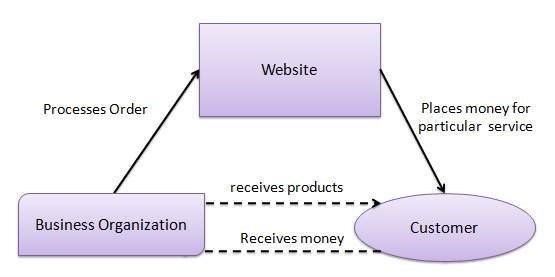
In this model, a consumer approaches a website showing multiple business organizations for a particular service. The consumer places an estimate of amount he/she wants to spend for a particular service. For example, the comparison of interest rates of personal loan/car loan provided by various banks via websites. A business organization who fulfills the consumer’s requirement within the specified budget, approaches the customer and provides its services.

Consumer-to-business (C2B) is a business model in which consumers (individuals) create value and businesses consume that value. For example, when a consumer writes reviews or when a consumer gives a useful idea for new product development then that consumer is creating value for the business if the business adopts the input. In the C2B model, a reverse auction or demand collection model, enables buyers to name or demand their own price, which is often binding, for a specific good or service. Inside of a consumer to business market the roles involved in the transaction must be established and the consumer must offer something of value to the business.

Another form of C2B is the electronic commerce business model in which consumers can offer products and services to companies, and the companies pay the consumers. This business model is a complete reversal of the traditional business model in which companies offer goods and services to consumers (business-to-consumer = B2C). We can see the C2B model at work in blogs or internet forums in which the author offers a link back to an online business thereby facilitating the purchase of a product (like a book on Amazon.com), for which the author might receive affiliate revenues from a successful sale. Elance was the first C2B model e-commerce site.

C2B is a kind of economic relationship that is qualified as an inverted business type. The advent of the C2B scheme is due to:

  • The internet connecting large groups of people to a bidirectional network; the large traditional media outlets are one-directional relationships whereas the internet is bidirectional.
  • Decreasing costs of technology; individuals now have access to technologies that were once only available to large companies (digital printing and acquisition technology, high-performance computers, and powerful software).

Positives and Negatives

Nowadays people have smartphones or connect to the internet through personal tablets/computers daily allowing consumers to engage with brands online. According to Katherine Arline, in traditional consumer-to-business models companies would promote goods and services to consumers, but a shift has occurred to allow consumers to be the driving force behind a transaction. To the consumers benefit, reverse auctions occur in consumer to business markets allowing the consumer to name their price for a product or service.

A consumer can also provide value to a business by offering to promote a business products on a consumers blog or social media platforms. Businesses are provided value through their consumers and vice versa.

Businesses gain in C2B from the consumers willingness to negotiate price, contribute data, or market to the company. Consumers profit from direct payment of the reduced-price goods and services and the flexibility of the transaction the C2B market created. Consumer to business markets have their downfall as well. C2B is still a relatively new business practice and has not been fully studied.

Data Aggregation

Aggregation of data is a common C2B practice done with many internet corporations. In this instance, the consumer is creating the value of personal information and data to better target them to the correct advertisers. Businesses such as Facebook, Twitter, and others utilize this information in an effort to facilitate their B2B transactions with advertisers. Most of these systems cannot be fully utilized without B2C or B2B transactions, as C2B is usually the facilitator of these.

Management Reports

When it comes to a management report, the key areas that you focus on are the profits and losses amongst your clients, products, geographic regions, and even the company’s departments. The first step would be to have a computerized system develop the necessary data, which is collected by a mid-level manager and written up using the following reports:

  1. Cash Flow: This report provides the monthly transactions for your bank, which includes your company’s expenses and liabilities, along with the income you have received. For example, by analyzing your cash flow, you may realize that you had a $30,000 increase in accounts receivable. The increase could be that your client was invoiced for $50,000, but you only received $20,000. The amount in accounts receivable is the difference. This is only one of many examples of how there could be a difference between the cash in your bank and the profit in your reports, which is easily explained with this amazing cash flow tool.
  2. Balance Sheet is a summary of the company’s assets, retained earnings, and liabilities are shown on this report. This report delivers an accurate evaluation of your company’s worth (e.g. vehicles, equipment, and cash on hand) minus what has to be paid (e.g. suppliers, future bills). Using a balance sheet, you can easily discover which clients are behind on their payments and how much money is owed to you. And you also have the option of comparing the sales from a previous month to the current month. This tool goes as far as averaging the revenue per customer and the amount of sales that each salesperson generated.
  3. Profit and Loss is income from sales, minus expenses that are generated on a daily basis. The report will divide your expenses into their necessary spending categories. Maybe you want to average out your numbers for the year. You can do this by viewing your sales and expenses on a quarter-to-quarter or month-to-month basis. Now, you will know which months or quarters are the strongest for your company and which ones you have to work on. You can even view the numbers by a specific team, department, or assignment.
  4. Sales: one of the most important reports is the sales report, because it generates information about the invoices that were raised for the past month.
  5. Trade Creditor is a list of all the businesses that you have to pay.
  6. Trade Debtor is a record of all the clients that have invoices with your business and still owe you money.

Importance of Management Reports

  1. You can discover trends and make the best decisions

Whenever you perform a financial report, you know exactly if the company is gaining or losing. The only downside is that you don’t know exactly how and why this may be happening. There is no benefit in simply knowing that you are winning or losing. With a management report, you are able to go within the workings of your company to see what is actually causing your company to win or lose. Even better, you can find out what areas need work and which parts of the company are the strongest. This is necessary, because you could have a profit for the year and still have a weak link within the company. This issue could be preventing you from making even more money for the company. Are you in business to leave money on the table?

  1. Prevent any unnecessary losses and expenses

And with the world of business constantly changing, it is critical to know when and where you may need to make some adjustments within the company. You definitely don’t want to be the company that reacts, after it is too late. By then, your business is in the hole and you have a lot more to lose.

  1. A powerful tool that delivers up-to-date information about your company

With a management report, you always have the upper hand and can easily adjust to the new changes in business. This is a strategic tool that can be used for long-term plans of growth and profits. Investing in an informative management report is a no-brainer for any organization. Invest in your future today and make sure you have the best Corporate Service Provider to cover your back from registration of your business in the UAE to monthly management reports and annual reporting.

Every business is a little different, but as a starting point for many of our clients we like to look at the following items. You’ll notice this might seem a little sparse, and that’s by design. Too much information is almost worse than no information, so we like to focus on what really matters in your business and nothing else.

  1. Budget

A well-crafted budget is a beautiful thing indeed. It will enable you to set a path for the business to follow over the coming year(s) and give you a framework within which to operate the business and achieve your goals. What do we need to do in sales next month? Check the budget. How much can we spend at the office party? Check the budget. Typically you’ll set a new budget each year and periodically update the budget during the year as new information comes to hand.

  1. Cash flow

The lifeblood of any business, it’s important to know what cash flow is doing in your business. Unless you’re in dire straits there is no need to micro-manage cash, but you should be able to report on what the future cash balance is for the business over the coming year as well as know what kind of state your trade receivables are in.

And finally we like to look at a some Key Performance Indicators. These will vary business by business, but below are a few that we recommend for most service businesses.

  1. Wage Revenue ratio

Too often we’re not getting a good return on our wage spend so it’s a wise idea to track this carefully. A good goal is to spend no more than 65% (ideally, less) of revenues on labour costs. And remember that when we talk about revenue we really mean gross profit (i.e. sales less direct costs).

  1. Staff productivity

This one helps you dig into the reasons behind revenue shortfalls as it shows which staff are hitting their personal productivity targets and which are not. Some businesses will report on hours, others on revenue generated, but either way there is accountability on a per-head basis. We would also consider write-offs per team member here as well.

  1. Client/job profitability

This information will let you know which clients or job types are profitable in your business and those which are not. Regular analysis here may lead to letting certain clients go, re-quoting other clients, redesigning or ditching certain service offerings all in the pursuit of profit.

Five items. That’s it. With the information gathered from these five items you should have most, if not all, of what you need for a really useful set of management reports. From here we can see if we’re hitting our targets, keep an eye out for future cash dramas, and find out which staff/clients/jobs are helping or hindering the bottom line.

Performance Analysis in Private Sector Organizations

Performance Analysis in Private Sector Organizations describes financial performance indicators; describes non-financial performance indicators; analyses past performance; explains the causes and problems created by short-termism and financial manipulation of results; explains the Balanced Scorecard and the Building Block Model and discusses the difficulties of target setting in qualitative areas.

Performance Analysis in not for Profit Organizations and the Public Sector

Not for profit organizations have general objectives which include:

  • “Surplus maximization (Similar to profit maximization)
  • Revenue maximization
  • Usage maximization
  • Usage targeting (Matching the capacity available)
  • Full/ partial cost recovery (Minimizing subsidy)
  • Budget maximization: Maximizing what is offered
  • Producer satisfaction maximization: Satisfying the wants of staff and volunteers
  • Client satisfaction maximization: Generating the support of the public”

Performance could be measured in Private Sector Organizations through:

Performance can be measured using the value for money criteria of economy, effectiveness and efficiency.

  • Economy is spending money frugally
  • Efficiency is getting the most for the money spent.
  • Effectiveness is getting what has to be done economically and efficiently
  • Public sector organizations

Public sector organizations come in many shapes and forms. The most obvious examples are schools and hospitals, police forces and local transport providers, but there are many less visible organizations such as regulatory bodies. The objectives of public sector organizations are very different from those of commercial organizations, and this can make performance management more complicated. The following factors in particular differentiate public sector organizations from commercial:

  1. They have a broader group of stakeholders than commercial organizations. This can lead to greater conflicts. Commercial organizations are likely to be mainly concerned with shareholders, employees, customers and their lenders. Public sector organizations are likely to be interested in pleasing the providers of funding (the government), the users of the service and the taxpayer. In the case of schools, for example, parents would be happy to see more money spent on education but, as taxpayers, they may not wish to pay more taxes.
  2. Customers do not pay directly for the services they receive, and there may be little relationship between the costs of providing the service and the amount it is used. Consider a subsidised bus service, for example. The daily costs of running the buses are likely to be largely fixed, and do not depend on the number of passengers using them at least in the short term. This makes it harder to decide how much should be spent on the service.
  3. Many public sector organizations operate as monopoly providers. Even if customers are not happy with the service they receive, they cannot switch to an alternative supplier. In commercial organizations, this is generally not the case, and bad performance will lead to a loss of customers and, therefore, loss of funding.
  4. The output of public sector bodies is often difficult to measure. How do you determine how much work a police force has performed? Statistics such as the number of crimes reported may be used. If the police force is doing a good job however, and crime is falling, the number of crimes reported may fall. So the lower number of crimes reported would wrongly suggest that the police force is not working so hard.

There is a perception that performance in public sector organizations is poorer than in the private sector, both in terms of efficiency and quality of service.

Divisional Performance

Performance measurement is the performance based management process which is flowing from the organizational mission and the strategic planning process. Divisional performance measurement includes the objective and subjective assessments of the performance sub-units of an organization such as divisions or departments. Divisional performance measurement are effective in ensure that a strategy of organization is successfully implemented by monitor a divisions effectiveness in satisfying its own predetermined goals or stakeholder desires. Divisional performance measures may be based on non-financial as well as on financial information.

Measurement of Divisional Performance

Method 1. Return on Investment (ROI)

Many organizations use return on investment (ROI) to measure divisional performance. ROI expresses divisional profit (operating profit) as a percentage of assets employed in the division. Some companies use net profit after tax as the numerator in calculating the ROI.

Decid­ing on the denominator is a complex decision. Many companies allocate corporate equity to different divisions on some equitable basis (e.g., proportion of total assets employed in each division) and use the same as a denominator.

Some firms use capital employed, (i.e. fixed assets + working capital) as the denominator. However, considerable variations are found in practice on how working capital is treated. Many firms use gross working capital particularly if divisional managers have no influence on trade creditors or other current liabilities. Others prefer to use net working capital as it provides a good measure of corporate resources allo­cated to the business, and managers are expected to earn an adequate return on the same.

Many organizations use book value of fixed assets in calculating capital employed in the division. However, use of book value often misstates the division profitability. Use of book value reduces capital employed and increases ROI every successive year without any real improvement in economic performance. Therefore, use of book value may not motivate divisional manages to acquire new fixed assets.

Better alternatives are the use of replacement cost or the original cost of acquisition (gross book value). However, use of replacement cost or original cost presents some practical problems because it is difficult to ascertain replacement costs of different assets acquired at different points of time having different residual values. If original cost of an asset is used managers may be motivated to dispose of assets even if they have some usefulness.

Companies prefer to use net book-value methods in preference to others because non-accounting methods have an element of subjectivity, while financial accounting methods have an aura of reality for operating managers. The selection of a particular method ultimately depends on the assessment of corporate management of what practice would induce divisional man­agers to efficiently use resources and to acquire proper amount and kind of new assets.

The following are the advantages of ROI for measuring divisional performance:

(a) It is a comprehensive measure and captures all the factors which influence figures in financial statements.

(b) It is easy to calculate and understand.

(c) It makes comparison of performances of different divisions easy.

(d) Data on ROI of different companies are easily available and that helps in inter-firm comparison.

In spite of these advantages many companies do not use ROI for measuring divisional performance because it has the potential to create serious dysfunctional effect.

Use of ROI may motivate divisional managers to avoid acquisition of assets which would decrease the ROI of the division even though it would improve the performance of a company as a whole. E.g., if the current ROI of a division is 20% it would not acquire an asset which would earn a return of 18% although the weighted average cost of capital of the company is 15%.

Thus ROI creates a bias towards no or little additional investment. Man­agers may also take wrong asset disposal decisions. Similarly, a division which has a very low ROI may be tempted to improve ROI by acquiring assets which will improve its ROI although its earning will be lower than the cost of capital of the company.

In view of this serious limitation, many companies use ‘RI’ as a measure of divisional performance.

Method 2. Residual Income (RI) or Economic Value Added (EVA)

Residual Income is pre-tax profit less an imputed interest charge for invested capital.

The imputed interest charge is often referred to as capital charge in management literature. This capital charge is found by multiplying the amount of assets employed by a rate. Selecting the rate of capital charge also poses some problems.

The simplest method is to use company’s cost of capital. However, a sophisticated method uses different rates for different classes of assets may be one rate for general-purpose assets, while a special rate for special-purpose assets.

Some companies use a rate which is close to the company’s cost of borrowing rather than to its cost of capital.

While ROI is a ratio, RI is an absolute figure. RI deals with the problems of ROI adequately because any investment, which will earn higher than the capital charge will improve the RI. Therefore, use of RI motivates divisional managers to acquire only those assets, which will improve the performance of the company as a whole. Thus, the RI method sets the same profit objective for same assets in different divisions.

A sophisticated system also solves the problem of the same profit objective for different assets in the same division by using different rate of capital charges for different class of assets. RI is definitely a superior measure compared to ROI for measuring divisional performance.

Stern Steward & Co., a consultancy firm in USA, uses the term EVA for RI. The Stern Steward & Co. suggests many adjustments to correct the distortions in reported profit and capital due to accounting bias towards prudence. Many firms use EVA as the basis for cal­culating variable part of the executive compensation to induce managers to behave like owners, who in a business to create wealth for themselves.

Transfer Pricing

Transfer pricing can be defined as the value which is attached to the goods or services transferred between related parties. In other words, transfer pricing is the price which is paid for goods or services transferred from one unit of an organization to its other units situated in different countries

Transfer pricing refers to value attached to transfer of goods or services between related parties.

Thus, transfer pricing can be defined as the price paid for goods transferred from one economic unit to another, assuming that the two units involved are situated in different countries, but belong to the same multinational firm.

Aims & Objective of Transfer Pricing

  1. Transfer pricing minimizes the tax burden or arranging direction of cash flow:

Transfer price, as aforesaid, refers to the value attached to transfer of goods, services, and technology between related entities such as parent and subsidiary corporations and also between the parties which are controlled by a common entity. Its essence being that the pricing is not set by an independent transferor and transferee in an arm’s length transaction. Transaction between them is not governed by open market considerations.

  1. Transfer pricing results in shifting profits

Whatever the reason for fixing a transfer price which is not arm’s length, the result is the shift of profit. The effect is that the profit appropriately attributable to one jurisdiction is shifted to another jurisdiction. The main object is to avoid tax as also to withdraw profits leaving very little for the local participation to share. Other object is avoidance of foreign exchange restrictions.

  1. Shifting of Profits: Tax avoiding not the only object

Transfer between the enterprises under the same control and management, of goods, commodities, merchandise, raw material, stock, or services is made at a price which is not dictated by the market but controlled by such considerations such as:

  • To reduce profits artificially so that tax effect is reduced in a specific country;
  • To facilitate decentralization of production so that efforts are directed to concentrate profits in the State of production where there is no or least competition;
  • To remit profits more than the ceilings imposed for repatriation;
  • To use it as an effective tool to exploit the fluctuation in foreign exchange to advantage.

Purposes of Transfer Pricing

The key objectives behind having transfer pricing are:

  • Generating separate profit for each of the divisions and enabling performance evaluation of each division separately.
  • Transfer prices would affect not just the reported profits of every center, but would also affect the allocation of a company’s resources (Cost incurred by one centre will be considered as the resources utilized by them).

Why Organizations need to understand Transfer Pricing?

For the purpose of management accounting and reporting, multinational companies (MNCs) have some amount of discretion while defining how to distribute the profits and expenses to the subsidiaries located in various countries. Sometimes a subsidiary of a company might be divided into segments or might be accounted for as a standalone business. In these cases, transfer pricing helps in allocating revenue and expenses to such subsidiaries in the right manner.

The profitability of a subsidiary depends on prices at which the inter-company transactions occur. These days the inter-company transactions are facing increased scrutiny by the governments. Here, when transfer pricing is applied, it could impact shareholders wealth as this influences company’s taxable income and its after-tax, free cash flow.

It is important that a business having cross-border intercompany transactions should understand transfer pricing concept, particularly for the compliance requirements as per law and to eliminate the risks of non-compliance.

Transfer Pricing Methodologies

The OECD (The Organization for Economic Co-operation and Development) Guidelines discusses the transfer pricing methods which could be used for examining the arms-length price of the controlled transactions. Here, arms-length price refers to the price which is applied or proposed or charged when unrelated parties enter into similar transactions in an uncontrolled condition.

The following are three of the most commonly used transfer pricing methodologies:

For the purpose of understanding, associated enterprises refer to an enterprise which directly or indirectly participates in the management or capital or control of another enterprise.

Problems associated with Transfer Pricing

There are quite a few problems associated with the transfer prices.  Some of these issues include:

  • There could be differences in opinions among organizational divisional managers with respect to how transfer price needs to be set.
  • Additional time, costs and manpower would be required for executing the transfer prices and designing the accounting system to match the requirements of transfer pricing rules.
  • Arm’s length prices might cause dysfunctional behavior among the managers of organizational units.
  • For some of the divisions or departments, for instance, a service department, arm’s length prices don’t work equally well as such departments don’t offer measurable benefits.
  • The transfer pricing issue in a multinational setup is very complicated.

External Considerations and Behavioral Aspects

External considerations in performance management can have an impact on how the organization performs and the steps to be taken to improve performance.

Stakeholders can have an interest and can be impacted by the organization’s activities. Examples of stakeholders are customers, competitors, employees, suppliers, lenders and the community.

Market conditions can impact performance and include “factors as economic growth, inflation, interest rates, exchange rates, government fiscal policy.”

The allowance for competitors includes monitoring “competitors” prices and cost structures” and features that add value and could lead to increased market share.

Performance measures should ensure that stakeholder needs are met, there are plans in place to deal with changes in the market and provide a basis for comparisons with competitors.

Performance measures vary for each of the external considerations. Examples are:

  • Employees: Motivation, morale
  • Management: Salaries, profit sharing
  • Shareholders: Price of shares, dividend yield, earnings per share
  • Customer: Price, quality, service, value for money
  • Government: Taxation, inflation, exports, employment
  • Community: Environmental impact, employment, social needs

Planning and Operational Variances

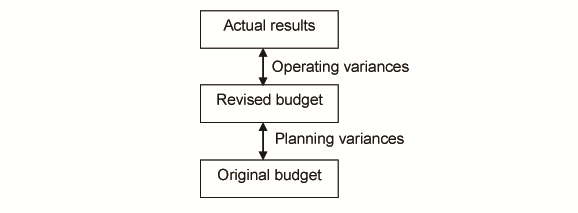
Explaining the causes of variances is a key step in variance analysis. In some cases the cause is purely operational (e.g. the price of raw materials went up due to market shortages) but in some cases the cause is due to poor budgeting and planning (e.g. we used an out of date price list when setting the standard cost of materials). Often causes are a mixture of planning and operating factors. Some firms seek to make these distinctions more explicit by separating out planning and operating variances.

The basic approach is to have two budgets the original budget and a revised one that takes into account planning issues. We can then determine two sets of variances:

Planning and operational variances for sales

The sales volume variance can be sub-divided into a planning and operational variance:

Planning and operating variances for costs

When applying planning and operating principles to cost variances (material and labour), care must be taken over flexing the budgets. One accepted approach is to flex both the original and revised budgets to actual production levels:

Planning and operational analysis

The first step in the analysis is to calculate:

(1) Actual Results

(2) Revised flexed budget (ex-post)

(3) Original flexed budget (ex-ante)

When should a budget be revised?

There must be a good reason for deciding that the original standard cost is unrealistic. Deciding in retrospect that expected costs should be different from the standard should not be an arbitrary decision, aimed perhaps at shifting the blame for bad results due to poor operational management or poor cost estimation.

A good reason for a change in the standard might be:

  • A change in one of the main materials used to make a product or provide a service
  • An unexpected increase in the price of materials due to a rapid increase in world market prices (e.g. the price of oil or other commodities)
  • A change in working methods and procedures that alters the expected direct labour time for a product or service
  • An unexpected change in the rate of pay to the workforce.

These types of situations do not occur frequently. The need to report planning and operational variances should therefore be an occasional, rather than a regular, event.

If the budget is revised on a regular basis, the reasons for this should be investigated. It may be due to management attempting to shift the blame for poor results or due to a poor planning process.

Further thoughts on calculating planning and operating variances in accountancy exams

The basic idea given above is that

Key question: what is the revised budget volume? 

There are three different ways of approaching planning and operating variances in accountancy exams.

Approach 1

If a revised volume is given (or can be easily calculated) then the best approach is to do two completely separate sets of variances.

This will result in the situation where the total traditional variance = planning + operating variances in total only but not line by line (e.g. materials price planning variance + materials price operating variance will not give the traditional materials price variance)

Approach 2

If no obvious revised volume is given (or can be calculated) then set revised budget volume = actual volume. This means that all cost variances are based on the actual output.

In this approach:

  • No operating sales volume variance – its all planning
  • Sales volume variance is thus effectively calculated on Original Standard Margin
  • Planning cost variances will be based on actual output volumes
  • Traditional variances = operating + planning variances on a line by line basis now rather than just in total
  • Note that if the original budgeted volume is not given in the questions, then this approach must be used.

Approach 3

(Note: this approach seems to make more sense when only minor changes are made to the original budget – usually just a couple of prices.  It is also the approach currently used for CIMA P1 and ACCA F5 exams.)

If no obvious revised volume is given (or can be calculated) then set revised budget volume = original budget volume.

In this approach:

  • There is no planning sales volume variance – Its all operating
  • Sales volume variance is thus effectively calculated on Revised Standard Margin
  • Planning cost variances will be based on original budgeted volumes
  • Total traditional variance = planning + operating in total only but not line by line
error: Content is protected !!