IRDA Act 1999

The Insurance Regulatory and Development Authority of India (IRDAI) is an autonomous, statutory body tasked with regulating and promoting the insurance and re-insurance industries in India. It was constituted by the Insurance Regulatory and Development Authority Act, 1999, an Act of Parliament passed by the Government of India. The agency’s headquarters are in Hyderabad, Telangana, where it moved from Delhi in 2001.

IRDAI is a 10-member body including the chairman, five full-time and four part-time members appointed by the government of India.

Functions of the Insurance Regulatory and Development Authority Act

The functions of the IRDAI are defined in Section 14 of the IRDAI Act, 1999, and include:

  • Issuing, renewing, modifying, withdrawing, suspending or cancelling registrations
  • Protecting policyholder interests
  • Specifying qualifications, the code of conduct and training for intermediaries and agents
  • Specifying the code of conduct for surveyors and loss assessors
  • Promoting efficiency in the conduct of insurance businesses
  • Promoting and regulating professional organizations connected with the insurance and re-insurance industry
  • Levying fees and other charges
  • Inspecting and investigating insurers, intermediaries and other relevant organizations
  • Regulating rates, advantages, terms and conditions which may be offered by insurers not covered by the Tariff Advisory Committee under section 64U of the Insurance Act, 1938 (4 of 1938)
  • Specifying how books should be kept
  • Regulating company investment of funds
  • Regulating a margin of solvency
  • Adjudicating disputes between insurers and intermediaries or insurance intermediaries
  • Supervising the Tariff Advisory Committee
  • Specifying the percentage of premium income to finance schemes for promoting and regulating professional organizations
  • Specifying the percentage of life- and general-insurance business undertaken in the rural or social sector
  • Specifying the form and the manner in which books of accounts shall be maintained, and statement of accounts shall be rendered by insurers and other insurer intermediaries.

Provide license for:

  • Life Insurance
    • Term Plans
    • Endowment Policies
    • Unit-linked Insurance Policies
    • Retirement Policies
    • Money-back Policies
  • General Insurance
    • Health Insurance Policies
    • Vehicle/Motor Insurance Policies
      • Car insurance
      • Bike Insurance
    • Property Insurance Policies
    • Travel Insurance Plans
    • Gadget Insurance Plans

Structure of the Insurance Regulatory and Development Authority Act

Section 4 of the IRDAI Act 1999 specifies the authority’s composition. It is a ten-member body consisting of a chairman, five full-time and four part-time members appointed by the government of India. At present (1 Sept, 2018), the authority is chaired by Dr. Subhash C. Khuntia and its full-time members are Mrs T.L.Alamelu, K.Ganesh, Pournima Gupte, Praveen Kutumbe and Sujay Banarji.

History of the Insurance Regulatory and Development Authority Act

In India insurance was mentioned in the writings of Manu (Manusmrithi), Yagnavalkya (Dharmasastra) and Kautilya (Arthashastra), which examined the pooling of resources for redistribution after fire, floods, epidemics and famine. The life-insurance business began in 1818 with the establishment of the Oriental Life Insurance Company in Calcutta; the company failed in 1834. In 1829, Madras Equitable began conducting life-insurance business in the Madras Presidency. The British Insurance Act was enacted in 1870, and Bombay Mutual (1871), Oriental (1874) and Empire of India (1897) were founded in the Bombay Presidency. The era was dominated by British companies.

In 1914, the government of India began publishing insurance-company returns. The Indian Life Assurance Companies Act, 1912 was the first statute regulating life insurance. In 1928 the Indian Insurance Companies Act was enacted to enable the government to collect statistical information about life- and non-life-insurance business conducted in India by Indian and foreign insurers, including provident insurance societies. In 1938 the legislation was consolidated and amended by the Insurance Act, 1938, with comprehensive provisions to control the activities of insurers.

The Insurance Amendment Act of 1950 abolished principal agencies, but the level of competition was high and there were allegations of unfair trade practices. The Government of India decided to nationalise the insurance industry.

An ordinance was issued on 19 January 1956, nationalising the life-insurance sector, and the Life Insurance Corporation was established that year. The LIC absorbed 154 Indian and 16 non-Indian insurers and 75 provident societies. The LIC had a monopoly until the late 1990s, when the insurance industry was reopened to the private sector.

General insurance in India began during the Industrial Revolution in the West and the growth of sea-faring commerce during the 17th century. It arrived as a legacy of British occupation, with its roots in the 1850 establishment of the Triton Insurance Company in Calcutta. In 1907 the Indian Mercantile Insurance was established, the first company to underwrite all classes of general insurance. In 1957 the General Insurance Council (a wing of the Insurance Association of India) was formed, framing a code of conduct for fairness and sound business practice.

Eleven years later, the Insurance Act was amended to regulate investments and set minimum solvency margins and the Tariff Advisory Committee was established. In 1972, with the passage of the General Insurance Business (Nationalization) Act, the insurance industry was nationalized on 1 January 1973. One hundred seven insurers were amalgamated and grouped into four companies: National Insurance Company, New India Assurance Company, Oriental Insurance Company and United India Insurance Company. The General Insurance Corporation of India was incorporated in 1971, effective on 1 January 1973.

The re-opening of the insurance sector began during the early 1990s. In 1993, the government set up a committee chaired by former Reserve Bank of India governor R. N. Malhotra to propose recommendations for insurance reform complementing those initiated in the financial sector. The committee submitted its report in 1994, recommending that the private sector be permitted to enter the insurance industry. Foreign companies should enter by floating Indian companies, preferably as joint ventures with Indian partners.

Following the recommendations of the Malhotra Committee, in 1999 the Insurance Regulatory and Development Authority (IRDA) was constituted to regulate and develop the insurance industry and was incorporated in April 2000. Objectives of the IRDA include promoting competition to enhance customer satisfaction with increased consumer choice and lower premiums while ensuring the financial security of the insurance market.

The IRDA opened up the market in August 2000 with an invitation for registration applications; foreign companies were allowed ownership up to 26 percent. The authority, with the power to frame regulations under Section 114A of the Insurance Act, 1938, has framed regulations ranging from company registrations to the protection of policyholder interests since 2000.

In December 2000, the subsidiaries of the General Insurance Corporation of India were restructured as independent companies and the GIC was converted into a national re-insurer. Parliament passed a bill de-linking the four subsidiaries from the GIC in July 2002. There are 28 general insurance companies, including the Export Credit Guarantee Corporation of India and the Agriculture Insurance Corporation of India, and 24 life-insurance companies operating in the country. With banking services, insurance services add about seven percent to India’s GDP.

In 2013 the IRDAI attempted to raise the foreign direct investment (FDI) limit in the insurance sector to 49 percent from its current 26 percent. The FDI limit in the insurance sector was raised to 100 percent according to the budget 2019.
Regulatory Provisions under Insurance Act 1938

To regulate the activities of these Insurance Companies, and prevent them from becoming speculative, and force them to act on sound Actuarial principles, the Life Insurance Companies Act was passed in 1912. But this Act discriminated between Indian Companies and the foreign Companies.

The Indian Companies were required to make deposits with the Government while the foreign companies were exempted.  Thus resentment grew among the Indian insurance companies and the independence movement, the non-cooperation movement of Mahatma Gandhi added strength to the Indian Insurance Companies.

Indian Insurance Companies became a symbol of Swadeshi Movement Be Indian Buy Indian. The total insurance business which was Rs 22.44 crore in 1914 grew to Rs 298 crore by 1938 and the number of insurance companies grew from 44 to 176 during the same period.  Many of these companies failed soon after.

The Government of India appointed a committee to study the problem and suggest measures. As a result The Insurance Act 1938 was passed. It was the first comprehensive legislation governing both life and non-life companies providing strict control over insurance   business.  The salient features of this Act were as follows:

  • Constituting a Department of Insurance to supervise and control insurance business.
  • Compulsory registration of insurance companies & submission of annual financial returns.
  • Provision for initial deposits to allow only serious players in the field.
  • Compulsory investment of life fund to the extent of 55% in Government approved securities.
  • Prohibiting rebating, restriction on payment of commission and licensing of agents were other important provisions to bring in a sort of professionalism in to this business.
  • Periodical Valuation was made compulsory to assess financial viability of the insurance companies.
  • Provision was made for policyholders director in the Board.
  • Policy formats were standardised and premium tables were to be certified by an Actuary.

As a result of this legislation, weaker elements were weeded out; indiscriminate promotion was checked and speculative insurance was eliminated; mortality  of the insurance companies was reduced.

In course of time,  various shortcomings were noted  in  the  Act and consequent  amendments relating  to deposits,  rebating, investment etc.  were  brought  in. The partition of the  country  in 1947 hampered the Insurance business. Large  Scale bloodshed led to  a  national  tragedy which affected many insurance  companies.

The  foreign  companies  found it difficult to function and  by  1955,  their  share  of  total  new  business  was  hardly  7%. Out of  the  total  105 foreign companies, only 15 transacted life business.

In 1950, the   Insurance Act was   further amended.  The superintendent of Insurance was redesignated   as   Controller of Insurance with wide powers, even to inspect the books of insurer.  The provision relating to investment  of  life  fund  was  amended,  while  the investment in Government  and  approved  securities  was  reduced to 50%, restriction  was placed on the nature of investment of the balance funds.  Only 15% of the funds could be invested in the open market.

In 1947, India  became  independent  and  the  Government  of  India  under  the  Prime  Ministership  of Sri Jawaharlal  Nehru opted  for  a  planned  and  mixed  economy.   The Planning Committee observed way back in 1946 – Insurance even today is not looked upon in India, as a public utility service.  It should extend to and embrace all forms of risk to which an individuals life, business, property etc. may be exposed and which may, therefore, be owned and conducted very closely by the government in the public interest.

Jai Prakash Narain strongly advocated nationalization of insurance business.  The Avadi Congress in Jan. 1955 approved the above view.  The Imperial Bank  was nationalized in 1955 to become State Bank of India.  With this step taken, the nationalization of Insurance business could not wait long.

With many discordant notes, the broad appraisal of insurance business showed that the insurance business was managed neither efficiently, nor with adequate sense of responsibility. The industry was not playing the role expected of insurance in a modern state and it was felt that any further legislation would not be successful any more than in the past.

Some of the deficiencies noted in the private conduct of insurance business were as follows:-

  1. Premium rates were high.
  2. Investment rules were violated defiantly. Loans were granted, without security. Policyholders money was diverted to enterprises without intrinsic merit. Investment in useless debentures led to irrecoverable loss. Speculation with insurance money was rampant.  Shares were bought first.

If the transaction resulted in profit, it went  to  the  owner  and  if  it  resulted in loss, it was entered in the name of the insurance company. Between 1945 to 1955, 25 companies went into liquidation. 75 companies did not declare any bonus in 1953-54. The with-profit policies became without profit policies, though bonus loading was collected from the policyholders. Insurance business remained urban-centred. The agents were encouraged to indulge in dishonest practices and the insuring public lost faith in the insuring companies.

New India reduced premium  rate by 15 % in 1954 and this resulted in the rate war leading to high lapsation and surrender of policies. This was followed bonus war. C.D. Deshmukh, the then Finance Minister and Sri H. M. Patel, the then Economic Secretary drew up a plan of nationalization of insurance business and kept ready for being put into effect at short notice. Nationalization couldnot be effected by adherence to normal procedure as that would have given ample opportunity to unscrupulous management to divert the policyholders funds to their private coffers.

The ordinance to take over the management and control of life insurance business by the Central Government was promulgated even without the prior approval of the cabinet to maintain absolute secrecy on the evening of the 19th Jan, 1956. Nationalisation of insurance business was necessary it was claimed, to organise the whole mechanism of finance which involved banking, insurance, stock exchanges and other forms of investment.

The nationalisation, the Finance Minister said, would not affect the interest of the policyholders adversely and the staff and the management would be duly compensated. Sri C. D. Deshmukh declared over All India Radio at 8.30 p.m. on the 19th Jan 1956, justifying the nationalization of insurance business –Into the lives of the millions in the rural areas, it will introduce a new sense of awareness of building for future in the spirit of calm confidence which insurance alone can give. It is a measure conceived in a genuine spirit of service to the people. It will be for the people to respond, confound the doubters and make it a resounding success”.

For the next seven months and twelve days (i.e., 20th Jan 1956 to the 31st Aug, 1956) the Government managed insurance business, a yeomen’s job was done by the Department of Insurance and the 43 custodians who took over the insurance companies. The problem of integrating the large number of companies related to their procedure and systems, their people with varied aspirations, their financial standing and accounting systems, etc. Pay scales of different companies needed to be standardised, detailed accounting, underwriting and policy servicing manual had to be prepared, functions and powers of the different authorities in the new set up had to be determined.

The field staff called Inspectors, had started working in some companies, about two years prior to nationalization. They were like chief agents working on prorata basis. Many of them were absorbed as salaried employees. Officers were selected out of the existing officers on the basis of qualification and seniority. The salary and other benefits enjoyed by staff were protected.  The multiple head offices of the insurance companies were integrated in a limited number of administrative units.

Oil and Gas Insurance

Oil and gas insurance is a series of policies designed to protect companies involved in the production and distribution of oil and natural gas. The oil and gas industry poses both significant safety and environmental concerns that different insurance policies address. Even small oil and gas companies can expect to pay thousands in premiums annually.

Oil and gas companies include not just the companies that extract and refine petroleum products, but also includes any company that performs professional services for the industry including inspections, geological surveys, transportation, and well design. Oil and gas companies can buy this insurance through specialty insurance providers.

What Oil and Gas Insurance Is?

Oil and gas insurance is a series of policies including general liability, business property, and workers’ compensation insurance. What makes insurance policies for the oil and gas industry unique is their need to satisfy the many state and federal regulations imposed on the industry to keep people, animals, and the environment safe.

Storage Tank Pollution Liability

The two types of storage tanks, underground storage tanks (UST) and aboveground storage tanks (AST), have different risks that must meet EPA guidelines and require proper coverage. Oil and gas insurance policies include coverage that protect oil and gas companies from third-party claims of bodily injury or property damage. It also includes oil and gas insurance coverage specific to covering the expense of cleanup that meets state and federal regulations.

Leased Equipment with Operator Insurance

Trucking and special heavy equipment is often used in the oil and gas industry through a “leased equipment with operator” agreement. This is where the operator is also leased to the company for the duration of the contract terms. Leased equipment should be insured through the business property section of oil and gas insurance, though an oil and gas company should consider a policy that covers subcontractors when operators are involved. Trucking insurance is normally maintained by the trucking company.

What Oil and Gas Insurance Covers?

Oil and gas insurance covers various risks evident in the entire supply chain of finding, extracting, refining, transporting, and storing natural gas and petroleum products. The industry itself is segmented based on where in the process a business operates. Every stage has its own set of inherent risks requiring very specific underwriting protocol and evaluation.

The three main segments of oil and gas production that need oil and gas insurance are:

  1. Upstream

Business operations involved in the exploration, extraction, and production of oil and natural gas. Operations efforts may exist underground or underwater using wells to locate and pull the raw materials to the surface.

  1. Midstream

The category of oil and gas operations where raw materials are stored, transported, and marketed in wholesale sectors. Midstream operations include transportation pipelines, terminals, and treatment centers.

  1. Downstream

Responsible for refining crude oil, purifying raw natural gas, and distributing final petroleum products to retail distributors, businesses using petroleum products, and consumers.

Claims for oil and gas companies vary depending on which segment operations exist. However, all operations are subject to general liability claims, workers’ compensation injuries, potential environmental contamination, and equipment breakdown.

What Oil and Gas Insurance Does Not Cover?

Oil and gas insurance is designed to cover the broadest levels of accidents and negligence but it does not cover known problems arising from ignored or illegal acts. The oil and gas industry is highly-regulated when it comes to site preparation, safety standards, and environmental protection. Violating rules, regulations, or safety standards could result in a denied claim.

An oil and gas company can help itself with a well-written set of operations and safety standards distributed to all employees. Holding regular safety training sessions and inviting site inspectors to point out potential issues and then taking action to correct them goes a long way to making sure an incident is a covered claim.

Oil and Gas Insurance Claims

There are many controlled and uncontrolled conditions when maintaining oil and gas operations. Landscape, weather, and wild animals are just a few of the hazards that oil and gas companies face that they have little control over. Oil rigs operating in deep seas, dealing with polar bears in arctic conditions, and relying on accurate chemical reports about underground gas pockets as part of day-to-day operations demonstrate just a flavor of the risks faced.

Common oil and gas insurance concerns include:

  1. Oil and Gas Equipment Breakdown

Companies rely on equipment to get the job done in a safe and efficient manner. Equipment failure and loss can lead to serious production down-time costing everyone money.

  1. Environmental Concerns

Extraction and fracking can render landscapes barren. Oil spills and chemical leaching can contaminate large areas well beyond the incident site killing wildlife and making nearby residents ill.

  1. Safety Risks

Workers work in conditions where a fire or explosion can happen without notice. Equipment is big and dangerous with increased of disabling or deadly injuries.

Claims Made vs. Per Occurrence Policies

A Claims Made policy has two timelines: the time the policy is in force and the time that coverage exists before the policy started. This allows for retroactive coverage on incidents leading to a claim that the company was unaware of previously and may not have had coverage for. An example would be a crack in a tank that was missed in an inspection leading to an underground leak.

An insurance policy written on a Per Occurrence basis only covers the claims during the policy period. There is no retroactive date, thus no coverage for incidents that occur before the policy is contractually started. Because the oil and gas industry has so many regulations and potential claims’ incidents, most oil and gas insurance policies are written on a Claims Made basis. While this is a more expensive policy standard, it provides the broader protection to those being held liable for clean up and damages.

Who Oil and Gas Insurance is Right For?

Oil and gas insurance covers anyone involved in the exploration, extraction, refining, and distribution of oil and gas products. This includes even consultants, engineers, and transportation experts. Even indirect involvement such as being a real estate investor where mineral surveys discover oil and gas reserves exist could mean you need to get some type of oil and gas insurance.

Those who work in or service the oil and gas industry and need specialized policies include:

  • Well drill consulting
  • Well design
  • Geology and mineral surveys
  • Drug testing and security
  • Pipeline and equipment inspection
  • Software and technology development
  • Oil tanker and trucking transportation
  • Gas station distribution
  • Waste cleanup contractors
  • Real estate owners with oil and gas land rights
  • Wildcat driller with one well

If you are unsure about your exposure to the oil and gas industry, consult with an insurance broker versed with the policies and coverage needed to protect your business interests.

Oil and Gas Insurance Costs

Oil and gas insurance costs have extremely wide variances due to the unique scenarios of every oil and gas company. Where a company falls in the production and distribution pipeline, its size, and overall industry experience directly affect costs. Underwriters in this industry have in-depth knowledge of how operations function and will work hand in hand with businesses to properly price the risk.

Factors Affecting Oil and Gas Insurance Costs

Common factors affecting oil and gas insurance costs include:

  1. Production Level

Being upstream, midstream or downstream poses different risks such as exploration and drilling upstream and storage downstream.

  1. Operations Size

Owning a small operation as a wildcat drill operator is much different from a publicly traded oil refinery with multiple locations and various operations across the production pipeline.

  1. Payroll

Workers’ compensation is always based on payroll costs and these rates, even for clerical staff who may be on-site, are increased in the oil and gas industry.

  1. Storage Type

Above ground and below ground storage have different potential risks and the types of storage units greatly affect the rates particularly concerning environmental safety claims.

  1. Management Experience

A track record of industry success, compliance, and safety helps reduce the overall costs of oil and gas insurance.

  1. Resident State of Operations

State regulations impact safety standards, environmental protections, and insurance requirements. Check with local Environmental Protection Agency (EPA) offices to meet compliance requirements.

Aviation Insurance

Aviation insurance is insurance coverage geared specifically to the operation of aircraft and the risks involved in aviation. Aviation insurance policies are distinctly different from those for other areas of transportation and tend to incorporate aviation terminology, as well as terminology, limits and clauses specific to aviation insurance.

Types of Aviation insurance

Aviation insurance is divided into several types of insurance coverage available.

  1. Public liability insurance

This coverage, often referred to as third party liability covers aircraft owners for damage that their aircraft does to third party property, such as houses, cars, crops, airport facilities and other aircraft struck in a collision. It does not provide coverage for damage to the insured aircraft itself or coverage for passengers injured on the insured aircraft. After an accident an insurance company will compensate victims for their losses, but if a settlement can not be reached then the case is usually taken to court to decide liability and the amount of damages. Public liability insurance is mandatory in most countries and is usually purchased in specified total amounts per incident, such as $1,000,000 or $5,000,000.

  1. Passenger liability insurance

Passenger liability protects passengers riding in the accident aircraft who are injured or killed. In many countries this coverage is mandatory only for commercial or large aircraft. Coverage is often sold on a “per-seat” basis, with a specified limit for each passenger seat.

  1. Combined Single Limit (CSL)

CSL coverage combines public liability and passenger liability coverage into a single coverage with a single overall limit per accident. This type of coverage provides more flexibility in paying claims for liability, especially if passengers are injured, but little damage is done to third party property on the ground.

  1. Ground risk hull insurance not in motion

This provides coverage for the insured aircraft against damage when it is on the ground and not in motion. This would provide protection for the aircraft for such events as fire, theft, vandalism, flood, mudslides, animal damage, wind or hailstorms, hangar collapse or for uninsured vehicles or aircraft striking the aircraft. The amount of coverage may be a blue book value or an agreed value that was set when the policy was purchased.

The use of the insurance term “hull” to refer to the insured aircraft betrays the origins of aviation insurance in marine insurance. Most hull insurance includes a deductible to discourage small or nuisance claims.

  1. Ground risk hull insurance in motion (taxiing)

This coverage is similar to ground risk hull insurance not in motion, but provides coverage while the aircraft is taxiing, but not while taking off or landing. Normally, coverage ceases at the start of the take-off roll and is in force only once the aircraft has completed its subsequent landing. Due to disputes between aircraft owners and insurance companies about whether the accident aircraft was taxiing or attempting to take-off, this type of coverage has been discontinued by many insurance companies.

  1. In-flight insurance

In-flight coverage protects an insured aircraft against damage during all phases of flight and ground operation, including while parked or stored. Naturally, it is more expensive than not-in-motion coverage, since most aircraft are damaged while in motion.

History of Aviation Insurance

Aviation Insurance was first introduced in the early years of the 20th century. The first-ever aviation insurance policy was written by Lloyd’s of London in 1911. The company stopped writing aviation policies in 1912 after bad weather at an air meet caused crashes, and ultimately losses, on those first policies.

The first aviation policies were underwritten by the marine insurance underwriting community. The first specialist aviation insurers emerged in 1924.

In 1929, the Warsaw Convention was signed. The convention was an agreement to establish terms, conditions, and limitations of liability for carriage by air; this was the first recognition of the airline industry as we know it today.

Realising that there should be a specialist industry sector, the International Union of Marine Insurance (IUMI) first set up an aviation committee and later in 1933 created the International Union of Aviation Insurers (IUAI), made up of eight European aviation insurance companies and pools.

The London insurance market is still the largest single centre for aviation insurance. The market is made up of the traditional Lloyd’s of London syndicates and numerous other traditional insurance markets. Throughout the rest of the world there are national markets established in various countries, each dependent on the aviation activity within each country. The United States has a large percentage of the world’s general aviation fleet and has a large established market. According to the 2014 report from GAMA (General Aviation Manufacturers Association), there are 362,000 general aviation aircraft worldwide, and 199,000 (or roughly 55%) are based in the United States.

No single insurer has the resources to retain a risk the size of a major airline, or even a substantial proportion of such a risk. The catastrophic nature of aviation insurance can be measured in the number of losses that have cost insurers hundreds of millions of dollars (Aviation accidents and incidents)

Most airlines arrange “fleet policies” to cover all aircraft they own or operate.

Insurance fraud were the motives for suicidal passengers to crash Pacific Air Lines Flight 773, Continental Airlines Flight 11 and National Airlines Flight 2511.

Industrial Insurance

Salient features

  • Quick and expert risk inspections where required.
  • Expert Risk Control Programme by our Risk Engineers on all aspects of safety and Loss Prevention/ Minimization
  • Availability of various optional covers
  • Rating based on individual risk features including claims experience and fire protection systems availability
  • Superior claim service

Classes of Insurances Requiring Specialized Knowledge

The insurance sector is made up of companies that offer risk management in the form of insurance contracts. The basic concept of insurance is that one party, the insurer, will guarantee payment for an uncertain future event. Meanwhile, another party, the insured or the policyholder, pays a smaller premium to the insurer in exchange for that protection on that uncertain future occurrence.

As an industry, insurance is regarded as a slow-growing, safe sector for investors. This perception is not as strong as it was in the 1970s and 1980s, but it is still generally true when compared to other financial sectors.

Mutual vs. Stock Insurance Companies

Insurance companies are classified as either stock or mutual depending on the ownership structure of the organization. There are also some exceptions, such as Blue Cross/Blue Shield and fraternal groups which have yet a different structure. Still, stock and mutual companies are by far the most prevalent ways that insurance companies organize themselves.

Worldwide, there are more mutual insurance companies, but in the U.S., stock insurance companies outnumber mutual insurers.

A stock insurance company is a corporation owned by its stockholders or shareholders, and its objective is to make a profit for them. Policyholders do not directly share in the profits or losses of the company. To operate as a stock corporation, an insurer must have a minimum of capital and surplus on hand before receiving approval from state regulators. Other requirements must also be met if the company’s shares are publicly traded. Some well-known American stock insurers include Allstate, MetLife, and Prudential.

A mutual insurance company is a corporation owned exclusively by the policyholders who are “contractual creditors” with a right to vote on the board of directors. Generally, companies are managed and assets (insurance reserves, surplus, contingency funds, dividends) are held for the benefit and protection of the policyholders and their beneficiaries.

Management and the board of directors determine what amount of operating income is paid out each year as a dividend to the policyholders. While not guaranteed, there are companies that have paid a dividend every year, even in difficult economic times. Large mutual insurers in the U.S. include Northwestern Mutual, Guardian Life, Penn Mutual, and Mutual of Omaha.

What Is Insurance Float?

One of the more interesting features of insurance companies is that they are essentially allowed to use their customers’ money to invest for themselves. This makes them similar to banks, but investing happens to an even greater extent. This is sometimes referred to as “the float.”

Float occurs when one party extends money to another party and does not expect repayment until after a circumstantial event. This mechanism essentially means insurance companies have a positive cost of capital. This distinguishes them from private equity funds, banks, and mutual funds. For investors in stock insurance companies (or policyholders in mutual companies), this means the potential for lower-risk, stable returns.

Insurance and Selling Financial Products

Insurance plans are the principal product of the sector. However, recent decades have brought a number of corporate pension plans to businesses and annuities to retirees.

This places insurance companies in direct competition with other financial asset providers on these types of products. Indeed, many insurance agents are now branded as full-service financial advisors offering both protection products as well as investments, financial planning, and retirement planning. Many insurance companies now have their own broker-dealer either in-house or in partnership.

Various Kinds of Miscellaneous Insurances

  1. Mobile insurance

The revolution of mobile phones took place in just a few years. Smartphones have become an expensive affair which can cost a few thousands but also runs into lakhs. Mobile insurance safeguards you against costly repairs, replacements and even in case of theft. We build a personal attachment to our phones and it’s become important to secure it with the best mobile insurance policies.

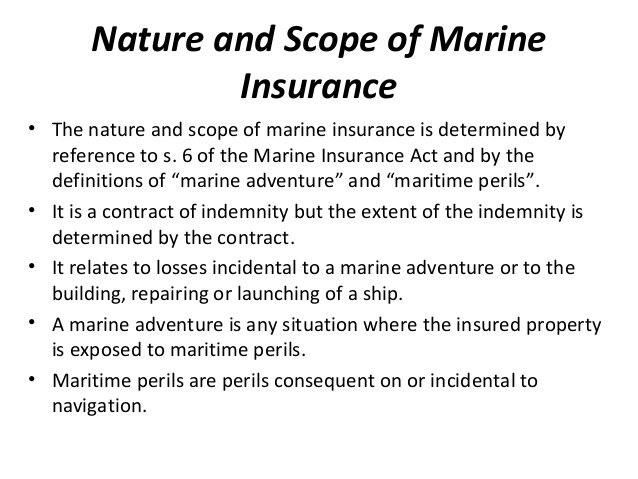
  1. Marine insurance

The sea poses many risks that include bad weather, water damage and pirates. Insurance companies offer cargo insurance, freight insurance and hull insurance on ships and boats. Marine insurance not only provides financial protection for the ship but also the cargo being transported. Find out the best marine insurance policies designed to suit your needs.

  1. Crop insurance

Agriculture is the base of humanity providing one of the basic necessities, food. But the business is risky due to natural disasters, inflation, damages to agricultural equipment. Crop insurance can help safeguard farmers against any loss or damages to their farming property and assets. Get the best insurance for your crops and farming property that suits your required needs.

  1. Property Insurance

Property insurance spans across a wide category of general insurance that comes in handy for those who own property, assets, equipment, cargo and such. Property insurance provides cover against all risks on portable and fixed assets, theft, and damage.

  1. Liability Insurance

Liability insurance covers specific needs in cases where individuals or companies need protection against risks that involve being legally held or sued for negligence, malpractice or injury. Some business operations involve a great deal of risk, and employers might find the need to insure themselves or the business against such risks.

  1. Commercial Vehicle Insurance

Commercial Vehicles are valuable assets of a company and it can be an expensive affair in case of accidents, damages, theft and other risks. Commercial Vehicle Insurance is designed specifically to safeguard you against such risks so that your business does not have to incur losses in the event something bad happens.

  1. Annuities Insurance

A dignified retirement is what many of us hope for and for this insurance companies offer schemes to ensure you are financially secure once you are not working. Annuity is an investment product that guarantees you income for a certain number of years or till your demise.

  1. Laptop Insurance

Laptop’s have become an important asset as they not only cost a lot, but they also store important and sometimes confidential information. Damages and theft of the laptop can result in major financial losses. Though laptop insurance is not opted for by many, it can come in handy in times or losses. Explore the different laptop insurances available in the market to find a policy suitable to you.

  1. Commercial Insurance

Just about anything related to your business can be insured. Be protected financially against unforeseen risks to your property, workers, assets and any liabilities that may arise. Find out the best insurance policies on offer from top providers before settling on your ideal policy.

  1. Credit Insurance

Businesses sometimes have to take credit from traders and give credit to customers. Both aspects of credit can be insured. This type of insurance provides stability and peace of mind while purchasing necessary items on credit. Giving customers credit also becomes an easier task.

  1. Home Owner Insurance

Our home is a prized possession that is susceptible to a number of risks. Protecting our homes in case of unfortunate calamities, thefts, fires and other such disasters can help in the process of rebuilding. These policies cover the property as well as the belongings to ensure your standard of living is protected.

  1. Pet Insurance

Pets can become our beloved family members. Taking out a pet insurance policy will help in covering veterinary expenses in case of any medical problems and injuries. These policies will also pay out if the pet is stolen or in case of its demise to cover funeral expenses.

  1. Product Liability Insurance

In case of claims of personal injury or damages to property caused by products sold or supplied by your business, this insurance policy can protect you from lawsuits and legal costs. The insurance policy will cover the cost of compensation.

  1. Mortgage Insurance

Mortgage insurance is important for two reasons, one, the policy will cover your mortgage in the event that you cannot pay it back. Two, the insurance policy can make you eligible for a loan when you don’t meet the criteria otherwise. Get a policy to cover your mortgage to ensure your credit score doesn’t take a hit in the event you fall behind on your payments.

  1. Disability Insurance

An injury, be it a short-term disability or a permanent one, could hamper your ability to earn an income. Disability insurance replaces a part of your regular income to ensure you have a stable source of money to survive. This insurance is extremely important for those who are living or working in a risky environment.

  1. Rural Insurance

Individuals in the rural sector have different requirements compared to the urban sector. These insurance policies are designed to meet the individual and customised needs of rural areas. Rural insurance policies span across personal health, critical illnesses, loss due to weather, cattle cover and much more.

  1. Professional Liability Insurance

Professional Liability Insurance is a type of liability insurance that is specific to companies that deal with giving advice and services that are complex that can result in legal problems. The insurance will cover legal costs of defending the company or the individual. This insurance is also known as Errors and Omissions Insurance.

  1. Child Insurance

Raising a child entails so much financially that insurance plans have become imperative to securing a better future for them. These plans are usually accommodating to individual requirements and customised according to the child’s needs. Delve into all that these insurance plans have to offer and get the policy that your child deserves.

  1. Building Insurance

Building insurance covers the framework of your house and its permanent fixtures. This type of cover is applicable to the structure of your home that includes walls, floors, roofs and windows. It also includes the fittings for the bath, bedroom and kitchen. This insurance doesn’t cover the contents of the house but is suitable to those who need to insure the building only.

Motor Insurance

A motor insurance policy offers coverage to the insured vehicle against financial losses due to an accident or one resulting from other damages.
Motor insurance is an insurance policy that covers the policyholder in case of financial losses resulting from an accident or other damages sustained by the insured vehicle. A comprehensive motor insurance policy covers damages to third-party and third-party property along with compensating for own losses as well.

Is motor insurance mandatory?

Yes, it is. According to Sec 146 of the Motor Vehicles Act, 1988, it is imperative that you purchase motor insurance prior to taking your vehicle out on the roads. Should you not want to buy a comprehensive insurance plan, getting third-party policy coverage is the bare minimum that you are mandated to acquire for your vehicle to ply.

What does the policy cover?

With a motor insurance policy, you will be usually covered against the following:

  • Damages and losses, resulting from natural calamities such as earthquake, floods, fire, lightning, landslide, hurricane, etc.
  • Damages that result from human intervention, including burglary, theft, riots, strike or any other activity born of malicious intent.
  • Third-party legal liabilities owing to damages (both bodily injuries and death) caused to third-party as well as financial losses to a third-party property.

What is the amount covered?

Usually, vehicles are insured at a fixed Insured Declared Value (IDV). In other terms, IDV is the current value of your vehicle in the market. IDV is higher for a new vehicle and with time it depreciates.

Factors affecting motor insurance premiums

Understanding some of the major factors that affect motor insurance premiums can lead you to make an informed decision:

  1. Type of cover

A comprehensive insurance policy that covers both insured vehicle as well as a third-party would attach higher premiums as opposed to its third-party counterpart.

  1. Geographical location

Your area of residence is one of the crucial determinants of motor insurance premiums in India. For instance, should you be a resident of a metropolitan city in the country, chances are vandalism and accidents would be more as compared to smaller Tier 2 and Tier 3 cities. This leads insurance providers to set increased premiums on your motor insurance policy.

  1. Installed safety features

Should your vehicle be equipped with additional safety features, such as anti-theft devices, airbags, GPS tracking system, alarm and anti-lock braking features, insurers consider your efforts towards securing your car and set discounted (read affordable) premiums accordingly.

  1. Ancillary modifications

Having installed expensive gadgets such as alloy wheels, roof rails and its likes in your vehicle, chances are you could be looking at increased premiums. Should you want coverage for these features as well, it is recommended that you get them installed by the respective car dealer at the time of purchase.

  1. No Claim Bonus

No Claim Bonus (NCB) is the reward that you would be eligible for should you drive responsibly the year round and not file for damages. Also, it’s prudent to keep off claiming in case of minor damages fixing a broken windshield, for instance.

Motor insurance gives you peace of mind as you know you’ve a financial backing in case of damages suffered by your vehicle in case of any untoward incident.

Scope of Coverage of Fire Insurance and Marine Insurance

Study of Various Proposal and Policy Forms Used in General Insurance

Proposal Form

Insurance Proposal Form is completed by the policyholder when applying for insurance.

You will need to fill in information about the risk you are insuring e.g. the rebuild cost of your house or type of car you own.

The proposal in insurance means a request, from the proposer to the insurer, for giving protection against a risk.

This request may be made orally (face to face or over the telephone) or in writing through a letter or very formally through a printed proposal supplied by the insurers.

Even though a proposal may be made in either of the ways, a convention has developed for using insurer’s printed forms in case of fire, life and accident business and slips or declaration forms in case of marine.

For properly understanding the proposal form the student should try to go through the specimen forms of various branches of insurance.

In this post, an attempt shall be made to discuss in general terms the important common questions one is expected to find in any proposal form.

These are;

Insurance Proposal Form

  1. Name

Name of proposer is very important for identification. It should be correctly and accurately written so that the policy can incorporate the correct name and identity.

  1. Address

Address should be accurately given because of several reasons, such as, identity and communication, and sometimes this is important for rating purpose, e, g., motor, burglary etc.

  1. Occupation

Information as to occupation is particularly important in case of life insurance, personal accident insurance and liability insurance as this will influence the rate or decision of an underwriter.

  1. Subject-matter

This is the subject-matter of insurance and, therefore, should be properly described so that correct insertion can be made on the policy.

  1. Sum-insured

The amount for which insurance cover is required should be adequately mentioned.

This is the limit of the insurer’s liability. It must represent the actual value of the property or the subject-matter of insurance.

  1. Claims History

This has an influence on underwriter’s decision and must, therefore, be truthfully answered. Details of all previous related losses, whether insured or not, must be correctly given.

  1. Other Insurances

Information as to other past or present related insurances is required to be given. This is important for applying contribution amongst various policies wherever applicable.

This is also important for assessing the moral hazard of the proposer since it might indicate the reason for effecting numbers of policies. Information as to other insurances also enables the insurer to make necessary queries with other insurers about the proposer.

  1. Declinature

The insurer would like to know whether any insurance of this proposer was previously declined by any other insurers. This information would enable the insurer to find out from other insurers the cause of declinature.

  1. Declaration

Every proposal form contains a declaration to the effect that;

The answers given in the proposal form are true and nothing has been concealed or misrepresented.

The proposer agrees to pay the premium and accept a policy that is usually issued by the insurer for that class of business.

The proposal form and the declaration shall form the basis of the contract.

  1. Signature

The proposal is required to be signed by the proposer or by the authorized person when the proposer is not an individual.

  1. Date

The signature is to be dated.

By comparing various specimen proposal forms the students would realize that apart from the above common type questions, there are numbers of other types of questions peculiar to various branches and different policies.

Insurance Policy

In insurance, the insurance policy is a contract (generally a standard form contract) between the insurer and the insured, known as the policyholder, which determines the claims which the insurer is legally required to pay. In exchange for an initial payment, known as the premium, the insurer promises to pay for loss caused by perils covered under the policy language.

Insurance contracts are designed to meet specific needs and thus have many features not found in many other types of contracts. Since insurance policies are standard forms, they feature boilerplate language which is similar across a wide variety of different types of insurance policies.

The insurance policy is generally an integrated contract, meaning that it includes all forms associated with the agreement between the insured and insurer. In some cases, however, supplementary writings such as letters sent after the final agreement can make the insurance policy a non-integrated contract. One insurance textbook states that generally “courts consider all prior negotiations or agreements … every contractual term in the policy at the time of delivery, as well as those written afterward as policy riders and endorsements … with both parties’ consent, are part of the written policy”. The textbook also states that the policy must refer to all papers which are part of the policy. Oral agreements are subject to the parol evidence rule, and may not be considered part of the policy if the contract appears to be whole. Advertising materials and circulars are typically not part of a policy. Oral contracts pending the issuance of a written policy can occur.

error: Content is protected !!