Consumer Behaviour LU BBA 5th Semester NEP Notes

Unit 1 Consumer Behaviour
Consumer Behaviour Definition, Nature VIEW
Consumer Behaviour Characteristics, Scope, Relevance VIEW
Consumer Behaviour Application VIEW
**Consumer Behaviour Features & Importance VIEW
Importance of Consumer behaviour in Marketing decisions VIEW
VIEW
Consumer Vs. Industrial Buying Behaviour VIEW
Market Segmentation VIEW VIEW
Bases for Market Segmentation VIEW
Unit 2
Determinants of Consumer Behaviour VIEW
Role of Motivation VIEW
Personality VIEW VIEW VIEW
Self-Concept VIEW
Attention and Perception VIEW
Consumer Learning VIEW
Consumer Attitudes VIEW
Consumer Attitudes Formation and Change VIEW
Consumer Values VIEW VIEW
Consumer Lifestyles VIEW VIEW
External Determinants of Consumer Behaviour:
Influence of Culture and Sub Culture VIEW VIEW
Social Class VIEW
Reference Groups VIEW
Family Influences VIEW
Unit 3
Consumer Decision Making Process: Problem Recognition, methods of problem solving; Pre-purchase search influences, information search; Alternative evaluation and Selection; Outlet selection and Purchase decision VIEW
Compensatory decision rule, Conjunctive decision rule, Lexicographic rule, affects referral, Disjunctive rule VIEW
Unit 4
Post Purchase Behaviour VIEW
Situational Influences VIEW
Cognitive Dissonance VIEW
Diffusion of Innovation, Definition of innovation, Resistance to innovation VIEW
Product characteristics influencing diffusion VIEW
Adoption process VIEW
Consumer Involvement VIEW VIEW
Role of Consumer Involvement VIEW
Customer Satisfaction VIEW VIEW VIEW
Consumer Behaviour in Marketing Strategy VIEW
Technology’s impact on Consumers VIEW VIEW VIEW

Physical Distribution, Importance, Factors affecting Channel Selection

Physical Distribution refers to the process of moving finished products from the manufacturer to the end consumer. It involves the management of logistics, including warehousing, inventory control, transportation, order fulfillment, and delivery. The goal is to ensure that products are available at the right place, at the right time, in the right quantities, and at minimal cost. Physical distribution is a critical component of the supply chain management system, and its efficiency directly impacts customer satisfaction, operational costs, and overall business performance. Effective physical distribution strategies help businesses maintain competitive advantage in the marketplace.

Importance of Physical Distribution:

  • Customer Satisfaction

A well-managed physical distribution system ensures that products reach consumers in a timely manner and in good condition. On-time delivery and product availability are essential for maintaining customer satisfaction. When products are consistently delivered when and where they are needed, customers are more likely to remain loyal and make repeat purchases.

  • Cost Efficiency

Effective physical distribution helps businesses reduce operational costs. By optimizing transportation routes, minimizing inventory holding costs, and improving warehousing practices, companies can lower their overall distribution expenses. Efficient logistics systems allow for economies of scale, reducing transportation and storage costs, which ultimately contributes to cost savings for the company and the customer.

  • Competitive Advantage

A company with a robust physical distribution network can gain a competitive edge over its rivals. Fast and reliable delivery services, for instance, can differentiate a brand from its competitors. Additionally, being able to deliver products in a timely and cost-effective manner can help a company build a strong reputation, attracting more customers.

  • Market Expansion

Physical distribution enables businesses to expand into new geographic markets. By establishing a distribution network in various regions, companies can reach a broader customer base, increasing sales and market share. This is especially important for businesses looking to scale their operations and tap into emerging or international markets.

  • Inventory Management

Physical distribution plays a crucial role in effective inventory management. By strategically positioning warehouses and managing stock levels across distribution channels, businesses can maintain optimal inventory levels. This helps prevent overstocking or stockouts, ensuring that products are available when needed while reducing excess inventory costs.

  • Flexibility and Responsiveness

A well-organized distribution system allows businesses to respond quickly to changes in consumer demand, seasonal variations, or market fluctuations. Companies can adjust their distribution strategies, reroute deliveries, or switch suppliers to meet customer needs effectively. The flexibility in physical distribution operations helps businesses maintain smooth operations and adapt to shifting market conditions.

  • Enhanced Communication and Coordination

Effective physical distribution ensures smooth communication between different functions within a business, including sales, inventory, and customer service teams. By having a streamlined process for managing orders, inventory, and delivery schedules, companies can avoid delays, confusion, and errors. Good communication between distributors, suppliers, and retailers ensures that the entire supply chain operates smoothly.

  • Supports Sales and Revenue Generation

Ultimately, physical distribution is a key driver of sales. When products are delivered promptly and in good condition, it directly affects the company’s ability to generate revenue. Additionally, distribution networks can be used to create promotional opportunities or introduce new products to the market, helping to boost sales and increase overall profitability.

Factors affecting Channel Selection:

  • Product Characteristics

The nature of the product plays a crucial role in determining the distribution channel. For example, products that are perishable, like food items or flowers, require channels that ensure quick delivery, such as direct distribution or specialized logistics. Similarly, expensive and technical products, such as machinery or electronics, often require personal selling and specialized intermediaries who can provide detailed information and after-sales support. On the other hand, mass-produced, non-perishable goods may be suitable for broader distribution through retail stores or online platforms.

  • Target Market

Understanding the target market is essential when selecting distribution channels. The preferences, location, and purchasing behavior of the target audience will influence the choice of channel. For instance, if the target market consists of younger, tech-savvy consumers, e-commerce channels may be more effective. On the other hand, if the market is geographically dispersed and requires physical interaction, traditional retail or wholesaler channels may be more suitable. Additionally, the purchasing power and buying habits of consumers should be taken into account, as they may determine whether a direct or indirect channel is more appropriate.

  • Cost Considerations

The cost involved in using different distribution channels is a major factor in channel selection. Direct channels, such as company-owned stores or e-commerce platforms, tend to have higher initial setup and operational costs but provide more control over the distribution process. Indirect channels, such as wholesalers or retailers, may have lower operational costs, but businesses must factor in the commissions and margins paid to intermediaries. Companies need to evaluate which distribution model provides the best balance between cost-effectiveness and customer service.

  • Channel Control

The level of control a company wants over the distribution process is another important factor. Direct channels, where the company controls the entire distribution process, allow for greater control over how products are presented, priced, and delivered to customers. Indirect channels, on the other hand, involve intermediaries like wholesalers and retailers, which can reduce the company’s control over the marketing, sales, and customer service aspects. Companies may choose their channel strategy based on how much control they wish to exert over the customer experience.

  • Market Coverage

The extent of market coverage required for the product also affects channel selection. Some products may require intensive distribution to reach a wide audience quickly, making it necessary to use a network of retailers, wholesalers, or online platforms. For example, convenience products like snacks and beverages require broad market coverage, necessitating a wide distribution network. In contrast, products targeted at niche markets may require selective distribution through specialized retailers or exclusive outlets.

  • Competitive Pressure

The distribution channels used by competitors can influence a company’s channel strategy. If competitors are using specific channels successfully, a company may feel compelled to adopt similar strategies to maintain competitiveness. Alternatively, a company may opt for unique or innovative channels to differentiate itself from competitors and capture market share. Competitive analysis can help businesses identify gaps in the distribution network and explore new opportunities.

  • Legal and Regulatory Factors

Different markets have varying legal and regulatory requirements that can influence channel selection. For example, some countries may have specific laws governing distribution, such as import restrictions, taxation policies, or standards for product labeling and packaging. These factors may limit the options available for selecting distribution channels. In such cases, companies must comply with local regulations, ensuring that their chosen channels adhere to the legal framework.

  • Company Resources and Capabilities

The company’s internal resources, including financial resources, expertise, and capacity, also play a role in selecting distribution channels. A company with substantial resources and logistics capabilities may choose to establish a direct distribution network, such as opening its own stores or building an online platform. Smaller businesses or those with limited resources may prefer to partner with intermediaries, such as wholesalers or retailers, to avoid the costs and complexities of managing their own distribution network.

  • Technological Advancements

With the increasing reliance on digital platforms, technological advancements can significantly impact channel selection. The rise of e-commerce and digital tools for supply chain management allows companies to reach customers more efficiently and cost-effectively. Businesses may choose online channels, mobile apps, or other digital platforms to streamline their distribution process, particularly for products that lend themselves to online shopping. Technological advancements also enable better tracking and monitoring of inventory, improving the efficiency of the distribution process.

  • Customer Service and Support

The level of customer service and support required by the product can also influence the choice of distribution channel. High-touch products that require post-purchase support, such as electronics or appliances, may be best sold through retailers or distributors who can offer after-sales services and technical support. For products that do not require significant customer interaction, such as basic consumer goods, direct online sales may be sufficient.

Product Mix Analysis, Customer Requirement Analysis

A market analysis studies the attractiveness and the dynamics of a special market within a special industry. It is part of the industry analysis and thus in turn of the global environmental analysis. Through all of these analyses, the strengths, weaknesses, opportunities and threats (SWOT) of a company can be identified. Finally, with the help of a SWOT analysis, adequate business strategies of a company will be defined. The market analysis is also known as a documented investigation of a market that is used to inform a firm’s planning activities, particularly around decisions of inventory, purchase, work force expansion/contraction, facility expansion, purchases of capital equipment, promotional activities, and many other aspects of a company.

Product Mix Analysis

Product mix, also known as product assortment or product portfolio, refers to the complete set of products and/or services offered by a firm. A product mix consists of product lines, which are associated items that consumers tend to use together or think of as similar products or services.

The principle of product mix analysis, as described in all these texts is, in fact, correct and essential. The appeal of product mix analysis results from its simple yet powerful application, providing a platform to base the search for higher profitability and production throughputs. After years of practicing OR and quantitative methods in industry, however, I have come to the realization that an effective application of product mix analysis is not nearly as simple as illustrated in these texts. I will therefore outline the necessary steps, challenges and possible pitfalls of a practical application of product mix analysis to improve the profitability of an operation or business.

Product mix analysis is not as simple as it looks. In a typical textbook illustration of a product mix problem, a company produces several products, each requiring a certain amount of labor and materials. Constraints, such as total amount of resources and the maximum number of units that each product can sell, as well as the unit profit for each product, are given. The analysis focuses on how many products to produce in order to maximize the overall profit, correctly illustrating the essence of the product mix problem. However, the case does not even begin to reveal the complexities of a real and practical product mix study commonly used in industry.

First, the data needed for product mix study does not come in a handy form that is ready to import by an OR/MS practitioner into a spreadsheet for quick analysis. Obtaining and formatting the necessary information for analysis requires at least a few days and up to several months, depending upon the scope, complexity and purpose of the analysis.

After the first hurdle in data requirements is crossed and initial analysis of the product mix is conducted, a practitioner will usually be faced with the next issue: Is the current “optimized” product mix truly the best? In practical applications, the product mix study is rarely a one-shot deal, taking time and effort. Analysis is iterative, each iteration representing one of numerous different businesses and/or production scenarios.

The third difficulty of product mix analysis is its implementation. Even after an “optimal” product mix is found, the realization of the product mix within the operation is a challenge. An optimized product mix usually represents an idealized and somewhat macro view of the production profile, delivering a profit obtained in the analysis. In many cases, however, operational constraints in production and in the supply chain that were not or cannot be specifically formulated into the product mix optimization such as availability of raw materials, seasonality of customer demand and bottlenecks of equipment and resources may deem your product mix results infeasible.

Your product mix shapes your brand image and the customers you attract

Your product mix helps create customers’ perception of your brand. For example, if Neiman Marcus had many bargain brands in their product mix, they would likely lose their reputation as a luxury retailer. Clients looking for luxury goods would go elsewhere, and the company would, instead, be competing with retailers like Kohls.

Your product mix makes it easy for customers to buy

 Knowing your customers and nailing the right product mix is more important than ever in the age of online shopping. Customers come with precise demands and expectations, and they can easily pull up a new tab and load your competition’s website. Tailoring your product mix to your customers’ needs and desires will help you retain them.

Your product mix must help mitigate the paradox of choice

Plenty of studies have demonstrated the paradox of choice: Customers insist on a range of choice and variety, but too many options will cause them to move on without making a decision. In one study, a display of 24 jams and jellies was put out on a store floor. While it attracted shoppers, only 3% converted. The next week, a display of only six jams and jellies was created. That display drew fewer shoppers, but 30% converted.

Customer Requirement Analysis

In systems engineering and software engineering, requirements analysis focuses on the tasks that determine the needs or conditions to meet the new or altered product or project, taking account of the possibly conflicting requirements of the various stakeholders, analyzing, documenting, validating and managing software or system requirements.

Requirements analysis is critical to the success or failure of a systems or software project. The requirements should be documented, actionable, measurable, testable, traceable, related to identified business needs or opportunities, and defined to a level of detail sufficient for system design.

Conceptually, requirements analysis includes three types of activities:

  • Eliciting requirements: (e.g. the project charter or definition), business process documentation, and stakeholder interviews. This is sometimes also called requirements gathering or requirements discovery.
  • Recording requirements: Requirements may be documented in various forms, usually including a summary list and may include natural-language documents, use cases, user stories, process specifications and a variety of models including data models.
  • Analyzing requirements: Determining whether the stated requirements are clear, complete, unduplicated, concise, valid, consistent and unambiguous, and resolving any apparent conflicts. Analyzing can also include sizing requirements.

Stakeholder identification

See Stakeholder analysis for a discussion of people or organizations (legal entities such as companies, standards bodies) that have a valid interest in the system. They may be affected by it either directly or indirectly. A major new emphasis in the 1990s was a focus on the identification of stakeholders. It is increasingly recognized that stakeholders are not limited to the organization employing the analyst. Other stakeholders will include:

  • Anyone who operates the system (normal and maintenance operators)
  • Anyone who benefits from the system (functional, political, financial and social beneficiaries)
  • Anyone involved in purchasing or procuring the system. In a mass-market product organization, product management, marketing and sometimes sales act as surrogate consumers (mass-market customers) to guide development of the product.
  • Organizations which regulate aspects of the system (financial, safety, and other regulators)
  • People or organizations opposed to the system (negative stakeholders; see also misuse case)
  • Organizations responsible for systems which interface with the system under design.
  • Those organizations who integrate horizontally with the organization for whom the analyst is designing the system.

Joint Requirements Development (JRD) Sessions

Requirements often have cross-functional implications that are unknown to individual stakeholders and often missed or incompletely defined during stakeholder interviews. These cross-functional implications can be elicited by conducting JRD sessions in a controlled environment, facilitated by a trained facilitator (Business Analyst), wherein stakeholders participate in discussions to elicit requirements, analyze their details and uncover cross-functional implications. A dedicated scribe should be present to document the discussion, freeing up the Business Analyst to lead the discussion in a direction that generates appropriate requirements which meet the session objective.

JRD Sessions are analogous to Joint Application Design Sessions. In the former, the sessions elicit requirements that guide design, whereas the latter elicit the specific design features to be implemented in satisfaction of elicited requirements.

Contract-style requirement lists

One traditional way of documenting requirements has been contract style requirement lists. In a complex system such requirements lists can run to hundreds of pages long.

An appropriate metaphor would be an extremely long shopping list. Such lists are very much out of favour in modern analysis; as they have proved spectacularly unsuccessful at achieving their aims; but they are still seen to this day.

Strengths

  • Provides a checklist of requirements.
  • Provide a contract between the project sponsors and developers.
  • For a large system can provide a high level description from which lower-level requirements can be derived.

Weaknesses

  • Such lists can run to hundreds of pages. They are not intended to serve as a reader-friendly description of the desired application.
  • Such requirements lists abstract all the requirements and so there is little context. The Business Analyst may include context for requirements in accompanying design documentation.

Types of Requirements

Business requirements

Statements of business level goals, without reference to detailed functionality. These are usually high level (software and/or hardware) capabilities that are needed to achieve a business outcome.

Customer requirements

Statements of fact and assumptions that define the expectations of the system in terms of mission objectives, environment, constraints, and measures of effectiveness and suitability (MOE/MOS). The customers are those that perform the eight primary functions of systems engineering, with special emphasis on the operator as the key customer. Operational requirements will define the basic need and, at a minimum, answer the questions posed in the following listing:

  • Operational distribution or deployment: Where will the system be used?
  • Mission profile or scenario: How will the system accomplish its mission objective?
  • Performance and related parameters: What are the critical system parameters to accomplish the mission?
  • Utilization environments: How are the various system components to be used?
  • Effectiveness requirements: How effective or efficient must the system be in performing its mission?
  • Operational life cycle: How long will the system be in use by the user?
  • Environment: What environments will the system be expected to operate in an effective manner?

Architectural requirements

Architectural requirements explain what has to be done by identifying the necessary systems architecture of a system.

Structural requirements

Structural requirements explain what has to be done by identifying the necessary structure of a system.

Behavioral requirements

Behavioral requirements explain what has to be done by identifying the necessary behavior of a system.

Functional requirements

Functional requirements explain what has to be done by identifying the necessary task, action or activity that must be accomplished. Functional requirements analysis will be used as the toplevel functions for functional analysis.

Non-functional requirements

Non-functional requirements are requirements that specify criteria that can be used to judge the operation of a system, rather than specific behaviors.

Performance requirements

The extent to which a mission or function must be executed; generally measured in terms of quantity, quality, coverage, timeliness or readiness. During requirements analysis, performance (how well does it have to be done) requirements will be interactively developed across all identified functions based on system life cycle factors; and characterized in terms of the degree of certainty in their estimate, the degree of criticality to system success, and their relationship to other requirements.

Design requirements

The “build to”, “code to”, and “buy to” requirements for products and “how to execute” requirements for processes expressed in technical data packages and technical manuals.

Derived requirements

Requirements that are implied or transformed from higher-level requirement. For example, a requirement for long range or high speed may result in a design requirement for low weight.

Allocated requirements

A requirement that is established by dividing or otherwise allocating a high-level requirement into multiple lower-level requirements. Example: A 100-pound item that consists of two subsystems might result in weight requirements of 70 pounds and 30 pounds for the two lower-level items.

Factors Affecting Media Mix Decision

Actual selection of the best medium or media for particular advertiser will depend on variables like specific situation or circumstances under which he is carrying on his business, the market conditions, the marketing programme and the peculiarities of each medium of advertising.

Strictly speaking, there is no one best medium/media for all similar units. What is “best” is decided by unique individual circumstances. However, in general, the following factors govern the choice of an advertising media.

The problem of selection of the best medium or media for a particular advertiser will vary greatly, depending on the particular situation, circumstances and different other factors in which a person is conducting individual business. Media selection involves a basic understanding of the capabilities and costs of the major media. The problems which the advertising has to face in the selection of media are:

  • Profile of the target market
  • Coverage or exposure
  • Frequency
  • Continuity
  • Impact
  • Copy formulation
  • Media cost and media availability.

In addition to these problems there are a number of other major factors which influence the decision of the advertiser and therefore, the same must be considered while selecting the media. The most significant of these factors are:

  • Objectives of the campaign
  • Budget available
  • Research concerning client
  • The product
  • Type of message or selling appeal
  • Relative cost
  • Clutter
  • The potential market
  • Miscellaneous factors.

Factors Governing the Choice:

The nature of product:

A product that is needed by all will encourage mass media like print, broadcast, telecast, outdoor and the like. A product needing demonstration warrants television and screen advertising. Industrial products find favour of print media than broadcast media. Products like cigarettes, wines and alcohols are never advertised on radio, television and screen.

Potential market:

The aim of every advertising effort is to carry on the ad message to the prospects economically and effectively. This crucial task rests in identification of potential market for the product in terms of the number of customers, geographic spread, income pattern, age group, tastes, likes and dislikes and the like.

If the message is to reach the people with high income group, magazine is the best. If local area is to be covered, newspaper and outdoor advertising are of much help. If illiterate folk is to be approached, radio, television and cinema advertising are preferred.

The type of distribution strategy:

The advertising coverage and the distribution system that the company has developed have direct correlation. Thus, there is no point in advertising a product if it is not available in these outlets where he normally buys. Similarly, the advertiser need not use national media if not supported by nationwide distribution network.

The advertising objectives:

Though the major objective of every company is to influence the consumer behaviour favourably, the specific objectives may be to have local or regional or national coverage to popularize a product or a service or the company to create primary or secondary demand to achieve immediate or delayed action to maintain the secrets of the house.

If it wants immediate action, direct or specialty advertising fitting most. If national coverage is needed, use television and news-paper with nationwide coverage.

The type of selling message:

It is more of the advertising requirements that decide the appropriate choice. The advertisers may be interested in appealing the prospects by colour advertisements. In that case, magazine, film, television, bill- boards, bulletin boards serve the purpose.

If the timeliness is the greater concern, one should go in for news-paper, radio, posters. If demonstration is needed there is nothing like television and screen media. If new product is to be introduced, promotional advertising is most welcome.

The budget available:

A manufacturer may have a very colourful and bold plan of advertising. He may be dreaming of advertising on a national television net-work and films. If budget does not allow, then he is to be happy with a low budget media like his news-paper and outdoor advertising.

Instead of colour print in magazine, he may be forced to go in for black and white. Thus, it is the resource constraints that decide the choice.

Competitive advertising:

A shrewd advertiser is one who studies carefully the moves of his competitor or competitors as to the media selected and the pattern of expenditure portrayed. Meticulous evaluation of media strategy and advertising budget paves way for better choice.

It is because, whenever a rival spends heavily on a particular medium or media and has been successful, it is the outcome of his experience and tactics. However, blind copying should be misleading and disastrous.

Media availability:

The problem of media availability is of much relevance because; all the required media may not be available at the opportune time. This is particularly true in case of media like radio and television; so is the case with screen medium. Thus, non-availability of a medium or a media poses a new challenge to the media planners and the people advertising industry. It is basically an external limit than the internal constraint.

Characteristics of media:

Media characteristics differ widely and these differences have deep bearing on the choice of media vehicle.

These characteristics are:

  • Coverage
  • Reach
  • Cost
  • Consumer confidence
  • Frequency

‘Coverage’ refers to the circulation or the speed of the message provided by the media vehicle. Larger the coverage, greater the chances of message exposure to the audiences. Advertisers prefer the media vehicles with largest coverage for the amount spent.

The vehicles like radio, television, news-papers, magazines and cinema are of this kind; on the other hand, direct advertising and outdoor advertising are known for local coverage. ‘Reach’ is the vehicle’s access to different individuals or homes over a given period of time.

It refers to readership, listenership and viewership. It is the actual number reading than the persons buying or owning these.

For instance, one need not own a television set to have advertising message so also a news-paper and a magazine. ‘Relative cost’ refers to the amount of money spent on using a particular vehicle. It is one that involves inter vehicle and medium cost analysis and comparison.

This cost is expressed with reference to the time and the space bought, in case of news-papers, it is milline rate; in case of magazine, it is rate per thousand readers; in case of radio and television, it is per thousand listeners or viewers per minute and ten seconds. ‘Consumer confidence’ refers to the confidence placed in the medium by the consumers.

This consumer credibility of a vehicle is important because, credibility of advertising message is depending on it. Speaking from this point of view, news-papers and magazines enjoy high degree of credibility than radio and television commercials.

Outdoor medium is considered the least credible. ‘Frequency’ refers to the number of times an audience is reached in a given period of time.

Limited frequency makes little or no impression on the target audience. Thus, news-papers, television, radio and outdoor media are known for highest frequency while, magazine, screen, display and direct advertising the lowest.

In a nut-shell, the advertiser, to get the best results for the money spent and the efforts put in, should consider all the above nine factors that govern selection of a medium or media and media vehicle. Media selection is a matter of juggling, adjusting, tailoring, filling, revising and reworking to match to his individual situation.

Types of Media Mix Decisions Broad Media Classes, Media Vehicles, Media Units, Deciding Ideal Media Mix

Broad Media Classes

Video Advertising: Television & YouTube

On July 1st, 1941, the first-ever legal television advertisement was broadcast in the state of New York during a Brooklyn Dodgers versus Philadelphia Phillies game, which was on the screens of about 4,000 televisions. In the decades that followed, the popularity of television advertising swelled along with the popularity of mass marketing. Today, television is one of the most popular media channels for marketers, especially with the advent of connected TV advertising, which uses viewer data for more effective segmentation.

Audio Channels: Radio & Podcasts

While radio technology was developed during the 19th century, the commercial capabilities of radio broadcasts was not harnessed until 1912, where record companies supplied free music to broadcasters in exchange for mentioning which company provided the record. By the late 1920s, almost every U.S. radio station would play commercially sponsored programs. Today, traditional radio remains incredibly popular for listeners and advertisers alike and with the rise of internet radio, it appears this audio-only method of advertising will remain popular throughout the digital revolution.

Newspapers

Print mediums, such as newspapers, are one of the oldest media channels for advertisers in fact, newspaper advertisements predate brands. As literacy rates increased in the 16th century, advertisers in Italy, Germany, and Holland began publishing print advertisements in weekly gazettes.

Magazines (Print & Digital)

The first magazines were published in the late 1600s as a form of entertainment for the upper class, and often discussed matters of philosophy, culture, and lifestyle. It wasn’t until the 19th century that the middle class began desiring magazines, so publishers started selling ad space to offset exorbitant printing costs and expand their readership. By the 20th century, magazines were known for having distinct audiences and the option to purchase sizable ads in full color. In 2019, magazine advertising spending was worth an estimated $15.6 billion.

Media Vehicles

Media vehicle refers to a specific method (like digital, radio, newspaper etc.) of media used by a business to deliver advertising messages to its target audience. The first step is to pick a suitable media class, that is, a general category of media, like radio, television, the Internet, newspapers or magazines. This is followed by selection of the right media vehicle, such as a specific radio station, television channel, online website or print publication. The aim is to reach the target consumer group and receive a good response to the advertising messages from the group.

Media Vehicle Types

The different kinds of media vehicles have been explained below:

Print Vehicles

Newspapers are also feasible for small businesses owing to relatively low ad costs. Both national newspapers and community newspapers (that can reach a local audience) are good options. Magazines are not quite as accessible for small businesses as they cater to a niche audience and cost per target is therefore high. However, some regions have local magazines that offer community events, entertainment and themed topics.

Broadcast Vehicles

This includes television and radio stations. Such vehicles can be used to target mass audiences, and the cost per target is low. They are more effective than print media as the ads include audio and video. They can be effectively used for low involvement products because of short ad durations and lack of excessive detail-sharing. Television vehicles in India include networks such as STAR India, Network 18, Zee Network, UTV and so on. Sometimes, small businesses can not afford to advertise on national networks, and so they often associate themselves with local network affiliate stations, or radio vehicles.

Digital Vehicles and Others

Online or digital/interactive vehicles along with mobile communication opportunities provide low-cost advertising options. Other supportive media vehicles include directories, buses, billboards and benches. These are usually used to reinforce messages that have been delivered through broader mass media. Billboards are comparatively expensive, but they have a very wide reach.

Media Units

Media buying

While some advertisers prefer to purchase advertising spots by dealing directly with media owners (e.g. newspapers, magazines or broadcast networks), in practice most media buying is purchased as part of broader negotiations via a media buying agency or media buying group. Well-known centralised buying groups include Zenith or Optimedia. These large media agencies are able to exert market power through volume purchasing by buying up space for an entire year. Media agencies benefit advertisers by providing advertising units at lower rates and also through the provision of added value services such as media planning services.

Most media outlets use dynamic pricing, a form of yield management which means that there are no fixed rates. Prices depend on a number of factors including the advertiser’s prior relationship with the network, the volume of inventory being purchased, the timing of the booking and whether the advertiser is using cross-media promotions such as product placements. Advertising spots purchased closer to air-time tend to be more expensive.

Buying advertising spots on national TV is very expensive. Given that most media outlets use dynamic pricing, rates vary from day to day, creating difficulties locating indicative rates. However, from time to time, trade magazines publish adrates which may be used as a general guide. The following table provides indicative advertising rates for selected popular programs on American national television networks, broadcast during prime time viewing hours.

Ethics in OD: Meaning, Factors Influencing Ethical Judgement

An organization is generally defined as a group, in number from two people to tens of thousands of people, who intentionally aims to accomplish a shared common goal or a set of goals. In order to achieve shared goals, the organization acts as a system composed of:

(i) Inputs such as resources both human and monetary

(ii) Processes such as strategies to accomplish goals

(iii) Outputs such as products and services.

(iv) Outcomes such as end results or benefits to consumers.

The ethics of the organization refers to the active attempt of the organization to define its mission and core principles, to identify values which can cause tension, to seek best solutions to these tensions, and to manage the operations which maintain its values.

Organizational ethics includes all those actions which are embedded into several issues such as informed consent, research, marketing, access, conflict of interest, financial management, and public policy etc. They provide a means for them to be addressed by individuals within the organization. There are guiding principles which are to be used to guide ethical organizational behaviour which are to be considered, implicitly or explicitly, in every decision made by the organization and its representatives. The guiding principles include:

(i) Carrying out of the duties in a faithful and disciplined manner.

(ii) Honesty in financial dealings.

(iii) Giving work output which is of high quality.

(iv) Fulfilling of duties towards fellow employees.

(v) Respecting the organizational codes of conduct.

(vi) Respecting the disciplines connected with various organizational and technological processes.

(vii) Fairness in dealings with people both inside and outside the organization,

(viii) Fair distribution of scarce resources.

(ix) Complying regulatory norms without any violations.

(x) Fulfilling duties towards community and preservation of environment.

Reduces Financial Liabilities

Organizations that don’t develop policies on ethical standards risk financial liabilities. The first liability is a reduction in sales. For example, a real estate development company can lose customer interest and sales if its development reduces the size of an animal sanctuary. This doesn’t mean a company must abandon growth. Finding an ethically responsible middle ground is imperative to sway public opinion away from corporate greed and toward environmental responsibility.

Builds a Positive Corporate Culture

An organization devoting resources to developing policies and procedures that encourage ethical actions builds a positive corporate culture. Team member morale improves when employees feel protected against retaliation for personal beliefs. These policies include anti-discriminatory rules, open door policies and equal opportunities for growth. When employees feel good about being at work, the overall feeling in the organization is more positive. This breeds organizational loyalty and productivity, because employees feel good about showing up for work.

Minimizes Potential Lawsuits

The second area of financial liability exists with potential lawsuits. No organization is exempt from a disgruntled employee or customer who claims discrimination. Sexual discrimination in the workplace is costing CEOs, politicians and celebrities their livelihood because they are not appropriately dealing with accusations and harassment claims. Organizations must maintain policies and procedures addressing various types of harassment and discrimination. Moreover, organizations must remain consistent in the execution of policies dealing with accusations. This helps reduce frivolous lawsuits that could bankrupt smaller organizations.

Factors Influencing Ethical Judgement

Three of the important components of ethical decision making are individual factors, organizational relationships, and opportunity.

The eight steps are as follows:

1) Identify the problem or dilemma

2) Identify the potential issues involved

3) Review the relevant ethical codes

4) Know the applicable laws and regulations

5) Obtain consultation

6) Consider possible and probable course of action

7) Enumerate the consequences of various decisions

  • Ethical intensity is the degree of importance of an issue for an individual or group. The factors that determine ethical intensity include the following:
  • Concentration of effect, or the number of people affected.
  • Magnitude, or significance of the consequences.
  • Proximity of the decision maker to the victim or beneficiary of the decision.
  • Social consensus that a proposed decision is negative or positive.
  • Probability that the decision implemented will lead to the predicted consequence.
  • Temporal immediacy, or the elapsed length of time between when a decision is made and when the resulting consequences occur.

Principles of Ethical Decision Making

After ethical intensity, a thoughtful manager will consider the principles that might apply to an issue. There is no one set of principles to check off, but the seven listed here are common to most people.

  • Long-term self-interest means the pursuit of outcomes that will benefit the self in the long run. For example, a company must make choices to ensure its continued existence. The costs and harm from failure are substantial.
  • Legal and regulatory requirements set the minimum standard for behavior. Any company or individual can disagree with the law, but given the consequences, it must be done carefully.
  • Personal virtue refers to conformity to a standard of righteousness. You should make choices that are honest and truthful individually. The good of the company does not justify lying.
  • Individual rights are related to the freedom to act and think without punishment through regulatory, legal, or societal means. For example, we make individual health decisions to smoke or drink beverages loaded with sugar even though the health costs are borne by many through private and government insurance programs.
  • Utilitarianism seeks the greatest benefit for the maximum number of people. This is often difficult to judge over large groups of people.
  • Religious injunction is the main moral and ethical guide for many people.
  • Distributive justice is the fairness of the outcomes. That is, how are the benefits shared or distributed among the individuals in a group? The US market system can have winner-take-all outcomes. Our welfare system redistributes a little to the losers in the market game who are also part of our society.

Micro Economics, Meaning, Objectives, Scope, Limitations, Microeconomic Issues in Business

The wordmicro is derived from the Greek word ‘mickros’ meaning small.

Microeconomics is a branch of economics that studies the behavior and decision-making processes of individual economic units such as consumers, households, firms, and industries. It focuses on how these units interact within markets to allocate scarce resources and determine prices, output levels, and the distribution of goods and services. The term “micro” means small; thus, microeconomics analyzes the economy at a smaller, more detailed level.

One of the key objectives of microeconomics is to understand how individuals and firms respond to changes in prices, incomes, and market conditions. It examines demand and supply, consumer preferences, utility maximization, cost of production, and profit maximization. These concepts help in understanding how equilibrium is achieved in various markets and how resources are efficiently distributed among alternative uses.

Microeconomics also studies various types of market structures such as perfect competition, monopoly, monopolistic competition, and oligopoly. Each structure has different implications for pricing, output, and consumer welfare. It also covers the theory of factor pricing, explaining how wages, rent, interest, and profits are determined in factor markets.

This field of economics is essential for business decision-making as it provides tools to analyze market trends, forecast consumer behavior, set competitive prices, and maximize profits. Microeconomic principles are also applied in public policy, especially in areas like taxation, subsidy design, and regulation.

In summary, microeconomics provides a detailed understanding of the functioning of individual parts of the economy and is fundamental for making informed and rational economic decisions.

Objectives of Microeconomics:

  • Understanding Consumer Behavior

One of the primary objectives of microeconomics is to understand how consumers make choices based on their income, preferences, and prices of goods. It analyzes how individuals maximize their satisfaction or utility within budget constraints. Microeconomics uses concepts like the law of demand, indifference curves, and marginal utility to explain consumption patterns. This understanding helps businesses in demand forecasting and pricing, and assists policymakers in crafting policies related to subsidies, taxation, and welfare programs.

  • Analyzing Production Decisions

Microeconomics studies how firms decide what to produce, how much to produce, and the methods of production. It focuses on cost structures, production functions, and input-output relationships to understand the optimal utilization of resources. The goal is to minimize cost and maximize output and profit. This analysis helps managers make decisions regarding resource allocation, process improvement, and investment in technology. It also helps determine economies of scale and efficiency in production systems.

  • Price Determination in Markets

A key objective of microeconomics is to analyze how prices are determined in different types of markets. It explains how the forces of demand and supply interact to reach equilibrium price and quantity. Microeconomics also studies how prices change in response to shifts in market conditions. Understanding price determination is essential for business strategy, as it impacts revenue, market competition, and consumer behavior. It also guides policy on price controls and subsidies.

  • Allocation of Resources

Efficient allocation of scarce resources is central to microeconomic theory. It seeks to understand how limited resources can be distributed optimally among competing uses to maximize output and welfare. Microeconomics examines how households and firms allocate resources based on prices, costs, and preferences. It helps in evaluating market efficiency and the role of price signals in guiding production and consumption. Proper resource allocation leads to increased productivity and economic growth.

  • Understanding Market Structures

Microeconomics analyzes different market structures—perfect competition, monopoly, monopolistic competition, and oligopoly—to understand how they influence prices, output, and efficiency. Each structure affects the degree of competition and consumer welfare differently. Studying these structures helps in assessing market performance and the behavior of firms under varying competitive pressures. It is vital for regulatory bodies to identify anti-competitive practices and ensure a fair marketplace through policy and legal measures.

  • Distribution of Income and Wealth

Microeconomics explores how income and wealth are distributed among the factors of production—land, labor, capital, and entrepreneurship. It studies the pricing of these factors through rent, wages, interest, and profit. The objective is to understand economic inequalities and suggest ways to ensure fair distribution. This helps governments in formulating labor laws, wage policies, and social welfare programs. It also informs debates on income taxation and economic justice.

  • Welfare and Efficiency Analysis

Microeconomics aims to maximize social welfare by studying economic efficiency. It analyzes conditions for achieving allocative efficiency (optimal allocation of resources) and productive efficiency (maximum output with minimum cost). Concepts like consumer surplus, producer surplus, and Pareto efficiency are used to evaluate welfare. It helps identify market failures and the need for government intervention in case of externalities, public goods, or monopolistic exploitation.

  • Business Decision-Making

Microeconomics provides a framework for rational business decision-making. Firms use microeconomic tools to determine pricing strategies, production levels, input combinations, and market entry or exit. Understanding cost curves, demand elasticity, and competitive dynamics allows firms to optimize profit and market share. Microeconomics also supports risk analysis and forecasting, making it essential for strategic planning, budgeting, and resource management in businesses of all sizes.

Scope of Microeconomics

  • Theory of Consumer Behavior

The theory of consumer behavior studies how individuals make purchasing decisions based on income, preferences, and prices of goods. It aims to understand how consumers maximize their satisfaction (utility) with limited resources. Tools such as utility analysis, indifference curves, and budget constraints are used in this study. Understanding this behavior is crucial for businesses in product positioning, pricing strategies, and demand forecasting. It also guides policymakers in framing subsidies and welfare programs.

  • Theory of Production

The theory of production focuses on how businesses convert inputs like labor, capital, and raw materials into outputs (goods and services). It analyzes production functions, input-output relationships, and cost structures. The aim is to achieve maximum output at minimum cost. It also explains the laws of variable proportions and returns to scale. This helps firms optimize resource use, select the best production techniques, and improve efficiency for better profitability and competitiveness.

  • Theory of Cost

The cost theory in microeconomics explores how the cost of production changes with varying levels of output. It includes concepts such as fixed cost, variable cost, marginal cost, and average cost. The theory helps firms understand cost behavior, manage expenses, and plan pricing strategies. Cost analysis is essential for break-even analysis, budgeting, and profitability assessment. It allows businesses to control costs and increase operational efficiency by identifying wastage and improving productivity.

  • Price Theory and Market Structures

Price theory explains how the prices of goods and services are determined in different types of markets such as perfect competition, monopoly, monopolistic competition, and oligopoly. It examines the interaction of demand and supply forces and how equilibrium is reached. This part of microeconomics is critical for understanding pricing policies, consumer choices, and firm behavior. It helps both businesses and regulators identify competitive practices and set strategic pricing for market survival.

  • Theory of Factor Pricing

Factor pricing refers to the determination of rewards for the factors of production—land, labor, capital, and entrepreneurship. Microeconomics studies how wages, rent, interest, and profits are set in the factor markets. These prices influence income distribution in an economy. This theory is important for understanding labor markets, investment decisions, and resource allocation. It helps firms design compensation strategies and governments formulate fair wage and interest policies for economic balance.

  • Welfare Economics

Welfare economics is a branch of microeconomics that evaluates how resource allocation affects overall economic well-being and social welfare. It uses concepts like consumer surplus, producer surplus, and Pareto efficiency to measure welfare. This study helps identify whether markets are delivering maximum benefit to society and when government intervention is needed. It is particularly relevant in analyzing public goods, externalities, and economic inequality, and supports policies aimed at improving quality of life and equity.

  • Theory of Demand and Supply

The theory of demand and supply is foundational in microeconomics. It explains how the quantity of a good demanded and supplied varies with its price, and how equilibrium is achieved in markets. Demand theory includes the law of demand, elasticity, and consumer preferences. Supply theory focuses on production capabilities and costs. This theory is used for price setting, inventory management, and production planning, making it crucial for both private businesses and public policy.

  • Microeconomic Policy Application

Microeconomics provides the basis for several policy applications, such as taxation, price control, market regulation, and subsidy design. Policymakers use microeconomic principles to address market failures, ensure competitive practices, and correct income inequalities. It also aids in creating sector-specific strategies—for agriculture, labor markets, small businesses, etc. For businesses, it helps in strategic planning, resource optimization, and market analysis. Thus, microeconomics offers a practical toolkit for decision-making in both private and public sectors.

Limitations of Micro-economics:

  • Ignores the Broader Economic Picture

Microeconomics focuses on individual units like consumers and firms, but it does not consider the economy as a whole. It cannot explain large-scale economic problems such as inflation, unemployment, and national income. For instance, even if individual industries perform efficiently, the overall economy may still face a recession. Therefore, microeconomics is insufficient for understanding macroeconomic challenges and requires supplementation with macroeconomic perspectives to form a comprehensive analysis of an economy.

  • Unrealistic Assumptions

Microeconomic theories often rely on unrealistic assumptions such as rational behavior, perfect competition, and full employment. In reality, markets are imperfect, information is limited, and people often act irrationally. These assumptions may simplify analysis but limit the applicability of theories to real-world situations. For example, the assumption that consumers always make utility-maximizing decisions does not hold in many behavioral situations, reducing the practical relevance of some microeconomic models.

  • Neglect of Social and Ethical Factors

Microeconomics mainly emphasizes efficiency and profit maximization, often ignoring social justice, ethical concerns, and income inequality. It does not adequately address the needs of marginalized sections of society or the ethical implications of business decisions. For example, a firm may maximize profits by paying low wages, which may be economically efficient but socially unjust. Thus, microeconomics may not provide solutions aligned with fairness or equity.

  • Limited Role in Policy Formulation

While microeconomics provides tools for business decisions, its usefulness in formulating wide-ranging economic policies is limited. Issues like monetary policy, fiscal policy, and national development strategies fall under macroeconomics. Microeconomics does not adequately address the complexities involved in these areas. For example, while it can explain the pricing of a single commodity, it cannot guide decisions about national investment or inflation control, which require macroeconomic insights.

  • Static in Nature

Microeconomics is often criticized for being static. Many of its models do not consider the dynamic nature of economies where preferences, technology, and market conditions constantly change. For example, classical microeconomic models assume fixed tastes and production functions, which are not true in evolving economies. This static nature limits its ability to predict long-term trends or respond to economic disruptions, technological advances, and changing social behavior.

  • No Solution to Aggregate Problems

Microeconomics cannot address problems like economic growth, business cycles, or trade imbalances, as it does not deal with aggregate economic variables. For instance, analyzing a single firm’s output cannot help understand a country’s GDP growth. It also does not account for aggregate demand and supply forces that drive national income and employment levels. Hence, microeconomics is inadequate for solving broad economic problems affecting the entire nation or global markets.

  • Overemphasis on Individual Decisions

Microeconomics places too much importance on individual choices and neglects collective behavior and institutional influence. It fails to capture the role of governments, trade unions, multinational corporations, and other institutions in shaping economic outcomes. This overemphasis makes it less effective in analyzing complex economic systems where collective actions and regulations play a crucial role in determining outcomes like wage levels, labor rights, and social security.

  • Difficulty in Measuring Utility and Satisfaction

Microeconomic theories are heavily based on the idea of utility maximization. However, utility and satisfaction are subjective and cannot be measured accurately. While tools like indifference curves offer graphical representation, they cannot quantify individual satisfaction precisely. This makes it difficult to apply microeconomic concepts reliably in real-world decision-making. The abstract nature of such concepts reduces their effectiveness in analyzing and improving actual consumer behavior or welfare.

Microeconomic Issues in Business:

  • Pricing Strategy

One of the most critical microeconomic issues for businesses is setting the right price for their products or services. Pricing depends on demand, cost of production, competitor behavior, and perceived customer value. Firms must understand price elasticity, marginal cost, and consumer preferences to make informed decisions. Incorrect pricing can lead to reduced demand, loss of competitiveness, or reduced profits. Microeconomics provides tools like demand-supply analysis and marginal analysis to set optimal pricing strategies.

  • Demand Forecasting

Demand forecasting helps businesses predict future customer demand to plan production, inventory, and marketing strategies. It is influenced by factors like income levels, consumer preferences, market trends, and price changes. Microeconomics analyzes consumer behavior and demand curves to make accurate forecasts. Errors in forecasting can lead to overproduction or stockouts, affecting profitability. Thus, understanding the determinants of demand is crucial for efficient resource planning and market success.

  • Cost and Production Decisions

Microeconomics assists businesses in understanding how costs behave with changes in production levels. It helps distinguish between fixed and variable costs, calculate marginal and average costs, and determine the most cost-effective production level. Businesses use this information for budgeting, pricing, and profit planning. Efficient cost management leads to higher profitability, while poor cost control can erode competitive advantage. Microeconomic tools help firms optimize input combinations and production methods.

  • Market Competition and Structure

Understanding the type of market a business operates in—perfect competition, monopoly, monopolistic competition, or oligopoly—is crucial. Each market structure has different rules for pricing, entry, product differentiation, and consumer behavior. Microeconomics provides insights into competitive strategies, pricing power, and market behavior. For example, in an oligopoly, businesses must consider the actions of rivals when making decisions. Knowing the market structure helps in strategic planning and long-term positioning.

  • Resource Allocation

Businesses must allocate limited resources—labor, capital, time—efficiently to various functions like production, marketing, and R&D. Microeconomics helps determine the optimal allocation of these resources to maximize output or profit. Concepts such as opportunity cost and marginal productivity guide decision-making. Inefficient resource use leads to higher costs and lower productivity. Understanding microeconomic principles enables managers to make informed choices that align with the company’s goals and market demands.

  • Labor and Wage Issues

Labor is a key factor of production, and wage determination is a critical issue for businesses. Microeconomics studies the labor market, supply and demand for workers, and factors influencing wage rates. Businesses must decide wage levels, incentives, and employee benefits by considering productivity, labor laws, and market wage trends. Overpaying or underpaying affects profitability and employee morale. Understanding labor economics helps businesses design effective human resource policies and manage costs efficiently.

  • Profit Maximization

The primary objective of most businesses is to maximize profit. Microeconomics provides the tools to determine the output level where marginal cost equals marginal revenue, the point of maximum profit. It also helps analyze how changes in cost, output, and demand affect profitability. Profit maximization strategies include cost control, efficient pricing, and market expansion. Using microeconomic analysis, firms can identify profit leakages and develop long-term strategies for financial sustainability.

  • Government Regulations and Taxation

Microeconomic decisions are also influenced by government policies such as taxes, price controls, subsidies, and regulations. Businesses must understand how these factors affect costs, pricing, and profitability. For instance, an increase in GST may reduce consumer demand, or a subsidy may lower production costs. Microeconomic analysis helps businesses assess the impact of policy changes and respond proactively. It also assists in compliance and strategic planning within the regulatory framework.

Requisites for Sound Market Segmentation

Market Segmentation is the process of dividing a broad market into smaller, distinct groups of consumers with similar needs, characteristics, or behaviors. This allows businesses to tailor their products, marketing strategies, and services to meet the specific needs of each segment effectively, improving customer satisfaction, targeting accuracy, and overall marketing efficiency.

  • Measurability

Measurability refers to the ability to quantify the size, purchasing power, and characteristics of a segment. It is crucial because effective marketing strategies rely on accurate data to allocate resources and forecast sales. Without measurable data, marketers cannot determine whether a segment is worth targeting or assess its profitability. Measurability enables businesses to evaluate the potential return on investment (ROI) for each segment.

  • Accessibility

Accessibility indicates whether a company can effectively reach and serve a segment. Even if a segment is attractive, it is useless if it cannot be accessed through appropriate distribution channels, communication, or promotional efforts. Successful segmentation requires that businesses can engage segments using tailored marketing strategies, ensuring that messages and products reach the intended audience without excessive costs.

  • Substantiality

Substantiality ensures that the target segment is large and profitable enough to justify specialized marketing efforts. Small or insignificant segments may not offer enough revenue potential to warrant the cost of customized strategies. A substantial segment provides the necessary scale for the company to achieve sustainable profits while minimizing per-unit marketing expenses.

  • Differentiability

Differentiability refers to how distinct and unique a segment is from others. Each segment should exhibit clear differences in response to marketing efforts, making it possible to design separate strategies for each. Overlapping segments can lead to confusion and ineffective campaigns, while clearly differentiated segments enable precise targeting with appropriate products and promotions.

  • Actionability

Actionability means that the company must be able to develop and implement marketing programs to target specific segments effectively. This involves having the right resources, skills, and capabilities to create and deliver value to each segment. If a segment cannot be acted upon due to limitations in product development or marketing, it is not viable for targeting.

  • Stability

Stability refers to the consistency of a segment over time. If segments frequently change due to shifting consumer preferences, external factors, or other influences, marketing efforts may become inefficient. Stable segments allow for long-term strategic planning, ensuring that businesses can build lasting customer relationships and reduce marketing costs.

  • Homogeneity within Segments

Homogeneity within a segment ensures that all members share similar characteristics, preferences, and needs. This similarity allows companies to design products, messages, and promotions that resonate with all members of the segment, leading to better customer satisfaction and higher sales conversion rates.

  • Heterogeneity across Segments

Heterogeneity across segments highlights the importance of differences between segments. Distinct segments with varying needs and preferences justify the need for different marketing approaches. Clear heterogeneity ensures that segmentation efforts are meaningful, helping marketers create targeted campaigns that address specific customer demands.

  • Feasibility

Feasibility ensures that the company has the capability to serve the segment effectively. This includes having the financial resources, technology, and expertise required to develop products and marketing campaigns. If a segment cannot be feasibly targeted due to resource constraints, it should not be pursued despite its attractiveness.

  • Compatibility

Compatibility refers to how well a segment aligns with the company’s overall objectives, mission, and values. A segment that does not fit the company’s core competencies or brand identity may lead to long-term challenges. Ensuring compatibility helps maintain a cohesive brand image and ensures efficient use of resources.

Consumers Buying Roles: Initiator, Influencer, Decider, Buyer and User

In any purchase decision, multiple roles are played by individuals, even if the final purchase involves only one person. These roles help marketers understand who to target during different stages of the buying process. The five key roles are: Initiator, Influencer, Decider, Buyer, and User.

1. Initiator

The initiator is the person who first recognizes a need or problem and starts the buying process by suggesting a purchase. This individual plays a critical role in triggering the entire decision-making process. For instance, in a family setting, a child may act as the initiator by expressing a desire for a new video game console. In a business scenario, an employee may suggest purchasing new software to improve productivity.

Marketers need to identify initiators because they are key in creating demand. Advertising that highlights common problems or needs can effectively target initiators by making them aware of potential solutions.

2. Influencer

The influencer is the person who provides information or opinions that affect the buying decision. Influencers may have expertise or credibility that others rely on during the decision-making process. In a family, parents often act as influencers by advising on the quality, price, and brand of a product. In a corporate environment, technical experts or consultants may influence the choice of products or services.

Influencers play a crucial role in shaping perceptions and preferences. Marketers often target influencers by using strategies such as influencer marketing, testimonials, expert endorsements, and word-of-mouth promotion. Ensuring that influencers have positive experiences with a product can significantly increase its acceptance.

3. Decider

The decider is the individual who has the final authority to choose whether to buy a product or not. In many cases, the decider is the head of the family or the manager in an organization. For example, even if a child initiates the need for a toy and influences the parents, the decision to buy it may ultimately lie with the parent who controls the finances.

In business markets, the decider might be a senior executive who approves significant purchases after evaluating the recommendations made by subordinates. Marketers need to understand who the decider is and develop strategies aimed at convincing them, such as providing clear information about the product’s benefits, cost-effectiveness, and return on investment.

4. Buyer

The buyer is the person who physically purchases the product. This role involves activities like visiting the store, negotiating with vendors, and making payments. In many cases, the buyer may also be the decider, but not always. For instance, a parent might be the buyer purchasing groceries for the household, although other family members may have influenced or decided what should be bought.

Marketers should focus on making the buying experience as smooth as possible for buyers by ensuring product availability, offering promotions, and simplifying the payment process. Loyalty programs and incentives can also encourage repeat purchases.

5. User

The user is the individual who consumes or uses the product or service. Users may or may not be involved in the decision-making or buying process. For example, in a family, children might be the primary users of snacks or toys, while parents are the ones who buy and decide on the product. Similarly, in a company, employees use office supplies or equipment, although a procurement team handles the buying.

Since the user’s satisfaction ultimately determines the success of a product, marketers must focus on user experience and gather feedback to improve offerings. Ensuring that users have a positive experience leads to repeat purchases, customer loyalty, and positive word-of-mouth.

Interrelation of Roles in Buying Decisions:

In real-world scenarios, the roles of initiator, influencer, decider, buyer, and user often overlap. A single person may play multiple roles, or different individuals may assume each role. For instance, in a family:

  • The child may be the initiator and influencer.
  • The parent may act as the decider and buyer.
  • The child is the ultimate user.

In a business-to-business (B2B) context:

  • An employee may initiate the need for a new tool.
  • A manager might influence the decision by recommending brands.
  • The procurement officer handles the actual purchase.
  • The employee uses the product.

Marketers need to understand the interplay of these roles to design targeted campaigns at various stages of the buying process.

Marketing Mix for Rural Market/Consumers

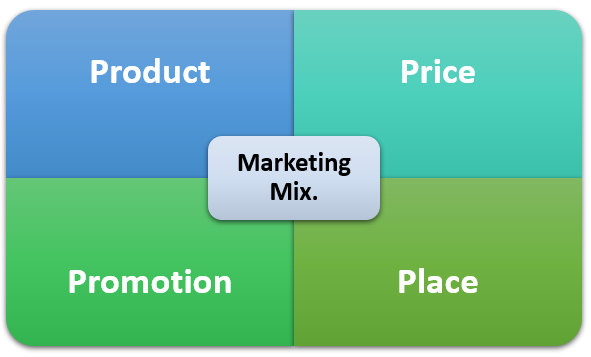
Marketing mix (programme) comprises of various controllable forces (often referred as elements) like product, price, promotion and place. Success of any business enterprise depends on marketing mix. These four elements are like powerful weapons in the hand of manager to defend his market and/or attack on rivals. A manager needs to understand his rural market carefully, considering all important characteristics of rural customers.

Since behaviour of rural consumers is different and less predictable, the marketing manager has a challenging task to design marketing mix strategies for the rural segments. Due to considerable level of heterogeneity, a manager needs to design tailor-made programme to cater needs and wants of specific groups.

Dynamics of rural markets differ from urban market types, and similarly rural marketing strategies are also significantly different from the marketing strategies aimed at urban or industrial buyers. This, along with several other related issues, has been subject matter of intense discussion and debate in countries like India and China, and even the focus of international symposia organized in these countries.

Product Mix:

Product is a powerful determinant of firm’s success. The products must be suitable to rural customers in all significant aspects. The company must produce product according to the present and the expected state of rural buyers. Product features (size, shape, colour, weight, etc.), qualities, brand name, packaging, labeling, services, and other relevant aspect must be fit with needs, wants and capacity of buyers. Product must undergo necessary changes and improvements to sustain its suitability over time. Note that effectiveness of other decisions like pricing, promotion and place also depends on the product.

Place Mix

Rural market faces critical issues of distribution. A marketer has to strengthen the distribution strategies. Distributing small and medium sized packets through poor roads, over long distances, into the remote areas of rural market and getting the stockiest to do it accordingly.

Both physical distribution and distribution channel should be decided carefully to ensure easy accessibility of products for rural consumers. Choosing the right mode of transportation, locating warehouses at strategic points, maintaining adequate inventory, sufficient number of retail outlets at different regions, and deploying specially trained sales force are some of the critical decisions in rural distribution.

Normally, indirect channels are more suitable to serve scattered rural customers. Usually, wholesalers are located at urban and semi urban to serve rural retailers. Not only in backward states, but also in progressive states, local rural producers distribute directly to consumers.

For service marketing, employees of rural branches can do better jobs. Various sectors like banking, insurance, investment, satellite and cable connection, cell phone, auto sales and services etc. the market for these sectors is booming in villages of some states in a rapid speed. Service industries are trying to penetrate into rural areas by deploying specially trained employees and local rural area agents.

Nowadays, online marketing is also making its place gradually in rural areas of the progressive states. Marketers must design and modify their distribution strategies time to time taking into consideration the nature and characteristics prevailing in rural areas, may be quite differently than that of urban markets.

Price Mix:

Price is the unique element of marketing mix, particularly, for rural markets. Rural customers are most price sensitive and, hence, price plays more decisive role in buying decisions. Pricing policies and strategies must be formulated with care and caution. Price level, discounts and rebates, credit and installment faculties, and so on are important considerations while setting and altering prices. Normally, the low-priced products attract rural buyers. However, some rural customers are quality and status conscious.

Promotion Mix

Rural markets are delicately powerful to cater to the rural masses. The promotion strategies and distribution strategies and Ad makers have learned to leverage the benefits of improved infrastructure and media reach.

Most of the companies advertise their products and services on television and they are sure it reaches the target audience, because a large section of the rural India is now glued to TV sets. Marketers have to decide on promotional tools such as advertisement, sales promotion, personal selling and publicity and public relations.

The method of promotion needs to meet the expectations of the market. Vehicle campaigns, edutainment films, generating word of mouth publicity through opinion leaders, colorful wall posters, etc. all these techniques have proved effective in reaching out to the rural masses.

Village fairs and festivals are ideal venues for projecting these programs. In certain cases, public meetings with Sarpanch and Mukhiya too are used for rural promotion. Music cassettes are another effective medium for rural communication and a comparatively less expensive medium.

Different language groups can be a low budget technique and they can be played in cinema houses or in places where rural people assemble. It is also important that in all type of rural communication, the rural peoples must also be in the loop. The theme, the message, the copy, the language and the communication delivery must match the rural context.

Eventually, the rural communication needs creativity and innovation. In rural marketing, a greater time lag is involved between the introduction of a product and its economic size sale, because the rural buyer’s adoption process is more time consuming.

Nowadays, educated youth of rural area can also influence decision-making of the rural consumers. Rural consumers are also influenced by the western lifestyle they watch on television. The less exposure to outside world makes them innocent and the reach of mass media, especially, television has influenced the buying behavior greatly.

error: Content is protected !!