Fishers Ideal Index number

Fisher’s Index Number, named after the American economist Irving Fisher, is a composite index that combines elements of both the Laspeyres and Paasche indices to provide a more balanced measure of price changes. It is considered a comprehensive measure because it accounts for both base-period and current-period quantities, offering a more accurate reflection of price changes over time. Here’s an in-depth look at Fisher’s Index Number:

Concept and Purpose:

Fisher’s Index Number aims to address the limitations of the Laspeyres and Paasche indices, which are two commonly used methods for calculating price indices. The Laspeyres Index uses base-period quantities to weigh prices, while the Paasche Index uses current-period quantities. Fisher’s Index blends these approaches to mitigate their individual biases and provide a more accurate measure of price changes.

Calculation

Fisher’s Index Number is calculated as the geometric mean of the Laspeyres Index and the Paasche Index. The formula for Fisher’s Index Number (I_F) is:

I_F= √(L×P)

where:

  • L is the Laspeyres Index
  • P is the Paasche Index
  1. Laspeyres Index

The Laspeyres Index measures the change in price relative to a base period, using base-period quantities for weighting. The formula is:

L = [ ∑(P1×Q0) / ∑(P0×Q0) ]× 100

where:

  • P_1 = Price of the item in the current period
  • P_0 = Price of the item in the base period
  • Q_0 = Quantity of the item in the base period
  1. Paasche Index

The Paasche Index measures the change in price relative to a base period, using current-period quantities for weighting. The formula is:

P = [ ∑(P1×Q1) / ∑(P0×Q1) ]× 100

where:

  • Q_1 = Quantity of the item in the current period

Steps to Calculate Fisher’s Index

  1. Compute the Laspeyres Index: Calculate the price index using base-period quantities to weight current prices.
  2. Compute the Paasche Index: Calculate the price index using current-period quantities to weight base prices.
  3. Calculate Fisher’s Index: Use the geometric mean of the Laspeyres and Paasche indices.

Applications:

  • Comprehensive Price Measurement:

Fisher’s Index provides a balanced approach to measuring price changes by incorporating both base-period and current-period quantities. This makes it a more accurate reflection of real price changes compared to Laspeyres or Paasche indices alone.

  • Inflation Analysis:

It is used to assess inflation by comparing changes in the cost of a fixed basket of goods over time, considering variations in both quantity and price.

  • Economic Research:

Economists and researchers use Fisher’s Index to study and compare price movements, making it a valuable tool for analyzing trends in economic data.

  • Cost of Living Adjustments:

It helps in adjusting wages, salaries, and benefits to keep up with changes in the cost of living by providing a more balanced view of price changes.

Advantages:

  • Balanced Measure:

Fisher’s Index avoids the biases inherent in using only base-period or current-period quantities, providing a more balanced view of price changes.

  • Accurate Reflection:

It offers a more accurate reflection of price movements by combining the strengths of both the Laspeyres and Paasche indices.

  • Geometric Mean:

Using the geometric mean ensures that the index does not overly emphasize one period’s data over another, offering a more neutral perspective.

Limitations:

  • Complexity:

Fisher’s Index involves more complex calculations compared to Laspeyres and Paasche indices, which might be less intuitive and more resource-intensive to compute.

  • Data Requirements:

It requires detailed data on quantities and prices for accurate computation, which may not always be available.

Un-weighted Index Numbers, Properties, Types

Un-weighted index numbers are simple index numbers where all items are assigned equal importance or weight, regardless of their actual significance or contribution. These index numbers measure relative changes in prices or quantities without considering the quantity consumed or produced. The Simple Aggregative Method and Simple Average of Price Relatives are commonly used techniques. Though easy to compute and understand, un-weighted index numbers may not accurately reflect real economic scenarios because they ignore the actual impact of each item. Therefore, they are mainly used for illustrative or preliminary analysis rather than precise economic measurement.

Properties of Un-weighted Index Numbers:

  • Equal Importance to All Items

Un-weighted index numbers treat all items in the dataset with equal importance, regardless of their actual usage, cost, or impact. This means a low-cost or rarely used item influences the index as much as a high-cost or frequently used item. While this simplifies calculations, it can distort the true picture of economic trends. This property limits the accuracy of un-weighted indices in reflecting real-life consumption or production patterns.

  • Simplicity in Calculation

Un-weighted index numbers are easy to compute because they do not require additional data like weights or quantities. Only the prices or quantities from the base and current periods are needed. This simplicity makes them ideal for quick estimates or introductory statistical analysis. However, this ease comes at the cost of precision and relevance, especially when different items have significantly varied importance or impact in the real-world context.

  • Distorted Representativeness

Because they assign equal weight to all items, un-weighted index numbers may give a distorted representation of overall price or quantity changes. For instance, a major change in a high-volume product could be overshadowed by minor changes in several low-impact items. This lack of representativeness means that un-weighted indices can mislead policymakers or businesses if used for serious economic or financial decision-making.

  • Limited Real-World Application

Due to their disregard for item importance, un-weighted index numbers have limited use in actual business or economic analysis. They are mostly used for academic or theoretical purposes, such as teaching basic statistical concepts. In practical scenarios like inflation tracking or market analysis, weighted index numbers are preferred as they offer a more realistic and reliable measure of change based on actual consumption, sales, or production data.

Types of Un-weighted Index Numbers:

  • Simple Aggregative Index Number

This method calculates the index by summing the current period prices and dividing them by the sum of base period prices, multiplied by 100. The formula is:

Simple Aggregative Index = (∑P1 / ∑P0) × 100

Where P1 and P0 are current and base period prices. All items are treated equally, regardless of their significance. While easy to compute, it can be misleading if high-priced items disproportionately affect the result. It is suitable for basic analysis but lacks real-world precision.

  • Simple Average of Price Relatives Index

This method calculates the price relative for each item (current price divided by base price × 100) and then takes the arithmetic mean of all these relatives. Formula:

Simple Average of Price Relatives = [∑(P1 / P0×100)] / n

Where is the number of items. This approach ensures each item has equal influence on the final index, regardless of actual importance. It’s more refined than the aggregative method and reduces the impact of extreme values, but still does not reflect real consumption patterns or weights.

Key differences between Variation and Skewness

Variation refers to the differences or fluctuations in data values within a dataset. In business, understanding variation is essential for making informed decisions, as it helps identify patterns, trends, and inconsistencies in processes or outcomes. Variation can be natural (random) or assignable (caused by specific factors). It occurs in areas like production, sales, customer behavior, and financial metrics. By measuring variation using statistical tools (like range, variance, and standard deviation), businesses can improve quality control, forecast demand, and reduce risks. Effective analysis of variation supports better resource allocation and strategic planning in uncertain environments.

Properties of Variation:

  • Non-Negativity

Variation is always non-negative, meaning its value cannot be less than zero. A variation of zero indicates that all data values are identical, showing no spread. This property ensures that variation is a reliable measure of data dispersion. Since squared differences are used in calculations like variance or standard deviation, negative values are mathematically eliminated, reinforcing consistency in representing the extent of data fluctuations.

  • Basis for Dispersion

Variation serves as the foundation for measuring dispersion in data. It quantifies how much individual values deviate from the mean or central value. Higher variation indicates that data points are widely spread out, while lower variation implies closeness to the average. This helps in comparing datasets and assessing consistency, reliability, and control in business processes and decision-making scenarios like quality control or performance monitoring.

  • Dependence on Data Scale

Variation is scale-dependent, meaning its value is influenced by the units of the data. For example, the variation in centimeters will differ from the same data measured in meters. This property makes direct comparisons across datasets difficult unless standardized. In such cases, coefficient of variation is used to eliminate the unit-based effect and allow fair comparison between different data groups or scales.

  • Influence of Extreme Values

Variation is sensitive to outliers or extreme values. A single unusually high or low value can significantly increase the variation, especially in measures like variance and standard deviation. This sensitivity helps in identifying potential anomalies or quality issues in business processes, but it also means that variation must be interpreted carefully, especially in datasets where extreme values may distort the overall view.

  • Used for Comparative Analysis

Variation allows comparison of consistency between two or more datasets. For example, two production machines might produce the same average output, but one may have a higher variation, indicating less reliability. By analyzing variation, managers can choose better-performing systems or predict future outcomes more effectively. It plays a vital role in fields such as finance, marketing, operations, and quality assurance.

Skewness

Skewness is a statistical measure that describes the asymmetry or deviation from symmetry in a distribution of data. When a dataset is perfectly symmetrical, it has zero skewness. If the data tails more towards the right (positive skew), it indicates that a majority of values are concentrated on the lower end. Conversely, a left tail (negative skew) shows values concentrated on the higher end. Skewness helps in understanding the shape of the data distribution, which is important for choosing appropriate statistical methods, interpreting trends, and making informed business decisions based on non-normal or irregular data patterns.

Properties of Skewness:

  • Direction of Asymmetry

Skewness indicates the direction in which data deviates from symmetry. If the skewness is positive, the tail on the right side of the distribution is longer, indicating more lower values. If it’s negative, the left tail is longer, indicating more higher values. This property helps understand how data is spread around the mean.

  • Impact on Mean and Median

In a skewed distribution, the mean, median, and mode are not equal. In positively skewed data, the mean > median > mode. In negatively skewed data, the mean < median < mode. This helps identify the nature of the distribution and is crucial when selecting the right measure of central tendency for analysis.

  • Quantitative Measure

Skewness is measured using formulas like Pearson’s or Bowley’s coefficient of skewness. These give numerical values where zero represents symmetry, positive values indicate right skew, and negative values indicate left skew. This numerical property allows easy comparison between datasets and helps assess how far a distribution deviates from normality.

  • Unitless Value

Skewness is a dimensionless (unitless) number, meaning it is unaffected by the units of the variable being measured. This allows comparisons of skewness between different datasets, regardless of their scales or units. It also makes skewness a standardized measure, helping in interpreting data shapes across various domains and applications.

  • Sensitivity to Outliers

Skewness is highly sensitive to outliers because extreme values in the data can significantly pull the tail, altering the skewness value. A few large or small values can make an otherwise symmetric distribution appear skewed. This property makes skewness useful in detecting outliers and data irregularities during statistical analysis.

Key differences between Variation and Skewness

Aspect Variation Skewness
Definition Dispersion Asymmetry
Focus Spread Shape
Center Relation Distance from mean Tilt of mean
Symmetry Not required Key factor
Direction None Left/Right
Unit Square units Unitless
Measure Type Magnitude Directional
Zero Value Meaning No variation Symmetrical
Examples Range, Variance Skewness Coefficient
Application Consistency check Distribution shape
Used In Quality Control Data Normality
Calculation Tools Std. Dev., Variance Pearson’s/Karl’s

Significance of Measuring Variation, Properties of Good Variation

Variation refers to the differences or fluctuations in data values within a dataset. In business, understanding variation is essential for making informed decisions, as it helps identify patterns, trends, and inconsistencies in processes or outcomes. Variation can be natural (random) or assignable (caused by specific factors). It occurs in areas like production, sales, customer behavior, and financial metrics. By measuring variation using statistical tools (like range, variance, and standard deviation), businesses can improve quality control, forecast demand, and reduce risks. Effective analysis of variation supports better resource allocation and strategic planning in uncertain environments

Significance of Measuring Variation:

  • Improves Decision Making

Measuring variation helps managers understand the reliability and stability of data. By identifying how much values deviate from the average, decision-makers can assess risks and choose better strategies. For instance, in sales forecasting, recognizing variation in customer demand allows for better inventory planning. Quantifying variation also helps differentiate between normal fluctuations and unusual patterns, leading to more data-driven, informed decisions that align with business goals.

  • Enhances Quality Control

In production and service processes, measuring variation is crucial for maintaining consistent quality. It helps identify deviations from standards and detect defects or process inefficiencies. Tools like control charts and standard deviation enable businesses to monitor performance, reduce errors, and maintain customer satisfaction. By minimizing unnecessary variation, companies can achieve higher quality outputs, reduce costs, and ensure compliance with regulatory or industry standards.

  • Enables Process Improvement

Variation measurement is a foundation for continuous improvement initiatives such as Six Sigma or Total Quality Management. It allows organizations to pinpoint sources of inconsistency and implement targeted improvements. By reducing unwanted variation, businesses can make operations more efficient, predictable, and cost-effective. Over time, this leads to streamlined workflows, reduced waste, and enhanced productivity, giving companies a competitive edge in both manufacturing and service sectors.

  • Assists in Risk Management

Understanding variation helps identify uncertainties and potential risks in business processes. By analyzing variation in financial performance, customer behavior, or supply chain reliability, managers can develop strategies to mitigate risks. For example, consistent variation in supplier delivery times may require contingency planning. Measuring variation allows firms to prepare for worst-case scenarios, allocate resources wisely, and build resilience against market volatility or operational disruptions.

Properties of Good Variation:

  • Predictability

Good variation exhibits a consistent and predictable pattern over time. This predictability allows businesses to make reliable forecasts and informed decisions. For example, seasonal sales patterns or daily website traffic variations help managers plan inventory, staffing, or marketing strategies effectively. Predictable variation supports stability in processes, enabling smoother operations and better planning for future trends or demand changes.

  • Relevance

A good variation is relevant to the business objective or decision-making process. It should provide meaningful insights that help identify opportunities or problems. For instance, analyzing variation in customer preferences can guide product development. Irrelevant variations, on the other hand, may distract decision-makers. Focusing on relevant variations ensures that the analysis is purpose-driven and aligned with organizational goals, helping managers focus on impactful factors.

  • Measurability

Good variation must be quantifiable using statistical methods such as mean, standard deviation, or variance. Measurability ensures that the variation can be analyzed, tracked over time, and compared across different datasets. For example, tracking the variation in daily production output helps monitor consistency. Without measurability, it becomes difficult to evaluate performance or identify areas for improvement, limiting the effectiveness of quantitative analysis.

  • Consistency

Good variation maintains a consistent pattern under similar conditions. If the variation changes erratically without any identifiable cause, it may indicate underlying problems. Consistency in variation allows businesses to establish control limits and set performance benchmarks. In manufacturing, for example, consistent variation in product quality indicates a stable process, while inconsistent variation may point to equipment or human error.

  • Informative Value

Good variation provides insights that lead to better decision-making. It should reveal underlying trends, root causes, or patterns that support corrective actions or strategy formulation. For instance, variation in customer complaints across regions can highlight service issues. An informative variation goes beyond raw data and contributes to knowledge generation, making it a valuable input in business intelligence and strategic analysis.

  • Controllability

Good variation should be capable of being monitored and controlled to a reasonable extent. If a variation can be managed through process improvement, training, or better systems, it becomes useful for continuous improvement. For example, reducing variation in delivery time improves customer satisfaction. Controllability transforms variation into an opportunity for operational excellence and efficiency, aligning with total quality management principles.

Quantitative Analysis for Business Decisions BU B.Com 1st Semester SEP Notes

Unit 1 [Book]
Introduction, Meaning, Definitions, Features, Objectives, Functions, Importance and Limitations of Statistics VIEW
Important Terminologies in Statistics: Data, Raw Data, Primary Data, Secondary Data, Population, Census, Survey, Sample Survey, Sampling, Parameter, Unit, Variable, Attribute, Frequency, Seriation, Individual, Discrete and Continuous VIEW
Classification of Data VIEW
Requisites of Good Classification of Data VIEW
Types of Classification Quantitative and Qualitative Classification VIEW
Unit 2 [Book]
Types of Presentation of Data Textual Presentation VIEW
Tabular Presentation VIEW
One-way Table VIEW
Important Terminologies: Variable, Quantitative Variable, Qualitative Variable, Discrete Variable, Continuous Variable, Dependent Variable, Independent Variable, Frequency, Class Interval, Tally Bar VIEW
Diagrammatic and Graphical Presentation, Rules for Construction of Diagrams and Graphs VIEW
Types of Diagrams: One Dimensional Simple Bar Diagram, Sub-divided Bar Diagram, Multiple Bar Diagram, Percentage Bar Diagram Two-Dimensional Diagram Pie Chart, Graphs VIEW
Unit 3 [Book]
Meaning and Objectives of Measures of Tendency, Definition of Central Tendency VIEW
Requisites of an Ideal Average VIEW
Types of Averages, Arithmetic Mean, Median, Mode (Direct method only) VIEW
Empirical Relation between Mean, Median and Mode VIEW
Graphical Representation of Median & Mode VIEW
Ogive Curves VIEW
Histogram VIEW
Meaning of Dispersion VIEW
Standard Deviation, Co-efficient of Variation-Problems VIEW
Unit 4 [Book]
Significance of Measuring Variation, Properties of Good Variation VIEW
Methods of Studying Variation-Absolute and Relative Measure of Variation VIEW
Standard Deviation VIEW
Co-efficient of Variation VIEW
Skewness, Introduction VIEW
Differences between Variation and Skewness VIEW
Measures of Skewness VIEW
Karl Pearson’s Co-efficient of Skewness VIEW
Unit 5 [Book]
Introduction, Uses of Index Number VIEW
Classification of Index Numbers VIEW
Methods of Constructing Index Numbers VIEW
Un-weighted Index Numbers VIEW
Simple Aggregative Method, Simple Average Relative Method, Weighted Index Numbers, Weighted Aggregative Index numbers VIEW
Fishers Ideal Index number VIEW
Test of Perfection: Time Reversal Test, Factor Reversal Test VIEW
Weighted Average of Relative Index Numbers VIEW

Importance of Information Systems in Decision Making and Strategy Building

Information Systems (IS) play a crucial role in decision-making and strategy building within organizations. The importance of Information Systems in these areas stems from their ability to provide timely, accurate, and relevant information that enables informed decision-making and supports strategic planning. Information Systems are indispensable in decision-making and strategy building by providing a solid foundation of accurate and timely information. From data-driven decision-making to strategic planning, risk management, and resource optimization, Information Systems empower organizations to navigate complexities, respond to challenges, and seize opportunities in today’s dynamic business environment. Organizations that leverage Information Systems strategically gain a competitive advantage and position themselves for long-term success.

Importance of Information Systems in Decision Making:

1. Transforming Intuition into Evidence-Based Choice

Information Systems fundamentally shift decision-making from reliance on gut feeling and limited experience to a process grounded in data and evidence. They systematically collect and process vast amounts of internal and external data, converting it into structured information. This provides a factual foundation that minimizes bias and speculation. For example, instead of guessing which product will sell, a manager can analyze historical sales trends, competitor pricing, and market reports. This transition from intuition to evidence reduces risk, increases confidence in choices, and leads to more objective and defensible outcomes at all levels of the organization.

2. Enabling Timely and Proactive Decisions

In fast-paced markets, delays in decision-making can mean missed opportunities or compounded crises. Information Systems provide real-time or near-real-time data through dashboards and alerts. A production manager can see a machine’s output dip immediately, or a marketing head can track a campaign’s performance hour-by-hour. This immediacy allows managers to identify issues as they emerge and seize opportunities before competitors do. Instead of waiting for end-of-month reports to react to past problems, IS empowers proactive intervention, enabling businesses to be agile and responsive in a dynamic environment.

3. Enhancing Forecasting and Predictive Accuracy

Effective planning requires looking ahead. Information Systems, equipped with analytics and Business Intelligence (BI) tools, significantly enhance forecasting accuracy. By processing historical data and identifying patterns, IS can model future scenarios for sales, cash flow, inventory needs, or market demand. Predictive analytics can forecast customer churn or equipment failure. This forward-looking capability allows for strategic resource allocation, better budgeting, and preparation for potential challenges. It transforms decision-making from being reactive to past events to being anticipatory, allowing the organization to prepare for and shape its future.

4. Supporting Complex Analysis and Scenario Planning

Many strategic decisions involve numerous variables and potential outcomes. Information Systems, particularly Decision Support Systems (DSS), allow managers to conduct complex “what-if” analyses and simulations. They can model the financial impact of a price change, the logistical effect of opening a new warehouse, or the market response to a new product launch—all without real-world risk. This ability to test different scenarios and understand potential consequences leads to more robust, thoroughly vetted decisions. It reduces uncertainty and provides a clearer understanding of the trade-offs involved in each strategic option.

5. Improving Communication and Collaborative Decision-Making

Important decisions often require input from multiple stakeholders across departments. Information Systems facilitate collaborative decision-making by providing a shared platform for data and communication. Cloud-based reports, shared dashboards, and collaborative tools ensure everyone is working from the same, up-to-date information. This breaks down information silos, aligns perspectives, and allows for a more holistic evaluation of options. By streamlining the flow of information among teams, IS ensures decisions are informed by diverse expertise and made with greater consensus, leading to more effective and widely-supported implementation.

6. Facilitating Decentralization and Empowerment

Modern IS enables the delegation of decision-making authority without losing control. By providing field managers and frontline employees with access to relevant data and analytical tools through user-friendly interfaces, organizations can empower them to make informed, on-the-spot decisions. A regional sales manager can adjust local promotions based on real-time dashboards. This decentralization speeds up response times, increases operational flexibility, and boosts employee morale. The central management retains oversight through the system’s monitoring capabilities, ensuring local decisions align with overall corporate strategy and performance metrics.

7. Providing a Framework for Measurement and Feedback

An Information System does not just inform the initial decision; it closes the loop by measuring outcomes. It establishes Key Performance Indicators (KPIs) and continuously tracks progress against goals. After a strategic choice is implemented—like a new marketing strategy—the IS provides data on its impact (e.g., lead generation, conversion rates). This creates a critical feedback mechanism, allowing managers to assess the effectiveness of their decisions, learn from successes and failures, and make necessary course corrections. This cycle of decision, implementation, measurement, and learning fosters a culture of continuous improvement and data-driven accountability.

Importance of Information Systems in Strategy Building:

1. Better Decision Making

Information Systems provide accurate and timely data to managers for making business decisions. They collect data from sales, finance, customers, and operations and convert it into useful reports. Indian companies use these reports to understand market trends, customer demand, and business performance. With proper information, managers can choose the best strategies, reduce risks, and plan for future growth. This leads to smarter and faster decision making.

2. Competitive Advantage

Information Systems help businesses stay ahead of competitors by improving efficiency and customer service. For example, Indian retail companies use digital systems to manage inventory and predict product demand. Online platforms analyze customer behavior to offer better prices and services. These systems reduce costs, increase speed, and improve quality. As a result, companies can attract more customers and gain a strong market position.

3. Improved Planning and Control

Information Systems support business planning by providing forecasts and performance reports. Managers can set targets, monitor progress, and control expenses easily. In Indian firms, accounting and management information systems help track budgets, sales growth, and production levels. If problems arise, corrective action can be taken quickly. This ensures smooth operations and achievement of business goals.

4. Better Customer Relationship

Information Systems store customer data such as preferences, purchase history, and feedback. This helps companies understand customer needs and provide personalized services. Indian banks and e commerce companies use customer systems to send offers, solve complaints, and improve service quality. Strong customer relationships increase loyalty and repeat sales, supporting long term business strategy.

5. Faster Communication and Coordination

Information Systems connect different departments like sales, finance, production, and HR on one platform. This allows quick sharing of information and smooth coordination. Indian companies use emails, ERP systems, and dashboards to track work progress in real time. Faster communication helps avoid delays, reduces confusion, and improves teamwork. This supports better strategy execution.

6. Cost Reduction and Efficiency

Information Systems automate many routine tasks such as billing, payroll, stock management, and reporting. This reduces manual work and errors. Indian businesses save money by using digital accounting and inventory software. Efficient systems help complete tasks faster with fewer resources. Lower costs improve profitability and allow companies to invest in growth strategies.

7. Market Analysis and Forecasting

Information Systems analyze past data to predict future market trends. Businesses can estimate sales, customer demand, and seasonal changes. Indian companies use these systems to plan production and marketing campaigns in advance. Accurate forecasting reduces waste and improves resource use. This helps companies create strong long term business strategies.

Simple Average or Price Relative Method, Weighted index method

Simple Average or Price Relatives Method

In this method, we find out the price relative of individual items and average out the individual values. Price relative refers to the percentage ratio of the value of a variable in the current year to its value in the year chosen as the base.

Price relative (R) = (P1÷P2) × 100

Here, P1= Current year value of item with respect to the variable and P2= Base year value of the item with respect to the variable. Effectively, the formula for index number according to this method is:

 P = ∑[(P1÷P2) × 100] ÷N

Here, N= Number of goods and P= Index number.

Weighted index method

Weighted Aggregate Method

Here different goods are assigned weight according to the quantity bought. There are three well-known sub-methods based on the different views of economists as mentioned below:

Laspeyre’s Method

Laspeyre was of the view that base year quantities must be chosen as weights. Therefore the formula is :

P = (∑P1Q0÷∑P0Q0)×100

Here,  ∑P1Q0= Summation of prices of current year multiplied by quantities of the base year taken as weights and ∑P0Q0= Summation of, prices of base year multiplied by quantities of the base year taken as weights.

Paasche Index Number

The Paasche Price Index is a consumer price index used to measure the change in the price and quantity of a basket of goods and services relative to a base year price and observation year quantity. Developed by German economist Hermann Paasche, the Paasche Price Index is commonly referred to as the “current weighted index.”

Formula for the Paasche Price Index

The formula for the index is as follows:

Where:

  • Pi,0 is the price of the individual item at the base period and Pi,t is the price of the individual item at the observation period.
  • Qi,t is the quantity of the individual item at the observation period.

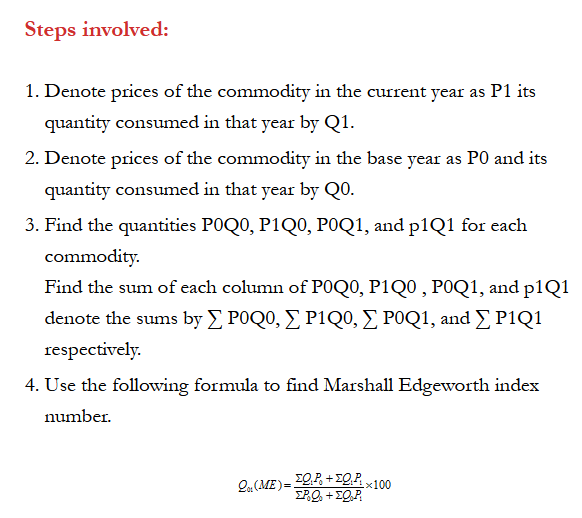
Marshall Edgeworth Index Number

Skewness

Skewness, in statistics, is the degree of distortion from the symmetrical bell curve, or normal distribution, in a set of data. Skewness can be negative, positive, zero or undefined. A normal distribution has a skew of zero, while a lognormal distribution, for example, would exhibit some degree of right-skew.

The three probability distributions depicted below depict increasing levels of right (or positive) skewness. Distributions can also be left (negative) skewed. Skewness is used along with kurtosis to better judge the likelihood of events falling in the tails of a probability distribution.

Right skewness

  • Skewness, in statistics, is the degree of distortion from the symmetrical bell curve in a probability distribution.
  • Distributions can exhibit right (positive) skewness or left (negative) skewness to varying degree.
  • Investors note skewness when judging a return distribution because it, like kurtosis, considers the extremes of the data set rather than focusing solely on the average.

Broadly speaking, there are two types of skewness: They are

(1) Positive skewness

(2) Negative skewnes.

Positive skewness

A series is said to have positive skewness when the following characteristics are noticed:

  • Mean > Median > Mode.
  • The right tail of the curve is longer than its left tail, when the data are plotted through a histogram, or a frequency polygon.
  • The formula of Skewness and its coefficient give positive figures.

Negative Skewness

A series is said to have negative skewness when the following characteristics are noticed:

  • Mode> Median > Mode.
  • The left tail of the curve is longer than the right tail, when the data are plotted through a histogram, or a frequency polygon.
  • The formula of skewness and its coefficient give negative figures.

Thus, a statistical distribution may be three types viz.

  • Symmetric
  • Positively skewed
  • Negatively skewed

Skewness Co-efficient

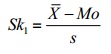
  1. Pearson’s Coefficient of Skewness #1 uses the mode. The formula is:

    pearson skewness

    Where xbar = the mean, Mo = the mode and s = the standard deviation for the sample.
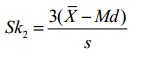
  2. Pearson’s Coefficient of Skewness #2 uses the median. The formula is:

    Pearson's Coefficient of Skewness

    Where xbar = the mean, Mo = the mode and s = the standard deviation for the sample.

    It is generally used when you don’t know the mode.

Decision Support Systems, Features, Process, Types, Advantages, Disadvantages

Decision Support System (DSS) is an interactive, computer-based information system designed to assist managers in making semi-structured or unstructured decisions. Unlike Management Information Systems (MIS), which provide routine reports, a DSS focuses on complex problems where there is no clear, pre-defined solution path. It combines data (from internal TPS/MIS and external sources), models (mathematical and analytical), and a user-friendly interface to support human judgment. Users can perform “what-if” analyses, simulations, and scenario planning to evaluate different options. The goal is not to automate the decision but to enhance the decision-maker’s ability to analyze situations, predict outcomes, and choose the most effective course of action.

Features of Decision Support Systems:

1. Interactive and User-Friendly Interface

A core feature of a DSS is its highly interactive, conversational interface. It allows non-technical managers to directly engage with the system, pose queries, change parameters, and run models without needing programming expertise. This interactivity is enabled through menus, graphical dashboards, and natural language queries. The user can drill down into data, ask “what-if” questions, and see immediate visual feedback, making the system a collaborative partner in the decision-making process rather than a passive reporting tool.

2. Support for Semi-Structured and Unstructured Decisions

DSS are specifically designed to tackle non-routine, complex decisions that lack a clear algorithmic solution. These are semi-structured (some elements are definable, others are not) or unstructured decisions (like strategic planning or crisis management). The system provides tools to explore ill-defined problems, helping to structure the analysis by integrating data, models, and judgment, thereby reducing ambiguity and supporting managerial intuition with quantitative analysis.

3. Integration of Models and Analytical Tools

A DSS incorporates a library of analytical and simulation models (e.g., statistical, financial, optimization). These models allow users to test assumptions and forecast outcomes. For example, a linear programming model can optimize a supply chain, or a Monte Carlo simulation can assess project risk. This feature moves beyond data retrieval to predictive and prescriptive analytics, enabling users to not only see what has happened but to model what could happen under different scenarios.

4. Data Integration from Multiple Sources

A DSS does not operate on a single database. It integrates diverse data sources, both internal (sales records from TPS, cost data from ERP) and external (market trends, competitor data, economic indicators). This ability to create a comprehensive, multi-source information base is critical for strategic decisions that require a broad view of the internal and external environment, ensuring analyses are grounded in the fullest possible context.

5. WhatIf” Analysis and Scenario Planning

This is a signature capability. DSS allows users to alter key variables (e.g., price, interest rate, production volume) and instantly see the projected impact on outcomes (e.g., profit, market share). This “what-if” (sensitivity) analysis facilitates scenario planning, where multiple future states (best-case, worst-case, most likely) are modeled and compared. It empowers managers to explore consequences without real-world risk, leading to more robust, contingency-aware decisions.

6. Facilitation of Decision-Making, Not Automation

A DSS is an aid to human judgment, not a replacement for it. It supports all phases of decision-making—intelligence (problem identification), design (generating alternatives), and choice (selecting an alternative)—by providing insights and analysis. The final decision, incorporating experience, ethics, and intuition, remains with the manager. This human-in-the-loop design ensures technology augments, rather than supplants, managerial expertise.

7. Adaptability and Flexibility

DSS are inherently flexible and adaptable to different users, problems, and changing organizational needs. They can be tailored for specific recurring decisions (like a capital budgeting DSS) or configured as a general-purpose analytical toolkit. Their modular architecture allows for the addition of new data sources, models, or reporting features as requirements evolve, ensuring long-term relevance and value.

8. Support for All Management Levels

While often associated with strategic planning for top executives, DSS provide value across all managerial tiers. Tactical managers use them for resource allocation and budget analysis, while operational supervisors might use them for scheduling and logistics optimization. The system’s flexibility in data granularity and model complexity allows it to be scaled and focused to support the specific decision context of any level within the organization.

Process of Decision Support Systems:

1. Problem Identification and Intelligence Phase

The DSS process begins with the Intelligence Phase, where the system aids managers in scanning the internal and external environment to identify problems, opportunities, or decision needs. The DSS aggregates data from various sources, applies monitoring and exception-reporting rules, and presents information through dashboards to highlight anomalies, trends, or deviations from plans. This phase focuses on recognizing and diagnosing a situation that requires a decision, transforming raw data into a clear understanding of a challenge or potential.

2. Model and Alternative Development (Design Phase)

In the Design Phase, the DSS supports the structuring of the problem and the generation of potential solutions. Users leverage the system’s model base to construct analytical frameworks (e.g., financial models, simulation scenarios) that represent the decision context. The DSS helps in formulating assumptions, defining decision variables, and outlining constraints. It then assists in developing and enumerating feasible alternatives, using tools like data mining and “what-if” prototyping to create a set of viable courses of action for evaluation.

3. Analysis and Evaluation of Alternatives (Choice Phase)

This is the core analytical phase. The DSS executes the models built in the design phase to evaluate and compare the projected outcomes of each alternative. Using techniques like sensitivity analysis, risk assessment, and optimization, it calculates consequences based on key criteria (cost, revenue, risk). The system presents these results through comparative reports, graphs, and scores, enabling the decision-maker to objectively assess trade-offs and understand the implications of each option before making a selection.

4. Scenario and Sensitivity Analysis

A critical sub-process within evaluation is running scenario and sensitivity analyses. The DSS allows the user to systematically alter input parameters (e.g., “What if raw material costs rise by 10%?” or “What if demand drops by 15%?”) to see how outcomes change. This tests the robustness and risk of each alternative under different future conditions. It helps identify key drivers of success and failure, ensuring the final choice is resilient and not based on a single, static forecast.

5. Recommendation and Decision Selection

Based on the analytical results, the DSS can often generate a data-driven recommendation. It may highlight the alternative that scores highest against weighted criteria or performs best across multiple scenarios. However, the system supports, not dictates, the choice. The final selection remains with the decision-maker, who integrates the DSS output with experience, judgment, and intangible factors. The DSS provides the evidence to justify and document the rationale for the chosen course of action.

6. Implementation Support and Planning

Once a decision is selected, the DSS process extends to supporting its implementation. The system can generate detailed action plans, resource allocation schedules, and budget forecasts based on the chosen model. It helps translate the strategic choice into operational tasks, providing the data and projections needed to communicate the plan, secure resources, and set measurable milestones for execution.

7. Monitoring, Feedback, and Learning

The final, cyclical phase involves using the DSS for post-implementation monitoring. The system tracks key performance indicators (KPIs) to measure actual results against the model’s predictions. This creates a feedback loop, identifying variances and providing insights into the accuracy of the models and assumptions used. This learning is fed back into the DSS database and model base, refining future intelligence gathering and analysis, and continuously improving the organization’s decision-making capability over time.

Types of Decision Support Systems:

1. Model-Driven DSS

Model-Driven DSS emphasizes access to and manipulation of statistical, financial, optimization, or simulation models. Its core functionality is the “model base.” Users input data and parameters, and the system runs complex models (like linear programming for resource allocation or Monte Carlo simulations for risk analysis) to generate recommended solutions or forecasts. It is often used for semi-structured, planned decisions such as investment portfolio analysis, supply chain optimization, or long-range planning, where the analytical power of models is more critical than large volumes of transactional data.

2. Data-Driven DSS

Data-Driven DSS emphasizes access to and manipulation of large volumes of internal and external data. Its power comes from sophisticated data analysis tools, including Online Analytical Processing (OLAP) and data mining, to identify trends, patterns, and relationships buried in vast data warehouses. It supports decision-making by enabling query-driven exploration, often through interactive dashboards. This type is central to Business Intelligence (BI) and is used for market analysis, customer segmentation, and sales trend forecasting, where insight is derived from historical and real-time data.

3. Communication-Driven DSS

Communication-Driven DSS, also known as a Group Decision Support System (GDSS), is designed to facilitate collaboration and communication among a group of decision-makers. Its primary technology is network and communication tools like video conferencing, shared digital workspaces, and brainstorming software. The goal is to support group tasks such as idea generation, negotiation, and consensus-building, often for unstructured problems requiring diverse input. It is particularly valuable for remote teams and complex projects requiring coordinated judgment.

4. Document-Driven DSS

A Document-Driven DSS uses unstructured documents as its primary source of information. It employs search engines, content management systems, and text mining/AI to retrieve, categorize, and analyze vast repositories of textual data—such as memos, reports, emails, news articles, and web pages. This system helps managers retrieve relevant precedents, research, and qualitative insights to inform decisions where context and narrative are as important as quantitative data, such as in legal research, competitive intelligence, or policy formulation.

5. Knowledge-Driven DSS

Knowledge-Driven DSS, or Expert System, captures and applies human expertise and specialized knowledge in the form of rules (an “inference engine”) and facts (a “knowledge base”). It can recommend actions or diagnoses by mimicking the reasoning of a human expert. These systems are used for structured problem-solving in specific domains, such as medical diagnosis, configuration of complex products, or loan underwriting, where consistent application of expert rules is required to support or automate decision-making.

6. Web-Based DSS

Web-Based DSS delivers decision support capabilities via a web browser or internet technologies. It leverages the ubiquity of the web to provide access to models, data, and collaboration tools for users across an organization or its partners. This type integrates features of other DSS categories but is distinguished by its platform-agnostic accessibility, ease of updating, and ability to integrate real-time external web data. It powers modern dashboards, cloud-based analytics platforms, and interactive reporting tools used in e-commerce and digital business.

Advantages of Decision Support Systems:

1. Enhanced Decision Quality and Accuracy

DSS significantly improves the quality of decisions by providing a data-driven, analytical foundation. It reduces reliance on intuition and guesswork by using models and simulations to forecast outcomes and evaluate risks. By processing complex variables and large datasets that exceed human cognitive limits, it helps identify optimal solutions and avoid costly oversights. This leads to more accurate, objective, and effective decisions, especially for semi-structured problems where multiple factors must be weighed, ultimately improving organizational performance and strategic outcomes.

2. Increased Speed and Efficiency in Decision-Making

DSS accelerates the decision-making process. It can rapidly access, integrate, and analyze data from multiple sources, performing complex calculations and scenario analyses in minutes or hours that would take humans days or weeks manually. This speed allows managers to respond swiftly to market changes, operational issues, or emerging opportunities. The efficiency gains free up valuable managerial time for strategic thinking and implementation, rather than data gathering and manual computation.

3. Empowerment Through “What-If” and Scenario Analysis

A key advantage is the ability to conduct risk-free experimentation. DSS allows managers to perform “what-if” analyses by changing input variables (e.g., price, cost, demand) to instantly see potential impacts. They can model best-case, worst-case, and most-likely scenarios. This empowers proactive planning, helps in understanding the sensitivity of outcomes to different factors, and builds contingency plans, leading to more resilient and informed strategies that anticipate future challenges rather than merely reacting to them.

4. Improved Communication and Collaboration

Many DSS, especially communication-driven and web-based systems, enhance organizational communication. They provide a common platform with shared data and models, ensuring all stakeholders are working from the same factual base. Visual outputs like dashboards and graphs make complex information easily understandable, facilitating clearer discussion. This fosters better collaboration among departments, aligns teams around data-driven goals, and helps in building consensus by providing transparent, objective evidence to support decision rationale.

5. Competitive Advantage and Strategic Insight

By enabling deeper analysis of internal operations and external market conditions, DSS can uncover hidden patterns, trends, and opportunities that might otherwise be missed. This ability to generate unique insights—such as identifying an underserved market segment or optimizing a supply chain for cost leadership—can become a source of sustainable competitive advantage. It shifts the organization from reactive operation to proactive, insight-driven strategy, allowing it to outmaneuver competitors.

6. Support for All Management Levels and Personalized Use

DSS are versatile tools that can be tailored to support decisions at strategic, tactical, and operational levels. A system can be configured for a CEO’s long-range planning, a marketing manager’s campaign analysis, or a logistics supervisor’s routing optimization. This flexibility allows different users to interact with the system in a way that matches their specific needs and expertise, democratizing access to advanced analytical power across the organization.

7. Facilitates Learning and Organizational Memory

DSS acts as a repository for organizational knowledge and learning. The models, data analyses, and decision histories it stores create an institutional memory. New managers can learn from past scenarios and outcomes. The system captures the rationale behind decisions, allowing organizations to learn from successes and failures, refine their models over time, and avoid repeating mistakes, thereby fostering a culture of continuous improvement and evidence-based management.

Disadvantages of Decision Support Systems:

1. High Implementation and Maintenance Costs

Developing and deploying a DSS requires a significant financial investment. Costs include specialized software licenses, high-performance hardware, data integration, and the hiring of skilled analysts and data scientists. Ongoing expenses for system updates, model refinement, data management, and user training are substantial. For many small and medium-sized enterprises, this cost can be prohibitive, leading to a poor return on investment if the system is not utilized to its full potential or if the decision problems it addresses do not justify the expense.

2. Over-Reliance and Reduced Managerial Judgment

A critical risk is that managers may develop an over-dependence on the DSS, treating its outputs as infallible directives rather than as advisory insights. This can lead to the erosion of critical thinking, intuition, and experience-based judgment. In complex, novel situations where models lack relevant data, blind faith in the system can result in poor decisions. The tool should augment human decision-making, not replace it, but ensuring this balance requires conscious effort and oversight.

3. Data Quality and Integration Challenges

The accuracy of a DSS is entirely dependent on the quality and relevance of its input data. “Garbage in, garbage out” is a fundamental peril. Integrating disparate data from legacy systems, external feeds, and various departments often leads to inconsistencies, missing values, and formatting errors. Cleaning, standardizing, and maintaining this data is a continuous, resource-intensive challenge. Poor data quality directly leads to misleading analyses, flawed models, and ultimately, erroneous decisions that can have severe business consequences.

4. Complexity and User Resistance

DSS can be inherently complex systems. Their advanced analytical interfaces and model-building requirements may intimidate non-technical managers, leading to user resistance and poor adoption. If the system is not intuitive, managers may bypass it, reverting to familiar but less rigorous methods. Successful implementation requires extensive change management, comprehensive training, and often, a dedicated support team to assist users, adding to the overall cost and effort.

5. Inflexibility in Unstructured or Novel Situations

DSS excel with semi-structured problems but can struggle with highly unstructured, novel, or crisis situations. These scenarios often lack historical data, clear variables, or definable models. The system’s pre-programmed logic and models may be irrelevant, forcing decision-makers to act without its support. An over-reliance on DSS in such contexts can create a dangerous delay or provide a false sense of security, hindering agile and creative human problem-solving when it is needed most.

6. Security and Ethical Risks

Centralizing sensitive strategic, financial, and operational data within a DSS creates a lucrative target for cyberattacks. A breach could compromise intellectual property or manipulate decision models. Furthermore, DSS models can perpetuate and amplify existing biases if the historical data they are trained on is biased. This can lead to unethical outcomes in areas like hiring, lending, or policing. Ensuring robust cybersecurity and conducting regular audits for algorithmic bias are essential but costly and complex responsibilities.

7. Potential for Miscommunication and Misinterpretation

The sophisticated outputs of a DSS—complex charts, statistical scores, probability ranges—can be misinterpreted by decision-makers lacking deep analytical training. A manager might misinterpret a correlation as causation or place undue confidence in a probabilistic forecast. This can lead to strategic missteps. Effective use requires not just system access but also a level of data literacy to correctly interpret the insights, a skill gap that exists in many organizations.

Role of Decision Support Systems in Decision Making Process:

1. Enhancing Intelligence and Problem Identification

In the intelligence phase, a DSS acts as a powerful scanning and monitoring tool. It aggregates data from internal and external sources, applying algorithms to detect anomalies, trends, and deviations from norms. Through interactive dashboards and exception reports, it helps managers identify problems, opportunities, and threats early. This proactive scanning transforms raw data into a clear signal, enabling managers to recognize situations that require a decision long before they become critical, ensuring the organization is responsive to its environment.

2. Supporting Model Building and Alternative Generation

During the design phase, a DSS provides the tools to structure the problem and generate viable alternatives. Its model base offers templates and frameworks for financial analysis, simulation, and optimization. Managers can use these to construct formal representations of the decision context, define variables, and outline constraints. The system can then help explore the solution space, using data mining and scenario tools to propose and flesh out a range of potential courses of action, moving from a vague problem to a set of concrete, analyzable options.

3. Facilitating Rigorous Analysis and Evaluation

This is the core role in the choice phase. The DSS executes the analytical models to evaluate and compare the projected outcomes of each alternative. It performs sensitivity analysis, calculates risk profiles, and scores options against weighted criteria. By providing quantitative, objective comparisons—often through visualizations like decision matrices or simulation results—it removes subjectivity and emotion, allowing managers to understand trade-offs, costs, and benefits clearly before selecting the most promising course of action.

4. Enabling “WhatIf” and Sensitivity Testing

A pivotal role is allowing managers to experiment with decisions before commitment. Through “what-if” analysis, users can alter key assumptions (e.g., interest rates, demand forecasts) and immediately see the impact on outcomes. This tests the robustness and risk of each alternative under various future conditions. It helps identify critical success factors and “deal-breaker” variables, ensuring the final choice is resilient and not based on a single, potentially flawed, prediction.

5. Improving Communication and Consensus Building

DSS outputs—such as charts, graphs, and scenario summaries—serve as a common factual language for discussions. They depersonalize debates by focusing attention on data and models rather than opinions. In group settings, this shared evidence base can bridge differing viewpoints, highlight areas of agreement, and structure negotiations. By making the rationale for a decision transparent and defensible, a DSS facilitates consensus-building and ensures all stakeholders understand the basis for the chosen action.

6. Supporting Implementation and Monitoring

Post-decision, a DSS supports implementation planning by generating detailed action plans, resource schedules, and budget forecasts derived from the chosen model. In the monitoring phase, it tracks key performance indicators (KPIs) against the model’s predictions. This creates a feedback loop, identifying variances between planned and actual results. This role turns decision-making into a continuous learning cycle, where insights from past outcomes refine future intelligence and model accuracy.

error: Content is protected !!