Cyber Agents and Workforce Management

A remote call center agent stationed at home or at a satellite center, who connects to the “real” call center using a PC and softphone. The key characteristic of a cyberagent is that the person’s statistics, performance and real-time status be completely transparent to the supervisors at the main center. The fact that they are stationed remotely should be completely irrelevant from the supervisory point of view, which includes the ability to monitor and record calls and screen activity.

Contact center workforce performance programs help achieve significant improvements in service quality and operational efficiency. In addition to ensuring that the right number of agents are performing at the right time, an effective call center workforce management solution will balance three often conflicting demands, service delivery optimization, lowering operating costs and reducing turnover of agents. Call center workforce management solutions also help to improve customer experience management and significantly improve customer support.Basic functions include the forecasting of contact arrival patterns using historical and other information, creating scheduling assignments based on those forecasts, and providing reports on forecasting and scheduling accuracy. Many systems also offer an expanded range of features such as: skill-based and multimedia contact scheduling, intraday reports, agent self-service capabilities, performance tools, schedule adherence monitoring and time-off administration.

Workforce optimization software can help companies of all sizes improve best practices and achieve significant improvements in service quality and operational efficiency. These solutions also aim to improve service delivery, lower operating costs and increase overall agent retention.

Fundamental necessity of effectively managing your service workforce includes the forecasting of contact patterns using historical data. Many systems also offer an expanded range of features including skill-based and multimedia scheduling, intra-day reporting, agent self-service capabilities, schedule monitoring and time-off administration.

Workforce Management Features:

  • Improve workforce efficiency: Reduce labor waste, maximize agent scheduling efficiency, match scheduling with skills and requirements, and improve forecast accuracy while maintaining or improving service level objectives.
  • Empower your agents: Improve the agent experience by giving your agents a voice in their work schedule. Enable agents to manage preferred hours, include temporary adjustments, offer scheduling and vacation bidding and auto-approve requests.
  • Gain confidence in your forecast: Understand the historical accuracy of your forecasts and gain confidence to take action on intra-day adjustments and future schedules. Improve accuracy with automatic tracking aids, receive email notifications & alerts, adapt quickly to unexpected changes.
  • Simplify long term planning: Ensure adequate staff is available when needed and proactively plan for any conceivable volume-impacting events. Accommodate unlimited events, leverage “what if” scenario planning, precisely align future staffing needs.

Barriers of CRM

Implementing a Customer Relationship Management (CRM) system successfully involves overcoming various barriers that can hinder its effectiveness and adoption. Recognizing and addressing these barriers early in the implementation process is crucial for ensuring the CRM system delivers its intended benefits.

  • Cultural Resistance

One of the most significant barriers to successful CRM implementation is resistance from within the organization. Employees may be accustomed to their current workflows and reluctant to adopt new systems or processes. Overcoming this barrier requires strong change management strategies, including clear communication of the benefits, involving users in the design and implementation phases, and providing adequate training and support.

  • Lack of Top Management Support

Effective CRM implementation needs strong endorsement and continuous support from top management. If the leadership does not prioritize CRM initiatives or allocate sufficient resources, the implementation may struggle to gain traction across the organization.

  • Inadequate User Training

For a CRM system to be effective, users need to be proficient in using it. Inadequate training can lead to low adoption rates, poor data quality, and ultimately, a failure to realize the potential benefits of the CRM system. Ensuring comprehensive, ongoing training is crucial for overcoming this barrier.

  • Poor Data Quality

CRM systems rely heavily on data to generate insights and manage customer relationships effectively. Poor data quality—such as incomplete, inaccurate, or outdated information—can lead to incorrect analyses and decisions. Regular data audits and clean-ups, as well as establishing stringent data entry standards, are essential for maintaining data integrity.

  • Integration Issues

Integrating a new CRM system with existing IT infrastructure can be complex and challenging. Issues with compatibility, data silos, and maintaining data flow between systems can significantly hinder the effectiveness of a CRM. Utilizing middleware or investing in CRM systems that offer flexible integration capabilities can help mitigate these challenges.

  • Budget Constraints

CRM implementations can be expensive when considering software costs, customization, training, and ongoing maintenance. Budget constraints can limit the scope of implementation or result in choosing less optimal solutions. Clear ROI projections and phased implementation strategies can help manage and justify the required investments.

  • Misalignment with Business Processes

Sometimes, CRM systems are selected without a thorough understanding of an organization’s unique business processes, leading to a poor fit between the system’s capabilities and the business’s needs. Tailoring the CRM system to align closely with actual business processes is vital for its effectiveness.

  • Customer Privacy and Compliance

As privacy regulations tighten globally, managing customer data in compliance with laws such as GDPR, CCPA, and others is becoming increasingly challenging. Businesses must ensure their CRM practices comply with these regulations to avoid legal risks and protect customer trust.

  • Technological Complexity

Some CRM systems can be technologically complex and challenging to use, which can intimidate users and discourage them from fully adopting the system. Choosing CRM software with an intuitive user interface and providing adequate user support can help overcome this barrier.

  • Underestimating Ongoing Support Needs

After initial implementation, CRM systems require continuous monitoring, support, and updates to stay relevant and efficient. Organizations often underestimate the need for ongoing technical support, updates, and system enhancements, which can lead to issues down the line.

Brand Building through Relationship Marketing

Relationship marketing should not be confused with transactional marketing. It’s not about selling or promotion. It’s about building customer loyalty by understanding and responding to their needs. And, it’s about showing them that you value their business and trust.

Relationship marketing involves finding ways to make two-way communications between you and your customers easy and beneficial. It requires tracking customer activities and providing information, offers and incentives that are tailored to them.

With more and more marketing tools and techniques at the disposal of business owners, relationship marketing is taking on a greater role as they look for ways to distinguish themselves and create memorable and meaningful customer experiences.

Loyalty programs, referral incentives, even seasonal discounts to current customers all go a long way toward building a relationship that stretches beyond the transaction. Offering rewards, helpful tips and specials enables constructive one-to-one relationships that help you create a great experience for your clients and lay the foundation of long-term brand loyalty.

  1. Offering returning customers a discount on services.

Everyone loves a good deal. Therefore, when a customer returns to you, it is a good idea to reward them for coming back. This doesn’t have to be a huge discount; it can just be a percentage off of their bill. However, simply acknowledging that you appreciate their business and are thankful they are coming back to you is a great way to encourage loyalty.

  1. Giving rewards for references.

Giving your current customers rewards for referring other customers to you is yet another way to show your current customers you appreciate their business. It also helps build up your customer database quickly.

  1. Offering updates.

On your Facebook or Twitter page, you can post updates about your business and even your personal life. if you are comfortable with that. This will make your customers feel like they know you. They will have the inside scoop, a behind-the-scenes look at what you are dealing with on any given day. As a result, you suddenly become more human to them. This is important because appearing as a human in their eyes instead of a big, cold, heartless company is key to relationship building. Consequently, it’s crucial to personal branding as well. Updating your social-media accounts or website is a great way to humanize yourself.

  1. Really caring about your customers.

Your customers will see through any fake expressions on your part. Therefore, when you aim to build relationships with your customers, be sure that you actually do care about their well-being. By treating your customers well, you will be amazed at how willing they become to support your business.

Building relationships and personal branding are intertwined. You simply can’t have one without the other. Your work to build lasting relationships with your customers will pay dividends in regards to the growth of your personal brand.

Going above and beyond

Going the extra mile creates a positive and lasting memory for your customers. Delighting your customers beyond expectation builds loyalty. Fans who are more than happy to refer your business to their friends and family.

Here are eight simple ways you can add an “extra touch” to your customer experience if within your means:

  1. Offer multiple forms of communication; email, telephone, live chat, Twitter, etc
  2. Offer custom solutions based on their needs
  3. Offer discounts or store credit for their next purchase
  4. Include handwritten notes when shipping products
  5. Respond personally to social media comments
  6. Respond to reviews (both positive and negative)
  7. Be proactive in asking for customer feedback
  8. Say thank you

Invest in a CRM

Customer relationship management software (or CRM) allows you to record engagement data and collect information about your customers.

A good CRM should include basic customer information (such as contact details), as well as purchase history and interactions with your brand, sales teams and customer support.

This is the true benefit of relationship marketing. It’s not a tactic to generate more customers. It’s about fostering lifelong relationships with customers who trust you. Follow these principles, make them a core part of your business, and you’ll attract lifelong customers:

  • Get to know your customers by running events and meeting them face to face
  • Reward loyal customers with discounts, and consider building referral programs
  • Create useful and interesting content to deliver more value to your audience
  • Provide a delightful customer experience, and go above-and-beyond to make them happy
  • Implement a CRM system to manage and keep on top of your customer relationships

In short, relationship marketing is about adding value, even when you’re not talking about your product or service. Adding value, and connecting with your audience directly, is how you build a strong brand.

Customer Profitability Segments

Customer Profitability Analysis is a tool from managerial accounting that shifts the focus from product line profitability to individual customer profitability. Activity Based Costing looks at the various cost drivers to accurately isolate costs and determine a product’s profitability. In contrast, Customer Profitability Analysis is a method of looking at the various activities and expenses incurred in servicing a particular customer. In other words, it focuses on analyzing profit per customer rather than profit per product.

Customer Profitability Analysis (in short CPA) is a management accounting and a credit underwriting method, allowing businesses and lenders to determine the profitability of each customer or segments of customers, by attributing profits and costs to each customer separately. CPA can be applied at the individual customer level (more time consuming, but providing a better understanding of business situation) or at the level of customer aggregates / groups (e.g. grouped by number of transactions, revenues, average transaction size, time since starting business with the customer, distribution channels, etc.).

CPA is a “retrospective” method, which means it analyses past events of different customers, in order to calculate customer profitability for each customer. Equally, research suggests that that credit score does not necessarily impact the lenders’ profitability.

Application of Customer Profitability Analysis

From the given example, the customer profitability of the Individual segment exceeds the SME segment. This insight then supports the company in its strategic decisions. It can shift its focus towards attracting and retaining more customers from the more profitable Individual segment. Alternatively, it can look for cost reduction approaches for its SME segment. Potentially, it can work to redesign its purchasing process in order to reduce the frequency of visits or orders. Otherwise, it can look to charge its customers for additional service visits to shift the weight of the cost from the company to the customer.

Objective

The main purpose of CPA is to provide to organization management with the understanding of each customer profitability. Grouping this information into customer profitability segments, allows the companies to take different, targeted actions and strategies against different profitability segments, having as a target increasing the company’s total profitability. Those companies that understand which customers are more profitable and which are not are “armed with valuable information needed to make successful managerial decision to improve overall organizational profitability”.

CPA allows businesses to take the following key strategic decisions:

  • Identify customers’ profiles
  • Differentiate customer service activities depending on customer profile (e.g. highly-profitable customers could receive more attention, to ensure high-level satisfaction and loyalty, in order to protect continued business relations);
  • Differentiate marketing strategy, depending on customer profile (e.g. implement more aggressive and expensive marketing strategies to high-spenders, while limiting the marketing costs against customers, who spend little and show few signs of spending more in the future);
  • Take actions, to maintain or increase customers profitability, including turning unprofitable customers into profitable ones (e.g. decreasing cost to serve, of looking for ways to increase revenue, up to ceasing business relations with unprofitable customers to cut the costs).

Revenue associated to the customer

Revenue differences across customers may differ due to various reasons, including:

  • Differences in price charged for a unit a product or service to different customers
  • Differences in volumes sold to different customers.
  • Differences in product or service specification delivered to different customers.
  • Other one-time events, such as bonus events, not directly related to a particular sale transaction.

CPA requires a company to associate all company’s revenue to different customers (sources of revenue), in order to find out revenue associated to each customer. Companies most typically have no trouble finding out the amount of revenue attributed to a particular customer; thus, article will not cover this aspect.

Costs associated to the customer

Customers differ in costs they generate by using company’s resources in a different way. These reasons may include:

  • Different amounts of marketing costs may be necessary to strike a deal with different customers
  • Differences in used distribution channels / logistics by different customers
  • Differences in customer service required by different customers
  • Differences in volume of products purchased (production of large volume of a product for a single order can be cheaper that production of the same amount, divided into many orders, requested by many customers)

Limitations / implementation barriers

Using CPA is associated with some difficulties & limitations:

  • Most importantly, CPA is a backward-looking tool, meaning it analyses past events, providing results, based on which companies are making their strategic choices. Past however may not always be the determinant of the future, and decisions made based on past events only, could be incorrect if market conditions, or business strategy change;
  • The cost of acquisition and customer service may be difficult to measure;
  • Performing ABC or other methods of attributing costs to customers, CPA calculations, outlining distinct strategies towards different groups of customers, communicating internally and implementing those strategies can be a large undertaking for an organization in terms of the resources used and the costs to complete the initiative, requiring specialized knowledge and appropriately developed accounting systems;
  • People often feel threatened by change, do not understand it, and are opposed to it within a company (e.g. Commission salespersons will try to protect customers even though they may not be profitable to the company).

Overcoming limitations

There are various strategies which could be used to minimize limitations / implementation barriers to introduce CPA, including the following ones:

  • Management needs to be sensitive to required change within the organization and be sure that employees are included in the decision and change processes. Management should seek to ensure employee buy-in, to minimize resistance towards change;
  • Management needs to properly set internal incentive model, e.g. rewarding salespeople on the basis of customer profitability, as opposed to revenue generated by the customer;
  • To minimize the limitation resulting from the fact, that CPA is a backwards-looking tool, a company could additionally consider implementation of Customer Lifetime Value (CLV). CLV is a forward-looking customer profitability estimator, taking CPA as a starting point for calculation. CLV could be used for forecasting of future customer profitability (based not only on historical events, but also proposed marketing strategy, trends in customer behavior, etc.).

Customers as strangers, acquaintances, friends and partners

Customers as Strangers:

Strangers are those customers who have not yet had any transactions with a firm and may not even be aware of the firm. At the industry level, strangers may be conceptualized as customers who have not yet entered the market, at the firm level, they may include customers of competitors. clearly the firm has no relationship with the customer at this point. Consequently, the firm’s primary goal with these potential customers is to initiate communication with them in order to attract them and acquire their business.

Customers as Acquaintances:

Once customer awareness and trial are achieved, familiarity is established and the customer and the customer and the firm become acquaintances, creating the basis for an exchange relationship. A primary goal for the firm at this stage of the relationship is satisfying the customer. In the acquaintance stage, firms are generally concerned about providing a value proposition to customers comparable with that of competitors. For a customer, an acquaintanceship is effective as long as the customer is relatively satisfied and what is being received in the exchange is perceived as fair value.

Customers as Friends:

As a customer continues to make purchases from a firm and to receive value in the exchange relationship, the firm begins to acquire specific knowledge of the customer’s needs, allowing it to create an offering that directly addresses the customer’s situation. The provision of a unique offering, and thus differential value, transforms the relationship from acquaintance to friendship. A primary goal for firms’ goal for firms at the friendship stage of the relationship is customer retention.

Customers as Partners:

As a customer continues to interact with a firm, the level of trust often deepens and the customer may receive more customized product offerings and interactions. The trust developed in the friendship stage is a necessary but not sufficient condition for a customer firm partnership to develop. That is the creation of trust leads to the creation of commitment and that is the condition necessary for customers to extend the time perspective of a relationship.

Managing Customer Emotions

When companies connect with customers’ emotions, the payoff can be huge. Consider these examples: After a major bank introduced a credit card for Millennials that was designed to inspire emotional connection, use among the segment increased by 70% and new account growth rose by 40%. Within a year of launching products and messaging to maximize emotional connection, a leading household cleaner turned market share losses into double-digit growth. And when a nationwide apparel retailer reoriented its merchandising and customer experience to its most emotionally connected customer segments, same-store sales growth accelerated more than threefold.

Given the enormous opportunity to create new value, companies should pursue emotional connections as a science and a strategy. But for most, building these connections is more guesswork than science. At the end of the day they have little idea what really works and whether their efforts have produced the desired results.

Our research across hundreds of brands in dozens of categories shows that it’s possible to rigorously measure and strategically target the feelings that drive customers’ behavior. We call them “emotional motivators.” They provide a better gauge of customers’ future value to a firm than any other metric, including brand awareness and customer satisfaction, and can be an important new source of growth and profitability.

At the most basic level, any company can begin a structured process of learning about its customers’ emotional motivators and conducting experiments to leverage them, later scaling up from there. At the other end of the spectrum, firms can invest in deep research and big data analytics or engage consultancies with specific expertise. Companies in financial services, retail, health care, and technology are now using a detailed understanding of emotional connection to attract and retain the most valuable customers. The most sophisticated firms are making emotional connection part of a broad strategy that involves every function in the value chain, from product development and marketing to sales and service.

Although brands may be liked or trusted, most fail to align themselves with the emotions that drive their customers’ most profitable behaviors. Some brands by nature have an easier time making such connections, but a company doesn’t have to be born with the emotional DNA of Disney or Apple to succeed. Even a cleaning product or a canned food can forge powerful connections.

The process, in brief, looks like this: Applying big data analytics to detailed customer-data sets, we first identify the emotional motivators for a category’s most valuable customers. High-value automobile customers, for example, might want to “feel a sense of belonging” and “feel a sense of freedom.” Next we use statistical modeling to look at a large number of customers and brands, comparing survey results about people’s emotional motivators with their purchase behavior and identifying spikes in buying that are associated with specific motivators. This reveals which motivators generate the most-profitable customer behaviors in the category. We then quantify the current and potential value of motivators for a given brand and help identify strategies to leverage them.

The model also allows us to compare the value of making strong emotional connections with that of scoring well on standard customer metrics such as satisfaction and brand differentiation, thus highlighting the potential gains from looking beyond traditional measures. We find that customers become more valuable at each step of a predictable “emotional connection pathway” as they transition from (1) being unconnected to (2) being highly satisfied to (3) perceiving brand differentiation to (4) being fully connected.

Although customers exhibit increasing connection at each step, their value increases dramatically when they reach the fourth step: Fully connected customers are 52% more valuable, on average, than those who are just highly satisfied. In fact, their relative value is striking across a variety of metrics, such as purchases and frequency of use.

Emotional motivators for a given brand or industry vary with a person’s position in the customer journey.

In banking, the desire to “feel secure” is a critical motivator when attracting and retaining customers early on. When cross-selling products later, the wish to “succeed in life” becomes more important. To maximize results, companies must align their emotional-connection strategies with their specific customer-engagement objectives acquisition, retention, cross-selling, and so on.

  1. Target connected customers.

We set out to answer two basic questions: How valuable were the retailer’s fully connected customers, and could the company attract more of them? We used statistical techniques to measure the strength of customers’ emotional connections with the retailer and with its competitors. The process began with surveys to discern how consumers related to key motivators in the category and with analysis to see which motivators best predicted purchase behavior. We then modeled the financial impact of building emotional connections with customers at each step on the pathway from unconnected to fully connected.

Our analysis showed that although fully connected customers constituted just 22% of customers in the category, they accounted for 37% of revenue and they spent, on average, twice as much annually ($400) as highly satisfied customers. Enhancing emotional connection could be a viable growth strategy if the retailer could attract fully connected customers from competitors, transform satisfied customers into fully connected ones, or both.

  1. Quantify key motivators.

Next, by analyzing tens of thousands of Flourishers across the category, we quantified the impact of more than 40 motivators on the group’s purchasing, spending, loyalty, and advocacy. We identified the most important category motivators—the ones that bore the strongest relationship to purchases and assessed the retailer’s competitive position in each. The financial analysis and modeling showed that further investments to strengthen the customer experience around the desires to “feel a sense of belonging,” “feel a sense of thrill,” and “feel a sense of freedom” the motivators driving category purchase behavior and for which the retailer already had the strongest position were likely to yield the highest ROI. Those motivators therefore became the focus of specific customer-experience investments.

  1. Optimize investments across functions.

To maximize opportunities from emotional connection, companies must look beyond the marketing department. The retailer examined every function and customer touchpoint to find ways to enhance high-ROI emotional motivators. This brought four major investment areas into focus: stores, online and omnichannel experiences, merchandising, and message targeting.

Merchandising.

Merchandise selection, from the broad category level to specific labels, can be optimized to drive emotional connection. The retailer now tracks the purchasing habits of Flourishers nationwide through point-of-sale data collected from hundreds of retailers by independent research companies. By applying the Flourisher segmentation to these POS databases, it has modeled the segment’s purchase behavior across more than 20 product categories and 100 labels and learned which of the approximately 10 competitive retailers these consumers buy from. The resulting insights have exposed gaps in merchandise important to Flourishers, and the retailer is working with its manufacturers to rebalance its mix.

Message targeting

Having identified its Flourisher customers, the retailer can now send them personalized messages designed to resonate with the emotional motivators that drive behavior at each stage of the customer journey. For example, when Flourishers are initially considering the retailer, “having fun” while shopping is paramount. At the point of purchase, “helps me feel creative” emerges as key. Working from such insights, the retailer has developed a series of messages targeting Flourishers and timed according to their position in the journey: A rules engine sends out e-mails tailored to browsing, transacting, and servicing interactions. Response rates to this direct-marketing campaign are 40% to 210% higher than historical averages.

The Management Imperative

Embracing an emotional-connection strategy across the organization requires deep customer insights, analytical capabilities, and, above all, a managerial commitment to align the organization with the new way of thinking. It’s important that marketing not hoard the strategy as “its” domain (although the function can and should use emotional connection to demonstrate the direct financial impact of its spending). Instead, marketing must partner with other functions, teaching and socializing emotional connection. The retailer we profiled now uses emotional connection to drive alignment across the operations management team, the C-suite, and the boardroom. At the outset the CEO identified emotional connection as a strategy to restore profitable growth. The CFO and the chief strategy officer then “sized the financial prize,” leading the heads of marketing, stores, customer experience, and merchandising to collaborate on an integrated strategy.

The advent of big data analytics brings clarity, discipline, and rigor to companies’ long-held desire to connect with the customer emotions that truly matter. Emotional connections no longer have to be a mystery they can be a new source of real competitive advantage and growth.

Objectives, Benefits of CRM to Customers and Organizations

CRM helps the business in closing deals faster through quicker and more efficient responses to customer needs and customer information. The organizations have to implement CRM Systems effectively.

Customer Loyalty:

Firms can gain loyalty of the customer by regularly understanding their needs and meeting their needs. Customer develops regular association with the firm due to the products and marketing style of a firm that is of customers liking.

  1. A CRM system consists of a historical view and analysis of all the acquired or to be acquired customers. This helps in reduced searching and correlating customers and to foresee customer needs effectively and increase business.
  2. CRM contains each and every bit of details of a customer, hence it is very easy to track a customer accordingly and can be used to determine which customer can be profitable and which not.
  3. In CRM system, customers are grouped according to different aspects according to the type of business they do or according to physical location and are allocated to different customer managers often called as account managers. This helps in focusing and concentrating on each and every customer separately.
  4. A CRM system is not only used to deal with the existing customers but is also useful in acquiring new customers. The process first starts with identifying a customer and maintaining all the corresponding details into the CRM system which is also called an ‘Opportunity of Business’.

The Sales and Field representatives then try getting business out of these customers by sophistically following up with them and converting them into a winning deal. All this is very easily and efficiently done by an integrated CRM system.

  1. The strongest aspect of Customer Relationship Management is that it is very cost-effective. The advantage of decently implemented CRM system is that there is very less need of paper and manual work which requires lesser staff to manage and lesser resources to deal with. The technologies used in implementing a CRM system are also very cheap and smooth as compared to the traditional way of business.
  2. All the details in CRM system is kept centralized which is available anytime on fingertips. This reduces the process time and increases productivity.
  3. Efficiently dealing with all the customers and providing them what they actually need increases the customer satisfaction. This increases the chance of getting more business which ultimately enhances turnover and profit.
  4. If the customer is satisfied they will always be loyal to you and will remain in business forever resulting in increasing customer base and ultimately enhancing net growth of business.

Provide Better Customer Service:

CRM system gives advantages such as the ability to personalize relationship with customers. CRM maintains Customer Profiles, there by treating each client as an individual and not as a group. This way every employee can be better informed about each customer’s specific needs and transaction profiles.

Better Customer Service improves the responsiveness and understanding which helps in building Customer loyalty. It also helps the company in getting continuous feedback from the Customers on the Product they have brought.

Increase Customers Revenues:

Regular updation of customer information will help a firm to keep on revising its product and marketing strategy. Adaptation of product and its marketing to match the changing needs of a customer make the organisation customer friendly resulting in increase the sales and revenue.

Discover New Customers:

CRM systems help the organization in identifying potential Customers by keeping a track of the profiles of their existing client, the business can easily come up with a strategy to determine the kind of people they should target so that it returns them maximum revenue.

“Cross Sell” and “Up Sell”:

CRM system facilitates Cross-selling (offering customers complimentary products based on their previous purchases) and Up-Selling (offering customers premium products in the same category) It helps them to gain a better understanding of customers and anticipate their purchases.

For Example- (Cross sell – A Bluetooth head set along with the smart phone and up sell – Surf Detergent has introduced Surf Excel a better-quality product.

It offers a win situation for everyone that is:

  1. Customer is benefited as he gets product of his choice.
  2. Retailer is benefited as he has less difficulty in selling the product.
  3. Manufacturer is benefited due to regular sales.

Benefits

The following are the benefits of adopting CRM processes:

  • Develop better communication channels
  • Collect customer related data
  • Create detailed profiles of individual customers
  • Increased customer satisfaction
  • Access to customer account history, order information, and customer information at all touch points
  • Identify new selling opportunities
  • Increased market share and profit margin
  • Increased revenues
  • More effective reach and marketing
  • Improved customer service and support
  • Improved response time to customer requests for information
  • Enhanced customer loyalty
  • Improved ability to meet customer requirements
  • Improved quality communication and networking
  • Reduced costs of buying and using product and services
  • Better stand against global competition

Service Level Agreements (SLA), Meaning, Objectives, Types, Components, Benefits and Challenges

Service Level Agreement (SLA) is a formal agreement between a service provider and a customer that clearly defines the level of service expected from the provider. In Customer Relationship Management (CRM), SLAs play a crucial role in maintaining transparency, accountability, and service quality. The agreement specifies what services will be delivered, how they will be delivered, and the time frame within which they must be provided. SLAs help both the organization and the customer understand their responsibilities and expectations.

Meaning of SLA

An SLA is a documented commitment regarding service performance. It includes measurable standards such as response time, delivery time, availability, and problem resolution time. For example, a company may promise to respond to customer queries within 24 hours or resolve complaints within 48 hours. By defining clear performance levels, SLAs reduce misunderstandings and improve trust between customers and the organization.

Objectives of Service Level Agreements (SLAs)

Service Level Agreements (SLAs) define the expected service standards between a service provider and customers. They help ensure consistent performance, improve communication, and strengthen customer relationships. The major objectives of SLAs are explained below.

  • Establishing Clear Service Expectations

The foremost objective of an SLA is to define clearly what service customers will receive. It specifies response time, service availability, and delivery commitments. Customers understand what they can expect and when they will receive it. This clarity reduces confusion and unrealistic assumptions. When expectations are documented, both the provider and the customer share a common understanding. As a result, the organization delivers services confidently and customers feel secure and satisfied with predictable service performance.

  • Ensuring Consistent Service Quality

SLAs aim to maintain a uniform standard of service quality. The agreement sets measurable benchmarks for performance, encouraging employees to follow established procedures. Regular monitoring ensures the service provider meets required standards. Consistency in service reduces errors and improves reliability. Customers experience dependable performance across every interaction. When quality remains steady over time, customers develop confidence in the organization and perceive it as professional and trustworthy.

  • Improving Customer Satisfaction

Customer satisfaction increases when services are delivered as promised. SLAs guarantee timely support and efficient solutions, preventing unnecessary delays. Customers feel valued because the organization commits to specific performance levels. Meeting or exceeding service commitments enhances customer experience. Satisfied customers are more likely to remain loyal and recommend the company to others. Therefore, SLAs contribute significantly to positive customer perception and relationship strength.

  • Defining Roles and Responsibilities

An SLA clearly outlines the responsibilities of both the service provider and the customer. Employees understand their duties, and customers know what cooperation is required from them. This prevents confusion and operational delays. Clear responsibilities improve coordination and reduce communication gaps. When both parties perform their roles effectively, service delivery becomes smoother. This mutual understanding supports efficient operations and strengthens trust between the organization and customers.

  • Performance Measurement and Monitoring

SLAs include measurable indicators such as response time and resolution time. These metrics help organizations monitor employee performance objectively. Managers can evaluate whether service standards are achieved and identify areas needing improvement. Performance tracking supports better planning and resource allocation. Employees remain motivated to meet targets. Monitoring ensures accountability and enables continuous improvement, resulting in higher service reliability and customer confidence.

  • Increasing Accountability

Documented service standards create accountability within the organization. Employees know their performance is measured against specific targets. Managers can identify delays, negligence, or inefficiency quickly. Accountability encourages staff to work carefully and responsibly. Customers also feel assured because the organization accepts responsibility for service delivery. When accountability increases, service reliability improves and customer trust becomes stronger.

  • Reducing Disputes and Misunderstandings

SLAs reduce conflicts by providing a written reference of service commitments. If disagreements arise, both parties can refer to the agreement for clarification. Clear documentation prevents arguments over response time or service quality. This transparency protects relationships and ensures fair problem resolution. Reduced misunderstandings improve communication and cooperation. As a result, business relationships remain stable and professional.

  • Supporting Continuous Improvement

SLAs encourage organizations to review performance regularly. Feedback and performance reports highlight strengths and weaknesses in service delivery. Companies update procedures and service standards to meet changing customer expectations. Continuous improvement helps maintain competitiveness and relevance. Customers benefit from better service experiences over time. Organizations also gain efficiency and effectiveness through systematic evaluation and improvement.

  • Strengthening Customer Trust

Trust develops when organizations keep their promises. SLAs assure customers that the company is committed to delivering reliable services. Consistent performance builds credibility and confidence. Customers prefer businesses that honor commitments and provide transparent service policies. Trust encourages long-term relationships and repeat purchases. Therefore, SLAs play an important role in building dependable and lasting customer partnerships.

  • Enhancing Operational Efficiency

SLAs standardize service processes and workflows. Employees follow predefined procedures, reducing confusion and delays. Proper coordination among departments improves productivity. Efficient operations allow organizations to serve more customers effectively. Time and resources are utilized properly, lowering operational costs. Improved efficiency benefits both the company and customers by providing faster and more reliable services.

Types of Service Level Agreements (SLAs)

Service Level Agreements can be classified according to the coverage and scope of services provided. Different types of SLAs help organizations manage services effectively for different customer groups and service categories. The main types are explained below.

1. Customer-Based SLA

A customer-based SLA is an agreement prepared for a specific individual customer or a particular client organization. It covers all the services provided to that customer under one contract. The agreement is customized according to the customer’s requirements, expectations, and service priorities.

For example, a company may sign an SLA with a corporate client that includes technical support, maintenance, installation, and training services. This type of SLA ensures personalized service and strong relationships. It is commonly used in business-to-business (B2B) transactions where customers require special attention.

2. Service-Based SLA

A service-based SLA focuses on a specific service rather than a particular customer. The same service standards apply to all customers using that service. It defines performance measures such as service availability, response time, and delivery speed for everyone equally.

For instance, an internet service provider may promise 99% network availability to all users. Every customer receiving that service is governed by the same agreement. This type is useful when a company offers standardized services to a large number of customers. It ensures uniformity and consistency in service delivery.

3. Multi-Level SLA

A multi-level SLA combines several service levels within a single agreement to address different customer groups and organizational needs. It is divided into layers such as corporate level, customer level, and service level. Each level specifies different performance standards and responsibilities.

For example, a company may define general policies at the corporate level, customer-specific requirements at the customer level, and technical standards at the service level. This structure provides flexibility and clarity. It is suitable for large organizations serving multiple departments or customer categories.

Components of Service Level Agreements (SLAs)

  • Service Description

This component explains the nature and scope of the service being provided. It specifies what services are included and what services are excluded. A clear service description helps customers understand exactly what they will receive. It may include product support, maintenance, delivery, installation, or customer assistance. This prevents confusion and ensures transparency in the agreement.

  • Service Performance Standards

Performance standards define measurable service levels such as response time, resolution time, service availability, and delivery schedule. For example, the company may promise to respond to queries within 24 hours or resolve complaints within 48 hours. These measurable indicators allow both parties to evaluate service quality objectively.

  • Roles and Responsibilities

The SLA identifies the duties of both the service provider and the customer. The provider must deliver the agreed service, while the customer must provide necessary information and cooperation. Clear responsibility allocation avoids misunderstandings and improves coordination between both parties.

  • Monitoring and Reporting

This component explains how service performance will be tracked and measured. Organizations use monitoring tools, performance reports, and periodic reviews to evaluate whether service levels are achieved. Regular reporting keeps customers informed and ensures transparency.

  • Problem Management and Escalation Procedure

An SLA must include procedures for handling service failures, complaints, or technical issues. It defines steps for reporting problems and the time frame for resolution. Escalation procedures specify higher authority involvement if issues are not resolved promptly. This ensures quick and systematic problem resolution.

  • Penalties and Compensation

If the service provider fails to meet agreed service standards, penalties or compensation may apply. Compensation may include service credits, refunds, or discounts. This component increases accountability and motivates the provider to maintain high service quality.

  • Security and Confidentiality

The agreement also specifies how customer information will be protected. It includes data privacy, security measures, and confidentiality obligations. Protecting customer data builds trust and ensures compliance with legal requirements.

  • Review and Revision Clause

Customer needs and business conditions may change over time. Therefore, the SLA includes provisions for periodic review and modification. Both parties can revise service standards to meet new expectations. Regular review ensures the agreement remains relevant and effective.

  • Termination Conditions

This component defines the circumstances under which the agreement can be ended. It may include breach of contract, non-payment, or mutual consent. Termination terms clarify rights and obligations and prevent legal disputes.

Benefits of Service Level Agreements (SLAs)

  • Clear Communication

SLAs clearly explain the services to be delivered, response times, and performance standards. Customers and service providers share a common understanding of expectations. This clarity reduces confusion and improves communication between both parties. When communication is transparent, customers feel more comfortable dealing with the organization and misunderstandings are minimized.

  • Improved Service Quality

By defining measurable performance standards, SLAs encourage employees to maintain consistent service quality. Employees know the required timelines and procedures for handling customer issues. Continuous monitoring ensures that services are delivered properly. As a result, organizations provide reliable and professional service experiences.

  • Increased Customer Satisfaction

Customers feel satisfied when services are delivered according to promises. SLAs guarantee timely responses and quick problem resolution. Customers gain confidence that their concerns will be addressed efficiently. Satisfaction leads to repeat purchases and strengthens customer relationships.

  • Greater Accountability

SLAs make service providers responsible for meeting agreed standards. Employees become more careful and committed because performance is measured. Managers can track performance and identify delays or errors. Accountability improves reliability and ensures customer issues are handled seriously.

  • Reduced Conflicts

Because service commitments are documented, disagreements between customers and providers are minimized. The agreement serves as a reference point during disputes. Clear terms help resolve problems quickly and maintain a professional relationship.

  • Better Performance Monitoring

SLAs include measurable indicators such as response time and resolution time. These metrics help organizations evaluate employee performance and service efficiency. Monitoring performance allows managers to identify weaknesses and improve processes.

  • Efficient Resource Utilization

Defined service standards help organizations allocate staff, technology, and time properly. Resources are used where they are most needed, avoiding wastage. Efficient operations reduce costs and increase productivity.

  • Enhanced Trust and Loyalty

When organizations consistently meet SLA commitments, customers develop trust in the company. Trust leads to long-term relationships and customer loyalty. Loyal customers often recommend the company to others, improving reputation.

  • Continuous Improvement

Regular review of SLA performance helps organizations identify service gaps. Companies update procedures and improve processes based on feedback. Continuous improvement ensures the organization remains competitive and responsive to customer needs.

  • Legal Protection

SLAs act as formal agreements that define obligations and rights of both parties. If service failure occurs, the document provides evidence for resolution or compensation. This protects both customers and service providers and ensures fair treatment.

Challenges in Implementing SLAs

  • Difficulty in Defining Measurable Standards

One major challenge is setting clear and measurable service standards. It is not always easy to decide the exact response time, resolution time, or performance level suitable for every situation. Some services are qualitative in nature and cannot be measured accurately. If standards are unrealistic, employees cannot meet them; if they are too simple, they do not improve performance. Therefore, designing balanced and practical performance metrics becomes a complex task.

  • Changing Customer Expectations

Customer expectations continuously change due to technological advancement and market competition. An SLA prepared earlier may become outdated as customers begin to expect faster responses and better service quality. Organizations must regularly revise agreements to match new expectations. Frequent updating requires time, effort, and administrative cost, making implementation difficult.

  • Lack of Employee Awareness and Training

Employees may not fully understand SLA requirements or the importance of meeting service standards. Without proper training, staff members may ignore timelines or procedures. Resistance to change can also occur because employees feel increased pressure and monitoring. Lack of awareness reduces service efficiency and may lead to failure in fulfilling the agreement.

  • Monitoring and Measurement Problems

Effective SLA implementation requires continuous monitoring of performance. However, tracking every service interaction is challenging, especially in large organizations. Inadequate monitoring tools or poor data collection systems can produce inaccurate reports. Without reliable measurement, management cannot determine whether service standards are achieved.

  • Resource Constraints

Organizations may lack sufficient staff, technology, or financial resources to meet SLA commitments. During peak demand periods, employees may become overloaded, causing delays in service delivery. Limited infrastructure, such as slow systems or insufficient support staff, also affects performance. Resource shortages make it difficult to maintain promised service levels consistently.

  • Interdepartmental Coordination Issues

SLA implementation often requires cooperation among different departments such as sales, technical support, and logistics. Poor communication or coordination between departments can delay problem resolution. If one department fails to perform its duty, the entire service process is affected, resulting in SLA violation and customer dissatisfaction.

  • Penalties and Risk Management

SLAs may include penalties or compensation clauses for service failure. Organizations may face financial losses if they fail to meet agreed standards. Managing risk becomes challenging, especially when service interruptions occur due to external factors such as network failure, supplier delay, or natural events. Companies must carefully balance commitments and capabilities.

  • Technological Limitations

Implementation of SLAs requires reliable technology such as CRM software, monitoring tools, and communication systems. Outdated or incompatible systems create delays and inaccurate tracking. Integration of different software platforms can also be complex and costly. Without proper technological support, SLA management becomes ineffective.

  • Customer Misunderstanding

Sometimes customers misunderstand SLA terms and expect services beyond the agreement. Misinterpretation of service coverage or response time can lead to dissatisfaction even when the organization meets the agreement conditions. Clear communication and customer education are necessary but may be difficult to maintain consistently.

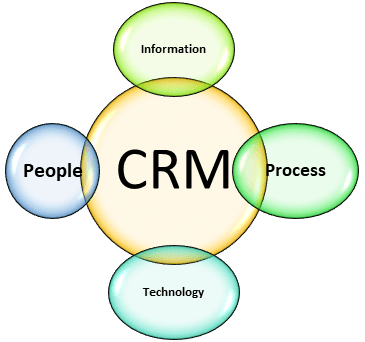
Components of CRM: Information, Process, Technology and People

At the most basic level, CRM software consolidates customer information and documents into a single CRM database so business users can more easily access and manage it.

Over time, many additional functions have been added to CRM systems to make them more useful. Some of these functions include recording various customer interactions over email, phone, social media or other channels; depending on system capabilities, automating various workflow automation processes, such as tasks, calendars and alerts; and giving managers the ability to track performance and productivity based on information logged within the system.

  • Marketing Automation: CRM tools with marketing automation capabilities can automate repetitive tasks to enhance marketing efforts at different points in the lifecycle. For example, as sales prospects come into the system, it might automatically send the prospects marketing materials, typically via email or social media, with the goal of turning a sales lead into a full-fledged customer.
  • Sales force automation: Sales force automation tools track customer interactions and automate certain business functions of the sales cycle that are necessary to follow leads and attract and obtain new customers.
  • Contact center automation: Designed to reduce tedious aspects of a contact center agent’s job, contact center automation might include prerecorded audio that assists in customer problem-solving and information dissemination. Various software tools that integrate with the agent’s desktop tools can handle customer requests in order to cut down on the time of calls and to simplify customer service processes.
  • Geolocation technology, or location-based services: Some CRM systems include technology that can create geographic marketing campaigns based on customers’ physical locations, sometimes integrating with popular location-based GPS apps. Geolocation technology can also be used as a networking or contact management tool in order to find sales prospects based on a location.
  • Workflow automation: CRM systems help businesses optimize processes by streamlining mundane workloads, enabling employees to focus on creative and more high-level tasks.
  • Lead management: Sales leads can be tracked through CRM, enabling sales teams to input, track and analyze data for leads in one place.
  • Human resource management (HRM): CRM systems help track employee information, such as contact information, performance reviews and benefits within a company. This enables the human resource department to more effectively manage the internal workforce.
  • Analytics: Analytics in CRM help create better customer satisfaction rates by analyzing user data and helping create targeted marketing campaigns.
  • AI: Artificial intelligence (AI) technologies, such as Salesforce Einstein, have been built into CRM platforms to automate repetitive tasks, identify customer buying patterns to predict future customer behaviors and more.
error: Content is protected !!