Entrepreneurship Development Objectives Set 2

  1. An individual who starts, creates and manages a new business can be called _____________.
  • A leader
  • A manager
  • A professional
  • An entrepreneur

ANSWER: D

  1. Trademarks relate to _______.
  • Practice and knowledge acquired through experience
  • The protection of proprietary information of commercial value
  • The right to reproduce ones own original work
  • Brand identity

ANSWER: D

  1. Which could provide an individual with the motivation to start a new business venture?
  • The financial rewards.
  • A desire to be independent.
  • Risk taking
  • All the above.

ANSWER: D

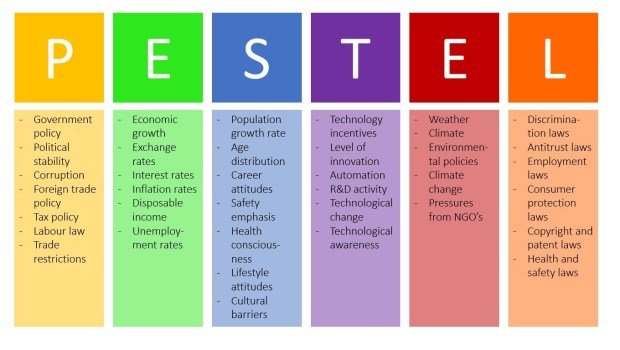
  1. Which of the following factors should not be included in PESTLE analysis?
  • Government re-cycling policy.
  • Proposed reduction in interest rates.
  • Competitor activity.
  • Demographic changes.

ANSWER: C

  1. Which industrial sector promotes small-scale businesses and Entrepreneurship, and has lower barriers to market entry?
  • Service.
  • Manufacturing.
  • Distribution.
  • Agriculture.

ANSWER: A

  1. Why are small businesses important to a country’s economy?
  • They give an outlet for entrepreneurs.
  • They can provide specialist support to larger companies.
  • They can be innovators of new products.
  • All the above.

ANSWER: D

  1. A business arrangement where one party allows another party to use a business name and sell its products or services is known as__________.
  • A cooperative.
  • A franchise.
  • An owner-manager business.
  • A limited company.

ANSWER: B

  1. Which of the following is the reason for business failure __________.
  • Lack of market research.
  • Poor financial control.
  • Poor management.
  • All the above.

ANSWER: D

  1. The use of informal networks by entrepreneurs to gather information is known as _______.
  • Secondary research.
  • Entrepreneurial networking.
  • Informal parameters.
  • Marketing

ANSWER: B

  1. Good sources of information for an entrepreneur about competitors can be obtained from_________.
  • Websites.
  • Product information leaflets.
  • Company reports and published accounts.
  • All the above.

ANSWER: D

  1. A new venture’s business plan is important because ______.
  • It helps to persuade others to commit funding to the venture.
  • Can help demonstrate the viability of the venture.
  • Provides a guide for business activities by defining objectives.
  • All the above.

ANSWER: D

  1. Primary data is________.
  • the most important data.
  • the data that is collected first.
  • new data specifically collected for a project.
  • data that is collected second.

ANSWER: C

  1. Innovation can best be defined as_______.
  • the generation of new ideas.
  • the evolution of new ideas.
  • the opposite of creativity.
  • the successful exploitation of new ideas.

ANSWER: D

  1. Which of these statements best describes the context for entrepreneurship?
  • Entrepreneurship takes place in small businesses.
  • Entrepreneurship takes place in large businesses.
  • Entrepreneurship takes place in a wide variety of contexts.
  • Entrepreneurship does not take place in social enterprises.

ANSWER: C

  1. Entrepreneurs are motivated by _________.
  • money.
  • personal values.
  • pull influences.
  • All the above.

ANSWER: D

  1. Which of the following are described as one of the Big Five personality traits?
  • tolerance of others.
  • need for achievement.
  • propensity to leadership.
  • locus of control.

ANSWER: B

  1. Which of the following is least likely to influence the timing of new business births?
  • Government policies.
  • Profitability.
  • Consumer expenditure.
  • Weather conditions.

ANSWER: D

  1. Which of the following statements is false?
  • Market segmentation is a useful process for small businesses to undertake.
  • Selling is essentially a matching process.
  • A benefit is the value of a product feature to a customer.
  • It is a good idea for small businesses to compete solely on price.

ANSWER: D

  1. The purpose of all good small business strategy is__________.
  • to increase turnover.
  • to increase profitability.
  • to achieve competitive advantage.
  • to achieve stated objectives.

ANSWER: D

  1. Which of the following is a recognized disadvantage of setting up as a start-up as compared with other routes to market entry?
  • less satisfaction of the owners.
  • less help from various agencies.
  • there are more funds required.
  • there is a high failure rate.

ANSWER: D

  1. Someone legally appointed to resolve the financial difficulties of an insolvent firm is called____________.
  • an administrator.
  • a predator.
  • an auditor.
  • a turnaround consultant.

ANSWER: A

  1. Goods or services reach the market place through ________.
  • marketing channels.
  • multilevel pyramids.
  • monopolies.
  • multiplication.

ANSWER: A

  1. To provide financial assistance to entrepreneurs the government has set up a number of___________.
  • financial advisors.
  • financial intermediaries.
  • Industrial estates.
  • financial institutions.

ANSWER: D

  1. State Industrial corporations engage in the development of__________.
  • industrial estates.
  • institutional estates.
  • individual investors.
  • agricultural entrepreneurs.

ANSWER: A

  1. ________ is the first development bank of the country.
  • ICICI.
  • IDBI.
  • SFC.
  • IFCI.

ANSWER: D

  1. IFCI stands for_____________.
  • Industrial finance corporation of India.
  • Institutional finance corporation of India.
  • Industrial funding corporation of India.
  • Indian finance corporation and institution.

ANSWER: A

  1. IFCI has been converted into a________.
  • joint stock company.
  • co-operative society.
  • partnership firm.
  • sole proprietorship.

ANSWER: A

  1. SIDBI was set up as a subsidiary of_________.
  • IDBI.
  • IFCI.
  • ICICI.
  • SFC.

ANSWER: A

  1. Which of the following is a function of SIDBI?
  • Extension of seed capital.
  • Discounting of bills.
  • Providing factoring services.
  • All of the above.

ANSWER: D

  1. SFC is prohibited from granting financial assistance to any company whose aggregate paid up capital exceed__________.
  • 1 crore.
  • 1.5 crores.
  • 2 crores.
  • 2.5 crores.

ANSWER: A

  1. SIPCOT’s financial assistance is in the form of __________.
  • term loan.
  • seed capital scheme.
  • underwriting the capital issues.
  • All of the above.

ANSWER: D

  1. The business development department of SIPCOT guides entrepreneurs in ______.
  • applying for licences.
  • approval on collaboration.
  • allocation of scarce raw materials.
  • All the above.

ANSWER: D

  1. TIIC is sponsored by the__________.
  • Government of Karnataka.
  • Government of Andhra Pradesh.
  • Government of Kerala.
  • Government of Tamil Nadu.

ANSWER: D

  1. In backward areas, term loans for expansion or setting up a new unit are available at __________ .
  • concessional terms.
  • differential terms.
  • standard terms.
  • specific terms.

ANSWER: A

  1. A commercial banker would prefer a ____________ debt-equity ratio over the years as it indicates financial strength of a unit.
  • Declining.
  • Increasing.
  • Stable.
  • Fluctuating.

ANSWER: A

  1. EDPs course contents contains ___________.
  • General introduction to entrepreneurs.
  • Motivation training.
  • Managerial skills.
  • All the above.

ANSWER: D

  1. Entrepreneurial Guidance Bureau(EGB) was set up by____________.
  • SISI.
  • SIPCOT.
  • IIC.
  • SIDCO.

ANSWER: C

  1. _____________ can be defined as a specifically evolved work plan densed to achieve a specific objective within a specific period of time
  • Idea generation.
  • Opportunity Scanning.
  • Project.
  • Strategy.

ANSWER: C

  1. Large investment is made in fixed assets, the project will be termed as __________.
  • Capital Intensive.
  • Labour Intensive.
  • Product Intensive.
  • Market Intensive.

ANSWER: A

  1. PERT stands for __________.
  • Programme Evaluation and Research Techniques.
  • Project Evaluation and Review Techniques.
  • Programme Evaluation and Review Techniques.
  • Project Evaluation and Research Techniques.

ANSWER: C

  1. _____________ is used to accomplish the project economically in the minimum available time with limited resources
  • Project Scheduling.
  • Network Analysis.
  • Budget Analysis.
  • Critical Planning.

ANSWER: A

  1. ______________ is a form of financing especially for funding high technology, high risk and perceived high reward projects
  • Fixed capital.
  • Current capital.
  • Seed capital.
  • Venture capital.

ANSWER: D

  1. In _________, machines and equipments are arranged in the order or sequence in which they are to be used for manufacturing the product
  • Factory Layout.
  • Product Layout.
  • Process Layout.
  • Combined Layout.

ANSWER: B

  1. The term ___________ denotes bonus or financial aid which is given by a government to an industry to help it compete with other units
  • Incentive.
  • Subsidy.
  • Bounty.
  • Concession.

ANSWER: C

  1. he granting of cash subs idy on the capital investment is called __________.
  • Concessional finance.
  • Quantum of Subsidy.
  • Interest Subsidy.
  • Central Investment Subsidy.

ANSWER: D

  1. New Small Scale industries are exempted from the payment of income tax under section 80J is called __________
  • Development Rebate.
  • Investment Allowance.
  • Rehabilitation Allowance.
  • Tax Holiday

ANSWER: B

  1. ____________ is primarily concerned with the identification of the project demand potential and the selection of the optimal technology.
  • Techno-economic analysis.
  • Feasibility analysis.
  • Input analysis.
  • Financial analysis.

ANSWER: A

  1. _____________ refers to some action which is a time consuming effort necessary to complete a specific event.
  • A Network.
  • An Activity.
  • An Event.
  • A Node.

ANSWER: B

  1. _____________ is a graphical representation of the various activity and event relating to a project.
  • Network analysis.
  • Scheduling technique.
  • Logical Model.
  • Network Diagram

ANSWER: D

  1. Activities which must be finished before a given event can occur are termed as _________.
  • Preceeding Activities.
  • Succeeding Activities
  • Concurrent Activities
  • Dummy Activities.

ANSWER: A

  1. Activities which can be accomplished simultaneously are termed as ___________.
  • Preceeding Activities.
  • Succeeding Activities.
  • Concurrent Activities
  • Dummy Activities.

ANSWER: C

  1. EST stands for ____________.
  • Earliest Start Time.
  • Event Start Time.
  • Effective Start Time.
  • Essential Start Time.

ANSWER: A

  1. Additional time which a non-critical activity can consume without increasing the project duration is called _____________.
  • Total Float.
  • Free Float
  • Independent Float.
  • Dependant Float

ANSWER: A

  1. ______________ is an event-oriented approach.
  • CPM.
  • GERT.
  • PERT.
  • WASP.

ANSWER: C

  1. _______________ is an activity-oriented approach.
  • CPM
  • PERT
  • GERT
  • WASP

ANSWER: A

  1. _______________ is the analysis of costs and benefits of a proposed project with the goal of assuming a rational allocation of limited funds.
  • Project formulation.
  • Project evaluation.
  • Project appraisal.
  • Project Design.

ANSWER: C

  1. ______________ may be defined as the excess of present value of project cash inflows over that of out flows.
  • Net present value technique.
  • Average rate of return.
  • Benefit-Cost ratio.
  • Internal rate of return

ANSWER: A

  1. Decisions taken by an entrepreneur on behalf of his enterprise are known as _________.
  • Organizational decisions.
  • Personal decisions.
  • Routine decisions.
  • Strategic decisions

ANSWER: A

  1. Decisions which are concerned with policy matters and exercise fundamental influence on the objectives of the organization are called as____________.
  • Organizational decisions.
  • Personal decisions.
  • Routine decisions.
  • Strategic decisions.

ANSWER: D

  1. __________________ is a problem -solving technique designed to produce numerous ideas in a short period
  • Synectics.
  • Delphi technique.
  • Brain storming.
  • Nominal group technique.

ANSWER: C

61.__________________ is the systematic development of a project idea for the eventual purpose of arriving at an investment decision.

  • Project identification.
  • Project formulation.
  • Project feasibility.
  • Project evaluation.

ANSWER: B

  1. The process of preparing an inventory of skills needed for effective implementation of the project is called as ____________.
  • Economic viability.
  • Financial feasibility.
  • Technical feasibility.
  • Managerial competence.

ANSWER: D

  1. _________________ implies the availability or otherwise of plant and machinery and technical know-how to produce the product.
  • Economic viability.
  • Financial feasibility.
  • Technical feasibility.
  • Managerial competence

ANSWER: C

  1. CPM stands for____________.
  • Continuous Path Method.
  • Clear Path Method.
  • Critical Path Method.
  • Critical Probabilistic Method.

ANSWER: C

  1. _______________ is granted to small scale units under section 33B of the Income tax act, 1961.
  • Depreciation Allowance.
  • Development Debate.
  • Investment Allowance.
  • Rehabilitation Allowance.

ANSWER: D

  1. DGTD stands for __________.
  • Directorate General of Technical Development.
  • District General of Technical Development.
  • District General of Taxation Deduction.
  • Directorate General of Taxation Deduction.

ANSWER: A

  1. A provisional SSI registration certificate is valid for a period of __________.
  • four Years.
  • three Years.
  • two Years.
  • one year.

ANSWER: D

  1. National Alliance of Young Entrepreneurs (NAYE) Sponsored an Entrepreneurial Development scheme with Bank of India in______________.
  • January 1920.
  • August 1920.
  • January 1972.
  • August 1972.

ANSWER: D

  1. Which of the following is not one of the 4 Ms?
  • motivation.
  • management.
  • materials.
  • money.

ANSWER: C

  1. Which of the list below does not form Intellectual Property?
  • Trade marks.
  • Patents.
  • Tangible assets.
  • Copyright.

ANSWER: C

  1. The ‘T’ in a PESTLE analysis refers to ___________.
  • Time.
  • Technology.
  • Training.
  • Talent.

ANSWER: B

  1. A business arrangement where one party allows another party to use a business Name and sell its products or services is known as__________.
  • A cooperative.
  • A franchise.
  • An owner-manager business.
  • A limited company.

ANSWER: B

  1. What is the role of a Business Angel?
  • To provide small business advice.
  • To provide capital for business development in exchange for a stake in the Business ownership.
  • To set up a franchise business.
  • To assist an entrepreneur to open a lifestyle business.

ANSWER: B

  1. A key aspect of the financial section of the business plan is _________.
  • A statement of management skills.
  • A realistic sales forecast.
  • Production capacity.
  • A description of competitors.

ANSWER: B

  1. Which one of the following describes unemployment?
  • The number of people who voluntarily choose not to work.
  • The number of people who are jobless and are actively seeking work.
  • The number of people who are not actively seeking work.
  • The number of people actively seeking work who find work.

ANSWER: B

  1. Idea of new product is tested in potential consumers to determine consumer acceptance at _________ stage.
  • Concept.
  • Product development.
  • Test marketing.
  • Commercialization.

ANSWER: C

  1. Which one of the following is not considered as one of the building blocks of the model entrepreneur?
  • technical skills.
  • management competencies.
  • business awareness.
  • personal attributes.

ANSWER: C

  1. Which of the following factors does the macro-environment not include?
  • political and regulatory factors.
  • customer needs in a given market.
  • social and demographic factors.
  • technological changes.

ANSWER: B

  1. Which of the following statements is false? Electronic commerce:
  • can allow new ventures to compete on more or less equal terms with large firms.
  • can lead to small businesses having reduced contact with its customers.
  • is rarely used in small businesses.
  • is used in many different industries and markets.

ANSWER: C

  1. Strategic entrepreneurial marketing has been summarised as the 4Is: identification of target markets, interactive marketing methods, informal intelligence gathering and what is the fourth?
  • independence.
  • instructiveness.
  • innovation.
  • internet.

ANSWER: C

  1. An entrepreneur who owns more than one business at a time is called ________.
  • an intrapreneur.
  • a corporate entrepreneur.
  • a portfolio entrepreneur.
  • None of the above.

ANSWER: C

  1. Industries producing complete articles for direct consumption & also processing industries is called as_______________.
  • Manufacturing industries.
  • Feeder Industries.
  • Service Industries.
  • Mining or Quarrying.

ANSWER: A

  1. _____________ is primarily concerned with the identification, qualification and evaluation of the project resources.
  • Techno-economic analysis.
  • Feasibility analysis.
  • Input analysis.
  • Financial analysis.

ANSWER: B

  1. LOB stands for____________.
  • Line of Business.
  • Line of Balance.
  • Loss of Business.
  • Loss of Balance

ANSWER: B

  1. Underestimation of project cost leads to ___________.
  • Time under run.
  • Cost under run
  • Time over run.
  • Cost over run

ANSWER: D

  1. New entrepreneurs entering the field of medium industry for the first time can have market studies with the subsidiary of ___________.
  • 75% of the cost or Rs.15000 whichever is less.
  • 75% of the cost or Rs.15000 whichever is high
  • 50% of the cost or Rs.15000 whichever is less.
  • 50% of the cost or Rs.15000 whichever is high

ANSWER: A

  1. Decisions which are concerned with policy matters and exercise fundamental influence on the objectives of the organization are called as____________.
  • Organizational decisions.
  • Personal decisions.
  • Routine decisions.
  • Strategic decisions.

ANSWER: D

  1. Section 80 HHB provides for a deduction of ____________________ of profits and gains earned by a resident Indian company.
  • 65%.
  • 60%.
  • 55%.
  • 50%

ANSWER: D

  1. Decisions which are non-repetitive and novel nature and required to solve unstructured problem is called as ___________.
  • Programmed decisions.
  • Non -programmed decisions.
  • Routine decisions.
  • Strategic decisions.

ANSWER: B

  1. The application for registration of a small scale unit should be submitted to the _______ .
  • General manager, DIC.
  • Director, DIC.
  • General manager. NSIC.
  • Director, NSIC.

ANSWER: A

  1. The type of diversification in which the company adds complementary to the existing product or service line is _________.
  • conglomerate diversification.
  • horizontal integration.
  • vertical integration.
  • concentric integration.

ANSWER: C

  1. Which of the following is not an aspect of appraisal of term loans by commercial banks?
  • Financial feasibility.
  • Technical feasibility.
  • Economic feasibility.
  • Societal feasibility.

ANSWER: D

  1. The type of diversification in which the company adds up same type of products at the same level of production is ____________.
  • conglomerate diversification.
  • horizontal integration.
  • vertical integration.
  • concentric integration.

ANSWER: B

  1. When a firm enters into some business which is related with its present business in terms of technology, marketing or both it is called as _____________.
  • conglomerate diversification.
  • horizontal integration.
  • vertical integration.
  • concentric integration.

ANSWER: D

  1. When a firm enters into business which is unrelated to its existing business both in terms of technology and marketing ______________.
  • conglomerate diversification.
  • horizontal integration.
  • vertical integration.
  • concentric integration

ANSWER: A

  1. District Industries Centres are located ____________.
  • in each district.
  • in each state.
  • only in selected districts.
  • only in selected states.

ANSWER: A

  1. The purpose of soft loan scheme is to encourage units to undertake ___________.
  • modernization of plant and machinery.
  • replacement of plant and machinery.
  • renovation of plant and machinery.
  • all the above

ANSWER: D

  1. Seed capital assistance ___________.
  • a long-term assistance.
  • initial assistance
  • a help for the purchase of seeds.
  • a short-term assistance.

ANSWER: B

  1. EXIM bank is a __________.
  • State-level institution.
  • Regional -level institution.
  • All India institution.
  • International institution.

ANSWER: C

  1. DIC is headed by General Manager in the rank of ___________.
  • Joint Director of industries.
  • Assistant Director of industries.
  • Non-departmental officer.
  • Departmental officer.

ANSWER: A

  1. Institutional agencies grant financial assistance to small scale industries for _________.
  • participation in equity capital only.
  • acquisition of fixed assets.
  • working capital assistance.
  • all of the above.

ANSWER: D

  1. Under section 80J of the income tax act, 1961, small-scale industries are exempted from the payment of income tax on their profits at ___________.
  • 6% p.a.
  • 6% p.m.
  • 5% p.a.
  • 5% p.a.

ANSWER: A

  1. The policy which stressed the role of cottage and small-scale industries for balanced industrial development of the country is ___________.
  • IPR 1940.
  • IPR 1948.
  • IPR 1956.
  • IPR 1977.

ANSWER: B

  1. The policy which emphasized the need of promoting small-scale industries through integrated industrial development is_____________.
  • IPR 1948.
  • IPR 1956.
  • IPR 1977.
  • IPR 1980.

ANSWER: C

  1. The small scale unit wishing to export has to obtain exporters code number from _________.
  • The Reserve Bank of India.
  • The Central Bank of India.
  • Any Regional Bank.
  • Any International Bank.

ANSWER: A

  1. The expenses incurred on the setting up of the enterprise are called as _________.
  • Cost of financing.
  • Cost of promotion..
  • Cost of fixed assets.
  • Cost of current assets.

ANSWER: B

  1. Over – capitalization arises due to___________.
  • excess of assets over the liabilities.
  • excess of liabilities over the assets.
  • actual earnings are lower than the expected earnings.
  • actual earnings are higher than the expected earnings.

ANSWER: C

  1. Under-capitalization arises due to __________.
  • excess of assets over the liabilities.
  • excess of liabilities over the assets.
  • actual capitalization is higher than the proper capitalization.
  • actual capitalization is lower than the proper capitalization.

ANSWER: D

  1. Which of the following leads to over-capitalization?
  • acquiring fixed assets on excessive amounts.
  • under-estimation of initial rate of earnings.
  • using lower-rate of capitalization.
  • under estimation of required funds.

ANSWER: A

  1. Which of the following leads to under-capitalization?
  • raising of more money by issue of shares.
  • acquiring fixed assets on excessive amounts.
  • over-estimation of earnings for enterprise.
  • under-estimation of initial rate of earnings.

ANSWER: D

  1. Business means ________.
  • Commerce.
  • industry and commerce.
  • trade and commerce.
  • selling and buying of goods.

ANSWER: B

  1. A valid definition of a business purpose is to ______.
  • create a customer.
  • maximize profits.
  • serve the society.
  • increase the wealth of the firm.

ANSWER: B

  1. Reserve bank of India is a/an _______.
  • statutory corporation.
  • company limited by guarantee.
  • company limited by shares.
  • unlimited company.

ANSWER: A

  1. A public corporation means _____.
  • public company.
  • government company.
  • statutory corporation.
  • department of union government

ANSWER: C

  1. Promoter is a person who ________.
  • takes part in the incorporation of a company .
  • is a director.
  • is a relative of the managing director.
  • works to publicity to the company.

ANSWER: A

  1. The term Capitalization is used in relation to ______.
  • sole-proprietorship.
  • Partnership.
  • joint stock companies.
  • co-operative societies

ANSWER: C

  1. Which of the following sources is not use for medium term financing?
  • Issue of equity shares.
  • Issue of debentures.
  • Term loans from banks.
  • Sale of current asset.

ANSWER: A

  1. Which of the following securities proves a burden on finances of the company, when company is not earning profits?
  • Equity shares.
  • Preference shares.
  • Redeemable preference shares.
  • Debentures.

ANSWER: D

  1. Investment in which of the following is most risky?
  • Equity shares.
  • Preference shares.
  • Debentures.
  • Land.

ANSWER: C

  1. A project, which may not add to the existing profits, should be financed by _________
  • debentures.
  • preference share capital.
  • equity capital.
  • public deposits.

ANSWER: A

  1. Business risks can be ______.
  • avoided.
  • reduced.
  • ignored.
  • erased.

ANSWER: B

  1. O & M refers to ____________
  • overall efficiency of business.
  • efficiency of office and administrative work.
  • office work measurement.
  • office and management study.

ANSWER: D

  1. The oldest form of business organization is ______.
  • Partnership.
  • sole proprietorship.
  • joint stock company.
  • co-operative undertaking.

ANSWER: B

  1. Memorandum of association of a firm contains _______.
  • rules regarding the internal management of the company.
  • rules regarding the constitution and activities of the company.
  • rules regarding the external management.
  • rules regarding the constitution.

ANSWER: B

  1. A Company is called an artificial person because ____.
  • it does not have the shape of a natural person.
  • it cannot be used in the court of law.
  • it is invisible and intangible.
  • it exists only in contemplation of law.Answer:

ANSWER: C

  1. The charter of a company is its ______.
  • prospectus.
  • statement lieu of prospectus.
  • memorandum of association.
  • articles of association.

ANSWER: A

  1. A person owning and running a small firm, is known as________.
  • A manager-owner.
  • An owner-manager.
  • A professional adapter.
  • An enterprise worker.

ANSWER: B

  1. Which of the following is a characteristic typical of _________?Most entrepreneurs
  • Choose high risk ventures.
  • Choose low risk ventures.
  • Choose moderate (or calculated) risk ventures.
  • Choose no risk ventures.

ANSWER: C

  1. The UK government has implemented a number of policies to encourage Entrepreneurship in schools. One such initiative is _________.
  • Young Enterprise.
  • Youth venture.
  • Young Business.
  • Young Initiative.

ANSWER: A

  1. One of the disadvantages of a franchise business for a franchisee is ________.
  • Lack of independence.
  • Franchise businesses typically have a high failure rate.
  • Lack of brand identity.
  • Training is not normally provided by the franchisor.

ANSWER: A

  1. The Markets and Competitors section of a business plan should contain ____________.
  • A statement of the target market.
  • The size of each market segment.
  • The key characteristics of buyers in each business segment.
  • All the above.

ANSWER: D

  1. As a new company grows, the entrepreneur will need to _________.
  • be responsive to changes in the market.
  • ensure financial controls are maintained.
  • build a management team.
  • all the above.

ANSWER: D

  1. An entrepreneur into the hosiery business found out the reason his hosiery was not selling was due to its color. What could be the best source of this information?
  • Supplier.
  • Retailer.
  • Competition.
  • Government bureau.

ANSWER: B

  1. Entrepreneurship can best be described as _________.
  • a process that requires setting up a business.
  • taking a significant risk in a business context.
  • having a strong vision.
  • a process involving innovation, new products or services, and value creation.

ANSWER: D

  1. ____________, which is included in the project cost, is estimated on the basis of the year when the enterprise breaks even.
  • working capital
  • cost of capital
  • cost of production
  • cost of equity

ANSWER: A

  1. The minimum amount of——————irrespective of such private participation, could be specified at a minimum 17.5 per cent of project costs by lending institutions.
  • bank loans
  • promotors contribution
  • fixed capital
  • working capital

ANSWER: B

  1. __________ set up for the purpose of financing, facilitating, and promoting foreign trade of India.
  • Repco bank
  • SBI
  • EXIM bank
  • HDFC

ANSWER: C

  1. Which of the following is not considered to be a characteristic of a project?
  • An established objective
  • Complex tasks
  • A clear beginning and end
  • Only for internal use

ANSWER: D

  1. Project management is ideally suited for a business environment requiring all of the following except _________.
  • Flexibility
  • Innovation
  • speed
  • Repetability

ANSWER: D

  1. Integration of project management with the organization takes place with the _______________.
  • master budjet
  • strategic plan
  • Process of managing actual projects
  • both b and c

ANSWER: D

  1. The content of the final report typically includes the following topics __________.
  • Executive summary
  • review and analysis
  • recommendations
  • If all the above are correct.

ANSWER: D

  1. Project mission and objectives, procedures and systems used, and organization resources used typically appear in the _____ section of the final project report.
  • Analysis
  • Recommendation
  • lessons learned
  • financial feasibility

ANSWER: A

  1. what are the components of then project report ________.
  • requirement of funds
  • location
  • manpower
  • all the above

ANSWER: D

  1. market potential of the project report includes ________.
  • demand and supply conditions
  • market strategy
  • after sales service
  • all the above

ANSWER: D

  1. Every entrepreneur should draw an _______ for his project to ensure the timely completion of all activities involved in setting up an enterprise.
  • cost structure
  • implementation plan
  • market structure
  • production structure

ANSWER: B

  1. ______________ describes the direction, the enterprise is going in, what its goals are, where it wants to be,and how it is going to get there.
  • project report
  • technical anlaysis
  • market analysis
  • financial analysis

ANSWER: A

  1. Today, many companies are using managerial techniques that are designed to encourage _________.
  • increasing profits
  • legal compliances
  • Ethical behaviour
  • shareholders value

ANSWER: C

  1. Entrepreneurial development is the key to achieve all-round __________ through
  • economic development
  • increase in profits
  • shareholders value
  • business development

ANSWER: A

  1. Swot Analysis is a _____________ tool
  • Conceptual
  • Modern
  • Scientific
  • Traditional

ANSWER: A

  1. NABARD is a Bank for _____________ development
  • Urban
  • Agricultural and Rural
  • Scientific
  • Agriculture and research

ANSWER: B

Project Management Objectives Set 1

Fill in the Blank Types

  1. The probability of completing the project can be estimated based upon the ….Normal distribution curve.
  2. In the initial stage of the project the probability of completing the project is….Low
  3. The entire process of a project may be considered to be made up on number of sub process placed in different stage called the….Work Breakdown Structure (WBS)
  4. Each component of the software product is separately estimated and the results aggregated to produce an estimate for the overall job….Bottom-up
  5. Tool used for comparison of the proposed project to complete projects of a similar nature whose costs are known…..Analogy
  6. Following are the characteristics of Project Mindset…..Time, Responsiveness, Information sharing, Processes, structured planning
  7. Following is (are) the component(s) of risk management…..Risk Assessment, Risk Control, Risk Ranking
  8. “Devising and maintaining a workable scheme to accomplish the business need” is…..Planning process
  9. Controlling the changes in the project may affect….The progress of the project, Stage cost, Project scope
  • The tool(s) for changing a process…..Change Management System (CMS), Configuration Management (CM)
  • A Project is a set of activities which are networked in an order and aimed towards achieving the goals of a project.
  • Resources refers to…. Manpower, Machinery, Materials
  • Developing a technology is an example of…..Project
  • The project life cycle consists of…..Understanding the scope of the project, Objectives of the project, Formulation and planning various activities.
  • The responsibilities of the project manager…..Budgeting and cost control, Allocating resources, tracking project expenditure
  • The phases of Project Management Life Cycle: Analysis and evaluation, Marketing, Design, Inspection, testing and delivery
  • Design phase consist of: Input received, Output received
  1. Project performance consists of…Time, Cost, and Quality
  2. Five dimensions that must be managed on a project: Features, Quality, Cost, Schedule, Staff
  3. Resource requirement in project becomes constant while the project is in its 80% to 95% progress stage.

Choose One Type

Q. Which of these is not one of the constraints of a project?

  1. Scope
  2. Resources
  3. Team
  4. Budget

Q. Which of the following is not correct about initial phase of a project?

  1. The cost associated at the beginning of the project is highest.
  2. Stakeholders have maximum influence during this phase
  3. The highest uncertainty is at this stage of the project.
  4. All the above statements are correct.

Q. The project you are managing has nine stakeholders. How many channel of communications are there between these stakeholders?

  1. 9
  2. 8
  3. 45
  4. 36

Ans: (9*8) / 2 = 36

Q. Which of the following is not an example of formal communication?

  1. Contract
  2. email
  3. Project status report
  4. Status meeting

Q. Project with a total funding of Rs. 100,000 finished with a BAC value of Rs. 95,000. What term can BEST describe the difference of $5,000?

  1. Cost Variance
  2. Management Overhead
  3. Management Contingency Reserve
  4. Schedule Variance

Q. If the Earned Value is equal to Actual Cost, it means:

  1. Project is on budget and on schedule
  2. Schedule Variance Index is 1
  3. There is no schedule variance
  4. There is no cost variance

Comment:  EV – AC = Cost Variance. Therefore if EV = AC, the Cost Variance is zero (i.e. Project is on budget (but not necessarily on schedule, as there is not enough information on schedule variance)

Q. Which of the following is the most important element of Project Management Plan that is useful in HR Planning process:

  1. Risk Management activities
  2. Quality Assurance activities
  3. Activity Resource requirements
  4. Budget Control activities

Comment:  Activity Resource requirements is a primary input to HR Planning. It is used to determine the human resource needs of the project.

Q. Which of the following types of Organizational Charts can be BEST used to track project costs:

  1. Hierarchical-type Organizational Chart
  2. Organizational Breakdown Structure
  3. Resource Breakdown Structure
  4. Responsibility Assignment Matrix

Comment: RBS can be aligned with Organization’s accounting system

Q. Process Analysis is a function of:

  1. Performance Analysis
  2. Quality Metrics
  3. Process Improvement Plan
  4. Quality Improvement Plan

Q. Root Cause Analysis relates to:

  1. Process Analysis
  2. Quality Audits
  3. Quality Control Measurements
  4. Performance Measurements

Q A planning phase for an engineering component generated 80 engineering drawings. The QA team randomly selected 8 drawings for inspection. This exercise can BEST be described as example of:

  1. Inspection
  2. Statistical Sampling
  3. Flowcharting
  4. Control Charting

Q. Amit has joined as the Project Manager of a project. One of the project documents available to Andrew lists down all the risks in a hierarchical fashion. What is this document called?

  1. Risk Management Plan.
  2. List of risks.
  3. Monte Carlo diagram.
  4. Risk Breakdown Structure.

Comment:  Hierarchical description of risks is called Risk Breakdown structure.

Q. During which stage of Risk planning are risks prioritized based on probability and impact?

  1. Identify Risks
  2. Plan Risk responses
  3. Perform Qualitative risk analysis
  4. Perform Quantitative risk analysis

Comment:  Risk probability and impact are defined during Qualitative risk analysis

Q. Activity Definition is typically performed by which of the following:

  1. Project Manager who created the WBS
  2. Project Team Members responsible for the work package
  3. Project Officer
  4. Project Stakeholder

Q. Which of the following does NOT generate changes to the Project documents:

  1. Define Activities
  2. Sequence Activities
  3. Estimate Activity Resources
  4. Estimate Activity Durations

Q. Which of the following may generate a milestone list:

  1. Define Activities
  2. Sequence Activities
  3. Estimate Activity Resources
  4. Estimate Activity Durations

Q. Schedule activity may begin 10 days before the predecessor activity finishes. This is an example of:

  1. Finish-to-Start
  2. Start-to-Finish
  3. Start-to-Start
  4. Finish-to-Finish

Q. Ram Consultancy is planning to buy ten desktops for Rs. 45000 each from a leading computer store. Which type of contract will get signed in this case?

  1. Purchase Order
  2. Cost plus Fee
  3. Fixed cost
  4. Time and Material

Q. Radha is a Project Manager. She is coordinating a bidder conference to allow vendors to get clarification on the work that needs to be performed. Which phase of Project Management is in progress?

  1. Conduct Procurements
  2. Plan Procurements
  3. Control Procurements
  4. Close Procurements

Comment: During the Conduct Procurements process, bidders can clarify their doubts using bidder conference.

Q. The process of Control Procurements falls under which process group

  1. Planning
  2. Closing
  3. Monitoring and Control
  4. Executing

Comment: Control procurement is part of Monitoring and Control process group

Export Trade

Exports are explained as the goods and services manufactured in one country and acquired by citizens of another country. The export of good or service can be anything. This trade can be done through shipping, e-mail, transmitted in private luggage on a plane. Basically, if the product is manufactured domestically and traded in a foreign country, it is known as an export.

In International trade, exports are one of the components. The other component is imported which means the goods and services purchased by a country’s citizens that are manufactured in a foreign country. Both the export and import combined contribute to the country’s trade balance. Whenever the country’s export is more than the import, it is called a trade surplus. However, when the import is more than the export, it is known as a trade deficit.

Exports are the goods and services produced in one country and purchased by residents of another country.1 It doesn’t matter what the good or service is. It doesn’t matter how it is sent. It can be shipped, sent by email, or carried in personal luggage on a plane. If it is produced domestically and sold to someone in a foreign country, it is an export.

Exports are one component of international trade. The other component is imports. They are the goods and services bought by a country’s residents that are produced in a foreign country. Combined, they make up a country’s trade balance. When the country exports more than it imports, it has a trade surplus. When it imports more than it exports, it has a trade deficit.

Objectives of Export Trade

  1. Sale of Surplus Production
  • A country may produce more than it requires.
  • Then, in that case, the surplus may be sold to foreign countries.
  1. Optimum Utilization of Domestic Resources
  • Every country has some natural resources in plenty.
  • These resources can be utilized to increase the production and sell to those countries where these are in shortage.
  1. Employment Opportunities

International business helps the business enterprises to focus on more production which requires more manpower that means more employment opportunities.

  1. Earning of Foreign Exchange

A country with surplus production may earn foreign exchange by selling goods and services to other countries.

  1. Increase the National Income
  • Earning of foreign exchange due to exports add to the national income of a country.
  • This help in improving the standard of living of people.

Exports Affect on Economy

Most countries want to increase their exports. Their companies want to sell more. If they’ve sold all they can to their own country’s population, then they want to sell overseas as well. The more they export, the greater their competitive advantage. They gain expertise in producing the goods and services. They also gain knowledge about how to sell to foreign markets.

Governments encourage exports. Exports increase jobs, bring in higher wages, and raise the standard of living for residents.

As such, people become happier and more likely to support their national leaders.

Exports also increase the foreign exchange reserves held in the nation’s central bank. Foreigners pay for exports either in their own currency or the U.S. dollar. A country with large reserves can use it to manage their own currency’s value. They have enough foreign currency to flood the market with their own currency. That lowers the cost of their exports in other countries.

Countries also use currency reserves to manage liquidity. That means they can better control inflation, which is too much money chasing too few goods. To control inflation, they use the foreign currency to purchase their own currency. That decreases the money supply, making the local currency worth more.

Export Marketing

Globalization and e-commerce have all contributed to a recent influx in international trade. What used to only be attainable by large-scale businesses is now accessible to small companies and those in the business of resale. Products and services are often performed internationally at greatly reduced costs, making international expansion and production outsourcing a suitable option for businesses. But many people still don’t understand the benefits of global business in their industry, and even for those who do, they struggle to find where to start.

Export marketing is the practice by which a company sells products or services to a foreign country. Products are produced or distributed from the company’s home country to buyers in international locations. But there is a difference between products that are available to foreign countries and products that are specifically marketed to foreign customers. This where the importance of an export marketing plan comes in.

Businesses today are often doubling or tripling products by expanding to product sales on an international level. But you can’t assume that foreign markets will be as interested in your product as local customers. Cultural differences, shipping costs and transit time, politics, and international trade policies all contribute to a marketing communication barrier between suppliers and foreign buyers.

So why do you need export marketing? Simply put: Google translate is not enough. You need to know the buying behaviors, interests, and needs of your foreign customers. All of this can be addressed in an export marketing plan. An export marketing plan is created to address a specific strategy that can be utilized to make product both available and enticing to international buyers.

The only difference between an export marketing plan and a regular marketing plan is the location in interest. The same type of market research performed for locating an optimal domestic market must be completed on an international scale. Here is how an export marketing plan should be built.

  1. Foreign Country Selection

The first and most obvious step in building an export marketing plan is selection of a country. While this is the “simplest” step, it is also the most crucial. Start by focusing on continents. Although every country is different, many cultural differences and buying behaviors can be attributed to continents as a whole. After selecting a continent, do some research on the top 3 locations of your preference. This should give you more insight into what country you should sell to.

  1. Natural Conditions Research (Optional)

The relevance of this factor will depend greatly on the product you are selling. Information such as the weather, land size, environment, ease of mobility (mountains, roads, etc.), and various other factors will all contribute to the success of your international expansion. For example, selling perishable goods to mountainous regions where transport is difficult may mean your products will expire before they are sold.

  1. Socioeconomic Research

This should go without saying, but your products must fit the socioeconomic demographics of the region you plan on selling to. Fashion clothing may be too expensive for certain countries in Africa or Asia. The quality of materials you build your product with may have to change in an international market in order to accommodate the benchmark prices and quality of goods in the foreign location.

Define first what class of consumers you plan on selling to. Lower-class, middle-class, upper-class, and businesses will all have different price point and quality expectations, and these may not reflect those of U.S. standards.

  1. Competitor Landscape

This is the one place in which competition is good. International business and trade has existed for hundreds of years – any profitable international business endeavor that has a promising return has already been done. Thus, you can use the density of competition in a foreign country to disseminate whether or not it is a profitable industry to be in.

Make sure that your competition density research comprises research on local companies in the foreign country as well as international businesses. Just because there is a market for, say, tires in China doesn’t mean that there is a profitable market for foreign tire manufacturers to sell there. See if any companies in your home country are selling the same type of product or service in the country of question.


Global trade and international expansion offer can offer great returns to businesses. However, it can also mean steep losses and costs. Keep in mind: there is a major difference between making your products available to international buyers and marketing to specific international markets. Addressing the latter is your only chance at success in international expansion. Export marketing can help to do this.

Development an Export Marketing Plan

Every successful marketing plan begins with thorough market research. Your first market research project is usually the toughest because it’s all unfamiliar terrain. But once you have collected the data you need to predict how a specific type of product will sell in a specific geographic location, you can use the information over and over again as a guideline for exports of similar products. As you build your personal information database on global markets and learn to keep yourself up-to-date on developments in international trade, it will become less of a chore to determine where to take your product.

You will find that market research is a powerful tool for exploring and taking control of your global territory.

Here is a good way to get started and organized: Keep the research summary to one page, and break it into four manageable parts. The purpose of this exercise is to establish a broad scope of your research market analysis but not so broad that you overwhelm yourself. Try to begin with the end in mind: Where do you want to go and how will you know that you have arrived?

  1. Explore the Top Three Overseas Markets That Appear to Have the Best Potential for Your Product or Service Offering

You can conduct market research online, meet in person with an international trade, or you can test your product or service by exhibiting at a local (domestic) trade show. Trade shows provide potential customers from all over the world without you having to analyze a thing. For example, if you sell hardware tools and exhibit at a hardware show, you might get a lot of interest from attendees from a particular foreign market, such as Australia. Then you know there must be a market there, for why else would these attendees be asking for information? From there, you can address those inquiries, learn as you grow, and conduct further research.

  1. Analyze the Market Factors and Conditions in Each of the Selected Countries

Delve into each country further by reviewing cultural attributes, geographical characteristics, political stability, demographic characteristics, market size, and growth rates. The goal here is to conduct a sound assessment of a foreign market.

What might the barriers be? What makes it a good market to enter? How will the local culture influence the sales of your product or service offering?

Such in-depth market research information is necessary for sound marketing decisions, and it must be done with each new market entry.

  1. Determine the Pros and Cons of Conducting Business in Each Market

Look at potential language barriers, legal restrictions, logistical challenges, and payment problems that might get in the way of doing business in a particular market. Include all relevant variables in your assessment.

Analyze your strengths and weaknesses in a selected market. Will your product or servicing offering be in the low, middle or high-end pricing level? Is there a similar product or service offering currently available in the selected market? If so, who is making it? Where are they based? Can you compete? Why would you? How would you? The more pros you have for entering a new market, the better your chance of success. If you can draw on the perspective of a native (better yet, an actual prospective customer) of the country where you are keenly interested in doing business, then do so. Nothing beats an on-the-ground assessment.

  1. Select One Market and Get Going

Now you are ready to interpret your findings in light of the stated objective: Where do you want to go and how will you know that you have arrived? At this juncture, you should have enough data and experience (e.g., the trade shows) to decide which market is best for you to begin. Hold the other two country options for future market entry, and don’t go there until after you have proven success with the first overseas market. If the first selected market doesn’t work right away, say after six months or a year, move on to the second market, and so on. Don’t muddy the waters. You don’t want to do too many things at once because you might end up not doing any one thing right.

  1. Final Note

The most difficult aspect of developing an export plan is determining the demand for a product or service offering in a foreign country. It’s one thing to know a product can be sold in a market – after all, that’s why you selected a particular market. However, it is a different ballgame when it comes to forecasting how much you can sell and over what timeframe. Assume that demand for a product develops in direct proportion to economic development in each country. This might be a useful way to think about it, especially when data might be unknown.

Import Trade

The import trade is referred to goods and services purchased into one nation from another. The word “import” originates from the word “port” considering the fact that the products are frequently transported via ship to foreign countries. Similar to exports, imports are also the backbone of international trade. Here, if the expense of a country’s imports is more than the value of its exports than the country has a negative balance of trade (BOT), which is also known as a trade deficit.

Every country import goods and services that the domestic country cannot manufacture, maybe because the country cannot produce effectively or cheaply like another exporting country. Few countries sometimes also import commodities and raw materials which are not available on their premises. For instance, many nations import oil they cannot manufacture it locally or cannot provide sufficient to meet the demand.

Objectives of Import Trade

  1. To Speed Up Industrialization

Developing countries import scarce raw materials, capital goods and advanced technology required for rapid industrial development.

  1. To Meet Domestic Demand

The goods which are in demand but are not available in the country are imported.

  1. To Overcome Natural Disasters

During drought, flood, earthquake and other natural calamities country import food grains and other essential commodities to prevent starvation.

  1. To Improve Standard of Living

Imports enable consumers in the home country to enjoy a wide variety of products of high quality.

It helps in improving the standard of living of masses.

  1. To Ensure National Defence

The importer must get the receipt of credit from his concerned bank and send it to the foreign supplier.

Important Steps Involved in a Typical Import Transaction

  1. Trade Enquiry and Sending Quotations
  • The domestic buyer who wishes to buy the goods from the other country sends an inquiry relating to price, desired quality, terms, and conditions for the export of goods.
  • The exporter sends a reply to the inquiry in the form of ‘Quotation’.
  • The quotation is also known as ‘Proforma Invoice’ which contains information about the selling price, quantity, quality, mode of delivery, etc.
  1. Procurement of Import License

Goods can be imported only upon the license, the importer requires to obtain an import license.

  1. Obtaining Foreign Exchange
  • The overseas supplier asks payment in a foreign currency.
  • Payment requires the exchange of Indian currency into foreign currency.
  • In India, transaction related to foreign exchange are governed by Reserve Bank of India (RBI) under the Exchange Control Department.
  1. Placing Order or Indent

After the receipt of the ‘Quotation’, if the prospective buyer finds the information suitable to him, he places the ‘Order/Indent’ for the import of goods.

  1. Obtaining Letter of Credit

The importer must get the receipt of credit from his concerned bank and send it to the foreign supplier.

  1. Arrangement of Finance

The importer makes the finance settlements in advance to remunerate to the exporter when the shipment arrives at the destination.

  1. Receipt of Shipment Advice
  • After storing the consignment on the ship, the foreign supplier sends the shipment advice to the importer.
  • The shipment advice includes data about the shipment of products such as:
  • Invoice number
  • The landing or airways bill date and number
  • Name of the ship with date
  • Port or Destination of export
  • Classification of goods and quantity
  • Date of the sailing of the vessel.
  1. Arrival of Goods

The overseas supplier dispatches the Goods as per the contract.

  1. Customs Clearance and Release of Goods
  • In India, all the imported goods have to have a clearance from customs after they pass the Indian borders.
  • When the ship arrives at the port, the importer has to obtain a delivery order/endorsement for delivery on the back of the bill of lading from the concerned shipping company.

Import Procedures and Documentation

Import is a very important function of our economy. It is one of the most regulated sectors of our economy.

Import Procedure

  1. The initial step engaged in importing a product is to accumulate information about the nations and firms which send out the item required by the exporter. It can be accumulated from trade directories, trade organizations, and associations. The exporter readies a quotation otherwise called Performa Invoice and sends it to the importer.
  2. The Importer Consults the export-import (EXIM) Policy in power, all together to know whether the merchandise that he/she needs to import are subjected to import licensing or not.
  3. In the situation of an import transaction, the provider resides in a foreign nation and subsequently requests the installment of foreign cash. This includes the trade of Indian Currency into foreign money. The Exchange Control Department of the Reserve Bank of India (RBI) manages foreign trade exchange in India. According to rules, each merchant needs to secure the sanction of foreign trade.
  4. The importer puts in an import request or indents with the exporter for the supply of merchandise. The request contains information with respect to cost, quality, quantity, size and grade of goods instructions with respect to packaging, delivery shipping, a method of payment and so on.
  5. At the point when the payment terms concur between the importer and the overseas provider, the importer gets the letter of credit from its banker and forwards it to the overseas provider.
  6. The importer arranges for money in advance to pay the exporter on arrival of goods at the port this empowers the importer to avoid huge penalties on the imported goods lying uncleared at the port for the need of payment.
  7. The overseas supplier after loading the merchandise on the ship dispatches the “Shipment Advice” to the importer. It gives information with respect to the shipment of goods like receipt number, bill of lading/airway bill, the name of the ship with date description of merchandise and amount and so forth.

Furthermore,

  1. After dispatching the merchandise, the abroad exporter hands over the different documentation like an invoice, bill of lading, insurance certificate of origin to his banker for their forward transactions to the importer when he receives the bill of exchange drawn by the provider. The acknowledgment of a bill of exchange by the importer to get a confirmation of delivery is known as the retirement of import documents.
  2. At the point when the sent merchandise comes in the importer’s nation, the individual accountable for the merchandise conveys the officer in control at the dock or the airport about it. The individual responsible for the ship or airway gives the report with respect to import.
  3. Imported merchandise are subjected to customs which is an exceptionally extensive process and includes a considerable time to complete. The importer more often than not appoints a C&F operator for completing these customs.

Essentially, the merchant acquires a delivery order which is otherwise called an endorsement for delivery. This order allows the importer to take to take the delivery of merchandise subsequent to pay the cargo charges.

Importer likewise needs to pay dock dues for getting port trust dues receipts for which he submits two duplicates filled in the form is known as “application to import” to the Landing and “Delivering Dues Office”. Subsequent to paying dock dues the importer gets back one copy of the application as a receipt which is called as ‘port trust levy receipts’.

At long last, the importer fills in a frame known as ‘bill of entry’ for appraisal of customs import duty. An inspector inspects the merchandise and gives his report regarding the bill of entry. This bill is then introduced to the port administration which on getting the important charges, issues the discharge arrangements.

Documents Used in an Import Transaction

Common documents required for import customs clearance procedures and formalities in some of the importing countries.

  1. Bill of Entry

Bill of entry is one of the major import document for import customs clearance. As explained previously, Bill of Entry is the legal document to be filed by CHA or Importer duly signed. Bill of Entry is one of the indicators of ‘total outward remittance of country’ regulated by Reserve Bank and Customs department. Bill of entry must be filed within thirty days of arrival of goods at a customs location.

Once after filing bill of entry along with necessary import customs clearance documents, assessment and examination of goods are carried out by concerned customs official. After completion of import customs formalities, a ‘pass out order’ is issued under such bill of entry. Once an importer or his authorized customs house agent obtains ‘pass out order’ from concerned customs official, the imported goods can be moved out of customs. After paying necessary import charges if any to carrier Documents required for import customs clearanceof goods and custodian of cargo, the goods can be taken out of customs area to importer’s place.

  1. Bill of Lading / Airway bill

BL/AWB is one of the documents required for import customs clearance.

Bill of lading under sea shipment or Airway bill under air shipment is carrier’s document required to be submitted with customs for import customs clearance purpose. Bill of lading or Airway bill issued by carrier provides the details of cargo with terms of delivery. I have discussed in detail about Bill of Lading and Airway bill separately in this website. You can go through those articles to have a deep knowledge about documents required for import customs clearance.

  1. Import License

As I have mentioned above, import license may be required as one of the documents for import customs clearance procedures and formalities under specific products. This license may be mandatory for importing specific goods as per guide lines provided by government. Import of such specific products may have been being regulated by government time to time. So government insist an import license as one of the documents required for import customs clearance to bring those materials from foreign countries.

  1. Insurance certificate

Insurance certificate is one of the documents required for import customs clearance procedures. Insurance certificate is a supporting document against importer’s declaration on terms of delivery. Insurance certificate under import shipment helps customs authorities to verify, whether selling price includes insurance or not. This is required to find assessable value which determines import duty amount.

  1. Purchase order/Letter of Credit

Purchase order is one of the documents required for import customs clearance. A purchase order reflects almost all terms and conditions of sale contract which enables the customs official to confirm on value assessment. If an import consignment is under letter of credit basis, the importer can submit a copy of Letter of Credit along with the documents for import clearance.

  1. Technical write up, literature etc. for specific goods if any

Technical write up, literature of imported goods or any other similar documents may be required as one of the documents for import clearance under some specific goods. For example, if a machinery is imported, a technical write up or literature explaining it’s function can be attached along with importing documents. This document helps customs official to derive exact market value of such imported machinery in turn helps for value assessment.

  1. Industrial License if any

An industrial license copy may be required under specific goods importing. If Importer claims any import benefit as per guidelines of government, such Industrial License can be produced to avail the benefit. In such case, Industrial license copy can be submitted with customs authorities as one of the import clearance documents.

  1. RCMC (Registration cum Membership Certificate)

For the purpose of availing import duty exemption from government agencies under specific goods, production of RCMC with customs authorities is one of the requirements for import clearance. In such cases importer needs to submit Registration Cum Membership Certificate along with import customs clearance documents.

  1. Test report if any

The customs officials may not be able to identify the quality of goods imported. In order to assess the value of such goods, customs official may draw sample of such imported goods and arranges to send for testing to government authorized laboratories. The concerned customs officer can complete appraisement of such goods only after obtaining such test report. So test report is one of the documents under import customs clearance and formalities under some of specific goods.

  1. DEEC/DEPB /ECGC or any other documents for duty benefits

If importer avails any duty exemptions against imported goods under different schemes like DEEC/DEPB/ECGC etc., such license is produced along with other import clearance documents.

  1. Central excise document if any

If importer avails any central excise benefit under imported goods, the documents pertaining to the same need to be produced along with other import customs clearance documents.

  1. GATT/DGFT declaration

As per the guidelines of Government of India, every importer needs to file GATT declaration and DGFT declaration along with other import customs clearance documents with customs. GATT declaration has to be filed by Importer as per the terms of General Agreement on Tariff and Trade.

Read More: https://indiafreenotes.com/international-trade-procedures-and-documentation/

EXIM Policy, Objective

EXIM Policy, short for Export-Import Policy, outlines a country’s strategies and regulations governing the import and export of goods and services. It serves as a roadmap for promoting international trade and economic development by establishing guidelines for tariffs, quotas, subsidies, and other trade-related measures. The main objectives of an EXIM policy typically include enhancing export competitiveness, reducing import dependency, attracting foreign investment, and fostering economic growth. By providing clarity and direction to businesses and policymakers, EXIM policies aim to facilitate trade, stimulate investment, and create a conducive environment for sustainable economic development.

Objectives of EXIM Policy:

  • Promoting Export Competitiveness:

One of the primary goals of an EXIM policy is to enhance the competitiveness of domestic goods and services in international markets. This may involve providing incentives, subsidies, or assistance to exporters, as well as implementing measures to improve the quality and efficiency of export-oriented industries.

  • Facilitating Import Substitution:

EXIM policies often aim to reduce dependency on imported goods by promoting domestic production and manufacturing. This may involve imposing tariffs or quotas on certain imports, providing incentives for domestic industries, or implementing measures to improve productivity and efficiency.

  • Attracting Foreign Direct Investment (FDI):

Encouraging foreign investment is another objective of many EXIM policies. By creating an attractive investment climate through regulatory reforms, tax incentives, and other measures, countries aim to attract foreign capital to support export-oriented industries and stimulate economic growth.

  • Achieving Balance of Payments Stability:

EXIM policies seek to achieve a balance between exports and imports to ensure stability in the country’s balance of payments. This may involve implementing trade restrictions, promoting export diversification, or managing currency exchange rates to prevent trade imbalances.

  • Fostering Economic Growth and Development:

EXIM policies play a crucial role in driving economic growth and development by promoting trade, investment, and industrialization. By supporting export-oriented industries and fostering entrepreneurship, countries aim to create jobs, generate income, and improve living standards.

  • Enhancing Technology Transfer and Innovation:

EXIM policies may encourage technology transfer and innovation by facilitating collaboration and partnerships between domestic and foreign firms. This can help domestic industries adopt advanced technologies, improve productivity, and enhance their competitiveness in global markets.

  • Promoting Regional and Bilateral Trade Relations:

Many EXIM policies aim to strengthen regional and bilateral trade relations through the negotiation of trade agreements, free trade zones, and preferential trade arrangements. By fostering closer economic ties with trading partners, countries seek to expand market access and create opportunities for mutual trade and investment.

  • Ensuring Compliance with International Trade Norms:

EXIM policies often seek to ensure compliance with international trade norms and agreements, such as those established by the World Trade Organization (WTO). This may involve harmonizing trade regulations, resolving trade disputes, and participating in multilateral trade negotiations to promote a rules-based global trading system.

History of EXIM Policy of India:

  • Pre-Independence Era:

Before India gained independence in 1947, its trade policies were heavily influenced by colonial rule. The British Raj controlled India’s trade, primarily for the benefit of the colonial power. India’s trade was characterized by the export of raw materials and agricultural products to Britain and other colonies, while imports consisted largely of manufactured goods.

  • Post-Independence and Import Substitution:

After independence, India pursued a policy of import substitution industrialization (ISI), aimed at reducing dependency on imports by promoting domestic industrialization. The government imposed high tariffs and import restrictions to protect domestic industries and encourage self-sufficiency in manufacturing.

  • Liberalization in the 1990s:

In response to economic crises and mounting pressure from international financial institutions, India began to liberalize its economy in the early 1990s. The government initiated a series of economic reforms, including trade liberalization measures such as tariff reductions, exchange rate reforms, and dismantling of trade barriers.

  • Introduction of EXIM Policy:

The first EXIM Policy of independent India was announced in 1992-1997, marking a significant departure from the previous era of import substitution. The policy aimed to promote exports, attract foreign investment, and integrate India into the global economy. It introduced various export promotion schemes, incentives for exporters, and simplified export procedures to boost India’s competitiveness in international markets.

  • Evolution and Amendments:

Since the introduction of the first EXIM Policy, there have been several revisions and amendments to reflect changing economic conditions and global trade dynamics. Subsequent EXIM Policies, now referred to as Foreign Trade Policies (FTPs), have continued to focus on export promotion, import facilitation, and trade facilitation measures.

  • Modernization and Digitization:

In recent years, India’s EXIM Policy has undergone modernization and digitization to streamline trade processes, enhance transparency, and reduce transaction costs. The introduction of online platforms and electronic documentation systems has facilitated trade procedures and improved efficiency in customs clearance and export-import transactions.

  • Alignment with Global Trade Norms:

India’s EXIM Policy has been aligned with international trade norms and obligations under various multilateral agreements, including those of the World Trade Organization (WTO). The policy aims to balance India’s trade interests while promoting compliance with international trade rules and commitments.

Institutions Connected With EXIM Trade

The primary aim to set up machinery for consultation is to create the required forum and environment for consulting various quarters interested and engaged in foreign trade.

It facilitates to develop a dialogue between Government, industry and the entrepreneurs, at various levels, to discuss varied problems faced by the enterprises and suggest necessary measures to solve the problems. Export is a dynamic industry and faces stiff international competition. It requires innovation, flexible approach and expeditious action to catch the swift changes that emerge as new opportunities. Further, orientation in attitude has to be developed to visualize and anticipate the changes that may overtake the scene. Equally, appropriate Government policies are important to support for rapid growth in international trade. To gear up with the changes, exporter needs guidance and assistance at different stages of export effort. For this purpose, Government has set up several institutions whose function is to support exporter in his endeavors. Institutions that are engaged in expo falls in six distinct tiers. The set-up is:

Department of Commerce

Primary Government agency responsible for formulating and directing Foreign Trade Policy and programs including establishing relations with other countries where needed

Board of Trade

Mechanism to maintain continuous dialogue with trade and industry for appropriate policy measures and corrective action by Government

Commodity specific organizations

Tackling problems connected with individual commodities and groups of commodities Service Institutions Assist exporters to expand their operations to reach world markets more effectively Government Trading organizations

Handling export/import of specified commodities & supplementing efforts of private enterprises in export promotion and import management

Government Policy Making and Consultations

The following bodies are involved in policy making and consultation process:

  1. Department of Commerce

Ministry of Commerce is the apex ministry at the central level to formulate and execute India’s foreign trade policy and to initiate various exports promotional measures. e main functions of the Ministry are formulation of international commercial policy, negotiation of trade agreements, formulation of export-import policy and their implementation. has created a network of commercial sections in Indian embassies and high commissions various countries for export-import trade flows. It has set up an “Exporters’ Grievances dressal Cell” to assist exports in quick redressal of grievances. The department of Commerce, in the Ministry of Commerce, has been made responsible for India’s external trade and all matters connected with the same. This is the main organization to formulate and guide India’s foreign trade, formed with the responsibility of promoting India’s interest in international market. The Department of Commerce has six divisions and their functions are as under:

  • Trade Policy Division: To keep abreast of the developments in the International organizations like UNCTAD, WTO, the Economic Commissions for Europe, Africa, Latin America and Asia and Far East
  • Foreign Trade Territorial: Development of trade with different countries and regions of the world
  • Export Products Division: Problems connected with production, generation of surplus and development of markets for the various products under its jurisdiction
  • Export Industries Division: Development and Regulation of tobacco, Rubber and cardamom.
  • Export Services Division: Export promotion activities relating to handlooms, textiles, woolens, readymade garments, silks, jute and jute products, handicrafts, coir and coir products Problems of Export Assistance
  • Economic Division: Formulation of exports strategies, Export planning, Periodic appraisal and Review of policies
  1. Board of Trade

It has been set up on May 5, 1989 with a view to provide an effective mechanism to maintain continuous dialogue with trade and industry in respect of major developments in the field of international trade. It provides regular consultation, monitoring and review of India’s foreign trade policies and operations. The board has the representatives from commerce and other important Ministries, Trade and Industry Associations and Export Services Organizations. It is an important national platform for a regular dialogue between the Government and trade and industry. The deliberations in the Board of Trade provide guidelines to the Government for appropriate policy measures for corrective action.

The Minister of Commerce is the chairman of the Board of Trade. The official membership includes Secretaries of the Ministries of Commerce and Industry, Finance (Revenue), External Affairs (ER), Textiles, Chairman of ITPO, Chairman/MD of ECGC, MD of Exim Bank and Deputy Governor of Reserve Bank of India. The non-official members are President of FICCI, ASSOCHAM, CH, FIEO, All India Handloom Weavers Marketing Co-operative Society.

Cabinet Committee regular and effective monitoring of India’s foreign trade performance and related policies

  1. Empowered Committee of Secretaries

For speedier and quicker decision making, an Empowered Committee of Secretaries has been set up to assist the Cabinet Committee on Exports.

5. Grievances Cell

Grievances Cell has been established to entertain and monitor disposal of grievances and suggestions received. The purpose is to redress the genuine grievances, at the earliest. The grievance committee is headed by the Director General of Foreign. Trade. At the State level, the head of the concerned Regional Licensing authority heads the grievances committee. The committee also includes representatives of FIEO, concerned Export Promotion Council/ Commodity Board and other departments and organisations. The grievances may be addressed to the Grievances Cell, in the prescribed proforma.

  1. Director General of Foreign Trade (DGFT)

DGFT is an important office of the Ministry of Commerce to help formulation of India’s Export4mport formulation policy and implementation thereof. It has set up regional offices in almost all the states and Union territories. These offices are known as Regional Licensing Authorities. The Regional Licensing offices also act as Export facilitation centres.

  1. Ministry of Textiles

This is another ministry of Government of India which is responsible for policy formulation, development, regulation and export promotion of textile sector including sericulture, jute and handicrafts etc. It has a separate Export Promotion Division, advisory boards, development corporations, Export Promotion Councils and Commodity Boards. The advisory hoards have been set up to advise the government in the formulation of the overall development programmes in the concerned sector. It also devises strategy for expanding markets in India and abroad. The four advisory boards are as under:

(a) All India Hand loom Board

(b) All India Handicrafts Board

(c) All India Power loom Board

(d) Wool Development Board.

There are Development Commissioners, Handicrafts and Handlooms who advise on matters relating to development and exports of these sectors. There are Textile Commissioner and Jute commissioner who advise on the matters relating to growth of exports of these sectors. Textile committee has also been set up for ensuring textile machinery indigenously, especially for exports.

  1. Institutional Framework

Export Promotion Councils and Commodity Boards have been established with the objective of promoting and strengthening commodity specialization. They are the key institutions in the institutional framework, established in India for export promotion.

Export Promotion Councils: There are 19 Councils covering different products. These Councils advise the Government the measures necessary to facilitate future exports growth, assist manufacturers and exporters to overcome various constraints and extend them full range of services for the development of overseas market. The councils also have certain regulatory functions such as the power to de-register errant and defaulting exporters. An idea of the functions of the Export Promotion Council can be had from understanding some of the functions of the Engineering Export Promotion Council. Some of their functions are:

(a) To apprise the Government of exporters’ problems;

(b) To keep its members posted with regard to trade inquiries and opportunities;

(c) To help in exploration of overseas markets and identification of items with export potential;

(d) To render assistance on specific problems confronting individual exporters;

(e) To help resolve amicably disputes between exporters and importers of Indian engineering goods and (f) to offer various facilities to engineering exporters in line with other exporting countries.

Over the years, the role of Export Promotion Councils has reduced to traditional liaison work and has lost their importance. Now, the procedures connected with the foreign trade are more simplified. So, they have to redefine their role to offer concrete market promotional and consolidation programmes and services to their members.

Commodity Boards: There are 9 statutory Boards. These Boards deal with the entire range of problems of production, development, marketing etc. In respect of these commodities concerned, they act themselves as if they are the Export Promotion Councils. These Boards take promotional measures by opening foreign offices abroad, participating in trade fairs and exhibitions, conducting market surveys, sponsoring trade delegations etc.

  1. States’ Cell

This has been created under Ministry of Commerce. Its functions are to act as a nodel agency for interacting with state government or Union territories on matters concerning export or import from the state or Union territories. It provides guidance to state level export organizations. It assists them in the formulation of export plans for each state.

  1. Development Commissioner, Small Scale industries Organization

The Directorate has the headquarter in New Delhi and Extension Centres are located in almost all the States and Union Territories. They provide export promotion services almost at the door steps of small-scale industries and cottage units. The important functions are:

  • To help the small scale industries to develop their export capacities
  • To organize export training programmes
  • To collect and disseminate information
  • To help such units in developing their export markets
  • To take up the problems and other issues related to small-scale indus Corporation tries Besides, there are Directorates of Industries, National Small Scale Industries exports from small-scale industries.

MNCs Meaning, Features, Types, Merits and Demerits

Multinational Corporations (MNCs) are large companies that operate in multiple countries beyond their original or home country. These corporations have a global approach to markets and production or service facilities outside their country of origin. MNCs are characterized by their vast size, large number of employees, and substantial volume of sales and assets across various nations. They engage in international business by exporting, importing, investing in foreign direct investment (FDI), and producing goods or services in several countries. MNCs play a significant role in globalization, contributing to the exchange of technology, capital, and employment across borders. They are influential actors in the global economy, often involved in setting industry standards and practices worldwide. Through their operations, MNCs can impact international trade patterns, economic policies, and labor markets in the countries where they operate.

Features of MNCs:

  • Global Presence:

MNCs operate in multiple countries across various regions and continents, establishing a global footprint in their operations, sales, and supply chains.

  • Diverse Operations:

MNCs engage in diverse business activities, including manufacturing, sales, research and development, and marketing, often tailored to local market needs and regulations.

  • Complex Organizational Structure:

MNCs typically have complex organizational structures, with headquarters in one country and subsidiaries, branches, or affiliates in multiple other countries. This structure allows them to coordinate and manage their global operations efficiently.

  • Large Scale:

MNCs are often large-scale enterprises with significant assets, revenues, and market capitalization. Their size enables them to leverage economies of scale and compete effectively in global markets.

  • Technological Innovation:

MNCs are often at the forefront of technological innovation, investing heavily in research and development to develop new products, processes, and technologies.

  • Global Supply Chains:

MNCs rely on complex global supply chains to source raw materials, components, and labour from different countries, optimizing efficiency and minimizing costs.

  • Cultural Sensitivity:

MNCs operating in multiple countries must navigate diverse cultural and regulatory environments. They often demonstrate cultural sensitivity by adapting their products, services, and marketing strategies to local customs, preferences, and regulations.

  • International Talent Pool:

MNCs attract talent from around the world, employing individuals with diverse backgrounds, skills, and experiences to support their global operations.

  • Political Influence:

MNCs wield significant economic and political influence, often engaging with governments and international organizations to shape policies, regulations, and trade agreements that affect their business interests.

  • Corporate Social Responsibility (CSR):

Many MNCs prioritize CSR initiatives, addressing environmental sustainability, social welfare, and ethical business practices in the countries where they operate.

Types of MNCs:

  • Global MNCs (GMNCs):

These companies operate with a centralized home office and have subsidiaries in multiple countries. The strategy, decision-making, and core functions are centralized, but they adapt their products or services to fit local market demands. They aim to maintain a strong global brand image with some local customization.

  • Transnational MNCs (TMNCs):

Transnational corporations operate on a global scale but are highly integrated and responsive to local markets. They combine global efficiency with local flexibility by decentralizing their operations, production, and marketing strategies to meet specific needs in each country they operate.

  • International MNCs:

These companies primarily operate in their home country but export products and services to other countries. They may have some overseas sales offices or facilities, but their central focus and strategic decisions are made in the home country. The international model is often the first step towards becoming a more fully integrated MNC.

  • Multidomestic MNCs (MDMNCs):

Multidomestic corporations have a presence in multiple countries but operate their subsidiaries almost like local companies. Each subsidiary acts independently of the others, focusing on adapting to local conditions and making its own strategic decisions. This model allows for high responsiveness to local preferences and practices.

  • Regional MNCs:

These companies operate in several countries within a geographical region. They tailor their strategies to exploit regional market similarities and differences, often to leverage regional trade agreements and economic zones. Their operations, while international, are not global but focus on a specific region, like Southeast Asia or the European Union.

  • Ethnocentric MNCs:

Ethnocentric MNCs adopt a home-country orientation, meaning they prioritize their home operations and use their domestic business strategies as a model for international operations. These firms believe that their home country’s business practices are superior and should be replicated in their subsidiaries abroad.

  • Polycentric MNCs:

In contrast to ethnocentric MNCs, polycentric ones adopt a host-country orientation, where each subsidiary operates independently and develops its own business and marketing strategies that are tailored to the local environment. The headquarters allows subsidiaries considerable autonomy in their operations.

  • Geocentric MNCs:

These corporations adopt a world-oriented view, looking for the best approaches and people regardless of nationality. They integrate operations and strategies across multiple countries, striving to utilize global efficiencies while being responsive to local markets. This approach combines the benefits of global integration with local responsiveness.

Merits of MNCs:

  • Economic Growth Stimulation:

MNCs often contribute significantly to the economic growth of the host countries by investing capital, creating jobs, and enhancing the skills of the local workforce through technology transfer and managerial expertise.

  • Employment Creation:

By establishing operations in multiple countries, MNCs create direct and indirect employment opportunities, which can help reduce unemployment rates and improve living standards in those areas.

  • Technology Transfer:

MNCs are known for facilitating the transfer of technology to developing countries, which can improve productivity and competitiveness of the local industries.

  • International Trade Expansion:

MNCs play a crucial role in expanding international trade by exporting and importing goods and services to and from the host countries, thereby integrating them into the global market.

  • Product and Service Innovation:

With their significant investment in research and development, MNCs contribute to product and service innovation, bringing advanced and improved offerings to the markets they operate in.

  • Access to International Markets:

MNCs open up opportunities for local companies in the host countries to access international markets through their global networks, partnerships, and supply chains.

  • Infrastructure Development:

In many cases, MNCs invest in developing the infrastructure of the host countries, including transportation, communication, and energy, which can have long-term positive effects on those economies.

  • Cultural Exchange:

The global presence of MNCs facilitates cultural exchange and understanding, promoting diversity and inclusion in the workplace and beyond.

  • Corporate Social Responsibility (CSR):

Many MNCs engage in CSR activities, contributing to social welfare, environmental sustainability, and community development projects in the countries where they operate.

  • Competition and Efficiency:

The entry of MNCs can lead to increased competition in local markets, which can improve efficiency, lower prices, and enhance the quality of products and services for consumers.

Demerits of MNCs:

  • Profit Repatriation:

MNCs often repatriate a significant portion of their profits to their home countries, which can lead to capital outflow from host countries and reduce the overall economic benefit.

  • Market Dominance:

MNCs can dominate the markets in which they operate, outcompeting local businesses due to their superior resources, technology, and economies of scale. This can hinder the development of local industries and reduce market diversity.

  • Labour Exploitation:

In some cases, MNCs have been accused of exploiting workers in developing countries by paying low wages, enforcing poor working conditions, and undermining labor rights to maximize profits.

  • Environmental Degradation:

MNCs’ operations can contribute to environmental degradation through resource depletion, pollution, and unsustainable practices, especially in countries with lax environmental regulations.

  • Cultural Erosion:

The global presence of MNCs can lead to cultural homogenization, where local cultures and traditions are overshadowed by global brands and Western consumer culture.

  • Political Influence:

MNCs can wield significant political influence to shape policies and regulations in their favor, sometimes at the expense of public interest and national sovereignty.

  • Tax Avoidance:

MNCs often employ sophisticated strategies to minimize their tax liabilities through transfer pricing, offshore tax havens, and other means, reducing their tax contributions to host countries.

  • Economic Dependence:

Host countries can become overly dependent on MNCs for investment, employment, and technology, which can make them vulnerable to the corporations’ business decisions, such as plant closures or relocation.

  • Social Disparities:

The operations of MNCs can contribute to social disparities by offering higher wages and better working conditions to a small segment of the population, often exacerbating income inequality.

  • Security Concerns:

In some instances, the strategic interests of MNCs in certain industries, such as natural resources or critical infrastructure, can raise national security concerns for host countries.

Indian Companies vs Global MNCs

The Indian IT industry has grown very rapidly in the last few years. The IT services exports has grown from $1,100 mn in 1996-97 to $12,500 mn in 2003-04. Nasscom-McKinsey has projected IT services exports from India to be $57 bn in 2008. There are a whole lot of interesting issues resulting from this growth. One of them is the evolution of the multinationals and the Indian IT companies. What makes it interesting is the fact that both have undergone significant evolution over the years. While the MNCs are becoming more localized in the Indian market, the Indian companies are fast adopting a global outlook.

Multinationals companies are the ones that are headquartered somewhere else and have an operation in India. Some familiar names include IBM, HP, Accenture, EDS and CSC. On the other hand, some of the Indian companies include TCS, Infosys, Wipro, Satyam and HCL. Let us take a look at how the two are placed vis-Ã -vis each other with their respective strengths and weaknesses.

Till about 2001, the two used to live in different worlds. The Indian IT companies did some on site body shopping, small low-end projects and some project work, done remotely. On the other hand, the global MNCs, till 2001, had a good going. They had pretty much a monopoly on things like outsourcing, Intellectual Property in IT industry, consulting, etc. They did a lot of big projects and had long-term relationships with clients. There was limited price competition between them as each one had its own niche. So, for the big projects there was hardly any competition for them and the margins were also high.

But,

Today if one looks at where the two are, the situation has changed quite a bit. While the Indian companies are increasingly enhancing their global presence, the global MNCs are increasingly leveraging India in world sourcing.

If one looks at the headcount of the top 5 Indian IT companies-TCS, Wipro, Infosys, HCL and Satyam-it is somewhere around 40,000 for the first three tier one companies and immediately followed by tier two companies at about 20,000 employees. This compares very favourably with anybody in the world. CSC has around 90,000 people, of which about half are dedicated to doing government work. So, on the commercial side, which is where the Indian companies are competing, CSC’s total staff is only about 45,000 people. Looking at their size in terms of number of people, Indian companies are ramping up very fast and growing. The growth in terms of headcount for Tata has been almost 30% over the last 3 years. This is where the competition is going to be.

Even though revenue wise they are much smaller when compared with the multinationals, that is also is growing rapidly. In terms of profits: the profits for the top 5 Indian IT companies last year grew at somewhere around 20-30%.

Furthermore, the Indian companies are now listed on the New York Stock Exchange and most of them are on Nasdaq. By having a listing there they are not only getting visibility but also access to low cost capital, as the cost of capital in the US is very low as compared to India. They are having phenomenal Price Earning (PE) ratios. The top tier companies are commanding the kind of PE that Silicon Valley startups command. Even in terms of market capitalization, the top Indian companies compare very favourably with anybody.

The Indian companies are not serving some small shops, but the best including the Fortune 50 and Fortune 100. Maybe, the relationships are at a lower level today, but it can be leveraged to get more business from them… They are also fast establishing global presence in terms of operations. These companies have been showing positive signs on the acquisitions front as well. TCS, Wipro, and Infosys etc. have made a lot of acquisitions of foreign companies in the last two years. But, the sizes of their acquisitions are still small when compared with the size of acquisitions that an American company with similar kind of market cap.

The Indian companies are expanding their global outlook and reach and setting up centers globally in the US, China, Japan, Malaysia, Czech Republic, etc. For instance, Infosys plans to have around 25% local staff by 2012, TCS is asking every employee to learn a foreign language and Wipro CEO’s main office is in the US. So, in another couple of years, we’ll have MNCs which are of foreign origin and MNCs which are of Indian origin.

Some of the key strengths of the Indian companies vis-Ã -vis the foreign MNCs is that these companies can take a longer term perspective as they don’t have as much stock market pressure as the typical American companies. Furthermore, in the West, every successful company piles up a lot of debt and that is how they are able to leverage and do acquisitions. Indian companies are not doing as many acquisitions and as a by-product of that have very strong financials. Another factor working in favour of the Indian companies is their flexibility, as they are not wedded to an approach. They are also investing for the future-in training and process maturity. By contrast, the multinationals have a short-term orientation, quarter-to-quarter focus, lack of much India experience, higher cost structure in India and higher sales cost.

However, the multinationals score over the Indian companies in terms of their size, financial muscle, and visibility. Even their relationships are typically at the CEO level, whereas the Indian companies’ relationships with customers are largely at the CIO or lower level.

Multinationals are now enhancing their local presence. Most understand the change in environment and are building and leveraging their India resources, using India as the main offshore option, scaling up offshore strength, doing acquisitions in India, pursuing local markets, providing end-to-end services from offshore, involving offshore in client facing roles and pricing aggressively. Many of them are also using profit center and direct selling approaches. Companies like IBM, HP, Accenture, CSC and even other IT MNCs like Keane, Perot, Convergys are increasingly ramping up their Indian operations in terms of their head count and customer base. India is becoming an integral part of their global sourcing strategy, they are promoting India in the large deals and are investing including in acquisitions. While initially they were tentative, these companies now understand that India is the name of the game and the good results are further reinforcing their strategy.

The net result of this evolution is that the differences between the Indian companies and global MNCs are getting blurred in the short term but the gap will widen in the long term. One can even expect three and possibly five Indian companies in the top 10 IT services companies in terms of profitability by the end of the decade, possibly in terms of revenue also. But the MNCs will certainly gain and remain strong in the longer term with their sheer size and ability to grasp humongous opportunities globally.

error: Content is protected !!