Affiliate Marketing

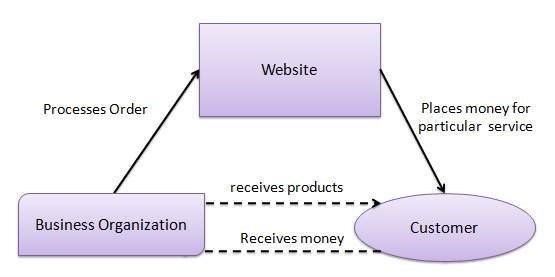
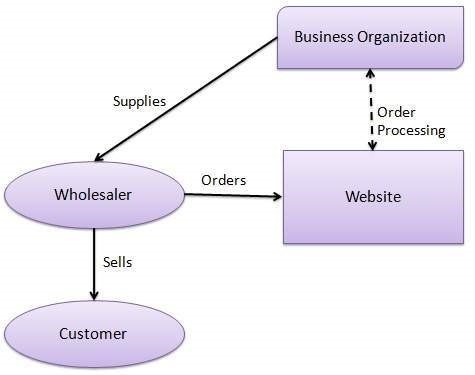
Affiliate marketing is a type of performance-based marketing in which a business rewards one or more affiliates for each visitor or customer brought by the affiliate’s own marketing efforts.

Structure

The industry has four core players:

  • The merchant (also known as ‘advertiser’ or ‘retailer’ or ‘brand’)
  • The network (that contains offers for the affiliate to choose from and also takes care of the payments)
  • The publisher (also known as ‘the affiliate’)
  • The customer

The market has grown in complexity, resulting in the emergence of a secondary tier of players, including affiliate management agencies, super-affiliates, and specialized third party vendors.

Affiliate marketing overlaps with other Internet marketing methods to some degree because affiliates often use regular advertising methods. Those methods include organic search engine optimization (SEO), paid search engine marketing (PPC – Pay per Click), e-mail marketing, content marketing, and (in some sense) display advertising. On the other hand, affiliates sometimes use less orthodox techniques, such as publishing reviews of products or services offered by a partner.

Affiliate marketing is commonly confused with referral marketing, as both forms of marketing use third parties to drive sales to the retailer. The two forms of marketing are differentiated, however, in how they drive sales, where affiliate marketing relies purely on financial motivations, while referral marketing relies more on trust and personal relationships.

Affiliate marketing is frequently overlooked by advertisers. While search engines, e-mail, and web site syndication capture much of the attention of online retailers, affiliate marketing carries a much lower profile. Still, affiliates continue to play a significant role in e-retailers’ marketing strategies.

Performance/affiliate marketing

In the case of cost per mille/click, the publisher is not concerned about whether a visitor is a member of the audience that the advertiser tries to attract and is able to convert because at this point the publisher has already earned his commission. This leaves the greater, and, in case of cost per mille, the full risk and loss (if the visitor cannot be converted) to the advertiser.

Cost per action/sale methods require that referred visitors do more than visit the advertiser’s website before the affiliate receives a commission. The advertiser must convert that visitor first. It is in the best interest of the affiliate to send the most closely targeted traffic to the advertiser as possible to increase the chance of a conversion. The risk and loss are shared between the affiliate and the advertiser.

Affiliate marketing is also called “performance marketing“, in reference to how sales employees are typically being compensated. Such employees are typically paid a commission for each sale they close, and sometimes are paid performance incentives for exceeding objectives. Affiliates are not employed by the advertiser whose products or services they promote, but the compensation models applied to affiliate marketing are very similar to the ones used for people in the advertisers’ internal sales department.

The phrase, “Affiliates are an extended sales force for your business“, which is often used to explain affiliate marketing, is not completely accurate. The primary difference between the two is that affiliate marketers provide little if any influence on a possible prospect in the conversion process once that prospect is directed to the advertiser’s website. The sales team of the advertiser, however, does have the control and influence up to the point where the prospect either a) signs the contract, or b) completes the purchase.

B2B Marketing

Business-to-business “B2B” refers to commerce between two businesses rather than to commerce between a business and an individual consumer. Transactions at the wholesale level are usually business-to-business while those at the retail level are most often business-to-consumer (B2C).  

Recognizing Business-to-Business

The dollar value of business-to-business transactions is significantly higher than business-to-consumer activity because businesses are more likely to purchase higher priced goods and services and purchase more of them than consumers are. A bicycle manufacturer, for example, will purchase a truckload of bicycle tires or a coffee manufacturer will buy a massive, industrial bean grinder. Compare that with what’s purchased by a biking enthusiast or the individual coffee aficionado.

How Business-to-Business Selling is Different

Selling to a business is different from selling to an individual consumer. Key sales and marketing differences for business-to-business transactions include:

  • Selling sometimes requires participating in a bidding process by responding to a purchaser’s request for proposals. On the business-to-consumer side, this compares to asking various auto dealers to provide their best offer on a specific make and model.  
  • The decision-making process on a purchase can take days, weeks, or months, depending on how the purchasing company works and the size and nature of the order.  
  • Purchasing decisions are often made by committees, so each member needs to be educated and “sold.” 
  • The dollar value of goods or services sold is much higher than on the consumer or retail level, so the buyer needs to take steps to minimize risk. That sometimes involves requesting a product prototype or customization.  

Business-to-Business Doesn’t Exclude Business-to-Consumer

A company selling to businesses can also sell directly to consumers. A bead manufacturer selling its beads in bulk to costume jewelry manufacturers might also package them in smaller quantities sold to crafters at craft stores. A telephone manufacturer can sell in bulk to companies or one at a time to consumers shopping online or at an office supply store. A firm that provides health and wellness consulting to corporations can also advise individuals one-on-one or in group presentations.

It’s About the Customer, Not the Transaction Size

While business-to-business transactions often involve high prices and volume, they can also happen on a much smaller scale when a small business sells products or services to another small business. The hallmark of business-to-business commerce then, is the participants – two businesses rather than a business and a consumer.

The exploitation of social media marketing in case of businesses is also different from the one used for the customers. On the other hand, digital marketing, in the case of B2C, is all about entertainment and fun for selling products and services.

  1. Past vs. Present

In the past, there were much more differences between these two types of marketing strategies because the primary method of research and point of contact differed greatly. The ground level basis was used by marketers to reach the customers. On the other hand, businesses used to be more formal and restricted in their methods of reaching out.

But today, the situation is completely different; both the businesses and the consumers are capable of working and researching their problems on the internet. A whole new expanse has opened up the opportunity for reaching out and making contact with potential new customers. In the realm of digital marketing, the method of reaching out and contact is nearly identical. A few significant changes suggest that the marketers have to make use of industry jargons for excellent effects on B2B platforms. The B2B marketing process is designed for efficiency and expertise seeking audiences. The B2B purchase process is more rational and logical as compared to the emotionally triggered consumer choices in case of B2C marketing.

  1. B2B vs. B2C Audience 

The B2B buyers are top managers or owners of their respective companies. They are more sophisticated and gain an in-depth understanding of the service being offered by the marketers from an organisational perspective. They have an interest in a particular offer with an objective to grow their own company. Therefore, the marketers, when conveying a message through digital media, have to define how the managers or business owners can boost profits, save money and stay competitive in the long run using their product. In such case, the content must have to be thoroughly researched, and the marketers are required to give the audience a reason to utilise their product and service being marketed before it’s too late.

However, typical B2C buyers look for the best price available. They tend to purchase from the most trusted retailer. So, in this case, the marketing content and the website have to convey a feeling of confidence and security to the buyer. That is why the design of the site and the substance matters the most. The consumers are likely to opt for trusted sources for purchase. Therefore, in the case of B2C marketing, the digital marketers have to give priority to trust, security and brand loyalty.

  1. Size of the Market

The size of the market is another important consideration in the field of digital marketing. When we talk about B2C marketing, the target market is larger and takes a major sector of the public, i.e., millions of customers are included in this case. On the other hand, in B2B marketing, you are targeting a particular niche, i.e., the number of clients is in thousands only. Hence, the differences in the size of the markets for both cases suggest that the content has to be appealing to the particular market that the company is aiming to target.

  1. Marketing Material – Thought Leader or Entertainer? 

B2B marketing means you must have to understand the operational activities of the organisations which you are targeting. It is also essential to know who will be looking at your content and website. In B2B sector, there is a tremendous thrust for knowledge because the business owners are focused on growth and expansion of their companies. Your product will get an active appreciation if it is capable enough to contribute to their development. You have to provide the marketing material to lay out the foundation about how your product and services can save time, money and resources of your client. To captivate B2B customers, you must have to provide the relevant content which the businesses are actively searching for, and relate it with your offerings.

Whereas, B2C marketing is all about entertainment. Your customers are not going to follow the posts having too much of sales pitch. Only the genuinely exciting, emotional and funny content can keep the masses happy and content. In the case of B2C marketing, the marketers must have to utilise the social media channels with a personalized and lively touch. By just being a mere faceless corporate entity will only make you lose a significant number of customers in the long run.

From a client’s perspective, B2B and B2C both are just types of marketing to people like you and me. However, being a professional doesn’t mean that you cannot have fun. Marketing to the public does not say you cannot take advantage of B2B methods. Though both are different, you can utilise both at the same time.

  1. Social Media Matters

B2B digital marketing strategy has a slightly different perspective involving long term relationship when compared to the social media strategy in B2C digital marketing. B2C companies flock to Facebook to reach wider audiences, on the other hand, B2B companies gravitate towards LinkedIn as a way to establish networks with active connections. In B2B digital marketing, the utilization of newer and trendier social media networks like Snapchat is not suitable in any way because teenage consumers are the possible demographics of this type of social platform. I am not saying that B2B marketers do not or should not use Facebook for promotional activities. My point is that they have to opt for the best social media marketing approach that targets the exact relevant audience for them.

  1. B2B Marketing Builds Relationships 

The ultimate target of B2C marketing is to ‘sell’ the products and services to target consumers. On the other hand, B2B marketers tend to look for ways to establish long term ongoing relationships with their customers. The main aim of B2B marketing is to focus on generating lead and keeping up the long term relationship through emails, blogging and other strategies. B2B is all about building trust and sharing information with each other. It means that the marketers should communicate with their contacts for building a mutually beneficial relationship.

  1. Businesses Want Facts 

B2C marketing requires making use of various exciting videos and tweets to entertain the target audiences. However, in the case of B2B marketing, the sole purpose of marketers is to spread information. The target market of corporate buyers includes industry savvy customers, and they seek information that can help them to grow their businesses. Facts and figures drive business customers. They want logic instead of a typical advertising strategy. If you are building an online media campaign, then it is important to keep in mind the interests and needs of your customers. Try to use info graphics, factual links and statistical reports to back up your claims.

  1. Sales Cycle

Capturing the attention of your audience in both cases is entirely different from each other. In the case of B2B marketing, the marketers try to capture the attention of smaller markets over the longer period as compared to the marketing done in the case of B2C approach. The sales cycle in case of B2C marketing is relatively lower than the sales cycle in case of B2B. Similarly, business transactions need more consideration as compared to B2C operations and require a high level of trust and bond between the customer and the supplier. The sales cycle for B2B typically starts with driving traffic to the website for finding potential clients. Whereas, the B2C sales cycle is based on a single step purchase. In this case, the customer wants a brand to be perfect. So, for B2C marketing, you should give your clients a reason to buy your product.

  1. Brand Value

By providing a branded content, the organizations want to create a favourable impression on their consumers. A little piece of an interesting content sufficiently evokes an emotional and political responsiveness among the customers. For instance, Procter & Gamble is successfully creating a forward thinking impression on its consumers. It markets products for entertainment and opts for emotional response option from them. This behavior reflects their B2C digital marketing strategy. On the other hand, in the case of B2B digital marketing, the marketers tend to provide a general overview. For this purpose, e-Books, whitepapers and other forms of downloads, such as template and documents, can be used to add more worth to your brand. These valuable sources incredibly contribute in enhancing your brand promotions. 

Moreover, to increase brand value, developing online public relations is considered as an integral part of B2C marketing, but it is not sufficient in the case of B2B marketing. In the case of B2C marketing, the marketers strive to get mentioned in various industry publications and blogs for to be read by their target audiences. In this instance, applying some fruitful strategy for media coverage can be a better option. Other than that, you can communicate via interviews, arrange meetings and write advertorials to increase your PR. Whereas, in the case of B2B marketing, a routine surveillance of industry related media outlets is required to enhance public relations.

  1. B2B Content is More Accurate and Industry-Driven

The content is an integral part of digital marketing. Whether it is B2B marketing or B2C marketing, content plays a significant role in marketing and advertising your brand over the internet. While sharing or writing the content for B2C audiences, the marketers should have to keep it short. They need to make it as much humorous and catchy as possible to appeal a large number of readers. On the contrary, in the case of B2B marketing, a more detailed, informative and lengthy content is required because the marketers are expected to show off their digital expertise, they have to inform and inspire their prospective buyers.

By using B2B EC, business can reengineer their supply chain and partnership. B2B will offer access to following types of information.

  • Product: rice, sales history etc.
  • Customers: Sales history and forecast.
  • Suppliers: Product line and lead-time, sales terms and conditions.
  • Product process: Capacity, product plan.
  • Competitors: Market share, product offerings.
  • Sales and marketing: Promotions.
  • Supply chain process: Quality, delivery time etc.

The following are the ways in the world that are being adopted with the help of B2B EC.

Electronic Marketing

B2B platform can be used to sell the company’s product and services to business customers on the Internet. This model can be called seller oriented marketing because customers visit the web site that the supplier has prepared. Certain group’s items, such as industrial equipment are purchased only by businesses.

Procurement Management

From the purchasing company’s point of view, B2B is a medium of facilitating procurement management such as reduced prices and reduced cycle time. To implement B2B from the procurement management point of view the buyer-oriented market place can be used where the buyer announces the RFQ to the potential suppliers for competitive purchasing. To the suppliers, participating to the customers oriented marketplace and winning the bid is the major concern.

Electronic intermediaries

Individual consumers and business purchases a group of items such as books, stationery and personal computers, in such cases the consumers and business buyers can share the intermediary. Certain items such as industrial equipments and parts are purchases only by business. Since the purchasing party is a business who has to deal with many suppliers and intermediaries, an integrated and tailored buyer’s directory linked suppliers and intermediaries is needed.

Just in time

JIT delivery of parts to manufacturing buyers is crucial to realize JIT manufacturing. Direct marketing requires an internal JIT manufacturing system; the JIT delivery and advanced confirmation of supplier’s inventory are essential elements for B2B.

Electronic Data Interchange

EDI is the electronic exchange of specially formatted standard business documents such as orders, bills approval of credit, shipping details and confirmation sent between business partners. The EDI translator is necessary to convert the proprietary data into standard format. Internet based EDI is an important technology for B2B EC.

Advantages of B2B

  • Its is cost reduction technique for the company so as to overcome mediator
  • With advancement in technology B2B can be done with the help of Electronic commerce.
  • With the help of online auction the buyer of industrial goods can get the product at a cheap deal, as there are many competitors in an online auction.
  • With E-Com electronic funds transfer-using EDI can be done between to organizations.
  • B2B helps in lowering the cost for selling and marketing.
  • It also shortens the selling cycle.
  • The most important advantage of B2B is to have JIT just in time delivery, the company can have the track of good as to which place it has reached with the help of electronic commerce.

Transactions conducted through the internet between one business to another is called Business 2 Business. This type of business is carried out only through the internet. This business covers all types of organizations, right from auctioneers to business solution providers. This also includes business-business shopping and sales as well as provision of various services. With the advancement of technology with each and everyday, business transactions are carried out more easily and effectively as well as in a faster and efficient way.

Paper has been replaced by technology which makes the process easier and faster. In the United States of America alone, business to business has generated revenue of more than 7 trillion. Speed and Efficiency is very important in today’s competitive world, no matter what kind of businesses organizations conduct, and business to business has proven to be a big success because of the speed and efficiency. Businesses act with more speed and efficiency satisfying their customers which has proved to be an integral part of today’s B2B business. Moreover the growing resources of online services are helping business grow faster in every possible business area.

B2C Marketing

The term business-to-consumer (B2C) refers to the process of selling products and services directly between consumers who are the end-users of its products or services. Most companies that sell directly to consumers can be referred to as B2C companies.

B2C became immensely popular during the dotcom boom of the late 1990s when it was mainly used to refer to online retailers who sold products and services to consumers through the Internet.

As a business model, business-to-consumer differs significantly from the business-to-business model, which refers to commerce between two or more businesses.

Understanding Business-to-Consumer

Business-to-consumer (B2C) is among the most popular and widely known of sales models. The idea of B2C was first utilized by Michael Aldrich in 1979, who used television as the primary medium to reach out to consumers.

B2C traditionally referred to mall shopping, eating out at restaurants, pay-per-view movies, and infomercials. However, the rise of the Internet created a whole new B2C business channel in the form of e-commerce or selling of goods and services over the Internet.

Although many B2C companies fell victim to the subsequent dot-com bust as investor interest in the sector dwindled and venture capital funding dried up, B2C leaders such as Amazon and Priceline survived the shakeout and have since seen great success.

Any business that relies on B2C sales must maintain good relations with their customers to ensure they return. Unlike business-to-business (B2B), whose marketing campaigns are geared to demonstrate the value of a product or service, companies that rely on B2C must elicit an emotional response to their marketing in their customers.

B2C Business Models in the Digital World

There are typically five types of online B2C business models that most companies use online to target consumers.

  1. Direct sellers. This is the most common model, in which people buy goods from online retailers. These may include manufacturers or small businesses, or simply online versions of department stores that sell products from different manufacturers. 
  2. Online intermediaries. These are liaisons or go-betweens who don’t actually own products or services that put buyers and sellers together. Sites like Expedia, Trivago, and Etsy fall into this category.
  3. Advertising-based B2C. This model uses free content to get visitors to a website. Those visitors, in turn, come across digital or online ads. Basically, large volumes of web traffic are used to sell advertising, which sells goods and services. Media sites like the Huffington Post, a high-traffic site that mixes in advertising with its native content is one example. 
  4. Community-based. Sites like Facebook, which builds online communities based on shared interests, help marketers and advertisers promote their products directly to consumers. Websites will target ads based on users’ demographics and geographical location.
  5. Fee-based. Direct-to-consumer sites like Netflix charge a fee so consumers can access their content. The site may also offer free, but limited, content while charging for most of it. The New York Times and other large newspapers often use a fee-based B2C business model.

Advantages:

Catalog Inflexibility: The direct ‘link’ has enough potential to showcase content information and other visual images that already prevail on websites belonging to multiple clients.

Quite interestingly, we’ve been given the liberty to adjust our e-catalog whenever it’s feasible, it includes the addition of the new products and making amendments in their prices accordingly. Unlike, traditional print catalogues, it consumes less amount of time.

It possesses various searching options to assort the items, corporate and division names, partners and even the manufacturer’s label to fulfill the desired needs.

Shrinks The Competition Gap: Minimal marketing and advertisement expense along with openings through which we can compete with high-profile companies in terms of price, quality and availability of the products

Unlimited Market Place: It exhibits unlimited marketplace by enabling the customers to explore and shop as per their convenience. It should be in our best interest that we can check on the desired services from home, offices and anywhere else without the stress of following a restricted timeframe.

We can purchase the products at a global level from every corner of the world. It means that the internet has broken the international barriers and has given us the opportunity to stash various items and equipment without the need of being at the shops in person.

24 Hours Store Reduced Sale Cycle: No need to make excessive amount of phone calls and descriptive e-mail messages.

Lower Cost of Doing Business: The B2C has reduced a number of business components including, employees, purchasing cost, mailing confirmations, phone calls, data entry and the requirement for opening up stores with physical existence. It has influenced and declined the transaction costs for the customers.

Removing Third Party Clients: We have the liberty to sell our products directly to the customers without the need of involving third party clients in the middle of the process.

Business Administration Made Easier: It has made it easier to record store inventory, shipment, logs and overall business transactions compared with the traditional ways of business administration.
These aspects of business are now being calculated automatically with utmost accuracy for the online entrepreneurs. Moreover, it provides real-time update feature through which we can explore all the latest happenings in our business.

Frees Your Staff: Runs our business setup without having the customer service and sales support department.

Customers Appreciate It: The sales process is handed over to the customers. Enhances customer-base and their loyalty level.

More Efficient Business Relationships: Building new and improved associations with the dealers and suppliers.

Work flow Automation: This process gives us an edge over shipping products in a timely manner. Furthermore, it automatically adjusts the stock levels and figures out location availability with a ballistic speed. Highly reliable security system with step by step verification, account entry and admiration mode to look after the business transactions.

The third party direct sales are backed up with familiar banking and accounting features that enable us to reach out to our vendors and perform internal business transactions accordingly.

Disadvantages:

Catalog Inflexibility: However, it is important to reorganize the catalog upon adding new information and products respectively.

Infrastructure: Even though, it provides a massive customer reach and breaks the international barriers by calling people out on the same platform, but the fact remains unchanged. According to a research, a total number of 26 million people in the world are deprived of using a stable internet connection. It should be in our best interest that some portion of the world is still unable to witness our value added services and this issue will take some time to resolve.

Competition: Indeed, the competition is severe since there are millions of online brands and services that can put our business at a stake in terms of customer base. There are certain companies that have managed to maintain a great market share giving them a chance to survive in the long run. We must understand the importance of introducing new and improved products in the world of internet to acquire the best response from the customers.

Limited Product Exposure: It is worth mentioning that in spite of rewarding the customers with ease of access and a unique level of flexibility for choosing products, the e-commerce has restricted the product exposure for the buyers over the internet. Most websites wouldn’t allow customers to go beyond the glamorous product images and their descriptions at the time of purchasing the product. It gives us an ideal that e-commerce is supporting ‘limited product exposure’, which is why some products disappoint the customers at the time of shipment and are sent back to the companies immediately.

e-commerce branding Strategies

  1. Design your brand

It is all about perceptions and senses. Nike sells sport shoes, but what the client is really buying is an idea. For the most successful companies in the world, products are just an excuse. What they actually sell you is their own identity, related it to some specific values and lifestyles. If you thought that branding was all about graphic design, get that idea out of your head now. The truth is that branding is everywhere, from the way you execute your services to the tone used in your emails.

  • Define who you are: write a list of adjectives that describe your shop’s personality, as if it were a person. Think about it, what do you offer that other shops don’t? What are your strong points?
  • Define your target audience: identify your ideal client, make it clear to which audience your product is directed. Do not compete on prices, not everyone is ready for what you are offering. Think about yourself as a Ferrari dealer. Most people cannot afford it, which in no way makes you less valuable, but rather the opposite.
  • Define your style: apart from from the previous two ideas, decide how you want to be thought of. What emotions do you want to arouse? What values do you want to be associated with? Now you are ready to portray all of those ideas through some graphic design by creating your logo, defining your colours and your corporate typography.
  1. Add value using content marketing

Nobody is going to buy from your shop on their first visit ‘just because’. You must offer content that is both valuable and interesting to your client. Make sure to upload content regularly, whether it be a written blog post, a video on your YouTube channel, or creating an audio podcast through Sound cloud, Ivoox or ITunes.

  1. Plan your email marketing strategy

Many online shops think they need to be on every new social media site in order to strengthen their brand, but the reality is that it is email that continues to drive sales. It is essential that your website allow people to subscribe and that you keep growing your contact list so that clients receive your content in their inboxes. A good strategy is to add a Lead Magnet to your site . That is to say, some related content that people can download in exchange for subscribing to your email list. It could be an eBook, for example.

  1. Get the most out of copywriting

Offering free useful items is great, but don’t forget that your main goal is still the same: to sell . Make sure you plan all of your newsletter texts and landing pages in accordance with the persuasive methods of copywriting . Focus on the problem that you are going to solve for your client, convince them that every day they spend without buying your product is a wasted day, and include calls to action.

  1. Include testimonials

Nobody is going to believe your products are good just because you say so. You need to use recommendation marketing: people’s comments and references that support your reputation. The bigger following your reference has or the better their position in the sector, the better value their testimonial will have. Contact influencers who share your values and send them products so that they can try them out, if necessary. They will generate qualified traffic for your site and along with it, more sales.

  1. Be careful with your shipping times and offer guaranteed returns

Surely you have bought something from Amazon. The product normally arrives within 24 hours and in the case that you need to return it, they come pick it up for free and they give you your money back as soon as they get the product. The goal is very clear: to keep the client satisfied . Apart from the selling itself, the most important thing is to uphold your reputation long-term and for buyers to come back and recommend you in the future. Remember that investing time and money in improving your customer support is not an expense, but rather an investment that yields high returns.

Permission Marketing

Permission marketing is a concept introduced in a book of the same name in 1999 by marketing expert Seth Godin. Permission marketing is a non-traditional marketing technique that advertises goods and services when advance consent is given.

Permission marketing has increased in popularity, particularly with respect to digital marketing. Subscription email updates are a good example of permission marketing. Users can opt-in to receive periodic emails with updates and offers based on the interests they expressed when they registered on a website or other consumer touchpoint. Subscribing, in this case, is the act of giving permission and allowing themselves to be marketed to.

Benefits

Permission marketing allows consumers to choose whether or not to be subjected to marketing. This choice can result in better engagement. For example, consumers are more likely to open an email marketing message if they “double opt in” compared to a regular “single opt in“. By targeting volunteers, permission marketing improves the odds that consumers pay more attention to the marketing message. Permission marketing thus encourages consumers to engage in a long-standing, cooperative marketing campaign.

Cost-efficiency: Permission marketing employs low cost online tools social media, search engine optimization, e-mails, etc. Furthermore, by only marketing to consumers who have expressed an interest, businesses can lower their marketing costs.

High conversion rate: As the targeting audience are those who have expressed an interest to the product, it is easier to convert the leads into sales.

Personalization: Permission marketing allows businesses to run personalized campaigns; it allows them to target specific audiences according to their age, gender, geographical location, etc.

Long-term relationships with customer: Through the usage of social media and e-mails, businesses can interact and build long-term relationships with the customers.

Marketing reputation: Permission marketing only sends information to those who are anticipating the information. Therefore, prospects who receive the information feel less discomfort.

Levels

There are 5 levels of permission in permission marketing. These “levels” measure the degree of permission a consumer has granted to a specific business. At each successive level of the permission framework, the business achieves a higher efficiency state, with a decrease in marketing cost. Thus, businesses usually aim to achieve the “intravenous permission” level. However, the 5 levels of permission should not be considered as a necessary sequential process, as more than one level could apply simultaneously depending on the nature of the business.

Situational permission: The prospect permits the business to come into contact by providing their personal information.

Brand trust: The prospect permits the business to continue supplying their needs.

Personal relationship: The prospect’s permission is granted because of a personal relationship that he/she has with someone in the provider organization.

Point’s permission: At this stage, the customer has agreed to receive goods or services and has allowed the business to collect their personal data. This is usually because they are provided with incentives, such as exchangeable points or an opportunity to earn a prize.

Intravenous permission: The supplier has now taken over the supply function for a specific good or a service; the customer is completely dependent on the business. This is the highest level of permission. The marketer, who has taken over the intravenous permission will be making the buying decisions on behalf of their Customers.

Permission Marketing vs. Traditional Direct Marketing

Direct marketing in the traditional sense is often blind marketing little is known about the target audience other than the postal code. For example, a real estate agent might send a postcard with their details to every home that has a particular zip code in a certain area.

A permission marketing approach would involve a real estate agent using a blog to share content about home prices, mortgage rates, and tips on selling a home specific to that same area. The blog might show a link to an email newsletter opt-in that prompts the user to answer basic questions that help the real estate agent determine what services they might need. For example, “When did you purchase your current home?” or “Do you intend to buy a home in the next year?” This information can be used to segment emails into different lists and further personalize the content. This type of communication builds a relationship with subscribers. When the time comes for them to sell or buy property, they will be likely to contact the real estate agent who is already communicating with them and with whom they have a relationship.

SQL

SQL is Structured Query Language, which is a computer language for storing, manipulating and retrieving data stored in a relational database.

SQL is the standard language for Relational Database System. All the Relational Database Management Systems (RDMS) like MySQL, MS Access, Oracle, Sybase, Informix, Postgres and SQL Server use SQL as their standard database language.

Also, they are using different dialects, such as:

  • MS SQL Server using T-SQL,
  • Oracle using PL/SQL,
  • MS Access version of SQL is called JET SQL (native format) etc.

SQL is widely popular because it offers the following advantages −

  • Allows users to access data in the relational database management systems.
  • Allows users to describe the data.
  • Allows users to define the data in a database and manipulate that data.
  • Allows to embed within other languages using SQL modules, libraries & pre-compilers.
  • Allows users to create and drop databases and tables.
  • Allows users to create view, stored procedure, functions in a database.
  • Allows users to set permissions on tables, procedures and views.

SQL Process

When you are executing an SQL command for any RDBMS, the system determines the best way to carry out your request and SQL engine figures out how to interpret the task.

There are various components included in this process.

These components are:

  • Query Dispatcher
  • Optimization Engines
  • Classic Query Engine
  • SQL Query Engine, etc.

There are many popular RDBMS available to work with. This tutorial gives a brief overview of some of the most popular RDBMS’s. This would help you to compare their basic features.

MySQL

MySQL is an open source SQL database, which is developed by a Swedish company – MySQL AB. MySQL is pronounced as “my ess-que-ell,” in contrast with SQL, pronounced “sequel.”

MySQL is supporting many different platforms including Microsoft Windows, the major Linux distributions, UNIX, and Mac OS X.

MySQL has free and paid versions, depending on its usage (non-commercial/commercial) and features. MySQL comes with a very fast, multi-threaded, multi-user and robust SQL database server.

Features

  • High Performance.
  • High Availability.
  • Scalability and Flexibility run anything.
  • Robust Transactional Support.
  • Web and Data Warehouse Strengths.
  • Strong Data Protection.
  • Comprehensive Application Development.
  • Management Ease.
  • Open Source Freedom and 24 x 7 Support.
  • Lowest Total Cost of Ownership.

MS SQL Server

MS SQL Server is a Relational Database Management System developed by Microsoft Inc. Its primary query languages are:

  • T-SQL
  • ANSI SQL

Features

  • High Performance
  • High Availability
  • Database mirroring
  • Database snapshots
  • CLR integration
  • Service Broker
  • DDL triggers
  • Ranking functions
  • Row version-based isolation levels
  • XML integration
  • TRY…CATCH
  • Database Mail

ORACLE

It is a very large multi-user based database management system. Oracle is a relational database management system developed by ‘Oracle Corporation’.

Oracle works to efficiently manage its resources, a database of information among the multiple clients requesting and sending data in the network.

It is an excellent database server choice for client/server computing. Oracle supports all major operating systems for both clients and servers, including MSDOS, NetWare, UnixWare, OS/2 and most UNIX flavors.

Viral Marketing

Viral Marketing is any marketing technique that induces websites or users to pass on a marketing message to other sites or users, creating a potentially exponential growth in the message’s visibility and effect. A popular example of successful viral marketing is Hotmail, a company now owned by Microsoft that promoted its services and its own advertisers’ messages in every user’s email notes.

Types of viral marketing techniques

There are three criteria for basic viral marketing; the messenger, the message and the environment. All three must be effectively executed in order for a viral message to be successful.

Some techniques for effective marketing include targeting the appropriate audience and channels, creating videos, offering a valuable service or product for free, creating an emotional appeal, social outreach and enabling easy sharing and downloading.

Who uses it

Viral marketing can be effective as a stand-alone tool or as part of a larger marketing campaign. It can be used by both large and small companies, but can be especially attractive to smaller business, as it can be more cost-effective than traditional marketing efforts.

Viral marketing has been used by energy drink companies, movies and even political campaigns to generate marketing buzz.

Viral marketing is the goal of many companies looking to leverage the social media space to promote their products. Defined as piece of content generated by a person or business that inspires consumers to eagerly share it with their expanded social circle, viral marketing can help build brand recognition instantly but is easier said than done.

Instant Awareness

Viral marketing can be important in launching a new product by getting your brand in front of a large potential market quickly. A YouTube video costs a fraction as much as a TV commercial, but if it inspires people to share your message it can have a major impact on brand recognition. Kraft, for example, used viral marketing to successfully launch its MiO brand of liquid water enhancer. Twitter and Facebook are among the other social media tools that allow users to share content, and are useful in attracting attention.

Make It Easy

A viral campaign isn’t the place to tell your audience every single detail of your product or service, even if it’s their first exposure to what you’re selling. Instead, it should generate a reaction quickly and easily, such as laughter, surprise or shock. If you already have a strong online presence, seed it with your biggest fans first to get them to spread the word for you. It’s not an ideal marketing strategy to just post your product’s viral marketing video on YouTube and hope for the best. Consider placing ads linking to the video on search engines, with the ads appearing when users search terms relating to your product, such as “stain removal” for a dry-cleaning service.

Get Their Attention

Companies can be tempted to make the new product’s attributes the centerpiece of a viral marketing effort, but if that’s the star of the show it usually falls flat. Before you design your campaign, assess what causes you to click on a video or forward a link, and ask those in your company or social circle with experience in social media for their thoughts. Would you click on a video because it promised to be the best tongue cleaner on the market? Probably not. But Orabrush found success with viral marketing by making the star of the show a giant human tongue that did things like compete against little league football players on YouTube.

Measuring Effectiveness

It’s important to build in metrics to let you know if your campaign is going viral, and if it’s having the desired effect on brand awareness. Views, likes, re-tweets and other basic measures are a start, but find ways to expand that to something more meaningful to your campaign goals. Perhaps offer a free sample of your product as part of the campaign, and measure how many fill out the form to request the free sample. Or have the clicks take users to a landing page on your own site and measure how many engage there as well.

Control Factor

The biggest risk isn’t the possibility that a campaign will fall flat, but the loss of control that a viral marketing campaign necessitates. When customers pass along your viral marketing efforts, they do so on their terms, not yours. You might turn off customers as well as win them but you also may find your users see selling points that you never thought of..

Web Transaction Logs, Cookies, Shopping card Database

Web Transaction Logs

In the field of databases in computer science, a transaction log (also transaction journal, database log, binary log or audit trail) is a history of actions executed by a database management system used to guarantee ACID properties over crashes or hardware failures. Physically, a log is a file listing changes to the database, stored in a stable storage format.

If, after a start, the database is found in an inconsistent state or not been shut down properly, the database management system reviews the database logs for uncommitted transactions and rolls back the changes made by these transactions. Additionally, all transactions that are already committed but whose changes were not yet materialized in the database are re-applied. Both are done to ensure atomicity and durability of transactions.

This term is not to be confused with other, human-readable logs that a database management system usually provides.

In database management systems, a journal is the record of data altered by a given process.

All log records include the general log attributes above, and also other attributes depending on their type (which is recorded in the Type attribute, as above).

  • Update Log Record notes an update (change) to the database. It includes this extra information:
  • PageID: A reference to the Page ID of the modified page.
  • Length and Offset: Length in bytes and offset of the page are usually included.
  • Before and After Images: Includes the value of the bytes of page before and after the page change. Some databases may have logs which include one or both images.
  • Compensation Log Record notes the rollback of a particular change to the database. Each corresponds with exactly one other Update Log Record (although the corresponding update log record is not typically stored in the Compensation Log Record). It includes this extra information:
  • undoNextLSN: This field contains the LSN of the next log record that is to be undone for transaction that wrote the last Update Log.
  • Commit Record notes a decision to commit a transaction.
  • Abort Record notes a decision to abort and hence roll back a transaction.
  • Checkpoint Record notes that a checkpoint has been made. These are used to speed up recovery. They record information that eliminates the need to read a long way into the log’s past. This varies according to checkpoint algorithm. If all dirty pages are flushed while creating the checkpoint (as in PostgreSQL), it might contain:
  • redoLSN: This is a reference to the first log record that corresponds to a dirty page. i.e. the first update that wasn’t flushed at checkpoint time. This is where redo must begin on recovery.
  • undoLSN: This is a reference to the oldest log record of the oldest in-progress transaction. This is the oldest log record needed to undo all in-progress transactions.
  • Completion Record notes that all work has been done for this particular transaction. (It has been fully committed or aborted)

Cookies

Cookies are small files which are stored on a user’s computer. They are designed to hold a modest amount of data specific to a particular client and website, and can be accessed either by the web server or the client computer. This allows the server to deliver a page tailored to a particular user, or the page itself can contain some script which is aware of the data in the cookie and so is able to carry information from one visit to the website (or related site) to the next.

Writing data to a cookie is usually done when a new webpage is loaded – for example after a ‘submit’ button is pressed the data handling page would be responsible for storing the values in a cookie. If the user has elected to disable cookies then the write operation will fail, and subsequent sites which rely on the cookie will either have to take a default action, or prompt the user to re-enter the information that would have been stored in the cookie.

Why are Cookies Used?

Cookies are a convenient way to carry information from one session on a website to another, or between sessions on related websites, without having to burden a server machine with massive amounts of data storage. Storing the data on the server without using cookies would also be problematic because it would be difficult to retrieve a particular user’s information without requiring a login on each visit to the website.

If there is a large amount of information to store, then a cookie can simply be used as a means to identify a given user so that further related information can be looked up on a server-side database. For example the first time a user visits a site they may choose a username which is stored in the cookie, and then provide data such as password, name, address, preferred font size, page layout, etc. – this information would all be stored on the database using the username as a key. Subsequently when the site is revisited the server will read the cookie to find the username, and then retrieve all the user’s information from the database without it having to be re-entered.

How Long Does a Cookie Last?

The time of expiry of a cookie can be set when the cookie is created. By default the cookie is destroyed when the current browser window is closed, but it can be made to persist for an arbitrary length of time after that.

Who Can Access Cookies?

When a cookie is created it is possible to control its visibility by setting its ‘root domain’. It will then be accessible to any URL belonging to that root. For example the root could be set to “whatarecookies.com” and the cookie would then be available to sites in “www.tindiafreenotes.com” or “xyz.indiafreenotes.com” or “whatarecookies.com”. This might be used to allow related pages to ‘communicate’ with each other. It is not possible to set the root domain to ‘top level’ domains such as ‘.com’ or ‘.co.in’ since this would allow widespread access to the cookie.

By default cookies are visible to all paths in their domains, but at the time of creation they can be retricted to a given subpath.

Cookies Security

There is a lot of concern about privacy and security on the internet. Cookies do not in themselves present a threat to privacy, since they can only be used to store information that the user has volunteered or that the web server already has. Whilst it is possible that this information could be made available to specific third party websites, this is no worse than storing it in a central database. If you are concerned that the information you provide to a webserver will not be treated as confidential then you should question whether you actually need to provide that information at all.

Cookies Tracking

Some commercial websites include embedded advertising material which is served from a third-party site, and it is possible for such adverts to store a cookie for that third-party site, containing information fed to it from the containing site – such information might include the name of the site, particular products being viewed, pages visited, etc. When the user later visits another site containing a similar embedded advert from the same third-party site, the advertiser will be able to read the cookie and use it to determine some information about the user’s browsing history. This enables publishers to serve adverts targetted at a user’s interests, so in theory having a greater chance of being relevant to the user. However, many people see such ‘tracking cookies’ as an invasion of privacy since they allow an advertiser to build up profiles of users without their consent or knowledge.

Shopping card Database

Cyber Laws

Cyber law is the part of the overall legal system that deals with the Internet, cyberspace, and their respective legal issues. Cyber law covers a fairly broad area, encompassing several subtopics including freedom of expression, access to and usage of the Internet, and online privacy. Generically, cyber law is referred to as the Law of the Internet.

Like any law, a cyber law is created to help protect people and organizations on the Internet from malicious people on the Internet and help maintain order. If someone breaks a cyber law or rule, it allows another person or organization to take action against that person or have them sentenced to a punishment.

Cyber law encompasses laws relating to:

  • Cyber crimes
  • Electronic and digital signatures
  • Intellectual property
  • Data protection and privacy

Cyber space includes computers, networks, softwares, data storage devices (such as hard disks, USB disks etc), the internet, websites, emails and even electronic devices such as cell phones, ATM machines etc.

  • Any crime with the help of computer and telecommunication technology.
  • Any crime where either the computer is used as an object or subject.

Categories of Cyber Crime

  1. Cybercrimes against persons
  2. Cybercrimes against property
  3. Cybercrimes against government

  1. Against a Person
  • Cyber stalking
  • Impersonation
  • Loss of Privacy
  • Transmission of Obscene Material
  • Harassment with the use of computer

  1. Against Property
  • Unauthorized Computer Trespassing
  • Computer vandalism
  • Transmission of harmful programmes
  • Siphoning of funds from financial institutions
  • Stealing secret information & data
  • Copyright

  1. Against Government
  • Hacking of Government websites
  • Cyber Extortion
  • Cyber Terrorism
  • Computer Viruses

Some Other Crimes

  • Logic Bombs
  • Spamming
  • Virus, worms, Trojan Horse
  • E-Mail Bombing
  • E-Mail abuse etc.

Need For Cyber Law

In today’s techno-savvy environment, the world is becoming more and more digitally sophisticated and so are the crimes. Internet was initially developed as a research and information sharing tool and was in an unregulated manner. As the time passed by it became more transactional with e-business, e-commerce, e-governance and e-procurement etc. All legal issues related to internet crime are dealt with through cyber laws. As the number of internet users is on the rise, the need for cyber laws and their application has also gathered great momentum.

In today’s highly digitalized world, almost everyone is affected by cyber law.

For example:

  • Almost all transactions in shares are in demat form.
  • Almost all companies extensively depend upon their computer networks and keep their valuable data in electronic form.
  • Government forms including income tax returns, company law forms etc. are now filled in electronic form.
  • Consumers are increasingly using credit/debit cards for shopping.
  • Most people are using email, phones and SMS messages for communication.
  • Even in non-cybercrime cases, important evidence is found in computers/cell phones eg: in cases of murder, divorce, kidnapping, tax evasion, organized crime, terrorist operations, counterfeit currency etc.
  • Cybercrime cases such as online banking frauds, online share trading fraud, source code theft, credit card fraud, tax evasion, virus attacks, cyber sabotage, phishing attacks, email hijacking, denial of service, hacking, pornography etc. are becoming common.
  • Digital signatures and e-contracts are fast replacing conventional method of transacting business.

Cyber Laws in India

In India, cyber laws are contained in the Information Technology Act, 2000 (IT Act) which came into force on October 17, 2000. The main purpose of the Act is to provide legal recognition to electronic commerce and to facilitate filing of electronic records with the Government.

The existing laws of India, even with the most compassionate and liberal interpretation could not be interpreted in the light of the emergency cyberspace, to include all aspects relating to different activities in cyberspace. In fact, the practical experience and the wisdom of judgement found that it shall not be without major threats and pitfalls, if the existing laws were to be interpreted in the scenario of emerging cyberspace, without enacting new cyber laws. Hence, the need for enactment of relevant cyber laws.

None of the existing laws gave any legal validity or sanction to the activities in Cyberspace. For example, the Net is used by a large majority of users for email. Yet till today, email id not legal in our country. There is no law in the country, which gives legal validity, and sanction to email. Courts and judiciary in our country have been reluctant to grant judicial recognition to the legality of email in the absence of any specific law having been enacted by the Parliament. As such the need has arisen for Cyber law.

World and Cyber Laws

  • The Great firewall of China monitors every moment in cyber space and protect to publish any offensive content.
  • China have a hold on every content which is harmful of dangerous for the government of China.
  • Brazil is considered world’s biggest airport for Hackers.
  • Iran is also a dangerous country for the Netizens. He also has a Crime Police unit for crime in Cyber Space.

Importance of Cyber Laws

  • We are living in highly digitalized world.
  • All companies depend upon their computer networks and keep their valuable data in electronic form.
  • Government forms including income tax returns, company law forms etc are now filled in electronic form.
  • Consumers are increasingly using credit cards for shopping.
  • Most people are using email, cell phones and SMS messages for communication.
  • Even in non-cybercrime cases, important evidence is found in computers/ cell phones e.g. in cases of divorce, murder, kidnapping, organized crime, terrorist operations, counterfeit currency etc.
  • Since it touches all the aspects of transactions and activities on and concerning the Internet, the World Wide Web and Cyberspace therefore Cyber law is extremely important.

When the emphasis was on the need for cyber law or cybersecurity laws, then, it was imperative to implement an IT law in India. Thus, the Information Technology Act, 2000, or also known as the Indian Cyber Act or the Internet Law came to force in India. Since the enactment, the Indian Internet Laws were drafted to bring in view all the electronic records and online/electronic activities to legal recognition. The IT Act also addresses the important issues of security, which are critical to the success of electronic transactions. The Internet Laws in India not only validates digital signatures but also provides for how authentication of the documents, which has been accepted and generated by using the digital signatures, can be done.

As IT Act is a cybersecurity law introduced to secure cyberspace, the Information Technology Law was amended under;

  • the Indian Penal Code
  • the Indian Evidence Act
  • the Banker’s Book Evidence Act
  • the Reserve Bank of India

The prime focus of cyber law in India is to prevent:

  • computer crime
  • forgery of electronic data & record in e-commerce
  • electronic transaction

IT Act, 2000 went through amendments in the year 2008. These were made in light of the laws on cybercrime IT Act, 2000 by way of the IT Act, 2008. They were enforced at the beginning of 2009 to strengthen the cybersecurity laws. ​Modifications in the Information Technology Act, 2008 included the change in the definition of some terms such as communication devices. The amendment for the definition of communication device was to include:

  • The current use
  • To validate the digital signature
  • To make the IP address owner accountable
  • Impose liability for data breaches

Internet frauds

Internet fraud is a type of cybercrime fraud or deception which makes use of the Internet and could involve hiding of information or providing incorrect information for the purpose of tricking victims out of money, property, and inheritance. Internet fraud is not considered a single, distinctive crime but covers a range of illegal and illicit actions that are committed in cyberspace. It is, however, differentiated from theft since, in this case, the victim voluntarily and knowingly provides the information, money or property to the perpetrator. It is also distinguished by the way it involves temporally and spatially separated offenders.

According to the FBI’s 2017 Internet Crime Report, the Internet Crime Complaint Center (IC3) received about 300,000 complaints. Victims lost over $1.4 billion in online fraud in 2017. According to a study conducted by the Center for Strategic and International Studies (CSIS) and McAfee, cybercrime costs the global economy as much as $600 billion, which translates into 0.8% of total global GDP. Online fraud appears in many forms. It ranges from email spam to online scams. Internet fraud can occur even if partly based on the use of Internet services and is mostly or completely based on the use of the Internet.

Example of online automotive fraud

A fraudster uses the web to advertise a nonexistent vehicle, typically a luxury or sports car, at well below its market value. The details of the vehicle, including photos and description, are typically lifted from sites such as Craigslist, AutoTrader.com, or Cars.com. An interested buyer emails the fraudster, who responds saying the car is still available but is located overseas; or that the seller is out of the country but the car is at a shipping company. The fraudster then instructs the victim to send a deposit or full payment via wire transfer to initiate the “shipping” process. To make the transaction appear more legitimate, the fraudster will ask the buyer to send money to a fake agent or other a third party that claims to provide purchase protection. The victims wire the funds but then do not receive the vehicle. In response, auto sales websites may post warnings to buyers which warn not to accept offers in which vehicles are shipped, where funds are paid using Western Union or wire transfer, etc.

Charity fraud

The scammer poses as a charitable organization soliciting donations to help the victims of a natural disaster, terrorist attack (such as the 9/11 attacks), regional conflict, or epidemic. Hurricane Katrina and the 2004 tsunami were popular targets of scammers perpetrating charity scams; other more timeless scam charities purport to be raising money for cancer, AIDS or Ebola virus research, children’s orphanages (the scammer pretends to work for the orphanage or a non-profit associated with it), or impersonates charities such as the Red Cross or United Way. The scammer asks for donations, often linking to online news articles to strengthen their story of a funds drive. The scammer’s victims are charitable people who believe they are helping a worthy cause and expect nothing in return. Once sent, the money is gone and the scammer often disappears, though many attempts to keep the scam going by asking for a series of payments. The victim may sometimes find themselves in legal trouble after deducting their supposed donations from their income taxes. United States tax law states that charitable donations are only deductible if made to a qualified non-profit organization. The scammer may tell the victim their donation is deductible and provide all necessary proof of donation, but the information provided by the scammer is fictional, and if audited, the victim faces stiff penalties as a result of the fraud. Though these scams have some of the highest success rates especially following a major disaster and are employed by scammers all over the world, the average loss per victim is less than other fraud schemes. This is because, unlike scams involving a largely expected payoff, the victim is far less likely to borrow money to donate or donate more than they can spare.

Internet ticket fraud

A variation of Internet marketing fraud offers tickets to sought-after events such as concerts, shows, and sports events. The tickets are fake or are never delivered. The proliferation of online ticket agencies and the existence of experienced and dishonest ticket resellers has fueled this kind of fraud. Many such scams are run by British ticket touts, though they may base their operations in other countries.

A prime example was the global 2008 Beijing Olympic Games ticket fraud run by US-registered “Xclusive Leisure and Hospitality”, sold through a professionally designed website with the name “Beijing 2008 Ticketing”. On 4 August it was reported that more than A$50 million worth of fake tickets had been sold through the website. On 6 August it was reported that the person behind the scam, which was wholly based outside China, was a British ticket tout, Terance Shepherd.

Online gift card fraud

As retailers and other businesses have growing concerns about what they can do about preventing the use of gift cards purchased with stolen credit card numbers, cybercriminals have more recently been focusing on taking advantage of fraudulent gift cards. More specifically, malicious hackers have been trying to get their hands on information pertinent to gift cards that have been issued but not spent. Some of the methods for stealing gift card data include automated bots that launch brute force attacks on retailer systems which store them. First, hackers will steal gift card data, check the existing balance through a retailer’s online service, and then attempt to use those funds to purchase goods or to resell on a third party website. In cases where gift cards are resold, the attackers will take the remaining balance in cash, which can also be used as a method of money laundering. This harms the customer gift card experience, the retailer’s brand perception, and can cost the retailer thousands in revenue. Another way gift card fraud is committed is by stealing a person’s credit card information to purchase brand new gift cards.

Social media and fraud

People tend to disclose more personal information about themselves (e.g. birthday, e-mail, address, hometown and relationship status) in their social networking profiles (Hew 2011). This personally identifiable information could be used by fraudsters to steal users’ identities, and posting this information on social media makes it a lot easier for fraudsters to take control of it.

The problem of authenticity in online reviews is a long-standing and stubborn one. In one famous incident back in 2004, Amazon’s Canadian site accidentally revealed the true identities of thousands of its previously anonymous U.S. book reviewers. One insight the mistake revealed was that many authors were using fake names in order to give their own books favorable reviews. Also, 72% say positive reviews lead them to trust a business more, while 88% say that in “the right circumstances”, they trust online reviews as much as personal recommendations. While scammers are increasingly taking advantage of the power of social media to conduct criminal activity, astute risk managers and their insurance companies are also finding ways to leverage social media information as a tool to combat insurance fraud. For example, an injured worker was out of work on a worker’s compensation claim but could not resist playing a contact sport on a local semi-professional sports team. Through social media and internet searches, investigators discovered that the worker was listed on the team roster and was playing very well.

Types of internet fraud

  1. Phishing or email scam

It is a method used by fraudsters to steal your personal information. Under this fraud, fraudsters send you emails by posing as a genuine or reputed company. The primary intention of sending those emails is to steal your bank details.  These emails usually will have a link or attachment. If you click on those links, you will be taken to a fake website. The fake website will ask you to provide your sensitive information like card details, UPI code and other bank details. Also, clicking on such links will lead to a virus attack on your computer.

  1. Online shopping frauds

It is one of the biggest internet frauds since the past few years. Under this, fraudsters set up fake online shopping portals with the intention of cheating innocent people of their hard-earned money. In the website, they display attractive product at a very cheap rate. But, after the purchase is made by paying the money, either the fake product is delivered or the product is not delivered at all. These websites will not have any return or refund policies and also there will be no customer support team to contact. 

  1. Identity theft

Under identity theft, your personal information is stolen by fraudsters through the internet and used to apply for a personal loan, two-wheeler loan or a credit card with a bank. When loans are availed in your name, you will be responsible for its repayment. Banks will send you the notice for repayment. If the loan is not repaid it will have a bad impact on your credit score and you will be marked a loan defaulter.

Also, the stolen information of yours can be used to create fake social media accounts.

  1. Work from home scam

Work from home scam is one of the serious internet fraud. Under this, fraudsters dupe people who are looking for work from home opportunities by promising that they will earn handsome money, just by working for a few hours from home. To register for the scheme, job seekers will be asked to deposit a certain amount of money for job kit which is useful for the work. After the money is deposited, there will be no track of employers.

  1. Lottery fraud

Lottery fraud is one among the top three internet frauds in India. Under lottery fraud, fraudsters call you or send emails and messages stating you have won a lottery worth rupees some crore. To receive the lottery money, you will be asked to transfer money online in the name of tax.  Sometimes you will be asked to pay money by visiting fake websites. When you try to make payment using those websites, all your card details will be stolen.

  1. Matrimonial frauds

In this busy lifestyle, people prefer online matrimonial sites to find their life partners. But, the sad part here is a lot of people lose lakhs of money while finding their soulmates on the matrimonial sites. Fraudsters dupe innocent people by creating fake profiles. Also, there are many gangs set up to carry out this fraud. Under this fraud, first, fraudsters make victims believe them. Once the trust is created, money is looted from the victims.

  1. Tax scams

 This fraud normally takes place during the tax season when taxpayers will be waiting for their tax refund. Fraudsters send fake refund SMS and emails to taxpayers claiming to be from the income tax department. These notifications are mainly sent with the intention of collecting their personal information like login details of I-T Department website, bank details and so on. To credit the refund money to your bank account, you will be asked to provide your sensitive bank information.

  1. Credit card reward point fraud

Reward points or loyalty points are offered by the credit card companies to promote the usage of a credit card. Frauds are also taken place in the name of credit card reward point. Fraudsters call credit cardholders claiming to be from their credit card company and tell them that they would help them in redeeming their credit card reward point. They create urgency among cardholders stating offer will end very soon. To redeem the reward points, cardholders will be asked to provide their card details along with OTP. Fraudsters carry out fraudulent transactions using these details. 

  1. Frauds on OLX

Frauds on OLX have become very common and many people have lost their money while buying and selling products on the website. The fraud which normally takes place on OLX is, fraudsters pose as Army personnel and post their advertisement on the website.  Fraudsters use the stolen Id card of army personnel to make people trust them. They collect money from the buyer for the advertised product but they will never deliver the product. Here goodwill associated with the armed forces is used by fraudsters to cheat people of their hard-earned money.

  1. Social media frauds

With the number of people using social media, social media frauds are on the rise. Cyberbullying is one of the biggest social media fraud to which many teenagers have fallen prey. Under cyberbullying social media sites are used to bully people. Also, there are many other social media frauds like a Facebook friend fraud.

error: Content is protected !!