Meaning, Contents, Forms and Alteration of Articles of Association

Articles of Association or (AOA) are the legal document that along with the memorandum of association serves as the constitution of the company. It is comprised of rules and regulations that govern the company’s internal affairs.

The articles of association are concerned with the internal management of the company and aims at carrying out the objectives as mentioned in the memorandum. These define the company’s purpose and lay out the guidelines of how the task is to be carried out within the organization. The articles of association cover the information related to the board of directors, general meetings, voting rights, board proceedings, etc.

The articles of association are the contracts between the shareholders and the organization and among the shareholder themselves. This document often defines the manner in which the shares are to be issued, dividend to be paid, the financial records to be audited and the power to be given to the shareholders with the voting rights.

The articles of association can be considered as the user manual for the organization that comprises of the methodology that can be used to accomplish the company’s day to day operations. This document is a binding on the shareholders and the organization and has nothing to do with the outsiders. Thus, the company is not accountable for any claims made by any external party.

The articles of association is comprised of following provisions:

  • Share capital, call of share, forfeiture of share, conversion of share into stock, transfer of shares, share warrant, surrender of shares, etc.
  • Directors, their qualifications, appointment, remuneration, powers, and proceedings of the board of directors meetings.
  • Voting rights of shareholders, by poll or proxies and proceeding of shareholders general meetings.
  • Dividends and reserves, accounts and audits, borrowing powers and winding up.

It is mandatory for the following types of companies to have their own articles:

  • Unlimited Companies: The article must state the number of members with which the company is to be registered along with the amount of share capital, if any.
  • Companies Limited by Guarantee: The article must define the number of members with which the company is to be registered.
  • Private Companies Limited by Shares: The private company having the share capital, then the article must contain the provision that, restricts the right to transfer shares, limit the number of members to 50, prohibits the invitation to the public for the further subscription of shares in the form of shares or debentures.

Contents of Articles of Association:

  • Share Capital and Variation of Rights

This section defines the company’s authorized share capital, types of shares issued (equity or preference), rights attached to each class of shares, and the procedure for altering these rights. It also includes provisions regarding the issue of shares, calls on shares, forfeiture, surrender, transfer, and transmission. Any variation in shareholder rights must be approved through a special resolution. The AoA ensures transparency and consistency in managing share-related matters and safeguards the interests of shareholders by clearly outlining how capital-related decisions are to be handled.

  • Lien on Shares

The AoA includes provisions regarding a company’s right of lien, which means the company can retain possession of shares belonging to a shareholder who owes money to the company. This right remains effective until the debt is cleared. It details the procedure for enforcing the lien, selling such shares, and notifying the concerned shareholder. This clause protects the company’s financial interest by providing a legal mechanism to recover unpaid dues from shareholders, particularly when shares have not been fully paid up and liabilities are pending.

  • Transfer and Transmission of Shares

This part outlines the rules and procedures for transfer and transmission of shares. Transfer refers to a voluntary act by the shareholder, while transmission occurs due to death, insolvency, or legal incapacity. The AoA may impose certain restrictions on transferability in case of private companies. It ensures that shares are transferred legally and appropriately, protecting both the company and shareholders. This clause is particularly crucial in private companies where ownership is closely held, and unrestricted transfer could disturb the control structure.

  • Alteration of Capital

This section contains provisions that allow the company to increase, consolidate, subdivide, convert, or cancel its share capital in accordance with the Companies Act, 2013. It provides flexibility for the company to reorganize its capital structure based on its financial needs and strategic goals. The AoA also details the procedure and approval requirements, such as board or shareholder resolutions, for capital alteration. These alterations must comply with the company’s authorized capital and require appropriate filings with the Registrar of Companies (ROC).

  • General Meetings and Voting Rights

The AoA includes provisions related to the conduct of general meetings—Annual General Meetings (AGMs) and Extraordinary General Meetings (EGMs). It specifies the procedure for convening meetings, quorum requirements, notice period, and voting methods (show of hands, proxies, or polls). It also outlines voting rights of different classes of shareholders and how resolutions (ordinary or special) are passed. These provisions ensure orderly decision-making in the company and uphold the principles of corporate democracy by giving all shareholders a fair voice in important matters.

  • Appointment and Powers of Directors

This part outlines the number, appointment, qualification, disqualification, and removal of directors. It defines the powers delegated to the Board, their responsibilities, and decision-making authority. It may include details on managing director roles, board meetings, and committee formations. By clearly defining directors’ powers and responsibilities, the AoA helps establish a governance framework that supports efficient company management and accountability. It also ensures that directors act in the best interest of the company and its stakeholders, within the legal boundaries of the Act.

Forms of Articles of Association:

  • Table F For Companies Limited by Shares

Table F is the model form of Articles of Association applicable to companies limited by shares. It contains provisions on share capital, calls on shares, transfer and transmission, meetings, voting rights, accounts, and winding up. A company may adopt it wholly or with modifications. If a company limited by shares does not register its own AoA during incorporation, Table F is deemed to be its AoA by default. It serves as a ready-made governance framework ensuring compliance with statutory norms and simplifying the incorporation process.

  • Table G For Companies Limited by Guarantee and Having Share Capital

Table G applies to companies limited by guarantee that also have share capital. This form contains rules concerning the management of guarantee members, issuance of shares, conduct of meetings, voting rights, and dissolution of the company. It combines features of both guarantee and share capital structures. Such companies are typically formed for non-profit purposes but may also require capital to carry out their objectives. Table G provides an ideal legal structure for such hybrid entities by balancing the rights of both members and shareholders.

  • Table H For Companies Limited by Guarantee Without Share Capital

Table H is applicable to companies limited by guarantee without any share capital. These are often non-profit organizations like clubs, charitable institutions, and professional associations. This form focuses on members’ guarantee obligations, governance procedures, meetings, and dissolution processes. Since such companies do not issue shares, the emphasis is on member duties and limited liabilities. Table H offers a simplified model for such entities, ensuring clarity in operations while aligning with the not-for-profit ethos and providing necessary legal and governance safeguards.

  • Table I For Unlimited Companies Having Share Capital

Table I serves as the model AoA for unlimited companies with share capital. It includes clauses related to share capital, dividend distribution, director appointment, and general meetings. Unlike limited companies, the members of an unlimited company have unlimited liability, meaning they are personally liable for the company’s debts. Table I provides a structured framework for such companies to conduct their operations while managing risk internally. It is suitable for businesses where close control and mutual trust among members reduce the need for limited liability protection.

  • Table J For Unlimited Companies Without Share Capital

Table J applies to unlimited companies that do not have share capital, such as professional firms or co-operative associations where members do not hold shares. It contains rules about membership, meetings, governance, and winding up. Since there is no capital involved, the emphasis is on mutual responsibilities, dispute resolution, and contribution obligations. Table J is suitable for private associations where members are personally committed to the organization’s goals and are willing to undertake full liability for its obligations, offering a simple operational structure.

  • Customized Articles (Modified Forms)

Besides Tables F to J, companies may adopt customized Articles of Association to suit their specific business models. These articles can include unique clauses related to director rights, shareholding restrictions, dividend policies, and internal governance. The customized AoA must comply with the Companies Act and cannot override mandatory legal provisions. Such tailored AoAs are often used by startups, joint ventures, or closely-held companies to reflect agreed-upon shareholder arrangements. The Registrar of Companies (RoC) must approve the customized articles at the time of incorporation.

Alteration of Articles of Association:

1. Meaning of Alteration of Articles

Alteration of Articles of Association means making changes to the rules and regulations that govern the internal management of a company. These changes can include modifying, adding, or deleting any provision in the Articles. Such alterations must comply with the Companies Act, 2013, and must not contradict the Memorandum of Association (MoA). Alteration allows companies to adapt to changes in law, business environment, or ownership structure. It is a key aspect of corporate flexibility and enables companies to evolve with changing circumstances and strategic goals.

2. Legal Provision (Section 14 of Companies Act, 2013)

The procedure and legality of altering Articles of Association are governed by Section 14 of the Companies Act, 2013. According to this section, a company may alter its articles by passing a special resolution in a general meeting. In case of a conversion (e.g., private to public), prior approval from the Tribunal or other regulatory authorities may be needed. The altered articles must be filed with the Registrar of Companies (RoC) within a specified period. These changes come into effect only after due compliance.

3. Methods of Alteration

Alteration of Articles can be carried out in several ways: (i) Addition of new clauses to address emerging needs, (ii) Deletion of outdated provisions, (iii) Substitution of existing clauses with new ones, or (iv) Modification of existing language to clarify or expand the scope. These methods allow companies to ensure their internal governance aligns with current business requirements. The altered document must be coherent, legally valid, and not conflict with the company’s Memorandum or the Companies Act provisions.

4. Procedure for Alteration

The general procedure includes:

  • Convening a Board Meeting to approve the proposed alteration and fix the date for a general meeting.

  • Issuing notice to shareholders with details of the special resolution.

  • Passing the special resolution with at least 75% approval in the general meeting.

  • Filing Form MGT-14 with the RoC within 30 days of passing the resolution.

  • Updating the altered AoA with the RoC.
    The changes become legally effective after this filing. Compliance with procedural formalities is crucial to avoid legal complications.

5. Restrictions on Alteration

Though companies have the power to alter their articles, there are certain legal restrictions:

  • The alteration must not contravene or alter any provisions of the Memorandum of Association (MoA).

  • It should not be illegal, fraudulent, or against public interest.

  • It must not increase the liability of any existing member without their written consent.

  • Changes that convert a public company to a private company require approval from the Tribunal (NCLT).These restrictions ensure the alteration power is not misused and protects shareholder rights.

6. Effects of Alteration

Once altered and filed with the RoC, the revised Articles of Association become legally binding on the company, its shareholders, and directors. All stakeholders are required to comply with the new provisions from the effective date. Any non-compliance with the altered articles may lead to legal consequences. The altered articles provide an updated governance framework, enhancing operational clarity, compliance, and alignment with business goals. However, previous actions taken under the old articles remain valid unless specifically repealed or overwritten by the new version.

Meaning and Contents of Prospectus, Statement in lieu of Prospectus and Book Building

Prospectus is a formal legal document issued by a company to invite the public to subscribe to its shares, debentures, or other securities. It is a disclosure document required by the Companies Act, 2013 in India, aimed at providing potential investors with adequate information to make an informed investment decision. The prospectus serves as a public invitation to raise capital from the public, and it contains comprehensive details about the company’s business, financial status, risks, and management.

A company must issue a prospectus when offering its shares to the public, particularly when going public through an initial public offering (IPO). For private companies, which do not invite public subscription, the issuance of a prospectus is not mandatory. A company cannot issue securities without filing a prospectus with the Registrar of Companies (RoC).

Contents of Prospectus:

A prospectus must include specific information as required by the Companies Act, 2013, ensuring that the document provides full disclosure of material facts. Some key contents are:

  • Name and Registered Office of the Company

The prospectus must clearly mention the legal name of the company and the address of its registered office. This ensures transparency and helps potential investors identify the issuing company. The registered office is the official communication address of the company and indicates its legal jurisdiction. It is also important for verifying the company’s legitimacy. Including this information gives investors confidence and a clear point of reference for communication and legal correspondence.

  • Details of the Directors and Promoters

The prospectus must disclose the names, addresses, DINs (Director Identification Numbers), and professional backgrounds of all directors and promoters involved in the company. It should also mention their experience, shareholding, and any legal proceedings against them. This information helps investors evaluate the credibility and reliability of the management. Transparency regarding the promoters and directors is essential to building trust among potential investors and providing insight into who will manage and control the company.

  • Capital Structure of the Company

A detailed breakdown of the company’s capital structure is mandatory. It must include information on authorized, issued, subscribed, and paid-up capital, as well as the face value and types of shares (equity or preference). Any existing or proposed debt instruments must also be disclosed. This section gives investors a clear view of the company’s financial foundation and how much of the capital has already been raised or will be raised through the offer.

  • Purpose of the Issue (Objects Clause)

The prospectus must state the purpose or objects of the public issue, i.e., why the company is raising funds. It could be for expansion, debt repayment, working capital, or acquiring assets. This clause ensures that investors understand how their money will be used. It enhances accountability, and funds raised must be strictly used for the stated purpose. Misutilization of funds can lead to legal consequences and loss of investor confidence.

  • Terms of the Issue

The prospectus must include all terms and conditions related to the securities being offered, such as the price of shares, minimum subscription, mode of payment, opening and closing dates, allotment procedures, and refund policies. These terms help potential investors make informed decisions about participation. The clarity in issue terms also ensures fair dealings, reduces misunderstandings, and helps in smooth and transparent execution of the public offer process under regulatory norms.

  • Financial Information and Auditor’s Report

A company must present audited financial statements, including the profit and loss account, balance sheet, cash flow statement, and significant accounting policies. Additionally, the auditor’s report must be attached to ensure credibility. These financial disclosures help investors assess the company’s past performance, profitability, and financial stability. Accurate financial reporting is crucial for risk assessment and aids in predicting future growth and sustainability. It also fulfills statutory requirements under the Companies Act and SEBI guidelines.

  • Risk Factors

Every prospectus must include a comprehensive list of risk factors associated with the investment. These may include industry-specific risks, regulatory risks, competition, technological changes, and internal management issues. Listing these risks helps investors make well-informed decisions. This section is essential to fulfill legal obligations of full and fair disclosure and protects the company from future liabilities by informing investors about potential uncertainties and threats before they commit to the investment.

  • Dividend Policy

The company must disclose its past dividend record (if any) and its future dividend policy. This helps investors assess the company’s profitability and potential return on investment. Companies that consistently declare dividends are often viewed as financially stable. The dividend policy also provides insights into management’s approach toward profit distribution versus reinvestment, which can significantly influence investment decisions based on an investor’s preference for income versus capital gains.

  • Underwriting and Subscription Details

A prospectus must mention whether the issue is underwritten and provide details of the underwriters involved. Underwriting assures investors that the issue will be subscribed even if the public does not fully participate. It also builds confidence in the offer. The names, addresses, and liability of underwriters must be disclosed. Information on minimum subscription and oversubscription handling should also be included to provide clarity on how the issue is supported and safeguarded.

Types of Prospectus:

  • Red Herring Prospectus

Red Herring Prospectus is a preliminary version of the prospectus filed with the Registrar of Companies before a public issue. It includes most of the information about the company, except for the issue price. The term “red herring” refers to the bold disclaimer printed in red on the cover page, indicating that the document is not a final offering. This type is often used during the book-building process, allowing companies to gauge investor interest and gather feedback before finalizing the details of the offering.

  • Final Prospectus

Final Prospectus is the definitive document issued by a company after the Red Herring Prospectus. It contains comprehensive information about the company, including the final issue price, terms and conditions of the offer, and complete financial details. The final prospectus must be filed with the Registrar of Companies and is provided to all investors before they subscribe to shares. This document serves as a binding agreement between the company and the investors.

  • Shelf Prospectus

Shelf Prospectus allows a company to offer securities in multiple tranches over a specified period without needing to issue a separate prospectus for each offering. It is particularly useful for companies planning to raise capital in stages. The shelf prospectus includes general information about the company and its offerings but does not specify the price or the number of securities being issued at the time of filing. Companies can then issue a Tranche Prospectus for each specific offering under the shelf prospectus.

  • Abridged Prospectus

Abridged Prospectus is a concise version of the full prospectus that includes key information and highlights about the company and the offering. It is typically issued to facilitate easy understanding for potential investors. The abridged prospectus must contain essential details like the company’s objectives, financial statements, and risk factors but omits extensive data found in the full prospectus. This type is often used in conjunction with a full prospectus to ensure investors can quickly grasp the essential information.

  • Statement in Lieu of Prospectus

While not a traditional prospectus, the Statement in Lieu of Prospectus is used when a company does not issue a formal prospectus, typically in private placements. It serves as an alternative document to disclose essential information about the company, ensuring compliance with legal requirements.

Statement in Lieu of Prospectus

Statement in Lieu of Prospectus is a document required when a company does not issue a formal prospectus for inviting public subscription, but still needs to file certain disclosures with the Registrar of Companies. This typically applies to private placements or when a public limited company decides to raise capital without issuing a prospectus, such as through a private subscription or from existing shareholders.

This document must be filed under Section 70 of the Companies Act, 2013, and acts as an alternative to the prospectus. It ensures that the company complies with basic disclosure requirements even when it is not raising capital through a public offering.

Contents of Statement in Lieu of Prospectus:

The contents of a Statement in Lieu of Prospectus are similar to those of a prospectus, though not as comprehensive. Some of the key contents:

  • Company’s Name and Registered Office: Basic information about the company, including its name, address, and registration details.
  • Directors and Promoters: A declaration about the company’s directors and promoters, including their personal details, qualifications, experience, and any interest in the company’s affairs.
  • Authorized Capital: Information about the company’s capital structure, including authorized, issued, and subscribed capital.
  • Business Description: A description of the company’s business activities, its purpose, and any key projects or expansions planned.
  • Financial Information: Basic financial statements, including the company’s balance sheet, profit and loss account, and any recent financial performance highlights.
  • Shares and Debentures: Details of the shares or debentures being issued, including the price, terms of payment, and rights attached to the securities.
  • Directors’ Contracts: Information about any contracts involving the directors, particularly those related to management services or business agreements.
  • Minimum Subscription: Details on the minimum amount required to be subscribed for the issue to proceed.
  • Legal Matters: Any material legal proceedings or potential liabilities the company may be facing.
  • Declaration: A formal statement from the directors, affirming that the statement contains true and fair disclosure of the company’s financial position and that all material facts have been presented.

Statement in Book Building

A “Statement in Book Building” is a mandatory disclosure made in the Red Herring Prospectus (RHP) when a company raises capital through the book building process for a public issue. It clarifies that the price of the securities is not fixed at the time of filing the RHP and will be determined through investor bidding.

Standard Statement Format (as per SEBI guidelines):

“This issue is being made through the Book Building Process wherein not more than 50% of the Net Issue shall be allocated on a proportionate basis to Qualified Institutional Buyers (QIBs), not less than 15% to Non-Institutional Bidders and not less than 35% to Retail Individual Bidders, subject to valid bids being received at or above the Issue Price. The price band and the minimum bid lot will be decided by the company and the lead managers and advertised at least two working days prior to the bid opening date.”

Key Points Covered in the Statement:

  • Issue is being made via Book Building.

  • Price band and final price will be determined after bidding.

  • Allocation percentages to QIBs, NIIs, and RIIs.

  • Subject to valid bids received at or above the Issue Price.

  • Price band and lot size will be advertised before bidding starts.

Meaning, Contents, Forms and Alteration of Memorandum of Association

Memorandum of Association (MoA) is a fundamental legal document required for the incorporation of a company. It serves as the company’s constitution, defining its relationship with the external world and outlining the scope of its operations. Every company in India, whether public or private, must have a Memorandum of Association to be registered under the Companies Act, 2013. The MoA sets the foundation for a company’s legal existence and binds the company, its shareholders, and all those who interact with the company to the terms contained within it.

Meaning of Memorandum of Association:

Memorandum of Association is essentially a charter or a framework that outlines the objectives, powers, and scope of the company. It defines the company’s boundaries and specifies what the company can and cannot do. The MoA acts as a contract between the company and the shareholders, as well as between the company and the external parties it deals with.

The purpose of the MoA is to ensure that the company operates within its defined objectives, and it provides clarity to shareholders, creditors, and third parties regarding the nature and scope of the company’s business. Any action taken by the company beyond the scope of the MoA is considered ultra vires (beyond the powers) and may be deemed invalid.

Contents of the Memorandum of Association:

Companies Act, 2013, specifies the mandatory contents of the MoA, and each clause plays a significant role in determining the company’s structure and operational framework. The key components of a Memorandum of Association are:

1. Name Clause

The name clause specifies the name of the company. The name must be unique and not identical or similar to any existing registered company. The name must also comply with naming guidelines under the Companies Act:

  • For a Private Limited Company, the name must end with “Private Limited.”
  • For a Public Limited Company, the name must end with “Limited.”

Additionally, the name should not infringe on any trademarks or offend public morality.

2. Registered Office Clause

This clause specifies the registered office of the company, which serves as its official address. It is the location where legal documents, notices, and other communications can be sent. The company must provide the complete address of the registered office upon incorporation, and any changes to the address must be notified to the Registrar of Companies (RoC).

3. Object Clause

The object clause is one of the most critical sections of the MoA, as it outlines the main objectives for which the company is formed. The object clause is divided into:

  • Main Objects: The primary activities the company will undertake. Any business conducted by the company must be aligned with these objects.
  • Ancillary or Incidental Objects: Activities necessary to achieve the main objects.

The object clause restricts the company’s activities to those mentioned in the MoA. Any business conducted outside the scope of this clause is considered ultra vires.

4. Liability Clause

This clause defines the extent of the liability of the company’s shareholders. In a company limited by shares, the liability of shareholders is limited to the unpaid amount on their shares. If the company is limited by guarantee, the liability is limited to the amount each member agrees to contribute in the event of liquidation.

5. Capital Clause

The capital clause specifies the company’s authorized share capital. It mentions the total amount of capital with which the company is registered and the division of this capital into shares of a fixed value. This clause sets a limit on the amount of share capital that the company can issue unless it is altered through a formal process.

6. Subscription Clause

Subscription clause lists the names of the initial subscribers to the Memorandum, who agree to take up shares in the company. It also indicates the number of shares each subscriber agrees to take. Each subscriber must sign the MoA in the presence of at least one witness.

7. Association or Declaration Clause

This clause includes a declaration by the original members, stating their intent to form the company and agree to become its first shareholders. The subscribers to the MoA declare that they wish to associate themselves with the company.

Forms of Memorandum of Association:

Under the Companies Act, 2013, companies can be formed in various categories, and the MoA must reflect the company’s type. The MoA can be drafted in different forms depending on the type of company:

  • Table A: For companies limited by shares.
  • Table B: For companies limited by guarantee but not having share capital.
  • Table C: For companies limited by guarantee and having share capital.
  • Table D: For unlimited companies.
  • Table E: For unlimited companies having share capital.

Each form provides a template for the drafting of the MoA according to the specific type of company being incorporated.

Alteration of Memorandum of Association:

Although the MoA is a rigid document that outlines the company’s operational limits, it can be altered under specific circumstances. The process for altering the MoA is governed by the provisions of the Companies Act, 2013. The alteration is allowed only if it is approved by a special resolution of the shareholders and is registered with the RoC.

1. Alteration of the Name Clause

The name of the company can be changed by passing a special resolution in the general meeting. However, if the company is changing its status from a private company to a public company or vice versa, it must also obtain approval from the National Company Law Tribunal (NCLT). The change must be registered with the RoC, and a fresh certificate of incorporation must be issued.

2. Alteration of the Registered Office Clause

The registered office can be changed:

  • Within the same city or town: By passing a board resolution and informing the RoC.
  • From one city or town to another within the same state: By passing a special resolution and informing the RoC.
  • From one state to another: Requires approval from both the shareholders and the Regional Director, and a special resolution must be passed. After approval, the RoC must be notified, and the alteration registered.

3. Alteration of the Object Clause

The object clause can be altered by passing a special resolution in the general meeting. Additionally, if the alteration affects the rights of existing creditors, their consent is required. The revised object clause must be filed with the RoC within 30 days of passing the resolution.

4. Alteration of the Liability Clause

The liability clause can be altered only if the company is converting from an unlimited liability company to a limited liability company, or vice versa. Such a change requires the approval of shareholders through a special resolution and must be registered with the RoC.

5. Alteration of the Capital Clause

The authorized share capital of the company can be increased by passing an ordinary resolution at the general meeting. The company must file the relevant forms with the RoC and pay the requisite fees. The change is effective once the alteration is registered.

Share Capital, Features, Types

Share Capital refers to the total amount of capital raised by a company through the issue of shares to shareholders. It represents the ownership interest of shareholders in the company and forms a major part of the company’s funding. Share capital is divided into Equity shares and Preference shares, and it can be further categorized into authorized, issued, subscribed, and paid-up capital. The concept of share capital is crucial in determining voting rights, dividends, and the extent of liability of shareholders. It enables companies to raise long-term funds without incurring debt and provides investors with an opportunity to share in profits and ownership.

Features of Share Capital:

Share capital is the money raised by a company through the issuance of shares. It forms the financial foundation of a company and signifies the shareholders’ stake in the ownership of the business. The features of share capital reflect its role in corporate structure, investor relations, and financial stability.

1. Permanent Source of Capital

Share capital is a long-term and permanent source of finance for a company. Unlike loans or debentures, it is not repaid during the lifetime of the company. It stays invested in the business to support growth, operations, and expansion. This permanence strengthens the company’s financial structure and gives confidence to creditors. It is repayable only at the time of winding up, subject to the provisions of the Companies Act and satisfaction of liabilities.

2. Ownership Right

Share capital represents the ownership of the company. Shareholders are regarded as owners and not creditors of the company. The extent of their ownership depends on the number and type of shares they hold. Equity shareholders, in particular, have voting rights, control over company decisions, and a share in residual profits. This ownership right makes share capital unique as compared to borrowed funds, where lenders do not hold any ownership interest in the business.

3. Divisible into Small Units

Share capital is divided into small and equal parts called shares. This divisibility allows companies to raise capital from a large number of investors, even with small contributions. Each share has a nominal (face) value, and the shareholders receive share certificates as proof of ownership. This feature makes it easier for the company to mobilize large capital through public participation and offers flexibility to investors to invest as per their capacity.

4. Variety of Types

Share capital can be classified into different types to suit both company requirements and investor preferences. Major types include:

  • Authorized capital: maximum capital a company can raise

  • Issued capital: part offered to investors

  • Subscribed and paid-up capital: actually bought and paid for

  • Equity and preference shares: based on rights and returns

This classification helps companies structure their capital efficiently and offer flexibility in fundraising.

5. Limited Liability of Shareholders

A key feature of share capital is that it comes with limited liability for shareholders. Their financial responsibility is restricted to the unpaid amount on the shares they hold. They are not liable for company debts beyond this amount. This limitation encourages wider public investment as individuals are assured that their personal assets are protected. It distinguishes shareholders from proprietors or partners in firms who may face unlimited liability.

6. Transferability

In the case of public companies, shares representing share capital are generally freely transferable. Shareholders can sell their shares to others without seeking company approval (subject to applicable regulations). This feature ensures liquidity for investors, allowing them to exit when needed. However, in private companies, share transfer is usually restricted by the Articles of Association. Transferability adds flexibility and encourages investment in the corporate sector.

7. Right to Receive Dividends

Share capital entitles shareholders to dividends, which are a share in the company’s profits. While equity shareholders receive variable dividends declared by the company’s board, preference shareholders receive a fixed rate of dividend. Dividends are distributed only out of available profits and are not guaranteed. Still, the right to earn returns in the form of dividends makes shares an attractive investment, aligning investor interests with the company’s success.

Types of Share Capital:

  • Authorized Share Capital

Also known as nominal or registered capital, it refers to the maximum amount of capital that a company is authorized to raise through the issue of shares, as mentioned in its Memorandum of Association (MOA). A company cannot issue shares beyond this limit unless it amends the MOA by passing a resolution and obtaining regulatory approvals. Authorized capital determines the upper ceiling of a company’s financial base and is not necessarily fully issued or subscribed initially.

  • Issued Share Capital

Issued capital is the portion of authorized capital that the company actually offers to the public or investors for subscription. It may be equal to or less than the authorized capital. The company may issue shares in one or more stages, depending on its funding needs. For example, if a company has ₹10 lakh authorized capital and offers ₹5 lakh worth of shares to the public, then ₹5 lakh is the issued capital. It reflects the company’s active fundraising efforts.

  • Subscribed Share Capital

Subscribed capital is the part of issued capital that has been subscribed or agreed to be purchased by investors. It shows how much of the issued capital has actually been taken up by the public or private investors. For instance, if a company issues ₹5 lakh worth of shares and the public subscribes to ₹4 lakh, then the subscribed capital is ₹4 lakh. This type indicates the market response and investor confidence in the company.

  • Called-up Share Capital

Called-up capital is the portion of subscribed capital that the company has asked shareholders to pay. Companies may not ask for the full face value of shares immediately but may demand it in installments. For example, if a shareholder subscribes to 1,000 shares of ₹10 each and the company has called up only ₹6 per share, the called-up capital is ₹6,000. It indicates the actual demand made by the company for capital infusion.

  • Paid-up Share Capital

Paid-up capital is the portion of called-up capital that the shareholders have actually paid to the company. It is the real amount received by the company and forms part of the permanent capital. If some shareholders default in paying calls, then the paid-up capital is less than the called-up capital. For example, if ₹6,000 was called up and ₹5,800 was paid, then the paid-up capital is ₹5,800. It reflects the actual cash inflow from share capital.

  • Uncalled Capital

Uncalled capital is the portion of subscribed capital which has not yet been demanded (or “called”) by the company from its shareholders. This amount can be called in the future if the company needs additional funds. It represents a potential source of funding and is common in cases where shares are not fully paid up. It remains with shareholders until the company makes a formal call.

  • Reserve Capital

Reserve capital is a part of the uncalled capital that the company decides will be called up only at the time of winding up. It cannot be used during the lifetime of the company. The company must pass a special resolution to create reserve capital. It acts as a safety buffer for creditors in the event of liquidation, ensuring that some capital remains available to settle liabilities when the company is dissolved.

Appointment of Directors, Legal Position

SECTION 152 OF THE COMPANIES ACT, 2013: APPOINTMENT OF DIRECTOR

Director is an individual appointed to the Board of a company who is responsible for managing and supervising its affairs. Directors act as agents and trustees of the company, and they are accountable for ensuring good governance and compliance with statutory regulations. The appointment of directors is governed by Sections 149 to 172 of the Companies Act, 2013.

A director is a person who is appointed to perform the duties and functions of a company in accordance with the provisions of The Company Act, 2013.

As per Section 149(1): Every Company shall have a Board of Directors consisting of Individuals as director.

They play a very important role in managing the business and other affairs of Company. Appointment of Directors is very crucial for the growth and management of Company.

Types of Appointment of Directors:

1. First Directors (Section 152)

  • Appointed at the time of incorporation.

  • Names are mentioned in the Articles of Association.

  • If not named, all subscribers to the memorandum become first directors.

2. Appointment by Shareholders (Section 152(2))

  • Directors are usually appointed by the shareholders in a general meeting through an ordinary resolution.

  • Must file Form DIR-12 within 30 days with the Registrar of Companies (RoC).

3. Appointment by Board of Directors (Section 161)

  • Board can appoint additional, alternate, or casual vacancy directors.

  • These appointments are valid until the next Annual General Meeting (AGM).

4. Appointment by Central Government / Tribunal (Section 242)

  • The National Company Law Tribunal (NCLT) or Central Government may appoint directors in case of oppression or mismanagement.

5. Appointment by Proportional Representation (Section 163)

  • Companies may adopt this method if stated in their articles to ensure minority shareholder representation.

Procedure for Appointment of Directors:

  • Obtain Director Identification Number (DIN) – Mandatory under Section 153.

  • Consent in Form DIR-2 – Director must give written consent to act.

  • Filing with ROC (Form DIR-12) – Within 30 days of appointment.

  • Entry in Register – Director’s details must be entered in the Register of Directors.

Minimum Number of Directors (Section 149)

Company Type Minimum Directors
Private Company 2
Public Company 3
One Person Company (OPC) 1

Disqualifications (Section 164)

  • A person cannot be appointed as a director if:
  • Declared insolvent.

  • Convicted of an offense involving moral turpitude (imprisonment ≥ 6 months).

  • Disqualified by a court or tribunal.

  • Fails to obtain DIN.

APPOINTMENT OF DIRECTORS UNDER COMPANIES ACT 2013:

TYPE OF COMPANY APPOINTMENT MADE
Public Company or a Private Company subsidiary of a public company
  • 2/3 of the total Directors appointed by the shareholders.
  • Remaining 1/3 appointment is made as per Articles and failing which, shareholders shall appoint the remaining.
Private Company which is not a subsidiary of a public company
  • Articles prescribe manner of appointment of any or all the Directors.
  • In case, Articles are silent, Directors must be appointed by the shareholders

REQUIREMENT OF A COMPANY TO HAVE BOARD OF DIRECTORS:

Private Limited Company Minimum Two Directors
Public Limited Company Minimum Three Directors
one person Company Minimum One Director
  • A company may appoint more than (15) fifteen Directors after passing a special resolution.
  • Further, every Company should have one Resident Director (i.e. a person who has lived at least 182 days in India during the financial year)
  • Director’s appointment is covered under section 152 of Companies Act, 2013, along with Rule 8 of the Companies (Appointment and Qualification of Directors) Rules, 2014.

QUALIFICATIONS FOR DIRECTORS:

According to The Companies Act no qualifications for being the Director of any company is prescribed. The Companies Act does, however, limit the specified share qualification of Directors which can be prescribed by a public company or a private company that is a subsidiary of a public company, to be five thousand rupees (Rs. 5,000/-).

New Categories of Director:

  • Resident Director

This is one of the most important changes made in the new regime, particularly in respect of the appointment of Directors under section 149 of the Companies Act, 2013. It states that every Company should have at least one resident Director i.e. a person who has stayed in India for not less than 182 days in the previous calendar year.

  • Woman Director

Now the legislature has made mandatory for certain class of the company to appoint women as director. As per section 149, prescribes for the certain class of the company their women strength in the board should not be less than 1/3. Such companies either listed company and any public company having-

  • Paid up capital of Rs. 100 cr. or more, or
  • Turnover of Rs. 300 cr. or more.

Foreign National as a Director under Companies Act, 2013

Under Indian Companies Act, 2013, there is no restriction to appoint a foreign national as a director in Indian Companies along with six types of Directors which are appointed in a company, i.e., Women Director, Independent Director, Small Shareholders Director, Additional Director, Alternative and Nominee Director. By complying with the Companies Act, 2013 (hereinafter referred as “The Act”) read along with the Companies (Appointment and Qualifications of Directors) Rules, 2014 (hereinafter referred as “The Rules”)

Restrictions on number of Directorships:

  • The Companies Act prevents a Director from being a Director, at the same time, in more than fifteen (15) companies. For the purposes of establishing this maximum number of companies in which a person can be a Director, the following companies are excluded:
  • A “pure” private company;
  • An association not carrying on its business for profit, or one that prohibits the payment of any dividends; and
  • A company in which he or she is only appointed as an Alternate Director.
  • Failure of the Director to comply with these regulations will result in a fine of fifty thousand rupees (Rs. 50,000/-) for every company that he or she is a Director of, after the first fifteen (15) so determined.

Meeting of Board of Directors

Director’s meetings, commonly referred to as Board Meetings, are formal gatherings of a company’s board of directors to deliberate and decide upon matters concerning the company’s governance, strategy, policies, financial performance, and regulatory compliance. These meetings are a legal and administrative requirement for companies under the Companies Act, 2013 in India and similar corporate laws globally.

The primary objective of a director’s meeting is to ensure that directors fulfill their fiduciary duties by participating in key decision-making processes. Typical agenda items include approval of financial statements, declaration of dividends, appointment or removal of key managerial personnel, policy formulation, reviewing compliance reports, and evaluating the company’s performance. The board also approves mergers, acquisitions, and major investments.

As per legal requirements, the first board meeting of a company must be held within 30 days of incorporation, and thereafter, at least four board meetings must be conducted every financial year, with not more than 120 days gap between two meetings. A quorum—usually one-third of the total number of directors or two directors, whichever is higher—is necessary for a meeting to be valid.

Proper notice of at least 7 days is to be given to all directors, and minutes of the meeting are recorded for future reference and legal compliance. Decisions made are documented in resolutions, which become binding on the company. These meetings enhance corporate governance by promoting accountability, transparency, and collective decision-making among directors.

Objectives of Director’s Meetings:

  • Strategic Planning and Policy Formulation

One of the key objectives of director’s meetings is to formulate the company’s strategic direction and develop effective policies. The board reviews internal and external business environments to make informed long-term decisions. Directors collaborate to set goals, define performance standards, and ensure the company’s vision aligns with current market conditions. This strategic oversight enables the business to maintain competitiveness and adaptability. By regularly revisiting policies and strategic goals, directors ensure the company moves forward efficiently and sustainably in a dynamic business environment.

  • Monitoring Financial Performance

Director’s meetings are held to evaluate and monitor the company’s financial performance regularly. The board examines financial reports, income statements, balance sheets, and cash flow statements to assess profitability, liquidity, and solvency. Financial review helps in identifying discrepancies, controlling expenditures, and ensuring proper fund allocation. These discussions enable directors to maintain fiscal discipline and make decisions based on accurate data. Ensuring transparency in financial matters also fosters investor confidence and compliance with statutory obligations, thus promoting long-term financial health and sustainability of the organization.

  • Ensuring Legal and Regulatory Compliance

A vital objective of director’s meetings is to ensure that the company operates within the legal and regulatory framework. Directors review and verify compliance with the Companies Act, taxation laws, labor laws, environmental regulations, and other applicable legislation. Non-compliance can lead to penalties and reputational damage. Hence, the board evaluates reports from the compliance officer, legal advisors, and auditors. Regular updates on changes in regulations are discussed to keep the company aligned with legal standards. These meetings act as checkpoints to ensure corporate accountability and ethical governance.

  • Decision-Making on Major Corporate Actions

Director’s meetings facilitate decision-making on significant corporate matters like mergers, acquisitions, capital restructuring, or launching new ventures. These decisions typically involve high risk and long-term implications, requiring thorough deliberation and consensus. The board discusses pros and cons, consults experts if needed, and ensures that such actions align with shareholder interests and the company’s mission. These meetings offer a structured platform for collaborative decision-making, balancing opportunity with responsibility. Final decisions are passed as board resolutions and implemented through appropriate managerial channels, reflecting corporate prudence and planning.

  • Risk Management and Crisis Handling

Another objective is to identify, assess, and mitigate business risks. Directors discuss potential operational, financial, legal, and reputational risks that may affect the company. Risk management strategies such as diversification, insurance, and internal controls are formulated and periodically reviewed. In times of crisis—like economic downturns, cyberattacks, or regulatory issues—the board meets to evaluate the situation and design appropriate response mechanisms. These meetings help in establishing robust contingency plans and resilience frameworks to safeguard the organization’s interests and minimize disruptions to business operations.

  • Reviewing Performance of Top Management

Director’s meetings provide an opportunity to assess the performance of the CEO and other key managerial personnel. The board evaluates leadership effectiveness, goal achievement, and decision-making capabilities. Constructive feedback and necessary course corrections are provided to improve efficiency. In some cases, decisions related to promotions, compensation, or replacements are made based on performance appraisals. This oversight ensures accountability and aligns management’s performance with organizational goals. It also promotes meritocracy and motivates senior executives to perform effectively, thus enhancing overall corporate performance.

  • Enhancing Corporate Governance

A fundamental objective of director’s meetings is to strengthen corporate governance practices. The board ensures transparency, fairness, and accountability in all decisions and actions taken by the company. Ethical conduct, shareholder engagement, and stakeholder welfare are emphasized during discussions. The board formulates governance policies, monitors their implementation, and ensures adherence to ethical standards. These meetings help build a strong governance framework that fosters trust among investors, regulators, and the public. Enhanced governance leads to sustainable growth, risk reduction, and long-term success of the organization.

Board Meetings

Board Meetings are formal gatherings of a company’s Board of Directors, convened to discuss, deliberate, and decide upon key matters affecting the organization. These meetings are fundamental to corporate governance and serve as the primary platform through which directors exercise their powers and fulfill their responsibilities. Board meetings are legally mandated under corporate laws such as the Companies Act, 2013 in India, and must follow a structured process, including issuance of notice, preparation of an agenda, and recording of minutes.

The primary purpose of board meetings is to make collective decisions on strategic, financial, legal, and operational matters. Topics often discussed include approval of budgets, review of financial statements, declaration of dividends, appointment or removal of key personnel, corporate restructuring, compliance updates, and risk management. These meetings help ensure transparency, accountability, and alignment of the company’s actions with its goals and legal obligations.

Board meetings must meet quorum requirements, typically involving at least one-third of the total directors or two directors, whichever is higher. The frequency of board meetings is also regulated; for instance, at least four board meetings must be held every financial year, with no more than 120 days between any two meetings.

Committee Meetings

Committee meetings are formal gatherings of a specific subset of members from a larger governing body, such as the Board of Directors, formed to focus on particular areas of concern or responsibility within an organization. These committees are established to improve efficiency by allowing detailed examination of specific issues like audit, finance, remuneration, risk management, or corporate social responsibility (CSR). Committee meetings enable more specialized, informed, and focused discussions than would be possible in full board meetings.

Each committee is typically composed of directors or officers with relevant expertise or interest, and it operates under a defined charter or terms of reference. Committee meetings are held regularly or as needed to review performance, compliance, or ongoing issues, and they recommend actions to the main board for final approval. For example, an audit committee meeting may examine internal financial controls and auditor reports before advising the board on financial disclosures.

These meetings follow formal procedures, including circulation of agendas, maintaining minutes, and complying with regulatory standards. The outcomes of committee meetings are critical in shaping board decisions, ensuring better governance, transparency, and risk oversight.

Notice of Board Meeting

The notice of Board Meeting refers to a document that is sent to all directors of the company. This document informs the members about the venue, date, time, and agenda of the meeting. All types of companies are required to give notice at least 7 days before the actual day of the meeting.

Quorum for the Board Meeting

The quorum for the Board Meeting refers to the minimum number of members of the Board to conduct a valid Board Meeting. According to Section 174 of Companies Act, 2013, the minimum number of members of the board required for a meeting is 1/3rd of a total number of directors.

At any rate, a minimum of two directors must be present. However, in the case of One Person Company, the rules of Section 174, do not apply.

Participation in Board Meeting

All directors are encouraged to actively attend board meetings and in case that’s not possible at least attend the meetings through a video conference. This is so that all directors can take part in the decision-making process.

Requirements for Conducting a Valid Board Meeting:

  • Right Convening Authority 

The board meeting must be held under the direction of proper authority. Usually, the company secretary (CS) is there to authorize the board meeting. In case the company secretary is unavailable, the predetermined authorized person shall act as the authority to conduct the board meeting.

  • Adequate Quorum 

The proper requirements of the quorum or the minimum number of Directors required to conduct a Board meeting must be present for it to be considered a valid board meeting.

  • Proper Notice 

Proper notice is one of the major requirements to be fulfilled when planning a board meeting. Formal notice has to be served to all members before conducting a board meeting.

  • Proper Presiding Officer 

The meeting must always be conducted in the presence of a chairman of the board.

  • Proper Agenda

Every board meeting has a set agenda that must be followed. The agenda refers to the topic of discussion of the board meeting. No other business, which is not mentioned in the meeting must be considered.

Winding Up, Introduction, Meaning and Modes of Winding up

Winding up refers to the process of closing a company’s operations, settling its debts, and distributing its remaining assets to shareholders or creditors. It marks the end of a company’s existence. The process involves liquidating the company’s assets, paying off liabilities, and distributing any surplus to the owners. Winding up can be voluntary, initiated by the shareholders or creditors, or compulsory, ordered by the court. The goal is to dissolve the company, ensuring that all financial obligations are met, and any remaining funds are fairly distributed to the stakeholders.

Modes of Winding up of a Company

1. Voluntary Winding Up

  • Shareholders’ Voluntary Winding Up: Initiated by the shareholders when the company is solvent (able to pay its debts). A special resolution is passed, and a liquidator is appointed to wind up the company’s affairs. The company’s assets are sold, and the proceeds are used to settle liabilities. Any surplus is distributed among the shareholders.
  • Creditors’ Voluntary Winding Up: This occurs when the company is insolvent (unable to pay its debts). The shareholders pass a resolution to wind up the company, and a meeting of creditors is called to appoint a liquidator. The liquidator’s responsibility is to pay off the company’s debts with the available assets.

2. Compulsory Winding Up (Court-ordered)

This type of winding up is ordered by a court when a petition is filed, usually by creditors, shareholders, or the company itself. Grounds for compulsory winding up include insolvency, inability to pay debts, or the company being inactive. The court appoints a liquidator to manage the process, and all assets are liquidated to pay creditors.

3. Winding Up Subject to Supervision by Court

Winding up subject to supervision by court is a special mode of liquidation in which a company is first wound up voluntarily, but later the court (now NCLT) places the process under its supervision. In this method, the winding up proceedings continue as a voluntary winding up, yet the Tribunal monitors and controls the activities of the liquidator to protect the interests of creditors and shareholders.

This method is adopted when the Tribunal feels that voluntary winding up alone is not sufficient to safeguard stakeholders, or when disputes, mismanagement, or irregularities arise during voluntary liquidation.

The Tribunal may order supervision when creditors or contributories (shareholders) file a petition stating that their interests are not properly protected in voluntary winding up. It may also intervene when the liquidator is suspected of negligence, fraud, or improper handling of company assets.

Thus, instead of completely cancelling voluntary winding up, the Tribunal allows it to continue but under legal monitoring and authority.

4. Winding Up under the Insolvency and Bankruptcy Code (IBC), 2016

For companies that are facing financial distress and are unable to pay their debts, the IBC provides a framework for insolvency resolution. If the company cannot be rescued through a resolution plan, the company may be wound up. The resolution process under IBC aims to maximize the value of assets and ensure an equitable distribution to creditors.

Procedure for Voluntary Winding Up

The procedure for voluntary winding up of a company involves several steps, depending on whether the company is solvent (Shareholders’ Voluntary Winding Up) or insolvent (Creditors’ Voluntary Winding Up).

1. Board Meeting

The first step involves the board of directors calling a meeting to pass a resolution for the winding up of the company. This decision must be based on the company’s solvency. The board must prepare and sign a declaration stating that the company has no debts or is able to pay its debts in full within a specified period (usually 12 months).

2. Passing a Special Resolution

A general meeting (usually the Annual General Meeting) is called to pass a special resolution for winding up the company. This resolution must be approved by at least 75% of the shareholders present at the meeting.

3. Appointment of Liquidator

The company appoints a liquidator to oversee the winding-up process. The liquidator may be a chartered accountant, a company secretary, or a licensed insolvency professional. The liquidator’s primary responsibilities include liquidating the company’s assets, settling debts, and distributing the remaining assets to the shareholders.

4. Filing with the Registrar of Companies (RoC)

  • Once the special resolution is passed, the company must file a notice of the resolution along with the declaration of solvency with the Registrar of Companies (RoC) within 30 days.
  • The filing should also include the minutes of the meeting and the names of the appointed liquidators.
  • A copy of the resolution must also be sent to the creditors within 14 days.

5. Public Notice

A public notice is published in a widely circulated newspaper and in the Official Gazette to inform the creditors and the public about the winding-up process. This is intended to allow any creditor who may have a claim against the company to come forward.

6. Liquidation Process

The liquidator proceeds with the liquidation of the company’s assets, settles all the company’s liabilities, and distributes any remaining funds among the shareholders. The liquidator must also notify the creditors and shareholders about the status of the liquidation process.

7. Final Meeting of the Company

After the liquidation is completed, a final general meeting is called by the liquidator to present the final accounts of the winding up process. The liquidator submits a final report on the liquidation process, including the distribution of assets, settlements with creditors, and any remaining surplus.

8. Filing of Final Documents with RoC

  • Once the final meeting is held and the final accounts are approved, the liquidator must submit the following documents to the Registrar of Companies (RoC):
    • A copy of the final accounts approved by the shareholders.
    • A declaration that the company has been fully wound up and its affairs are closed.
  • The RoC will then issue a certificate confirming that the company has been officially dissolved.

9. Dissolution

Once the Registrar of Companies is satisfied with the completion of all formalities, it will strike off the company’s name from the register of companies, effectively dissolving the company. The company is considered legally dissolved after the RoC issues the certificate of dissolution.

Process of Job Analysis and Design

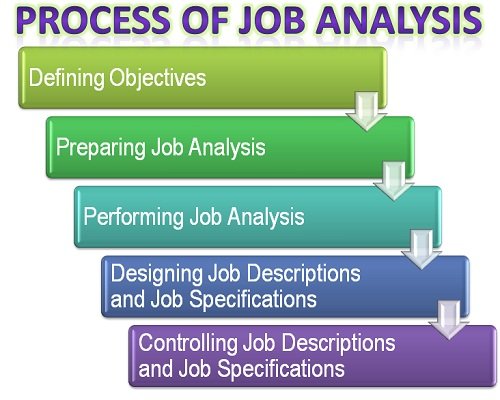
An effective and right process of analyzing a particular job is a great relief for them. It helps them maintain the right quality of employees, measure their performance on realistic standards, assess their training and development needs and increase their productivity. Let’s discuss the job analysis process and find out how it serves the purpose.

Job Analysis Process

Identification of Job Analysis Purpose: Well any process is futile until its purpose is not identified and defined. Therefore, the first step in the process is to determine its need and desired output. Spending human efforts, energy as well as money is useless until HR managers don’t know why data is to be collected and what is to be done with it.
Who Will Conduct Job Analysis: The second most important step in the process of job analysis is to decide who will conduct it. Some companies prefer getting it done by their own HR department while some hire job analysis consultants. Job analysis consultants may prove to be extremely helpful as they offer unbiased advice, guidelines and methods. They don’t have any personal likes and dislikes when it comes to analyze a job.
How to Conduct the Process: Deciding the way in which job analysis process needs to be conducted is surely the next step. A planned approach about how to carry the whole process is required in order to investigate a specific job.
Strategic Decision Making: Now is the time to make strategic decision. It’s about deciding the extent of employee involvement in the process, the level of details to be collected and recorded, sources from where data is to be collected, data collection methods, the processing of information and segregation of collected data.
Training of Job Analyst: Next is to train the job analyst about how to conduct the process and use the selected methods for collection and recoding of job data.
Preparation of Job Analysis Process: Communicating it within the organization is the next step. HR managers need to communicate the whole thing properly so that employees offer their full support to the job analyst. The stage also involves preparation of documents, questionnaires, interviews and feedback forms.
Data Collection: Next is to collect job-related data including educational qualifications of employees, skills and abilities required to perform the job, working conditions, job activities, reporting hierarchy, required human traits, job activities, duties and responsibilities involved and employee behaviour.
Documentation, Verification and Review: Proper documentation is done to verify the authenticity of collected data and then review it. This is the final information that is used to describe a specific job.
Developing Job Description and Job Specification: Now is the time to segregate the collected data in to useful information. Job Description describes the roles, activities, duties and responsibilities of the job while job specification is a statement of educational qualification, experience, personal traits and skills required to perform the job.
Thus, the process of job analysis helps in identifying the worth of specific job, utilizing the human talent in the best possible manner, eliminating unneeded jobs and setting realistic performance measurement standards.

Process of Job Design

Job design is the process of creating identical jobs with sufficient information regarding work activities to be carried out including the skills, experience and qualification required to conduct the job more efficiently and effectively. It designs the sufficient intrinsic and extrinsic reward system associated with the job. A typical job design process consists of following parts:

1. Specification of individual tasks:
At beginning, all the tasks to be conducted are identified. On the basis of nature, special skills or abilities required  to perform the tasks, relation and interdependency with other tasks, complexities etc. of tasks need to be classified. In this step, individual tasks are simplified as far as possible.

2. Combination of task into jobs:
Job is the group of similar tasks in terms of nature and responsibilities as well as skills combined together to form different jobs. Jobs need to be simple in the sense that they need to be scientific systematic. In this step, jobs are prepared and assigned to the concerned department and employees.

3. Specification of methods:
After designing jobs, specific methods to conduct these are identified. Specification of methods not only provides the basic guidelines to perform the job but also helps to get the similar jobs done uniformly. This can be changed with the change in technology as well as advancement in the methods.

Benefits or Objectives of Job Design in HRM:
Job design is the basis of motivation to employees. Scientifically designed job increase the productivity of the organization. This is the very first condition to perform the organizational activities in an effective and efficient way to attain the organizational goals. Following major benefits can be attained because of job design:

1. Organizational structure:
Job design collects the similar activities into a package i.e. job. This helps to prepare the logical relation between different job responsibilities. Job design designs different position in the organization. This ultimately helps to prepare the organizational structure. Job design provides the basic information for designing the organizational structure.

2. Help in HR Planning:
Human resource planning requires some fundamental information regarding the job. Job design not only prepares the jobs but it estimates the minimum skills qualification and experience required to different jobs. It determines the number of jobs available in an organization. This helps to plan regarding the human resource acquisition, development, utilization and maintenance.

3. Human resource acquisition and selection:
Getting right man at the right job is another important purpose of job design. It prepares the information regarding skills, qualification, experience and the expertise required to accomplish the job in best possible way. This determines the things to be done as well as its specification. This helps to search and select right man at the right job. Perfect job design reduces the risk of selecting wrong employees to the job.

4. Employee motivation and commitment:
Job design helps to allocate job responsibilities according to interest, skills, and expertise of employees. This limits the job responsibilities upto skills and expertise. Job design makes the job more interesting and challenging. It provides the avenue of personal growth. All these things provide the motivation to employees and increase the level of satisfaction too. Motivated employees commit for best performance. Productivity and efficiency of such motivated and committed employees remains the maximum level.

5. Good industrial relation:
Industrial relation is being vital in modern business age. Success or failure of organization largely depends upon the relation between management, employees and government. Properly designed job increases the job satisfaction in employees. There will be no conflict in responsibilities and goals in between jobs if they are designed scientifically. Such job decreases the employees grievances, indisciplinary actions, employees and management. This ensures the success of organization.

6. Better quality of life:
Quality of work life indicates the state of working condition. This is one of the most important indicators to increase the job satisfaction. Quality of work life is the relationship between employees and working environment. Better quality work life increases the job satisfaction and helps to create harmonious relationship between employees and management. Properly designed job increases the quality of work life. It provides the interrelationship between different jobs, makes the area of responsibility clear, provides clear schedule of work, creates group of employee right for the appropriate job. All these things help to improve the quality of work life. Positive changes in job design also help to change the attitude and belief of employees to make them favorable for organizational benefits.

7. Easy supervision:
Properly designed jobs become scientific for responsibility distribution, skills requirement and inter job relationship. Job design helps to select right man at right job. Employee job satisfaction and commitment in such case become high. Self motivated and directed employees need less supervision. This helps to reduce supervision cost.

8. Environment adaptation:
Business environment is ever changing. With the change in technology, market segment customer’s expectations, organizational objectives etc. jobs need to be changed. To grab the business opportunities from the competitive market, organizations must change their products, technology, way of doing things, etc. So, job once created may not be effective forever. They need to be improved and empowered. Such activities in job are done through job design and hence organization creates goods and products with greater customer expectation. So, job design helps to adopt the changing environment.

9. Organizational goal attainment:
Job designed scientifically will motivate employees for job commitment. Such jobs reduce the absenteeism, turnover, grievance, frustration and lower productivity. Committed employees pay their total effort for organizational betterment. These things help to attain organizational goal as per planning.

Methods of Job Analysis

Methods of collecting job analysis information include direct observation, work method analysis, critical incident technique, interview and questionnaire method.

These are given below

  1. Direct Observation Method

Direct Observation is a method of job analysis to observe and record behaviour / events / activities / tasks / duties when the worker or group engaged in doing the job. Observation method can be effective only when the job analyst is skilled enough to know what is to be observed, how to analyze, and what is being observed.

  1. Work Method Analysis

Work methods analysis is used to describe manual and repetitive production jobs, such as factory or assembly-line jobs. Work methods analysis includes time and motion study and micro-motion analysis.

  1. Critical Incident Technique

Critical incident technique is a method of job analysis used to identify work behaviours that classify in good and poor performance. Under this method, jobholders are asked to describe critical incidents concerning the job and the incidents so collected are analyzed and classified according to the job areas they describe.

  1. Interview Method

Interview method is a useful tool of job analysis to ask questions to both incumbents and supervisors in either an individual or a group setting. Interview includes structured interviews, unstructured interview, and open-ended questions.

  1. Questionnaire Method

It includes 6 techniques, which are as follows:

(a) Position Analysis Questionnaire (PAQ Model)

PAQ model is a questionnaire technique of job analysis. It developed by Mc Cormick, Jeanneret, and Mecham (1972), is a structured instrument of job analysis to measure job characteristics and relate them to human characteristics. It consists of 195 job elements that describe generic human work behaviours.

(b) Functional Job Analysis (FJA Model)

FJA model is a technique of job analysis that was developed by the Employment and Training Administration of the United States Department of Labour. It includes 7 scales (numbers) that measure- 3 worker-function scales- measure percentage of time spent with: data, people, things; 1 worker-instruction scale; 3 scales that measure reasoning, mathematics, and language.

(c) Work Profiling System (WPS Model)

WPS model is a questionnaire technique of job analysis, is a computer-administered system for job analysis, developed by Saville & Holds worth, Ltd.

(d) MOSAIC Model

MOSAIC model is a questionnaire technique of job analysis used to collect information from incumbents and supervisors. It contains 151 job tasks rated in terms of importance for effective job performance and 22 competencies rated in terms of importance, and needed proficiency at entry.

(e) Common Metric Questionnaire (CMQ Model)

CMQ model is a technique of job analysis that was developed by Harvey as a “worker-oriented” job analysis instrument designed to have applicability to a broad range of exempt and nonexempt jobs. It includes 41 general questions of background section, 62 questions of contacts with people, 80 items of decision making, 53 items of physical and mechanical activities, 47 items of work setting.

(f) Fleishman Job Analysis System (FJAS Model)

FJAS model is a technique of job analysis that describes jobs from the point of view of the necessary capacities. It includes 52 cognitive, physical, psycho-motor, and sensory ability; each of the categories consists of two parts – an operational and differential definition and a grading scale.

Outcomes of Job analysis: Job description and Job Specification

There are two outcomes of job analysis: Job description and Job specification

Job description

A job description is a list that a person might use for general tasks, or functions, and responsibilities of a position. It may often include to whom the position reports, specifications such as the qualifications or skills needed by the person in the job, or a salary range. Job descriptions are usually narrative, but some may instead comprise a simple list of competencies; for instance, strategic human resource planning methodologies may be used to develop competency architecture for an organization, from which job descriptions are built as a shortlist of competencies. A job description concentrates on the job. It explains what the job is and what the duties, responsibilities, and general working conditions are.

A job description may include relationships with other people in the organisation: Supervisory level, managerial requirements, and relationships with other colleagues.

A job description need not be limited to explaining the current situation, or work that is currently expected; it may also set out goals for what might be achieved in future.

Job specification

Job specification concentrates on the characteristics needed to perform the job. It describes the qualifications the incumbent must possess to perform the job.

Job specification is a statement which tells us minimum acceptable human qualities which helps to perform a job. Job specification translates the job description into human qualifications so that a job can be performed in a better manner. Job specification helps in hiring an appropriate person for an appropriate position. The contents are:

  • Job title and designation
  • Educational qualifications for that title
  • Physical and other related attributes
  • Physique and mental health
  • Special attributes and abilities
  • Maturity and dependability
  • Relationship of that job with other jobs in a concern

Job Design, Approaches and Techniques of Job Design

Job design refers to the process of structuring tasks, responsibilities, and work environments to enhance employee performance, motivation, and satisfaction. It involves defining job roles, workflows, and interactions to align with organizational goals while ensuring efficiency and employee well-being. Effective job design incorporates elements like job rotation, job enlargement, job enrichment, and autonomous work teams to improve engagement and productivity. By considering factors such as skill variety, task identity, and job autonomy, organizations can create roles that enhance employee motivation, reduce stress, and promote work-life balance, ultimately leading to improved organizational performance and employee retention.

Approaches of Job Design:

  • Job Rotation

Job rotation involves periodically shifting employees between different roles or tasks within an organization. This approach helps employees develop diverse skills, reduces job monotony, and enhances adaptability. For example, in a manufacturing unit, employees may be rotated across different production processes to improve their knowledge of the entire system. Job rotation increases engagement, prevents burnout, and prepares employees for multiple roles, enhancing workforce flexibility.

  • Job Enlargement

Job enlargement expands the scope of a job by adding more tasks at the same level of complexity. Instead of performing a limited set of repetitive tasks, employees handle a variety of duties, making their work more interesting. For instance, a data entry operator may also be given report generation responsibilities. This approach reduces boredom, increases task significance, and improves job satisfaction by providing a broader sense of contribution to the organization.

  • Job Enrichment

Job enrichment focuses on increasing job depth by providing employees with more responsibility, decision-making authority, and opportunities for personal growth. It enhances motivation by allowing employees to have greater control over their work. For example, in customer service, employees may be empowered to resolve customer issues without managerial intervention. This approach fosters skill development, job satisfaction, and a sense of ownership, leading to improved performance and reduced turnover.

  • Task Significance Approach

This approach emphasizes the impact of an employee’s work on the organization and society. Employees are more motivated when they see how their contributions make a difference. For example, a healthcare worker finds motivation in knowing their job directly impacts patient well-being. Organizations enhance job significance by providing employees with feedback, customer interaction, and recognizing their contributions to business success.

  • Socio-Technical Approach

The socio-technical approach integrates both social and technical aspects of work to optimize performance. It focuses on balancing technology, work processes, and human interactions to improve efficiency and job satisfaction. For example, in IT firms, software developers collaborate with project managers and UX designers to create user-friendly applications. This approach ensures that technological advancements align with employee needs, fostering a collaborative and productive work environment.

  • Behavioral Approach

This approach considers psychological and behavioral aspects of job design, ensuring tasks align with employee skills, motivation, and personality traits. Techniques such as providing autonomy, meaningful feedback, and opportunities for career growth help employees feel valued and engaged. Organizations that focus on behavioral factors create jobs that enhance motivation, job satisfaction, and employee well-being, leading to higher retention rates and performance.

Techniques of Job Design:

Job design techniques are used to structure work in a way that enhances employee satisfaction, efficiency, and organizational effectiveness. These techniques help in making jobs more engaging, reducing monotony, and improving overall productivity.

  • Job Rotation

Job rotation involves shifting employees between different roles or departments to provide them with varied experiences and prevent job monotony. For example, in a bank, an employee may be rotated between customer service, loan processing, and accounts management. This technique improves skill diversity, reduces burnout, and prepares employees for multiple roles, making the workforce more adaptable and efficient.

  • Job Enlargement

Job enlargement increases the number of tasks assigned to an employee at the same level of responsibility. Instead of performing a narrow set of repetitive tasks, employees handle a broader range of activities. For example, a cashier in a retail store may also be responsible for inventory checking. This technique makes jobs more interesting, enhances employee engagement, and reduces workplace boredom.

  • Job Enrichment

Job enrichment focuses on increasing the depth of a job by adding responsibilities, decision-making authority, and opportunities for personal growth. Employees are given more autonomy to plan, execute, and control their tasks. For example, a sales executive may be allowed to create their own marketing strategies instead of just following assigned tasks. This technique enhances motivation, fosters skill development, and leads to greater job satisfaction.

  • Task Identity and Task Significance

Task identity involves designing jobs so that employees can complete an entire process or task from start to finish rather than just a small portion of it. Task significance refers to how meaningful the job is in contributing to the organization or society. For example, a nurse feels more satisfied knowing their job directly impacts patient health. These techniques improve motivation and provide employees with a sense of accomplishment.

  • Work Autonomy

Providing employees with greater control over how they perform their tasks improves job satisfaction and creativity. Employees who can set their own schedules, choose work methods, or make independent decisions feel more empowered. For example, a software developer given the freedom to choose their coding approach is likely to be more innovative. This technique increases accountability, productivity, and workplace morale.

  • Flexibility in Work Design

Flexible work arrangements, such as remote work, hybrid models, and flexible hours, enhance employee well-being and productivity. Employees can balance their professional and personal responsibilities more effectively, reducing stress and increasing engagement. Many companies now implement flexible work policies to accommodate diverse workforce needs.

error: Content is protected !!