Requisites for Sound Market Segmentation

Market Segmentation is the process of dividing a broad market into smaller, distinct groups of consumers with similar needs, characteristics, or behaviors. This allows businesses to tailor their products, marketing strategies, and services to meet the specific needs of each segment effectively, improving customer satisfaction, targeting accuracy, and overall marketing efficiency.

  • Measurability

Measurability refers to the ability to quantify the size, purchasing power, and characteristics of a segment. It is crucial because effective marketing strategies rely on accurate data to allocate resources and forecast sales. Without measurable data, marketers cannot determine whether a segment is worth targeting or assess its profitability. Measurability enables businesses to evaluate the potential return on investment (ROI) for each segment.

  • Accessibility

Accessibility indicates whether a company can effectively reach and serve a segment. Even if a segment is attractive, it is useless if it cannot be accessed through appropriate distribution channels, communication, or promotional efforts. Successful segmentation requires that businesses can engage segments using tailored marketing strategies, ensuring that messages and products reach the intended audience without excessive costs.

  • Substantiality

Substantiality ensures that the target segment is large and profitable enough to justify specialized marketing efforts. Small or insignificant segments may not offer enough revenue potential to warrant the cost of customized strategies. A substantial segment provides the necessary scale for the company to achieve sustainable profits while minimizing per-unit marketing expenses.

  • Differentiability

Differentiability refers to how distinct and unique a segment is from others. Each segment should exhibit clear differences in response to marketing efforts, making it possible to design separate strategies for each. Overlapping segments can lead to confusion and ineffective campaigns, while clearly differentiated segments enable precise targeting with appropriate products and promotions.

  • Actionability

Actionability means that the company must be able to develop and implement marketing programs to target specific segments effectively. This involves having the right resources, skills, and capabilities to create and deliver value to each segment. If a segment cannot be acted upon due to limitations in product development or marketing, it is not viable for targeting.

  • Stability

Stability refers to the consistency of a segment over time. If segments frequently change due to shifting consumer preferences, external factors, or other influences, marketing efforts may become inefficient. Stable segments allow for long-term strategic planning, ensuring that businesses can build lasting customer relationships and reduce marketing costs.

  • Homogeneity within Segments

Homogeneity within a segment ensures that all members share similar characteristics, preferences, and needs. This similarity allows companies to design products, messages, and promotions that resonate with all members of the segment, leading to better customer satisfaction and higher sales conversion rates.

  • Heterogeneity across Segments

Heterogeneity across segments highlights the importance of differences between segments. Distinct segments with varying needs and preferences justify the need for different marketing approaches. Clear heterogeneity ensures that segmentation efforts are meaningful, helping marketers create targeted campaigns that address specific customer demands.

  • Feasibility

Feasibility ensures that the company has the capability to serve the segment effectively. This includes having the financial resources, technology, and expertise required to develop products and marketing campaigns. If a segment cannot be feasibly targeted due to resource constraints, it should not be pursued despite its attractiveness.

  • Compatibility

Compatibility refers to how well a segment aligns with the company’s overall objectives, mission, and values. A segment that does not fit the company’s core competencies or brand identity may lead to long-term challenges. Ensuring compatibility helps maintain a cohesive brand image and ensures efficient use of resources.

Consumers Buying Roles: Initiator, Influencer, Decider, Buyer and User

In any purchase decision, multiple roles are played by individuals, even if the final purchase involves only one person. These roles help marketers understand who to target during different stages of the buying process. The five key roles are: Initiator, Influencer, Decider, Buyer, and User.

1. Initiator

The initiator is the person who first recognizes a need or problem and starts the buying process by suggesting a purchase. This individual plays a critical role in triggering the entire decision-making process. For instance, in a family setting, a child may act as the initiator by expressing a desire for a new video game console. In a business scenario, an employee may suggest purchasing new software to improve productivity.

Marketers need to identify initiators because they are key in creating demand. Advertising that highlights common problems or needs can effectively target initiators by making them aware of potential solutions.

2. Influencer

The influencer is the person who provides information or opinions that affect the buying decision. Influencers may have expertise or credibility that others rely on during the decision-making process. In a family, parents often act as influencers by advising on the quality, price, and brand of a product. In a corporate environment, technical experts or consultants may influence the choice of products or services.

Influencers play a crucial role in shaping perceptions and preferences. Marketers often target influencers by using strategies such as influencer marketing, testimonials, expert endorsements, and word-of-mouth promotion. Ensuring that influencers have positive experiences with a product can significantly increase its acceptance.

3. Decider

The decider is the individual who has the final authority to choose whether to buy a product or not. In many cases, the decider is the head of the family or the manager in an organization. For example, even if a child initiates the need for a toy and influences the parents, the decision to buy it may ultimately lie with the parent who controls the finances.

In business markets, the decider might be a senior executive who approves significant purchases after evaluating the recommendations made by subordinates. Marketers need to understand who the decider is and develop strategies aimed at convincing them, such as providing clear information about the product’s benefits, cost-effectiveness, and return on investment.

4. Buyer

The buyer is the person who physically purchases the product. This role involves activities like visiting the store, negotiating with vendors, and making payments. In many cases, the buyer may also be the decider, but not always. For instance, a parent might be the buyer purchasing groceries for the household, although other family members may have influenced or decided what should be bought.

Marketers should focus on making the buying experience as smooth as possible for buyers by ensuring product availability, offering promotions, and simplifying the payment process. Loyalty programs and incentives can also encourage repeat purchases.

5. User

The user is the individual who consumes or uses the product or service. Users may or may not be involved in the decision-making or buying process. For example, in a family, children might be the primary users of snacks or toys, while parents are the ones who buy and decide on the product. Similarly, in a company, employees use office supplies or equipment, although a procurement team handles the buying.

Since the user’s satisfaction ultimately determines the success of a product, marketers must focus on user experience and gather feedback to improve offerings. Ensuring that users have a positive experience leads to repeat purchases, customer loyalty, and positive word-of-mouth.

Interrelation of Roles in Buying Decisions:

In real-world scenarios, the roles of initiator, influencer, decider, buyer, and user often overlap. A single person may play multiple roles, or different individuals may assume each role. For instance, in a family:

  • The child may be the initiator and influencer.
  • The parent may act as the decider and buyer.
  • The child is the ultimate user.

In a business-to-business (B2B) context:

  • An employee may initiate the need for a new tool.
  • A manager might influence the decision by recommending brands.
  • The procurement officer handles the actual purchase.
  • The employee uses the product.

Marketers need to understand the interplay of these roles to design targeted campaigns at various stages of the buying process.

Marketing Mix for Rural Market/Consumers

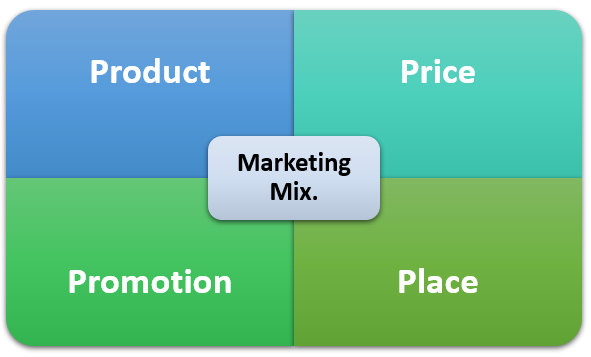
Marketing mix (programme) comprises of various controllable forces (often referred as elements) like product, price, promotion and place. Success of any business enterprise depends on marketing mix. These four elements are like powerful weapons in the hand of manager to defend his market and/or attack on rivals. A manager needs to understand his rural market carefully, considering all important characteristics of rural customers.

Since behaviour of rural consumers is different and less predictable, the marketing manager has a challenging task to design marketing mix strategies for the rural segments. Due to considerable level of heterogeneity, a manager needs to design tailor-made programme to cater needs and wants of specific groups.

Dynamics of rural markets differ from urban market types, and similarly rural marketing strategies are also significantly different from the marketing strategies aimed at urban or industrial buyers. This, along with several other related issues, has been subject matter of intense discussion and debate in countries like India and China, and even the focus of international symposia organized in these countries.

Product Mix:

Product is a powerful determinant of firm’s success. The products must be suitable to rural customers in all significant aspects. The company must produce product according to the present and the expected state of rural buyers. Product features (size, shape, colour, weight, etc.), qualities, brand name, packaging, labeling, services, and other relevant aspect must be fit with needs, wants and capacity of buyers. Product must undergo necessary changes and improvements to sustain its suitability over time. Note that effectiveness of other decisions like pricing, promotion and place also depends on the product.

Place Mix

Rural market faces critical issues of distribution. A marketer has to strengthen the distribution strategies. Distributing small and medium sized packets through poor roads, over long distances, into the remote areas of rural market and getting the stockiest to do it accordingly.

Both physical distribution and distribution channel should be decided carefully to ensure easy accessibility of products for rural consumers. Choosing the right mode of transportation, locating warehouses at strategic points, maintaining adequate inventory, sufficient number of retail outlets at different regions, and deploying specially trained sales force are some of the critical decisions in rural distribution.

Normally, indirect channels are more suitable to serve scattered rural customers. Usually, wholesalers are located at urban and semi urban to serve rural retailers. Not only in backward states, but also in progressive states, local rural producers distribute directly to consumers.

For service marketing, employees of rural branches can do better jobs. Various sectors like banking, insurance, investment, satellite and cable connection, cell phone, auto sales and services etc. the market for these sectors is booming in villages of some states in a rapid speed. Service industries are trying to penetrate into rural areas by deploying specially trained employees and local rural area agents.

Nowadays, online marketing is also making its place gradually in rural areas of the progressive states. Marketers must design and modify their distribution strategies time to time taking into consideration the nature and characteristics prevailing in rural areas, may be quite differently than that of urban markets.

Price Mix:

Price is the unique element of marketing mix, particularly, for rural markets. Rural customers are most price sensitive and, hence, price plays more decisive role in buying decisions. Pricing policies and strategies must be formulated with care and caution. Price level, discounts and rebates, credit and installment faculties, and so on are important considerations while setting and altering prices. Normally, the low-priced products attract rural buyers. However, some rural customers are quality and status conscious.

Promotion Mix

Rural markets are delicately powerful to cater to the rural masses. The promotion strategies and distribution strategies and Ad makers have learned to leverage the benefits of improved infrastructure and media reach.

Most of the companies advertise their products and services on television and they are sure it reaches the target audience, because a large section of the rural India is now glued to TV sets. Marketers have to decide on promotional tools such as advertisement, sales promotion, personal selling and publicity and public relations.

The method of promotion needs to meet the expectations of the market. Vehicle campaigns, edutainment films, generating word of mouth publicity through opinion leaders, colorful wall posters, etc. all these techniques have proved effective in reaching out to the rural masses.

Village fairs and festivals are ideal venues for projecting these programs. In certain cases, public meetings with Sarpanch and Mukhiya too are used for rural promotion. Music cassettes are another effective medium for rural communication and a comparatively less expensive medium.

Different language groups can be a low budget technique and they can be played in cinema houses or in places where rural people assemble. It is also important that in all type of rural communication, the rural peoples must also be in the loop. The theme, the message, the copy, the language and the communication delivery must match the rural context.

Eventually, the rural communication needs creativity and innovation. In rural marketing, a greater time lag is involved between the introduction of a product and its economic size sale, because the rural buyer’s adoption process is more time consuming.

Nowadays, educated youth of rural area can also influence decision-making of the rural consumers. Rural consumers are also influenced by the western lifestyle they watch on television. The less exposure to outside world makes them innocent and the reach of mass media, especially, television has influenced the buying behavior greatly.

Rural consumer behaviour: Meaning

Consumer behaviour is the study of how individual customers, groups or organizations select, buy, use, and dispose ideas, goods, and services to satisfy their needs and wants. It refers to the actions of the consumers in the marketplace and the underlying motives for those actions.

Marketers expect that by understanding what causes the consumers to buy particular goods and services, they will be able to determine which products are needed in the marketplace, which are obsolete, and how best to present the goods to the consumers.

Consumer behaviour is the study of individuals, groups, or organizations and all the activities associated with the purchase, use and disposal of goods and services, and how the consumer’s emotions, attitudes and preferences affect buying behaviour. Consumer behaviour emerged in the 1940-50s as a distinct sub-discipline of marketing, but has become an interdisciplinary social science that blends elements from psychology, sociology, social anthropology, anthropology, ethnography, marketing and economics (especially behavioural economics).

The study of consumer behaviour formally investigates individual qualities such as demographics, personality lifestyles, and behavioural variables (such as usage rates, usage occasion, loyalty, brand advocacy, and willingness to provide referrals), in an attempt to understand people’s wants and consumption patterns. Also investigated are the influences on the consumer, from social groups such as family, friends, sports, and reference groups, to society in general (brand-influencers, opinion leaders).

Rural consumers go to their nearest cities when they have to buy products like tractors, televisions, motorcycles, etc. For most villages, the nearest cities can be as far as 50 kms away. Most of these cities are district towns. Rural consumers go to the ‘local market’ which is normally around 5-10 km. from their villages to buy the daily household requirements like sugar, tea, vegetable oil, etc.

There is an alternative to rural retailing. Door-to-door selling or some version of it can be employed. Retailers at the local market can employ door-to-door salespeople. These salespeople can move on bicycles and should agree to accept payment in grains. Door-to-door selling is very effective in overcoming consumers’ reluctance to buy. Consumers keep postponing going to a retail store because they do not want to spend money but when a door-to-door salesperson arrives, they are likely to succumb to his offerings.

Consumers of rural markets are spread throughout the country side with low-income levels, lack of education where income comes in seasonal basis during harvesting time. They are also scared to try out new or innovative products.

  • For high tech products village buyer finds in difficult to understand its usage, and buys only after peers who have seen the product in action buy the same
  • Because of low income, price becomes extremely important and rural demand is highly price sensitive
  • The consumer market in this case is Rural India. About 70% of India’s population lives in rural areas.
  • There are more than 600,000 villages in the country as against about 300 cities and 4600 towns.
  • Consumers in this huge segment have displayed vast differences in their purchase decisions and the product use.
  • Villagers react differently to different products, colours, sizes, etc. in different parts of India.

Thus, utmost care in terms of understanding consumer psyche needs to be taken while marketing products to rural India. Thus, it is important to study the thought process that goes into making a purchase decision, so that marketers can reach this huge untapped segment.

Factors

  1. Socio-economic environment of the consumer
  2. Cultural environment
  3. Geographic location
  4. Education/literacy level
  5. Occupation
  6. Exposure to urban lifestyles
  7. Exposure to media and enlarged media reach.
  8. The points of purchase of products.
  9. The way the consumer uses the products
  10. Involvement of others in the purchase.
  11. Marketers effort to reach out the rural markets

Ethics and Marketing Communication: Stereotyping, Targeting Vulnerable customer

Stereotype marketing ideologies might focus too much on one group and ignore another equally, or even more important. For example, target only kids for (non-PC) video games and lose access to millions of customers. Nearly a quarter of all video games are purchased by consumers aged 40 and older, and women make 38 percent of all video game sales.

The advertising world is inundated with with different types of stereotypes, ranging from gender and race to socioeconomic roles. Gender roles in commercials are especially prominent. Advertising often shapes cultural views and creates norms by introducing a product or service alongside an idea that makes that product desirable. In many cases, stereotypes are used simply because they are known to drive results for the company behind the advertisement. In other cases, stereotypes are used for legal reasons or to create an advertisement that is neutral and least likely to offend. Stereotypes can offer a safe solution for the advertiser in some cases, but increasing scrutiny can also lead to gender and cultural groups delivering negative feedback based on some common stereotypes in ads. Stereotypes in advertising are a sensitive subject, and they can deliver positive or negative results for the advertiser. Ultimately, stereotypes are judged on context; advertisers must proceed with caution when exploring messaging.

Stereotyping, by definition, is the oversimplification of something that is more complex than it’s portrayed. In most cases, stereotypes apply to things or people, and they are excessively common in advertising. In reality, people are complex and cannot be defined by single role. In advertising, labels are commonly used to portray an individual or group of people in a very specific light. Gender stereotypes are among the most common in advertising. Pay attention to advertisements for cleaning supplies and you are likely to see a female playing the lead role. The “housewife” gender role that was common in the 1950s is still being displayed in many modern advertisements.

Common examples of stereotyping in marketing include gender roles, racial stereotypes and stereotypes involving children. The way groups of people are portrayed in an advertisement does not always fully represent reality. Cause-based advertising does exist, but there is also a gap in this market. Some companies approach cause-based advertising with genuine intent to breakdown stereotypes while supporting a cause, while others capitalize on a movement simply to capture the audience. This disingenuous approach often draws heavy criticism and takes advantage of the grassroots work within the movement.

A lighthearted ad can often get away with common stereotypes without much in the way of negative consequences, but advertisements tackling socially sensitive subject matter in their campaigns can easily offend different genders and cultural groups through stereotypes. Common stereotypes include the housewife, the single African American friend in a group of Caucasians, the white businessman, blonde hair and blue-eyed girl, the suburban white family, etc. There are no shortages of stereotypes in society and they are present in the world of advertising.

Use

Brands approach each advertising campaign with a specific goal in mind. They have a budget and expect to see a return on that investment through an increase in sales. If it’s not profitable, the brand has no reason to advertise. Stereotypes play into the equation because the brand or advertising agency responsible for the campaign is speaking to a specific demographic. The brand for a cleaning product like a vacuum may have a historic profile of their previous customers. They can generate an audience profile and target demographic based on historic appeal. When the brand knows the primary audience and decision maker for a new vacuum purchase is a female between the ages of 25 and 50, it will cater to that audience. The stereotype becomes appealing at that point because it represents the customer base, despite the fact that a percentage of that customer base is also males in their early 30s or retired couples in their 60s. Ultimately, the stereotype for the audience with the most buying power will win out. In the specific housewife scenario for a vacuum cleaner, the stereotype risks alienating a large portion of a modern audience because it implies that the role for women is in the house with the responsibilities of cleaning and cooking. That gender role is ever-evolving, and many modern campaigns still misrepresent a large portion of the population.

Stereotypes aside, brands remain focused on advertising campaigns that sell products or services. It ultimately comes down to a message they are delivering to their audience to drive sales. If the group of people represented in the stereotype wants to see a change in the messaging, the brand is most likely to change when the buying power shifts away from that brand. Shopping strategically and buying from brands that represent a diverse population of people in a positive manner is the only way to effectively change the way stereotypes are used in advertising.

The role of digital advertising and the ability for new brands to launch quickly is also changing the use of stereotypes in advertising. A micro-climate exists in which brands can focus on a really tight niche and audience. With an ultra-focused niche, stereotypes are avoidable, because the audience is really well defined and the brand is selling a very specific product or small group of products.

Children are often portrayed as cute and happy in advertising. Unlike gender and racial stereotypes, kids are often portrayed in a way that appeals to their parents, the decision makers. Products and services are positioned to solve a problem for the parents. For example, a diaper that changes colors when wet does not necessarily appeal to the child but it does solve a problem for the parent. The child in the advertisement will often have a smile and broad appeal. The perfect family with a happy child and dog in a suburban house is a common stereotype used to target the middle class in general.

More important than how children are portrayed in advertising is the effect of stereotypes in advertising as seen through the lens of a child. Children see advertising on billboards, television, online and in print, and they hear radio advertisements. They are learning stereotypes through these mediums and have no way to really avoid viewing advertising with bias and stereotypes. Advertising crosses their paths intentionally in some scenarios like commercial breaks on a cartoon network, and unintentionally when family members are watching television and adult-targeted ads are displayed.

Word of Mouth

Customers can be your best or worst source of advertising. Word of mouth referrals, especially in the age of the Internet, should not be undervalued. And, since consumers are more likely to complain than to compliment, it pays to have customer-friendly and trustworthy complaint resolution practices in place.

Targeting Vulnerable customer

The vulnerable customer groups include children, elderly, certain minorities, and religious groups. These customers may be influenced comparatively more easily as they have either less knowledge about these practices or they are vulnerable in terms of their minority or religion. Children have always been important marketing target for certain kind of products. However, in recent times more and more marketing efforts are being focused on children. Children have great influencing power while making any purchase decision. But, generally, their knowledge is less developed and limited about the products, media, advertisements, and the selling strategies adopted by the firms. Due to these reasons, they are more likely to be attracted to the strong images projected towards them and the psychological appeals directed towards them.

Ethical questions arise in such environment when children are exposed to questionable practices e.g. advertisements attracting them towards products which are potentially harmful like alcohol and tobacco. The advent of Internet and direct marketing practices to market the products to children has become a major ethical issue in today’s environment. There are very less, almost negligible, controls which can supervise the content which goes over the web sites. The marketers can present objectionable and misleading material to the minors without any regulation. Due to all these issues, there is increasing need to control the content being presented to children. It requires higher levels of regulations for marketing to children.

Major ethical problems in international marketing are as follows:

Small- or large-scale bribery: Bribery is mostly considered to be an unethical practice. However, in some countries it may be acceptable to get some work done or speed up the process.

Gifts/Favors/Entertainment: These include items like gifts, personal travels etc. which may be intended to get some job done. However, it may be considered just as a gift in some cultures, it may also be considered as being a source of influence in other cultures.

Pricing: The ethical issues regarding this include unfair price differentials, pricing to eliminate local competition by selling products at prices which are well below those in-home country, or adopting pricing practices which are illegal in-home country but are legal in host country like price fixing arrangements and forming cartels.

Products/Technology: This may involve ethical issue of selling the product/service which is banned in home country but not in the host country or which is inappropriate or unsuitable for people in host country to use.

Questionable commissions to Channel partners: This may include unethical practices like paying unreasonably high commissions to channel partners like dealers, distributors, sales personnel etc. to carry the products of this firm and restricting the products of competing firms.

Involvement in political affairs: This includes the issues of exertion of political influence by multinationals, or indulging in marketing practices in countries which are at war with the home country.

Cultural differences: There may be potential misunderstandings as some practices may be considered as right in one culture and immoral or even illegal in another.

Reason

Consumer Choice vs. Consumer Protection: Consumers should be given alternatives to choose from as per the consumer choice concept. Consumer protection says that the consumer should be protected from abuse. Consumers may not always choose the product which is good for them. This is especially true for consumers like children, elderly or poverty-stricken. Target marketing to such vulnerable consumers is an example where these two goals diverge. Target marketing is a core concept of marketing. However, when it involves vulnerable consumer segment, it may attract criticism. This raises a question that the product is serving the distinct needs of the segment or taking advantage of their vulnerability.

Consumer Satisfaction vs. Revenue Growth: Firms should increase their profits and they should also focus on delivering satisfaction to their customers. Most of the times these two objectives can go hand-in-hand. However, sometimes these objectives diverge because fulfilling the requirements and obligations of current customers may come in way of incremental revenue generation. E.g. If a firm discovers a fault in its product, should it recall it, offer free or discounted replacement or use the same resources for further revenue generation. If a recall is not done it may cause reduction in customer satisfaction. There have been several instances in which companies have forsaken their revenues for customer satisfaction. The latest example in this can be taken from Honda recalling almost 7 lakh Jazz and City cars globally due to a defect. However, there have also been the cases where companies chose not to act even after detecting the defect and the customers have suffered due to this.

Customer Participation vs. Total System Efficiency: As per the marketing theory, entire marketing process from product development to communication and distribution should be made as efficient as possible. It also says that the consumers should participate in the process. However, to gain more efficiency, the processes require standardization which may not be quite engaging for the customers.

Customer Welfare vs. Price Discrimination: In industries having high fixed costs and expiring capacities, like airlines, hotels etc., price discrimination is very important to maintain profitability. In such cases, the firms should try to capture the consumer surplus by exercising price discrimination. On the other hand, the firm should also contribute to consumer welfare and price discrimination is believed to reduce this consumer welfare as it results in increased price dispersion for the products/services.

Ethical issues such as predatory pricing occur due to this reason. Predatory pricing initially offers lower prices to the customers, but subsequently it leads to reduced innovation, variety and increased prices. Selling branded goods at price premium is also considered as being an ethical issue due to this particular reason.

Employee Satisfaction vs. Short-Term Profit: Employee satisfaction has often been related to customer satisfaction which in turn leads to the success of an organization. If the organization maintains conditions such as ethical climate in the organization, then it may lead to improved employee satisfaction and service quality. However, this may come in conflict with the profit goal of the organization to maintain its competitive advantage. This may lead to situations where companies take advantage of their employees, avoid safety and health standards and go against labor unionization. There have been cases when companies have put the health and safety of their employees just in order to maintain their profits and earnings.

Collaborative Supplier Relationships vs. Short-Term Cost Control: Longer term relationships with suppliers enhance the firm’s results. The smaller the number of suppliers, i.e. the more collaboration a company has with its suppliers, the better the results of a firm are. However, the mass merchandisers take so much margin out of small suppliers that the small suppliers are forced to leave the business.

Role of Personal Selling in IMC

Personal selling is oral communication with potential buyers of a product with the intention of making a sale. The personal selling may focus initially on developing a relationship with the potential buyer, but will always ultimately end with an attempt to “close the sale”

Personal selling is the interpersonal tool of the promotion mix. Unlike advertising, personal selling is two-way personal communication between salespeople and individual customers.

This communication may take place face-to-face, by telephone, through video conferences, or by other means. This implies that personal selling may be more trustworthy than advertising in more complicated selling situations.

Salespeople can be very effective in exploring the problems of the customers. They can compose the marketing offer to suit each customer’s special needs and negotiate terms of sale.

The role of the sales force varies from company to company. Companies that sell through mail-order catalogs, brokers, and agents do not maintain salespeople.

However, the sales force plays a critical role in companies selling business products. They work directly with customers and represent the company.

Salespeople employed in consumer goods-producing companies do not come into direct contact with the customers.

Nonetheless, their role is valuable because they work with wholesalers and retailers and help them be more effective in selling the company’s products.

Very often, salesforce works for both the seller and the buyer. They locate and develop new customers and communicate information about the company, its products, and services.

They perform selling task by approaching customers, presenting their products, answering objections, negotiating prices and terms, and closing sales.

Furthermore, salespeople provide services to customers, conduct market research, gather market information, and fill out sales call reports.

Simultaneously, salespeople represent customers to the company.

Personal Selling in the IMC

  • Surveying: Educating themselves more about their customers’ businesses and regularly assessing these businesses and their customers to achieve a position of knowledgeable authority.
  • Communicating: With existing and potential customers about the product range
  • Mapmaking: Outlining both an account strategy and a solutions strategy (for the customer). This means laying out a plan, discussing it with a customer, and revising it as changes require.
  • Selling: Contact with the customer, answering questions and trying to close the sale
  • Guiding: Bringing incremental value to the customer by identifying problems and opportunities, offering alternative options and solutions, and providing solution with tangible value
  • Fire starting: Engaging customers and driving them to commit to a solution
  • Servicing: Providing support and service to the customer in the period up to delivery and also post-sale
  • Information gathering: Obtaining information about the market to feedback into the marketing planning process

Conditions that favor personal selling:

  • Product situation: Personal selling is relatively more effective and economical when a product is of a high unit value, when it is in the introductory stage of its life cycle, when it requires personal attention to match consumer needs, or when it requires product demonstration or after-sales services.
  • Market situation: Personal selling is effective when a firm serves a small number of large-size buyers or a small/local market. Also, it can be used effectively when an indirect channel of distribution is used for selling to agents or middlemen.
  • Company situation: Personal selling is best utilized when a firm is not in a good position to use impersonal communication media, or it cannot afford to have a large and regular advertising outlay.
  • Consumer behavior situation: Personal selling should be adopted by a company when purchases are valuable but infrequent, or when competition is at such a level that consumers require persuasion and follow-up.

Sales promotion campaign

Sales promotion is a short-term incentive to initiate trial or purchase. Sales promotion is one of the elements of the promotional mix. The primary elements in the promotional mix are advertising, personal selling, direct marketing and publicity/public relations. Sales promotion uses both media and non-media marketing communications for a pre-determined, limited time to increase consumer demand, stimulate market demand or improve product availability. Examples include contests, coupons, freebies, loss leaders, point of purchase displays, premiums, prizes, product samples, and rebates.

Sales promotions can be directed at either the customer, sales staff, or distribution channel members (such as retailers). Sales promotions targeted at the consumer are called consumer sales promotions. Sales promotions targeted at retailers and wholesale are called trade sales promotions.

Consumer Thought Process

Meaningful Savings: Gain or Loss

Many discounts are designed to give consumers the perception of saving money when buying products, but not all discounted prices are viewed as favorable to buyers. Therefore, before making a purchase, consumers may weigh their options as either a gain or a loss to avoid the risk of losing money on a purchase. A “gain” view on a purchase results in chance taking For example, if there is a buy-one-get-one-half-off discount that seems profitable, a shopper will buy the product. On the other hand, a “loss” viewpoint results in consumer aversion to taking any chances. For instance, consumers will pass on a buy-three-get-one-half-off discount if they believe they are not benefitting from the deal. Specifically, consumers will consider their options because “…the sensation of loss is 2.5 times greater than the sensation of gain for the same value”.

Impulse Buying

Impulse buying results from consumers’ failure to weigh their options before buying a product. Impulse buying is “any purchase that a shopper makes that has not been planned…  sudden and immediate”. For example, if a consumer has no intention of buying a product before entering a store, but purchases an item without any forethought, that was impulse buying. Product manufactures want to promote and encourage this instant purchase impulse in consumers. Buyers can be very quick to make purchases without thinking about the consequences when a product is perceived to be a good deal. Therefore, sales companies “increasingly implement promotional campaigns that will be effective in triggering consumer impulse buying behavior” to increase sales and profits

Comparing Prices

Many consumers read left-to-right, and therefore, compare prices in the same manner. For example, if the price of a product is $93 and the sales price is $79, people will initially compare the left digits first (9 and 7) and notice the two digit difference. However, because of this habitual behavior, “consumers may perceive the ($14) difference between $93 and $79 as greater than the ($14) difference between $89 and $75”. As a result, consumers often mistakenly believe they are receiving a better deal with the first set of prices based on the left digits solely. Because of that common misconception, companies capitalize on this sales pricing strategy more often than not to increase sales.

Right Digit Effect

The right digit effect focuses on the right digits of prices when the left digits are the same. In other words, prices like $45 and $42 force consumers to pay more attention to the right digits (the 2 and 5) to determine the discount received. This effect also “implies that consumers will perceive larger discounts for prices with small right digit endings, than for large right digit endings. For example, in a $32-to-$31 price reduction, consumers will believe to have received a greater deal than a $39-to-$38 price reduction. As a result, companies may use discounts with smaller right digits to mislead consumers into thinking they are receiving a better deal and increasing profit. However, consumers also are deceived by the infamous 9-ending prices. “The right digit effect relates to consumers’ tendency to identify 9-ending prices as sale (rather than regular) prices or to associate them with a discount. For example, a regular price of $199 is mistakenly viewed as a sale or discount by consumers. Sales companies most commonly use this approach because the misinterpretation of consumers usually results in an increase of sales and profit.

Framing Effect

The Framing Effect is “the phenomenon that occurs when there is a change in an individual’s preference between two or more alternatives caused by the way the problem is presented”. In other words, the format in which something is presented will affect a person’s viewpoint. This theory consists of three subcategories: risky choice framing, attribute framing and goal framing. Risky choice framing references back to the gain-or-loss thought processes of consumers. Consumers will take chances if the circumstance is profitable for them and avoid chance-taking if it is not. Attribute framing deals with one key phrase or feature of a price discount that is emphasized to inspire consumer shopping. For example, the terms “free” and “better” are used commonly to lure in shoppers to buy a product. Goal framing places pressure on buyers to act hastily or face the consequences of missing out on a definite price reduction. A “limited time only” (LTO) deal, for example, attempts to motivate buyers to make a purchase quickly, or buy on impulse, before the time runs out.

Outside Forces

Although there are aspects that can determine a consumer’s shopping behavior, there are many outside factors that can influence the shoppers’ decision in making a purchase. For example, even though a product’s price is discounted, the quality of that product may dissuade the consumer from buying the item. If the product has poor customer reviews or has a short “life span,” shoppers will view that purchase as a loss and avoid taking a chance on it. A product can also be viewed negatively because of consumers’ past experiences and expectations. For example, if the size of a product is misleading, buyers will not want to buy it. An item advertised as “huge,” but is only one inch tall, will ward off consumers. Also, “the effects of personal characteristics, such as consumers’ gender, subjective norms, and impulsivity” can also affect a consumer’s purchase intentions. For example, a female will, generally, purchase a cosmetic product more often than a male. In addition, “some…shoppers may be unable to buy a product because of financial constraints”. Neither a discounted price nor a bonus pack has the ability to entice consumers if they cannot afford the product.

Promotional campaign process

  1. Identify the target market (current users ,influencers, decision makers)
  2. Identify the communication channel (Direct mail ,newspaper ad ,tvc )
  3. Set the objective for the campaign (SMART goals)
  4. Determine the Promotion mix
  5. Develop clear and unambiguous messages
  6. Allocate the budget
  7. Evaluate the campaign effectiveness

Types of Sales Promotion

Sales promotion is a type of Pull marketing technique. If you have a product which is new in the market or which is not receiving a lot of attention, then you can promote this product to customers via sales promotion. You can use various techniques like giving discounts on the product, offering 1 + 1 free schemes, etc etc.

Consumer Sales Promotion:

The consumer sales promotion involves application of the following tools:

  • Samples:

Samples are offers of a free amount or a trial of a product for consumers. The sample might be delivered door to door, sent in the mail, picked up in a store found attached to another product or featured in an advertising offer. Sampling is the most effective and most expensive way to introduce a new product e.g., Hindustan Levers introduced Ariel Trial Pack for its detergent powder Ariel Micro System.

  • Coupons:

Coupons are certificates which entitle a consumer to buy the product at reduced prices. These coupons can be mailed, enclosed in other products or attached to them or inserted in magazines and newspapers. Coupons are accepted as cash by retailers.

  • Rebates:

Cash refund or rebate provides a price reduction after the purchase rather than at the retail shop. The consumer sends a specified ‘proof of purchase’ to the manufacturer, who ‘refunds’ part of the purchase price by mail. It is a good device for creating new user and to strengthen the brand loyalty.

  • Price Packs:

Price Packs (also called cents-off deals) are offers to consumers as discount e.g., Rs.2 off on a Brooke Bond pack of 500 gms. Price Packs are very effective in stimulating short- term sales, even more than coupons. The price pack may be in the form of a reduced price pack (20 per cent extra Five-star at the same price) or a banded pack (tooth brush and tooth paste together).

  • Premiums:

Premiums (or gifts) are merchandise offered at a relatively low cost or free, as an incentive to purchase a particular product. Reusable jars, key chains, containers.

  • Prizes (Contests, Sweepstakes, Games):

Prizes are offers of the chance to win cash, trips or merchandise as a result of purchasing something. A contestant calls for consumers Co., submit an entry — a jingle, estimate, suggestion to be examined by a panel of judges who will select the best entries. In sweepstakes, the customers submit their names which will be included in a drawing of prize winners. A game presents consumers with some puzzle or missing letters. All of these tend to gain more attention than coupons and premiums.

  • Patronage Award (Trading Stamps):

These are values in cash or other forms. Such awards are given to those customers who shop only at a particular place. i.e., when the customers are loyal to a particular shop. Then they are treated as patrons.

  • Free Trials:

Free trials consist of inviting prospective purchasers to try the product without cost in the hope that they will buy the product.

  • Product Warranties:

Product warranties are important promotional tools in sensitive consumer markets.

  • Tie-In-Promotions:

They involve two or more brands or companies that team up on coupons, refunds and contests to increase their pulling power.

  • Point-of-Purchase and Demonstration:

POP displays and demonstrations take place at the point of purchase or sale.

Dealer Promotion:

Sales promotion activities are conducted to stimulate consumer-purchasing and dealer-effectiveness.

  1. There is a provision of free display material either at the point of purchase (POP) or point of sale (POS), depending on one’s viewpoint. Display reaches consumers when they are buying and actually spending their money.
  2. Retail demonstrators are supplied by manufacturers for preparing and distributing the product as a retail sample, e.g., Nescafe instant coffee to consumers for trying the sample on the spot or demonstration regarding the method of using the product.
  3. Trade deals are offered to encourage retailers to give additional selling support to the product, e.g., toothpaste sold with 30 per cent to 40 per cent margin.
  4. Seller gives buying allowance of a certain amount of money for a product bought.
  5. Buy-back allowance is given to encourage repurchase of a product immediately after another trade deal. A buy-back is a resale opportunity.
  6. Seller gives free goods, e.g., one free with 11, or 2 free with 10 are common free deals.
  7. Sales contests for salesmen are held.
  8. Dealer loader (a gift for an order) is a premium given to the retailer for buying certain quantities of goods or premium for special display done by a retailer.
  9. Dealer and distributor training for salesmen, which may be provided to give them a better knowledge of a product and how to use it.

Business Promotion:

Sales promotion plays a major role in consumer goods promotion and it is used in a limited way in the case of Industrial Goods. Industrial goods marketing may involve provision for financing, training of users, buy-back arrangements and even reciprocal trading. POP materials are used for items that are sold through industrial distributors who maintain show rooms.

The major use of exhibits are in conventions, exhibitions and trade fairs. Speciality gifts such as key chains, calendars, coffee mugs, pens with messages, logos, can be handed over to industrial customers which will serve as a reminder of the company.

  • Joint Promotion:

Some years ago, in an unusual print ad, Mafatlal Fabrics endorsed Procter & Gamble’s new detergent product, Ariel. Not that it was only Ariel that stood to gain from this approach, Mafatlal too, gained mileage through the ad. This was, perhaps, the first noticeable instance of joint promotion on the part of two brands that hoped to gain in visibility.

  • Exhibitions and Trade Fairs:

An exhibition stand or stall is a form of showroom, but it is a very distinctive form of showroom. It provides a temporary market place at which buyers and sellers meet. There are various types of exhibitions, international trade fairs, national and local fairs and exhibitions (usually sponsored by a chamber of commerce or trade association).

  • Indian Fashion Scene:

The fashion industry has Rs.20,000 crore internal market and Rs.3,000 crore export market. About 50,000 jobs are generated each year in the fashion field. Stagnation in this field seems a distant fear as the fashion market is growing at a tremendous rate. Hence, fashion shows and exhibitions are becoming very popular as means of promotion.

  • Exclusive Showrooms:

Generally, the showroom idea is used as a tool of distribution. Currently, in the face of growing competition and unfair undercutting by dealers, a number of consumer durable companies are opening plush, exclusive showrooms, arcades and galleries as powerful means of sales-promotion to boost their sales. Exclusivity plays the role of Unique Selling Proposition (USP) to increase the sales.

  • Sponsorship:

Sponsorship consists of giving money or other support to a beneficiary in order to make the activities financially viable or to gain some advertising, public relations or marketing advantage. The support could consist of money, trophies or other items in kind. The beneficiary could be an individual or an organisation.

Publicity/Public Relations:

Publicity:

It is also called marketing public relations. Publicity is not paid for by the organisation. Publicity comes from news reporters, columnists and journalist. It comes to the receiver as the truth rather than as a commercial. Public relations and publicity taken together become the fourth major ingredient of promotion-mix. These activities are, however, not controllable by the firm. Every firm tries to create a good public relations so as to give good publicity.

Defective products, unfair trade practices, anti-social activities often result in unfavourable publicity, consumer ill-will, bad product image, increased consumer protests, Government regulations and so on. The firm, having a poor public image, will have lower sales and lower profits. Reducing the impact of bad news is as important as creating good publicity.

Under the social marketing concept, publicity and public relations are assuming unique importance in the firm’s promotion-mix. Consumerism is altering consumer attitudes not only towards products, but also towards the firm and dealers selling the products of the firm.

Public Relations:

Public relations have now become an important marketing function. The total process of building goodwill towards a business enterprise and securing a bright public image of the company is called public relations. It creates a favourable atmosphere for conducting business. There are four groups of public:

(1) Customers

(2) Shareholders

(3) Employees

(4) The community.

The marketers should have the best possible relations with these groups. Public relations complement advertising by creating product and service credibility. Effective marketing communication is not possible without establishing and maintaining mutual understanding between the company and its customers.

Promotional Tools for IMC, IMC Planning Process

Integrated Marketing Communication tools refer to integrating various marketing tools such as advertising, online marketing, public relation activities, direct marketing, sales campaigns to promote brands so that similar message reaches a wider audience. Products and services are promoted by effectively integrating various brand communication tools.

Public Relation Activities

Public relation activities help promote a brand through press releases, news, events, public appearances etc. The, role of public relations officer is to present the organization in the best light.

PR is done to create goodwill in the market and present the product of the company in the positive light.

Promotion can be done through press releases, public appearances, event sponsorships, news, etc.

Personal Selling

Personal selling is also one of the most effective tools for integrated marketing communication. Personal selling takes place when marketer or sales representative sells products or services to clients. Personal selling goes a long way in strengthening the relationship between the organization and the end-users.

Personal selling involves the following steps:

  • Prospecting: Prospecting helps you find the right and potential contact.
  • Making first contact: Marketers need to establish first contact with their prospective clients through emails, telephone calls etc.An appointment is essential and make sure you reach on time for the meeting.
  • The sales call: Never ever lie to your customers. Share what all unique your brand has to offer to customers. As a marketer, you yourself should be convinced with your products and services if you expect your customers to invest in your brand.
  • Objection handling: Be ready to answer any of the client’s queries.
  • Closing the sale: Do not leave unless and until you successfully close the deal. There is no harm in giving customers some time to think and decide accordingly. Do not be after their life.

Direct Marketing

Direct marketing enables organizations to communicate directly with the end-users. Various tools for direct marketing are emails, text messages, catalogues, brochures, promotional letters and so on. Through direct marketing, messages reach end-users directly.

Sales Promotion

Brands (Products and services) can also be promoted through discount coupons, loyalty clubs, membership coupons, incentives, lucrative schemes, attractive packages for loyal customers, especially designed deals and so on. Brands can also be promoted effectively through newspaper inserts, danglers, banners at the right place, glorifiers, wobblers etc.

Advertising

Advertising is one of the most effective ways of brand promotion. Advertising helps organizations reach a wider audience within the shortest possible time frame. Advertisements in newspaper, television, Radio, billboards help end-users to believe in your brand and also motivate them to buy the same and remain loyal towards the brand. Advertisements not only increase the consumption of a particular product/service but also create brand awareness among customers. Marketers need to ensure that the right message reaches the right customers at the right time. Be careful about the content of the advertisement, after all you are paying for every second.

IMC Planning Process

  1. Get organizational buy-in.

Integrated marketing requires co-ordination between various functional silos within marketing media planning, buying, marcom, PR, sales, advertising agencies, PPC & SEO agencies and so on. Ensure the organization recognizes the need for integrated marketing and impresses this need upon all involved parties for smooth execution. Get ideas from different functional teams on their ideas and how they can contribute to an integrated marketing program. Set up clear collaboration processes and zero in on tools to help you do the same.

  1. Do a SWOT analysis of your brand.

A soul-searching process that will tell you exactly where you stand in terms of your brands strengths, weaknesses, opportunities that can be explored and competitive and market forces that pose a threat to your brands growth. Identify your products key features that give it an edge over competition and how you can leverage the same to gain market share.

  1. Choose the Best Communication Tools.

Based on what you intend to achieve with your communication and what kind of media consumption habits your target audience displays, pick the right type of communication tools to reach out to your audience. This means choose between advertising, PR, direct marketing, sales promotion and personal selling. Whatever options you zero in on, need to work in tandem and complement each other. This synergy between promotion tools is what gives integrated marketing its edge over regular marketing.

Within each type of communication tool, drill down to the actual media vehicles that will carry your message most effectively. So if you decided to go with advertising and direct marketing, decide what media you will advertise on, whether you will go with brochures or fliers or email campaigns to achieve your objectives.

Media mix decisions also depend on your budgets and the estimated ROI you hope to achieve from each media vehicle. Create exact budgets for each media vehicle to guide media buying decisions.

  1. Test and Execute

Once you have decided on your messaging and media mix, its finally time to test your communication and roll it out to your target audience.

Communication testing can be done in many ways, depending upon the platform being tested. Website communication can be tested with multiple online tools, emails can be tested on the email marketing software that you use before being sent out, TV commercials can be shown to test markets to test effectiveness, conduct group discussions with the sample groups to see if your communication hits bulls eye.

Once testing is complete, fix any issues that you unearthed. Once the fixes are made, roll out your campaign across all platforms. Or in Nikes immortal words, Just Do It.

  1. Measure Results and Track Progress

There is no way to know how well a campaign performed without measuring the results achieved against the objectives set out in the beginning. Obsessively track every step of your marketing campaign to see if your marketing efforts have moved the needle and how significant is the difference that the campaign has made to organizational goals.

Tracking and measurement against numeric objectives is even more important in the case of marketing communication as sometimes, communication is well received and appreciated by the target audience but it may or may not show concrete results.

Process

1. Review of Marketing Plan:

Before developing a promotional programme, it is important to understand where the company’s (or the brand) current position is in the market, where it intends to go and how it plan to get there. A marketing plan is a written document describing the overall marketing strategy and programme developed for the organization, a particular product line or a brand.

Marketing plan included the following basic elements:

  1. A detailed situation analysis that consists of an internal marketing audit and an external analysis of the market competition and environmental factors.
  2. Specific marketing objectives that provide direction, a time frame for marketing activities, and a mechanism for measuring performance.
  3. A marketing strategy and programme that include selection of target market(s) decisions and plans for the four elements of the marketing mix.
  4. A programme for implementing the marketing strategy, including determining specific tasks to be performed and responsibilities.
  5. A process for monitoring and evaluating performance and providing feed back so that proper control can be maintained and any necessary changes made in the marketing strategy or tactics.

A promotional programme is an integral part of the marketing strategy. It will give an idea of the role of advertising and other promotional mix element will play in the overall marketing programme.

2. Promotional Programme Situational Analysis:

The next step in developing promotional plan is to conduct the situation analysis. A situation analysis involves the internal analysis and external analysis. Internal analysis assesses relevant area involving the product/service offering and the firm itself.

The capabilities of the firm and its ability to develop and implement a successful promotional programme, the organization of promotional department and the success and failures of past programmes are reviewed.

The analysis study the relative advantages and disadvantages of performing the promotional functions. For example, the internal analysis may indicate the firm is not capable of planning, implementing and managing certain areas of the promotional programme.

If this is the case, it would be wise to look for assistance from an advertising agency or some other promotional facilitator. If the organization is already using an advertising agency, the focus will be on the quality of the agency’s work and the results achieved by past and/current campaigns.

The other aspect of internal analysis is assessing the strengths and weaknesses of the firm or the brand from an image perspective. Often, the image of the firm brings to the market will have a significant impact on its promotional programme.

Another aspect of the internal analysis is the assessment of the relative strengths and weaknesses of the product or service in comparison to its competitors, unique selling points or benefits it has, its price, design, packaging to help the creative personnel to develop advertising message for the brand.

External analysis focuses its attention on the firm’s customers, market segments, positioning strategies, and competitors . An important part of the external analysis is a detailed consideration of customers in terms of their characteristics and buying patterns, their decision processes, and factors influencing their purchase decisions.

Attention must also be given to consumer’s perceptions and attitudes, lifestyles, and criteria used in making purchase decisions often. Marketing research studies are necessary to answer some of these questions.

A key element of the external analysis is an assessment of the market. The attractiveness of various market segments must be evaluated and the decision made as to which segment (s) to target. Once the target markets are chosen, the emphasis will be on determining how the product should be positioned? What image or place should it have in consumers minds?

The external phase of the promotional programme situation analysis also includes an in depth examination of both direct and indirect competitors. While competitors were analyzed in the overall marketing situation analysis, even more attention is devoted to promotional aspects at this phase.

Focus is on the firm’s primary competitors;: their specific strengths and weaknesses; their segmentation, targeting and positioning strategies; and the promotional strategies they employ. The size and allocation of their promotional budgets, their media, strategies, and the messages they are sending to the market place should also be considered.

3. Analysis of Communication Process:

This stage involves to know how the company can effectively communicate with consumers in its target market. It involves the communication decision regarding the use of various sources, messages and channel factors. It involves the analysis of effects of various types of advertising messages might have on consumers and whether they are appropriate for the product or brand.

An important part of this stage of the promotional planning process is establishing communication goals and objectives. Communication objectives refer to what the firm wants to accomplish with its promotional programmes Russel Colley have identified 52 possible advertising objectives.

The communication objectives may include creating awareness or knowledge about a product and its attributes or benefits, creating an image or developing favourable attitudes, preferences or purchase intentions.

4. Budget Determination:

In budget determination, the two basic questions that should be asked includes what will the promotional programme’s cost? How will these funds be allocated. Budget determination procedure involves selecting the various budgeting ap­proaches and integrating them. At this stage, the budget is often tentative. It may not be finalized until specific promotional mix strategies are developed.

5. Developing the Integrated Marketing Communications Programme:

At this stage, decisions are made regarding the role and importance of each element and their coordination with one another. Each promotional mix element has its own set of objectives and a budget and strategy for meeting them.

Decisions must be made and activities performed to implement the promotional programmes. Procedures are developed for evaluating performance and making any necessary changes.

Two important aspects of advertising programme are the development of the message and media strategy. Message development, often referred to as creative strategy, involve deter­mining the basic appeal and message the advertiser wishes to convey to the target audience.

Media strategy involves determining which communications channels will be used to deliver the advertising message to the target audience. Decisions must be made regarding which types of media will be used (e.g., Newspapers Magazines, Radio, Television, bill boards etc.) as well as specific media selections such as a particular magazines or TV programme.

This task requires careful evaluation of the media options’ advantages and limitations, costs, and ability to deliver the message effectively to the target market.

Once the message and media strategies have been determined, steps must be taken to implement them. Most large companies hire advertising agencies to plan and produce their messages and to evaluate and purchase the media that will carry their advertisement.

However, most agencies work very closely with their clients as they develop the advertise­ments and select media, because it is the advertiser that ultimately approves (and plays for) the creative work and media plan.

6. Mentoring, Evaluation and Control:

This stage determine how well the promotional programme is meeting communication objectives and helping the firm accomplish its overall marketing objectives. This stage is designed to provide managers with continual feedback concerning the effectiveness of the promotional programme which is used as input to subsequent promotional planning and strategy development.

Key difference between Marketing and Selling

Key difference between Marketing and Selling

Basis of Comparison Marketing Selling
Definition Customer-focused Product-focused
Objective Create value Achieve sales
Scope Broad Narrow
Focus Customer needs Product features
Approach Long-term Short-term
Orientation Market-driven Sales-driven
Process Integrated strategy Transactional
Goal Build relationships Maximize profits
Methodology 4Ps/7Ps Framework Persuasion
Emphasis Branding Selling techniques
Communication Two-way (feedback) One-way (push)
Activities Market research Direct sales efforts
Customer Focus Satisfaction Conversion
Nature Proactive Reactive
End Result Brand loyalty Revenue generation

Marketing

Marketing is the process of identifying, anticipating, and satisfying customer needs and wants through the creation, promotion, pricing, and distribution of goods, services, or ideas. It involves understanding target markets, analyzing consumer behavior, and crafting strategies to deliver value while achieving organizational goals. Marketing encompasses activities such as advertising, branding, market research, and sales. It bridges the gap between businesses and consumers by communicating a product’s value proposition and fostering relationships. Modern marketing emphasizes customer-centric approaches, leveraging digital tools and data analytics to engage effectively with audiences, ensuring sustainable growth and competitive advantage in a dynamic marketplace.

Features of Marketing:

  • Customer Orientation

Marketing revolves around the customer, focusing on identifying, anticipating, and fulfilling their needs and preferences. It emphasizes delivering value to customers to ensure satisfaction and loyalty, making the customer the centerpiece of all marketing activities.

  • Value Creation

The essence of marketing is creating value for customers through goods, services, and experiences. It involves designing products or services that meet customer expectations while ensuring the price reflects the perceived value, fostering long-term relationships.

  • Market Research

Marketing relies on research to gather insights about consumer behavior, preferences, and market trends. Effective market research helps businesses make informed decisions, segment their audience, and craft targeted strategies that resonate with specific customer groups.

  • Exchange Process

Marketing facilitates the exchange of goods and services between buyers and sellers. This exchange process involves communication, negotiation, and transactions, ensuring that both parties derive value from the interaction.

  • Continuous Process

Marketing is an ongoing process that evolves with changing consumer demands, technological advancements, and market conditions. It requires businesses to adapt, innovate, and remain dynamic to maintain relevance and competitiveness.

  • Integrated Approach

Marketing integrates various functions, including product development, pricing, promotion, and distribution. By coordinating these elements, businesses ensure a seamless and cohesive strategy that effectively reaches their target audience and achieves organizational goals.

  • Goal-Oriented

Marketing aims to achieve specific objectives such as increasing sales, enhancing brand recognition, and building customer loyalty. It aligns with the broader business goals of growth and profitability, ensuring that every marketing activity contributes to the organization’s success.

  • Focus on Relationships

Modern marketing emphasizes building and nurturing long-term relationships with customers, suppliers, and other stakeholders. It aims to create trust and loyalty through personalized interactions, ensuring mutual benefits for all parties involved.

Selling

Selling is the process of persuading and convincing potential buyers to purchase a product, service, or idea. It involves direct interaction with customers to communicate the benefits, features, and value of what is being offered. The primary goal of selling is to address customer needs and create a mutually beneficial exchange that satisfies both the buyer and the seller. Selling requires skills such as effective communication, negotiation, and relationship-building. It focuses on closing transactions and often involves identifying prospects, handling objections, and ensuring customer satisfaction. While selling is a component of marketing, it is more transactional and deal-oriented.

Features of Marketing:

  • Customer Orientation

The core of marketing lies in understanding and satisfying customer needs and wants. Marketers conduct research to identify customer preferences, behaviors, and pain points, ensuring that products or services meet their demands. This customer-centric approach builds long-term relationships and fosters loyalty.

  • Value Creation and Exchange

Marketing focuses on creating value for both customers and businesses. It involves offering products or services that solve problems, fulfill desires, or improve the customer’s life. In return, customers provide value through monetary payment or loyalty, establishing a mutually beneficial exchange.

  • Dynamic Environment

Marketing operates in a constantly changing environment influenced by factors such as technology, market trends, consumer behavior, and competition. Marketers must adapt strategies to stay relevant and competitive in response to these changes.

  • Integrated Process

Marketing is not limited to a single function but integrates various activities, including product development, pricing, distribution, promotion, and customer relationship management. These functions work cohesively to achieve marketing objectives and create a seamless customer experience.

  • Focus on Relationships

Modern marketing emphasizes building and maintaining strong relationships with customers, suppliers, partners, and other stakeholders. By fostering trust and engagement, businesses can ensure customer retention, repeat purchases, and positive word-of-mouth referrals.

  • Use of Research and Data

Marketing relies heavily on research and data analytics to make informed decisions. Insights from market research, surveys, and consumer data help identify opportunities, predict trends, and tailor strategies to meet specific customer needs effectively.

  • Profit and Growth Orientation

While customer satisfaction is a priority, marketing also aims to achieve business profitability and growth. Effective marketing strategies drive revenue, enhance brand equity, and create competitive advantages that contribute to an organization’s success.

  • Communication and Promotion

Marketing involves communicating a product’s value proposition to the target audience. This includes advertising, personal selling, public relations, and digital marketing. Effective communication helps in creating awareness, generating interest, and persuading customers to make a purchase.

error: Content is protected !!