Slab rate- Under Old tax and New tax regime 115BAC

Old Tax Regime:

Under the old tax regime, individual taxpayers are eligible for various deductions and exemptions, including those under sections like 80C (for investments), 80D (for health insurance premiums), and others.

New Tax Regime (Section 115BAC):

The new tax regime introduced under Section 115BAC provides lower income tax rates but eliminates most deductions and exemptions.

Exemptions and Deductions Not Applicable Under The New Tax Regime Some of the major tax exemptions and deductions that are not applicable under the new tax regime or Section 115BAC is: 

  • Deductions under Section 80C, 80D, and 80E, except Section 80CCD(2) and Section 80JJAA
  • Deduction on interest income under Section 80TTA/80TTB
  • Professional tax and entertainment allowance
  • Leave Travel Allowance
  • House Rent Allowance
  • Interest on housing loans under Section 24
  • Employee’s contribution to NPS
  • Donation to a political party/trust

Income Slab

Old Tax Regime Rates

New Tax Regime (Section 115BAC) Rates

Up to ₹2,50,000 Nil Nil
₹2,50,001 to ₹5,00,000 5% 5%
₹5,00,001 to ₹7,50,000 20% 10%
₹7,50,001 to ₹10,00,000 20% 15%
₹10,00,001 to ₹12,50,000 30% 20%
₹12,50,001 to ₹15,00,000 30% 25%
Above ₹15,00,000 30% 30%

Income Slabs

New Tax Regime       
FY 2022-23 (AY 2023-24)

₹0 – ₹2,50,000
₹2,50,000 – ₹5,00,000 5%        
(tax rebate u/s 87A is available)
₹5,00,000 – ₹7,50,000 10%
₹7,50,000 – ₹10,00,000 15%
₹10,00,000 – ₹12,50,000 20%
₹12,50,000 – ₹15,00,000 25%
>₹15,00,000 30%

Slabs

Old Tax Regime

New Tax Regime

< 60 years of age & NRIs

> 60 to < 80 years > 80 years FY 2022-23

FY 2023-24

₹0 – ₹2,50,000 NIL NIL NIL NIL NIL
₹2,50,000 – ₹3,00,000 5% NIL NIL 5% NIL
₹3,00,000 – ₹5,00,000 5% 5% (tax rebate u/s 87A is available) NIL 5% 5%
₹5,00,000 – ₹6,00,000 20% 20% 20% 10% 5%
₹6,00,000 – ₹7,50,000 20% 20% 20% 10% 10%
₹7,50,000 – ₹9,00,000 20% 20% 20% 15% 10%
₹9,00,000 – ₹10,00,000 20% 20% 20% 15% 15%
₹10,00,000 – ₹12,00,000 30% 30% 30% 20% 15%
₹12,00,000 – ₹12,50,000 30% 30% 30% 20% 20%
₹12,50,000 – ₹15,00,000 30% 30% 30% 25% 20%
>₹15,00,000 30% 30% 30% 30% 30%

Important Points to Note:

  • Taxpayers can choose between the old and new tax regimes based on their individual financial situations and the benefits derived from exemptions and deductions.
  • The new regime is beneficial for those who prefer a simplified tax structure and can forgo certain exemptions.
  • The choice between the old and new regimes is made on a yearly basis while filing income tax returns.

Please note that tax laws are subject to change, and it’s essential to refer to the latest finance acts, notifications, and circulars or consult with a tax professional for the most up-to-date information.

Estimation of Working capital requirements

Estimating working capital requirements is a crucial aspect of financial management for businesses. Working capital represents the difference between a company’s current assets and current liabilities and is essential for day-to-day operations. A thorough estimation helps ensure that a business maintains an adequate level of liquidity to meet its short-term obligations.

Steps and Factors involved in the estimation of Working Capital requirements:

  • Identify Components of Working Capital:

Working capital consists of current assets and current liabilities. Current assets include cash, accounts receivable, inventory, and other assets expected to be converted into cash or used up within one year. Current liabilities include accounts payable, short-term debt, and other obligations due within one year.

  • Calculate Current Assets:

Determine the value of each current asset component. This involves assessing the cash balance, accounts receivable (money owed by customers), and inventory levels. The goal is to understand how much capital is tied up in these assets.

Current Assets = Cash + Accounts Receivable + Inventory + Other Current Assets

  • Calculate Current Liabilities:

Identify and calculate the value of each current liability. This includes accounts payable (amounts owed to suppliers), short-term debt, and other obligations due in the short term.

Current Liabilities = Accounts Payable + Short Term Debt + Other Current Liabilities

  • Determine Net Working Capital:

Net working capital is the difference between current assets and current liabilities. A positive net working capital indicates that the business has enough assets to cover its short-term obligations.

Net Working Capital = Current Assets − Current Liabilities

  • Assess Working Capital Ratios:

Calculate working capital ratios to evaluate the efficiency of working capital management. Common ratios include the current ratio (current assets divided by current liabilities) and the quick ratio (current assets excluding inventory divided by current liabilities).

  • Consider Industry Norms:

Industry norms and benchmarks provide context for evaluating a company’s working capital requirements. Comparing the company’s working capital ratios to industry averages helps identify areas of strength or weakness in managing liquidity.

  • Analyze Seasonal Trends:

Consider seasonal fluctuations in business operations. Some industries experience variations in demand or cash flow at specific times of the year. Understanding these trends helps in planning for adequate working capital during peak periods.

  • Project Sales and Revenue:

Sales forecasts and revenue projections play a significant role in estimating working capital requirements. As sales increase, the need for working capital typically rises to support increased production, inventory, and accounts receivable.

  • Assess Payment Terms:

Evaluate the payment terms negotiated with suppliers and customers. Longer payment terms from suppliers can provide more flexibility in managing working capital, while shorter payment terms from customers may accelerate cash inflows.

  • Account for Economic Conditions:

Economic conditions can impact working capital requirements. In times of economic downturns, customers may delay payments, and access to credit may be restricted. Conversely, economic growth may lead to increased sales but also higher working capital needs.

  • Consider Inventory Turnover:

Analyze inventory turnover ratios to assess the efficiency of inventory management. A higher turnover indicates that the company is converting inventory into sales more quickly, potentially reducing the need for excessive inventory.

  • Evaluate Receivables Turnover:

Receivables turnover ratios help assess how quickly a company collects payments from customers. A higher turnover suggests efficient accounts receivable management, which can positively impact working capital.

  • Use Historical Data:

Historical data on working capital trends provide valuable insights. Analyze past performance to identify patterns, assess the impact of previous strategies, and make informed adjustments for future working capital requirements.

  • Stress Testing:

Conduct stress testing to assess the impact of adverse scenarios on working capital. This involves considering potential disruptions, such as unexpected changes in customer behavior, supply chain issues, or economic downturns, and evaluating how they might affect liquidity.

  • Continuous Monitoring and Adjustment:

Working capital requirements are dynamic and subject to change. Regularly monitor actual performance against estimates, identify variances, and adjust projections accordingly. This ongoing evaluation ensures that working capital remains aligned with the business’s operational needs.

Estimating working capital requirements is an iterative process that involves a combination of quantitative analysis, industry knowledge, and a deep understanding of the business’s operational dynamics. By accurately estimating and effectively managing working capital, businesses can enhance their liquidity, support day-to-day operations, and position themselves for sustained growth.

Financial Leverage, Aspects, Formulas

Financial leverage refers to the use of borrowed funds or debt to increase the potential return on equity. It involves using debt capital in addition to equity capital to finance the operations or investments of a business. Financial leverage magnifies both the potential gains and losses associated with an investment or business decision. The degree of financial leverage is often measured using financial ratios.

Financial leverage is a tool that businesses and investors use to optimize their capital structure and potentially increase returns to shareholders. However, it requires careful management and consideration of the associated risks, as excessive leverage can lead to financial difficulties, especially during economic downturns or periods of high-interest rates.

Aspects of Financial Leverage:

  • Equity and Debt Components:

Financial leverage involves using a combination of equity (ownership capital) and debt (borrowed capital) to finance assets or investments. The goal is to use debt to amplify returns to shareholders.

  • Leverage Ratio:

The leverage ratio is a financial metric that measures the proportion of a company’s debt to its equity. It is often expressed as a ratio, such as the debt-to-equity ratio. A higher ratio indicates a higher level of financial leverage.

  • Return on Equity (ROE):

Financial leverage influences a company’s return on equity. When the return on assets or investments is higher than the cost of borrowing, financial leverage can result in an increased return on equity for shareholders.

  • Interest Expense:

One of the costs associated with financial leverage is interest expense. Companies that use debt must make periodic interest payments to lenders. The interest expense reduces the net income available to shareholders.

  • Amplification of Returns:

Financial leverage can amplify returns on equity when the return on assets or investments exceeds the cost of borrowing. This amplification allows shareholders to benefit from the use of borrowed funds.

  • Risk of Financial Distress:

While financial leverage can enhance returns, it also increases the risk of financial distress. If the returns on investments are insufficient to cover interest payments and debt obligations, a company may face financial difficulties.

  • Fixed versus Variable Costs:

Financial leverage influences the composition of a company’s costs. The use of debt introduces fixed interest payments, which must be paid regardless of the level of sales or profitability. This results in higher fixed costs and can magnify the impact of fluctuations in revenue.

  • Degree of Operating Leverage:

Financial leverage is often considered in conjunction with operating leverage. The combined effect of financial leverage and operating leverage determines the overall leverage or risk profile of a company.

  • Optimal Capital Structure:

Companies aim to find the optimal capital structure that balances the benefits of financial leverage with the associated risks. The optimal capital structure is the mix of debt and equity that minimizes the cost of capital and maximizes shareholder value.

  • Tax Shield:

Interest payments on debt are typically tax-deductible. This tax shield can be an advantage for leveraged companies, as it reduces the overall tax liability and enhances after-tax returns.

Financial Leverage Formulas

Financial leverage can be assessed using various financial ratios that measure the relationship between a company’s equity and debt. Here are some key financial leverage formulas:

  1. Debt-to-Equity Ratio (D/E Ratio):

D/E = Total Debt​ / Shareholders’ Equity

This ratio compares the total debt of a company to its shareholders’ equity, providing an indication of the proportion of financing that comes from debt relative to equity.

  1. Equity Multiplier:

Equity Multiplier = Total Assets​ / Shareholders’ Equity

The equity multiplier measures the proportion of a company’s assets that are financed by equity. It is an alternative representation of financial leverage.

  1. Debt Ratio:

Debt Ratio = Total Debt / Total Assets​

The debt ratio assesses the proportion of a company’s assets that are financed by debt. It indicates the risk associated with the level of indebtedness.

  1. Interest Coverage Ratio:

Interest Coverage Ratio = EBIT / Interest Expense​

The interest coverage ratio evaluates a company’s ability to meet its interest payments using its earnings before interest and taxes (EBIT). A higher ratio indicates better coverage.

  1. Fixed Charge Coverage Ratio:

Fixed Charge Coverage Ratio = EBIT + Lease Payments / Interest Expense + Lease Payments​

Similar to the interest coverage ratio, the fixed charge coverage ratio includes lease payments in addition to interest payments, providing a broader measure of coverage.

  1. Return on Equity (ROE):

ROE = Net Income​ / Shareholders’ Equity

ROE measures the return generated on shareholders’ equity. Financial leverage can influence ROE, especially when the return on assets exceeds the cost of debt.

  1. Return on Assets (ROA):

ROA = Net Income / Total Assets

ROA represents the return generated on total assets. Financial leverage can impact ROA by magnifying returns on equity.

  1. Return on Invested Capital (ROIC):

ROIC = Net Income + After tax Interest Expense / Total Debt + Shareholders’ Equity​

ROIC takes into account the after-tax interest expense and provides a measure of the return on all invested capital, including debt and equity.

Time Preference/Value of Money

Time preference of money, also known as the time value of money, is a fundamental concept in finance that recognizes the idea that a sum of money available today is considered more valuable than the same amount of money in the future. The principle is based on the premise that individuals prefer to receive a certain amount of money sooner rather than later due to the opportunity to invest or earn a return on that money over time.

Components of the Time preference of Money

  • Future Value

Future value refers to the value of money at a specified future point in time, taking into account compound interest or investment returns. Future value calculations help assess the potential growth of an investment.

  • Present Value

Present value is the current worth of a sum of money to be received or paid in the future, discounted at a specific interest rate. It is a way of determining the current value of future cash flows.

  • Discounting

Discounting is the process of adjusting the future value of money to its present value. It involves applying a discount rate to account for the time value of money. The discount rate reflects the opportunity cost of not having the money available today.

  • Opportunity Cost

Opportunity cost represents the potential benefits foregone by choosing one investment or course of action over another. Time preference recognizes that having money today provides the opportunity to invest or earn a return, thus incurring an opportunity cost on funds deferred to the future.

  • Compounding

Compounding refers to the process by which an investment earns interest not only on its initial principal but also on the accumulated interest from previous periods. Compounding is a key factor in understanding the growth of investments over time.

  • Risk and Uncertainty

Time preference is influenced by the inherent risk and uncertainty associated with future cash flows. Individuals may prefer the certainty of money today over the uncertainty of receiving the same amount in the future.

Understanding the time preference of money is crucial in various financial decisions, including investment analysis, capital budgeting, and financial planning. It provides the basis for comparing cash flows occurring at different points in time and aids in making informed decisions about the allocation of resources.

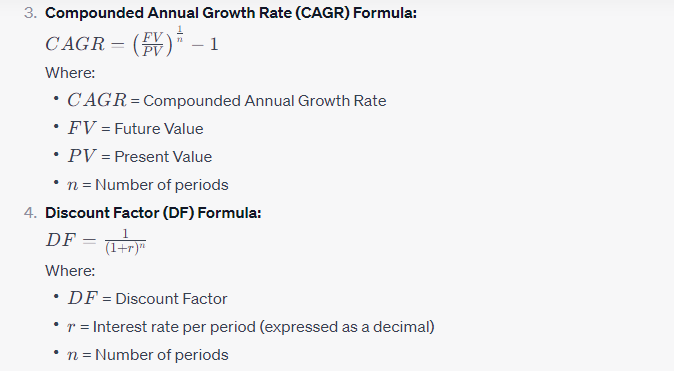
Financial formulas, such as the present value and future value formulas, are widely used to quantify the time value of money in practical applications. By considering the time preference of money, individuals and businesses can make more informed choices about saving, investing, borrowing, and evaluating the true value of financial transactions over time.

Formulas

FV

Pros of Time Preference / Value of Money

  • Informed Decision-Making

Understanding the time value of money helps individuals and businesses make more informed decisions about saving, investing, and borrowing. It allows for better planning and allocation of financial resources.

  • Comparative Analysis

The time value of money provides a framework for comparing cash flows occurring at different points in time. This is essential for evaluating investment opportunities, financial projects, and alternative financing options.

  • Accurate Valuation

By discounting future cash flows to their present value, financial analysts can accurately assess the true value of an investment or financial transaction. This contributes to more accurate financial reporting and decision-making.

  • Risk Management

Recognizing the time preference of money helps in assessing and managing risks associated with future cash flows. It allows individuals and businesses to consider the impact of uncertainty and make risk-adjusted decisions.

  • Optimal Resource Allocation

Time value of money principles assist in determining the optimal allocation of financial resources. This is particularly important in capital budgeting, where decisions about long-term investments impact a company’s future financial health.

  • Financial Planning

Individuals can use the concept of time preference to plan for future financial needs, such as retirement or major expenses. By understanding the impact of inflation and the potential for investment returns, individuals can set realistic financial goals.

Cons of Time Preference/Value of Money

  • Simplifying Assumptions

Time value of money calculations often involve simplifying assumptions, such as a constant interest rate. In reality, interest rates may fluctuate, and financial markets can be dynamic, leading to a degree of uncertainty.

  • Subjectivity

The choice of an appropriate discount rate in time value of money calculations can be subjective. Different individuals or organizations may use different rates, leading to variations in present value or future value calculations.

  • Assumption of Rationality

Time value of money assumes that individuals are rational and will always prefer to have a sum of money today rather than in the future. However, human behavior is complex, and individual preferences may not always align with this assumption.

  • Neglect of External Factors

Time value of money calculations may neglect external factors that can influence financial decisions, such as changes in economic conditions, technological advancements, or unforeseen events. These factors can impact the accuracy of projections.

  • Overemphasis on Short-Term Gains

The time preference of money can lead to an overemphasis on short-term gains, potentially neglecting the long-term sustainability of investments or projects. This bias may be counterproductive in situations where long-term strategic planning is crucial.

  • Difficulty in Predicting Future Variables

Predicting future interest rates, inflation rates, and other variables used in time value of money calculations can be challenging. Variability in these factors can introduce uncertainty into financial decision-making.

Finance Function, Objectives of Finance Function

The Finance function in an organization refers to the set of activities and processes involved in managing the financial resources of the company. It plays a crucial role in ensuring the financial health and sustainability of the business. The finance function is typically headed by a Chief Financial Officer (CFO) or a similar executive, and it encompasses a wide range of responsibilities. Aspects of the finance function:

  1. Financial Planning and Analysis (FP&A):

This involves creating budgets, forecasting financial performance, and analyzing variances between planned and actual results. FP&A helps in making informed decisions by providing insights into the financial implications of different strategies.

  1. Financial Reporting:

The finance function is responsible for preparing and presenting accurate and timely financial statements. This includes income statements, balance sheets, and cash flow statements, which are essential for both internal management and external stakeholders such as investors and regulatory authorities.

  1. Treasury Management:

This involves managing the organization’s cash flow, liquidity, and investments. The finance function ensures that there is enough cash on hand to meet short-term obligations while optimizing the return on surplus funds through prudent investment strategies.

  1. Risk Management:

Identifying and managing financial risks is a critical function of finance. This includes currency risk, interest rate risk, credit risk, and other potential threats to the financial stability of the organization. Risk management strategies are implemented to mitigate these risks.

  1. Capital Budgeting and Investment Decisions:

The finance function is involved in evaluating investment opportunities and deciding on capital expenditures. This includes assessing the financial feasibility of projects, estimating their potential returns, and determining whether they align with the organization’s overall strategy.

  1. Financial Compliance and Regulations:

Ensuring compliance with financial regulations and reporting requirements is another vital aspect of the finance function. Finance professionals need to stay abreast of changes in accounting standards, tax laws, and other relevant regulations.

  1. Financial Control:

Implementing internal controls to safeguard assets, prevent fraud, and ensure the accuracy of financial reporting is a key function. This involves setting up systems and processes to monitor and control financial transactions.

  1. Cost Management:

The finance function plays a role in managing and controlling costs throughout the organization. This includes cost accounting, cost analysis, and implementing strategies to optimize operational efficiency.

Objectives of Finance Function

The finance function within an organization serves several key objectives that are critical to the overall success and sustainability of the business. These objectives encompass a wide range of activities and responsibilities.

  1. Financial Planning:

Objective:

The finance function aims to develop comprehensive financial plans that align with the organization’s strategic goals. This involves forecasting future financial performance, budgeting, and setting financial targets.

Explanation:

Financial planning provides a roadmap for the allocation of financial resources. It involves predicting income, expenses, and capital requirements, allowing the organization to make informed decisions about resource allocation and investment.

  1. Risk Management:

Objective:

The finance function seeks to identify, assess, and mitigate financial risks that could impact the organization’s stability and profitability.

Explanation:

By understanding and managing risks such as market fluctuations, interest rate changes, and credit risks, the finance function helps protect the organization from potential financial setbacks. This includes implementing risk management strategies and financial instruments to hedge against adverse events.

  1. Financial Control:

Objective:

Establishing and maintaining effective internal controls to ensure the accuracy of financial information, prevent fraud, and safeguard assets.

Explanation:

Financial control involves implementing policies, procedures, and systems to monitor financial transactions and activities. This ensures compliance with internal policies and external regulations, providing stakeholders with confidence in the reliability of financial reporting.

  1. Optimal Capital Structure:

Objective:

Determining the optimal mix of debt and equity to finance the organization’s operations and investments.

Explanation:

The finance function assesses the cost of capital and evaluates different financing options to achieve an optimal capital structure. This involves balancing the advantages and disadvantages of debt and equity financing to minimize the cost of capital while maintaining financial flexibility.

  1. Liquidity Management:

Objective:

Managing the organization’s cash flow and liquidity to meet short-term obligations and capitalize on opportunities.

Explanation:

Finance professionals focus on maintaining an adequate level of liquidity to cover operational needs, such as paying suppliers and employees. This includes effective cash flow forecasting, working capital management, and investment of excess cash to optimize returns.

  1. Profitability and Performance Analysis:

Objective:

Analyzing financial performance and profitability to identify areas of improvement and support strategic decision-making.

Explanation:

The finance function assesses the financial performance of different business units, products, or projects. This analysis helps management understand the profitability of various activities and guides resource allocation toward the most lucrative opportunities.

  1. Compliance with Financial Regulations:

Objective:

Ensuring adherence to financial regulations, accounting standards, and reporting requirements.

Explanation:

Finance professionals stay updated on changes in financial regulations and accounting standards, ensuring that the organization’s financial statements are accurate and comply with legal and regulatory frameworks.

  1. Cost Management:

Objective:

Controlling and optimizing costs to enhance operational efficiency and profitability.

Explanation:

The finance function works to identify cost drivers, analyze cost structures, and implement cost-cutting measures without compromising the quality of products or services. This objective contributes to overall cost-effectiveness and competitiveness.

  1. Investment Decision-Making:

Objective:

Evaluating and selecting investment opportunities that align with the organization’s strategic objectives and offer a favorable return on investment.

Explanation:

The finance function is involved in assessing the financial viability of capital projects, mergers and acquisitions, and other investments. This includes conducting cost-benefit analyses and considering the long-term financial impact of investment decisions.

  1. Stakeholder Communication:

Objective:

Communicating financial information transparently and effectively to internal and external stakeholders.

Explanation:

The finance function plays a crucial role in preparing and presenting financial reports to investors, creditors, regulatory authorities, and internal management. Clear communication fosters trust and enables stakeholders to make informed decisions based on accurate financial information.

By addressing these objectives, the finance function contributes to the overall financial health, stability, and strategic success of the organization. It plays a pivotal role in guiding decision-making processes and ensuring the responsible and effective use of financial resources.

Financial analyst, Role of Financial Analyst

A financial analyst is a professional who assesses the financial performance of companies, industries, or investments and provides insights to aid decision-making. Financial analysts work in various sectors, including corporate finance, investment banking, asset management, and consulting.

Primary Role and Responsibilities and Activities:

  • Financial Modeling:

Creating and using mathematical models to analyze financial data and project future performance. Financial analysts often build models to evaluate the impact of different variables on business outcomes.

  • Financial Reporting and Analysis:

Examining financial statements, including income statements, balance sheets, and cash flow statements, to assess a company’s financial health and performance. This involves identifying trends, comparing financial metrics, and preparing reports for management or external stakeholders.

  • Budgeting and Forecasting:

Collaborating with other departments to develop budgets and financial forecasts. Financial analysts help organizations plan for the future by estimating revenues, expenses, and capital expenditures.

  • Valuation:

Assessing the value of assets, companies, or investment opportunities. This involves using various valuation methods such as discounted cash flow (DCF), comparable company analysis (CCA), and precedent transactions.

  • Risk Assessment:

Analyzing and managing financial risks, including market risk, credit risk, and operational risk. Financial analysts use quantitative techniques to assess the potential impact of risks on investment or business decisions.

  • Investment Analysis:

Evaluating investment opportunities, such as stocks, bonds, or other financial instruments. Analysts assess the potential returns and risks associated with different investment options to guide investment decisions.

  • Industry and Economic Research:

Monitoring and researching economic trends, industry performance, and market conditions. Financial analysts need to understand the broader economic context that may affect the organizations or investments they are analyzing.

  • Presenting Recommendations:

Communicating findings and recommendations to stakeholders, including senior management, clients, or investors. This may involve preparing reports, presentations, and participating in meetings to discuss financial strategies.

  • Mergers and Acquisitions (M&A):

Assisting in the evaluation of potential mergers, acquisitions, or divestitures. Financial analysts play a crucial role in conducting due diligence, financial modeling, and analyzing the financial impact of strategic transactions.

  • Asset Management:

Managing and optimizing investment portfolios for individuals or institutions. This involves selecting appropriate investment vehicles, monitoring performance, and adjusting portfolios based on market conditions.

  • Regulatory Compliance:

Ensuring compliance with financial regulations and reporting requirements. Financial analysts must stay informed about changes in accounting standards, tax laws, and other relevant regulations.

Selection of Financial analyst

Selecting a financial analyst is a crucial process for organizations seeking expertise in financial analysis and decision-making.

  • Educational Background:

Look for candidates with relevant educational qualifications, such as a degree in finance, accounting, economics, or a related field. Advanced degrees (e.g., MBA, CFA) may indicate a higher level of expertise.

  • Professional Certifications:

Consider candidates with professional certifications, such as the Chartered Financial Analyst (CFA) designation, which demonstrates a commitment to a high standard of professional competence.

  • Experience:

Evaluate the candidate’s work experience in financial analysis, budgeting, forecasting, and other relevant areas. Experience in the specific industry or sector of the hiring organization is often valuable.

  • Analytical Skills:

Assess the candidate’s analytical skills, including the ability to interpret financial data, conduct financial modeling, and make data-driven recommendations. Practical experience with financial modeling tools is a plus.

  • Communication Skills:

Look for strong communication skills, as financial analysts need to convey complex financial information to various stakeholders. This includes writing reports, creating presentations, and effectively communicating findings.

  • Attention to Detail:

Financial analysis requires a high level of accuracy and attention to detail. Candidates should demonstrate an ability to spot errors, reconcile discrepancies, and ensure the precision of financial data.

  • ProblemSolving Abilities:

Assess the candidate’s problem-solving skills, as financial analysts often encounter complex financial challenges. Look for individuals who can approach issues methodically and devise effective solutions.

  • Industry Knowledge:

Consider candidates with knowledge of the specific industry or sector in which the organization operates. Industry-specific expertise can enhance the analyst’s ability to understand and analyze relevant financial factors.

  • Technology Proficiency:

Financial analysts often use various tools and software for data analysis and financial modeling. Evaluate the candidate’s proficiency in relevant software and their ability to adapt to new technologies.

  • Ethical Standards:

Assess the candidate’s commitment to ethical standards and integrity. Financial analysts handle sensitive financial information, and ethical behavior is crucial for maintaining trust and credibility.

  • Team Collaboration:

Evaluate the candidate’s ability to work collaboratively with cross-functional teams. Financial analysts often need to interact with professionals from different departments to gather information and make informed decisions.

  • Understanding of Regulatory Environment:

Financial analysts should have a good understanding of financial regulations and reporting requirements. Candidates with knowledge of relevant compliance standards contribute to accurate and compliant financial reporting.

  • Adaptability and Learning Agility:

The financial landscape is dynamic, and analysts need to adapt to changes in market conditions, regulations, and technology. Look for candidates who demonstrate a willingness to learn and adapt to evolving financial environments.

Functions of Financials Management

Financial management involves planning, organizing, directing, and controlling an organization’s financial resources. It encompasses activities such as budgeting, risk management, financial analysis, and decision-making to achieve the organization’s financial goals. Effective financial management ensures the optimal utilization of funds, the creation of value for stakeholders, and the maintenance of financial stability. It includes strategic considerations like capital structure decisions, investment appraisal, and working capital management. By employing financial management principles, organizations can enhance profitability, manage risks, and make informed financial decisions, ultimately contributing to long-term sustainability and success. Financial managers play a crucial role in aligning financial strategies with organizational objectives, maintaining liquidity, and navigating the complexities of financial markets to support the overall health and growth of the business.

Financial management involves several key functions that are critical to the overall success and sustainability of an organization. These functions encompass a range of activities aimed at optimizing the use of financial resources and achieving the organization’s goals.

By performing these functions effectively, financial management contributes to the overall success and sustainability of the organization, aligning financial strategies with the broader objectives of the business.

Functions of Financial Management:

  1. Financial Planning:

Developing comprehensive financial plans that outline the organization’s financial objectives, strategies, and budgets. This involves forecasting future financial performance and setting targets for revenue, expenses, and investments.

  1. Financial Control:

Establishing internal controls to ensure the accuracy of financial information, prevent fraud, and safeguard assets. Financial control involves monitoring financial transactions and activities to ensure compliance with policies and regulations.

  1. Financial Decision-Making:

Making strategic decisions related to investments, financing, and dividend policies. Financial managers evaluate various options to determine the most effective use of financial resources and maximize shareholder wealth.

  1. Risk Management:

Identifying, assessing, and mitigating financial risks that could impact the organization. This includes managing risks related to market fluctuations, interest rates, currency exchange, and credit.

  1. Capital Budgeting:

Evaluating and selecting long-term investment projects that align with the organization’s strategic goals. Financial managers use techniques like Net Present Value (NPV) and Internal Rate of Return (IRR) to assess the viability of capital projects.

  1. Capital Structure Management:

Determining the optimal mix of debt and equity to finance the organization’s operations and investments. Financial managers strive to achieve a capital structure that minimizes the cost of capital while balancing financial risk.

  1. Working Capital Management:

Managing the day-to-day operational liquidity of the organization, including cash flow, receivables, and payables. This function ensures that the organization has enough working capital to meet short-term obligations.

  1. Financial Analysis and Reporting:

Conducting financial analysis to assess the organization’s performance, profitability, and financial health. Financial reporting involves preparing and presenting accurate and timely financial statements to internal and external stakeholders.

  1. Dividend Policy:

Determining the company’s approach to distributing profits to shareholders. Financial managers decide on dividend payments and share buybacks while considering the organization’s financial needs and growth opportunities.

  1. Cost Management:

Controlling and optimizing costs to improve operational efficiency and profitability. This includes cost accounting, budgetary control, and continuous evaluation of cost structures.

  1. Financial Compliance:

Ensuring compliance with financial regulations, accounting standards, and reporting requirements. Financial managers stay informed about changes in regulations and implement policies to meet compliance obligations.

  1. Investor Relations:

Building and maintaining positive relationships with investors and financial stakeholders. This involves effective communication of the company’s financial performance, strategies, and future prospects.

Goals of Financial Management

Financial management involves planning, organizing, directing, and controlling an organization’s financial resources. It encompasses activities such as budgeting, risk management, financial analysis, and decision-making to achieve the organization’s financial goals. Effective financial management ensures the optimal utilization of funds, the creation of value for stakeholders, and the maintenance of financial stability. It includes strategic considerations like capital structure decisions, investment appraisal, and working capital management. By employing financial management principles, organizations can enhance profitability, manage risks, and make informed financial decisions, ultimately contributing to long-term sustainability and success. Financial managers play a crucial role in aligning financial strategies with organizational objectives, maintaining liquidity, and navigating the complexities of financial markets to support the overall health and growth of the business.

Goals of Financial Management

The goals of financial management revolve around optimizing the organization’s financial performance and ensuring its long-term viability. These goals are essential for creating value for shareholders and stakeholders.

These goals are interrelated and require a strategic and holistic approach to financial decision-making. By achieving these objectives, financial management contributes to the overall success and sustainability of the organization.

  1. Maximizing Shareholder Wealth:

The overarching goal of financial management is to increase the value of the firm for its shareholders. This involves making decisions that lead to higher stock prices and dividends.

  1. Profit Maximization:

While not the sole objective, financial management aims to maximize profits to ensure the company’s ability to reinvest in its operations, fund growth, and provide returns to investors.

  1. Optimal Utilization of Resources:

Efficient allocation of financial resources is crucial. Financial management seeks to ensure that funds are used wisely to generate maximum returns and minimize waste.

  1. Liquidity Management:

Maintaining an optimal level of liquidity is essential to meet short-term obligations and take advantage of investment opportunities. Financial management balances liquidity needs with long-term investment goals.

  1. Risk Management:

Financial managers work to minimize risk exposure by implementing strategies to hedge against various financial risks, including market fluctuations, interest rate changes, and credit risks.

  1. Long-Term Growth:

Financial management aims to support the organization’s sustained growth by making strategic investment decisions, expanding operations, and entering new markets.

  1. Cost Control and Efficiency:

Controlling costs is vital for profitability. Financial management focuses on identifying cost-effective strategies to improve operational efficiency without compromising the quality of products or services.

  1. Capital Structure Optimization:

Balancing the mix of debt and equity in the capital structure is crucial. Financial management strives to achieve an optimal capital structure that minimizes the cost of capital while maintaining financial flexibility.

  1. Financial Transparency and Compliance:

Ensuring transparency in financial reporting and compliance with regulations is a goal of financial management. This builds trust among stakeholders and provides accurate information for decision-making.

  1. Enhancing Shareholder Value:

Financial management seeks to enhance the value of the firm by making decisions that increase profitability, manage risks effectively, and align the organization’s activities with the expectations and interests of its shareholders.

Consumer Behaviour Characteristics, Scope, Relevance, Need

A consumer behavior analysis helps you identify how your customers decide on a product or a service. To study their behavior you need a mix of qualitative and quantitative data from customer surveys, customer interviews, the information gathered from observation of their behavior in-store and online.

  • According to Engel, Blackwell, and Mansard

‘Consumer behaviour is the actions and decision processes of people who purchase goods and services for personal consumption’.

  • According to Louden and Bitta

‘Consumer behaviour is the decision process and physical activity, which individuals engage in when evaluating, acquiring, using or disposing of goods and services’.

Consumer buying behavior is the sum total of a consumer’s attitudes, preferences, intentions, and decisions regarding the consumer’s behavior in the marketplace when purchasing a product or service. The study of consumer behavior draws upon social science disciplines of anthropology, psychology, sociology, and economics

Characteristics

  • Process

Consumer behaviour is a systematic process relating to buying decisions of the customers. The buying process consists of the following steps;

  • Need identification to buy the product.
  • Information search relating to the product.
  • Listing of alternative brands.
  • Evaluating the alternative (cost-benefit analysis)
  • Purchase decision.
  • Post-purchase evaluation by the marketer.


  • Influenced by Various Factors

Consumer behaviour is influenced by a number of factors.

The factors that influence consumers are: Marketing, Personal, Psychological, Situational, Social, Cultural etc.

  • Different for All Customer

All consumers do not behave in the same manner. Different consumers behave differently. The difference in consumer behaviour is due to individual factors such as nature of the consumer’s life style, culture, etc.

  • Different for Different Products

Consumer behaviour is different for different products. There are some consumers who may buy more quantity of certain items and very low/no quantity of some other items.

  • Region Bounded

The consumer behaviour varies across states, regions and countries. For instance, the behaviour of urban consumers is different from that of rural consumers.

Normally, rural consumers are conservative (traditional) in their buying behaviour.

  • Vital for Marketers

Marketers need to have a good knowledge of consumer behaviour. They need to study the various factors that influence consumer behaviour of their target customers. The knowledge of consumer behaviour enables marketers to take appropriate marketing decisions.

  • Reflects Status

Consumers buying behaviour is not only influenced by status of a consumer, but it also reflects it. Those consumers who own luxury cars, watches and other items are considered by others as persons of higher status.

  • Consumer behavior has a spread effect.

The buying behaviour of one person may influence the buying behavior of another person. For instance, a customer may always prefer to buy premium brands of clothing, watches and other items etc.

This may influence some of his friends, neighbours, colleagues. This is one of the reasons why marketers use celebrities like Shahrukh Khan , Sachin to endorse their brands.

  • Standard of Living

Consumer buying behaviour may lead to higher standard of living. The more a person buys the goods and services, the higher is the standard of living.

  • Keeps on Changing

The consumer’s behaviour undergoes a change over a period of time depending upon changes in age, education and income level. Etc, for instance, kids may prefer colorful dresses, but as they grow up as teenagers and young adults, they may prefer trendy clot

Scope

  • Marketing Management

Effective business managers know the importance of marketing towards the success of the business. Understanding consumer behaviour is essential for the long-run success of any marketing program. A better understanding of consumer needs and wants helps the business to plan and execute the marketing strategies accordingly.

  • Demand Forecasting

Consumer behaviour helps in the forecasting of the demands for the business. Every business identifies the needs and wants of the customers by understanding their behaviour. Forecasting helps them to find out the unfulfilled demands in the market easily. If the company knows what their consumer wants, they can design and produce the product accordingly.

  • Selecting the Target Market

Consumer behaviour helps in identifying target customers from the market. Study of customer behaviour identifies all customers segments with unique and distinct needs. It helps in segmentation of the overall market into different groups. Grouping of customers and identification of their needs will help business in serving them better. The business will be able to design their products in a better way as per the needs and wants of their customer. It makes clear to businesses who are their target customers and what they want.

  • Educating Customer

Consumer behaviour helps marketers to identify how customers spend on their buying decision. By understanding their behaviour marketers can easily guide their customers about how they can improve their buying decisions. They can suggest ways to save their money and guides them with better options available in the market. Customers get aware of different opportunities available to them as per their behaviour.

  • Market Mix.

Proper development and designing all-important elements like product, price, place, and promotion are essential for every business. It helps them to identify the likes and dislikes of the customers. This allows marketers to design optimum marketing mix plans and improve the effectiveness of marketing strategies. The proper implementation of a marketing mix helps organizations to attract more customers, thereby increasing profit.

  • Assists In Designing Product Portfolio

Designing the right product portfolio is a challenging task for every business. Every business should design such a portfolio consisting of all class of products. Consumer behaviour helps in identifying the class and requirements of peoples. This helps in designing products as per people’s needs and include in the product portfolio of the company. This way business is able to design the optimum product portfolio and able to serve its customers in a better way.

Relevance

  • Know the effect of price on buying

Consumer behavior can help to understanding the effect of price on buying. Whenever the price is moderate on cheap more and more customers will buy the product.

After the time of production, there comes a time in which the company has to decide what the price of our product will be because it helps to divide the categories of the customer and also helps to attain more sales.

  • Innovate new Products

Continuous strive for improvement in success rate largely depends on the innovation in the offered product or services line. To accurately predict and ace innovation, the need for study of Consumer behaviour is a must. Researching the same not only enables to make new products/services satisfying the needs and wants of consumers but also to tweak the present line of offerings to fulfil the consumer’s needs and demands.

  • To design production policies

All of the production policies have designed taking into consideration the consumer preference so that product can be successful in the market.

In every business, the main motive is to enhance the production and as well as sales of the company and to do all these, any company or business has to win the trust of its customers and studying about their tastes, likings, and preferences.

Need for Consumer Behaviour

Consumer behavior is a crucial aspect of marketing and business strategy. Understanding why and how consumers make decisions about what to buy or not to buy is essential for businesses to thrive.

  • Product Development and Innovation:

Knowledge of consumer preferences and needs helps businesses create products and services that align with customer expectations. Understanding consumer behavior can drive innovation by identifying gaps in the market and areas where improvements or new solutions are needed.

  • Marketing Strategy:

Marketers can tailor their messaging and promotional strategies based on an understanding of consumer behavior. This includes selecting the right advertising channels, creating compelling content, and using effective communication techniques. The study of consumer behavior helps in market segmentation, allowing businesses to target specific consumer groups with customized marketing approaches.

  • Brand Building:

Consumer perceptions and attitudes toward a brand are influenced by their experiences and interactions. By understanding consumer behavior, businesses can build and maintain a positive brand image. Recognizing the emotional and psychological factors that influence consumer choices can contribute to the development of brand loyalty.

  • Price and Value Perception:

Consumers don’t just evaluate products based on their price; they also consider the value they receive in return. Understanding how consumers perceive value helps businesses set appropriate pricing strategies. Consumer behavior studies can reveal insights into the pricing sensitivity of different market segments.

  • Customer Satisfaction and Retention:

Knowing what satisfies or dissatisfies customers enables businesses to improve their products and services continuously. Building strong relationships with customers and understanding their post-purchase behavior can contribute to customer retention and repeat business.

  • Market Trends and Forecasting:

Analyzing consumer behavior provides insights into current market trends and helps businesses anticipate future changes. Predicting consumer preferences allows businesses to adapt their strategies proactively, staying ahead of competitors and market shifts.

  • E-commerce and Technology Impact:

In the digital age, where online shopping and e-commerce are prevalent, understanding consumer behavior is crucial for online retailers. This includes optimizing website design, streamlining the purchase process, and utilizing data analytics for personalized recommendations.

  • Policy and Regulation Compliance:

Consumer behavior studies help businesses comply with relevant laws and regulations, ensuring that their products and services meet consumer expectations and legal requirements.

Circumstances of valuation of brand

Brand valuation is the process of estimating the total financial value of a brand. A conflict of interest exists if those who value a brand were also involved in its creation. The ISO 10668 standard specifies six key requirements for the process of valuing brands, which are transparency, validity, reliability, sufficiency, objectivity; and financial, behavioral, and legal parameters. Brand valuation is distinct from brand equity.

Brands are ideally suited to this task because they communicate on a number of different levels. Brands have three primary functions; navigation, reassurance and engagement:

  • Navigation: brands help customers to select from a bewildering array of alternatives.
  • Reassurance: they communicate the intrinsic quality of the product or service and so reassure customers at the point of purchase.
  • Engagement: they communicate distinctive imagery and associations that encourage customers to identify with the brand.

Brand value

Traditional marketing methods examine the price/value relationship in terms of dollars paid. Some marketers believe customers perceive the value to mean the lowest price. While this may be true for commodities, some branding techniques are moving beyond this evaluation.

Brand valuation emerged in the 1980s. Early pioneers in brand valuations included the British branding agency, Interbrand, led by John Murphy and Michael Birkin, which is credited with leading the concept’s development. Millward Brown was also a leading brand valuer.

Both companies maintained “Top 100” lists of companies by valuation. In 1989, Murphy edited a seminal work on the subject: Brand Valuation; Establishing a true and fair view; and in 1991, Birkin laid out a brand earnings multiple models of brand valuation in the book, Understanding Brands. A 2009 paper identified “at least 52” brand valuation companies.

Valuation methodologies

There are three main types of brand valuation methods:

The cost approach

This is based on the cost of creating the brand. The fundamental premise of the cost approach is that it should not be worth more than it would cost to build an equivalent. The cost of building a brand minus any expenses is reflective of market value.

The market approach

In this approach, the market price is compared. This valuation method relies on the estimation of value based on similar market transactions (e.g. similar license agreements) of comparable brand rights. Given that often the asset undervaluation is unique,[clarification needed] the comparison is performed in terms of utility, technological specificity and property, considering the asset’s perception by the market. Since the market approach relies on comparisons to similar assets, it is most useful when there is substantial data available regarding recent sales of comparable assets. Data on comparable or similar transactions may be accessed through the following sources:

  • Company annual reports.
  • Specialized royalty rate databases and publications.
  • Court decisions concerning damages.

The income approach

This approach measures the value by reference to the present value of the economic benefits received over the rest of the useful life of the brand.[5] There are at least six recognized methods of the income approach, with some authorities listing more.

  • Price premium method: Estimates the value of a brand by the price premium it generates when compared to a similar but unbranded product or service. This must take into account the volume premium method.
  • Volume premium method: Estimates the value of a brand by the volume premium it generates when compared to a similar but unbranded product or service. This must take into account the price premium method.
  • Income split method: This values the brand as the present value portion of the economic profit attributable to the brand over the rest of its useful life. This has problems in that profits can sometimes be negative, leading to unrealistic brand value, and also that profits can be manipulated so may misrepresent brand value. This method uses qualitative measures to decide the portion of economic profits to be accredited to the brand.
  • Multi-period excess earnings method: this method requires a valuation of each group of intangible assets to calculate the cost of capital of each. The returns for each of these are deducted from the present value of future cash flows and when all other assets have been accounted for, the remaining is used as the value of the brand.
  • Incremental cash flow method or Excess Margin: Identifies the extra cash flow in a branded business when compared to an unbranded, and comparable, business. However, it is rare to find conditions for this method to be used since finding similar unbranded companies can be difficult.
  • Royalty relief method: Assume theoretically a company does not own the brand it operates under but instead licenses the use from another. The royalty relief method uses available data of similar arrangements in the industry and assigns the value of the brand as the present value of future royalty payments.

Historical Cost Method

Brand valuation through the historical cost method is used at the initial stage of brand creation. The historical cost method isolates the direct costs and contributes to indirect costs. It attempts to recreate the historical development and creates an assessment value for the future. However, the cost of creating a brand does not play a major role in the present value.

Replacement Cost Method

This method values the brand keeping the investment and expenditure necessary to replace the brand with a new one which has equivalent utility to the company.

Market-Based Approach: A market-based method of brand valuation deals with the amount at which a brand is sold and the highest value that a buyer is willing to pay for it. The market-based approach is classified into:

Brand Sale Comparable Approach

In this method, the brand is valued by the recent transactions that involve similar brands in the same industry. It is viewed from a third party perspective and cannot be applied to all cases for comparing data.

Brand Equity Approach

The brand equity approach includes advertising and results in price premium profits. In this case, the value of brand equity is estimated using the financial market value.

Residual Method

The residual value is arrived at when the market capitalisation is subtracted from the net asset value. The variables such as risk-free interest rate, current exercise price, the variance of the asset, time of expiration of the option and value of the underlying asset are included. It helps to calculate the potential value of line extensions.

Income-Based Approach: In this approach, the potential of the brand is calculated by the future net earnings that directly contribute to determining the value of the brand. The following are the classifications in the Income-Based Approach:

Royalty Relief Method

As per this method, the value of the brand is related to characteristics applied by the company or valuer. The valuer will have to estimate the base for calculation and determine the appropriate royalty rate, a growth rate, expected life and a discount rate for the brand. This method is accepted by tax authorities and has an edge of being industry-specific.

Differential Price to Sales Ratio Method

This method will calculate the brand value as a difference between the estimated price to sales ratio for a company with a brand and the price to sales ratio for an unbranded company. This will be multiplied by the sales of the branded company.

Price Premium Method

The approach of this method is that a branded product should sell for a premium over an unbranded product. The value is calculated by comparing the cost involved for production and cost produced after sales. It creates the impact of assuming that the brand helps to accumulate additional profit.

Discounted Cash Flow

Cash flow acts as an important component for determining the value of an asset. It takes into account the increasing working capital and fixed asset investments. It estimates the amount of future cash flow that the brand can generate.

error: Content is protected !!