Planning for Performance Improvement

  • Listen to your employee and give them the opportunity to respond to any of your points. The PIP is a collaborative process. Employees become disengaged when they feel they are misunderstood or when they feel as though they aren’t being met half way.
  • Pare down to the cause of any issues at work. Does the employee feel as though they don’t have a future with the organization? Are they ready for a more challenging role? Or are they dealing with personal issues outside of the spectrum of the business? Issues should be specific and supported with examples to ensure the employee understands the opportunities and changes needed.
  • Focus on the positive aspects of the employee’s relationship with the company. Emphasize their valuable attributes and work with them to find ways to improve on these positives, rather than harping on the negatives.
  • Give them a clear path. Employees need to understand their goals and the actions to take to meet expectations of performance and behavior. The more precise their goals are, the easier they will be to obtain. Vague goals can feel confusing or frustrating and can make employees feel as though they are spinning their wheels.
  • Regularly review employee progress. Track the employee’s performance and touch base with them at regular intervals to keep them motivated. Employees will appreciate being given a chance to talk about any concerns they’ve developed and have access to support and resources to execute the plan. We suggest formal 30-60-90 day meetings with frequent informal check-ins in between. All encounters should be focused on progress and the employee should be allowed to comment on improvements and ask questions or for clarification.

Of course, just as a PIP needs to be rewarding, there also need to be clear consequences outlined for a failure to meet goals. The PIP establishes an agreed on plan between the employee and the organization regarding the best way to improve their results. If the employee breaks this contract, there should be a transparent set of circumstances. These should be outlines at the beginning of the PIP process and employees should confirm that they understand.

Socialization and Induction

Socialization

It is the process of adaptation. It is the process by which new employees attempt to learn and inculcate the norms and values of work roles in an organization. Learning and inculcating the norms and values of work group are necessary for proper adjustment and job performance.

1. Socialization is based on several assumptions
2. New employee suffer from anxiety and require adjustment.
3. socialization strongly affects employee programme and stability of organization.

Pre arrival stage

It recognizes that all the new recruits arrive in the organization with a set of values, norms, expectations and learning. This includes both the work to be done and the organization. For example in a business schools, student acquire certain idea’s regarding the nature of their future jobs, pay packages, and carrier progress. At the recruitment stage many organizations give job preview which helps the prospective employees to learn more about the job and the organization.

Encounter stage

When the new employees join the organization, he encounter the realities of the situation in term of his job, work culture, subordinates and peer’s. if the expectations of the individual are in the tune with the organizational realities, he adapt organization quickly. On the other hand, if there is a marked difference between expectations and realities, socialization is essential to replace his previous assumptions with realities. At the other extreme, the individual cannot recognize with the values and norms of the organization and quits the job.

Metamorphosis stage

In this stage, the new employee acquire the skills require to adjust with the values and norms of the organization. He brings necessary change in his attitude and role behaviour to suit the organization’s culture. Such changes make the employee self confident and he feels accepted by other member’s of the organization. The completion of socialization process is characterized by fellings.

Induction

Induction or orientation can help overcome these problems. Once an employee is selected and placed on an appropriate job, the process of familiarizing him with the job and organization begins. This process is called induction.
Induction is “the process of receiving and welcoming an employee when he first join a company and giving him the basic information he needs to settle down quickly and happily and start work”.

The new employee is introduced to the job and the organization. The purpose of orientation is to make the new entrant feel at home and develop a sense of pride in the organization and commitment to the job. The new comer is explained his duties and responsibilities, company policies and rules, and other relevant information to get acquainted and accommodated with the organization.
“Induction is a planned introduction of employees to their jobs, their co-worker’s and the organization”.

Induction conveys three types of information:

  • General information about the daily work routine.
    A review of the organization’s history, founding further objectives, operations-product and employee contribution.
    A detailed presentation in broacher’s of the organization and policies, work rules and employee benefits.

Objectives of induction

  • To help the new comer overcome his natural shyness and nervous in meeting new people in a new environment.
  • The idea is to make the new people feel at home.
  • Coordination will developed with co-workers.
  • Make good relationship, good initial impression of a company, work supervision.
  • To build up the new employee’s confidence in the organization and in himself so that he may become an efficient employee.
  • To give the new comer necessary information such as location of cafeteria, toilets and locker room, rest periods and leave rules etc.

Advantages of formal induction

  • Induction helps to build up a two-way channel of communication between management and workers.
  • Proper induction facilities informal relations and teamwork among employees.
  • Effective induction helps to integrate the new employee into the organization and to develop a sense of belonging.
  • Induction is helpful in supplying information concerning the organization, the job and employee welfare facilities.
  • A formal induction programme proves that the company is taking sincere interest is getting him off to a good start.

Contents of induction programme

1. Brief history and operations of the company.
2. Products and services of the company.
3. The company organization structure.
4. Location of department and employee facilities.
5. Policies and procedure of the company.
6. Rules, regulations and daily work routines.
7. Grievance procedure.
8. Safety measure.
9. Standing order and disciplinary procedure.
10. Terms and conditions of the service including wages, working hours, overtime holidays etc.
11. Suggestion schemes.
12. Benefits and services of employees.
13. Opportunities for training, promotion and transfer.

Selection, Process of Selection, Stages

Selection is the process of choosing the most suitable candidates from a pool of applicants for a specific job role within an organization. It involves assessing candidates’ qualifications, skills, experience, and cultural fit to determine their potential to succeed in the role. The selection process typically includes steps such as screening resumes, conducting interviews, administering tests, and performing background checks. The goal of selection is to identify candidates who not only meet the job requirements but also align with the organization’s values, ensuring long-term success and reducing turnover.

Finding the interested candidates who have submitted their profiles for a particular job is the process of recruitment, and choosing the best and most suitable candidates among them is the process of selection. It results in elimination of unsuitable candidates. It follows scientific techniques for the appropriate choice of a person for the job.

The recruitment process has a wide coverage as it collects the applications of interested candidates, whereas the selection process narrows down the scope and becomes specific when it selects the suitable candidates.

Stone defines, ‘Selection is the process of differentiating between applicants in order to identify (and hire) those with a greater likelihood of success in a job’.

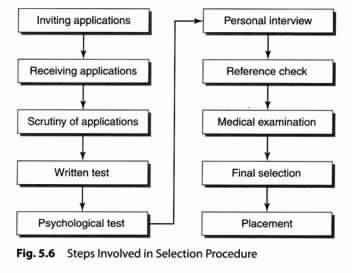
Steps Involved in Selection Procedure:

A scientific and logical selection procedure leads to scientific selection of candidates. The criterion finalized for selecting a candidate for a particular job varies from company to company.

Therefore, the selection procedure followed by different organizations, many times, becomes lengthy as it is a question of getting the most suitable candidates for which various tests are to be done and interviews to be taken. The procedure for selection should be systematic so that it does not leave any scope for confusions and doubts about the choice of the selected candidate (Figure 5.6).

1. Inviting applications:

The prospective candidates from within the organization or outside the organization are called for applying for the post. Detailed job description and job specification are provided in the advertisement for the job. It attracts a large number of candidates from vari­ous areas.

2. Receiving applications:

Detailed applications are collected from the candidates which provide the necessary information about personal and professional details of a person. These applications facilitate analysis and comparison of the candidates.

3. Scrutiny of applications:

As the limit of the period within which the company is supposed to receive applications ends, the applications are sorted out. Incomplete applications get rejected; applicants with un-matching job specifications are also rejected.

4. Written tests:

As the final list of candidates becomes ready after the scrutiny of applications, the written test is conducted. This test is conducted for understanding the technical knowledge, atti­tude and interest of the candidates. This process is useful when the number of applicants is large.

Many times, a second chance is given to candidates to prove themselves by conducting another written test.

5. Psychological tests:

These tests are conducted individually and they help for finding out the indi­vidual quality and skill of a person. The types of psychological tests are aptitude test, intelligence test, synthetic test and personality test

6. Personal interview:

Candidates proving themselves successful through tests are interviewed per­sonally. The interviewers may be individual or a panel. It generally involves officers from the top management.

The candidates are asked several questions about their experience on another job, their family background, their interests, etc. They are supposed to describe their expectations from the said job. Their strengths and weaknesses are identified and noted by the interviewers which help them to take the final decision of selection.

7. Reference check:

Generally, at least two references are asked for by the company from the can­didate. Reference check is a type of crosscheck for the information provided by the candidate through their application form and during the interviews.

8. Medical examination:

Physical strength and fitness of a candidate is must before they takes up the job. In-spite of good performance in tests and interviews, candidates can be rejected on the basis of their ill health.

9. Final selection:

At this step, the candidate is given the appointment letter to join the organization on a particular date. The appointment letter specifies the post, title, salary and terms of employment. Generally, initial appointment is on probation and after specific time period it becomes permanent.

10. Placement:

This is a final step. A suitable job is allocated to the appointed candidate so that they can get the whole idea about the nature of the job. They can get adjusted to the job and perform well in future with all capacities and strengths.

Recruitment

Recruitment is the process of searching the candidates for employment and stimulating them to apply for jobs in the organization. It is the process of bringing together those who are offering jobs and those who are seeking jobs. Recruitment is a positive process where a pool of prospective employees is created and management select the right person for the right job from this pool. It provides a base for the selection process.

Sources of Recruitment

  1. Internal sources of recruitment which means recruitment from within the organization.
  2. External sources of recruitment means recruitment from outside the organization.

Internal sources of recruitment which means recruitment from within the organization

(i) Transfer: it means shifting of employees from one job to another. There is no drastic change in the pay or status of the employees it generally remains the same.

(ii) Promotion: it means shifting the employee to higher position with the change in the pay or status.

(iii) Internal advertisement: it means appointing the employees from within the organization through advertisement.

(iv) Lent services: it means employing the person for newly started plant in the organization.

(v) Extension of services: it is extending the service of employees by recruiting them again.

(vi) Absorption of trainees: those who come in the organization for training employing them.

External sources of recruitment mean recruitment from outside the organization:  

(i) Advertisement: it is a way to attract number of employees by giving advertisement in the newspaper.

(ii) Casual callers: the good organizations have a list of casual callers also who apply them and the organization instead of giving new advertisement give a call to these casual callers.

(iii) Employment exchange: it is a good source of recruitment where the candidates are called with the help of employment exchange.

(iv) Educational institutions: here the company’s go to the educational institutions from where they select the suitable employees for the job.

(v) Labor union: the organization may select the candidate from the labor union of the company to satisfy the labors also.

(vi) Recommendation of employees: sometimes the employees working in the organization also suggest the name of suitable candidate for the appointment.

(vii) Waiting lists: generally the organization s prepares the waiting lists of the employees. Sometimes the selected candidates failed to join in that case the waiting list employees are called.

Thus the above said are the main sources of recruitment of the employees within the organization and outside the organization which are used by the organization to employ the employees.

Process of Recruitment

(i) Firstly it identify the different sources of employee supply

(ii) To check their validity

(iii) Selecting the most suitable source

(iv) Inviting the applications from the prospective candidate for the vacancy.

Promotions, Demotions

Promotions

The employees are given the promotions to higher posts and positions as and when vacancies are available or when new posts are created at the higher levels. It is quite common in all types of organizations. It is the product of internal mobility of the employees due to change in organizational processes, structure etc. It is better ten direct recruitment which satisfy many human resources problems of the organization and helps in achieving organizational objectives. Promotion means higher position to an employee who carries higher status, more responsibilities and higher salary. The higher status and salary is the two most important ingredient of any promotion. It is an advancement of employee to a higher post with greater responsibilities and higher salary, better service conditions and thus higher status.

Purpose of Promotion

  • To motivate employees to higher productivity.
  • To attract and retain the services of qualified and competent people to recognize and reward the efficiency of an employee.
  • To increase the effectiveness of the employee and the organization.
  • To fill up higher vacancies from the within the organization.
  • To built loyalty, morale and the sense of belongingness in the employee.
  • To impress upon others that opportunities are available to them too in the organization, if they perform well.

Promotion Policy

We have seen policy is the guideline for action. Policy varies with organization. So the promotion is very sensitive to employees, it is very essential. The promotion policy should clearly stated, widely circulated, and fully explained to their employees. The promotion policy which influences the number of factor of the organization such as, morale, motivation, turnover of the personnel in the organization. The personnel department of the organization must develop an effective promotion policy. This should be in written, flexible subject to situations. In order to make the promotion policy successful, it is necessary that the employees’ assessment and confidential reporting system should be objective as far as possible so that every employee has faith in promotion policy and hence induced for better performance to get promotion.

The promotion policy should consider merit, potential and seniority of the employees. The merit factor requires a good procedure for evaluating the performance of the employee. The performance of the each employee should be appraised periodically and should form the part of personal record.

Principles of Promotion

Promotion is a double edged weapon. If handled carefully, promotion is a double edged weapon. If handled carefully, it contributes to employee satisfaction and motivation. If it is mishandled, it leads to discontentment, frustration, skepticism, bickering among the employees and culminates in a high rate of employee turn over, HR department has taken the responsibility of designing, implementing the total promotion policy in an organization. The policy of promotion should be clear in the following matters:

  • The management must take it clear where to fill-up higher positions by internal promotions or recruit people from outsides. Generally speaking, top positions by external recruitment. The lower positions should however, are filled up by promotions from within.
  • When it has been decided to fill-up higher positions with promotions, further decisions on determining the basis of promotion should be made by the management. The basis of promotion may be seniority or merit or both.

The merit’s are:

  • It is easy to administer.
  • There is less scope for subjectivity or arbitrariness in fixing seniority.
  • Labor Unions welcome seniority based promotions.
  • Seniority and experience go hand in hand; therefore, it is right and proper to make promotions on this basis.
  • Subordinates are willing to work under an older boss who are given many years of service to the company.
  • Loyalty is rewarded.

Demerits are:

  • Seniority is no indication of competence.
  • In spite of judicial pronouncement, there are no single criteria for fixing the seniority of an employee.
  • Young and competent people get frustrated and might leave the organization.

If the competency is the basis for promotion, an employee whose performance is the best, as revealed by performance appraisal, is promoted. He or She beats all others by his or her merit is rewarded.

The merits of promotion by competency:

  • Efficiency is encouraged, recognized and rewarded.
  • Competent people are retained because better prospects are open to them.
  • Productivity increases.

The disadvantages of promotion by merit are:

  • Discontentment among senior employees.
  • Scope for favouritism.
  • Loyalty and length of service are not rewarded.
  • Opposition from union leaders.

Demotion

Demotion is the opposite of promotion. It is a downward movement of employees in the organizational hierarchy with lower status and lower salary. It is the downwarding process and is insulating to an employee. Demotion is the punishment for incompetence or mistake of serious nature on the part of the employee. It is serious types of the penalty or punishment and should be given rarely and only under exceptional circumstances and tactfully. Demotions may be necessary under the following conditions:

  • When the organization reduces activities, officer occupying certain posts are demoted.
  • Errors in the promotions already made are corrected through demotions.
  • It may be necessary to use demotions as a tool of disciplinary action against erring employees.

The tool of demotion should be used only when it is absolutely necessary. However, there should not be any injustice to any of employees in this regard. Demotions should be made for genuine reasons. Promotions are easily as they affect their status, career and position. Demotion usually treated as an insult and naturally resented by the employees in one way or the other. It is, therefore, desirable to avoid demotions as far as possible. Demotions should be an exception but not the normal rule of the organization.

Demotion Policy

Demotion is very harmful for the employee’s morale. It is an extremely painful action, impairing the relationships between people permanently. While effecting the demotions, managers should extremely careful not to place himself on the wrong side of the fence. It is therefore, very necessary to formulate a demotion policy so that there may be no grievances on the part of the unions and the employee concerned.

Demotions should have serious impact on need fulfillment. Needs for esteem and belongingness are get frustrate leading to a defensive behaviour on the part of the person demoted. There may be complaints, emotional turmoil, inefficiency or resignations. Hence, demotions are very rarely resorted to by managers. Manager prefers to discharge the employees rather than face the problems arising from the demotions.

Process of Job Analysis and Design

An effective and right process of analyzing a particular job is a great relief for them. It helps them maintain the right quality of employees, measure their performance on realistic standards, assess their training and development needs and increase their productivity. Let’s discuss the job analysis process and find out how it serves the purpose.

Job Analysis Process
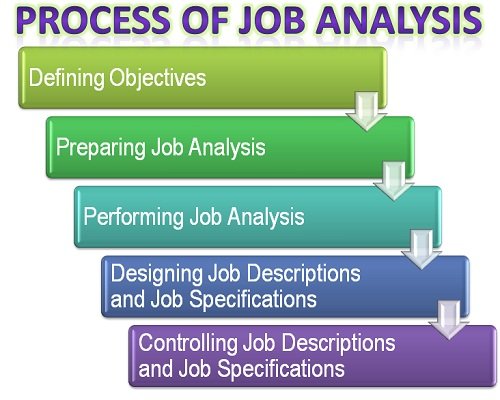
Identification of Job Analysis Purpose: Well any process is futile until its purpose is not identified and defined. Therefore, the first step in the process is to determine its need and desired output. Spending human efforts, energy as well as money is useless until HR managers don’t know why data is to be collected and what is to be done with it.
Who Will Conduct Job Analysis: The second most important step in the process of job analysis is to decide who will conduct it. Some companies prefer getting it done by their own HR department while some hire job analysis consultants. Job analysis consultants may prove to be extremely helpful as they offer unbiased advice, guidelines and methods. They don’t have any personal likes and dislikes when it comes to analyze a job.
How to Conduct the Process: Deciding the way in which job analysis process needs to be conducted is surely the next step. A planned approach about how to carry the whole process is required in order to investigate a specific job.
Strategic Decision Making: Now is the time to make strategic decision. It’s about deciding the extent of employee involvement in the process, the level of details to be collected and recorded, sources from where data is to be collected, data collection methods, the processing of information and segregation of collected data.
Training of Job Analyst: Next is to train the job analyst about how to conduct the process and use the selected methods for collection and recoding of job data.
Preparation of Job Analysis Process: Communicating it within the organization is the next step. HR managers need to communicate the whole thing properly so that employees offer their full support to the job analyst. The stage also involves preparation of documents, questionnaires, interviews and feedback forms.
Data Collection: Next is to collect job-related data including educational qualifications of employees, skills and abilities required to perform the job, working conditions, job activities, reporting hierarchy, required human traits, job activities, duties and responsibilities involved and employee behaviour.
Documentation, Verification and Review: Proper documentation is done to verify the authenticity of collected data and then review it. This is the final information that is used to describe a specific job.
Developing Job Description and Job Specification: Now is the time to segregate the collected data in to useful information. Job Description describes the roles, activities, duties and responsibilities of the job while job specification is a statement of educational qualification, experience, personal traits and skills required to perform the job.
Thus, the process of job analysis helps in identifying the worth of specific job, utilizing the human talent in the best possible manner, eliminating unneeded jobs and setting realistic performance measurement standards.

Process of Job Design

Job design is the process of creating identical jobs with sufficient information regarding work activities to be carried out including the skills, experience and qualification required to conduct the job more efficiently and effectively. It designs the sufficient intrinsic and extrinsic reward system associated with the job. A typical job design process consists of following parts:

1. Specification of individual tasks:
At beginning, all the tasks to be conducted are identified. On the basis of nature, special skills or abilities required  to perform the tasks, relation and interdependency with other tasks, complexities etc. of tasks need to be classified. In this step, individual tasks are simplified as far as possible.

2. Combination of task into jobs:
Job is the group of similar tasks in terms of nature and responsibilities as well as skills combined together to form different jobs. Jobs need to be simple in the sense that they need to be scientific systematic. In this step, jobs are prepared and assigned to the concerned department and employees.

3. Specification of methods:
After designing jobs, specific methods to conduct these are identified. Specification of methods not only provides the basic guidelines to perform the job but also helps to get the similar jobs done uniformly. This can be changed with the change in technology as well as advancement in the methods.

Benefits or Objectives of Job Design in HRM:
Job design is the basis of motivation to employees. Scientifically designed job increase the productivity of the organization. This is the very first condition to perform the organizational activities in an effective and efficient way to attain the organizational goals. Following major benefits can be attained because of job design:

1. Organizational structure:
Job design collects the similar activities into a package i.e. job. This helps to prepare the logical relation between different job responsibilities. Job design designs different position in the organization. This ultimately helps to prepare the organizational structure. Job design provides the basic information for designing the organizational structure.

2. Help in HR Planning:
Human resource planning requires some fundamental information regarding the job. Job design not only prepares the jobs but it estimates the minimum skills qualification and experience required to different jobs. It determines the number of jobs available in an organization. This helps to plan regarding the human resource acquisition, development, utilization and maintenance.

3. Human resource acquisition and selection:
Getting right man at the right job is another important purpose of job design. It prepares the information regarding skills, qualification, experience and the expertise required to accomplish the job in best possible way. This determines the things to be done as well as its specification. This helps to search and select right man at the right job. Perfect job design reduces the risk of selecting wrong employees to the job.

4. Employee motivation and commitment:
Job design helps to allocate job responsibilities according to interest, skills, and expertise of employees. This limits the job responsibilities upto skills and expertise. Job design makes the job more interesting and challenging. It provides the avenue of personal growth. All these things provide the motivation to employees and increase the level of satisfaction too. Motivated employees commit for best performance. Productivity and efficiency of such motivated and committed employees remains the maximum level.

5. Good industrial relation:
Industrial relation is being vital in modern business age. Success or failure of organization largely depends upon the relation between management, employees and government. Properly designed job increases the job satisfaction in employees. There will be no conflict in responsibilities and goals in between jobs if they are designed scientifically. Such job decreases the employees grievances, indisciplinary actions, employees and management. This ensures the success of organization.

6. Better quality of life:
Quality of work life indicates the state of working condition. This is one of the most important indicators to increase the job satisfaction. Quality of work life is the relationship between employees and working environment. Better quality work life increases the job satisfaction and helps to create harmonious relationship between employees and management. Properly designed job increases the quality of work life. It provides the interrelationship between different jobs, makes the area of responsibility clear, provides clear schedule of work, creates group of employee right for the appropriate job. All these things help to improve the quality of work life. Positive changes in job design also help to change the attitude and belief of employees to make them favorable for organizational benefits.

7. Easy supervision:
Properly designed jobs become scientific for responsibility distribution, skills requirement and inter job relationship. Job design helps to select right man at right job. Employee job satisfaction and commitment in such case become high. Self motivated and directed employees need less supervision. This helps to reduce supervision cost.

8. Environment adaptation:
Business environment is ever changing. With the change in technology, market segment customer’s expectations, organizational objectives etc. jobs need to be changed. To grab the business opportunities from the competitive market, organizations must change their products, technology, way of doing things, etc. So, job once created may not be effective forever. They need to be improved and empowered. Such activities in job are done through job design and hence organization creates goods and products with greater customer expectation. So, job design helps to adopt the changing environment.

9. Organizational goal attainment:
Job designed scientifically will motivate employees for job commitment. Such jobs reduce the absenteeism, turnover, grievance, frustration and lower productivity. Committed employees pay their total effort for organizational betterment. These things help to attain organizational goal as per planning.

Methods of Job Analysis

Methods of collecting job analysis information include direct observation, work method analysis, critical incident technique, interview and questionnaire method.

These are given below

  1. Direct Observation Method

Direct Observation is a method of job analysis to observe and record behaviour / events / activities / tasks / duties when the worker or group engaged in doing the job. Observation method can be effective only when the job analyst is skilled enough to know what is to be observed, how to analyze, and what is being observed.

  1. Work Method Analysis

Work methods analysis is used to describe manual and repetitive production jobs, such as factory or assembly-line jobs. Work methods analysis includes time and motion study and micro-motion analysis.

  1. Critical Incident Technique

Critical incident technique is a method of job analysis used to identify work behaviours that classify in good and poor performance. Under this method, jobholders are asked to describe critical incidents concerning the job and the incidents so collected are analyzed and classified according to the job areas they describe.

  1. Interview Method

Interview method is a useful tool of job analysis to ask questions to both incumbents and supervisors in either an individual or a group setting. Interview includes structured interviews, unstructured interview, and open-ended questions.

  1. Questionnaire Method

It includes 6 techniques, which are as follows:

(a) Position Analysis Questionnaire (PAQ Model)

PAQ model is a questionnaire technique of job analysis. It developed by Mc Cormick, Jeanneret, and Mecham (1972), is a structured instrument of job analysis to measure job characteristics and relate them to human characteristics. It consists of 195 job elements that describe generic human work behaviours.

(b) Functional Job Analysis (FJA Model)

FJA model is a technique of job analysis that was developed by the Employment and Training Administration of the United States Department of Labour. It includes 7 scales (numbers) that measure- 3 worker-function scales- measure percentage of time spent with: data, people, things; 1 worker-instruction scale; 3 scales that measure reasoning, mathematics, and language.

(c) Work Profiling System (WPS Model)

WPS model is a questionnaire technique of job analysis, is a computer-administered system for job analysis, developed by Saville & Holds worth, Ltd.

(d) MOSAIC Model

MOSAIC model is a questionnaire technique of job analysis used to collect information from incumbents and supervisors. It contains 151 job tasks rated in terms of importance for effective job performance and 22 competencies rated in terms of importance, and needed proficiency at entry.

(e) Common Metric Questionnaire (CMQ Model)

CMQ model is a technique of job analysis that was developed by Harvey as a “worker-oriented” job analysis instrument designed to have applicability to a broad range of exempt and nonexempt jobs. It includes 41 general questions of background section, 62 questions of contacts with people, 80 items of decision making, 53 items of physical and mechanical activities, 47 items of work setting.

(f) Fleishman Job Analysis System (FJAS Model)

FJAS model is a technique of job analysis that describes jobs from the point of view of the necessary capacities. It includes 52 cognitive, physical, psycho-motor, and sensory ability; each of the categories consists of two parts – an operational and differential definition and a grading scale.

Outcomes of Job analysis: Job description and Job Specification

There are two outcomes of job analysis: Job description and Job specification

Job description

A job description is a list that a person might use for general tasks, or functions, and responsibilities of a position. It may often include to whom the position reports, specifications such as the qualifications or skills needed by the person in the job, or a salary range. Job descriptions are usually narrative, but some may instead comprise a simple list of competencies; for instance, strategic human resource planning methodologies may be used to develop competency architecture for an organization, from which job descriptions are built as a shortlist of competencies. A job description concentrates on the job. It explains what the job is and what the duties, responsibilities, and general working conditions are.

A job description may include relationships with other people in the organisation: Supervisory level, managerial requirements, and relationships with other colleagues.

A job description need not be limited to explaining the current situation, or work that is currently expected; it may also set out goals for what might be achieved in future.

Job specification

Job specification concentrates on the characteristics needed to perform the job. It describes the qualifications the incumbent must possess to perform the job.

Job specification is a statement which tells us minimum acceptable human qualities which helps to perform a job. Job specification translates the job description into human qualifications so that a job can be performed in a better manner. Job specification helps in hiring an appropriate person for an appropriate position. The contents are:

  • Job title and designation
  • Educational qualifications for that title
  • Physical and other related attributes
  • Physique and mental health
  • Special attributes and abilities
  • Maturity and dependability
  • Relationship of that job with other jobs in a concern

Job Evaluation

A job evaluation is a systematic way of determining the value/worth of a job in relation to other jobs in an organization. It tries to make a systematic comparison between jobs to assess their relative worth for the purpose of establishing a rational pay structure. Job evaluation needs to be differentiated from job analysis. Job analysis is a systematic way of gathering information about a job. Every job evaluation method requires at least some basic job analysis in order to provide factual information about the jobs concerned. Thus, job evaluation begins with job analysis and ends at that point where the worth of a job is ascertained for achieving pay equity between jobs and different roles.

There are four basic methods of job evaluation currently in use which are grouped into two categories:

  1. Qualitative Methods

(a) Ranking or Job Comparison

(b) Grading or Job Classification

  1. Quantitative Methods

(a) Point Rating

(b) Factor Comparison

Methods of Job Evaluation

1. Ranking Method

The ranking method is the simplest form of job evaluation. In this method, each job as a whole is compared with other and this comparison of jobs goes on until all the jobs have been evaluated and ranked. All jobs are ranked in the order of their importance from the simplest to the hardest or from the highest to the lowest.

Ranking method is appropriate for small-size organizations where jobs are simple and few. It is also suitable for evaluating managerial jobs wherein job contents cannot be measured in quantitative terms. Ranking method being simple one can be used in the initial stages of job evaluation in an organization.

Merits of Ranking Method       

(i) It is the simplest method.

(ii) It is quite economical to put it into effect.

(iii) It is less time consuming and involves little paper work.

Demerits of Ranking Method  

(i) The main demerit of the ranking method is that there are no definite standards of judgment and also there is no way of measuring the differences between jobs.

(ii) It suffers from its sheer unmanageability when there are a large number of jobs.

  1. Grading Method

Grading method is also known as ‘classification method’. This method of job evaluation was made popular by the U.S. Civil Service Commission. Under this method, job grades or classes are established by an authorised body or committee appointed for this purpose. A job grade is defined as a group of different jobs of similar difficulty or requiring similar skills to perform them. Job grades are determined on the basis of information derived from job analysis.

The grades or classes are created by identifying some common denominator such as skills, knowledge and responsibilities. The example of job grades may include, depending on the type of jobs the organisation offers, skilled, unskilled, account clerk, clerk-cum-typist, steno typist, office superintendent, laboratory assistant and so on.

Merits of Grading Method

(i) This method is easy to understand and simple to operate.

(ii) It is economical and, therefore, suitable for small organizations.

(iii) The grouping of jobs into classifications makes pay determination problems easy to administer.

(iv) This method is useful for Government jobs.

Demerits of Grading Method

(i) The method suffers from personal bias of the committee members.

(ii) It cannot deal with complex jobs which will not fit neatly into one grade.

(iii) This method is rarely used in an industry.

  1. Points Rating

This is the most widely used method of job evaluation. Under this method, jobs are broke down based on various identifiable factors such as skill, effort, training, knowledge, hazards, responsibility, etc. Thereafter, points are allocated to each of these factors.

Weights are given to factors depending on their importance to perform the job. Points so allocated to various factors of a job are then summed. Then, the jobs with similar total of points are placed in similar pay grades. The sum of points gives an index of the relative significance of the jobs that are rated.

Merits of Points Rating

(i) It is the most comprehensive and accurate method of job evaluation.

(ii) Prejudice and human judgment are minimized, i.e. the system cannot be easily manipulated.

(iii) Being the systematic method, workers of the organization favour this method.

(iv) The scales developed in this method can be used for long time.

(v) Jobs can be easily placed in distinct categories.

Demerits of Points Rating

(i) It is both time-consuming and expensive method.

(ii) It is difficult to understand for an average worker.

(iii) A lot of clerical work is involved in recording rating scales.

(iv) It is not suitable for managerial jobs wherein the work content is not measurable in quantita­tive terms.

  1. Factor Comparison Method

This method is a combination of both ranking and point methods in the sense that it rates jobs by comparing them and makes analysis by breaking jobs into compensable factors. This system is usually used to evaluate white collar, professional and managerial positions.

Merits of Factor Comparison Method

(i) It is more objective method of job evaluation.

(ii) The method is flexible as there is no upper limit on the rating of a factor.

(iii) It is fairly easy method to explain to employees.

(iv) The use of limited number of factors (usually five) ensures less chances of overlapping and over-weighting of factors.

(v) It facilitates determining the relative worth of different jobs.

Demerits of Factor Comparison Method

(i) It is expensive and time-consuming method.

(ii) Using the same five factors for evaluating jobs may not always be appropriate because jobs differ across and within organizations.

(iii) It is difficult to understand and operate.

Job Design, Approaches and Techniques of Job Design

Job design refers to the process of structuring tasks, responsibilities, and work environments to enhance employee performance, motivation, and satisfaction. It involves defining job roles, workflows, and interactions to align with organizational goals while ensuring efficiency and employee well-being. Effective job design incorporates elements like job rotation, job enlargement, job enrichment, and autonomous work teams to improve engagement and productivity. By considering factors such as skill variety, task identity, and job autonomy, organizations can create roles that enhance employee motivation, reduce stress, and promote work-life balance, ultimately leading to improved organizational performance and employee retention.

Approaches of Job Design:

  • Job Rotation

Job rotation involves periodically shifting employees between different roles or tasks within an organization. This approach helps employees develop diverse skills, reduces job monotony, and enhances adaptability. For example, in a manufacturing unit, employees may be rotated across different production processes to improve their knowledge of the entire system. Job rotation increases engagement, prevents burnout, and prepares employees for multiple roles, enhancing workforce flexibility.

  • Job Enlargement

Job enlargement expands the scope of a job by adding more tasks at the same level of complexity. Instead of performing a limited set of repetitive tasks, employees handle a variety of duties, making their work more interesting. For instance, a data entry operator may also be given report generation responsibilities. This approach reduces boredom, increases task significance, and improves job satisfaction by providing a broader sense of contribution to the organization.

  • Job Enrichment

Job enrichment focuses on increasing job depth by providing employees with more responsibility, decision-making authority, and opportunities for personal growth. It enhances motivation by allowing employees to have greater control over their work. For example, in customer service, employees may be empowered to resolve customer issues without managerial intervention. This approach fosters skill development, job satisfaction, and a sense of ownership, leading to improved performance and reduced turnover.

  • Task Significance Approach

This approach emphasizes the impact of an employee’s work on the organization and society. Employees are more motivated when they see how their contributions make a difference. For example, a healthcare worker finds motivation in knowing their job directly impacts patient well-being. Organizations enhance job significance by providing employees with feedback, customer interaction, and recognizing their contributions to business success.

  • Socio-Technical Approach

The socio-technical approach integrates both social and technical aspects of work to optimize performance. It focuses on balancing technology, work processes, and human interactions to improve efficiency and job satisfaction. For example, in IT firms, software developers collaborate with project managers and UX designers to create user-friendly applications. This approach ensures that technological advancements align with employee needs, fostering a collaborative and productive work environment.

  • Behavioral Approach

This approach considers psychological and behavioral aspects of job design, ensuring tasks align with employee skills, motivation, and personality traits. Techniques such as providing autonomy, meaningful feedback, and opportunities for career growth help employees feel valued and engaged. Organizations that focus on behavioral factors create jobs that enhance motivation, job satisfaction, and employee well-being, leading to higher retention rates and performance.

Techniques of Job Design:

Job design techniques are used to structure work in a way that enhances employee satisfaction, efficiency, and organizational effectiveness. These techniques help in making jobs more engaging, reducing monotony, and improving overall productivity.

  • Job Rotation

Job rotation involves shifting employees between different roles or departments to provide them with varied experiences and prevent job monotony. For example, in a bank, an employee may be rotated between customer service, loan processing, and accounts management. This technique improves skill diversity, reduces burnout, and prepares employees for multiple roles, making the workforce more adaptable and efficient.

  • Job Enlargement

Job enlargement increases the number of tasks assigned to an employee at the same level of responsibility. Instead of performing a narrow set of repetitive tasks, employees handle a broader range of activities. For example, a cashier in a retail store may also be responsible for inventory checking. This technique makes jobs more interesting, enhances employee engagement, and reduces workplace boredom.

  • Job Enrichment

Job enrichment focuses on increasing the depth of a job by adding responsibilities, decision-making authority, and opportunities for personal growth. Employees are given more autonomy to plan, execute, and control their tasks. For example, a sales executive may be allowed to create their own marketing strategies instead of just following assigned tasks. This technique enhances motivation, fosters skill development, and leads to greater job satisfaction.

  • Task Identity and Task Significance

Task identity involves designing jobs so that employees can complete an entire process or task from start to finish rather than just a small portion of it. Task significance refers to how meaningful the job is in contributing to the organization or society. For example, a nurse feels more satisfied knowing their job directly impacts patient health. These techniques improve motivation and provide employees with a sense of accomplishment.

  • Work Autonomy

Providing employees with greater control over how they perform their tasks improves job satisfaction and creativity. Employees who can set their own schedules, choose work methods, or make independent decisions feel more empowered. For example, a software developer given the freedom to choose their coding approach is likely to be more innovative. This technique increases accountability, productivity, and workplace morale.

  • Flexibility in Work Design

Flexible work arrangements, such as remote work, hybrid models, and flexible hours, enhance employee well-being and productivity. Employees can balance their professional and personal responsibilities more effectively, reducing stress and increasing engagement. Many companies now implement flexible work policies to accommodate diverse workforce needs.

Job Analysis, Need, Process, Advantages

Job Analysis is a systematic process of collecting, examining, and interpreting information about a job’s duties, responsibilities, and requirements. It aims to define what a job entails and the skills, knowledge, and abilities necessary to perform it effectively.

This process provides essential data for creating job descriptions, job specifications, and performance standards. It supports various HR functions, including recruitment, training, performance appraisal, and compensation management. By clarifying job roles and expectations, job analysis helps ensure alignment between organizational goals and employee contributions, promoting efficiency, fairness, and productivity in the workplace.

Need of Job Analysis:

  • Recruitment and Selection

Job analysis provides a clear understanding of the skills, knowledge, and qualifications required for a role. This information helps in crafting precise job descriptions and specifications, enabling HR to attract and select candidates who best fit the job. It ensures that the hiring process is effective and aligned with organizational needs.

  • Training and Development

By identifying the specific duties and responsibilities of a job, job analysis highlights the skills and knowledge gaps in employees. This data is used to design targeted training and development programs that enhance employee capabilities and ensure they can perform their roles effectively.

  • Performance Appraisal

Job analysis establishes the performance standards and expectations for a role. It provides a basis for evaluating employee performance by comparing their actual output with predefined standards. This ensures a fair and transparent appraisal process, helping to identify areas for improvement and recognize outstanding performance.

  • Compensation Management

A detailed job analysis helps determine the relative worth of a job within the organization. By understanding the complexity, responsibility, and skill level required, HR can design equitable compensation structures, ensuring that pay is competitive and aligned with industry standards.

  • Organizational Design and Restructuring

Job analysis supports organizational design by clarifying roles, hierarchies, and workflows. It is particularly useful during restructuring or when introducing new positions, as it helps align job functions with organizational objectives, ensuring efficiency and productivity.

  • Legal Compliance

Job analysis ensures that employment practices comply with labor laws and regulations. By clearly defining job roles and requirements, organizations can avoid discriminatory practices in hiring, promotions, and performance evaluations, reducing the risk of legal challenges.

  • Workforce Planning

Effective workforce planning requires a thorough understanding of job roles and responsibilities. Job analysis helps in identifying redundant roles, forecasting future workforce needs, and aligning employee capabilities with organizational goals, ensuring optimal utilization of human resources.

Process of Job Analysis:

1. Identify the Purpose of Job Analysis

The first step is to define the purpose of conducting the job analysis. Whether it is for recruitment, performance appraisal, training, or compensation planning, understanding the objective ensures the process aligns with organizational goals.

2. Select the Job to Be Analyzed

It is neither feasible nor necessary to analyze every job in the organization. Therefore, HR selects specific jobs for analysis, focusing on key roles that have a significant impact on organizational performance or require immediate clarity.

3. Collect Job Information

Data is gathered about the job using various methods such as:

  • Observation: Directly observing employees as they perform their duties.
  • Interviews: Conducting discussions with employees and managers.
  • Questionnaires: Distributing surveys to collect detailed information.
  • Work Diaries: Asking employees to document their tasks over a specific period.

4. Analyze the Job Information

The collected data is analyzed to understand the tasks, responsibilities, and conditions associated with the job. This analysis also identifies the required skills, knowledge, and abilities (KSAs) for effective performance.

5. Develop Job Descriptions

Based on the analysis, a job description is created. It provides a detailed outline of the job’s purpose, duties, responsibilities, reporting relationships, and work environment. This document serves as a reference for various HR functions.

6. Develop Job Specifications

Job specifications focus on the qualifications required for the job. These include educational qualifications, experience, technical skills, physical requirements, and personality traits needed to perform the job successfully.

7. Validate the Data

The accuracy of the job analysis is validated by seeking feedback from employees, supervisors, or other stakeholders. This ensures that the information reflects the actual requirements of the job.

8. Apply the Findings

The final step involves using the job analysis data to achieve its intended purpose. The findings may be used for recruitment, designing training programs, performance evaluations, or restructuring organizational roles.

Advantages of Job Analysis:

  • Clear Job Definitions

Job analysis provides a detailed understanding of a job’s roles, responsibilities, and required skills. This clarity eliminates confusion among employees and managers, ensuring that everyone understands their expectations and duties. Clear job definitions promote accountability and improve individual performance.

  • Improved Recruitment and Selection

Job analysis serves as the foundation for creating accurate job descriptions and specifications. It helps attract suitable candidates by clearly outlining the qualifications, skills, and experience required for the role. This precision in recruitment and selection processes reduces mismatches and enhances the quality of hires.

  • Enhanced Training and Development

By identifying the competencies and skills required for a job, job analysis helps design targeted training programs. These programs bridge skill gaps, improve employee performance, and prepare them for future challenges. This ensures employees are well-equipped to meet organizational goals.

  • Fair and Transparent Performance Appraisal

Job analysis provides performance benchmarks for each role, ensuring that appraisals are fair and objective. Managers can compare an employee’s actual performance with established standards, making it easier to identify areas for improvement and reward exceptional contributions.

  • Equitable Compensation Structures

A comprehensive job analysis helps organizations establish fair and competitive compensation systems. By evaluating the complexity, skill level, and responsibilities of each job, HR can assign salaries and benefits that reflect the relative worth of each role, ensuring internal equity and external competitiveness.

  • Legal Compliance and Risk Mitigation

Job analysis ensures that employment practices adhere to labor laws and anti-discrimination regulations. Clearly defined job requirements reduce biases in hiring and promotions, minimizing the risk of legal disputes and ensuring equal opportunities for all employees.

  • Effective Organizational Planning

Job analysis supports strategic workforce planning by identifying redundant roles, overlapping responsibilities, and skill gaps. It aids in designing streamlined workflows, restructuring teams, and aligning human resources with organizational objectives, leading to improved efficiency and productivity.

error: Content is protected !!