Types of Securities in Banks

Security is what the borrower puts up to guarantee payment of the loan. Moreover security means immovable & chattel or personal asset or assets to which a lender can have recourse if the borrower defaults in the loan payment. Bankers, whenever advancing loans, first ask for the security to be put for the loans requested. Different types of securities are used depending upon the nature of the advances issued by the banks. A good security must be enough to cover the risk, highly liquid, free from any encumbrance, clean in ownership and easy to handle.

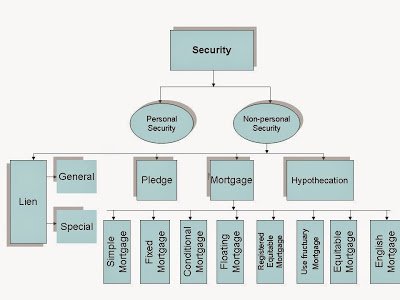
There are two types of banks security.

  • Personal Security
  • Non-personal security

  1. Personal security

If any banks client himself or third party is considered as security is called personal security. without receiving the immovable & chattel assets as security, if bank can receive any client himself or any person own self on be half of that client as security is considered as personal security. Bank will consider the person or third party only for then when he has enough social dignity and goodwill or a scope of applying law against himself in future or he is engaged in renowned business, government or recognized non government organization.

  1. Non-personal security

without receiving any client himself or any person own self on be half of that client as security , if bank can receive the immovable & chattel assets as security is considered as non-personal security. There are four types of non-personal security. such as-

  • Lien
  • Pledge
  • Mortgage
  • Hypothecation

The above four categories of non-personal security are given below with detail.

(a) Lien

The right of retain foods is known as lien. The lawful right of a lender to offer the guarantee property of an account holder who neglects to meet the commitments of an advance contract. A lien exists, for instance, when an individual takes out a vehicles advance. The lien holder is the bank that allows the advance, and the lien is discharged when the credit is forked over the required funds. Another kind of lien is a repairman’s lien, which can be appended to genuine property if the property proprietor neglects to pay a foreman for administrations rendered. In the event that the account holder never pays, the property can be sold to pay the lien holder. There are two types of lien:-

  • General lien: Here, Bank has the possess of the assets have been kept as security and bank can’t transfer the possession to another until the loan amount is being paid.
  • Special lien: Here, Bank has the possess of the assets have been kept as security and bank can transfer the possession to another on conditions is called special lien.

(b) Pledge

Here the possess of assets is to bank or loan provider, but the ownership is to borrower. After payment, bank transfers the possession of security assets to borrower. When a customer takes loan against jewels he pledges the jewel to the bank.  Similarly a customer availing loan on key cash credit basis pledges the  goods to the banker by keeping them in a godown under lock and key  control of the bank. Pledged goods are to be insured and the pledgee (banker) has to take reasonable care to protect the property pledged.

3. Mortgage

It is an interest in property created as security for a loan or payment of debt and terminated on payment of the loan or debt. A mortgage is a contract that permits a loan provider partially or fully to foreclose that security when a borrower is unable to pay the loan amount. Mortgage is applicable only for immovable assets and this is why it is called immovable property mortgage. There are many types of mortgage have been described below.

  • Simple mortgage: If the loan amount isn’t paid by borrower and legal step is taken against him or lender can purchase which security assets on the opinion of borrower is called simple mortgage.
  • Fixed mortgage: The borrower gives which property in black & white or in registering to the lender and if the loan is not paid in time, then legal possession of that security is gained by lender is called fixed mortgage.
  • Conditional mortgage: If the loan amount isn’t paid in time and without fulfilling the determined conditions, the which security is not sold or transfered is called conditional mortgage.
  • Floating mortgage: The possession right of which mortgage properly is belonged to borrower and only documents are submitted to loan provider is called floating mortgage.
  • Equitable mortgage: The documents of which mortgage property is kept to bank for a specific time period and possession is belonged to borrower and after exceeding the payment period bank try to gain the legal possession is called equitable mortgage.
  • Registered equitable mortgage: The ownership documents of which mortgage property is kept to lone provider with registration for a specific time period and possession is belonged to borrower is called registered equitable mortgage.
  • Use fructuary mortgage: The possession & consumption of which mortgage property is given to loan provider as loan providing till a specific time period and after exceeding that time period the belongingness of that property is leaved to borrower is called use fructuary mortgage.
  • English mortgage: The ownership of which mortgage property is to loan provider and possession or belongingness of that property is to borrower is called English mortgage. If borrower is fail to pay the loan amount then the possession power is automatically gone to loan provider.
  1. Hypothecation

It is pledge to secure an obligation without delivery of title or possession.

At last we can say that, at the modern banking sectors a great changes has been occurred in the categories of categories of mortgage.

Mode of Creating Charge

A charge is a legal right or interest created over the assets of a borrower in favour of a bank to secure repayment of a loan or advance. It does not transfer ownership but gives the bank the right to recover dues from the charged asset in case of default. Charges may be created on movable or immovable property depending on the nature of lending. Banks create charges to reduce credit risk and ensure safety of funds. The charge acts as a secondary source of repayment after the borrower’s income. Common modes of creating charge in banking include lien, pledge, hypothecation, and mortgage.

While lending money, the bank has to keep three principles in mind viz., liquidity, safety and profitability. In order to minimise risks in advancing money, banks usually insist on good security and would like to create a charge on the tangible assets of the borrower in favour of the bank. When a charge is created, the bank gets certain rights on the tangible assets. In case the borrower fails to repay the advance, the bank can recover its money by disposing of those assets in the market.

The important methods of creating a charge are:

  • Lien
  • Pledge
  • Hypothecation
  • Mortgage

Let us now study them briefly.

1. Lien

Lien refers to the legal right of a bank to retain possession of goods, securities, or assets belonging to a customer until the dues payable by the customer are fully settled. It does not transfer ownership of the goods to the bank; ownership remains with the customer. Lien acts as a protective measure for banks by ensuring recovery of outstanding amounts. In banking, lien is commonly exercised over fixed deposits, securities, and valuable documents that come into the lawful possession of the bank.

A banker enjoys the right of general lien under Section 171 of the Indian Contract Act, 1872. This allows the bank to retain any goods or securities of the customer for the recovery of a general balance due, unless there is a contract to the contrary. The right of general lien applies to all accounts of the customer and covers present as well as future liabilities. This right arises automatically and does not require any special agreement between the bank and the customer.

For a valid lien, the goods must be in the lawful possession of the bank. The lien can be exercised only for lawful debts and not for illegal or uncertain claims. It applies only to movable property and not to immovable assets. The bank cannot exercise lien over goods deposited for a specific purpose, such as safe custody. Lien comes into existence automatically and ends once the dues are fully paid.

Lien provides security to banks without requiring formal documentation or transfer of ownership. It helps banks recover dues efficiently and reduces credit risk. The simplicity and legal backing of lien make it a widely used mode of charge in banking operations, especially for advances against deposits and securities.

2. Pledge

Section 172 of the Indian Contract Act defines pledge as “a bailment of goods as security for payment of a debt or performance of a promise”. So, a pledge is a contract whereby a borrower delivers his movable property to the lender as a security for the loan on the understanding that the property pledged will be returned to the borrower on repayment of the debt. The borrower who pledges the property is called the ‘pledged’ or ‘pawner’ and the person with whom the property is pledged is known as ‘pledgee’ or ‘pawnee’. From the above, you must have understood that delivery of goods and return of goods are the two essential features of pledge. Delivery of goods may be either physical delivery or constructive (symbolic) delivery. When the pledgee puts his own lock on the godown or when the keys of the lock are handed over to the bank, it amounts to delivery of goods. Similarly, handing over the duly endorsed documents of title to goods like railway receipt, bill of lading, etc., amount to delivery of goods. While accepting a pledge as a charge, the bank should ensure that the contract is in writing to minimise the misunderstanding of the terms. The contract should be complete in all respects and should incorporate all the usual clauses of pledge. It is advisable for the bank to get a declaration from the borrower to the effect the goods deposited with the bank are left as a security for the advance. The bank should see that the borrower has a valid title to the property pledged. The bank should ensure that the goods are kept safely in the godown. It is desirable that the bank should ensure goods against theft, fire, riot, etc. You must remember that when goods are pledged, only the possession over the goods is given and not the ownership. The pledger or the borrower continues to be the owner of the property. If the borrower fails to repay the loan in time, the bank has a right to file a suit against the borrower for the recovery of the amount, and retain the goods as collateral security. But since this is a lengthy process, the banks are given the right to sell the pledged goods and recover their money. But before selling the goods, the bank must give a reasonable notice to the borrower about his intention to sell the goods. If the proceeds of sale are less than the amount due, the borrower is still liable to pay the balance. But if the proceeds of sale is in excess of the amount due, the bank has to pay the surplus amount to the borrower. In case the goods are sold without giving a reasonable notice to the borrower, the sale cannot be set aside, but the bank will become liable to the borrower for damages.

From the above, it must be clear to you that for securing a charge on the property, the method of pledging is very simple and therefore, it is very popular. It should also be noted that the right to retain the goods pledged is applicable only in case of a particular debt for which the goods are pledged. The bank has no right to retain the security, as security for other debts owned by the borrower.

3. Hypothecation

Hypothecation is a mode of creating charge on goods or related document surrender of possession of goods. According to Prof. Herbert Hart, “Hypothecation is a legal transaction whereby goods may be made available as security for a debt without transferring either the property or the possession to the lender”. Hypothecation is resorted to such cases where transfer of possession of the property from the borrower to the creditor is either impracticable or inconvenient. For example, if the borrower wants to borrow on the security of motor vehicle, which is being used as a taxi, it shall not be advisable to pledge the vehicle with the bank, as it will deprive him of his livelihood. In the case of hypothecation, an equitable charge is created on the goods for the amount of debt but the hypothecated goods actually remain in the physical possession of the borrower. The borrower who hypothecates the goods is known as ‘hypothecator’ and the lender is termed as ‘hypothecatee’. Generally, hypothecation is done by the borrower by executing a document called a ‘letter of hypothecation’ in favour of the lender. In this letter it is stated that the said goods or property are at the order and disposition of the lender until the debt is cleared. It also empowers the lender to sell the hypothecated property in the event of default or repayment by the borrower.

As the hypothecated goods remain in the possession of the borrower, there is considerable scope for fraud. The same goods may be hypothecated with another person. It is a risky method no doubt. That is why this facility is granted to parties of unquestionable integrity and honesty. Even then the banker should obtain a declaration from the borrower to the effect that the goods are not hypothecated earlier with some other lender and that the borrower has a clear title to the property hypothecated. The bank should carry out regular inspection and physical verification of the hypothecated goods.

4. Mortgage

When immovable property like land and building is offered as security for debt, a charge is created thereon by means of a mortgage. A mortgage is the transfer of the interest in a specific immovable property by one person to another for the purpose of securing an advance of money. The transferor is called ‘mortgagor’ and the transferee is known as ‘mortgagee’. The advance of money in respect of which the mortgage is effected is called the ‘mortgage money’ and the instrument by which the mortgage is effected is called the ‘mortgage deed’. In a mortgage, the possession of the property need not always be transferred to the mortgagee. Usually, it remains with the mortgagor. Since the mortgagee gets the interest in the property, he has a right to sell of the property and recover his loan. When the borrower repays the amount of loan together with interest, the interest in the property is re-conveyed to the mortgagor.

While accepting a mortgage as a charge, the bank should ensure that the borrower has a valid title to the property and this can be done by examining the original title deeds. The bank must not part with the title deeds to the borrower when the mortgage is pending. If the advance against mortgage is given to a joint stock company, then the charge should be registered with the Registrar of Companies within 30 days of the creation of the charge. The mortgaged property should be inspected periodically to ensure that it is in good condition. If the property mortgaged is building, the bank should ensure that it is insured against fire, riot etc. There are several forms of mortgage. They are

  • Simple mortgage
  • Usufructuary mortgage
  • English mortgage
  • Mortgage by conditional sale
  • Equitable mortgage or mortgage by deposit of title deeds
  • Anomalous mortgage

Bank Guarantees

A bank guarantee is a type of guarantee from a lending institution. The bank guarantee means a lending institution ensures that the liabilities of a debtor will be met. In other words, if the debtor fails to settle a debt, the bank will cover it. A bank guarantee enables the customer, or debtor, to acquire goods, buy equipment or draw down a loan.

A bank guarantee is when a lending institution promises to cover a loss if a borrower defaults on a loan. The guarantee lets a company buy what it otherwise could not, helping business growth and promoting entrepreneurial activity.

Features of a Valid Guarantee

  • The period until which the guarantee holds is clearly specified
  • The guarantee issuance is always for a specific amount
  • The purpose of the guarantee is clearly stated
  • The guarantee is valid for a specifically defined period
  • The grace period allowed to enforce guarantee rights is also stated in the guarantee
  • Guarantee clearly states the events under which it can be enforced

It is important that guarantee can be enforced based on terms of the contract (i.e. guarantee agreement) existing between the bank and the beneficiary. Generally, beneficiaries do state a clause to be included for charging penal interest in the case of delayed payment. Hence, it is essential for the bank to be cautious while finalizing the format and text of the contract (the guarantee agreement). While signing the same, the provision of penal interest and clauses attached to delays and default are to be carefully noted.

Examples of Bank Guarantees

Because of the general nature of a bank guarantee, there are many different kinds:

  • A payment guarantee assures a seller the purchase price is paid on a set date.
  • An advance payment guarantee acts as collateral for reimbursing advance payment from the buyer if the seller does not supply the specified goods per the contract.
  • A credit security bond serves as collateral for repaying a loan.
  • A rental guarantee serves as collateral for rental agreement payments.
  • A confirmed payment order is an irrevocable obligation where the bank pays the beneficiary a set amount on a given date on the client’s behalf.
  • A performance bond serves as collateral for the buyer’s costs incurred if services or goods are not provided as agreed in the contract.
  • A warranty bond serves as collateral ensuring ordered goods are delivered as agreed.

For example, Company A is a new restaurant that wants to buy $3 million in kitchen equipment. The equipment vendor requires Company A to provide a bank guarantee to cover payments before they ship the equipment to Company A. Company A requests a guarantee from the lending institution keeping its cash accounts. The bank essentially cosigns the purchase contract with the vendor.

Types of Bank Guarantees

  1. Financial Guarantee

Here, the bank guarantees that the applicant will meet the financial obligation. And in case he fails, the bank as a guarantor has to pay.

  1. Performance Guarantee

Here the guarantee issued is for honoring a particular task and completion of the same in the prescribed/agreed upon manner as stated in the guarantee document.

  1. Advance Payment Guarantee

This guarantee assures that they would return the advance amount in case of no fulfillment of the terms.

  1. Payment Guarantee / Loan Guarantee

The guarantee is for assuring the payment/loan repayment. In case, the party fails to do so, a guarantor has to pay on behalf of the defaulting borrower.

  1. Bid Bond Guarantee

As a part of the bidding process, this guarantee assures that the bidder would undertake the contract he has bid for, on the terms the bidding is done.

  1. Foreign Bank Guarantee

Foreign BG is a guarantee which is issued for a foreign beneficiary.

  1. Deferred Payment Guarantee

When the bank guarantees some deferred payment, the guarantee is termed as Deferred Payment Guarantee. For example, A company purchases a machine on credit basis with terms of payment being 6 equal installments. In this case, since the payment is deferred to a later period, creditor seeks deferred payment guarantee for an assurance that the payment would reach him in the given time period.

  1. Shipping Guarantee

This guarantee protects the shipping company from all kinds of loss, in case the customer does not pay. This document helps the customer to take possession of goods.

Importance of Bank Guarantee

  1. Adds To Creditworthiness

BGs reflect the confidence of the bank in your business and indirectly certify the soundness of your business.

  1. Assessment of Business

In the case of foreign transactions or transactions with Government organizations, the foreign party or a Government Undertaking is constrained and cannot assess the soundness of each and every applicant to a project. In such cases, BGs act as a trusted instrument to assess stability and creditworthiness of companies applying for projects.

  1. The Confidence of Performance

When new parties associate in the business and are skeptic about the performance of the company undertaking the project, performance guarantees help in reducing the risk of the beneficiary.

  1. Risk Reduction

Advance payment guarantees act as a protection cover wherein the buyer can recover the advance amount paid to the seller if a seller fails to deliver the goods or services. This protects against any probable loss that a party can suffer from a new seller.

  • A bank guarantee is when a lending institution promises to cover a loss if a borrower defaults on a loan.
  • A bank guarantee is when a lending institution promises to cover a loss if a borrower defaults on a loan, of which there are many examples.
  • Individuals often choose direct guarantees for international and cross-border transactions.
  • A bank guarantee enables the customer, or debtor, to acquire goods, buy equipment or draw down a loan.

Asset Liability Management in Commercial Banks

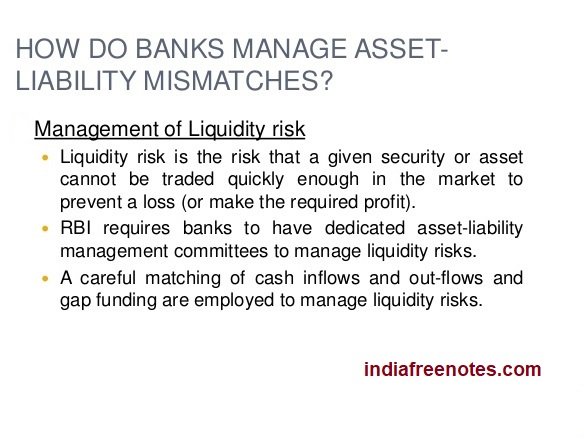
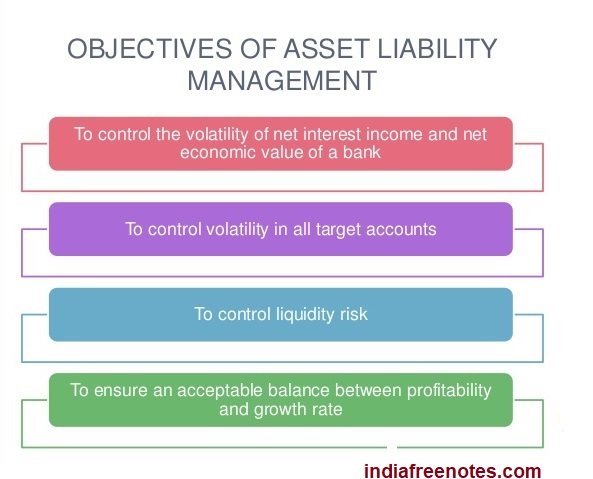
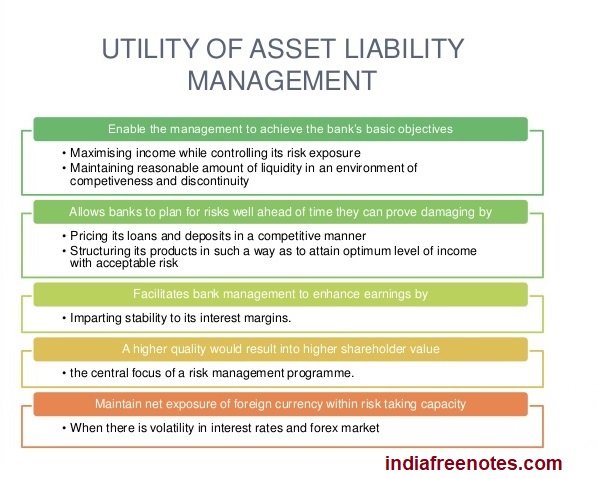
Asset/liability management is the process of managing the use of assets and cash flows to reduce the firm’s risk of loss from not paying a liability on time. Well-managed assets and liabilities increase business profits. The asset/liability management process is typically applied to bank loan portfolios and pension plans. It also involves the economic value of equity.

The concept of asset/liability management focuses on the timing of cash flows because company managers must plan for the payment of liabilities. The process must ensure that assets are available to pay debts as they come due and that assets or earnings can be converted into cash. The asset/liability management process applies to different categories of assets on the balance sheet.

Examples of Interest Rate Risk

Asset/liability management is also used in banking. A bank must pay interest on deposits and also charge a rate of interest on loans. To manage these two variables, bankers track the net interest margin or the difference between the interest paid on deposits and interest earned on loans.

Assume, for example, that a bank earns an average rate of 6% on three-year loans and pays a 4% rate on three-year certificates of deposit. The interest rate margin the bank generates is 6% – 4% = 2%. Since banks are subject to interest rate risk, or the risk that interest rates increase, clients demand higher interest rates on their deposits to keep assets at the bank.

Basel Norms, Objectives, Types, Implementation

Basel Norms are international regulatory frameworks, established by the Basel Committee on Banking Supervision (BCBS), designed to strengthen the regulation, supervision, and risk management within the global banking sector. Their primary objective is to ensure that banks maintain adequate capital buffers to absorb unexpected financial losses, thereby promoting stability and reducing systemic risk. The norms have evolved through successive accords—Basel I, II, and III—each introducing more sophisticated measures for credit, market, and operational risk. Basel III, the current standard, emphasizes higher capital quality, introduces liquidity requirements, and mandates leverage ratios to curb excessive borrowing. These compulsory standards aim to prevent bank failures, protect depositors, and foster confidence in the international financial system.

Objectives of Basel Norms:

1. Strengthening Capital of Banks

One main objective of Basel Norms is to ensure that banks maintain sufficient capital to absorb losses. Capital acts as a safety cushion during financial problems. By fixing minimum capital requirements, Basel Norms protect depositors’ money and improve bank stability. Strong capital base helps banks face loan defaults, economic slowdown, and financial crises without collapsing. This builds confidence in the banking system.

2. Reducing Risk in Banking System

Basel Norms aim to control different risks such as credit risk, market risk, and operational risk. Banks are required to measure and manage these risks carefully. Proper risk control reduces chances of bank failure. It encourages safe lending practices and avoids reckless financial decisions. This leads to a healthier banking environment.

3. Improving Transparency and Disclosure

Another objective is to make banks more transparent in their financial reporting. Banks must disclose capital structure, risk exposure, and financial position clearly. This allows regulators, investors, and customers to understand bank health. Transparency improves trust and discipline in the banking system.

4. Promoting International Banking Stability

Basel Norms create common banking standards across countries. This ensures that banks worldwide follow similar safety rules. It reduces unfair competition and strengthens global financial stability. In times of international crisis, strong banking systems help protect economies.

Types of Basel Norms:

  • Basel I (1988)

Introduced in 1988, Basel I was the first international accord establishing minimum capital requirements for banks. Its primary focus was credit risk. It mandated that banks hold capital equal to at least 8% of their risk-weighted assets (RWAs). Assets were categorized into broad risk buckets (0%, 20%, 50%, 100%) based on borrower type (e.g., sovereigns, banks, corporations). While groundbreaking for creating a global standard, Basel I was criticized for being overly simplistic. It used crude risk classifications that did not differentiate within categories, leading to regulatory arbitrage. It largely ignored market risk and operational risk, setting the stage for more sophisticated future frameworks.

  • Basel II (2004)

Implemented in the mid-2000s, Basel II introduced a more risk-sensitive three-pillar structure. Pillar 1 expanded minimum capital requirements to include not only credit risk but also market risk and, for the first time, operational risk. It allowed advanced banks to use their own internal models for risk calculation. Pillar 2 added supervisory review, requiring regulators to evaluate banks’ internal capital adequacy assessments and intervene if needed. Pillar 3 mandated market discipline through public disclosure, enhancing transparency. However, its complexity and reliance on banks’ own models were later seen as contributors to the 2008 financial crisis, as it underestimated risks and procyclicality.

  • Basel III (2010/2017)

Developed in response to the 2008 crisis, Basel III significantly strengthened bank regulation. It focuses on improving the quality and quantity of capital (emphasizing Common Equity Tier 1), introducing new capital buffers (conservation and countercyclical), and imposing a non-risk-based leverage ratio to curb excessive borrowing. Crucially, it added liquidity standards: the Liquidity Coverage Ratio (LCR) for short-term resilience and the Net Stable Funding Ratio (NSFR) for long-term funding stability. Basel III aims to make banks more resilient to financial and economic stress, reduce procyclicality, and improve risk management. Its phased implementation continues globally.

  • Basel IV / Finalization of Basel III (2017)

Often called “Basel IV,” this refers to the 2017 finalization package that reforms the standardized approaches for credit, market, and operational risk under Pillar 1. It aims to reduce excessive variability in risk-weighted assets calculated by internal models, enhancing comparability across banks. Key changes include output floors that limit the benefit banks can derive from their internal models, ensuring a minimum level of capital. It also refines the credit valuation adjustment (CVA) framework and operational risk methodologies. This package is not a new accord but a crucial completion of Basel III, designed to restore credibility in bank capital ratios and ensure a more level playing field.

Implementation of Basel III in Indian Banks:

1. Enhanced Capital Requirements & Buffers

RBI mandated higher and better-quality capital. Minimum Common Equity Tier 1 (CET1) was set at 5.5% of Risk-Weighted Assets (RWAs), Tier 1 capital at 7%, and Total Capital (CRAR) at 9% (higher than Basel’s 8%). Additionally, banks must maintain a Capital Conservation Buffer (CCB) of 2.5% (of RWAs) and a Countercyclical Capital Buffer (CCyB) of 0-2.5% (activated based on systemic risk). These buffers ensure banks can absorb losses during stress without breaching minimum capital.

2. Introduction of Leverage Ratio

To curb excessive leverage, RBI introduced a minimum Leverage Ratio of 4.5% (Tier 1 Capital as a percentage of total exposure). This acts as a non-risk-based backstop to the risk-weighted capital framework. It measures capital against total exposures (including derivatives, off-balance sheet items), ensuring banks do not grow assets excessively without adequate capital support, thereby enhancing stability.

3. Liquidity Standards: LCR & NSFR

To manage short-term and long-term liquidity risk, RBI implemented two ratios:

  • Liquidity Coverage Ratio (LCR): Requires banks to hold high-quality liquid assets (HQLA) sufficient to cover net cash outflows over a 30-day stressed scenario. Minimum requirement is 100%.

  • Net Stable Funding Ratio (NSFR): Ensures banks maintain a stable funding profile relative to their asset base over a one-year horizon. Minimum requirement is 100%.
    These reduce dependency on short-term wholesale funding.

4. Systemically Important Banks (DSIBs)

Domestic Systemically Important Banks (D-SIBs) are identified based on size, interconnectedness, and complexity. They are required to maintain additional Common Equity Tier 1 (CET1) capital surcharge, ranging from 0.20% to 0.80% of RWAs, depending on their bucket classification (RBI announces D-SIBs like SBI, ICICI, HDFC). This ensures these “too big to fail” banks have extra loss-absorbing capacity.

5. Implementation Timeline & Phasing

RBI adopted a phased implementation from April 2013 to March 2019 for capital ratios, with full CCB implementation by March 2019. The LCR was phased in, reaching 100% by January 2019. The NSFR was introduced from April 2020. This staggered approach gave banks time to raise capital (via equity, AT1 bonds) and adjust business models without disrupting credit flow.

6. Challenges for Public Sector Banks (PSBs)

PSBs faced significant challenges due to high Non-Performing Assets (NPAs) and limited access to capital markets. They required substantial government capital infusion through schemes like Bank Recapitalization (Recap) to meet Basel III norms. Mergers of PSBs (e.g., creation of SBI associates) were also partly driven by the need to build scale and capital efficiency.

7. Impact on Profitability & Lending

Higher capital and liquidity requirements initially increased the cost of capital for banks and potentially compressed net interest margins. Banks became more risk-averse, potentially tightening credit, especially to sectors like infrastructure. However, it also led to improved asset quality focus, better pricing of risk, and long-term resilience, benefiting the overall financial system.

8. RBI’s Supervisory Review (Pillar 2)

Under Pillar 2 of Basel III, RBI enhanced its supervisory review process. This includes the Internal Capital Adequacy Assessment Process (ICAAP) for banks and Supervisory Review and Evaluation Process (SREP) by RBI. It assesses risks not fully covered under Pillar 1 (like interest rate risk in banking book, concentration risk) and ensures banks maintain capital above regulatory minima.

Steps in Control Process

Control in Management refers to the process of monitoring and evaluating performance against established standards and objectives. It involves setting performance benchmarks, measuring actual outcomes, comparing them with targets, and taking corrective actions as needed. The ultimate goal of control is to ensure that organizational activities align with strategic goals, thereby enhancing efficiency and effectiveness.

Control Process involves the following Steps as shown in the figure:

The control process involves several key steps:

  1. Establishing Standards

Standards serve as benchmarks for evaluating performance in business functions and are classified into two categories:

  • Measurable (Tangible) Standards: These standards are quantifiable and expressed in terms of cost, output, time, profit, etc.
  • Non-Measurable (Intangible) Standards: These cannot be quantified monetarily. Examples include manager performance, employee attitudes, and workplace morale.

Establishing these standards simplifies the control process, as control is exercised based on them.

  1. Measurement of Actual Performance

The second step is assessing actual performance levels to identify deviations from established standards. Measuring tangible standards is generally straightforward, as they can be quantified easily. However, evaluating intangible standards, such as managerial performance, can be challenging and may rely on factors like:

  • Employee attitudes
  • Workforce morale
  • Improvements in the work environment
  • Communication with superiors

Performance measurement may also be supported by various reports (weekly, monthly, quarterly, or yearly).

  1. Comparison of Actual Performance with Standards:

Comparing actual performance against planned targets is crucial. A deviation is defined as the gap between actual and planned performance. Managers need to identify two key aspects:

  • Extent of Deviation: Is the deviation positive, negative, or aligned with expectations?
  • Cause of Deviation: Understanding why deviations occurred is vital for effective management.

Managers should focus on critical deviations while overlooking minor ones. For instance, a 5-10% increase in stationery costs may be considered minor, whereas a continuous decline in monthly production signifies a major issue.

Common causes of deviations:

  • Faulty planning
  • Lack of coordination
  • Defective plan implementation
  • Ineffective supervision and communication
  1. Taking Corrective Actions

After identifying the extent and causes of deviations, managers must implement remedial measures. They have two options:

  1. Corrective Measures: Address the deviations that have already occurred.
  2. Revision of Targets: If the corrective actions do not align actual performance with planned targets, managers may choose to adjust the targets.

Control Techniques Traditional and Modern

Techniques of Managerial Control: Traditional and Modern Techniques

  1. Traditional Techniques

Traditional techniques refer to the techniques that have been used by business organisation for longer period of time and are still in use.

Such techniques are:

  • Personal Observation
  • Statistical Reports
  • Breakeven Analysis
  • Budgetary Control

(a) Personal Observation: This is the most traditional technique of control. It helps a manager to collect first hand information about the performance of the employees. It also creates psychological pressure on the employees to improve their performance as they are aware that they are being observed personally by the manager. However, this technique is not to be effectively used in all kinds of jobs as it is very time consuming.

(b) Statistical Reports: Statistical analysis in the form of percentages, ratios, averages etc. in different areas provides useful information regarding performance of an organisation to its managers. When such information is presented in the form of tables, graphs, charts etc., it facilitates comparison of performance with the standards laid and with previous years’ performance.

(c) Breakeven Analysis: The technique used by managers to study the relationship between sales volume, costs and profit is known as Breakeven Analysis. This technique helps the managers in estimating profits at different levels of activities. The following figure shows breakeven chart of a firm.

The point at which the total revenue and total cost curves intersect is breakeven point. The figure shows that the firm will have the breakeven point at 60,000 units of output. At this point, there is neither profit nor loss. The firm starts earning profit beyond this point.

Breakeven Point= Fixed Cost/ (Selling Price per unit- Variable cost per unit).

Through breakeven analysis, a firm can keep a check on its variable cost and can also determine the level of activity at which it can earn its profit target.

(d) Budgetary Control: Under this technique, different budgets are prepared for different operations in an organization in advance. These budgets act as standards for comparing them with actual performance and taking necessary actions for attaining organizational goals.

A budget can be defined as a quantitative statement of expected result, prepared for a future period of time. The budget should be flexible so that necessary changes, if need be, can be easily made later according to the requirements of the prevailing environment.

  1. Modern Techniques

Modem techniques are those techniques which are very new in management world. These techniques provide various new aspects for controlling the activities of an organisation.

These techniques are as follows:

(a) Return on Investment.

(b) Ratio Analysis.

(c) Responsibility Accounting.

(d) Management Audit.

(e) PERT and CPM.

(f) Management Information System.

(a) Return on Investment: Return on investment is very useful technique for determining whether the capital invested in the business has been effectively used or not for generating reasonable amount of return.

Return on Investment= (Net Income / Total Investment) X 100 Net Income before or after tax can be used for calculating ROI. Total investment includes investment in fixed Assets as well as working capital.

It acts as an effective control device in measuring and comparing the performance of different departments. It also helps departmental managers to find out the problems which adversely affect ROI.

(b) Ratio Analysis: Ratio Analysis is a technique of analyzing the financial statements of a business firm by computing different ratios.

(c) Responsibility Accounting: Under this system of accounting, various sections, departments or divisions of an organization are set up as ‘ Responsibility Centers’. Each centre has a head who is responsible for attaining the target of his centre.

(d) Management Audit: Management Audit is a process of judging the overall performance of the management of an organisation. It aims at reviewing the efficiency and effectiveness of management and improving its future performance. Its basic purpose is to identify the deficiencies in the performance of management functions. It also ensures updating of existing managerial policies.

(e) PERT and CPM: PERT (Programme Evaluation and Review Technique) and CPM (Critical Path Method) are two important techniques used in both planning and controlling. These techniques are used to compute the total expected time needed to complete a project & it can identify the bottleneck activities that have a critical effect on the project completion date. Such techniques are mainly used in areas like construction projects, aircraft manufacture, ship building etc.

The various steps involved in using these techniques are as follows:

(i) The project is first divided into various activities and then these activities are arranged in a logical sequence.

(ii) A network diagram is prepared showing the sequence of activities.

(iii) Time estimates are laid down for each activity. PERT prepares three time estimates-(1) Optimistic (shortest time) (2) Most likely time & (3) Pessimistic (longest time).In CPM, only one time estimate is prepared. Along with this, CPM also lays down the cost estimates for completing the project.

(iv) The most critical path in the network is the longest path. Longest path consists of those activities which are critical for completing the project on time; hence the name CPM.

(v) If required, necessary changes are made in the plan for completing the project on time.

(f) Management Information System (MIS): Management Information System (MIS) is a computer based information system which provides accurate, timely and up-to-date information to the managers for taking various managerial decisions. Thus, it is an important communication tool as well as an important control technique. It provides timely information to the managers so that they can take appropriate corrective measures in case of deviations from standards.

Controlling, Definition, Importance, Nature, Scope, Elements, Limitations

Controlling is a fundamental management function that involves monitoring organizational performance, comparing it against established standards, and taking corrective actions when necessary. It ensures that the organization’s activities align with its goals and objectives. The controlling process includes setting performance standards, measuring actual performance, and evaluating deviations from the standards. Effective controlling helps identify areas for improvement, ensures resource optimization, and enhances decision-making. By providing feedback on performance, controlling enables managers to make informed adjustments to strategies and operations, fostering efficiency and effectiveness in achieving organizational goals.

Definition of Controlling:

  • Henri Fayol:

Fayol, a pioneer in management theory, defined controlling as “the process of verifying whether everything occurs in conformities with the plan adopted, the instructions issued, and the principles established.” This emphasizes the alignment of actual performance with planned objectives.

  • George R. Terry:

Terry defined controlling as “the measurement of accomplishment against standards and the correction of deviation to ensure achievement of organizational objectives.” This highlights the evaluative aspect of controlling in relation to organizational goals.

  • Harold Koontz and Cyril O’Donnell:

They defined controlling as “the function of management which ensures that everything occurs in accordance with the standards established.” This definition stresses the importance of standards in the controlling process.

  • Peter Drucker:

Drucker defined controlling as “the process of measuring performance and taking corrective actions when necessary.” His focus is on performance measurement and the proactive nature of controlling.

  • Luther Gulick:

Gulick described controlling as “the function of management which ensures that organizational goals are met through appropriate actions.” This definition emphasizes the role of controlling in achieving organizational objectives.

  • American Management Association (AMA):

AMA defines controlling as “the process of establishing standards to achieve organizational goals, measuring actual performance against those standards, and taking corrective action when necessary.” This definition encapsulates the overall purpose of the controlling function.

  • Robert J. Mockler:

Mockler defined controlling as “the process of monitoring performance, comparing it with the established standards, and taking corrective action if necessary to ensure that the organization’s objectives are achieved.” This highlights the cyclical nature of controlling in the management process.

Importance of Controlling:

  • Ensures Goal Achievement:

The primary purpose of controlling is to ensure that organizational goals are met. By setting performance standards and measuring actual performance against these benchmarks, managers can identify deviations and take corrective actions, ensuring that the organization remains on track to achieve its objectives.

  • Enhances Efficiency:

Controlling helps to improve the efficiency of organizational processes. By monitoring operations, managers can identify bottlenecks, redundancies, and areas for improvement. This allows for the optimization of resource utilization, reducing waste and improving overall productivity.

  • Facilitates Decision-Making:

Effective controlling provides managers with relevant and timely information about performance. This information is critical for informed decision-making. Managers can analyze trends, identify problems, and evaluate the effectiveness of different strategies, enabling them to make better decisions that align with organizational goals.

  • Promotes Accountability:

Control systems establish clear expectations and performance standards for employees. This promotes accountability, as individuals are aware of the metrics against which their performance will be evaluated. When employees understand that their work is being monitored, they are more likely to take ownership of their responsibilities and strive to meet performance standards.

  • Encourages Continuous Improvement:

Controlling fosters a culture of continuous improvement within the organization. Regular performance assessments and feedback mechanisms encourage employees to seek ways to enhance their work processes, leading to innovation and higher quality outcomes. This proactive approach contributes to long-term organizational success.

  • Identifies Problems Early:

Through ongoing monitoring and evaluation, controlling enables managers to identify potential issues before they escalate into significant problems. Early detection allows for timely interventions, minimizing the impact on operations and helping to maintain organizational stability.

  • Facilitates Coordination:

Controlling ensures that different departments and teams within the organization are working harmoniously toward common goals. By monitoring interdependencies and ensuring that performance aligns with overall objectives, controlling promotes coordination and cooperation among various organizational units.

  • Provides a Basis for Future Planning:

The information gathered during the controlling process serves as valuable input for future planning. By analyzing performance data, managers can assess the effectiveness of previous strategies, identify trends, and make informed projections for the future. This alignment between past performance and future planning helps organizations remain agile and responsive to changing circumstances.

Nature of Controlling:

  • Goal-Oriented:

Controlling is fundamentally concerned with achieving organizational goals. It involves setting performance standards that align with these goals and continuously monitoring progress toward their attainment. By focusing on objectives, controlling ensures that all activities are directed towards fulfilling the organization’s mission.

  • Continuous Process:

Controlling is an ongoing process that occurs throughout the life of an organization. It involves regular monitoring and evaluation of performance, enabling managers to identify deviations and take corrective actions as needed. This continuous nature ensures that organizations remain adaptable to changes and can maintain effective performance.

  • Feedback Mechanism:

One of the critical functions of controlling is to provide feedback on performance. By comparing actual performance with established standards, managers can assess whether goals are being met. This feedback loop is essential for identifying areas for improvement and making informed decisions regarding resource allocation and operational adjustments.

  • Dynamic Function:

Controlling is not a static function; it evolves with the organization and its environment. As organizations face new challenges and opportunities, the controlling process must adapt to reflect changes in strategies, technologies, and market conditions. This dynamism ensures that controlling remains relevant and effective in guiding organizational performance.

  • Involves Decision-Making:

Controlling is closely linked to decision-making processes. Managers must analyze performance data, interpret results, and make decisions about corrective actions when performance deviates from standards. This aspect highlights the importance of analytical skills and judgment in effective controlling, as managers must be able to determine the best course of action based on performance assessments.

  • Universal Applicability:

The principles of controlling apply to all types of organizations, regardless of size or industry. Whether in manufacturing, services, or non-profit sectors, controlling is essential for ensuring that organizational activities are aligned with strategic objectives. This universality underscores the importance of controlling as a core function of management.

  • Emphasizes Efficiency and Effectiveness:

The primary aim of controlling is to enhance organizational efficiency and effectiveness. By monitoring processes and performance, organizations can optimize resource use and improve productivity. Effective controlling helps identify waste, streamline operations, and ensure that activities are conducted in the most efficient manner possible, ultimately contributing to organizational success.

Scope of Controlling:

  • Performance Measurement:

One of the primary scopes of controlling is to measure the actual performance of employees, departments, and the organization as a whole. This involves establishing performance standards and metrics, collecting data on actual performance, and comparing it with the set standards. Performance measurement provides insights into how well an organization is functioning and identifies areas that require improvement.

  • Deviation Analysis:

Controlling involves analyzing deviations between actual performance and planned performance. When discrepancies arise, managers must determine the causes of these deviations. This analysis helps in understanding whether the deviations are due to external factors, such as market conditions, or internal factors, such as operational inefficiencies. By identifying the root causes, organizations can implement corrective actions to address the issues.

  • Corrective Actions:

Based on the analysis of deviations, controlling encompasses the development and implementation of corrective actions. These actions are designed to realign actual performance with established standards and objectives. Corrective measures may include changes in processes, resource reallocation, or additional training for employees. The goal is to ensure that the organization remains on track to achieve its goals.

  • Resource Management:

Controlling plays a critical role in managing organizational resources effectively. This includes financial resources, human resources, and physical assets. By monitoring resource utilization and efficiency, managers can ensure that resources are allocated appropriately, minimizing waste and maximizing productivity. Effective resource management contributes to the overall effectiveness of the organization.

  • Budgetary Control:

A significant aspect of controlling is budgetary control, which involves monitoring the organization’s financial performance against budgeted figures. Managers use budgetary controls to assess spending, revenue generation, and profitability. By analyzing variances between budgeted and actual figures, managers can make informed financial decisions and adjust budgets as necessary to meet organizational objectives.

  • Quality Control:

Controlling also encompasses quality control measures to ensure that products and services meet established quality standards. This includes implementing processes for inspecting and testing outputs, as well as continuous improvement initiatives. Quality control helps organizations maintain high standards, enhance customer satisfaction, and reduce costs associated with defects and rework.

  • Strategic Control:

Controlling extends to strategic control, which involves monitoring the organization’s progress toward achieving its long-term goals and strategic objectives. This includes assessing the effectiveness of strategies, evaluating competitive positioning, and ensuring that the organization adapts to changing market conditions. Strategic control helps organizations remain proactive and responsive in a dynamic business environment.

Elements of Controlling:

  • Setting Performance Standards

The first step in controlling is setting clear and measurable performance standards. These standards serve as a benchmark for evaluating actual performance. They may be quantitative (e.g., sales targets, production levels) or qualitative (e.g., customer satisfaction, employee engagement). Performance standards should be realistic, achievable, and aligned with organizational goals.

  • Measuring Actual Performance

Once performance standards are set, it is essential to measure actual performance. This involves collecting data, tracking results, and monitoring activities to evaluate whether targets are being met. The methods of measurement can vary, such as financial reports, production logs, or customer feedback, depending on the nature of the performance standards.

  • Comparing Actual Performance with Standards

After measuring actual performance, it is compared with the established performance standards. This step helps identify any variances between planned and actual outcomes. If the actual performance exceeds or meets the standards, it indicates success. If there is a shortfall, corrective actions will be needed to bring performance in line with the targets.

  • Analyzing Deviations

When deviations from the set standards are identified, it is important to analyze the causes. These deviations may occur due to various factors such as external influences (market changes, economic conditions), internal inefficiencies (lack of resources, poor management), or human factors (motivation, skills). A thorough analysis of the reasons behind the deviations helps in deciding the appropriate corrective measures.

  • Taking Corrective Actions

Once the reasons for deviations are analyzed, corrective actions should be taken. These actions aim to eliminate the causes of deviations and bring performance back on track. Corrective actions can involve adjusting strategies, reallocating resources, modifying processes, or enhancing employee training. The effectiveness of corrective actions should also be monitored to ensure continuous improvement.

  • Feedback and Adjustments

The final element of controlling is the feedback loop. After taking corrective actions, it’s crucial to gather feedback to assess their effectiveness. Based on feedback, further adjustments may be needed. Continuous monitoring and adjustment ensure that performance standards are kept relevant and that the organization stays on course to achieve its objectives.

Limitations of Controlling:

  • Inflexibility:

Controlling can lead to rigidity in an organization. Overemphasis on control mechanisms may result in inflexible procedures, stifling creativity and innovation. Employees may feel constrained by strict guidelines and metrics, which can hinder their ability to adapt to changing circumstances or propose new ideas.

  • Costly Process:

Implementing a comprehensive control system can be expensive. The costs associated with setting up control measures, monitoring performance, and conducting audits can strain organizational resources. Small businesses, in particular, may find it challenging to allocate sufficient funds for effective control systems.

  • Time-Consuming:

The controlling process can be time-consuming. Collecting data, analyzing performance, and implementing corrective actions require considerable time and effort from managers and employees. This time investment may distract from other critical activities and delay decision-making processes.

  • Subjectivity in Evaluation:

Controlling often involves subjective judgment in performance evaluation. Managers may rely on their interpretations of data, which can lead to bias and inconsistencies in assessing employee performance. This subjectivity can create misunderstandings, conflicts, and decreased morale among staff.

  • Limited Scope:

Control systems may focus primarily on quantitative measures, neglecting qualitative factors such as employee satisfaction, teamwork, and organizational culture. A narrow focus on numbers can overlook important aspects of performance that contribute to overall success.

  • Resistance to Control:

Employees may resist control measures due to perceived threats to their autonomy and job security. This resistance can result in a lack of cooperation, reduced morale, and a negative organizational climate. Overly strict control measures can lead to disengagement and decreased productivity among staff.

  • Delayed Feedback:

In some cases, feedback from control systems may be delayed, making it challenging to address issues promptly. If performance data is not available in real-time, managers may miss opportunities to make timely corrections, allowing problems to escalate.

  • Overreliance on Control Systems:

Organizations may become overly dependent on control systems, leading to a lack of initiative and accountability among employees. When individuals feel that their work is constantly monitored, they may become less proactive and less willing to take risks, ultimately affecting overall performance.

Determinants of an Effective Control System

Control System in management refers to the processes and mechanisms used by managers to ensure that an organization’s activities align with its goals and objectives. It involves setting performance standards, measuring actual performance, comparing it with established standards, and taking corrective actions when necessary. Control systems help monitor efficiency, ensure quality, and address deviations from plans. They can be applied across various areas, such as finance, production, and human resources, to maintain consistency and achieve organizational targets. A well-designed control system contributes to improved decision-making, accountability, and continuous improvement within the organization.

Prerequisites of Effective Control System

  • Accuracy

Effective controls generate accurate data and information. Accurate information is essential for effective managerial decisions. Inaccurate controls would divert management efforts and energies on problems that do not exist or have a low priority and would fail to alert managers to serious problems that do require attention.

  • 2. Timeliness

There are many problems that require immediate attention. If information about such problems does not reach management in a timely manner, then such information may become useless and damage may occur. Accordingly controls must ensure that information reaches the decision makers when they need it so that a meaningful response can follow.

  • Flexibility

The business and economic environment is highly dynamic in nature. Technological changes occur very fast. A rigid control system would not be suitable for a changing environment. These changes highlight the need for flexibility in planning as well as in control.

Strategic planning must allow for adjustments for unanticipated threats and opportunities. Similarly, managers must make modifications in controlling methods, techniques and systems as they become necessary. An effective control system is one that can be updated quickly as the need arises.

  • Acceptability

Controls should be such that all people who are affected by it are able to understand them fully and accept them. A control system that is difficult to understand can cause unnecessary mistakes and frustration and may be resented by workers.

Accordingly, employees must agree that such controls are necessary and appropriate and will not have any negative effects on their efforts to achieve their personal as well as organizational goals.

  • Integration

When the controls are consistent with corporate values and culture, they work in harmony with organizational policies and hence are easier to enforce. These controls become an integrated part of the organizational environment and thus become effective.

  • Economic feasibility

The cost of a control system must be balanced against its benefits. The system must be economically feasible and reasonable to operate. For example, a high security system to safeguard nuclear secrets may be justified but the same system to safeguard office supplies in a store would not be economically justified. Accordingly the benefits received must outweigh the cost of implementing a control system.

  • Strategic placement

Effective controls should be placed and emphasized at such critical and strategic control points where failures cannot be tolerated and where time and money costs of failures are greatest.

The objective is to apply controls to the essential aspect of a business where a deviation from the expected standards will do the greatest harm. These control areas include production, sales, finance and customer service.

  • Corrective action

An effective control system not only checks for and identifies deviation but also is programmed to suggest solutions to correct such a deviation. For example, a computer keeping a record of inventories can be programmed to establish “if-then” guidelines. For example, if inventory of a particular item drops below five percent of maximum inventory at hand, then the computer will signal for replenishment for such items.

  • Emphasis on exception

A good system of control should work on the exception principle, so that only important deviations are brought to the attention of management, In other words, management does not have to bother with activities that are running smoothly. This will ensure that managerial attention is directed towards error and not towards conformity. This would eliminate unnecessary and uneconomic supervision, marginally beneficial reporting and a waste of managerial time.

Management by Exception (MBE), Steps, Advantages and Limitations

Management by Exception (MBE) is a management approach where leaders focus on significant deviations from set standards or expected outcomes, rather than on routine operations. Managers intervene only when performance significantly deviates from targets, either exceeding or falling short of expectations. This allows them to concentrate on critical issues that require attention, while routine matters are handled by subordinates. MBE improves efficiency by reducing the time managers spend on day-to-day activities and encourages employee autonomy. It ensures effective resource allocation and quick response to major problems or opportunities.

Steps of Management by Exception (MBE):

  1. Set Clear Objectives and Performance Standards

The first step in MBE is to establish clear organizational goals and performance standards. These benchmarks provide a basis for evaluating results and identifying exceptions. The standards must be measurable, relevant, and aligned with the company’s strategic objectives. Employees should be well-informed about these expectations to ensure understanding and compliance.

  1. Measure Actual Performance

Once the objectives and standards are set, managers need to continuously monitor and measure actual performance. This involves collecting data from various sources, such as reports, audits, or performance reviews, to ensure accurate and timely measurement of employee or departmental outputs. The performance data should be transparent and easily accessible to facilitate ongoing monitoring.

  1. Compare Performance Against Standards

In this step, managers compare the measured performance against the set standards. The goal is to identify any significant deviations that require attention. This comparison helps determine whether performance is on track or if there are substantial differences that necessitate intervention.

  1. Identify Exceptions

Managers focus only on deviations that are significant enough to be considered exceptions. These exceptions could be positive, such as exceeding sales targets, or negative, such as underperforming in a key area. Identifying exceptions helps managers concentrate on the most critical areas, while routine matters are handled by employees.

  1. Analyze the Cause of Exceptions

Once exceptions are identified, managers analyze the underlying causes of the deviations. This involves investigating whether the exception was caused by internal factors, such as inadequate resources or poor planning, or external factors, such as market changes. Understanding the root cause is essential for developing appropriate corrective actions.

  1. Take Corrective Action

After identifying the cause of exceptions, managers take corrective action to resolve the issue. The nature of the corrective action will depend on the severity and type of deviation. It could involve reallocating resources, providing additional training, revising strategies, or making adjustments to the performance standards.

  1. Monitor Results of Corrective Action

Once corrective measures are implemented, the next step is to monitor the results to ensure the actions have successfully addressed the exception. This continuous monitoring helps prevent future deviations and ensures that the organization remains on track toward achieving its goals.

  1. Review and Adjust Standards (if necessary)

In some cases, the performance standards themselves may need adjustment. If the deviation is not due to employee performance but rather unrealistic or outdated standards, managers may need to revise the objectives or benchmarks to reflect changing circumstances. This step ensures that the standards remain relevant and achievable.

Advantages of Management by Exception (MBE):

  1. Efficient Use of Managerial Time

One of the primary advantages of MBE is that it saves time for managers by allowing them to focus on critical issues instead of routine matters. Managers only step in when performance deviates significantly from the plan, which frees them from constantly micromanaging every aspect of operations. This selective attention helps in better time management and ensures that their focus is directed where it is most needed.

  1. Promotes Employee Autonomy

MBE encourages employees to take responsibility for day-to-day operations, as managers intervene only when necessary. Employees gain autonomy over routine tasks, which can boost their confidence, decision-making abilities, and job satisfaction. This empowerment of employees leads to increased accountability and promotes a sense of ownership over their work.

  1. Encourages Better Decision-Making

Since MBE focuses on exceptions or significant deviations, it ensures that managerial attention is drawn to issues that require immediate decision-making. This system of management helps managers make quicker and more informed decisions about critical matters, leading to timely corrective actions. It also helps in prioritizing the most pressing concerns, thus improving overall decision-making efficiency.

  1. Increased Productivity

By allowing employees to handle regular tasks independently and focusing managerial attention on significant issues, MBE can enhance productivity. Managers are not bogged down by routine matters and can concentrate on strategic activities, which in turn improves overall organizational efficiency. This division of focus also ensures that employees perform their tasks with minimal supervision, leading to a smoother workflow.

  1. Reduction in Information Overload

MBE reduces the burden of information overload for managers. Since they are only required to intervene when performance falls outside established norms, they receive fewer reports and updates about routine activities. This selective information flow allows managers to concentrate on critical reports, reducing unnecessary data handling and simplifying decision-making.

  1. Effective Resource Allocation

By focusing on significant deviations from the norm, MBE ensures that resources—both human and financial—are allocated efficiently. Managers can direct resources towards solving key issues or seizing important opportunities, rather than wasting them on minor adjustments. This strategic allocation of resources helps in optimizing organizational performance.

  1. Improved Control Mechanism

MBE establishes a clear control mechanism by setting performance standards and monitoring outcomes. Managers can quickly identify areas of concern and take corrective actions when deviations occur. This ensures that problems are addressed before they escalate, maintaining better control over operations and ensuring adherence to goals and policies.

  1. Encourages Focus on Strategic Issues

Since MBE directs managerial attention to exceptions, it ensures that managers focus on strategic issues that require intervention. This ability to concentrate on important matters allows for more effective long-term planning, risk management, and opportunity exploitation. It aligns managerial efforts with the organization’s strategic objectives, promoting growth and competitiveness.

Limitations of Management by Exception (MBE):

  1. Overlooking Minor issues

MBE’s focus on significant deviations can lead to the neglect of minor problems that, if left unresolved, may escalate into larger issues. These small discrepancies might seem insignificant but can compound over time, eventually affecting overall performance or creating inefficiencies in processes.

  1. Delayed Managerial Intervention

One of the potential downsides of MBE is that by waiting for deviations to become significant, managers may respond too late. This delay in intervention might cause problems to worsen before they are addressed. Timely management involvement is crucial, but MBE may cause managers to overlook issues until they require immediate attention.

  1. Dependence on Pre-Established Standards

MBE relies heavily on pre-established performance standards or benchmarks. If these standards are outdated or inappropriate, the entire system of exception management may fail. Poorly set benchmarks can lead to either excessive managerial intervention or insufficient control over processes.

  1. Employee Demotivation

Employees may feel demotivated or neglected under MBE, as managers only step in when there are issues. Without consistent feedback and engagement, employees might feel undervalued or ignored. This can reduce motivation and lower job satisfaction, ultimately affecting overall productivity.

  1. Limited Managerial Involvement in Daily Operations

MBE encourages minimal involvement in routine operations. While this can increase efficiency, it also means that managers might lose touch with day-to-day activities. Lack of involvement in operational matters could result in managers being disconnected from the realities faced by employees, leading to ineffective decision-making when intervention is required.

  1. Potential for Over-Reliance on Technology

In many MBE systems, technology is used to monitor performance and detect deviations. This reliance on technology can create issues if the systems fail or produce inaccurate data. Over-reliance on technology may also lead to a reduction in the human element of management, weakening the ability to understand the nuances of workplace dynamics.

  1. Reactive Rather than Proactive Management

MBE is inherently reactive, meaning that managers wait for problems to arise before acting. This reactive approach can hinder the organization’s ability to proactively address potential risks or exploit emerging opportunities. Being proactive is essential for long-term success, but MBE may limit this forward-thinking capability.

  1. Challenges in Defining “Exception”

Determining what constitutes a significant exception can be challenging. Different departments or managers may have varying thresholds for what they consider an exception, leading to inconsistency in when interventions are triggered. This inconsistency can create confusion and reduce the effectiveness of MBE.

  1. Stifling Innovation

MBE’s emphasis on conformity to standards may stifle creativity and innovation. Employees may focus solely on meeting established benchmarks, avoiding risks or new ideas to prevent deviations. This could limit opportunities for improvement and hinder the organization’s ability to innovate and adapt to changing environments.

error: Content is protected !!