Intranet

Intranet is defined as private network of computers within an organization with its own server and firewall. Moreover we can define Intranet as:

Intranet is system in which multiple PCs are networked to be connected to each other. PCs in intranet are not available to the world outside of the intranet.

Usually each company or organization has their own Intranet network and members/employees of that company can access the computers in their intranet.

Every computer in internet is identified by a unique IP address.

Each computer in Intranet is also identified by a IP Address, which is unique among the computers in that Intranet.

Advantage of Intranet

Intranet is very efficient and reliable network system for any organization. It is beneficial in every aspect such as collaboration, cost-effectiveness, security, productivity and much more.

(i) Communication

Intranet offers easy and cheap communication within an organization. Employees can communicate using chat, e-mail or blogs.

(ii) Time Saving

Information on Intranet is shared in real time.

(iii) Collaboration

Information is distributed among the employees as according to requirement and it can be accessed by the authorized users, resulting in enhanced teamwork.

(iv) Platform Independency

Intranet can connect computers and other devices with different architecture.

(v) Cost Effective

Employees can see the data and other documents using browser rather than printing them and distributing duplicate copies among the employees, which certainly decreases the cost.

(vi) Workforce Productivity

Data is available at every time and can be accessed using company workstation. This helps the employees work faster.

(vii) Business Management

It is also possible to deploy applications that support business operations.

(viii) Security

Since information shared on intranet can only be accessed within an organization, therefore there is almost no chance of being theft.

(ix) Specific Users

Intranet targets only specific users within an organization therefore, once can exactly know whom he is interacting.

(x) Immediate Updates

Any changes made to information are reflected immediately to all the users.

Issues in Intranet

Apart from several benefits of Intranet, there also exist some issues.. These issues are shown in the following diagram:

Applications

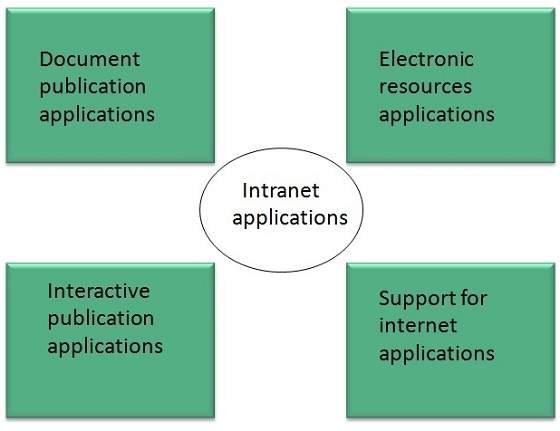
Intranet applications are same as that of Internet applications. Intranet applications are also accessed through a web browser. The only difference is that, Intranet applications reside on local server while Internet applications reside on remote server. Here, we’ve discussed some of these applications:

(i) Document publication applications

Document publication applications allow publishing documents such as manuals, software guide, employee profits etc without use of paper.

(ii) Electronic resources applications

It offers electronic resources such as software applications, templates and tools, to be shared across the network.

(iii) Interactive Communication applications

Like on internet, we have e-mail and chat like applications for Intranet, hence offering an interactive communication among employees.

(iv) Support for Internet Applications

Intranet offers an environment to deploy and test applications before placing them on Internet.

Electronic Payment System Meaning and Methods

An e-payment system is a way of making transactions or paying for goods and services through an electronic medium, without the use of checks or cash. It’s also called an electronic payment system or online payment system.

The electronic payment system has grown increasingly over the last decades due to the growing spread of internet-based banking and shopping. As the world advances more with technology development, we can see the rise of electronic payment systems and payment processing devices. As this increase, improve, and provide ever more secure online payment transactions the percentage of check and cash transactions will decrease.

Methods of electronic payment system

One of the most popular payment forms online is credit and debit cards. Besides them, there are also alternative payment methods, such as bank transfers, electronic wallets, smart cards or bitcoin wallet (bitcoin is the most popular crypto currency).

E-payment methods could be classified into two areas, credit payment systems and cash payment systems.

  1. Credit Payment System

  • Credit Card: A form of the e-payment system which requires the use of the card issued by a financial institute to the cardholder for making payments online or through an electronic device, without the use of cash.
  • E-wallet: A form of prepaid account that stores user’s financial data, like debit and credit card information to make an online transaction easier.
  • Smart card: A plastic card with a microprocessor that can be loaded with funds to make transactions; also known as a chip card.
  1. Cash Payment System

  • Direct debit: A financial transaction in which the account holder instructs the bank to collect a specific amount of money from his account electronically to pay for goods or services.
  • E-check: A digital version of an old paper check. It’s an electronic transfer of money from a bank account, usually checking account, without the use of the paper check. E-cash is a form of an electronic payment system, where a certain amount of money is stored on a client’s device and made accessible for online transactions.
  • Stored-value card: A card with a certain amount of money that can be used to perform the transaction in the issuer store. A typical example of stored-value cards are gift cards.

Advantages of electronic payment systems

  1. Time savings

Money transfer between virtual accounts usually takes a few minutes, while a wire transfer or a postal one may take several days. Also, you will not waste your time waiting in lines at a bank or post office.

  1. Expenses control

Even if someone is eager to bring his disbursements under control, it is necessary to be patient enough to write down all the petty expenses, which often takes a large part of the total amount of disbursements. The virtual account contains the history of all transactions indicating the store and the amount you spent. And you can check it anytime you want. This advantage of electronic payment system is pretty important in this case.

  1. Reduced risk of loss and theft

You can not forget your virtual wallet somewhere and it can not be taken away by robbers. Although in cyberspace there are many scammers, in one of the previous articles we described in detail how to make your e-currency account secure.

  1. Low commissions

If you pay for internet service provider or a mobile account replenishment through the UPT (unattended payment terminal), you will encounter high fees. As for the electronic payment system: a fee of this kind of operations consists of 1% of the total amount, and this is a considerable advantage.

  1. User-friendly

Usually every service is designed to reach the widest possible audience, so it has the intuitively understandable user interface. In addition, there is always the opportunity to submit a question to a support team, which often works 24/7. Anyway you can always get an answer using the forums on the subject.

  1. Convenience

All the transfers can be performed at anytime, anywhere. It’s enough to have an access to the Internet.

Disadvantages of electronic payment systems

  1. Restrictions

Each payment system has its limits regarding the maximum amount in the account, the number of transactions per day and the amount of output.

  1. The risk of being hacked

If you follow the security rules the threat is minimal, it can be compared to the risk of something like a robbery. The worse situation when the system of processing company has been broken, because it leads to the leak of personal data on cards and its owners. Even if the electronic payment system does not launch plastic cards, it can be involved in scandals regarding the Identity theft.

The problem of transferring money between different payment systems- Usually the majority of electronic payment systems do not cooperate with each other. In this case, you have to use the services of e-currency exchange, and it can be time-consuming if you still do not have a trusted service for this purpose. Our article on how to choose the best e-currency exchanger greatly facilitates the search process.

  1. The lack of anonymity

The information about all the transactions, including the amount, time and recipient are stored in the database of the payment system. And it means the intelligence agency has an access to this information. You should decide whether it’s bad or good.

  1. The necessity of Internet access

If Internet connection fails, you can not get to your online account.

Electronic Payment System: Issues

  1. Sophisticated (and Zero-Day) Malware

Malware has gotten very sophisticated, tracking everything from keystrokes to learning passwords, to infiltrating laptop cameras and microphones. URL scraping can see where you’ve been online, and bots can be installed in your system without you ever knowing it. This all adds up to bad actors knowing who you are, what you do, your passwords, etc. This is all bad news.

With malware and ransomware (encrypting your files until you pay a ransom to a hacker) on the rise, you must have the latest and greatest security software installed and running. You also must be vigilant in the links you click, the pages you visit and the people you interact with online.

  1. Poor Patching

Patching is a critical activity for any progressive, security-conscious organization. Unfortunately, patching demands must be addressed on operating systems, applications and network infrastructure, making it a bit of a hindrance in some minds.

It’s important to patch often and completely. Back in 2014, about half of all exploits went from the publishing of the vulnerability to being hacked in less than a month. Last year, 99.99 percent of vulnerabilities compromised were done so more than one year after they were identified.. You must patch frequently and patch often.

  1. Application/Middleware Vulnerabilities

Breaching the perimeter is no longer the preferred attack vector. Attackers are now taking advantage of the proliferation of applications across the typical enterprise. Most vendors will do the right thing with vulnerabilities and patches, but you must remain vigilant.

Establish an application security program to address this need. Scan internal apps and do frequent code reviews. Keep your security program up to date by always installing the latest versions of all security solutions.

  1. Service Providers

Third parties have become a large part of many infrastructures owing to their cost-savings, expertise and capabilities. Many are trusted with sensitive info, making them a very tight extension of your organization. Sadly, the Ponemon Institute states that third-party organizations accounted for (or were involved in) 42 percent of all data breaches.

Be strict in your third-party service provider evaluations. Ensure they have a solid track record of security.

  1. Failed Understanding of InfoSec and Cyber Risk

We’re sometimes our own worst enemies and what we don’t know can hurt our organizations. Risk is always seen through the eyes of the risk-taker, and if you’re unable to articulate the risks, people won’t see them.

Make education a priority. Don’t assume that everyone will value security as highly as you do. Put yourself in the shoes of the risk-taker and formulate a plan to address their risks.

  1. Mobile and BYOD

Mobile devices are prevalent in our enterprises, and not all of them are company issued (bring your own device). Unmanaged mobile devices present many threats. Non-compliant and jail-broken devices are often easy to exploit, and employees frustrated by multiple-authorization requests may simply get around your controls.

Anticipate this by developing a comprehensive mobile device management (MDM) strategy and stick to it. Work to understand how your employees are using these devices and implement policies to address said usage. Also, make it a priority to know all the devices using your network.

  1. Smarter Phishing and Spear Phishing

Phishing used to be easy to identify. Poor spelling and grammar were dead giveaways, as was the non-personal nature of the email. Well the “Dear sir/madam” intro has been replaced by very targeted messaging. “CEO Wire Fraud” attacks accounted for $2.3 billion in losses, according to the FBI. This “spear phishing” features language that is very specific to the recipient, and often high-level folks with top access and the ability to authorize payments.

Never authorize access or payments to people you don’t recognize. Follow up with people in your organization responsible for such things.

  1. Cloud Unpreparedness

Everybody is rushing to put their data into the cloud, and it makes sense. The cloud offers many benefits and is undeniably the way forward, but migrating to the cloud should be done with care.

It all starts with asking the right questions. Who will own the data? What data should be in the cloud? What data should be omitted from the cloud? How is data handled once it is no longer needed? Finally, take the time to understand what data protection controls YOU are responsible to provide.

  1. Over-trusting Encryption

Encryption is a great thing, but it’s not everything. Encryption of data is only as safe as the encryption type you use and how the keys are managed. Payment Card Industry (PCI) compliance does not allow encryption to take data out of PCI scope.

Simply put, encryption should be employed as part of a total solution, not as the only solution.

  1. Internet of Things (IoT) Attacks

As a society, we certainly don’t seem to have trust issues when it comes to IoT devices. But the fact is, if something is internet-enabled, it can be hacked. Cars, refrigerators and even children’s toys can be accessed by bad actors.

With Gartner estimating that 50 trillion gigs of data will be sent by IoT devices by 2020, hackers are sensing a massive opportunity. Always change passwords and factory security settings when employing these devices.

Electronic Banking

Electronic banking has many names like e banking, virtual banking, online banking, or internet banking. It is simply the use of electronic and telecommunications network for delivering various banking products and services. Through e-banking, a customer can access his account and conduct many transactions using his computer or mobile phone.

Types of Electronic Banking

Banks offer various types of services through electronic banking platforms. These are of three types:-

Level 1: This is the basic level of service that banks offer through their websites. Through this service, the bank offers information about its products and services to customers. Further, some banks may receive and reply to queries through e-mail too.

Level 2: In this level, banks allow their customers to submit instructions or applications for different services, check their account balance, etc. However, banks do not permit their customers to do any fund-based transactions on their accounts.

Level 3: In the third level, banks allow their customers to operate their accounts for funds transfer, bill payments, and purchase and redeem securities, etc.

Most traditional banks offer e-banking services as an additional method of providing service. Further, many new banks deliver banking services primarily through the internet or other electronic delivery channels. Also, some banks are ‘internet only’ banks without any physical branch anywhere in the country.

Importance of e-banking

We will look at the importance of electronic banking for banks, individual customers, and businesses separately.

For Banks

  • Lesser transaction costs: electronic transactions are the cheapest modes of transaction
  • A reduced margin for human error: since the information is relayed electronically, there is no room for human error
  • Lesser paperwork: digital records reduce paperwork and make the process easier to handle. Also, it is environment-friendly.
  • Reduced fixed costs: A lesser need for branches which translates into a lower fixed cost.
  • More loyal customers: since e-banking services are customer-friendly, banks experience higher loyalty from its customers.

For Customers

  • Convenience: a customer can access his account and transact from anywhere 24x7x365.
  • Lower cost per transaction: since the customer does not have to visit the branch for every transaction, it saves him both time and money.
  • No geographical barriers: In traditional banking systems, geographical distances could hamper certain banking transactions. However, with e-banking, geographical barriers are reduced.

For Businesses

  • Account reviews: Business owners and designated staff members can access the accounts quickly using an online banking interface. This allows them to review the account activity and also ensure the smooth functioning of the account.
  • Better productivity: Electronic banking improves productivity. It allows the automation of regular monthly payments and a host of other features to enhance the productivity of the business.
  • Lower costs: Usually, costs in banking relationships are based on the resources utilized. If a certain business requires more assistance with wire transfers, deposits, etc., then the bank charges it higher fees. With online banking, these expenses are minimized.
  • Lesser errors: Electronic banking helps reduce errors in regular banking transactions. Bad handwriting, mistaken information, etc. can cause errors which can prove costly. Also, easy review of the account activity enhances the accuracy of financial transactions.
  • Reduced fraud: Electronic banking provides a digital footprint for all employees who have the right to modify banking activities. Therefore, the business has better visibility into its transactions making it difficult for any fraudsters to play mischief.

E-banking in India

In India, since 1997, when the ICICI Bank first offered internet banking services, today, most new-generation banks offer the same to their customers. In fact, all major banks provide e-banking services to their customers.

Popular services under e-banking in India

  • ATMs (Automated Teller Machines)
  • Telephone Banking
  • Electronic Clearing Cards
  • Smart Cards
  • EFT (Electronic Funds Transfer) System
  • ECS (Electronic Clearing Services)
  • Mobile Banking
  • Internet Banking
  • Telebanking
  • Door-step Banking

Further, under Internet banking, the following services are available in India:

  1. Bill payment

Every bank has a tie-up with different utility companies, service providers, insurance companies, etc. across the country. The banks use these tie-ups to offer online payment of bills (electricity, telephone, mobile phone, etc.). Also, most banks charge a nominal one-time registration fee for this service. Further, the customer can create a standing instruction to pay recurring bills automatically every month.

  1. Funds transfer

A customer can transfer funds from his account to another with the same bank or even a different bank, anywhere in India. He needs to log in to his account, specify the payee’s name, account number, his bank, and branch along with the transfer amount. The transfer is effected within a day or so.

  1. Investing

Through electronic banking, a customer can open a fixed deposit with the bank online through funds transfer. Further, if a customer has a demat account and a linked bank account and trading account, he can buy or sell shares online too. Additionally, some banks allow customers to purchase and redeem mutual fund units from their online platforms as well.

  1. Shopping

With an e-banking service, a customer can purchase goods or services online and also pay for them using his account.

Electronic Stock Trading

Electronic trading is easy: Log in to your account. Select the security you wish to buy or sell. Click the mouse or tap your screen, and the transaction takes place. From an investor’s perspective, it’s simple and easy. But behind the scenes, it is a complex process backed by an impressive array of technology. What was once associated with shouting traders and wild hand gestures has now become more closely associated with statisticians and computer programmers.

First Step: Open an Account

The first step is to open an account with a brokerage firm. This can be done electronically or by completing and mailing the appropriate forms. You will need to provide personal information, such as your name and address, that enables the firm to identify you, along with a bit of information about your investing experience level. Then the brokerage firm can evaluate whether the account you are seeking is appropriate. For example, if you have no experience trading stocks but wish to open an account that lets you trade using borrowed money (a margin account), your application may be denied.

The account-opening process also enables you to designate electronic pathways between your bank account and brokerage account so that money can move in either direction. Should you wish to add more money to your investable pool, you can move it from your bank account to your brokerage account simply by logging in to your account. Similarly, if your investments have generated gains and you need that money to pay bills, you can move from your brokerage account to your bank without making any phone calls. If you don’t have a bank account, you can set up a money market account with the brokerage firm and use it in a manner similar to a bank account.

These electronic conveniences require computer equipment, such as servers, and human oversight to make sure everything is set up properly and works as planned. The technological requirements become even more complex when you are ready to trade.

Research before Trading

Before you place an order, you will likely want to learn about the security you are considering for purchase. Most brokerage websites offer access to research reports that will help you make your decision and real-time quotes that tell how much the security is trading for at any given time. The research reports are updated periodically and loaded to the website when you access them. The quotes are a far more complex issue, as the technology must keep track of thousands of data points relating to stock prices and deliver that data to you instantly upon request.

When you actually place an order, the infrastructure level required to support the process increases. Programming and technology must facilitate order entry and the variety of choices that it entails.

First, you have the option to select your choice of order types. Market orders execute immediately. Limit orders can be set to execute only at a certain price, within a certain time limit ranging from immediately to anytime within a period of months. These choices are available simultaneously to all investors using the system and must work in real-time.

The purchase price and share quantity requested must be conveyed to the marketplace, which requires the computer system at the brokerage firm where the order was placed to interact with computer systems on the securities exchange where the shares will be purchased. The systems at the exchange must instantly and simultaneously interact with the systems at all of the brokerage firms, either offering shares for sale or seeking to purchase shares.

To complicate matters further, the electronic interface must include all exchanges (Nasdaq, NYSE, etc.) from which an investor may choose to purchase a security. The interaction between systems must execute transactions and deliver the best price for the trade. To prove to regulators like the Securities and Exchange Commission (SEC) that the trade was executed in a timely and cost-effective fashion, the systems must maintain a record of the transaction.

The computerized matching engine must perform a high volume of transactions every minute the market is open for business and do so instantly and flawlessly. Backup systems are necessary to make sure investors have access to their accounts and can trade every minute the markets are open. Security industry regulators, such as the SEC, also need access to the information contained in investors’ accounts.

How Information Is Protected?

That data is held at the Depository Trust Company, which is a recordkeeper responsible for maintaining details for all shareholders in the United States. The DTCC is a holding company consisting of five clearing corporations and one depository, making it the world’s largest financial services corporation dealing in post-trade transactions. This central repository serves as a backstop, enabling investors to recover account information in the event the brokerage firm responsible for facilitating the investor’s trades goes out of business.

Once the trade has been made, the transaction must be confirmed with both buyer and seller. The data must be sent back out to the systems that collect and display pricing to other market participants to facilitate trading in the broader marketplace.

Trading Records Kept

A record of the transaction must be stored, so that data is available for client statements and for clients to access online when they log into their brokerage accounts. On an ongoing basis, the system must capture data for corporate actions like dividends and capital gains, not only to keep the investor’s account balance up to date and accurate but also to facilitate tax reporting. Enormous volumes of data must continually be tracked, captured and transmitted.

The system must also be able to facilitate both periodic and regularly scheduled recurring transactions. Everything from transfers to and from the investor’s personal bank account to ongoing transfers between accounts for account funding, bill payment, estate settlement and a variety of other transactions must be supported.

Risks

Electronic trading is integral to the financial markets. Everything from technological glitches to outright fraud can impair the smooth and efficient functioning of those markets, costing brokerage firms money and calling into question the credibility of the financial system. Even minor glitches, such as the “flash crash” of May 6, 2010, can wreak havoc. The flash crash was a brief trading glitch that caused the Dow Jones Industrial Average to plunge 998.5 points in just 20 minutes. More than $1 trillion in market value disappeared. To rectify the situation and make investors whole, 21,000 trades were canceled—all because of a single glitch, triggered by an order placed in the futures market on a brokerage firm’s computer system, which caused panic trading to spill over to the equity markets.

Electronic trading is amazingly complex and extraordinarily fast. It offers instant access to an impressive array of securities and markets. The data support includes all the reporting functions an investor needs and all the data that regulators require. It includes a secure environment for personal account details and an industrywide repository designed to ensure no data is lost. Despite the high trading volume, the system is incredibly reliable. It’s a modern technological marvel, and it’s available to you to use for just a few dollars per trade.

  • Electronic trading involves setting up an account with a brokerage of your choice, including providing your contact and financial information to facilitate electronic transfers between your bank and the brokerage.
  • When you place an order, the complex technology enables the brokerage to interact with all the securities exchanges looking to execute trades, while those exchanges simultaneously interact with all the brokerages.
  • A computerized matching engine performs a high volume of trades each minute, and all work is backed up and accessible to be reviewed by investors, market makers and government regulators.
  • All information is protected and stored by the Depository Trust Company, a recordkeeper of all financial transactions made by U.S. shareholders, therefore guaranteeing that no information is lost.

Online share Trading Advantages

Convenience: In order to become a successful online trader or investor, all you need to do is to open a trading account on a reliable brokerage platform. So long as you have a reliable internet connection, you are not bound by time or place. You can transact successfully and make money from your home, office or your child’s annual theatre performance. Online share trading or investment does not force you to take time away from your other obligations. Hence, online trading offers greater convenience, accessibility and comfort. Additionally, it enables you to save time that would have been otherwise wasted in traveling to brick-and-mortar brokerage offices.

Affordability: In online share trading, the fee charged by the share-brokers is lower than the commission expected by traditional brokerages. Additionally, if you trade in a substantial volume of stocks, you can even negotiate the broker’s fees. Thus, the above reasons make online trading or investing more affordable than the traditional method.

Ease of monitoring: Online share trading offers investors advanced interfaces through which they can remotely monitor how their money is doing throughout the day. They can trade, invest, buy and sell shares at their leisure and can use their phone or computer to evaluate their profit or loss. Online trading ensures that investors never have to leave their money unsupervised on the market and it allows the trading process to be continuous and uninterrupted.

Faster: Online trading is faster and more efficient than traditional methods of trading. This is because online transactions are almost instantaneous and stocks can be bought and sold at a moment’s notice over the internet. Online traders can trade whenever they want to, instead of being hamstrung until they are able to contact their brokers and the broker is able to place their order. Additionally, when working online, investors can easily review all their options and make independent choices instead of being completely dependent on the broker to tell them where to invest their money. As a result, online investors have greater control over their own money and can transact at higher speeds than their traditional counterparts. Due to the nature of the stock-market, this speed can be of vital importance to a trader.

Data Warehousing

The term “Data Warehouse” was first coined by Bill Inmon in 1990. According to Inmon, a data warehouse is a subject oriented, integrated, time-variant, and non-volatile collection of data. This data helps analysts to take informed decisions in an organization.

An operational database undergoes frequent changes on a daily basis on account of the transactions that take place. Suppose a business executive wants to analyze previous feedback on any data such as a product, a supplier, or any consumer data, then the executive will have no data available to analyze because the previous data has been updated due to transactions.

A data warehouses provides us generalized and consolidated data in multidimensional view. Along with generalized and consolidated view of data, a data warehouses also provides us Online Analytical Processing (OLAP) tools. These tools help us in interactive and effective analysis of data in a multidimensional space. This analysis results in data generalization and data mining.

Data mining functions such as association, clustering, classification, prediction can be integrated with OLAP operations to enhance the interactive mining of knowledge at multiple level of abstraction. That’s why data warehouse has now become an important platform for data analysis and online analytical processing.

Understanding a Data Warehouse

  • A data warehouse is a database, which is kept separate from the organization’s operational database.
  • There is no frequent updating done in a data warehouse.
  • It possesses consolidated historical data, which helps the organization to analyze its business.
  • A data warehouse helps executives to organize, understand, and use their data to take strategic decisions.
  • Data warehouse systems help in the integration of diversity of application systems.
  • A data warehouse system helps in consolidated historical data analysis.

Features of Data Warehouse

(i) Subject Oriented

A data warehouse is subject oriented because it provides information around a subject rather than the organization’s ongoing operations. These subjects can be product, customers, suppliers, sales, revenue, etc. A data warehouse does not focus on the ongoing operations, rather it focuses on modelling and analysis of data for decision making.

(ii) Integrated

A data warehouse is constructed by integrating data from heterogeneous sources such as relational databases, flat files, etc. This integration enhances the effective analysis of data.

(iii) Time Variant

The data collected in a data warehouse is identified with a particular time period. The data in a data warehouse provides information from the historical point of view.

(iv) Non-volatile

Non-volatile means the previous data is not erased when new data is added to it. A data warehouse is kept separate from the operational database and therefore frequent changes in operational database is not reflected in the data warehouse.

Data Warehouse Applications

As discussed before, a data warehouse helps business executives to organize, analyze, and use their data for decision making. A data warehouse serves as a sole part of a plan-execute-assess “closed-loop” feedback system for the enterprise management. Data warehouses are widely used in the following fields:

  • Financial services
  • Banking services
  • Consumer goods
  • Retail sectors
  • Controlled manufacturing

Types of Data Warehouse

Information processing, analytical processing, and data mining are the three types of data warehouse applications that are discussed below:

  • Information Processing: A data warehouse allows to process the data stored in it. The data can be processed by means of querying, basic statistical analysis, reporting using crosstabs, tables, charts, or graphs.
  • Analytical Processing: A data warehouse supports analytical processing of the information stored in it. The data can be analyzed by means of basic OLAP operations, including slice-and-dice, drill down, drill up, and pivoting.
  • Data Mining: Data mining supports knowledge discovery by finding hidden patterns and associations, constructing analytical models, performing classification and prediction. These mining results can be presented using the visualization tools.

Functions of Data Warehouse Tools and Utilities

  • Data Extraction: Involves gathering data from multiple heterogeneous sources.
  • Data Cleaning: Involves finding and correcting the errors in data.
  • Data Transformation: Involves converting the data from legacy format to warehouse format.
  • Data Loading: Involves sorting, summarizing, consolidating, checking integrity, and building indices and partitions.
  • Refreshing: Involves updating from data sources to warehouse.
  Data Warehouse (OLAP)  Operational Database(OLTP)
1 It involves historical processing of information. It involves day-to-day processing.
2 OLAP systems are used by knowledge workers such as executives, managers, and analysts. OLTP systems are used by clerks, DBAs, or database professionals.
3 It is used to analyze the business.         It is used to run the business.
4 It focuses on Information out.    It focuses on Data in.
5 It is based on Star Schema, Snowflake Schema, and Fact Constellation Schema. It is based on Entity Relationship Model.
6 It focuses on Information out. It is application oriented.
7 It contains historical data.           It contains current data.
8 It provides summarized and consolidated data. It provides primitive and highly detailed data.
9 It provides summarized and multidimensional view of data.            It provides detailed and flat relational view of data.
10 The number of users is in hundreds.    The number of users is in thousands.
11 The number of records accessed is in millions.            The number of records accessed is in tens.
12 The database size is from 100GB to 100 TB.  The database size is from 100 MB to 100 GB.
13 These are highly flexible.  It provides high performance.

Data warehousing is the process of constructing and using a data warehouse. A data warehouse is constructed by integrating data from multiple heterogeneous sources that support analytical reporting, structured and/or ad hoc queries, and decision making. Data warehousing involves data cleaning, data integration, and data consolidations.

Using Data Warehouse Information

There are decision support technologies that help utilize the data available in a data warehouse. These technologies help executives to use the warehouse quickly and effectively. They can gather data, analyze it, and take decisions based on the information present in the warehouse. The information gathered in a warehouse can be used in any of the following domains:

  • Tuning Production Strategies: The product strategies can be well tuned by repositioning the products and managing the product portfolios by comparing the sales quarterly or yearly.
  • Customer Analysis: Customer analysis is done by analyzing the customer’s buying preferences, buying time, budget cycles, etc.
  • Operations Analysis: Data warehousing also helps in customer relationship management, and making environmental corrections. The information also allows us to analyze business operations.

Integrating Heterogeneous Databases

To integrate heterogeneous databases, we have two approaches

  • Query-driven Approach
  • Update-driven Approach
  1. Query-Driven Approach

This is the traditional approach to integrate heterogeneous databases. This approach was used to build wrappers and integrators on top of multiple heterogeneous databases. These integrators are also known as mediators.

Process of Query-Driven Approach

(i) When a query is issued to a client side, a metadata dictionary translates the query into an appropriate form for individual heterogeneous sites involved.

(ii) Now these queries are mapped and sent to the local query processor.

(iii) The results from heterogeneous sites are integrated into a global answer set.

Disadvantage of Query-Driven Approach

  • Query-driven approach needs complex integration and filtering processes.
  • This approach is very inefficient.
  • It is very expensive for frequent queries.
  • This approach is also very expensive for queries that require aggregations.
  1. Update-Driven Approach

This is an alternative to the traditional approach. Today’s data warehouse systems follow update-driven approach rather than the traditional approach discussed earlier. In update-driven approach, the information from multiple heterogeneous sources are integrated in advance and are stored in a warehouse. This information is available for direct querying and analysis.

Advantage of Update-Driven Approach

This approach has the following advantages

  • This approach provide high performance
  • The data is copied, processed, integrated, annotated, summarized and restructured in semantic data store in advance.
  • Query processing does not require an interface to process data at local sources.

Client-Server Computing

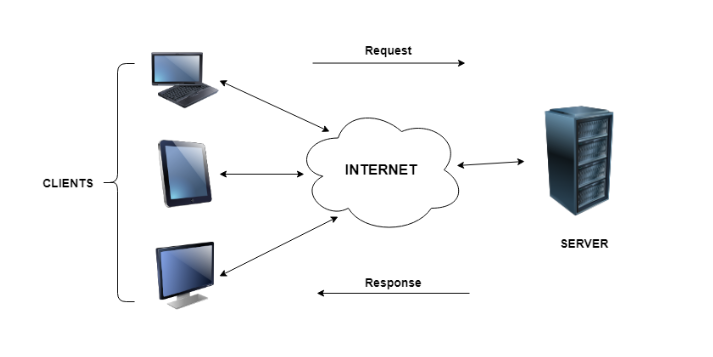
In client server computing, the clients requests a resource and the server provides that resource. A server may serve multiple clients at the same time while a client is in contact with only one server. Both the client and server usually communicate via a computer network but sometimes they may reside in the same system.

An illustration of the client server system is given as follows:

Client/Server computing is a computing model in which client and server computers communicate with each other over a network. In client/server computing, a server takes requests from client computers and shares its resources, applications and/or data with one or more client computers on the network, and a client is a computing device that initiates contact with a server in order to make use of a shareable resource.

From the first client/server computing model introduced at Xerox PARC in the 1970s to today’s highly advanced client server computing networks, our client/server computing dictionary offers a glossary of key terms you need to know.

Characteristics of Client Server Computing

The salient points for client server computing are as follows:

  • The client server computing works with a system of request and response. The client sends a request to the server and the server responds with the desired information.
  • The client and server should follow a common communication protocol so they can easily interact with each other. All the communication protocols are available at the application layer.
  • A server can only accommodate a limited number of client requests at a time. So it uses a system based to priority to respond to the requests.
  • Denial of Service attacks hindera servers ability to respond to authentic client requests by inundating it with false requests.
  • An example of a client server computing system is a web server. It returns the web pages to the clients that requested them.

Difference between Client Server Computing and Peer to Peer Computing

The major differences between client server computing and peer to peer computing are as follows:

  • In client server computing, a server is a central node that services many client nodes. On the other hand, in a peer to peer system, the nodes collectively use their resources and communicate with each other.
  • In client server computing the server is the one that communicates with the other nodes. In peer to peer to computing, all the nodes are equal and share data with each other directly.
  • Client Server computing is believed to be a subcategory of the peer to peer computing.

Advantages of Client Server Computing

The different advantages of client server computing are:

  • All the required data is concentrated in a single place i.e. the server. So it is easy to protect the data and provide authorisation and authentication.
  • The server need not be located physically close to the clients. Yet the data can be accessed efficiently.
  • It is easy to replace, upgrade or relocate the nodes in the client server model because all the nodes are independent and request data only from the server.
  • All the nodes i.e clients and server may not be build on similar platforms yet they can easily facilitate the transfer of data.

Disadvantages of Client Server Computing

  • The different disadvantages of client server computing are:
  • If all the clients simultaneously request data from the server, it may get overloaded. This may lead to congestion in the network.
  • If the server fails for any reason, then none of the requests of the clients can be fulfilled. This leads of failure of the client server network.
  • The cost of setting and maintaining a client server model are quite high.

Data Mining, Meaning, Objectives, Process, Techniques, Applications, Benefits and Challenges

Data mining is the process of analyzing large datasets to discover patterns, trends, correlations, and useful information that can support decision-making. Unlike simple reporting, data mining uses advanced algorithms, statistical models, and machine learning techniques to uncover hidden insights within structured and unstructured data. It is widely used in business, finance, healthcare, and CRM to predict customer behavior, optimize operations, and improve strategic planning. Data mining transforms raw data into actionable knowledge.

Objectives of Data Mining

  • Discover Hidden Patterns

A primary objective of data mining is to identify hidden patterns and relationships in large datasets that are not immediately apparent. These patterns can reveal customer behaviors, market trends, product affinities, or operational inefficiencies. By uncovering such insights, organizations can make informed decisions, improve strategies, and optimize processes. Hidden patterns also help businesses predict future events, personalize marketing, and enhance CRM efforts by understanding customer preferences and engagement behavior.

  • Predict Future Trends

Data mining aims to forecast future outcomes using historical and current data. Predictive modeling helps organizations anticipate customer demand, buying behavior, or market shifts. By identifying trends early, businesses can plan inventory, design targeted marketing campaigns, and optimize resources. Predictive insights reduce risks, enhance decision-making, and allow proactive strategies. This objective is particularly valuable in CRM, as it enables personalized recommendations, churn prevention, and timely engagement with customers to increase satisfaction and loyalty.

  • Improve Decision-Making

Data mining provides data-driven insights that support better decision-making across organizational functions. By analyzing structured and unstructured data, managers can base strategies on evidence rather than assumptions. This enhances operational efficiency, marketing effectiveness, and customer service quality. Improved decision-making allows businesses to respond to changes quickly, optimize performance, and gain a competitive advantage. In CRM, decisions regarding promotions, product launches, and customer engagement are more precise and effective due to actionable insights from data mining.

  • Customer Segmentation

Another objective is to segment customers based on behavior, preferences, demographics, or purchase history. Segmentation enables businesses to design targeted marketing strategies, personalized offers, and loyalty programs. By understanding different customer groups, organizations can optimize communication, improve satisfaction, and maximize revenue. Effective segmentation also helps in resource allocation, ensuring marketing and sales efforts are directed toward the most profitable or strategic customer groups. This is a core objective for CRM-focused data mining.

  • Detect Anomalies and Fraud

Data mining helps in identifying unusual patterns or anomalies that may indicate fraud, errors, or operational risks. Detecting anomalies in financial transactions, online activities, or customer behavior enables proactive action to mitigate losses or compliance issues. Early identification of fraud or irregular activities protects business assets, maintains customer trust, and ensures regulatory compliance. This objective is vital for risk management and maintaining credibility in customer relationship management systems.

  • Optimize Marketing and Sales

Data mining seeks to enhance marketing and sales strategies by analyzing purchasing trends, customer interactions, and product preferences. Insights gained from mining help design targeted campaigns, cross-selling opportunities, and personalized promotions. By understanding what drives customer behavior, businesses can increase engagement, improve conversion rates, and maximize revenue. This objective directly supports CRM by ensuring marketing efforts are relevant, timely, and efficient, strengthening relationships and loyalty.

  • Enhance Operational Efficiency

A key objective of data mining is to improve operational processes by identifying inefficiencies, bottlenecks, or patterns that impact performance. Businesses can streamline supply chains, optimize inventory, and reduce costs based on mined insights. Efficient operations support faster service, better customer satisfaction, and more effective use of resources. By enhancing operational efficiency, organizations strengthen overall business performance and ensure smoother CRM operations.

  • Support Competitive Advantage

Data mining provides organizations with insights that help gain a competitive edge. Understanding customer behavior, market trends, and product performance allows businesses to innovate, anticipate competitor moves, and respond proactively. Companies can identify opportunities for new products, services, or markets, enabling strategic growth. This objective ensures businesses stay ahead in a dynamic environment, leveraging analytics to differentiate themselves and strengthen customer relationships.

  • Knowledge Discovery

Data mining focuses on transforming raw data into actionable knowledge. This knowledge can guide strategic decisions, operational improvements, and customer-focused initiatives. By uncovering meaningful insights, organizations can align resources, policies, and actions with business goals. Knowledge discovery supports continuous learning and adaptation, making the organization more agile and capable of responding to changing market conditions while improving CRM and business intelligence outcomes.

  • Facilitate Personalization

Data mining aims to deliver personalized experiences for customers by understanding their preferences, needs, and behaviors. Businesses can tailor recommendations, offers, and communications to individual customers, enhancing satisfaction and loyalty. Personalization strengthens engagement, encourages repeat purchases, and improves overall CRM effectiveness. By leveraging mined data to customize interactions, organizations can foster stronger customer relationships and increase lifetime value.

Process of Data Mining

Step 1. Data Collection

The first step in data mining is collecting data from various sources, including transactional systems, CRM databases, social media, sensors, and external datasets. Data may be structured, semi-structured, or unstructured. Proper collection ensures that the warehouse or analytics platform has comprehensive, accurate, and relevant information. High-quality data collection is essential, as it forms the foundation for meaningful analysis, pattern discovery, and decision-making in business intelligence and CRM strategies.

Step 2. Data Cleaning

Data cleaning involves removing errors, duplicates, inconsistencies, and missing values from the collected data. Poor-quality data can lead to inaccurate insights and flawed decisions. Cleaning ensures that the dataset is reliable and standardized, improving the accuracy of analysis. Techniques include normalization, validation, and error correction. This step is crucial for preparing data for transformation, mining, and interpretation, ensuring that the insights generated are trustworthy and actionable.

Step 3. Data Integration

In this stage, data from multiple sources is combined into a unified format to facilitate analysis. Integration resolves differences in data formats, units, or semantics from various systems, ensuring consistency and completeness. This process often involves mapping, transformation, and consolidation to create a coherent dataset. Effective integration allows businesses to gain a holistic view of operations, customers, and markets, supporting comprehensive analytics and strategic decision-making.

Step 4. Data Transformation

Data transformation converts raw, integrated data into a format suitable for analysis. This includes aggregation, normalization, discretization, and feature selection. Transformation prepares data for mining algorithms, improving their performance and accuracy. For example, categorical data may be encoded numerically, or large numerical ranges may be scaled. Proper transformation ensures that patterns, trends, and relationships can be effectively discovered and applied to decision-making.

Step 5. Data Mining

The core step is applying data mining techniques and algorithms to the prepared data to discover hidden patterns, correlations, and trends. Techniques include classification, clustering, association rule mining, regression, anomaly detection, and predictive modeling. Data mining transforms large datasets into actionable knowledge that supports marketing strategies, customer relationship management, operational efficiency, and business intelligence initiatives.

Step 6. Pattern Evaluation and Interpretation

Once patterns are discovered, they are evaluated for validity, relevance, and usefulness. Not all discovered patterns are meaningful or actionable. Businesses analyze patterns to identify those that provide significant insights for decision-making, CRM, and strategic planning. Evaluation ensures that insights are aligned with business goals and can be practically applied to improve operations, customer engagement, or market performance.

Step 7. Knowledge Representation

The final step involves representing the mined knowledge in an understandable and usable format. Visualization techniques like charts, graphs, dashboards, and reports help stakeholders interpret insights easily. Knowledge representation ensures that decision-makers, managers, and CRM teams can quickly grasp key findings and act upon them. Effective representation bridges the gap between complex data analysis and practical business application.

Step 8. Deployment and Action

After knowledge is extracted and interpreted, it is applied to business processes and strategies. Insights may guide marketing campaigns, sales strategies, inventory management, risk mitigation, or customer engagement initiatives. Deployment ensures that data mining results produce tangible business value. Continuous monitoring and feedback help refine models and improve future analysis, creating a cycle of learning and improvement.

Step 9. Monitoring and Maintenance

Data mining is not a one-time process; it requires continuous monitoring and maintenance to keep models accurate and relevant. As data evolves and business environments change, mining processes, algorithms, and datasets must be updated. This ensures that the insights remain actionable, supporting dynamic decision-making, CRM strategies, and overall business growth.

Techniques of Data Mining

  • Classification

Classification is a technique used to categorize data into predefined classes or groups based on specific attributes. It helps in predicting outcomes such as customer segmentation (e.g., high-value vs. low-value customers), loan approvals, or risk assessment. Algorithms like Decision Trees, Naive Bayes, and Support Vector Machines (SVM) are commonly used. Classification is widely applied in CRM, marketing, and finance to make informed decisions and target strategies effectively.

  • Clustering

Clustering groups similar data points together based on characteristics or behavior without predefined labels. Unlike classification, clusters are discovered naturally within the data. This technique is useful for market segmentation, customer profiling, and identifying patterns in behavior. Algorithms like K-Means, DBSCAN, and Hierarchical Clustering help businesses understand hidden structures in data and tailor marketing campaigns, product offerings, or service strategies.

  • Association Rule Mining

Association rule mining discovers relationships and correlations between variables in large datasets. A classic example is market basket analysis, which identifies products often bought together. This technique helps businesses implement cross-selling, upselling, and personalized promotions. Tools like the Apriori algorithm or FP-Growth are commonly used to generate association rules that improve customer experience and increase revenue.

  • Regression Analysis

Regression analysis predicts a numeric outcome based on one or more independent variables. It is widely used to forecast sales, customer lifetime value, or demand trends. Linear regression, logistic regression, and polynomial regression are common techniques. Regression enables businesses to anticipate trends, optimize resource allocation, and improve decision-making in marketing, operations, and CRM.

  • Anomaly Detection

Anomaly detection identifies unusual patterns or outliers that deviate from normal behavior. This technique is crucial for fraud detection, quality control, and risk management. Algorithms such as Isolation Forest, Local Outlier Factor, or statistical methods help businesses identify irregularities quickly, protecting assets, ensuring compliance, and maintaining customer trust.

  • Neural Networks

Neural networks are advanced AI models inspired by the human brain that detect complex patterns and relationships within large datasets. They are effective for predictive modeling, classification, and image or text analysis. Neural networks are increasingly applied in CRM for customer behavior prediction, recommendation systems, and sentiment analysis, providing deep insights for strategic decisions.

  • Decision Trees

Decision trees are graphical models that represent decisions and their possible outcomes. They are used for classification and prediction tasks, providing a clear, interpretable structure for decision-making. Businesses use decision trees in credit scoring, customer segmentation, and sales prediction. They are popular because of their simplicity, ease of interpretation, and effectiveness in CRM analytics.

  • Text Mining

Text mining analyzes unstructured textual data such as emails, social media posts, reviews, or feedback. Techniques include Natural Language Processing (NLP), sentiment analysis, and topic modeling. Text mining helps businesses understand customer opinions, detect trends, improve products, and enhance customer service, contributing directly to CRM strategies.

  • Time Series Analysis

Time series analysis examines data points collected over time to identify trends, seasonal patterns, and forecast future events. It is widely used for sales forecasting, inventory management, and predicting customer demand. Techniques like ARIMA, exponential smoothing, and moving averages enable businesses to make proactive decisions and optimize operations.

  • Dimensionality Reduction

Dimensionality reduction reduces the number of variables in a dataset while preserving important information. Techniques like Principal Component Analysis (PCA) and t-SNE help simplify complex datasets, improving processing speed and visualization. This technique is essential for large-scale CRM datasets, enabling more efficient analysis and clearer insights for decision-making.

Applications of Data Mining

  • Customer Relationship Management (CRM)

Data mining is widely used in CRM to understand customer behavior, preferences, and buying patterns. By analyzing historical transactions, browsing habits, and interaction data, businesses can segment customers, predict churn, and design personalized marketing campaigns. This helps in improving customer satisfaction, loyalty, and lifetime value. Companies can also optimize cross-selling and upselling strategies by identifying products frequently purchased together, creating targeted offers, and enhancing overall engagement with their customer base.

  • Market Basket Analysis

Market basket analysis uses data mining to identify products that are frequently purchased together. Retailers and e-commerce businesses leverage this information to design promotions, bundle products, and increase average order value. By understanding product associations, businesses can implement targeted marketing strategies, optimize inventory, and boost sales. This application enhances customer experience by suggesting relevant products and provides insights into consumer behavior for strategic decision-making.

  • Fraud Detection

Data mining helps detect fraudulent activities by analyzing unusual patterns and anomalies in transactional data. Banks, insurance companies, and online platforms use it to monitor credit card transactions, insurance claims, and online purchases. Algorithms identify deviations from normal behavior, enabling early detection and prevention of fraud. This application protects both the organization and customers, ensures regulatory compliance, and enhances trust in business operations.

  • Risk Management

Data mining supports risk assessment and management by analyzing historical data to predict potential operational, financial, or market risks. Businesses can evaluate credit risk, supplier reliability, or investment opportunities. This application allows proactive mitigation of threats, informed decision-making, and improved planning. By identifying high-risk areas, organizations can allocate resources efficiently and maintain stable, profitable operations.

  • Sales and Marketing Optimization

Data mining optimizes marketing and sales strategies by identifying trends, customer segments, and campaign effectiveness. Predictive models help determine the best time to target customers, personalize offers, and enhance response rates. Companies can increase ROI on marketing spend, boost sales, and improve customer engagement. By analyzing past interactions, businesses gain actionable insights to refine campaigns and improve the effectiveness of CRM initiatives.

  • Inventory Management and Demand Forecasting

Data mining enables accurate forecasting of demand and inventory needs by analyzing historical sales, seasonal trends, and market conditions. Retailers and manufacturers can optimize stock levels, reduce overstock or stockouts, and improve supply chain efficiency. This ensures that products are available when customers need them, enhancing satisfaction and operational efficiency. Data-driven inventory management also reduces costs and supports better planning for future demand.

  • Healthcare and Medical Applications

In healthcare, data mining analyzes patient records, treatments, and outcomes to predict diseases, recommend treatments, and improve patient care. Hospitals can identify high-risk patients, detect anomalies in medical data, and optimize resource allocation. This application enhances clinical decision-making, reduces errors, and improves overall healthcare services while providing personalized treatment plans.

  • E-Commerce Recommendations

Data mining powers recommendation systems in e-commerce by analyzing browsing history, purchase behavior, and product interactions. Platforms like Amazon and Netflix use it to suggest relevant products, services, or content to users. This increases sales, engagement, and customer satisfaction. Personalized recommendations also help retain customers, encourage repeat purchases, and improve the overall online shopping experience.

  • Social Media Analysis

Data mining analyzes social media data to understand trends, opinions, and customer sentiment. Businesses can monitor brand perception, track campaigns, and identify influencers. Sentiment analysis and trend detection enable companies to respond proactively to customer feedback, enhance brand reputation, and tailor marketing strategies for improved engagement. This application integrates with CRM to strengthen customer relationships and loyalty.

  • Financial and Credit Analysis

Data mining helps in credit scoring, loan approval, and financial forecasting by evaluating historical financial data, payment patterns, and risk indicators. Banks and financial institutions can make informed lending decisions, detect anomalies, and reduce default rates. This application enhances accuracy in financial decision-making, improves profitability, and strengthens customer trust through fair and transparent processes.

Benefits of Data Mining in CRM

  • Improved Customer Segmentation

Data mining allows businesses to segment customers effectively based on demographics, behavior, preferences, and purchase history. Accurate segmentation enables targeted marketing campaigns, personalized offers, and optimized resource allocation. Companies can identify high-value customers, prioritize engagement strategies, and design loyalty programs that increase retention. Improved segmentation enhances CRM effectiveness by ensuring that interactions are relevant and meaningful, strengthening relationships and boosting overall customer satisfaction and lifetime value.

  • Enhanced Customer Retention

By analyzing past behavior and predicting churn, data mining helps retain valuable customers. Companies can identify at-risk customers, understand the reasons for disengagement, and implement targeted retention strategies. Personalized communication, timely offers, and proactive problem resolution increase loyalty and reduce attrition. Enhanced retention not only stabilizes revenue streams but also strengthens the company’s reputation and trustworthiness, reinforcing the overall CRM strategy.

  • Personalized Marketing and Offers

Data mining enables businesses to create personalized marketing campaigns tailored to individual customer preferences. By analyzing purchase history, browsing behavior, and interaction data, companies can recommend products, services, or content that is highly relevant. Personalization improves engagement, conversion rates, and customer satisfaction. Businesses also gain insights for cross-selling and upselling opportunities, enhancing profitability while strengthening the emotional connection with customers in CRM initiatives.

  • Predictive Customer Insights

Data mining provides predictive insights into customer behavior. By identifying trends and patterns, businesses can anticipate future actions, preferences, or purchases. Predictive modeling supports proactive CRM strategies such as targeted promotions, early intervention for at-risk customers, and optimized communication timing. These insights help companies make informed decisions, improve customer experience, and maintain a competitive advantage.

  • Improved Decision-Making

With data mining, businesses gain actionable insights from large datasets, enabling informed decision-making. Managers can base strategies on evidence rather than assumptions, improving accuracy and reducing risk. Decisions regarding marketing, sales, product development, and customer service become more effective. Data-driven decision-making strengthens CRM by aligning initiatives with real customer needs and market trends, increasing efficiency and outcomes.

  • Efficient Resource Allocation

Data mining helps businesses allocate resources efficiently by identifying the most profitable customer segments, effective marketing channels, and high-impact campaigns. Organizations can focus their efforts on areas with maximum ROI, reducing waste and optimizing performance. Efficient resource allocation ensures that CRM strategies are cost-effective while delivering maximum value to customers and the business.

  • Fraud Detection and Risk Management

Data mining techniques allow businesses to detect unusual patterns and anomalies that may indicate fraud or risk. By monitoring transactions, account activities, and customer behavior, organizations can prevent financial losses and protect sensitive information. This builds trust with customers, ensures compliance with regulations, and strengthens overall CRM operations by maintaining a secure and reliable environment.

  • Enhanced Customer Experience

By leveraging insights from data mining, companies can improve the overall customer experience. Understanding preferences, needs, and behavior enables personalization, timely communication, and proactive support. Customers feel valued and understood, leading to higher satisfaction, loyalty, and repeat business. Enhanced experiences strengthen the emotional connection with the brand, a core objective of CRM.

  • Identification of New Opportunities

Data mining uncovers new business opportunities by analyzing patterns, trends, and market behavior. Companies can identify potential product launches, untapped markets, or cross-selling possibilities. These insights drive growth, innovation, and revenue while helping businesses stay ahead of competitors. Opportunities discovered through data mining support CRM initiatives by aligning offerings with customer demand.

  • Competitive Advantage

Organizations that leverage data mining gain a strategic edge over competitors. Insights into customer behavior, market trends, and operational efficiency allow proactive actions and better decision-making. By optimizing CRM strategies, personalizing interactions, and anticipating customer needs, businesses can outperform rivals, retain customers, and grow market share. This competitive advantage is a key benefit of integrating data mining into CRM.

Challenges of Data Mining in CRM

  • Data Quality Issues

One of the main challenges in data mining is ensuring high-quality data. Incomplete, inaccurate, or inconsistent data can lead to misleading insights and poor decision-making. CRM systems often integrate data from multiple sources, increasing the risk of errors or duplicates. Maintaining data quality requires regular cleaning, validation, and standardization. Without reliable data, patterns discovered through mining may be incorrect, resulting in ineffective marketing strategies, misaligned customer engagement, and lost revenue opportunities.

  • Data Integration Complexity

CRM systems collect information from various platforms, including sales, marketing, social media, and customer support. Integrating these diverse datasets into a coherent framework for mining is complex. Differences in formats, structures, and semantics can create inconsistencies. Advanced ETL tools and skilled personnel are needed to ensure seamless integration. Poor integration may lead to incomplete insights, misinterpretation of patterns, and limited effectiveness of data mining initiatives in supporting CRM strategies.

  • Privacy and Security Concerns

Data mining in CRM involves handling sensitive customer information, which raises privacy and security challenges. Unauthorized access, breaches, or misuse of data can damage trust, lead to regulatory penalties, and harm a company’s reputation. Compliance with regulations like GDPR, CCPA, and other data protection laws is critical. Organizations must implement encryption, access controls, and secure storage to protect customer data while enabling effective analysis.

  • High Costs

Implementing data mining solutions in CRM can be expensive due to software, hardware, storage, and skilled personnel requirements. Small and medium businesses may struggle with high initial and ongoing costs. Maintaining, upgrading, and optimizing data mining tools also adds financial pressure. Without proper planning and ROI assessment, investments in data mining may not yield significant benefits for customer relationship management.

  • Complexity of Algorithms

Data mining involves advanced algorithms and techniques like neural networks, clustering, regression, and predictive modeling. Understanding, implementing, and interpreting these models requires specialized skills. Misapplication of algorithms or incorrect interpretation can result in inaccurate insights and flawed decisions. Organizations must invest in training, skilled analysts, or external expertise to overcome this challenge and ensure effective CRM data mining.

  • Resistance to Change

Employees and managers may resist adopting data mining tools due to unfamiliarity, fear of automation, or skepticism about results. Low adoption reduces the effectiveness of CRM initiatives, as insights generated are not utilized. Organizations must provide proper training, demonstrate value, and encourage a data-driven culture to overcome resistance and ensure that data mining contributes meaningfully to customer relationship management.

  • Managing Large Volumes of Data

CRM systems generate massive volumes of data, which can be challenging to store, process, and analyze efficiently. Handling big data requires advanced storage solutions, powerful computing resources, and optimized algorithms. Without proper infrastructure, mining large datasets may be slow, costly, or inaccurate, limiting the ability to extract timely and actionable insights for CRM.

  • Difficulty in Interpreting Results

Data mining can generate complex patterns and insights that are difficult for decision-makers to interpret. Misunderstanding results can lead to poor strategic decisions or incorrect customer targeting. Effective visualization tools, dashboards, and clear communication of findings are necessary to translate technical results into actionable CRM strategies that improve engagement and profitability.

  • Dynamic Customer Behavior

Customer preferences and behaviors change frequently, making it challenging to maintain accurate predictive models. Data mining results can become outdated quickly if models are not continuously updated. CRM teams must monitor trends, retrain models, and adjust strategies regularly to ensure insights remain relevant and effective for customer engagement.

  • Ethical Concerns

Using customer data for mining may raise ethical questions, such as manipulation, excessive targeting, or invasion of privacy. Even with legal compliance, businesses must consider ethical standards to maintain customer trust. Overuse or misuse of data can harm relationships and brand reputation. Ethical practices in data mining ensure responsible use of information while maximizing CRM benefits.

Website Management Meaning and Steps

Website management entails a number of different services that are combined together so you don’t have to worry about running your website. Essentially, when you contract out to a company like ours to manage your website, we do all of the website related work and all you need to do is tell us what you need.

Management can be broken down into three major categories: Security, content management, and website support.

  1. Website Security

Website security is the most important component of any good website management service. All websites are under constant attack by hackers and cyber criminals. The vast majority of these attacks are automated and are designed to use your website as a platform to infect your visitors’ computers or phish for information. Making sure your site is secure and that the architecture on which it is built is up-to-date is a vital component of any management service. It includes both passive management like setting up good firewalls and things to block potential hackers, and active management which includes things like malware scans and updating your website architecture.

  1. Content Management

This is the second big component of any website management service. A website should be a static object that never gets updated or improved. The single most important thing you can to do make your website successful is to regularly add content. Adding content to a website is not as simple as pasting some text and clicking publish. Content management includes things like posting blog posts, adding photographs, fixing website pages, and the like.

For example, if you run a restaurant, you will want to keep your menu up to date and add any seasonal menus or specials to the website. Chances are, you don’t want to be hassled to do these things and it is easier to outsource this to an outside company where all you have to do is send them an e-mail and they will do it for you.

An important factor to good content management is optimizing the content for the web. Properly formatting content for the web is an art and a science, and it requires understanding of both HTML but SEO as well. This is also true for posting images, which should be optimized both with tags but compressed in size so they keep your website fast.

  1. Website Support

I like to lump the rest of the activities into general website support. This is going to encompass a wide range of things. For example, if you want to tweak the layout of the website or change the navigation menu it would be part of your website management service. We also include some other services under this umbrella including adding email addresses, helping with forgotten passwords, and answering any questions you may have related to your website or your online business presence.

All websites require management whether it is being outsourced to a company like Taikun Inc. or it is being done by an employee in house. For many companies, it is far more cost effective to outsource these tasks to a firm that specializes in it, as it is difficult and more expensive to find an employee who is effective at all aspects of management.

Eight Easy Steps to Managing Your Website Development

Managing your website development need not cause you sleepless nights, providing you learn the secrets of successful project management. Perform the best practices in project management and give your project the best chance of success.

  1. Define Objectives

Objectives guide everyone on the project to your final goals. Are your objectives to sell your product online, to provide customer support, to promote investor relations? Carefully decide and clearly document your objectives.

Decide the critical success factors – the things at the end of the project which tell you if you’ve been successful. Make them measurable so you know if you’ve achieved them. For example, the website development should result in an increase in online sales of 25% by year end.

  1. Stakeholder Analysis

A stakeholder is someone with an interest in your project’s success (or failure). Decide who they are and whether they support your project. Perform stakeholder analysis by classifying them (high or low) according to how motivated they are in helping (or blocking) your project and how influential (high or low) they are.

Highly influential and supportive people are your allies. Gain their support whenever you can. Aim to reduce the influence of people who are both highly influential and against your project as these people could act to damage your project.

During your stakeholder analysis, draw up strategies for dealing with each group of stakeholders.

  1. Deliverables

Deliverables are tangible things produced during the project. Talk with key stakeholders to help define deliverables. Will your website design include web page layouts and sitemap for use by the programming team? What is the content for each page? Write all this down.

Key stakeholders must review and agree the deliverables accurately reflect what they expect to be delivered.

  1. Project Planning

Define how you will arrive at your objectives. This involves planning how many people, resources and budget are required. If delivering this in house, decide what activities are required to produce each deliverable.

For example, you might decide a web designer will develop page layouts and navigation diagrams. You might decide the marketing team will supply all product details and photographs. You might decide the finance manager will set up merchant and payment gateway accounts to enable ecommerce transactions via your website. If outsourcing work, specify exactly what the sub-contractor should deliver.

Estimate the time and effort required for each activity and decide realistic schedules and budget. Ensure key stakeholders review and agree the plan and budget.

  1. Communication Planning

Hold a kick off meeting with the team and explain the plan. Ensure everyone knows exactly what the schedule is, and what is expected of them.

For example, the web designer needs to know that he is to produce page layouts and navigation diagrams based upon the marketing manager’s requirements. He needs to know his expected start and end times.

Share your project communication plan with the team. This should include details of report templates, frequency of reporting and meetings, and details of how conflicts between teams and their members will be resolved.

  1. Project Tracking

Constant monitoring of variations between actual and planned cost, schedule and scope is required. Report variations to key stakeholders and take corrective actions if variations occur. To get a project back on track you will need to juggle cost, scope and schedule.

Suppose your programmer hits technical problems which threaten to delay the project. You might recover time by re-organising or shortening remaining tasks. If that’s not possible, you might consider increasing the budget to employ an additional programmer, or consider reducing the scope in other areas.

Be aware that any adjustments you make to the plan might affect the quality of deliverables. If you need to increase the budget, seek approval from the project sponsor.

  1. Change Management

Once started, all projects change. Decide a simple change strategy with key stakeholders. This could be a committee which decides to accept or reject changes which comprises of you and one or more key stakeholders.

Assess the impact of each change on scope, cost and schedule. Decide to accept or reject the change. Be aware that the more changes you accept the less chance you have of completing the project on time and within budget unless you reduce scope in other areas.

Suppose the marketing manager wants to add a pop-up window to display full size photographs of products. Assess the impact of this change. You might need to remove some remaining tasks to include this change and stay within budget. Or, it might be impossible to include the change without increasing the budget or schedule.

Don’t blindly accept changes without assessing the impact or your project will overrun.

  1. Risk Management

Risks are events which can adversely affect the success of the project. Identify risks to a project early. Decide if each risk is likely or unlikely to occur. Decide if its impact on the project is high or low.

Risks that are likely to occur and have high impact are the severest risks. High impact but unlikely risks, or low impact but likely risks pose a medium threat. Unlikely and low impact risks pose the least threat.

Create a mitigation plan of the actions necessary to reduce the impact if the risk occurs. Start with the severest risks first, then deal with the medium risks. Regularly review risks. Add new ones if they occur.

Suppose the marketing manager cannot decide what he wants from the website. Without knowing what the marketing manager wants, the team cannot deliver a website to meet his expectations. You assess this risk as highly likely to occur and having high impact. Your mitigation plan might be that the web designer develops page layouts to be reviewed by the manager early in the project.

What is website management and its use?

Website management involves many activities including software updates, data backup, website hosting and content updates.

It might also include SEO work, software development, content development, visitor analysis and much more.

Most businesses should actively manage their website to get the best business benefit from it.

What does a website manager do?

A website manager is responsible for making sure a website delivers what it was designed to provide.

This might be a technical solution such as a banking website or a lead generation website used to help with business growth.

CMS on a website

CMS stands for Content Management System. It’s software that helps people with no coding expertise run and manage a website.

Examples of popular content management systems are WordPress, Joomla and Craft.

How much does a website manager cost?

A fulltime website manager in the UK would command a salary of around £30k. Web design agencies charge from about £500/month depending on the complexity of the requirements.

How much does website maintenance cost per month?

Web design agencies generally charge a monthly fee based on the likely requirements. At the lower end, this would be around £200/month rising to several thousand pounds for more demanding requirements.

What is CMS software?

CMS or Content Management Software helps non-technical website managers and editors run and manage a website without the need for any technical expertise.

What is maintenance of a website?

Maintenance of a website involves many things, including keeping the website software updated and secure. It also includes creating copies or backups of the site to safeguard against loss.

What is the average monthly cost for a website?

Monthly costs for a website depend on the size and complexity of the website.

Some costs, such as the website hosting are fixed while other costs such as adding content, vary depending on the amount of content required.

Agencies like us charge from £500/month at the lower end to around £5k/month at the higher end.

Does it cost money to run a website?

Yes. At a minimum, websites require hosting on a server that’s permanently connected to the internet. This creates a cost.

Do websites need maintenance?

Generally, yes. Most websites are built using a CMS or content management system. This needs to be periodically updated and backed up.

Why is maintaining your website important?

A website can be a valuable asset for a business or organization, and a lack of maintenance could result in the site being lost.

As a website is often the first place a person looks when they need information about an organization, keeping the site maintained is very important.

What does website maintenance include?

Website maintenance usual includes hosting, software updates and backups. It can also include content updates and SEO.

What does website maintenance mean?

Website maintenance means any work that’s carried out to ensure a website remains fit for purpose.

ERP Meaning and Functions

Enterprise resource planning (ERP) refers to a type of software that organizations use to manage day-to-day business activities such as accounting, procurement, project management, risk management and compliance, and supply chain operations. A complete ERP suite also includes enterprise performance management, software that helps plan, budget, predict, and report on an organization’s financial results.

ERP systems tie together a multitude of business processes and enable the flow of data between them. By collecting an organization’s shared transactional data from multiple sources, ERP systems eliminate data duplication and provide data integrity with a single source of truth.

Enterprise resource planning (ERP) is the integrated management of main business processes, often in real time and mediated by software and technology.

ERP is usually referred to as a category of business management software typically a suite of integrated applicationsthat an organization can use to collect, store, manage, and interpret data from many business activities.

ERP provides an integrated and continuously updated view of core business processes using common databases maintained by a database management system. ERP systems track business resources cash, raw materials, production capacity and the status of business commitments: orders, purchase orders, and payroll. The applications that make up the system share data across various departments (manufacturing, purchasing, sales, accounting, etc.) that provide the data. ERP facilitates information flow between all business functions and manages connections to outside stakeholders.

Enterprise system software is a multibillion-dollar industry that produces components supporting a variety of business functions. IT investments have become the largest category of capital expenditure in United States-based businesses over the past decade. Though early ERP systems focused on large enterprises, smaller enterprises increasingly use ERP systems.

The ERP system integrates varied organizational systems and facilitates error-free transactions and production, thereby enhancing the organization’s efficiency. However, developing an ERP system differs from traditional system development. ERP systems run on a variety of computer hardware and network configurations, typically using a database as an information repository.

The Business Value of ERP

It’s impossible to ignore the impact of ERP in today’s business world. As enterprise data and processes are corralled into ERP systems, businesses can align separate departments and improve workflows, resulting in significant bottom-line savings. Examples of specific business benefits include:

  • Improved business insight from real-time information generated by reports
  • Lower operational costs through streamlined business processes and best practices
  • Enhanced collaboration from users sharing data in contracts, requisitions, and purchase orders
  • Improved efficiency through a common user experience across many business functions and well-defined business processes
  • Consistent infrastructure from the back office to the front office, with all business activities having the same look and feel
  • Higher user-adoption rates from a common user experience and design
  • Reduced risk through improved data integrity and financial controls
  • Lower management and operational costs through uniform and integrated systems

Functions of ERP

While any business may have different uses for ERP, there are six key functions that are found most commonly in the software.

  1. Human Resources

An HR module should be able to process tasks related to managing your employees, including payroll, timesheets, benefits, onboarding and offboarding. The HR module should automate payments, including deductions so, for example, an hourly employee’s wages are automatically calculated based on her timesheet, benefits and taxes are deducted and the net pay is automatically deposited into her bank account.

  1. Customer Relationship Management (CRM)

A CRM module stores data related to customers and prospects, giving employees insights that can improve sales and marketing processes. For example, CRM can track customer buying habits, so you can see what types of products you may be able to upsell and when the best time may be to offer these products. CRM is especially useful for an e-commerce business, allowing you to target prospects with ads that are meaningful to them. A CRM module can also track when prospects have been contacted and what was discussed, eliminating additional sales calls that may not be appropriate.

  1. Business Intelligence (BI)

A BI module can help business leaders make well-informed decisions based on meaningful and timely data from any department as needed. This module can analyze practically any business process and provide reports without any excess information. Reports can be in a visual format or presented in tables, depending on the manager’s preferences.

  1. Supply Chain Management (SCM)

An SCM module usually works with an inventory management system to improve the efficiency of a company’s supply chain by using real-time data to optimize manufacturing and distribution processes. This can give you the ability to intervene when a problem happens, rather than waiting to find out the next day or later. More than that, today’s SCM software can track and analyze these processes to predict when a problem is likely to occur. An example of this is the ability to notify customers when orders are being processed and shipped in real-time.

  1. Inventory Management System

An inventory management system module processes order fulfillment and tracks warehouse inventory, greatly reducing the need to track inventory manually. This is very useful to manufacturers or companies with their own distribution centers where tracking inventory can become extremely complex. Features can include real-time inventory on the company’s website to inform customers what is and what isn’t in stock.

  1. Financial Management

Just about every business with an ERP will use a financial management module. It works in conjunction with the other ERP components to track the flow of money, from the purchase of new supplies to paying employees and issuing invoices to customers. Financial management software in an ERP can also help you budget, produce financial forecasts and give you insights into where costs can be reduced.

error: Content is protected !!