Managerial Decision Mix.

Investment decision: It is related to capital mix. Firms have scarce resources that must allocated among competitive uses. The financial management provides a framework for firms to take these decisions wisely. The investment decision includes not only those that creates revenues and profits (ex. Introducing product line), but also those that save money (ex. Introduce a more efficient distribution system). The investment decision is the decision related to assets composition of the firm. Investment decision deals with the size and composition of the asset side of the balance sheet. It is also divided into capital budgeting decision (related to fixed asset) and Working capital management (related to current asset).

a) Capital Budgeting: It deals with the size and composition of the fixed assets. The fixed assets of a firm are the primarily determinants of the profitability of the firm. The objective of the capital budgeting decision is to identify those assets which are worth more than their cost. A financial manager therefore has to take utmost care in dealing with the decision.

b) Working capital management: It deals with the management of the current assets of the firms. Though the current asset do not contribute directly to the earnings, yet their existence is necessities for the proper, efficient and optimum utilization of fixed assets. There are the problems of both the excessive working and adequate working capital to the firm. This decision include how much and what inventory to be maintained and how much credit to be given to the customers.

Financing decision: It deals with the financing patterns of the firms. As firms make decisions concerning where to invest resources. They also have to decide how they should raise resources. There are two main resources of finance for any firm, that is shareholders’ funds and the borrowed funds. These sources have their own characteristics. The key distinction between these two resources that the borrowing funds are always repayable but the shareholders’ funds are not always repayable. firms usually adopt a policy of employing both borrowing funds as well as the shareholders’ funds to finance their activities. The employment of these funds in the combination is also known as Financial Leverage. Every such combination has its own implications.

The Dividend Decision: It deals with the appropriation of after-tax profits. These profits are available to be distributed among the shareholders, Or can be retained by the firm for reinvestment within the firm. Every firm, whether it is small or large, have to decide how much of the profits should be reinvested back in the business. And how much should be taken out in form of dividends. these activities are coming under Profit allocation. The distribution of the profits by any firms is required to satisfy the expectation of the shareholders. The profits can be distributed to shareholders either as the Revenue income(ex. expenditure) or as capital receipt(ex. Bonus share). In this attempt the manager has to look into the fund’s requirements of the firms and the shareholders’ interests. so, these are the financial managerial decisions in asset mix, capital mix and profit allocation.

Return on cash Systems, Transfer Pricing and Divisional Performance

Return on cash Systems

Cash on cash return is a rate of return ratio that calculates the total cash earned on the total cash invested. The amount of the total cash earned is generally based on the annual pre-tax cash flow.

A cash-on-cash return is a rate of return often used in real estate transactions that calculates the cash income earned on the cash invested in a property. Put simply, cash-on-cash return measures the annual return the investor made on the property in relation to the amount of mortgage paid during the same year. It is considered relatively easy to understand and one of the most important real estate ROI calculations.

Cash on cash return is a simple financial metric that allows the assessment of cash flows from a company’s income-generating assets. The ratio is primarily used in commercial real estate transactions. In the real estate industry, the cash-on-cash return is sometimes referred to as the cash yield on a property investment.

The Formula for Cash-on-Cash Return

Cash on Cash Return = Annual Pre-Tax Cash Flow / Total Cash Invested

Annual Pre-Tax Cash Flow​where:

APTCF = (GSR + OI) – (V + OE + AMP)

GSR = Gross scheduled rent

OI = Other incomeV = Vacancy

OE = Operating expenses

AMP = Annual mortgage payments​

A cash-on-cash return is a metric normally used to measure commercial real estate investment performance. It is sometimes referred to as the cash yield on a property investment. The cash-on-cash return rate provides business owners and investors with an analysis of the business plan for a property and the potential cash distributions over the life of the investment.

Cash-on-cash return analysis is often used for investment properties that involve long-term debt borrowing. When debt is included in a real estate transaction, as is the case with most commercial properties, the actual cash return on the investment differs from the standard return on investment (ROI).

Calculations based on standard ROI take into account the total return on an investment. Cash-on-cash return, on the other hand, only measures the return on the actual cash invested, providing a more accurate analysis of the investment’s performance.

Transfer Pricing

Transfer price is the price at which related parties transact with each other, such as during the trade of supplies or labor between departments. Transfer prices are used when individual entities of a larger multi-entity firm are treated and measured as separately run entities. It is common for multi-entity corporations to be consolidated on a financial reporting basis; however, they may report each entity separately for tax purposes.

In taxation and accounting, transfer pricing refers to the rules and methods for pricing transactions within and between enterprises under common ownership or control. Because of the potential for cross-border controlled transactions to distort taxable income, tax authorities in many countries can adjust intragroup transfer prices that differ from what would have been charged by unrelated enterprises dealing at arm’s length (the arm’s-length principle). The OECD and World Bank recommend intragroup pricing rules based on the arm’s-length principle, and 19 of the 20 members of the G20 have adopted similar measures through bilateral treaties and domestic legislation, regulations, or administrative practice. Countries with transfer pricing legislation generally follow the OECD Transfer Pricing Guidelines for Multinational Enterprises and Tax Administrations in most respects, although their rules can differ on some important details.

Where adopted, transfer pricing rules allow tax authorities to adjust prices for most cross-border intragroup transactions, including transfers of tangible or intangible property, services, and loans. For example, a tax authority may increase a company’s taxable income by reducing the price of goods purchased from an affiliated foreign manufacturer or raising the royalty the company must charge its foreign subsidiaries for rights to use a proprietary technology or brand name. These adjustments are generally calculated using one or more of the transfer pricing methods specified in the OECD guidelines and are subject to judicial review or other dispute resolution mechanisms.

Although transfer pricing is sometimes inaccurately presented by commentators as a tax avoidance practice or technique (transfer mispricing), the term refers to a set of substantive and administrative regulatory requirements imposed by governments on certain taxpayers. However, aggressive intragroup pricing especially for debt and intangibles has played a major role in corporate tax avoidance, and it was one of the issues identified when the OECD released its base erosion and profit shifting (BEPS) action plan in 2013. The OECD’s 2015 final BEPS reports called for country-by-country reporting and stricter rules for transfers of risk and intangibles but recommended continued adherence to the arm’s-length principle. These recommendations have been criticized by many taxpayers and professional service firms for departing from established principles and by some academics and advocacy groups for failing to make adequate changes.

Transfer pricing should not be conflated with fraudulent trade mis-invoicing, which is a technique for concealing illicit transfers by reporting falsified prices on invoices submitted to customs officials. “Because they often both involve mispricing, many aggressive tax avoidance schemes by multinational corporations can easily be confused with trade misinvoicing. However, they should be regarded as separate policy problems with separate solutions,” according to Global Financial Integrity, a non-profit research and advocacy group focused on countering illicit financial flows.

Risks:

  1. There can be a disagreement among the organizational division managers as what the policies should be regarding the transfer policies.
  2. There are a lot of additional costs that are linked with the required time and manpower which is required to execute transfer pricing and help in designing the accounting system.
  3. It gets difficult to estimate the right amount of pricing policy for intangibles such as services, as transfer pricing does not work well as these departments do not provide measurable benefits.
  4. The issue of transfer pricing may give rise to dysfunctional behavior among managers of organizational units. Another matter of concern is the process of transfer pricing is highly complicated and time-consuming in large multi-nationals.
  5. Buyer and seller perform different functions from each other that undertakes different types of risks. For instance, the seller may or may not provide the warranty for the product. But the price a buyer would pay would be affected by the difference. The risks that impact prices are as follows
  • Financial & currency risk
  • Collection risk
  • Market and entrepreneurial risk
  • Product obsolescence risk
  • Credit risk

Benefits:

  1. Transfer pricing helps in reducing the duty costs by shipping goods into high tariff countries at minimal transfer prices so that duty base associated with these transactions are low.
  2. Reducing income taxes in high tax countries by overpricing goods that are transferred to units in those countries where the tax rate is comparatively lower thereby giving them a higher profit margin.

Divisional Performance

  1. The Economic Value Added (EVA)

ROI and RI cannot stand alone as a financial measure of divisional performance. One of the factors contribute to a company’s long-run objectives is short-run profit ability. ROI and RI are short-run concepts that deal only with the current reporting period whereas managerial performance measures should focus on future results that can be expected because of present actions.

RI has been refined and re-named as economic value added (EVA) by the Stern Stewart & Co. EVA is a financial performance measure based on operating income after taxes, the investment in assets required to generate that income and the cost of the investment in assets (or, weighted average cost of capital). The objective of EVA is to develop a performance measure that find the ways in which company value can be added or lost. The EVA concept extends the traditional residual income measure by incorporating adjustments to the divisional financial performance measure for distortions introduced by GAAP. Thus, by linking divisional performance to EVA, managers are motivated to focus on increasing shareholder value.

  1. The Residual Income (RI)

Residual income overcomes the dysfunctional aspect of ROI. It is because the use of ROI as a performance measurement can lead to under-investment. For example, a manager currently achieving a high rate of return (say 30 percent) may not wish to pursue a project yielding a lower rate of return (say 20 percent) even though such as a project may be desirable to a company which can raise capital at an even lower rate. Thus, used RI is better than ROI.

The purpose of evaluating the performance of divisional managers, RI is defined as controllable contribution less a cost of capital charge on the investment controllable by the divisional manager. For evaluating the economic performance of the division RI can be defined as divisional contribution less a cost of capital charge on the total investment in assets employed by the division.

Besides, RI is favour than ROI and it more flexible because different cost of capital percentage rates can be applied to investments that have different levels of risk. There is not only will the cost of capital of divisions that have different levels of risk differ so may the risk and cost of capital of assets within the same division. The RI measure enables to calculate the different risk-adjusted in capital cost while ROI cannot incorporate these differences.

While ROI is a ratio, RI is an absolute figure. RI deals with the problems of ROI adequately because any investment, which will earn higher than the capital charge will improve the RI. Therefore, use of RI motivates divisional managers to acquire only those assets, which will improve the performance of the company as a whole. Thus, the RI method sets the same profit objective for same assets in different divisions.

A sophisticated system also solves the problem of the same profit objective for different assets in the same division by using different rate of capital charges for different class of assets. RI is definitely a superior measure compared to ROI for measuring divisional performance.

  1. The Return on Investment (ROI)

Nowadays, most of companies concentrate on the return on investment (ROI) of a division that is profit as a percentage in direct relation to investment of division which instead of focusing on the size of a division’s profits. ROI addressed divisional profit as a percentage of the assets employed in the division. Assets employed can be defined as total divisional assets, assets controllable by the divisional manager, or net assets.

The main advantage of using ROI is provides a valuable information about the overall approximation on the success of a firm’s past investment policy by providing a abstract of the ex post return on capital invested. According to Kaplan and Atkinson, they state that however, lack of some form of measurement of the ex post returns on capital, there is still useful for accurate estimates of future cash flows during the capital budgeting process. When ROI is used as a managerial performance measure, Measuring returns on invested capital also focuses managers’ attention on the impact of levels of working capital (in particular, stocks and debtors) on the ROI. It can lead to decisions making that are optimal for individual divisions but sub-optimal for the company. ROI focuses on short-term profitability, looking only at the last quarter or last year for performance evaluation. This time horizon may not be long enough for many projects to be evaluated.

(a) It is a comprehensive measure and captures all the factors which influence figures in financial statements.

(b) It is easy to calculate and understand.

(c) It makes comparison of performances of different divisions easy.

(d) Data on ROI of different companies are easily available and that helps in inter-firm comparison.

Kaizen costing

Kaizen costing is the process of continual cost reduction that occurs after a product design has been completed and is now in production. Cost reduction techniques can include working with suppliers to reduce the costs in their processes, or implementing less costly re-designs of the product, or reducing waste costs. These reductions are needed to give the seller the option to reduce prices in the face of increased competition later in the life of a product.

Characteristics

  • Kaizen involves setting standards and then continually improving these standards to achieve long-term sustainable improvements.
  • The focus is on eliminating waste, improving processes and systems and improving productivity.
  • Involves all employees and all areas of the business.

Kaizen costing is a cost reduction system. Yasuhiro Monden defines kaizen costing as “the maintenance of present cost levels for products currently being manufactured via systematic efforts to achieve the desired cost level.” The word kaizen is a Japanese word meaning continuous improvement.

Monden has described two types of kaizen costing:

  • Asset and organization specific kaizen costing activities planned according to the exigencies of each deal.
  • Product model specific costing activities carried out in special projects with added emphasis on value analysis.

Kaizen costing is applied to products that are already in production phase. Prior to kaizen costing, when the products are under development phase, target costing is applied. After targets have been set, they are continuously updated to display past improvements, and projected (expected) improvements. Adopting Kaizen costing requires a change in the method of setting standards. Kaizen costing focuses on “cost reduction” rather than “cost control”.

Types of costs under consideration

Kaizen costing takes into consideration costs related to manufacturing stage, which include:

  • Costs of supply chain
  • Legal costs
  • Manufacturing costs
  • Waste
  • Recruitment costs
  • Marketing, sales and distribution
  • Product disposal

5S in Kaizen Costing

  • Seiri (Sort): Must start from all tools within the workplace by scan through all of them and evaluate their usefulness. Only the necessary tools should keep in the workplace, the useless items should be removed to save the space and enhance the working experience.
  • Seiton (Strengthen): The concept that the tools and material must keep in their own place with proper labels or categories. The most frequently used item must place near us while less one should keep in the corner. It will save time for us to look for each specific item.
  • Seiso (Shine): The workplace must be clean and tidy every day. All the tools are ready to use and space is available for new work. It will improve the productivity of the employee.
  • Seiketsu (Standardize): We must keep the workplace from getting back to the previous condition. There must be a sign, banners, or board to ensure everybody understands and practice as part of daily operation.
  • Shitsuke(Sustain): The last step is to inform all staff and departments to practice this culture every day. It is the continuous task that needs to maintain for long.

Principles

Less waste: This method focuses to decrease all kind of wastage since the product design and production and after-sale services.

Increase employee satisfaction: The employees are the key person to identify non-value-added activities and aim to decrease it. They will be able to

Improve working commitment: All the staff levels will commit to their work as they know the company goa, which looking for improvement at all levels. They will leave behind if they not improve, so it encourages them to work harder to archive it.

Increase competitiveness: It will, the advantage when we can improve our product’s quality and sell it at a lower price. We will gain more market share and increase profit in the long term.

Advantages

Waste reduction

Kaizen reduces wastes in business processes. This is another major kaizen advantage. Kaizen is the responsibility of everyone. Therefore, management and staff are responsible for identifying areas that constitute waste in the business process. By implementing constant changes, they can determine the root cause of wastage and fix them. By so doing, waste is eradicated from the business process and cost is reduced.

Improved Standard Work Document

Implementing changes during kaizen results to a new and improved Standard Work Document. Standard Work Document, also called standardized work, is a tool that forms the foundation of kaizen improvements. It contains the current best practice guiding a business. Sometimes, this is the main aim of implementing kaizen. In addition, Standard Work Document serves as the base for future improvements. It also serves as a tool for measuring employee performance and educating new employees about improvements.

Better safety

Improving safety on the work floor is a kaizen advantage for business. Safety is improved when businesses implement ideas that clean up and organize workspace. By so doing, employees have better control of business process equipment. Employees are also encouraged to make suggestions to improve safety on the work floor. This helps to minimize accidents and other related injuries. Hence, employees become more efficient and manage their time properly. However, safety is a responsibility of management as well.

Improved employee satisfaction

Another kaizen advantage is that it improves employee satisfaction. Kaizen involves the employees when implementing changes for improvements. Employees can make suggestions and creative input for changes through a suggestion system like team meetings. When employees are involved in decision making, it gives them a sense of belonging and worth.

Improved teamwork

One of the major kaizen advantages is improved teamwork. Kaizen is a quality improvement tool driven by teamwork. It does not benefit only a selected few, but everyone involved in the business process. As the kaizen team solves problems together, they develop a bond and build team spirit. Thus, employees are able to work with a fresh perspective, an unbiased mind and without prejudice.

Improved efficiency

A major kaizen advantage is improved efficiency. Kaizen improvements boost the quality of services. It helps businesses implement new process improvements, boost efficiency and enhance time management.  For example, Toyota Manufacturing Company employs kaizen in its production process. First of all, they deploy muscle-memory training to train their employees on how to assemble a car. Muscle-memory training helps them to achieve accurate results. Hence, their employees are able to work with precision.

Kaizen builds leadership skills

Every kaizen team must have a team leader. The team leader is responsible for organizing the kaizen team and coordinating implementation. The kaizen team leader makes sure that everyone is performing their roles successfully. The team leader is also responsible for sourcing for help when additional resources are required. Nevertheless, s/he does not have to be in a management role to qualify as a team leader. Thus, another kaizen advantage is that it presents an opportunity for employees to take on leadership roles.

Transfer pricing in International Business

Transfer pricing is arbitrary pricing of exports and imports that may be greater than or less than the arm’s-length prices. It is basically the pricing of intra-corporate transactions. Different units of an MNC operate in different countries on the basis of vertical and horizontal linkages.

Price = Quantity of money received by the seller/Quantity of goods and services rendered received by the buyer

The term ‘price’ needs not be confused with the term ‘pricing’. Pricing is the art of translating into quantitative terms (rupees and paise) the value of the product or a unit of a service to customers at a point in time.

Companies operating in international markets have to identify:

1) The variables those are important in determining prices in international markets.

2) The best approach for setting prices worldwide.

3) The variance in prices across markets.

4) The level of importance that needs to be given to each variable.

5) The variance in prices across customer types.

6) The factors to be considered while determining transfer prices.

Objectives of Transfer Pricing:

1) Reducing incident of customs duty payments

2) Maximizing overall after-tax profits.

3) Circumventing the quota restrictions (in value terms) on imports.

4) Transferring of funds in locations so as to suit corporate working capital policies.

5) Reducing exchange exposure, circumventing exchange controls and restricting profit repatriation so that transfer firms affiliate to the parent can be maximized.

6) ‘Window dressing’ operations to improve the apparent (i.e., reported) financial position of an affiliate so as to enhance its credit ratings.

Types

1) Cost-Plus Pricing:

Companies that follow the cost-plus pricing method are taking the position that profit must be shown for any product or service at every stage of movement through the corporate system. While cost-plus pricing may result in a price that is completely unrelated to competitive or demand conditions in in­ternational markets, many exporters use this approach successfully.

2) Transfer at Cost:

Companies using the transfer-at-cost approach recognize that sales by international affiliates contribute to corporate profitability by generating scale economies in domestic manufacturing operations. This approach assumes lower costs lead to better affiliate performance, which ultimately benefits the entire organisation.

The transfer-at-cost method helps keep duties at a minimum. Companies using this approach have no profit expectation on transfer sales; rather, the expectation is that the affiliate will generate the profit by subsequent resale.

3) “Arm’s-Length” Transfer Pricing:

The price that would have been reached by unrelated parties in a similar transaction is referred to as “arm’s-length” transfer pricing. This approach requires identifying an arm’s-length price, which may be difficult to do except in the case of commodity-type products. The arm’s-length price can be a useful target if it is viewed not as a single point but rather as a range of prices. The important thing to remember is that pricing at arm’s length in differentiated products results not in pre- determinable specific prices but in prices that fall within a pre- determinable range.

4) Market-Based Transfer Price:

A market-based transfer price is derived from the price required to be competitive in the international market. The constraint on this price is cost. However, there is a considerable degree of variation in how costs are defined. Since costs generally decline with volume, a decision must be made regarding whether to price on the basis of current or planned volume levels. To use market-based transfer prices to enter a new market that is too small to support local manufacturing, third-country sourcing may be required. This enables a company to establish its name or franchise in the market without investing in bricks and mortar.

5) Tax Regulations and Transfer Prices:

Since the global corporation conducts business in a world characterized by different corporate tax rates, there is an incentive to maximize system income in countries with the lowest tax rates and to minimize income in high-tax countries. Governments, naturally, are well aware of this. In recent years, many governments have tried to maximize national tax revenues by examining company returns and mandating reallocation of income and expenses.

Environmental influences on cost Management practices

Environmental cost management enables your business to control the costs associated with the environmental impact of your company’s business operations. Your company may impact the environment in a number of ways, including air pollution, manufacturing emissions, wet land impact and waste disposal.

Environmental costs include current and future environmental impacts your company is responsible for and labor costs associated with accounting for environmental costs. Effective control of environmental costs and promotion of environmental benefits will increase your business’s overall profitability.

Management information included:

  • Identifying and estimating the costs of environment-related activities
  • Identifying and monitoring the use and cost of resources such as water, electricity and fuel, so costs can be reduced
  • Making sure environmental considerations form part of capital investment decisions
  • Assessing the likelihood and impact of environmental risks
  • Including environment-related indicators as part of routine performance monitoring
  • Benchmarking activities against environmental best practice.

Benefits provided:

  • Improving sales or reducing sales erosion: consumer awareness of products and services’ environmental impact is increasingly influencing their preferences and buying behaviours.
  • Reducing costs: reducing wasteful consumption of input resources has a direct positive impact on reducing costs. Also, improvements to processes can bear down on costs.
  • Reducing the cost of failure: investing in processes that reduce the likelihood and cost impact of failure, such as the need to process waste or clean up environmental impacts.
  • Improving the image of the organisation: this can enable it to attract better talent, reduce talent attrition and charge higher prices.

Environmental Planning

Trying to manage environmental costs on the spur of the moment will eventually lead to a serious mistake that will cause significant damage to the environment. Effective planning is best accomplished through the efforts of well-designed teams that have the resources available to research all of the possible ramifications of every action the company may take over the next year, and maybe over the next five years.

Environmental planning includes making assessments, studies, evaluating safety features and cost evaluations. Once all of the possible environmental ramifications have been considered, you can make an accurate determination of how much your company’s environmental impact will cost. For example, a new construction project may cause excessive run-off and potential flooding which is easier and less expensive to correct with proper drainage in advance.

Preventing Environmental Damage

When business operations cause significant environmental damage, the costs of recovery may be great enough to cause your company to fail and may bring about lawsuits that may take years to close. Preventing environmental damage is a matter of educating everyone in the company on how to do their job without harming the environment.

Establish policies that clearly outline how you expect the job to be done, while at the same time protecting the environment. This can be as simple as establishing guidelines on proper disposal of chemicals and other waste products. When you achieve these goals, you will increase the potential value of your company.

Environmental Priorities

Begin by evaluating all of your internal and external operations. If protecting the environment is a company priority or subject of regulations, you will need to make sure that business operations that negatively impact the environment are eliminated or mitigated. Engage your employees in the environmental priorities you have set for the company.

As an example, if your company has an impact on water resources, it is important for your employees to ensure every action the company takes does not allow toxins to leave your facility and enter nearby streams and aquifers. Remember, there are significant costs associated with environmental cleanup if toxins are inadvertently released into the environment.

Integrated Accounting Activities

Controlling environmental impact costs is best accomplished by integrating all of your accounting activities. Costs you need to control include labor costs related to your environmental impact, material costs, cost related to administration activities and costs related to manufacturing activities. All of these costs should be brought together into a single accounting system that produces reports that allow you to consider and manage all of your environmental costs through understandable graphs and metrics.

Environmental costs can be categorised as follows:

  • Prevention costs: costs associated with preventing adverse environmental impacts.
  • Appraisal costs: costs of assessing compliance with environmental policies.
  • Internal failure costs: costs of eliminating environmental impacts that have been created by the organisation.
  • External failure costs: costs incurred after environmental damage has been caused outside the organisation.

Wastage Control, Total productive Maintenance, Energy Audit

The management and control of the resources used in most commercial organisations leaves a great deal to be desired. Waste is growing at such an enormous rate that it has spawned a new industry for recycling and extracting useful materials.

Materials are wasted in a number of ways such as effluents, breakage, contamination, inefficient storage, poor workmanship, low quality, pilfering and obsolescence. All these contribute to significantly increased material costs and all can be controlled by efficient working methods and effective control.

Total productive Maintenance

Total Productive Maintenance (TPM) was developed by Seiichi Nakajima in Japan between 1950 and 1970. This experience led to the recognition that a leadership mindset engaging front line teams in small group improvement activity is an essential element of effective operation. The outcome of his work was the application of the TPM process in 1971.

Total Productive Maintenance (TPM) started as a method of physical asset management focused on maintaining and improving manufacturing machinery, in order to reduce the operating cost to an organization. After the PM award was created and awarded to Nippon Denso in 1971, the JIPM (Japanese Institute of Plant Maintenance), expanded it to include 8 pillars of TPM that required involvement from all areas of manufacturing in the concepts of lean Manufacturing.

Total productive maintenance (TPM) is the process of using machines, equipment, employees and supporting processes to maintain and improve the integrity of production and the quality of systems. Put simply, it’s the process of getting employees involved in maintaining their own equipment while emphasizing proactive and preventive maintenance techniques. Total productive maintenance strives for perfect production. That is:

  • No breakdowns
  • No stops or running slowly
  • No defects
  • No accidents

TPM is designed to disseminate the responsibility for maintenance and machine performance, improving employee engagement and teamwork within management, engineering, maintenance, and operations.

Principles

The eight pillars of TPM are mostly focused on proactive and preventive techniques for improving equipment reliability:

  • Autonomous Maintenance: Operators who use all of their senses to help identify causes for losses
  • Focused Improvement: Scientific approach to problem solving to eliminate losses from the factory
  • Planned Maintenance: Professional maintenance activities performed by trained mechanics and engineers
  • Quality management: Scientific and statistical approach to identifying defects and eliminating the cause of them
  • Early/equipment management: Scientific introduction of equipment and design concepts that eliminate losses and make it easier to make defect free production efficienly.
  • Education and Training: Support to continuous improvement of knowledge of all workers and management
  • Administrative & office TPM: Using TPM tools to improve all the support aspects of a manufacturing plant including production scheduling, materials management and information flow, As well as increasing moral of individuals and offering awards to well deserving employees for increasing their morals.
  • Safety Health Environmental condition’s

The main objective of TPM is to increase the Overall Equipment Effectiveness (OEE) of plant equipment. TPM addresses the causes for accelerated deterioration and production losses while creating the correct environment between operators and equipment to create ownership.

OEE has three factors which are multiplied to give one measure called OEE

Performance x Availability x Quality = OEE

Each factor has two associated losses making 6 in total, these 6 losses are as follows:

Performance = (1) running at reduced speed – (2) Minor Stops

Availability = (3) Breakdowns – (4) Product changeover

Quality = (5) Startup rejects – (6) Running rejects

Implementation

Following are the steps involved by the implementation of TPM in an organization:

  • Initial evaluation of TPM level,
  • Introductory Education and Propaganda (IEP) for TPM,
  • Formation of TPM committee,
  • Development of a master plan for TPM implementation,
  • Stage by stage training to the employees and stakeholders on all eight pillars of TPM,
  • Implementation preparation process,
  • Establishing the TPM policies and goals and development of a road map for TPM implementation.
Benefits of Total Productive Maintenance
Direct Benefits Indirect Benefits
Less unplanned downtime resulting in an increase in OEE Increase in employee confidence levels
Reduction in customer complaints Produces a clean, orderly workplace
Reduction in workplace accidents Increase in positive attitudes among employees through a sense of ownership
Reduction in manufacturing costs Pollution control measures are followed
Increase in product quality Cross-departmental shared knowledge and experience

Pillars of TPM

TPM in administration: A good TPM program is only as good as the sum of its parts. Total productive maintenance should look beyond the plant floor by addressing and eliminating areas of waste in administrative functions. This means supporting production by improving things like order processing, procurement and scheduling. Administrative functions are often the first step in the entire manufacturing process, so it’s important they are streamlined and waste-free. For example, if order-processing procedures become more streamlined, then material gets to the plant floor quicker and with fewer errors, eliminating potential downtime while missing parts are tracked down.

Safety, health and environment: Maintaining a safe working environment means employees can perform their tasks in a safe place without health risks. It’s important to produce an environment that makes production more efficient, but it should not be at the risk of an employee’s safety and health. To achieve this, any solutions introduced in the TPM process should always consider safety, health and the environment.

Training and education: Lack of knowledge about equipment can derail a TPM program. Training and education applies to operators, managers and maintenance personnel. They are intended to ensure everyone is on the same page with the TPM process and to address any knowledge gaps so TPM goals are achievable. This is where operators learn skills to proactively maintain equipment and identify emerging problems. The maintenance team learns how to implement a proactive and preventive maintenance schedule, and managers become well-versed in TPM principles, employee development and coaching.

Early equipment management: The TPM pillar of early equipment management takes the practical knowledge and overall understanding of manufacturing equipment acquired through total productive maintenance and uses it to improve the design of new equipment. Designing equipment with the input of people who use it most allows suppliers to improve maintainability and the way in which the machine operates in future designs.

Quality maintenance: All the maintenance planning and strategizing in the world is all for naught if the quality of the maintenance being performed is inadequate. The quality maintenance pillar focuses on working design error detection and prevention into the production process.

Planned maintenance: Planned maintenance involves studying metrics like failure rates and historical downtime and then scheduling maintenance tasks based around these predicted or measured failure rates or downtime periods. In other words, since there is a specific time to perform maintenance on equipment, you can schedule maintenance around the time when equipment is idle or producing at low capacity, rarely interrupting production.

Focused improvement: Focused improvement is based around the Japanese term “kaizen,” meaning “improvement.” In manufacturing, kaizen requires improving functions and processes continually. Focused improvement looks at the process as a whole and brainstorms idea for how to improve it. Getting small teams in the mindset of proactively working together to implement regular, incremental improvements to processes pertaining to equipment operation is key for TPM. Diversifying team members allows for the identification of recurring problems through cross-functional brainstorming. It also combines input from across the company so teams can see how processes affect different departments.

Autonomous maintenance: Autonomous maintenance means ensuring your operators are fully trained on routine maintenance like cleaning, lubricating and inspecting, as well as placing that responsibility solely in their hands. This gives machine operators a feeling of ownership of their equipment and increases their knowledge of the particular piece of equipment. It also guarantees the machinery is always clean and lubricated, helps identify issues before they become failures, and frees up maintenance staff for higher-level tasks.

Energy Audit

An energy audit is an inspection survey and an analysis of energy flows for energy conservation in a building. It may include a process or system to reduce the amount of energy input into the system without negatively affecting the output. In commercial and industrial real estate, an energy audit is the first step in identifying opportunities to reduce energy expense and carbon footprint.

When looking to the existing audit methodologies developed in IEA EBC Annex 11, by ASHRAE and by Krarti (2000), it appears that the main issues of an audit process are:

  • The analysis of building and utility data, including study of the installed equipment and analysis of energy bills;
  • The survey of the real operating conditions;
  • The understanding of the building behaviour and of the interactions with weather, occupancy and operating schedules;
  • The selection and the evaluation of energy conservation measures;
  • The estimation of energy saving potential;
  • The identification of customer concerns and needs.

Generally, four levels of analysis can be outlined (ASHRAE):

  • Level 0: Benchmarking: This first analysis consists in a preliminary Whole Building Energy Use (WBEU) analysis based on the analysis of the historic utility use and costs and the comparison of the performances of the buildings to those of similar buildings. This benchmarking of the studied installation allows determining if further analysis is required.
  • Level I: Walk-through audit: Preliminary analysis made to assess building energy efficiency to identify not only simple and low-cost improvements but also a list of energy conservation measures (ECMs, or energy conservation opportunities, ECOs) to orient the future detailed audit. This inspection is based on visual verifications, study of installed equipment and operating data and detailed analysis of recorded energy consumption collected during the benchmarking phase;
  • Level II: Detailed/General energy audit: Based on the results of the pre-audit, this type of energy audit consists in energy use survey in order to provide a comprehensive analysis of the studied installation, a more detailed analysis of the facility, a breakdown of the energy use and a first quantitative evaluation of the ECOs/ECMs selected to correct the defects or improve the existing installation. This level of analysis can involve advanced on-site measurements and sophisticated computer-based simulation tools to evaluate precisely the selected energy retrofits;
  • Level III: Investment-Grade audit: Detailed Analysis of Capital-Intensive Modifications focusing on potential costly ECOs requiring rigorous engineering study.

Strategic cost Management concept and Philosophy

Strategic cost management is the process of reducing total costs while improving the strategic position of a business. This goal can be accomplished by having a thorough understanding of which costs support a company’s strategic position and which costs either weaken it or have no impact. Subsequent cost reduction initiatives should focus on those costs in the second category. Conversely, it may be useful to increase costs that support the strategic position of the business.

It is a process of combining the decision-making structure with the cost information, in order to reinforce the business strategy as a whole. It measures and manages costs to align the same with the company’s business strategy.

It is almost never worthwhile to cut costs in strategically important areas, since doing so reduces the customer experience and therefore will eventually lead to a decline in sales. Consequently, management needs to be involved in cost reduction activities, so that they can provide input regarding how certain costs must be incurred in order to support the competitive position of the firm.

Strategic cost management is a continuing process, since the strategy of a firm may change over time. Thus, certain costs may be sacrosanct when one strategy is being used, but can be readily eliminated when the strategy shifts.

Philosophies

In short, Strategic cost management is the development of cost management information for strategic management purpose. Strategic cost management can be defined as “scrutinizing every process within your organisation, knocking down departmental barriers, understanding your suppliers’ business, and helping improve their processes.”

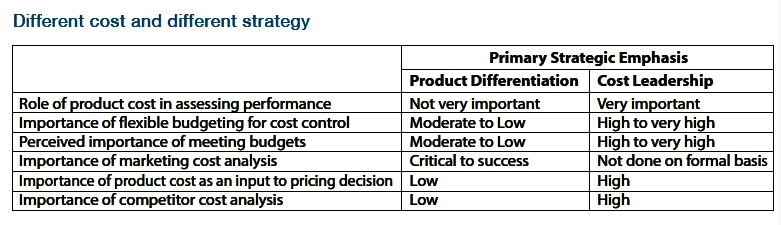
Michael Porter in competitive advantage prepared the way for a strategic emphasis in cost management by developing a framework for identifying a firm’s competitive strategy.

Porter’s concepts of cost leadership and differentiation have had a strong influence on management education. These concepts provide the basis on which the strategic approach to cost management is based because they explain what a firm should do to succeed.

Thus, there are two steps in Strategic Cost Management: first, to identify (using Porter’s framework) what managers must do to make the firm succeed, and second, to develop cost management methods and practices to facilitate management’s efforts.

Need for SCM

  • It is an updated form of cost analysis, in which the strategic elements are clearer and more formal and improves the overall position of the company.
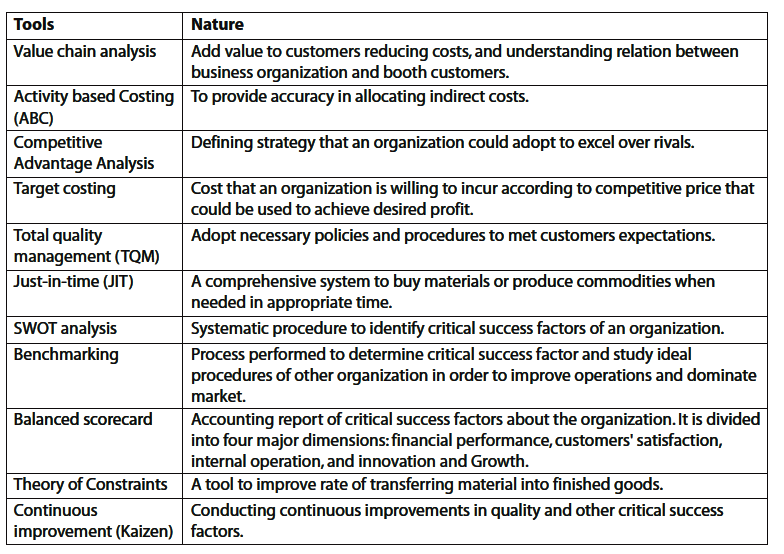
  • It is used to analyse cost information, and use it to develop various measures to achieve a sustainable competitive advantage.
  • It provides a better understanding of the overall cost structure in the quest of gaining a sustainable competitive advantage.
  • It uses cost information specifically to govern the strategic management process; formulation, communication, implementation and control.
  • It helps in identifying the cost relationship between value chain activities and its process of management to gain competitive advantage.

Importance

Strategic cost management has become an essential area now a day. While formulating the strategy for the accomplishment of organisational overall objectives, different cost drivers should be clearly identified. Identification of key cost drivers helps companies to focus on key activities that will constitute almost 90% of the total costs.

In view of this, the importance of strategic cost management should not be underestimated. This implies that an organisation should be installing appropriate framework of strategic cost management to reduce its costs in key areas on which the success of organisation is mainly dependent. Strategic cost management is understood in different ways in literature.

Objectives of Strategic Cost Management:

Strategic Cost Management provides number of benefits to different organisations. It has provided the business with an improved understanding of its sources of profits.

(i) It has enabled the business to assess, at a high level, how activity-based techniques can be deployed at different levels in the business to improve its cost management process, such as in budgeting and in process improvement.

(ii) It has developed a framework for reviewing the strategic allocation of resources across the business based on core business processes and activities.

(iii) It has improved the businesses understanding of its cost drivers leading to improved articulation of its strategic plans in cost terms.

Key elements in Strategic cost Management

There are three important components of strategic cost management:

  1. Strategic Positioning Analysis: It determines the company’s comparative position in the industry in terms of performance.

Strategic positioning analysis is an approach for researching what future environments might be like in your internal corporate structure as well as your external environment and determining how you can use the choice of business strategies to get from your current situation to these desirable goals.

Analysis of the status-quo often involves using some fairly standard strategic management tools such as:

  • SWOT analysis: Strengths and weaknesses within your firm; opportunities and threats within the external competitive market.
  • Product/market matrix: Establishing what new markets, product changes, product lines or market variations could prove profitable.
  • Portfolio analysis: Establishing which of your projects are potential cash cows, stars, wildcats or dogs.

2. Cost Driver Analysis: Cost is driven by different interrelated factors. In strategic cost management, the cost driver is divided into two categories, i.e. structural cost drivers and executional cost drivers. It examines, measures and explains the financial effect of the cost driver concerned with the activity.

Cost driver analysis is concerned with determining what the actual drivers of activity costs are within your operations. The most popular type of analysis for this is activity-based costing (ABC) which aims to establish what indirect causes can be related to specific activities.

This has a bearing on strategic cost management since cost drivers can actually be determined by both structural cost drivers and executional cost drivers.

  • Structural cost drivers relate to strategic management choices the company undertakes in relation to actual structure of their operations (scale and scope) as well as the complexity of their products and technologies used. A more complex working environment (products, technologies and production) leads to higher structural costs.
  • Executional cost drivers relate to the actual operational processes and norms within operation. The effective use of staff, process layouts, just-in-time processes, etc. all have a bearing on the cost of executing activities within the firm.

3. Value Chain Analysis: The process in which a firm recognizes and analyses, all the activities and functions that contribute to the final product. It was propounded by Michael Porter (1985), to show the way a customer value assembles along the activity chain that results in the final product or service.

Value chain analysis is an approach used to determine the series of activities involved in creating and building value within your operations. It requires a systematic approach to examining each different element in your primary activities as well as support activities.

The operations of the organization may actually be split out into both primary as well as support activities.

  • Primary activities: Inbound logistics, operations, outbound logistics, marketing & sales and service.
  • Support activities: Procurement, technology development, human resources management and firm infrastructure.

Different aspects of Strategic cost Management

Strategic cost management initiative is taken at the top and a dedicated team should be involved in the whole process of formulation, implementation and monitoring process.

A control standard is a target against which subsequent performance will be compared. Standards are the criteria that enable managers to evaluate future, current, or past actions. They are measured in a variety of ways, including physical, quantitative, and qualitative terms. Five aspects of the performance can be managed and controlled: quantity, quality, time, cost, and behavior.

Organization should have its own policy regarding recording and reporting of following information:

  • Choice of strategic positioning, cost leadership or product differentiation;
  • Choice of cost drivers, structural or executional;
  • Cost reduction strategies with reference to value analysis;
  • Value chain related activities;
  • Periodic evaluation report;
  • Strategic cost management framework for the firm
  • List of tools applied by the firm as a part of strategic cost management.
  • Any other types of reporting as required.

Effective control systems tend to have certain qualities in common. These can be stated thus:

  1. Suitable: The control system must be suitable to the needs of an organisation. It must conform to the nature and needs of the job and the area to be controlled. For example, the control system used in production department will be different from that used in sales department.
  2. Simple: The control system should be easy to understand and operate. A complicated control system will cause unnecessary mistakes, confusion and frustration among employees. When the control system is understood properly, employees can interpret the same in a right way and ensure its implementation.
  3. Selective: To be useful, the control system must focus attention on key, strategic and important factors which are critical to performance. Insignificant deviations need not be looked into. By concentrating attention on important aspects, managers can save their time and meet problems head-on in an effective manner.
  4. Sound and economical: The system of control should be economical and easy to maintain. Any system of control has to justify the benefits that it gives in relation to the costs it incurs. To minimize costs, management should try to impose the least amount of control that is necessary to produce the desired results.
  5. Flexible: Competitive, technological and other environmental changes force organizations to change their plans. As a result, control should be necessarily flexible. It must be flexible enough to adjust to adverse changes or to take advantage of new opportunities.
  6. Forward-looking: An effective control system should be forward-looking. It must provide timely information on deviations. Any departure from the standard should be caught as soon as possible. This helps managers to take remedial steps immediately before things go out of gear.
  7. Reasonable: According to Robbins, controls must be reasonable. They must be attainable. If they are too high or unreasonable, they no longer motivate employees. On the other hand, when controls are set at low levels, they do not pose any challenge to employees. They do not stretch their talents. Therefore, control standards should be reasonable they should challenge and stretch people to reach higher performance without being demotivating.
  8. Objective: A control system would be effective only when it is objective and impersonal. It should not be subjective and arbitrary. When standards are set in clear terms, it is easy to evaluate performance. Vague standards are not easily understood and hence, not achieved in a right way. Controls should be accurate and unbiased. If they are unreliable and subjective, people will resent them.
  9. Responsibility for failures: An effective control system must indicate responsibility for failures.

Detecting deviations would be meaningless unless one knows where in the organisation they are occurring and who is responsible for them. The control system should also point out what corrective actions are needed to keep actual performance in line with planned performance.

  1. Acceptable: Controls will not work unless people want them to. They should be acceptable to chose to whom they apply, controls will be acceptable when they are:
  • Quantified
  • Objective
  • Attainable
  • Understood by everyone

Features

Allows for Risk Management

Risk management can be considered as a subset or a specific form of strategic management. Risk is the probability of a future loss and risk management involves formulating various strategies to combat the risks making risk management a form or variety of strategic management.

Strategic management in this form allows for identifying and eliminating the risks posed by various hazards to the business.

Conscious Process

Strategies are a product of the developed conscience and intellect that we humans proudly possess and employ. Strategic management implies the usage of the brain and the heart and is not a routine ever-continuing process. It requires great skill and experience to be carried out effectively and requires a full application of one’s conscience.

Requires Foresight

The future is uncertain. We cannot predict what will happen. However, on the basis of the information that is available to us, we will be able to presume certain things about the future.

For instance, a discovery that the item XYZ causes cancer can allow us to make a very reasonable presumption that the item XYZ will be banned in the near future. This presumption thus allows us to not make any investment in anything directly related to XYZ.

Drives Innovation

The development of strategy is not a simple process and requires making the best out of often very restrictive situations. This drives innovations and allows managers to approach problems from different angles and solve problems more efficiently. After all, necessity is the mother of all inventions.

Strategic Management as a process is quite complicated and requires years of experience and inherent skills to be carried out efficiently. The process is pervasive and is central to any business. It is a discipline in itself and requires more study for enthusiasts wanting to pursue management.

Goal-Oriented Process

The process of Strategic Management is a goal-oriented process. The process is done with the intention and goal of analyzing the various elements through SWOT analysis and other tools and to develop a plan or strategy that effectively allows the business to maneuver itself around every hurdle and make use of its strength.

This process also plays the role of making all other functions of the business goal-oriented as well.

Facilitates decision making

Strategic Management plays an integral role in making important decisions. Whenever a manager has to make a decision he has to think about the bearing of such a decision on the overall strategy and the business’ trajectory.

Thus, the strategies developed to act as a guide to making efficient and accurate decisions.

Primary Process

Strategic Management is the primary process in any business. The strategies that the business has to apply in its activities is developed at the initial stage itself and only after the creation of the strategy that other processes commence by making the strategy as its basis.

Pervasive Process

Strategic Management is a pervasive process seen in all levels of the business.

The core strategies are formulated for the entire business by the top-level management and strategies to efficiently achieve the overall goal so laid down by the top-level management is developed through the various lower business units.

Dependent on Personal Qualities

The above two considerations make it amply clear that Strategic Management is heavily dependent on the personal qualities of the managers occupying the top-level positions.

These personal qualities including skills and experience obtained over years of employment and observation cannot be imparted by training or coaching classes and require practical exposure for extended periods of time unless the person is born with the talent of strategizing (which is rare).

Control of Total Distribution cost & Supply cost

Distribution Cost or the Distribution expenses are the costs that a company incurs to make its goods or services available to the end-users or resellers. It is a broad accounting term that covers several types of expenses.

Total distribution cost (TDC) analysis requires some assumptions. These include current observed rates and transit times for standard air freight, full containerload (FCL), and less-than containerload (LCL) service.

For any company which is involved in distribution, distribution cost is a major bottleneck. There are many different distribution expenses which must be taken care of. Furthermore, these expenses are not consistent and may change from time to time thereby changing the distribution cost as well.

If the shipper is a distributor and it further sells to the retailer and the retailer sells to the end user then all the separate distribution costs at each stage would be included in the total distribution cost. Moreover, in some cases the manufacturer has a production unit at one place and the “product pick up place” by the forwarder at another place. The cost of moving the product from the place of production to the pickup point is also included in distribution cost.

There are other types of costs as well that that are included in the distribution’s costs. Handling cost of inventory at all points for example production place, storehouse, sales point is part of distribution cost. Packing costs are also part of distribution costs. Distribution managerial cost such as the salary expense of distribution manager and his/her office expenses are also part of distribution costs.

Freight cost is usually the most important component of distribution costs. If the product is manufactured and sold in same country then freight cost refers to the “Trucking” or such transport fare to deliver the product.

If the product is sold internationally then it may include “Air Freight, Less than container load (LCL), Day-Definite LCL or Full container load (FCL).” In case the product is transported by air the cost would be higher and if it is transported through LCL the cost would be lower but there is one further point to contemplate i.e. “Transit Time”. The transit time for LCL is longer and the transit time for moving by air is smaller. Covering all ends there is a need for comparative analysis between the product demand urgency and transport cost. If the product is urgently needed and the shipper is losing sales revenue then it is optimum to reduce transit time and increase the freight expense.

Distribution expenses: The individual expenses made by the company for various reasons is known as Distribution expenses. These are individual or repeated transactions happening over time. An example may include; Rent, Salaries, Administrative expenses etc. All these are individual transactions or repeat transactions and these transactions can be called distribution expenses.

Distribution cost: The combination of all distribution expenses made by a company is known as Distribution cost. So, continuing the above example; the total of rent, salaries, and administrative expenses will be considered as distribution cost. In terms of Formula

[The sum of all Distribution Expenses] = Distribution cost

1) Sales returns

If a dealer or a retailer rejects a material, then the material comes back to the manufacturer provided it is in the returns policy of the company. This returned material may have come back due to cosmetic conditions (it was damaged or dented) or it may have come back due to performance issues. In any condition, the returned product is a cost to the company.

2) Direct Selling Expenses

Any expense made towards selling the product to the target customer is a direct selling. Many manufacturers, wholesalers, and distributors carry out direct selling in the regions that they want to expand. They also would like to know the distribution cost of that region. Thus, they consider all direct selling expenses as the primary expense made by the firm.

3) Commercials & Accountancy

It is a government requirement to present all your sales and purchases as well as balance and profit sheets to the government to determine profit earned by your firm. Furthermore, these statements are also important for the firm itself to note the growth year on year as well as to determine the performance and future potential. Thus, commercials and accounts are documented precisely in any firm.

4) Advertising & Sales promotion expenses

If a company wants to establish itself in a new region, it needs to have OOH advertising, it needs to run in-store branding, it needs to run ads in local newspapers or local channels. Thus, the company will be spending a lot towards advertising and promotions which are various forms of distribution expenses.

5) Product and Packaging expenses

The product packaging was good but was not strong. As a result, the packaging suffered a huge wear and tear by the time it reached the customer and the customers returned the product.

6) Shipping and Delivery

With the rise of E-commerce, delivery is a huge focus area for all manufacturers. The stock must be in the market, whether it is on an E-commerce portal or in a retail outlet or with the distributor. Everyone knows that if there is no stock on display, the sale will not happen and this creates friction between the different distribution channels.

7) Trade discounts

Besides sales promotion exercises like advertising and marketing, a company launches several trade promotional exercises as well. This includes giving discounts to retailers, distributors, and suppliers on achieving certain targets.

8) Market research

When reputed companies like Samsung, LG or Sony want to establish themselves in a new market, they buy market research reports from the likes of IMRB or Nielson. These reports may cost hundreds or thousands of dollars. Not only in a new market, even in an old market, a company might want to conduct a satisfaction survey or a survey of new ideas regarding distribution.

9) Credit, Outstanding and Overdue

A distributor who operates in a regional market needs the huge amount of money to conduct business. To arrange this money, the distributor takes a loan from the banks. This is known as an Overdue account. Hypothetically, If the distributor takes 1 lakh from the bank, within 30 days he should give back 1 lakh + 1% interest. Thus, a dealer suffers a loss when his money does not come back from the market in time.

10) Warehousing and handling within warehouse

Warehousing is a major cost of distribution. When a company expands to newer markets, it needs to have new warehouses in each new territory. Domino’s or McDonald’s practically have warehouses for every 3-4 towns so that they can supply to local retail outlets very fast. Because of Domino’s and McDonald’s handle frozen goods (burgers or fries), their expenses are even higher because they need cold rooms and cold chains to deliver the products.

NOTE: Warehousing cost is different from transportation and delivery cost which is calculated separately.

Under these assumptions, the analysis shows:

  • Standard LCL would minimize transport-related costs, but would incur by far the highest inventory-related expenses due to long and highly variable transit times.
  • Using full containerload (FCL) rather than LCL reduces inventory-related costs but to do so would spend more than the inventory-related savings on transport-related costs due to the wasted space in 20-ft. containers occupied by only 2,500 metric tons of freight.
  • Switching to air freight to minimize inventory-related costs would incur the highest transport-related expenses, leading to the highest overall total distribution costs.
  • Day-definite LCL could minimize total distribution costs (sum of transport and inventory related costs). Compared to LCL, the shipper would spend about $600,000 more on transportation to use day-definite LCL service ($1.8 million vs. $1.2 million per year) but would capture approximately $825,000 in inventory related cost savings ($1.3 million vs. $2.2 million per year).
error: Content is protected !!