Human Resource Accounting Meaning, Features, Objectives and Methods

Human Resource Accounting (HRA) is a specialized area of accounting that involves measuring, recording, and analyzing the value of an organization’s human capital. It recognizes employees as valuable assets rather than just costs, aiming to quantify their contribution to the organization in monetary terms. This concept emphasizes the importance of skilled and experienced employees in driving organizational success and sustainable growth.

HRA focuses on assessing the cost of recruiting, training, and developing employees alongside evaluating their economic value and performance. Costs such as salaries, benefits, and training investments are categorized, and methods like historical cost, replacement cost, and present value of future earnings are used to estimate their value.

The primary goal of HRA is to provide information for better decision-making by management, such as resource allocation, talent management, and workforce planning. It also aids in evaluating the return on investment in human capital and improving transparency in financial reporting.

HRA benefits organizations by helping them understand the long-term impact of employee contributions, fostering effective talent management strategies, and aligning workforce investments with organizational goals. By recognizing human resources as strategic assets, HRA highlights their critical role in achieving competitive advantage.

Features of Human Resource Accounting:

  • Recognition of Human Capital as Assets

HRA acknowledges employees as intangible assets critical to the success of an organization. It shifts the perspective from viewing human resources as merely expenses to considering them as valuable investments.

  • Measurement of Costs and Value

HRA involves calculating the costs associated with human resources, such as recruitment, training, development, and retention. It also evaluates the economic value employees bring to the organization through their productivity and contributions.

  • Use of Quantitative and Qualitative Metrics

HRA employs both quantitative metrics (e.g., cost of training programs, employee turnover rates) and qualitative assessments (e.g., employee skills, leadership potential) to provide a comprehensive valuation of human resources.

  • Focus on Decision-Making

HRA aids management in making informed decisions related to workforce planning, training investments, promotions, and succession planning. It provides insights into how human capital investments impact organizational performance.

  • Enhanced Financial Reporting

By including human capital in financial statements, HRA offers a more transparent view of an organization’s intangible assets. This improves the quality of financial reporting and enhances stakeholder trust.

  • Alignment with Organizational Goals

HRA aligns the measurement and management of human resources with organizational objectives. It highlights the importance of workforce management in achieving strategic goals and sustaining competitive advantage.

Objectives of Human Resource Accounting:

1. Recognizing Human Resources as Assets

HRA aims to shift the traditional perspective of employees as expenses to recognizing them as valuable organizational assets. This objective highlights the long-term contribution of human capital to organizational success and positions employees alongside other tangible assets on the balance sheet.

2. Measuring the Cost of Human Resources

One of the core objectives of HRA is to quantify the cost associated with human resources, including recruitment, selection, training, development, and retention. By identifying these costs, organizations can evaluate their investment in human capital and plan for its efficient utilization.

3. Determining the Economic Value of Employees

HRA seeks to calculate the monetary value employees contribute to the organization. It evaluates the impact of human resources on productivity, innovation, and profitability, providing a clear picture of their return on investment (ROI).

4. Facilitating Effective Decision-Making

HRA provides management with accurate data about human capital, which aids in making informed decisions. This includes areas such as workforce planning, compensation strategies, talent development programs, and succession planning, ensuring that human resource investments align with organizational goals.

5. Enhancing Transparency in Financial Reporting

HRA integrates human capital valuation into financial statements, making them more comprehensive and transparent. By doing so, it enables stakeholders to understand the intangible value human resources bring to the organization, fostering greater trust and accountability.

6. Supporting Human Resource Development

Another key objective of HRA is to promote the continuous growth and development of employees. By identifying skill gaps and measuring the effectiveness of training programs, HRA helps organizations design initiatives that enhance employee performance and satisfaction.

Methods of Human Resource Accounting:

Human Resource Accounting (HRA) employs various methods to quantify the value of human resources. These methods can be broadly categorized into cost-based methods and value-based methods, each offering unique perspectives on human capital valuation.

1. Historical Cost Method

This method involves recording the actual costs incurred in hiring, training, and developing employees. These costs are treated as investments and are amortized over the expected service life of the employees.

  • Advantages: Simple to implement and focuses on actual expenses.
  • Disadvantages: Ignores future potential and does not consider the impact of inflation.

2. Replacement Cost Method

This method estimates the cost of replacing an employee with a similar skill set and experience. It includes expenses for recruitment, training, and onboarding of new hires.

  • Advantages: Reflects the current value of human resources.
  • Disadvantages: Can be subjective and challenging to estimate accurately.

3. Present Value of Future Earnings Method

This approach calculates the present value of an employee’s expected future earnings during their tenure. The formula discounts future earnings to the current period.

  • Advantages: Focuses on potential contributions.
  • Disadvantages: Highly dependent on assumptions about future performance and tenure.

4. Opportunity Cost Method

This method values human resources based on the opportunity cost of not employing them in their most productive capacity. It considers the income that would be forgone if employees left the organization.

  • Advantages: Highlights the economic impact of skilled employees.
  • Disadvantages: Limited applicability as it assumes perfect mobility of employees.

5. Economic Value Method

This method evaluates the economic value of employees by estimating their contribution to the organization’s overall profitability. It combines cost and performance metrics.

  • Advantages: Provides a comprehensive valuation of employee contributions.
  • Disadvantages: Requires complex data and analysis.

6. Adjusted Present Value Method

This method adjusts the present value of future earnings by incorporating factors such as employee turnover, training effectiveness, and market conditions.

  • Advantages: Offers a nuanced valuation.
  • Disadvantages: Complex and resource-intensive.

7. Human Resource Value Index Method

This method assigns an index value to employees based on factors such as skills, experience, performance, and potential. The index reflects their relative value to the organization.

  • Advantages: Emphasizes qualitative aspects of human resources.
  • Disadvantages: Subjective and prone to biases.

Ethics in HRM, Principles, Challenges

Ethics in Human Resource Management (HRM) refers to the moral principles and values that guide the actions, decisions, and behavior of HR professionals and organizations in managing their workforce. Ethical practices in HRM are fundamental to creating a fair, inclusive, and respectful workplace, ensuring that employees are treated with dignity, integrity, and respect. Ethical behavior also strengthens the organization’s reputation, fosters trust, and contributes to long-term business success.

Importance of Ethics in HRM

The importance of ethics in HRM cannot be overstated. It helps in promoting fairness, transparency, and accountability in HR practices, leading to better employee relations, higher morale, and enhanced productivity. Ethical HRM practices also foster a positive organizational culture, which attracts and retains talent and reduces the risk of legal issues arising from discriminatory or unfair practices. Furthermore, organizations with a strong ethical framework build credibility with stakeholders, which is critical in the long term.

Core Ethical Principles in HRM

  • Fairness and Equality

One of the most fundamental ethical principles in HRM is fairness. HR professionals must ensure that all employees are treated equitably and that decisions, particularly in hiring, promotions, and compensation, are based on objective criteria. Discriminatory practices based on gender, race, ethnicity, age, or other personal characteristics must be actively avoided. Equal opportunity policies must be in place, ensuring that all employees have the same chances to succeed.

  • Confidentiality

HR professionals deal with sensitive and private employee information, ranging from personal details to performance appraisals. Protecting this confidentiality is an ethical responsibility. Employees should trust that their personal data is handled with care and only shared with relevant parties. Breaches of confidentiality can lead to a loss of trust, legal liabilities, and reputational damage.

  • Transparency

Transparency in decision-making is a core value of ethical HRM. HR professionals must ensure that employees understand the processes involved in promotions, rewards, disciplinary actions, and terminations. Open communication about policies, criteria for performance evaluations, and organizational changes ensures employees feel valued and informed, reducing misunderstandings and mistrust.

  • Integrity and Honesty

HR managers must operate with integrity, ensuring that they act in the best interests of both the organization and its employees. Honesty in communication, feedback, and decision-making is essential for creating an environment of trust. HR professionals must not manipulate or misrepresent facts, whether in the recruitment process, performance reviews, or conflict resolution.

  • Respect for Employee Rights

Respecting employees’ rights is central to HR ethics. This includes respecting their right to fair treatment, the right to join a union or association, the right to a safe work environment, and the right to privacy. HR should provide mechanisms for employees to voice grievances and complaints, ensuring they are addressed fairly and promptly.

  • Social Responsibility

HR professionals also have a responsibility to ensure that the organization follows ethical guidelines beyond the workplace. This includes ensuring that the organization adheres to environmental, social, and governance (ESG) practices. Promoting diversity and inclusion, advocating for employee well-being, and contributing to community development are aspects of HR’s role in social responsibility.

Ethical Challenges in HRM:

  • Discrimination and Bias

One of the most significant ethical challenges in HRM is the prevention of discrimination and bias. Whether in recruitment, promotions, or compensation, HR must ensure that decisions are made without bias based on race, gender, sexual orientation, disability, or other protected characteristics. Discriminatory practices can lead to legal consequences and damage an organization’s reputation.

  • Workplace Harassment

Sexual harassment, bullying, and other forms of workplace harassment are critical ethical issues in HRM. It is the responsibility of HR professionals to create a safe working environment by establishing clear anti-harassment policies and providing training to all employees. HR must take swift action in investigating and resolving harassment complaints to prevent harm to individuals and maintain a positive organizational culture.

  • Performance Appraisal and Employee Feedback

Providing honest, constructive feedback to employees can sometimes be a delicate issue. An ethical HR manager must balance being honest while maintaining respect for the employee’s dignity. Inaccurate performance appraisals or biased evaluations can lead to poor morale and resentment among employees. HR must ensure that feedback is fair, specific, and actionable.

  • Privacy Issues

Employees have a right to privacy, and it is an ethical obligation for HR to protect their personal and professional information. However, the increasing use of digital tools, surveillance, and performance monitoring presents ethical dilemmas regarding the extent of monitoring. HR must find a balance between ensuring workplace productivity and respecting employees’ privacy.

  • Employee Downsizing and Termination

Downsizing, layoffs, and termination are among the most difficult ethical challenges for HR professionals. HR must ensure that these decisions are made based on sound business reasons rather than arbitrary factors. Employees should be given fair notice, severance pay, and support for transitioning to new roles. Ethical considerations also include the dignity with which the employee is treated during the termination process.

Creating an Ethical HRM Culture:

  • Developing Clear Policies

Clear and concise HR policies, including anti-discrimination, anti-harassment, and equal opportunity policies, are critical for establishing ethical guidelines within the organization. These policies should be regularly reviewed and communicated to all employees.

  • Training and Awareness Programs

Ongoing training programs for HR professionals and employees on ethical issues, such as workplace harassment, diversity, and unconscious bias, can significantly improve the ethical culture of the organization.

  • Leadership and Accountability

Ethical behavior must start at the top. Senior management should lead by example, demonstrating the ethical values they want to see in the organization. Additionally, HR professionals must be accountable for their decisions and actions.

Employee Downsizing, Reasons

Employee downsizing refers to the intentional reduction of a company’s workforce, typically as a cost-cutting measure, to improve efficiency, productivity, or profitability. It involves eliminating jobs through layoffs, early retirements, voluntary redundancy, or attrition. Downsizing is often implemented during periods of financial difficulty, mergers, restructuring, or to streamline operations. While it can lead to immediate cost savings, downsizing can also have negative effects on employee morale, organizational culture, and productivity in the long run. Companies must carefully manage the process to minimize disruption and maintain the remaining workforce’s engagement and effectiveness.

Reasons of Employee Downsizing:

  • Cost Reduction:

One of the most common reasons for downsizing is to reduce operational costs. Companies facing financial difficulties or those seeking to improve profitability often reduce their workforce as a means of cutting expenses, especially labor costs, which can be a significant portion of the budget.

  • Economic Downturn:

During times of economic recession or downturns, businesses may experience lower demand for products or services. Downsizing helps organizations adapt to market conditions by reducing overhead costs and aligning staffing levels with lower sales volumes or slower business activity.

  • Mergers and Acquisitions:

When companies merge or one company acquires another, there are often redundant positions, such as duplicated departments or roles. Downsizing is a way to eliminate these overlaps and streamline the organization to avoid inefficiencies.

  • Technological Advancements:

The adoption of new technologies, such as automation or artificial intelligence, can reduce the need for certain manual tasks or roles. Downsizing is often a consequence of technological advancements, as companies look to cut down on staff in favor of more efficient systems or processes.

  • Restructuring and Reorganization:

Companies may downsize as part of a larger organizational restructuring or reorganization. When management decides to streamline operations, shift business priorities, or change the business model, redundancies are created, leading to job cuts to align the workforce with the new organizational structure.

  • Globalization and Competition:

With the rise of globalization and the increasing competition from global markets, companies may be forced to downsize to remain competitive. This could involve relocating operations to lower-cost countries, reducing the workforce in high-cost regions, or cutting down on non-essential staff.

  • Outsourcing:

Organizations may downsize when they choose to outsource certain functions to external service providers who can perform the same tasks more cost-effectively. This is commonly seen in industries like customer service, IT, and manufacturing, where outsourcing labor to cheaper markets becomes a competitive advantage.

  • Underperformance:

Companies that are underperforming or struggling to meet financial targets may resort to downsizing to help reduce inefficiencies and improve the overall performance of the business. By cutting underperforming departments or individuals, organizations hope to regain focus on more profitable areas of operation.

Benefits of Employee Downsizing:

  • Cost Savings:

One of the most significant benefits of downsizing is the reduction in labor costs. By eliminating jobs, companies can reduce expenses related to salaries, benefits, and other employee-related costs. This is particularly beneficial for organizations facing financial difficulties or aiming to improve profitability by lowering operational costs.

  • Increased Efficiency:

Downsizing can lead to a more streamlined organization. By reducing redundancies and focusing on core activities, businesses can eliminate inefficiencies. A leaner workforce often results in faster decision-making and improved processes, as fewer employees may lead to less bureaucracy and clearer communication channels.

  • Improved Competitiveness:

Downsizing helps organizations become more agile and competitive in their industry. By trimming excess, companies can reallocate resources, focus on innovation, and shift strategies to better meet market demands. With fewer employees to manage, organizations can be more responsive to changes in the business environment and adjust quickly to stay ahead of competitors.

  • Focus on Core Competencies:

Downsizing provides companies with an opportunity to refocus on their core strengths and areas of expertise. By cutting non-essential roles or departments, companies can channel their resources toward activities that directly contribute to business growth and long-term success. This may lead to stronger market positioning and a more targeted business strategy.

  • Enhanced Productivity:

In some cases, downsizing can lead to an increase in productivity. Remaining employees may feel more accountable and motivated to perform at their best as they are aware of the need to adapt to a leaner workforce. This can also foster a culture of higher performance, where employees focus on delivering results with fewer resources.

  • Better Organizational Focus:

Downsizing can lead to a clearer organizational structure and sharper focus on strategic goals. With fewer staff, companies can prioritize key projects and initiatives, and ensure that leadership and resources are allocated efficiently. The reduction in staff can also simplify reporting structures, enabling quicker decision-making and a more unified organizational direction.

  • Improved Employee Morale (for Remaining Staff):

While downsizing can lead to short-term uncertainty, it can ultimately boost morale among the remaining staff. Employees who survive downsizing may feel a renewed sense of security and purpose, especially if they are given opportunities for growth, training, and advancement. Furthermore, the elimination of underperforming employees or inefficient teams can contribute to a more cohesive and focused workforce.

Key differences between Formal Organisation and Informal Organisation

Formal organisation is a deliberately structured framework established by management to achieve predefined objectives. It is characterized by clearly defined roles, responsibilities, hierarchies, and official rules governing operations. Relationships within this structure are task-oriented and follow a prescribed chain of command. Examples include organizational charts, job descriptions, and standard operating procedures. Formal organisations ensure efficiency, accountability, and coordination by minimizing ambiguity in authority and communication. While rigid, they provide stability and predictability, essential for large-scale operations. However, they may limit flexibility and creativity compared to informal structures.

Features of Formal Organisation:

(1) The formal organisational structure is created intentionally by the process of organising.

(2) The purpose of formal organisation structure is achievement of organisational goal.

(3) In formal organisational structure each individual is assigned a specific job.

(4) In formal organisation every individual is assigned a fixed authority or decision-making power.

(5) Formal organisational structure results in creation of superior-subordinate relations.

(6) Formal organisational structure creates a scalar chain of communication in the organisation.

Advantages of Formal Organisation:

  1. Systematic Working:

Formal organisation structure results in systematic and smooth functioning of an organisation.

  1. Achievement of Organisational Objectives:

Formal organisational structure is established to achieve organisational objectives.

  1. No Overlapping of Work:

In formal organisation structure work is systematically divided among various departments and employees. So there is no chance of duplication or overlapping of work.

  1. Co-ordination:

Formal organisational structure results in coordinating the activities of various departments.

  1. Creation of Chain of Command:

Formal organisational structure clearly defines superior subordinate relationship, i.e., who reports to whom.

  1. More Emphasis on Work:

Formal organisational structure lays more emphasis on work than interpersonal relations.

Disadvantages of Formal Organisation:

  1. Delay in Action:

While following scalar chain and chain of command actions get delayed in formal structure.

  1. Ignores Social Needs of Employees:

Formal organisational structure does not give importance to psychological and social need of employees which may lead to demotivation of employees.

  1. Emphasis on Work Only:

Formal organisational structure gives importance to work only; it ignores human relations, creativity, talents, etc.

Informal Organisation:

In the formal organisational structure individuals are assigned various job positions. While working at those job positions, the individuals interact with each other and develop some social and friendly groups in the organisation. This network of social and friendly groups forms another structure in the organisation which is called informal organisational structure.

The informal organisational structure gets created automatically and the main purpose of such structure is getting psychological satisfaction. The existence of informal structure depends upon the formal structure because people working at different job positions interact with each other to form informal structure and the job positions are created in formal structure. So, if there is no formal structure, there will be no job position, there will be no people working at job positions and there will be no informal structure.

Features of informal Organisation:

(1) Informal organisational structure gets created automatically without any intended efforts of managers.

(2) Informal organisational structure is formed by the employees to get psychological satisfaction.

(3) Informal organisational structure does not follow any fixed path of flow of authority or communication.

(4) Source of information cannot be known under informal structure as any person can communicate with anyone in the organisation.

(5) The existence of informal organisational structure depends on the formal organisation structure.

Advantages of Informal Organisation:

  1. Fast Communication:

Informal structure does not follow scalar chain so there can be faster spread of communication.

  1. Fulfills Social Needs:

Informal communication gives due importance to psychological and social need of employees which motivate the employees.

  1. Correct Feedback:

Through informal structure the top level managers can know the real feedback of employees on various policies and plans.

Strategic Use of Informal Organisation. Informal organisation can be used to get benefits in the formal organisation in the following way:

  1. The knowledge of informal group can be used to gather support of employees and improve their performance.
  2. Through grapevine important information can be transmitted quickly.
  3. By cooperating with the informal groups the managers can skillfully take the advantage of both formal and informal organisations.

Disadvantages of Informal Organisation:

  1. Spread Rumours:

According to a survey 70% of information spread through informal organisational structure are rumors which may mislead the employees.

  1. No Systematic Working:

Informal structure does not form a structure for smooth working of an organisation.

  1. May Bring Negative Results:

If informal organisation opposes the policies and changes of management, then it becomes very difficult to implement them in organisation.

  1. More Emphasis to Individual Interest:

Informal structure gives more importance to satisfaction of individual interest as compared to organisational interest.

Key differences between Formal Organisation and Informal Organisation

Aspect Formal Organisation Informal Organisation
 Basis Rules Personal relations
Formation Deliberate Spontaneous
Structure Hierarchical Flat
Purpose Organizational goals Social satisfaction
Authority Delegated Emergent
Communication Official Informal
Leadership Appointed Emerged
Behavior Regulated Flexible
Stability Stable Unstable
Rules Written Unwritten
Control Formal control Social control
 Membership Compulsory Voluntary

Performance Appraisal of Managers, Objectives, Purpose, Advantages, Limitations, Process, Uses

Performance Appraisal of managers is a systematic evaluation of a manager’s effectiveness in achieving organizational goals, leading teams, and fulfilling their responsibilities. It assesses various dimensions such as leadership, decision-making, communication skills, goal achievement, and team management. The process involves setting performance standards, measuring actual performance, providing feedback, and identifying areas for improvement. Appraisals are crucial for recognizing contributions, aligning individual performance with organizational objectives, and fostering professional development. They also aid in making informed decisions about promotions, rewards, and training needs, ensuring that managers remain motivated and equipped to handle evolving business challenges effectively.

Objectives of Performance Appraisal:

  • Assessing Performance

The primary objective is to evaluate an employee’s performance against predefined standards. This assessment identifies strengths, weaknesses, and areas needing improvement, enabling managers to make informed decisions about an employee’s future roles and responsibilities.

  • Providing Feedback

Performance appraisals aim to provide constructive feedback to employees about their work. Regular and transparent feedback fosters a culture of openness and continuous improvement, helping employees understand how their efforts contribute to organizational success.

  • Facilitating Career Development

Through performance appraisals, organizations can identify employees’ training and development needs. This helps in designing customized learning programs and career advancement opportunities, ensuring employees grow in their roles and contribute effectively to the organization.

  • Supporting Decision-Making

Performance appraisals provide a solid basis for making various HR decisions such as promotions, transfers, terminations, and compensation adjustments. They ensure that such decisions are fair, objective, and aligned with organizational goals.

  • Setting Future Goals

Appraisals help managers and employees collaboratively set realistic and measurable goals for the future. These goals guide employees in prioritizing tasks and focusing on key performance areas that align with organizational objectives.

  • Enhancing Motivation and Productivity

Recognizing and rewarding employees for their performance boosts morale and motivates them to perform better. It also creates a healthy competitive environment, encouraging all employees to strive for excellence.

  • Identifying Leadership Potential

Performance appraisals help in identifying employees with leadership capabilities and managerial skills. This is essential for succession planning, ensuring the organization is prepared for future leadership needs.

  • Aligning Individual and Organizational Goals

By assessing and aligning individual performance with organizational objectives, appraisals ensure that employees’ efforts contribute to the larger vision and mission of the company. This alignment fosters a sense of purpose and commitment among employees.

Purpose of Performance Appraisal:

  • Employee Development

One of the primary purposes of performance appraisal is to help identify an employee’s strengths and weaknesses. It provides valuable feedback to employees, which aids in their professional development. By addressing areas where improvement is needed, employees can focus on skill development, enhancing their capabilities, and becoming more effective in their roles.

  • Performance Feedback

Performance appraisals offer an opportunity for managers to provide employees with constructive feedback regarding their work performance. This feedback highlights what employees are doing well and areas where they can improve. Regular feedback fosters transparency, helping employees understand their contributions and adjust behaviors accordingly.

  • Goal Setting and Alignment

Performance appraisals are often linked with goal-setting processes. During the appraisal, employees can discuss their past goals and set new targets for the future. These goals help align individual performance with the broader objectives of the organization, ensuring that everyone works toward common goals and enhances overall performance.

  • Reward and Recognition

Performance appraisals play a vital role in determining rewards, promotions, and salary increments. By evaluating employees based on their performance, organizations can ensure that high-performing individuals are appropriately recognized and rewarded. This motivates employees to perform better and fosters a culture of meritocracy within the workplace.

  • Career Development

Performance appraisals help identify potential future leaders within an organization. They provide insights into employees’ readiness for higher roles and responsibilities. By understanding an employee’s strengths and career aspirations, HR managers can offer tailored career development opportunities, including training, mentorship, or job rotations, to prepare employees for future roles.

  • Organizational Planning

By assessing the performance of employees across various departments, performance appraisals help organizations make informed decisions about staffing needs, resource allocation, and succession planning. They provide a comprehensive view of workforce capabilities, helping organizations plan for the future and address any gaps in skills or talent.

  • Enhancing Motivation and Morale

A well-conducted performance appraisal system boosts employee morale by recognizing hard work and achievement. When employees see that their efforts are acknowledged, they feel valued and are more motivated to perform at higher levels. Positive feedback during appraisals also strengthens employee engagement and loyalty to the organization.

Advantages of Performance Appraisal:

  • Improves Employee Performance

Performance appraisals help employees understand their strengths and weaknesses through constructive feedback. By identifying specific areas for improvement, employees can focus on enhancing their skills and productivity, ultimately contributing to the organization’s success.

  • Identifies Training and Development Needs

Through appraisals, organizations can pinpoint skill gaps and training requirements among employees. This enables the design of targeted training programs to address these gaps, ensuring employees are better equipped to meet job demands and adapt to evolving organizational needs.

  • Facilitates Promotion and Career Growth

Appraisals provide a clear and objective basis for making decisions regarding promotions and career advancements. They help identify high-performing employees who deserve recognition, rewards, or leadership opportunities, fostering a meritocratic work environment.

  • Boosts Employee Motivation

Recognizing and rewarding employees for their hard work during appraisals boosts morale and motivation. Positive reinforcement encourages employees to maintain or improve their performance, creating a culture of continuous excellence within the organization.

  • Enhances Communication

Performance appraisals foster open communication between employees and management. Regular discussions during appraisals provide a platform for employees to share concerns, seek guidance, and align expectations, leading to better understanding and collaboration.

  • Supports Strategic Decision-Making

Performance appraisals provide valuable data for strategic HR decisions, such as workforce planning, promotions, transfers, and terminations. This ensures that organizational decisions are fair, data-driven, and aligned with long-term goals.

  • Aligns Individual and Organizational Objectives

Appraisals align employee efforts with organizational goals by setting clear expectations and performance standards. This alignment ensures that individual contributions support the larger mission and vision of the company, driving overall success.

Limitations of Performance Appraisal:

  • Subjectivity and Bias

Performance appraisals are often influenced by the evaluator’s personal biases or preferences. Subjective judgments can result in inaccurate assessments, where personal relationships, favoritism, or preconceived notions overshadow objective performance evaluation.

  • Halo and Horn Effect

The “halo effect” occurs when a single positive trait influences the overall appraisal, while the “horn effect” occurs when a single negative trait dominates the evaluation. These biases can distort the true performance picture and lead to unfair appraisals.

  • Lack of Standardization

Inconsistent appraisal methods and criteria across departments or evaluators can lead to discrepancies in evaluations. Without a standardized process, comparisons between employees become unreliable, and fairness in assessments is compromised.

  • Employee Demotivation

Poorly conducted appraisals can lead to dissatisfaction and demotivation among employees. If feedback is overly critical, vague, or fails to recognize genuine contributions, employees may feel undervalued and lose motivation to perform.

  • Resistance to Feedback

Employees may resist or react negatively to critical feedback, viewing it as an attack rather than an opportunity for improvement. This resistance can hinder constructive dialogue and reduce the effectiveness of the appraisal process.

  • Time-Consuming and Costly

Performance appraisals require significant time and resources for planning, implementation, and follow-up. For large organizations, conducting regular and detailed appraisals for all employees can be a complex and expensive process, leading to inefficiencies.

  • Focus on Past Performance

Appraisals often emphasize past performance rather than future potential. This retrospective approach may overlook an employee’s ability to grow, adapt, or contribute in new roles, limiting the organization’s ability to identify and nurture potential talent.

Process of Performance Appraisal:

  • Establishing Performance Standards

The first step is to define clear, measurable, and achievable performance standards based on organizational objectives. These standards serve as benchmarks for evaluating employee performance and should be communicated clearly to employees to avoid ambiguity.

  • Communicating Expectations

It is essential to ensure that employees understand the performance standards and expectations. This step involves regular communication between managers and employees to clarify roles, responsibilities, and key performance indicators (KPIs).

  • Measuring Actual Performance

In this step, employee performance is tracked and documented over a specific period using various tools such as reports, observation, and self-assessments. This data collection should be objective and based on facts rather than subjective opinions.

  • Comparing Performance Against Standards

Once the data is collected, the actual performance is compared to the predefined standards. This comparison identifies gaps, strengths, and areas for improvement, providing a comprehensive view of an employee’s performance.

  • Providing Feedback

Feedback is a critical step in the appraisal process. Managers share their observations and evaluations with employees through one-on-one discussions. Constructive feedback highlights both achievements and areas for improvement, fostering a culture of learning and development.

  • Identifying Training and Development Needs

Based on the appraisal results, managers identify specific training and development requirements for employees. Addressing these needs helps improve skills and prepares employees for future responsibilities and roles.

  • Decision-Making

Appraisals provide the foundation for making key HR decisions such as promotions, rewards, salary adjustments, transfers, or terminations. The appraisal outcomes ensure that these decisions are fair, transparent, and aligned with organizational goals.

  • Monitoring and Follow-Up

The final step involves monitoring progress and ensuring that employees work on the feedback provided. Regular follow-ups help maintain accountability and track improvements, fostering continuous growth and alignment with organizational standards.

Uses of Performance Appraisal:

  • Employee Development

Performance appraisal helps in identifying an employee’s strengths and areas for improvement. Based on feedback, employees can work on enhancing their skills and competencies through training or mentoring. It also encourages self-reflection and goal setting, helping individuals align their efforts with organizational expectations. Appraisals act as a developmental tool by enabling employees to track their progress over time and stay motivated to improve. When conducted properly, they foster a learning culture that boosts both personal and professional growth, ensuring long-term development and better performance outcomes.

  • Compensation Decisions

Organizations use performance appraisals to make informed decisions regarding salary increases, bonuses, and other financial rewards. High-performing employees are often recognized and rewarded accordingly, which helps in maintaining motivation and performance levels. It ensures that compensation is distributed fairly based on merit and contribution rather than favoritism. Linking pay to performance reinforces the idea that efforts and achievements are valued. This also supports the organization’s compensation strategy by aligning rewards with employee productivity and organizational goals, promoting a culture of accountability and excellence.

  • Promotion and Career Planning

Appraisals provide valuable insights into an employee’s readiness for advancement or role changes. Managers assess competencies such as leadership, problem-solving, and teamwork to determine suitability for higher positions. Performance data helps in succession planning and internal talent identification. Employees who consistently perform well may be fast-tracked for promotions, while those needing improvement are guided through development plans. This ensures that promotions are fair, strategic, and based on evidence. Career planning becomes more effective when based on documented achievements and progress, helping both individuals and organizations prepare for future challenges.

  • Training and Development Needs

Appraisals highlight specific skill gaps or knowledge deficiencies among employees, which organizations can address through targeted training programs. For instance, if a team shows weak customer service skills, a training module can be introduced to improve communication. This focused approach ensures that resources are used effectively and training is relevant to current needs. Managers and HR professionals can use appraisal data to tailor development plans that support employee growth. Addressing these gaps enhances overall productivity, minimizes errors, and strengthens organizational capability, thereby fostering a more competent and confident workforce.

  • Feedback and Communication

Performance appraisals create structured opportunities for open dialogue between employees and supervisors. Through feedback, employees understand how their work aligns with expectations, what they’re doing well, and where they need improvement. This communication fosters trust, reduces ambiguity, and ensures alignment of individual efforts with team and organizational goals. Constructive feedback motivates employees and strengthens the manager-employee relationship. It also allows managers to express appreciation or concerns in a professional manner. Regular, honest feedback ensures that employees remain engaged, responsible, and continuously improve their work performance.

  • Disciplinary and Termination Decisions

Appraisal records serve as formal documentation of employee performance, which can be critical when making disciplinary or termination decisions. If an employee is consistently underperforming, appraisal results can support managerial actions such as issuing warnings, restructuring roles, or initiating exit processes. This ensures objectivity and legal compliance, as decisions are based on documented evidence rather than subjective judgment. It also protects the organization from potential disputes. Thus, appraisals act as a safeguard to maintain workforce quality and reinforce accountability across all levels of employment.

  • Organizational Planning

Performance appraisal data supports workforce planning by providing insights into overall employee productivity, skill levels, and future potential. Organizations can use this information to anticipate talent shortages, redesign roles, and manage succession. It also helps in aligning individual capabilities with future organizational needs. Appraisal data allows leadership to make strategic decisions regarding restructuring, manpower allocation, or expansion. This macro-level use of performance evaluations ensures that the organization has the right people in the right roles at the right time, ultimately leading to improved effectiveness and sustainable growth.

Socialization and Induction

Socialization

It is the process of adaptation. It is the process by which new employees attempt to learn and inculcate the norms and values of work roles in an organization. Learning and inculcating the norms and values of work group are necessary for proper adjustment and job performance.

1. Socialization is based on several assumptions
2. New employee suffer from anxiety and require adjustment.
3. socialization strongly affects employee programme and stability of organization.

Pre arrival stage

It recognizes that all the new recruits arrive in the organization with a set of values, norms, expectations and learning. This includes both the work to be done and the organization. For example in a business schools, student acquire certain idea’s regarding the nature of their future jobs, pay packages, and carrier progress. At the recruitment stage many organizations give job preview which helps the prospective employees to learn more about the job and the organization.

Encounter stage

When the new employees join the organization, he encounter the realities of the situation in term of his job, work culture, subordinates and peer’s. if the expectations of the individual are in the tune with the organizational realities, he adapt organization quickly. On the other hand, if there is a marked difference between expectations and realities, socialization is essential to replace his previous assumptions with realities. At the other extreme, the individual cannot recognize with the values and norms of the organization and quits the job.

Metamorphosis stage

In this stage, the new employee acquire the skills require to adjust with the values and norms of the organization. He brings necessary change in his attitude and role behaviour to suit the organization’s culture. Such changes make the employee self confident and he feels accepted by other member’s of the organization. The completion of socialization process is characterized by fellings.

Induction

Induction or orientation can help overcome these problems. Once an employee is selected and placed on an appropriate job, the process of familiarizing him with the job and organization begins. This process is called induction.
Induction is “the process of receiving and welcoming an employee when he first join a company and giving him the basic information he needs to settle down quickly and happily and start work”.

The new employee is introduced to the job and the organization. The purpose of orientation is to make the new entrant feel at home and develop a sense of pride in the organization and commitment to the job. The new comer is explained his duties and responsibilities, company policies and rules, and other relevant information to get acquainted and accommodated with the organization.
“Induction is a planned introduction of employees to their jobs, their co-worker’s and the organization”.

Induction conveys three types of information:

  • General information about the daily work routine.
    A review of the organization’s history, founding further objectives, operations-product and employee contribution.
    A detailed presentation in broacher’s of the organization and policies, work rules and employee benefits.

Objectives of induction

  • To help the new comer overcome his natural shyness and nervous in meeting new people in a new environment.
  • The idea is to make the new people feel at home.
  • Coordination will developed with co-workers.
  • Make good relationship, good initial impression of a company, work supervision.
  • To build up the new employee’s confidence in the organization and in himself so that he may become an efficient employee.
  • To give the new comer necessary information such as location of cafeteria, toilets and locker room, rest periods and leave rules etc.

Advantages of formal induction

  • Induction helps to build up a two-way channel of communication between management and workers.
  • Proper induction facilities informal relations and teamwork among employees.
  • Effective induction helps to integrate the new employee into the organization and to develop a sense of belonging.
  • Induction is helpful in supplying information concerning the organization, the job and employee welfare facilities.
  • A formal induction programme proves that the company is taking sincere interest is getting him off to a good start.

Contents of induction programme

1. Brief history and operations of the company.
2. Products and services of the company.
3. The company organization structure.
4. Location of department and employee facilities.
5. Policies and procedure of the company.
6. Rules, regulations and daily work routines.
7. Grievance procedure.
8. Safety measure.
9. Standing order and disciplinary procedure.
10. Terms and conditions of the service including wages, working hours, overtime holidays etc.
11. Suggestion schemes.
12. Benefits and services of employees.
13. Opportunities for training, promotion and transfer.

Selection, Process of Selection, Stages

Selection is the process of choosing the most suitable candidates from a pool of applicants for a specific job role within an organization. It involves assessing candidates’ qualifications, skills, experience, and cultural fit to determine their potential to succeed in the role. The selection process typically includes steps such as screening resumes, conducting interviews, administering tests, and performing background checks. The goal of selection is to identify candidates who not only meet the job requirements but also align with the organization’s values, ensuring long-term success and reducing turnover.

Finding the interested candidates who have submitted their profiles for a particular job is the process of recruitment, and choosing the best and most suitable candidates among them is the process of selection. It results in elimination of unsuitable candidates. It follows scientific techniques for the appropriate choice of a person for the job.

The recruitment process has a wide coverage as it collects the applications of interested candidates, whereas the selection process narrows down the scope and becomes specific when it selects the suitable candidates.

Stone defines, ‘Selection is the process of differentiating between applicants in order to identify (and hire) those with a greater likelihood of success in a job’.

Steps Involved in Selection Procedure:

A scientific and logical selection procedure leads to scientific selection of candidates. The criterion finalized for selecting a candidate for a particular job varies from company to company.

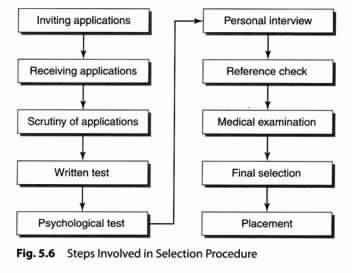
Therefore, the selection procedure followed by different organizations, many times, becomes lengthy as it is a question of getting the most suitable candidates for which various tests are to be done and interviews to be taken. The procedure for selection should be systematic so that it does not leave any scope for confusions and doubts about the choice of the selected candidate (Figure 5.6).

1. Inviting applications:

The prospective candidates from within the organization or outside the organization are called for applying for the post. Detailed job description and job specification are provided in the advertisement for the job. It attracts a large number of candidates from vari­ous areas.

2. Receiving applications:

Detailed applications are collected from the candidates which provide the necessary information about personal and professional details of a person. These applications facilitate analysis and comparison of the candidates.

3. Scrutiny of applications:

As the limit of the period within which the company is supposed to receive applications ends, the applications are sorted out. Incomplete applications get rejected; applicants with un-matching job specifications are also rejected.

4. Written tests:

As the final list of candidates becomes ready after the scrutiny of applications, the written test is conducted. This test is conducted for understanding the technical knowledge, atti­tude and interest of the candidates. This process is useful when the number of applicants is large.

Many times, a second chance is given to candidates to prove themselves by conducting another written test.

5. Psychological tests:

These tests are conducted individually and they help for finding out the indi­vidual quality and skill of a person. The types of psychological tests are aptitude test, intelligence test, synthetic test and personality test

6. Personal interview:

Candidates proving themselves successful through tests are interviewed per­sonally. The interviewers may be individual or a panel. It generally involves officers from the top management.

The candidates are asked several questions about their experience on another job, their family background, their interests, etc. They are supposed to describe their expectations from the said job. Their strengths and weaknesses are identified and noted by the interviewers which help them to take the final decision of selection.

7. Reference check:

Generally, at least two references are asked for by the company from the can­didate. Reference check is a type of crosscheck for the information provided by the candidate through their application form and during the interviews.

8. Medical examination:

Physical strength and fitness of a candidate is must before they takes up the job. In-spite of good performance in tests and interviews, candidates can be rejected on the basis of their ill health.

9. Final selection:

At this step, the candidate is given the appointment letter to join the organization on a particular date. The appointment letter specifies the post, title, salary and terms of employment. Generally, initial appointment is on probation and after specific time period it becomes permanent.

10. Placement:

This is a final step. A suitable job is allocated to the appointed candidate so that they can get the whole idea about the nature of the job. They can get adjusted to the job and perform well in future with all capacities and strengths.

Job Analysis, Need, Process, Advantages

Job Analysis is a systematic process of collecting, examining, and interpreting information about a job’s duties, responsibilities, and requirements. It aims to define what a job entails and the skills, knowledge, and abilities necessary to perform it effectively.

This process provides essential data for creating job descriptions, job specifications, and performance standards. It supports various HR functions, including recruitment, training, performance appraisal, and compensation management. By clarifying job roles and expectations, job analysis helps ensure alignment between organizational goals and employee contributions, promoting efficiency, fairness, and productivity in the workplace.

Need of Job Analysis:

  • Recruitment and Selection

Job analysis provides a clear understanding of the skills, knowledge, and qualifications required for a role. This information helps in crafting precise job descriptions and specifications, enabling HR to attract and select candidates who best fit the job. It ensures that the hiring process is effective and aligned with organizational needs.

  • Training and Development

By identifying the specific duties and responsibilities of a job, job analysis highlights the skills and knowledge gaps in employees. This data is used to design targeted training and development programs that enhance employee capabilities and ensure they can perform their roles effectively.

  • Performance Appraisal

Job analysis establishes the performance standards and expectations for a role. It provides a basis for evaluating employee performance by comparing their actual output with predefined standards. This ensures a fair and transparent appraisal process, helping to identify areas for improvement and recognize outstanding performance.

  • Compensation Management

A detailed job analysis helps determine the relative worth of a job within the organization. By understanding the complexity, responsibility, and skill level required, HR can design equitable compensation structures, ensuring that pay is competitive and aligned with industry standards.

  • Organizational Design and Restructuring

Job analysis supports organizational design by clarifying roles, hierarchies, and workflows. It is particularly useful during restructuring or when introducing new positions, as it helps align job functions with organizational objectives, ensuring efficiency and productivity.

  • Legal Compliance

Job analysis ensures that employment practices comply with labor laws and regulations. By clearly defining job roles and requirements, organizations can avoid discriminatory practices in hiring, promotions, and performance evaluations, reducing the risk of legal challenges.

  • Workforce Planning

Effective workforce planning requires a thorough understanding of job roles and responsibilities. Job analysis helps in identifying redundant roles, forecasting future workforce needs, and aligning employee capabilities with organizational goals, ensuring optimal utilization of human resources.

Process of Job Analysis:

1. Identify the Purpose of Job Analysis

The first step is to define the purpose of conducting the job analysis. Whether it is for recruitment, performance appraisal, training, or compensation planning, understanding the objective ensures the process aligns with organizational goals.

2. Select the Job to Be Analyzed

It is neither feasible nor necessary to analyze every job in the organization. Therefore, HR selects specific jobs for analysis, focusing on key roles that have a significant impact on organizational performance or require immediate clarity.

3. Collect Job Information

Data is gathered about the job using various methods such as:

  • Observation: Directly observing employees as they perform their duties.
  • Interviews: Conducting discussions with employees and managers.
  • Questionnaires: Distributing surveys to collect detailed information.
  • Work Diaries: Asking employees to document their tasks over a specific period.

4. Analyze the Job Information

The collected data is analyzed to understand the tasks, responsibilities, and conditions associated with the job. This analysis also identifies the required skills, knowledge, and abilities (KSAs) for effective performance.

5. Develop Job Descriptions

Based on the analysis, a job description is created. It provides a detailed outline of the job’s purpose, duties, responsibilities, reporting relationships, and work environment. This document serves as a reference for various HR functions.

6. Develop Job Specifications

Job specifications focus on the qualifications required for the job. These include educational qualifications, experience, technical skills, physical requirements, and personality traits needed to perform the job successfully.

7. Validate the Data

The accuracy of the job analysis is validated by seeking feedback from employees, supervisors, or other stakeholders. This ensures that the information reflects the actual requirements of the job.

8. Apply the Findings

The final step involves using the job analysis data to achieve its intended purpose. The findings may be used for recruitment, designing training programs, performance evaluations, or restructuring organizational roles.

Advantages of Job Analysis:

  • Clear Job Definitions

Job analysis provides a detailed understanding of a job’s roles, responsibilities, and required skills. This clarity eliminates confusion among employees and managers, ensuring that everyone understands their expectations and duties. Clear job definitions promote accountability and improve individual performance.

  • Improved Recruitment and Selection

Job analysis serves as the foundation for creating accurate job descriptions and specifications. It helps attract suitable candidates by clearly outlining the qualifications, skills, and experience required for the role. This precision in recruitment and selection processes reduces mismatches and enhances the quality of hires.

  • Enhanced Training and Development

By identifying the competencies and skills required for a job, job analysis helps design targeted training programs. These programs bridge skill gaps, improve employee performance, and prepare them for future challenges. This ensures employees are well-equipped to meet organizational goals.

  • Fair and Transparent Performance Appraisal

Job analysis provides performance benchmarks for each role, ensuring that appraisals are fair and objective. Managers can compare an employee’s actual performance with established standards, making it easier to identify areas for improvement and reward exceptional contributions.

  • Equitable Compensation Structures

A comprehensive job analysis helps organizations establish fair and competitive compensation systems. By evaluating the complexity, skill level, and responsibilities of each job, HR can assign salaries and benefits that reflect the relative worth of each role, ensuring internal equity and external competitiveness.

  • Legal Compliance and Risk Mitigation

Job analysis ensures that employment practices adhere to labor laws and anti-discrimination regulations. Clearly defined job requirements reduce biases in hiring and promotions, minimizing the risk of legal disputes and ensuring equal opportunities for all employees.

  • Effective Organizational Planning

Job analysis supports strategic workforce planning by identifying redundant roles, overlapping responsibilities, and skill gaps. It aids in designing streamlined workflows, restructuring teams, and aligning human resources with organizational objectives, leading to improved efficiency and productivity.

Factors affecting Recruitment

Recruitment is the proactive process of identifying, attracting, and encouraging qualified candidates to apply for job vacancies within an organization. It aims to create a pool of talented applicants from which the most suitable individuals can be selected. This critical HR function ensures the organization can secure the human capital needed to achieve its strategic goals and maintain a competitive advantage.

Factors affecting Recruitment:

  • Internal Factors

Internal factors are those within the organization that influence recruitment. These include company policies, recruitment strategies, size of the organization, and cost of recruitment. For example, a company with strong growth policies and financial stability can attract better candidates. Internal promotion policies also reduce external recruitment needs. The employer brand and workplace culture play a vital role in attracting or discouraging applicants. Additionally, the level of technology, automation, and training programs can affect the need for specific skills. Thus, internal factors directly shape how effectively an organization attracts and retains the right talent.

  • External Factors

External factors are influences from the outside environment that impact recruitment. These include labor market conditions, government regulations, socio-economic factors, and the availability of skilled candidates. For example, if unemployment is high, recruitment becomes easier as more applicants are available. Conversely, in a competitive job market, organizations must offer attractive salaries and benefits. Legal frameworks, such as reservation policies and equal opportunity laws, also guide recruitment. Social and cultural factors influence job preferences, while global trends may increase demand for specific skills. Hence, external factors create both opportunities and challenges in designing effective recruitment strategies.

  • Supply and Demand of Labour

The availability of labor in the market significantly impacts recruitment. If there is a surplus of candidates with required skills, organizations can recruit easily and at lower costs. On the other hand, if demand for certain skills exceeds supply, competition among employers rises, forcing them to offer higher salaries, benefits, and incentives to attract talent. Recruitment strategies must adapt to the demand-supply balance by either training existing employees or exploring alternative labor sources. Thus, the labor market situation becomes a deciding factor in how quickly and effectively organizations can fill vacancies with qualified candidates.

  • Cost of Recruitment

The cost involved in recruitment is a crucial factor affecting the process. Organizations must balance between attracting the best talent and minimizing expenses. Recruitment costs include advertising, recruiter fees, testing, interviews, onboarding, and training. Large organizations with bigger budgets can afford elaborate recruitment methods such as campus placements, global hiring, or online campaigns. Small organizations, however, may rely on referrals or internal promotions to save costs. High recruitment costs also make companies more cautious in their selection to avoid turnover losses. Therefore, recruitment strategies must be designed within the financial constraints of the organization.

  • Government Policies and Legal Framework

Government laws and policies significantly influence recruitment. Labor laws, equal employment opportunity regulations, minimum wage laws, and reservation policies shape hiring decisions. For example, companies in India must follow reservation quotas for Scheduled Castes, Scheduled Tribes, and Other Backward Classes. International organizations must adhere to anti-discrimination laws while recruiting globally. Failure to comply with these legal frameworks can lead to penalties or reputational loss. Furthermore, government initiatives such as skill development programs and employment exchanges also affect the availability of talent. Hence, recruitment strategies must align with government regulations to ensure fairness and compliance.

Employee Separations, Reasons

Employee Separation is a sensitive issue for any organization. Usually, an employee leaves the organization after several years of service. Thus, the permanent separation of employees from an organization requires discretion, empathy and a great deal of planning. An employee may be separated as consequence of resignation, removal, death, permanent incapacity, discharge or retirement. The employee may also be separated due to the expiration of an employment contract or as part of downsizing of the workforce. Organizations should never harass the employees, especially in the case of resignation, just because they are quitting the organiza­tion. In fact, a quitting employee of the organization must be seen as a potential candidate of the future for the organization and also the brand ambassador of its HR policies and practices. However, many organizations are still treating their employees as “expendable resources” and discharging them in an unplanned manner whenever they choose to do so.

Each organization must have comprehensive separation policies and procedures to treat the departing employees equitably and ensure smooth transition for them. Further, each employee can provide a wealth of information to the organization at the time of separation. Exit interviews can be conducted by the HR department to ascertain the views of the leaving employees about different aspects of the organization, including the efficacy of its HR policies.

Reasons for Separation of Employees:

  • Voluntary Separation:

Voluntary separation, which normally begins after a request is placed in this regard by the employee, can happen due to two reasons: professional reason and personal reason. We shall now discuss these reasons in detail.

  • Professional Reasons:

Employees may seek separation when they decide to seek better positions, responsibilities and status outside the present organization. Efficient employees would seek to expand their realm of knowledge and skills continuously by working in different capacities/positions in various organizations. In their quest for greater responsibility, power and status, they may seek separation from the organization.

  • Personal Reasons:

The important personal reasons for voluntary separation are relocation for family reasons like marriage of the employees and health crisis of family members, maternity and child-rearing. For instance, when working women get married, they often prefer to settle in the partners place of occupation. Similarly, an employee may seek voluntary separation to look after the child or parent.

  • Involuntary Separation:

As mentioned earlier, an involuntary separation is caused by the factors which remain beyond the purview of the employees. However, these factors may be classified broadly into health problems, behavioural problems and organizational problems. We shall now discuss these factors in detail

  • Health Problems:

Major health problems crippling the employees may make them invalid or unfit to continue in the profession. For instance, accidents causing permanent disabilities and illness of the employees like brain stroke and other terminal illnesses can lead to their involuntary separation. Death of employees is another factor which results in their involuntary separation.

  • Behavioural Problems:

An employee’s objectionable and unruly behaviour within the organization may also lead to his involuntary separation from the organization. When the employees behaviour is unethical or violates the code of conduct in force, the organization may initiate disciplinary actions, which may eventually result in his termination. This may constitute an act of involuntary separation. Consistent failure to reach performance goals by an employee can also result in his involuntary separation.

  • Organizational Problems:

Organizational problems are another important factor that contributes to the involuntary separation of employees. The poor financial performance of an organization may cause it to terminate the services of some of its employees as part of cost control measure. Such terminations are also classified as involuntary separation. Similarly, automation, organizational restructuring and rationalization can also result in employee termination, discharge or layoff, broadly called involuntary separation.

error: Content is protected !!