Legal aspects of Advertising, Principles, Challenges

The Legal landscape of advertising is a complex matrix of regulations and guidelines designed to protect consumers, promote fair competition, and ensure the integrity of marketing communications. In a world where advertising is omnipresent, spanning from traditional media to the digital ecosystem, understanding the legal aspects of advertising is crucial for marketers, advertisers, and legal professionals.

Regulatory Framework

The legal framework governing advertising varies by country but generally involves a mix of legislation, regulatory bodies, and industry self-regulation. In the United States, for example, the Federal Trade Commission (FTC) is a primary body enforcing advertising laws, focusing on preventing deceptive and unfair business practices. Similarly, the European Union has directives such as the Unfair Commercial Practices Directive, which harmonizes the laws on consumer protection from misleading and comparative advertising.

Key Legal Principles in Advertising

  • Truthfulness and Honesty

One of the foundational legal principles in advertising is the requirement for truthfulness. Advertisements must not mislead consumers, either through false statements or omissions that could alter a consumer’s decision-making process. This principle is critical in areas such as price advertising, product performance claims, and endorsements or testimonials.

  • Substantiation

Closely related to the principle of truthfulness is the requirement for substantiation. Advertisers must have evidence to back up claims made in their advertisements. This is particularly pertinent for product efficacy claims, where scientific or empirical evidence may be necessary to support the advertised benefits.

  • Comparisons and Competitor References

Comparative advertising, where a product is directly or indirectly compared to a competitor’s, must comply with legal standards for truthfulness and non-deceptiveness. Legal frameworks often require that comparisons be fair, balanced, and substantiable, avoiding disparagement or misleading implications about a competitor’s product.

  • Decency and Social Responsibility

Advertising content must adhere to societal norms and values, avoiding indecency or offensive material. Additionally, advertisers have a responsibility not to promote harmful behaviors, such as excessive consumption of alcohol or the use of tobacco products. The legal mandate for decency and social responsibility is not only a protection for the general public but particularly for vulnerable segments of the population, such as children.

Digital Advertising Challenges

The digital advertising ecosystem presents unique legal challenges. Online advertisements, social media marketing, and influencer partnerships must navigate additional layers of complexity:

  • Privacy and Data Protection:

Digital advertising practices such as behavioral targeting and retargeting raise significant privacy concerns. Legal frameworks like the General Data Protection Regulation (GDPR) in the EU and various state laws in the U.S. (e.g., California Consumer Privacy Act, CCPA) set strict guidelines for consumer data collection, use, and protection.

  • Disclosure Requirements:

The line between editorial content and advertising must be clearly defined in the digital space. Influencer marketing, for example, requires explicit disclosure of the commercial relationship between the brand and the influencer to ensure transparency for consumers.

Intellectual Property Issues

Advertising often involves the creative use of trademarks, copyrighted material, and designs. The unauthorized use of intellectual property in advertising can lead to legal disputes and the requirement for compensatory damages. Ensuring proper licensing and adherence to copyright and trademark laws is essential for legal compliance.

Enforcement and Penalties

Violations of advertising laws can result in various penalties, including fines, injunctions to cease misleading advertising, and in some cases, criminal charges. Regulatory bodies have the authority to investigate complaints and enforce compliance. Moreover, competitors and consumers can often bring legal action against advertisers for misleading or unfair practices.

Self-Regulation

Beyond formal legal frameworks, industry self-regulation plays a significant role in maintaining ethical advertising practices. Organizations such as the Advertising Standards Authority (ASA) in the UK and the National Advertising Division (NAD) in the U.S. provide mechanisms for reviewing and addressing complaints about advertising content. Self-regulatory codes of conduct complement legal standards by promoting high ethical standards and resolving issues efficiently.

Global Considerations

As businesses increasingly operate on a global scale, international advertising campaigns must navigate a patchwork of national laws and regulations. Compliance with local advertising laws, understanding cultural sensitivities, and respecting international guidelines are pivotal for global marketing strategies.

Advertising agencies History, Role, Importance, Organizational structure, Functions, Benefits and Challenges

Advertising agencies are specialized service firms that assist companies in developing, preparing, and executing their advertising campaigns across various media channels. These agencies are staffed by creative and business professionals who combine their expertise to produce compelling advertising material that resonates with the target audience. The services offered by advertising agencies can range from market research, brand strategy development, creative design, and copywriting to media planning, buying, and post-campaign analysis. By understanding the client’s business objectives, target market, and product offerings, advertising agencies create strategic advertisements that aim to increase brand awareness, generate consumer interest, and ultimately drive sales. Working with an advertising agency allows businesses to leverage specialized knowledge and skills, access a broader range of creative talent, and benefit from established media relationships, thereby enhancing the effectiveness of their advertising efforts and improving their return on investment.

Advertising agencies History:

  1. Early Beginnings (Late 19th Century)

The earliest advertising agencies emerged in the late 1800s in response to the growing need for businesses to promote their products to a wider audience. These agencies primarily focused on creating print advertisements for newspapers and magazines.

  1. Expansion and Diversification (Early to Mid-20th Century)

The early 20th century saw the rapid expansion and diversification of advertising agencies. With the advent of radio in the 1920s and television in the 1950s, agencies began to explore new mediums for reaching consumers. Agencies such as J. Walter Thompson (JWT), Young & Rubicam (Y&R), and Leo Burnett became household names during this period, pioneering innovative advertising techniques and establishing themselves as industry leaders.

  1. Madison Avenue Era (Mid-20th Century)

The post-World War II era saw the rise of Madison Avenue in New York City as the epicenter of the advertising industry. Many of the largest and most influential agencies were headquartered in this area, shaping the landscape of modern advertising. During this period, agencies began to adopt a more scientific approach to advertising, utilizing market research, consumer psychology, and demographic analysis to inform their campaigns.

  1. Globalization and Digital Revolution (Late 20th Century to Present)

The late 20th century saw the globalization of advertising agencies, with multinational firms expanding their reach to serve clients around the world. The digital revolution of the late 20th and early 21st centuries brought about profound changes in the advertising industry. Agencies adapted to new digital platforms such as the internet, social media, and mobile devices, transforming the way advertising campaigns are conceived, executed, and measured.

  1. Specialization and Integration

In recent years, advertising agencies have become increasingly specialized, focusing on specific industries, target demographics, or advertising formats. This specialization has led to the emergence of niche agencies that excel in areas such as digital marketing, experiential advertising, and influencer partnerships. Additionally, there has been a trend towards integration, with agencies offering a full suite of services including branding, public relations, and digital marketing to provide comprehensive solutions for clients’ advertising needs.

Advertising agencies Role:

  1. Strategic Planning

Advertising agencies help clients identify their marketing objectives and develop strategic plans to achieve them. This involves conducting market research, analyzing consumer behavior, defining target audiences, and setting clear, measurable goals. Agencies use this information to craft strategies that align with the client’s brand values and business objectives, ensuring that advertising efforts are focused and coherent.

  1. Creative Development

One of the core functions of advertising agencies is the creation of compelling and innovative advertisements. This includes conceptualizing and designing creative elements such as ad copy, visuals, videos, and other multimedia content. Creative teams within agencies work to ensure that the messaging resonates with the target audience and stands out in the competitive landscape, effectively conveying the brand’s message.

  1. Media Planning and Buying

Agencies are responsible for identifying the most appropriate channels to distribute advertising content. This involves media planning, which is the process of selecting the optimal mix of media platforms (e.g., digital, print, television, radio) based on the campaign objectives, target audience, and budget. Additionally, agencies handle media buying, negotiating with media outlets to secure ad space or time at the best possible rates and placements.

  1. Market Research and Insights

Understanding the market and consumer preferences is vital for the success of advertising campaigns. Advertising agencies conduct market research and gather insights to inform campaign strategies. This can include surveys, focus groups, audience segmentation studies, and competitor analysis. These insights help tailor advertising messages to the needs, preferences, and behaviors of the target audience.

  1. Performance Measurement and Analysis

Agencies assess the effectiveness of advertising campaigns through various metrics, such as reach, engagement, conversion rates, and return on investment (ROI). They use tools and technologies to track campaign performance in real-time, allowing for adjustments and optimizations to be made as necessary. This data-driven approach ensures that campaigns deliver the desired outcomes and that clients’ investments are justified.

  1. Integrated Marketing Communications (IMC)

Advertising agencies increasingly play a role in coordinating and integrating all aspects of a brand’s communication—across traditional and digital channels—to ensure consistency and coherence. This can include public relations, social media management, content marketing, and more. By overseeing all facets of a brand’s communications, agencies can create a unified brand experience for the consumer, enhancing brand perception and loyalty.

Advertising agencies Importance:

  1. Professional Expertise and Experience

Advertising agencies bring a wealth of professional expertise and experience to the table. They have teams of specialists in various domains of advertising, including strategy planning, creative design, media buying, and market research. This expertise enables them to create effective, high-quality campaigns that can achieve specific marketing objectives.

  1. Access to Advanced Tools and Technologies

Agencies have access to advanced marketing tools and technologies that many businesses may not possess in-house. These can include software for design and editing, analytics platforms, and subscription services for market research and media planning. Utilizing these tools allows agencies to design more effective campaigns and measure their impact accurately.

  1. Creative Innovation

One of the primary reasons companies turn to advertising agencies is for their creative capabilities. Agencies employ creative professionals who can think outside the box to come up with innovative ideas for advertisements that capture attention, resonate with target audiences, and differentiate the brand in the marketplace.

  1. Cost Efficiency

Although hiring an advertising agency represents an upfront cost, it can be more cost-efficient in the long run. Agencies can negotiate better rates for media buys due to their relationships and purchasing power. Additionally, the effectiveness of well-planned and executed campaigns can lead to a higher return on investment, making the initial costs worthwhile.

  1. Market Research and Insights

Agencies conduct thorough market research and have access to industry insights that businesses might not easily obtain on their own. This research can inform all aspects of an advertising campaign, from understanding the target audience and their preferences to identifying trends and opportunities in the market. This data-driven approach ensures that advertising efforts are well-targeted and based on current market dynamics.

  1. Focus on Core Business Functions

By outsourcing advertising efforts to an agency, businesses can free up internal resources and allow their staff to focus on core functions and areas of expertise. This not only leads to better use of resources but also ensures that the advertising campaigns are in the hands of specialists who are better equipped to manage them effectively.

Advertising agencies Functions:

  1. Research and Analysis:

  • Conduct market research to understand the target audience’s preferences, behaviors, and demographics.
  • Analyze competitors and market trends to identify opportunities and threats.
  • Develop insights to inform campaign strategy and creative direction.
  1. Strategy Development:
  • Create comprehensive advertising strategies based on research findings, aligning with the client’s business objectives.
  • Plan campaigns across multiple channels to reach audiences effectively.
  • Determine key performance indicators (KPIs) and objectives for campaigns.
  1. Creative Development:
  • Generate creative concepts that align with the campaign strategy and resonate with the target audience.
  • Design and produce the creative assets for the campaign, including print ads, digital content, commercials, and more.
  • Ensure brand consistency across all advertising materials.
  1. Media Planning and Buying:
  • Identify the most effective media channels for reaching the target audience, considering factors like reach, cost, and audience preferences.
  • Negotiate and purchase media space or airtime on behalf of the client.
  • Monitor media placements and optimize media spend for the best return on investment.
  1. Account Management:
  • Serve as the primary point of contact for clients, maintaining strong relationships.
  • Coordinate internal teams and resources to deliver on client projects.
  • Manage budgets, timelines, and project deliverables to meet client expectations.
  1. Production:
  • Oversee the production of advertising materials, from print collateral to digital content and broadcast commercials.
  • Coordinate with vendors, artists, and production companies to ensure quality and timely delivery.
  • Manage logistics for shoots and other production activities.
  1. Analytics and Reporting:
  • Track and analyze campaign performance against set KPIs.
  • Provide clients with detailed reports on campaign outcomes, insights, and recommendations for future campaigns.
  • Use data to refine and adjust strategies for ongoing and upcoming projects.
  1. Public Relations and Integrated Communications:
  • In many cases, advertising agencies also offer public relations services to manage brand image and communications.
  • Develop integrated marketing communications (IMC) strategies that align advertising, public relations, and other promotional tools.
  1. Digital Marketing:
  • Plan and execute digital marketing strategies, including SEO, SEM, content marketing, social media, and email marketing.
  • Leverage digital analytics tools to track online behavior and campaign performance.
  1. Innovation and Emerging Technologies:
  • Stay abreast of emerging trends and technologies in advertising and marketing.
  • Experiment with new formats, platforms, and technologies to create innovative advertising solutions.

Advertising agencies Benefits:

  • Expertise and Specialization:

Agencies employ professionals with specialized skills and expertise in areas such as creative design, media planning, market research, and digital marketing. This expertise ensures that campaigns are executed effectively and in line with industry best practices.

  • Creative Excellence:

Agencies excel in generating innovative and compelling advertising concepts that capture audience attention and differentiate brands from competitors. Their creative teams develop engaging content across various mediums, including print, digital, and broadcast.

  • Strategic Planning:

Agencies develop strategic advertising plans tailored to each client’s unique objectives, target audience, and market dynamics. Through comprehensive research and analysis, they identify opportunities, mitigate risks, and maximize campaign impact.

  • Cost Efficiency:

By leveraging their buying power and negotiating skills, agencies secure favorable rates for media placements and production services. This enables clients to achieve cost savings and maximize the return on their advertising investment.

  • Scalability and Flexibility:

Agencies offer scalable solutions that can adapt to clients’ changing needs and budgets. Whether launching a small-scale campaign or a large-scale national initiative, agencies can tailor their services to meet clients’ requirements.

  • Access to Technology and Tools:

Agencies invest in state-of-the-art technologies and analytics tools to optimize campaign performance, track key metrics, and measure ROI. Clients benefit from access to these resources without having to make significant investments themselves.

  • Industry Insights and Trends:

Agencies stay abreast of industry trends, consumer behavior, and emerging technologies, providing clients with valuable insights and strategic guidance. This ensures that campaigns remain relevant and competitive in a rapidly evolving marketplace.

  • Streamlined Project Management:

Agencies manage all aspects of the advertising process, from initial concept development to campaign execution and performance analysis. This allows clients to focus on their core business activities while entrusting their marketing initiatives to experienced professionals.

  • Creative Collaboration:

Agencies foster collaboration between clients and their creative teams, encouraging open communication and feedback throughout the creative process. This collaborative approach ensures that campaigns are aligned with clients’ brand identity and objectives.

  • Brand Building and Awareness:

Through strategic messaging and targeted placement, agencies help clients build brand awareness, establish credibility, and foster positive brand perceptions among their target audience. This enhances brand equity and contributes to long-term business growth.

Advertising agencies Challenges:

  1. Keeping Up with Digital Transformation:

The advertising industry is undergoing rapid digital transformation. Agencies must constantly adapt to emerging technologies, digital platforms, and changing consumer behaviors online. This requires ongoing learning and investment in new tools and platforms, which can be resource-intensive.

  1. Data Privacy and Regulation Compliance:

With increasing concerns about data privacy and the implementation of regulations such as GDPR in Europe and similar laws in other regions, agencies must navigate the complexities of handling consumer data responsibly. Compliance becomes a challenge, especially when working across multiple markets with different regulations.

  1. Client Expectations and Budget Constraints:

Clients demand more measurable returns on their advertising investments, often with tighter budgets. Balancing high-quality creative work and strategic media placement with cost efficiency is a perennial challenge for agencies.

  1. High Competition and Market Saturation:

The advertising space is crowded, with numerous agencies vying for clients’ attention. Standing out in a saturated market and proving unique value propositions is challenging, especially for smaller agencies.

  1. Talent Acquisition and Retention:

Attracting and retaining top talent is crucial for the success of any advertising agency. However, the competitive landscape and the demand for professionals skilled in the latest advertising technologies and strategies make talent management a significant challenge.

  1. Managing Multiple Client Demands:

Agencies often juggle multiple clients and projects simultaneously, each with its own set of goals, strategies, and deadlines. Managing these demands efficiently without compromising on quality or strategic focus requires effective project management and organizational skills.

  1. Measuring and Proving ROI:

Clients increasingly demand clear, quantifiable returns on their advertising spend. Agencies must not only craft successful campaigns but also demonstrate their effectiveness through measurable outcomes. This involves setting clear KPIs, leveraging analytics, and adapting strategies based on performance data, which can be complex and resource-intensive.

Advertising agencies Organizational structure:

  1. Leadership:
  • CEO/President: Responsible for overall agency operations, strategic direction, and financial performance.
  • Executive Management Team: Includes top executives overseeing departments such as creative, accounts, strategy, finance, and operations.
  1. Departments:
  • Creative Department: Comprised of art directors, copywriters, designers, and other creative professionals responsible for developing advertising concepts and content.
  • Account Management/Client Services: Account executives and account managers serve as liaisons between clients and the agency, managing client relationships, project timelines, and budgets.
  • Strategy/Planning: Strategists and planners conduct market research, develop campaign strategies, and identify target audiences.
  • Media Planning/Buying: Media planners and buyers determine the optimal media channels for reaching target audiences and negotiate ad placements.
  • Production: Production teams manage the execution of creative assets, including print, digital, and audiovisual content.
  • Finance/Administration: Handles financial management, budgeting, billing, and administrative functions.
  1. Project Teams:

Cross-functional teams are formed to work on specific client accounts or projects, bringing together individuals from different departments (e.g., creative, accounts, strategy) to collaborate and execute campaigns.

  1. Specialized Units:

Some agencies may have specialized units focusing on areas such as digital marketing, social media, public relations, experiential marketing, or data analytics.

  1. Support Staff:

Administrative and support staff, including human resources, IT, and facilities management, provide essential services to ensure smooth agency operations.

  1. Freelancers/Contractors:

Agencies often engage freelancers or contractors on a project basis to supplement in-house capabilities, especially for specialized tasks like photography, videography, or web development.

  1. Matrix Structure:

Larger agencies may adopt a matrix organizational structure, where employees report to both functional department heads and project managers simultaneously, allowing for flexibility and collaboration across teams.

  1. Agency Network/Holding Company:

In some cases, agencies are part of a larger network or holding company, which may provide shared resources, centralized services (e.g., HR, finance), and opportunities for collaboration or cross-selling among member agencies.

Selection of Advertising Agency, Need

An advertising agency is a specialized service provider that assists clients in developing, planning, and executing advertising campaigns to promote their products, services, or brand identity. Agencies bring together a mix of creative and business professionals who specialize in various areas of advertising and marketing, including strategy development, creative design, media planning, digital marketing, and market research. These teams work collaboratively to understand a client’s business objectives, target audience, and market environment to create compelling advertisements that will be distributed across various platforms, such as television, radio, print, outdoor, and digital channels. Advertising agencies often act as strategic partners to their clients, offering insights and expertise that help to enhance the brand’s visibility, engage potential customers, and ultimately drive sales. By leveraging their creativity, industry knowledge, and media relationships, advertising agencies play a crucial role in helping businesses successfully navigate the complex and ever-changing advertising landscape.

Selection of Advertising Agency

Selecting the right advertising agency is crucial for the success of your marketing and advertising efforts. Here are key steps and considerations to guide the selection process:

  1. Assess Your Needs:
  • Identify your marketing and advertising goals.
  • Determine the services you need: creative development, media buying, digital marketing, etc.
  • Understand the size of the agency that would best suit your business.
  1. Research Potential Agencies:
  • Look for agencies with experience in your industry or with your specific marketing needs.
  • Evaluate their portfolio for creativity, effectiveness, and diversity of clients and projects.
  1. Consider Agency Size:
  • Decide if you prefer the personalized attention of a smaller agency or the extensive resources of a larger firm.
  • Consider your budget in relation to the agency sizes.
  1. Check References and Past Work:
  • Request case studies or examples of past campaigns.
  • Contact previous clients to inquire about their satisfaction and the agency’s performance.
  1. Evaluate Their Strategic Approach:
  • Assess how the agency plans to meet your goals.
  • Look for creative and strategic thinking in their pitch.
  1. Assess Cultural Fit:
  • Ensure the agency’s work culture and values align with your own.
  • Consider how well your teams will work together.
  1. Discuss and Understand Fees:
  • Understand how the agency charges for its services.
  • Consider if their fee structure aligns with your budget and expectations.
  1. Review Contracts and Agreements:
  • Carefully read through any contracts or agreements.
  • Pay attention to terms regarding intellectual property, confidentiality, and cancellation policies.
  1. Communication and Reporting:
  • Discuss how communication will be handled throughout the partnership.
  • Ensure there are clear expectations about reporting on campaign progress and results.
  1. Long-Term Potential:
  • Consider whether the agency can scale and adapt to your long-term needs.
  • Think about the potential for a lasting and evolving partnership.

Selection of Advertising Agency Need:

  1. Expertise and Specialization:

Companies seek agencies with specific expertise in their industry or the type of advertising they intend to pursue, such as digital, print, or broadcast. This specialization ensures that the agency understands the market dynamics, target audience, and competitive landscape.

  1. Strategic Alignment:

The agency’s approach to advertising and marketing should align with the company’s strategic goals. A strong agency will work as a partner in achieving these goals, bringing creative and effective solutions to the table.

  1. Creative Capability:

Creativity is at the heart of impactful advertising. Companies look for agencies that can deliver innovative and engaging campaigns that stand out in the market and resonate with the target audience.

  1. Cost-Effectiveness:

Budget considerations are crucial. The agency’s services should be cost-effective, offering good value for the investment. Understanding the agency’s fee structure and ensuring it fits within the budget is essential.

  1. Cultural Fit:

The agency’s culture and working style should mesh well with the company’s. A good cultural fit facilitates smoother collaboration and communication, enhancing the working relationship.

  1. Results-Driven Approach:

Companies need an agency that is focused on delivering measurable results, whether in terms of increased brand awareness, sales, or customer engagement. The agency should have a track record of achieving significant outcomes for its clients.

  1. Flexibility and Scalability:

The ability to adapt to changes in the market or the company’s strategy is important. Companies may also look for an agency that can scale its services up or down based on evolving needs.

  1. Reputation and Reliability:

An agency’s reputation in the industry can be a strong indicator of its reliability and the quality of its work. Testimonials, case studies, and references from past clients provide insights into the agency’s capabilities and reliability.

Advertising Media, Industry structure, Functions, Types

Advertising Media refers to the various channels and platforms through which advertising messages are conveyed to the target audience. These media serve as the vehicles for delivering promotional content aimed at informing, persuading, or reminding consumers about products, services, or brands. The choice of advertising media is critical, as it determines the reach, effectiveness, and cost-efficiency of advertising campaigns. Traditional advertising media include television, radio, newspapers, magazines, and outdoor billboards, which offer broad reach but may vary in terms of targeting precision and engagement levels. With the advent of digital technology, online and social media platforms such as websites, search engines, social networks, and email have become increasingly popular due to their ability to offer targeted, interactive, and measurable advertising opportunities. The selection of advertising media depends on factors such as the campaign’s objectives, target audience characteristics, budget constraints, and the desired impact, making the strategic use of media essential for successful advertising outcomes.

Advertising Media Industry Structure:

  1. Advertisers

Advertisers are companies or individuals that want to promote their products, services, or brand messages to a target audience. They are the driving force behind advertising spending, seeking to achieve various marketing objectives such as increasing brand awareness, generating leads, or boosting sales.

  1. Advertising Agencies

Advertising agencies provide creative and strategic services to advertisers. They help in designing and executing advertising campaigns across various media. Agencies can specialize in certain types of advertising (digital, outdoor, TV, etc.) or serve as full-service agencies that offer a comprehensive range of marketing and advertising solutions.

  1. Media Owners/Publishers

Media owners, or publishers, own the platforms or channels through which advertising messages are disseminated. This group includes traditional media companies that own TV stations, radio stations, newspapers, and magazines, as well as digital media owners like websites, social media platforms, and streaming services. They sell advertising space or airtime to advertisers or their agencies.

  1. Media Buying and Planning Agencies

Media buying and planning agencies specialize in purchasing media space and optimizing the placement of advertisements. They analyze various media options, negotiate rates with media owners, and develop strategies to ensure that the advertising reaches its intended audience in the most effective and cost-efficient manner.

  1. Ad Tech Companies

Ad tech (advertising technology) companies provide the software and tools needed to target, deliver, and measure digital advertising. This category includes demand-side platforms (DSPs), supply-side platforms (SSPs), ad exchanges, and data management platforms (DMPs), among others. Ad tech facilitates programmatic buying and selling of advertising, making the process more efficient and data-driven.

  1. Research and Measurement Firms

Research and measurement firms offer services that help advertisers, agencies, and media owners understand the impact of their advertising efforts. They provide insights into audience demographics, advertising effectiveness, brand awareness, and consumer behavior. Companies like Nielsen, Kantar, and Comscore are examples of entities that specialize in media measurement and analytics.

  1. Regulatory Bodies

Regulatory bodies oversee the advertising industry to ensure fairness, accuracy, and ethical standards are maintained. They establish guidelines and rules to protect consumers from misleading advertising and to promote healthy competition among businesses. Examples include the Federal Trade Commission (FTC) in the United States and the Advertising Standards Authority (ASA) in the UK.

Advertising Media Functions:

  • Reach

One of the fundamental functions of advertising media is to extend the reach of an advertising message to a broad audience or a specific target market. Different media platforms have varying reach potentials, with some offering global coverage and others providing more localized or niche audiences.

  • Targeting

Advertising media enable advertisers to target their messages to specific segments of the market. Through demographic, psychographic, and behavioral data, media platforms can help advertisers focus their efforts on the audience segments most likely to respond to their messages, thereby increasing the efficiency of advertising campaigns.

  • Engagement

Media platforms provide various ways for advertisers to engage with their audiences. This can range from interactive digital ads that invite user participation to compelling video ads that tell a brand’s story. The goal is to capture the audience’s attention and create a memorable impression that influences behavior.

  • Frequency

Frequency refers to the number of times an audience is exposed to an advertising message within a specific period. Advertising media help control the frequency of message exposure to ensure optimal message reinforcement without causing ad fatigue.

  • Branding

Advertising media play a crucial role in brand building and management. Through consistent and strategic use of media channels, advertisers can establish brand identity, enhance brand awareness, and foster brand loyalty among consumers.

  • Information Dissemination

Media platforms serve as channels for disseminating information about products, services, and brands. They help communicate features, benefits, prices, and other key information that assists consumers in making informed purchasing decisions.

  • Persuasion

A core function of advertising media is to persuade the audience towards taking a desired action, such as making a purchase, visiting a website, or adopting a new behavior. Effective media selection and creative messaging are critical to achieving this goal.

  • Measurement and Feedback

With advancements in digital media, advertisers can now measure the impact of their advertising efforts in real-time and receive immediate feedback. This function is crucial for evaluating campaign performance, optimizing strategies, and improving return on investment (ROI).

  • Cost Efficiency

Different advertising media offer varying cost structures, from high-cost options like national TV ads to more budget-friendly digital ads with pay-per-click models. Advertisers can select media channels that offer the best balance between cost and effectiveness, maximizing their advertising spend.

  • Innovation and Creativity

Advertising media provide a canvas for creativity and innovation in presenting advertising messages. From augmented reality experiences to personalized video messages, the choice of media can significantly enhance the creativity and impact of advertising campaigns.

Advertising Media Types:

  1. Television:

Offers broad reach and visual impact, suitable for reaching a wide audience with dynamic and engaging content.

  1. Radio:

Provides audio-based advertising opportunities, ideal for targeting local audiences and driving brand recall through jingles and slogans.

  1. Print Media:
    • Newspapers: Reach a wide, varied audience, good for local targeting and timely content.
    • Magazines: Offer high-quality visual presentation, targeting specific interests or demographics.
  2. Outdoor Advertising:
    • Billboards: High visibility in high traffic areas, good for brand exposure.
    • Transit Advertising: Advertisements on buses, subways, and taxis, reaching commuters and city dwellers.
    • Street Furniture: Advertising on bus shelters, benches, and kiosks, integrating into the urban landscape.
  3. Direct Mail:

Personalized advertising sent directly to homes or businesses, allowing for targeted messaging and offers.

  1. Digital/Online Media:
    • Display Ads: Visual ads placed on websites, offering targeted visibility across the web.
    • Social Media: Utilizes platforms like Facebook, Instagram, and Twitter for targeted ads based on user behavior and preferences.
    • Email Marketing: Direct, personalized communication with customers, useful for promotions, updates, and customer engagement.
    • Search Engine Marketing (SEM): Includes paid search ads (PPC) and search engine optimization (SEO) strategies to increase visibility on search engines.
    • Video Advertising: Online video ads on platforms like YouTube or within streaming content, combining the visual and auditory appeal of TV ads.
    • Influencer Marketing: Leveraging influencers on social media to promote products or services to their followers.
  2. Cinema Advertising:

Ads shown before movies, reaching a captive audience in a unique entertainment setting.

  1. Sponsorships:

Supporting events, teams, or individuals, linking the brand with certain activities, interests, or values in the minds of consumers.

  1. Interactive and Emerging Technologies:
    • Augmented Reality (AR) and Virtual Reality (VR): Creating immersive experiences to engage consumers in innovative ways.
    • Mobile Advertising: Ads and apps designed for smartphones and tablets, including location-based advertising for reaching consumers on the go.

Merits and Demerits of Advertising Media

Advertising Media refers to the various channels and platforms through which advertising messages are conveyed to the target audience. These media serve as the vehicles for delivering promotional content aimed at informing, persuading, or reminding consumers about products, services, or brands. The choice of advertising media is critical, as it determines the reach, effectiveness, and cost-efficiency of advertising campaigns. Traditional advertising media include television, radio, newspapers, magazines, and outdoor billboards, which offer broad reach but may vary in terms of targeting precision and engagement levels. With the advent of digital technology, online and social media platforms such as websites, search engines, social networks, and email have become increasingly popular due to their ability to offer targeted, interactive, and measurable advertising opportunities. The selection of advertising media depends on factors such as the campaign’s objectives, target audience characteristics, budget constraints, and the desired impact, making the strategic use of media essential for successful advertising outcomes.

Advantages of Advertising Media:

Television (TV) Advertising:

  • Wide Reach:

TV advertising has the potential to reach a broad audience, including diverse demographics and geographic regions.

  • Visual Impact:

TV commercials allow for dynamic visuals, audio, and storytelling, making it an effective medium for engaging and capturing viewers’ attention.

  • Brand Building:

Television provides a platform for building brand awareness and credibility through high-quality production values and association with popular programming.

  • Targeted Placement:

With targeted advertising options and audience segmentation, advertisers can reach specific demographic groups or interests through niche channels or time slots.

Radio Advertising:

  • Cost-Effectiveness:

Radio advertising can be more affordable than other traditional mediums like TV or print, making it accessible to businesses with smaller budgets.

  • Local Targeting:

Radio stations often cater to specific local or regional audiences, allowing advertisers to target consumers based on geographic location.

  • Immediacy:

Radio ads can be quickly produced and aired, providing advertisers with the flexibility to react to timely events or promotions.

  • Audience Engagement:

Radio offers a highly engaged audience, as listeners often tune in during specific times of the day or for particular programs, creating opportunities for targeted messaging.

Print Advertising (Newspapers, Magazines):

  • Tangibility:

Print advertisements provide a tangible format that consumers can hold, revisit, and share, enhancing brand recall and message retention.

  • Targeted Audience:

Print publications often cater to specific interests or demographics, allowing advertisers to reach niche audiences with relevant content.

  • Credibility:

Print media, especially newspapers and magazines, are perceived as credible sources of information, lending credibility to advertised brands or products.

  • Longevity:

Print ads can have a longer lifespan compared to digital media, as they can be kept or displayed for extended periods, reinforcing brand messaging.

Digital Advertising (Online, Social Media):

  • Targeting Capabilities:

Digital advertising offers sophisticated targeting options based on demographics, interests, behavior, and location, ensuring messages reach the right audience segments.

  • Measurable Results:

Digital platforms provide robust analytics and tracking tools, allowing advertisers to measure campaign performance in real-time and optimize strategies accordingly.

  • Interactivity:

Digital ads can engage audiences through interactive elements, such as clickable links, videos, quizzes, and social media interactions, encouraging active participation and engagement.

  • Cost Efficiency:

Digital advertising often offers cost-effective options, such as pay-per-click (PPC) or cost-per-impression (CPM) pricing models, enabling advertisers to maximize their budgets and ROI.

Outdoor Advertising (Billboards, Transit Ads):

  • High Visibility:

Outdoor advertising provides exposure to a captive audience in high-traffic areas, such as highways, city centers, or public transportation hubs.

  • Local Branding:

Outdoor ads can reinforce local branding efforts, increasing brand visibility and recognition within specific geographic regions.

  • 24/7 Exposure:

Billboards and transit ads offer round-the-clock exposure, ensuring continuous visibility to commuters and pedestrians throughout the day.

  • Creativity:

Outdoor advertising allows for creative and eye-catching designs, leveraging bold visuals, witty messaging, and unique formats to capture attention and leave a lasting impression.

Direct Mail Advertising:

  • Targeted Messaging:

Direct mail allows for highly targeted messaging based on demographics, purchase history, or other customer data, increasing relevance and response rates.

  • Tangible Impact:

Direct mail pieces are physical and tangible, making them more memorable and likely to be noticed compared to digital communications.

  • Personalization:

Direct mail can be personalized with individualized offers, coupons, or messages, creating a sense of exclusivity and relevance for recipients.

  • Response Tracking:

Direct mail campaigns can include response mechanisms, such as QR codes or personalized URLs, enabling advertisers to track and measure campaign effectiveness.

Disadvantages of Advertising Media:

Television (TV) Advertising

  • High Costs:

TV advertising, especially on national networks, can be prohibitively expensive, including production and airing costs.

  • DVRs and Ad Skipping:

With the rise of digital video recorders (DVRs) and on-demand streaming services, viewers can easily skip commercials, reducing ad effectiveness.

  • Fragmentation:

The proliferation of channels and platforms has fragmented audiences, making it more challenging to reach a broad audience through traditional TV advertising.

Radio Advertising

  • Audio-Only:

The lack of visual elements can limit the message’s appeal and memorability compared to media that utilize both visual and auditory stimuli.

  • Background Medium:

People often listen to the radio while doing other activities, which can diminish the attention paid to advertisements.

  • Limited Segmentation:

While radio stations often target specific demographics, the segmentation capabilities are not as sophisticated as those in digital advertising.

Print Advertising (Newspapers, Magazines)

  • Declining Readership:

The popularity of print media has been declining, with more people turning to digital sources for news and entertainment, potentially reducing ad reach.

  • Long Lead Times:

Print media often requires long lead times for ad submission, making it less flexible for time-sensitive promotions.

  • Environmental Concerns:

The environmental impact of paper production, ink, and waste is a growing concern for both consumers and advertisers.

Digital Advertising (Online, Social Media)

  • Ad Blockers:

The use of ad-blocking software has risen, making it difficult to reach certain audiences through digital channels.

  • Ad Fatigue:

Consumers can become overwhelmed or annoyed by the sheer volume of digital ads, leading to banner blindness or negative brand perceptions.

  • Privacy Concerns:

Increasing concerns over data privacy and tracking have led to stricter regulations and pushback against targeted advertising practices.

Outdoor Advertising (Billboards, Transit Ads)

  • Limited Engagement:

Outdoor ads do not allow for direct interaction or engagement, making it difficult to measure effectiveness or capture leads.

  • Visibility Issues:

Weather conditions, location, and visibility can significantly impact the effectiveness of outdoor advertisements.

  • Regulatory Restrictions:

There are often strict regulations governing outdoor advertising, including size, placement, and content, which can limit creativity and effectiveness.

Direct Mail Advertising

  • High Costs:

Printing and postage costs can make direct mail campaigns expensive, especially for large-scale or frequent mailings.

  • Environmental Impact:

Like print advertising, the environmental impact of paper waste is a concern for both consumers and marketers.

  • Low Response Rates:

Direct mail can suffer from low response rates, as many recipients may disregard unsolicited mail as junk.

General Disadvantages Across Media

  • Saturation:

Markets are often saturated with advertisements, making it challenging for any single message to stand out.

  • Misalignment:

There’s always a risk that the chosen medium may not align well with the target audience’s preferences or habits, leading to wasted resources.

Trademarks, Features, Types, Laws

Trademark is a unique symbol, word, phrase, logo, design, or combination that identifies and distinguishes the goods or services of a particular business from others in the market. It serves as a form of intellectual property, providing legal protection against unauthorized use by others. Trademarks play a crucial role in building brand identity, trust, and customer loyalty. Registered trademarks offer exclusive rights to the owner, ensuring recognition and preventing confusion among consumers. Examples include iconic logos like the Nike Swoosh or McDonald’s Golden Arches. Trademarks are protected under specific laws, such as the Trademarks Act in many countries.

Features of Trademark:

1. Distinctive Identity

Trademark provides a unique identity to a product or service, helping it stand out in the competitive market. It enables customers to recognize the brand instantly through distinctive elements like logos, words, symbols, or designs.

  • Example: The Apple logo is instantly associated with innovation and quality.

2. Legal Protection

Trademarks are legally protected under trademark laws, such as the Trademarks Act in India or the Lanham Act in the United States. Once registered, the owner has exclusive rights to use the mark, and any unauthorized usage can be legally challenged.

  • Example: Coca-Cola has exclusive rights to its iconic logo and brand name.

3. Commercial Value

A trademark adds significant commercial value to a business by enhancing brand recognition and loyalty. Over time, it can become one of the most valuable assets of a company, contributing to goodwill and financial worth.

  • Example: The Nike Swoosh has become a symbol of excellence, adding immense value to the brand.

4. Intangible Asset

A trademark is an intangible asset, meaning it holds no physical form but represents considerable value for a business. It can be bought, sold, licensed, or franchised, providing an additional revenue stream.

  • Example: Licensing agreements for Disney characters generate significant revenue.

5. Global Recognition

Trademarks can be registered internationally, offering protection in multiple countries. This is especially crucial for businesses operating in global markets, ensuring that their brand is protected across borders.

  • Example: McDonald’s Golden Arches are recognized worldwide.

6. Versatility

Trademarks can take various forms, including words, phrases, logos, sounds, shapes, and even colors. This versatility allows businesses to create a unique and memorable brand identity that resonates with their audience.

  • Example: The “Intel Inside” jingle is a registered sound trademark.

7. Prevents Market Confusion

A trademark helps prevent confusion among consumers by clearly differentiating one brand from another. This ensures that customers can identify and choose their preferred products or services confidently.

  • Example: The Starbucks logo ensures customers recognize its coffee shops over competitors.

8. Long-Term Protection

Trademarks can be renewed indefinitely as long as they are in use. This ensures perpetual protection and association with the brand, allowing businesses to maintain their identity over generations.

  • Example: The Coca-Cola trademark has been protected for over a century.

Types of Trademark:

1. Product Marks

Product mark identifies the source of a product and distinguishes it from competitors. It is typically used for goods rather than services. Product marks help establish a unique identity in the market and build brand recognition.

  • Example: The “Apple” logo for electronic devices.

2. Service Marks

Service marks are used to identify and distinguish services offered by a business rather than tangible goods. They ensure that customers can associate quality and trust with a particular service provider.

  • Example: The “FedEx” logo for courier services.

3. Collective Marks

Collective marks are used by a group or association to represent the origin or quality of goods or services provided by its members. These marks help indicate that the product or service adheres to certain standards set by the group.

  • Example: The “CA” mark used by Chartered Accountants in India.

4. Certification Marks

Certification marks signify that a product or service meets specific standards or criteria, such as quality, origin, or manufacturing method. These marks are issued by authorized certifying organizations and are not exclusive to any single manufacturer or service provider.

  • Example: The “ISI” mark for products conforming to Indian Standards.

5. Trade Dress

Trade dress refers to the visual appearance of a product, including its packaging, shape, color, or design, that makes it unique and distinguishable. It focuses on the overall look and feel rather than specific logos or words.

  • Example: The distinct shape of the Coca-Cola bottle.

6. Sound Marks

Sound marks are unique audio elements associated with a brand. These marks help in building auditory recognition and are often used in advertisements, jingles, or as startup sounds for devices.

  • Example: The “Intel Inside” jingle.

7. Word Marks

A word mark protects the text or name of a brand, including its font style and arrangement. It ensures that no other entity can use the specific words to identify similar products or services.

  • Example: The name “Google.”

8. Logo Marks

Logo marks focus on the visual representation of a brand, such as a symbol, emblem, or graphical element. It helps establish a strong visual identity for the brand.

  • Example: The Nike “Swoosh.”

Laws of Trademark in India:

Trademarks in India are governed by a comprehensive legal framework designed to protect the intellectual property rights of businesses and individuals. The Trademarks Act, 1999 is the primary legislation, supported by various rules and international agreements.

1. Trademarks Act, 1999

This is the cornerstone of trademark protection in India, replacing the earlier Trade and Merchandise Marks Act, 1958. It governs the registration, protection, and enforcement of trademarks.

Key Provisions:

  • Registration of Trademarks: Provides for the registration of distinctive marks for goods and services.
  • Types of Marks: Includes product marks, service marks, collective marks, certification marks, and trade dress.
  • Duration of Protection: A registered trademark is valid for 10 years and can be renewed indefinitely.
  • Infringement and Penalties: Defines trademark infringement and provides remedies, including civil and criminal penalties.

2. Trademark Rules, 2017

These rules simplify and streamline the trademark registration process. They also specify the classification of goods and services as per the Nice Classification System.

Key Features:

  • Online filing of trademark applications.
  • Concessions for small businesses and startups in filing fees.
  • Clear guidelines for international trademark registration under the Madrid Protocol.

3. Intellectual Property Appellate Board (IPAB)

The IPAB (now merged with the High Court) handled disputes related to trademarks, including appeals against decisions of the Registrar of Trademarks.

4. Trademark Registration Process

The registration process involves filing an application, examination, publication in the Trademarks Journal, and eventual registration if no opposition is raised.

Steps:

  1. Conducting a trademark search.
  2. Filing the application with the Registrar of Trademarks.
  3. Examination and objection (if any).
  4. Publication for public opposition.
  5. Certificate issuance upon successful registration.

5. Remedies for Infringement

Trademark infringement occurs when an unauthorized party uses a mark that is identical or deceptively similar to a registered trademark. Remedies include:

  • Civil Remedies: Injunctions, damages, and accounts of profits.
  • Criminal Penalties: Fines and imprisonment for willful infringement.

6. International Protection

India is a member of the Madrid Protocol, allowing businesses to register trademarks internationally through a single application.

E-Commerce & Digital Marketing University of Mumbai BMS 5th Sem Notes

Unit 1 Introduction to E-commerce {Book}
E-commerce Meaning, Features of E-commerce, Advantages & Limitations of E-Commerce VIEW
Categories of E-commerce VIEW
Traditional Commerce & E-Commerce VIEW
E-commerce Environmental Factors: Economic, Technological, Legal, Cultural & Social VIEW
Factors Responsible for Growth of E-Commerce VIEW
Issues in Implementing E- Commerce VIEW VIEW
Myths of E-Commerce VIEW
Impact of E-Commerce on Business VIEW
Ecommerce in India VIEW
Trends in E-Commerce in Various Sectors: Retail, Banking, Tourism, Government, Education VIEW
Meaning of M-Commerce, Benefits of M-Commerce, Trends in M-Commerce VIEW


Unit 2 E-Business & Applications {Book}
E-Business: Meaning, Launching an E-Business VIEW
Different phases of Launching an E- Business
Important Concepts in E-Business:
Data Warehouse VIEW VIEW
Customer Relationship Management VIEW VIEW
Supply Chain Management VIEW
Enterprise Resource Planning VIEW VIEW
Business Models in E-Business: VIEW
Brick and Mortar VIEW
Pure Online VIEW
Bricks and Clicks, Advantages of Bricks & Clicks Business Model VIEW
Superiority of Bricks and Clicks E-Business Applications VIEW
e-Procurement VIEW
E-Communication VIEW VIEW
E- Delivery VIEW
E-Auction VIEW
E-Trading VIEW
Electronic Data Interchange (EDI) in E-Business: Meaning of EDI VIEW VIEW
Benefits of EDI, Drawbacks of EDI, Applications of EDI VIEW
Website: Design and Development of Website, Advantages of Website, Principles of Web Design, Life Cycle Approach for Building a Website, Different Ways of Building a website VIEW
VIEW


Unit 3 Payment, Security, Privacy &Legal Issues in E-Commerce {Book}
Issues Relating to Privacy and Security in E-Business            VIEW VIEW
Electronic Payment Systems: Features VIEW VIEW
Different Payment Systems: Debit Card, Credit Card VIEW
Smart Card VIEW
E-cash VIEW
E-Cheque VIEW
E-wallet VIEW
Electronic Fund Transfer VIEW
Payment Gateway: Introduction, Process VIEW
Payment Gateway Types, Advantages and Disadvantages VIEW
Types of Transaction Security VIEW
E-Commerce Laws: Need for E-Commerce laws VIEW
E-Commerce laws in India VIEW
Legal Issues in E-commerce in India VIEW
IT Act 2000 VIEW


Unit 4 Digital Marketing {Book}
Introduction to Digital Marketing VIEW
Advantages and Limitations of Digital Marketing VIEW
Various Activities of Digital Marketing:
SEO VIEW VIEW
Search engine Marketing VIEW VIEW VIEW
Content Marketing & Content influence Marketing VIEW VIEW
Campaign Marketing VIEW
E-mail Marketing VIEW VIEW VIEW
Display Advertising VIEW
Blog Marketing VIEW
Viral Marketing VIEW
Podcasts and Vodcasts VIEW
Digital Marketing on Various Social Media platforms VIEW
Online Advertising, Online Marketing Research, Online PR VIEW
Web Analytics VIEW
Promoting Web Traffic VIEW
Latest developments and Strategies in Digital Marketing VIEW


e-commerce Meaning, Characteristics, Advantage and Disadvantage, Future

E-Commerce or Electronic Commerce means buying and selling of goods, products, or services over the internet. E-commerce is also known as electronic commerce or internet commerce. These services provided online over the internet network. Transaction of money, funds, and data are also considered as E-commerce. These business transactions can be done in four ways: Business to Business (B2B), Business to Customer (B2C), Customer to Customer (C2C), Customer to Business (C2B). The standard definition of E-commerce is a commercial transaction which is happened over the internet. Online stores like Amazon, Flipkart, Shopify, Myntra, Ebay, Quikr, Olx are examples of E-commerce websites. By 2020, global retail e-commerce can reach up to $27 Trillion.

E-commerce is a popular term for electronic commerce or even internet commerce. The name is self-explanatory, it is the meeting of buyers and sellers on the internet. This involves the transaction of goods and services, the transfer of funds and the exchange of data.

So when you log into your Amazon and purchase a book, this is a classic example of an e-commerce transaction. Here you interact with the seller (Amazon), exchange data in form of pictures, text, address for delivery etc. and then you make the payment.

Characteristics of E-Commerce

E-commerce is characterized by the following features:

(i) The business tools are electronic and the application is commerce, i.e. profit motive.

(ii) Business is externally focused on those with whom business is conducted.

(iii) Most of the transactions are processed automatically.

(iv) Uses a gamut of business support services, such as inter-organizational e-mail and on-line directories.

Examples of E-Commerce

  • Amazon
  • Flipkart
  • eBay
  • Fiverr
  • Upwork
  • Olx
  • Quikr

Scope of e-commerce

The scope of e-commerce is broad and continues to expand as technology advances and consumer behaviors evolve. It encompasses various dimensions, including types of transactions, market participants, technological platforms, and industries it affects.

Types of Transactions

  1. Business-to-Business (B2B):

E-commerce transactions between businesses, such as between manufacturers and wholesalers, or between wholesalers and retailers.

  1. Business-to-Consumer (B2C):

Transactions between businesses and individual consumers. This is the most recognized form of e-commerce, including online retail and services.

  1. Consumer-to-Consumer (C2C):

Transactions between consumers, usually facilitated by a third party that provides an online platform (e.g., eBay, Etsy).

  1. Consumer-to-Business (C2B):

Individuals sell products or services to businesses, which is common in freelancing platforms and stock photo websites.

  1. Business-to-Government (B2G) or Government-to-Business (G2B):

Transactions between companies and public sector organizations, often related to tenders and procurement.

  1. Government-to-Citizen (G2C):

Services provided by the government to its citizens through online platforms, which can include tax filing, registration services, and information dissemination.

Market Participants

  • Retailers:

Both traditional brick-and-mortar stores expanding online and online-only retailers.

  • Wholesalers and Distributors:

Entities involved in the bulk selling and distribution of products to retailers or other wholesalers.

  • Manufacturers:

Producers of goods selling directly to consumers, businesses, or through intermediaries.

  • Service Providers:

Companies offering services (e.g., streaming, cloud computing, online education) rather than tangible goods.

  • Consumers:

Individuals purchasing goods or services for personal use.

  • Governments:

Engaging in e-commerce for procurement, service delivery, and information dissemination.

Technological Platforms

  • Online Marketplaces:

Platforms that connect sellers and buyers, facilitating transactions (e.g., Amazon, Alibaba).

  • E-commerce Websites:

Dedicated websites owned by retailers or brands that offer goods or services directly to consumers or businesses.

  • Mobile Apps:

Applications designed for smartphones and tablets, enabling mobile commerce (m-commerce).

  • Social Commerce:

The use of social media platforms to promote and sell products and services directly within the platform.

  • Electronic Data Interchange (EDI):

The computer-to-computer exchange of business documents in a standard electronic format, primarily used in B2B transactions.

Industries Affected

Virtually every industry has been impacted by e-commerce, including:

  • Retail: Clothing, electronics, home goods, groceries, and more.
  • Services: Banking, travel, education, entertainment, real estate.
  • Manufacturing: Direct-to-consumer sales, customization, and global supply chain management.
  • Healthcare: Telemedicine, online pharmacies, and personal health records.
  • Finance: Online banking, digital wallets, and fintech services.

Future Scope

The future scope of e-commerce includes further integration of artificial intelligence for personalized shopping experiences, expansion of augmented reality to try products virtually, growth of voice commerce, and the exploration of new payment methods like cryptocurrencies. Additionally, the global nature of e-commerce will continue to emphasize cross-border trade, logistics innovations, and the digital transformation of traditional businesses.

Benefits of e-Commerce:

For Businesses:

  • Wider Market Reach:

E-commerce breaks down geographical barriers, enabling businesses to reach a global audience without the need for physical stores.

  • Lower Operational Costs:

Operating an online store can significantly reduce the need for physical space, resulting in lower rent, utilities, and staffing costs.

  • Open 24/7:

Online stores can operate around the clock, allowing businesses to generate sales even outside of traditional business hours.

  • Data Collection and Personalization:

E-commerce platforms facilitate the collection of valuable customer data, which can be used to personalize marketing efforts and improve product offerings.

  • Scalability:

E-commerce businesses can easily scale their operations up or down based on market demand without substantial investments.

  • Faster Go-to-Market Time:

Launching products online is quicker and less costly, allowing businesses to capitalize on trends and market demand efficiently.

For Consumers:

  • Convenience:

E-commerce offers the ultimate convenience of shopping from anywhere at any time, without the need to visit physical stores.

  • Broader Selection:

Online stores often provide a wider variety of products than physical stores, including items that are rare or not locally available.

  • Price Comparisons:

Consumers can easily compare prices and read reviews from other customers before making a purchase decision.

  • No Pressure Sales:

Shopping online eliminates the pressure often felt from sales staff in physical stores, allowing for more relaxed decision-making.

  • Access to International Products:

E-commerce makes it easier for consumers to purchase products from abroad that may not be available in their home country.

  • Personalized Shopping Experience:

Online stores can offer personalized recommendations based on previous purchases and browsing behavior.

For Society:

  1. Environmental Impact:

With reduced needs for physical infrastructure and the potential for more efficient logistics, e-commerce can contribute to lower carbon footprints compared to traditional retail.

  1. Job Creation:

While e-commerce changes the nature of retail jobs, it also creates new opportunities in areas such as digital marketing, data analysis, IT, and logistics.

  1. Accessibility:

E-commerce provides access to goods and services for people who are physically unable to visit stores, such as the elderly or individuals with disabilities.

Limitations of e-Commerce:

For Businesses:

  • Intense Competition:

The ease of setting up online businesses leads to increased competition, making it harder for individual businesses to stand out and retain market share.

  • Technical Issues:

Dependency on technology means that technical glitches, website downtime, or cybersecurity breaches can have significant negative impacts on sales and customer trust.

  • Customer Service Challenges:

Providing effective and timely customer service can be more challenging online, especially with high volumes of inquiries and the lack of face-to-face interaction.

  • Return and Refund Processes:

Handling returns and refunds can be more complicated and costly for online businesses, affecting profitability.

  • Fraud and Security Concerns:

E-commerce sites are attractive targets for cybercriminals, necessitating ongoing investment in security measures to protect customer data.

For Consumers:

  • Lack of Physical Examination:

Consumers cannot touch, feel, or try products before purchase, leading to uncertainty and potential dissatisfaction.

  • Privacy and Security Risks:

Online shoppers are at risk of personal data breaches, identity theft, and fraud if they use insecure or fraudulent sites.

  • Delivery Issues:

Delays, lost packages, and damage during shipping can detract from the online shopping experience.

  • Difficulty in Returning Items:

The process of returning products can be cumbersome and sometimes costly for consumers, dissuading them from making online purchases.

  • Overwhelming Choices:

While a wide selection is an advantage, it can also overwhelm consumers, leading to decision fatigue.

For Society:

  • Impact on Local Retailers:

The growth of e-commerce can negatively impact physical stores and local economies, leading to closures and job losses in traditional retail sectors.

  • Environmental Impact of Deliveries:

Although e-commerce reduces the need for physical stores, the increase in packaging waste and emissions from increased delivery traffic can have negative environmental impacts.

  • Digital Divide:

The benefits of e-commerce are not equally accessible to all, with disparities based on internet access, digital literacy, and socioeconomic status.

  • Work Conditions:

Some e-commerce fulfillment centers have faced criticism for poor working conditions, including intense work pace and inadequate labor rights.

  • Consumerism:

The ease and convenience of online shopping may encourage excessive consumerism and wasteful purchasing behaviors.

Future of E-Commerce:

  • Technological Advancements

The future of e-commerce will be driven by cutting-edge technologies like artificial intelligence, virtual reality, and blockchain. AI will personalize shopping experiences, while VR will enable virtual try-ons and immersive product demos. Blockchain will ensure secure and transparent transactions. Voice-assisted shopping and drone deliveries will further enhance convenience. As these technologies become more accessible, e-commerce platforms will evolve into intelligent, seamless, and highly efficient ecosystems, creating a competitive edge for businesses and delivering faster, smarter, and more engaging experiences for consumers globally.

  • Customer-Centric Experience

E-commerce in the future will be shaped by customer expectations for speed, personalization, and sustainability. Consumers will demand same-day deliveries, personalized recommendations, and eco-friendly packaging. Businesses will invest in AI chatbots, hyper-personalized content, and real-time support to enhance customer satisfaction. User experience will become central, with intuitive interfaces, fast checkouts, and flexible return policies. Trust, convenience, and emotional connection with brands will drive loyalty. Companies that prioritize customer-centric strategies will lead the market in building lasting relationships and increasing lifetime customer value.

  • Global and Rural Expansion

The e-commerce sector will expand beyond urban areas to rural and international markets due to increasing internet penetration and mobile access. Governments and private players will invest in digital infrastructure, digital literacy, and logistics networks, enabling broader outreach. Localization of language, payment systems, and customer service will make online shopping inclusive. Cross-border e-commerce will grow as platforms offer global shipping and multiple currency options. This rural and global integration will open new consumer bases and help small businesses tap into large, underserved markets.

Intranet

Intranet is defined as private network of computers within an organization with its own server and firewall. Moreover we can define Intranet as:

Intranet is system in which multiple PCs are networked to be connected to each other. PCs in intranet are not available to the world outside of the intranet.

Usually each company or organization has their own Intranet network and members/employees of that company can access the computers in their intranet.

Every computer in internet is identified by a unique IP address.

Each computer in Intranet is also identified by a IP Address, which is unique among the computers in that Intranet.

Advantage of Intranet

Intranet is very efficient and reliable network system for any organization. It is beneficial in every aspect such as collaboration, cost-effectiveness, security, productivity and much more.

(i) Communication

Intranet offers easy and cheap communication within an organization. Employees can communicate using chat, e-mail or blogs.

(ii) Time Saving

Information on Intranet is shared in real time.

(iii) Collaboration

Information is distributed among the employees as according to requirement and it can be accessed by the authorized users, resulting in enhanced teamwork.

(iv) Platform Independency

Intranet can connect computers and other devices with different architecture.

(v) Cost Effective

Employees can see the data and other documents using browser rather than printing them and distributing duplicate copies among the employees, which certainly decreases the cost.

(vi) Workforce Productivity

Data is available at every time and can be accessed using company workstation. This helps the employees work faster.

(vii) Business Management

It is also possible to deploy applications that support business operations.

(viii) Security

Since information shared on intranet can only be accessed within an organization, therefore there is almost no chance of being theft.

(ix) Specific Users

Intranet targets only specific users within an organization therefore, once can exactly know whom he is interacting.

(x) Immediate Updates

Any changes made to information are reflected immediately to all the users.

Issues in Intranet

Apart from several benefits of Intranet, there also exist some issues.. These issues are shown in the following diagram:

Applications

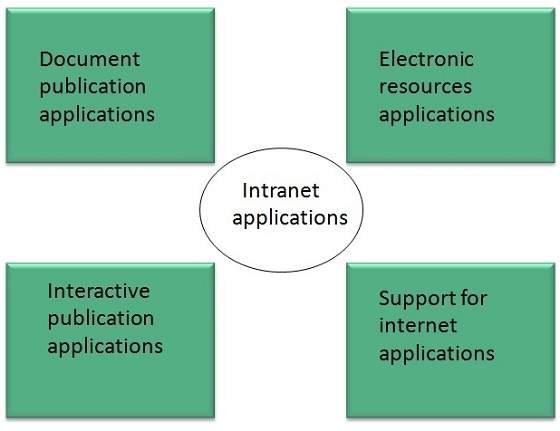
Intranet applications are same as that of Internet applications. Intranet applications are also accessed through a web browser. The only difference is that, Intranet applications reside on local server while Internet applications reside on remote server. Here, we’ve discussed some of these applications:

(i) Document publication applications

Document publication applications allow publishing documents such as manuals, software guide, employee profits etc without use of paper.

(ii) Electronic resources applications

It offers electronic resources such as software applications, templates and tools, to be shared across the network.

(iii) Interactive Communication applications

Like on internet, we have e-mail and chat like applications for Intranet, hence offering an interactive communication among employees.

(iv) Support for Internet Applications

Intranet offers an environment to deploy and test applications before placing them on Internet.

Labelling, Concepts, Meaning, Objectives, Components, Types, Importance and Challenges

Labelling refers to the process of attaching or printing information on a product’s packaging to provide essential details to consumers. It plays a crucial role in identifying the product, providing instructions, highlighting key features, and promoting the brand. Labels can include the product name, ingredients, usage instructions, warnings, expiration dates, and more. They serve both legal and marketing functions, helping businesses comply with regulations while informing and attracting customers. Effective labeling enhances brand recognition, promotes transparency, and aids consumers in making informed purchasing decisions.

Meaning of Labelling

Labelling refers to the practice of attaching or displaying a tag, mark, or written information on a product or its package to identify it and provide necessary details to consumers. A label conveys important information such as the brand name, contents, price, usage instructions, manufacturing details, and warnings. It helps consumers make informed purchase decisions and supports product identification, promotion, and legal compliance.

Objectives of Labelling

  • Product Identification

The primary objective of labelling is to identify the product. A label clearly displays the product’s name, brand, and sometimes the manufacturer. This helps consumers easily recognize the product on store shelves and differentiate it from competing products. For example, Coca-Cola and Pepsi labels allow consumers to easily distinguish between two similar products.

  • Providing Information

Labels are essential for providing necessary information about the product. This includes ingredients, weight or volume, manufacturing and expiration dates, usage instructions, and more. Consumers rely on this information to determine whether a product meets their needs, especially for food, pharmaceutical, and cosmetic items.

  • Compliance with Legal Requirements

Many industries are subject to labelling regulations that require companies to provide certain information. For example, food products must include nutritional information, allergens, and ingredient lists, while medicines must display dosage instructions and potential side effects. Labeling ensures that the product complies with local and international regulatory standards.

  • Promotion of the Product

Labels can act as a promotional tool by highlighting the benefits and unique features of the product. Promotional labels may include slogans, taglines, or logos that enhance the product’s appeal. Labels may also advertise offers such as discounts, free samples, or bundled products to attract consumers’ attention.

  • Consumer Education

Labelling helps educate consumers on the proper usage, handling, and storage of products. For example, labels on electronic devices often provide safety instructions, while food packaging might include cooking or preparation tips. This information ensures the safe and effective use of the product.

  • Encouraging Brand Loyalty

Well-designed labels that consistently reflect the brand’s identity help build brand recognition and loyalty. By using the same colors, fonts, logos, and overall design style across all products, companies create a sense of familiarity with consumers, fostering long-term brand loyalty.

  • Facilitating Product Comparison

Labels make it easier for consumers to compare products. Shoppers often look at the ingredients, quality certifications, or price per unit listed on the labels of different brands to make an informed decision. Clear labeling enables consumers to weigh the pros and cons of competing products.

  • Warning and Precaution

Labels serve as a means to convey safety warnings and precautions. This is crucial for products that pose potential risks, such as chemicals, medications, and electrical appliances. Clear warning labels ensure consumer safety by providing guidance on safe usage and storage.

  • Creating a Professional Image

Labelling helps create a professional image for the company and the product. Well-designed, informative labels reflect the quality and credibility of the brand, instilling confidence in consumers that the product is trustworthy and made by a reliable manufacturer.

Components of Labelling

  • Brand Name

Brand name is prominently displayed on the label and helps consumers identify the product as part of a specific brand. This builds brand recognition and loyalty. For instance, popular brands like Nike or Apple prominently display their brand name on all products.

  • Product Name

The label includes the specific name of the product, which distinguishes it from other items produced by the same brand. This makes it easier for consumers to know what they are purchasing. For example, a product like “Coca-Cola Zero Sugar” identifies the specific variant of the Coca-Cola product line.

  • Product Description

A brief description of the product helps the customer understand its use and benefits. This section may include slogans, taglines, or brief explanations of the product’s functionality, such as “hydrating shampoo” or “anti-aging cream.”

  • Ingredients or Contents

For products like food, beverages, cosmetics, and pharmaceuticals, listing the ingredients or contents is mandatory. This component helps consumers make informed choices based on their dietary needs, allergies, or preferences. It also indicates the percentage of key ingredients, such as “100% organic” or “contains 30% fruit juice.”

  • Weight or Volume

Labels typically display the weight or volume of the product. This allows consumers to know how much product they are purchasing and compare it with other similar items. Measurements are usually given in grams, liters, ounces, or other relevant units.

  • Manufacturing and Expiration Dates

Labels often include the manufacturing date, expiration date, or “best before” date. This is especially important for perishable goods like food and medicine, ensuring that consumers use products within a safe time frame.

  • Usage Instructions

For products that require specific handling or application methods, labels provide detailed instructions on how to use or prepare the product. For example, a detergent label may instruct how much product to use for a load of laundry.

  • Safety Warnings

Some products, especially chemicals, medicines, and electrical items, must include safety warnings. These warnings inform consumers about potential hazards, precautions to take, and safe handling or disposal methods, such as “Keep out of reach of children” or “Handle with care.”

  • Barcode or QR Code

Barcode or QR code is often present on labels for tracking, inventory control, and facilitating faster checkout processes. Some QR codes provide additional information or direct consumers to the company’s website for promotions or product details.

Types of Labelling

1. Brand Labelling

Brand labelling displays the brand name, logo, or other distinctive identifiers of a product. It helps consumers recognize the product and associate it with a particular brand’s reputation and quality. This type of labelling is essential for building brand identity and customer loyalty. Examples include Coca-Cola’s logo on its soda cans or Nike’s swoosh on its shoes.

2. Descriptive Labelling

Descriptive labels provide detailed information about the product, including its features, ingredients, usage instructions, and benefits. This type of labeling is designed to inform customers about the product’s characteristics so they can make informed purchasing decisions. For example, a shampoo bottle may include information about its moisturizing properties or key ingredients like aloe vera and keratin.

3. Informative Labelling

Informative labels provide essential details regarding the product’s contents, production process, usage guidelines, storage instructions, and expiration date. This type is especially important for food, pharmaceutical, and chemical products. Labels on food packaging, for example, must include nutritional information, allergy warnings, and ingredient lists.

4. Grade Labelling

Grade labelling indicates the quality or grade of a product. It is commonly used in agricultural products like meats, fruits, and vegetables. For instance, eggs might be labelled as “Grade A” based on their quality, size, and freshness. Grade labels help consumers quickly assess the product’s standard without needing to open or test it.

5. Persuasive Labelling

Persuasive labels focus on promoting the product and influencing consumer behavior. They often highlight the product’s benefits or special offers to encourage purchase. This type of labelling is used in advertising and marketing to attract attention and persuade customers. For example, a label might display phrases like “Now with 20% more!” or “Limited-time offer.”

6. Mandatory Labelling

Mandatory labels are legally required by government regulations to include specific information about the product, such as health warnings, safety instructions, or allergen declarations. These labels ensure consumer safety and compliance with industry standards. Examples include warning labels on tobacco products or allergen information on packaged food.

7. Ecolabeling

Ecolabeling indicates that a product is environmentally friendly or meets certain sustainability standards. These labels help consumers make eco-conscious choices. Examples include the Energy Star label on electronics or the Fair Trade certification on coffee and chocolate products.

8. Private Labelling

Private labelling refers to products that are manufactured by one company but sold under another company’s brand. Retailers often use private labels to sell products under their own brand name, even though they were produced by a third-party manufacturer. For example, a supermarket might sell generic products like cereals or cleaning supplies under its own brand.

9. Promotional Labelling

Promotional labelling highlights temporary offers, discounts, or bundled deals to stimulate immediate purchases. These labels can display phrases such as “Buy One, Get One Free” or “50% Off.” Promotional labels are used to drive sales by creating a sense of urgency.

Importance of Labelling

  • Product Identification

Labelling helps in identifying a product clearly in the market. A label displays the brand name, logo, and product type, enabling consumers to distinguish one product from another. Proper identification reduces confusion at the point of purchase and helps customers quickly locate their preferred brand among many competing products.

  • Provides Essential Product Information

Labelling provides important information such as ingredients, size, weight, price, manufacturing date, expiry date, and usage instructions. This information enables consumers to make informed purchasing decisions. It also ensures transparency and helps customers understand the product’s features, benefits, and limitations before buying.

  • Ensures Legal Compliance

Labelling helps manufacturers comply with legal and statutory requirements. Government regulations mandate labels to include details like maximum retail price, nutritional value, safety warnings, and manufacturer information. Proper labelling protects consumer rights and helps firms avoid legal penalties and unfair trade practices.

  • Promotes Brand Image

Labels play an important role in promoting brand image. Attractive labels with consistent design, colors, and symbols enhance brand recognition and recall. A well-designed label reflects product quality and reliability, creating a positive impression and strengthening the brand’s position in the market.

  • Facilitates Consumer Education

Labelling educates consumers about the correct usage, storage, and handling of products. For products like medicines, chemicals, and food items, labels provide safety instructions and warnings. Consumer education through labelling reduces misuse and enhances customer satisfaction and safety.

  • Supports Sales Promotion

Labels are used as effective promotional tools. Special offers, discounts, free gifts, and contest information are often printed on labels. Promotional labelling attracts customer attention, encourages impulse buying, and supports sales promotion strategies at the point of purchase.

  • Helps in Product Differentiation

Labelling helps differentiate products from competitors offering similar goods. Unique label designs, colors, fonts, and information presentation give products a distinct identity. Differentiation through labelling influences consumer preference and strengthens competitive advantage in the marketplace.

  • Builds Consumer Confidence

Clear and accurate labelling builds consumer confidence and trust. When consumers receive honest and complete information, they feel assured about product quality and safety. Trust developed through proper labelling encourages repeat purchases and long-term customer relationships.

Challenges of Labelling

  • Regulatory Compliance

One of the most significant challenges in labelling is ensuring compliance with local, national, and international regulations. Different regions have varying laws related to ingredient disclosure, safety warnings, and health claims. Companies must constantly stay updated with these regulations to avoid legal penalties or product recalls. For example, food products require specific allergen labelling, which may differ from country to country.

  • Accuracy of Information

Maintaining accuracy in labelling is essential, as incorrect information can lead to consumer mistrust and legal issues. Labels must clearly and correctly convey product contents, usage instructions, and expiration dates. Any misinformation, such as incorrect ingredient lists or misrepresented product benefits, can lead to consumer dissatisfaction and damage to the brand’s reputation.

  • Space Constraints

Labels are often limited in size, especially on smaller products. This constraint makes it difficult to include all necessary information—such as nutritional facts, usage instructions, and legal disclaimers—without making the label cluttered or hard to read. Striking a balance between providing sufficient information and maintaining aesthetic appeal can be challenging.

  • Sustainability

With growing consumer demand for environmentally friendly products, companies face pressure to use sustainable materials for labels. However, eco-friendly labeling options, such as biodegradable or recyclable materials, may be more expensive or less durable, leading to potential compromises in cost-efficiency and product protection.

  • Language Barriers

Global companies often need to label their products in multiple languages to cater to different regions. This can create challenges in terms of space, translation accuracy, and consistency. Incorrect translations can lead to miscommunication or regulatory violations in foreign markets.

  • Counterfeiting and Imitation

Labels are a common target for counterfeiting and imitation. Fake products with copied labels can damage the original brand’s reputation and result in financial losses. Companies must invest in anti-counterfeiting measures, such as holograms or tamper-evident seals, which add complexity and cost to the labelling process.

  • Consumer Perception

Labels not only provide product information but also influence consumer perception. A poorly designed or unclear label can deter potential buyers, even if the product itself is high quality. Companies need to ensure that their labels are visually appealing, easy to understand, and aligned with the brand’s image.

  • Cost Management

Ensuring high-quality labelling that meets regulatory and consumer standards can significantly add to production costs. From designing aesthetically pleasing labels to using advanced materials or anti-counterfeiting technologies, the expenses can quickly accumulate. Balancing these costs while maintaining profitability is a major challenge for businesses.

Key Differences between Branding, Packaging and Labelling

Aspect Branding Packaging Labelling
Meaning Creating a unique identity for a product Enclosing product in a container or wrapper Providing information on product/package
Nature Intangible (name, image, reputation) Tangible (physical covering) Informational
Main Purpose Product identification and differentiation Protection and presentation Consumer information and identification
Focus Brand image and goodwill Safety and convenience Product details and instructions
Components Name, logo, symbol, trademark Box, bottle, wrapper, carton Tag, sticker, printed text
Legal Aspect Protected by trademark law No direct legal protection Mandatory under law
Visibility Seen through name and image Seen physically on the product Seen on package/product
Scope Broad concept Moderate concept Narrow concept
Role in Marketing Builds long-term customer loyalty Supports sales and logistics Assists decision-making
Cost Involved High (promotion & branding) Moderate Low
Customer Impact Creates emotional connection Creates visual attraction Creates awareness and trust
Competitive Advantage Strong and sustainable Limited Limited
Time Orientation Long-term Short to medium-term Short-term
Examples Nike, Apple, Tata Bottle, pouch, carton MRP, ingredients, expiry date
Dependency Independent marketing element Depends on product nature Depends on packaging
error: Content is protected !!