Generic Advertising

Generic advertising is a type of marketing designed to promote a general product rather than a specific brand name. Such campaigns have been produced for everything from fresh milk to gemstones. This type of advertising does not mention particular brand names but attempts to build consumer support for the product in general.

Stimulus Response Theory

The starting point to understand buyer behaviour is the stimulus-response model. Marketing and environmental stimuli enter the buyer’s consciousness. The buyer’s characteristics and decision process lead to certain purchase decisions. The marketer’s task is to understand what happens in the buyer’s consciousness between the arrival of outside stimuli and the buyer’s purchase decision.

A consumer’s buying behaviour is influenced by cultural, social, and personal factors. Cultural factors exert the broadest and deepest influence. Culture is the fundamental determinant of a person’s wants and behaviours. Each culture consists of smaller subcultures that provide more specific identification and socialization for their members. Subcultures include nationality religion, racial groups, and geographic region.

Multicultural marketing grew out of careful marketing research revealing how different ethnic and demographic niches did not always respond favourably to mass-market advertising. Virtually all human societies exhibit social stratification. This stratification sometimes takes the form of caste system where members of different castes are reared for specific roles and they cannot change their caste membership.

More frequently the stratification takes the form of social classes, relatively homogeneous and enduring divisions in society that are hierarchically ordered and whose members share similar values, interests, and behaviour.

Social classes have several characteristics:

(a) Those within a class tend to behave more alike than persons from two different social classes.

(b) Persons are perceived as occupying an inferior or superior position according to their social class.

(c) Social class is indicated by a cluster of variables (occupation, income, etc.) rather than by any single variable.

(d) Individuals can move up or down the social-class ladder.

(e) Social classes show distinct product and brand preferences in many areas.

(f) Social classes differ in media preferences. There are also language differences among them.

In addition to cultural factors, a consumer’s behaviour is influenced by such social factors as reference groups, family, and social roles and statuses A person’s reference group consists of all the groups that have a direct (face-to-face) or indirect influence on his/her attitudes or behaviour. Groups with a direct influence on a person are called membership groups.

Some memberships groups are primary such as family friends, neighbours, and co-workers with whom the person interacts fairly continuously and informally. Some membership groups are secondary groups such as religious and professional groups that tend to be more formal.

People are significantly influenced by their reference groups in at least three ways. One, they expose an individual to new behaviours and lifestyles, influencing attitudes and self-concepts (how one views oneself). Two they create pressures for conformity that may affect actual product and brand choices Three, people are also influenced by groups to which they do not belong aspirational groups are those a person hopes to join, associative groups are those whose values or behaviours an individual rejects. The buyer evaluates these elements together with the monetary cost to form the total customer cost.

Manufacturers of products where group influence is strong must determine how to reach and influence opinion leaders in these reference groups. An opinion leader is a person who through informal, product-related communication, offers advice or information about a specific product or product category Marketers try to reach opinion leaders by identifying demographic and psychographic characteristics associated with opinion leadership, while also identifying the media preferred by the opinion leaders.

Buying roles and buying decisions constitute consumer decision-making behaviour. A customer can adopt various buying roles like initiator, influencer, decider, buyer, preparer, maintainer and disposer. A buyer’s decisions are also influenced by personal characteristics.

These include the buyers age and stage in the life cycle; occupation and economic circumstances; personality and self-concept; and lifestyle and values. Each person has personality characteristics that influence his or her buying behaviour. Kotler has defined brand personality as the specific mix of human traits that may be attributed to a particular brand.

Jennifer Aaker identified the following five traits:

  1. Sincerity (down-to-earth)
  2. Excitement (daring)
  3. Competence (reliable)
  4. Sophistication (upper class)
  5. Ruggedness (outdoorsy).

Consumers choose and use brands that have a brand personality consistent with their own self-concept. Although in some cases the match may be based on the consumer’s ideal self-concept (how he would like to view himself), in certain cases they are influenced by others’ self-concept (how he thinks others see him).

A lifestyle is a person’s pattern of living as expressed in activities, interests and opinions. Lifestyle portrays the whole person’ interacting with his or her environment. Marketers search for relationships between their products and lifestyle groups. Lifestyles are shaped partly by whether consumers are money-constrained or time-constrained. Consumers who lack time are prone to multitasking.

AIDA Model, Components, Benefits and Challenges

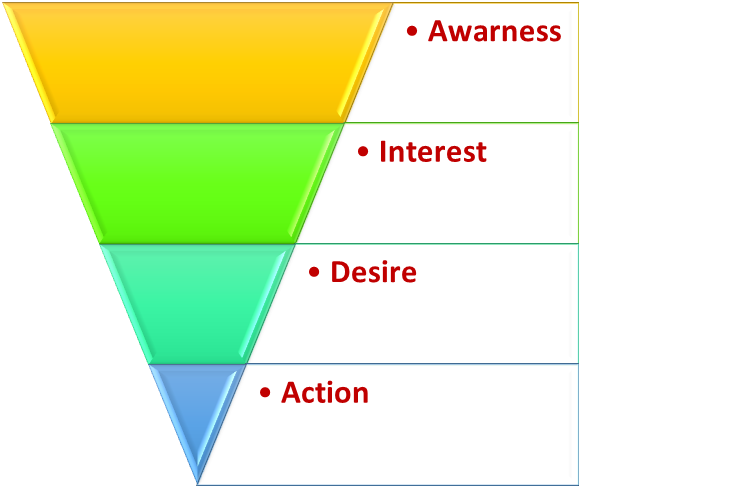
AIDA Model is a classic marketing framework that outlines the cognitive stages a consumer goes through during the buying process. It stands for Attention, Interest, Desire, and Action. Initially, it aims to capture the Attention of the target audience through various marketing and advertising efforts. Once attention is secured, the goal shifts to generating Interest in the product or service by highlighting its benefits and features. This interest is then nurtured into Desire, where consumers develop a keen inclination or wish to acquire the product. Finally, the model seeks to motivate the consumer to take Action, which involves making a purchase decision. The AIDA model is widely used in marketing to guide the creation of effective advertising and promotional strategies.

A – Attention (or Awareness)

The first step involves capturing the potential customer’s attention or making them aware of a product or service. In a world saturated with information and advertising, standing out and grabbing consumer attention is critical.

  • Strategies:

This can be achieved through various means such as eye-catching advertising, social media presence, public relations efforts, or any form of exposure that can make the target audience notice the brand or product.

I – Interest

Once the attention of the potential customer is captured, the next step is to pique their interest. At this stage, the consumer starts to express an interest in the product or service and wants to learn more about it.

  • Strategies:

Marketers can foster this interest by providing engaging and relevant information that resonates with the audience’s needs, desires, or pain points. Content marketing, detailed product descriptions, engaging visuals, and informative videos are effective tools at this stage.

D – Desire

Moving beyond mere interest, the Desire stage is where consumers develop a specific attraction towards the product or service. It’s about creating an emotional connection, making the consumer feel like they want or need the product.

  • Strategies:

This can be achieved by highlighting the benefits and features that set the product apart from competitors, customer testimonials, and showcasing the product’s ability to solve a problem or improve the consumer’s life in some way.

A – Action

The final stage involves persuading the customer to take a specific action, such as making a purchase, signing up for a newsletter, or any other goal of the marketing campaign. It’s where interest and desire convert into a decision.

  • Strategies:

To encourage action, marketers can use clear and compelling calls-to-action (CTAs), offer limited-time promotions or discounts, provide easy access to the purchase process, and ensure a smooth and hassle-free checkout experience.

Benefits of the AIDA Model

  • Structured Approach:

AIDA provides a clear, step-by-step framework that helps marketers plan and execute their campaigns systematically, ensuring that no aspect of the consumer’s journey is overlooked.

  • Enhances Creativity:

By requiring attention to each stage—Attention, Interest, Desire, Action—AIDA encourages marketers to think creatively about how to engage consumers at every step, leading to innovative and effective marketing strategies.

  • Improves Targeting:

Understanding the stages allows marketers to tailor their messages and channels more effectively to reach their audience at the right time with the right content, thus improving the efficiency of marketing efforts.

  • Facilitates Measurement:

Each stage of the AIDA model offers specific outcomes that can be measured, allowing marketers to evaluate the performance of their campaigns and adjust strategies for better results.

  • Customer-Centric:

The model emphasizes understanding and responding to the needs and desires of the consumer, leading to more customer-focused marketing that is more likely to resonate and drive conversions.

Challenges of the AIDA Model

  1. Linear Process Assumption:

AIDA suggests a linear journey, but consumer decision-making is often non-linear, with individuals moving back and forth between stages or skipping stages entirely, especially in the digital age.

  1. Changing Media Landscape:

The proliferation of digital channels and platforms complicates how consumers receive and interact with marketing messages, making it more challenging to capture attention and maintain interest through traditional methods.

  1. Consumer Skepticism:

In an era of information overload, consumers have become more skeptical of advertising and marketing messages. Generating genuine interest and desire requires more sophisticated and authentic engagement strategies.

  1. Measurement Complexity:

While the AIDA model facilitates measurement, accurately assessing emotional engagement and attributing actions to specific stages can be challenging, particularly with multiple touchpoints and channels involved.

  1. Ignoring Post-Purchase Behavior:

AIDA focuses on leading up to the action (purchase), but it does not address post-purchase satisfaction, loyalty, or advocacy, which are crucial for long-term brand success.

Hierarchy effects Model

This is a marketing model designed to demonstrate how a consumer transitions from being unaware of a brand, to forming attitudes and understanding of that brand, to ultimately becoming an end customer.

There are many versions of this hierarchy of effects model found in textbooks, but let’s start with a very basic three-step model of hierarchy of effects.

the concept of hierarchy of effects is quite simple the consumer is initially unaware of the brand over time they gain some awareness of the brand, which may then build into an understanding of the brand (attitudes and beliefs), and then may finally result in some sort of purchase behavior.

It is referred to as a hierarchy because it is a ladder system starting at the bottom with awareness and building towards becoming a loyal customer at the top.

As already mentioned, most marketing textbooks will have a slightly different approach to the steps in the hierarchy of effects model, but they essentially explain the same concept of taking the target market through various stages of initially thought and then onto some form of purchase or referral action.

The Kotler approach to hierarchy of effects

One of the more common textbooks in the marketing field is by Philip Kotler, and his approach to the hierarchy of effects model is as follows:

  • Awareness
  • Knowledge
  • Liking
  • Preference
  • Conviction
  • Purchase

The first stage is simple awareness: Where the consumer has now heard of the brand, but still has very limited understanding of the brand.

The second stage is knowledge: Where the consumer is generally aware of what the brand is/does – e.g. the consumer may know that the brand that it is a type of laundry detergent suitable for tough stains.

This is followed  by the liking stage: The word ‘liking’ should NOT be confused with an emotional attachment in this case, liking refers to the consumer seeing some positive benefits associated with the brand. For example, “it is convenient”, “it seems like a good product”, “it’s a healthy product” and so on.

Preference is the fourth stage of the hierarchy of effect model. This occurs when the consumer sees the overall brand/product as a suitable option for a future purchase. That is, the product enters the consumer’s evoked (consideration) set of brands.

The next stage is conviction. In this stage the consumer’s attitude further forms from preference to a ‘decision’ to purchase the brand in the future. As an example, the consumer may think, “I will try that brand next time”.

The final stop on the hierarchy of effects is purchase. Obviously this is where the consumer buys the brand/product for the first time (which is usually referred to as a ‘trial purchase’.)

Means-end Theory, Visual verbal imaging

Motivation Research is grounded in the means-end theory of decision-making, used by some of the best marketers and communicators in the world for more than 50 years to build powerful and persuasive campaigns. Means-end theory embodies the two key dimensions of persuasion: understanding the target audience’s personal values and understanding the emotional links that tie those values to a specific decision.

Well grounded in academic research and marketing literature, the means-end theory asserts that people make choices about a product, service or issue in a manner that taps into four dimensions: attributes, benefits, emotions and personal values.

Motivations are based on both rational and emotional elements and driven by personal relevance. A decision becomes more personally relevant when people perceive that the decision will help them realize their values. Artemis Strategy Group’s Motivation Research approach enables clients to achieve effective persuasive communication by tying a “rational-emotional” connection to a particular decision or call to action.

The means end theory states that an advertisement must contain a message or means that leads the

consumer to a desired end state. It is a basis of a model called MECCAS = means end conceptualization of Components for Advertising Strategy. The five elements stated in the model are as follows:

  • Products Attributes
  • Consumer Benefits                                                                   
  • Leverage Points
  • Personal Values
  • Executional Framework

Types of personal values

Equality

Inner peace

Self-fulfillment

Wisdom

Excitement Mature love Security Happiness
Freedom Personal accomplishment Self-respect Comfortable Life
Fun, exciting life Pleasure Sense of belonging Social Acceptance

E.g.: Means-End Chain for Milk

Attributes Benefits Personal Values
Low Fat Healthy Self-Respect
Wisdom
Calcium Healthy Bones Comfortable Life
Wisdom
Ingredients Good Taste Pleasure
Happiness
Vitamins Enhanced ability Excitement
Pleasure
Fun

Verbal vs. Visual Imaging

  1. Verbal: The greater emphasis is given on words in some of the advertisements in order to evoke the response from the target market
  2. Visual: The visual imagery is considered to be more effective than the verbal message. Visual imagery is stored both as pictures and words in brain and this dual processing increases recall level. Also the visual imagery is considered to be a universal language for the advertisers as an image will depict the same thing for audience belonging to different geographical and cultural settings. However the meaning of a word maybe different for different people. In this respect, the visual imagery is very effective.

Cognitive Dissonance Theory

Most of the time, cognitive dissonance seems like an internal battle: You believe one thing but act in opposition to that belief, or you believe two contradictory things and are forced to reconcile the inconsistencies within your mind. (1) But, there may be external forces such as advertising, marketing, or public relations responsible for creating the dissonance, too.

After all, the main job of these industries is to influence the views and behaviors of consumers like you. (2) Like it or not, you’ve likely experienced cognitive dissonance as a result of media or marketing influences, you just may not have recognized it.

Advertisers try to paint a picture that your life isn’t complete without their product or their service. Many use cognitive dissonance to point out the inconsistencies between the idealized version of you and the real-life you. You experience dissonance because you want to see yourself in that idealized way, but you don’t necessarily use that product or service.

“It’s a tool that marketers and advertisers use all the time,” says Matt Johnson, PhD, professor and associate dean at Hult International Business School in San Francisco. “A lot of advertisements are set up where they’ll make this explicit claim that you’re only cool or beautiful or worthy (or some other positive attribute) if you own this product or service.”

Think about a shampoo commercial. A beautiful woman’s hair blows in the wind. She looks happy, healthy, and gorgeous. The underlying message is that you too could look happy, healthy, and gorgeous if you use the same shampoo she uses. You experience dissonance because you want to look and feel happy, healthy, and gorgeous, but you don’t necessarily use that shampoo.

You, the consumer, are left with a few options, Johnson explains. You can reject the claim completely (which is what very strong-minded people do, Johnson says). Or you can resolve the dissonance by accepting the message and changing your behavior, meaning you buy the shampoo. Or you can resolve the dissonance by accepting the message and changing your belief. You may start to see yourself as less beautiful and healthy because you don’t use that product, Johnson says.

“You can modify your original belief system or you can resolve the cognitive dissonance by actually buying what they’re selling,” Johnson says. The advertiser, of course, wants you to do the latter. And if you choose the former, your self-esteem will likely take a hit since you must acknowledge you don’t possess these positive qualities.

When Cognitive Dissonance Leads to Good Behavior

But ads and public relations can sway people to practice good behavior, too. Maybe an advertisement is trying to persuade you to buy a product or service that’s in your best interest and could benefit your long-term health, Johnson says. A piece of exercise equipment that’ll keep your heart healthy, for example, or even switching to a toxin-free deodorant could end up being a good influence. Public relations campaigns have rebranded recycling as “cool.”

Using cognitive dissonance in communications can nudge people into positive behavior, too, Johnson says.

If, however, you’re constantly viewing advertisements that make you reconsider your actions or your beliefs, you’ll inevitably feel stressed because you’ll need to continually resolve these internal conflicts, Johnson says. “If you’re constantly being bombarded by advertisements and having to resolve this, then it can lead to chronic stress, which is really bad.” Being chronically stressed for a prolonged time can lead to lowered immunity, heart disease, or changes in your brain.

Ethics in Advertising, Foundation, Importance, Challenges

Ethics in advertising is a critical consideration that goes beyond merely abiding by legal standards. It encompasses the moral principles that guide how companies create, disseminate, and engage with their advertising content. The importance of ethics in advertising stems from its profound impact on society, consumer perceptions, and the trustworthiness of the advertising industry.

Foundation of Ethical Advertising

Ethical advertising is built upon the premise of honesty, fairness, and responsibility. It seeks to avoid misleading representations, offensive content, and exploitative tactics. The essence of ethical advertising lies in promoting products or services without compromising on moral integrity or societal values. This approach benefits not only consumers, by safeguarding their rights and interests, but also advertisers, by building brand credibility and loyalty.

Importance of Ethics in Advertising

The significance of maintaining ethics in advertising is manifold. Firstly, it ensures consumer trust. When advertisers adhere to ethical standards, they foster a relationship of trust with their audience. Consumers are more likely to believe in the advertised message and, by extension, in the brand itself.

Secondly, ethical advertising contributes to the overall well-being of society. It avoids stereotyping, discrimination, and manipulation, thereby promoting more inclusive and positive societal norms. Ethical advertising practices also prevent the spread of harmful or false information that could mislead consumers or harm public health and safety.

Lastly, in the long term, ethical advertising supports the sustainability of the advertising industry. By maintaining high ethical standards, the industry can avoid strict regulatory impositions and safeguard its creative freedom.

Ethical Challenges in Advertising

Despite its importance, the advertising industry faces numerous ethical challenges. One of the primary issues is the blurring of lines between advertising content and editorial or entertainment content, making it difficult for consumers to distinguish between unbiased information and promotional material. This practice, known as “native advertising,” raises concerns about transparency and the potential for deception.

Another challenge is the exploitation of vulnerable groups, such as children or the elderly, who may be more susceptible to persuasive advertising techniques. Advertisements targeting these groups raise ethical questions about manipulation and the responsibility of advertisers to protect these audiences from potential harm.

The digital age introduces further complexities, with concerns over privacy, data protection, and the role of algorithms in shaping consumer behavior and exposure to advertising. The personalized nature of digital advertising, while effective, raises ethical questions about surveillance, consent, and the potential for invasive marketing practices.

Implementing Ethical Practices in Advertising

Implementing ethical practices in advertising requires a concerted effort from all stakeholders, including advertisers, agencies, media platforms, and regulatory bodies. Establishing clear ethical guidelines and standards is a crucial first step. These guidelines should address issues such as honesty, transparency, respect for privacy, and the avoidance of harmful content.

Education and training for professionals in the advertising industry are also essential. By raising awareness of ethical issues and providing tools for ethical decision-making, the industry can foster a culture of integrity and responsibility.

Self-regulation plays a key role in upholding ethical standards. Industry-led initiatives, such as advertising standards authorities and codes of conduct, can provide frameworks for ethical advertising, offering mechanisms for review, enforcement, and redress.

Transparency with consumers is another vital aspect of ethical advertising. This includes clear disclosure of sponsored content, honest representation of products and services, and respect for consumer preferences, particularly in terms of data privacy and consent.

Ethical Advertising and Social Responsibility

Beyond individual advertisements, ethical considerations extend to the broader role of advertising in society. Ethical advertising practices can contribute to social good, using the power of persuasive communication to raise awareness about social issues, promote positive behaviors, and support community initiatives.

Corporate social responsibility (CSR) campaigns, for example, can highlight a company’s commitment to ethical practices, environmental sustainability, and social welfare. These campaigns, while promotional, can also drive social change and contribute to the public good when executed with sincerity and integrity.

Puffery, Shock Ads, Subliminal Advertising, Weasel Claim

Puffery

In everyday language, puffery refers to exaggerated or false praise. In law, puffery is a promotional statement or claim that expresses subjective rather than objective views, which no “reasonable person” would take literally. Puffery serves to “puff up” an exaggerated image of what is being described and is especially featured in testimonials.

Puff piece is an idiom for a journalistic form of puffery: an article or story of exaggerating praise that often ignores or downplays opposing viewpoints or evidence to the contrary.

Puff piece

Puff piece is an idiom for a journalistic form of puffery: an article or story of exaggerating praise that often ignores or downplays opposing viewpoints or evidence to the contrary. In some cases, reviews of films, albums, or products (e.g., a new car or television set) may be considered to be “puff pieces”, due to the actual or perceived bias of the reviewer: a review of a product, film, or event that is written by a sympathetic reviewer or by an individual who has a connection to the product or event in question, either in terms of an employment relationship or other links. For example, a major media conglomerate that owns both print media and record companies may instruct an employee in one of its newspapers to do a review of an album which is being released by the conglomerate’s record company.

The financial relationship between the product company or entertainment firm and the reviewer is not always as obvious as a cash payment. In some cases, a small group of reviewers may be given an exclusive invitation to test-drive a new sports car or see a new film before it is released. This privileged access to the product may lead the reviewer to do a biased review, either out of a sense of obligation, or because of a concern that the failure to produce a “puff piece” will lead to the loss of future preview privileges. In some cases, the potential for bias in invitation-only preview sessions is substantially heightened when the reviewers are flown in to the location for the review, given fancy hotel rooms, and provided catered food and drinks during the actual review. The most egregious cases of this situation occur when, instead of inviting the reviewers to the company headquarters or another logical venue, the company gives all-expense paid tickets to Hawaii or Mexico, and holds the preview screening of the film or the product launch there.

A particular use for puff pieces may be in health journalism. Providers of alternative medicine may be unable to make claims due to laws against false advertising, but they may be able to place stories and testimonials with journalists who can write as they wish under press freedom laws. Recruiting health journalists to write puff pieces may be a lucrative way to build the reputation of a product that has no effect.

Shock Ads

Shock advertising or Shockvertising is a type of advertising that “deliberately, rather than inadvertently, startles and offends its audience by violating norms for social values and personal ideals”. It is the employment in advertising or public relations of “graphic imagery and blunt slogans to highlight” a public policy issue, goods, or services. Shock advertising is designed principally to break through the advertising “clutter” to capture attention and create buzz, and also to attract an audience to a certain brand or bring awareness to a certain public service issue, health issue, or cause (e.g., urging drivers to use their seatbelts, promoting STD prevention, bringing awareness of racism and other injustices, or discouraging smoking among teens).

This form of advertising is often controversial, disturbing, explicit and crass, and may entail bold and provocative political messages that challenge the public’s conventional understanding of the social order. This form of advertising may not only offend but can also frighten as well, using scare tactics and elements of fear to sell a product or deliver a public service message, making a “high impact.” In the advertising business, this combination of frightening, gory and/or offensive advertising material is known as “shockvertising” and is often considered to have been pioneered by Benetton, the Italian clothing retailers which created the line United Colors of Benetton, and its advertisements in the late 1980s.

Shock advertisements can be shocking and offensive for a variety of reasons, and violation of social, religious, and political norms can occur in many different ways. They can include a disregard for tradition, law or practice (e.g., lewd or tasteless sexual references or obscenity), defiance of the social or moral code (e.g., vulgarity, brutality, nudity, feces, or profanity) or the display of images or words that are horrifying, terrifying, or repulsive (e.g., gruesome or revolting scenes, or violence). Some advertisements may be considered shocking, controversial or offensive not because of the way that the advertisements communicate their messages but because the products themselves are “unmentionables” not to be openly presented or discussed in the public sphere. Examples of these “unmentionables” may include cigarettes, feminine hygiene products, or contraceptives. However, there are several products, services or messages that could be deemed shocking or offensive to the public. For example, advertisements for weight loss programs, sexual or gender related products, clinics that provide AIDS and STD testing, funeral services, groups that advocate for less gun control, casinos which naturally support and promote gambling could all be considered controversial and offensive advertising because of the products or messages that the advertisements are selling. Shocking advertising content may also entail improper or indecent language, like French Connection’s “fcuk” campaign.

Advertisers, psychiatrists, and social scientists have long debated the effectiveness of shock advertising. Some scientists argue that shocking ads of course evoke stronger feelings among the consumers. One finding suggests “shocking content in an advertisement significantly increases attention, benefits memory, and positively influences behavior.” The same study also shows that consumers are more likely to remember shocking advertising content over advertising content that is not shocking. Shock advertising could also refer to the usage of emotional appeals such as humor, sex or fear. Humor has for a long time been the most frequently used communication tool within advertising, and according to branch active people it is considered to be the most effective.

The effects of shock advertising could also be explained by the theory of selective perception. Selective perception is the process by which individual selects, organizes and evaluates stimuli from the external environment to provide meaningful experiences for him- or herself. This means that people focus in certain features of their environment to the exclusion of others. The consumer unconsciously chooses which information to notice and this kind of selection is dependent of different perceptual filters which are based on the consumer’s earlier experiences. One example of this kind of filter is perceptual defense. Perceptual defense is the tendency for people to protect themselves against ideas, objects or situations that are threatening. This means that if a consumer finds a certain kind of advertising content threatening or disturbing, this message will be filtered out. An example of this a heavy smoker who could be filtering out a picture of cancer sick lung since the content could be perceived as disturbing and uncomfortable.

Subliminal Advertising

A subliminal message is a signal or message designed to pass below (sub) the normal limits of perception. For example it might be inaudible to the conscious mind (but audible to the unconscious or deeper mind) or might be an image transmitted briefly and unperceived consciously and yet perceived unconsciously. This definition assumes a division between conscious and unconscious which may be misleading; it may be more true to suggest that the subliminal message (sound or image) is perceived by deeper parts of what is a single integrated mind.

In the everyday world, it has often been suggested that subliminal techniques are used in advertising and for propaganda purposes (e.g. party political broadcasts).

The term subliminal message was popularized in a 1957 book entitled The Hidden Persuaders by Vance Packard. This book detailed a study of movie theaters that supposedly used subliminal commands to increase the sales of popcorn and Coca-Cola at their concession stands. However, the study was fabricated, as the author of the study James Vicary later admitted.

Subliminal perception or cognition is a subset of unconscious cognition where the forms of unconscious cognition also include attending to one signal in a noisy environment while unconsciously keeping track of other signals (e.g one voice out of many in a crowded room) and tasks done automatically (e.g. driving a car).

In all such cases there has been research into how much of the unattended or unconscious signal or message is perceived (unconsciously), i.e is the whole message sensed and fully digested or perhaps only its main and simpler features? There are at least two schools of thought about this. One of them argues that only the simpler features of unconscious signals are perceived; however please note that the majority of the research done has tended to test only for simpler features of cognition (rather than testing for complete comprehension). The second school of thought argues that the unconscious cognition is comprehensive and that much more is perceived than can be verbalized.

Various types of studies of subliminal perception have been conducted. For example, of whether anaesthetized patients are completely unaware whilst apparently completely asleep/unconscious. Although the patients themselves report no knowledge of events whilst they are anaesthetized, more indirect methods of examining what they can recall confirm that information is perceived without any conscious awareness.

Similarly, studies of patients with neurological damage show that patients who claim e.g. not to be able to see certain stimuli nevertheless respond on the basis of information received from those stimuli. For example, in the case of the syndrome known as blindsight patients can be unaware of receiving information within an area of their visual field that they believe to be damaged.

Subliminal Messages in Advertising

A form of subliminal messaging commonly believed to exist involves the insertion of “hidden” messages into movies and TV programs. The concept of “moving pictures” relies on persistence of vision to create the illusion of movement in a series of images projected at 23 to 30 frames per second; the popular theory of subliminal messages usually suggests that subliminal commands can be inserted into this sequence at the rate of perhaps 1 frame in 25 (or roughly 1 frame per second). The hidden command in a single frame will flash across the screen so quickly that it is not consciously perceived, but the command will supposedly appeal to the subconscious mind of the viewer, and thus have some measurable effect in terms of behavior.

As to the question of whether subliminal messages are widely used to influence groups of people e.g. audiences, there is no evidence to suggest that any serious or sustained attempt has been made to use the technology on a mass audience. The widely-reported reports that arose in 1957 to the effect that customers in a movie theatre in New Jersey had been induced by subliminal messages to consume more popcorn and more Coca-Cola were almost certainly false. The current consensus among marketing professionals is that subliminal advertising is counter-productive. To some this is because they believe it to be ineffective, but to most it is because they realise it would be a public relations disaster if its use was discovered. Many have misgivings about using it in marketing campaigns due to ethical considerations.

Weasel Claim

A weasel word, or anonymous authority, is an informal term for words and phrases aimed at creating an impression that something specific and meaningful has been said, when in fact only a vague or ambiguous claim has been communicated. Examples include the phrases “some people say”, “most people think”, and “researchers believe”. Using weasel words may allow one to later deny any specific meaning if the statement is challenged, because the statement was never specific in the first place. Weasel words can be a form of tergiversation, and may be used in advertising and political statements to mislead or disguise a biased view.

Weasel words can soften or under-state a biased or otherwise controversial statement. An example of this is using terms like “somewhat” or “in most respects”, which make a sentence more ambiguous than it would be without them.

Forms

A 2009 study of Wikipedia found that most weasel words in it could be divided into three main categories:

  1. Numerically vague expressions (for example, “some people”, “experts”, “many”, “evidence suggests”)
  2. Use of the passive voice to avoid specifying an authority (for example, “it is said”)
  3. Adverbs that weaken (for example, “often”, “probably”)

Other forms of weasel words may include these:

  • Non sequitur statements
  • Use of vague or ambiguous euphemisms
  • Use of grammatical devices such as qualifiers and the subjunctive mood
  • Glittering or vague generalizations

Surrogate Advertising, Comparative Advertising

Surrogate Advertising

The term “surrogate advertising” refers to duplicating the brand image of one product extensively to promote another product of the same brand. Surrogate products like playing cards, soda water bottles apple juices etc. often being used to promote liquor and tobacco related brands normally do not actually exist or even if they exist, they are manufactured as “limited edition” i.e. in very small numbers.

The concept of surrogate advertising is believed to have started from UK, where the housewives protested “Siql advertisements as they felt that those ads were weaning their husbands away from them- in order to combat this resistance, the liquor manufacturers started advertising harmless products like fruit juices, sodas under the same brand name as that of popular liquors.

Currently tobacco and liquor ads are banned from TV and radio in India. The print media allows only tobacco ads with statutory warning of “cigarette smoking is injurious to health.” The Government of India amended Cable TV Act in order to curb advertisements, which promoted directly or indirectly the promotion, sales or consumption of cigarettes, other tobacco products like gutkha, pan masala, liquors like wine, alcohol, any other intoxicants, breast milk substitution products like feeding bottle or infant food.

This led to increase in surrogate advertisements of liquor and various tobacco-related products. Surrogate advertisements mostly pay the role of reinforcing brand recall rather than inducing consumption and help major tobacco and liquor brands to remain alive in the minds of the consumers.

Sand Piper Malt Beverage:

ASCI also upheld a suo motu complaint against United Breweries for an advertisement for Sand Piper Malt Beverage created by Triton Communications. This was obviously surrogate advertising for a liquor brand.

Tobacco Products:

When the Advertising Standards Council of India (ASCI) withdrew its code to regulate tobacco products, consumer activists were concerned over the impact of the move.

The issue has taken a new twist with the Central Government deciding to ban tobacco companies from sponsoring sports and cultural events. Similar curbs have been enforced on advertising of liquor products Apart from a ban on smoking in public places, sale of tobacco products to minors will be prohibited, once the proposed bill is passed.

However, experts believe that the ban won’t work, firstly – because it is not clear how surrogate advertising will be checked and secondly because the agencies, which can implement these measures, including NGOs, lack enough teeth.

The ASCI, even while admitting the sensitivity of the issue, feels the government has overreacted. A couple of years ago, when the strong tobacco lobby opposed the Council guidelines, it had hastily withdrawn them inviting activists’ ire. They felt that the ASCI virtually surrendered to the whims of the industry by abdicating its responsibility and allowing manufacturers to resort to unfair advertisement techniques, sans any checks. According to them, India has failed to initiate a comprehensive tobacco- control strategy in keeping with the World Health Organisation (WHO) guidelines.

Tobacco Institute of India (TII), the representative body of tobacco farmers, exporters, cigarette manufactures and ancillary industries, contended that it would stick to its own code. A watchdog body, comprising experts from all fields, was to overview its observance. Curiously, the code bore resemblance to the ASCI code. The industry showed scant respect for it and it was violated often, an ASCI member reveals. Contrary to the provisions, a cigarette manufacturer featured a leading film star in its campaign with a slogan ‘Red & White smokers are one of its kind’.

Consumer activist, N G Wagle, says, “The ASCI works in tandem with the media to build pressure on advertisers to follow fair practices. If the tobacco industry was really serious about following any norms, they would have let the earlier code continue. Why was a new code needed, when ASCI had one?” he asks.

Opinions are divided regarding the Government’s latest ban move. The fine of mere Rs.100 is just not enough, some say, whereas advertising agencies have taken a stance that it’s unfair to ban advertising, since the product itself is not banned. “If the product will continue to be produced and marketed, there is no point in restricting its advertising,” they generally feel.

Also, as stated above, there are no means to check surrogate advertising. Tobacco major, ITC has come up with Gold Flake ‘expression greeting cards’. Wills has registered its sportswear as a new business entity.

TII states that tobacco, being a legal product, freedom of commercial expression should be permitted and that the consumption of tobacco products should be an informed personal choice for adults only.

“Tobacco Product” means leaf tobacco or any product containing tobacco which is sold in India and includes bidis, chewing tobacco, cigarettes, cigars, cheroots, chutta, gutka, khaini, snuff, pan- masala with tobacco, zarda, kiwam, gadaku, hand rolled tobacco, hookah tobacco, so on and so forth.

There is a growing public concern regarding increasing consumption of tobacco, its health implications and the need to prevent access to minors and non-users.

Some Quick facts:

Cigarettes cause about 6.35 lakh deaths in India every year.

About 33 per cent of cancer cases are attributed to tobacco consumption.

However, cigarettes alone account for roughly 10% of excise collections.

Tobacco trade is a major contributor to the national exchequer.

So obviously, there is clear conflict between health and economic interests of the country.

Before the ban on advertising and on smoking in .public places? various approaches have been adopted to address these concerns, ranging from legislation of varying degrees of severity to voluntary codes and self-regulation, but they have seldom worked. Activist point out that the recent advertisement- monitoring panel formed to implement the ban on transmission of tobacco advertisements on TV channels, including private ones, was ineffective in fulfilling the task.

As stated above, TII wants to stick to its self-voluntary code and going by that, keeping a tab on tobacco advertising is not going to be easy.

Comparative Advertising

Comparative advertising or advertising war is an advertisement in which a particular product, or service, specifically mentions a competitor by name for the express purpose of showing why the competitor is inferior to the product naming it. Also referred to as “knocking copy”, it is loosely defined as advertising where “the advertised brand is explicitly compared with one or more competing brands and the comparison is obvious to the audience.”

This should not be confused with parody advertisements, where a fictional product is being advertised for the purpose of poking fun at the particular advertisement, nor should it be confused with the use of a coined brand name for the purpose of comparing the product without actually naming an actual competitor. (“Wikipedia tastes better and is less filling than the Encyclopedia Galactica.”)

In the United States, the Federal Trade Commission (FTC) defined comparative advertising as “advertisement that compares alternative brands on objectively measurable attributes or price, and identifies the alternative brand by name, illustration or other distinctive information.” This definition was used in the case Gillette Australia Pty Ltd v Energizer Australia Pty Ltd. Similarly, the Law Council of Australia recently suggested that comparative advertising refers to “advertising which include reference to a competitor’s trademark in a way which does not impute proprietorship in the mark to the advertiser.”

Comparative advertisements could be either indirectly or directly comparative, positive or negative, and seeks “to associate or differentiate the two competing brands”. Different countries apply differing views regarding the laws on comparative advertising.

Comparative advertising has been increasingly implemented through the years, and the types of comparative advertising range from comparing a single attribute dimension, comparing an attribute unique to the target and absent in the referent and comparisons involving attributes unique to both brands. The contributing factors to the effectiveness of comparative advertising include believability, which refers to the extent a consumer can rely on the information provided in comparative advertisements, the level of involvement, and the convenience in evaluation, provided by spoon feeding the consumer with information that does not require extra effort in recall.

Comparative advertising is generally coupled with negativity, as evidenced by early industry condemnation. Stating reasons such as participation in comparative advertising damaged the honour and credibility of advertising. Studies have suggested that negative information can be stored more effectively, thus generating the impact that any advertisement is purposed for, and more importantly, strong recall. On the contrary, such negativity can either be transferred directly to the brand and the consumer’s impression of the brand, various studies through the years have proven that comparative advertising has been responded to negatively.

Comparative Advertising code of ethics

Comparative advertising is a widely used form of commercial advertising in many countries. This type of advertising intends to influence consumer behavior by comparing the features of the advertiser’s product with that of the competitor’s product.

Comparative claims are variable in nature. They may explicitly name a competitor or implicitly refer to him. They may emphasize the similarities (positive comparisons) or the differences (negative comparisons) between the products. They may state that the advertised product is “better than” (superiority claims) or “as good as” the competitor’s (equivalence or parity claims). The aim behind this concept is to allow honest (i.e. not misleading) comparison of the factors of one trader’s products with those of another; such a comparison will inevitably involve the use of the trademarks associated with the products in question. In the absence of provisions controlling this, such use could constitute trade mark infringement.

No Indian statute defines the term, but the UK Regulation defines comparative advertising as meaning any advertisement which “explicitly or by implication, identifies a competitor or goods or services offered by a competitor”.

In this backdrop, the Delhi High Court summarized the law on the subject in the case of Reckitt & Colman v. Kiwi TTK, as follows:

  1. A tradesman is entitled to declare his goods to be the best in the world, even though the declaration is untrue.
    He can also say that his goods are better than his competitor’s, even though such statement is untrue.
  2. For the purpose of saying that his goods are the best in the world or his goods are better than his competitor’s he can even compare the advantages of his goods over the goods of others.
  3. He, however, cannot while saying his goods are better than his competitors’, say that his competitors’ goods are bad. If he says so, he really slanders the goods of his competitors. In other words he defames his competitors and their goods, which is not permissible.
    5. If there is no defamation to the goods or to the manufacturer of such goods no action lies, but if there is such defamation an action lies and if an action lies for recovery of damages for defamation, then the Court is also competent to grant an order of injunction restraining repetition of such defamation.

Statutory Provisions In India:

The Monopolies and Restrictive Trade Practices, 1984 (herein after “MRTP Act”) and the Trade Marks Act, 1999 work in tandem to provide the basic structure that govern Comparative Advertising. The Trademarks Act, 1999 has incorporated the provisions related to this concept in Ss. 29(8) and 30(1). According to the statute Comparative Advertising is permissible, with certain limitations as to unfair trade practices.

The Trade Marks Act is an attempt to balance the conflicting interests of the rights of registered trade mark owners and a compelling consumer interest in informative advertising. Section 29(8) of the Trade Marks Act provides that a registered trademark is infringed by any advertising of that trade mark if such advertising takes unfair advantage and is contrary to honest practices in industrial or commercial matters, is detrimental to its distinctive character, or is against the reputation of the trade mark.

Section 30(1) has, however, provided an escape route for what would otherwise have been an infringing act under Section 29, if the impugned use of the mark is in accordance with “honest practices” in industrial or commercial matters.

“Honest practices”: mandatory for CA:

Comparative advertising aims to objectively and truthfully inform the consumer, and promotes market transparency, keeping down prices and improving products by stimulating competition. Therefore, it is important to protect the interests of such competitors by not allowing comparative advertising to cause confusion, mislead, or discredit a competitor.

There is no definition or explanation as to what constitutes “honest practices”. There is a large and clear shared core concept of what constitutes honest conduct in trade, which may be applied by the courts without great difficulty and without any excessive danger of greatly diverging interpretations.

In BMW v. Deenik, the question was whether a trader, not being an authorized dealer of BMW motor cars, was entitled to use the name BMW being a registered trademark of the BMW manufacturing company, in the context of holding itself out as having specialized expertise in servicing BMW cars. The Court held that the proprietor of the trademark is not entitled to prohibit a third party from using the mark for the purpose of informing the public that he carries out the maintenance and repair of the goods covered by that trademark, unless the mark is used in a way that may create the impression that there is a commercial connection between the other undertaking and the trademark proprietor, and in particular that the reseller’s business is affiliated to the trademark proprietor’s distribution network or that there is a special relationship between the two undertakings.

Comparative Advertising is limited by Unfair Trade practices:

Comparative advertising is also subject to certain other limitations contained in the definition of ‘unfair trade practices’. In 1984 the MRTP Act was amended to add a chapter on unfair trade practices. Section 36A of the MRTP Act lists several actions to be an ‘unfair trade practice’ as any unfair method or unfair or deceptive practice which gives false or misleading facts disparaging the goods, services or trade of another person.

The object of this section is to bring honesty and truth in the relationship between the provider of the services and the consumer, and when a problem, arises as to whether a particular act can be condemned as an unfair trade practice or not, the key to solution would be to examine whether it contains a false statement and is misleading and further what is the effect of such representation on the common man.

From the above context it may be gathered that false representation would mean an incorrect or untrue statement or expression which is designed to influence and induce a consumer to buy or engage, or use such goods or services and make such advertisements available to the members of the public.

Concept of Disparagement:

Section 36 A of the MRTP Act purports that unfair trade practices are those which lead to disparagement of the goods, services or trade of another person. The term “disparagement” has not been defined in any statute, but judicial pronouncements have adopted its dictionary meaning. As per The New International Webster’s’ Comprehensive Dictionary, disparagement means, to speak of slightingly, undervalue, to bring discredit or dishonor upon, the act of depreciating, derogation, a condition of low estimation or valuation, a reproach, disgrace, an unjust classing or comparison with that which is of less worth, and degradation. The Concise Oxford Dictionary defines disparage as under, to bring dis-crediting or reproach upon; dishonour; lower in esteem; speak on or treat slightingly or vilify; undervalue, and deprecate.

In the electronic media the disparaging message is conveyed to the viewer by repeatedly showing the commercial everyday thereby ensuring that the viewers get clear message as the said commercial leaves an indelible impression in their mind. But, it must be noted that a mere opinion, which is not a statement of fact, would not attract Clause (x) of Section 36A (1).

In the New Pepsodent v Colgate case , HLL advertised its toothpaste ‘New Pepsodent’ as “102% better than the leading toothpaste”. In the television advertisement, samples of saliva are taken from two boys, one who has brushed with the new Pepsodent while another has brushed with “a leading toothpaste”. The saliva of “the leading toothpaste” shows larger number of germs. While the sample was being taken from the boys, they were asked the name of the toothpaste with which they had brushed in the morning. One boy said Pepsodent, the response of the second boy was muted, however, lip movement of the boy would indicate that he was saying “Colgate”. Also, when the muting was done, there was a sound of the jingle used in the Colgate advertisement. According to the Commission, the word toothpaste had become synonymous with Colgate over the years and a reference to “leading brand” was to Colgate. Thus it became a case of Comparative Advertisement which led to the disparagement of Colgate’s products.

error: Content is protected !!