Organisational Development Meaning, Features, Evolution, Components, Objectives, Benefit, Process

Organizational Development (OD) is a systematic approach to improving an organization’s effectiveness by enhancing its ability to adapt to changes, solve problems, and achieve its goals. OD involves planned interventions in the organization’s processes, culture, structure, and people, aiming for continuous improvement. It seeks to foster a healthy and productive work environment that can support the organization’s growth and ensure the alignment of its objectives with employee well-being and organizational success.

OD focuses on improving organizational effectiveness through interventions that involve employees at all levels. The core of OD lies in enhancing the organization’s capacity for continuous learning, collaboration, and adaptation to changes in the external and internal environment.

Features of Organizational Development:

  • Systemic Approach:

OD is a holistic, integrated approach to improving organizational processes. It considers the organization as a whole, recognizing that changes in one area can affect others. The aim is to create harmony among various departments, processes, and individuals for the overall success of the organization.

  • Focus on People:

The central theme of OD is the development of people. It aims to improve interpersonal relationships, leadership practices, and communication processes, enabling individuals to work together more effectively and align with organizational goals.

  • Planned Change:

OD interventions are deliberately designed and implemented to bring about changes. These changes are strategic and are aimed at enhancing the overall performance of the organization.

  • Participation and Involvement:

OD encourages active involvement of employees at all levels in the change process. Employees are seen as critical stakeholders who can contribute to problem-solving, decision-making, and implementing new strategies.

  • Collaboration and Teamwork:

OD promotes collaboration among employees, teams, and departments, recognizing the importance of teamwork in achieving organizational success. It fosters a collaborative environment that drives collective problem-solving and innovation.

  • Focus on Organizational Culture:

OD emphasizes aligning organizational culture with business goals. It aims to create a culture that values learning, trust, innovation, and adaptability, supporting both employee and organizational growth.

  • Continuous Improvement:

OD is not a one-time intervention but an ongoing process of improvement. Organizations engage in continuous feedback, assessment, and learning to ensure they stay adaptable and relevant in a dynamic environment.

Evolution of Organizational Development:

  • The Early Days (1940s-1950s):

OD emerged in the 1940s, largely influenced by the human relations movement and systems theory. The focus during this period was on improving human behavior in organizations, emphasizing employee satisfaction, motivation, and interpersonal relationships.

  • The 1960s-1970s – Focus on Action Research:

In the 1960s, OD became more structured with the introduction of Action Research as a key methodology. Action research involves collecting data on an organization’s current state, analyzing it, and then implementing changes to address the issues identified. During this phase, OD interventions became more systematic and involved higher participation from employees.

  • The 1980s-1990s – Organizational Culture and Empowerment:

In the 1980s and 1990s, OD practitioners began focusing more on organizational culture, leadership development, and creating systems that empowered employees. The emphasis was on creating adaptive organizations capable of thriving in changing business environments.

  • The 21st Century – Globalization and Technology:

The role of OD has expanded in recent decades to include the effects of globalization, technology, and the digital transformation. Organizations are now focusing on creating a culture of innovation, agility, and resilience to cope with fast-paced changes in the global market.

Components of Organizational Development:

  • Organizational Culture:

The set of shared beliefs, values, and norms that define how things are done in an organization. A healthy culture supports collaboration, accountability, and a commitment to achieving organizational goals.

  • Leadership Development:

Leadership is critical in OD. Developing leaders who can drive change, inspire teams, and effectively communicate organizational goals is essential. Leadership development ensures the organization has capable leaders who can guide others through transformation.

  • Team Development:

OD involves building strong, high-performing teams. This includes promoting collaboration, improving team dynamics, and ensuring teams are aligned with organizational objectives.

  • Communication Processes:

Effective communication is essential for the success of OD. Transparent and open communication allows for feedback, encourages participation, and ensures that everyone in the organization is aligned with the overall goals.

  • Training and Development:

Employees need the right skills and knowledge to perform their roles effectively. OD emphasizes continuous learning and professional development to ensure that employees are capable of adapting to changes and contributing to organizational success.

  • Change Management:

OD includes structured approaches to manage organizational change, ensuring that transitions are smooth and that employees embrace the change process. This involves using strategies to minimize resistance and facilitate the adoption of new behaviors, processes, or technologies.

  • Feedback and Evaluation:

OD emphasizes the importance of continuous feedback and evaluation of processes. Regular assessments of organizational performance and employee satisfaction help identify areas of improvement and measure the success of interventions.

Objectives of Organizational Development

  • Improving Organizational Effectiveness:

OD aims to enhance the performance and efficiency of the organization, ensuring that it meets its goals and objectives. It focuses on improving processes, decision-making, and overall productivity.

  • Increasing Employee Satisfaction and Engagement:

A key goal of OD is to create an environment where employees feel valued, engaged, and motivated. Improving job satisfaction and fostering a sense of belonging leads to higher retention and productivity.

  • Facilitating Change and Adaptation:

OD helps organizations respond to internal and external changes. By building a culture of adaptability, OD ensures that organizations can respond proactively to market shifts, technological advancements, and other challenges.

  • Enhancing Leadership and Management:

OD aims to develop strong leaders who can guide the organization through change, inspire employees, and align teams with organizational goals. Effective leadership is seen as essential for long-term success.

  • Fostering Innovation and Creativity:

OD encourages a culture of innovation by creating an environment where employees feel empowered to suggest new ideas, experiment with different approaches, and collaborate with others.

  • Building Teamwork and Collaboration:

OD focuses on improving teamwork and collaboration across departments, ensuring that all employees work together toward common goals. Team development is a key objective, as collaboration drives organizational success.

Benefits of Organizational Development:

  • Improved Organizational Performance:

OD leads to better alignment between organizational goals and individual performance, driving efficiency and productivity. Organizations that engage in OD interventions typically see improvements in their operations and bottom line.

  • Employee Motivation and Satisfaction:

By focusing on employee involvement, training, and development, OD boosts morale and job satisfaction. Employees feel more engaged and motivated when they see opportunities for growth and when their contributions are valued.

  • Better Adaptability to Change:

OD helps organizations become more flexible and resilient in the face of change. Employees learn to embrace new processes, technologies, and strategies, making the organization more adaptable to external pressures.

  • Stronger Organizational Culture:

OD interventions lead to a stronger and more positive organizational culture. By improving communication, trust, and collaboration, OD helps create an environment where employees can thrive.

  • Enhanced Leadership Capacity:

Through leadership development programs, OD ensures that the organization has strong leaders capable of guiding teams through change and driving performance. Effective leadership improves decision-making, employee relations, and organizational success.

Process of Organizational Development:

  • Diagnosis:

The first step in OD is diagnosing the current state of the organization. This involves collecting data through surveys, interviews, and assessments to understand the challenges and areas of improvement.

  • Action Planning:

Based on the diagnosis, a comprehensive action plan is developed. The plan outlines the goals, strategies, and interventions needed to address identified issues. It includes timelines, resource allocation, and metrics for success.

  • Intervention:

Interventions are implemented to address specific issues within the organization. These may include leadership development programs, team-building activities, communication training, or changes in organizational structure or processes.

  • Evaluation:

After the intervention, the effectiveness of the changes is evaluated. Feedback from employees, performance metrics, and organizational outcomes are assessed to determine whether the desired results have been achieved.

  • Sustainability:

OD is an ongoing process. The organization must ensure that the changes are sustained and that continuous improvement is incorporated into the culture. This involves regular assessments, feedback loops, and further training as necessary.
Approaches to Stress Management

Individual level planning to manage stress focuses on developing individual behaviour that helps in the elimination of sources of stress. It helps in developing a perspective to view things that enables the person to cope with stress in a more effective manner.

Above all ‘can’ and ‘positive’ attitude matter the most in managing stress. It has been rightly said ‘They can because they think they can’.

Developing a Positive Attitude towards Life:

Adopting a positive attitude towards life goes a long way in dealing with stress. It helps the individual to deal better with the problems of daily life. Positive orientation and attitude towards life bring optimism in responding to the situations and help in overcoming worry and anxiety.

Having a positive attitude helps us in seeing the bright side of life and expecting the best to happen. It is basically a state of mind worth developing as it prepares and enables us to handle, cope with, and manage stress. An individual should learn to enjoy life and recollect happy memories. One should understand that obsession with difficulties or indulging in self-pity does not help.

Physical and Psychological Withdrawal:

Scheduling of activities has another advantage. The worker is able to keep some time away from the workplace to relax and be with oneself. This time may be spent in relaxation, with family and friends, recreational activities, hobbies, travelling, or simply introspecting.

Employees who keep some time aside to physically and psychologically withdraw from work- related responsibilities are able to tackle work with renewed vigour the next day. Annual vacations and weekly offs are ways in which organizations aid the worker in withdrawing from work. Apart from that, many companies organize vacations and picnics exclusively for their staff; not only to reward them for their year round hard work but also to entertain and rejuvenate them.

Developing a Psychological Support System:

It helps in effectively managing stress. Similarly, expanding social support network and finding an emphatic listener to hear and suggest an objective and broader perspective about the problem situation is beneficial. If the issue is work related, then an organizational solution is required to help the individual.

Some of the strategies that the management may consider are scientific and involves improving personnel selection and placement process, training, realistic goal setting, redesigning jobs, increasing employee involvement, improving organizational communication, offering employees vacation allowances, extending sabbaticals, and setting up corporate employee welfare programme departments.

Maintaining Good Physical Health:

Regular physical exercises, such as aerobics, walking, jogging, swimming, cycling, etc., help in dealing with excessive stress. Regular sleep, and timely and healthy eating habits also help the individual to tackle stress better.

Today, yoga is fast gaining popularity not only as a stress reliever, but also as an exercise that can balance the individual’s physical, psychological, and emotional being. These physical exercises help in building heart capacity, lowering the at-rest heart rate, providing mental diversion from work pressure, and offering a means to ‘let off steam’. While exercising, the body releases a hormone known as end morphine that makes one feel good about the self.

Accepting Your Mistakes:

Mistakes are a part of human life and work. In fact an individual’s mistakes are stepping stones to success. An individual can avoid considerable amount of stress by avoiding egoistic behaviour and owning up to errors in actions and decisions, as and when applicable. The world need not be always as the individual expects it to be.

In an organization, employees may clash over technology, skills, methods, and knowledge. Excessive worry or adamant behaviour not only causes stress, but is also viewed by others as immature behaviour. An intelligent employee not only accepts mistakes but is also open and receptive to change.

This attitude is relevant to the top-level management as it is their openness to change that directs the organization towards new avenues. Hopeless cases are rare. One should never lose faith in the possibility of change.

Time Management:

It contributes a great deal in handling stress. The individual should firstly avoid the superhuman urge to do more than what he/she is capable of. They should learn to say ‘no’ to tasks that are beyond their capacities of time and energy.

Scheduling meetings and prioritizing tasks leads to the completion of tasks, both simple and complex, within a given time frame. However, the individual has to be disciplined and needs to stick to the daily, weekly, or monthly agenda so as to achieve the target goals. This not only reduces stress but also ensures that targets are met on time.

Practising Relaxation:

Techniques such as meditation, hypnosis, and bio-feedback reduce tension. As per Forbes and Pekala (1993), the objective of practising relaxation techniques is to feel physically relaxed, somewhat detached from the immediate environment and from body sensation.

Practising transcendental meditation, yoga, ego-void activity an activity without the sense of doership such as voluntary work in an NGO or religious place, having faith in a higher power, reading, and practising spirituality can also reduce stress to considerable levels.

Factors influencing attitude

By attitudes, we mean the beliefs, feelings, and action tendencies of an individual or group of individuals towards objects, ideas, and people.

Factors influencing attitude are beliefs, feelings, and action tendencies of an individual or group of individuals towards objects, ideas, and people.

Quite often persons and objects or ideas become associated in the minds of individuals and as a result, attitudes become multidimensional and complex.

the essential aspect, of the attitude is found in the fact that some characteristic feeling or emotion is experienced and, as we would accordingly expect, some definite tendency to action is associated.

These are the factors influencing attitude:

  • Social Factors.
  • Direct Instruction.
  • Personal Experience.
  • Educational and Religious Institutions.
  • Physical Factors.
  • Economic Status and Occupations.

Social Factors

Every society has the majority of people who prefer to lead a harmonious life. They try to avoid unnecessary friction of conflicts with people.

Naturally, they are inclined to develop positive attitudes towards most of the people and issues.

Our attitudes may facilitate and maintain our relationships with members of positively valued groups. Social roles and social norms can have a strong influence on attitudes.

Social roles relate to how people are expected to behave in a particular role or context. Social norms involve society’s rules for what behaviors are considered appropriate.

Direct Instruction

In general, the individual being conformist or the direction of the attitude of the people it deems important. Sometimes direct instruction can influence attitude formation.

For example, somebody gives information about the usefulness of some fruit.

On the basis of this information, we can develop a positive or negative attitude about that fruit.

Family

The family is the most powerful source for the formation of attitudes. The parents, elder brother or sister provide information about various things.

Attitudes developed by an individual, whether positive or negative are the result of family influence, which is very powerful and difficult to change.

Prejudices

An attitude may involve a prejudice, in which we prejudge an issue without giving unbiased consideration to all the evidence.

Prejudices are preconceived ideas or judgments where one develops some attitudes toward other people, objects, etc.

If we are prejudiced against a person, who is, accused of a crime, we may regard him as guilty regardless of the evidence. We can also be prejudiced in favor of something.

Personal Experience

In order to be the basis of attitudes, personal experiences have left a strong impression.

Therefore, the attitude will be more easily formed when personal experience involves emotional factors.

In situations involving emotions, appreciation will be more in-depth experience and longer trace.

Media

As a means of communication, mass media such as television, radio, has a major influence in shaping people’s opinions and beliefs.

There is new information on something that provides the foundation for the emergence of new cognitive attitudes towards it.

Educational and Religious Institutions

As a system, educational and religious institutions have a strong influence in shaping attitudes because they lay the foundation of understanding and moral concepts within the individual.

Understanding the good and the bad, the dividing line between something that can and cannot do is obtained from the center of the educational and religious institutions.

Physical Factors

Clinical psychologists have generally recognized that physical, health and vitality are important factors in determining adjustment, and frequently it has been found that malnutrition or disease or accidents have interfered so seriously with normal development that serious behavioral disturbances have followed.

Economic Status and Occupations

Our economic and occupational positions also contribute to attitude formation. They determine, in part, our attitudes towards unions and management and our belief that certain laws are ‘good’ or ‘bad’. Our socio-economic background influences our present and future attitudes.

Attitudes reflect more than just positive or negative evaluations: they include other characteristics, such as importance, certainty, accessibility, and associated knowledge.

Attitudes are important in the study of social psychology because they influence the amount of attention and the type of judgment an individual may give to a specific subject.

Role and Qualities of a Good Leader

Leader is an individual who guides, inspires, and influences others toward achieving common goals. They possess qualities such as vision, communication skills, integrity, and empathy, which enable them to motivate teams and foster collaboration. Leaders take responsibility, make critical decisions, and create a positive environment for growth, ensuring both individual and organizational success.

Role of a Good Leader:

  • Visionary Role

A good leader defines a clear and inspiring vision that aligns with organizational goals. They communicate this vision effectively, ensuring that every team member understands their role in achieving it. By setting a strategic direction, leaders motivate employees to contribute towards long-term objectives. Visionary leaders encourage innovation and creativity, fostering a forward-thinking work culture.

  • Motivator

A key role of a good leader is to motivate the team by recognizing efforts, offering support, and maintaining high morale. They understand individual motivators, such as recognition, rewards, or growth opportunities, and use them to inspire better performance. Through encouragement and enthusiasm, leaders help employees overcome challenges, stay engaged, and achieve higher productivity.

  • Communicator

Effective communication is essential for leadership. A good leader ensures transparency by sharing information, listening to feedback, and addressing concerns. They create an open communication culture where team members feel valued and heard. By delivering clear instructions, constructive feedback, and regular updates, leaders minimize misunderstandings and foster a collaborative work environment.

  • Decision-Maker

Leaders are responsible for making key decisions that impact the organization and its employees. A good leader gathers relevant information, evaluates risks, and makes sound, timely choices. They involve their team in the decision-making process when appropriate, fostering a sense of ownership. Strong decision-making helps the team move forward confidently, even in uncertain situations.

  • Problem Solver

Good leaders act as problem solvers by identifying issues early, analyzing root causes, and developing effective solutions. They remain calm under pressure and encourage team involvement in resolving challenges. By promoting a proactive approach to problem-solving, leaders help the organization overcome obstacles quickly while enhancing the team’s confidence and critical thinking skills.

  • Team Builder

Building a cohesive team is a primary role of a good leader. They foster trust, collaboration, and mutual respect among team members. By recognizing and leveraging individual strengths, leaders create a balanced and efficient team. They also ensure a supportive environment where diversity is embraced, and everyone feels valued and included.

  • Mentor and Coach

Good leaders act as mentors by guiding their team members toward personal and professional growth. They offer constructive feedback, encourage skill development, and provide learning opportunities. By nurturing talent, leaders help individuals realize their potential, improving overall team performance and building future leaders within the organization.

  • Change Agent

A good leader embraces and drives change by promoting a culture of adaptability and innovation. They prepare their team for transitions by communicating the benefits of change and addressing concerns. Change agents inspire confidence, manage resistance, and ensure smooth implementation of new processes or strategies, helping the organization remain competitive in a dynamic environment.

Qualities of a Good Leader:

  • Visionary

A good leader has a clear vision of what they want to achieve and communicates it effectively to their team. This foresight helps the team stay focused on long-term goals while aligning individual efforts with organizational objectives. Visionary leaders inspire and motivate others by setting a clear direction, fostering innovation, and encouraging creative problem-solving. They remain adaptable to changes while maintaining a strong sense of purpose.

  • Effective Communication

Effective communication is essential for leadership, enabling clear expression of goals, expectations, and feedback. Good leaders are skilled listeners who ensure that team members feel heard and understood. They use different communication channels effectively, tailoring their messages based on the audience. Open communication fosters trust, reduces misunderstandings, and enhances collaboration within the team, leading to better results.

  • Integrity

Integrity is the cornerstone of strong leadership. Leaders with integrity are honest, ethical, and consistent in their actions, earning trust and respect from their teams. They lead by example, uphold high moral standards, and remain transparent in their decision-making. Integrity ensures fairness, accountability, and credibility, fostering a positive work environment and long-term loyalty from team members.

  • Empathy

Empathetic leaders understand and share the feelings of their team members, creating a supportive and inclusive atmosphere. By putting themselves in others’ shoes, they can respond effectively to concerns, offer appropriate solutions, and foster emotional well-being. Empathy strengthens interpersonal relationships, improves morale, and enhances collaboration by showing that the leader genuinely cares about the team.

  • Decisiveness

A good leader makes timely and well-informed decisions, even in uncertain situations. Decisiveness involves gathering relevant information, evaluating options, and taking responsibility for the outcome. Strong leaders don’t shy away from difficult choices and are prepared to face the consequences. This quality ensures momentum and progress while reducing indecision and confusion among team members.

  • Adaptability

In a constantly changing environment, a good leader remains flexible and open to new ideas. Adaptable leaders can quickly adjust strategies, processes, or mindsets in response to evolving circumstances. This quality helps them handle challenges effectively, encourage innovation, and maintain resilience. By embracing change, leaders foster a culture of growth and learning within the team.

  • Inspirational

An inspirational leader motivates their team by sharing a compelling vision and demonstrating passion for their work. They lead by example, show enthusiasm, and create a sense of purpose for the team. Inspirational leaders encourage personal and professional growth, boosting morale and productivity. Their ability to uplift others fosters a positive, high-energy work environment.

  • Accountability

Good leaders hold themselves and their team members accountable for their actions and results. They set clear expectations, provide constructive feedback, and ensure that everyone takes ownership of their responsibilities. By promoting accountability, leaders foster a culture of trust and reliability, where team members are motivated to meet their commitments and improve performance.

  • Problem-Solving Skills

Leaders often face complex challenges, requiring strong problem-solving skills. A good leader approaches problems analytically, identifies root causes, and develops practical solutions. They involve their team in brainstorming and decision-making, encouraging creative input. Effective problem-solving ensures that obstacles are overcome efficiently, helping the organization achieve its goals while building team confidence and competence.

Stress Management Through Mind Control and Purification

People can learn to manage stress and lead happier, healthier lives. Here are some tips to help you keep stress at bay.

  • Keep a positive attitude.
  • Accept that there are events that you cannot control.
  • Be assertive instead of aggressive. Assert your feelings, opinions, or beliefs instead of becoming angry, defensive, or passive.
  • Learn and practice relaxation techniques; try meditation, yoga, or tai-chi for stress management.
  • Exercise regularly. Your body can fight stress better when it is fit.
  • Eat healthy, well-balanced meals.
  • Learn to manage your time more effectively.
  • Set limits appropriately and learn to say no to requests that would create excessive stress in your life.
  • Make time for hobbies, interests, and relaxation.
  • Get enough rest and sleep. Your body needs time to recover from stressful events.
  • Don’t rely on alcohol, drugs, or compulsive behaviors to reduce stress.
  • Seek out social support. Spend enough time with those you enjoy.
  • Seek treatment with a psychologist or other mental health professional trained in stress management or biofeedback techniques to learn healthy ways of dealing with the stress in your life.

Stress Management Intervention Primary, Secondary and Tertiary

Primary Intervention

Actions at the primary level directly target the causes or sources of stress that are present within an organization in order to reduce or completely eliminate them. The aim is to reduce the possibility of developing mental health problems by reducing workers’ exposure to the risks in their work environment.

For example, it is known that lack of participation in the decision-making process has consequences for the mental health of individuals. Thus, an organization that wishes to undertake primary prevention could establish a mechanism which gathers the suggestions and requests of individuals, analyzes them, and applies them within the work environment with the participation of these individuals. In this way, the organization helps to reduce employees’ exposure to this risk factor and to prevent the development of work-related mental health problems.

Advantages and disadvantages

Primary prevention strategies are the only ones that reduce or eliminate mental health problems at work at their source. Because these strategies directly attack the causes of the problem, they will also considerably reduce their resulting costs. However, such significant results will require a real commitment from the organization. This explains why such strategies are used less often. It takes time and energy to eliminate the risks present in the workplace. Sometimes several months go by before the positive effects of primary strategies can be seen. Financial, human and technical resources are also required.

Such strategies require support by upper management and the commitment of all persons concerned. They must be part of a well planned and structured process. Ensuring the success of such an undertaking is a major challenge. For example, the development and functioning of the decision-making process described above can be expected to take some time and require the mobilization of human and technical resources. A system has to be implemented to gather suggestions made by employees, as well as to analyze, choose and apply them within the work environment. All these steps require significant effort and cannot be accomplished overnight.

Although implementing primary level strategies normally requires time, energy and resources, this is not always the case. Sometimes improvements can be made by simply adapting certain existing management practices within the organization. Team meetings are a good example. Several organizations hold weekly or monthly meetings with their employees. Not much is required to make these meetings an occasion to give employees recognition and support, and to facilitate feedback. In addition, an organization that wants to encourage the participation of employees in the decision-making process could use these meetings to gather requests and suggestions from employees until such time that an official process is implemented.

Secondary prevention:

Secondary prevention aims to help individuals develop the knowledge and skills to better recognize and manage their reactions to stress. Giving them the necessary tools allows them to better adapt to the situation or to the work environment and reduces the impact of stress. The content and form of these strategies may vary considerably but they usually include awareness and information-sharing activities, as well as skills development programs.

Advantages and disadvantages

Secondary prevention strategies are a useful tool because they make individuals aware of and inform them about the problem of mental health at work. These strategies also help them develop their skills and their mental resources in order to increase their resistance to stress.

However, secondary prevention strategies do not change the conditions in which work is performed. They only deal with the consequences of the problem in order to control the damage. This is why such strategies only have short-term effects. For example, while stress management training changes people’s reaction so that they can better adapt to their work, it does not eliminate the sources of stress within an organization.

Many firms that until now have relied exclusively on this type of strategy now realize that they are unable to adequately fight against work-related mental health problems. In order for secondary prevention strategies to be totally effective, they must be combined with primary and tertiary strategies.

Tertiary prevention

Tertiary prevention strategies aim to treat and rehabilitate persons as well as facilitate a return to work and the follow up of those who suffer or have suffered from a work-related mental health problem. These strategies generally include counselling services to refer employees to specialists if need be. Tertiary prevention activities are often part of employee assistance programs. These programs feature personalized client-centred help for persons with difficulties so they can analyze their problems and feel supported in their search for solutions. These strategies may also include return-to-work programs for employees who are on sick leave, as well as a help network for example, informal caregivers who can provide support, active listening and referrals to professional resources if necessary.

Advantages and disadvantages

In spite of the fact that the quality and quantity of services vary from one organization to another, they generally help individuals who have personal difficulties or work-related difficulties to obtain information, help and support from in-house counsellors and from counsellors outside the organization. Tertiary level services are voluntary, confidential and available at all times.

As far as drawbacks are concerned, tertiary activities, just like secondary ones, are centred on the person rather than the work situation. By trying to reduce the symptoms, once again they target only the consequences of the problem. Furthermore, because the Employee Assistance Program (EAP) is confidential, it cannot deal with organizational causes.

Return-to-work program

  • Maintains the employment relationship with the person on leave;
  • Return-to-work plan;
  • Employment support measures (for example: progressive return to work, temporary assignments, medical follow up).

Peer help networks

  • Active listening;
  • Information;
  • Support;
  • Referrals to specialized resources.

Employee assistance programs (EAP)

  • Information;
  • Assessing needs;
  • Short-term help through individual or group meetings;
  • Telephone support line;
  • Referrals to specialized resources (doctors, psychologists, psychiatrists, social workers, guidance counsellors, lawyers).

Models of Stress Management Transactional Model, Health Realization/ Innate Health Model

The Transactional Model

In 1984, Richard Lazarus and Susan Folkman proposed the Transactional Model (Cognitive Appraisal), a model that emphasizes how stress becomes the result of the imbalance between what the situation demands and what the person possesses in relation to those demands. According to them, stress is not directly resulting from the source of the stress otherwise known as the stressors; rather, it emerges because of the individual’s inability to satisfy demands. For these two researchers, therefore, stress management relates to the capacity of a person to utilize his resources in order to cope with the stress.

The Transactional Model tells us that a stress management program can only become effective if the individual’s ability to eliminate, reduce, or cope with stress is successful assessed, and that the factors related to such capacity are put into consideration.

Health Realization Model

Also called as the Innate Health Model of Stress, the Health Realization Model states that the presence of a probable stressor does not directly result to the stress experience. This idea was opposing that of the Transactional Model, because it states that the stress management program must be cantered on the perception of the potential stressor by the individual, not on his appraisal of stress coping abilities.

According to this model, the appraisal must be focused on filtering one’s mind of negativity an insecurity, so that he would not perceive a potential stressor as a source of stress, and would therefore lead to a more effective elimination or reduction of stress.

Stress Management Techniques

More and more people have realized their need to handle stress in a more effective way , which is why it is nearly impossible to identify all the stress management techniques applied by each of us. Nevertheless, here are the mostly recognized techniques on stress management:

  • Exercise
  • Starting a New a Hobby
  • Meditation
  • Autogenic training
  • Artistic Expression
  • Fractional relaxation
  • Progressive relaxation
  • Spas
  • Alternative/ natural medicine
  • Social activity
  • Cognitive therapy
  • Conflict resolution
  • Deep breathing
  • Reading novels
  • Prayer
  • Relaxation techniques
  • Listening to Music
  • Yoga

Future of Stress Management

Stress can be effectively managed in many different ways. The best stress management plans usually include a mix of stress relievers that address stress physically and psychologically and help to develop resilience and coping skills.

Use Quick Stress Relievers

Some stress relief techniques can work in just a few minutes to calm the body’s stress response. These techniques offer a “quick fix” that helps you feel calmer at the moment, and this can help in several ways.

When your stress response is not triggered, you may approach problems more thoughtfully and proactively. You may be less likely to lash out at others out of frustration, which can keep your relationships healthier. Nipping your stress response in the bud can also keep you from experiencing chronic stress.

Quick stress relievers like breathing exercises, for example, may not build your resilience to future stress or minimize the stressors that you face. But they can help calm the body’s physiology once the stress response is triggered.

Develop Stress-Relieving Habits

Some techniques are less convenient to use when you are in the middle of a stressful situation. But if you practice them regularly, they can help you manage stress in general by being less reactive to it and more able to reverse your stress response quickly and easily.

Long-term healthy habits, like exercise or regular meditation, can help to promote resilience toward stressors if you make them a regular part of your life.3 Communication skills and other lifestyle skills can be helpful in managing stressors and changing how we feel from “overwhelmed” to “challenged” or even “stimulated.”

Eliminate Stressors When You Can

You may not be able to completely eliminate stress from your life or even the biggest stressors, but there are areas where you can minimize it and get it to a manageable level.

Any stress that you can cut out can minimize your overall stress load. For example, ending even one toxic relationship can help you more effectively deal with other stress you experience because you may feel less overwhelmed.

Ten ways you can help them manage stress now and in the future:

  • Create a culture that promotes stress management.

Since we are on call 24/7 work must be more like home since home is already more like work. This could be achieved by promoting activities like napping at work, taking meditation breaks, walking during lunch, engaging in chair yoga during breaks, having more social time at work, etc.

  • Managers must lead by example.

It’s a well-known fact that when the manager of a department works late every night, works through lunch and puts his or her own needs last, everyone in that department is going to do the same. Managers need to model balanced behavior that leads to balanced workers.

  • Manage stress while it’s happening.

The two best techniques for managing your stress while it’s happening are cognitive restructuring and mindfulness. Cognitive restructuring teaches you how to recognize your irrational thinking (AKA, negative self-talk which causes you boatloads of stress) and teaches you how to change it, on the fly, so you stop stress before it starts. Mindfulness teaches you how to find refuge in the present moment and thus liberate you from lots of anxiety (future-oriented thinking) and lots of anger (holding onto events that happened in the past). This also allows you to keep a lot of stress at bay.

  • Train employees to recognize stress-related illness so they can discuss it intelligently with their doctor.

Doctors receive little or no training in medical school on how to treat stress-related illness and are quick to prescribe pharmaceutical solutions that usually involve side-effects and don’t address the source of the problem. This allows their patients to effectively ignore their stress symptoms which are now masked by their prescription.  Your employees need to know this and know what alternatives are available to them to prevent stress-related health problems in the future.

  • Make the message of stress management simpler.

What if we start with the problem and work backwards to the solution, which in this case would be various forms of stress management. So, if we start with everyday health problems like migraine headaches, insomnia, chronic pain and many gastro-intestinal issues for example, and work backwards to a stress management solution from there like biofeedback, meditation, yoga and mindfulness (match these in the same order with the health issues listed above), people would be more motivated to participate in programs that solve their specific problems that don’t involve side effects. 

  • Stress science could also include the new brain science.

Stress management has always been about maintaining an internal locus of control (AKA feeling like you are in the driver’s seat of your own life). We now know that our locus of control may actually reside in the prefrontal cortex (PFC) of the brain. Knowing how to access and nurture the PFC ultimately leads to greater control over our emotions, our fears and our stress.

  • Make stress management proactive.

We need to elevate stress management practices like exercise, yoga, and meditation to the same status as brushing your teeth or taking a shower. It doesn’t take any will power to brush your teeth or take a shower every morning, you just do it. In the future, the same will be true of stress management. When you talk to any group ask the people in your audience if they do any of the above activities on at least a 3-day a week basis. Then ask if they would ever go back to NOT doing them. The answers you get will serve as powerful testimonials to kind of results one gets by making these activities a part of one’s daily and/or weekly routine.

  • Acknowledge stress sensitivity.

Some people are wired differently. The best way to deal with a wiring problem is by rewiring. You rewire your brain through affirmations, skill-building and habit formation. In addition, meditation practice can facilitate the whole process and literally change the structure of your brain.

  • Embrace the European model.

In Europe the employer takes responsibility for the stress levels that its employees experience at work and makes an effort to both lower these levels AND teach the employee better methods for coping with the stress that can’t be lowered by changing certain aspects of the job itself.  In the UK mindfulness training at work is mandated by law.

  • Teach employees about underlying sources of stress in their life like time pressure, relationship problems, disorganization and financial stress.

In order to address time pressure, employees need to build in extra time for things to go wrong or that take longer than they think. For relationship problems they can spend time every day connecting with the most important people (friends and family members, coworkers) in their lives. In order to address disorganization, they need to be encouraged to set aside time every day for planning and getting organized. (Maybe the first 5-10 minutes after arriving at work.) In order to address financial stress, bring in financial counselors who can teach people about the importance of lowering credit card debt and saving a small amount each month. Addressing these MAJOR underlying causes of stress will bring about a growing sense of inner peace that is quite simply more valuable than gold.

Stress Management Therapy concepts and Benefits

Popular examples of stress management include meditation, yoga, and exercise. We’ll explore these in detail, with a range of different approaches to ensure that there’s something that works for everyone.

First, let’s set one thing straight: we’re not aiming towards being stress-free all of the time. That’s unrealistic. After all, it’s an unavoidable human response that we all experience from time to time and it’s not all bad either.

However, we can all benefit from identifying our stress and managing it better. Before we dive any deeper into managing stress.

The stress response pattern looks like this:

  • Life Situation: caught in traffic jam; late for work
  • Perceived as Stress: I’m incompetent; boss will be angry; lose promotion
  • Emotional Arousal: irritable, paranoid; poor concentration; overly sensitive
  • Physiological Arousal: elevated heart rate and breathing; sweating
  • Consequences: loss of tranquility, poor performance; stinky

There are many healthy ways to relieve stress. Multiple methods can also be used together! This can help people relieve stress that affects them at different levels, like physically and emotionally. 

When deciding how to manage stress, it is important to make sure your method is healthy and will work long-term. For example, eating comfort food may help someone feel better in the short term. But if eating comfort food becomes a primary method for dealing with stress, their health can be affected. This may result in another potential stressor, poor physical health. 

Talking to a therapist about stress can also be a key part of addressing and reducing it in the long-term. After getting to know you, a therapist may recommend healthy strategies for dealing with stress. They might personalize these to best suit your needs.

Over 75% of people in the United States report having physical symptoms of stress, according to a 2014 study. These symptoms included tiredness, tension, headaches, and upset stomach. On top of this, 43% said they eat unhealthy food or eat too much when stressed. Both of these habits can lead to serious health problems. A therapist or counselor can help you learn to manage stress in ways that improve, not reduce, your health and longevity. 

Counseling for Stress Management

When stress leads to drug abuse, chronic illness or pain, lack of pleasure or relaxation, or otherwise negatively affects well-being, meeting with a mental health professional or medical doctor can help. Health care professionals can work with you to treat your stress symptoms and work through the issues causing it.

Therapy can help address stress that occurs as a result of life events. When a person is stressed due to loss, divorce, or a life-altering medical diagnosis, therapy can help address these concerns and other effects they can have on a person’s life. When workplace issues lead to stress, for example, a therapist may help a person explore ways to deal with those issues. If an individual is stressed because of a family or relationship issue, couples or family therapy may help them resolve the issue. This can reduce stress for everyone involved.

Types of Therapy to Relieve Stress

Therapists and counselors use many types of treatment to help people cope with stress in healthy ways. For example, cognitive behavioral therapy (CBT) is often an effective form of therapy for stress. CBT can help change negative thought patterns that develop because of stress. It is often used to help people find new ways of thinking about events that cause stress. These new ways of thinking can help reduce the impact of the stressor.

Other types of therapy that can help with stress are often mindfulness-based. This means they promote mindfulness as a method for reducing stress. Many types of therapy incorporate mindfulness. A few of these include mindfulness-based cognitive therapy (MBCT), dialectical behavior therapy (DBT), and acceptance and commitment therapy (ACT). 

Stress can also come from other mental health conditions like anxiety, PTSD, or addictions. These conditions are also treatable with therapy. A therapist can help you understand your overall mental health. Based on what they find, they can recommend the best treatment plan for your situation. 

Treatment Options for Stress Therapy

Psychotherapy: This type of therapy takes place with a psychologist, psychiatrist, or another type of mental health professional. In psychotherapy, people are encouraged to discover the underlying causes of their stress so that they can learn strategies for improving their quality of life.

Behavior Therapy: There are several types of behavioral therapy. Cognitive-behavioral therapy (CBT) is one of the most beneficial ways to deal with stress. In CBT, people are taught to recognize and change negative thought patterns and apply different tools to help them improve their negative-self talk to be more positive. For relieving stress, this means people can learn to be less hard on themselves and to recognize that it’s ok to reduce some of their burdens without seeing themselves as a failure.

Alternative Therapies: In addition to traditional methods of stress therapy, there are many activities that an individual can do to alleviate their stress. Activities like exercise, yoga, acupuncture, massage, meditation, and social support are all useful tools to try if a person is faced with intense feelings of stress or pressure.

Common and Popular Stress Management Tools

Meditation

Meditation consists of attempting to focus attention on one thing a word, an image, simply counting slowly, or focusing solely on the flow of breath in and out of the body to the exclusion of all other thoughts. By focusing on only one thing, it’s much more difficult to worry, be afraid, hateful, or angry. This type of focus is also helpful in choosing what thoughts to focus on, as well as insight into persistent patterns of thinking.

Yoga

Yoga can be done from a chair and not only involves the same level of concentration and focus as meditation, but also improves flexibility a plus for people with SCI.

Visualization and guided imagery

This uses the power of the mind to achieve overall physical relaxation, often by visualizing very detailed peaceful and relaxing scenes. Several studies have documented increased athletic performance with the regular use of visualization. Actors regularly visualize themselves performing before they ever take the stage. More importantly, visualization has been practiced, studied and used with success in people with cancer, chronic pain, and those with headaches, muscle spasms and general or specific anxieties.

Progressive relaxation

This is the process of methodically tensing and relaxing specific muscle groups throughout the body, beginning with the head and working down, or with the feet and working up. The tensing phase normally lasts five to ten seconds, followed by 20 to 30 seconds of conscious and focused relaxation of the same muscle group.

Controlled breathing

Controlled breathing focuses on the process of breathing the full inhalation, the expansion of the belly and the lungs, exhalation, the contraction of the midsection, and all the various physical sensations and sounds that accompany breathing that we normally ignore. Improper or shallow breathing can lead to higher levels of anxiety, depression, muscle tension, fatigue, and headaches. Deep, controlled breathing increases the amount of oxygen taken into the lungs, as well as the amount of carbon dioxide expelled from them, helping the body and mind to work more efficiently and effectively.

Various controlled breathing methods are often used for one to five minutes, three to five times a day, or as needed to relieve symptoms or stress. Spinal cord injury may affect full and complete breathing capacity, either directly or as a result of poor posture. Practicing deep, controlled breathing may require reclining or lying down for some, but the benefits of managing stress, calming the body and the mind, and increasing oxygen flow are well worth the effort.

Benefits

There are numerous benefits to be had from reducing and managing stress, beginning with an increase in concentration, a decrease in anxiety, and a reduction in pain. Effectively managing stress often leads to improved health. Stress management programs are drug-free. Most importantly, stress management programs put you in charge and give you a sense of control, which leads to enhanced self-esteem, less likelihood of depression, and an overall improvement in quality of life. The primary cost consideration is an investment of your time.

Stress Management Techniques

5 Stress management techniques:

  1. Get Rid of Unnecessary Stress

Stress is something that is going to come for each of us at different times and in different forms. While it is impossible to completely avoid it, there are a few things you can do to eliminate the amount of stress you are dealing with.

Don’t be afraid to say no: Often times we feel like we have to always be available to help other people out. While it is important to be available for our loved ones, we have to remember to take care of ourselves, too. Saying no doesn’t mean you are a bad person; you just have to keep yourself from having too much on your plate at one time.

Surround yourself with positive people: Negativity is contagious and if you are around people who are bringing you down, then it is time to find some new friends to spend your time with.

Be in control: Remembering that you are the one in control of your life and your decisions will help your whole perspective on the situation.

Don’t overbook your life: Keep your schedule open for downtime. When children are small, they need naps to recharge during the day. Adults also need designated time during the day to relax and do what they want to do. Keep your schedule open for this to be a possibility for you.

Change the Situation

Sometimes we are faced with situations where we cannot control the amount of stress that is being thrown at us. There are, however, ways for us to alter the situation to make it easier for us to bear.

Don’t bottle it up: Bottling up your emotions only leads to an explosion later on that could have been avoided if you had just spoken your mind and let your feelings be known. Voicing your opinion and emotions will allow other people to help you conquer the stress you are dealing with.

Manage your time better: If you are running late on deadlines, you are going to be stressed out. Keep a planner and stay on top of your obligations and life will be much easier.

Be strong: If something is being done that you do not agree with or feel to be wrong, be assertive and strong and stand up for yourself.

Change Yourself

If you cannot change the situation, consider trying to change your mindset and position on the matter at hand. Once you change your mindset, you will be better able to navigate through the stressful situations you find yourself in.

Stay positive: When you are feeling stressed out, think about all of the positive things happening in your life. This will make the stress seem small and your blessings seem much bigger.

Consider the bigger picture: Having a better perspective on the whole situation is important as you are dealing with various things. If you won’t remember this current situation a week or a year from now, then it is not worth your time to be overly stressed out.

Lower your expectations: We often have very high expectations for people in our lives, and when they can’t live up to them, we get disappointed and down. Don’t lower them too much, but also try not to hold people to expectations you can’t live up to yourself. Remember everyone is human and we all make mistakes from time to time.

Accept Your Life

When dealing with situations such as the loss of a loved one or an unforeseen illness that strikes your household, there is no way to avoid the stress that comes along with it. Instead, the best way to move past it is to just accept the situation.

You can’t control the uncontrollable Knowing there are things in life that we cannot avoid is imperative to living a stress-free life.

Have Fun and Love Your Life

A great way to handle stress is to increase your resistance to it. Making your life as happy and healthy as possible will leave little to no room for stress to creep in.

  • Sleep, sleep, sleep: When you are losing sleep, your whole life can be thrown out of its normal routine. Maintain a good sleep schedule so you can keep anxiety, stress, and sadness to a minimum.
  • Exercise daily: Getting your endorphins running and your body healthy will help you to feel more confident and more in control of your life.
  • Be with others: Surround yourself with those whom you love and can be yourself around. These people are your rock and will help you when life gets hard.

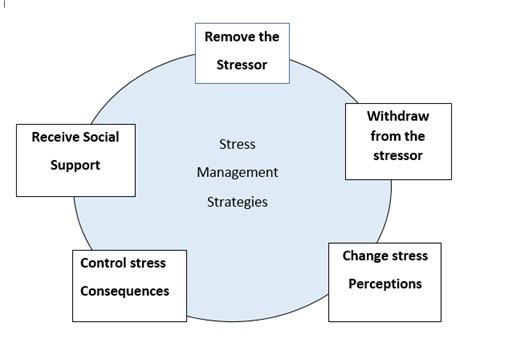
Stress Management: Stress is obvious and employees have to adapt to stress in such a way that they are no longer aware of it. Companies can effectively manage stresses by removing the stressors that cause needless tension and job burnout. Other stress management strategies may keep employees “stress-fit,” but they don’t solve the fundamental causes of stress. Organizations manage stress by investigating the main causes of stress in their workplace. Another suggestion is to change the corporate culture and reward systems so they support a work-life balance and no longer reinforce dysfunctional workaholism. More generally, the most effective ways to remove workplace stressors is to empower employees so that they have more control over their work and work environment. Role-related stressors can be lessened by selecting and assigning employees to positions that match their capabilities. Noise and safety risks are stressful, so improving these conditions would minimize stress in the workplace. Workplace bullying can be minimized through clear guidelines of behaviour and feedback for those who infringe those standards.

Figure: Stress management strategies:

Mangers have important contribution in the identification and intervention of constant workplace stress. Lazarus (1991) has recognized three main strategies for reducing work-related stress. In the first strategy, managers can help their employees to cope up with workplace stress is changing the working conditions so that they are more favourable to effective coping. When barriers are removed such as work overload, environmental annoyances, isolation, and lack of autonomy, an environment is created in which an employee can perform better. The second strategy to reduce work-related stress is to facilitate the employee to improve his or her transaction with the environment. Managers should provide the worker with services such as an employee assistance program or links to stress management resources to help them work through the issues that hamper adequate appraisal of the situation. Moreover, such programs will teach the employee how to utilize behavioural skills such as implementing a new diet, meditation techniques, and relaxation techniques in order to relieve the physical and psychological effects of stress. Usually, these programs will involve cognitive behavioural interventions (Long, 1988). The third strategy is to assist the employee recognizes the stressful relationship between the individual or group and the work setting (Lazarus, 1991) and developing a strategy to help reduce the tension in that affiliation.

To summarize, Stress is an adaptive reaction to a threatening situation that is perceived by person in work setting or in his life. Stressors are the causes of stress and include any environmental conditions that place a physical or emotional demand on the person. Stressors are found in the physical work environment, the employee’s various life roles, interpersonal relations, and organizational activities and conditions. Conflicts between work and non-work obligations are a common source of worker stress. Workplace stress has dangerous consequences on the health of employees such as it can cause significant psychological and physiological problems. Workplace stress has been associated with the aetiology of physical disorders such as heart disease, hypoadrenia, immunosuppression, and chronic pain. Additionally, the psychological impact of workplace stress includes depression, persistent anxiety, pessimism, and resentment.

The impact of these symptoms on organizations is significant as these symptoms lead to antagonism in the workplace, low morale, interpersonal conflict, increased benefit expenses, decreased productivity, and increased absenteeism. To cope up with stressful situation, experts provide various stress management strategies. By providing the foundation for employees to prosper while also allowing employees to take responsibility for their stress related symptoms, organizations will find considerable improvement in productivity and an improved workplace dynamism. Some tactics directly remove superfluous stressors or remove employees from the stressful environment. Other strategies facilitate employees to modify their interpretation of the environment so that it is not viewed as a severe stressor. Wellness programs promote employees to develop better physical defences against stress experiences. Social support provides emotional, informational, and material resource support to safeguard the stress experience.

Detach Involvement Detachment is distancing oneself in order to gain perspective and to expand the context.

The degree of detachment or involvement which is most appropriate will vary during the coaching relationship. It will be for the coach to choose what is most appropriate.

Involvement is the ability to be both mentally and emotionally involved.

Mentally, to ascertain and clarify the facts presented by the client.

Emotionally, being aware of the client’s feelings, which enables empathy, but also to be in touch with his or her own feelings.

Together, they give the coach a fuller grasp of the client’s and their own reality.

A) The inter-personal relationship:

Detached involvement is an indispensable skill of in-depth coaching. It is a skill which can be learned and developed, both by the coach and the client.

Detached involvement ensures that the coach will be present to the client in the most effective way.

It facilitates non-attachment to outcome, which can be a challenging goal for many coaches.

When detached involvement is lacking, the coach’s tendency will be to become over-involved with the client’s story, perhaps lapse into mentoring, offering advice and strategies, and taking too much responsibility for the outcome.

B) The intra-personal relationship:

Who will be making this choice when you are the coach in question?

Where in your personality is your locus of decision-making, of making choices when you are coaching? Which part of you decides?

It is most likely to be the part or parts of you that normally run your life, known as your Primary Selves. Hal and Sidra Stone identified some of the selves in their book, “Embracing your Selves” (1988): the Pleaser, the Perfectionist, the Inner Critic and the Controller. We might add the Hard Worker and the Helper and the Victim to this list.

These sub-selves or sub-personalities sometimes act like the dominant members of a board of directors, who come to meetings with their own agenda and set of priorities based on their point of view. In such cases, the authority of the CEO may be absent or just ignored.

Another analogy would be a kingdom in which the rightful ruler is absent, and the kingdom is actually ruled by the barons. I call this situation the Empty Throne.

C) The inter-functional relationship:

To what extent is detached involvement applicable in the external coach’s relationship with the organisation which has engaged him?

Over-involvement might lead the coach to major on pleasing the coachee’s employer at the coachee’s expense and at the expense of the coach’s integrity.

Over-detachment might lead to the coach following their own agenda at the expense of their relationship with the corporate client.

 So, which part of you will be making these choices?

Our sub-personalities come with their own perspectives, their own priorities and make their choices accordingly.

In order to practice detached involvement successfully, you will need to consciously rise above the level of your sub-personalities and attain your centre, your Conscious Self. If your sub-personalities are the musicians in the orchestra, your Conscious Self is the conductor of the orchestra.

In the previous three scenarios, the coach will need to discern from a clear and stable place.

So, what can we do to arrive at our centre, our Conscious Self?

The applied psychology of Psychosynthesis offers us a technique called the Dis-identifying and Identifying Exercise which helps us to disidentify from the contents of our personality and connect with our deeper centre of identity, our Conscious Self, also known as our “I”.

How do we know when we have attained our “I”?

We typically experience a greater calm, a degree of serenity and balance beyond the daily norm.

A place where clarity and sureness of choice is more available to us.

It is from this place that we can discern most clearly and choose the appropriate levels of detachment and involvement in all the interventions in our coaching practice.

When you practice detached involvement, you’re both a participant and an observer of your life at the same time. You see all experiences as part of life’s journey without judging them as being good or bad. You simply experience them and are in control of your responses to them. You’re fully involved, but detached from the allure of outcomes.

So, how do you learn to practice detached involvement?

  • Take nothing personally
  • Make no assumptions
  • Make as few judgments as possible
  • Let go of the need to be right
  • Let go of the need to control
  • Be passionate about all of life’s experiences, even the painful ones
  • Give all you have, your true gifts, to whatever you’re doing
  • Detach from future potential results
error: Content is protected !!