Group Formation and Development

Group development is a dynamic process where groups evolve through various stages as they work together toward common goals. The most widely accepted model of group development is Bruce Tuckman’s “Stages of Group Development”, which outlines five key stages that groups typically go through: Forming, Storming, Norming, Performing, and Adjourning. Each stage represents a different phase of group interaction, and understanding these stages can help optimize group performance and dynamics.

1. Forming (Initial Stage)

The forming stage occurs when a group is first created. During this phase, members are introduced to each other and begin to understand the group’s objectives. The interactions are typically polite, and members are tentative, testing boundaries, and trying to understand their roles. There is little conflict at this stage, as group members are still getting to know one another and are focused on understanding the group’s purpose and structure. Leadership is usually provided by a formal leader or an external facilitator. The group’s success in this stage depends on creating a welcoming environment that fosters open communication and trust-building.

Key Characteristics:

  • Members are polite and cautious.
  • Group goals and roles are unclear.
  • Leadership is directive, as members depend on the leader for guidance.
  • Uncertainty about individual roles and tasks.

2. Storming (Conflict Stage)

The storming stage is characterized by conflict and competition as group members start to assert their individuality. Differences in ideas, working styles, and values become apparent, leading to disagreements and tensions. This stage is often marked by frustration as members challenge each other’s opinions or question the leadership. Despite the conflict, this stage is essential for group development, as it allows members to work through differences, establish clearer roles, and develop a sense of mutual respect. Effective conflict management and open communication are key to moving through this stage successfully.

Key Characteristics:

  • Increased conflict and disagreements.
  • Individuals assert their ideas and challenge each other.
  • Struggles for power and leadership may emerge.
  • Group cohesion may be low due to conflicts.

3. Norming (Cohesion Stage)

In the norming stage, group members begin to resolve their differences and develop a sense of unity and cohesion. The conflicts that arose in the storming phase are addressed, and the group starts to establish norms, values, and expected behaviors. Communication becomes more open, and collaboration increases as trust builds among members. Roles become clearer, and people understand their responsibilities within the group. Members are more willing to share ideas, give constructive feedback, and support one another in achieving the group’s goals. Leadership is often shared, with members taking on different roles depending on their strengths.

Key Characteristics:

  • Improved communication and cooperation.
  • Group norms, roles, and expectations are established.
  • Greater cohesion and trust among members.
  • The focus shifts toward achieving group goals collaboratively.

4. Performing (High-Functioning Stage)

The performing stage is when the group reaches its peak in terms of productivity, collaboration, and efficiency. At this stage, the group has a clear understanding of its goals, roles, and processes, and members work together harmoniously. There is minimal conflict, and the group’s energy is focused on achieving objectives. Decision-making is collaborative, and members take initiative and contribute actively. Leadership is often shared, and the group operates with high levels of trust, respect, and autonomy. The group is now highly effective at solving problems and executing tasks with minimal supervision.

Key Characteristics:

  • High productivity and goal achievement.
  • Effective collaboration with minimal conflict.
  • Clear roles and responsibilities.
  • Self-directed work with shared leadership.

5. Adjourning (Termination Stage)

The adjourning stage (sometimes called the “mourning” stage) occurs when the group has completed its goals or tasks. At this point, members may feel a sense of loss or sadness as the group disbands or transitions to a new phase. This stage often involves reflection on the group’s accomplishments, celebrating successes, and recognizing individual contributions. If the group was working on a temporary project or task, members will move on to other assignments or groups. It’s important to provide closure and acknowledge the group’s achievements to ensure that members leave with a sense of accomplishment and positive feelings.

Key Characteristics:

  • The group’s tasks are completed.
  • Members experience a sense of closure or loss.
  • Reflection on the group’s accomplishments.
  • Transition or disbandment of the group.

Attitude Meaning, Nature, Types, Components

Attitude is a psychological construct that reflects an individual’s feelings, beliefs, and predispositions toward a person, object, idea, or situation. It influences how one perceives and interacts with their environment, shaping behavior and decision-making. Attitudes are composed of three components: cognitive (beliefs and thoughts), affective (emotions and feelings), and behavioral (actions or intentions). They can be positive, negative, or neutral and are formed through experiences, social influences, and education.

Nature of Attitude:

1. Learned Behavior

Attitudes are not innate but are acquired over time through experiences, education, and interactions.

  • They develop as individuals observe and interpret events in their environment.
  • For instance, a positive experience with teamwork may foster a favorable attitude toward collaboration.

2. Influenced by Social Context

Attitudes are shaped by cultural norms, peer groups, family, and societal values.

  • Socialization plays a critical role in forming attitudes, especially during childhood and adolescence.
  • Media, education, and social institutions further reinforce or challenge these attitudes.

3. Composed of Three Components

Attitudes consist of three interrelated components:

  • Cognitive Component: Beliefs and thoughts about the subject (e.g., “I believe exercise is beneficial”).
  • Affective Component: Emotional reactions (e.g., “I enjoy exercising”).
  • Behavioral Component: Action tendencies or intentions (e.g., “I go to the gym regularly”).

This tri-component model explains how attitudes influence thoughts, feelings, and actions.

4. Dynamic and Flexible

While attitudes can be stable, they are not rigid.

  • They may evolve over time due to new information, experiences, or changes in circumstances.
  • For example, a negative attitude toward technology can shift to positive after learning its benefits.

5. Vary in Intensity and Direction

Attitudes can range from strongly positive to strongly negative, with varying levels of intensity.

  • A person may feel strongly about environmental conservation, displaying active advocacy.
  • Conversely, a neutral or weak attitude may result in indifference.

6. Predict Behavior but Not Always Precisely

Attitudes often guide behavior, but external factors, such as situational constraints or social pressures, can influence actions.

  • For example, someone with a positive attitude toward sustainability might still use non-recyclable products if alternatives are unavailable.

Types of Attitude:

1. Positive Attitude

Positive attitude reflects optimism, hope, and confidence. Individuals with this mindset tend to see opportunities in challenges and maintain a constructive approach to life. They are enthusiastic, motivated, and resilient, making them effective in team environments and problem-solving scenarios. For example, a person with a positive attitude might view a setback as a learning experience rather than a failure.

2. Negative Attitude

Negative attitude is characterized by pessimism, doubt, and resistance to change. Such individuals often focus on problems rather than solutions, leading to reduced productivity and morale. They may resist new ideas or reject feedback, creating friction in personal and professional relationships. This attitude can stem from past failures, low self-esteem, or external influences like a toxic environment.

3. Neutral Attitude

Neutral attitude represents indifference or lack of strong feelings toward a person, object, or situation. Individuals with a neutral attitude neither support nor oppose an idea, often choosing to remain passive. This type of attitude may arise from insufficient knowledge or personal disinterest. While it minimizes conflict, it can also hinder decision-making and active participation.

4. Stereotyped Attitude

Stereotyped attitudes are preconceived notions or beliefs about a group of people, based on characteristics like race, gender, religion, or profession. These attitudes are often formed without direct experience and can lead to biases and discrimination. For instance, believing that a certain gender is better suited for leadership roles reflects a stereotyped attitude. Such attitudes can perpetuate social inequalities and hinder diversity.

5. Ego-Defensive Attitude

An ego-defensive attitude is adopted to protect one’s self-esteem or justify actions. Individuals with this attitude may deny facts or blame others to avoid accountability. For instance, an employee who misses deadlines might develop a negative attitude toward the manager to justify their own shortcomings. This type of attitude, while self-protective, can create conflicts and hinder personal growth.

6. Value-Expressive Attitude

A value-expressive attitude reflects an individual’s core beliefs, values, or principles. It helps individuals express their identity and align with causes they feel strongly about. For example, someone passionate about environmental conservation may actively support eco-friendly initiatives. This attitude is deeply rooted and often serves as a foundation for long-term behavior.

7. Social Attitude

Social attitudes are shaped by societal norms, traditions, and peer influences. These attitudes determine how individuals interact with others in a community setting. For example, a person might adopt a socially positive attitude to conform to group expectations, even if it conflicts with personal beliefs.

Components of Attitudes:

  1. Informational or Cognitive Component

The informational component consists of beliefs, values, ideas and other information a person has about the object. It makes no difference whether or not this information is empirically correct or real. For example, a person seeking a job may learn from his own sources and other employees working in the company that in a particular company the promotion chances are very favourable. In reality, it may or may not be correct. Yet the information that person is using is the key to his attitude about that job and about that company.

  1. Emotional or Affective Component

Informational component sets the stage for the more critical part of an attitude, its affective component. The emotional components involve the person’s feeling or affect-positive, neutral or negative-about an object. This component can be explained by this statement.” I like this job because the future prospects in this company are very good”.

  1. Behavioural Component

Behavioural component consists of the tendency of a person to behave in a particular manner towards an object. For example, the concerned individual in the above case may decide to take up the job because of good future prospects. Out of the three components of attitudes, only the behavioural component can be directly observed. One cannot see another person’s beliefs (the informational component) and his feelings (the emotional component). These two components can only be inferred. But still understanding these two components is essential in the study of organizational behaviour or the behavioural component of attitudes.

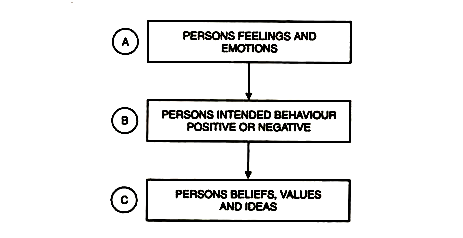
The components are illustrated in the following table:

ABC Model of Attitude

All the three components of attitude explained above constitute, what is OF called the ABC model. Here, in the ABC model, the alphabet A stands for Affective component, B for Behavioural and C for the cognitive component. The importance of this model is that to have a proper and thorough understanding of the concept of attitude, all the three components mentioned above must be properly assessed. It is only the behavioural component which can be directly observed, the other two components: affective and cognitive can however only be inferred.

Factor Influencing Individual Perception

Perception is the process by which individuals interpret and make sense of sensory information from their environment. It involves selecting, organizing, and interpreting stimuli to form meaningful experiences. Perception is subjective, influenced by factors like past experiences, emotions, expectations, and cultural background. Each person’s unique perceptions shape their understanding and reactions to the world, affecting decisions, behaviors, and interactions. The concept highlights how people perceive reality differently, even when exposed to the same situation or information.

Factor Influencing Individual Perception

  • Past Experiences:

Past experiences shape perception by providing a framework for interpreting new information. Positive or negative encounters with certain situations, people, or events can influence how we perceive similar situations in the future. For instance, a person who has been repeatedly disappointed by a particular brand may perceive future interactions with that brand negatively.

  • Cultural Background:

Culture plays a crucial role in shaping perception by influencing values, norms, and behaviors. Cultural differences affect how individuals interpret social cues, customs, and communication styles, leading to diverse perceptions. For example, people from collectivist cultures may emphasize group harmony over individual achievement, influencing their perception of success.

  • Expectations:

Our expectations shape how we perceive situations. When we expect a particular outcome, we are more likely to interpret events in a way that confirms those expectations, a phenomenon known as the expectancy effect. For example, expecting a product to be of high quality may lead to a more favorable perception, even if it doesn’t meet objective standards.

  • Emotions:

Emotions strongly influence perception. A person in a good mood may perceive a neutral situation as more positive, while someone feeling anxious or angry may interpret the same situation negatively. For instance, someone feeling stressed may perceive a colleague’s neutral comment as a criticism, skewing their perception of the interaction.

  • Motivation:

Motivation drives the focus of perception. People tend to perceive objects or events that align with their personal goals and desires more clearly. For example, a hungry person may be more attuned to food-related cues in their environment, while someone focused on career success may notice job-related opportunities more easily.

  • Social Factors:

Social influences, such as the presence of others, group norms, and social roles, impact perception. People tend to conform to social expectations, which can alter how they perceive behaviors and situations. For example, peer pressure in a group may lead an individual to perceive a behavior as acceptable, even if they personally disagree.

  • Physical Factors:

Physical factors, such as lighting, temperature, and surroundings, can influence perception. A dimly lit room may make people feel more relaxed, while a brightly lit environment may make them more alert. Similarly, extreme heat or cold can influence mood and, in turn, perception, altering how we interpret interactions or events.

  • Perceptual Set:

Perceptual set is a mental predisposition to perceive something in a particular way based on previous experiences, expectations, or cultural influences. This cognitive bias can cause individuals to overlook information that contradicts their beliefs or to interpret ambiguous stimuli in ways that align with their preconceived notions.

  • Attitude:

A person’s attitude—whether positive, negative, or neutral—affects how they perceive people and situations. A positive attitude may lead to more favorable perceptions, while a negative attitude can result in biased or distorted views. For instance, someone with a positive attitude toward a colleague may perceive their actions more kindly than someone with a negative attitude.

  • Selective Perception:

Selective perception refers to the tendency to notice and interpret information that confirms one’s preexisting beliefs, while disregarding information that contradicts them. People often focus on specific aspects of a situation that align with their attitudes or interests, leading to a skewed or biased perception of reality.

  • Age:

Age influences perception, as older individuals may interpret events and information differently than younger ones due to differences in life experience, cognitive processing, and social roles. Older adults may focus more on past experiences, while younger people might be more adaptable to new information or technologies, affecting their perception of various situations.

  • Context:

The context in which an event or object is perceived significantly affects how it is interpreted. People’s perceptions can change based on the surrounding circumstances, such as the environment, time, or social setting. For instance, a joke that may seem funny in a casual setting could be perceived as inappropriate in a formal context, altering the interpretation.

Effects of Perceptual Error in Managerial Decision Making at Work Place

Perceptual errors occur when individuals misinterpret information, people, or situations due to biases, limited information, or faulty judgment. In organizations, such errors can affect decision-making, teamwork, and evaluations. Common perceptual errors include stereotyping (judging someone based on group characteristics), halo effect (forming an overall impression from one trait), selective perception (focusing only on information that supports existing views), projection (attributing one’s own feelings to others), and contrast effect (evaluating someone in comparison with others rather than on merit). These errors can lead to unfair appraisals, poor communication, and conflicts in the workplace. Managers must be aware of perceptual biases to make objective decisions, promote fairness, and build stronger organizational relationships.

Types of Perceptual Errors:

  • Stereotyping

Stereotyping occurs when individuals judge others based on their membership in a particular group rather than personal characteristics. For example, assuming older employees resist technology or that young employees lack maturity. Such generalizations ignore individuality and lead to biased judgments. In organizations, stereotyping can negatively influence recruitment, promotions, and performance evaluations, resulting in discrimination and reduced morale. While it simplifies information processing, it distorts reality and creates unfair treatment. Managers must avoid relying on stereotypes and instead assess employees on actual performance and capabilities. Promoting diversity awareness and unbiased evaluation helps reduce stereotyping in the workplace.

  • Halo Effect

The halo effect happens when one positive trait of a person influences the overall perception of them. For example, if an employee is punctual, a manager might assume they are also hardworking, reliable, and productive, even without evidence. This bias often leads to inaccurate appraisals and overlooks weaknesses. Similarly, the reverse—called the “horn effect”—occurs when one negative trait dominates judgment. The halo effect affects promotions, rewards, and recognition by exaggerating certain qualities. In organizations, it reduces objectivity in evaluations. Managers must use structured performance criteria to ensure fairness and minimize the influence of single traits on overall judgment.

  • Selective Perception

Selective perception occurs when individuals interpret information based on their existing beliefs, values, or attitudes, ignoring information that contradicts them. For example, a manager who believes a specific employee is lazy may notice only mistakes while overlooking achievements. This error leads to biased decision-making and unfair evaluations. In organizations, selective perception can create misunderstandings, reinforce stereotypes, and prevent innovation. It causes individuals to see what they expect rather than what actually exists. Managers should encourage open communication, objective evidence-based decisions, and multiple perspectives to reduce selective perception and ensure fair treatment of employees and situations.

  • Projection

Projection refers to attributing one’s own feelings, motives, or attitudes to others. For example, a manager who values ambition may assume all employees are equally driven, or an insecure leader may think others doubt their capabilities. This error distorts reality and results in misjudgments about others’ behaviour and intentions. In organizations, projection can create unrealistic expectations, miscommunication, and conflicts. Employees may feel misunderstood or pressured to meet assumptions they do not hold. To overcome projection, managers must recognize personal biases, practice empathy, and evaluate employees based on actual behaviour rather than projecting their own thoughts and feelings.

  • Contrast Effect

The contrast effect occurs when individuals are evaluated by comparison with others rather than on their own merits. For example, a moderately performing employee may seem outstanding if compared to poor performers, but below average if compared to exceptional ones. This error skews performance evaluations, recruitment decisions, and promotions. It unfairly rewards or penalizes employees based on context instead of actual ability. In organizations, the contrast effect leads to inconsistency and dissatisfaction among employees. To minimize it, managers should use absolute standards and clear criteria for evaluation rather than relying on comparisons between individuals.

Effects of Perceptual Error in Managerial Decision Making at Work Place:

  • Biased Recruitment and Selection

Perceptual errors often lead to biased hiring decisions. For example, stereotyping may cause managers to prefer candidates from certain backgrounds, while the halo effect may result in overvaluing one positive trait, such as communication skills, over overall competency. Such errors can result in overlooking more qualified applicants, reducing workforce diversity, and lowering organizational efficiency. Poor hiring choices increase training costs, turnover, and dissatisfaction. To avoid this, managers must use structured interviews, standardized assessment tools, and multiple evaluators to ensure fairness and objectivity during recruitment and selection processes.

  • Inaccurate Performance Appraisal

Perceptual errors strongly affect performance evaluations. Managers may rely on selective perception, noticing only behaviours that confirm their beliefs, or the contrast effect, judging employees against one another rather than actual standards. This leads to unfair ratings, where hardworking employees may be undervalued while others are overrated. Such biased appraisals reduce employee motivation, trust, and morale, causing dissatisfaction and disengagement. In the long run, they undermine organizational justice and performance. Managers must rely on measurable performance indicators, consistent criteria, and multi-source feedback (such as 360-degree appraisals) to reduce errors and maintain fairness in evaluation processes.

  • Poor Communication and Misunderstanding

Perceptual errors can distort workplace communication. For instance, projection may cause managers to assume employees share the same goals or motivations, leading to unrealistic expectations. Similarly, selective perception may result in ignoring valuable employee input that contradicts managerial views. These distortions cause misunderstandings, misinterpretation of instructions, and reduced collaboration. Employees may feel unheard or misjudged, lowering trust and openness in communication. Such errors hinder teamwork and effective decision-making, reducing organizational performance. Managers can avoid this by practicing active listening, clarifying assumptions, and encouraging feedback to ensure messages are interpreted correctly and all perspectives are considered.

  • Conflict and Employee Dissatisfaction

Perceptual errors contribute to workplace conflict and dissatisfaction. For example, stereotyping may foster discrimination, while the halo or horn effect may lead to perceptions of favoritism in appraisals or promotions. These errors create resentment, reduce morale, and weaken trust in management. Employees who feel unfairly treated may disengage, resist cooperation, or even leave the organization. Conflicts arising from misjudgments also consume managerial time and resources. To minimize these effects, managers must ensure transparency, adopt fair evaluation systems, and implement diversity and inclusion initiatives. This builds trust, reduces conflict, and fosters a healthier work environment.

Group Dynamics, Meaning, Nature and Types of Groups

Group dynamics refers to the study of the behaviors, interactions, and processes that occur within a group of people. It examines how individuals influence each other, how roles and norms develop, and how group cohesion and conflict arise. Group dynamics includes both formal and informal groups, where members collaborate to achieve common goals or face challenges. It plays a critical role in enhancing group effectiveness, managing conflicts, and improving overall group performance in diverse settings like workplaces, classrooms, and social environments.

Nature of Group Dynamics:

  • Interdependence

In a group, members are interdependent, meaning their actions and decisions affect each other. This mutual reliance is essential for achieving common objectives. Each member’s success and failure influence the group’s overall performance. For example, in a work team, one member’s contribution can either enhance or hinder the collective result, making cooperation vital.

  • Shared Goals

Groups form to achieve specific shared goals that individual members cannot achieve alone. These goals can range from solving problems, completing projects, or reaching organizational targets. A shared sense of purpose unites group members and provides direction, fostering collaboration. For example, a project team working towards delivering a product within a set timeframe is united by this common objective.

  • Role Structure

Every group develops a structure of roles and responsibilities. Each member typically assumes a role that contributes to the group’s functioning. Roles can be formal, as in leadership or specialist positions, or informal, like the role of the motivator or peacemaker. Role clarity helps manage expectations, reduces conflicts, and ensures that tasks are completed effectively.

  • Norms and Standards

Groups create norms and standards—unwritten rules and behaviors that guide how members interact. Norms develop to regulate group activities, establish acceptable behavior, and maintain group cohesion. For example, a group might develop a norm where members listen attentively during meetings, fostering respect and collaboration. These norms can be positive or negative, influencing the group’s overall productivity and cohesion.

  • Communication

Effective communication is a cornerstone of group dynamics. How information flows within a group affects decision-making, problem-solving, and conflict resolution. Open communication promotes transparency, trust, and cooperation, while poor communication can lead to misunderstandings, conflicts, and inefficiency. Communication can be verbal, non-verbal, or through digital means, all of which play a role in shaping the group’s success.

  • Cohesion

Group cohesion refers to the level of attraction and unity that members feel toward each other and the group as a whole. High cohesion leads to stronger relationships, better collaboration, and increased motivation to achieve group goals. However, excessive cohesion can sometimes result in groupthink, where the desire for harmony suppresses dissent and critical thinking.

  • Conflict

Conflict is a natural part of group dynamics and can arise due to differences in opinions, goals, values, or personalities. While conflict can have negative effects, it can also drive creativity, innovation, and problem-solving when managed effectively. Constructive conflict resolution techniques, such as negotiation and compromise, can lead to improved decision-making and group development.

  • Leadership

Leadership plays a critical role in shaping group dynamics by providing direction, making decisions, and motivating members. Leaders influence the group’s culture, setting the tone for behavior, communication, and goal achievement. Leadership can be formal (e.g., a designated team leader) or informal (e.g., a member who naturally assumes a guiding role), and different leadership styles can significantly affect group dynamics and outcomes.

Types of Group Dynamics:

  • Primary Group

Primary groups are small, close-knit groups where members interact frequently and share strong emotional bonds. These groups include families, close friends, and other intimate social groups. The dynamics within these groups are influenced by deep personal relationships, trust, and mutual care. The focus is on personal connections rather than achieving specific tasks.

  • Secondary Group

Secondary groups are larger, more impersonal, and goal-oriented. They form around specific tasks or objectives, such as work teams, committees, or professional associations. While relationships are less personal than in primary groups, members collaborate to achieve common goals. Group dynamics in secondary groups are largely shaped by roles, norms, and productivity expectations.

  • Formal Group

Formal groups are structured with clearly defined roles, responsibilities, and hierarchies. These groups exist to achieve specific organizational objectives and often follow strict guidelines or policies. Examples include work teams, task forces, and committees. The dynamics in formal groups revolve around role fulfillment, leadership styles, decision-making processes, and adherence to organizational goals.

  • Informal Group

Informal groups are less structured and do not have officially defined roles or responsibilities. They form based on shared interests, friendships, or common goals, often within a larger formal organization. These groups have more flexible dynamics, with members naturally assuming roles based on personality, expertise, or group needs. The dynamics in informal groups are more fluid, with interactions occurring spontaneously.

  • Task-Oriented Group

Task-oriented groups are focused on achieving specific objectives or completing tasks. Members in these groups collaborate to solve problems, make decisions, or complete projects. The dynamics of task-oriented groups are heavily influenced by goal-setting, time management, resource allocation, and communication. Task-oriented groups may include project teams, brainstorming sessions, and problem-solving groups.

  • Social Group

Social groups are formed primarily for companionship and social interaction rather than for specific tasks or goals. These groups are centered around shared activities, interests, or social bonds, such as hobby groups, sports teams, or clubs. Social group dynamics are influenced by factors such as group cohesion, mutual support, and communication patterns. These groups help fulfill social needs and strengthen relationships.

  • Leadership and Authority

This type of group dynamic is centered around the influence and power exerted by leaders within the group. The leader’s style—whether autocratic, democratic, or laissez-faire—can significantly shape how group members interact, make decisions, and perform tasks. The presence of authority and hierarchy impacts communication, trust, and collaboration within the group.

  • Problem-Solving Group

Problem-solving groups are designed to identify, analyze, and resolve specific issues. These groups typically emerge in response to challenges, crises, or complex situations requiring diverse input. Dynamics in problem-solving groups revolve around critical thinking, collaboration, information sharing, and the integration of different perspectives. Effective problem-solving group dynamics encourage creativity, conflict resolution, and decision-making.

  • Virtual Group

Virtual groups interact and collaborate primarily through digital platforms rather than face-to-face meetings. With the rise of remote work and online communication tools, virtual groups have become increasingly common. The dynamics of virtual groups are shaped by technology, geographical dispersion, and communication barriers. These groups require effective use of online communication tools, clear guidelines, and trust-building to overcome challenges such as time zone differences and lack of physical presence.

  • Cohesive Group

Cohesive groups are characterized by strong unity, trust, and a high level of interaction among members. The dynamics in these groups are driven by mutual respect, shared values, and a strong sense of belonging. These groups tend to be highly productive and effective, as members are motivated to work together and support one another. However, excessive cohesion can sometimes lead to groupthink, where critical thinking is suppressed in favor of group harmony.

Types of Team

Team is a group of individuals who work together towards a common goal or objective. Team members bring their unique skills, knowledge, and expertise to collaborate, share responsibilities, and contribute to the success of the group. Effective teams rely on communication, trust, and coordination, ensuring that each member’s strengths are leveraged. Teams can be found in various settings, such as workplaces, sports, or community projects. The success of a team is often measured by its ability to achieve its objectives, maintain positive dynamics, and adapt to challenges efficiently.

  • Functional Teams

Functional teams consist of members from the same department or area of expertise. They work on tasks related to their specific function, such as marketing, finance, or human resources. These teams focus on specialized goals and operate within a structured hierarchy. Functional teams are effective for achieving specific, departmental objectives, promoting expertise, and improving efficiency within their area. However, they may face limitations in collaboration across different functions, often leading to silos within an organization.

  • Cross-functional Teams

Cross-functional teams bring together members from different departments or areas of expertise to work on a common project or goal. These teams are designed to solve complex problems that require diverse skills and perspectives. Cross-functional teams encourage collaboration, innovation, and knowledge sharing. They are effective in tackling company-wide challenges or projects but may face difficulties in coordination due to differing priorities, departmental goals, and communication styles.

  • Self-managed Teams

Self-managed teams operate with a high degree of autonomy, with little or no supervision. Members are responsible for setting goals, making decisions, and managing their tasks. These teams are typically empowered to manage their processes, solve problems, and make operational decisions. Self-managed teams promote accountability, innovation, and motivation. However, they require a high level of trust, clear goals, and strong leadership to be successful, as there is less external guidance or direction.

  • Virtual Teams

Virtual teams are composed of members who work remotely and communicate primarily through digital means such as video calls, emails, or collaboration software. These teams may be dispersed geographically, making face-to-face interaction impossible. Virtual teams rely heavily on technology and require strong communication skills and a clear structure to be effective. While they offer flexibility and the ability to tap into global talent, they can face challenges such as miscommunication, time zone differences, and a lack of personal connections.

  • Project Teams

Project teams are formed for the specific purpose of completing a project within a defined timeframe. These teams are typically temporary, disbanding once the project is completed. Members bring expertise from various fields to achieve project objectives. Project teams are often used in industries like construction, software development, and event planning. They offer flexibility and focus but can face challenges in terms of coordination and goal alignment, especially if team members are pulled from other areas with competing priorities.

  • Advisory Teams

Advisory teams are formed to provide expert advice and recommendations on specific topics or issues. They typically do not engage in day-to-day decision-making or implementation but offer valuable insights based on their expertise. Advisory teams are common in fields like research, legal matters, or strategy development. Their role is to guide leadership or project teams with informed recommendations. While advisory teams may not be directly responsible for execution, their advice can significantly influence decision-making and organizational strategy.

  • Problem-solving Teams

Problem-solving teams are created to address specific challenges or issues within an organization. These teams are typically short-term and are formed to identify solutions, make recommendations, and address operational inefficiencies or obstacles. Members of problem-solving teams use their expertise to analyze the situation, suggest solutions, and implement changes. These teams focus on improving processes, resolving conflicts, or addressing specific issues. Effective problem-solving teams rely on strong communication, creativity, and collaboration to generate effective solutions.

  • Task Forces

Task forces are temporary teams formed to address specific, urgent issues or to tackle critical tasks. They often work under tight deadlines to achieve a specific outcome and are disbanded once the objective is accomplished. Task forces are often composed of experts or individuals with specialized skills related to the issue at hand. Their primary goal is to resolve a specific problem, improve an urgent process, or manage a crisis. Task forces are highly focused but can sometimes experience challenges related to resource allocation and time management.

Organizational Changes, Meaning, Importance, Causes, Response and Process

Organizational Change refers to the process through which an organization transforms its structure, culture, policies, strategies, technologies, or operations to adapt to internal or external challenges. Change is necessary for organizations to remain competitive, efficient, and responsive to evolving market conditions, technological advancements, or shifts in consumer preferences. Organizational change can be planned or reactive and can involve minor adjustments or major transformations.

Organizational change impacts all levels of the company, from top leadership to front-line employees, requiring alignment across various aspects of the business to be successful.

Importance of Organizational Change:

  • Adaptation to External Environment:

The business environment is constantly changing due to technological advancements, regulatory changes, market demands, and competition. Organizations must adapt to these changes to survive and thrive. Failure to change can result in decreased market share, loss of relevance, and eventually, business decline.

  • Improved Efficiency and Productivity:

Organizational changes that streamline operations, improve processes, and introduce better tools or systems can increase efficiency, reduce costs, and boost productivity. For example, the implementation of new technologies or automation processes can improve overall performance.

  • Enhanced Innovation:

Changes often lead to the introduction of innovative products, services, or processes. Embracing change encourages a culture of creativity and problem-solving, enabling organizations to respond effectively to evolving customer needs or industry trends.

  • Employee Growth and Satisfaction:

Change can create new opportunities for personal and professional development within the organization. By offering training, new roles, and responsibilities, employees can grow in their careers. Positive changes that align with employee needs can increase job satisfaction and engagement.

  • Strengthening Competitive Advantage:

Organizational change helps a company stay ahead of competitors by improving its offerings, adopting cutting-edge technologies, and enhancing its market positioning. Companies that adapt early to market shifts often gain a competitive edge.

Causes of Organizational Change:

  • Technological Advancements:

Technological progress is one of the most significant drivers of organizational change. The advent of new technologies or systems (such as automation, artificial intelligence, and digital tools) necessitates changes in workflows, job roles, and communication methods.

  • Economic Factors:

Economic fluctuations, such as recessions, inflation, or changes in government policies, can lead to the need for organizational changes. Cost-cutting measures, strategic shifts, and re-structuring often occur in response to economic downturns or opportunities for growth during periods of expansion.

  • Market Dynamics:

Changes in customer preferences, competitive pressures, and market conditions often force organizations to adjust their business strategies, marketing techniques, or product offerings. The shift towards sustainability or a rise in demand for digital services are examples of market-driven changes.

  • Regulatory Changes:

Changes in laws, regulations, and industry standards can drive organizations to alter their practices, compliance procedures, or business operations. For instance, new tax laws, labor laws, or environmental regulations might necessitate changes in business strategies.

  • Internal Problems:

Internal organizational issues such as inefficient processes, low employee morale, or communication breakdowns can prompt leadership to initiate change. When current structures or systems fail to meet the organization’s needs, change is required to resolve conflicts or improve performance.

  • Mergers and Acquisitions:

Mergers, acquisitions, and alliances often bring about significant organizational change. When two companies merge, the integration of their operations, cultures, and systems requires major adjustments in structure, leadership, and organizational processes.

  • Leadership Changes:

A change in leadership often leads to organizational change. New leaders bring in fresh ideas, strategies, and policies, which may cause shifts in direction, culture, and operations.

Responses to Organizational Change

Employees’ responses to organizational change can vary, and these responses are often influenced by the magnitude of the change, the nature of the organization, and individual personality traits. Common responses to organizational change:

  • Resistance to Change:

Resistance is a natural reaction, particularly when employees feel uncertain, threatened, or uninformed. They may resist because of fear of the unknown, concerns about job security, or discomfort with new processes. Resistance can manifest in passive or active forms, including reluctance to adopt new practices, vocal objections, or even sabotage.

  • Acceptance and Adaptation:

In some cases, employees accept change and adjust quickly. Those who understand the benefits of change and feel supported through the transition often demonstrate flexibility and adaptability. Acceptance leads to improved morale and alignment with organizational goals.

  • Emotional Responses:

Change can trigger strong emotional reactions, including anxiety, frustration, or excitement. Employees may feel threatened by change, leading to stress or a loss of motivation, while others may view it as an opportunity for growth and development.

  • Proactive Participation:

Some employees actively engage with the change process by suggesting improvements, volunteering for new roles, or supporting new initiatives. These individuals often become champions of change, helping others adjust.

Process of Organizational Change:

The process of organizational change typically follows a structured approach to ensure its effectiveness. Several models of change exist, but one of the most widely accepted is Kurt Lewin’s Change Model, which consists of three stages: Unfreezing, Changing, and Refreezing.

  • Unfreezing:

This is the first stage of the change process, where the organization recognizes the need for change and prepares for it. It involves breaking down the existing mindset and challenging the status quo. In this phase, the leadership communicates the reasons for the change and aims to reduce resistance by engaging employees and making them aware of the benefits.

  • Changing (Transition):

During the changing stage, the actual implementation of the change takes place. This phase involves restructuring, the introduction of new policies, the training of employees, and the adoption of new systems. It is crucial for leaders to provide ongoing support, guidance, and resources to ensure the transition is smooth.

  • Refreezing:

Once the change has been implemented, the organization stabilizes and integrates the changes into its daily operations. In this stage, new practices, policies, and behaviors are reinforced to ensure they become ingrained in the culture. Feedback is collected to measure the success of the change, and any adjustments are made to maintain the new equilibrium.

Effective Management of Organizational Change:

To ensure the success of organizational change, leadership must be actively involved and committed to managing the process. Key strategies for managing change effectively are:

  • Clear Communication:

Communicating the need for change, its benefits, and its impact on employees is crucial. Open and transparent communication helps reduce uncertainty and resistance.

  • Employee Involvement:

Engaging employees early in the change process fosters a sense of ownership and reduces resistance. Involving employees in decision-making or pilot testing can enhance acceptance.

  • Providing Support:

Training, counseling, and resources should be provided to help employees adapt to the change. Addressing emotional concerns and offering support ensures a smoother transition.

  • Setting Realistic Expectations:

Setting achievable goals and timelines helps employees understand the scope and pace of the change. Unrealistic expectations can lead to frustration and disengagement.

  • Celebrating Successes:

Recognizing and celebrating milestones and successes during the change process keeps morale high and reinforces commitment to the new direction.

Learning Curve

The concept of the learning curve is essential for understanding how individuals and organizations acquire and refine skills over time. It represents the relationship between the amount of experience or practice an individual or group has and their performance or efficiency in a specific task. The learning curve suggests that the more often a task is performed, the less time or effort it takes to complete. Essentially, learning curves demonstrate the improvement in performance as a result of repeated exposure to a task, skill, or process.

The term “learning curve” was first introduced by the German psychologist Hermann Ebbinghaus in the late 19th century. However, it became more widely known and used in the context of business and manufacturing in the early 20th century, particularly in relation to productivity and cost reduction. The learning curve can be applied to many areas, including individual learning, organizational development, and even machine performance.

Theory Behind the Learning Curve

The basic idea of the learning curve is rooted in the principle of diminishing returns. As individuals or organizations continue to practice or perform a task, they initially experience rapid improvements in speed or efficiency. However, as they gain more experience, the rate of improvement tends to slow down. This can be visualized as a curve that starts steep and flattens out over time, showing that early gains are more significant than later ones.

The learning curve is often represented mathematically by a formula, which expresses how the time taken to complete a task decreases as a function of cumulative production or repetition. The formula typically used for the learning curve is:

Y = aX^b

Where:

  • Y is the time required for the Xth unit of output.
  • a is the time required to produce the first unit.
  • X is the cumulative number of units produced.
  • b is the learning curve index, representing the rate at which learning occurs. A smaller b value indicates faster learning.

Factors Affecting the Learning Curve:

Several factors can influence the shape and steepness of a learning curve. These factors are:

  • Complexity of the Task:

Simpler tasks usually show steeper learning curves, as individuals can quickly learn and improve their performance. In contrast, complex tasks require more time and practice to achieve efficiency.

  • Skill Level:

The initial skill level of the learner plays a significant role in how quickly they can progress. Novices tend to experience faster improvement early on, while experts may show slower but steady gains.

  • Training and Resources:

Access to training, tools, and support can accelerate the learning curve. For instance, structured training programs or improved tools can help individuals reach proficiency more quickly.

  • Motivation:

Highly motivated learners are more likely to achieve faster improvement, as their focus, dedication, and persistence directly affect the learning process.

  • Feedback:

Regular feedback helps individuals recognize errors and make adjustments, which speeds up the learning process. Lack of feedback can hinder progress and prolong the learning curve.

  • Technology and Innovation:

Technological advancements and the introduction of new methods or systems can affect the learning curve. For example, the introduction of automation or software tools can alter how quickly tasks are learned and performed.

  • Practice Conditions:

The environment in which practice occurs, including frequency, consistency, and the nature of practice (e.g., deliberate practice), can significantly affect the learning curve. Continuous practice in an environment conducive to learning leads to faster improvement.

Applications of the Learning Curve:

The learning curve concept has wide applications in various fields, particularly in business, manufacturing, and education.

  • Business and Manufacturing

In business and manufacturing, the learning curve concept is used to predict how costs decrease as production increases. For instance, as workers become more proficient at a task, the time and cost associated with producing each unit of a product decrease. This can lead to more efficient production processes and higher profit margins. The learning curve is particularly important in industries with repetitive tasks, such as automotive manufacturing, where workers’ experience and the refinement of production techniques lead to reduced costs over time.

  • Organizational Development

Organizations use the learning curve to measure the effectiveness of training programs and employee development initiatives. By tracking employees’ progress over time, organizations can identify areas for improvement and determine how quickly new skills are being acquired. This allows managers to optimize training methods and allocate resources efficiently.

  • Education and Personal Development

The learning curve concept is also useful in understanding how individuals learn new skills or knowledge. In educational settings, teachers can apply the learning curve to design lesson plans and teaching methods that facilitate faster learning. Personal development, whether in mastering a new language, sport, or skill, can also benefit from understanding how learning progresses over time.

Challenges and Limitations

While the learning curve provides valuable insights, it also has limitations. For example, learning curves assume that improvement is linear, which may not always be the case. In some situations, progress may plateau, or the learning process may experience setbacks. Additionally, the curve may not apply universally across different individuals or tasks, as each learner may have a different pace of improvement.

Furthermore, external factors such as distractions, stress, or changing work conditions can disrupt the expected learning curve. Therefore, while the concept of the learning curve provides a useful framework for understanding learning and improvement, it should be applied with consideration for context and individual differences.

Communication Meaning, Importance, Process, Model

Communication is the process of exchanging information, ideas, emotions, and messages between individuals or groups through various channels. It involves a sender transmitting a message, a medium to deliver it, and a receiver who interprets and responds to it. Effective communication can occur verbally, non-verbally, or through written and digital means. It is essential for fostering understanding, building relationships, and facilitating decision-making in personal and professional settings. Communication ensures clarity, coordination, and collaboration, making it a cornerstone of organizational success and human interaction. Feedback, an integral part of communication, ensures the message is understood as intended.

Importance of Communication:

  • Facilitates Exchange of Information

Communication enables the transfer of ideas, knowledge, and instructions within an organization or among individuals. Clear and effective communication ensures that everyone involved is well-informed, which is essential for decision-making and problem-solving.

  • Builds and Maintains Relationships

Strong communication is the foundation of healthy relationships, whether personal or professional. It fosters understanding, trust, and mutual respect. Open and honest communication helps resolve conflicts, strengthen bonds, and enhance collaboration among individuals or teams.

  • Supports Decision-Making

Informed decisions rely on the availability and accuracy of information. Communication ensures that relevant data, opinions, and insights are shared and understood, enabling managers and teams to make sound decisions. This reduces errors and aligns efforts with organizational objectives.

  • Enhances Employee Motivation and Morale

Effective communication between managers and employees fosters a positive work environment. Providing feedback, recognizing achievements, and addressing concerns motivate employees. This leads to improved performance, higher morale, and a sense of belonging within the organization.

  • Ensures Coordination and Teamwork

In organizations, communication is crucial for coordinating efforts across departments and teams. It aligns individual goals with organizational objectives and ensures that everyone works collaboratively. Clear communication minimizes misunderstandings and promotes synergy.

  • Drives Organizational Growth

Communication plays a critical role in implementing strategies, introducing changes, and achieving targets. Through effective communication, organizations can respond to market demands, customer needs, and competitive challenges, driving sustainable growth and success.

  • Facilitates Conflict Resolution

Misunderstandings and disagreements are inevitable, but effective communication helps resolve them amicably. Open dialogue allows parties to express their views, understand each other’s perspectives, and reach mutually beneficial solutions.

  • Promotes Innovation and Creativity

Effective communication encourages the sharing of ideas and perspectives, fostering innovation and creativity. Employees feel empowered to contribute new solutions and approaches, which drive organizational improvement and competitiveness.

Process of Communication:

Communication process involves several steps through which information is transferred from the sender to the receiver, ensuring the message is conveyed accurately and effectively. It is a dynamic, continuous process that facilitates understanding, decision-making, and relationship-building.

  • Sender/Source

The communication process begins with the sender, who is the individual or entity that has a message to convey. The sender identifies the information to be shared and determines how to communicate it to the receiver.

  • Encoding

Encoding is the process of converting the message into a format that can be understood by the receiver. This could involve using words, symbols, images, or body language. The sender decides on the appropriate method, such as verbal, written, or non-verbal communication, based on the nature of the message and the audience.

  • Message

Message is the actual information or content being communicated. It can be a fact, idea, opinion, or instruction. The clarity and relevance of the message are crucial for ensuring it is understood as intended by the receiver.

  • Channel

Channel is the medium through which the message is transmitted. Communication channels can be verbal (face-to-face conversations, phone calls), non-verbal (gestures, body language), or written (emails, reports). The choice of channel depends on the context, urgency, and nature of the message.

  • Receiver

Receiver is the person or group who receives the message. They interpret and decode the information based on their knowledge, experience, and perceptions. The receiver plays a critical role in understanding and responding to the message.

  • Decoding

Decoding is the process by which the receiver interprets or makes sense of the message. The receiver translates the sender’s message into a form that can be understood. This step is influenced by the receiver’s cultural background, language skills, and personal experiences.

  • Feedback

Feedback is the response given by the receiver to the sender. It can be verbal, non-verbal, or written and helps the sender assess whether the message has been understood accurately. Feedback is a vital part of the communication process, as it enables clarification and correction if necessary.

  • Noise

Noise refers to any external or internal interference that disrupts the communication process. It could be physical (such as background noise), psychological (such as preconceived notions), or semantic (such as language barriers). Noise can distort the message, leading to misunderstandings or misinterpretations.

Model of Communication:

Model of Communication is a conceptual framework that explains how information is transmitted between individuals or entities. It illustrates the process of communication, highlighting key components and the flow of messages. There are several models of communication, but one of the most widely recognized is the Shannon-Weaver Model.

1. Shannon-Weaver Model of Communication (1949)

Often called the “Linear Model,” the Shannon-Weaver model focuses on the transmission of a message from a sender to a receiver. It includes the following components:

  • Sender: The originator of the message or information.
  • Encoder: The process of converting the message into a format suitable for transmission (e.g., speech, text, etc.).
  • Message: The information being communicated.
  • Channel: The medium used to transmit the message (e.g., voice, email, social media).
  • Receiver: The individual or group that receives the message.
  • Decoder: The process of interpreting the received message.
  • Noise: Any external or internal factors that interfere with the transmission or understanding of the message (e.g., technical issues, language barriers).

The Shannon-Weaver model emphasizes the linear and one-way nature of communication, though it is often criticized for its lack of feedback in real-time interactions.

2. Berlo’s SMCR Model (1960)

Berlo’s SMCR (Source-Message-Channel-Receiver) model is an extension of the Shannon-Weaver model, adding more detail to each stage:

  • Source: The originator of the message, which involves their communication skills, attitudes, and knowledge.
  • Message: The actual content or subject being communicated, which includes the message’s clarity, structure, and complexity.
  • Channel: The medium used to transmit the message, which may include visual, auditory, or tactile channels.
  • Receiver: The person receiving the message, whose background, experiences, and ability to decode affect how the message is received.

3. Transactional Model of Communication

Transactional Model views communication as a dynamic, two-way process. In this model:

  • Sender and Receiver: Both roles are interchangeable, as both parties simultaneously send and receive messages.
  • Feedback: This model emphasizes the importance of feedback, where the receiver becomes the sender, providing responses to the original sender.
  • Context: The physical, social, and cultural environment in which the communication occurs is crucial in shaping the interaction.
  • Noise: This model also acknowledges the presence of noise, which can affect the quality of communication.

4. Interactive Model of Communication

Interactive Model builds upon the transactional model by incorporating time as a factor. It views communication as a process influenced by the sender’s and receiver’s experiences, attitudes, and societal context. In this model:

  • Encoding and Decoding: These processes involve the sender and receiver, respectively, using their cognitive and emotional resources.
  • Context: The model also includes the broader context of communication, including physical, emotional, and cultural environments.
  • Feedback and Noise: Feedback is ongoing, and noise affects communication during each stage.

5. Helix Model of Communication

Helix Model, introduced by Barnlund, focuses on the continuous nature of communication. Communication is seen as a spiral process, with each interaction building on previous ones. The helix metaphor suggests that communication is ever-evolving and dynamic, where meaning is built over time, based on previous experiences and exchanges.

Stress Management University of Mumbai BMS 5th Sem Notes

Unit 1 Understanding Stress {Book}

Stress Concept, Features and Types

VIEW

Relationship between Stressor and Stress

VIEW

Potential Source of Stress: Environmental, Organizational and individual

VIEW

Consequences of Stress: Psychological, Physiological and Behavioral Symptoms

VIEW

Stress at Work Place Meaning, Reasons

VIEW

Impact of Stress on Performance

VIEW

Work Stress Model

VIEW

Burnout Concept

VIEW

Stress vs. Burnout

VIEW

Unit 2 Managing Stress-1 {Book}

Pre-requisites of Stress-free Life

VIEW

Anxiety Meaning

VIEW

Mechanisms to cope up with anxiety

VIEW

Relaxation: Concepts and Techniques

VIEW

Time Management Meaning and Importance

VIEW

VIEW

Approaches to Time Management

VIEW

Stress Management concepts and Benefits

VIEW

VIEW

Managing Stress at individual Level

VIEW

Role of Organization in Managing Stress

VIEW

Stress Management Techniques

VIEW

Approaches to Manage Stress: Action oriented, Emotion oriented, Acceptance oriented

VIEW

Unit 3 Managing Stress-2 {Book}

Models of Stress Management: Transactional Model, Health Realization/ Innate Health Model

VIEW

General Adaption Syndrome (GAS) Concept & Stages

VIEW

Measurement of Stress Reaction: The Physiological Response, The Cognitive Response, The Behavioral Response

VIEW

Stress Prevention mechanism

VIEW

Stress Management Through Mind Control and Purification

VIEW

Theory and Practice of Yoga education

VIEW

Stress Management Intervention: Primary, Secondary and Tertiary

VIEW

Meditation meaning and Importance

VIEW

Role of Pranayama, Mantras, Nutrition, Music

VIEW

Non-Violence in Stress control

VIEW

Unit 4 Stress Management leading to Success {Book}

Eustress concept, Factors affecting eustress

VIEW

Stress Management Therapy concepts and Benefits

VIEW

Stress counselling concept

VIEW

Value education for Stress Management

VIEW

Stress and New Technology

VIEW

Stress Audit Process

VIEW

Assessment of Stress Tools and Methods

VIEW

Future of Stress Management

VIEW

error: Content is protected !!