Information Systems in the Enterprise, Components, Types, Functions

Information Systems (IS) play a pivotal role in the functioning and success of enterprises. An Information System is a structured system that collects, processes, stores, and disseminates information to support decision-making, coordination, control, analysis, and visualization within an organization. Information Systems are integral to the functioning of enterprises in the digital age. From managing data to supporting decision-making, facilitating communication, and contributing to strategic objectives, Information Systems play a multifaceted role in driving organizational success. Their strategic significance lies in providing a competitive advantage, supporting global operations, fostering innovation, and ensuring efficient resource management. As technology continues to evolve, enterprises that harness the full potential of Information Systems are better positioned to adapt, innovate, and thrive in an increasingly dynamic business landscape.

Components of Information Systems in the Enterprise:

1. Hardware

Hardware comprises the physical technology that processes and stores data. This includes servers, computers, data centers, networking equipment (routers, switches), and employee devices (laptops, mobile phones). It provides the foundational platform upon which all other components run. Modern enterprises increasingly rely on cloud infrastructure, shifting from owning physical hardware to using virtualized, scalable resources from providers like AWS or Azure, reducing capital expenditure and maintenance overhead while improving flexibility and disaster recovery capabilities.

2. Software

Software includes the programs and operating systems that instruct hardware to perform tasks. It is categorized into system software (OS, utilities) and application software (ERP, CRM, productivity suites). Enterprise software integrates functions like finance, HR, and supply chain, enabling standardized processes and data flow. The trend leans toward SaaS (Software-as-a-Service) models, where applications are hosted in the cloud and accessed via subscription, ensuring easier updates, scalability, and remote accessibility for distributed workforces.

3. Data

Data is the raw, unprocessed facts and figures that become meaningful information when structured and analyzed. It is the core asset of any IS, flowing through transaction processing and management systems. Effective data management—encompassing databases, data warehouses, and governance policies—ensures accuracy, security, and accessibility. In the digital enterprise, data analytics and business intelligence tools transform this data into actionable insights for strategic decision-making, customer personalization, and operational optimization.

4. Networks

Networks are the telecommunications infrastructure that enables hardware components to connect and communicate, facilitating data sharing and resource access. This includes local area networks (LAN), wide area networks (WAN), the internet, and associated protocols and technologies (TCP/IP, Wi-Fi, 5G). Robust, secure networking is essential for collaboration, cloud connectivity, and digital transactions. Enterprises invest heavily in network security (firewalls, VPNs) to protect data in transit and ensure business continuity in an interconnected ecosystem.

5. People

People are the most critical component—the users, managers, developers, and analysts who interact with the system. This includes IT professionals who design and maintain the infrastructure and end-users across all departments who utilize it to achieve business goals. Their skill levels, training, and acceptance directly determine the system’s success. Effective change management and user training are therefore vital to ensure the technology is adopted correctly and delivers its intended value to the enterprise.

6. Processes

Processes are the structured sets of activities, rules, and workflows that define how business tasks are executed using the information system. They include standard operating procedures, business rules, and compliance protocols. Well-designed processes ensure efficiency, consistency, and alignment with strategic objectives. In digital transformation, enterprises often reengineer their processes to leverage new technologies, automating manual steps to reduce costs, minimize errors, and accelerate operations, as seen in robotic process automation (RPA) initiatives.

Types of Information Systems in the Enterprise:

1. Transaction Processing System (TPS)

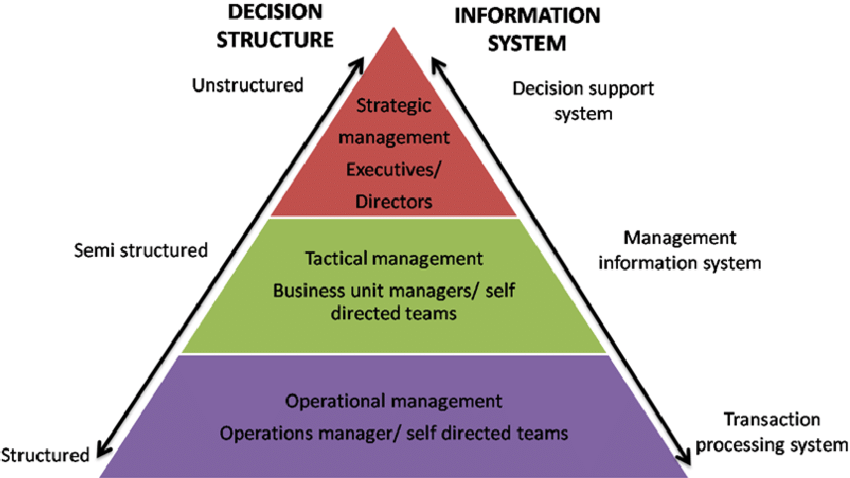
A Transaction Processing System (TPS) is the foundational operational-level system that records and processes the routine, day-to-day transactions necessary to conduct business. It captures data from everyday events like sales, purchases, inventory updates, and payroll. Its primary functions are data collection, modification, and retrieval, ensuring accuracy and reliability. Examples include point-of-sale (POS) systems and online booking engines. TPSs provide the raw data that feeds into all other systems and are critical for maintaining real-time operational efficiency, consistency, and a reliable audit trail. Their performance, measured by throughput and accuracy, is vital for daily business continuity.

2. Management Information System (MIS)

A Management Information System (MIS) transforms raw data from TPSs into structured, summarized reports for tactical managers. It focuses on monitoring, controlling, and decision-making related to current operations and short-term planning. MIS reports—like sales summaries, inventory status, or performance dashboards—typically present historical data in a routine, scheduled format (daily, weekly, monthly). The goal is to provide a clear picture of “what is happening” in the organization, enabling middle management to compare actual performance against targets, identify trends, and solve structured problems to ensure the smooth running of departments.

3. Decision Support System (DSS)

A Decision Support System (DSS) assists senior analysts and managers in making semi-structured or unstructured decisions by providing analytical models and access to specialized datasets. Unlike MIS, it is interactive, allowing users to run “what-if” analyses, simulations, and scenario planning. A DSS combines data from internal TPS/MIS and external sources (market data) with advanced analytical tools. For example, a DSS might help a logistics manager optimize delivery routes or a finance executive forecast cash flow under different economic conditions. Its strength lies in supporting complex, non-routine decisions where there is no single clear answer.

4. Executive Support System (ESS)

An Executive Support System (ESS), or Executive Information System (EIS), is a strategic-level system designed for senior executives. It provides a broad, aggregated view of organizational performance and external factors through a highly graphical, user-friendly interface like a digital dashboard. An ESS filters, compresses, and tracks critical success factors (CSFs) and Key Performance Indicators (KPIs), drawing data from internal MIS/DSS and external databases (stock markets, news). It is used for long-term strategic planning, monitoring the competitive environment, and spotting high-level opportunities or crises, supporting non-routine decision-making that requires a holistic perspective.

5. Enterprise Resource Planning (ERP) System

An Enterprise Resource Planning (ERP) system is an integrated suite of software applications that serves as a centralized system of record for the entire organization. It supports and automates core business processes—such as finance, HR, manufacturing, supply chain, and services—across departments on a unified database. The primary goal is to integrate data flow, eliminate information silos, and provide a single source of truth. Examples include SAP, Oracle, and Microsoft Dynamics. By standardizing and streamlining processes, ERPs improve operational efficiency, reporting accuracy, and cross-departmental collaboration, forming the digital backbone of the modern enterprise.

6. Knowledge Management System (KMS)

A Knowledge Management System (KMS) is designed to facilitate the creation, capture, storage, and sharing of an organization’s intellectual assets and expertise. It goes beyond data and information to manage both explicit knowledge (documented in manuals, reports) and tacit knowledge (personal know-how, experience). KMSs include corporate intranets, wikis, expert systems, and collaborative platforms. They support innovation, improve decision-making, prevent knowledge loss from employee turnover, and reduce redundant work by making best practices and lessons learned accessible to employees across the organization, fostering a culture of continuous learning.

7. Office Automation System (OAS)

Office Automation Systems (OAS) are computer-based tools designed to enhance the productivity and efficiency of daily tasks performed by data workers at the operational level. They streamline and digitize routine office procedures, facilitating better communication and information management. Core applications include email, word processing, spreadsheets, presentation software, desktop publishing, and electronic scheduling/calendaring. Modern OAS has evolved into integrated collaboration suites like Microsoft 365 or Google Workspace, which enable document sharing, video conferencing, and real-time co-editing, supporting the administrative workflow and coordination essential for a smooth-running enterprise.

8. Customer Relationship Management (CRM) System

A Customer Relationship Management (CRM) system is a strategic system that manages a company’s interactions with current and potential customers. It consolidates customer data from various touchpoints (sales, marketing, customer service) into a single database to provide a 360-degree view of the customer. Key functions include sales force automation, marketing campaign management, customer service ticketing, and analytics. Systems like Salesforce or HubSpot help businesses improve customer service, retain customers, drive sales growth, and identify valuable customer segments by analyzing behavior and trends, ultimately enhancing customer lifetime value and loyalty.

Functions of Information Systems in the Enterprise:

1. Data Processing and Management

This fundamental function involves collecting, storing, organizing, and processing raw transactional data into meaningful information. Information Systems handle high volumes of routine data from operations—such as sales, purchases, and payroll—through Transaction Processing Systems (TPS). They ensure data accuracy, consistency, and security in databases. This organized data serves as the “single source of truth” for the entire organization, enabling reliable record-keeping, audit trails, and compliance. Effective data management is the essential first step, transforming disjointed facts into a structured corporate asset that feeds all other analytical and strategic functions.

2. Facilitating Business Processes and Operations

Information Systems are engineered to streamline, integrate, and automate core business processes. Systems like ERP (Enterprise Resource Planning) coordinate workflows across departments—from procurement and inventory to manufacturing and distribution—on a unified platform. By digitizing and linking processes, IS eliminates manual handoffs, reduces redundancy and errors, accelerates cycle times, and cuts operational costs. This function is vital for daily efficiency, ensuring that the right task is performed at the right time with the right resources, thereby enhancing productivity and ensuring smooth, uninterrupted business operations from end to end.

3. Supporting Managerial Decision-Making

Information Systems provide critical support for management at all levels by delivering timely, relevant, and processed information. For tactical managers, Management Information Systems (MIS) generate routine reports on performance. For complex, semi-structured decisions, Decision Support Systems (DSS) offer modeling and “what-if” analysis. By aggregating data from various sources and presenting it through dashboards and analytics, IS reduces uncertainty. It empowers managers to move from intuition-based to data-driven decisions, improving the quality, speed, and effectiveness of choices related to planning, controlling, and problem-solving within their domains.

4. Enabling Strategic Competitive Advantage

Beyond internal efficiency, Information Systems can be leveraged strategically to create or sustain a competitive edge. This involves using technology to offer new services, enter new markets, or radically change industry dynamics. Examples include Amazon’s recommendation algorithms, Uber’s ride-hailing platform, or a bank’s mobile-first strategy. IS can create high switching costs for customers, build barriers to entry for competitors, and foster innovation. By analyzing market and competitor data, IS also helps executives identify strategic opportunities and threats, enabling proactive long-term planning to outperform rivals in the marketplace.

5. Enhancing Collaboration and Communication

Modern Information Systems break down silos by enabling seamless communication and collaboration within and beyond the organization. Tools like email, instant messaging, video conferencing, and collaborative platforms (e.g., Microsoft Teams, Slack) allow employees to share information and work together in real time, regardless of location. Enterprise social networks and intranets foster knowledge sharing and community. This function is crucial for coordinating projects, facilitating teamwork, managing remote or global teams, and improving organizational agility. Effective collaboration directly boosts innovation, problem-solving speed, and overall workforce productivity.

6. Managing Customer and Supplier Relationships

Information Systems are pivotal in managing key external relationships. Customer Relationship Management (CRM) systems consolidate all customer interactions, providing a 360-degree view to personalize marketing, streamline sales, and enhance service, thereby increasing loyalty and lifetime value. Similarly, Supply Chain Management (SCM) systems integrate with supplier networks for real-time visibility into orders, inventory, and logistics. These systems optimize the entire value chain, enabling just-in-time inventory, collaborative planning, and rapid response to market changes. This function strengthens critical partnerships, improves customer satisfaction, and increases supply chain resilience and efficiency.

7. Supporting Business Innovation

Information Systems act as a key enabler and catalyst for business innovation. They provide the technological infrastructure and data insights necessary to develop new products, services, and business models. For instance, data analytics can reveal unmet customer needs, while cloud computing and APIs allow for rapid prototyping and deployment of digital services. IS facilitates experimentation, from launching an e-commerce channel to creating a data-as-a-service offering. By reducing the cost and risk of innovation, IS helps organizations adapt to change, explore new revenue streams, and disrupt their own industries before competitors do.

Significance of Information Systems in the Enterprise:

1. Operational Efficiency and Cost Reduction

Information Systems streamline and automate core business processes, from inventory management to payroll. This reduces manual effort, minimizes errors, and accelerates task completion. For instance, an ERP system integrates functions like finance, HR, and supply chain, eliminating data silos and redundant tasks. The result is a leaner operation with lower administrative and operational costs. Enhanced efficiency allows the enterprise to do more with less, freeing up resources for strategic investments and improving overall profitability. In today’s competitive landscape, this operational excellence is essential for maintaining margins and scaling effectively.

2. Informed and Data-Driven Decision Making

IS transforms raw data into actionable intelligence. By integrating data from various departments and external sources, systems provide managers with real-time dashboards, predictive analytics, and comprehensive reports. This shifts decision-making from intuition-based to evidence-based. For example, a DSS can model market scenarios, while an MIS tracks KPIs against targets. This capability enables quicker, more accurate decisions at all levels—from daily operational choices to long-term strategic planning—reducing uncertainty and risk. Informed decisions lead to better resource allocation, timely market responses, and improved business outcomes.

3. Enhanced Competitive Advantage and Strategic Positioning

A well-implemented IS can be a source of sustainable competitive advantage. It enables new business models (e.g., Netflix’s streaming platform), creates high customer switching costs (e.g., integrated Apple ecosystem), and erects barriers to entry through technological sophistication. By leveraging data analytics and digital channels, companies can offer superior customer experiences, personalize offerings, and enter new markets faster than competitors. Strategic use of IS helps an enterprise differentiate itself, adapt to industry disruptions, and secure a leading market position, making technology a core component of its business strategy rather than just a support function.

4. Improved Customer Relationships and Service

Customer Relationship Management (CRM) systems centralize all customer interactions, providing a 360-degree view. This enables personalized marketing, efficient sales funnel management, and responsive customer support. By understanding customer preferences and history, businesses can anticipate needs, resolve issues faster, and foster loyalty. In the digital age, customers expect seamless, omnichannel experiences, and IS makes this possible. Enhanced service leads to higher customer satisfaction, increased retention, and greater lifetime value. Satisfied customers also become brand advocates, driving organic growth and strengthening the company’s reputation.

5. Facilitating Innovation and Agility

IS provides the digital infrastructure and data insights necessary for continuous innovation. It supports rapid prototyping of new products and services, such as mobile banking apps or IoT-enabled devices. Cloud platforms and APIs allow businesses to experiment and scale new ideas quickly and cost-effectively. Furthermore, real-time data on market trends and customer feedback helps identify innovation opportunities. This agility enables enterprises to pivot in response to market changes, adopt emerging technologies, and disrupt their own industries proactively, ensuring long-term relevance in a fast-paced digital economy.

6. Enabling Global Reach and Scalability

Information Systems are the backbone for operating on a global scale. They manage complexities of international logistics, multi-currency finance, and cross-border communication. Cloud-based systems allow for instant deployment and access from anywhere, supporting remote teams and international customers. E-commerce platforms open worldwide markets 24/7. IS ensures consistent processes, centralized control, and local compliance across geographies. This scalability allows businesses to grow beyond local confines, enter new regions efficiently, and manage a distributed, global workforce seamlessly, turning the world into a single, accessible marketplace.

7. Risk Management and Regulatory Compliance

Modern enterprises face significant operational, financial, and regulatory risks. IS plays a critical role in identifying, monitoring, and mitigating these risks. Systems enable real-time fraud detection, cybersecurity monitoring, and disaster recovery planning. They also automate compliance with regulations like GDPR or SEBI guidelines by ensuring accurate record-keeping, audit trails, and data privacy controls. By providing transparency and control over business processes, IS helps management foresee potential issues, enforce policies, and demonstrate compliance to regulators, thereby protecting the organization from financial losses, legal penalties, and reputational damage.
Management Information System (MIS), Concept, Features, Components, Types, Process, Advantages and Disadvantages

Management Information System (MIS) is a computer-based system that provides managers with the tools to organize, evaluate, and efficiently manage departments within an organization. Its primary purpose is to transform raw data from Transaction Processing Systems (TPS) into structured, summarized reports to support tactical decision-making. MIS focuses on monitoring, controlling, and planning current operations by presenting historical data in routine, scheduled formats like dashboards, summary reports, and trend analyses. By delivering relevant, timely information on key performance indicators (KPIs), it empowers middle management to compare actual performance against targets, identify issues, and ensure the smooth, efficient running of the business.

Features of Management Information Systems (MIS):

1. Management-Oriented and Driven

The design and development of an MIS are top-down, initiated by the needs of management. The system is built with the explicit purpose of serving the information requirements of managers at various levels—strategic, tactical, and operational. This ensures that the system outputs (reports, dashboards) are tailored to support specific managerial functions like planning, controlling, and decision-making. It is not a byproduct of operational data but a deliberate architecture to provide actionable intelligence, making it an essential tool for directing organizational performance and achieving business objectives.

2. Integrated System from Disparate Sources

A core feature of MIS is its ability to integrate data from various functional departments and Transaction Processing Systems (TPS) across the organization. It consolidates inputs from finance, marketing, production, and human resources into a unified database. This breaks down information silos and provides a holistic, cross-functional view of the organization. Integration ensures consistency, eliminates data redundancy, and allows managers to see the interconnected impact of decisions across different units, fostering coordinated and aligned actions throughout the enterprise.

3. Timely and Scheduled Reporting

MIS is designed to provide information when it is needed, following a structured reporting schedule. It generates reports daily, weekly, monthly, or quarterly, ensuring managers receive consistent updates on performance metrics. While not always real-time like a TPS, its timeliness is aligned with managerial review cycles. For example, a weekly sales summary allows a regional manager to take corrective action promptly. This predictable, scheduled flow of information supports routine planning and control activities, enabling proactive rather than reactive management.

4. Exception-Based Reporting

Beyond standard summaries, a sophisticated MIS includes exception reporting. It is programmed to highlight significant deviations from planned performance or predefined thresholds. For instance, it can automatically flag a product line where sales have fallen 15% below target or a department that has exceeded its budget. This feature directs managerial attention to areas requiring immediate intervention, improving efficiency by allowing managers to focus on critical issues and exceptions rather than sifting through volumes of routine data.

5. Support for Structured and Semi-Structured Decisions

MIS primarily aids in making structured and semi-structured decisions at the tactical and operational levels. These are recurring decisions with known information requirements, such as inventory reordering, budget allocation, or staff scheduling. By providing summarized historical data and comparative analyses, MIS reduces uncertainty and provides a factual basis for these decisions. It supports “what-if” analysis for semi-structured scenarios, helping managers evaluate the potential outcomes of different choices within a defined framework.

6. Use of Internal and Historical Data

MIS primarily relies on internal, historical data sourced from the organization’s own TPS and databases. It processes and summarizes past transactions to identify trends, patterns, and performance over time. While some systems may incorporate limited external data (e.g., market indices), the focus is on leveraging internal records to assess efficiency, productivity, and compliance with internal plans and budgets. This inward-looking analysis is crucial for internal control and operational optimization.

7. User-Friendly Output and Presentation

Effective communication of information is key. MIS provides outputs in easily understandable formats for non-technical managers. This includes structured reports, graphical dashboards, charts, and summaries. The presentation is designed to highlight key metrics and trends at a glance, facilitating quick comprehension and decision-making. The focus is on transforming complex data sets into clear, actionable intelligence, making the system accessible and valuable to its primary users—the management team.

8. Flexibility and Future-Oriented Design

While based on historical data, a well-designed MIS is built with flexibility to adapt to changing information needs. It should allow for the generation of ad-hoc reports and be scalable to include new data sources or reporting modules as the business evolves. This future-oriented design ensures the system remains relevant, supporting not just current operational control but also aiding in the formulation of future plans and strategies based on analyzed trends.

Components of Management Information Systems (MIS):

1. Data Resources

The data resource is the foundational component of any MIS. It comprises the structured collection of internal transactional data from TPS, as well as relevant external data (market reports, competitor information). This data is stored, organized, and managed in databases and data warehouses. Its quality—accuracy, timeliness, and relevance—directly determines the value of the system’s output. The data resource is the raw material that the MIS transforms into meaningful information, making its effective governance and management critical for reliable reporting and analysis.

2. Hardware

Hardware refers to the physical technology infrastructure required to operate the MIS. This includes servers for processing and storing data, computers and workstations for user access, networking equipment (routers, switches) for internal connectivity, and data centers to house the equipment. The choice of hardware influences the system’s processing speed, storage capacity, reliability, and scalability. In modern contexts, this increasingly includes cloud infrastructure, where hardware resources are provided as a service, offering flexibility and reducing the need for large capital investments in physical assets.

3. Software

Software is the set of programs and applications that process data and generate information. This includes the Database Management System (DBMS) that organizes data, the application software for generating specific reports and dashboards, and analytical tools for data mining and querying. The software component dictates the system’s functionality, user interface, and ability to transform raw data into usable formats for managers. It acts as the “brain” of the MIS, executing the logic for summarization, comparison, and presentation.

4. Procedures

Procedures are the formalized rules and guidelines that define how the MIS is used and managed. This includes operational procedures for data entry, validation, and storage; guidelines for generating standard and ad-hoc reports; and protocols for system access, security, and backup. Clear, documented procedures ensure consistency, data integrity, and effective utilization of the system by both technical staff and end-users, turning technology into a reliable business process.

5. People

People are the most vital component, encompassing all human elements involved. This includes end-users (managers, executives) who consume the information to make decisions, technical specialists (system analysts, database administrators) who design, implement, and maintain the system, and support staff. The system’s success depends entirely on the skills, training, and acceptance of these individuals. Their ability to define information needs, interpret outputs, and act on insights determines the MIS’s ultimate value to the organization.

6. Communication Networks

Communication networks are the digital pathways that enable the flow of data between all other components. This includes Local Area Networks (LANs), Wide Area Networks (WANs), and internet connectivity. Networks allow for the collection of data from remote sources, provide access to centralized databases for distributed users, and facilitate the delivery of reports and dashboards to managers’ devices. Robust, secure networking is essential for ensuring timely, reliable, and accessible information across the organization.

7. Information Products (Output)

This component is the tangible result of the MIS—the reports, dashboards, alerts, and analyses delivered to management. These information products, such as sales summaries, performance scorecards, or budget variance reports, are tailored to support specific managerial functions. Their design—clarity, relevance, and timeliness—is critical. They represent the culmination of the entire system’s work, transforming processed data into actionable intelligence that informs planning, control, and decision-making.

8. Control and Feedback Mechanisms

A mature MIS incorporates feedback loops to monitor its own effectiveness and accuracy. Control mechanisms track whether the system is meeting managerial information needs and identify errors or gaps in data. User feedback on report relevance and system usability is collected to drive continuous improvement. This component ensures the MIS remains aligned with evolving business goals and adapts to new requirements, maintaining its role as a vital management tool.

Types of Information Systems


  1. Transaction Processing Systems (TPS): Used to record and manage day-to-day business transactions. An example is a Point of Sale (POS) system, which tracks daily sales.
  2. Management Information Systems (MIS): These systems guide middle-level managers in making semi-structured decisions. They use data from the Transaction Processing System as input.
  3. Decision Support Systems (DSS): Utilized by top-level managers for semi-structured decision-making. DSS systems receive data from the Management Information System and external sources like market forces and competitors.

Process of Management Information System (MIS):

1. Determination of Information Needs

The first step is a systematic analysis to define what information managers need to perform their roles effectively. This involves identifying key decision areas, strategic objectives, and performance indicators for different management levels. Questions like “What data is critical for inventory control?” or “Which KPIs does a sales head need weekly?” are answered. This stage aligns the MIS design directly with managerial requirements, ensuring the system delivers relevant, actionable intelligence rather than just raw data, and involves collaboration between end-users (managers) and system designers.

2. Data Collection and Input

This process involves gathering raw data from identified internal and external sources. Internally, data is sourced continuously from Transaction Processing Systems (TPS) across departments (sales, production, finance). Externally, data may be collected from market feeds, economic reports, or competitor analysis. This data is then validated and entered into the system’s databases. Accurate collection and error-free input are critical, as the quality of all subsequent information depends on the integrity of this foundational data.

3. Data Processing and Transformation

Here, the collected raw data is converted into meaningful information. This involves a series of operations: classification, sorting, calculating, summarizing, and aggregating. For instance, thousands of daily sales transactions are totaled into weekly revenue figures. Data is processed using predefined business rules and models. This transformation is the core function where disparate data points are synthesized into structured summaries, trends, and comparisons that managers can understand and use for decision-making.

4. Storage and Management of Processed Data

Processed information is organized and stored for immediate and future access. This involves managing databases or data warehouses where summarized data, historical trends, and performance metrics are retained. Effective storage ensures data integrity, security, and efficient retrieval. This stage creates an organizational memory—a repository of past performance and trends that managers can query to analyze historical patterns and support longitudinal analysis for planning.

5. Information Generation and Retrieval

In this stage, the system produces the required outputs for management. Based on scheduled needs or ad-hoc queries, the MIS retrieves stored data and formats it into standardized reports, dashboards, or graphical analyses. These outputs—such as a monthly profit & loss statement or a real-time inventory status dashboard—are tailored to the user’s role. The system must provide timely, accurate, and easily interpretable information that managers can retrieve on-demand to support their specific activities.

6. Dissemination and Distribution of Information

The generated information must be communicated effectively to the right managers at the right time. This process involves distributing reports via email, publishing them on intranet portals, or pushing alerts to mobile devices. Distribution protocols ensure that sensitive information reaches only authorized personnel. Efficient dissemination closes the loop, ensuring the intelligence produced by the MIS is delivered into the hands of decision-makers who can act upon it, thereby fulfilling the system’s primary purpose.

7. Utilization and Feedback for System Refinement

The final, cyclical stage involves managers actively using the information for planning, control, and decision-making. Their experience and the outcomes of their decisions generate critical feedback. This feedback on the information’s relevance, accuracy, timeliness, and format is communicated back to the MIS team. This input is used to continuously refine the system—adjusting data sources, processing rules, or report formats—ensuring the MIS evolves to meet changing managerial needs and remains a dynamic, valuable organizational tool.

Advantages of Management Information System (MIS):

1. Enhanced Decision-Making Efficiency

MIS transforms raw data into structured, summarized information, providing managers with a fact-based foundation for decisions. By delivering timely reports on key performance indicators (KPIs), budgets, and trends, it reduces reliance on intuition and guesswork. This leads to faster, more accurate, and confident decisions at tactical and operational levels. For example, a sales manager can quickly identify underperforming regions based on comparative reports and reallocate resources. The system minimizes uncertainty, allowing managers to focus on analysis and action rather than data collection and manual calculation.

2. Improved Operational Control and Planning

MIS serves as a vital tool for monitoring and controlling day-to-day operations. It provides regular performance reports that compare actual results against plans and budgets, highlighting variances. This enables managers to identify bottlenecks, inefficiencies, or deviations early and take corrective action promptly. Furthermore, by analyzing historical trends and current performance data, MIS supports effective short-term and medium-term planning, such as setting realistic sales targets or production schedules, ensuring resources are aligned with organizational goals.

3. Strategic Insight and Competitive Advantage

By integrating data from across the organization, MIS provides a holistic view of business performance and market position. Analysis of long-term trends, customer behavior, and operational efficiency can reveal strategic opportunities and threats. This insight helps senior management in formulating long-term strategies, such as entering new markets or discontinuing unprofitable products. A well-implemented MIS can thus become a source of sustainable competitive advantage by enabling proactive, data-driven strategy rather than reactive management.

4. Increased Organizational Efficiency and Coordination

MIS eliminates information silos by integrating data from all functional areas (finance, marketing, HR, production). This creates a single source of truth, improving coordination between departments. For instance, production can align output with sales forecasts, and procurement can plan based on inventory levels. Streamlined information flow reduces redundancy, minimizes errors, and accelerates processes. The resulting efficiency gains lower operational costs, improve resource utilization, and enhance the organization’s overall agility and responsiveness.

5. Better Communication and Collaboration

MIS acts as a centralized platform for information dissemination, standardizing communication across management levels. Reports and dashboards ensure all managers work from the same, up-to-date data set, fostering alignment and shared understanding. This transparency improves vertical and horizontal collaboration, as teams can easily access the information needed to coordinate projects and make interdependent decisions. Enhanced communication reduces conflicts stemming from misinformation and builds a more cohesive, informed organizational culture.

6. Cost Reduction and Resource Optimization

Automating the collection, processing, and reporting of management information significantly reduces administrative and clerical costs associated with manual report generation. MIS also enables data-driven resource optimization. By providing clear visibility into operations, it helps identify areas of waste, overstaffing, or underutilized assets. Managers can optimize inventory levels, streamline workflows, and improve workforce productivity, leading to direct bottom-line savings and a higher return on investment in both human and capital resources.

7. Support for Performance Management

MIS provides the objective data necessary for effective performance measurement and management. It tracks individual, departmental, and organizational KPIs, facilitating fair and transparent performance evaluations. This data supports management by objectives (MBO), helps in setting benchmarks, and identifies training or development needs. By linking performance data to outcomes, it motivates employees, aligns individual goals with corporate strategy, and creates a culture of accountability and continuous improvement.

Disadvantages of Management Information System (MIS):

1. Fast and Accurate Data Processing

Transaction Processing Systems handle a large number of business transactions quickly and without errors. They record sales, payments, payroll, and inventory updates in real time. In Indian banks and retail stores, TPS ensures every transaction is saved correctly. This reduces manual work and mistakes. Fast processing helps businesses serve customers better and keep records up to date. Accurate data also supports better reporting and decision making.

2. Improved Operational Efficiency

TPS automates routine business activities such as billing, order processing, and salary payments. This saves time and reduces paperwork. Indian companies use TPS in supermarkets, railway booking systems, and online payments. Automation allows employees to focus on more important tasks. As work becomes faster and smoother, overall business efficiency increases and operating costs reduce.

3. Better Record Keeping and Data Security

TPS stores transaction data in organized digital databases. Businesses can easily retrieve past records for audits, tax filing, and analysis. Indian firms benefit during GST reporting and financial reviews. Modern TPS also includes security features like passwords and access control to protect sensitive information. Proper record keeping improves transparency and trust.

4. Real Time Information Availability

TPS updates information instantly after every transaction. For example, when a product is sold, inventory levels change immediately. This helps managers track stock, cash flow, and customer activity in real time. Indian retail and logistics companies rely on real time data to avoid shortages and delays. Quick information supports better operational decisions.

Management Information System Role in Decision making Process:

1. Providing a Structured Factual Foundation

MIS transforms disparate, raw data from operational systems into organized, summarized information. It delivers structured reports on sales, inventory, finances, and productivity. This provides managers with a reliable, objective, and comprehensive factual base, replacing intuition or fragmented data with concrete evidence. By presenting clear metrics and historical trends, MIS eliminates ambiguity and establishes a shared truth, allowing managers to confidently frame problems and evaluate the current state of operations before proceeding with any analysis or choice.

2. Enabling Identification of Problems and Opportunities

Through routine and exception-based reporting, MIS acts as an early warning system. It highlights deviations from plans, such as a drop in regional sales, a cost overrun, or a spike in customer complaints. By systematically tracking KPIs, it helps managers identify negative trends (problems) and spot positive patterns (opportunities), such as an unexpectedly successful product line. This proactive identification ensures that decision-making is triggered by timely, data-driven insights rather than by crisis or chance, allowing for strategic intervention at the optimal moment.

3. Supporting the Generation and Evaluation of Alternatives

Once a problem or opportunity is identified, MIS aids in exploring solutions. It allows for “what-if” scenario analysis by modeling the potential outcomes of different courses of action. Managers can use historical data to simulate the impact of a price change, a new marketing spend, or a shift in production schedules. By providing predictive reports and comparative analyses, MIS helps generate viable alternatives and objectively evaluate their projected consequences on key metrics like revenue, cost, and market share, leading to more informed and rational choice selection.

4. Facilitating the Implementation of Decisions

After a decision is made, MIS plays a crucial role in translating the choice into actionable plans. It provides the detailed operational data needed to create implementation schedules, allocate budgets, and assign resources. For instance, launching a new product requires coordinated data from production capacity, inventory levels, and marketing budgets—all supplied by the MIS. By serving as the central information hub, it ensures all departments work from synchronized data, enabling clear communication of tasks and responsibilities for effective execution.

5. Enabling Monitoring, Control, and Feedback

Post-implementation, MIS is essential for tracking the results of the decision. It generates follow-up reports that measure actual performance against the expected outcomes defined during planning. This continuous monitoring allows managers to control the process, identify any implementation gaps or unforeseen issues, and make necessary mid-course corrections. The feedback loop created by this monitoring turns the decision-making process into a cycle of continuous improvement, where the results of past decisions inform and refine future ones.

error: Content is protected !!