Consumer Learning Theory

According to Kotler’s Definition, learning involves changes in an individual’s behavior arising out of the experience. Most of the human behavior is learned over time, out of the experience.

Following are the features of consumer learning

  • Consumer learning is a process. A process which continually changes and acquires new knowledge.
  • This knowledge can be obtained from reading, discussing, observing, thinking, etc.
  • Newly acquired knowledge or personal experience, both serve as feedback.

Elements of Consumer Learning

Motivation is the driving force of all important things to be learnt. Motives allow individuals to increase their readiness to respond to learning. It also helps in activating the energy to do so. Thus the degree of involvement usually determines the motivation to search information about a product.

For example, showing advertisements for summer products just before summer season or for winter clothes before winters.

Motives encourage learning and cues stimulate the direction to these motives. 

Cues are not strong as motives, but their influence in which the consumer responds to these motives.

For example, in a market, the styling, packaging, the store display, prices all serve as cues to help consumers to decide on a particular product, but this can happen only if the consumer has the motive to buy. Thus, marketers need to be careful while providing cues, especially to consumers who have expectations driven by motives.

Response signifies how a consumer reacts to the motives or even cues. The response can be shown or hidden, but in either of the cases learning takes place. Often marketers may not succeed in stimulating a purchase but the learning takes place over a period of time and then they may succeed in forming a particular image of the brand or product in the consumer’s mind.

Reinforcement is very important as it increases the probability of a particular response in the future driven by motives and cues.

Consumer Behavioral Learning Theories

There are various theories which are developed to explain the learning theories. The below are the major theories related to consumer behavior.

Classical Conditioning theory refers to learning through repetition. This is referred to as a spontaneous response to particular situation achieved by repetitive exposure. It is such a kind of a behavioral theory which says, when a stimulus is connected to or paired with another stimulus, it serves to produce the same response even when used alone.

For example, if you usually listen news at 9 pm and have dinner too at 9 pm while watching the news then eventually the sound of news at 9pm may make you hungry even though you are not actually hungry or even if the dinner is not ready.

Instrumental Theory is developed by B F SKINNER, an American psychologist, he was the first to develop this model of learning. Instrumental theory suggests that human beings learn by trial and error method and then find out a particular stimulus that can yield best results. Then, this is subsequently formed as a habit

This theory is very important and applies to many common situations in the context of consumer behavior. It suggests that consumers learn by means of trial-and-error method in which some purchase behaviors result in a more favorable outcome.

Consumer memory
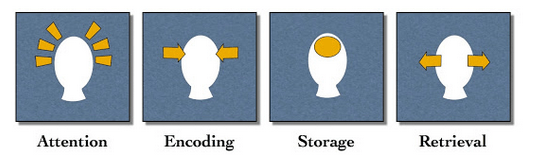
Memory is the process of storing and retrieving knowledge.

  • Encoding is what happens when information is interpreted and placed in memory.
  • Storage is the retaining of information in memory.
  • Retrieval is what you do when you locate a stored memory.

Memory Systems

There are three distinct memory systems:

Sensory memory

The briefest memories are formed from sensory stimuli. If the individual finds the sensory experience significant enough to warrant further investigation, it may pass into short-term memory.

Short-term memory

We process selected bits of information and store it for a limited time. We store this information by combining small pieces into larger ones in a process called chunking.

Long-term memory

This is the permanent storage of information, which can be recalled at will. This occurs when we consider the meaning of a stimulus and relate it to other information already in memory.

Marketers attempt to engage our existing memories and experiences in order to get their brand message into our long-term memory. They also make use of repetition and redundancy in advertising in order to present us with many opportunities to commit them to long-term memory.

Types of Behavioral Learning

There are three types of behavioral learning:

  1. Classical Conditioning
  2. Operant Conditioning
  3. Observational Learning

About the Three Types of Behavioral Learning

Both classical and operant conditioning are forms of associative learning; meaning associations are made between events that occur together. Observational learning is learning by observing others. Although rooted in behaviorism, the observational learning theory is considered to be a bridge between behaviorism and cognitive learning theories.

Classical Conditioning: Learning through association  

Operant Conditioning: Learning through consequences

Observational Learning: Learning through observation

Behaviorism

Behaviorism is the school of thought that seeks to measure only observable behaviors. Hence, it only examines outward behavior when trying to understand if learning occurred.

Behaviorism stems from the work of John Watson, B.F. Skinner, and Ivan Pavlov. These Behaviorism theorists believe that knowledge exists independently and outside of people. They view the learner as a blank slate who must be provided the experience. Behaviorists believe that learning actually occurs when new behaviors or changes in behaviors are acquired through associations between stimuli and responses. Thus, association leads to a change in behavior.

There are two core theories that stem from Behaviorism;

Classical Conditioning – Ivan Pavlov

Operant Conditioning – B.F. Skinner

As indicted above, observational learning is a bridge between behaviorism and cognitive learning.

The Three Types of Behavioral Learning

Classical Conditioning

Classical conditioning is a learning process in which an association is made between two stimuli. With classical conditioning, two stimuli are linked together to produce a new learned response. One stimulus is a neutral and the other evokes a natural response. After learning the association, the neutral stimulus elicits the conditioned response.

The theory of classical conditioning was introduced by Russian physiologist, Ivan Pavlov. Pavlov conducted his classic experiment involving dogs. In his experiment, he conditioned the dogs to associate the sound of a bell with the presence of food. He paired the smell of food which was the naturally occurring stimulus with the neutral stimulus of a ringing bell. Once an association had been made between the two, the sound of the bell alone could elicit a response. The dogs responded to the sound of the bell by salivating.

In his experiment, the bell was neutral stimulus since the bell itself did not produce the dogs’ salivation. However, by pairing the bell with the stimulus of the smell of the food, which did produce the salivation response, eventually, the bell by itself was able to trigger the salivation response. Thus, the “conditioning” was achieved when the sound of the bell on its own was able to make the dogs salivate in anticipation for the food.

Operant Conditioning

Operant conditioning is a learning process in which responses are controlled by consequences. The likelihood of a certain response occurring is either increased or decreased due to either a reinforcement or a punishment consequence. A reinforcement helps to increase a behavior, while a punishment helps to decrease a behavior.

The term operant conditioning was coined by a behaviorist B.F. Skinner. Skinner conducted experiments with rats using a device called the Skinner box. The box was a cage set up so the rats could automatically get a food reward if they stepped on a lever. The lever caused food to be released. From these experiments, Skinner observed how reinforcement could lead to increases in behaviors where punishment would result in decreases in behaviors.

Reinforcement

Reinforcement is a consequence that increases the likelihood a response will occur. If you are using reinforcement, you are trying to increase a behavior.

There are two types of reinforcement.

  • Positive reinforcement
  • Negative reinforcement

Positive means adding a stimulus, while negative means removing a stimulus. Thus, positive reinforcement is the addition of a good stimulus after a response in order to encourage the response to continue. An example of this would be giving someone praise after a desired behavior is displayed.

In contrast, negative reinforcement is the removal of an undesirable stimulus after a response so that the response will occur more often. An example of this would be fastening your seatbelt in a car so the beeping sound will stop. Since the undesirable stimulus is removed when you fasten your seatbelt, you are encourage to fasten your seatbelt.

Negative reinforcement is often confused with punishment because of its name. However, negative reinforcement involves removing a negative consequence to increase a behavior, while punishment seeks to decrease a behavior.

Punishment

Punishment is a consequence that decreases the likelihood a response will occur. If you are using punishment, you are trying to decrease a behavior.

There are two types of punishment:

  • Positive punishment
  • Negative punishment

Positive punishment is the addition of an undesirable stimulus after a response so that the response will occur less or stop. An example would be to give someone extra work for misbehaving.

Negative punishment is the removal of a pleasing stimulus after a response so that the response will occur less or stop. An example would be taking away television or video games from a child for misbehaving so he or she will stop misbehaving.

Observational Learning

Observational learning or modeling is a process in which learning occurs through observing the behaviors of others and then imitating those behaviors. Observational learning allows for learning without any direct change to behavior. This is why it is not considered strict behaviorism. It is more of a link between behaviorism and cognitive learning.

Observational learning is associated with the work of Albert Bandura and his social learning theory. The social learning theory suggests that learning occurs through observation and interaction with other people.

Bandura first demonstrated observational learning in his famous “Bobo-doll” experiment. In this experiment, children imitated the actions of adults.   After seeing adults hit a doll, children would assault the Bobo-doll. The experiment showed that children learned the aggressive behavior by observing it.
Product Personality

Consumers tend to assign various descriptive “personality like” traits or characteristics to different brands in a wide variety of product categories. This is one of the most effective use of the concept of personality in marketing applications. Consumers have consistent patterns that guide their decisions to all brands or consumption situations.

Brand Personality is a portion of the brand’s overall image, understood perhaps by many consumers but more attractive to some consumers than to others. We can define brand personality as the communication goals related to the attributes inherent in a product as well as the profile of the perceptions received by consumers about specific brands.

Brands basically have three dimensions:

(1) Physical attributes: Such as color, price, ingredients, and so forth.

(2) Functional attributes: This means how the brand is functioning or we can say the consequences of using a brand.

(3) Brands characterization: This means brands personality as perceived by consumers. Brands may be characterized as modern or old–fashioned, or lively or exotic, just the same way as people are characterized.

The brand or product personalities can further be understood by focusing on the emotional responses that are evoked among consumers. This means consumers buy products but want more than the functional or tangible attributes provided by the product. Along with functional attributes they want good experience, good emotional response from using the product. These are also called as “hedonic” benefits.

Consumers not only ascribe personality traits to products or services; they also tend to associate personality factors with specific colors. For example, yellow is associated with “novelty” and black means “sophistication. Therefore, brands wishing to create a sophisticated personal or a premium image use labelling or packaging that is primarily black.

In some cases, various products or even brands are associated with a specific color with personality like connotations. For instance, Coco- cola is associated with red, which connotes excitement. Mc Donalds logo is of yellow and red.

Personal Values i.e. Self Concept or Self Images:

Why do some people make their consumption decisions differently than others? Personality can be one reason and another can be personal values. Personal values answer the question, “Is this product for me”? These are particularly important in the need-recognition stage of consumer decision making. Values are also used by consumers while evaluating brands as “Is this brand for me?

Values are basically “ends” people seek in their lives. Marketing often provides the “means” to reach these ends. Rokeach has defined values as an enduring belief that a specific mode of conduct or end-state of existence is personally or socially preferable to an opposite or converse mode of conduct or end state of existence. Values are relatively stable but not completely static beliefs about what a person should do. Values are concerned with the goals and the ways of behaving to obtain goals.

Self Concept theory says that individuals have a concept of self based on who they are that means actual self. And also the concept of who they think they would like to be that is the ideal self. Consumers are asked to describe how they see themselves or how they would like to see themselves on attributes like:

  • Happy
  • Serious
  • Dependable
  • Practical
  • Sensitive
  • Aggressive
  • Energetic

Self-controlled

Self-Concept means the desire to attain self–consistency and the desire to enhance one’s self–esteem. Attaining self-consistency means that individuals will act in accordance with their concept of actual self. According to the marketer actual self means consumers purchases are influenced by the image they have of themselves.

They buy products which they perceive as similar to their self- concept. For example: beer, cigarettes, soap, toothpaste, car, clothes etc. all are purchased keeping in mind his/her self-concept. Ideal self s concept is related to one’s self – esteem.

According to the marketer, a person who is dissatisfied with oneself will try and purchase products that could enhance their self esteem. For example, a woman who would like to be confident, efficient, modern may buy a different type of perfume or shop at different stores than a woman who would like to be more warm and attractive.

It is not always like this that our self image influences the products we choose but also the products we choose frequently influences our self–image. The products purchased with symbolic (badge) value say something about us and also what we feel about ourselves. Extended self in simple terms means, we are what we wear, and we are what we use, this is also known as symbolic interactionism.

This means it emphasizes the interaction between individuals and the symbols in their environment. This shows that consumers buy products for their symbolic value in enhancing their self concept. For example, products like Rolex watches. Omega watches, Sony CD system, Nike, Reebok shoes, BMW, Hyundai Accent etc., all have symbolic value.

Advertises have understood the symbolic role of products in influencing self-image, therefore, they are using this concept successfully in their ads. Life style Concept.

Consumer Needs

Needs, Goals and Motives:

Motivation can also be described as the driving force within individuals that impels them to action. This driving force is the result of tension, which in turn is because of unfulfilled needs. To reduce tension, every individual strives for fulfilling their needs. This basi­cally, depends on each individual how they fulfill their needs i.e. individual thinking and learning (experiences). Therefore, marketers try to influence the consumer’s cognitive processes.

Needs:

Every individual has needs, they are innate and acquired. Innate needs are also called physiological needs or primary needs which include food, water, air, shelter or sex, etc. Acquired needs are those needs that we learn from our surroundings / environment or culture. These may include need for power, for affection, for prestige, etc. These are psychological in nature; therefore they are also called as secondary needs.

Goals:

Goals are the end result of motivated behaviour.

From marketer point of view, there are four types of goals:

(a) Generic goals

General classes of goals that consumers select to fulfill their needs. For example, need for washing hands.

(b) Product specific goals

For washing hands what kind of product is used. For example, use soap, liquids etc.

(c) Brand specific goals

For example, which soap: Lux, Pears etc., to be purchased.

(d) Store specific goals

From where that product must be purchased.

Goal Selection

The goals selected by individuals depend on their personal experiences, physi­cal capacity, goal’s accessibility in the physical and social environment and above all the individual’s cultural norms and values. For example, if a person has a strong hunger need, his/her goal will depend on what is available at that moment, in which country he is i.e., if in India cannot eat steak, as it is against his values and beliefs. He will have to select a substitute goal which is more appropriate to the social environment.

An individual’s own perception of his/her also influence the selection of the goal. The products a person owns, would like to own, or would not like to own are often perceived in terms of how closely they are congruent with the person’s self image. It is seen that usually that product is selected by an individual which has a greater possibility of being selected than one that is not.

Needs and goals are interdependent, existence of one is impossible without the other. For example, sometimes people join a club but is not consciously aware of his social needs, a woman may not be aware of her achievement needs but may strive to have the most successful boutique in town. One reason for this can be that individuals are more aware of their physiological needs than they are of their psychological needs.

Motives

Consumer researchers have given two types of motives-rational motives and irrational (emotional) motives. They say, that consumers behave rationally when they consider all alternatives and choose those that give them the greatest utility. This is also known as economic man theory.

Marketers meaning of rationality is when consumers select goals based on totally objective criteria such as size, weight or price, etc. Emotional motives imply the selection of goals according to personal or subjective criteria. For example, desire for status, individuality, fear of owning the product (from society), pride, affection, etc.

It is assumed that consumers always attempt to select alternatives that in their view, serve to maximize satisfaction. The measurement of satisfaction is a very personal process, based on the individual’s own needs structure as well as on past behavioural and social experiences.

It is seen that what may appear irrational to others may be perfectly rational in consumer’s opinion. For example, if an individual purchases a product to enhance self-image and considers this to be a rational decision and if behaviour does not appear rational to the person at the time of purchasing then he would have not purchased. Therefore, it is very difficult to distinguish between rational and emotional consumption motives.

Can Needs be Created?

This is a very ancient question about marketing and motivational research can help us provide an answer to it. Like the products ‘Hit’ spray for cockroaches and ‘Hit’ for mosquitoes. The consumers decided for themselves that the psychological satisfaction obtained from using the cockroach spray was more important to them than the need for a cleaner and more efficient product.

People say that needs are created for them by the marketer through subliminal method. To some extent one can influence the consumer through subliminal percep­tion; the effects are probably not very great or very specific. So, there is no evidence whatsoever that anyone can create a need in a consumer. Marketers and advertisers can only try to stimulate an existing need or can channel consumers need in a certain direction towards one product or brand rather than another, but the results are unpredictable.

Freudian, Non-Freudian Theory

The Psychoanalytic Theory of Freud

Sigmund Freud, the father of psychology, became famous with his psychoanalytic theory of personality. In fact, the theory is regarded as the cornerstone of modern psychology. Sigmund based his theory on certain assumptions which is as follows:

Unconscious needs or drives lie at the heart of human motivation and personality.

The socialization process that takes place within people in a social set up has a huge impact on individual behavior. Freud explained much of how the psyche or the mind operates, and proposed that, human psyche is composed of parts within our awareness and beyond our awareness.

He said that all behavior within an individual cannot be explained, much lies in the subconscious.

  • Id: According to Freud’s psychoanalytic theory of personality, the id operates based on the pleasure principle, which stresses on immediate fulfillment of needs. The id is the personality component made up of unconscious psychic energy which satisfies basic urges, needs, and desires.
  • Ego: Ego is that state of awareness which thinks of you as separate from the other. It always thinks of the glories of the past and hopes of the future and focuses on guiltiness. It always thinks of what was and what could be.
  • Super Ego: The superego provides guidelines for making judgments. It is the aspect of personality that holds all our moral standards and ideals that we acquire from both parents and society.

Neo-Freudian Theory

There were a group of psychologists who believed that social interaction and resultant relationships formed the basis for the growth and development of personality. Here, they disagreed with their contemporary, Freud, who believed that personality was:

  • Biological and rooted in genetics, and
  • Was groomed as a result of early childhood experiences. This group of researchers who laid emphasis on the process of socialization came to be known as the Neo. To form a personality, social relationships are very important.

Based on this, consumers are classified into three personality types:

  • Complaint Personalities: They prefer love and affection and so they move towards them and so they prefer known brands.
  • Aggressive Personalities: They tend to move against others and they show off their need for power, success etc which is quite manipulative.
  • Detached Personalities: They are not much aware of brands and are more self-reliant and independent.

Marketers also tend to use Neo-Freudian theories while segmenting markets and positioning their products.

Nature of Consumer Attitudes

Consumer attitude may be defined as a feeling of favourableness or unfavourableness that an individual has towards an object. As we, all know that an individual with a positive attitude is more likely to buy a product and this results in the possibility of liking or disliking a product.

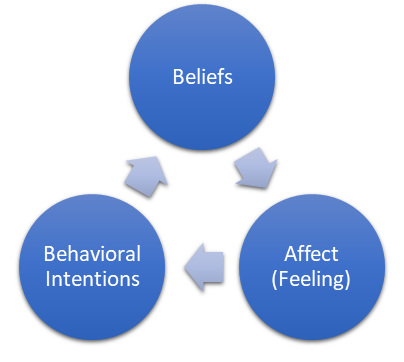
Consumer attitude basically comprises of beliefs towards, feelings towards and behavioral intentions towards some objects.

Belief plays a vital role for consumers because, it can be either positive or negative towards an object. For example, some may say tea is good and relieves tension, others may say too much of tea is not good for health. Human beliefs are not accurate and can change according to situations.

Consumers have certain specific feelings towards some products or brands. Sometimes these feelings are based on certain beliefs and sometimes they are not. For example, an individual feels uneasy when he thinks about cheese burst pizza, because of the tremendous amount of cheese or fat it has.

Behavioural intentions show the plans of consumers with respect to the products. This is sometimes a logical result of beliefs or feelings, but not always. For example, an individual personally might not like a restaurant, but may visit it because it is the hangout place for his friends.

Functions of Attitudes

The following are the functions of attitudes

  • Adjustment Function: Attitudes helps people to adjust to different situations and circumstances.
  • Ego Defensive Function: Attitudes are formed to protect the ego. We all are bothered about our self-esteem and image so the product boosting our ego is the target of such a kind of attitude.
  • Value Expression Function: Attitudes usually represent the values the individual possesses. We gain values, though our upbringing and training. Our value system encourages or discourages us to buy certain products. For example, our value system allows or disallows us to purchase products such as cigarettes, alcohol, drugs, etc.
  • Knowledge Function: Individuals’ continuously seeks knowledge and information. When an individual gets information about a particular product, he creates and modifies his attitude towards that product.

Models of Attitude

The following are the models of attitude

  • Tri-component Model: According to tri-component model, attitude consists of the following three components.
  • Cognitive Component: The first component is cognitive component. It consists of an individual’s knowledge or perception towards few products or services through personal experience or related information from various sources. This knowledge, usually results in beliefs, which a consumer has, and specific behavior.
  • Affective Component: The second part is the affective component. This consists of a person’s feelings, sentiments, and emotions for a particular brand or product. They treat them as the primary criteria for the purpose of evaluation. The state of mind also plays a major role, like the sadness, happiness, anger, or stress, which also affects the attitude of a consumer.
  • Conative Component: The last component is conative component, which consists of a person’s intention or likelihood towards a particular product. It usually means the actual behavior of the person or his intention.

Properties of Attitudes:

Attitudes can vary along a number of dimensions or properties. They are:

(i) Favourability:

A person may like Coke or Pepsi and dislike others like Fanta, Mirinda, Canada Dry etc.

(ii) Intensity:

This means, the strength of liking or disliking. For example, consumer may be liking two brands at a time but he/she may be more positive towards one.

(iii) Confidence:

This means, attitude is the confidence with which they are held. Intercity and confidence differ slightly. For example, a person may be equally confident that he/she really likes Pepsi but may be slightly favourable toward Coke.

It is important for a marketer to study the degree of confidence associated with an attitude because:

(a) It can affect the strength of the relationship between attitudes and behaviour.

(b) It can affect an attitudes susceptibility to change. That means, more strongly held attitude is more resistant to change.

(iv) Stability:

Some attitudes are stable over an extended period of time, others will change. This dynamic nature of attitudes is largely responsible for the changes in consumers lifestyles. For exam­ple, people attitude towards fashion is changing. Also they are changing in health attitudes this means, it is a great news for fitness clubs, sporting equipment and clothing companies.

Attitude can vary in terms of whether it is based on the perceived utilitarian Vs. hedonic properties of the attitude object. For example, consumers attitude towards toothpaste will be more in knowing their functional benefits. For other products/services like amusement parks, movies, ballets, music etc. are valued for their ability to influence consumers emotions. These properties help in developing effective advertising appeals.

How Attitude is Developed?

To understand the role of attitudes in consumer behaviour, we must understand how they develop and what are the functions they perform. The attitudes that consumers hold are, a result of their prior experiences. Attitudes develop over time through a learning process and are affected and also formed by family influences, peer group influences, personality, experience and information (from environment). Environmental factors have a strong influence on attitudes formation by shaping the type, amount, and quality of information and experience available to consumers.

Family Influences:

Family is an important influence on purchase decisions. Bennet and Kassarjian say, “Attitudes toward personal hygiene, preferences for food items etc. are acquired from parents.”

Peer Group Influences:

Researches say that peer groups are much more likely than advertising to influence attitudes and purchasing behaviour.

Personality:

Personality also affects consumer’s attitudes. Traits such as aggression, extrover­sion, submissiveness or authoritarianism may influence attitudes toward brands and products.

Information and experience:

According to learning theory, consumer’s past experiences influ­ence their brand attitude and condition their future behaviour. It is seen that band loyalty will quickly end if the brand does not perform well. Therefore, information and experience also determines attitude.

Role of Direct or Indirect Experience:

Attitudes are formed as a result of direct contact with the object. Products that fails to perform as expected can easily lead to negative attitudes. Sometimes, even in absence of actual experience with an object one can form attitude. For example, many consum­ers have never driven Mercedes – Benz or vacationed in Switzerland but then also form positive attitude for this. Similarly, the consumers can form an attitude by just seeing the ad that means, they can form the product attitudes.

Attitudes based on direct experience are held with more confidence. This means consumers form stronger convictions about the product if had an actual direct experience with it.

These processes that govern attitude formation are very important in order to develop strategies and activities that will create, reinforce, or modify consumer attitudes.

Functions of Attitude:

Daniel Katz has proposed four functions of attitudes that explains how they serve the individu­als.

(a) Utilitarian Function:

This helps the consumers in achieving desired benefits. For example, in small car segments, marketers usually reflects the utilitarian function of attitudes in the ad. likeby featuring performance characteristics, mileage etc. Similarly, in the ad. of toothbrushes, they reflect utility of cleaning the teeth and giving them whiter look etc.

(b) Value – Expressive Function:

Attitudes can express consumers self – images and value systems. This specially holds true for high involvement products that is, costly products. Advertisers usually try to appeal to the value – expressive nature of attitudes by implying that use or purchase of a certain item will lead to self-enhancement. In this way, they appeal to large segment who value these self expressive traits.

The self – image of an individual purchasing a motorbike, for example, may be of strong, domineering and hard – driving person who likes to gain the upper hand. Like for Kinetic Honda & Kawasaki Bajaj two different types of self images are attached. In the former, the person with strong built up will be best suited and in the later, the person with not so good physique.

Another example can be Revlon Cologne ad. that suggests user is a confident, self-award, warm individual.

(c) Ego – Defensive Function:

Attitudes protect the ego from anxieties and threats. Consumers purchase many products, like mouthwashes to avoid bad breath or dandruff shampoo etc. these are basically anxiety – producing situations. This means consumers develop positive attitudes towards brands associated with social acceptance, confidence etc. For example. Head & Shoulders avoid embarrassment of flaking from dry scalp.

(d) Knowledge Function:

Consumers are exposed to the environment full of information. Consumers sort all of the messages, ignoring the less – relevant information. They have confusion and uncertainty while purchasing any product (Specially high involvement) but this function reduces all the uncertainties. Advertisements provide the valuable information about new brands or new charac­teristics of existing brands.

From the above functions, we have learnt that they affect the individual’s overall evaluation of an object. For example, two individuals having equally favourable attitudes toward mouthwash will vary in the nature of these attitudes. This will depend on whether they purchase because of utilitarian function (i.e. for freshness) or an ego – defensive function (i,e., to avoid bad breath). So both the individuals should be approached in the similar manner.

Models of Attitudes:

Psychologists have constructed these models to understand the relationship between attitudes and behaviour, and to capture the underlying dimensions of an attitude. There are three important attitude models: the tricomponent attitude model, multi – attribute models, the trying – to – consume model, and attitude – toward – the – ad models. Tricomponent attitude model, we have already explained in the beginning while explaining the nature of consumer attitudes.

Multi – Attribute Attitude Model:

Multi – attribute attitude model examines attitudes in terms of selected product attributes or beliefs. There are many variations of this model but Martin Fishbein and his associates has done great amount of research on it.

It is important for businesses to know whether consumers have favourable or unfavourable attitudes toward their products, it is also important to understand the reason for these attitudes. Traditionally, to understand this, the cognitive component of attitude is studied.

Now, more emphasis is aid upon the important beliefs a person holds about the attitude object. This is explained by Fishbein in the various models, we will study attitude toward – object model, the attitude – toward – behaviour model and the theory – of – reasoned – action model.

Attitude – toward – Object – Model:

Attitude – toward – object model helps in measuring attitudes toward a product category or specific brands – Model can be explained as the attitude toward a given object (product) is based on the summed set of beliefs about the object’s attributes weighted by the evaluation of these attributes.

Attitude – toward – Behaviour Model:

The focus of Fishbein’s attitude – toward – behaviour model is the individuals attitude toward behaving or acting with respect to an object rather than the attitude toward the object itself.

Theory of Reasoned – Action Model:

In this model, a comprehensive integration of attitude components are represented into a structure that is designed, so that, it is explained in a better manner and prediction of behaviour is also better. Here also three components are used as in tricomponent model like cognitive component, affective component and a conative component. But in this model, arrangement of these components are different.

If we examine critically, the best predictor of behaviour is the intention to act. Thus, if researchers are interested in predicting behaviour (i.e., the act of purchasing a particular service, product or brand), they would directly measure intention. If the researchers further are interested in knowing the underlying factors that lead a consumer to act in a particular situation, they will find two factors that is, consumer’s attitudes toward the behaviour and the subjective norm.

The consumer’s attitude toward the behaviour can be directly measured as affect. This means consumers overall favourability toward the purchase is measured. But to understand intention we also need to measure the subjective norm that can be measured directly by assessing a consumer’s feelings as to what others would think of the action being contemplated, (i.e., whether they are favourable or unfavourable).

For example, if a college going girl wants to purchase a dress for herself and then she thinks what her boyfriend or other friends would think of such behaviours (i.e., would appreciate or not). Such a reflection is considered as subjective norm. The factors underlying the subjective norms are the normative beliefs that the individual attributes to others, as well as the individual’s motivation to comply with each one who matters to him/her. So, we can say that the theory of reasoned action is a series of interrelated attitude components.

Now, the question arise why study attitudes, as in this model it is stated clearly that intention is linked to behaviour more strongly than attitude. Reason being that intention is unable to provide an adequate explanation of behaviour. Marketers sometimes are interested in knowing why consumers act as they do, for this more than a mechanical measure is required as to what consumers expect to do i.e.,g. their buying intentions).

Attitude-Toward-the-Ad Models:

In today’s scenario, where half of the business is fetched alone through advertising, the need for understanding the impact of advertising on consumer attitudes toward particular products or brands has increased. Advertisers have paid a considerable attention in developing attitude – toward – the – ad models.

The consumers form various judgments and feelings as and when exposed to an ad. These judgments and feelings in turn affect the consumer’s attitude toward the ad and beliefs about the brand acquired from exposure to the ad. Finally, consumer’s attitude toward the ad and beliefs about the brand for his/her attitude toward the brand.

This model says that to assess consumers attitudes toward an ad it is important to distinguish between cognitive evaluations of the ad (i.e., whether it is informative or humorous) and affective responses toward the ad (feelings like sense of fear, or smile or laughter etc.) and also measures them separately.

According to this model, researcher suggests that the feelings conveyed by an ad not only influences the attitude toward the ad but also affect the consumers evaluations of the brand and also the attitude towards the brand.

However, if the gap appears after exposure of an ad (around one weak) the positive effect of a liked ad on the attitude towards a brand may change. This usually happens when the purchase action is postponed or delayed by the consumer after an exposure of ad.

Researchers say that both negative and positive feelings toward ad tend to exist side by side where both affect attitude uniquely. So, in this wide variety of feelings (both positive and negative) are to be assessed to study the influence of ad exposure.

It is also seen and tested through research that the consumer’s attitude toward the ad for a novel product (new one) will have a stronger impact on brand attitude and purchase intention than for a familiar product. Researcher also found that beliefs about a brand that result from ad. exposure play a much stronger role in determining attitudes towards the brand for a familiar product. So, in this research nature of attitude – object is used in assessing the potential impact of advertising exposure.

It is observed that attitude toward a specific type of advertising (eg. comparative) may have some impact on the attitude toward a specific ad. (eg. liking or distiking it). But attitudes toward ads in general seem to have little impact on the attitude toward a specific ad.

Brand Personification/Personality

Brand personality is the way a brand speaks and behaves. It means assigning human personality traits/characteristics to a brand so as to achieve differentiation. These characteristics signify brand behaviour through both individuals representing the brand (i.e. it’s employees) as well as through advertising, packaging, etc. When brand image or brand identity is expressed in terms of human traits, it is called brand personality. For instance Allen Solley brand speaks the personality and makes the individual who wears it stand apart from the crowd. Infosys represents uniqueness, value, and intellectualism.

Brand personality is nothing but personification of brand. A brand is expressed either as a personality who embodies these personality traits (For instance Shahrukh Khan and Airtel, John Abraham and Castrol) or distinct personality traits (For instance Dove as honest, feminist and optimist; Hewlett Packard brand represents accomplishment, competency and influence). Brand personality is the result of all the consumer’s experiences with the brand. It is unique and long lasting.

Brand personality must be differentiated from brand image, in sense that, while brand image denote the tangible (physical and functional) benefits and attributes of a brand, brand personality indicates emotional associations of the brand. If brand image is comprehensive brand according to consumers’ opinion, brand personality is that aspect of comprehensive brand which generates it’s emotional character and associations in consumers’ mind.

Brand personality develops brand equity. It sets the brand attitude. It is a key input into the look and feel of any communication or marketing activity by the brand. It helps in gaining thorough knowledge of customers feelings about the brand. Brand personality differentiates among brands specifically when they are alike in many attributes. For instance; Sony versus Panasonic. Brand personality is used to make the brand strategy lively, i.e, to implement brand strategy. Brand personality indicates the kind of relationship a customer has with the brand. It is a means by which a customer communicates his own identity.

Brand personality and celebrity should supplement each other. Trustworthy celebrity ensures immediate awareness, acceptability and optimism towards the brand. This will influence consumers’ purchase decision and also create brand loyalty. For instance – Bollywood actress Priyanka Chopra is brand ambassador for J.Hampstead, international line of premium shirts.

Brand personality not only includes the personality features/characteristics, but also the demographic features like age, gender or class and psychographic features. Personality traits are what the brand exists for.

Character:

Excitement: Often targeted at youthful demographics, brands in the excitement dimension have traits like daring, energetic, imaginative, and cutting-edge.

Sincerity: Sincerity is a goal of every brand of course, but as a dimension of brand personality, sincerity is reserved for brands that are wholesome, honest, cheerful, and down-to-earth.

Competence: A competent brand is reliable, intelligent, and successful. Brands within this personality dimension are confident thought leaders and responsible stalwarts of trust.

Ruggedness: Rugged brand traits include adventurous, outdoorsy, and tough. These are brands that are built to last and seen to be hard-working, strong, muscular, and authentic.

Sophistication: Brands in the sophistication dimension are characterized by traits like refined, luxurious, and charming. These are premium brands aimed at a discerning, status-conscious audience.

Process:

Brand summary

This first step is where you identify the brand’s/business’ core values. For example, your core values may include: honesty, integrity, excellent communication and client satisfaction. Serious consideration should be given to these values, as they become the cornerstone for developing your Brand Promise (see below).

Brand audit

This is an internal and external evaluation process to determine how prospects, customers and employees perceive your brand.

Develop your brand architecture

This is an evaluation of your brand’s features, plus its functional and emotional benefits, resulting in a singular idea of what your brand ‘means’. Brand architecture also defines your ‘value proposition’. There are three core types of value that a company can deliver: operational efficiency (the lowest price), product leadership (the best product), or customer intimacy (the best solution & service). This step will determine which one your company is best equipped to deliver.

Create your brand personality traits

Next you will select the personality traits you wish your brand to display to the market. Brand personality traits are conveyed in everything you do and create, including how your employees interact with prospects and customers.

Develop a Brand Promise

This is a clear, engaging, unique, and relevant statement which is aligned with your core, brand values. A brand promise states that if clients use your services, they are assured certain things will occur.

Write your brand story

This is a short paragraph about what/who your company is, how it got to where it is today and its vision for the future. As no company has the same story, this forms part of your USP or point of difference. It has an underlying theme which conveys your brand values, tells clients why they should care and importantly makes them feel something. This can be used in many ways (as a mission statement, in your company profile brochure or in the ‘about us’ section of your website). It also forms a starting point for creating your positioning statements and other key elements of marketing material.

Create brand positioning statements

Part one of this step is creating a one or two sentence statement that explains what you do, for whom you do it and how you uniquely solve a need. It gives clients a compelling reason to do business with you and will be found on many elements of your marketing collateral. The second part of this step is developing a tagline. The best taglines tell a story (e.g. American Express: Don’t leave home without it) or are aspirational (Nike: Just Do It) and if possible, also emphasize the brand name (Red Bull: Red Bull Gives You Wings).

Select brand visual requirements

This is where you match colors, typestyles and logo characteristics to visually reinforce your brand. If you already have a logo, match recommendations to the existing artwork to determine effectiveness, or create recommendations to define a new corporate logo.

Define brand operational requirements

This step ties all previous work together, by defining how you will deliver your brand promise through its daily operations. It is during this step that procedures and processes are designed to ensure the company delivers what it promises it will. (For example, to implement brand visual requirements of the previous step, you might like to develop a style guide to ensure consistent visual branding).

Profiling the consumer and understating their needs

A company can segment a market in many ways. Segmentation variables are the criteria that a company uses to segment its market. The criteria that a company chooses should be good predictors of differences in customer needs and the way they buy.

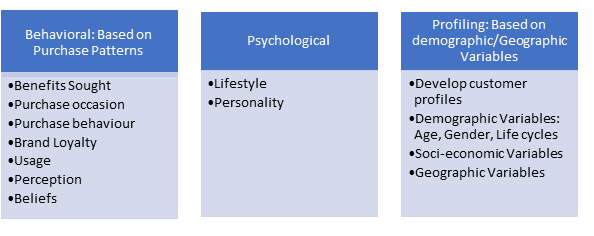
Three important segmentation variables to segment a consumer market are: Behavioural, Psychographic and Profile variables.

  1. Behavioural variables are the fundamental basis of segmentation of consumer markets. Behavioural variables include benefits sought from the product, and buying patterns such as frequency and volume of purchase.
  2. Increasingly, consumers with different personalities or lifestyles prefer different products and buy differently, and they need different marketing mixes to serve them effectively. A company uses psychographic variables when the buying behaviour of its customers is closely linked to their personality or lifestyle.
  3. After a company has identified the segments, it needs to describe them in terms of who they are and where they are located, i.e., it needs to profile them. Therefore, profiling is not a criteria for segmentation. Profile variables such as socio-economic group or geographic locations describe the customers of each segment.

For instance, after identifying a segment which likes powerful bikes, the bike company profiles the segment in terms of age and socio-economic group—the target customers belong to the age group of 18-25 years, are predominantly located in urban and metro cities of India, and are from the upper socio-economic class. Therefore, the idea is to identify and locate the customers in the target market, so that the company can reach them with its messages and products.

A company may not always follow the above sequence in segmenting its market. A company may identify profile variables first, and then identify segments on the basis of the chosen profile variables. It then checks if the identified segments show different buying behaviour.

For example, a company segments the market on the basis of income, and comes up with different segments low income group, medium income group and high income group. It then checks if the members of the three groups have different needs and buy differently, and whether such a difference, if any, warrants designing a new marketing mix for each of the groups.

Behavioural segmentation:

A company segments its market on the basis of the buying behaviour of customers. It tracks customer purchases to identify patterns of buyer behaviour, which it then uses to segment its market.

Benefits sought:

Customers may seek different benefits from a product. For example, customers may seek benefits of energy efficiency and rapid cooling in air conditioners. It is important that a company carries out benefit segmentation diligently, because a company exists only till it serves customer needs. It then profiles its segment in terms of age, income, and so on, so that the company can reach them easily.

A brand will position itself to serve a benefit or some combination of benefits, and therefore there are brands targeting each segment. A company that conducts benefit segmentation gets a comprehensive understanding of customers’ choice criteria. It then chooses choice criteria that it will serve, and designs a marketing mix to provide exaggerated performance on the chosen choice criteria.

For example, a company may choose to serve the segment which prefers rapid cooling. It designs an air conditioner which provides very rapid cooling, but which is not very energy efficient. Some companies choose to serve more than one choice criteria in the mistaken belief that all customers seeking the different choice criteria that the company is trying to fulfill, will buy the product.

But, it does not happen that way. In competitive markets, focused competitors excel in serving single choice criteria, and customers prefer products of such focused competitors because their products excel in the choice criteria that are important to them.

Purchase occasion:

A customer can buy a product to replenish a depleted stock or he can buy to take care of an emergency. A customer is less price sensitive when he buys to take care of an emergency. Products are also bought as gifts and their purchase is concentrated at festival times.

Therefore, manufacturers of such products should advertise mainly in the pre-festival period. They may make special offers and also create special package designs for such occasions.

Purchase behavior:

Customers exhibit different buying behaviour in terms of the time of their purchase relative to the launch of the product. When a company launches a new product, it has to identify the segment of innovators who would be willing to take the risk of buying the new product as soon as it is launched.

The initial communication is targeted at this segment of innovators, so it is important to know them and their sensibilities. Other segments will evaluate the product rigorously and wait for the feedback from innovators before they buy the product. Some other segments will buy only when the product is firmly established in the market and hence face no risk in buying it.

Brand loyalty:

Brand loyalty is an important basis for segmenting consumer markets. Some consumers buy only one brand in a product category, and hence are totally brand loyal. But, most consumers switch brands. Some consumers buy one particular brand at most times, but also buy other brands.

There are a large number of customers who do not have any brand preference, and they buy a brand depending on the concessions that it may be providing. And then there are variety seeking consumers who buy a different brand whenever they buy one.

A company profiles each group of customers, and selects one or more of them as its target market. It may also be that almost all types of groups are its customers, and it has to either discourage one or more groups to buy its products, or design separate marketing mix for each group.

It is difficult to believe that some consumers are inherently loyal and that they will continue to buy a brand even if they are dissatisfied with its performance. But there are definitely some consumers who, if satisfied with a brand’s performance, will continue to buy it.

Such customers should be a company’s most valuable customers and it should go out of its way to keep them satisfied. Weaker brands can try to lure ‘deal making’ and ‘variety seeking’ consumers by offering them concessions and exotic benefits respectively.

It is also important to remember that customers have become fickle in their brand choice because companies are forever trying to lure customers by deals rather than by the intrinsic worth of the brands that they sell.

In consumer durables market, there are three types of buyers: first time buyers, replacement buyers and switchers from other brands. Since there is a considerable time gap between two purchases, and also since the product is expensive, the replacement buyer and the switcher will evaluate the alternatives as rigorously as the first time buyer.

Therefore, it is important that consumer durable companies maintain the performance of their products and also keep advertising. It is also important that they keep their product technologically updated, because a replacement buyer will buy another brand if the brand that he is using, is now selling products which are technologically inferior to those of other brands.

Usage:

A company can segment its market on the basis of its consumers being heavy users, light users and non­users. Most companies target heavy users and provide concessions to retain them. The result is that heavy consumers are expensive to serve.

Light users are not targeted by large companies, and hence small companies can more easily attract them and retain them. A company can target non-users without the fear of competitor retaliation, but it has to find out as to why the non-users are not using the product.

The company may have to make some changes in the product to make it useful to non-users, or it has to communicate articulately to make them aware of the usefulness of the product.

Perceptions and beliefs:

A customer’s behaviour is influenced by the perceptions and beliefs that he holds of issues and events.

A company can conduct perceptual segmentation by grouping customers who have similar views about a product, and it can conduct belief segmentation by grouping customers who have similar beliefs about a product. For instance, when iPod was launched, it appealed more to consumers who were passionate about their music and were also technology savvy.

In the early 90s, large number of Indian consumers held negative perceptions about microwave ovens. It was believed that since Indian food is rich in oil and spices, it cannot be cooked in a microwave oven, and that the waves emanating from inside were harmful to health.

But, there was a segment which was well aware of the functioning of microwave ovens, and how it enabled faster and healthier cooking of a large range of cuisines. This segment of aware and health-conscious customers adopted microwave ovens wholeheartedly. Therefore, marketers initially focused on the second segment.

Psychographic segmentation:

The psychological makeup of a customer is analysed to unearth deeper motivations for purchasing specific products or brands. The process often involves studying a customer’s values, opinions, activities and lifestyles. The idea is to establish patterns, which can be used as a basis for clustering similar customers.

Lifestyle:

A company groups people according to their way of living as reflected in their activities, interests and opinions. The company identifies groups of people with similar patterns of living.

The company that practices lifestyle segmentation relates a brand to a particular lifestyle. But, it is doubtful whether general lifestyle patterns are predictive of purchasing behaviour in specific markets.

Personality:

In some product categories like cars and garments, customers prefer brands which reflect their personalities. Therefore, companies have to endow their brands with values that are cherished by consumers of such products. There is a strong relationship between personality of the brand and personality of customers, when the brands that the customers select showcase their personal values.

In most categories of products, customers buy from a repertoire of brands, and hence there is considerable brand switching happening in most categories of products. But when brand choice is a reflection of self expression, with the brand making public an aspect of customers’ personality, customers would find it difficult to switch brands. Therefore, companies can lock-in customers by creating brands whose personality matches with the personality of the target market.

Segment profiling:

Once a company has identified its segments, it needs to profile them in terms of variables such as age, occupation, socio-economic status, place of residence, gender, etc. Profiling will help companies in identifying the segments and focusing their attention on them.

Demographic variables:

Age:

Age is used to segment many consumer markets, like food and clothing.

Gender:

Differing tastes and customs between men and women are reflected in specialist products aimed at these market segments.

Life cycle:

Disposable income and purchase requirement vary according to life cycle stage. Young couples without children may be a prime target for consumer durables, whereas couples with grown children may be prime target for education loans.

Presence of children and family responsibilities shape customers’ purchase priorities more than age, and therefore segmentation of consumer market by customers’ stage in life cycle leads to more valid segments.

The use of life cycle analysis to segment consumer markets gives a comprehensive understanding of customers’ changing requirements and priorities as they move through different life cycle stages.

Socio-economic variables:

Social class is a good predictor of what a customer buys and how he buys, even though many customers who have similar occupations live life differently and hence exhibit different buyer behaviour. A company can also use educational qualifications and income of customers to segment consumer markets, and when they are used together with customers’ occupation, the process yields more valid segments.

Geographic variables:

A customer’s place of residence also affects the products that he buys and how he buys. A customer’s eating and dressing habits are strongly influenced by the place he belongs to, and it continues to be a strong determinant of buyer behaviour even when he leaves his original place of residence.

Geographic segmentation is easy to carry out in terms of identifying the segments, but the segments have to be thoroughly studied to find their needs, and how they would like their needs to be served.

Both the geographic and demographic variables help a marketer to identify his segments more precisely.

Buyer Behaviour factors affecting each stage and need Recognition

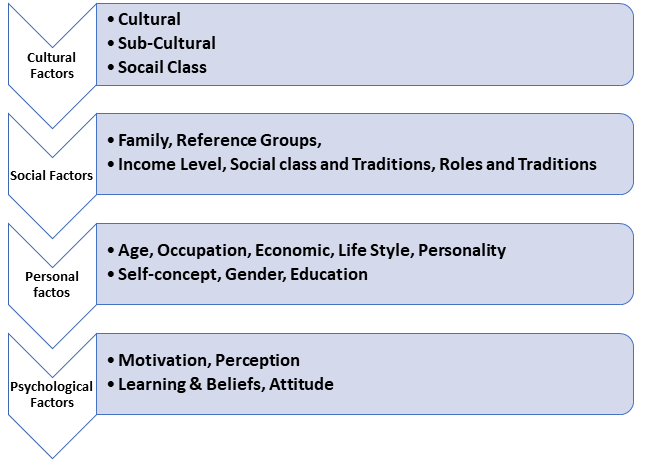
Consumer behavior refers to the selection, acquisition and consumption of goods and services to meet their needs. There are different processes involved in consumer behavior. Initially, the consumer tries to find what products you would like to consume and then select only those products that promise greater utility. After selecting the products, the consumer makes an estimate of available funds that can happen. Finally, the consumer looks at the current prices of commodities and makes the decision about which products to consume. Meanwhile, there are several factors that influence consumer purchases, such as social, cultural, personal and psychological. The explanation of these factors is as follows.

  1. Cultural factors

Consumer behavior is deeply influenced by cultural factors, such as buyer’s culture, subculture and social class.

  • Culture

Essentially, culture is the share of each company and is the major cause of the person who wants and behavior. The influence of culture on the purchasing behavior varies from country to country, therefore sellers have to be very careful in the analysis of the culture of different groups, regions or even countries.

  • Subculture

Each culture has different subcultures, such as religions, nationalities, geographical regions, racial, etc. marketing groups may use these groups, segmenting the market in several small portions. For example, marketers can design products according to the needs of a specific geographical group.

  • Social Class

Every society has some kind of social class is important for marketing because the buying behavior of people in a particular social class is similar. Thus marketing activities could be adapted to different social classes. Here we should note that social class is not only determined by income, but there are several other factors such as wealth, education, occupation etc.

  1. Social factors

Social factors also influence the purchasing behavior of consumers. Social factors are: the reference groups, family, the role and status.

  • Reference groups

Reference groups have the potential for the formation of an attitude or behavior of the individual. The impact of reference groups vary across products and brands. For example, if the product is visible as clothing, shoes, car etc., the influence of reference groups will be high. Reference groups also include opinion leader (a person who influences others by his special skill, knowledge or other characteristics).

  • Family

Buyer behavior is strongly influenced by a family member. So vendors are trying to find the roles and influence of the husband, wife and children. If the decision to purchase a particular product is influenced by the wife of then sellers will try to target women in their ad. Here we should note that the purchase of roles change with changing lifestyles of consumers.

  • Roles and Status

Each person has different roles and status in society in terms of groups, clubs, family, etc. organization to which it belongs. For example, a woman working in an organization as manager of finance. Now she is playing two roles, one of the chief financial officer and the mother. Therefore, purchasing decisions will be influenced by their role and status.

  1. Personal factors

Personal factors may also affect consumer behavior. Some of the important factors that influence personal buying behavior are: lifestyle, economic status, occupation, age, personality and self esteem.

  • Age

Age and life cycle have a potential impact on the purchasing behavior of consumers. It is obvious that consumers change the purchase of goods and services over time. Family life cycle consists of different stages as young singles, married couples, unmarried couples etc that help marketers to develop suitable products for each stage.

  • Occupation

The occupation of a person has a significant impact on their buying behavior. For example, a marketing manager of an organization is trying to buy business suits, while a low level worker in the same organization buy-resistant clothing work.

  • Economic situation

Economic situation of the consumer has a great influence on their buying behavior. If income and savings a customer is high, then going to buy more expensive products. Moreover, a person with low income and savings buy cheap products.

  • Lifestyle

Lifestyle clients is another factor affecting import purchasing behavior of consumers. Lifestyle refers to the way a person lives in a society and express things in their environment. It is determined by the client’s interests, opinions, etc and activities shapes their whole pattern of acting and interacting in the world.

  • Personality

Personality changes from person to person, time to time and place to place. Therefore, it can greatly influence the buying behavior of customers. In fact, personality is not what one has, but is the totality of the conduct of a man in different circumstances. Has different characteristics, such as dominance, aggression, confidence etc that may be useful to determine the behavior of consumers to the product or service.

  1. Psychological factors

There are four major psychological factors that affect the purchasing behavior of consumers. These are: perception, motivation, learning, beliefs and attitudes.

  • Motivation

The level of motivation also affects the purchasing behavior of customers. Each person has different needs, such as physiological needs, biological needs, social needs, etc. The nature of the requirements is that some are more urgent, while others are less pressing. Therefore, a need becomes a motive when it is most urgent to lead the individual to seek satisfaction.

  • Perception

Select, organize and interpret information in a way to produce a meaningful experience of the world is called perception. There are three different perceptual processes which are selective attention, selective distortion and selective retention. In the case of selective attention, sellers try to attract the attention of the customer. Whereas in case of selective distortion, customers try to interpret the information in a way that supports what customers already believe. Similarly, in the case of selective retention, marketers try to retain information that supports their beliefs.

  • Beliefs and Attitudes

Client has specific beliefs and attitudes towards different products. Because such beliefs and attitudes shape the brand image and affect consumer buying behavior so traders are interested in them. Marketers can change beliefs and attitudes of customers with special campaigns in this regard.

Application of Consumer Behaviour Knowledge in Marketing

Consumer behaviour principles are applied in many areas of marketing as discussed below:

Analysing market opportunity: Consumer behaviour study helps in identifying the unfulfilled needs and wants of consumers. This requires examining the trends and conditions operating in the marketplace, consumers’ lifestyles, income levels and emerging influences. This may reveal unsatisfied needs and wants. the trend towards increasing number of dual income households and greater emphasis on convenience and leisure have led to emerging needs for household gadgets such as washing machine, mixer grinder, vacuum cleaner and childcare centres etc. Mosquito repellents have been marketed in response to a genuine and unfulfilled consumer need.

Selecting target market: A review of market opportunities often helps in identifying distinct consumer segments with very distinct and unique wants and need. Identifying these groups, learning how they behave and how they make purchase decisions enables the marketer to design and market products or services particularly suited to their wants and needs. For example, consumer studies revealed that many existing and potential shampoo users did not want to buy shampoo packs priced at Rs. 60 or more and would rather prefer a low priced sachet containing enough quantity for one or two washes. The finding led companies to introduce the shampoo sachet which became a good seller.

Marketing-mix decisions: Once unsatisfied needs and wants are identified, the marketer has to determine the right mix of product, price, distribution and promotion. Here too, consumer behaviour study is very helpful in finding answers to many perplexing questions.

  • Product: The marketer designs the product or service that whould satisfy unfulfilled needs or wants. Further decisions regarding the product concern to size, shape and features. The marketer has also to decide about packaging important aspects of service, warranties and accessories etc. Nestle first introduced Maggie noodles in masala and capsicum flavours. Subsequently, keeping in view the consumer preferences in some regions, the company introduced garlic, Shambhar and other flavours.
  • Price: The second important component of marketing mix is price. Marketers must decide what price to charge for the product or service. These decisions will influence the flow of revenue to the company. Should the marketer consumer price sensitive and would a lower price stimulate sales? Should there be any price discounts? Do consumers perceive lower price as being indicative of poor quality? To answer such questions, the marketer must understand the way the company’s product is perceived by consumers, the importance of price as a purchase decision variable and how different price levels would affect sales. It is only through consumer behaviour study in actual buying situations that the marketer can hope to find answers to these important issues.
  • Distribution: The next decision relates to the distribution channel, that is, where and how to offer products and services for sale. Should the products be sold through all the retail outlets or only through selected ones? Should the marketer use only the existing outlets, which also sell competing brands, or should new exclusive outlets selling only the marketer’s brands be created? Is the location of retail outlets important from consumers’ point of view?  Should the company think of direct maketing?  The answer to these question are furnished by consumer behaviour research. 
  • Promotion: Promotion is concerned with marketing communications to consumers, The more important methods are advertising, personal selling, sales promotion, publicity and direct marketing. The marketer has to decide which method would be most suitable to effectively reach the consumers. Should it be advertising alone or should it be combined with sales promotion? The company has to know the target consumers, their location, what media do they have access to and what are their media preferences, etc. In most cases of industrial products there is very little or no advertising. Brochures containing technical specifications are often posted to the clients and the salespeople make follow-up visits. Consumer products get the maximum share of advertising. Pharmaceutical industry exclusively use personal selling for prescription drugs. Insurance companies use both advertising and personal selling.

Use in Social and Non-profits Marketing: Consumer behaviour studies are useful to design marketing strategies by social, governmental a not-for-profit organisations to make their programmes such as family planning, awareness about AIDS, crime against women, safe driving, environmental concerns and other more effective. UNICEF (greeting cards), Red Cross and CRY etc. make use of consumer behaviour understanding to sell their services and products and also try to motivate people to support these institutions.

Consumer Decision Making Process

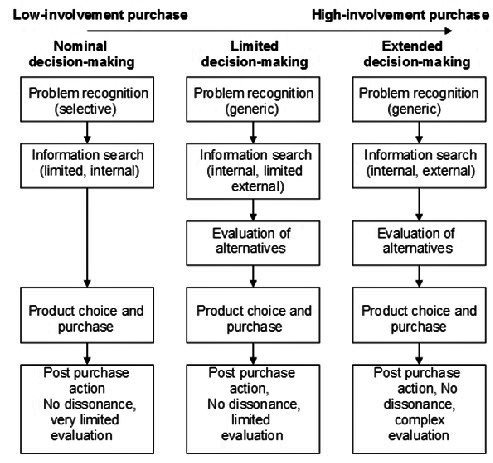
Consumer buying behavior is the study of an individual or a household that purchases products for personal consumption. The process of buying behavior is shown in the following figure:

Consumer decision-making is a complex process influenced by various factors. Understanding this process is crucial for marketers to develop effective strategies that align with consumers’ needs and preferences.

Problem Recognition:

Problem recognition is the first step in the consumer decision-making process. It occurs when consumers perceive a discrepancy between their current state and a desired state. This recognition can be triggered by internal factors like physiological needs (e.g., hunger) or psychological needs (e.g., the desire for status). External factors, such as marketing stimuli or environmental changes, can also play a role. For instance, a consumer may realize the need for a new laptop because their current one is slow and outdated.

Triggers of Problem Recognition:

  • Internal Stimuli: Internal factors such as physiological needs, psychological desires, or changes in personal circumstances can trigger problem recognition. For example, hunger may lead to the recognition of a need for food.
  • External Stimuli: External influences, including marketing efforts, societal trends, or environmental changes, can play a significant role. Advertising, for instance, can create awareness of a product or service, sparking the recognition of a need.

Significance of Problem Recognition:

  • Initiating the Decision-Making Process: Problem recognition is the catalyst for the entire decision-making process. Without recognizing a need, consumers would have no reason to embark on the journey of considering, evaluating, and ultimately making a purchase.
  • Setting Priorities: It helps consumers prioritize their needs and allocate resources accordingly. The perceived urgency and importance of the need influence the subsequent steps in the decision-making process.
  • Opportunity for Marketers: For marketers, understanding the triggers of problem recognition provides an opportunity to position their products or services as solutions to consumers’ needs. Effective advertising and marketing campaigns can stimulate problem recognition and create demand.

Example Scenario:

Consider a consumer who experiences a malfunction in their laptop, hindering their ability to work efficiently. The internal stimulus here is the inconvenience caused by the malfunction. Simultaneously, external stimuli like online advertisements for the latest laptops with enhanced features may contribute to the recognition of a need for a new, more advanced laptop.

Marketing Implications:

  • Creating Awareness: Marketers can use various channels to create awareness of their products, emphasizing how these products address specific needs or desires.
  • Highlighting Solutions: Advertising should not only create awareness but also highlight how a product or service solves the consumer’s problem, making their life better or more convenient.
  • Timing of Marketing Messages: Understanding the timing of problem recognition is crucial. Marketers can tailor their messages to coincide with when consumers are most likely to recognize a need, such as during certain life events or seasonal changes.

Challenges in Problem Recognition:

  • Unconscious Needs: Some needs may be subconscious or latent, requiring marketers to delve deeper into understanding consumer motivations and desires.
  • Competing Influences: External stimuli can be numerous and competing, making it challenging for marketers to ensure their product stands out as a solution.

Methods of Problem-Solving:

  • Routine Decision-Making:

In routine decision-making, consumers make low-involvement, habitual choices. This often involves purchasing familiar products without extensive consideration. For example, buying a preferred brand of toothpaste.

Characteristics:

  • Low Involvement: Consumers do not engage in extensive information search or evaluation.
  • Habitual Choices: Consumers rely on habits, past experiences, and brand loyalty.
  • Frequent Purchases: Products like daily groceries or personal care items often fall into this category.


  • Limited Decision-Making:

Limited decision-making occurs when consumers have some prior experience with a product but still seek additional information before making a decision. This may involve reading product reviews or comparing prices before purchasing.

Characteristics:

  • Moderate Involvement: Consumers invest some effort in information search and evaluation.
  • Prior Experience: Consumers may have some familiarity with the product category.
  • Limited Information Search: Consumers gather information but may not extensively compare all available options.

Example Scenario:

Choosing a new smartphone by considering features, reading a few online reviews, and comparing prices before making a purchase.


  • Extensive Decision-Making:

Extensive decision-making is reserved for significant, high-involvement purchases. Consumers engage in extensive research, considering multiple options, and evaluating various features and benefits. Examples include buying a car or choosing a university.

Characteristics:

  • High Involvement: Consumers invest considerable time and effort in information search and evaluation.
  • Significant Purchases: Products like a car, house, or higher education often involve extensive decision-making.
  • Comprehensive Information Search: Consumers explore a wide range of sources, seeking detailed information and comparing alternatives.

Example Scenario:

Selecting a university for higher education involves researching multiple institutions, comparing programs, considering faculty, and weighing factors like location and reputation.

Implications for Marketers:

Understanding the methods of problem-solving is essential for marketers as it helps them tailor their strategies based on the level of consumer involvement and decision complexity.

  • Routine Decision-Making: Marketers focus on brand loyalty, advertising frequency, and creating positive habits associated with the product.
  • Limited Decision-Making: Providing easily accessible information, highlighting key features, and addressing common concerns can influence consumer decisions.
  • Extensive Decision-Making: Marketers should emphasize detailed product information, offer comparative tools, and provide extensive support to guide consumers through the decision-making process.

Pre-purchase Search Influences:

Personal Factors:

Personal factors play a significant role in influencing the pre-purchase search process. These factors are intrinsic to the individual consumer and include:

  • Individual Needs: The specific needs and requirements of the consumer drive the search. For example, a person in need of a new laptop for work purposes may focus on specifications such as processing power and storage capacity.
  • Lifestyle: Consumer lifestyles influence the types of products or services they seek. An active, health-conscious lifestyle may lead to searches for fitness equipment or nutritious food options.
  • Values and Beliefs: Personal values and beliefs shape the criteria consumers use in their search. For instance, an environmentally conscious consumer may prioritize products with eco-friendly certifications.

Psychological Factors:

Psychological influences impact how consumers perceive and process information during the pre-purchase search. Key psychological factors include:

  • Perception: How consumers perceive products or brands can significantly influence their search behavior. Positive past experiences or brand associations may lead to biased information searches.
  • Motivation: Consumer motivation drives the intensity of the search. Higher motivation may lead to more extensive research efforts, especially for products or services with significant personal or financial implications.
  • Learning: Past experiences and learning play a role in shaping consumer preferences. Positive experiences with a brand may lead to brand loyalty, while negative experiences can prompt consumers to explore alternatives.

Social Factors:

Social influences have a substantial impact on the pre-purchase search process. Consumers often seek information and opinions from their social circles, including:

  • Word of Mouth: Recommendations from friends, family, or colleagues can greatly influence the search process. Positive reviews or testimonials may prompt consumers to consider a particular product or brand.
  • Social Media: Platforms like Facebook, Instagram, and Twitter serve as sources of information and reviews. Social media influencers can also sway consumer opinions and choices.
  • Cultural and Societal Trends: Larger cultural and societal trends may influence what products or services consumers search for. For example, an increasing focus on sustainability may lead consumers to seek eco-friendly products.

Economic Factors:

Economic considerations, including the financial situation of the consumer, can impact the pre-purchase search:

  • Budget Constraints: Consumers often search for products within a certain budget range. Price comparison websites and reviews related to product value become crucial in this context.
  • Promotions and Discounts: Special promotions, discounts, or limited-time offers may stimulate pre-purchase searches. Consumers may actively seek information on the best deals available.

Technological Factors:

The advent of technology, particularly the internet, has transformed the pre-purchase search process:

  • Online Reviews and Ratings: Consumer reviews on e-commerce websites, forums, and review platforms heavily influence pre-purchase decisions. Positive reviews can build trust and confidence in a product or service.
  • Comparison Websites: Consumers frequently use comparison websites to evaluate different products or services based on features, prices, and user reviews.
  • E-commerce Platforms: The convenience of online shopping has led to increased pre-purchase searches on e-commerce platforms. Consumers can easily compare products, read reviews, and make informed decisions.

Implications for Marketers:

Understanding the influences on pre-purchase search is crucial for marketers aiming to connect with consumers during this information-seeking stage:

  • Content Marketing: Creating informative and engaging content that addresses consumer needs and concerns can attract attention during the pre-purchase search.
  • Social Media Engagement: Maintaining an active and positive presence on social media platforms allows brands to participate in conversations and respond to consumer inquiries and feedback.
  • Online Reputation Management: Managing online reviews and actively addressing customer concerns contributes to a positive brand image and influences the pre-purchase search process.
  • Digital Marketing Strategies: Leveraging digital marketing channels, including search engine optimization (SEO), targeted advertising, and influencer partnerships, enhances a brand’s visibility during the pre-purchase search.

Information Search:

Consumers seek information through various sources:

1. Internal Sources:

Internal sources involve using information stored in memory based on past experiences, knowledge, and attitudes. Consumers rely on their own thoughts and past interactions with products or services.

  • Personal Experience: Memories of past experiences with a product or service can shape preferences and influence decision-making.
  • Prior Knowledge: Existing knowledge about a product category gained through education, research, or personal interest can guide the information search.
  • Attitudes and Beliefs: Personal beliefs and attitudes towards certain brands or features can serve as internal sources of information.

2. External Sources:

External sources encompass information obtained from outside oneself. Consumers seek information from various external sources to gain a broader perspective and make more informed decisions.

  • Personal Contacts: Recommendations and advice from friends, family, colleagues, or acquaintances can be powerful influencers. Word of mouth plays a significant role in shaping perceptions.
  • Commercial Sources: Information provided by businesses through advertising, promotional materials, and sales representatives. Marketers use various channels, such as TV, radio, print, and online platforms, to disseminate information.
  • Public Sources: Information from public sources such as consumer reports, product reviews, and expert opinions. Consumers often turn to these sources for unbiased assessments.
  • Experiential Sources: Consumers may engage in hands-on experiences or product trials to gather information. Testimonials, demonstrations, and samples fall into this category.

3. Online Sources:

With the rise of the internet, online sources have become increasingly important in the information search process.

  • Search Engines: Consumers use search engines like Google to find information about products, reviews, and specifications.
  • Social Media: Platforms such as Facebook, Twitter, and Instagram play a crucial role in influencing opinions. Consumers may seek recommendations and read comments and reviews.
  • Review Websites: Dedicated review websites and forums allow consumers to share their experiences and read reviews from others.
  • E-commerce Platforms: Online shopping websites provide detailed product information, customer reviews, and the ability to compare products.

4. Experiential Sources:

Experiential sources involve firsthand interaction with a product or service. Consumers may engage in various activities to gain direct experience, including:

  • Product Testing: Trying out a product before making a purchase decision, commonly seen in industries like electronics or cosmetics.
  • In-Store Displays: Physical retail stores provide opportunities for consumers to interact with products on display.
  • Product Samples: Offering free samples or trial versions allows consumers to experience a product’s features and benefits.

Implications for Marketers:

Understanding the sources of information consumers rely on during the information search stage is crucial for marketers to tailor their strategies effectively:

  • Content Marketing: Creating informative and engaging content that addresses consumer needs and concerns can attract attention during the information search.
  • Online Presence: Maintaining an active and positive presence on online platforms is essential. This includes social media, e-commerce websites, and review platforms.
  • SEO Strategies: Optimizing online content for search engines enhances visibility, making it easier for consumers to find relevant information.
  • Consumer Education: Providing easily accessible and accurate information helps consumers make informed decisions. Educational content can establish a brand as a trusted source of information.
  • Influencer Collaborations: Partnering with influencers or experts in the industry can amplify a brand’s message and provide additional credibility.

Alternative Evaluation and Selection:

After conducting an information search, consumers move on to the stage of alternative evaluation and selection. This phase involves comparing and contrasting different alternatives to make a decision about which product or service to purchase. Various factors influence this stage, ranging from individual preferences to external influences.

1. Perceived Value:

Perceived value is a crucial factor in the evaluation of alternatives. Consumers assess the benefits they expect to receive from a product or service against the cost, both monetary and non-monetary. This assessment contributes to the perceived value of each alternative.

  • Features and Benefits: Consumers evaluate the features and benefits offered by each alternative. Products that align closely with their needs and preferences are perceived as having higher value.
  • Price: The cost of the product or service relative to its perceived benefits influences the perceived value. Consumers often seek a balance between quality and affordability.

2. Brand Reputation:

Brand reputation plays a significant role in the evaluation process. Consumers may have preconceived notions about a brand based on past experiences, advertising, or word-of-mouth.

  • Trust and Credibility: Established brands with a history of delivering quality products build trust. Positive reviews and testimonials contribute to the credibility of a brand.
  • Brand Loyalty: Consumers may prefer brands they have used before and had positive experiences with, leading to a higher likelihood of selecting products from those brands.

3. Personal Preferences:

Individual preferences and tastes greatly influence the evaluation of alternatives. Consumers are drawn to products that align with their lifestyle, values, and aesthetic preferences.

  • Aesthetic Appeal: The visual appeal of a product, including design, colors, and packaging, can influence the decision-making process.
  • Personal Values: Consumers may prioritize products that align with their values, such as environmental sustainability or ethical production practices.

4. Decision Heuristics:

Decision heuristics are mental shortcuts or rules of thumb that consumers use to simplify the decision-making process. Common heuristics include:

  • Brand Loyalty: Preferring a familiar brand without extensive consideration of alternatives.
  • Price as an Indicator: Assuming that higher-priced products are of higher quality.
  • Country of Origin: Associating certain countries with quality or specific attributes.

5. Social Influences:

Social factors continue to influence the evaluation and selection of alternatives. Peer opinions, recommendations, and societal trends can impact consumer choices.

  • Word of Mouth: Recommendations from friends, family, or colleagues carry significant weight. Positive word of mouth can sway consumer decisions.
  • Social Trends: Following trends and conforming to societal norms may influence the evaluation of alternatives. Products that align with popular trends may be more appealing.

6. Online Reviews and Ratings:

Online reviews and ratings, often accessed during the information search stage, continue to be influential during the evaluation of alternatives.

  • User-generated Content: Consumers trust the opinions of fellow consumers. Positive reviews and high ratings contribute positively to the evaluation of a product.
  • Critical Reviews: Negative reviews and critical feedback can also impact the evaluation. Brands that respond to criticism and address concerns demonstrate responsiveness.

7. Decision Rules:

Decision rules are criteria or standards that consumers use to guide their choices. These rules can be conjunctive (setting minimum standards for each attribute), disjunctive (looking for one attribute that stands out), or lexicographic (prioritizing attributes in order of importance).

  • Conjunctive Rules: Consumers might set minimum standards for essential attributes. A product must meet these standards to be considered.
  • Disjunctive Rules: Consumers may focus on a single attribute that stands out, such as an outstanding feature or a particularly low price.
  • Lexicographic Rules: Consumers prioritize attributes and select the alternative that performs best on the most important attribute.

Implications for Marketers:

Understanding the factors that influence alternative evaluation and selection is vital for marketers seeking to position their products favorably in the minds of consumers:

  • Value Proposition: Clearly communicate the value proposition of the product, emphasizing features, benefits, and how it addresses consumer needs.
  • Brand Building: Invest in building a positive brand image through quality products, transparent communication, and positive customer experiences.
  • Understanding Preferences: Tailor marketing messages and product offerings to align with the preferences and values of the target audience.
  • Social Proof: Encourage positive reviews and testimonials. Engage with consumers on social media and leverage user-generated content to build trust.
  • Competitive Pricing: Consider pricing strategies that align with the perceived value of the product, offering a competitive advantage in the market.
  • Innovative Design: Pay attention to product aesthetics and design, as these factors can significantly influence consumer preferences.

Outlet Selection:

After consumers evaluate and select a preferred product or service, the next step in the consumer decision-making process is outlet selection. This stage involves choosing where to make the purchase. Various factors influence outlet selection, ranging from convenience to the overall shopping experience.

1. Convenience:

Convenience is a major factor in outlet selection. Consumers often choose outlets that are easily accessible and fit into their daily routines.

  • Location: The proximity of the outlet to the consumer’s home, workplace, or frequently visited areas influences the convenience of making a purchase.
  • Operating Hours: Consumers prefer outlets with extended operating hours, allowing flexibility in when they can make their purchases.

2. Assortment of Products:

Consumers may choose outlets based on the variety and availability of products. Larger stores or online platforms with a diverse range of products may be preferred.

  • Product Availability: Consumers prefer outlets where they can find the specific product they are looking for without having to visit multiple locations.
  • Product Quality: Outlets known for offering high-quality products may attract consumers seeking assurance in their purchases.

3. Pricing and Discounts:

Pricing plays a crucial role in outlet selection. Consumers often seek the best deals and discounts.

  • Competitive Pricing: Outlets offering competitive prices compared to other options in the market may attract cost-conscious consumers.
  • Promotions and Discounts: Special promotions, discounts, or loyalty programs can influence outlet selection, encouraging repeat business.

4. Brand Reputation:

The reputation of the outlet or retailer can impact consumer choices. Established and reputable outlets may be perceived as more trustworthy.

  • Brand Recognition: Outlets associated with well-known and trusted brands may be favored by consumers.
  • Customer Reviews: Positive reviews and feedback from other consumers contribute to the overall perception of an outlet.

5. Customer Service:

The level of customer service provided by an outlet can significantly influence consumer satisfaction and loyalty.

  • Friendly Staff: Courteous and helpful staff contribute to a positive shopping experience.
  • Return Policies: Consumer-friendly return and exchange policies can instill confidence in the outlet.

6. Online vs. Offline:

With the growth of e-commerce, consumers must decide between purchasing from physical stores or online platforms.

  • Online Platforms: Convenience, ease of comparison, and the ability to shop from anywhere contribute to the popularity of online outlets.
  • Physical Stores: Some consumers prefer the in-person experience, being able to touch and feel products before making a purchase.

7. Atmosphere and Ambiance:

For physical stores, the atmosphere and ambiance can impact outlet selection.

  • Store Layout: An organized and visually appealing store layout can enhance the overall shopping experience.
  • Cleanliness and Comfort: A clean and comfortable environment contributes to a positive impression.

8. Social and Cultural Factors:

Social and cultural influences can also play a role in outlet selection.

  • Peer Recommendations: Recommendations from friends or family members may sway outlet choices.
  • Cultural Relevance: Outlets that align with cultural values or trends may be more appealing to certain consumer segments.

Implications for Marketers:

Understanding the factors influencing outlet selection allows marketers to tailor strategies to meet consumer preferences:

  • Strategic Location: Consider the location of physical stores to maximize convenience for the target audience.
  • Competitive Pricing Strategies: Employ pricing strategies that offer value to consumers, whether through competitive pricing or attractive promotions.
  • Online Presence: Invest in user-friendly online platforms, emphasizing convenience and security in the online shopping experience.
  • Customer Service Excellence: Prioritize customer service training for staff to enhance the overall shopping experience.
  • Branding and Reputation Management: Build and maintain a positive brand image through effective branding and reputation management efforts.
  • Adaptation to Cultural Trends: Stay attuned to cultural trends and preferences, adjusting marketing strategies accordingly.

Purchase Decision:

The purchase decision is the final stage in the consumer decision-making process, where consumers commit to buying the chosen product or service from a specific outlet. This stage involves the culmination of the preceding steps, including problem recognition, information search, alternative evaluation, and outlet selection. Several factors influence the purchase decision, and understanding these factors is crucial for marketers.

1. External Influences:

External factors continue to play a role in the purchase decision, even at the final stage. These external influences can include:

  • Promotions and Discounts: Special promotions, discounts, or limited-time offers can serve as catalysts for making the purchase decision.
  • Peer Recommendations: Positive word-of-mouth from friends, family, or colleagues can affirm the consumer’s choice and contribute to the decision to make a purchase.
  • Social Proof: Positive online reviews, ratings, and testimonials can provide additional reassurance and influence the final decision.

2. Marketing Communications:

Marketing efforts and communications can impact the purchase decision:

  • Advertising: Consistent and persuasive advertising messages can reinforce the consumer’s choice and create a sense of urgency.
  • Branding: Strong and positive brand associations can influence the perceived value of the product or service, contributing to the purchase decision.
  • Point-of-Sale Displays: In-store or online displays can capture the consumer’s attention at the critical moment of decision-making.

3. Perceived Risk:

Consumers often assess the perceived risk associated with the purchase. This risk can be financial, performance-related, or related to psychological factors.

  • Financial Risk: Concerns about whether the product is worth the price paid.
  • Performance Risk: Worries about the product’s functionality and whether it will meet expectations.
  • Psychological Risk: Fear of making the wrong decision or concerns about how the purchase reflects on the consumer.

4. Post-Purchase Evaluation:

While technically occurring after the purchase decision, post-purchase evaluation can influence future decisions and brand loyalty:

  • Satisfaction: The level of satisfaction with the purchase directly impacts the likelihood of repeat business and positive word-of-mouth.
  • Cognitive Dissonance: Consumers may experience cognitive dissonance, a feeling of discomfort or doubt after a significant purchase. Marketers can address this through post-purchase communication and support.

5. Ease of Purchase:

The ease and convenience of the purchase process can impact the decision to buy:

  • Checkout Process: For online purchases, a streamlined and user-friendly checkout process can reduce friction and encourage completion.
  • Payment Options: Providing a variety of payment options can cater to different consumer preferences.

6. Emotional Factors:

Emotional factors can heavily influence the purchase decision:

  • Brand Loyalty: Positive emotions associated with a brand or product can lead to repeat purchases.
  • Impulse Buying: Emotional triggers, such as excitement or desire, can lead to impulse buying decisions.

7. Environmental Factors:

The physical environment or context in which the purchase decision occurs can also play a role:

  • In-Store Atmosphere: For physical retail locations, factors like store layout, lighting, and ambiance can impact the purchase decision.
  • Online Shopping Experience: The user interface, website design, and overall online shopping experience contribute to the purchase decision for e-commerce.

Implications for Marketers:

Understanding the dynamics of the purchase decision stage allows marketers to optimize their strategies for greater success:

  • Last-Minute Incentives: Consider offering last-minute incentives, such as exclusive discounts or limited-time promotions, to encourage immediate purchase decisions.
  • Post-Purchase Engagement: Implement post-purchase communication strategies to address potential concerns, gather feedback, and build a positive post-purchase experience.
  • Emotional Connection: Strengthen emotional connections with consumers through branding, storytelling, and marketing messages that resonate with their values and aspirations.
  • Optimized Checkout Process: Streamline the online purchasing process, reducing friction points to enhance ease and convenience.
  • Customer Support: Provide accessible and responsive customer support to address any post-purchase concerns promptly.

error: Content is protected !!