Meaning, Nature and Scope of Production and Operation Management

Production and Operations Management (POM) focuses on efficiently managing resources, processes, and systems to produce goods and services that meet customer expectations. It encompasses planning, organizing, directing, and controlling all activities involved in the transformation of inputs (materials, labor, technology) into outputs (finished products or services). POM aims to optimize productivity, ensure quality, reduce costs, and maintain timely delivery. Key aspects include production planning, capacity management, inventory control, supply chain management, and quality assurance. It applies to both manufacturing and service industries, emphasizing continuous improvement and innovation. Effective POM enhances organizational efficiency, competitiveness, and customer satisfaction, making it a vital component of business success in dynamic market environments.

Nature of Production and Operations Management:

  • Transformational Process:

POM revolves around transforming inputs (raw materials, labor, capital, and technology) into outputs (finished goods or services). This process is at the core of POM, ensuring that resources are utilized efficiently to create value. For example, in a manufacturing setup, raw materials are converted into products, while in services, inputs like time and skills are transformed into customer experiences.

  • Goal-Oriented:

The primary objective of POM is to achieve organizational goals. This includes reducing production costs, ensuring quality, increasing productivity, and meeting customer demands. Every operation is directed toward achieving specific targets that contribute to the overall success of the organization.

  • Interdisciplinary:

POM combines principles and techniques from various disciplines, such as engineering, economics, statistics, and management. This interdisciplinary approach ensures a comprehensive strategy to optimize processes, improve efficiency, and achieve operational goals. It enables managers to apply diverse tools and methodologies for better decision-making.

  • System-Oriented:

POM views production as a system consisting of interconnected elements like inputs, processes, outputs, and feedback. Each component plays a crucial role, and the system’s efficiency depends on the harmony among its parts. A system-oriented approach ensures that all components are aligned to achieve desired outcomes.

  • Dynamic Nature:

The environment of POM is constantly evolving due to technological advancements, changing market trends, and customer preferences. To remain competitive, production and operations managers must adapt to these changes and implement innovative solutions. This dynamic nature makes POM a continuously evolving field.

  • Customer-Focused:

The end goal of POM is customer satisfaction. All activities, from planning to delivery, are designed to meet or exceed customer expectations regarding quality, cost, and timely delivery. A customer-centric approach helps businesses gain a competitive edge.

  • Decision-Making:

POM involves making critical decisions on production methods, inventory control, capacity planning, scheduling, and facility layout. These decisions impact the overall efficiency of operations and help businesses achieve their objectives. Effective decision-making is essential for optimizing resources and maintaining operational flow.

  • Continuous Improvement:

POM emphasizes ongoing process improvements through methodologies like Lean Manufacturing, Six Sigma, and Kaizen. These techniques focus on reducing waste, enhancing quality, and improving efficiency. Continuous improvement ensures that operations remain competitive and adapt to market demands.

  • Strategic Importance:

POM is a key driver of organizational success. By aligning production and operations with the company’s strategic goals, businesses can achieve higher efficiency, profitability, and sustainability. It enhances the organization’s ability to respond effectively to market challenges and opportunities.

Scope of Production and Operation Management:

  • Product Design and Development:

This involves creating products that meet customer needs and are economically viable. It includes researching market demands, designing innovative products, and determining the materials and processes required for production. A well-designed product aligns with customer expectations and enhances business competitiveness.

  • Process Design:

POM focuses on selecting and designing the most efficient processes to manufacture products or deliver services. This includes determining the technology, equipment, and methods needed to optimize production while ensuring cost-effectiveness and quality.

  • Capacity Planning:

This involves determining the production capacity required to meet market demands. It includes analyzing factors like production volume, machine capacity, labor availability, and resource allocation. Proper capacity planning prevents overproduction, underutilization, or bottlenecks in operations.

  • Facility Location and Layout:

POM involves selecting optimal locations for production facilities based on factors like proximity to markets, raw materials, labor, and infrastructure. Additionally, it focuses on designing an efficient layout within facilities to minimize material handling, reduce costs, and streamline workflows.

  • Production Planning and Control (PPC):

PPC ensures the efficient utilization of resources by planning production schedules, sequencing tasks, and monitoring progress. It helps maintain a balance between demand and supply, ensures timely delivery, and minimizes production costs.

  • Inventory Management:

Managing raw materials, work-in-progress, and finished goods is a critical aspect of POM. Proper inventory management ensures that the right quantity of materials is available at the right time, reducing storage costs and avoiding production delays.

  • Quality Management:

POM emphasizes maintaining high-quality standards in products and processes. It involves implementing quality control techniques, ensuring adherence to specifications, and continually improving processes to meet customer expectations. Techniques like Total Quality Management (TQM) and Six Sigma are often applied.

  • Supply Chain Management (SCM):

SCM focuses on managing the flow of materials, information, and finances from suppliers to customers. It includes procurement, transportation, warehousing, and distribution. Efficient SCM ensures cost savings, reduced lead times, and better customer satisfaction.

  • Maintenance Management:

Ensuring that machinery, equipment, and facilities remain operational is vital for uninterrupted production. Maintenance management involves preventive and corrective maintenance practices to minimize downtime, increase productivity, and extend the life of assets.

  • Workforce Management:

POM involves planning, organizing, and managing the workforce to ensure optimal productivity. This includes workforce scheduling, training, performance monitoring, and fostering a safe and motivating work environment. Effective workforce management contributes to efficient operations and employee satisfaction.

Operations Management, Concepts, Meaning, Objectives, Functions, Scope and Comparison

Operations Management (OM) is a critical area of management concerned with the design, operation, and improvement of the systems that create goods and services. It focuses on efficiently converting inputs—such as raw materials, labor, technology, and capital—into outputs in the form of products or services. The primary goal of OM is to maximize efficiency, minimize costs, and ensure high-quality products and services that satisfy customer needs.

Operations management is essential in both manufacturing and service industries, as it oversees processes, resources, and workflows to meet organizational objectives. It involves planning, organizing, directing, and controlling production activities, ensuring that resources are used effectively and operations run smoothly. OM also integrates modern techniques like lean management, Six Sigma, and Total Quality Management (TQM) to optimize processes, reduce wastage, and improve overall productivity.

Meaning of Operations Management

Operations Management (OM) refers to the administration of business practices that create the highest level of efficiency in the production of goods or services. It involves planning, organizing, and supervising processes, transforming inputs like materials, labor, and technology into finished goods or services. The main goal of OM is to ensure that business operations are efficient, cost-effective, and meet customer requirements in terms of quality and timely delivery. Essentially, it bridges the gap between strategic goals and practical execution.

Objectives of Operations Management

  • Efficient Utilization of Resources

One of the main objectives of operations management is to ensure optimal use of resources like raw materials, labor, and machinery. Efficient utilization minimizes wastage, reduces operational costs, and increases productivity. By planning and organizing production activities effectively, operations managers ensure that every resource contributes to the value addition process. This objective is crucial for sustaining competitive advantage and maximizing the return on investment in the production system.

  • Ensuring Quality Production

Operations management aims to maintain and enhance the quality of goods and services. Managers implement quality standards, monitor processes, and carry out inspections to minimize defects. High-quality production improves customer satisfaction, strengthens brand reputation, and reduces rework or wastage. Techniques like Total Quality Management (TQM) and Six Sigma are applied to continually enhance quality. Ensuring quality production helps organizations meet market expectations consistently and sustain long-term business growth.

  • Cost Reduction and Control

A key objective of operations management is controlling production costs to improve profitability. This includes managing expenses related to materials, labor, and overheads. Cost reduction strategies like process optimization, efficient resource allocation, and waste minimization help organizations maintain competitive pricing. Effective cost control ensures financial stability and allows firms to invest in innovation, technology, and expansion. Lower costs also enhance the organization’s ability to offer better value to customers without compromising quality.

  • Timely Production and Delivery

Operations management aims to ensure that production schedules are adhered to, enabling timely delivery of goods and services. Proper scheduling of machines, labor, and materials prevents delays and avoids production bottlenecks. Timely production aligns supply with market demand, enhances customer satisfaction, and strengthens relationships with clients. Meeting delivery deadlines consistently also protects the organization’s reputation, increases market trust, and helps avoid penalties or losses arising from late delivery of products.

  • Inventory Management

Another objective of operations management is effective inventory control. It ensures the availability of raw materials, work-in-progress, and finished goods without overstocking or understocking. Proper inventory management reduces holding costs, prevents stockouts, and maintains smooth production operations. By forecasting demand and monitoring inventory levels, operations managers optimize resource use, improve cash flow, and contribute to overall operational efficiency. Inventory management also supports timely production and customer satisfaction.

  • Enhancing Productivity

Operations management focuses on improving the productivity of both labor and machinery. By streamlining workflows, eliminating bottlenecks, and implementing efficient production techniques, managers can achieve higher output in less time. Enhanced productivity leads to cost efficiency, better utilization of resources, and improved competitiveness. Continuous monitoring and performance evaluation motivate employees, ensure proper allocation of tasks, and align production processes with organizational goals, ultimately contributing to overall business success.

  • Innovation and Process Improvement

Operations management encourages research, innovation, and process improvement to maintain competitiveness. Managers adopt new technologies, modern production techniques, and innovative practices to optimize operations. Process improvement reduces production time, lowers costs, enhances quality, and improves customer satisfaction. Innovation in operations allows organizations to respond to changing market demands, develop new products, and implement sustainable production practices, ensuring long-term growth and adaptability in a dynamic business environment.

  • Customer Satisfaction

The ultimate objective of operations management is to satisfy customer needs effectively. This is achieved through quality products, timely delivery, cost-effective pricing, and reliable services. Operations managers align production strategies with market demand to meet expectations consistently. High customer satisfaction leads to loyalty, repeat business, and positive brand reputation. By focusing on customer-centric operations, organizations can strengthen their market position, gain a competitive edge, and ensure long-term profitability and business sustainability.

Functions of Operations/Production Management

  • Production Planning

One of the primary functions is planning production activities. This involves determining what to produce, the quantity, production schedule, and resource allocation. Proper planning ensures efficient use of materials, machines, and manpower, reducing delays and meeting customer demand effectively.

  • Organizing Resources

Operations management organizes resources such as labor, machinery, and materials. This includes designing workflows, assigning tasks, and coordinating departments to ensure smooth operations and optimal utilization of resources.

  • Production Scheduling

Scheduling involves setting timelines for production activities, allocating tasks to machines and workers, and ensuring timely completion of orders. Effective scheduling prevents bottlenecks, idle time, and delivery delays.

  • Quality Control

Ensuring products or services meet quality standards is a key function. Quality control includes inspections, monitoring processes, and implementing standards to minimize defects and enhance customer satisfaction.

  • Cost Control

Operations managers monitor costs of materials, labor, and overheads to ensure production remains within budget. Cost control helps improve profitability and competitive pricing.

  • Inventory Management

Managing raw materials, work-in-progress, and finished goods is essential to prevent shortages or overstocking. Proper inventory control supports smooth production operations and reduces carrying costs.

  • Maintenance of Equipment

Ensuring machinery and equipment are in good working condition through preventive maintenance, repairs, and proper handling reduces downtime and improves productivity.

  • Staff Supervision and Training

Supervising the workforce, assigning tasks, monitoring performance, and providing training ensures efficiency, motivation, and proper utilization of human resources.

  • Research and Development (R&D)

Improving production processes, adopting new technologies, and innovating products are part of operations management to maintain competitiveness and operational efficiency.

  • Ensuring Safety and Compliance

Operations management ensures workplace safety and adherence to legal and environmental regulations, protecting employees and minimizing legal risks.

Scope of Operations Management

  • Location of Facilities

The most important decision with respect to the operations management is the selection of location, a huge investment is made by the firm in acquiring the building, arranging and installing plant and machinery. And if the location is not suitable, then all of this investment will be called as a sheer wastage of money, time, and efforts.

So, while choosing the location for the operations, company’s expansion plans, diversification plans, the supply of materials, weather conditions, transportation facility and everything else which is essential in this regard should be taken into consideration.

  • Product Design

Product design is all about an in-depth analysis of the customer’s requirements and giving a proper shape to the idea, which thoroughly fulfils those requirements. It is a complete process of identification of needs of the consumers to the final creation of a product which involves designing and marketing, product development, and introduction of the product to the market.

  • Process Design

It is the planning and decision making of the entire workflow for transforming the raw material into finished goods, It involves decisions regarding the choice of technology, process flow analysis, process selection, and so forth.

  • Plant Layout

As the name signifies, plant layout is the grouping and arrangement of the personnel, machines, equipment, storage space, and other facilities, which are used in the production process, to economically produce the desired output, both qualitywise and quantitywise.

  • Material Handling

Material Handling is all about holding and treatment of material within and outside the organisation. It is concerned with the movement of material from one godown to another, from godown to machine and from one process to another, along with the packing and storing of the product.

  • Material Management

The part of management which deals with the procurement, use and control of the raw material, which is required during the process of production. Its aim is to acquire, transport and store the material in such a way to minimize the related cost. It tends to find out new sources of supply and develop a good relationship with the suppliers to ensure an ongoing supply of material.

  • Quality Control

Quality Control is the systematic process of keeping an intended level of quality in the goods and services, in which the organization deals. It attempts to prevent defects and make corrective actions (if they find any defects during the quality control process), to ensure that the desired quality is maintained, at reasonable prices.

  • Maintenance Management

Machinery, tools and equipment play a crucial role in the process of production. So, if they are not available at the time of need, due to any reason like downtime or breakage etc. then the entire process will suffer.

Hence, it is the responsibility of the operations manager to keep the plant in good condition, as well as keeping the machines and other equipment in the right state, so that the firm can use them in their optimal capacity.

Comparison of Production Management and Operations Management

Aspect Production Management Operations Management
Definition Concerned with the production of goods only. Concerned with both goods and services production.
Focus Focuses on manufacturing and tangible outputs. Focuses on overall operations including goods and services.
Scope Narrower scope; limited to production processes. Broader scope; includes production, services, and operational efficiency.
Objective To produce goods efficiently with minimal cost. To ensure effective and efficient transformation of inputs into outputs, meeting customer needs.
Nature Mainly technical and tangible. Both technical and managerial in nature; includes intangible aspects.
Resources Managed Materials, machines, and manpower for manufacturing. Materials, machines, manpower, technology, and information for operations.
Decision Areas Decisions regarding production planning, scheduling, and control. Decisions regarding production, services, quality, inventory, and process optimization.
Application Applicable primarily to manufacturing industries. Applicable to both manufacturing and service industries.
Process Type Involves a transformation process to produce goods. Involves transformation processes for both goods and services.
Performance Measurement Measured by production efficiency and output. Measured by efficiency, quality, cost, and customer satisfaction.
Quality Focus Ensures product meets technical specifications. Ensures quality of product and service, overall customer satisfaction.
Cost Focus Mainly reduces production cost. Reduces total operational cost including production, service, and logistics.
Innovation Limited to production techniques. Includes process improvement, technology adoption, and innovation in services.
Customer Orientation Indirectly focuses on customer satisfaction through product quality. Directly focuses on customer satisfaction in both goods and services.
Strategic Importance Supports production efficiency. Supports overall organizational efficiency, competitiveness, and strategic objectives.

Production Function, Components, Types, Applications, Limitations

The concept of the Production Function lies at the core of production and operations management. It establishes a mathematical relationship between input factors such as labor, capital, and raw materials and the output they produce. This function is vital for understanding how resources can be efficiently utilized to maximize production while minimizing costs.

Definition and Importance of Production Function

The production function is defined as:

Q = f(L,K,R,T)

Where:

  • Q = Output (quantity of goods or services produced)
  • L = Labor (human effort)
  • K = Capital (machinery, tools, and infrastructure)
  • R = Raw materials (physical inputs)
  • T = Technology (knowledge, techniques, and processes)

This relationship helps organizations understand how inputs interact to produce desired outputs and how changes in input levels affect production.

Components of the Production Function

  • Inputs:

Inputs are the resources used in production, categorized as fixed or variable. Fixed inputs, such as machinery, remain constant in the short run, while variable inputs, such as labor and raw materials, fluctuate with production levels.

  • Outputs:

Outputs are the goods or services produced using inputs. The production function aims to maximize output for a given set of inputs or minimize inputs for a specific level of output.

  • Technology:

Technology influences the efficiency of converting inputs into outputs. Advanced technologies can increase productivity and reduce costs.

Types of Production Functions

  1. Short-Run Production Function:
    In the short run, at least one input is fixed (e.g., machinery), while others, like labor and materials, can vary.

    • Law of Diminishing Returns:

      When additional units of a variable input are added to fixed inputs, the marginal product of the variable input eventually decreases.

    Example: Adding more workers to a factory with limited machines increases output initially but leads to overcrowding and reduced efficiency over time.

  2. Long-Run Production Function:
    In the long run, all inputs are variable, and firms can adjust their production scale.

    • Returns to Scale:
      • Increasing Returns to Scale: Doubling inputs results in more than double the output.
      • Constant Returns to Scale: Doubling inputs results in double the output.
      • Decreasing Returns to Scale: Doubling inputs results in less than double the output.

Forms of Production Functions

  1. Cobb-Douglas Production Function:
    A commonly used form expressed as:

    Q=A⋅L^α⋅K^β

    Where:

    • A = Efficiency parameter
    • α and β = Output elasticities of labor and capital

    This function explains how changes in labor and capital affect production, assuming constant returns to scale (α + β = 1).

  2. Leontief Production Function:
    It assumes fixed input proportions, where inputs are used in specific ratios. Output cannot be increased by changing the proportions of inputs.

    Example: A car manufacturer needs a specific ratio of engines and chassis to produce cars.

  3. Linear Production Function:
    This function assumes perfect substitutability between inputs, where one input can replace another without affecting output.
  4. CES (Constant Elasticity of Substitution) Production Function:
    It allows flexibility in substituting inputs and is expressed as:

    Q = A[δK^ρ+(1−δ)L^ρ]^1/ρ

  5. Where ρ determines the elasticity of substitution between inputs.

Applications of Production Function:

  • Optimal Resource Allocation:

The production function helps determine the most efficient combination of inputs to achieve desired output levels.

  • Cost Minimization:

By understanding input-output relationships, firms can identify ways to reduce costs while maintaining production levels.

  • Decision-Making:

It aids in strategic decisions like scaling production, investing in new technologies, and expanding operations.

  • Efficiency Measurement:

The function evaluates productivity and efficiency, identifying areas for improvement.

  • Pricing and Profit Maximization:

Understanding production costs allows firms to set competitive prices and maximize profits.

Limitations of Production Function:

  • Simplified Assumptions:

The production function assumes ideal conditions, which may not reflect real-world complexities like supply chain disruptions or labor strikes.

  • Static Nature:

It often overlooks dynamic factors such as market trends, regulatory changes, and technological advancements.

  • Measurement Challenges:

Accurately quantifying inputs and outputs can be difficult, especially for intangible factors like innovation.

  • Applicability:

Different industries and products require customized production functions, limiting the universal applicability of standard models.

Examples of Production Function in Action

  • Manufacturing Industry:

In a factory, the production function helps optimize the use of machinery and labor to increase output while reducing costs.

  • Agriculture:

Farmers use production functions to determine the optimal combination of land, labor, and fertilizers for maximum crop yield.

  • Service Sector:

A call center analyzes its production function to balance the number of agents and call-handling software, ensuring timely customer service.

Production Planning and Control (PPC), Characteristics, Objectives, Role and Scope

Production Planning and Control (PPC) refers to the process of planning, organizing, directing, and controlling the production activities to ensure that products are produced efficiently, on time, and within cost constraints. PPC involves forecasting demand, scheduling production, managing inventory, and ensuring smooth coordination between different stages of production. It aims to optimize resource utilization, minimize waste, and ensure that production meets customer requirements. Effective PPC helps in maintaining a balance between supply and demand, reducing lead times, improving product quality, and achieving cost-efficiency in manufacturing operations.

Characteristics of Production Planning and Control (PPC):

  • Forecasting and Demand Management

One of the primary characteristics of PPC is the ability to forecast future demand and align production plans accordingly. By analyzing historical data, market trends, and customer requirements, PPC helps predict the volume and type of products needed. This forecasting helps in preparing production schedules, managing raw material procurement, and ensuring that the right quantities are produced to meet customer demand. Effective demand management allows manufacturers to avoid overproduction, underproduction, or stockouts, leading to smoother production operations.

  • Inventory Management

Inventory management is a crucial aspect of PPC, as it involves controlling the levels of raw materials, work-in-progress (WIP), and finished goods. PPC ensures that inventory levels are maintained at optimal levels to prevent excessive stock or shortages, both of which can disrupt the production process. It helps manage the flow of materials, minimizing waste and storage costs while ensuring that production continues smoothly without delays due to material shortages. Efficient inventory management contributes to cost reduction and improved production scheduling.

  • Production Scheduling

Production scheduling is another significant characteristic of PPC. It involves creating detailed schedules for manufacturing processes to ensure that resources are used optimally and that production targets are met on time. Production schedules specify when each operation should be performed, the machines or equipment needed, and the number of workers required. This ensures that work is performed in a logical sequence, with minimal downtime between operations. Effective scheduling helps balance workloads, reduce bottlenecks, and meet delivery deadlines, making it an essential component of PPC.

  • Coordination and Communication

Effective coordination and communication between various departments, such as procurement, production, and quality control, are central to PPC. It ensures that all parties are aligned with production goals and schedules. Regular communication helps in quickly resolving issues such as material shortages, machine breakdowns, or quality concerns. It also facilitates better decision-making by providing accurate and up-to-date information about production status. Coordination between departments enables smooth transitions between different stages of production and ensures that resources are used efficiently.

  • Quality Control

PPC ensures that products are manufactured to meet quality standards by incorporating quality control processes into the production cycle. It involves setting quality benchmarks and ensuring that the production process adheres to these standards. Regular inspections, testing, and monitoring are carried out to identify defects or issues early in the production process, minimizing waste and rework. Quality control within PPC ensures that products meet customer expectations and comply with industry regulations, thereby reducing the risk of defects and improving customer satisfaction.

  • Flexibility and Adaptability

A key characteristic of PPC is its ability to adapt to changes in production needs, demand fluctuations, or unexpected disruptions. Effective PPC systems are flexible and can adjust schedules, resources, and production methods in response to changing conditions. Whether it’s handling a sudden increase in orders, a machine breakdown, or supply chain disruptions, PPC helps ensure that production can quickly adapt to new challenges without compromising on efficiency or quality. This flexibility makes PPC an essential tool for maintaining consistent production performance in dynamic and unpredictable manufacturing environments.

Objectives of Production Planning and Control (PPC):

  • Ensuring Timely Production

One of the main objectives of PPC is to ensure that production is completed on time, aligning with customer demand and market requirements. By creating detailed production schedules, PPC aims to minimize delays and ensure that products are manufactured within the specified lead times. Timely production is crucial to meeting customer deadlines, improving customer satisfaction, and maintaining competitiveness in the market.

  • Optimizing Resource Utilization

Effective PPC seeks to make the best use of available resources, including labor, materials, machines, and time. The goal is to avoid overutilization or underutilization of resources, as both can lead to inefficiencies, increased costs, and delays. Through careful planning and scheduling, PPC ensures that resources are allocated optimally, ensuring that production runs smoothly without idle time or bottlenecks, and that operational costs are kept under control.

  • Minimizing Production Costs

Minimizing production costs is a crucial objective of PPC. By efficiently planning production processes, reducing wastage, and optimizing inventory levels, PPC helps control expenses. It minimizes unnecessary overheads such as labor, material, and energy costs, ensuring that production stays within budget. Additionally, PPC aims to reduce downtime and prevent equipment breakdowns by implementing maintenance schedules and monitoring performance, all of which contribute to cost reduction.

  • Maintaining Quality Standards

PPC also focuses on ensuring that products meet the required quality standards. By monitoring each stage of production, establishing quality benchmarks, and incorporating quality control processes, PPC helps minimize defects and rework. Regular inspections, testing, and quality assurance activities are integrated into the production process, ensuring that customers receive defect-free products. Maintaining consistent product quality leads to higher customer satisfaction, fewer returns, and improved brand reputation.

  • Reducing Lead Time

Production planning and control aim to reduce lead time, which is the time taken from receiving an order to delivering the finished product. By streamlining processes, improving coordination, and minimizing waiting times between production stages, PPC reduces lead times, resulting in quicker deliveries. Shorter lead times can be a significant competitive advantage, allowing a company to respond to market demand faster and improve customer satisfaction.

  • Ensuring Flexibility in Production

An essential objective of PPC is to maintain flexibility within the production process. Production schedules and plans should be adaptable to changes in demand, unforeseen disruptions, or other external factors, such as supply chain issues or machine breakdowns. Flexibility in production planning allows manufacturers to quickly adjust to changes, ensuring continuous production and the ability to meet shifting customer demands without significant delays or loss of productivity.

Role of PPC in Operations Management:

  • Coordination of Resources

PPC plays a vital role in coordinating resources such as labor, machinery, raw materials, and time to ensure efficient production. By creating comprehensive production schedules, PPC helps ensure that resources are available when needed, preventing delays due to material shortages, underutilized machinery, or inadequate labor. Effective coordination reduces bottlenecks and downtime, ensuring a smoother production process.

  • Optimizing Production Efficiency

PPC is integral to optimizing production processes by reducing waste, increasing throughput, and minimizing idle time. Through efficient planning, it ensures that production processes flow smoothly, reducing unnecessary delays, and optimizing machine and labor utilization. This increases overall efficiency in production, leading to cost savings and timely product deliveries.

  • Demand Management and Forecasting

PPC helps in managing fluctuating demand by forecasting production needs based on market trends, historical data, and customer orders. By aligning production with demand forecasts, PPC ensures that the right quantities of products are produced at the right time. This minimizes stockouts, reduces overproduction, and ensures that the company meets market demand without incurring excess inventory costs.

  • Maintaining Quality Standards

PPC ensures that products meet quality standards by integrating quality checks into the production process. It monitors production at every stage to identify and correct deviations early, minimizing defects and rework. This helps maintain consistency in product quality, resulting in higher customer satisfaction and reducing the likelihood of returns or complaints.

  • Cost Control and Efficiency

One of the main roles of PPC is to minimize production costs. By optimizing the use of resources, managing inventory effectively, and reducing waste, PPC helps control production costs. Additionally, it helps reduce downtime by scheduling maintenance and repairs for machinery, ensuring that production continues without interruptions. These cost-saving measures contribute to improving the company’s bottom line.

  • Flexibility and Adaptability

PPC allows for flexibility in production by adapting to changes in customer demand, supply chain disruptions, or unforeseen operational issues. By having a well-structured planning process in place, PPC can adjust production schedules, resource allocation, and inventory levels to quickly respond to changes, ensuring that production continues without significant delays.

Scope of PPC in Operations Management:

  • Production Scheduling

The scope of PPC includes detailed production scheduling, where tasks are assigned to workstations, machines, and labor based on priority and available resources. It involves determining the optimal start and finish times for each task in the production process. Scheduling ensures that production processes are completed on time, reducing idle time and preventing bottlenecks.

  • Inventory Management

PPC is responsible for managing inventory levels, ensuring that raw materials, work-in-progress, and finished goods are maintained at optimal levels. By managing inventory efficiently, PPC prevents overstocking, which ties up capital, and understocking, which can lead to production delays. The scope of PPC in inventory management also includes maintaining safety stock levels and coordinating with suppliers to ensure timely delivery of materials.

  • Resource Allocation

PPC ensures that resources, including labor, machines, and raw materials, are effectively allocated based on production needs. By carefully planning and organizing resources, PPC maximizes the efficiency of the production process, ensuring that no resource is overburdened or underutilized. Resource allocation also includes scheduling machine maintenance and repairs to prevent disruptions in production.

  • Quality Control Integration

The scope of PPC includes integrating quality control procedures at every stage of the production process. It ensures that products meet the required quality standards by establishing checkpoints for inspections and quality testing. By integrating quality control into the planning process, PPC helps prevent defects and reduce rework, which in turn leads to greater customer satisfaction.

  • Production Monitoring and Control

PPC plays a key role in monitoring production progress and controlling any deviations from the plan. It involves tracking the performance of various production stages, comparing actual output against planned output, and making adjustments as necessary. Monitoring and control help ensure that production stays on track, and any issues are addressed promptly to avoid delays.

  • Supply Chain Management

PPC is involved in managing the entire supply chain, from procuring raw materials to delivering finished goods. It ensures smooth coordination with suppliers to maintain a steady flow of materials, reducing the risk of stockouts and delays. In addition, PPC helps in managing logistics, warehousing, and distribution, ensuring that finished goods are delivered to customers on time.

  • Capacity Planning

PPC involves capacity planning, which ensures that the production process has sufficient capacity to meet demand. It helps in determining the required production capacity based on forecasted demand and allocates resources accordingly. By managing capacity efficiently, PPC ensures that the company can meet customer demand without overloading the production system or causing delays.

  • Cost Management

The scope of PPC extends to managing production costs, ensuring that the production process remains cost-effective. It involves optimizing resource utilization, reducing waste, and minimizing downtime to keep production costs under control. Cost management also includes budgeting for production and ensuring that the actual production costs align with the planned budget.

Quality Control, Concepts, Meaning, Objectives, Needs, Types, Elements, Importance, Challenges and Concepts of Inspection

Quality control (QC) and inspection are fundamental aspects of manufacturing and service industries. They ensure that products and services meet the required standards, enhance customer satisfaction, and improve business competitiveness. Effective QC and inspection processes help organizations minimize defects, reduce costs, and maintain consistency in production.

Concept of Quality Control

Quality control is the systematic process of ensuring that products or services meet specified quality requirements. It involves monitoring production, detecting defects, and taking corrective actions to maintain high-quality standards. QC is essential in manufacturing, healthcare, construction, and service industries.

Objectives of Quality Control

  • Ensuring Product Quality Standards

The primary objective of quality control is to ensure that products meet pre-determined quality standards and specifications. By monitoring production processes and inspecting outputs, quality control ensures consistency in dimensions, performance, and appearance. This helps organizations deliver reliable products that conform to design requirements, reducing defects and maintaining uniform quality across all production batches.

  • Customer Satisfaction

Quality control aims to produce goods that satisfy customer expectations and requirements. High-quality products enhance customer confidence, trust, and loyalty. When customers receive defect-free and reliable products, their satisfaction increases, leading to repeat purchases and positive word-of-mouth. Thus, quality control plays a crucial role in building long-term customer relationships and organizational growth.

  • Reduction of Production Costs

An important objective of quality control is to minimize costs associated with defects, rework, scrap, and returns. By identifying errors at early stages of production, organizations can avoid wastage of materials, labor, and time. Preventing defects rather than correcting them helps in cost control and improves overall profitability.

  • Improving Production Efficiency

Quality control helps improve production efficiency by eliminating process variations and inefficiencies. Standardized procedures and continuous monitoring ensure smooth workflow and reduced downtime. When machines, materials, and labor are used effectively, productivity increases, leading to higher output with optimal utilization of resources.

  • Maintaining Uniformity in Production

Another key objective of quality control is to maintain uniformity and consistency in production. Through inspections, testing, and quality checks, organizations ensure that each unit produced is identical in quality. Uniform products improve brand reputation and reduce customer complaints, especially in mass production industries.

  • Reducing Inspection Burden

Quality control aims to establish preventive measures rather than relying solely on final inspections. By controlling quality at each stage of production, the need for extensive inspection at the end is reduced. This saves time, labor, and cost while ensuring quality is built into the process rather than inspected after production.

  • Enhancing Market Reputation

Producing high-quality products consistently enhances the market image and goodwill of an organization. Quality control ensures fewer complaints, returns, and warranty claims. A strong reputation for quality helps organizations gain competitive advantage, attract new customers, and expand into new markets, supporting long-term growth.

  • Compliance with Standards and Specifications

Quality control ensures compliance with national and international quality standards, legal requirements, and industry norms. Adhering to standards such as ISO enhances credibility and facilitates global trade. Compliance reduces legal risks, penalties, and operational disruptions, ensuring smooth and reliable business operations.

  • Encouraging Continuous Improvement

Quality control supports the philosophy of continuous improvement by regularly evaluating processes and identifying areas for enhancement. Feedback from quality checks helps management take corrective and preventive actions. Continuous improvement leads to better methods, improved quality, and increased competitiveness in dynamic market conditions.

  • Increasing Employee Awareness and Responsibility

Quality control creates quality consciousness among employees. Workers become more responsible for their tasks when they understand quality requirements and standards. Training and involvement in quality activities improve skills, reduce errors, and foster a culture of accountability, teamwork, and commitment toward organizational goals.

Need for Quality Control

  • To Ensure Customer Satisfaction

Quality control is needed to ensure that products meet customer expectations in terms of performance, reliability, and durability. Delivering defect-free products builds customer trust and satisfaction. Satisfied customers are more likely to make repeat purchases and recommend the product to others, contributing to organizational growth and long-term success.

  • To Maintain Product Standards

Quality control helps maintain uniform standards of quality in production. By comparing actual output with predetermined specifications, deviations are identified and corrected. Consistent quality enhances brand image and ensures that all products delivered to customers meet the same level of excellence.

  • To Reduce Production Costs

Poor quality leads to wastage, rework, scrap, and returns, which increase production costs. Quality control helps detect defects early and prevent errors during production. By reducing waste and inefficiencies, organizations can lower costs and improve profitability.

  • To Improve Production Efficiency

Quality control ensures smooth and efficient production processes by minimizing interruptions caused by defects and machine breakdowns. Standardized processes and regular inspections improve workflow, reduce downtime, and enhance productivity, enabling better utilization of resources.

  • To Reduce Inspection Burden

Effective quality control emphasizes preventive measures rather than excessive final inspection. By controlling quality at each stage of production, the need for extensive inspection at the end is minimized, saving time, labor, and cost.

  • To Comply with Standards and Regulations

Quality control is essential to meet legal, safety, and industry standards. Compliance with national and international standards such as ISO ensures product safety, reliability, and market acceptance. It also helps organizations avoid legal penalties and operational risks.

  • To Enhance Market Reputation

Consistent quality builds a strong reputation and goodwill in the market. Organizations known for quality gain customer confidence and competitive advantage. A positive market image helps attract new customers and expand market share.

  • To Support Continuous Improvement

Quality control provides valuable feedback for improving processes and products. Continuous monitoring helps identify weaknesses and opportunities for improvement. This supports innovation, efficiency, and adaptability in a competitive business environment.

  • To Increase Employee Awareness and Responsibility

Quality control creates quality consciousness among employees. Workers become more responsible and careful in performing their tasks when quality standards are clearly defined. Training and involvement improve skills, reduce errors, and encourage teamwork.

  • To Ensure Long-Term Organizational Growth

Quality control supports sustainable growth by balancing customer satisfaction, cost efficiency, and operational excellence. Consistent quality ensures stable demand, profitability, and competitiveness, enabling organizations to achieve long-term success.

Types of Quality Control

1. Inspection-Based Quality Control

Inspection-based quality control focuses on examining products to identify defects. Inspection may be carried out at various stages such as raw materials, work-in-progress, or finished goods. Defective items are separated from acceptable ones to prevent poor-quality products from reaching customers. Although effective in detecting defects, this method is costly and reactive, as defects are identified only after they occur.

2. Preventive Quality Control

Preventive quality control aims to avoid defects before they occur by controlling production processes. It emphasizes proper planning, standardization, training, and maintenance of machines. By identifying potential causes of defects in advance, preventive quality control reduces wastage, rework, and inspection costs, making it a more efficient and economical approach.

3. Statistical Quality Control (SQC)

Statistical Quality Control uses statistical techniques such as control charts and sampling to monitor and control quality. It helps identify variations in processes and determine whether they are within acceptable limits. SQC enables early detection of problems, reduces dependence on 100% inspection, and improves decision-making through data analysis.

4. Process Control

Process control focuses on monitoring and regulating production processes rather than inspecting finished products. Variables such as temperature, pressure, speed, and material composition are controlled to ensure consistent output quality. By maintaining stable processes, defects are minimized, and quality is built into the production system.

5. Quality Control through Standardization

This type of quality control relies on established standards, specifications, and procedures. Standardization ensures uniformity in materials, methods, and operations. When workers follow standardized procedures, variations are reduced, productivity improves, and consistent quality is achieved across all units of production.

6. Total Quality Control (TQC)

Total Quality Control involves quality responsibility across all departments of the organization. It emphasizes coordination among design, production, marketing, and service functions to achieve overall quality. TQC focuses on continuous improvement, employee involvement, and customer satisfaction, contributing to long-term organizational success.

7. Automated Quality Control

Automated quality control uses advanced technologies such as sensors, robotics, and computer-based systems to monitor quality. Automation ensures high accuracy, speed, and consistency in inspection and testing. This type is commonly used in mass production industries where precision and efficiency are critical.

8. Incoming Quality Control

Incoming quality control focuses on inspection of raw materials and components received from suppliers. It ensures that inputs meet quality standards before entering the production process. Effective incoming quality control prevents poor-quality materials from affecting final product quality and reduces production disruptions.

9. In-Process Quality Control

In-process quality control is carried out during various stages of production. It helps identify defects at an early stage and prevents further processing of defective items. This type reduces wastage, rework, and cost, while improving production efficiency and product quality.

10. Final Quality Control

Final quality control involves inspection and testing of finished goods before they are dispatched to customers. It ensures that products meet specifications and quality standards. Although essential, it should complement preventive and process-based controls rather than replace them.

Key Elements of Quality Control

  • Setting Quality Standards

The first element of quality control is the establishment of quality standards. These standards define acceptable levels of quality in terms of design, materials, dimensions, performance, and durability. Standards serve as benchmarks against which actual performance is measured. Clearly defined standards ensure uniformity in production and help employees understand quality expectations, thereby reducing variations and defects.

  • Quality Planning

Quality planning involves determining quality objectives and processes required to achieve them. It includes selecting materials, designing processes, defining inspection methods, and allocating responsibilities. Proper quality planning ensures that quality is built into the product from the initial stages rather than corrected later, leading to cost savings and improved efficiency.

  • Inspection and Testing

Inspection and testing are essential elements of quality control. They involve examining raw materials, work-in-progress, and finished goods to ensure conformity with specifications. Testing helps detect defects, deviations, and inconsistencies at various production stages. Effective inspection prevents defective products from reaching customers and reduces rework and wastage.

  • Statistical Quality Control (SQC)

Statistical Quality Control uses statistical techniques such as control charts and sampling to monitor and control production processes. SQC helps identify variations and determine whether they are random or assignable. This scientific approach improves decision-making, reduces inspection costs, and ensures consistent product quality.

  • Process Control

Process control focuses on monitoring and regulating production processes to maintain desired quality levels. By controlling variables such as machine settings, temperature, pressure, and speed, organizations can prevent defects at the source. Effective process control ensures stability, consistency, and efficiency in operations.

  • Corrective and Preventive Actions

An important element of quality control is taking corrective actions to eliminate detected defects and preventive actions to avoid their recurrence. Root cause analysis is conducted to identify underlying problems. Timely corrective and preventive measures improve process reliability and promote continuous improvement.

  • Quality Documentation and Records

Quality control requires proper documentation of procedures, standards, inspection results, and corrective actions. Records help track performance, identify trends, and ensure accountability. Documentation also supports audits, compliance with quality standards, and continuous improvement initiatives.

  • Training and Employee Involvement

Employee training is a key element of quality control. Workers must be educated about quality standards, inspection methods, and quality tools. Involving employees in quality activities creates quality awareness, improves skills, and reduces errors. Trained employees contribute actively to maintaining and improving quality.

  • Quality Audits

Quality audits involve systematic examination of quality systems and processes to ensure effectiveness and compliance with standards. Internal and external audits help identify gaps, weaknesses, and improvement opportunities. Regular audits strengthen the quality control system and enhance organizational credibility.

  • Feedback and Continuous Improvement

Feedback from customers, inspections, and audits forms the basis for continuous improvement. Analyzing feedback helps organizations refine processes, improve products, and enhance customer satisfaction. Continuous improvement ensures that quality control remains dynamic and aligned with changing market requirements.

Importance of Quality Control

  • Ensures Customer Satisfaction

Quality control ensures that products meet customer expectations regarding performance, reliability, and durability. Delivering defect-free products increases customer satisfaction and trust. Satisfied customers are more likely to make repeat purchases and recommend the product to others, which strengthens customer loyalty and supports long-term business growth.

  • Maintains Consistent Quality Standards

Quality control helps maintain uniform quality standards across all stages of production. By adhering to predefined specifications and standards, variations and defects are minimized. Consistency in quality enhances the brand image and assures customers that every product they purchase meets the same level of excellence.

  • Reduces Production Costs

Effective quality control reduces costs related to scrap, rework, returns, and warranty claims. Detecting defects at early stages prevents wastage of materials, labor, and time. Lower production costs improve profitability and enable organizations to allocate resources toward growth and innovation.

  • Improves Production Efficiency

Quality control improves efficiency by minimizing interruptions caused by defects, breakdowns, and rework. Standardized procedures and continuous monitoring ensure smooth workflow and better utilization of resources. Increased efficiency results in higher productivity and timely delivery of products.

  • Enhances Market Reputation

Consistent quality builds a strong reputation and goodwill in the market. Organizations known for quality gain customer confidence and trust. A positive reputation helps attract new customers, retain existing ones, and achieve a competitive advantage in the market.

  • Facilitates Compliance with Standards

Quality control ensures compliance with national and international quality standards, legal requirements, and safety regulations. Adhering to standards such as ISO improves credibility and facilitates entry into global markets. Compliance reduces legal risks and enhances operational reliability.

  • Supports Continuous Improvement

Quality control provides feedback that helps identify process weaknesses and areas for improvement. Continuous monitoring and evaluation encourage innovation and refinement of processes. This supports a culture of continuous improvement, which is essential for competitiveness and growth.

  • Reduces Inspection Burden

By emphasizing preventive measures, quality control reduces reliance on final inspections. Controlling quality during production ensures defects are prevented rather than detected later. This saves time, labor, and cost while maintaining high quality standards.

  • Increases Employee Awareness and Responsibility

Quality control creates quality consciousness among employees. Workers become more responsible and careful in performing their tasks when quality standards are clearly defined. Training and involvement improve skills, reduce errors, and promote teamwork.

  • Ensures Long-Term Organizational Growth

Quality control supports sustainable growth by ensuring customer satisfaction, cost efficiency, and operational excellence. Consistent quality leads to stable demand, improved profitability, and strong market position, enabling long-term success of the organization.

Challenges of Quality Control

  • High Cost of Implementation

Implementing an effective quality control system involves significant costs related to inspection equipment, testing facilities, training programs, and skilled personnel. Small and medium-sized organizations may find it difficult to bear these expenses. High initial investment sometimes discourages management from adopting comprehensive quality control practices.

  • Lack of Skilled Manpower

Quality control requires trained and experienced personnel who understand inspection techniques, statistical tools, and quality standards. Shortage of skilled manpower can lead to improper inspections, inaccurate results, and ineffective quality control. Continuous training is necessary, which again increases time and cost.

  • Resistance to Change

Employees and supervisors may resist quality control practices due to fear of additional workload, strict monitoring, or accountability. Resistance to change can reduce cooperation and participation, making quality control ineffective. Lack of motivation and awareness among workers remains a major challenge.

  • Maintaining Consistency in Quality

Ensuring consistent quality over a long period is difficult due to variations in raw materials, machines, labor skills, and environmental conditions. Even small deviations can affect product quality. Controlling all variables simultaneously is a complex and continuous challenge for quality managers.

  • Time-Consuming Process

Inspection, testing, and corrective actions consume time and may slow down production. Excessive inspection can delay delivery schedules and affect productivity. Balancing quality control activities with production speed is a major challenge, especially in mass production environments.

  • Dependence on Accurate Standards

Quality control is effective only when quality standards are clearly defined and measurable. Inaccurate, outdated, or unrealistic standards can lead to confusion and poor results. Setting appropriate standards that match customer expectations and production capabilities is a difficult task.

  • Difficulty in Measuring Service Quality

Quality control in service industries is more challenging than in manufacturing. Service quality is intangible, subjective, and difficult to measure. Customer perceptions vary, making it hard to establish uniform quality standards and inspection methods.

  • Supplier Quality Issues

Poor quality of raw materials and components supplied by vendors affects final product quality. Ensuring consistent supplier quality requires strict inspection, audits, and coordination, which is time-consuming and costly. Dependence on external suppliers increases quality control challenges.

  • Over-Reliance on Inspection

Excessive dependence on inspection rather than prevention leads to detection of defects after they occur. This approach increases rework, scrap, and costs. Shifting from inspection-based quality control to preventive quality systems remains a challenge for many organizations.

  • Keeping Pace with Technological Changes

Rapid technological advancements require continuous updating of quality control methods, tools, and skills. Organizations that fail to adapt may face outdated systems and inefficiencies. Keeping pace with new technologies while maintaining quality standards is a continuous challenge.

Concept of Inspection

Inspection is the process of evaluating products, components, or services to ensure they meet quality standards. It involves checking dimensions, performance, appearance, and other attributes. Inspection helps in identifying defective items before they reach customers.

Objectives of Inspection:

  • Identify Defective Products: Detecting issues before distribution.
  • Ensure Process Reliability: Verifying that manufacturing processes produce quality products.
  • Reduce Waste: Preventing defective items from reaching the next stage of production.
  • Enhance Customer Trust: Delivering products that meet expectations.
  • Facilitate Continuous Improvement: Providing feedback for process enhancements.

Methods of Quality Control and Inspection:

1. Statistical Quality Control (SQC)

Statistical methods are used to monitor production and detect deviations from quality standards. Techniques include:

  • Control Charts: Graphical tools for tracking process performance.
  • Acceptance Sampling: Inspecting a sample instead of the entire batch.

2. Total Quality Management (TQM)

TQM is a company-wide approach focusing on continuous improvement, customer satisfaction, and employee involvement. It involves:

  • Continuous Improvement (Kaizen).
  • Customer-focused quality management.
  • Employee participation in quality initiatives.

3. Six Sigma

A data-driven approach to eliminate defects and improve quality. It follows the DMAIC (Define, Measure, Analyze, Improve, Control) methodology to achieve near-zero defects.

4. Inspection Techniques

  • Visual Inspection: Checking for surface defects and irregularities.
  • Dimensional Inspection: Measuring dimensions with tools like calipers and micrometers.
  • Mechanical Testing: Testing strength, durability, and resistance.
  • Chemical Testing: Analyzing the chemical composition of materials.
  • Non-Destructive Testing (NDT): Techniques like ultrasonic and X-ray testing to detect internal flaws without damaging the product.

Types of Inspection:

  • Pre-Production Inspection

Conducted before manufacturing begins to check raw materials and initial processes. Ensures that input materials meet quality standards.

  • In-Process Inspection

Performed during production to detect and correct defects early. Helps in minimizing waste and improving efficiency.

  • Final Inspection

Conducted after production is complete to verify the quality of finished products before shipment. Ensures that only defect-free products reach customers.

  • Random Inspection

A quality check performed on a random sample to assess overall product quality. Used in large-scale production to ensure consistency.

Importance of Quality Control and Inspection

  • Reduces Defects and Waste

Implementing QC and inspection minimizes defects, reducing material wastage and production costs.

  • Improves Product Reliability

Ensures that products meet specifications, leading to higher customer trust and satisfaction.

  • Enhances Productivity

By identifying inefficiencies and improving processes, QC contributes to increased production efficiency.

  • Ensures Compliance with Standards

QC helps businesses comply with industry regulations and safety standards, avoiding legal and financial penalties.

  • Strengthens Market Competitiveness

High-quality products enhance brand reputation and provide a competitive edge in the market.

Challenges in Quality Control and Inspection

  • High Inspection Costs: Advanced QC methods require investment in technology and skilled labor.
  • Time-Consuming Process: Extensive inspections can slow down production.
  • Human Errors: Manual inspections may lead to inconsistencies.
  • Resistance to Change: Employees may resist implementing new QC techniques.
  • Balancing Speed and Quality: Maintaining quality while meeting production deadlines.

Materials Management, Scope, Methods, Importance, Challenges

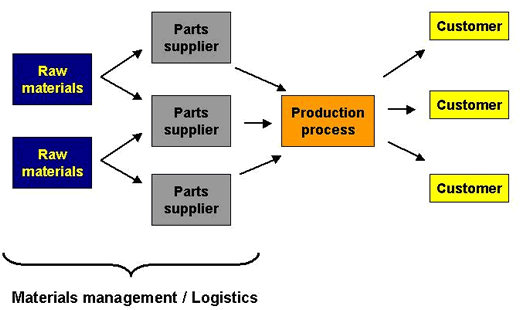
Materials Management refers to the planning, organizing, and controlling of the flow of materials and resources in an organization. It involves overseeing the procurement, storage, and distribution of raw materials, components, and finished goods. The primary goal is to ensure that the right materials are available in the right quantity, at the right time, and at the right cost to meet production and operational needs. Effective materials management helps optimize inventory levels, reduce wastage, minimize costs, and improve overall production efficiency, ultimately contributing to enhanced organizational performance and customer satisfaction.

Scope of Materials Management:

  • Procurement of Materials

One of the primary functions within materials management is the procurement of raw materials, components, and supplies required for production. This includes identifying suppliers, negotiating contracts, and ensuring timely delivery of materials. Procurement also involves selecting reliable vendors and ensuring that purchased materials meet the required quality standards. Strategic sourcing helps businesses reduce material costs and ensure a consistent supply chain.

  • Inventory Management

Effective inventory management is a critical component of materials management. This function involves maintaining optimal stock levels to meet production demands while avoiding overstocking or stockouts. Proper inventory control helps reduce costs associated with storage and minimizes the risk of obsolete or expired inventory. Techniques like Just-in-Time (JIT) and Economic Order Quantity (EOQ) are employed to maintain balanced inventory levels.

  • Storage and Warehousing

Materials management also involves the organization and storage of materials in warehouses or storage facilities. Efficient storage systems, such as proper labeling, categorization, and shelving, help in quick retrieval of materials when needed. The warehouse layout should be optimized for minimizing movement, preventing damage, and improving material handling processes. Proper storage practices also reduce the risk of materials being spoiled, lost, or misplaced.

  • Material Handling

Material handling involves the physical movement, protection, storage, and control of materials throughout the production process. This includes the use of forklifts, conveyors, and automated systems to move raw materials, work-in-progress, and finished goods. Efficient material handling systems reduce labor costs, minimize damage, and improve the overall speed of production processes.

  • Production Planning and Control

Materials management is closely linked to production planning and control. This function ensures that materials are available when needed for production without causing delays. It involves coordinating with the production department to align material procurement with production schedules. Effective planning ensures that there is no interruption in production due to material shortages, and production targets are met on time.

  • Quality Control

Quality control is a crucial part of materials management to ensure that the materials received meet the required quality standards. This includes inspecting and testing incoming materials, monitoring suppliers for consistent quality, and ensuring that defective materials are identified and rejected. Proper quality control ensures that materials used in production do not compromise the final product’s quality.

  • Supplier Relationship Management

Building and maintaining strong relationships with suppliers is a key aspect of materials management. This includes regular communication, performance monitoring, and resolving any issues that may arise. Supplier relationship management ensures that materials are sourced from reliable vendors who provide quality materials on time. A good relationship with suppliers can also help negotiate better prices, terms, and conditions.

  • Waste Management and Disposal

An often-overlooked aspect of materials management is the proper management of waste. This involves minimizing material wastage through efficient planning and use, recycling excess materials, and disposing of waste in an environmentally responsible manner. Managing waste not only helps reduce costs but also ensures compliance with environmental regulations and contributes to the organization’s sustainability goals.

Methods of Material Management:

Material management involves the strategic planning, acquisition, storage, and distribution of materials needed for production or operations. To ensure efficiency and minimize costs, organizations employ various methods to manage materials effectively.

1. Economic Order Quantity (EOQ)

EOQ is a quantitative method used to determine the optimal order quantity that minimizes the total cost of ordering and holding inventory. This method balances ordering costs (e.g., administrative expenses) and carrying costs (e.g., storage and insurance). EOQ is particularly effective in ensuring efficient stock levels and avoiding overstocking or stockouts.

2. Just-in-Time (JIT)

JIT method focuses on minimizing inventory levels by receiving materials only when they are needed in the production process. This reduces carrying costs and waste, but it requires precise coordination with suppliers. JIT is highly effective in lean manufacturing environments where inventory flexibility is critical.

3. ABC Analysis

ABC analysis categorizes materials into three groups based on their value and usage frequency:

  • A items: High value, low volume (require tight control).
  • B items: Moderate value and volume (require periodic review).
  • C items: Low value, high volume (require less stringent control).

    This method helps prioritize inventory management efforts and focus on the most critical materials.

4. Material Requirement Planning (MRP)

MRP is a computer-based system used for planning material requirements in manufacturing. It ensures the availability of raw materials by aligning procurement with production schedules. MRP uses data such as sales forecasts, production plans, and inventory records to determine the timing and quantity of material orders.

5. Vendor-Managed Inventory (VMI)

In VMI, the supplier is responsible for managing and replenishing inventory based on pre-agreed levels. This reduces the administrative burden on the organization and ensures a steady supply of materials. VMI fosters strong supplier relationships and enhances supply chain efficiency.

6. FIFO and LIFO Methods

  • FIFO (First In, First Out) ensures that older materials are used first, minimizing the risk of obsolescence.
  • LIFO (Last In, First Out) prioritizes the use of the most recently acquired materials.

    These methods are particularly useful in industries with perishable goods or fluctuating material costs.

7. Perpetual Inventory System

This method involves continuous tracking of inventory levels using technology such as barcoding, RFID, or ERP systems. It provides real-time updates on stock levels, improving accuracy and enabling prompt decision-making.

8. Kaizen and Lean Practices

Kaizen (continuous improvement) and lean manufacturing practices focus on reducing waste and improving efficiency. These methods emphasize collaboration among teams to identify and eliminate inefficiencies in material management processes.

Importance of Material Management:

  • Cost Control

Effective material management helps control costs associated with purchasing, storing, and handling materials. By maintaining optimal inventory levels, companies can minimize storage costs and reduce the risk of obsolescence or overstocking. Furthermore, strategic procurement practices enable businesses to negotiate better prices with suppliers, helping reduce overall material costs. Cost control in material management is critical to maintaining profitability.

  • Optimized Inventory Levels

Material management ensures that the right quantity of materials is available when needed, which prevents stockouts or excess inventory. Proper inventory management minimizes carrying costs, such as storage and insurance, while preventing delays in production caused by material shortages. By utilizing techniques such as Just-in-Time (JIT), Economic Order Quantity (EOQ), and Demand Forecasting, businesses can balance supply with demand effectively, thereby optimizing inventory levels.

  • Enhanced Production Efficiency

When materials are properly managed, production runs more efficiently. Material management ensures that raw materials are available at the right time and in the right quality, which helps prevent production delays. A smooth supply of materials also reduces idle time and downtime in the production process, leading to increased output. Efficient material management also aids in streamlining the workflow within the production process, resulting in higher overall productivity.

  • Improved Quality Control

By ensuring that only high-quality materials are procured and used, material management directly impacts product quality. Quality control measures are implemented at various stages, including the inspection of incoming materials, monitoring supplier performance, and maintaining stringent standards for materials used in production. By ensuring that materials meet required specifications, companies can avoid defects and produce high-quality products that meet customer expectations.

  • Reduced Wastage

An important aspect of material management is minimizing waste in the production process. Through careful planning and monitoring, businesses can reduce material wastage caused by improper handling, overproduction, or defects. Material management helps in ensuring efficient material use and identifying opportunities for recycling or reusing materials. Reducing wastage not only cuts costs but also contributes to sustainability goals by minimizing environmental impact.

  • Supplier Relationship Management

Material management helps build strong, collaborative relationships with suppliers. Regular communication and performance monitoring ensure that suppliers meet delivery schedules and quality standards. By establishing reliable and mutually beneficial partnerships, organizations can ensure a consistent supply of materials, mitigate the risks of shortages, and secure favorable pricing terms. Strong supplier relationships contribute to a smoother, more reliable supply chain.

  • Strategic Decision Making

Material management plays a key role in informed decision-making by providing critical data on inventory levels, procurement practices, and material usage. This data allows managers to forecast demand, plan production schedules, and make strategic decisions regarding procurement and inventory control. By using accurate and timely information, businesses can adapt to changes in demand, market conditions, or supply chain disruptions, thereby enhancing operational flexibility and long-term competitiveness.

Challenges of Material Management:

  • Demand Forecasting

One of the most significant challenges in material management is accurately predicting future demand. Inaccurate forecasts can lead to either overstocking or stockouts. Overstocking increases carrying costs and risks material obsolescence, while stockouts can disrupt production and damage customer relationships. The unpredictability of market trends and customer preferences makes demand forecasting a complex task.

  • Supplier Reliability

Dependence on suppliers for timely delivery of materials is another major challenge. Delays, poor quality materials, or inconsistent supply from vendors can disrupt production schedules. Building and maintaining a reliable supplier network requires continuous communication, evaluation, and collaboration, which can be resource-intensive and time-consuming.

  • Inventory Management

Maintaining optimal inventory levels is a constant balancing act. Excess inventory ties up capital and incurs storage costs, while insufficient inventory leads to production halts and missed delivery deadlines. Achieving this balance requires effective monitoring, accurate data, and the implementation of advanced inventory management techniques like Just-in-Time (JIT) or Economic Order Quantity (EOQ).

  • Technological Integration

The integration of modern technologies such as Enterprise Resource Planning (ERP) systems and automation tools poses a challenge for many organizations. Implementing and managing these systems requires substantial investment, training, and ongoing support. Additionally, resistance to change from employees can further complicate the process, delaying adoption and reducing effectiveness.

  • Quality Control

Ensuring that materials meet quality standards is a persistent challenge in material management. Poor-quality materials can compromise production and lead to defective products, resulting in customer dissatisfaction and increased costs. Establishing robust quality control measures, inspecting incoming materials, and monitoring supplier performance are essential but resource-intensive activities.

  • Cost Management

Material costs are a significant portion of overall operational expenses. Fluctuating raw material prices, rising transportation costs, and tariffs or taxes add to the challenge of controlling costs. Effective cost management requires constant market analysis, strategic sourcing, and efficient material handling to minimize waste and optimize spending.

  • Supply Chain Disruptions

Unforeseen events such as natural disasters, geopolitical conflicts, pandemics, or transportation strikes can disrupt supply chains. These disruptions can lead to material shortages, production delays, and increased costs. Managing such risks requires contingency planning, diversification of suppliers, and a robust supply chain strategy.

error: Content is protected !!