Store Layout Meaning, Types; Grid, Racetrack, Free Form

A retail store layout (whether physical or digital) is the strategic use of space to influence the customer experience. How customers interact with your merchandise affects their purchase behavior. This retail principle is one of the many from Paco Underhill, author of Why We Buy.

The interior retail store layout has two important components:

  • Store Design: The use of strategic floor plans and space management, including furniture, displays, fixtures, lighting, and signage. Website designers and user experience (UX) researchers use space management techniques and web design principles to optimize e-commerce websites. We’ll further discuss a variety of popular retail floor plans later in this article.
  • Customer Flow: This is the pattern of behavior and way that a customer navigates through a store. Understanding customer flow and the common patterns that emerge when customers interact with merchandise based on the store layout is critical to retail management strategy. Physical retailers are able to track this using analytics software and data from in-store video and the wifi signal from smartphones. For example, solution providers like RetailNext provide shopper analytics software for retailers to understand flow and optimize the customer experience based on in-store video recordings. The technology also exists to track the digital customer flow and online shopping behavior. Using “cookies” and other software, online retailers can track customer behavior, including how customers interact with their website.

While the exterior retail store layout includes exterior store design and customer flow, it also includes the following factors:

  • Size of the building and length of the walkways accessible from the entrance and exit.
  • Geographic location of the retail store. (Real estate)
  • Use of furniture and exterior space for people to gather and interact.
  • Style of architecture of the retail building.
  • Color of paint and choice of exterior building materials.
  • Design of the physical entrance and exterior window displays.

Steps:

Decide on a Retail Store Floor Plan

Large or small, most retail stores use one of six basic types of retail store layouts: grid, loop, free-flow, diagonal, forced-path, and angular. The type of layout you use depends on your space, the shopping experience you are trying to create, and the products you sell.

For example, grocery stores usually use grid layouts because they are predictable and efficient to navigate. On the other hand, boutiques typically use more creative layouts that allow businesses to highlight different products.

Put Your Retail Store Layout Down on Paper

Once you have considered all the floor layout options at your disposal, it is time to start taking steps toward arranging one in your space. To begin implementing a store layout, it is best first to put your layout down on paper. This will give you a bird’s-eye view of your store once everything is in place, help you understand your space, and guide your installation process.

Consider Traffic Flow and Customer Behaviors

One of the biggest things that your store layout will impact is customer flow. Your store layout should work with the natural ways that shoppers flow through your space to avoid creating discomfort and evoke a positive customer experience. A layout that works with your customers’ natural shopping habits will help you create a layout that is both comfortable and natural, as well as one that drives your sales.

Position Your Store Checkout Area

A cash wrap, also known as a cash well or checkout counter, is the area that houses your POS system or cash register and where customers pay for their merchandise. In general, the front left of a retail store is a good location for the checkout counter. Shoppers naturally drift to the right when they enter a store, loop around, and then leave on the left side. A checkout counter at the front left of your store puts the last step of the shopping experience on your customers’ natural exit path. Plus, this placement doesn’t distract people from shopping or take up prime product display space.

Position Products for Maximum Exposure

Once you have sketched out your floor plan, it is time to begin product mapping. When placing your products, you should be sure you are doing so in a way that promotes customer engagement, creates a positive experience, and drives your sales.

  • Choose fixtures that are versatile and can display a range of products: Your business’s merchandise is constantly changing, and you want to be sure you don’t have to constantly buy new fixtures to display them.
  • Carve out a section for displaying sale merchandise: You want to be sure you have a designated area for sale merchandise. I recommend placing your sale section toward the back of the store and keeping it relatively small to draw people through your space and avoid taking attention from full-priced displays.
  • Create a space for seasonal and limited availability products: You want to highlight new, limited, or seasonal items so be sure you have a good space for these products that will draw the eye and promote engagement.

Types

Grid Layout
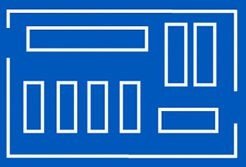
The grid layout is the most common store layout you’re going to find in retail. Used in supermarkets, drug stores, and many big box retail stores, it’s used when stores carry a lot of products (particularly different kinds of products), or when a retail location needs to maximize space.

Advantages

  • It’s easy to categorize products.
  • Shoppers are used to the grid layout style and shop it easily.

Disadvantages

  • It’s boring, and it’s difficult to use this layout to create a “shopping experience” for the customer.
  • Customers often can’t take shortcuts to what they need.
  • Line of sight is limited, forcing a customer to look up and down aisles.
  • Visual “breaks” are needed to keep shoppers engaged.

Strategies:

  • Well-placed promotions. Eye level and a little to the left, in fact. If you’re walking through a grid format store counterclockwise, you’re going to notice that which is a little ahead of you. On a turn, that means the promotion will be at eye level and a little off to your left, where you’re looking as you walk. Things don’t get noticed in corners.
  • Power walls. Because you can leverage your wall space so well in a grid format store, you can take advantage of this to build power walls. Power walls allow you to display merchandise to draw shoppers into an area they might otherwise skip over in normal traffic patterns. Retailers use repetition by putting a lot of a particular product on the wall, perhaps in different colors or sizes.
  • End caps and visual displays. Aisle fixtures have to end, and usually the ends of those aisles are prime real estate to put up a product display. We’ll learn more about these in the next section, but suffice it to say, you have more opportunities to leverage the ends of those aisles with displays and signage in this format than any other.

Racetrack

If you’re selling a product that people want to browse, touch and look at, then the racetrack, or loop, layout is one to consider. Customers follow a prescribed path through the merchandise and experience it the way the retailer wants it to be seen.

Advantages

  • Retailers can provide a great “shopping experience” using this layout.
  • Promotions are easier to execute, because the layout really controls what the shopper sees.
  • Encourages browsing.

Disadvantages

  • Customers who want to run in and pick up something quickly are often discouraged when faced with this layout.
  • Not a good layout for a high-turnover store, like a pharmacy or a convenience store.

In this kind of layout, the retailer doesn’t really need to influence traffic flow, because traffic can really only move one way. This is what makes the layout so perfect for executing promotions. The retailer knows where the shopper is going to look next, and promotions are arranged accordingly eye level and a little to the right.

Free Form

This layout can be anything the retailer wants it to be, in any shape or place. Customer behavior is the only consistent aspect of this kind of layout: we know they will enter and turn right; we know that they won’t want to go up or down a floor and that they won’t shop in to narrow an aisle.

Advantages

  • Ideal for a store offering smaller amounts of merchandise.
  • Easy to create a shopping experience in this layout.

Disadvantages

  • Less space to display product.
  • Easier to confuse the customer.

Traffic flow can easily be disrupted if there isn’t some logic to how items are displayed in the store, and if that logic doesn’t exist, it’ll create shopper confusion. Confused shoppers exit the store nearly immediately and usually without purchasing anything.
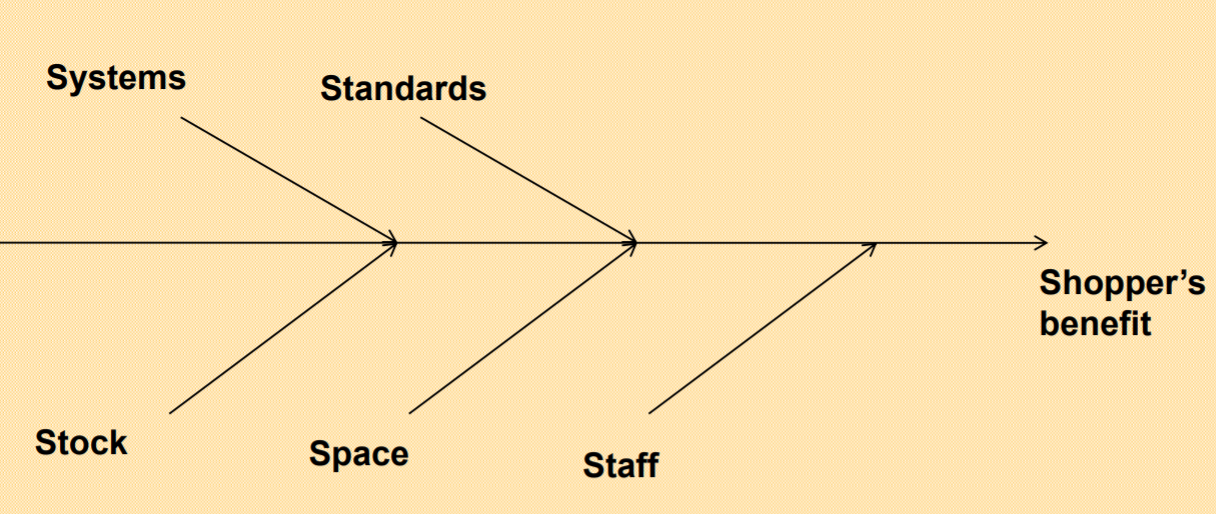
The 5 S’s of Retail Operations (Systems, Standards, Stock, Space, Staff)

Systems

Retailers have some of the largest and most convoluted systems of any type of business. They are second only to government in size and complexity. The systems are large and small, new and old. Some operate from the cloud, others from IBM AS400s. And they are linked manually via developers who keep them talking to each other in scenes reminiscent of mechanics with oily rags in a factory from the industrial revolution of the late 1700s. There is currently no greater strategic, operational or financial challenge for large retailers than bringing all of their legacy systems up to the same level of integration and performance as their newer online retailing competitors who were all birthed on the internet Millennial retailers if you will.

Standards

This refers to ensuring that processes and procedures throughout the company are standard so that there is a common understanding. It also means that people can be moved around and be familiar with their environment.

Stock

Space

Staff

The Concept of Planogram

Planograms, also known as planograms, plan-o-grams, schematics and POGs, are visual representations of a store’s products or services on display. They are considered a tool for visual merchandising.

Planograms are predominantly used in retail businesses. A planogram defines the location and quantity of products to be placed on display. The rules and theories for creating planograms are set under the terms of merchandising. For example, given limited shelf space, a vendor may prefer to provide a wide assortment of products, or may limit the assortment but increase the facings of each product to avoid stock-outs. Manufacturers often send planograms to stores ahead of new product shipments. This is useful when a vendor wants retail displays in multiple store locations to have the same look and feel. Often, a consumer goods manufacturer releases a planogram with each new product to show how the product can relate to existing products.

Fast-moving consumer goods organizations and supermarkets mostly use text and box-based planograms to optimize shelf space, inventory turns and profit margins. Apparel brands and retailers are more focused on presentation and use pictorial planograms that illustrate the look and brand identity for each product.

Placement methods

Visual

Visual product placement is supported by different theories including; horizontal, vertical, and block placement. Horizontal product placement increases the concentration of a certain article. Research studies suggest that a product’s relation to customer eye levels directly correlates to its sales. This depends on the customer’s distance from the unit. Vertical product placement puts products on more than one shelf level to achieve 15 centimetres (5.9 in) 30 centimetres (12 in) of placement space. Similar products are placed in blocks. A planogram can be compared to a book. A store is the book and its individual modules represent the pages. The customer gradually “reads” individual modules and automatically proceeds from the left to the right, from the top to the bottom as if he/she read a book. This principle is followed by a majority of rules for goods displaying. The rules say that goods should be arranged on a shelf from the least to the most expensive ones. Goods may also be arranged in the reverse order, depending on the kind of goods that the dealer wishes to promote. This makes the difference between dealers of cheap and luxury goods.

Commercial

Commercial placement is determined by both market share placement and margin placement.[5] Market share research companies like ACNielsen collect sales data for various products and calculate market share of products in various market segments. Margin placement is determined by the profit margin of a specific item. Higher margin places a product closer to the front of the store, where it is most likely to attract attention.

Derivative objectives

  • To communicate how to set the merchandise
  • To ensure sufficient inventory levels on the shelf or display
  • To use space effectively (e.g. floor, page, and screen)
  • To facilitate communication of retailer’s brand identity
  • To assist in the process of mapping a store
  • To improve customer satisfaction by shelves that are organized and visually-appealing

Creation

The planogram concept originated with KMart. Planograms are created with the help of planogramming software by a Planogram Specialist, Space Planning Specialist or Space Planning Manager. The retail industry utilizes software to ensure proper stocking. Retailers turn to planogram software to reflect each store’s particular customer profile and localized demand, while maintaining centralized control and supply chain efficiency.

For example, some software packages focused upon fast-moving consumer goods and hard goods sectors made enhancements to transfer parts of shelving elements to single store measurements, which, according to the producers, should increase efficiency.

Retailers automate the creation of store-specific planograms through use of corporate-level business rules and constraints describing best practices. Such planogramming solutions allow these companies to respond with location and language-specific messaging, pricing, and product placements based on business rules derived from location, campaign and fixture attributes to create localized assortments.

Recent advances in store virtualization and collaboration allow manufacturers, retailers and category management experts from across the globe to work in the same virtual store in real time.

Individualized Variable Pricing/First Degree Price

First-degree price discrimination is where a business charges each customer the maximum they are willing to pay. This price can vary from customer to customer as the business charges the very maximum in order for the customer to purchase their goods. As a result, the firm is able to capture all consumer surplus and keep this as economic profit instead.

Exercising first degree (or perfect or primary) price discrimination requires the monopoly seller of a good or service to know the absolute maximum price (or reservation price) that every consumer is willing to pay. By knowing the reservation price, the seller is able to sell the good or service to each consumer at the maximum price they are willing to pay, and thus transform the consumer surplus into revenues, leading it to be the most profitable form of price discrimination. So the profit is equal to the sum of consumer surplus and producer surplus. The marginal consumer is the one whose reservation price equals the marginal cost of the product. The seller produces more of their product than they would to achieve monopoly profits with no price discrimination, which means that there is no deadweight loss. Examples of this might be observed in markets where consumers bid for tenders, though, in this case, the practice of collusive tendering could reduce the market efficiency.

First-degree price discrimination is more of a theoretical concept than a reality. It is something for businesses to aim towards than their actual ability to achieve. After all, being able to charge each customer the absolute maximum they are willing to pay is near on impossible.

Some firms are able to implement some form of specific pricing strategy – for example, coupons which verges on first-degree price discrimination. Whilst firms will be unable to charge the absolute maximum, they will be able to charge different values which vary depending on their willingness to pay.

Traditionally, sellers would try and maximise their sales through individual observation and negotiation. For example, when most trade was done via markets, sellers would make assumptions based on an individual’s age, gender, and attire – anything that would signal the consumer’s willingness and ability to spend. Often, negotiations would depend on these initial assumptions. For example, individuals who are well-dressed are more likely to be charged higher prices based on their assumed ability and willingness to pay.

The issue with this age-old approach is that it is a time-consuming and a flawed process. Not every individual in a suit is rich, nor is everyone in a tracksuit poor. On top of this, it is a very inefficient method, particularly for big companies that sell millions of goods. It would be impossible to do this for each customer and for each item they buy.

Examples:

Airlines

Most airlines operate a form of price discrimination by using dynamic pricing. This is simply where prices fluctuate depending on current demand. For instance, if tickets are selling quickly, then prices will start to rise. If tickets are hardly selling, then the prices may fall to attract more customers.

Whilst this form of price discrimination doesn’t necessarily maximize revenue from the consumer, it does increase the firm’s profits by taking advantage of some consumer’s higher willingness to pay. For example, those consumers who are price-sensitive are more likely to book when the tickets come out and are at their cheapest. By contrast, those who are not so sensitive to prices may book last minute when prices may be significantly higher.

Therefore, airlines are able to segment between more price-sensitive consumers and those who are not. For instance, those who need to travel for last-minute business will have a higher willingness to pay than a family of four looking for a holiday.

Business to Business Services

It is much easier to use price discrimination in the service industry as the firm has more control over who can access these as opposed to physical goods that can be resold. This is why businesses are freely able to use price discrimination to sell between different clients. Not every business has the same budget for the goods they are selling.

For instance, a big firm like Walmart will have a far bigger budget than a small firm such as Barry’s Bicycles. So, the willingness to pay is going to differ dramatically between businesses.

Some firms will offer different packages based on the size of the organization. For instance, if a company requires 100+ users, then they will pay a higher fee than those who only need 5 users. Even though the set-up cost is the same, they are able to charge different prices in order to attract custom from each business which has different budget constraints.

Utilities

Utility firms usually offer fixed-term contracts over a year or two by which the consumer is offered a lower rate. However, once this term expires, consumers are put onto a higher variable rate. Yet a significant number of consumers will remain on this variable rate, paying a higher fee each month.

More price-sensitive consumers will get in contact and either switch providers, or move onto a cheaper tariff. By contrast, those consumers who are less price-sensitive may stay with the same utility provider and variable rate, thereby paying a higher fee for the same service.

Self-Selected Variable Pricing/Second Degree Price Discrimination: Clearance and Promotional Markdowns, Coupons, Price Bundling, Multiple, Unit Pricing

In second-degree price discrimination, price varies according to quantity demanded. Larger quantities are available at a lower unit price. This is particularly widespread in sales to industrial customers, where bulk buyers enjoy discounts.

Additionally, to second-degree price discrimination, sellers are not able to differentiate between different types of consumers. Thus, the suppliers will provide incentives for the consumers to differentiate themselves according to preference, which is done by quantity “discounts”, or non-linear pricing. This allows the supplier to set different prices to the different groups and capture a larger portion of the total market surplus.

In reality, different pricing may apply to differences in product quality as well as quantity. For example, airlines often offer multiple classes of seats on flights, such as first-class and economy class, with the first-class passengers receiving wine, beer and spirits with their ticket and the economy passengers offered only juice, pop, and water. This is a way to differentiate consumers based on preference, and therefore allows the airline to capture more consumer’s surplus.

Second-degree price discrimination involves charging consumers a different price for the amount or quantity consumed. Examples include:

  • A phone plan that charges a higher rate after a determined amount of minutes are used.
  • Reward cards that provide frequent shoppers with a discount on future products.
  • Quantity discounts for consumers that purchase a specified number of more of a certain good.

Markdowns

Markdowns are technically known as second-degree price discrimination – charging different prices to different people on the basis of the nature of the offering.

Coupons

Coupons offer a discount on the price of specific items when they’re purchased at a store.

Coupons are also considered a form of second-degree price discrimination because price-sensitive consumers are more likely to expend the extra effort to collect and redeem coupons whereas price- insensitive consumers will not.

Coupons are used because they induce customers to try products for the first time, convert those first-time users to regular users, encourage large purchases, increase usage, and protect market share against competition.

Rebates

Rebates provide another form of discounts for consumers off the final selling price. In this case, the manufacturer issues the refund as a portion of the purchase price returned to the buyer in the form of cash.

Manufacturers like rebates because as many as 90% of consumers don’t bother to redeem them (breakage). Retailers like rebates because they increase demand in the same way coupons may, but the retailer has no handling costs.

Price Bundling

Price bundling is the practice of offering two or more different products or services for sale at one price. Price bundling increases both unit and dollar sales.

Multiple-unit Pricing

This strategy is used to increase sales volume. It is similar to price bundling in that the lower total merchandise price increases sales, but the products are similar, rather than different.

The risk is that customers may stockpile for use at a later time, resulting in no long-term gain.

Variable Pricing by Market Segment/ Third Degree Price Discrimination

This is the most frequent price discrimination and involves charging different prices for the same product in segments of the market. Third degree discrimination is linked directly to consumers’ willingness and ability to pay for a good or service. It means that the prices charged may bear little or no relation to the cost of production.

This is an example of third-degree price discrimination and refers to the practice of charging different prices in different stores, markets, regions, or zones usually in response to different competitive situations in their various markets.

In the real world, third-degree price discrimination is quite common. For a firm to practise price discrimination it requires:

  • Ability to segment different classes of consumers (e.g. rail card to prove you are a senior citizen)
  • Ability to set prices. Some market power.
  • Ability to prevent resale. E.g. stop adults using student tickets.

Direct price discrimination

Third degree price-discrimination is sometimes known as direct price discrimination. Because a firm directly sets different prices depending on distinct groups of consumers (e.g. age)

The alternative is indirect price discrimination where consumers can choose depending on their behaviour, e.g. bulk buying gets lower average cost.

Two Part Pricing Tariffs

  • Another pricing policy is to set a two-part tariff for consumers.
  • A fixed fee is charged + A supplementary “Variable” charge based on units consumed.
  • Examples: taxi fares, amusement park charges
  • Price discrimination can come from varying the fixed charge to different segments of the market and in varying the charges on marginal units consumed (e.g. discrimination by time).

Product-line pricing

  • This occurs when there are many closely connected complementary products that consumers may be enticed to buy. It is frequently observed that a producer may manufacture many related products.
  • They may choose to charge one low price for the core product (accepting a lower mark-up or profit on cost) as a means of attracting customers to the components / accessories that have a much higher mark-up or profit margin.
  • Examples: manufacturers of cars, cameras, razors and games-consoles
  • Discriminatory pricing techniques may take the form of offering the core product as a “loss-leader” (i.e. priced below average cost) to induce consumers to then buy the complementary products once they have been “captured”.

High-Low Pricing Meaning, Benefits, Disadvantages

High–low pricing is a type of pricing strategy adopted by companies, usually small and medium-sized retail firms, where a firm initially charges a high price for a product and later, when it has become less desirable, sells it at a discount or through clearance sales.

Prospective customers may be unaware of a product’s typical market price, or have a strong belief that “discount” is synonymous with “low price”, or have strong loyalty to the product, brand or retailer. High–low pricing strategy is effective because of consumer preference and shopping frequency.  Consumers with higher income strongly prefer the high-low pricing and they shop frequently in the brand stores they like.

Usage

There are many big firms using this type of pricing strategy (including, in North America, Reebok, Nike, and Target). Competition in shoemaking and the fashion industry is partly through high–low pricing (for example Macy’s, Nordstrom). But some firms will not provide discounts and work on a fixed rate of earnings following everyday low price strategies to compete in the market.

An alternative way to use high–low pricing is to increase the price for a short time, sometimes as much as 500%, after which it is “discounted” to what its normal selling price. After the price is reduced to the “sale” price, it may often stay at that price for a long time, sometimes longer than two weeks, after which customers may begin to question whether the reduction is genuine. Artificial discounts of this sort are illegal in the United Kingdom.

Advantages of High-Low Pricing

A key advantage of using the high-low pricing method is that, when properly implemented, it can yield substantial profits; but only if customers buy multiple additional items that are fully priced. A further advantage is that the high-low method essentially becomes the marketing method for the business, since it must constantly advertise a selection of low-price items.

Built-in marketing strategy

Because companies that use high-low pricing need to consistently advertise the products they plan to sell at a discounted price, the advantage of having an established marketing strategy accompanies the use of the pricing model. This results from the constant changing of which products a company lowers the prices for, as they can reuse the marketing strategy from one round of promotions or coupons for the next batch of discounted products. Having a marketing strategy ready to use can save a company time and money they might otherwise need to develop one.

Increased profitability

One advantage of high-low pricing is that it can increase a company’s overall profitability. This occurs when customers who are presented with the opportunity to purchase products at a decreased price also purchase full-price items while shopping. Especially in retail businesses that keep their sales floor stocked with inventory, customers might visit a business with the intention of purchasing an item that they see being sold at a discount and end up making additional purchases after browsing the store.

Expanding customer base

Another advantage to high-low pricing is its potential to attract new customers to a business. This is because a company that uses high-low pricing typically offers promotions or coupons that they advertise to the public, which might encourage customers to visit a business even if they have not done so before. Companies that effectively use high-low pricing can also have a greater chance of keeping their existing customers who can return to repeat their usual purchases and explore new discounted items as a company releases them.

Disadvantages of High-Low Pricing

A business using high-low pricing will need to contend with several disadvantages. First, if a business does not place its low-price items properly, or is dealing with price-sensitive shoppers, it may find that it loses money on its low-price promotions. Second, if customers become aware that the bulk of the products offered by a business are higher than the market rate, they will be more likely to shift their spending loyalties elsewhere. And finally, it can be expensive to run a perpetual series of marketing campaigns to tout the latest low prices.

Market comparisons

Another possible disadvantage to high-low pricing is how a company might compare to other similar businesses in terms of how they price their items. This is because if a company sets the prices of its more expensive items too high above market value, there is potential for customers to compare pricing with other stores or companies and choose to shop at a company with lower overall prices. Companies can help this by carefully choosing the prices of their more expensive items and trying to prevent too large of a discrepancy with prices at other similar businesses.

Consumer behavior

One potential disadvantage to high-low pricing is that it relies on the behavior of consumers who visit a business to make purchases. While a company can perform market research and observe what their customers typically purchase, it might not be possible to predict which products customers want to buy with complete accuracy. This might result in fewer customers than anticipated opting to buy more expensively priced products, even if they’re situated close to discounted ones.

Cost of advertising

As high-low pricing typically relies on continuous advertising of discounted products, companies who use it might spend large sums of capital on marketing or advertising campaigns. This is necessary for high-low pricing, as the products offered at a low price change regularly, which means that it can be an ongoing expense for businesses who advertise heavily or change their discounted products more frequently.

Evaluation of High-Low Pricing

The high-low pricing method is widely used, but discerning shoppers in the Internet era are more capable of spotting lower-priced items elsewhere, and so will only buy the low-price items and will avoid the high-price items. Also, a business that persistently offers high prices on the bulk of its products will not garner much customer loyalty. Competitors that use everyday low pricing for all of their products can compete effectively against this strategy.

Everyday Low Pricing Meaning, Benefits

EDLP, which stands for Every Day Low Prices, is a pricing strategy in which firms promise consumers consistently low prices on products without having to wait for sales events. In such a pricing strategy, a firm sets a low price and maintains it over a long time-horizon (given that product costs remain unchanged).

It is common for competing retailers to segment the market by choosing different pricing strategies. The segments consist of two different sets of customers with different buying patterns, both for purchases and for pre-purchase research. Price-vigilant consumers, often referred to as “cherry pickers,” tend to be attracted to discounts. They are willing to do the research to learn about discounts, and to stockpile products when discounts exist. These consumers are better reached by promotional pricing strategies. In contrast, “expected price shoppers” are unwilling to do as much pre-purchase research and less likely to stockpile discounted items.

EDLP strategies generally result in lower fixed costs, since they require less advertising for promotional prices, less labour to execute price changes, and simpler pricing and inventory management systems with lower overhead. EDLP can also result in more predictable consumer demand and therefore fewer stocking and supply-chain problems. High-low pricing strategies generally result in lower variable costs, since promotional retailers can sell more products by offering discounts. They are able to take advantage of surplus at the wholesale level and also eliminate excess inventory at the retail level. This is particularly useful in markets for perishable goods, such as groceries.

If the market is sharply segmented by cherry pickers and expected price shoppers, then EDLP retailers have no incentive to switch to high-low pricing strategies, and vice versa. However, there are circumstances which motivate some retailers to change. In the last several decades, consumers have been less able and less willing to spend time reading circulars and newspaper ads to find the best prices.

Retailers lose more in case of price decrease than gain on price increase. Price variation in high-low pricing strategies may benefit shoppers who visit stores frequently because they are better able to exploit the fluctuating prices; however, many consumers are shopping less frequently now than in previous decades. These buying trends would predict that many grocers would switch from high-low pricing to EDLP, if the cost to switch was minimal. However, total costs for EDLP are higher in many markets, and it is extremely expensive for retailers to switch strategies. Not only is the initial cost high, but the EDLP strategy must be maintained long enough for consumers to associate lower prices with the brand.

Advantages of Everyday Low Pricing

Marketing costs

Advertising is less expensive as stores do not need to individually promote each sale item and advertise sale events. For example, it was noted that in 1994, Walmart, which used an EDLP strategy, would only need to purchase advertisements in a newspaper on a monthly basis while competitors would advertise every week of the year.

Demand forecasting

EDLP helps stores reduce demand fluctuations that would normally occur during sales promotions. Demand forecasting becomes much easier.

Staffing efforts

Stores save the time and effort in having to individually mark down items during sale events.

Disadvantages

  1. If there are sudden fluctuations and prices go high, then there is a risk of losing customer’s trust as they are used to lower prices.
  2. It is not practical sometimes to keep offering low prices on a daily basis.
  3. It is mostly applicable to large retail stores as compared to small retail brands.

Importance of EDLP pricing strategy

Traditionally, retail stores used to keep regular pricing discounts, coupon clipping promotions, etc. to promote their sales and increase the footfall in their stores. But, this needs a lot of effort in terms of monetary aspects and physical aspects making it difficult to sustain the competitive advantage. The strategy of EDLP helps to convince the consumer that they will get better and low prices than other competitive stores everyday even though the promotions of competitors at regular intervals might provide lowest prices but they will not be available everyday.

EDLP also helps the retail stores to reduce their demand fluctuation that would occur due to promotions on some days, and also reduces the probability of consumers receiving time degraded products. Everyday Low Price strategy cuts advertising costs as well as the customers don’t need to be informed about occasional discounts but they are well aware that they will get the best price whenever they go to the store or retail channel. It also helps building brand image and trust in minds of the customers as they perceive the brand to be trustworthy and economical every time.

It is also assumed that sometimes the sales events and promotions are for stock clearances hence the prices have been dropped but in EDLP, that trust is maintained as products are consistently priced lower but perceived quality is always high.

Market Skimming, Market Penetration

Market Skimming

Price skimming is a price setting strategy that a firm can employ when launching a product or service for the first time. By following this price skimming method and capturing the extra profit a firm is able to recoup its sunk costs quicker as well as profit off of a higher price in the market before new competition enters and lowers the market price. It has become a relatively common practice for managers in new and growing market, introducing prices high and dropping them over time.

Price skimming is sometimes referred to as riding down the demand curve. The objective of a price skimming strategy is to capture the consumer surplus early in the product life cycle in order to exploit a monopolistic position or the low price sensitivity of innovators.

Price skimming happens when a marketer initially offers an item at a high price that consumers with the strongest desire and funds to purchase it will, and then as that demand is depleted the price gets lowered to the next layer of customer desire in the market.

Limitations of price skimming

  • It is effective only when the firm is facing an inelastic demand curve. If the long run demand curve is elastic (as in the adjacent diagram), market equilibrium will be achieved by quantity changes rather than price changes. Penetration pricing is a more suitable strategy in this case. Price changes by any one firm will be matched by other firms resulting in a rapid growth in industry volume. Dominant market share will typically be obtained by a low cost producer that pursues a penetration strategy.
  • A price skimmer must be careful with the law. Price discrimination is illegal in many jurisdictions, but yield management is not. Price skimming can be considered either a form of price discrimination or a form of yield management. Price discrimination uses market characteristics (such as price elasticity) to adjust prices, whereas yield management uses product characteristics. Marketers see this legal distinction as quaint since in almost all cases market characteristics correlate highly with product characteristics. If using a skimming strategy, a marketer must speak and think in terms of product characteristics to stay on the right side of the law.
  • The inventory turn rate can be very low for skimmed products. This could cause problems for the manufacturer’s distribution chain. It may be necessary to give retailers higher margins to convince them to handle the product enthusiastically.
  • Price skimming can attract more competition to the market due to firms intrigued by the high price margins and introducing their own product, also eroding the inelasticity of the demand curve.
  • Skimming results in a slower rate of product diffusion and adoption. This results in a higher level of untapped demand, giving competitors time to either imitate the product or leapfrog it with an innovation. If competitors do this, the window of opportunity will have been lost. The slower rate of adoption can also have an effect on brand loyalty as fewer customers get their hands on or are aware of the item being sold.
  • The manufacturer could develop negative publicity if they lower the price too fast and without significant product changes. Some early purchasers will feel they have been ripped off. They will feel it would have been better to wait and purchase the product at a much lower price. This negative sentiment will be transferred to the brand and the company as a whole.
  • High margins may make the firm inefficient. There will be less incentive to keep costs under control. Inefficient practices will become established making it difficult to compete on value or price.
  • The lower quantity demand for the item may mean a firm can not take advantage of economies of scale.

When considering a relatively new product with a limited supply and a short life cycle, price skimming can be introduced as a strategy during the first stage of the product life cycle, because some customers want to be the first to buy the product and are willing to pay the premium. Then the price will go down after a certain selling period, which is also referred to as market exit time.

Price skimming occurs for example in the luxury car and consumer electronics markets. In consumer electronics, there is a confounding factor that there is typically high price deflation due to continual reductions in manufacturing cost and improvements in product quality for example, a printer priced at $200 today would have sold for a far higher price a decade ago.

Market Penetration

Market penetration refers to the successful selling of a product or service in a specific market. It is measured by the amount of sales volume of an existing good or service compared to the total target market for that product or service. Market penetration is the key for a business growth strategy stemming from the Ansoff Matrix. H. Igor Ansoff first devised and published the Ansoff Matrix in the Harvard Business Review in 1957, within an article titled “Strategies for Diversification”. The grid/matrix is utilized across businesses to help evaluate and determine the next stages the company must take in order to grow and the risks associated with the chosen strategy. With numerous options available, this matrix helps narrow down the best fit for an organization.

This strategy involves selling current products or services to the existing market in order to obtain a higher market share. This could involve persuading current customers to buy more and new customers to start buying or even converting customers from their competitors. This could be implemented using methods such as competitive pricing, increasing marketing communications, or utilizing reward systems such as loyalty points/discounts. New strategies involve utilizing pathways and finding new ways to improve profits and increase sales and productivity in order to stay competitive.

Strategies

Price adjustments

One of the common market penetration strategies is to lower the products’ prices. Businesses aim to generate more sales volume by increasing the number of products purchased by putting on lower prices (price competition) for consumers comparing to the alternative goods. Companies may alternatively pursue strategies of higher prices depending on the demand elasticity of the product, in the hope that it will generate an increased sales volume and result in higher market penetration.

Penetration pricing

Penetration pricing is a marketing technique which is used to gain market share by selling a new product for a price that is significantly lower than its competitors. The company begins to raise the price of the product once it has achieved a large customer base and market share. Penetration pricing is frequently used by network provider and cable or satellite services companies. Many of the providers will initially offer an unbeatable price to attract customers into switching to their service and after the discount period has ended, the price increases dramatically and some customers will be forced to stay with the provider because of contract issues.

Penetration pricing benefits from the influence of word-of-mouth advertising, allowing customers to spread the words of how affordable the products are prior to business increasing the prices. It will also discourage and disadvantage competitors who are not willing to undersell and losing sales to others. However, businesses have to ensure they have enough capital to stay in surplus before the price is raised up again.

Increased promotion

Businesses can also increase their market penetration by offering promotions to customers. A promotion is a strategy often linked with pricing, used to raise awareness of the brand and generate profit to maximise their market share.

More distribution channels

A distribution channel is the connection between businesses and intermediaries before a good or service is purchased by the consumers. Distribution can also contribute to sales volumes for businesses. It can increase consumer awareness, change the strategies of competitors and alter the consumer’s perception of the product and the brand, and is another method to increase market penetration.

Product improvements

Product management is crucial to a high market penetration in the targeted market and by improving the quality of products, businesses are able to attract and out-quality the competitors’ products to match customers’ requirements and eventually lead to more sales made. Product improvements can be utilised to create new interests in a declining product, for example by changing the design of the packaging or material/ingredients.

Market development

Market development aims at non-buying shoppers in targeted markets and new customers in order to maximise the potential market. Before developing a new market, companies should consider all the risks associated with the decision including its profitability. If a company is confident about their products, believes in their strengths, and is enticing to new consumers, then market development is a suitable strategy for the business.

Leader Pricing, Odd Pricing, Single Pricing

Psychological pricing is the business practices of setting prices lower than a whole number. The idea behind psychological pricing is that customers will read the slightly lowered price and treat it lower than the price actually is. An example of psychological pricing is an item that is priced Rs. 399 but conveyed by the consumer as Rs. 300 and not Rs. 400 , treating Rs. 399 as a lower price than Rs. 4.00.

Leader Pricing

An adequate system of price setting is fundamental for any independent venture to survive in this competitive world. Adding overall revenues and advertising techniques, pricing policies make a connection among clients and an organization’s accounts. While numerous techniques and innovative strategies for pricing are accessible to retailers, leader pricing, otherwise called loss leader pricing, includes selling things with decreased overall revenue with the expectation that less price will pull in extra clients to a store.

For instance, a product costs 1k in its making and then is sold at a lesser price, i.e., 6k. It is sold at a loss of 1k. This type of pricing is known as leader pricing when a product is sold at a price less than its cost.

Purpose

  • The strategy is mainly targeted to attract customers to the business by using price as a weapon to fight competitors.
  • The prime purpose of loss leader pricing is to gain market penetration and attain a customer base.
  • It is aimed at targeting customers, making them buy their product, spread through a word-of-mouth pattern, retain the customers and eventually sell them other products or complimentary products by keeping a higher profit margin. Thus, what the business is doing is that first selling certain products at zero or negative profit margin and afterward selling some other products at a much higher profit margin to compensate for the initial losses made.
  • This strategy needs to be properly executed as it may lead to the bankruptcy of the business if there is no proper business model or planning.
  • The main purpose of this strategy is to draw more traffic from the competitors and in this way generate more sales.
  • This strategy works best in the way of introducing the customer the cheapest product or services with the hope of building a bigger customer base and generating recurring revenue in the future.

Leader Pricing Types

Different types of businesses use this pricing strategy for different purposes.

  • Some companies use this pricing to clear off their inventory. The lower price creates more demand and hence it becomes easier to sell these products in high volume.
  • Some companies use it to sell a new product. This saves on their marketing cost of acquiring new customers through some other mediums like advertisements.
  • Retailers use this pricing strategy to attract more customers in their shops. But since they don’t want to make loss, they price some other product higher so as to compensate for the loss made by the loss leader priced product. Sometimes it also pays off when the high volume of sales compensates for the loss made by lowering the price.

Odd Pricing

Odd even pricing is extremely common to find these days and is being used widely. Many producers have started using this for a range of products. Some shops that give out discounts to their customers are also using this technique.

The concept is extremely simple to understand. You would have come across several products being priced in the following manner: Rs. 9,999 or Rs. 4449 or Rs. 14,499 or Rs. 99 etc.

Odd-Even pricing technique prices products at an odd number which is slightly less that a rounded off even number. So instead of pricing a product at Rs 1020, you discount it and price it at rs 999. This 21 rs reduction will give much more turnover because people will judge the product being priced at 900 rs and not 1000 rs.

Even pricing is when multiples of 10 are used to price a product. So a small scoop of ice cream will be 30 rs, a larger scoop will be 60 rs and even larger will be 90 rs. This makes the user understand the quantity which he will be getting against the price.

Besides quantity, Even pricing can be used to denote quality. Pricing at 99 or 49 has become so common, that pricing at even values can be a standout from the crowd. However, even pricing is used very seldom and in the combination of Odd Even pricing, odd pricing takes the upper hand.

Some people are of the opinion that this was initially done so that the cashier would be forced to open the change drawer to hand over change to a customer, thus being forced to record a transaction and make it legitimate. However, research on consumer behaviour has shown that this kind of pricing has a psychological effect on the consumer’s mind where he/she, for example, considers a price of Rs. 9,999 to be just above Rs. 9,000 rather than just below Rs. 10,000.

Psychological effect on customers

Odd pricing is believed to have a considerable impact on a customer’s mind. The illusion of much cheaper products compels a buying response. Also it is believed that because consumers are exposed to a continuous flow of prices; they store only the more valuable first digits of a number. This is so because the memory processing time is slower in humans. Odd pricing is also believed to put across the impression that goods are marked at the lowest possible price because it is a belief that even prices is an outcome of the retailer rounding up the price to a whole number. Odd prices for the same reason even give an impression of honesty of a retailer.

Single Pricing

Single price policy refers to the offering of all goods at a single price (e.g., everything for Rs. 500, or Rs. 1000, etc.).

The single price method is the trading method where orders are send to the ISE Stock Market Trading System without any matching for a certain period of time and at the end of that period, a price level is calculated which enables to execute the maximum amount of transactions, and all the transactions are executed over that price level.

Stages of the Single Price Method:

The single price method is basically comprised of two stages:

Order Collection: During this time period, orders are send to the System, and ranked according to price and time priority rules. There is no matching. In this process, the order book and depth information are not displayed.

Price Determination and Execution of Transactions: During this stage which starts immediately after the order collection stage, the orders sent to the system are evaluated, whereupon a price at which maximum quantity of transactions can be performed is determined, and orders which are eligible in terms of price and time priorities are converted to a transaction over that single price level provided that they have sufficient amount of counter orders. At this stage, all market inquiries are available in the electronic trading system.

Orders which remain unexecuted at the opening stage of the single price determination processes within the same session are carried to the next single price process. If a daily order is placed, the remaining orders may be carried from the first session to the second session.

error: Content is protected !!