Physical Distribution Channels, Role, Factors, Importance, Types

Physical Distribution Channels refer to the path or route through which goods and services travel from the producer or manufacturer to the final consumer. These channels include intermediaries such as wholesalers, retailers, agents, or distributors, who play an essential role in making the product available to the target market. The goal of distribution channels is to ensure that products reach the right place, at the right time, and in the right condition. Effective distribution channel management helps companies expand market reach, enhance product availability, and optimize costs, contributing to overall business success.

Role of Physical Distribution Channels:

(i) Distribution channels provide time, place, and ownership utility

They make the product available when, where, and in which quantities the customer wants. But other than these transactional functions, marketing channels are also responsible to carry out the following functions:

(ii) Logistics and Physical Distribution

Marketing channels are responsible for assembly, storage, sorting, and transportation of goods from manufacturers to customers.

(iii) Facilitation

Channels of distribution even provide pre-sale and post-purchase services like financing, maintenance, information dissemination and channel coordination.

(iv) Creating Efficiencies

This is done in two ways: bulk breaking and creating assortments. Wholesalers and retailers purchase large quantities of goods from manufacturers but break the bulk by selling few at a time to many other channels or customers. They also offer different types of products at a single place which is a huge benefit to customers as they don’t have to visit different retailers for different products.

(v) Sharing Risks

Since most of the channels buy the products beforehand, they also share the risk with the manufacturers and do everything possible to sell it.

(vi) Marketing

Distribution channels are also called marketing channels because they are among the core touch points where many marketing strategies are executed. They are in direct contact with the end customers and help the manufacturers in propagating the brand message and product benefits and other benefits to the customers.

Role Determining the Choice of Distribution Channels:

Selection of the perfect marketing channel is tough. It is among those few strategic decisions which either make or break your company.

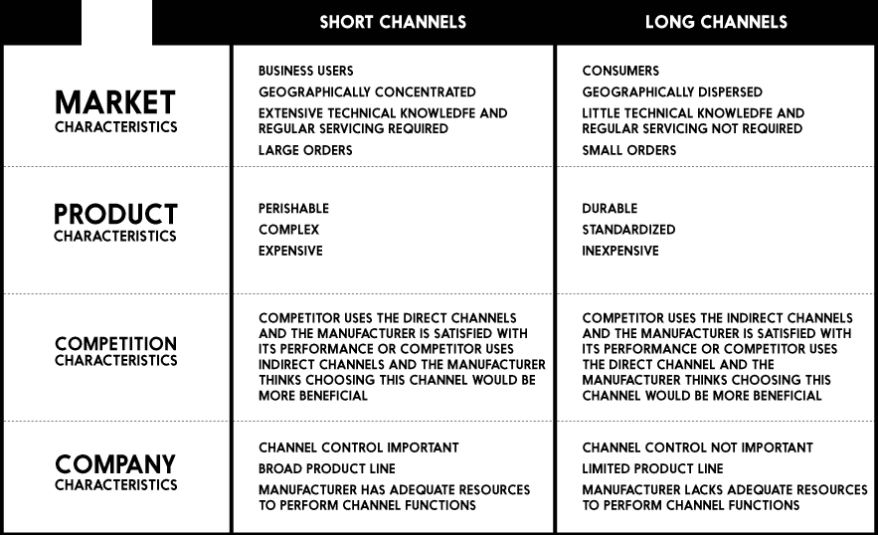
Even though direct selling eliminates the intermediary expenses and gives more control in the hands of the manufacturer, it adds up to the internal workload and raises the fulfilment costs. Hence these four factors should be considered before deciding whether to opt for the direct or indirect distribution channel.
Importance of Physical Distribution Channels:

  • Ensures Product Availability

Physical distribution channels ensure products are available to customers at the right place and time. They bridge the gap between production and consumption, making goods accessible in various markets. Efficient distribution minimizes stockouts and ensures continuous supply. By strategically placing products where demand exists, businesses can serve customers promptly, increase satisfaction, and build loyalty. This availability directly influences purchase decisions and repeat sales, especially in competitive markets. Without effective physical distribution, even high-quality products may fail to reach intended customers, resulting in lost opportunities and reduced profitability.

  • Reduces Transportation and Storage Costs

Efficient physical distribution channels optimize transportation routes, load capacity, and storage facilities to minimize costs. By consolidating shipments and using appropriate warehousing strategies, businesses can lower expenses while maintaining timely deliveries. Cost reduction also improves pricing competitiveness in the market. Advanced logistics systems, such as just-in-time (JIT) inventory management, help reduce the need for large storage facilities, saving rent and maintenance costs. Moreover, bulk transportation through well-managed channels reduces per-unit freight charges. These cost efficiencies ultimately increase profitability and allow companies to offer competitive prices to customers without compromising service quality.

  • Expands Market Reach

Physical distribution channels help businesses reach diverse geographic areas, including rural, urban, and international markets. Well-established networks of wholesalers, distributors, and retailers ensure products penetrate deeper into different customer segments. This expansion enables companies to serve untapped markets, increasing overall sales volume and market share. Global brands often rely on sophisticated distribution systems to ensure consistent product availability across countries. Additionally, local adaptation of distribution strategies allows businesses to cater to specific market needs. By extending reach effectively, companies can strengthen their brand presence and establish dominance over competitors in multiple regions simultaneously.

  • Enhances Customer Satisfaction

An efficient physical distribution channel ensures fast, reliable, and damage-free delivery of products, directly contributing to customer satisfaction. Customers value convenience and timely service, and a strong distribution network fulfills these expectations. Quick product availability enhances trust in the brand and encourages repeat purchases. In industries like FMCG, electronics, and e-commerce, seamless delivery is a major factor in customer retention. Furthermore, prompt handling of returns and exchanges through distribution networks adds to a positive buying experience. Overall, smooth distribution strengthens customer relationships and boosts long-term loyalty, which is crucial for business sustainability.

  • Improves Competitiveness

A strong distribution system gives companies a competitive edge by ensuring products reach markets faster than competitors. Businesses that can deliver products promptly gain an advantage in customer preference and loyalty. Efficient logistics also allow companies to respond quickly to changing market demands or seasonal fluctuations. By maintaining a wide and reliable network, businesses can secure better shelf space in retail outlets and negotiate favorable terms with distributors. This operational strength often translates into a dominant market position, higher sales volumes, and stronger brand visibility, making it harder for competitors to match performance.

  • Facilitates Smooth Supply Chain Management

Physical distribution channels are a crucial link in the supply chain, ensuring smooth movement of goods from manufacturers to end-users. Well-coordinated channels improve communication between producers, wholesalers, retailers, and customers, leading to better inventory control and demand forecasting. This reduces delays, stock imbalances, and wastage. Integration with technology like GPS tracking and warehouse management systems further enhances efficiency. By aligning supply with demand in real-time, companies can avoid overproduction or shortages. Smooth supply chain operations also improve overall productivity and operational efficiency, which directly benefits profitability and customer satisfaction.

  • Supports Sales Growth

Effective physical distribution channels directly contribute to higher sales by ensuring wide product availability and convenience for customers. Products that are easy to find and purchase naturally sell more, leading to increased revenue. Distributors and retailers often promote products within their networks, providing additional marketing support. Furthermore, consistent supply to high-demand areas maximizes sales potential and minimizes lost opportunities. Seasonal products, in particular, benefit from quick and efficient distribution to capture peak demand. Ultimately, a robust distribution network is a strategic driver for sustainable business growth and long-term market expansion.

Types of Distribution Channels:

Distribution channels refer to the pathways through which products move from the producer to the final consumer. The choice of distribution channel impacts the product’s availability, cost, and customer experience. There are several types of distribution channels, each suited to different business models and customer needs.

  • Direct Distribution Channel

In a direct distribution channel, the producer sells the product directly to the consumer without involving intermediaries. This can be done through physical stores, company-owned retail outlets, or online platforms. Direct channels allow businesses to have full control over the pricing, branding, and customer experience. They are commonly used for high-value, customized products, or when a business wants to establish direct relationships with customers, as seen in industries like luxury goods, technology, and exclusive services.

  • Indirect Distribution Channel

Indirect distribution channels involve intermediaries between the producer and the consumer. These intermediaries can be wholesalers, distributors, or retailers who help move the product through the market. Indirect channels are common for mass-market products where reaching a larger audience efficiently is crucial. For example, a manufacturer of consumer electronics may sell its products to wholesalers, who then distribute them to various retailers, making the product available in multiple locations.

  • Dual Distribution Channel

A dual distribution channel, also known as a hybrid channel, combines both direct and indirect methods. A company uses direct sales to reach some customers while also using intermediaries to sell through other channels. This type of distribution is useful for companies that want to diversify their sales efforts or reach different market segments. For example, a company might sell directly to large corporate clients but rely on retailers to reach individual consumers. This approach increases market coverage and flexibility.

  • Intensive Distribution

Intensive distribution aims to make the product available in as many locations as possible. This type of channel is used for products with high demand, low unit cost, and frequent purchases, such as consumer packaged goods, snacks, or toiletries. The goal is to saturate the market and make the product widely accessible. The product is sold through multiple retailers, wholesalers, and other outlets to ensure it is readily available for customers.

  • Selective Distribution

Selective distribution involves using a limited number of outlets or intermediaries to distribute products. The company selectively chooses the intermediaries based on their ability to provide quality service, reach specific customer segments, or meet certain brand standards. This approach is often used for moderately priced products such as electronics or appliances. It allows the producer to maintain some control over the product’s distribution while still reaching a broad audience.

  • Exclusive Distribution

Exclusive distribution channels are characterized by a highly selective approach where the producer only sells the product through a few specific intermediaries. This type of channel is often used for luxury or high-end products, where exclusivity and prestige are critical. By limiting the number of distributors or retailers, the brand can control its image and ensure that the product is positioned correctly in the market. For example, a high-end automobile manufacturer may only sell its cars through a select network of authorized dealerships.

Choosing the Right Distribution Channel:

Choosing the right distribution channel is a crucial decision that can significantly impact a company’s success in reaching its target market. The process involves evaluating various options based on the product type, target customer preferences, cost considerations, and competitive environment.

  • Product Type

The nature of the product plays a vital role in determining the best distribution channel. For example, perishable goods like fresh food products may require direct distribution to maintain freshness, while durable goods can be sold through wholesalers or retailers. Similarly, high-end, luxury products may be best suited for exclusive distribution channels, while mass-market items benefit from extensive channel networks.

  • Market Coverage

The level of market coverage needed for the product influences the choice of distribution channel. If the goal is to achieve intensive distribution (wide availability in as many outlets as possible), using intermediaries like wholesalers or retailers is essential. On the other hand, exclusive distribution may require fewer intermediaries to maintain control and exclusivity, which works well for high-end products.

  • Customer Preferences

Understanding how customers prefer to buy products is critical when selecting a distribution channel. In the digital age, many customers prefer purchasing products online, while others prefer a traditional in-store experience. Businesses need to assess the purchasing behavior and preferences of their target market to choose a channel that aligns with their customers’ expectations.

  • Cost Considerations

The cost of using a particular distribution channel is an important factor. Direct distribution, such as selling through a company-owned retail outlet or an e-commerce platform, may involve higher operational costs but provides more control. Indirect channels like wholesalers and retailers may reduce operational costs but may result in lower profit margins due to commissions and markups. Companies need to balance cost considerations with revenue goals to make the most cost-effective choice.

  • Control and Flexibility

When a company chooses a distribution channel, it also determines the level of control it will have over its products and brand. Direct distribution allows a company to maintain more control over product presentation, pricing, and customer experience. However, indirect channels offer less control, as they rely on intermediaries to sell the product. If maintaining control over branding and customer experience is a priority, a company may opt for a direct distribution channel.

  • Competition

The distribution strategy should also consider competitors’ actions. If competitors are using particular distribution channels, entering the same channels could help a company maintain its competitive edge. Alternatively, choosing unique or innovative channels can provide differentiation in the marketplace.

  • Market Reach

The geographical scope of the target market also affects the choice of distribution channels. If a company plans to reach international or distant markets, using a distribution network that includes international agents or global e-commerce platforms might be necessary. Alternatively, for a local or regional target market, a more localized approach with regional wholesalers or retailers may be sufficient.

  • Speed and Efficiency

The time it takes for products to reach customers is another consideration. If the market demands fast delivery, a direct distribution channel, such as e-commerce with quick fulfillment services or direct sales through retail stores, may be ideal. In contrast, some customers may be willing to wait for their products, in which case a slower, but more cost-effective, channel may suffice.
Methods of Pricing

Pricing is the process of determining the monetary value of a product or service. It involves assessing various factors, including production costs, market demand, competition, and customer perception of value. Effective pricing strategies aim to maximize profitability, attract customers, and maintain a competitive edge, balancing the need for revenue generation with the desire to provide perceived value to consumers.

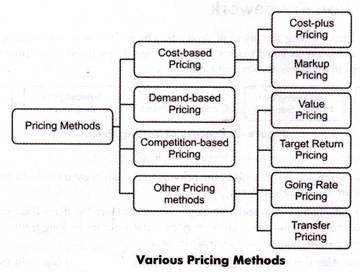
An organization has various options for selecting a pricing method. Prices are based on three dimensions that are cost, demand, and competition. The organization can use any of the dimensions or combination of dimensions to set the price of a product.

  1. Cost based Pricing:

Cost-based pricing refers to a pricing method in which some percentage of desired profit margins is added to the cost of the product to obtain the final price. In other words, cost-based pricing can be defined as a pricing method in which a certain percentage of the total cost of production is added to the cost of the product to determine its selling price. Cost-based pricing can be of two types, namely, cost-plus pricing and markup pricing.

These two types of cost-based pricing are as follows:

(i) Cost Plus Pricing

Refers to the simplest method of determining the price of a product. In cost-plus pricing method, a fixed percentage, also called mark-up percentage, of the total cost (as a profit) is added to the total cost to set the price. For example, XYZ organization bears the total cost of Rs. 100 per unit for producing a product. It adds Rs. 50 per unit to the price of product as’ profit. In such a case, the final price of a product of the organization would be Rs. 150.

Cost-plus pricing is also known as average cost pricing. This is the most commonly used method in manufacturing organizations.

In economics, the general formula given for setting price in case of cost-plus pricing is as follows:

P = AVC + AVC (M)

AVC = Average Variable Cost

M = Mark-up percentage

AVC (m) = Gross profit margin

Mark-up percentage (M) is fixed in which AFC and net profit margin (NPM) are covered.

AVC (m) = AFC + NPM

For determining average variable cost, the first step is to fix prices. This is done by estimating the volume of the output for a given period of time. The planned output or normal level of production is taken into account to estimate the output.

The second step is to calculate Total Variable Cost (TVC) of the output. TVC includes direct costs, such as cost incurred in labor, electricity, and transportation. Once TVC is calculated, AVC is obtained by dividing TVC by output, Q. [AVC = TVC / Q]. The price is then fixed by adding the mark-up of some percentage of AVC to the profit [P = AVC + AVC (m)].

Advantages of cost-plus pricing method are as follows:

  • Requires minimum information
  • Involves simplicity of calculation
  • Insures sellers against the unexpected changes in costs

Disadvantages of cost-plus pricing method are as follows:

  • Ignores price strategies of competitors
  • Ignores the role of customers

(ii) Markup Pricing

Refers to a pricing method in which the fixed amount or the percentage of cost of the product is added to product’s price to get the selling price of the product. Markup pricing is more common in retailing in which a retailer sells the product to earn profit. For example, if a retailer has taken a product from the wholesaler for Rs. 100, then he/she might add up a markup of Rs. 20 to gain profit.

It is mostly expressed by the following formula:

  • Markup as the percentage of cost= (Markup/Cost) *100
  • Markup as the percentage of selling price= (Markup/ Selling Price)*100
  • For example, the product is sold for Rs. 500 whose cost was Rs. 400. The mark up as a percentage to cost is equal to (100/400)*100 =25. The mark up as a percentage of the selling price equals (100/500)*100= 20.
  1. Demand Based Pricing:

Demand-based pricing refers to a pricing method in which the price of a product is finalized according to its demand. If the demand of a product is more, an organization prefers to set high prices for products to gain profit; whereas, if the demand of a product is less, the low prices are charged to attract the customers.

The success of demand-based pricing depends on the ability of marketers to analyze the demand. This type of pricing can be seen in the hospitality and travel industries. For instance, airlines during the period of low demand charge less rates as compared to the period of high demand. Demand-based pricing helps the organization to earn more profit if the customers accept the product at the price more than its cost.

  1. Competition Based Pricing

Competition-based pricing refers to a method in which an organization considers the prices of competitors’ products to set the prices of its own products. The organization may charge higher, lower, or equal prices as compared to the prices of its competitors.

The aviation industry is the best example of competition-based pricing where airlines charge the same or fewer prices for same routes as charged by their competitors. In addition, the introductory prices charged by publishing organizations for textbooks are determined according to the competitors’ prices.

  1. Other Pricing Methods

In addition to the pricing methods, there are other methods that are discussed as follows:

(i) Value Pricing

Implies a method in which an organization tries to win loyal customers by charging low prices for their high- quality products. The organization aims to become a low cost producer without sacrificing the quality. It can deliver high- quality products at low prices by improving its research and development process. Value pricing is also called value-optimized pricing.

(ii) Target Return Pricing

Helps in achieving the required rate of return on investment done for a product. In other words, the price of a product is fixed on the basis of expected profit.

(iii) Going Rate Pricing

Implies a method in which an organization sets the price of a product according to the prevailing price trends in the market. Thus, the pricing strategy adopted by the organization can be same or similar to other organizations. However, in this type of pricing, the prices set by the market leaders are followed by all the organizations in the industry.

(iv) Transfer Pricing

Involves selling of goods and services within the departments of the organization. It is done to manage the profit and loss ratios of different departments within the organization. One department of an organization can sell its products to other departments at low prices. Sometimes, transfer pricing is used to show higher profits in the organization by showing fake sales of products within departments.

Pricing, Meaning, Objectives, Strategies, Nature, Scope, Challenges and Factors Influencing Pricing

Pricing refers to the process of determining the value of a product or service in monetary terms. It is a critical aspect of marketing and business strategy, influencing demand, profitability, and market positioning. Effective pricing considers various factors, including production costs, competition, market demand, and perceived value. Businesses can adopt different pricing strategies, such as cost-plus pricing, value-based pricing, or penetration pricing, to achieve their objectives.

Objectives of Pricing:

  • Revenue Generation

One of the primary objectives of pricing is to generate revenue for the business. By setting prices that reflect the value of the product or service, companies can ensure that they are covering costs and making a profit. Pricing strategies should align with revenue goals, whether for short-term gains or long-term sustainability.

  • Market Penetration

Businesses often aim for market penetration through competitive pricing strategies. Lower prices can attract customers and increase market share, especially for new products entering a competitive landscape. This approach helps establish a foothold in the market, encouraging customer loyalty and fostering brand recognition.

  • Profit Maximization

Pricing is a critical lever for maximizing profits. By strategically adjusting prices based on demand, cost structure, and competitive landscape, businesses can enhance their profit margins. This may involve premium pricing for high-value products or competitive pricing to drive volume and reduce costs.

  • Competitive Positioning

Effective pricing can differentiate a product from competitors, positioning it as either a premium offering or a budget-friendly alternative. Understanding competitors’ pricing strategies allows businesses to craft their pricing in a way that highlights unique features or benefits, enhancing their market position.

  • Customer Perception

The price of a product often influences customer perception and brand image. A well-calibrated pricing strategy can convey quality, exclusivity, or affordability. For instance, luxury brands may adopt high pricing to reinforce their premium image, while discount retailers focus on value to attract cost-conscious consumers.

  • Cost Recovery

Another objective of pricing is to ensure that all costs associated with a product or service are recovered. This includes fixed costs (like overhead and salaries) and variable costs (like raw materials and production). Businesses must carefully analyze their cost structure to set prices that adequately cover expenses and support financial health.

  • Market Stabilization

Pricing strategies can also be used to stabilize markets and reduce price wars. By establishing a consistent pricing approach, companies can help prevent excessive competition that may lead to eroded profits. Collaborative pricing strategies or price signaling can help maintain market stability.

  • Demand Management

Pricing can be used as a tool to manage demand for a product or service. By implementing dynamic pricing strategies, companies can adjust prices based on real-time demand fluctuations. For example, airline ticket prices often vary based on seasonality and occupancy rates, helping to optimize revenue.

  • Promotion and Sales Strategy

Pricing objectives are often tied to promotional activities and sales strategies. Temporary discounts, bundled pricing, or special offers can be employed to stimulate sales during slow periods or to clear inventory. These strategies enhance customer engagement and drive purchases.

  • Market Segmentation

Differentiated pricing strategies can be employed to cater to various market segments. Businesses can use price discrimination, charging different prices for the same product based on customer characteristics or buying behavior. This approach allows companies to maximize revenue from each segment by capturing consumer surplus.

Strategies of Pricing:

1. Cost-Based Pricing

Cost-based pricing involves setting prices based on the costs of producing a product or service, with a markup added for profit. This strategy ensures that a business covers its expenses and achieves a desired level of profitability. It’s straightforward and easy to calculate but may not always consider market conditions or customer demand.

  • Example: A manufacturer calculates the production cost of a product and adds a 20% markup to set the retail price.

2. Penetration Pricing

Penetration pricing is used when a company aims to enter a new market or increase its market share quickly. This strategy involves setting low prices initially to attract customers, generate interest, and build brand recognition. After gaining a sufficient market share, the company may gradually raise prices.

  • Example: A new streaming service offering a low subscription fee to attract users, with plans to raise the price once customer loyalty is established.

3. Price Skimming

Price skimming is a strategy where businesses set high prices for a new or innovative product, targeting customers willing to pay a premium. Over time, prices are gradually lowered to attract more price-sensitive customers. This approach allows businesses to maximize profit from early adopters before reducing prices to capture a broader market.

  • Example: Technology companies like Apple often use skimming pricing for new smartphone launches.

4. Psychological Pricing

Psychological pricing takes advantage of consumer psychology to influence purchasing decisions. This strategy often uses pricing techniques like “charm pricing” (e.g., $9.99 instead of $10) to create the perception of a better deal. It can also involve premium pricing to position a product as high-quality or exclusive.

  • Example: A retailer prices items at $19.99 instead of $20 to make the price appear more attractive.

5. Dynamic Pricing

Dynamic pricing involves adjusting prices in real time based on factors like demand, competition, or seasonality. This strategy is commonly used in industries like airlines, hospitality, and ride-sharing services, where prices fluctuate depending on market conditions.

  • Example: Uber uses dynamic pricing (surge pricing) to increase fares during peak times or in areas with high demand.

6. Bundle Pricing

Bundle pricing is the strategy of offering multiple products or services together at a lower price than if they were purchased individually. This encourages customers to buy more items while perceiving a better value. It is often used in both consumer goods and services industries.

  • Example: Fast food chains offer meal combos, such as a burger, fries, and drink, at a discounted rate when bought together.

7. Value-Based Pricing

Value-based pricing is centered around setting prices based on the perceived value to the customer rather than the cost of production. This strategy requires businesses to understand their customers’ needs and how much they are willing to pay for the product’s benefits, features, or unique qualities.

  • Example: High-end cosmetics companies use value-based pricing by positioning their products as luxury items with added benefits like superior ingredients or packaging.

8. Competitive Pricing

Competitive pricing involves setting prices in line with competitors in the market. This strategy can either match, beat, or slightly exceed the competition’s prices based on a company’s positioning. It works best in markets with many similar products where price competition is high.

  • Example: Retailers often price similar products at competitive rates to ensure they remain attractive to consumers and avoid losing business to cheaper alternatives.

Nature of Pricing:

1. Strategic Tool

Pricing is a strategic tool that plays a pivotal role in a company’s market positioning and overall marketing mix. The price of a product or service affects how customers perceive the quality, value, and brand identity. By adjusting pricing, businesses can influence demand, increase market share, and attract specific customer segments.

  • Example: Premium pricing strategies can create a perception of high quality, while competitive pricing might be used to attract price-sensitive customers.

2. Dynamic

Pricing is not static; it is subject to change based on various internal and external factors, including demand, competition, economic conditions, and costs. Businesses often adjust their prices to respond to market fluctuations, consumer behavior, and competitor pricing strategies. Dynamic pricing helps companies remain competitive and optimize profits in a changing environment.

  • Example: Airlines often adjust ticket prices based on demand, time of booking, and availability.

3. Reflects Costs and Profit Margins

The price of a product or service is often based on the costs involved in its production, distribution, and marketing. Pricing must not only cover these costs but also ensure a profit margin for the company. Understanding fixed and variable costs is essential for setting an appropriate price that ensures profitability.

  • Example: A retailer pricing a product will factor in the cost of manufacturing, shipping, and overheads while adding a profit margin.

4. Customer-Oriented

The price must align with the perceived value of the product or service from the customer’s perspective. A customer-oriented pricing strategy considers factors such as the target market’s buying behavior, their willingness to pay, and the product’s perceived benefits. This approach helps in setting a price that customers find fair and reasonable.

  • Example: Apple’s pricing of its smartphones is based on consumer perception of innovation and quality.

5. Competitive

Pricing is heavily influenced by competition. Companies need to analyze competitors’ pricing strategies to set a price that is competitive in the market. Pricing too high may drive customers to competitors, while pricing too low could lead to a loss of perceived value. Competitive pricing ensures that businesses maintain market relevance and profitability.

  • Example: Supermarkets often adjust their prices based on competitor promotions.

6. Legal and Ethical Considerations

Pricing must adhere to legal regulations and ethical standards. In many countries, laws prevent unfair pricing practices such as price-fixing, price discrimination, and deceptive pricing. Businesses must ensure that their pricing strategies do not exploit consumers or violate antitrust laws.

  • Example: The Indian government regulates the maximum retail price (MRP) of essential goods to protect consumers.

Scope of  Pricing

1. Cost-Based Pricing

The scope of pricing starts with understanding the costs involved in producing and delivering a product or service. Pricing must cover both fixed and variable costs, while ensuring a reasonable profit margin. Cost-based pricing is often the starting point for setting prices. This approach involves determining the total cost of production and adding a desired profit margin.

  • Example: A manufacturer of a gadget may calculate its production cost and add a 20% markup to set the retail price.

2. Market-Based Pricing

Market-based pricing involves setting prices according to market demand, competition, and customer expectations. Businesses must consider external factors, including competitor pricing, market trends, and consumer demand, when setting their prices. By analyzing the market and understanding customer perceptions of value, companies can adjust their pricing strategies accordingly.

  • Example: A clothing retailer might adjust prices based on seasonal demand or competitive pricing in the market.

3. Psychological Pricing

The scope of pricing also includes psychological pricing, which uses pricing tactics to influence customer behavior. It involves setting prices that create an emotional impact, such as $9.99 instead of $10, or using prestige pricing to indicate luxury and exclusivity. These strategies are designed to appeal to the customer’s emotions and perception of value.

  • Example: A luxury brand may set prices at higher levels to create a perception of quality and exclusivity.

4. Penetration Pricing

In markets where companies aim to gain market share quickly, penetration pricing is used. This strategy involves setting a low price initially to attract customers and build brand awareness. Once the market share increases, the business may gradually raise prices. This approach is especially useful in new market entries or highly competitive industries.

  • Example: A new streaming service may offer low subscription prices to attract customers before increasing the rates.

5. Skimming Pricing

Skimming pricing strategy is often used for new, innovative products. Here, businesses set high initial prices, targeting customers who are willing to pay a premium for the latest product or service. Over time, as demand decreases or competition increases, the price is gradually reduced. This helps businesses maximize profits in the early stages of a product’s lifecycle.

  • Example: Technology companies often launch new smartphones at a high price before reducing them after a few months.

6. Discount and Promotional Pricing

Discounts and promotions are an integral part of the scope of pricing, especially in retail and e-commerce. Offering discounts, seasonal sales, or limited-time promotions can stimulate demand, clear out inventory, and attract new customers. This strategy helps businesses manage inventory and improve sales volumes during specific periods.

  • Example: A retailer offering 30% off during a holiday sale to boost sales.

7. Dynamic Pricing

Dynamic pricing is an advanced pricing strategy that involves adjusting prices in real-time based on demand, supply, or other external factors. This type of pricing is particularly common in industries like airlines, hospitality, and ride-sharing services, where prices fluctuate according to demand and availability.

  • Example: Airlines adjust ticket prices based on factors such as the time of booking and available seats.

Challenges of Pricing:

  • Market Dynamics

Market conditions, including competition, consumer demand, and economic fluctuations, can change rapidly. Businesses must continually assess these dynamics to set appropriate prices, making it challenging to maintain consistent pricing strategies. Unexpected shifts, such as economic downturns or new entrants in the market, can disrupt established pricing models.

  • Cost Fluctuations

Prices must reflect the costs associated with producing and delivering a product or service. However, fluctuating costs of raw materials, labor, and logistics can complicate pricing strategies. Businesses must frequently adjust their pricing to maintain profitability without alienating customers who may be sensitive to price increases.

  • Consumer Perception

Understanding how consumers perceive value is crucial for effective pricing. If prices are set too high, customers may perceive the product as overpriced; if too low, it may be viewed as low-quality. Striking the right balance between perceived value and price is a persistent challenge.

  • Competition

Competitive pricing is essential to attract and retain customers, but it can lead to price wars, eroding profit margins. Businesses must carefully analyze competitors’ pricing strategies and find ways to differentiate their offerings without engaging in destructive price competition.

  • Price Sensitivity

Different market segments exhibit varying levels of price sensitivity. Determining how sensitive customers are to price changes can be complex, especially in diverse markets. Businesses need to use segmentation strategies to tailor pricing to different consumer groups effectively.

  • Regulatory Constraints

Pricing can be influenced by government regulations and industry standards, especially in highly regulated sectors like pharmaceuticals, utilities, and telecommunications. Businesses must navigate these constraints while ensuring compliance and maintaining competitive pricing.

  • Psychological Pricing

Consumer psychology plays a significant role in pricing. Strategies like charm pricing (e.g., setting prices at $9.99 instead of $10) can influence purchasing decisions, but businesses must understand the psychological impact of pricing and how it relates to brand positioning.

  • Global Pricing Strategies

For companies operating in multiple countries, establishing a global pricing strategy can be particularly challenging. Factors like currency fluctuations, local market conditions, and cultural differences affect pricing decisions and require a nuanced approach.

  • Technology and Data Analytics

While technology provides tools for data-driven pricing strategies, it also introduces complexity. Businesses must effectively leverage analytics to monitor pricing performance and make informed decisions, requiring investment in technology and expertise.

Factors Influencing Pricing

  • Cost of Production

The fundamental factor influencing pricing is the cost incurred in producing goods or services. This includes direct costs (materials, labor) and indirect costs (overheads). Businesses typically set prices to cover these costs while ensuring a profit margin. Understanding the total cost structure helps in determining the minimum price point necessary for sustainability.

  • Market Demand

The level of consumer demand for a product or service significantly influences pricing. When demand is high, businesses may set higher prices due to increased willingness to pay. Conversely, when demand is low, prices may need to be reduced to stimulate sales. Market research helps identify demand elasticity and assists in forecasting how changes in price can affect sales volume.

  • Competitive Landscape

The pricing strategies of competitors play a critical role in determining a company’s pricing. Businesses must analyze competitor pricing to ensure their offerings are competitively positioned. This may involve setting prices lower to attract price-sensitive customers or higher if offering superior value or differentiation.

  • Customer Perception and Value

Customer perception of value is pivotal in pricing decisions. Pricing should reflect the perceived value of the product or service in the eyes of consumers. Factors influencing this perception include brand reputation, product quality, and the benefits offered. Effective communication of value can justify higher prices and enhance consumer willingness to pay.

  • Economic Conditions

Broader economic factors, such as inflation, interest rates, and economic growth, impact pricing decisions. In an inflationary environment, businesses may need to raise prices to maintain profit margins. Economic downturns may necessitate price reductions to retain customers facing tighter budgets.

  • Regulatory and Legal Factors

Government regulations, industry standards, and legal considerations can influence pricing. Certain industries may have pricing regulations to protect consumers, prevent price gouging, or maintain fair competition. Companies must stay compliant with these regulations while formulating their pricing strategies.

  • Distribution Channels

The choice of distribution channels affects pricing due to varying costs associated with each channel. Direct sales may allow for lower prices, while intermediaries (wholesalers, retailers) can add markup to prices. Understanding the entire distribution strategy helps in setting appropriate end-user prices.

  • Marketing Objectives

The overall marketing strategy and objectives of a business also influence pricing. For example, a company aiming to penetrate the market may adopt penetration pricing, setting low prices to attract customers quickly. Alternatively, a company focusing on premium positioning may implement skimming pricing to maximize revenue from early adopters.

Product Lifecycle, Meaning and Stages in PLC

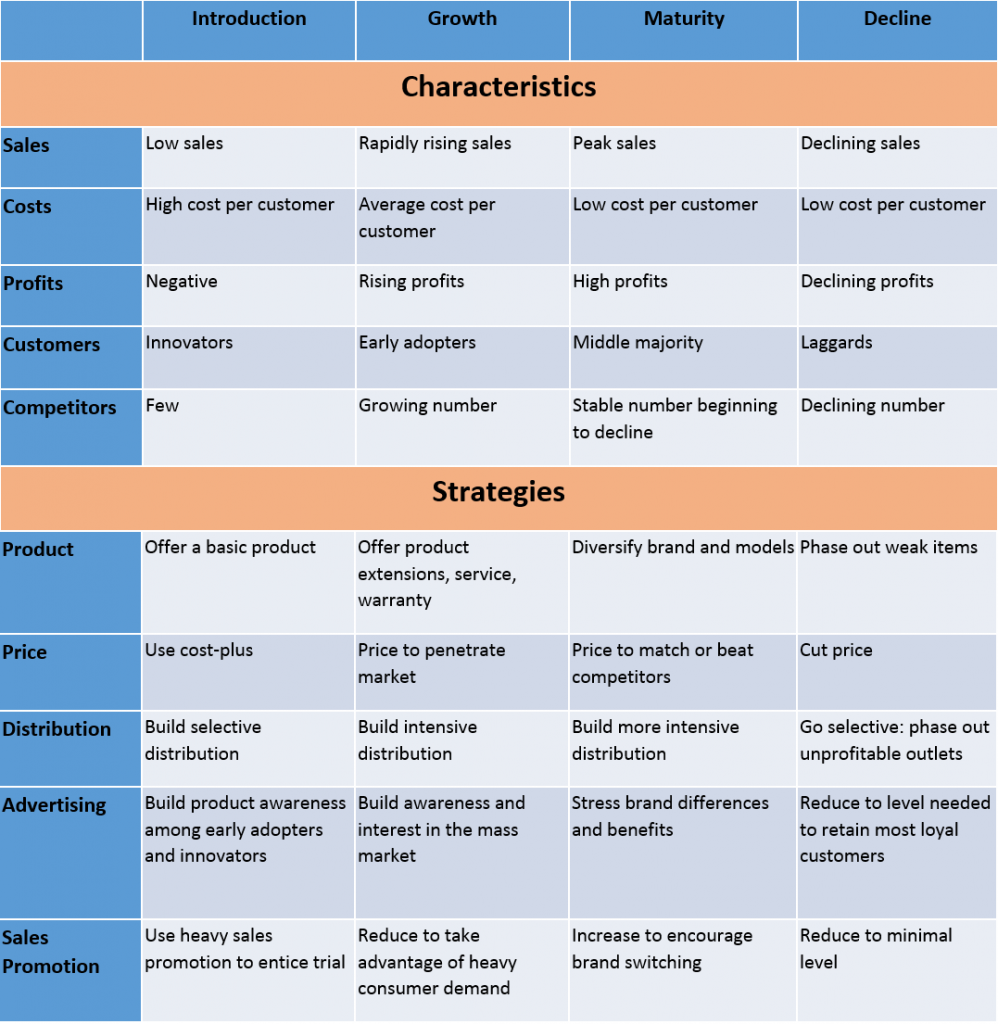
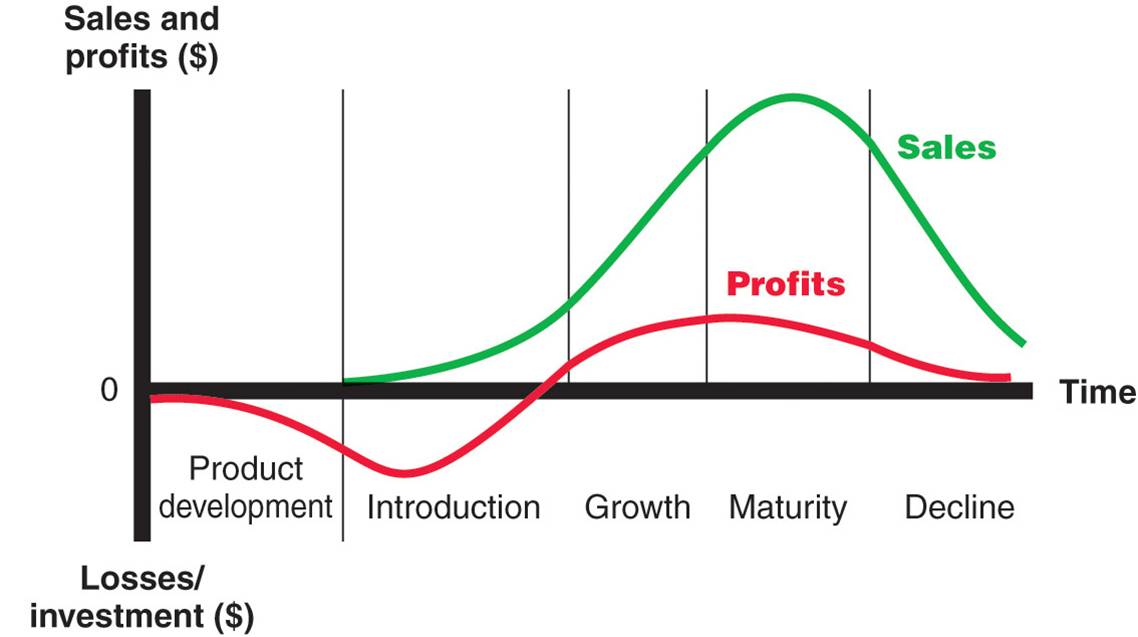
Product Life Cycle (PLC) is an important concept in Principles of Marketing that explains the stages through which a product passes from its introduction in the market to its final decline. Every product has a limited life span, and during this life span, its sales, profits, competition, and marketing strategies change. Understanding the product life cycle helps marketers plan product development, pricing, promotion, and distribution strategies effectively. The concept of PLC provides a systematic framework for managing products in a dynamic and competitive market environment.

Meaning of Product Life Cycle

Product Life Cycle refers to the pattern of sales and profits experienced by a product over time. It represents the journey of a product from its launch to its withdrawal from the market. Just like human beings, products are born, grow, mature, and eventually decline. Although the length of each stage may vary from product to product, most products generally pass through five stages: Introduction, Growth, Maturity, and Decline. Each stage has distinct characteristics and requires different marketing strategies.

Product-Life-Cycle-Stages

Stages of Product Life Cycle

1. Introduction Stage

The introduction stage is the first stage of the product life cycle, where a new product is launched in the market. During this stage, sales growth is slow because the product is new and customers are not fully aware of its existence. Heavy expenditure is incurred on advertising, promotion, product development, and distribution. Profits are usually low or negative due to high initial costs and low sales volume.

The main objective should be to create product awareness and trial.

In this stage, competition is limited or absent as the product is unique. Pricing strategies may vary—firms may adopt skimming pricing to recover high costs or penetration pricing to gain quick market acceptance. Promotion focuses on creating awareness, educating consumers, and encouraging trial purchases. Distribution channels are limited, and the product is available only in selected markets. The success of the introduction stage depends largely on effective promotion and product acceptance.

2. Growth Stage

The growth stage is characterized by a rapid increase in sales as the product gains acceptance among consumers. Customer awareness increases, repeat purchases occur, and new customers are attracted. Profits rise significantly due to higher sales volume and reduced cost per unit. During this stage, competitors enter the market with similar or improved versions of the product.

The main objective in the growth stage is to maximise the market share.

Marketing strategies in the growth stage focus on improving product quality, adding new features, expanding distribution channels, and strengthening brand image. Prices may be reduced slightly to attract price-sensitive customers and face competition. Promotional activities shift from creating awareness to building brand preference and differentiation. The growth stage is crucial for establishing a strong market position and maximizing long-term profitability.

3. Maturity Stage

The maturity stage is the longest stage of the product life cycle. During this stage, sales growth slows down as the product reaches maximum market penetration. The market becomes saturated, and competition becomes intense. Many competitors offer similar products, leading to price competition and reduced profit margins.

The company’s main objective should be to maximise profit while defending the market share.

Firms adopt various strategies to extend the maturity stage, such as product modification, market modification, and marketing mix modification. Product modification includes improving quality, design, packaging, or adding new features. Market modification involves finding new uses, new markets, or new customer segments. Promotional strategies focus on brand loyalty, reminders, and sales promotion schemes. Although profits start declining, effective strategies can help sustain sales and profitability.

4. Decline Stage

The decline stage is the final stage of the product life cycle. During this stage, sales and profits decline sharply due to technological advancements, changing consumer preferences, availability of substitutes, or market saturation. Some competitors exit the market, while others continue with limited offerings.

Marketing strategies during the decline stage include harvesting, divesting, or discontinuing the product. Firms may reduce promotional expenditure, cut costs, and focus on niche markets. Alternatively, companies may rejuvenate the product through innovation or repositioning. The decline stage requires careful decision-making to minimize losses and allocate resources efficiently.

Product-Life-Cycle-Strategies-and-Characteristics-998x1024

Marketing Strategies at Different Product Life Cycle (PLC) Stages

Marketing strategies vary at each stage of the Product Life Cycle because market conditions, competition, sales volume, and consumer behavior change over time. To achieve maximum effectiveness, firms must align their product, price, place, and promotion strategies with the specific stage of the PLC. The major marketing strategies at different PLC stages are explained below.

1. Introduction Stage

At the introduction stage, the product is new to the market and consumer awareness is low. The main objective of marketing is to create awareness and encourage trial purchases.

  • Product Strategy

The product is introduced in its basic form with limited varieties. Emphasis is placed on quality and uniqueness.

  • Price Strategy

Firms may adopt skimming pricing to recover high development costs or penetration pricing to attract more customers quickly.

  • Place Strategy

Distribution is limited and selective. The product is available in selected markets and outlets.

  • Promotion Strategy

Promotion is informative in nature. Heavy advertising, product demonstrations, free samples, and personal selling are used to educate consumers.

2. Growth Stage

In the growth stage, sales increase rapidly due to rising consumer acceptance and increasing competition. The objective is to build brand preference and expand market share.

  • Product Strategy

Product improvements, new features, and additional models are introduced to differentiate from competitors.

  • Price Strategy

Prices may be reduced slightly to attract price-sensitive customers and meet competition.

  • Place Strategy

Distribution channels are expanded to reach a wider market. Product availability increases.

  • Promotion Strategy

Promotion becomes persuasive. Advertising focuses on brand image, superiority, and customer benefits.

3. Maturity Stage

The maturity stage is marked by intense competition, market saturation, and slowing sales growth. The objective is to maintain market share and extend product life.

  • Product Strategy

Product modification, quality improvement, new packaging, and value-added features are introduced.

  • Price Strategy

Competitive pricing, discounts, and allowances are used to retain customers.

  • Place Strategy

Distribution becomes intensive. Firms strengthen relationships with intermediaries.

  • Promotion Strategy

Promotion focuses on reminder advertising, sales promotion schemes, and brand loyalty programs.

4. Decline Stage

In the decline stage, sales and profits decline due to technological changes, substitutes, or changing consumer preferences. The objective is to minimize losses.

  • Product Strategy

Firms may discontinue weak products or focus on profitable variants.

  • Price Strategy

Prices may be reduced to clear stock or maintained for niche markets.

  • Place Strategy

Distribution is reduced and unprofitable outlets are eliminated.

  • Promotion Strategy

Promotional expenditure is minimized. Only selective promotion is undertaken.

Marketing Strategies at Different PLC Stages

PLC Stage Sales & Profits Product Strategy Price Strategy Place (Distribution) Promotion Strategy
Introduction Low sales, low/negative profits Basic product, limited variants Skimming / Penetration Selective, limited outlets Informative advertising, awareness creation
Growth Rapidly increasing sales, rising profits Improved quality, new features, variants Competitive pricing Expanded channels, wider market reach Persuasive advertising, brand building
Maturity Peak sales, declining profits Product modification, better packaging Competitive pricing, discounts Intensive distribution Reminder advertising, sales promotion
Decline Falling sales and profits Product elimination or niche focus Reduced or stable niche pricing Reduced channels Minimal promotion, cost control

Advantages of Product Life Cycle (PLC)

  • Helps in Effective Product Planning

The Product Life Cycle concept helps marketers plan products effectively at different stages. By identifying whether a product is in the introduction, growth, maturity, or decline stage, firms can decide necessary changes in product features, quality, packaging, and branding. Proper product planning reduces chances of failure and ensures that products meet changing customer needs throughout their life span.

  • Supports Better Marketing Strategy Formulation

PLC assists marketers in designing suitable marketing strategies for each stage of a product’s life. Pricing, promotion, and distribution strategies differ at every stage. For example, informative promotion is used in the introduction stage, while persuasive promotion is used in the growth stage. Thus, PLC ensures the right marketing mix is applied at the right time.

  • Helps in Sales and Demand Forecasting

The product life cycle helps firms forecast future sales and demand patterns. By studying past and present sales trends, marketers can predict future performance. Accurate forecasting helps in production planning, inventory control, and resource allocation. This reduces uncertainty and enables firms to prepare for market changes in advance.

  • Assists in Cost Control and Profit Planning

PLC helps organizations control costs and plan profits effectively. During the introduction stage, firms accept low or negative profits, while in the growth and maturity stages, they aim to maximize profits. In the decline stage, cost-cutting strategies are adopted. Thus, PLC enables better financial planning and efficient use of resources.

  • Aids in Product Modification and Innovation

The PLC concept encourages continuous product improvement and innovation. When a product enters the maturity stage, firms modify features, design, or packaging to extend its life. Innovation helps in meeting changing consumer preferences and facing competition. PLC ensures that firms do not rely on outdated products for long periods.

  • Helps in Managing Competition

PLC helps firms understand the level of competition at different stages. Competition is low in the introduction stage but increases in the growth and maturity stages. By knowing the intensity of competition, firms can adopt defensive or aggressive strategies. This improves competitive strength and market position.

  • Supports Product Portfolio Management

The product life cycle helps firms manage a balanced product portfolio. Companies usually have products at different PLC stages. Profits from mature products can be used to support new products in the introduction stage. This balance ensures steady income, reduces risk, and supports long-term business stability.

  • Guides Product Withdrawal Decisions

PLC helps firms decide the right time to discontinue or withdraw a product. When a product enters the decline stage and becomes unprofitable, firms can drop it and divert resources to new opportunities. This prevents unnecessary losses and improves overall efficiency and performance of the organization.

Limitations of Product Life Cycle (PLC)

  • Difficulty in Identifying Exact Stage

One major limitation of the Product Life Cycle concept is the difficulty in identifying the exact stage of a product. Sales patterns are not always clear, and stages may overlap. Managers may misjudge whether a product is in growth or maturity, leading to incorrect marketing decisions and ineffective strategies.

  • Not Applicable to All Products

The PLC concept does not apply uniformly to all products. Some products may not follow a clear life cycle pattern, while others may remain in one stage for a long time. Fashion products, fads, and seasonal goods often have unpredictable life cycles, limiting the usefulness of the PLC model.

  • Uncertainty in Duration of Stages

The length of each stage of the product life cycle cannot be predicted accurately. Some products may experience rapid growth and quick decline, while others may remain in the maturity stage for many years. This uncertainty makes long-term planning difficult for marketers.

  • External Factors Affect the Life Cycle

External factors such as technological changes, government policies, economic conditions, and competition can alter the product life cycle. Sudden innovations or regulatory changes may shorten or extend a product’s life unexpectedly. The PLC concept does not fully consider these uncontrollable environmental factors.

  • Overemphasis on Sales and Profits

The PLC concept mainly focuses on sales and profit trends and ignores other important factors such as customer satisfaction, brand equity, and market relationships. A product with low sales may still be strategically important for brand image or customer retention, which PLC may overlook.

  • Reactive Rather Than Predictive

PLC is more descriptive than predictive in nature. It explains what has happened to a product rather than accurately predicting future performance. Managers often use PLC after changes occur, which may result in delayed responses to market challenges.

  • Ignores Marketing Efforts Impact

The PLC model assumes that products naturally move through stages, but it does not fully recognize the impact of marketing efforts. Aggressive promotion, repositioning, or innovation can significantly change a product’s life cycle. Thus, PLC may underestimate the role of managerial decisions.

  • Difficult to Use in Strategic Decisions

Due to its generalized nature, PLC may not provide clear guidance for strategic decision-making. Different products within the same category may be at different stages. Relying solely on PLC can lead to oversimplified strategies and poor decision-making.

Product Mix, Meaning, Elements and Strategy

Product Mix refers to the complete range of products that a company offers for sale to its customers. It includes all product lines and individual products that a company markets, showcasing variety in terms of size, design, functionality, or price. The product mix is characterized by four key dimensions: width (the number of product lines), length (the total number of products), depth (the variety within each product line), and consistency (how closely related the product lines are). A well-balanced product mix allows companies to meet diverse customer needs and expand market reach.

Elements of Product Mix

Elements of the Product mix. refer to the various components that make up a company’s range of products. These elements help a business manage its products and create a comprehensive strategy for satisfying customer needs and driving profitability. The main elements of the product mix are Product line, Product width, Product length, Product depth, and Product consistency.

1. Product Line

Product line is a group of related products that a company offers under a single brand. These products usually share similar characteristics, cater to the same target market, or serve similar purposes. For example, a company that produces personal care items may have separate product lines for hair care, skincare, and hygiene products.

  • Example: Apple’s product lines include iPhones, iPads, MacBooks, and Apple Watches

2. Product Width

Product width refers to the number of different product lines that a company offers. A wider product mix means a company has a diverse range of product lines, while a narrower mix indicates fewer product lines. A broad product width allows companies to cater to various customer segments, reduce market risk, and create cross-selling opportunities.

  • Example: Procter & Gamble has a wide product mix, offering a variety of product lines including beauty, grooming, health care, and household cleaning.

3. Product Length

Product length is the total number of individual products or items offered across all product lines. This includes all variants within each product line. The length helps companies assess the variety of products they offer within each product line.

  • Example: In the beverage category, Coca-Cola offers a long product line, with products such as Coke, Diet Coke, Coke Zero, Sprite, and Fanta.

4. Product Depth

Product depth refers to the number of variations offered within a single product line. Variations can include different sizes, flavors, colors, designs, or any other features that differentiate products within a line. Greater product depth allows companies to meet diverse customer preferences and capture niche markets.

  • Example: Colgate offers various toothpaste options in terms of flavors, packaging sizes, and specific benefits (e.g., whitening, cavity protection, sensitivity relief).

5. Product Consistency

Product consistency refers to how closely related the product lines are in terms of use, production requirements, distribution channels, or branding. High consistency means the products are closely related, while low consistency indicates a mix of unrelated products.

  • Example: A company like PepsiCo has a relatively consistent product mix focused on beverages and snacks, while a conglomerate like General Electric has a low consistency with products ranging from jet engines to medical devices.

Example of Product Mix.: in Table

Here’s a table that illustrates an example of a Product Mix. for a hypothetical company, including various product lines and their respective products:

Element Description Example
Product Line A group of related products offered by a company under one brand, sharing similar characteristics. Apple’s product lines include iPhones, iPads, MacBooks, and Apple Watches.
Product Width The number of different product lines a company offers. Procter & Gamble offers product lines in beauty, grooming, health care, and household cleaning.
Product Length The total number of individual products or items offered across all product lines. Coca-Cola’s beverage category includes Coke, Diet Coke, Coke Zero, Sprite, and Fanta.
Product Depth The number of variations offered within a single product line (e.g., sizes, flavors, colors). Colgate offers toothpaste in various sizes, flavors, and specific benefits like whitening or sensitivity relief.
Product Consistency How closely related product lines are in terms of use, production, distribution, or branding. PepsiCo focuses on beverages and snacks (high consistency), while General Electric offers diverse products like jet engines and medical devices (low consistency).

Product Mix Strategies

Product Mix Strategies are techniques companies use to manage and optimize their range of products to better meet customer needs and improve market performance. These strategies help in deciding what products to introduce, modify, or discontinue.

  • Expansion

A company adds new product lines or variants to its product mix. This strategy is used when a company wants to diversify its offerings, target new market segments, or increase sales volume.

  • Contraction

Also known as product line pruning, this strategy involves reducing the number of products or product lines. Companies use this when certain products become unprofitable or when they want to focus on their core products.

  • Product Modification

Company makes improvements or changes to existing products, such as adding new features, improving quality, or updating design. This strategy helps keep products competitive and relevant in the market.

  • Diversification

Company enters new markets or introduces entirely new product categories. It can be related or unrelated diversification, depending on whether the new products are similar or different from the existing lines.

  • Product Differentiation

This strategy focuses on making a product stand out from competitors’ offerings by highlighting its unique features, branding, or design. It aims to create a competitive advantage and attract specific customer segments.

  • Trading Up (Upward Stretching)

Company adds higher-end, more premium products to its product line to target more affluent customers. This strategy helps elevate the brand and capture a more profitable segment of the market.

  • Trading Down (Downward Stretching)

Company introduces lower-priced products to appeal to a broader audience or to compete with lower-cost competitors. This can help companies gain market share in a more price-sensitive segment.

  • Line Filling

Company adds new products within its existing range to fill gaps in the product line. This prevents competitors from exploiting these gaps and helps the company meet customer demands more effectively.

  • Product Line Extension

This involves expanding a particular product line by adding more variants, such as different sizes, flavors, or features. It helps attract different customer preferences within the same product line.

  • Cannibalization Management

This strategy ensures that new products introduced do not negatively affect the sales of the company’s existing products. Companies need to carefully manage product mix to avoid overlap and sales losses.

Personality in Marketing

Marketers today are often leveraging more personal marketing campaigns. Understanding more about personality-based marketing and the future tactics that are shaping the industry can help individuals in a marketing based business to adopt some of the newest approaches to their work. Attaching behavioral science in the execution of a marketing campaign will help to make sure that marketers can exceed their targets.

One of the biggest problems that marketers face with personal marketing campaigns is recent controversies with Cambridge analytic and Facebook. These types of personalized marketing campaigns threaten the potential of marketers before they can customize a full campaign.

By using personal information for marketing, it is possible for marketers to have an extra nuance for all of their messages. With the way, the data is captured today however the personalization based off of demographics and other expressed desires of customers is set to grow a little more difficult.

Targeting individuals personally in marketing is now seen as more of a dark art. Using behavioral science and remaining careful with personal data on social media regarding ethics can help you with personalized marketing. Consumers and businesses alike can often have better experiences when their behavioral data is considered.

Personality science in marketing involves looking into the characteristics of patterns for the way that people will feel, behave and think as they are viewing an advertisement or accessing a page. Personality scientists have seen relationships between the way that people behave, their lineage and more. Personality tests have taken place over generations, and through some of these forms of testing and data gathering, it is possible to recognize some trends inconsistency and data.

For the use of marketers, some individuals are looking towards larger populations and searching for the promotion of various behaviors. By gathering data and working to predict behaviors are personality traits it’s possible to empathize with individuals and engage them with a particular message. Finding a way to resonate with an individual and a large population or demographic is something that marketers should be investing in.

Personality Marketing

Again, the theory is that if you can match the tone and framing of the communications or marketing with the personality profiles and thinking styles of potential customers, patients, voters, or those whose behavior you’d like to change, you can boost effectiveness.

For example, look at retail shoppers. Some do not particularly like shopping. They take a functional approach. It’s a chore. They are not wedded to brands and are motivated by price. Psychologists call them “utilitarian” shoppers. Meanwhile, “hedonic” shoppers enjoy shopping and love brands and join loyalty programs. They identify with brands and may use them to signal who they are and what they stand for. They may look identical when viewed through traditional demographic data, but you would be sorely mistaken to treat them the same way. Certain personality profiles correlate with utilitarian versus hedonic shoppers. So, if you can know shoppers’ personalities, you can customize how you engage them.

But these findings are not limited to retail shopping. In fact, tailored communication has proven highly successful in the context of health care and health communication. We know that people show higher compliance rates when receiving messages that are customized to their individual motivations, and we also know that such messages help in changing a number of cancer-related behaviors, including smoking, dieting, exercising, and regular cancer screenings.  What if we could not only increase the chances that a customer buys a handbag, but improve their quality of health or the uptake of flu shots or vaccinations by tailoring the messaging to different personalities and cognitive styles?

The ethics of personality marketing

The essentials of gathering and using personality traits ethically should follow the general guidelines of other behavioral science research of consumers, employees or patients. They include: transparency of intent and usage; abiding by privacy laws and regulations; and aligning researcher/marketer interests with those of respondents (in other words, help them rather than exploit them).

That last principle is the right starting point for marketers: Is your use of personality research actually making your customers better off, or just helping you? As the field evolves, marketers should look to the research community for inspiration and guidance on transparency. And, of course, businesses must comply with the law.

Putting personality marketing in action

Given the promise and accessibility of this new form of communication, how should marketers get started?

In our experience, the first step is to understand the challenge or goal you’re trying to achieve. Is it to align employees with corporate goals, or to promote smoking cessation, or to increase uptake of vaccinations, or to change consumer behavior, or better segment consumers by what really motivates them (which they cannot articulate)?

Next, identify the cognitive biases and heuristics serve as barriers or drivers along the way to achieving the goal. (The Ogilvy Center for Behavioral Science has built a tool to navigate thousands of studies to surface the relevant biases.) Map the biases to steps along the consumer (or patient) journey. Doing so will help you identify steps along that journey where creative communications or content can help consumers overcome specific biases or other hurdles to a decision or new behavior.

Once you have a strong understanding of the customer journey, you can run a personality test and combine it with other data to reveal correlations between personality traits and certain behaviors, preferences, or mindsets.

The final step and the “art” of personality marketing is to craft the messaging, advertising or content to match different personality profiles while also considering the stage of the customer journey at which you plan to engage. This isn’t easy, by any means. But it offers the opportunity to create the most effective and empathetic messaging with different groups of customers.

Personality marketing is just one aspect of a new, fast-emerging approach to understanding people from the inside out. We can now move from observational oddities of what makes humans “Predictably Irrational,” as the behavioral scientist Daniel Ariely has written, to decoding what truly moves individuals at scale and engaging them on their terms. How we do this will determine whether it is used for empathetic communication and positive outcomes, or for manipulation and exploitation.

Psychological traits in the past were often measured by official personality tests. Today however with the sharing of data and the digital footprints that people are leaving, it has become much easier to test personality. Digital psychometrics regarding questionnaire responses, consented likes, tweets, shares and browsing history can all lend a hand to producing a high-quality data set that can be beneficial for testing personality traits.

Even trends in America showcase that the average American is liking and sharing around 250 pages within an average year. This offers a wealth of data to marketers if they get involved with the right data collection company and begin experimenting with highly targeted advertising.

Personality-based marketing can offer some incredible advantages for the future of your marketing budget. This type of marketing and data collection for personality marketing needs to be done in a responsible and ethical fashion, however.

Product Line, Meaning, Working, Product Line Extension, Features, Types, Benefits, and Challenges

Product Line refers to a group of related products offered by a company that share similar characteristics, target the same market, or serve a similar purpose. These products typically fall under a single brand and are marketed together, allowing companies to leverage their branding and promotional strategies effectively. For example, a beverage company might have a product line that includes various types of soft drinks, juices, and bottled water. By managing product lines strategically, businesses can meet diverse customer needs while optimizing their overall product mix.

How Product Lines Work?

Product lines play a crucial role in a company’s overall marketing strategy by grouping related products to meet specific customer needs.

  • Definition and Structure

Product line is a collection of products that are related in terms of their functions, target market, or marketing strategy. Companies organize their offerings into product lines to streamline management and marketing efforts.

  • Target Market Identification

Each product line is designed to cater to a specific segment of the market. By understanding the needs and preferences of target customers, businesses can develop products within the line that appeal directly to that audience.

  • Branding and Positioning

Products within a line often share a common brand name and identity. This creates brand recognition and loyalty, making it easier for customers to associate new products with established ones. Positioning the entire line effectively can enhance overall brand perception.

  • Product Variations

Companies can offer variations within a product line to address different consumer preferences. These variations may include differences in size, flavor, features, or packaging. For example, a snack brand might offer different flavors or health-focused options within its chip product line.

  • Cross-Promotion

Having a well-defined product line allows for cross-promotion of products. For example, if a company launches a new flavor of chips, it can promote it alongside other products in the same line, encouraging customers to try multiple offerings.

  • Economies of Scale

By producing a range of products within the same line, companies can benefit from economies of scale in production, distribution, and marketing. Shared resources can lead to cost savings and improved efficiency.

  • Flexibility and Adaptation

Product lines provide flexibility for companies to adapt to changing market trends and consumer preferences. Businesses can introduce new products, retire underperforming ones, or make adjustments based on feedback from the target market.

  • Performance Evaluation

Companies can evaluate the performance of a product line as a whole, assessing sales, market share, and profitability. This analysis helps in making strategic decisions about resource allocation, marketing efforts, and future product development.

  • Market Expansion

Successful product lines can serve as a foundation for market expansion. Companies can introduce entirely new lines based on the success of existing products, leveraging brand equity and consumer loyalty.

  • Lifecycle Management

Each product line goes through a lifecycle, from introduction to growth, maturity, and decline. Companies must actively manage their product lines by innovating, repositioning, or phasing out products to maximize profitability.

Product Line Extension

Product Line Extension refers to the strategy of adding new products to an existing product line to attract a larger customer base or to meet the evolving needs of consumers. This approach allows companies to leverage their established brand equity and customer loyalty while expanding their offerings.

Key Features of Product Line Extension

  • Broadened Range of Products

Product line extension involves introducing variations or new items that are related to the existing products in the line. For instance, a yogurt brand might add new flavors, low-fat options, or plant-based varieties to its product line.

  • Utilization of Brand Equity

By extending a well-known product line, companies can capitalize on the recognition and trust established with their existing products. This can lead to quicker acceptance of new products by consumers.

  • Meeting Diverse Customer Needs

Product line extensions can address different consumer preferences, demographics, and market segments. For example, a beverage company may introduce a new energy drink variant to cater to health-conscious consumers.

  • Increased Market Share

By offering a wider variety of products, companies can capture a larger share of the market and reduce competition. This is particularly effective in crowded markets where differentiation is crucial.

  • Reduced Risk of New Product Failure

Launching a product extension under an established brand is generally less risky than introducing an entirely new brand. Consumers are more likely to try a new product from a brand they already trust.

Types of Product Line Extensions

1. New Flavors or Varieties: Adding different flavors or styles to an existing product. For example, a snack brand may introduce sweet and spicy versions of its chips.

2. Size Variations: Offering products in different sizes, such as single-serving or family-size packages, to meet varying consumption needs.

3. Healthier Options: Introducing low-calorie, organic, or gluten-free versions of existing products to cater to health-conscious consumers.

4. Targeting New Demographics: Developing products aimed at different age groups, lifestyles, or interests, such as a kids’ version of a popular cereal.

5. Seasonal or Limited Editions: Launching special edition products tied to seasons, holidays, or events to stimulate interest and drive sales.

Benefits of Product Line Extension:

1. Increased Sales Potential: A broader product range can lead to higher overall sales, as customers may purchase multiple items from the same line.

2. Enhanced Brand Loyalty: By continuously offering new options, companies can maintain customer interest and encourage repeat purchases.

3. Efficient Use of Resources: Companies can utilize existing marketing strategies, distribution channels, and production processes to launch new products, reducing costs.

4. Competitive Advantage: A diverse product line can help a company stand out in a competitive marketplace by offering more choices to consumers.

Challenges of Product Line Extension

  • Brand Dilution

If not managed properly, extending a product line can dilute brand identity. Consumers may become confused about what the brand stands for if there are too many unrelated products.

  • Cannibalization

New products may compete with existing ones, potentially leading to a decline in sales of the original products.

  • Quality Control

Maintaining consistent quality across an extended product line can be challenging, especially when introducing new variants.

  • Market Research Needs

Thorough market research is necessary to ensure that the new products meet consumer needs and preferences. Failure to do so can result in unsuccessful product launches.

Examples of Product Line Extension

  • Coca-Cola

The introduction of Diet Coke and Coca-Cola Zero Sugar expanded the original Coca-Cola product line to cater to health-conscious consumers.

  • Lay’s

Lay’s offers a variety of flavors and limited-edition chips, including spicy, exotic, and local flavors to appeal to different tastes.

  • Oreo

Oreo cookies have been extended to include various flavors (like birthday cake and red velvet) and formats (such as Oreo Thins and Mega Stuf).

  • Nike

Nike has expanded its line of athletic shoes to include specialized versions for different sports, lifestyles, and even collaborations with celebrities.

  • Procter & Gamble

P&G has extended its Tide brand to include Tide Pods, Tide Free & Gentle, and other variants, addressing various laundry needs.

Product

A product may be defined as a set of tangible, intangible and associate attributes capable of being exchanged for a value with the ability to satisfy consumers and business needs.  It is anything that can be offered to a market to satisfy the needs or wants of the customer. The products that are marketed include physical goods, services, experiences, events, person, place, properties, organization, information and ideas.

Many authors define the term ‘product’ in the following manner:

  • Philip Kotler: “A product is anything that can be offered to a market for attention, acquisition, use or consumption. It includes physical objects, services, personalities, place, organizations and ideas.”
  • Alderson: “A product is a bundle of utilities consisting of various features and accompanying services.”
  • Schwartz: “A product is something a firm markets that will satisfy a personal want or fill a business or commercial need and includes all the peripheral factors that may contribute to consumer’s satisfaction.”
  • William J. Stanton: “A product is a set of tangible and intangible attributes, including packaging, colour, price, manufacturers and retailers prestige and services, which the buyer may accept as offering satisfaction of wants and needs.”
  • Rustam S. Davar: “A product may be regarded from the marketing view point as a bundle of benefits which are being offered to consumers.

Thus, we can say a product is both what a seller has to sell and what buyer has to buy. Buyer will buy a product which can offer him expected satisfaction.

Levels or Dimensions of Product

A product has many dimensions beside its physical appearance. In fact, a product is like an ‘onion’ with several layers and each layer contributes to the total product image.

According to Philip Kotler, “The consumers will favour those products that offer most quality, performance and features.”.  Philip Kotler has described the five levels of products.

Customers will choose a product based on their perceived value of it. Satisfaction is the degree to which the actual use of a product matches the perceived value at the time of the purchase. A customer is satisfied only if the actual value is the same or exceeds the perceived value. Kotler attributed five levels to products:

The five product levels are

1. Core benefit

The fundamental need or want that consumers satisfy by consuming the product or service. For example, the need to process digital images. This is the basic level that represents the heart of the product. Here, the focus is on the purpose for which the product is intended. It answers the question ‘What is the buyer really buying? For instance, a woman doesn’t purchase a washing machine merely because of its machinery but for her comfort and praise from her family. Likewise, we buy a warm coat to protect us from the cold and the rain. Thus, the basic job of marketing manager is to sell the core benefits of the product.

2. Generic product (Generic Product or Tangible Product)

The second level of the product, the tangible product (also called the actual, physical or formal product) is the physical product or service offered to consumers. A version of the product containing only those attributes or characteristics absolutely necessary for it to function.

For example, the need to process digital images could be satisfied by a generic, low-end, personal computer using free image processing software or a processing laboratory.

3. Expected product

The set of attributes or characteristics that buyers normally expect and agree to when they purchase a product. For example, the computer is specified to deliver fast image processing and has a high-resolution, accurate colour screen.

4. Augmented product

The inclusion of additional features, benefits, attributes or related services that serve to differentiate the product from its competitors. For example, the computer comes pre-loaded with a high-end image processing software for no extra cost or at a deeply discounted, incremental cost.

5. Potential product

This includes all the augmentations and transformations a product might undergo in the future. To ensure future customer loyalty, a business must aim to surprise and delight customers in the future by continuing to augment products. For example, the customer receives ongoing image processing software upgrades with new and useful features.

Benefits

Kotler’s Five Product Level model provides businesses with a proven method for structuring their product portfolio to target various customer segments. This enables them to analyse product and customer profitability (sales and costs) in a structured way. By organising products according to this model, a business’ sales processes can be aligned to its customer needs and help focus other operational processes around its customers – such as design and engineering, procurement, production planning, costing and pricing, logistics, and sales and marketing.Grouping products into product families that align with customer segments helps modelling and planning sales, as well as production and new product planning.

Characteristics of Product

Careful analysis of concept of product essentially reveals following features:

  1. Product is one of the elements of marketing mix or programme.
  2. Different people perceive it differently. Management, society, and consumers have different expectations.
  3. Product includes both good and service.
  4. Marketer can actualize its goals by producing, selling, improving, and modifying the product.
  5. Product is a base for entire marketing programme.
  6. In marketing terminology, product means a complete product that can be sold to consumers. That means branding, labeling, colour, services, etc., constitute the product.
  7. Product includes total offers, including main qualities, features, and services.
  8. It includes tangible and non-tangible features or benefits.
  9. It is a vehicle or medium to offer benefits and satisfaction to consumers.
  10. Important lies in services rendered by the product, and not ownership of product. People buy services, and not the physical object.

Types of Product

A company sells different products (goods and services) to its target market.

They can be classified into two groups, such as:

1. Consumer Products

Consumer products are those items which are used by ultimate consumers or households and they can be used without further commercial and engineering processes.

Consumer products can be divided into four types as under:

  • Convenient Products: Such products improve or enhance users’ convenience. They are used in a day-to-day life. They are frequently required and can be easily purchased. For example, soaps, biscuits, toothpaste, razors and shaving creams, newspapers, etc. They are purchased spontaneously, without much consideration, from nearby shops or retail malls.
  • Shopping Products: These products require special time and shopping efforts. They are purchased purposefully from special shops or markets. Quality, price, brand, fashion, style, getup, colour, etc., are important criteria to be considered. They are to be chosen among various alternatives or varieties. Gold and jewelleries, footwear, clothes, and other durables (including refrigerator, television, wrist washes, etc.).
  • Durable Products: Durable products can last for a longer period and can be repeatedly used by one or more persons. Television, computer, refrigerator, fans, electric irons, vehicles, etc., are examples of durable products. Brand, company image, price, qualities (including safety, ease, economy, convenience, durability, etc.), features (including size, colour, shape, weight, etc.), and after-sales services (including free installation, home delivery, repairing, guarantee and warrantee, etc.) are important aspects the customers consider while buying these products.
  • Non-durable Products: As against durable products, the non-durable products have short life. They must be consumed within short time after they are manufactured. Fruits, vegetables, flowers, cheese, milk, and other provisions are non-durable in nature. They are used for once. They are also known as consumables. Mostly, many of them are non-branded. They are frequently purchased products and can be easily bought from nearby outlets. Freshness, packing, purity, and price are important criteria to purchase these products.
  • Services: Services are different than tangible objects. Intangibility, variability, inseparability, perishability, etc., are main features of services. Services make our life safe and comfortable. Trust, reliability, costs, regularity, and timing are important issues.

The police, the post office, the hospital, the banks and insurance companies, the cinema, the utility services by local body, the transportation facilities, and other helpers (like barber, cobbler, doctor, mechanic, etc.,) can be included in services. All marketing fundamental are equally applicable to services. ‘Marketing of services’ is the emerging facet of modern marketing.

2. Industrial Products

Industrial products are used as the inputs by manufacturing firms for further processes on the products, or manufacturing other products. Some products are both industrial as well as consumer products. Machinery, components, certain chemicals, supplies and services, etc., are some industrial products.

Again, strict classification in term of industrial consumer and consumer products is also not possible, For example, electricity, petroleum products, sugar, cloth, wheat, computer, vehicles, etc., are used by industry as the inputs while the same products are used by consumers for their daily use as well.

Some companies, for example, electricity, cements, petrol and coals, etc., sell their products to industrial units as well as to consumers. As against consumer products, the marketing of industrial products differs in many ways.

Industrial products include:

  • Machines and components
  • Raw-materials and supplies
  • Services and consultancies
  • Electricity and Fuels, etc.

Dimensions of a Product

According to Philip Kotler, the total product has three layers or dimensions.

These three dimensions need to be distinguished from each other:

1. Core Product

The core product covers the physical attributes—tangible and intangible—offered for sale. These attributes consist of the materials, quality, weight, design or shape, size, colour, style, smell, package, brand name, label, etc. Services like auto repair, bus travelling, electricity supply, management consultancy, legal advice, etc., are products with intangible features.

2. Augmented Product

It is a broader conception including the various benefits and services that accompany the core product. It is the totality of benefits that a person receives in buying a product. For instance, along-with the T.V. set, a customer gets the dealer’s reputation, warranty, home delivery, free installation and maintenance, instructions for use, etc. This is an important dimension because in a competitive market, it provides a plus point to the seller. Neglect of this dimension may result in the failure of the product or loss of sales opportunities.

3. Symbolic Product

It is product as the customer perceives it. It is the psychological feeling or expectations of the customer about the product which influence his decision to buy. To the consumer a product is actually a symbol or a meaning.

For instance, a customer buys a T.V. set not as a box of components but as an instrument of entertainment, pleasure and status. Similarly, a woman buys hope and beauty by purchasing a lipstick. Consumer’s perception of a product is critical to its success or failure.

Selection of Target Market and Positioning

Target market represents a group of individuals who have similar needs, perceptions and interests. They show inclination towards similar brands and respond equally to market fluctuations.

Individuals who think on the same lines and have similar preferences form the target audience. Target market includes individuals who have almost similar expectations from the organizations or marketers.

Obese individuals all across the globe look forward to cutting down their calorie intake. Marketers understood their need and came up with Kellogg’s K Special which promises to reduce weight in just two weeks. The target market for Kellogg’s K Special diet would include obese individuals.

Individuals who sweat more would be more interested in buying perfumes and deodorants with a strong and lasting fragrance.

Target Market Selection

It is essential for the organizations or marketers to identify the set of people whom they want to target?. Marketers must understand the needs and expectations of the individuals to create its target market.

The target audience must have similar needs, interests and expectations.

Similar products and brands should entice the individuals comprising the target market.

Same taglines and advertisements attract the attention of the target audience and prompt them to buy.

To select a target market, it is essential for the organizations to study the following factors:

  • Understand the lifestyle of the consumers
  • Age group of the individuals
  • Income of the consumers
  • Spending capacity of the consumers
  • Education and Profession of the people
  • Gender
  • Mentality and thought process of the consumers
  • Social Status
  • Kind of environment individuals are exposed to

Selection of Target Market and Positioning

Once the process of segmentation of the market has been achieved, the next step follows, that is, selection of suitable segment or segments which the firm can serve most effectively. Thus, target marketing is the act of evaluating, selecting and focusing on those market segments that the company intends to offer its marketing programme and serve it most effectively. Market segmentation is the prelude to targeting. Through segmentation, a firm divides the market into many segments. But all these segments need not form its target market. Target market signifies only those segments that it wants to adopt as its market. A selection is thus involved in it.

In choosing the target market a firm basically carries out an evaluation of the various segments and selects those segments that are most appropriate to it. The evaluation of the different segments has to be actually based on these criteria and only on the basis of such an evaluation target segments be selected.

The firm must assess the sales and profit potential of each segment to know whether the segment is relevant to the firm, whether it is sizable, accessible, attractive and profitable. It must examine alternative possibilities, that is, whether the whole market has to be chosen for tapping, or only a few segments have to be chosen, and if so, which one.

It may look for segments that are relating less satisfied by the current offers in the market from competing brands. It must look at each segment as a distinct marketing opportunity. It must also evaluate its resources and choose the segments that match its resources.

Selection of Target Markets

The selection of target markets helps the marketer to correctly identify the markets and the group of target customers for whom the products or services are produced. In these days, market targeting is used for all types of markets including developing and emerging markets.

It helps in sub-dividing the market into many segments, and then deciding to offer a suitable marketing offer to some selected segments. Market targeting is the act of evaluating and comparing the identified groups and then selecting one or more of them as the prospects with the highest potential.

  1. Establish criteria to measure market attractiveness and business strength position.
  2. Evaluate market attractiveness and business strength factors to ascertain their relative importance.
  3. Assess the current position of each market potential segment on each factor.
  4. Project the future position of each market segment based on expected environmental, customer and competitive trends.
  5. Evaluate segment profitability.
  6. Evaluate implications of possible future changes with respect to strategies and requirement of resources.

Product Positioning

Why do buyers or consumers prefer one product to another? In today’s over-communicated society and highly competitive markets, consumers have numerous options in almost all product categories. For instance, buyers can buy a PC from IBM, Sony, Apple, Zenith and others including low-cost; assemblers. Every day, an average consumer is exposed to numerous marketing related messages and the marketer must successfully create a distinct and persuasive product or service image in the mind of the buyer of consumers.

Once the organization has decided which customer groups within which market segments to target, it has to determine how to present or position to product to this target audience. Segmentation, targeting and positioning (STP) constitute the fundamental pillar of any marketing function. Product positioning is the final stage in STP continuum.

The marketing manager needs to decide which segment to enter and how to target that segment with a product offer through selection of market segment and target marketing strategy. The challenge is to decide what position the company wants its products to occupy in the selected segment or segments.

A product’s position is the definition that a consumer gives to the product on important attributes. It is the position in the perceptual space of the consumer’s mind that the product takes in relation to competitor’s products, which is often verbalized by customers on certain attributes.

Positioning is an act of developing the company’s offerings and image to occupy a distinct place in the minds of the target market. Positioning is a consumer driven strategy in which the objective is to occupy a unique place in the customer’s mind and maximize its potential benefit for the firm.

Positioning

Positioning is the act of designing the company’s offering and image to occupy a distinctive place in the target market’s mind. The end result of positioning is the successful creation of a market- focused value proposition, a cogent reason why the target market should buy the product.

Each company must decide how many differences to promote to its target customer. The position of a product is the sum of those attributes normally ascribed to it by the consumers-its standing, its quality, the type of people who use it, its strengths, its weaknesses, any other unusual or memorable characteristics it may possess, its price and the value it represents.

Many marketers advocate promoting only one central benefit what Rosser Reeves has referred to as Unique Selling Proposition (USP) Number one positioning’s include “best quality”, “Best service”, “lowest price”, “best value”, “safest”, “more advanced technology” etc.

Positioning is a platform for the brand. It facilitates the brand to get through to the target consumer. Positioning is the act of fixing the locus of the product offer in the minds of the target consumers. In positioning, the firm decides how and around what parameters, the product offer has to be placed before the target consumers. The significance of product positioning can be easily understood from David Ogilvy’s words: “The results of your campaign depends less on how we write your advertising than on how your product is positioned.”

Positioning of a product or service is nothing but creating an image in the consumers’ mind. Consumers generally tend to use images while making a purchase; they buy brand images rather than actual products. There are many brands that have a powerful influence on the consumer’s mind. Just think of Pepsi or Coca Cola in the soft drink market, Maruti or Santro in the passenger car market, BPL or Onida in the television market and so on.

Brand names add to the offering and create a “meta product”, an emotional loyalty with consumers. Consumers associate brand names with life-styles, social positions, professional roles and these associations combine to form an image or position. The terms “position” or “positioning” are frequently used to mean ‘image’. To build up a brand image or corporate image a marketer generally used advertising as a tool.

Product Position Vs Brand Position

Brand positioning is a major decision in marketing. It is believed to be the source from which all other decisions marketing mix should flow. The entire combination of marketing mix elements attempts to communicate the brand’s “position” to consumers.

Product position and brand position are different in scope. According to Smith and Lusch, product position refers to the objective attributes in relation to other products, and brand position refers to subjective attributes in relation to competing brands and this perceived image of the brand does not belong to the product but is the property of consumers’ perceptions of a brand. However, the terms “product positioning” and brand positioning usually mean the same thing.

A product cannot exist unless it finds a place in consumer’s perception of the world of products around him. Any product or brand is noticed only when it occupies a particular point or space in the individual consumer’s mind relative to other brands in the same product category.

The perception of product is subjective and is governed by the individual’s needs, values, beliefs, experience and environment. The position is the way the product or the brand is defined by consumers on important attributes. Positioning is the perception of a brand or product it brings about in the mind of a target consumer and reflects the essence of that brand or product in terms of its functional and non-functional benefits as judged by the consumer.

Maggi Brand of noodles has been successfully positioned as the “two minute” noodle in the minds of target consumers and has created a distinctive brand image. HLL’s Lux soap is hypothetically positioned as the “beauty soap” of female film stars and Dettol is the antiseptic for minor nicks and cuts, while possessing a plethora of uses, from preventing nappy rash to doubling as effective after shave lotion.

BMW car is positioned as the “ultimate driving machine”, and Volva is positioned on safety and durability. As markets become more crowded and competitive with similar types of products, consumers rely more on the product’s image than on its actual characteristics in making their buying decisions.

Product positioning brings us to the idea of functional value whereas brand positioning talks about something above and beyond functional value for which the customer is willing to pay more and when asked to recall, he may recall the brand more and given a chance to replay, he will associate the brand with so many elements which are beyond the functionality of the product.

Therefore a product position refers to a brand’s objective or functional attributes in relation to other brands in the category. It is a characteristic of the physical product and its functional attributes. Simply speaking, it stands for what it can do in the market.

Brand position on the other hand is an outcome of the perception of the target segment customers. It is brand’s subjective or perceived attributes in relation to competing brands in the market. Let us take an example of Vicks Action 500. If you look at its product position, it’s an anti-cold treatment, which has certain composition that reduces the congestion and helps during cold and cough.

Market Segmentation, Basis of Market Segmentation

Market Segmentation is a critical marketing strategy that involves dividing a broad target market into smaller, more manageable segments based on shared characteristics. This process enables businesses to tailor their marketing efforts to meet the specific needs of different consumer groups. The basis of market segmentation can be categorized into several key criteria, including demographic, geographic, psychographic, and behavioral factors.

Demographic Segmentation:

Demographic segmentation is one of the most common bases for segmenting a market. It divides consumers based on demographic factors such as:

  • Age:

Different age groups have distinct needs and preferences. For instance, products aimed at teenagers, such as trendy clothing, will differ significantly from those aimed at older adults, like retirement planning services.

  • Gender:

Men and women often have different buying behaviors and preferences. Marketers can tailor their messages and products accordingly. For example, beauty and grooming products are often marketed differently to men and women.

  • Income:

Consumer purchasing power varies significantly across different income levels. Luxury brands typically target higher-income segments, while budget-friendly products are designed for lower-income consumers.

  • Education Level:

Education can influence consumer preferences and behavior. For instance, products requiring technical knowledge might be marketed to more educated consumers.

  • Family Size and Lifecycle:

Family structures influence purchasing decisions. Marketers can create products that cater to single individuals, couples, or families with children.

Geographic Segmentation:

Geographic segmentation divides the market based on geographic boundaries. Factors influencing this type of segmentation include:

  • Region:

Different regions may have distinct cultural, economic, and climatic conditions that affect consumer behavior. For example, winter clothing is more relevant in colder regions compared to warmer ones.

  • Urban vs. Rural:

Consumer needs and behaviors can vary significantly between urban and rural areas. Urban consumers might prefer convenience products, while rural consumers might favor traditional, locally sourced goods.

  • Climate:

Climate can influence product usage and preferences. For instance, summer clothing and outdoor equipment may be marketed differently in tropical regions than in colder climates.

Psychographic Segmentation:

Psychographic segmentation focuses on the psychological aspects of consumer behavior, including values, interests, lifestyles, and personality traits. Key factors:

  • Lifestyle:

Consumers’ lifestyles influence their purchasing decisions. For instance, health-conscious consumers might be targeted with organic food products and fitness-related services.

  • Personality:

Different personality traits can affect consumer preferences. Brands often position themselves to resonate with certain personality types. For example, adventurous brands may appeal to thrill-seekers.

  • Values and Beliefs:

Consumers’ values and beliefs significantly impact their buying behavior. Brands that align with specific values, such as sustainability or social responsibility, can attract consumers who prioritize these attributes.

Behavioral Segmentation:

Behavioral segmentation divides the market based on consumer behaviors and interactions with a product or brand. Factors influencing behavioral segmentation:

  • Purchase Occasion:

Consumers may buy products based on specific occasions, such as holidays, birthdays, or back-to-school season. Marketers can create campaigns that align with these occasions to boost sales.

  • Benefits Sought:

Different consumers seek different benefits from the same product. For example, in the toothpaste market, some consumers may prioritize whitening, while others may focus on cavity protection.

  • Usage Rate:

Consumers can be segmented based on their usage patterns. Heavy users, moderate users, and light users may all have different needs and responses to marketing efforts.

  • Loyalty Status:

Consumers exhibit varying degrees of brand loyalty. Marketers can target brand advocates with loyalty programs while trying to convert occasional buyers into loyal customers.

Technological Segmentation:

With the rise of digital marketing, technological segmentation has emerged as an important basis. This involves categorizing consumers based on their technology usage and preferences:

  • Device Usage:

Consumers may prefer different devices (smartphones, tablets, laptops) for accessing information and making purchases. Marketers can optimize their content for specific devices.

  • Digital Behavior:

Online consumer behavior, such as browsing habits and social media engagement, can provide insights into segmentation. Marketers can tailor their strategies based on how consumers interact with digital platforms.

Firmographic Segmentation (for B2B Markets):

In B2B (business-to-business) marketing, firms can be segmented based on organizational characteristics:

  • Industry:

Businesses in different industries have unique needs and challenges. For instance, software solutions for healthcare providers will differ from those designed for retail businesses.

  • Company Size:

The size of a business influences purchasing decisions. Large enterprises may require more complex solutions compared to small businesses.

  • Location:

Geographical factors also play a role in B2B segmentation, with regional market dynamics impacting business decisions.

  • Business Model:

Companies can be categorized based on their operational models (B2B, B2C, C2C), influencing how products or services are marketed.

Multi-Dimensional Segmentation:

Increasingly, businesses are adopting multi-dimensional segmentation approaches that combine various bases to create more refined segments. This method acknowledges that consumers may belong to multiple segments simultaneously. For example, a company may target health-conscious, urban consumers with high incomes who prioritize convenience. By utilizing a multi-dimensional approach, marketers can create highly tailored campaigns that resonate with specific audience segments.

error: Content is protected !!