Distribution Management, Meaning, Importance

Distribution Management refers to the strategic planning, implementation, and control of the movement and storage of goods from the manufacturer to the end consumer. It ensures that products are delivered to the right place, at the right time, and in the right condition. This process involves managing supply chains, selecting distribution channels, coordinating logistics, and optimizing inventory levels to meet customer demand efficiently. Effective distribution management minimizes costs, reduces delivery times, and enhances customer satisfaction. It also involves collaboration with intermediaries like wholesalers, retailers, and distributors to streamline operations and maximize the reach and availability of products in the market.

Importance of Distribution Management:

1. Ensures Product Availability

Distribution management ensures that products are readily available to customers when and where they need them. It focuses on aligning supply with demand by planning inventory levels and coordinating with distribution partners. This availability is critical for customer satisfaction and retaining loyalty, especially in highly competitive markets.

  • Example: A retail store relies on efficient distribution to ensure shelves are stocked with popular products during peak shopping seasons.

2. Reduces Operational Costs

An effective distribution management system minimizes unnecessary expenses by streamlining logistics, transportation, and inventory management. Businesses can save costs by avoiding overstocking, optimizing delivery routes, and reducing wastage due to spoilage or damage.

  • Example: E-commerce companies use advanced distribution systems to reduce last-mile delivery costs, making their operations more efficient and cost-effective.

3. Improves Customer Satisfaction

Timely delivery of goods and accurate fulfillment of orders directly impacts customer satisfaction. Distribution management ensures that customers receive their products in good condition and within the promised timeframe, which fosters trust and loyalty.

  • Example: Amazon’s efficient distribution network ensures quick delivery, enhancing the customer experience and building a strong brand reputation.

4. Enhances Competitive Advantage

Companies with robust distribution systems can outpace competitors by delivering products faster and more reliably. A well-managed distribution network also allows businesses to penetrate new markets, increasing their reach and market share.

  • Example: Fast-moving consumer goods (FMCG) companies, like Unilever, leverage strong distribution networks to maintain dominance in global markets.

5. Facilitates Market Expansion

Distribution management enables businesses to enter new markets by building partnerships with local distributors, wholesalers, and retailers. This approach helps businesses establish a presence in previously untapped areas, driving growth and revenue.

  • Example: A smartphone manufacturer collaborates with regional distributors to reach remote areas where demand is growing.

6. Optimizes Supply Chain Efficiency

Distribution management acts as a bridge between production and consumption. It ensures seamless coordination between different supply chain elements, reducing bottlenecks and enhancing overall efficiency. An optimized supply chain can result in faster order fulfillment and lower operational costs.

  • Example: Companies like Walmart rely on advanced distribution systems to keep their supply chains running smoothly and efficiently.

7. Reduces Inventory Risks

Effective distribution management minimizes the risk of overstocking or stockouts. By analyzing demand patterns and maintaining optimal inventory levels, businesses can reduce the chances of wastage, obsolescence, or lost sales due to insufficient stock.

  • Example: Perishable goods manufacturers use distribution management systems to ensure products are delivered quickly to avoid spoilage.

8. Supports Business Growth

A well-planned distribution strategy directly contributes to business growth by ensuring higher sales and market penetration. With efficient distribution, companies can focus on scaling their operations and meeting the increasing demands of their customers.

  • Example: Companies like Coca-Cola thrive on their extensive distribution networks, ensuring their products are accessible in urban and rural markets worldwide.

Elements of Effective Distribution Management

  • Efficient Supply Chain Coordination

Seamless integration between production, inventory, and logistics is crucial. This ensures timely delivery and minimizes disruptions. Technology like supply chain management software plays a pivotal role in achieving this coordination.

  • Strategic Channel Selection

Choosing the right distribution channels (e.g., direct, indirect, or hybrid) based on market needs and product type is critical. The goal is to maximize market coverage while keeping costs manageable.

  • Inventory Management

Maintaining optimal inventory levels prevents overstocking or stockouts. Effective distribution involves forecasting demand and aligning inventory to meet customer needs without unnecessary expenses.

  • Customer-Centric Approach

A focus on customer satisfaction ensures that products are delivered on time and in good condition. Building reliable delivery systems and addressing customer concerns promptly is vital.

  • Performance Monitoring

Regular evaluation of distribution processes through metrics like delivery times, cost per delivery, and customer feedback helps in identifying inefficiencies and areas for improvement.

Best Practices for Effective Distribution Management

  • Adopt Technology

Tools like ERP systems, warehouse management systems, and route optimization software can streamline operations, reduce errors, and improve efficiency.

  • Build Strong Partnerships

Collaborating with reliable logistics partners and distributors ensures smooth product movement and market coverage.

  • Implement Just-In-Time (JIT) Practices

By delivering goods as they are needed, businesses can reduce inventory holding costs and respond quickly to market changes.

  • Diversify Distribution Channels

Using a mix of online and offline channels ensures greater reach and resilience in the face of market disruptions.

  • Train Staff and Stakeholders

Regular training for employees and partners involved in the distribution process helps improve productivity and ensures adherence to best practices.

Benefits of Effective Distribution Management:

  • Cost Efficiency: Reduces logistics and inventory costs by streamlining operations.
  • Customer Satisfaction: Ensures timely delivery and consistent product availability.
  • Market Reach: Expands a company’s presence in both existing and new markets.
  • Competitive Advantage: Enhances brand reputation and reliability, giving a company an edge over competitors.
Internal Marketing, Functions, Benefits, Examples

Internal Marketing is a management approach that focuses on aligning, motivating, and empowering employees within an organization to provide the best possible service to customers. It views employees as internal customers and emphasizes the importance of fostering a positive workplace culture, enhancing employee engagement, and ensuring that all staff are informed and aligned with the organization’s goals and objectives. By treating employees well and providing them with the necessary tools and support, organizations can ultimately improve customer satisfaction and loyalty, leading to better overall business performance.

Internal Marketing recognizes that employees play a crucial role in the delivery of the brand promise and customer experience. When employees are engaged and motivated, they are more likely to be productive, innovative, and committed to the organization’s success. This approach is particularly important in service-oriented industries where employee interactions directly impact customer perceptions and satisfaction.

Functions of Internal Marketing:

  • Employee Communication:

Internal marketing facilitates clear and effective communication within the organization. This includes regular updates on company goals, changes in policies, and new initiatives. Effective communication ensures that employees are informed, engaged, and aligned with the company’s objectives.

  • Training and Development:

A significant function of internal marketing is to provide ongoing training and professional development opportunities for employees. This helps them enhance their skills, stay updated on industry trends, and perform their jobs more effectively, ultimately leading to improved customer service.

  • Employee Engagement:

Internal marketing focuses on fostering employee engagement by creating a work environment that encourages participation, feedback, and collaboration. Engaged employees are more likely to be productive and motivated, positively impacting customer satisfaction.

  • Brand Alignment:

This function ensures that employees understand and embody the company’s brand values and mission. By aligning employees with the brand’s objectives, internal marketing helps create a cohesive brand experience for customers.

  • Recognition and Rewards:

Internal marketing emphasizes the importance of recognizing and rewarding employees for their hard work and contributions. This not only boosts morale but also motivates employees to continue performing at their best.

  • Team Building:

Internal marketing promotes team-building activities and initiatives that strengthen relationships among employees. Strong teamwork enhances collaboration and fosters a positive work environment, leading to improved customer interactions.

  • Feedback Mechanisms:

Internal marketing establishes feedback mechanisms that allow employees to share their thoughts and experiences. This feedback helps organizations identify areas for improvement, address concerns, and create a culture of continuous improvement.

Benefits of Internal Marketing:

  • Enhanced Employee Satisfaction:

By focusing on employee needs and engagement, internal marketing leads to higher job satisfaction. When employees feel valued and supported, they are more likely to be happy in their roles, which can reduce turnover and improve retention rates.

  • Improved Customer Service:

Engaged employees who understand the company’s goals and values are better equipped to serve customers effectively. This leads to improved customer service, which can enhance customer loyalty and satisfaction.

  • Stronger Brand Loyalty:

When employees are aligned with the brand’s values and mission, they become brand advocates. This strong internal alignment fosters a sense of pride among employees, leading to increased brand loyalty both internally and externally.

  • Higher Productivity:

Internal marketing initiatives that engage and motivate employees often lead to increased productivity. Motivated employees are more likely to go above and beyond in their roles, contributing to overall organizational success.

  • Reduced Turnover Costs:

Organizations that invest in internal marketing and employee engagement experience lower turnover rates. This reduces the costs associated with hiring and training new employees, ultimately benefiting the organization’s bottom line.

  • Innovation and Creativity:

A culture of engagement and open communication encourages employees to share their ideas and suggestions. This can lead to innovative solutions and improvements in processes, products, and services.

  • Positive Work Environment:

Internal marketing creates a positive workplace culture that encourages collaboration, respect, and support. A positive work environment contributes to employee well-being, satisfaction, and overall organizational performance.

Examples of Internal Marketing:

  • Zappos:

Zappos is well-known for its strong internal marketing initiatives. The company places a significant emphasis on employee culture, providing extensive training programs and fostering a supportive environment. Employees are encouraged to embody the company’s core values, which ultimately enhances customer service.

  • Google:

Google implements internal marketing by creating an engaging and innovative workplace culture. The company offers employees various benefits, including professional development opportunities and flexible work arrangements. This investment in employee satisfaction results in high levels of productivity and creativity.

  • Starbucks:

Starbucks focuses on internal marketing by referring to its employees as “partners.” The company provides extensive training programs, offers benefits such as healthcare and stock options, and fosters a sense of community among employees. This approach enhances employee engagement and results in exceptional customer experiences.

  • Southwest Airlines:

Southwest Airlines emphasizes internal marketing through its commitment to employee happiness. The company encourages open communication and provides opportunities for team-building and recognition. Happy employees lead to better customer service, contributing to the airline’s success.

  • IBM:

IBM invests in internal marketing by prioritizing employee training and development. The company provides ongoing learning opportunities and encourages employees to share their ideas and feedback. This focus on employee growth leads to increased innovation and customer satisfaction.

  • Salesforce:

Salesforce implements internal marketing initiatives by promoting a culture of transparency and collaboration. The company invests in employee well-being, offers professional development programs, and encourages open communication. This approach fosters employee engagement and loyalty, enhancing customer interactions.

Competitive Advantage

There is no one answer about what is competitive advantage or one way to measure it, and for the right reason. Nearly everything can be considered as competitive edge, e.g. higher profit margin, greater return on assets, valuable resource such as brand reputation or unique competence in producing jet engines. Every company must have at least one advantage to successfully compete in the market. If a company can’t identify one or just doesn’t possess it, competitors soon outperform it and force the business to leave the market.

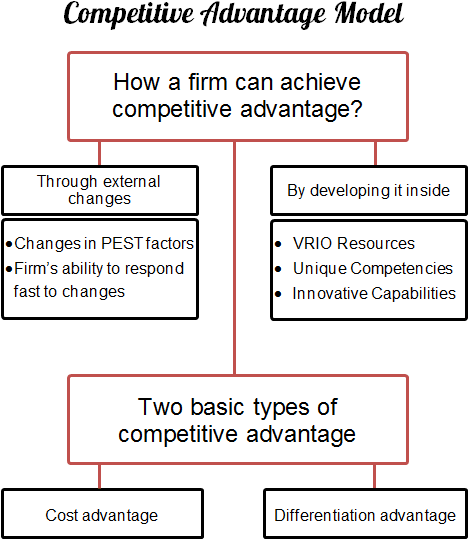
There are many ways to achieve the advantage but only two basic types of it: cost or differentiation advantage. A company that is able to achieve superiority in cost or differentiation is able to offer consumers the products at lower costs or with higher degree of differentiation and most importantly, is able to compete with its rivals.

In business, a competitive advantage is the attribute that allows an organization to outperform its competitors. A competitive advantage may include access to natural resources, such as high-grade ores or a low-cost power source, highly skilled labor, geographic location, high entry barriers, and access to new technology.

The following diagram illustrates the basic competitive advantage model-

  1. External Changes

(i) Changes in PEST factors

PEST stands for political, economic, socio-cultural and technological factors that affect firm’s external environment. When these factors change many opportunities arise that can be exploited by an organization to achieve superiority over its rivals. For example, new superior machinery, which is manufactured and sold only in South Korea, would result in lower production costs for Korean companies and they would gain cost advantage against competitors in a global environment. Changes in consumer demand, such as trend for eating more healthy food, can be used to gain at least temporary differentiation advantage if a company would opt to sell mainly healthy food products while competitors wouldn’t. For example, Subway and KFC.

If opportunities appear due to changes in external environment why not all companies are able to profit from that? It’s simple, companies have different resources, competences and capabilities and are differently affected by industry or macro environment changes.

(ii) Company’s ability to respond fast to changes

The advantage can also be gained when a company is the first one to exploit the external change. Otherwise, if a company is slow to respond to changes it may never benefit from the arising opportunities.

  1. Internal Environment

(i) VRIO resources

A company that possesses VRIO (valuable, rare, hard to imitate and organized) resources has an edge over its competitors due to superiority of such resources. If one company has gained VRIO resource, no other company can acquire it (at least temporarily). The following resources have VRIO attributes:

  • Intellectual property (patents, copyrights, trademarks)
  • Brand equity
  • Culture
  • Know-how
  • Reputation

(ii) Unique competences

Competence is an ability to perform tasks successfully and is a cluster of related skills, knowledge, capabilities and processes. A company that has developed a competence in producing miniaturized electronics would get at least temporary advantage as other companies would find it very hard to replicate the processes, skills, knowledge and capabilities needed for that competence.

(iii) Innovative capabilities

Most often, a company gains superiority through innovation. Innovative products, processes or new business models provide strong competitive edge due to the first mover advantage. For example, Apple’s introduction of tablets or its business model combining mp3 device and iTunes online music store.

Types of Competitive Advantage

  1. Porter has identified 2 basic types of competitive advantage: cost and differentiation advantage.

1. Cost advantage

Porter argued that a company could achieve superior performance by producing similar quality products or services but at lower costs. In this case, company sells products at the same price as competitors but reaps higher profit margins because of lower production costs. The company that tries to achieve cost advantage (like Amazon.com) is pursuing cost leadership strategy. Higher profit margins lead to further price reductions, more investments in process innovation and ultimately greater value for customers.

  1. Differentiation advantage

Differentiation advantage is achieved by offering unique products and services and charging premium price for that. Differentiation strategy is used in this situation and company positions itself more on branding, advertising, design, quality and new product development (like Apple Inc. or even Starbucks) rather than efficiency, outsourcing or process innovation. Customers are willing to pay higher price only for unique features and the best quality.

The cost leadership and differentiation strategies are not the only strategies used to gain competitive advantage. Innovation strategy is used to develop new or better products, processes or business models that grant competitive edge over competitors.

Customer-to-Customer (C2C) e-commerce, Characteristics, Types, Benefits, Challenges

Customer-to-Customer (C2C) e-commerce refers to online transactions where individual consumers buy and sell goods or services directly to and from each other through digital platforms. These platforms act as intermediaries, facilitating the exchange of products or services between individuals, without the involvement of businesses as sellers. Examples of C2C e-commerce platforms include online marketplaces like eBay, Craigslist, and Facebook Marketplace, where individuals can list items for sale, negotiate prices, and complete transactions. C2C e-commerce enables individuals to monetize unused or unwanted items, find unique goods, and engage in peer-to-peer commerce, fostering a dynamic and decentralized marketplace driven by consumer-to-consumer interactions.

Characteristics of Customer-to-Customer (C2C) e-commerce:

  1. Peer-to-Peer Transactions:

C2C e-commerce involves direct transactions between individual consumers, bypassing traditional business intermediaries.

  1. Individual Sellers:

In C2C e-commerce, individuals act as both sellers and buyers, listing items for sale or auction and purchasing goods from other individuals.

  1. Online Marketplaces:

C2C e-commerce platforms provide digital marketplaces where individuals can list items for sale, browse listings, and communicate with other users.

  1. Variety of Products:

C2C platforms offer a wide range of products and services, including used goods, handmade items, collectibles, and unique or niche products.

  1. User-Generated Content:

C2C e-commerce relies on user-generated content, including product listings, descriptions, images, and reviews, to facilitate transactions and build trust among users.

  1. Informal Transactions:

Transactions in C2C e-commerce platforms often involve informal negotiations, haggling over prices, and flexible payment and delivery arrangements.

  1. Community Engagement:

C2C platforms foster community engagement and interaction among users through features such as forums, messaging, and social sharing, enhancing the overall user experience.

  1. Trust and Reputation:

Trust and reputation play a crucial role in C2C e-commerce, as buyers rely on seller ratings, reviews, and feedback to assess reliability and credibility before making purchases.

Types of Customer-to-Customer (C2C) e-commerce:

  1. Online Classifieds:

Platforms like Craigslist and Gumtree allow individuals to list items for sale or trade in local or regional markets, facilitating C2C transactions.

  1. Online Auctions:

Websites such as eBay enable individuals to auction off goods to the highest bidder, creating dynamic marketplaces for buying and selling a wide range of products.

  1. Peer-to-Peer Rental:

C2C rental platforms like Airbnb and Turo enable individuals to rent out their properties, vehicles, or other assets to other consumers for short-term use.

  1. Freelance Services:

Online platforms such as Upwork and Fiverr connect individuals seeking freelance work with those offering services such as graphic design, writing, programming, and digital marketing.

  1. Peer-to-Peer Lending:

Peer-to-peer lending platforms like Prosper and Lending Club allow individuals to lend money directly to other individuals or businesses in exchange for interest payments.

  1. Ticket Resale:

C2C ticket resale platforms like StubHub and Ticketmaster Resale enable individuals to buy and sell tickets for events such as concerts, sports games, and theater performances.

  1. Swapping and Bartering:

Online communities and platforms facilitate C2C exchanges through swapping and bartering of goods and services without the use of money.

  1. Social Commerce:

Social media platforms like Facebook Marketplace and Instagram enable individuals to buy and sell goods directly within their social networks, leveraging peer-to-peer connections for transactions.

Benefits of Customer-to-Customer (C2C) e-commerce:

  1. Wide Product Selection:

C2C platforms offer a diverse range of products and services, including unique and niche items that may not be readily available through traditional retail channels.

  1. Lower Prices:

Direct transactions between individuals often result in lower prices compared to buying from businesses, as sellers may offer used or second-hand items at discounted rates.

  1. Opportunity for Income:

C2C e-commerce provides individuals with an opportunity to monetize unused or unwanted items by selling them to other consumers, generating additional income.

  1. Flexibility:

C2C platforms offer flexibility in terms of listing items for sale, setting prices, and negotiating with buyers, allowing individuals to control their selling process.

  1. Community Engagement:

C2C e-commerce fosters community engagement and interaction among users, creating a sense of belonging and facilitating communication and collaboration.

  1. Market Research:

Buyers can access valuable market insights and trends by browsing listings and observing buying behaviors on C2C platforms, helping them make informed purchasing decisions.

  1. Environmental Benefits:

C2C e-commerce promotes sustainability by extending the lifespan of products through reuse and recycling, reducing waste and environmental impact.

  1. Empowerment:

C2C e-commerce empowers individuals to become entrepreneurs and build their own businesses, regardless of geographical location or traditional barriers to entry, fostering economic empowerment and entrepreneurship.

Challenges of Customer-to-Customer (C2C) e-commerce:

  1. Trust and Security:

Establishing trust between buyers and sellers can be challenging in C2C transactions, as individuals may be concerned about fraud, scams, or receiving misrepresented goods.

  1. Quality Control:

Maintaining product quality and consistency can be difficult in C2C e-commerce, as sellers may offer used or second-hand items with varying levels of condition and reliability.

  1. Payment Risks:

C2C transactions may involve risks related to payment processing, including fraudulent transactions, payment disputes, and chargebacks, posing challenges for both buyers and sellers.

  1. Logistics and Shipping:

Managing shipping and delivery logistics can be complex in C2C e-commerce, especially for individual sellers who may lack access to affordable shipping services or struggle with packaging and fulfillment.

  1. Marketplace Competition:

C2C platforms often face intense competition from other online marketplaces and traditional retail channels, making it challenging for sellers to attract buyers and stand out in the crowded marketplace.

  1. Regulatory Compliance:

C2C e-commerce platforms must comply with various regulations and legal requirements related to consumer protection, taxation, and online transactions, which can be complex and costly to navigate.

  1. Customer Service:

Providing satisfactory customer service and support can be challenging in C2C transactions, as sellers may lack the resources or expertise to address buyer inquiries, complaints, or issues effectively.

  1. Seller Reputation:

Building and maintaining a positive seller reputation is crucial in C2C e-commerce, as buyers rely on seller ratings, reviews, and feedback to assess credibility and trustworthiness, posing challenges for new or inexperienced sellers.

Types of e-Commerce

Electronic commerce, or e-commerce, (e-Commerce) is a type of business model, or segment of a larger business model, that enables a firm or individual to conduct business over an electronic network, typically the internet. Electronic commerce operates in all four of the major market segments: business to business, business to consumer, consumer to consumer, and consumer to business. It can be thought of as a more advanced form of mail-order purchasing through a catalog.

Types of e-Commerce:

There are 6 basic types of e-commerce

  • Business-to-Business (B2B)
  • Business-to-Consumer (B2C)
  • Consumer-to-Consumer (C2C)
  • Consumer-to-Business (C2B)
  • Business-to-Administration (B2A)
  • Consumer-to-Administration (C2A)

1. Business-to-Business (B2B)

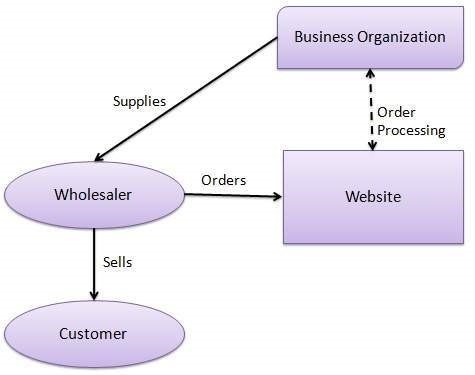
Business-to-Business (B2B) e-commerce encompasses all electronic transactions of goods or services conducted ​​between companies. Producers and traditional commerce wholesalers typically operate with this type of electronic commerce.


Figure: B2B Communication

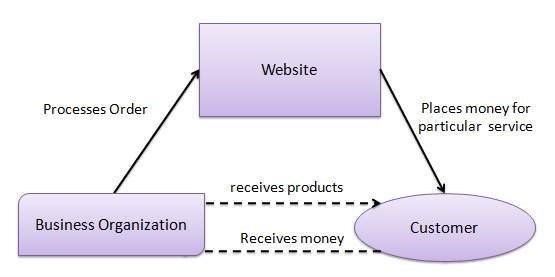
2. Business-to-Consumer (B2C)

The Business-to-Consumer type of e-commerce is distinguished by the establishment of electronic business relationships between businesses and final consumers. It corresponds to the retail section of e-commerce, where traditional retail trade normally operates.

These types of relationships can be easier and more dynamic, but also more sporadic or discontinued. This type of commerce has developed greatly, due to the advent of the web, and there are already many virtual stores and malls on the Internet, which sell all kinds of consumer goods, such as computers, software, books, shoes, cars, food, financial products, digital publications, etc.

Figure: B2C Communication

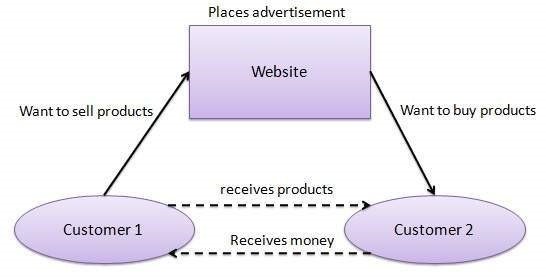
3. Consumer-to-Consumer (C2C)

Consumer-to-Consumer (C2C) type e-commerce encompasses all electronic transactions of goods or services conducted ​​between consumers. Generally, these transactions are conducted through a third party, which provides the online platform where the transactions are actually carried out.

 Figure: C2C Communication

4. Consumer-to-Business (C2B)

In C2B there is a complete reversal of the traditional sense of exchanging goods. This type of e-commerce is very common in crowd sourcing based projects. A large number of individuals make their services or products available for purchase for companies seeking precisely these types of services or products.

Examples of such practices are the sites where designers present several proposals for a company logo and where only one of them is selected and effectively purchased. Another platform that is very common in this type of commerce are the markets that sell royalty-free photographs, images, media and design elements, such as iStockphoto.

Figure: C2B Communication

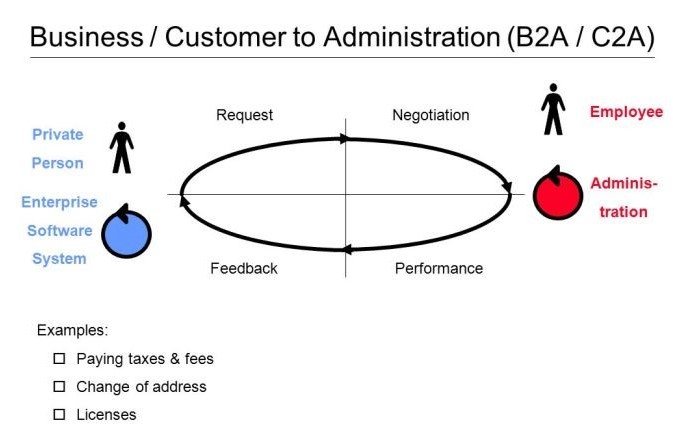
5. Business-to-Administration (B2A)

This part of e-commerce encompasses all transactions conducted online between companies and public administration. This is an area that involves a large amount and a variety of services, particularly in areas such as fiscal, social security, employment, legal documents and registers, etc. These types of services have increased considerably in recent years with investments made in e-government.

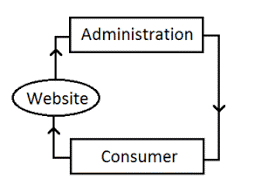
Figure: B2A/C2A Communication

6. Consumer-to-Administration (C2A)

The Consumer-to-Administration model encompasses all electronic transactions conducted between individuals and public administration.

Examples of applications include:

Education: disseminating information, distance learning, etc.

Social Security: through the distribution of information, making payments, etc.

Taxes: filing tax returns, payments, etc.

Health: appointments, information about illnesses, payment of health services, etc.

Both models involving Public Administration (B2A and C2A) are strongly associated to the idea of efficiency and easy usability of the services provided to citizens by the government, with the support of information and communication technologies.

Advertising, Objectives, Types, Elements, Process

Advertising is a strategic communication process used by businesses and organizations to promote products, services, or ideas to a target audience. It involves delivering persuasive messages through various media channels such as television, radio, print, digital platforms, and social media. The primary objective of advertising is to increase brand awareness, generate demand, and influence consumer behavior. Effective advertising not only highlights the unique features and benefits of a product but also creates an emotional connection with the audience. By consistently reinforcing a brand’s value proposition, advertising plays a crucial role in shaping consumer perceptions and driving market growth.

Objectives of Advertising

  • Building Brand Awareness:

Advertising helps create and enhance brand awareness by exposing the target audience to the brand’s name, logo, and key messages. It aims to make the brand recognizable and memorable, increasing its presence in the market.

  • Generating Interest and Desire:

Effective advertising captures the attention of consumers and generates interest in the advertised product or service. It communicates the unique features, benefits, and value propositions, creating a desire to own or experience the offering.

  • Influencing Consumer Behavior:

Advertising aims to influence consumer behavior by encouraging them to take specific actions, such as making a purchase, visiting a store, or requesting more information. It can create a sense of urgency or highlight limited-time offers to prompt immediate action.

  • Shaping Brand Perception:

Advertising plays a significant role in shaping consumer perceptions of a brand. It can position the brand as high-quality, innovative, reliable, or socially responsible, depending on the desired brand image.

  • Enhancing Customer Loyalty:

Advertising can strengthen customer loyalty by reminding existing customers of the brand’s value, reinforcing positive associations, and promoting customer engagement initiatives, such as loyalty programs or exclusive offers.

Types of Advertising

  • Print Advertising:

Print advertising includes advertisements published in newspapers, magazines, brochures, flyers, or direct mail. It offers a tangible medium to convey messages and can target specific geographic locations or niche audiences.

  • Broadcast Advertising:

Broadcast advertising includes television and radio commercials. It allows for visual and audio storytelling, reaching a wide audience and creating a strong impact through sound, visuals, and motion.

  • Online Advertising:

Online advertising encompasses various forms, including display ads, search engine advertising, social media advertising, video ads, and native advertising. It leverages the internet’s reach and targeting capabilities to reach specific audiences based on demographics, interests, or online behavior.

  • Outdoor Advertising:

Outdoor advertising refers to ads displayed in outdoor locations, such as billboards, transit shelters, digital signage, or vehicle wraps. It offers high visibility and exposure to a broad audience.

  • Mobile Advertising:

Mobile advertising targets consumers on their mobile devices through mobile apps, mobile websites, or SMS marketing. It capitalizes on the widespread use of smartphones and allows for personalized and location-based targeting.

  • Social Media Advertising:

Social media advertising utilizes platforms like Facebook, Instagram, Twitter, or LinkedIn to deliver targeted ads to specific user segments. It allows for precise audience targeting based on demographic, interests, and online behavior.

  • Guerilla Advertising:

Guerilla advertising involves unconventional and creative marketing tactics that surprise and engage consumers in unexpected ways. It often takes place in public spaces and relies on creativity and innovation to stand out.

Elements of Effective Advertising

  • Target Audience:

Understanding the target audience is essential for developing effective advertising. Define the target audience’s demographics, psychographics, behaviors, and preferences to tailor the message and choose the appropriate advertising channels.

  • Unique Selling Proposition (USP):

USP is the unique benefit or advantage that sets the product or service apart from competitors. It should be clearly communicated in the advertising message to differentiate the brand and create a competitive edge.

  • Creative Message:

The creative message is the core content of the advertisement. It should be compelling, memorable, and relevant to the target audience. The message should align with the brand’s positioning and effectively communicate the key benefits or features of the product or service.

  • Visual and Verbal Elements:

Visual elements such as images, colors, fonts, and layout play a crucial role in capturing attention and conveying the message. Verbal elements, including headlines, taglines, slogans, or jingles, should be concise, impactful, and easy to remember.

  • Call-to-Action (CTA):

A strong and clear call-to-action is essential in advertising. The CTA prompts the audience to take a specific action, such as visiting a website, making a purchase, or contacting the company. It should be persuasive, time-bound, and easy to follow.

  • Branding:

Advertising should reinforce the brand identity by incorporating consistent branding elements, such as the logo, brand colors, and brand voice. Consistent branding helps build brand recognition, trust, and familiarity among the target audience.

  • Emotional Appeal:

Effective advertising often taps into consumers’ emotions to create a connection and resonance. Emotional appeals can evoke joy, humor, excitement, nostalgia, or empathy, depending on the brand and the desired response.

  • Media Selection:

Choosing the right media channels to reach the target audience is crucial. Consider factors such as reach, frequency, cost, targeting capabilities, and the media habits of the target audience. A well-planned media strategy ensures the message reaches the intended audience effectively.

Process of Creating Effective Advertisements

  • Research and Planning:

Conduct market research to understand the target audience, competitors, market trends, and consumer insights. Set clear advertising objectives and develop a comprehensive advertising plan that outlines the target audience, key messages, media channels, and budget allocation.

  • Creative Development:

Develop creative concepts and ideas that align with the advertising objectives and resonate with the target audience. This includes designing visual elements, crafting compelling copy, and integrating the brand identity into the advertisement.

  • Message Testing:

Test the advertisement with a sample of the target audience to gather feedback and assess its effectiveness. Use focus groups, surveys, or other research methods to gauge audience response, understand comprehension, and identify areas for improvement.

  • Media Buying and Execution:

Based on the advertising plan, select the appropriate media channels and negotiate media placements. Execute the advertising campaign according to the planned schedule, ensuring the creative elements are adapted to fit each media channel.

  • Monitoring and Evaluation:

Continuously monitor the performance of the advertising campaign by tracking key metrics such as reach, frequency, engagement, and conversions. Evaluate the effectiveness of the campaign against the set objectives and make adjustments as necessary.

  • Post-Campaign Analysis:

Conduct a post-campaign analysis to review the overall effectiveness of the advertising efforts. Analyze the results, including sales data, consumer feedback, and brand metrics, to assess the return on investment and identify insights for future advertising campaigns.

White Labeling

White labeling is when a product or service removes their brand and logo from the end product and instead uses the branding requested by the purchaser.

For example, if you go to a grocery store such as Walmart, you’ll notice that you can buy all sorts of products that are sold under the Great Value brand. Does this mean that Walmart is producing all of those products? No way! They simply have various companies that already provide those products and are willing to put the product in Great Value packaging instead of their own on Walmart’s behalf.

So when you go to Walmart and pick up a Great Value product, take a look around. The brand that is providing the white labeled Great Value product could also have the product sitting on the same shelf in its own packaging at the higher price.

The vendor company develops a “plug-and-play” product for your business, for instance, a white label advertising platform that’s seamlessly tailored to suit your brand. Then, you have to “decorate” the product to match your corporate identity. With the help of White Label, you can add your company’s name, logo, icons, URLs, corporate emails, components of the text and some elements of the website to align them with your brand comfortably. After full customization, you will be ready to turn your white label sales right away, on your own conditions.

Businesses need White Label Solutions

Very few companies can afford own solution development from scratch. Using a ready-made software allows partners to launch their own brand based on existing technology, taking into account all the high standards and novelties of the industry.

All technical issues associated with white label platform development, as well as further support and maintenance, are entirely outsourced to the white label company. As a result, the brand receives the product which is made in accordance with technical requirements set before implementation.

In practice, the white label approach works well for businesses across different verticals and industries. Saving money, time, and technical platform management are not the only reasons why you might want to launch your own platform. White Label solution is often developed for the number of less obvious reasons:

  • The business intends to focus primarily on brand building or developing innovative customer serving strategies.
  • Production requires a special registration or licensing.
  • The company intends to deploy a unique solution which is better adjusted to the brand’s purposes, objectives, customer serving process, etc.
  • The brand wants to see particular technical features that cannot be found in any other platforms.
  • The brand wants to launch own white label business to save a share of media-buying costs typically spent on commissions paid to technology providers.
  • The brand wants to enter a new market and win the competition in the new segment and has a vision on how to capture their aim applying a unique piece of technology.
  • The company is very small or has only head stuff on a team. Still, it has the necessary funds to start a business asap.
  • The company doesn’t want to put quality at risk developing the new platform and simply acquires technology that their team tried and liked before.

Why brands use White Label solutions?

The white labeling definition is quite self-descriptive, think of it metaphorically: the white label company gives you the blank piece of paper where you can write whatever you want and start your own brand immediately.

Instead of reinventing the wheel, going through trial and errors, wasting precious time and money, brands choose a simpler option: the White Label Solution. These are the main benefits that you obtain launching WL products:

  1. It’s all under your brand’s control

The first and the most solid advantage is that you have your own freshly-baked brand that you can build on ready-made software. Unlike renown franchise scheme when you use someone else’s name, White Label allows you to create a unique product, launch your own capitalization service model, and start winning the digital advertising world with it as a business owner. There’s more to it, by rebranding a white label product as your own, you are reinforcing your trademark alongside with reputation.

  1. It’s quick and easy to deploy

White label solutions are ready-made, fully tailored solutions that make branding very simple. Through a partnership with a vendor, advertisers get to the market faster and provide customers with a solution immediately. Furthermore, such a solution is exceptional from the point of customization. In case it comes up to your mind, that this or that function might come handy in the programmatic platform, white label solution developers will always help to make that idea of your come true.  

  1. It’s cost and time-efficient

If you decide to build your own product from scratch, it may cost you time training existing employees or recruiting new in-house talents. Apart from designing, prototyping, and development stage, crucial time should be spent for bug and A/B testing, positioning and marketing promotion. By using an already-polished product from the white label service provider, you get a chance to save up budgets on research & development.

  1. It lets you do what you do best

Forced to do something that’s outside their competencies, the brands often achieve poor and unsustainable results. Enthusiasm is a good thing but in software development experience really matters more. White Label Solution is not a raw script that needs to be retouched or finalized with no guarantee that it will work in the end. A white-labeled platform is a ready-to-use platform that can generate income right away. It undergoes revisions, tests and if something goes wrong, your vendor takes full responsibility for fixing.

  1. Your customers will be grateful

Proved, With White Label Solution advertisers, can attract loyal customers and build stronger relations with consumers. Here’s why. You need to understand that your customers have needs and they’re searching for easy and straightforward ways to satisfy them. If they find these ways elsewhere, they won’t wait until you develop your own. The White Label Solution lets you dodge the ‘lost customers pit‘ by choosing prepackaged, immediate implementation options.

Advantages of Front Facing vs. Back-End White Label Solutions

  1. Fewer Layers

Have you ever been given the run around? You hear that the person has to ask another person, then that person has to ask another person to get your answer. You wait a few days for the answer to discover that they still don’t know. This is very bad for customer experience.

When providing a front-facing service, if the customer asks a technical question related to the marketing campaigns that we’re managing for them, then we’re already on the phone to answer for them right at that moment! Less waiting for our customers simply means better communication and ultimately better results as work is accomplished more quickly.

  1. Easily Scalable

It doesn’t matter if you have one client or 5,000 clients. With the front facing model, you’re able to scale this without bringing in middleman Account Executives to manage communication. The only thing you’ll have to worry about on a regular basis is billing the client!

  1. Better Customer Life Time Value (LTV)

Retention of a customer’s business is one of the most important Key Performance Indicators (KPIs) that we measure! We have constantly proven when we are front-facing with a client, we are able to retain their business a lot longer! Our average retention rate is measured in years, compared to the industry standard of only holding on to a client for months. As of the writing of this article, our average client sticks with us for three and a half years. Of course we have plenty of clients that are with us a lot longer and some clients that only stick for two months, but our high average is the key to our and your success.

  1. You Get to Focus on What You’re Good At

Whether you’re good at SEO and want us to take care of the other services, or you’re a traditional agency that needs a digital partner, or you’re simply a sales organization that wants a partner they can believe in, you get to focus on what you’re good at, and leave the day to day management of the services we’re providing on your behalf to us.

The Life Cycle of Insurance Products

Product Conception

Like other products and services, insurance product life-cycle management begins when a company comes up with an idea for a new life and annuity product and develops a concept for it. Companies determine the target market, using their store of data to anticipate customer needs and how the proposed product might fit those needs. Because the insurance market is so segmented, life and annuity products generally are tailored to specific ranges. A policy that emphasizes its ability to cover the cost of higher education, for example, would be conceived as being geared toward parents at the age when research shows they begin worrying about paying for those costs. The policies might be rolled out in test markets as a proof-of-concept exercise to show there’s enough potential in the idea to move forward.

Managing Growth

Once an insurance company determines that a new life or annuity policy is viable, it looks to develop sales via an aggressive marketing campaign and continued refinement of the product to meet demonstrated needs. By collecting the data from its existing customer base, it can determine the demand factors and target its marketing more efficiently. If it’s an affordable policy designed as an introduction to life insurance for college-aged students, a company might seek to market on campuses. If it’s an annuity with a similar strategy of introducing new customers to the market, a company also might target customers just under the usual age range for such products. As the target market becomes more familiar with the products, sales can be expected to rise.

Reaching Maturity

Insurance is a competitive business, and competitive advantages tend not to linger. As other agencies see a new product from a rival company is gaining traction, they can be expected to develop something similar to market to their own customers. This crowds the market and leads to both costs and innovative pressures. One agency might elect to offer introductory policies at a lower cost, while others may add elements to their offerings that are difficult for others to match. Growth slows or stops as more and more of the target market commits to a policy, and marketing strategies may become more focused on getting customers to switch providers rather than introducing them to the concept.

Decline Phase

As the market changes and the providers increase, the popularity of a policy will decline. As the initial group of customers ages out of the target market, insurance companies may find that the next group has different needs and expectations that require a new product to serve them. This serves as a signal for an agency to focus on changing the existing products to meet these needs or developing new offerings to better serve the market.

Client Management

Both life and annuity needs change over time, and an insurance agency must be conscious of remaining on top of the differing needs of its customers to ensure that their business relationship doesn’t end when the clients’ need for that particular policy does. A young couple with two young children, for example, has different life insurance needs than a couple pondering retirement whose children are grown. The former likely will be more concerned with the affordability and the amount of coverage, making sure that the family is protected if something happens to either part of the couple. The latter may instead be focused on tax advantages, ease of passing the money down to heirs or accessing some of the funds to help maintain their lifestyle.

Examples of Product Life Cycles

Many brands that were American icons have dwindled and died. Better management of product life cycles might have saved some of them, or perhaps their time had just come. Some examples:

Oldsmobile began producing cars in 1897 but the brand was killed off in 2004. Its gas-guzzling muscle-car image lost its appeal, General Motors decided.

Woolworth’s had a store in just about every small town and city in America until it shuttered its stores in 1997. It was the era of Walmart and other big-box stores.

Border’s bookstore chain closed down in 2011. It couldn’t survive the internet age.

To cite an established and still-thriving industry, television program distribution has related products in all stages of the product life cycle. As of 2019, flat-screen TVs are in the mature phase, programming-on-demand is in the growth stage, DVDs are in decline, and the videocassette is extinct.

Many of the most successful products on earth are suspended in the mature stage for as long as possible, undergoing minor updates and redesigns to keep them differentiated. Examples include Apple computers and iPhones, Ford’s best-selling trucks, and Starbucks’ coffee all of which undergo minor changes accompanied by marketing efforts—are designed to keep them feeling unique and special in the eyes of consumers.

Relevant Cost Analysis

Relevant costing attempts to determine the objective cost of a business decision. An objective measure of the cost of a business decision is the extent of cash outflows that shall result from its implementation. Relevant costing focuses on just that and ignores other costs which do not affect the future cash flows.

The underlying principles of relevant costing are fairly simple and you can probably relate them to your personal experiences involving financial decisions.

Types of Relevant Costs

Types of Non-Relevant Costs

Future Cash Flows

Cash expense that will be incurred in the future as a result of a decision is a relevant cost.

Sunk Cost

Sunk cost is expenditure which has already been incurred in the past. Sunk cost is irrelevant because it does not affect the future cash flows of a business.

Avoidable Costs

Only those costs are relevant to a decision that can be avoided if the decision is not implemented.

Committed Costs

Future costs that cannot be avoided are not relevant because they will be incurred irrespective of the business decision bieng considered.

Opportunity Costs

Cash inflow that will be sacrificed as a result of a particular management decision is a relevant cost.

Non-Cash Expenses

Non-cash expenses such as depreciation are not relevant because they do not affect the cash flows of a business.

Incremental Cost

Where different alternatives are being considered, relevant cost is the incremental or differential cost between the various alternatives being considered.

General Overheads

General and administrative overheads which are not affected by the decisions under consideration should be ignored.

For example, assume you had been talked into buying a discount card of ABC Pizza for $50 which entitles you to a 10% discount on all future purchases. Say a pizza costs $10 ($9 after discount) at ABC Pizza and it subsequently came to your knowledge that a similar pizza is offered by XYZ Pizza for just $8. So the next time you would have ordered a pizza, you would have (hopefully) placed an order at XYZ Pizza realizing that the $50 you have already spent is irrelevant.

Relevant costing is just a refined application of such basic principles to business decisions. The key to relevant costing is the ability to filter what is and isn’t relevant to a business decision.

Relevant costs

Relevant costs are generally divided into two categories

  • Future Cost: Incurred in the future based on the potential decision made. This should vary from decision option to decision option. If this does not change based on the decision, then it is an irrelevant cost (see below).
  • Opportunity Cost: The cost in lost opportunity depending on the decision made.

Irrelevant costs

Yes, irrelevant costs are those that should not be considered when making a decision because they can not be changed:

  • Sunk Cost: Costs that have already been paid are considered irrelevant.
  • Committed Cost: A future cost that is considered irrelevant. If the future cost must be paid regardless of the decision made then it is irrelevant.

What are relevant costs that online merchants should think about?

Executive management at a company decides that they want to develop a mobile application for Android-based mobile devices. They are presented with two options by the technical team: A web application wrapped to look like a mobile application or a mobile application written for Android. Each decision has several relevant costs:

  • Development Time(Future cost): How much time will it take to develop each option?
  • Developer Resources(Future cost): How many people, and at what wage, are required to build each option?
  • Time to Market(Opportunity cost): How much will a difference in delivery time impact sales, and what is the difference?
  • Perceived Performance (Opportunity cost): Is one option better performing than the other, and what is the expected abandonment rate based on that performance difference?
  • Omnichannel Marketing (Future & Opportunity cost): Can one option fit the overall brand experience better than the other, and is there a cost associated with integrating the application into the brand?

There are also irrelevant costs that should be ignored:

  • Existing Website(Sunk cost): The cost of the current website, even if it were reused for the application, is irrelevant. Any cost mitigation it provides would be accounted for in development time and resources.
  • Testing Software(Committed cost): Regardless of the option chosen, the same testing software will be used.
  • The cost of the iOS Application(Sunk cost): Like the existing website, the cost of the iOS application is irrelevant to this decision.

Relevant Costing and Costing for Decision Making

In management accounting, notion of relevant costing has great significance because these costs are pertinent with respect to a particular decision. A relevant cost for a particular decision is one that transforms if an alternative course of action is taken. Relevant costs are also termed as differential costs. Studies have demonstrated that relevant costs will make a difference in a decision. A relevant cost only relates to a particular management decision and which will alter in the future as a result of that decision. Other theorists described that relevant costs are future costs that will differ among alternatives. The main intent of relevant costing is to determine the objective cost of a business decision. An objective measure of the cost of a business decision is the degree of cash outflows that shall result from its execution. Relevant costing focuses on just that and overlooks other costs which do not influence the future cash flows. The fundamental principles of relevant costing are quite simple and managers can perhaps relate them to personal experiences involving financial decisions.

It is stated in theoretical literature that relevant costing is a management accounting toolkit that assists management team to make decisions when they have to deal with some issues such as whether to buy a component from an external vendor or manufacture it in house?, Whether to accept a special order?, What price to charge on a special order?, Whether to discontinue a product line?, How to utilize the scarce resource optimally?. CIMA describes relevant costs as: “the costs appropriate to a specific management decision”. A study of relevant costs and benefits assists to take wise decision. In order to meet the criteria for relevancy, a cost must have two criteria that include they affect the future and they differ among alternatives. Other group of theorists asserted that the relevant costs are applicable to decision. Costs are relevant, if they direct the executive towards the decision. It will be useful, if the costs are not only relevant but also precise. Relevance and accuracy are not alike concepts. Costs may be correct and irrelevant, costs may be incorrect but it can be relevant.

Relevant information is the predicted future costs and incomes that will differ among the alternatives relevant information. Relevant costs are the costs which would change as a result of the decision under consideration, where as irrelevant costs are those which would remain unchanged by the decision. Therefore only relevant cost would be included in the investigative framework. A relevant cost is also defined as a cost whose amount will be affected by a decision being made. Management should believe only future costs and revenues that will differ under each alternative. Relevant costs are accepted future costs and relevant profits are expected future revenues that differ among the alternative course of action being considered. In the arena of Management accounting, one feature of relevant cost is that they are future costs which have not been incurred. Hence the cost of material is relevant cost as long as the material not purchased because of deciding whether or not to purchase the material, one is to decide to sustain the cost or evade it. Therefore, all relevant costs are future costs. Whether particular costs and profits are relevant for decision making depends on decision circumstance and the options available. When selecting among different alternatives, manager must focus on the costs and revenues that differ across the decisions alternatives; these are relevant cost/revenues. The relevance of cost to decision alternative is determined by situation. The facts and policies explain situation. It is established that historical cost is not relevant, only future cost is relevant. All sunk costs are irrelevant.

Application & Limitations

While relevant costing is a useful tool in short-term financial decisions, it would probably not be wise to form it as the basis of all pricing decisions because in order for a business to be sustainable in the long-term, it should charge a price that provides a sufficient profit margin above its total cost and not just the relevant cost.

Examples of application of relevant costing include:

  • Competitive pricing decisions
  • Make or buy decisions
  • Further processing decisions

For long term financial decisions such as investment appraisal, disinvestment and shutdown decisions, relevant costing is not appropriate because most costs which may seem non-relevant in the short term become avoidable and incremental when considered in the long term. However, even long term financial decisions such as investment appraisal may use the underlying principles of relevant costing to facilitate an objective evaluation.

Individual Factors Affecting Consumer Behaviour

The Personal Factors are the individual factors to the consumers that strongly influences their buying behaviors. These factors vary from person to person that results in a different set of perceptions, attitudes and behavior towards certain goods and services.

Some of the important personal factors are:

  1. Age

The consumer buying behavior is greatly influenced by his age, i.e. the life cycle stage in which he falls. The people buy different products in different stages of the life cycle. Such as the purchase of confectionaries, chocolates is more when an individual is a child and as he grows his preferences for the products also changes.

Age and human lifecycle also influence the buying behaviour of consumers. Teenagers would be more interested in buying bright and loud colours as compared to a middle aged or elderly individual who would prefer decent and subtle designs.

A bachelor would prefer spending lavishly on items like beer, bikes, music, clothes, parties, clubs and so on. A young single would hardly be interested in buying a house, property, insurance policies, gold etc. An individual who has a family, on the other hand would be more interested in buying something which would benefit his family and make their future secure.

  1. Income

The income of the person influences his buying patterns. The income decides the purchasing power of an individual and thus, the more the personal income, the more will be the expenditure on other items and vice-versa.

  1. Occupation

The occupation of the individual also influences his buying behavior. The people tend to buy those products and services that advocate their profession and role in the society. For example, the buying patterns of the lawyer will be different from the other groups of people such as doctor, teacher, businessman, etc.

  1. Lifestyle

The consumer buying behavior is influenced by his lifestyle. The lifestyle means individual’s interest, values, opinions and activities that reflect the manner in which he lives in the society. Such as, if the person has a healthy lifestyle then he will avoid the junk food and consume more of organic products.

Lifestyle, a term proposed by Austrian psychologist Alfred Adler in 1929, refers to the way an individual stays in the society. It is really important for some people to wear branded clothes whereas some individuals are really not brand conscious. An individual staying in a posh locality needs to maintain his status and image. An individual’s lifestyle is something to do with his style, attitude, perception, his social relations and immediate surroundings.

  1. Personality

An individual’s personality also affects his buying behaviour. Every individual has his/her own characteristic personality traits which reflect in his/her buying behaviour.A fitness freak would always look for fitness equipments whereas a music lover would happily spend on musical instruments, CDs, concerts, musical shows etc.

  1. Economic Condition

The buying tendency of an individual is directly proportional to his income/earnings per month. How much an individual brings home decides how much he spends and on which products?

Individuals with high income would buy expensive and premium products as compared to individuals from middle and lower income group who would spend mostly on necessary items. You would hardly find an individual from a low income group spending money on designer clothes and watches. He would be more interested in buying grocery items or products necessary for his survival.

These are some of the personal factors that influence the individual’s buying behavior, and the marketer is required to study all these carefully before designing the marketing campaign.

error: Content is protected !!